
My three previous blog posts about the Battle of the Somme were all based on the extensive researches of the English historian, Peter Barton, who has spent many years as a “battlefield guide” in the Somme area. He was the first person ever to consult the German language military archives and I was amazed to find that he was the only English historian who had looked at them in a whole century.
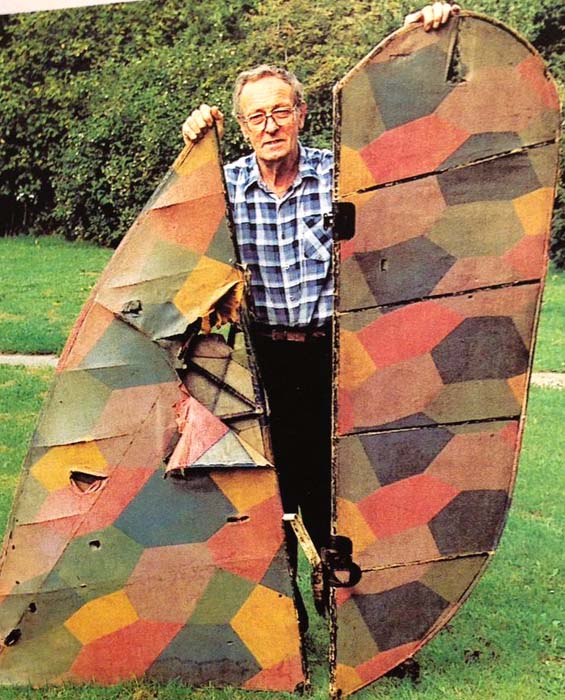
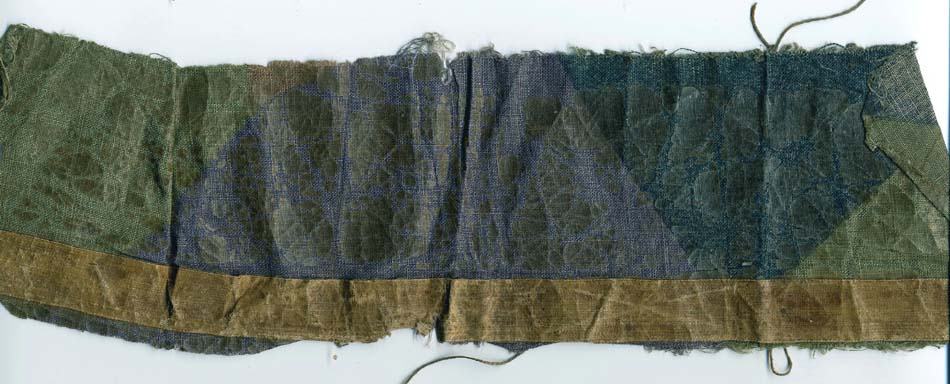
He discovered, for example, that the Germans from August 1916 onwards, were beginning to change their tactics, with many of the changes heavily reliant on skilful camouflage. Here’s a genuine 100 year old camouflage scheme from an aeroplane called the Rumpler Taube……
From late 1916 onwards, the Germans began to renounce their previous doctrines of heavily fortified defensive lines with numerous bunkers forty foot underground and countless tons of concrete protecting their troops. Instead, they began to start making extensive use of shell holes, with a man in each, hidden by a tarpaulin over him. In this way, whole machine gun crews might become almost completely invisible. And the Germans, of course, always had huge numbers of machine guns……
This more simple arrangement would go on to take the place of trenches and to replace what had gone before with what was called “defence in depth” with “every position defended to the last man”.
You’ve seen this picture before, but I make no excuses for re-using an image with such unbelievable numbers of machine guns in it. What’s the collective name? A rattle of machine guns? A maximum of Maxim guns?
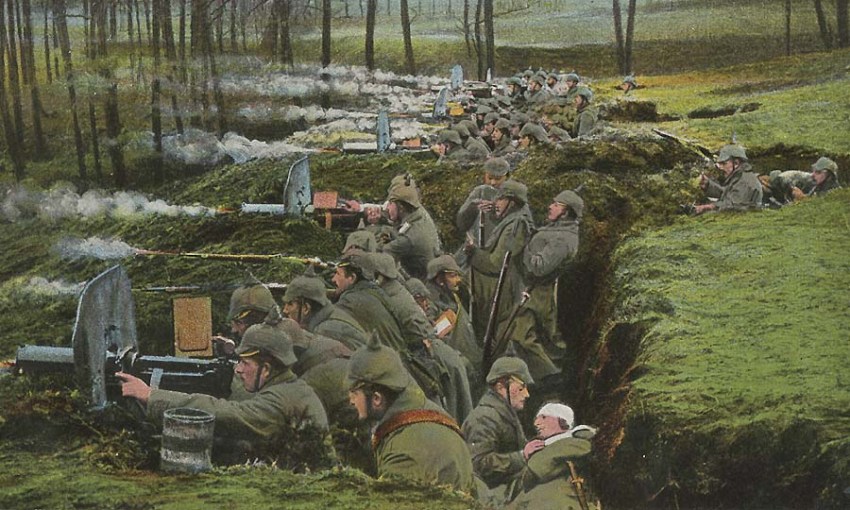
Frequently, the German soldiers operated in teams with each team responsible for the defence of a specific area. Within the team, each man usually had his own job, such as flame thrower, mortar crew and so on. This made immediate counter attack much easier, and arrangements were constantly being revised. Eventually, the members of the defensive teams would begin to be called “stormtroopers”. Here is a platoon of them, with a selection of different weapons……….
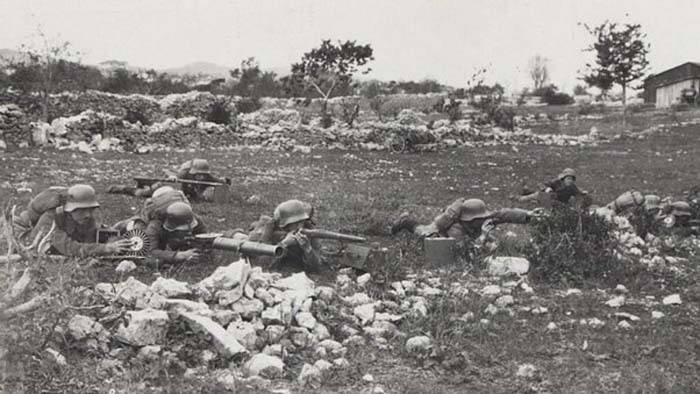
The Germans always studied the tactics of their opponents, particularly when the latter were using their tanks in combat. The Germans did not particularly favour tanks, but the Australians, British and Canadians did, and every German soldier, even those in the lowest ranks, was encouraged to analyse what had occurred in an engagement, and, if necessary, to make criticism of it themselves. Anything particularly significant could be circulated around the army in hours. Here’s a German tank. I wonder what a “Schnuck” is?

Let’s finish withj two more Funfacts…..
Funfact One
In battle, the British always attacked in enormous numbers, but the Germans seemed to have better communication and always to be completely aware of what was going on, and to be completely capable of dealing with anything the British or French got up to.
Funfact Two
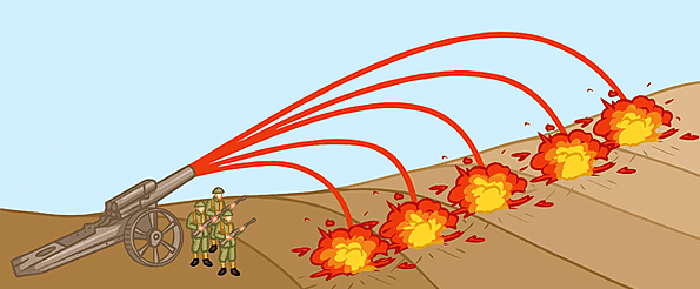
An innovation based, I believe, on the Canadian tactics at Courcelette in 1916, the Allies’ so-called “creeping barrage”, was an effort to cut casualties among their own troops attacking over no-man’s-land. It was, though, frequently difficult for the advancing troops to keep up with the barrage and they were often left vulnerable to enemy fire. Equally frequently, friendly fire would take a heavy toll.
Here’s a diagram. As the troops go forward, the artillery is fired at whichever enemy troops are directly in their way. The attackers are relatively safe behind the carpet of shells as it creeps gradually forward…..
Funfact Three
In the attack on Boom Ravine on February 17th 1917, around 2,000 Allied troops were killed. From the way the German artillery operated over the course of the day, and the timing of their use, it was widely believed at the time that they had been informed by treachery on the previous day, by British POWs already in German hands and by British deserters who preferred to surrender rather than risk their own lives going “over the top”. Other similar events were not unheard of, but what made it an important first was that they had never previously been described in any written accounts published later about the battle.
And that’s it. And I would strongly recommend that you record and watch Peter Barton’s “From Both Sides of the Wire” if you ever get a chance to do so in the future. It is a refreshing look at the First World War by a man who has literally, tramped every inch of the fields where the war took place, explaining carefully to his battlefield visitors the real truth of how events unfolded. Channels such as Discovery, PBS, and Smithsonian frequently dedicate a whole day to programmes on the same subject, often for public holidays or weekends. That’s your best chance if you want to see all three programmes.
Funfact Four
I actually have a piece of World War 1 aircraft fabric taken from a crashed German aircraft. It comes to me via my Grandfather, Will Knifton, who served with the 19th Canadian Field Artillery. The aircraft in question was shot down, and the Canadian soldiers all rushed straight out of their trenches to cut a souvenir from the wreckage with their bayonets. Here is the piece of fabric that Will managed to grab. Note the relatively complex use of different colours for camouflage purposes, unlike the planes of the RFC…..


 John Knifton
More fascination, John
I’m glad you enjoyed it, Derrick. It’s just such a pity that these battles cost, literally, more than a million lives.
Thank you for sharing more about history so we can better understand what has transpired and the cost in the lives of mankind… hopefully the world will learn from it in the future and find a way to better settle differences… 🙂
Hope all is well in your part of the universe and until we meet again..
May your troubles be less
Your blessings be more
And nothing but happiness
Come through your door
(Irish Saying)
I too hope that we will one day find a better way of settling our differences other than invading the country next door, using missiles and bombs to kill the civilian population and drones to look out targets for tomorrow.
What makes me cynical though, is that not only can we not find a better way to settle our differences, but we can’t find ANY way of progressing other than violence.
Perhaps humankind contains too high a percentage of savages for it ever to solve the problem.
I’d be afraid of walking in the wake of a creeping barrage. Sounds like a great idea, but it only takes one miss fire or off aim to cause a lot of friendly deaths.
You are 100% correct, but to be honest, I don’t think that it mattered overmuch to the generals. If you have an unsuccessful attack where 60,000 are killed or wounded, a successful outcome with only 5,000 casualties because of the creeping barrage is a win-win situation.
And overall, the creeping barrage was a definite successs and a big break-through in British tactics.
Our weapons have become so much more powerful and destructive that another world war will not end well for our species.
Sadly, you are 100% right on that one. I even fear that climate change will result in our extinction. I just hope that all the people who have treated the planet properly do not perish in the general catastrophe.
John, just as the Sun shines on the good and the bad alike, natural catastrophes do not discriminate among the deserving and undeserving among us.
Overall, though, I believe that we all pay the price……eventually.
Very informative indeed John. The fabric taken from the shot down aircraft is quite a piece of history. I can’t imagine many original or genuine pieces exist these days and so it may well be quite rare.
Apparently, my Grandad and the rest of the guncrew had stripped the aircraft of fabric within minutes!
That I can believe!