Category Archives: History

The Luckiest Man in the World (4)

Flight Sergeant Thomas Weightman, as we have seen, survived the crash at Dilhorne described in my last post The Luckiest Man in the World (3). Tom is listed as an Air Gunner. I suspect that he was the tail gunner and that is why he was not killed. The impact he had to endure was much less forceful at the back of the aircraft. Furthermore, he was further from any fire than the rest of the crew. And so, he survived. By this time he must have felt that he was extremely lucky. Perhaps he even experienced “survivor guilt”:
Let’s finish on a positive note. And one that explains the title of the post. After his fortunate escape, Tom Weightman joined 644 Squadron who flew Halifaxes and transported supplies for Special Operations Executive operatives, usually to Norway and Denmark:

On April 23rd 1945, probably without the dog, Tom flew off to Scandinavia in a Halifax Mark VII, serial number NA337, squadron letters 2P-X. It was Operation Crop 17, tasked with supplying the Norwegian resistance, the Ling, with 13 containers and 2 packages containing rifles, food, and clothes. These were successfully dropped but the aircraft flew off course by accident and was hit by German anti-aircraft fire. The pilot had to land somewhere, so he ditched the stricken plane in Lake Mjøsa which was the only flat area around:

The dinghy should have deployed automatically but it failed to do so. I presume that the members of the crew, as the cold, cold waters rose around them, must have decided to try to swim to shore. They could not have known that this was the largest lake in Norway. Alas, they all died from hypothermia. Flight Engineer Goronwy Amman Bassett (34) from Swansea. Wireless Operator Alec Naylor (22) from Oakenshaw in Yorkshire. Navigator Walter Reginald Mitchell (23) from East Dulwich in London. Bomb Aimer Gordon Russell Tuckett (23) from Cardiff and Pilot Alexander Turnbull (27) from Edinburgh.

The Tail Gunner and “The RAF’s Luckiest Man”, Tom Weightman, meanwhile, had by now recovered consciousness after being knocked out by the impact of the aircraft hitting the surface of the lake. He awakened to find all of his colleagues had gone. Water was still rising inside the Halifax so he climbed out through the upper escape hatch and walked out onto the wing. The dinghy was still in its special cupboard in the wing so he climbed back into the aircraft and released it manually with a winch. He then set off paddling across the cold waters of the lake trying to find the rest of his crew. This is the only picture I could find of a deployed dinghy:
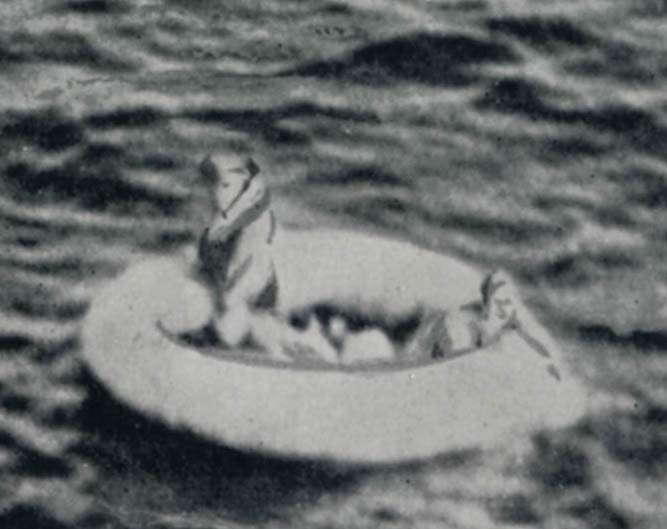
There were no replies, though, to Tom’s shouts and it was far too dark to see anybody in the ice cold water. When it got light, the locals found Thomas in his dinghy and looked after him and made sure he was in good health. And then, quite rightly, they handed him over to the German Army because they feared, quite rightly, appalling reprisals to their families if they harboured an RAF flyer. And after just 14 days of captivity, the war ended and Tom Weightman was a free man. He was to have 62 more years of life than his colleagues in the 644 Squadron Halifax and 63 more years of life than Jack Sweeney.

Even his plane was lucky. It lay sleeping peacefully at the bottom of the lake for 50 years. And then somebody’s sonar turned up a very strange fish:

And then the Halifax Aircraft Association dived down, found it, rescued it, restored it in magnificent fashion, took it to the RCAF Memorial Museum at Trenton in Ontario and there it remains to this very day. If you ever manage to see it, make sure you look carefully at the rear turret and wonder what made the man in it so special.:

The Norwegian lake is still there. In winter it freezes over and recently it played host to some of the events in the Winter Olympics:

I could not have written this blog post without recourse to this website.

36 Comments

Filed under Aviation, Bomber Command, History

The High School Hell’s Angels, Chapter 1

Most Nottingham High School pupils nowadays arrive by car, of course, or perhaps by bus, usually, either a special school bus or a Nottingham City bus.  We even have our own advertisements on one bus:

A few boys come by bicycle, a few come on the tram, a few walk and, I suppose, there must be some who arrive by train.
In years gone by, that was by no means the case. In the late 19th century, lots of boys lived on the other side of the Forest, or along Forest Road West, in the Alfreton Road area or even in the streets between the school and Shakespeare Street. They all walked in to school, which is indicated by the orange arrow. All the streets mentioned are on the map:

In the early 20th century, many boys lived in the Mapperley Park area and they arrived either by bicycle or on foot. And as Nottingham grew in the 1920s and 1930s, boys started to arrive in bigger numbers from expanding suburban areas such as West Bridgford. And in the 1940s and the 1950s, they began to arrive in greater numbers from more distant areas such as Arnold and Burton Joyce. They are both on the map, and the orange arrow points to the High School:

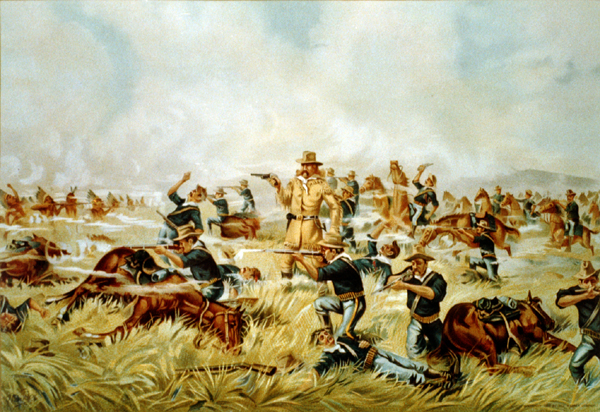
Before 1876, lots of boys are recorded as “Donation No x” which may refer to money which was given by a single well-wisher. The earliest, “Donation No 1 by Swann” (sic), was given to Haywood White Buller, who was born in July 1857, the son of a Hosier from 8 Addison Villas in Eastwood. The first ever actual scholar as far as I can see was a “Caup Scholar” (sic) although I don’t really understand what this was. He was Arthur John Cresswell, born in 1865, of 19 Harrington Street. His father was a Warehouseman.  Arthur entered the High School in May 1876, two months before General Custer came an unlucky second in his struggles with the Lakota:

Soon local councils were happy to provide help. Boys might be Derbyshire County Council Scholars, Nottinghamshire County Council Scholars or Nottingham City Scholars. The most famous was young David Herbert Lawrence whose father worked as a coalminer. Here he is in the Fifth Form:

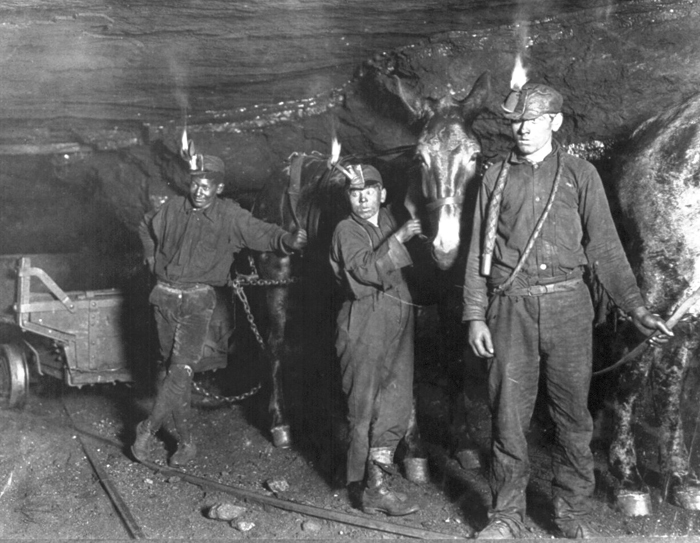
DH Lawrence, though, was not the first miner’s son to come to the High School. That was Fred Cook, the son of Thomas Cook of 48 Watnall Road, Hucknall Torkard, the old name, I believe, for Hucknall. He entered the School on September 15th 1897 at the age of 13. And after him came David Herbert Lawrence, the School’s greatest author.  And then William Dunn in 1901, from New Brinsley in Eastwood. Then Willis Walker from Selston on the same day as William Dunn. John Thomas Moult in 1905 from 100 Derbyshire Lane, Hucknall Torkard. In July 1907 it was William Hutchinson from 7, Old Church Street in Old Lenton. In September 1907 it was William Ernest Thomas of 8 Glebe Street in Hucknall Torkard. A year later, the appropriately named Cyril Coleman from 34 York Street in Hucknall Torkard. Three more miners were to follow before the outbreak of the First World War:

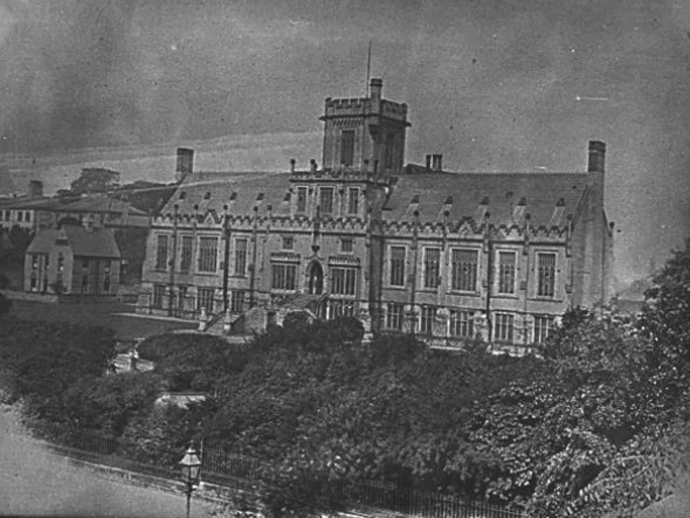
There are no more coal miners in England now, of course. And during that period of 1897-1914 there were many High School fathers who had jobs which have become equally infrequent in our modern world. There were blacksmiths, bleachers, cheese factors, cork cutters, dairymen, filers, hosiery packers, farm labourers, framesmiths, hatters, goods guards on the trains and, most mysterious of all, “twisthands”. In actual fact, they were operators of lace machines. Here is the School in that period:

And as the years went by, the catchment area of the school began to resemble that of today. In other words, boys, and girls, from all over the county and the nearer parts of neighbouring counties. I worked at the High School for almost 40 years and the longest journeys to school I remember were in 1976 or 1977 when I helped Mr Padwick on the French Exchange to Rodez, and we were taking the French boys to see the splendours of the Blue John Mines near Castleton in north Derbyshire. One of the English boys’ mothers said that they would bring little Jean-Pierre to meet us as they lived more or less next door to the mine:


In the middle 1980s I had a boy in my tutor set who lived on the far side of Lincoln where his Dad owned a pig farm. He got up at 5.00 am and his mother took him by car to meet the school bus setting off from Newark to the High School.

And DH Lawrence used to complain about the travelling.

29 Comments

Filed under History, Nottingham, Politics, The High School

Nina Potapova: a woman I cannot forget (1)

When I was about eight or nine, I was intrigued by a book in our local library in South Derbyshire:

Last year I bought a second hand copy off the Internet. A book from Bangor in north west Wales. Probably the very book used to learn Russian by the defector (or is he a defector?), Richard Burton, in “The Spy who came in from the Cold”. Still, at least I learned the Welsh for ‘stock’:

I was intrigued by the copperplate Russian alphabet. Here’s the first 16 letters. :

There are 33 altogether because our ‘ch’ or ‘sh’ or ‘ts’ are single letters in Russian. Here’s the full 33 from Wikicommie:

With Nina, I loved the artwork:

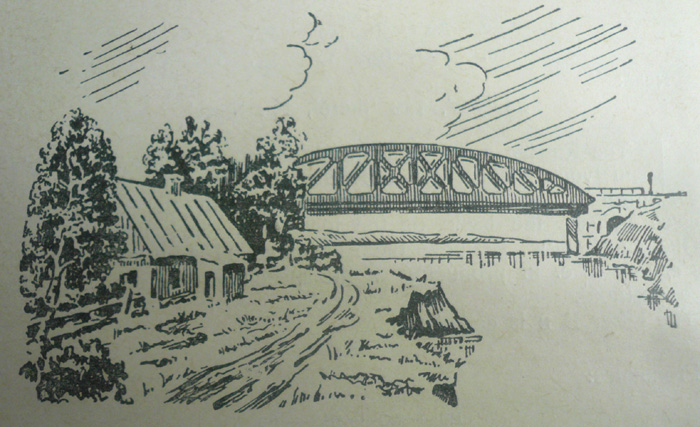
And here’s the text. It looks childish and moronic, but not if you’re in MI6. If you are in Moscow and ask the right person the question “Is the house there?” and they replied “Yes, the bridge is here.” you got to spend the night with Ursula Andress:

Here is Moscow. The Moscow Kremlin to be precise:

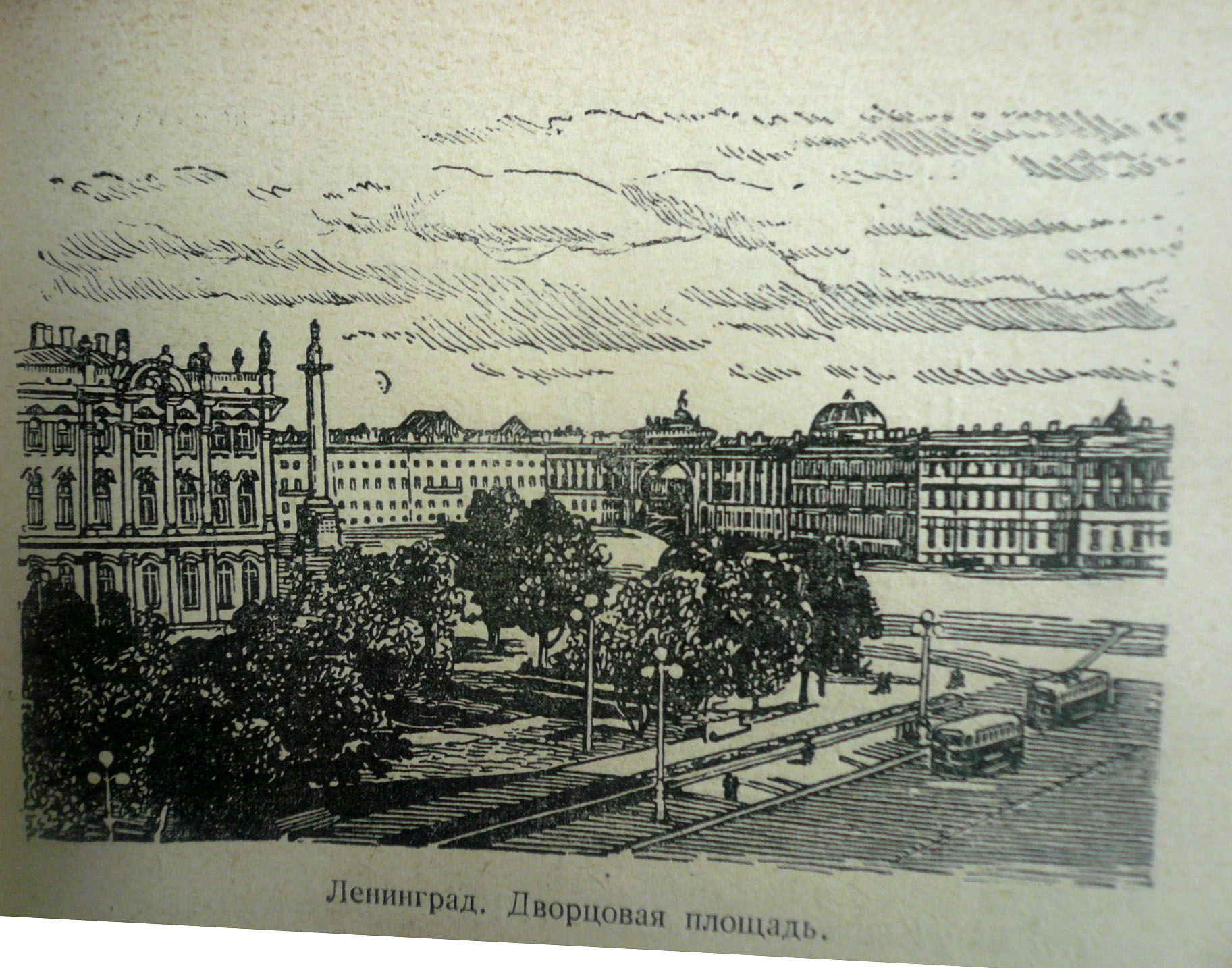
And here’s Leningrad. For me, some things will never change:

That’s all for now. I have people to meet in a park near Helsinki. Please excuse the uneven shapes of some of the pictures. They were taken under difficult circumstances, using a MasterSpy Mark 4 Nasal Camera in a small stoc cupboard in Bangor Library at 3.00 in the morning.

In ze meantime,    До свидания


16 Comments

Filed under History, Humour, Personal, Russia

The Luckiest Man in the World (3)

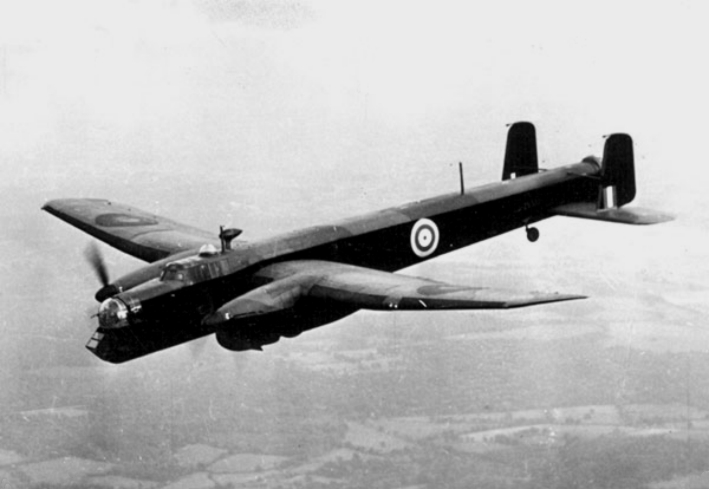
In a previous post, I told in the barest of details how Jack Sweeney was killed in an Armstrong Whitworth Whitley Mark V when he took off from RAF Tilstock on January 31st 1944:

During my researches I found a video on the Internet, uploaded by someone called “1tothirtysix”, which is an interesting walk around the crash site and puts together all the various details to produce a coherent account of what occurred.

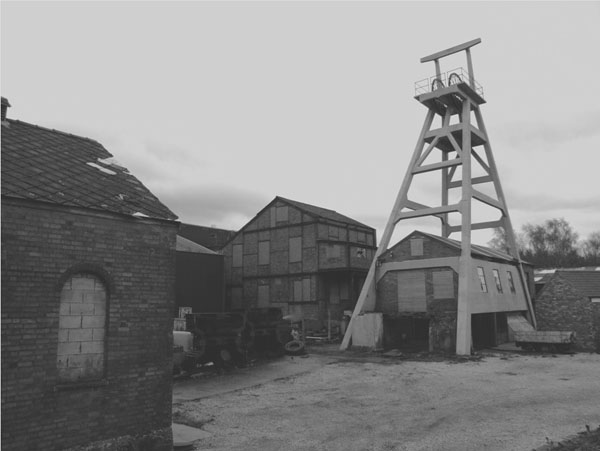
In March 1989, the land was still owned by the farmer at the time of the accident, Mr Challenor. He could remember coming to the crash site immediately after the impact, which took place around 8.30 in the morning. He found a sheet which obviously covered a body, and lifted it to see the blackened and burnt features of one of the aircrew. There was one survivor, Flight Sergeant Thomas Weightman who made his way along the hedge and then downwards to the mine which was operating then, although is now closed down. This is Foxfield Colliery which may be the mine referred to in the account. The tower like structure is modern:

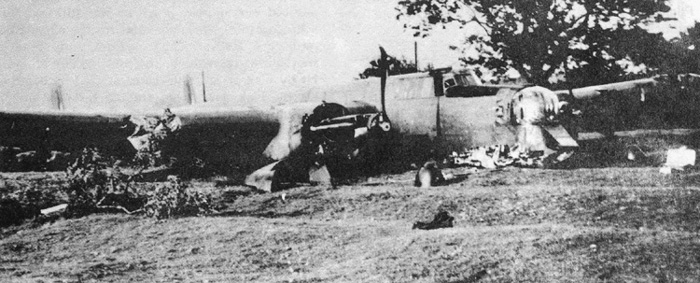
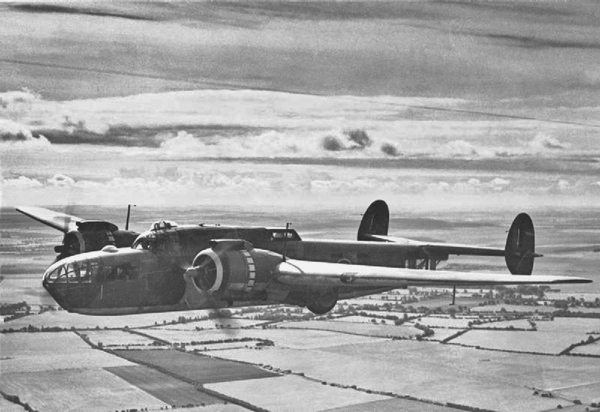
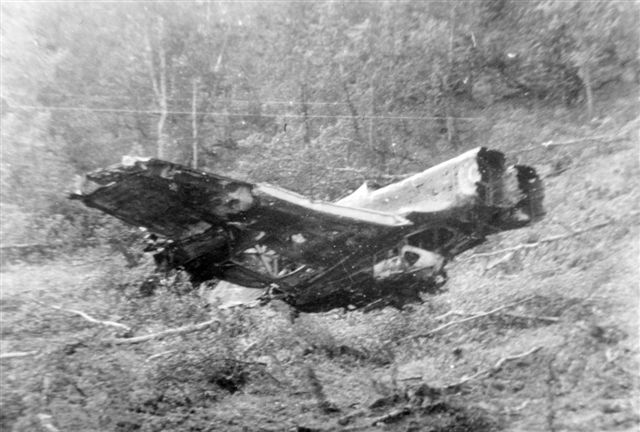
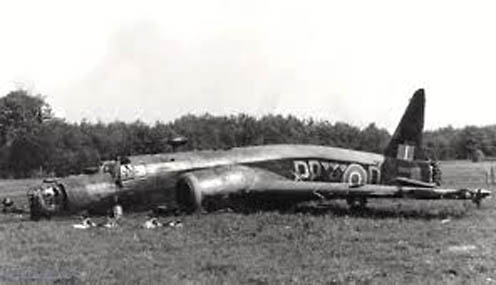
Once Flight Sergeant Weightman told the miners the news, they raised the alarm, although it was far too late by now. Indeed, the three other crew members were already dead even as Weightman climbed out of the crashed aeroplane. The bomber had first hit high up on the hill, half way between the two woods near the mine. Having hit this field near a pond, the aircraft careered across it, then smashed through a hedge and skidded, nose first, down the very, very steep slope to the good sized stream at the bottom. The Whitley finally came to a stop, smashed to smithereens with its nose almost in the water. The three dead crew members were still on board and when fire broke out, the bodies were all burned to a greater or lesser extent. This is a crashed Whitley:

There were, of course, many, many crashes in this North Midlands area. The aircraft were extremely varied with 7 Wellingtons, 3 Whitleys, 2 Blenheims and 2 Halifaxes, but also 4 Thunderbolt P-47s, and single B-17s, Martin Baltimores, Fairey Battles and Armstrong Whitworth Albemarles. A majority of the aircraft were operated by either 27 OTU or 42 OTU. Here is an Albemarle:

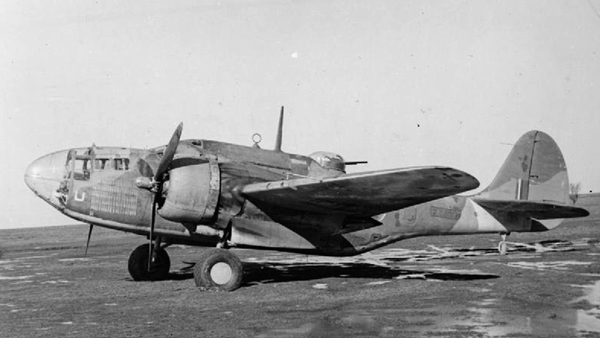
And here is a Martin Baltimore, used widely in North Africa and very popular with its crews:

Jack Sweeney was killed in January 1944. A brief look at all the OTUs in Britain during this month  reveals that every single fatality listed came in Wellingtons, a sorry state of affairs…January 1st (1 dead), January 2nd (6 dead), 3rd (7), 4th (5), 9th (2), 11th (5), 17th (2), 20th (5), 21st (10), 23rd (6), 24th (3), 25th(6), 27th (16), 29th (4), 30th (7).

After leaving an OTU, the next step for everybody was an HCU, a Heavy Conversion Unit. Here, trainees tried their hand at four engined bombers, usually Stirlings and Halifaxes. The deaths in January 1944 were, in Halifaxes… January 3rd (7 dead), January 10th (7 dead), 13th (6), 18th (6), 21st (7), 22nd (3), 23rd (9) and the 31st (6). In Stirlings, it was January 4th (5 dead), 14th (8), 20th (14), 21st (2), 26th (8), 29th (8) and 31st (5).

Quite a toll. In the OTUs, in just one month in 1944, a total of 85 men died.

In the HCUs, a total of 51 died in Halifaxes and 50 in Stirlings.

Not that far short of 200 dead without ever seeing a German.

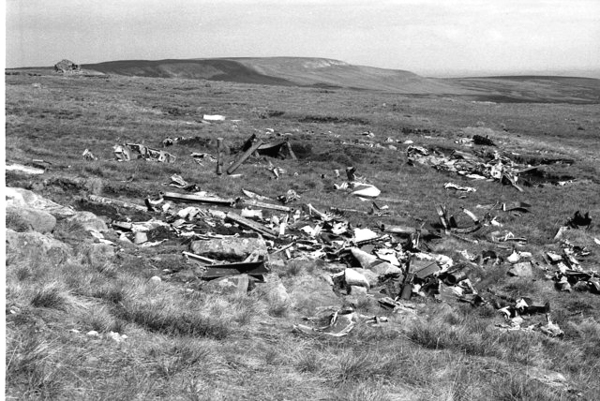
A couple of pictures will show you why so many were killed. Here is a crashed Halifax:

And here is a crashed Stirling:

After further research, I was also surprised to see that Dilhorne where Jack Sweeney crashed was pretty much the local “Magnet of Death”, surrounded by higher ground and relatively close to a number of OTU airfields.

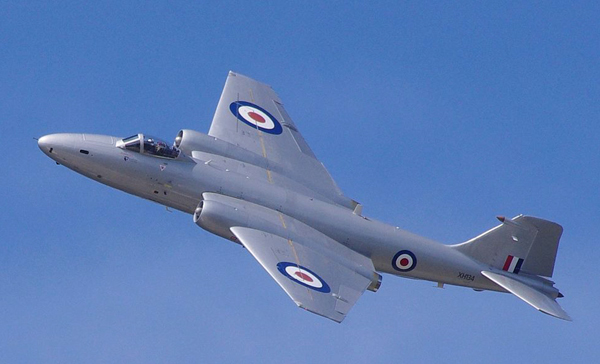
On January 30th 1943, a Wellington, R1538 of 28 OTU, crashed there after leaving RAF Wymeswold near Loughborough. Sergeant Thomas Butterly from Portsmouth and Sergeant Allan Priest from Reading were killed. On March 27th 1953, a jet bomber crashed at Dilhorne. It was a Canberra WH669 of No 10 Squadron. This resulted in the death of the Pilot, Flying Officer Patrick Esmond Reeve, the Navigator / Plotter, Pilot Officer John Golden Woods and the Navigator / (Set Operator), Vivian Owen.

Here’s a Canberra:

Who died with Jack Sweeney?
Well, Flying Officer John Frederick Cusworth was the Navigator. He was the son of Harry Cusworth and Clara Cusworth, born in 1912 at North Bierley in the West Riding, 2 miles south east of Bradford. After a few years, the family moved to Pudsey, a market town now incorporated into the City of Leeds. John was 31 years of age and he was married to Grace Edna Bowen at Strood in Kent in 1940. The couple lived in Pudsey. John was cremated and his sacrifice is commemorated at Leeds (Lawnswood) Crematorium along with 73 others. His name is just visible on this side of the special column:

Sergeant George Victor Bourne was the Bomb Aimer. He was the son of Albert Ernest Bourne and Maude Penelope Bourne from East Ham in the London Borough of Newham. East Ham is right next to West Ham. George was only 21. Did he go to the football? Did he shout “Up the ‘ammers!!” every fortnight? Like John Cusworth, he would have had a strong accent. Did they joke to each other about the way they talked? George was buried close to the airfield, at Whitchurch, a small town in Shropshire near the Welsh border. There are 14 other Commonwealth casualties buried there, but also 52 Poles and Czechs because the No 4 Polish General Hospital was at Iscoyal Park, four miles to the west. This is the West Ham United badge:

Andrew Harkes Robertson was the Wireless Operator/ Air Gunner. He was 30 years old. He was the son of George Robertson and Lizzie Robertson from Edinburgh. Andrew was buried in Inveresk Parish Churchyard. Inveresk is a small village in East Lothian to the south of Musselburgh. It is so pretty that it has been a conservation area for the last 50 years or so. There are 72 casualties buried in the churchyard at St.Michael’s Church. Here it is:


Flight Sergeant Thomas Weightman, as we have seen, survived his crash. I will tell you about him next time. He is the man who has given me the title of this series of blog posts. You will find out exactly why next time.

I could not have written these posts without help from here and here and here.

17 Comments

Filed under Aviation, Bomber Command, History

A Barbarous Kingdom, Populated by Savages

This tale of barbarity is almost beyond belief for the date when it took place, June 21st 1786, and the location, the so-called civilised country of England. The details come from a source that I have used quite frequently before, namely “The Date Book of Remarkable Memorable Events Connected With Nottingham and Its Neighbourhood” and one other website:

The savagery of the punishment meted out on this poor young woman would be difficult to believe were it not so well authenticated. I have translated some of ye more difficult fentencef into ye moderne Englifhe:

“The victim of it was a young woman of Nottingham extraction, her mother having been a native of the town. Her name was Phoebe Harris. She was small in stature, rather stout and of good figure, with a pale complexion, and pleasing features. Her age was 30, and she lived with her husband in London. She was caught while in the act of counterfeiting coins, to which she had been introduced by her husband, who, it appeared, was an old practitioner. For this offence she was tried at the Old Bailey, and sentenced to death.
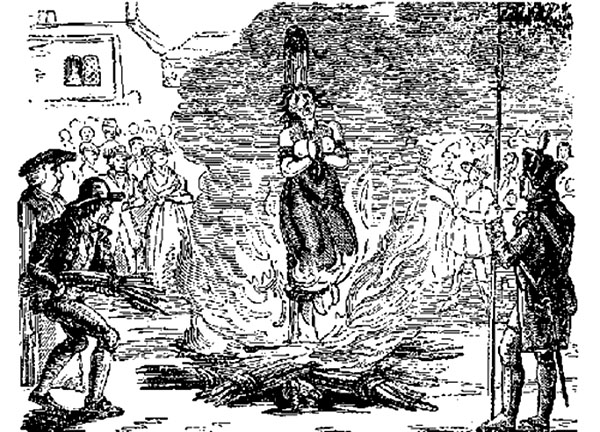
She was conducted on a subsequent day by two constables to the open space in front of Newgate, in the presence of about 20,000 spectators, where a stake had been securely fixed in the ground, about eleven feet high, and with a curved projection of iron at the top, to which was fixed a rope. The prisoner was placed on a stool, with her back to the stake, and the rope was positioned around her neck. After the priest of the gaol had prayed with her for a short time, the stool was pulled from underneath, leaving her suspended by the neck, with her feet about a foot from the ground.”

According to V. A. C. Gatrell’s book “The Hanging Tree”, Phoebe then choked noisily to death over several minutes:

“After hanging there for half an hour, the executioner put an iron chain around her upper body and fastened it to the stake with nails.”

The Date Book takes up the tale with tasteful enthusiasm:

“Two cart loads of wooden faggots were then placed round her and set on fire:

The rope speedily snapped, and the body slipped, but was sustained by an iron chain passed round her waist and the stake. In the course of three hours the corpse was entirely consumed.

The unfortunate sufferer, Phoebe, was struck with so much horror at the idea of her body being burnt, that in the night previous to her execution she was quite frantic. When she was led to the stake, she appeared languid and terrified, and trembled excessively. The awful apparatus of death evidently struck her mind with consternation, and totally incapacitated her for her last prayer.
Until midday, while the victim was still burning, the spectators were loud in their angry denouncements of the officers of the law, but as soon as the latter had left, the people in the crowd amused themselves by kicking about her ashes.

An application had been made to the Sheriffs by the respectable inhabitants of the neighbourhood, praying that the execution might take place at Tyburn, or at some small distance from them, but without avail.

The consequences were serious : several ladies were taken very unwell, and many were severely affected by the offensive smell of the burning corpse.”

The consequences were a damn sight more serious for Phoebe. The locals, NIMBYs one and all, had actually organised and sent in a petition to prevent Phoebe being executed so near to their homes. They considered such savage practices should not be carried out in areas frequented by respectable folk. Genuine world class savagery should take place in a working class area where it would be better appreciated.

Even so, 20,000 spectators isn’t a bad turn out for a respectable area. I bet somebody wished that they could have charged entrance money.

The offence of counterfeiting:

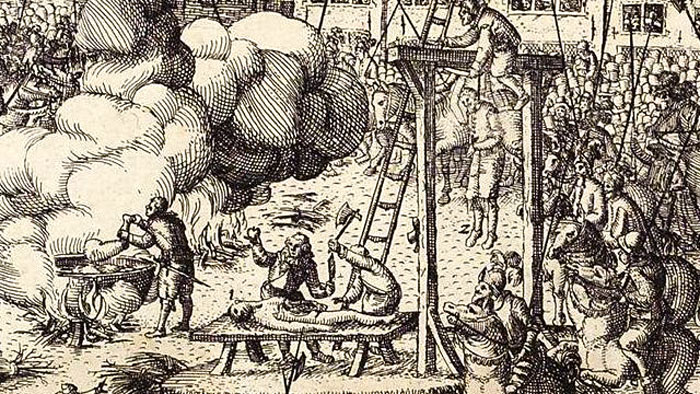
“for which Phoebe Harris suffered, was classed as High Treason. Blackstone accounts for the punishment of women for this crime being different from that of men, by stating that the natural modesty of the sex forbids the exposure and public cutting up of their bodies, and therefore they are burnt. The punishment of men for high treason was beheading, cutting the body into four parts, and burning the heart.”

Here is the ‘quartering’ bit of that terrible trio of punishments:

And executions are always an excuse for a barbecue:

Only two more women would be killed in public in this grotesque way, and the dates may well be significant. One was Margaret Sullivan on June 25th 1788 and the other was Christian Murphy on March 18th 1789.

On July 14th 1789, the French people finally grew tired of a legal system presided over by a spoilt brat of a king and driven by an arrogant and self-serving nobility. It is not without significance that they attacked the Bastille prison as their first target. Neither is it without significance that the revolutionaries were keen to use a more humane method of execution, namely the Guillotine. Here is a charming painting of the Terror in full swing, with some lovely details if you look carefully, especially the little doggie. I couldn’t find Wally but I think I might have found his head :

I believe the judges back in London may well have noticed the developments in France, because when Sophia Girton was convicted of counterfeiting in April 1790, her execution by being strangled and burnt in public was postponed, as Parliament decided that hanging would be a better way to execute women.

Sophia was not hanged though. She was exiled to Australia where she made a new life for herself, admittedly in the most appalling of conditions:

27 Comments

Filed under Criminology, History, Personal, Politics

The Luckiest Man in the World (2)

In the previous post, I explained how the aircraft being used for training by Bomber Command were often very poor machines from the pilots’ point of view and in a very poor state:

This slideshow requires JavaScript.


Poor aircraft then, and, from Old Nottinghamian, Jack Sweeney’s point of view, it had also been a very poor decision when Ashbourne in Derbyshire was selected as the place to construct the airbase where he was to do his training in 81 OTU.

In the first place, the building of RAF Ashbourne was actually against regulations as it was higher than the ceiling height for the construction of airfields:

And everyone was well aware of the prevailing weather around Ashbourne. Driving rain, rain, sleet, snow, drizzle, fog and mist. As I write now, even the tripadvisor website, trying to attract tourists to Ashbourne, offers “Stunning walks & scenery – whatever the weather”:

And the 1940s had a lot worse weather than we experience nowadays.

Ashbourne, of course, has the nickname “the Gateway to the Peak District”. And that says it all. If you have lots of peaks, you should be thinking about whether that is the best place to allow inexperienced young men to fly around, often at night, in aircraft without radar aids of any kind, and only the most rudimentary of weather forecasting.

Only two or three miles north of the airfield there are steep slopes, rising up to extensive high land masses around Fenny Bentley and Kniveton. Given how many foggy nights used to occur in that area, such countryside is just not acceptable for pilot training.
Jack Sweeney was killed on January 31st 1944. Ironically he wasn’t flying from Ashbourne but from a satellite airfield nearby called RAF Tilstock. Like so many of the hundreds of airfields constructed in Britain at this time, Tilstock has been rather neglected over the past and could do with a little light weeding perhaps:

In the notes I made during my researches, I described the countryside around Tilstock as “quite hilly country, very variable, lots of steep slopes”, so it’s not too different from the nearby Ashbourne area.
Sergeant Sweeney took off from RAF Tilstock in an Armstrong Whitworth Whitley Mark V, serial number LA 765:

He crashed about 30 miles away near Hardiwick between Caverswall and Dilhorne, a tiny village situated in what looks to me to be quite a hilly landscape, perhaps 7 or 8 miles north east of Blythe Bridge. When our family all settled into our 1959 Ford Anglia saloon for the long trip from Derby to Wigan in the pre-motorway years of the early 1960s, Blythe Bridge was a familiar and exciting landmark for all of us, It meant that we were a third of the way there and only had 70 miles to go, unless, of course, in those pre-motorway years, we got lost:

25 Comments

Filed under Aviation, Bomber Command, History

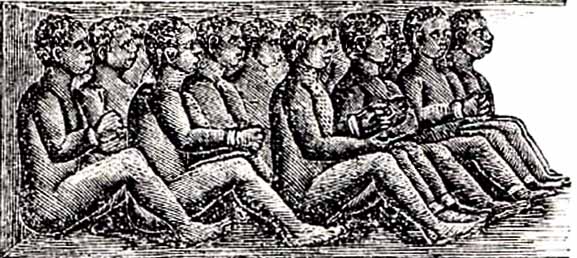
The kings of slavery, and the queens (2)

Last time I promised you a quiz. Well, it’s not the kind of quiz they would broadcast on television, but let’s give it a go.
In 1710, if you ever saw an African slave who belonged to the Royal African Company, how could you tell?

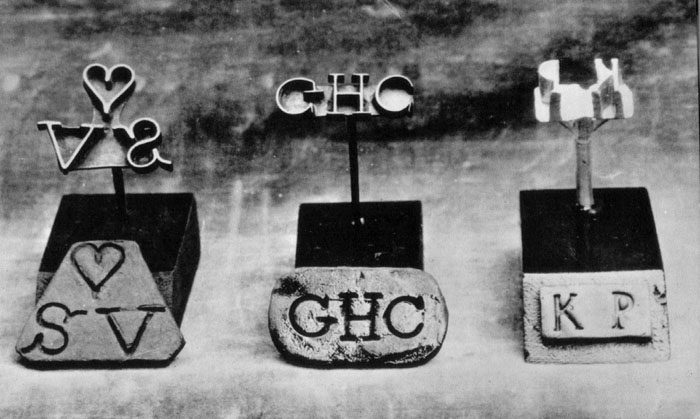
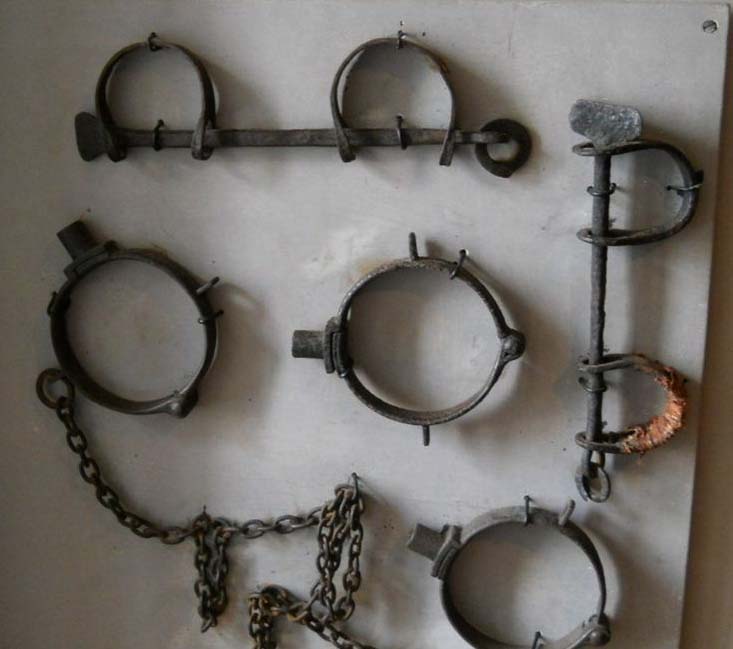
Easy…he would have the letters ‘RAC’ burned into his chest with a branding iron like the ones they use in cowboy films with cattle. I couldn’t find a photograph of that, but I did manage to find one with some branding irons on. These are actual branding irons for slaves, not cattle:

Here is the second question which is a little bit more difficult.
If you ever saw an African slave with the letters ‘DY’ branded on his chest, what did it mean?

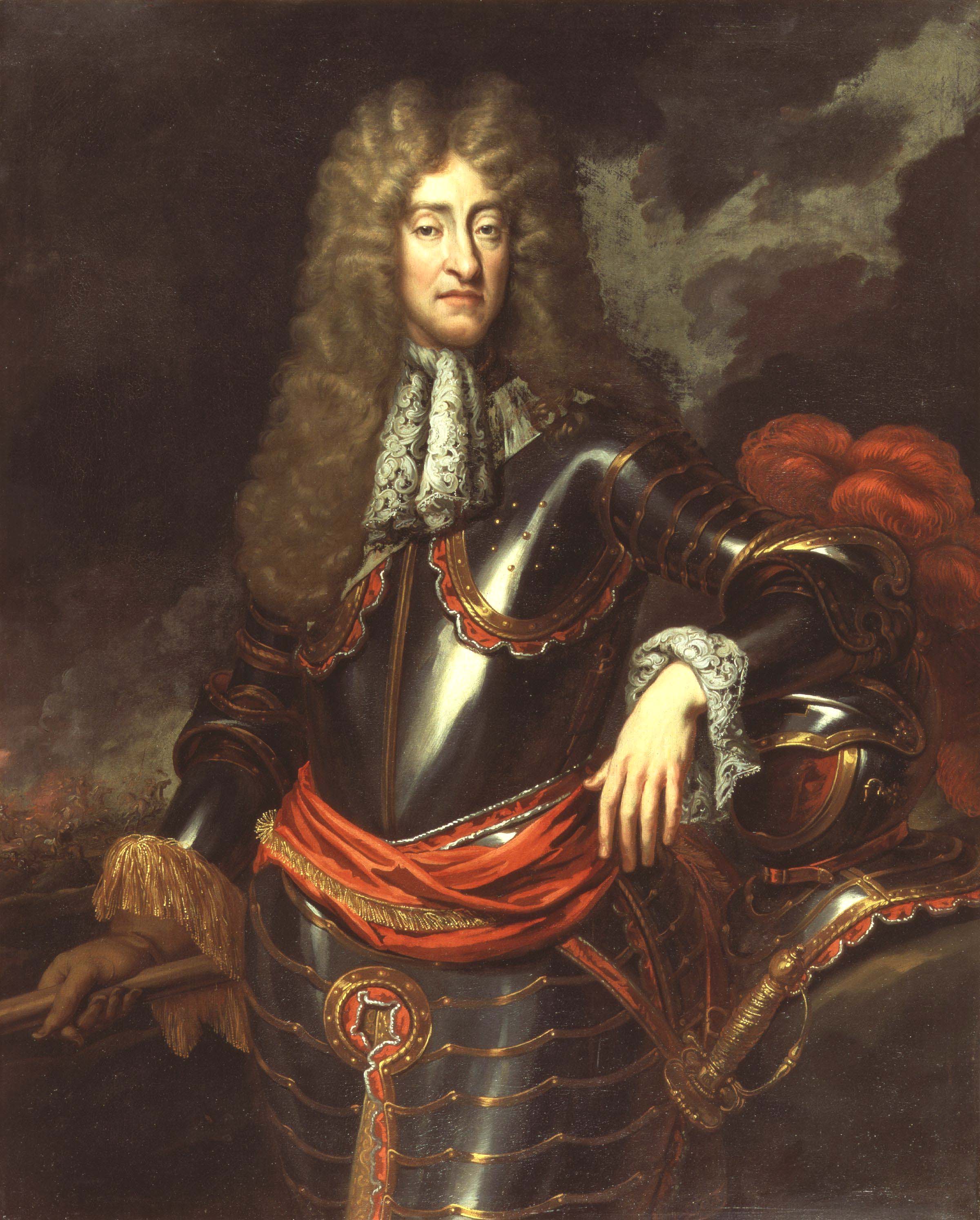
If you’ve been paying attention, though, it’s not that difficult. It meant ‘Duke of York’. It meant he was owned by the Duke of York, who later succeeded to the throne and became King James II.

An extra special bonus question. When the Duke of York became King James II, what did he have the slaves’ chests branded with?  Was it ‘J2’?

No, it wasn’t, he continued with ‘DY’. And I couldn’t trace it, but I would presume that his eventual successor, Queen Anne didn’t have ‘QA’ on her slaves but stuck to ‘RAC’.  And the money rolled in:

And more to come. Lots more:

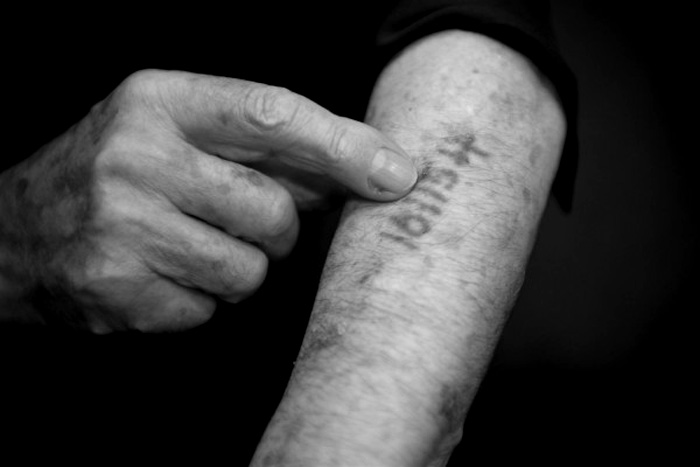
It’s just that branding people on the chest with a red hot piece of metal reminds me rather uncomfortably of one other way of marking your racial inferiors:

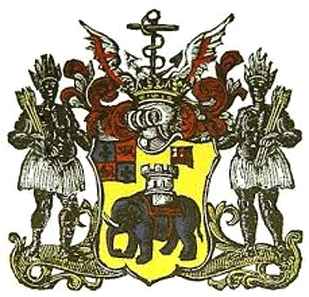
Forty years later, the British were awarded the monopoly on selling slaves to the Spanish for the next three decades. This monopoly was sold on to the famous “South Sea Company”. They dealt in turn almost exclusively with the Royal African Company. Here is their coat of arms. Look at the happy slaves, all set for a spot of weekend hunting, don’t you know?

Only a year after the Spanish deal was set up, Queen Anne owned 22½% of the shares in the Royal African Company. That means she owned more than a fifth of the British slave trade, the largest slave trade in the world at the time. She was quite possibly the biggest slave dealer on the planet.
When she died, King George I became king. He wasn’t happy owning a fifth of the British slave trade.

It wasn’t enough, so he increased his shareholding and made himself Governor of the whole sorry business. A business which transported around 64,000 slaves to the Americas in 15 or so years. George III carried on with the family business, accused by a slightly hypocritical Thomas Jefferson of waging “cruel war against human nature itself”.
There was some opposition to the Royal African Company though. Across the country, small businesses spoke out against the Company’s activities in the slave trade and especially, against their monopoly. In their campaign, they used the motto, “We want the freedom to traffic slaves too”. Smaller businesses, smaller boats, but there’s still money to be made:

But let’s not kick our lovely royal family too much. Instead. let’s look at the case of Christopher Codrington.  Christopher Codrington was the owner of a slave plantation in Barbados in the early 1700s. He died, presumably without children, in 1710. Being a pious man, who did he bequeath it to?

Correctamundo! The Church of England. I bet they shrieked in disgust. Threw their hands in the air and shouted “Free the Slaves! Free the Slaves!” Well, not exactly. They kept the slave plantation. They kept the slaves, and indeed, they kept the money. And there was lots of it:

It was used to finance the Society for the Propagation of the Christian Religion in Foreign Parts.

Now for the scary quiz question. If you worked for the said organisation, and you owned lots of slaves who might run away, clearly you needed to brand them on the chest, so they could be reclaimed after they had been recaptured. What did you use? Surely not the whole name? Of course not. What about “SPCRFP”? No, not at all. The Christian slave owners just branded “Society” across their slaves’ chests. Actually, SPCRFP would have been one letter shorter.

Actually, they probably used these as well:

The Christian slaves were, actually, slaves who didn’t last too long. Despite their obvious value to the company SPCRFP, by 1740, the death rate among the slaves newly purchased by the Church was up to 40%. Four out of every ten were dead within three years of purchase.
And it wasn’t just the SPCRFP who were trying to cash in. Other members of the church fancied a bit of the cash. All you had to do was get your Bible, cross out the bit about “Ye cannot serve God and mammon”, buy a few shares in your local slavery business and away you go.

This is Woodville K Marshall who is Emeritus Professor of History at the University of the West Indies:

He stated clearly and unequivocally:

“”It was not so much the SPG that the Church should be apologising for, as the activities of the individual parsons who kept plantations and slaves for sheer profit.”

Except that nobody apologises nowadays for slavery, because they risk being sued. Despite all their wealth, wealth dripping from them as they walk along, the descendants of the slavers will never say sorry. And let me make the point again, the same point I made in a previous post:

“The tragedy, of course, is that those individuals today have little, if anything, in common with their slave owning ancestors from so many years ago. On the other hand, they have inherited their wealth. What have they done to make amends for their slave owning ancestors? Built a school in the Windward Islands? Built a hospital in Barbados? Sponsored cataract operations in Jamaica?”


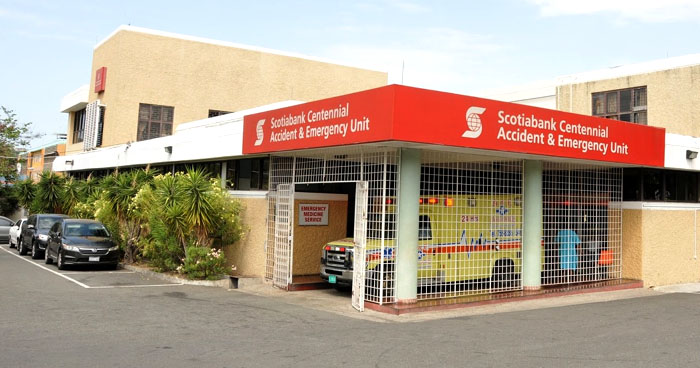
This Accident and Emergency Unit in Jamaica was built by the Scotia Bank Foundation, Canada’s third largest bank.  But why not by the individual rich men and women who are the present day descendants of those slave traders?

34 Comments

Filed under Criminology, History, Politics

The Luckiest Man in the World (1)

In his later years, my Dad, Fred, always used to say that training to fly in bombers was infinitely more perilous than flying on combat missions. He did his training with 20 OTU at Lossiemouth in north east Scotland. And certainly, casualty rates on the training airbases in Scotland were always extremely high.
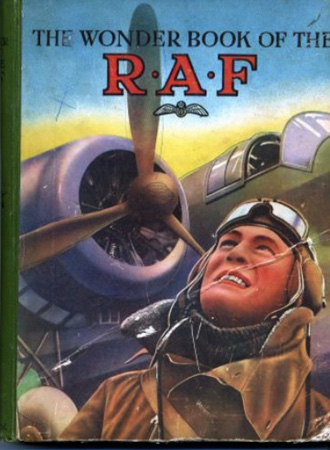
No matter where their OTU was, though, everyone soon became well aware just how dangerous their young lives were. The apparently modern aircraft, pictures of which would previously have filled publications for young boys such as “The Wonder Book of the RAF”, were in reality often second rate, or extremely dated, and were certainly not good enough to be front line combat aircraft. The mechanics too, being often extremely inexperienced, were frequently incapable of servicing the aircraft properly. The book looks exciting though:

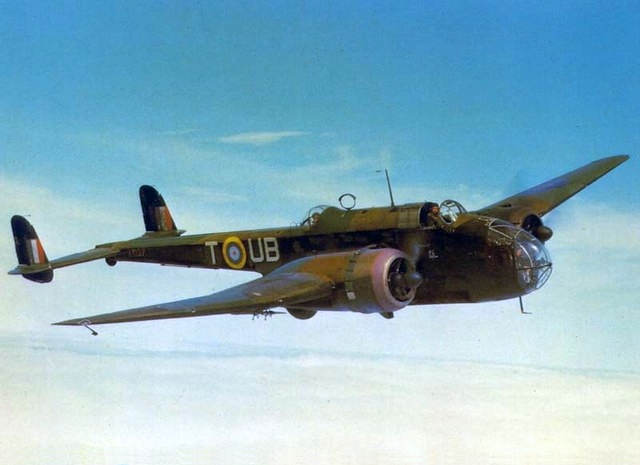
The aircraft types used included the Handley Page Hampden, which had a variety of nicknames  including the Flying Suitcase, the Flying Panhandle and the Flying Tadpole. Nobody liked it very much then!

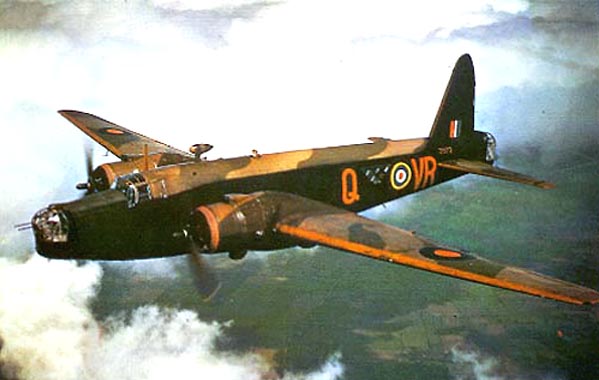
The very best of all the training bombers was the Vickers Wellington.


Overall, though, the problem was that crews were by definition inexperienced, and unlikely to be able to respond to any given emergency either sufficiently quickly or in the appropriate manner. They were more liable to make mistakes, and then to compound those initial errors by making even more mistakes. Indeed, statistically, it remains a fact that around 15% of Bomber Command’s fatalities during the Second World War occurred through crashes and accidents in training situations. In some O.T.U.s. casualty rates reached 25%. The situation was perhaps best summed up by the airman who said that the problem was “dodgy crews in dodgy aircraft.”

Here’s an example. It’s taken from the research I am currently doing about the Old Nottinghamians, Old Boys of the High School, who perished in the Second World War.

“…Jack was called to join 81 OTU and was listed to train as a bomber pilot. 81 OTU was formed in July 1942 and they were based at RAF Ashbourne training aircrews for night bombing using the Armstrong Whitworth Whitley:

This aircraft was obsolete by the time the war broke out. It had a small bomb load, it would not fly on just one engine and when it did fly, it had a most peculiar nose down attitude. This was caused by the angle of the wings which was very high to ensure a good performance when taking off or landing. But when cruising, there was an enormous amount of drag, restricting the aircraft’s fuel economy and forcing many pilots and their crews to ditch in the North Sea when they could not get all the way back to their airfield. The crews who did survive joked that the Whitley was “slow as a funeral” and called it the “Flying Wardrobe”, or, on a bad day, the “Flying Coffin”.

We’ll see why in more detail next time.


27 Comments

Filed under Aviation, Bomber Command, History

The kings of slavery, and the queens (1)

I have written quite a bit about slavery and its evils, but after that shock of finding out that my cherished heroes of stage and screen were the wealthy descendants of wealthy people who owned slaves, I had one more shock in store:


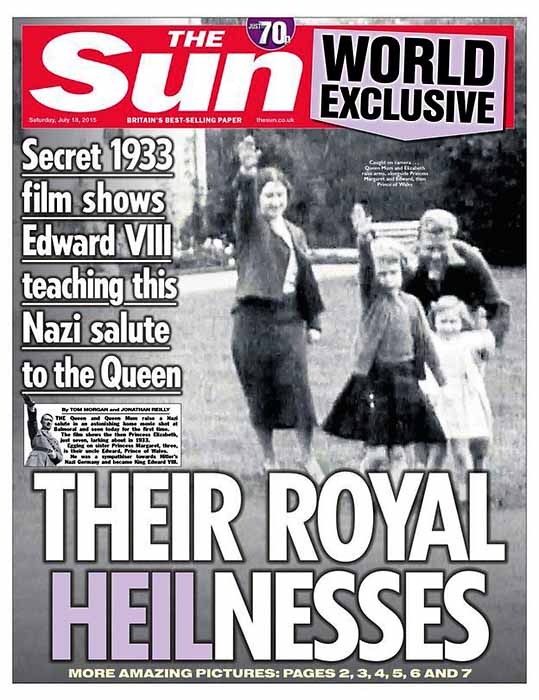
I found out that the Kings and Queens of England were involved in the slave trade. I knew that even now the modern royals have their dubious dark corners. What kind of man, for example, deludes a little girl into giving Hitler salutes?

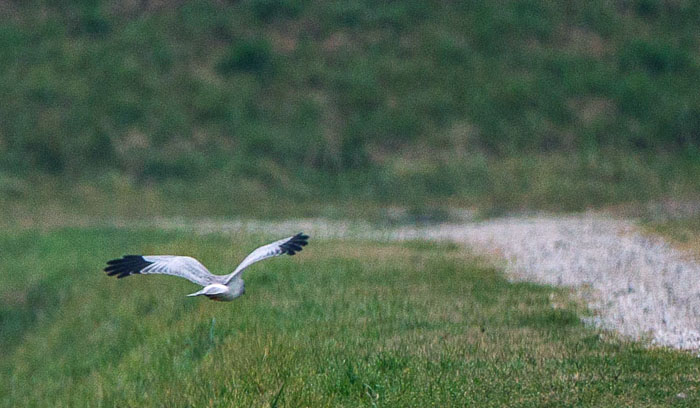
How did the witnesses of the illegal killing of a rare Hen Harrier feel when no charges were brought?

I knew how unbelievably rich Cornwall could make you, even if it is one of the poorest counties in the country. I knew that if anybody in the county died without a will and no heir could be found, everything went to Prince Charles:

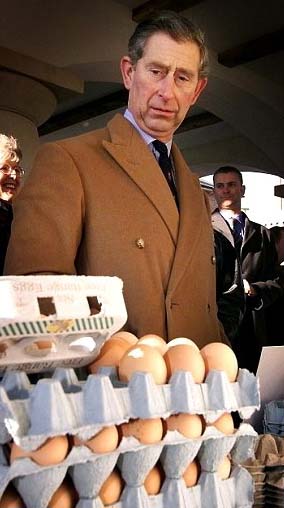
I knew from the Daily Mirror how one royal “required his chef to cook his eggs for three minutes; the chef usually boiled several batches to ensure they fit his precise preferences.” :

But slavery? Apparently, it began with Queen Elizabeth the First. She gave her royal support to Sir John Hawkins, the sea captain, who was one of the first to men to make a profit from transporting Africans to the Americas.
Then there were the Royal Adventurers into Africa, a company set up in 1662 to trade slaves. It involved the brother of King Charles II, namely the Duke of York, and the sister of King Charles II, Princess Henrietta, and the Queen Mother, Henrietta Maria, and Queen Catherine of Braganza and the Duke of Albermarle, Lord Arlington, Lord Ashley, Lord Berkeley, the Duke of Buckingham, Lord Craven, Lord Crofts, and Lord Sandwich and Baron Tom Cobley and all. In total, there were four royals, four barons, two dukes, five earls, seven knights and a marquess. And Samuel Pepys. And the so-called “philosopher of liberty” and “Father of Liberalism”, John Locke. By 1665 they were making £200,000 per year from slaves between them. (£6.5 billion today). The slaves didn’t make anything at all:

The Royal Adventurers into Africa were given a monopoly on the slave trade for a thousand years but ceased trading in 1672. That same year, King Charles II gave a monopoly on dealing in slaves to the Royal African Company. The Royal African Company (the name might have some significance here) was owned by his brother, His Royal Highness, James, Duke of York. Also involved were Sir George Carteret, Sir John Colleton, Lord Craven,  Lord Shaftesbury, 15 Lord Mayors of London, 25 Sheriffs of London and the so-called “philosopher of liberty” and “Father of Liberalism” and “lover of hard cash”, John Locke, whose ancestor had been a slave trader.
By 1680, they were transporting around 6,000 slaves a year to new homes in the West Indies and the same annual number to North America….

And next time, an exciting quiz…

10 Comments

Filed under Criminology, History, Politics

Attack the Tirpitz!! In a Halifax??

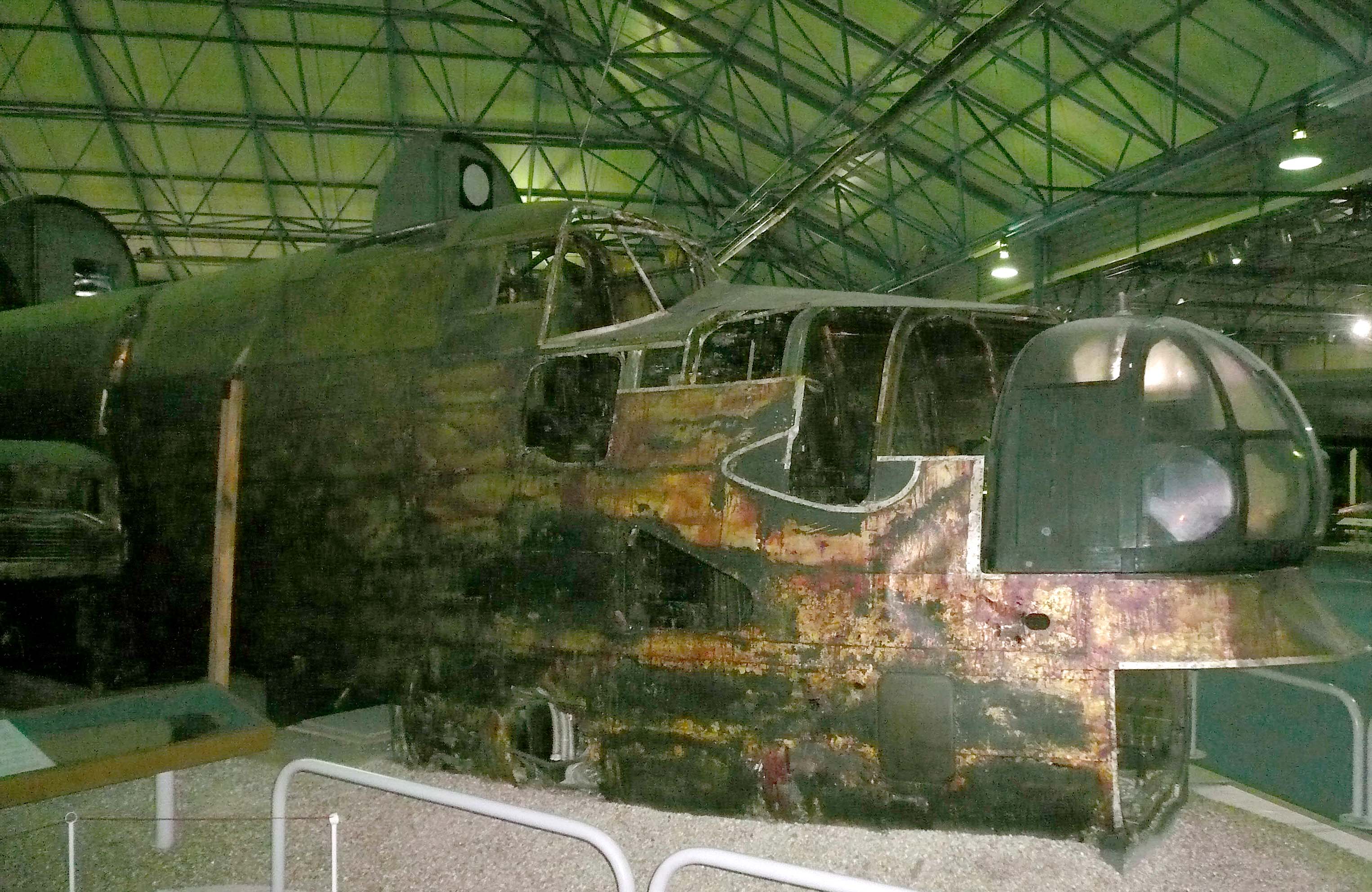
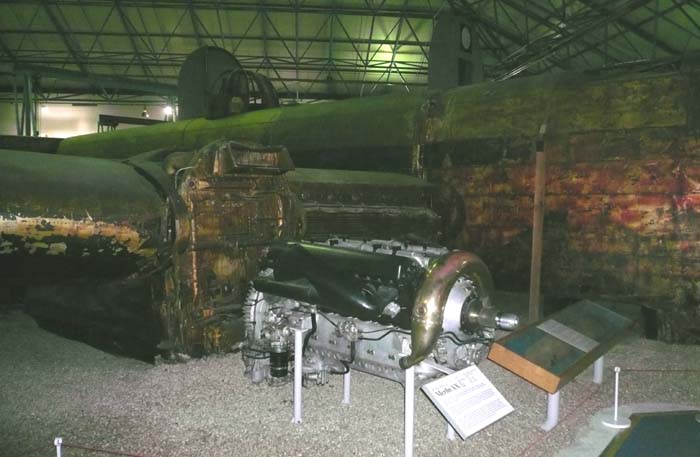
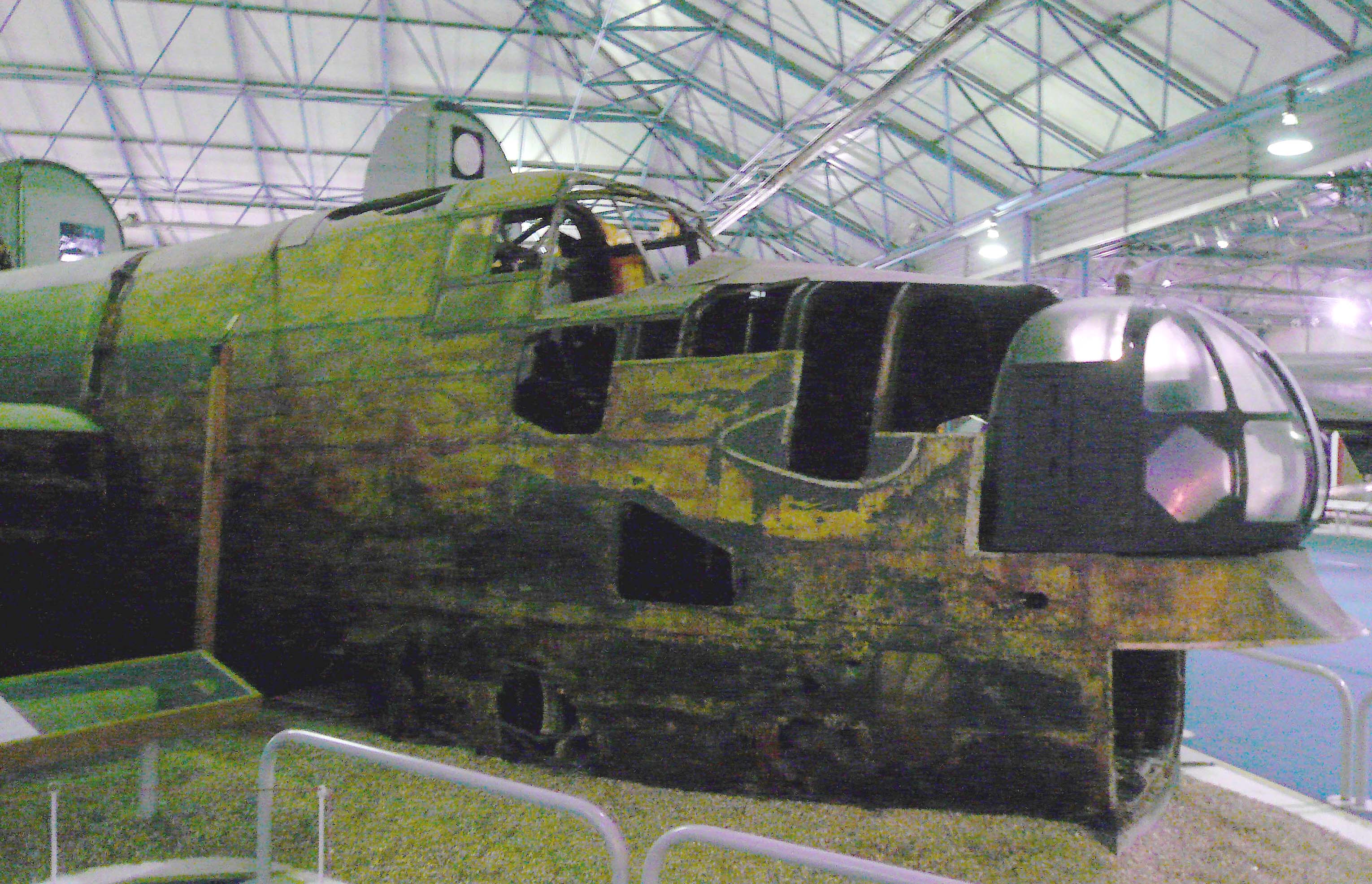
You are so lucky! You are going to see three photographs of a relatively rare aircraft, a Halifax Mark II, taken in the almost funereal gloom of the RAF Museum at Hendon. I apologise for the quality but in their efforts to preserve the original paint on the aircraft, the museum lights are kept very low indeed. For this particular aircraft, do not be put off by the fact that it seems apparently to have grown two enormous circular fins in the middle of its back. That is an Indian Air Force B-24 Liberator:

this one

The Halifax was the second British four-engined bomber to enter service in World War Two but it became the first to bomb Germany during a raid on Hamburg on the night of March 12th-13th 1941. Subsequent increasing losses on operations over Germany caused Halifax bombers to be used on less hazardous targets from September 1943.

The Halifax made over 75,000 bombing sorties and dropped almost a quarter of a million tons of bombs on Germany.

The Halifax continued in service with Coastal and Transport Commands after the war and the last operational flight was made by a Coastal Command aircraft in March 1952 from Gibraltar.
This s a Halifax B Mk II, Series I, with the serial number W1048. It was built by English Electric in 1942 at their factory near Samlesbury near Preston in Lancashire as part of a contract for 200 Halifaxes. This a similar aeroplane:

halifax_5

On March 27th 1942 it joined 102 Squadron at Dalton in North Yorkshire as “DY-S”.  The squadron was in the process of converting from the old Whitley Mark Vs
On April 9th 1942, six aircraft from 102 Squadron were exchanged with six aircraft from 35 Squadron because they were fitted with Gee radio navigation aid and could not be risked on a raid beyond the range of Gee stations  W1048 now became “TL-S” of 35 Squadron.
On April 15th the aircraft was taken on a training flight around Filey Bay followed by some low level practice bombing at Strenshall. Just over a week later, it  flew with ten other Halifaxes to RAF Kinloss in Scotland as an advance base for the raid on the German battleship, the Tirpitz.
It took off on April 27th 1942 at 2030 hours, the bomber’s first operational mission. “DY-S” was the  seventh of eleven bombers to depart and it was never heard of again. Until, that is, it was restored to the RAF Museum at Hendon;

P1320336xxxxxxxxxxxxxxxxxxxxxxxxxxxxx

The crew was Pilot Officer Don P MacIntyre who was 24 years old and came from Canada. The busy bee in the crew was Pilot Officer Ian Hewitt who was the observer, bomb aimer and navigator. He  later won a DFC. After the war, he moved to quieter pursuits and became a chartered accountant, dying peacefully at home in bed in June 2015, aged 94.
The Flight Engineer was Sergeant Vic Stevens and the first WOP/AG  was Sergeant Dave Perry
The mid upper gunner was another Canadian, Sergeant Pierre Blanchet.
The tail gunner was Sergeant Ron Wilson who in later life was to become a London cabby.
The aircraft was carrying four spherical mines of the Royal Navy type 19N. They each weighed a ton and their shape and size meant that the the bomb doors could not be closed.
The cunning plan was to roll the four mines down the steep mountainside into the gap between the ship and the shore.  They would then sink the ship because the underside was thinner and therefore more vulnerable.
At half past midnight, the eighth aircraft to attack, Don McIntyre followed by his friend Reg Lane set off to release their mines. McIntyre was first. As they had arranged, they descended to 200 feet but “DY-S” was hit by flak and too badly damaged to get back to Yorkshire or even to Sweden.
They were forced to land on the frozen surface of Lake Hoklingen, twenty five miles east of Trondheim.

Here is the starboard inner engine nowadays in the museum:

P1320335

Vic Stevens broke his ankle and was eventually taken to hospital by the Germans. The other six came into contact with the Ling, the Norwegian underground and were helped to Sweden. Ian Hewitt and Don McIntyre returned to England after a few weeks, and Dave Perry,  Pierre Blanchet and Ron Wilson after a year. By this time Ron Wilson had rented a flat, found a job and made a start on a new life.
The poor old Halifax sank through the ice in the southern corner of the lake just twelve hours after the crash.
In 1971 the remains were found by local divers and in September 1972 by the RAF Sub Aqua Club. Everything was still there except for the starboard outer engine and one or two bits and pieces taken by souvenir hunters in the past.

Here is a photograph which is admittedly very similar to one of the others. I am quite proud of it, though, because my Idiots’ Guide to Photoshop has enabled me to turn a pretty well completely black picture into something understandable. Slight tinges of red are apparently the chemical which inhibits any further deterioration in the fresh air. Do they make that for humans?

P1320338xxxxxxxxxxxxxxxxxxxxxxxxxxxxx

By the end of June 1973, the Halifax had been retrieved from the lake, and after a lot of restoration, it was ready for the public by the end of 1982. Apparently a second Halifax from the same squadron and the same operation was discovered at the bottom of a nearby fjord in 2014. This exciting discovery was made by the Marine Technology Centre from the Norwegian University of Science and Technology in Trondheim. The wreckage is around 600 feet down, and is thought to be W7656 and to contain the remains of Sergeants Evans and Columbine, the wireless operator/gunner and the navigator respectively. I do not know if this will make any difference to plans to raise the aircraft and to restore it.

28 Comments

Filed under Aviation, Bomber Command, History, Personal