
In a previous post of this series on the heroic deeds of the staff cricket team, I had started going through a number of episodes which are also mentioned in my bestselling book, and my Hollywood and Bollywood screenplay, “Nottingham High School: an Anecdotal History”. If I remember rightly I had just discussed how crap I was at cricket compared to one prodigiously gifted member of the team who merely needed me to be there to do the fielding while he and the other superstars did all the batting and the bowling and showed off all their talents.
Not that I felt insulted by his words. They did not make me angry. No, Not at all.

The next mention of staff cricket in the book comes on the evening of Wednesday, June 21st 1978.
By then, the staff cricket team had two usual umpires, the young idiot Me, and the much more experienced Allan Sparrow, a History teacher. Whereas the first named umpire, Me, lived in permanent dread of having to make a decision which would upset his elders and betters by sending them back to the pavilion some 96 or so runs short of their century, the senior partner, Allan Sparrow, true to his own wonderfully analytical character, had no such scruples.
This particular day, in the very first moments of the game, the opposition’s opening bowler managed to trap, plumb in front of the wicket, with his score still stuck on zero, a very important batsman indeed. Standing far away at square leg, the young idiot, Me, thanked the cricketing gods that he was standing far away at square leg and would not be required to make a decision. The shrieked appeal of “howzat” died away in the quietness of the evening:
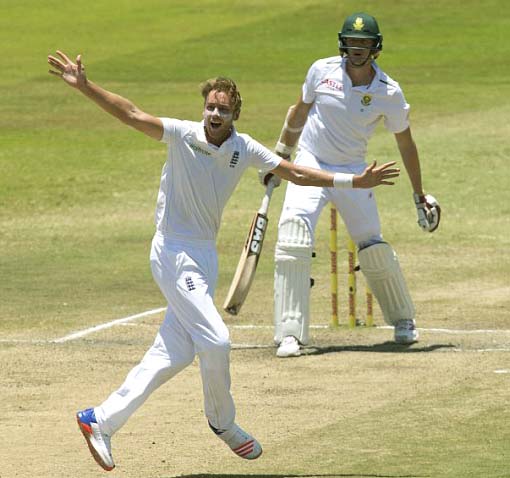
Umpire Sparrow waited for a moment. Then he raised the dreaded digit to the skies. What an angry trudge back to the pavilion for a very disappointed batsman . It was the bravest thing I have ever seen in the history of sport.

During the following year of 1979, staff cricket continued on apace, counting among its stars such sporting luminaries as Chris Chittenden, Paul Dawson, Bob Dickason, Claude Dupuy, Phil Eastwood, Steven Fairlie, Simon Jenkins, Dave Phillips, Graham Powell, Tony Slack, Chris Smith, Roger Stirrup and Norman Thompson.
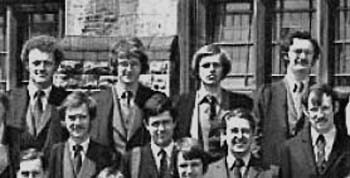
Here’s Bob Dickason, Phil Eastwood, Dave Phillips, Tony Slack, three quarters of Chris Smith, and Norman Thompson:
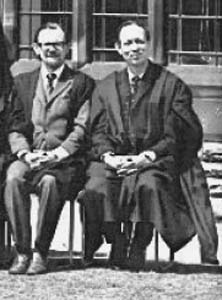
Claude Dupuy, by the way, was the French assistant, who, after living for a year in Mansfield went back to win the All-France University prize for speaking colloquial English. Chris Chittenden was a Geography teacher who worked at the School in the interval between Charlie Stephens and Bob Howard. Chris had four nationalities. His father was English, he was born in India, his mother was from New Zealand and he was brought up in Australia. Poor, poor man, he lived a healthy life only to be cut down by cancer at just 40 years of age. I will be eternally grateful to him because he was the man who organised for three of us to drive down to Wembley after school one evening to watch England-Holland at football and we all saw Johann Cruyff play at Wembley. And we saw him introduce the Cruyff turn to the world. Here’s Bob Howard:
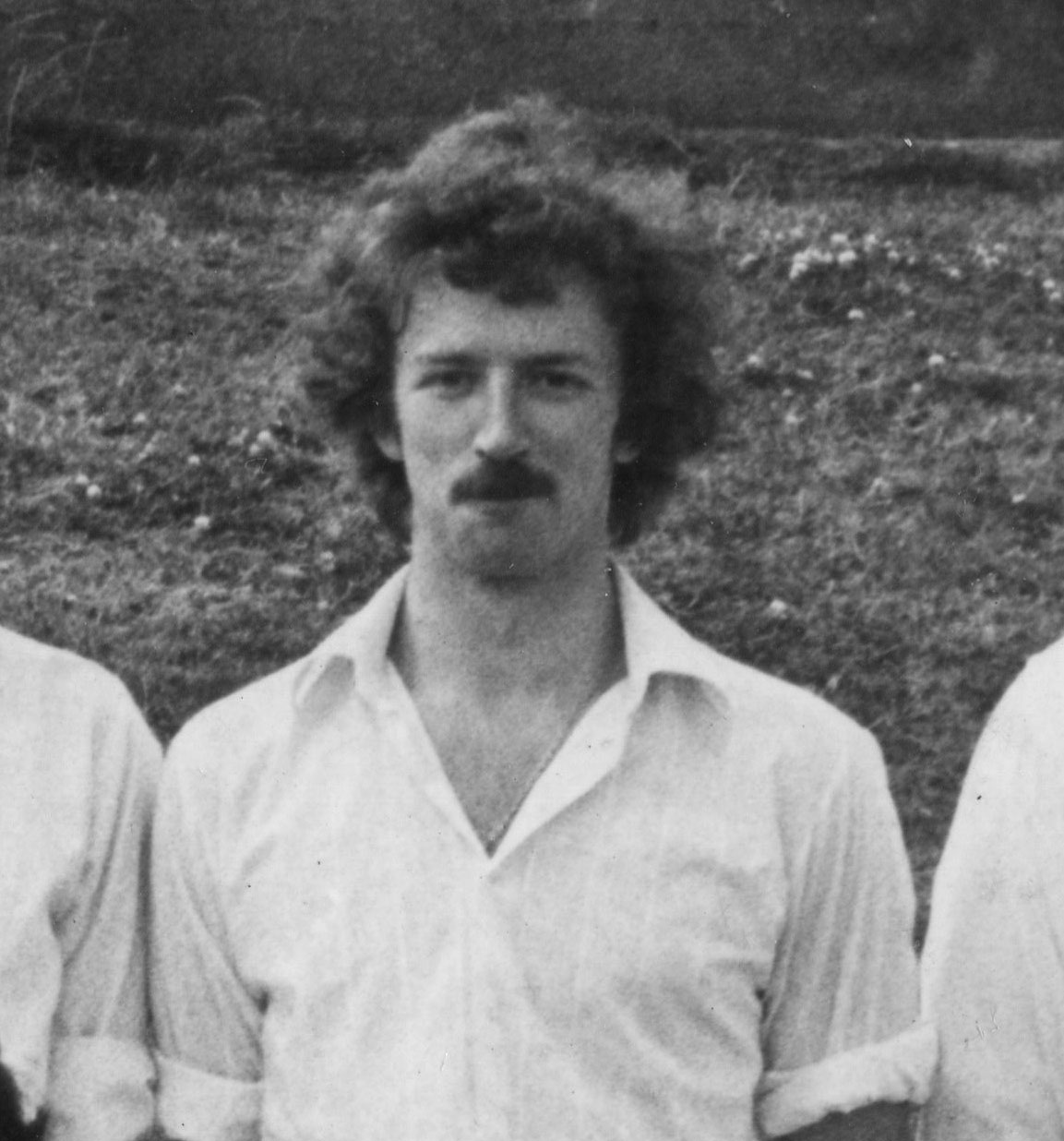
Such was the fame of the staff team that a member of staff appointed as a teacher for the following Christmas Term actually came along to play in a number of fixtures.
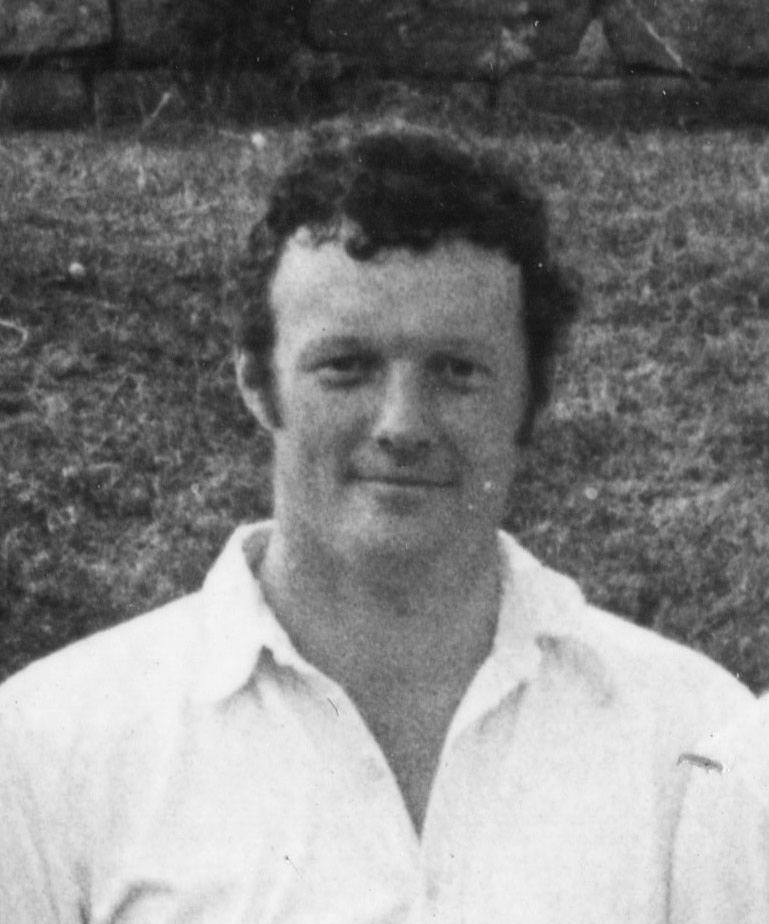
This was Ray Moore, who at the time sported a fashionable Afro hairdo, unencumbered by any such refinement as a protective helmet. Here’s a picture of him a week after the game, when he’d lost that Afro:
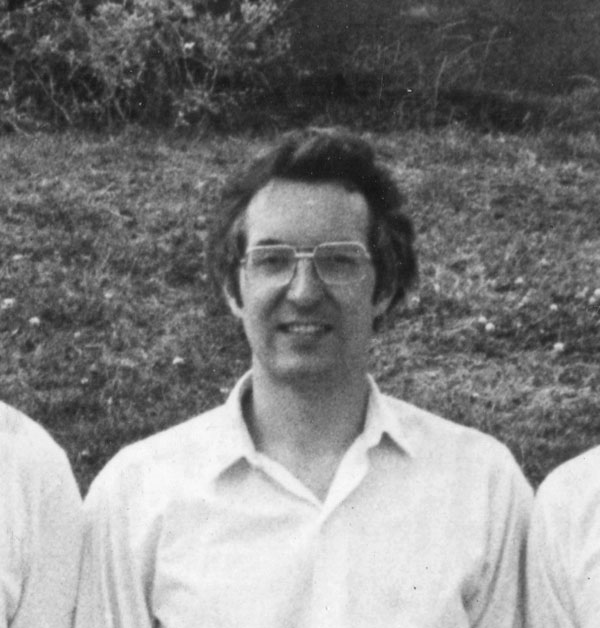
On one occasion, Ray was facing an extremely wild fast bowler, whose main interest in life seemed to be scaring the living daylights out of opposing batsmen, with bouncer after bouncer. After a series of whistlingly fast deliveries, he finished his over with a fast, lifting ball, which actually went through Ray’s hair. The moment when Ray advanced down the wicket, shouting loudly, and waving a menacing cricket bat, was, I believe, the closest the staff team ever came to an actual punch-up.






















 John Knifton