Category Archives: the Japanese

Kamikaze (1)

Ever since I was a little boy, I have always wondered about kamikaze pilots. The whole idea just seemed so unnatural to me, even crazy. When I saw a copy of “Fire from the Sky” by Robert C Stern, therefore, I bought it straightaway. Lots of pages, lots of text and lots of pictures. What was there not to like? And besides, I really wanted to know what the explanation was for this strange phenomenon:

Apparently, what it all boils down to is that:

“Japan has a particular, and some might call peculiar, predilection for the tragic or failed hero. They are admired for their sincerity and loyalty even when their causes were met with failure and their goals could be considered traitorous. Above all else, those heroes adhered to their ideals, especially in the face of their own destruction.”

Japan’s tradition of the tragic hero goes right back to the fourth century and Prince Yamato Takeru. But after him come a whole series of legendary and historic failed heroes, stretching down the centuries. They included Yorozu, Arima no Miko, Sugawara no Michizane, Minamoto no Yoshitsune, Kusunoki Masashige, Amakusa Shiro, Oshio Heihachiro, and Saigo Takamori. Here’s Amakusa Shiro:
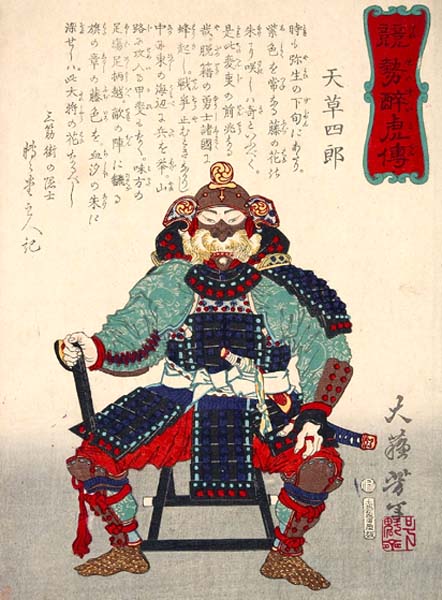
“The traditions of these men led in the modern age to the World War II kamikaze fighters—an unprecedented development in modern warfare which for most countries would have been unimaginable.”

As a boy, of course, I was tickled pink as we used to say then, that there were actually “ex-kamikaze pilots” who could be interviewed on our grainy black and white TV sets. Author Robert Stern, though, explains it all beautifully for us. So…….. how  could you be on TV as an “ex-kamikaze pilot” ? For two reasons. No 1, you couldn’t find a suitable target and came back. No 2, mechanical failure of some kind.

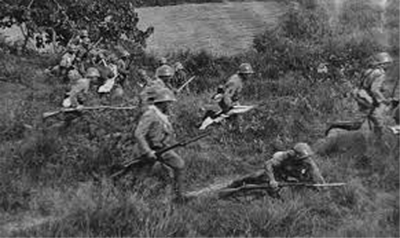
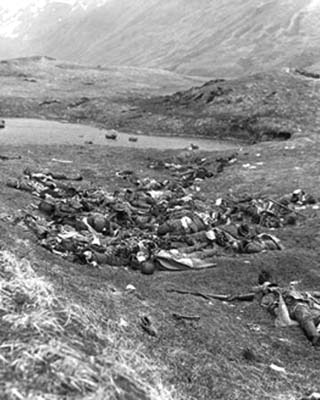
The Japanese had in many ways already road tested the idea of kamikaze with their “banzai” charge. When soldiers were cornered and faced certain defeat, out they would come, heedless of their own safety and shouting “Tennoheika banzai!!” (Long live the Emperor”). The first banzai charge was on Attu on May 29 1943, with others on Saipan and Okinawa. In this way, their honourable death in battle was guaranteed.

Here’s a banzai charge before:
And after:
In 1944, the Americans were advancing into the Philippines, an act which would cut Japan off from the sources of its raw materials. What could be done? After “The Great Marianas Turkey Shoot”, only 35 aircraft had returned to Japan.
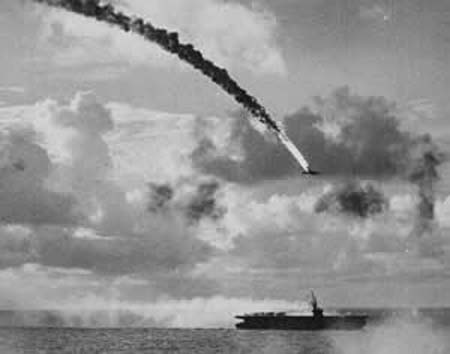
By confronting the Americans in the ordinary way, the Japanese were losing the war by some margin.  Something radical needed to be done. Perhaps the banzai charge could be developed into the kamikaze attack. At a meeting of his officers, Vice Admiral Onishi Takijiro floated the idea of pilots flying their aircraft directly into enemy vessels at the cost of their own lives. Every single one of his 23 officers immediately agreed with the idea and volunteered for duty. It didn’t take long to organise:
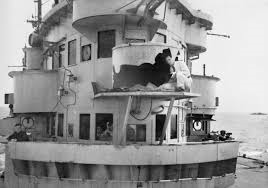
Author Robert Stern, states that two possible kamikazes on October 24 1944 were not the first, but just a case of an already doomed aircraft being plunged into a ship, an act called “jibaku” by the Japanese. In this case, the ships were the Sonoma and the LCI(L) 1065. This abbreviation means “Landing Craft Infantry (Large)”. They were both struck by bombers, a Betty and a Sally respectively.

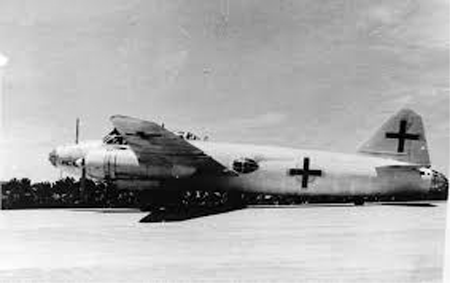
Japanese aircraft were given code names by the Allies. Here’s a Betty. This particular aircraft has the surrender markings of a green cross on a white background on it:
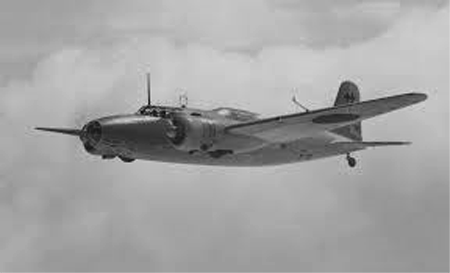
And here’s a Sally:
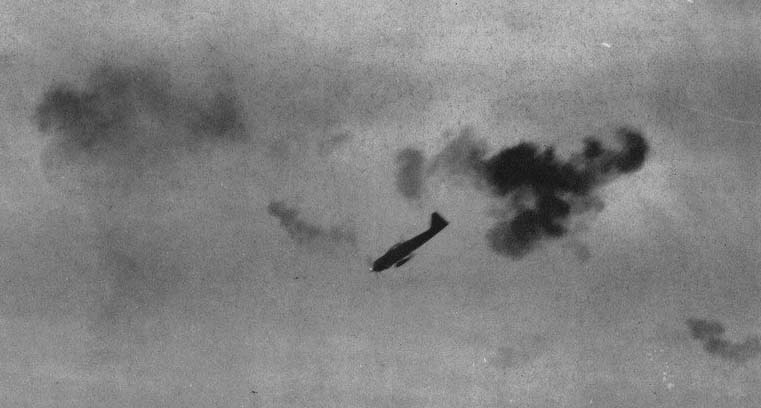
The following day, October 25th 1944 provided the first genuine kamikaze hit, which came on the USS Santee, CVE 29. CVE stands for “escort carrier or escort aircraft carrier”. It was hit by a “Zeke” or Mitsubishi Zero, probably piloted by PO1C Kato. Here’s a Zeke kamikaze-ing:
Kamikaze, incidentally, means “divine wind”. I’ve been troubled by that on occasion, too.  Next time, “Getting the best out of your two 250lb bombs”.

24 Comments

Filed under Aviation, History, Pacific Theatre, the Japanese

Books for Christmas (3)

I thought it might be nice if I gave you an idea of some of the best books that I have read over the past few years so that you could consider them as a Christmas present for one of your friends or family. All of the books featured are, in my opinion, well worth reading. They are all available on the Internet. In some cases, what appear to be very expensive volumes can be acquired for a fraction of the cost, if you go to abebooks or bookfinder, or if you consider the option of buying them second hand. It ‘s something I have never understood, but with some very expensive volumes, it is even possible to buy them brand new at a very much reduced price, again, if you shop around.

First of all, the book that explains all the hidden meanings in two of the great masterpieces of children’s literature. Why do hatters go mad? Which one of their pets did Victorian children often keep in a teapot? where did the Cheshire Cat get its grin?

It’s “The Annotated Alice: Alice’s Adventures in Wonderland and Through the Looking Glass” by Lewis Carroll and Martin Gardner. An indispensable guide to two of the world’s most influential books:

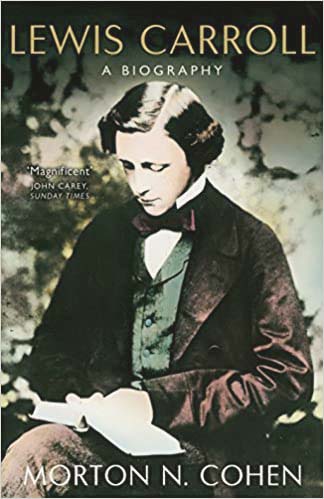
And here, a great follow-up to “Annotated Alice”, the book that is, in my opinion, the best biography of Charles Lutwidge Dodgson aka Lewis Carroll. It’s by Morton N Cohen, and you can pick up this very large book for quite a low price if you buy second hand and choose carefully.

I previously mentioned a book about the cricketers killed in World War Two and here is the much larger book about the cricketers killed in the previous conflict. It was amazing to see just how many upper class men had only ever played two or three games of first class cricket, but, equally, how many of them had a brother, or even two brothers who were also killed in the war. What a slaughter of decent men that dreadful war was:
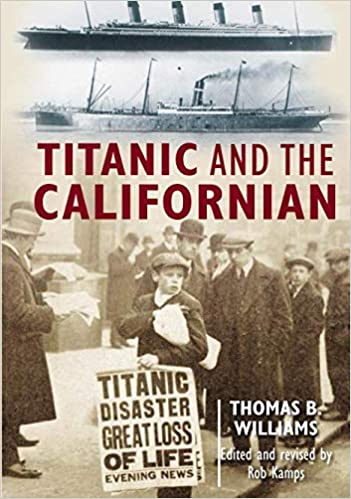
As the Titanic was sinking, the lights of another ship were seen, right on the horizon. This ship, though, did not sail over to help. The press decided the ship was the Californian and then made the life of its captain a living hell. And that was completely without justification according to “The Titanic and the Californian” by Thomas B. Williams and Rob Kamps. A gripping read:

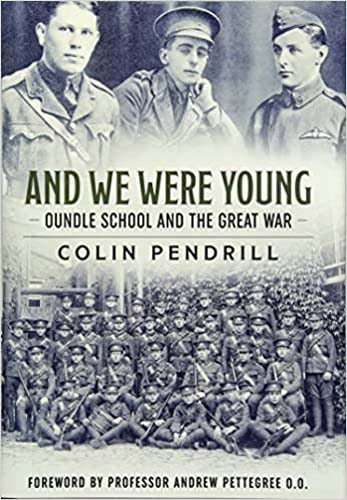
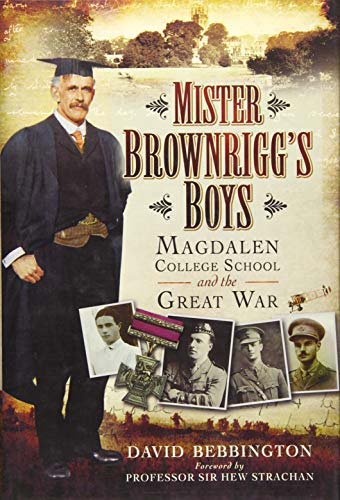
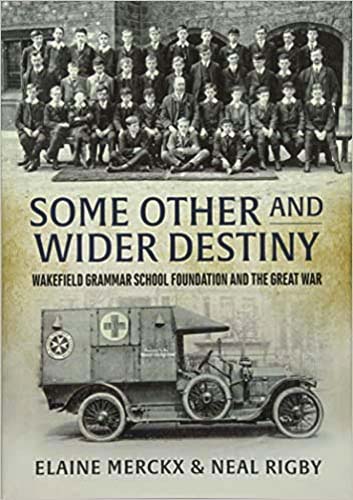
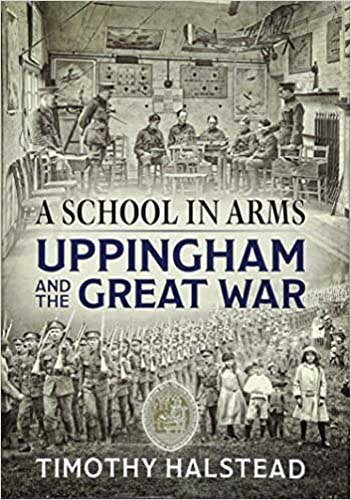
It’s not that long since the centenary of the Great War, when a great many books were published about that appallingly wasteful conflict. Being a teacher of nearly forty years’ standing, I was attracted by the books written about its effects on a number of English public schools. Apparently at Nottingham High School where I worked, the school flag was almost permanently at half mast. And that was far from unique. Such exclusive private schools provided the majority of the junior officers, Second Lieutenants, Lieutenants and Captains. The first two of those three finished with a casualty rate as bad as Bomber Command in WW2. Here are the four I enjoyed most. The first one is from Uppingham School whose website is here
The second one is Oundle. Again, you can see for yourself the school’s website which is here

The third book was of Magdalen College School in Oxford with its Headmaster, Mr Brownrigg. Here is its website.

The last one was of a Yorkshire school called Wakefield Grammar. Here is its website.

Personally, I thought that Wakefield was the best of the four books, because it contained a lot of interesting details of life at the school at the time. Magdalen was possibly the most poignant, although Uppingham, of course, was the school of the three friends of Vera Brittain, and feature in her book, “Testament of Youth”.

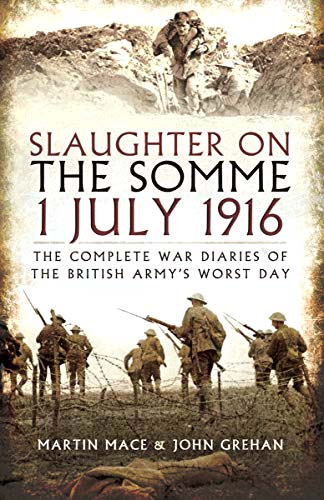
The next book is “Slaughter on the Somme 1 July 1916: The Complete War Diaries of the British Army’s Worst Day” by Martin Mace and John Grehan. This is definitely a book that can be picked up a lot cheaper than its full list price. The book consists largely of the reports of the worst day ever for the British army, written for the most part  by junior officers, who tended to tell the true version of events in plain language. What they recorded is quite simply astonishing. And the best sentence ? “It was apparent that matters were not progressing quite as favourably as had been anticipated.” Understatement or what?  57,470 casualties on the day, of which 19,240 men were killed. And in the entire three and a half month battle, around 420,000 British and Empire men perished.

I have always been fascinated by DH Lawrence, who seems to have been “a most peculiar man”. Of the next four books, I have not read a single one, but I can’t wait to get started. The first is “A MEMOIR OF D. H. LAWRENCE: \’THE BETRAYAL” by GH Neville. Neville used to travel by train to Nottingham High School with the fourteen year old Lawrence.

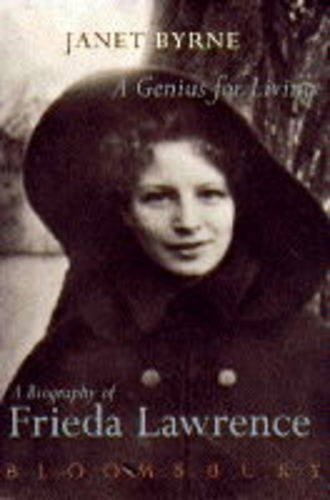
Later in life, Lawrence was to steal away the wife of a university professor at Nottingham, Dr Ernest Weekley. Her maiden name was Frieda von Richthofen, but she then became, eventually, Frieda Lawrence. So far, I have bought “Genius for Living:  a Biography of Frieda Lawrence” by Janet Byrne which may help me understand the behaviour of this very strange woman.

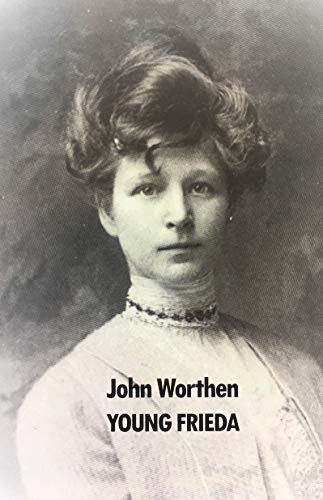
A modern day professor at Nottingham University, John Worthen, has gone as far as to write a novel about that shocking love triangle back in Nottingham in 1912. I am looking forward to seeing how he portrays some extraordinary events.

An outstanding aviation book is “Darwin Spitfires”, a book by a local teacher, Anthony Cooper, about the use of RAF and RAAF fighters against the attacks on Darwin by the Japanese. This one I have already read, and it is a marvellous eye-opener of a book, not to be missed:

“Fire from the Sky: Surviving the Kamikaze Threat” is a study by the American author, Robert C. Stern, of the phenomenon of the Kamikaze attacks on American and Australian ships. It is a superbly detailed book with a very interesting comparison of the kamikaze and the islamist suicide bomber.

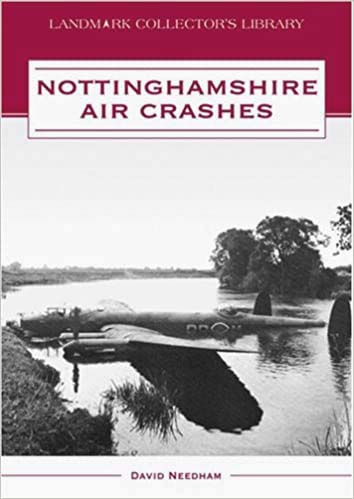
I was surprised to find that the next book was still possible to get hold of as it seems to be so local in its concerns. That point of view is somewhat incorrect though, because the book is really about any one of twenty or thirty counties where there were airbases during WW2. It is a very honest book, and if the behaviour of the locals is disgraceful, then the author is not slow to tell us about it. A little gem.

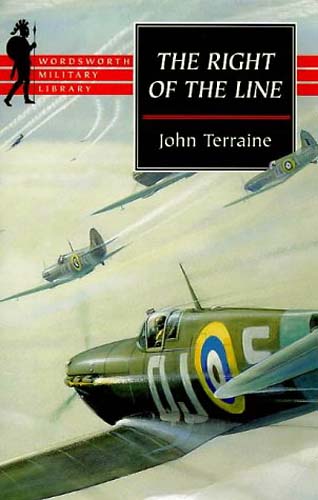
This book, with almost 900 pages and so many heavily reduced second hand copies around, has been described as a bargain door stop but that is a tad cruel.  Indeed, “The Right of the Line: The Role of the RAF in World War Two” by John Terraine is a wonderful reference book about the RAF with every facet of their war explained and examined. Definitely a book to be dipped into, it is a valuable encyclopedia about the events and intentions of the RAF in the Second World War.

So there we are. The best part of forty or fifty suggestions about what to buy the boring old fart in your family for Christmas. And all of them recommended by a fully paid up boring old fart of a blog post writer.
I can even offer you an insurance policy. If all else fails, then buy him a box set. How about this tumultuous tale of a chemistry teacher gone wrong ? Very, very, wrong…..


25 Comments

Filed under Aviation, cricket, History, Literature, military, Nottingham, Pacific Theatre, The High School, the Japanese, Writing

The place where I grew up, Woodville, in World War 2

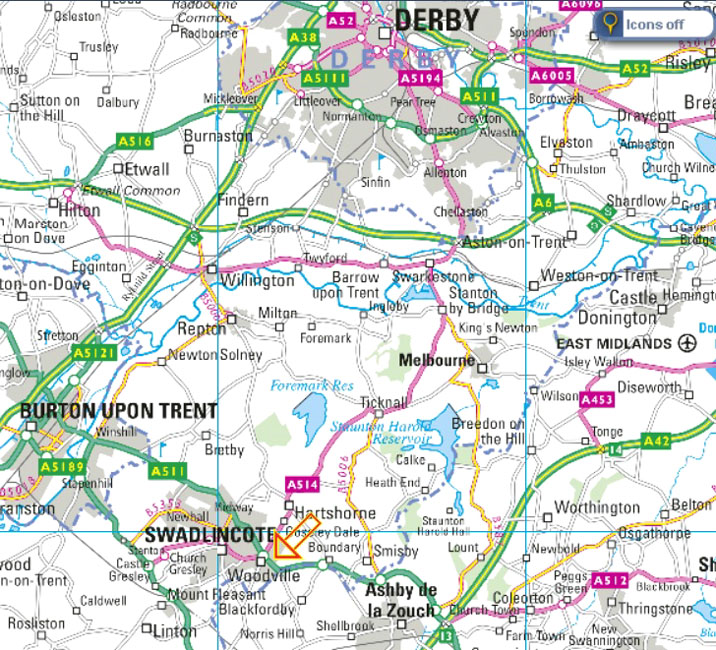
I grew up in a small village called Woodville, just to the south of Derby, in more or less the centre of England. Cue “The Orange Arrow” :

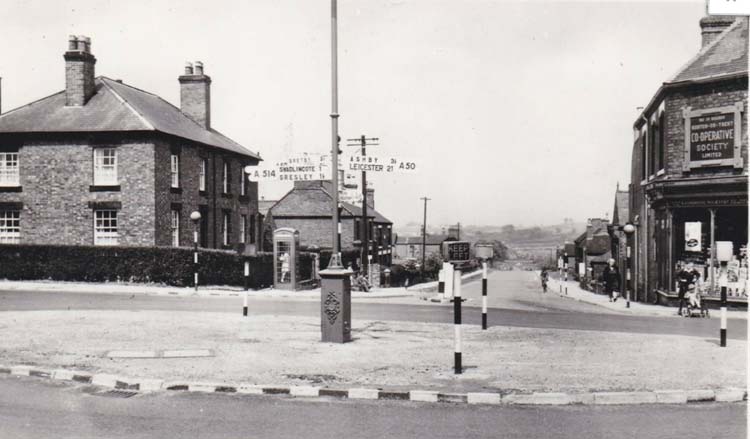
The village used to be called Wooden Box because of the large wooden box occupied by the man who operated the toll gate on the toll road between Ashby de la Zouch and Burton-upon-Trent.  The name Woodville first appeared in 1845. Nowadays, there is a roundabout where his box used to be, although the location itself is still called “Tollgate”. Here’s an old postcard of the “Tollgate” :

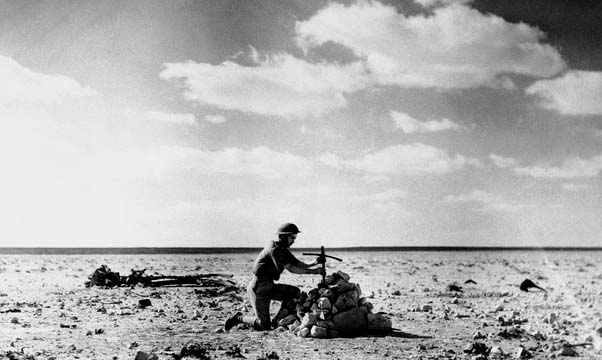
My Dad, Fred, told me that the majority of the people in Woodville were pretty much unaware of the existence of World War Two. It had comparatively little impact in this mostly country area, where rationing was offset by the inhabitants’ ability to grow food for themselves, and even to raise their own pigs and chickens. Food, therefore, was relatively freely available, if not abundant, and the war seemed to be very distant. Woodville seemed to be an unchanging pastoral paradise:

The twenty year old Fred despised the comfortable lives of the older people in Woodville. They would live out their humdrum lives without any risk whatsoever, while he was laying his life on the line pretty much every single day in Bomber Command:

The contempt he had for the inhabitants of the village, though, was perhaps a measure of his own fear at being asked to fly over burning Bremen or Cologne, or some other heavily defended Bomber Command target :

Young men, of course, went away from Woodville and from time to time their parents were duly informed that they would never return:

It was only too easy, though, for others to view that profoundly sad process as similar to that of the young men who might have moved away from the village for reasons of employment, or even in order to emigrate to another country.

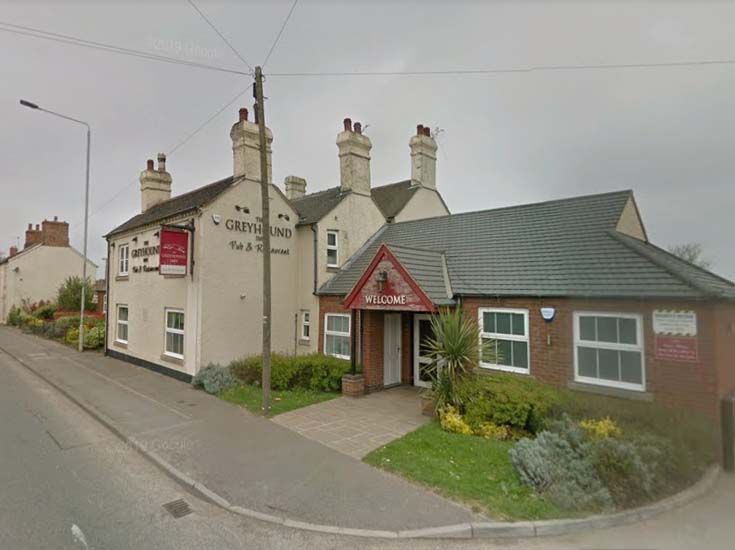
Occasionally, enemy aircraft would fly over Woodville, identifiable by their particular and peculiar engine noise. On one dark night, on November 14th 1940, many local people, Fred included, walked up to the Greyhound Inn near Boundary :

Everybody stood on the opposite side of the road from the public house and looked south. The view from that spot stretches thirty or forty miles or more into the southern Midlands

As they stood and looked, they were able to see the bright glow in the sky as Coventry burned, a city whose centre was almost completely destroyed by the Germans. There was, though, very little direct effect of German bombing on the local area around Woodville.

On one occasion, a Heinkel III night bomber, panicking about where he was, possibly pursued by a night fighter and perhaps worried that he might not make it back to the Fatherland, jettisoned all his bombs over the nearby village of Church Gresley. Look for “der fliegende orangefarbene Pfeil” :

The bombs all landed near Hastings Road, not far from the school where Fred would teach immediately after the war. They demolished an entire row of houses which backed onto Gresley Common, and all the inhabitants, almost thirty unfortunate people, were accidentally killed.

Years later, in the 1990s, Fred was able to explain these events to a man digging in the garden of his new townhouse, built recently on the site of the Second World War disaster. The man could not understand why the soil was so full of broken bricks, bath tiles and so many smithereens of old fashioned blue and white patterned crockery:

The only other direct connection with World War 2 was the unfortunate soldier and ex-prisoner-of-war who finally returned to Woodville in late 1945 or early 1946, having spent years as the unwilling guest of Emperor Hirohito, and the Japanese Imperial Army.

The poor man was unbelievably gaunt, and he had lost so much weight that his clothes flapped on his body like sails on a mast:

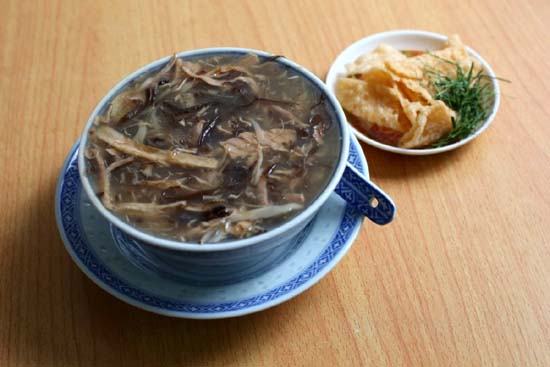
He did not receive as much sympathy as he might have done from the citizens of Woodville, though, when they found out that he had actually eaten snakes in his efforts not to starve to death. “Really ! Snakes ! ! ” Here’s snake soup, a delicacy in China but not as highly prized as bat and pangolin, apparently:

Fred, of course, had a view of such events very different from that of the average native of Woodville. Almost sixty years later, when I cleared out his house after his death, there was not a single Japanese electrical device to be found. Everything came from the factories of Philips in Eindhoven in the Netherlands.


33 Comments

Filed under History, Personal, the Japanese, war crimes

“The Devil’s Doctors” by Dr Mark Felton (2)

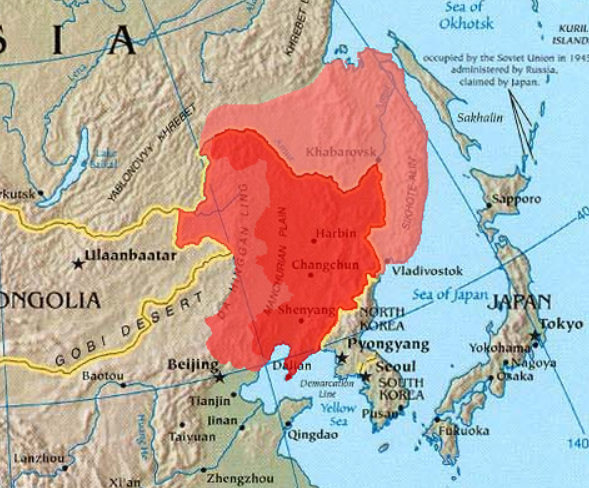
Last time I was talking about “The Devil’s Doctors” by Dr Mark Felton which describes how, at Mukden POW Camp in Manchuria,  Allied prisoners of war, primarily Americans, were used to test Japanese biological weapons developed at Pingfan, the nearby headquarters of Unit 731. This is Manchuria:

The events at Mukden were not a unique series of atrocities, however. By no means:

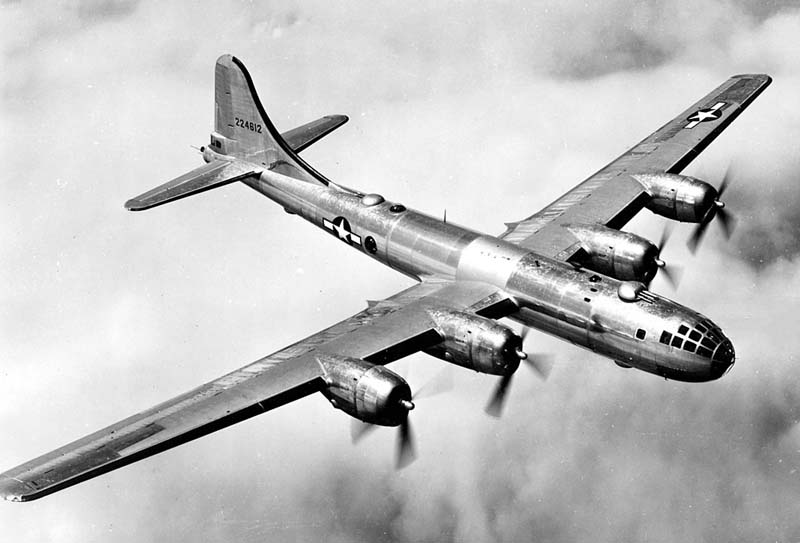
The author relates the dreadful events which took place on May 5th 1945 when a B-29 was rammed and brought down over Japan by a kamikaze fighter pilot. Of the crew, the first fatality had his parachute lines cut in mid-air by the wing of a second Japanese fighter aircraft. A second American was attacked by a mob of Japanese civilians who came running across a field to kill him. With the six bullets in his revolver he shot five of them and then himself. A third man was shot by civilians. A fourth man was never found. A fifth was sent to Tokyo to be questioned under torture. The rest were rounded up and taken to Kyushu Imperial University where they were murdered by the medical staff who dissected them alive in the post mortem room. The witness to all this was Dr Toshio Tono, a young medical assistant at the time.

In the 1980s he wrote a book about the event which named names, most of whom were, by then, in senior posts within the university. According to the author, the dissection of the prisoners paid particular attention to the brain, heart, liver and stomach. Times and places are given. On May 17th 1945, two Americans were dissected, on May 22nd two more, on the 25th a single man and on June 2nd, the last three men died. The horror is not over yet. On June 3rd the last victim’s liver was preserved for a party that evening in the Officers’ Hospital. More than one witness has come forward to say that the meat was chargrilled, seasoned with soy sauce and served as an hors-d’œuvre to the military and civilian guests, who knew what they were eating and enjoyed the meal.

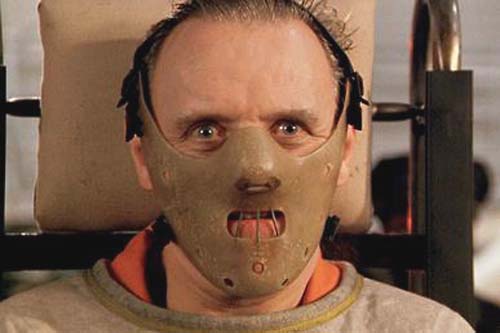
I suspect that this incident may well have inspired Hannibal Lecter.


14 Comments

Filed under Criminology, Film & TV, History, Pacific Theatre, Politics, Science, the Japanese, war crimes