
Last time we finished with a really strange episode from the book which was the story of Enigma, the German encrypting machine…..

A rather large and peculiar parcel had been sent in obvious error to Warsaw’s main Post Office. Nobody knew what it was. Nobody had a clue. When the Great Gift was opened, though, it was found to be a military grade Enigma machine, brand new, state of the art, and, as yet, unused.
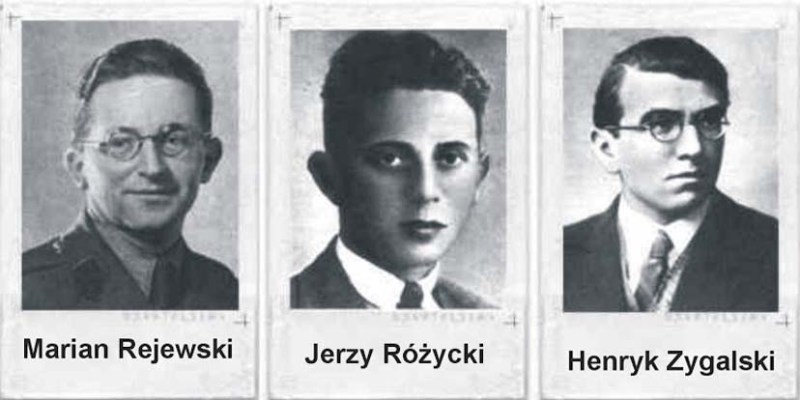
So what did Anton Palluth, the Head of the Cipher Bureau, do with it? Well, we found out last time that the Poles had worked out for themselves that World War One codebreakers would not be clever enough to crack the new type of codes being introduced at the time, that is to say, the early 1930s. They found three whizz kid mathematicians, all with first class degrees, at the top universities in Poland and gave them the job. Their names were Marian Rejewski, Jery Rozycki and Henryk Zygalski. As leader, Anton Palluth picked the man that he thought was the cleverest and the one likeliest to defeat Enigma. It was Marian Rejewski.
Marian was also given a file which contained everything that the Poles had already discovered about Enigma machines, both commercial, and military. Anton asked him to work on their brand new Christmas present n his spare time. After a reasonable interval, Marian finally cracked it. He knew how Enigma worked. He knew how to programme it and he knew how to read the messages. This feat was called in the book by author John Jackson….
“a breakthrough in cryptography on a global scale”.
Marian deciphered his first Wehrmacht communication in January 1933. I could not resist saying that the first message he found was….
“Come home Machine No 476. All is forgiven.”
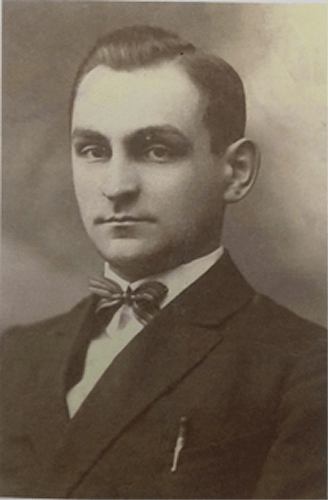
Here’s another shot of Marian Rejewski. He must have saved millions of lives with what he had discovered, and we all owe him a debt of gratitude that we cannot begin to repay.

At a meeting with the British and the French in January 1939, it was obvious that the two western countries knew very little indeed about Enigma. They had more or less no ideas whatsoever about how it worked.
On that occasion, the Poles kept their mouths firmly shut, but, in July 1939 at a second meeting in Warsaw, as German forces prepared to invade their country, the Poles realised that they had to come clean and to tell the British and the French everything that they had found out. There was nothing for them to lose. In actual fact, the Poles knew an enormous amount about Enigma. By September 1st 1939, the day the Germans violated the frontier, the Poles had intercepted and decrypted so many Wehrmacht messages that they know the exact identities of some 98% of the German units involved…..
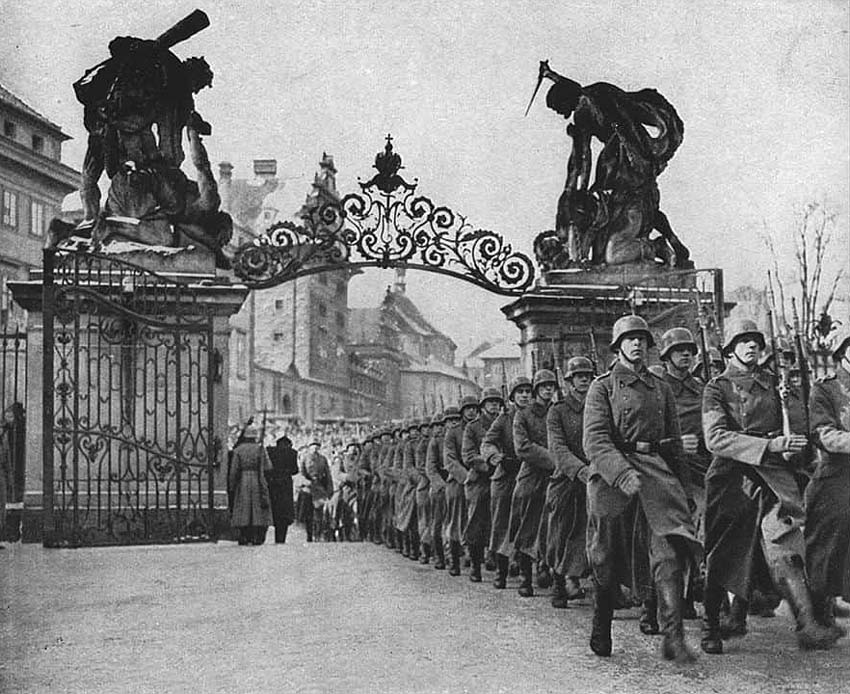
The British and the French, who included a Professor of Mathematics from Cambridge, were dumbfounded to find out that the Poles had cracked Enigma.
They were dumbfounded and then, quite simply embarrassed at their own stupidity, when they asked the Poles for one particular thing that had totally beaten their cryptographers for months, namely……
“How are the wirings inside the Entry Disc set up? We have made no progress whatsoever on this one!”
And the Poles replied:
“Well, the wiring sequence is “A-B-C-D-E-F-G-H-I-J-K-L-
and so on ”.
These Polish secrets saved the British at least twelve months’ work on Enigma. This was because the first Enigma machine was not captured in Norway until May 1940. Until then, any progress whatsoever would have been impossible for the British and the French.
Later in the war, the three Poles, Marian Rejewski, Jery Rozycki and Henryk Zygalski, came to England to help with code breaking. They were never allowed to work at Bletchley Park. I cannot imagine why.
In October 1944, Marian Rejewski asked for the return of the Enigma machine they had given to the British in 1939. The British refused.
Marian also asked the British to share what they had discovered about German codes since 1939. They refused that too.
Marian also asked that the British should share any intercepted material with the Poles so that they could decipher it and, presumably, help the war effort. This too was refused.
Conceivably, these slaps in the face were connected with the celebrations in London at the end of the war in 1946. The British Labour government failed to invite the Polish forces in exile who had fought under British High Command to participate in the Victory Parade which celebrated the end of the war in Europe. A number of MPs including Winston Churchill protested against the decision, which was described as an affront to the Polish war effort as well as an immoral concession to communist power, namely Stalin and the USSR.
The things we did to make jovial Joe Stalin feel better!! Here’s a bit of the celebrations:
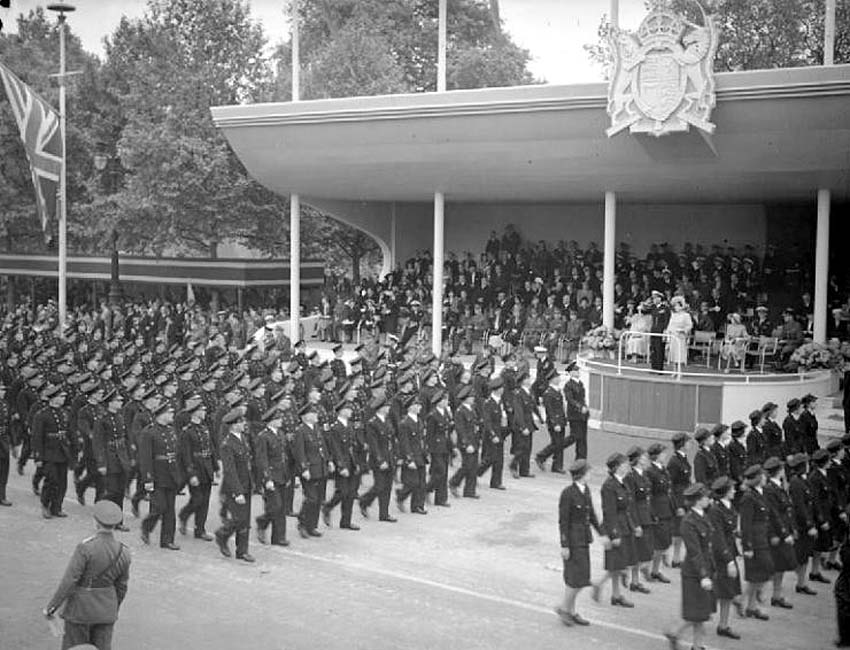
There were no Soviet forces invited to participate either.



 John Knifton