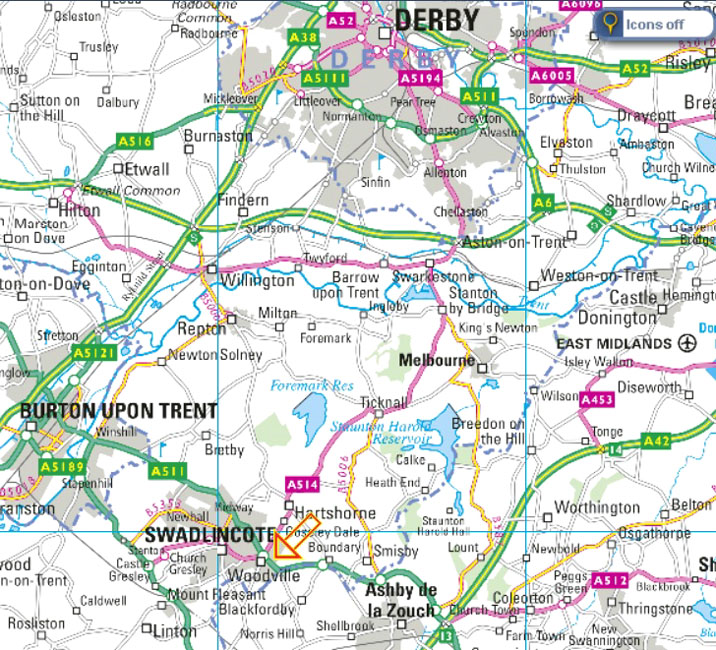
I grew up in a small village called Woodville, just to the south of Derby, in more or less the centre of England. Cue “The Orange Arrow” :
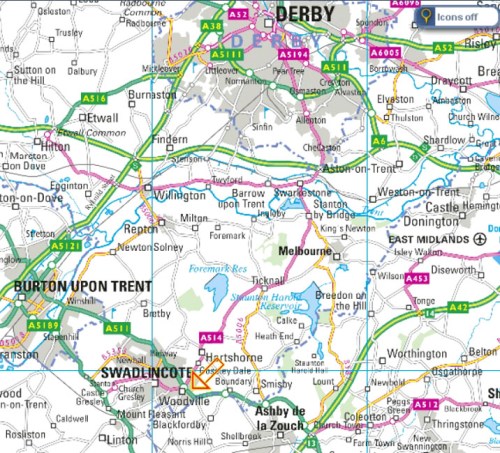
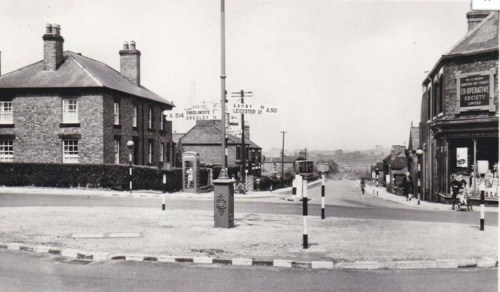
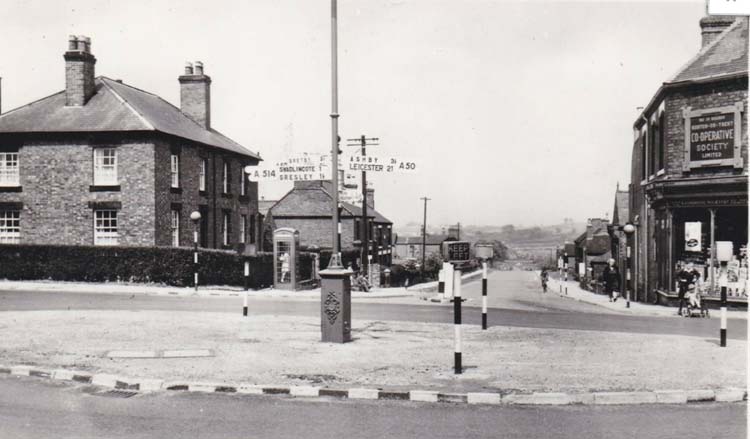
The village used to be called Wooden Box because of the large wooden box occupied by the man who operated the toll gate on the toll road between Ashby de la Zouch and Burton-upon-Trent. The name Woodville first appeared in 1845. Nowadays, there is a roundabout where his box used to be, although the location itself is still called “Tollgate”. Here’s an old postcard of the “Tollgate” :
My Dad, Fred, told me that the majority of the people in Woodville were pretty much unaware of the existence of World War Two. It had comparatively little impact in this mostly country area, where rationing was offset by the inhabitants’ ability to grow food for themselves, and even to raise their own pigs and chickens. Food, therefore, was relatively freely available, if not abundant, and the war seemed to be very distant. Woodville seemed to be an unchanging pastoral paradise:

The twenty year old Fred despised the comfortable lives of the older people in Woodville. They would live out their humdrum lives without any risk whatsoever, while he was laying his life on the line pretty much every single day in Bomber Command:
The contempt he had for the inhabitants of the village, though, was perhaps a measure of his own fear at being asked to fly over burning Bremen or Cologne, or some other heavily defended Bomber Command target :
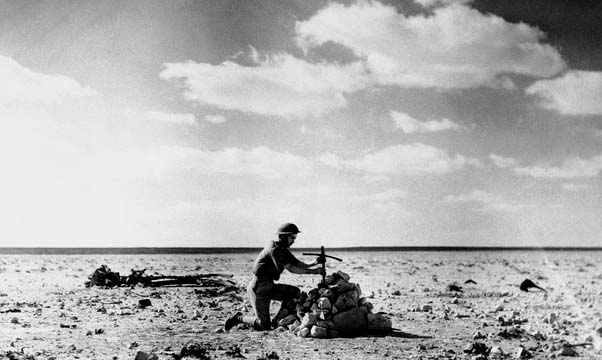
Young men, of course, went away from Woodville and from time to time their parents were duly informed that they would never return:
It was only too easy, though, for others to view that profoundly sad process as similar to that of the young men who might have moved away from the village for reasons of employment, or even in order to emigrate to another country.
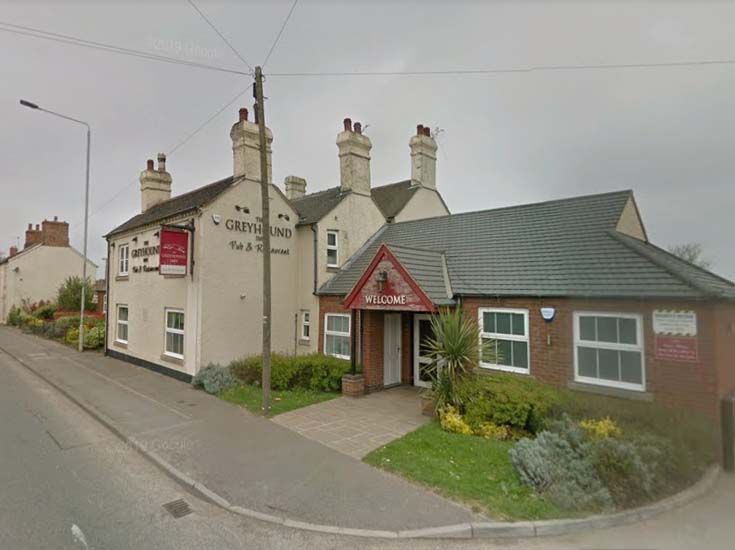
Occasionally, enemy aircraft would fly over Woodville, identifiable by their particular and peculiar engine noise. On one dark night, on November 14th 1940, many local people, Fred included, walked up to the Greyhound Inn near Boundary :
Everybody stood on the opposite side of the road from the public house and looked south. The view from that spot stretches thirty or forty miles or more into the southern Midlands

As they stood and looked, they were able to see the bright glow in the sky as Coventry burned, a city whose centre was almost completely destroyed by the Germans. There was, though, very little direct effect of German bombing on the local area around Woodville.
On one occasion, a Heinkel III night bomber, panicking about where he was, possibly pursued by a night fighter and perhaps worried that he might not make it back to the Fatherland, jettisoned all his bombs over the nearby village of Church Gresley. Look for “der fliegende orangefarbene Pfeil” :

The bombs all landed near Hastings Road, not far from the school where Fred would teach immediately after the war. They demolished an entire row of houses which backed onto Gresley Common, and all the inhabitants, almost thirty unfortunate people, were accidentally killed.
Years later, in the 1990s, Fred was able to explain these events to a man digging in the garden of his new townhouse, built recently on the site of the Second World War disaster. The man could not understand why the soil was so full of broken bricks, bath tiles and so many smithereens of old fashioned blue and white patterned crockery:

The only other direct connection with World War 2 was the unfortunate soldier and ex-prisoner-of-war who finally returned to Woodville in late 1945 or early 1946, having spent years as the unwilling guest of Emperor Hirohito, and the Japanese Imperial Army.
The poor man was unbelievably gaunt, and he had lost so much weight that his clothes flapped on his body like sails on a mast:

He did not receive as much sympathy as he might have done from the citizens of Woodville, though, when they found out that he had actually eaten snakes in his efforts not to starve to death. “Really ! Snakes ! ! ” Here’s snake soup, a delicacy in China but not as highly prized as bat and pangolin, apparently:

Fred, of course, had a view of such events very different from that of the average native of Woodville. Almost sixty years later, when I cleared out his house after his death, there was not a single Japanese electrical device to be found. Everything came from the factories of Philips in Eindhoven in the Netherlands.


















 John Knifton