Tag Archives: bubonic plague

Goose Fair (1)

Every year, a huge fair is held in Nottingham. It lasts from the first Wednesday in October to the following Saturday. It dates back to a royal charter in 1284 although it is known that the Saxons had held “St. Matthew’s Fair” long before that. Modern belief is that the Saxon fair was based on a fair held by the fun-loving Vikings. A Viking army had captured Nottingham from the Saxons in 868 AD. Its leaders had two of the coolest names ever.

“Ivar the Boneless”

“Halfdan Ragnarsson”

Presumably his Dad was “Wholedan”, or even “Fulldan”.

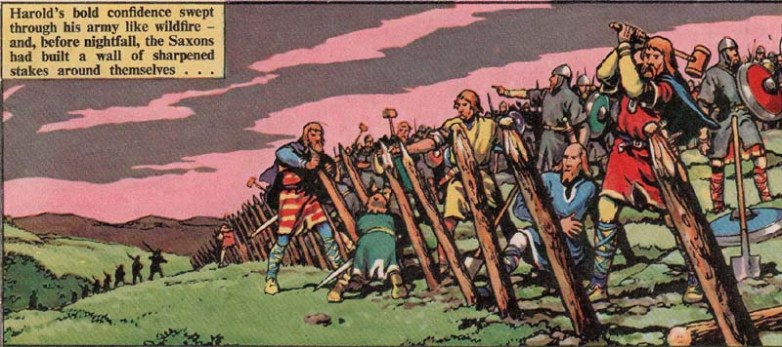
This combination of Saxons and Vikings would make the Goose Fair well over a thousand years old. Here are some Vikings:

And here are some Saxons:
The name “Goose Fair” comes from the thousands of geese that were driven to Nottingham on foot from Lincolnshire, Cambridgeshire and East Anglia. Their feet coated with tar and sand to protect them on the long journey of a hundred miles or more, the geese would provide the traditional Michaelmas dish of roast goose on September 29th. Goose Fair was traditionally held in the Old Market Square in the city centre, although it was moved to the Forest Recreation Ground in 1928. The fair has only been cancelled on very few occasions. In 1646 because of bubonic plague, during both World Wars, and finally in 2020 and 2021.

The Old Market Square was a very different place before 1928.

In the 1700s, the fair was no longer about geese, but was more to promote the sale of Red Nottingham, the local cheese which was traditionally made in the shape of a large wheel. The whole thing became a little too Red Nottingham in 1766, when the natives of the town got a little over exuberant and started “The Great Cheese Riot”.  I shall be doing a blogpost about that glorious day when I have spoken to the Archivist of the Museum of the Fifteenth Dragoons to see if the names of the Nottingham peasants they slaughtered have been recorded anywhere.

By 1900, the fair was all about entertainment of every kind, with Aunt Sally’s (sic), shooting galleries, swing boats, roundabouts and merry-go-rounds (is there a difference?). There were theatres showing short films called “animated photographs”. These included boxing matches from the USA, bullfighting from Boulogne in northern France and the famous “Dreyfuss Affair” which was probably the series of eleven short silent films made by the famous French director, Georges Méliès. The very biggest attraction, though, and the most exciting thing on offer, was the increasingly large number of huge spectacular machines powered by electricity. As Pat Collins, the owner of many of the attractions, said:

“the build-up of the mechanical side was very rapid as the manufacturers turned out better machines in each succeeding year”.

One perennial attraction was the Children’s Corner which was situated away from the main fair, at the junction of King Street and Queen Street:

The enntire Market Square was lined with stalls, which also continued up Market Street. These stalls sold “gingerbread, without which Goose Fair would hardly be Goose Fair”, “coconuts, almost equally indispensable” and a profusion of “comestibles and indigestibles”, the latter including mainly children’s toys, books and fruit. On Market Street, the stalls sold a profusion of wash leathers and sponges, and, for the children, there were “penny prize packets” which contained a mixture of tiny sweets and chocolates. There was also a Cheese Fair and a Poultry Fair, and out at Eastcroft, a large cattle market was held. Punch and Judy shows were very popular and they frequently graced St Peter’s Square, or the area in front of the Talbot public house, a little further on than the junction with Market Street.

Next time, the “Nymphs of fashion”, an ironic title, perhaps, given how willing they were to divest themselves of their clothing.
16 Comments

Filed under History, Humour, Nottingham

“The Devil’s Doctors” by Dr Mark Felton (4)

Last time I was talking about “The Devil’s Doctors” by Dr Mark Felton which describes how, at Mukden POW Camp in Manchuria,  Allied prisoners of war, primarily Americans, were used to test Japanese biological weapons developed at Pingfan, the nearby headquarters of Unit 731. Dr Felton also broadens the scope of his writing to include events after the war, when large numbers of Japanese doctors were found guilty of war crimes, in many cases on American personnel, but no sentences were ever carried out. “Why did this happen?” the author asks, but quickly reveals the real truth. The Americans were now thinking about war with their erstwhile allies, the Soviets:

To wage the next war and win, the American government wanted to know immediately everything about the Japanese biological weapons so that they could use the information for their own purposes. On August 13th 1945, before even the end of this war, in Operation Flamingo, the American government set up an OSS team to

“secure all Japanese documents and dossiers, and other information useful to the United States government”.

Indeed, fifteen military intelligence operatives were about to be parachuted into Pingfan to gather up scientists and data, when the Japanese, terrified by the thought of Stalin’s savage soldiers invading the sacred Japanese homeland, suddenly surrendered:

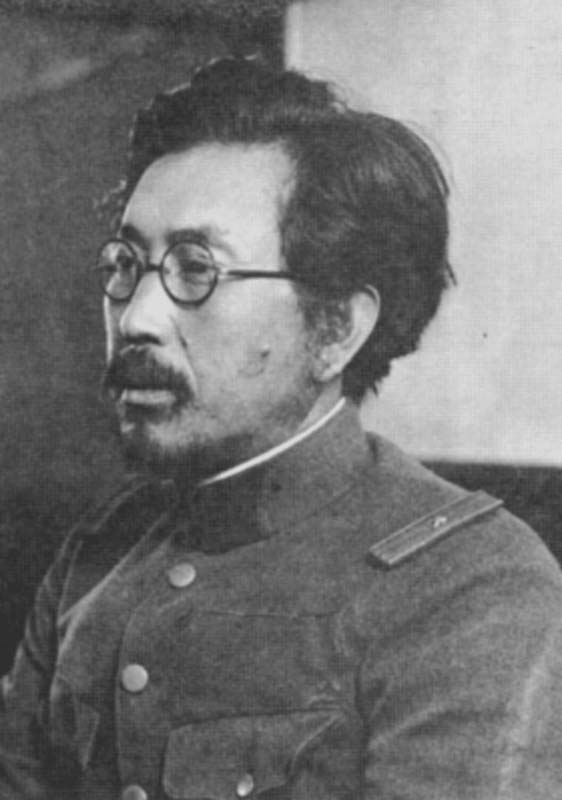
Shiro Ischii and his colleagues fled from Manchuria to Japan with all their data. According to the author, they eventually finished up talking to Columbia University’s Dr Murray Sanders to whom General MacArthur had personally given the job of investigating the Japanese biological warfare programme. Here’s Ischii again:

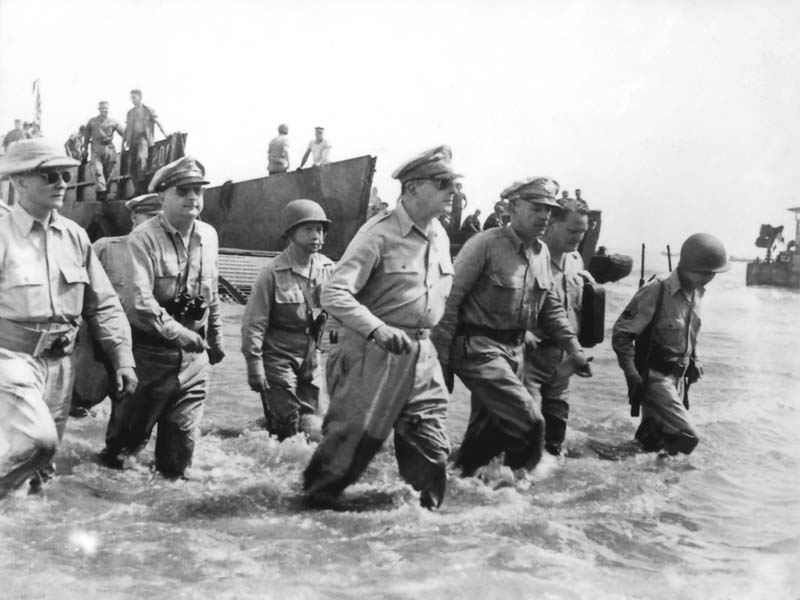
Everything that Dr Sanders found out was taken to MacArthur who decided that the Japanese data was “almost incalculable and incredibly valuable to the United States”. He wanted it “on an exclusive basis”. The Americans offered Ischii and his colleagues from Pingfan a “blanket immunity from prosecution in perpetuity”. The people who made this offer were well aware that living Allied prisoners had been experimented on. Both Pacific Stars and Stripes and the New York Times had published allegations in 1946 and in 1947 American Military Intelligence found 12 independent witnesses all giving the same details about the live vivisection of Allied POWs. Here’s MacArthur:

According to the author, when J Edgar Hoover, head of the FBI, tried to look into the affair, he was told by MacArthur’s investigating agent that “information of the type in question is closely controlled and regarded as highly sensitive”. In other words, he was told to get lost. Here’s Hoover, who does not seem to have pressed the point:


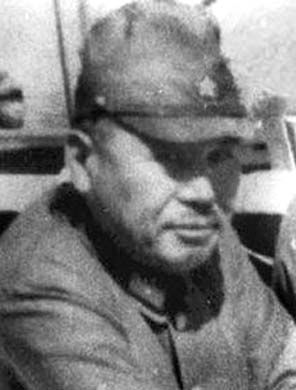
So Ishii and all of the rest got their lifelong immunity and were never put on trial. Had they appeared in court, the British and the Soviets would have acquired all of the data that only the Americans had at the time. Ishii went to live the American Dream in Maryland where he died in 1959. According to the author, the prominent Unit 731 vivisectionist, Masaji Kitano, went back to Japan and became the president of a large pharmaceutical firm. Here’s Kitano:

Sadly, the author, Dr Felton, does not name the vivisectionist who became Governor of Tokyo, nor the one who was President of the Japan Medical Association nor the one who headed the Japan Olympic Committee. Even so his research at this point could not be bettered, with some very dark and disgusting political stones being overturned.

As the war slipped away, the Japanese were keen to use their new Biological Weapons in the USA. Again, the author’s research into events at this point could not be bettered. A first feasibility trial consisted of a submarine launched spotter plane which dropped incendiary bombs in the forests of the West Coast. It was too wet and not a lot happened.

In August 1943, the Japanese Navy tested  large paper balloons, again launched from submarines, and again with the intention of setting fire to the forests. That project was abandoned in favour of an Army project to use bigger balloons carrying incendiary and anti-personnel bombs. Sadly, six people were killed near Bly in Oregon, possibly because the powers-that-be did not release news of what the Japanese were doing, because it might have caused mass panic.

The final piece in this well researched jigsaw came when the Japanese Navy commissioned the huge I-400 submarines which would have carried three aircraft each, Aichi M6A1 Seiran torpedo bombers:

This slideshow requires JavaScript.

These aircraft would have overflown San Francisco, Los Angeles and other American cities and then  dropped canister type bombs or possible even crop sprayed them with Today’s Maniac Special… bubonic plague, typhoid, dysentery, perhaps even a nerve gas. Shiro Ishii would surely have had some ideas about what to do?

So why did it not happen? Well, the author’s persistent research has turned up a good few reasons. Firstly, Japan found it difficult to produce the huge I-400 submarines and the planes to go with them. Furthermore, a “morally bankrupt” Imperial Army still had one or two who remembered dimly how decent human beings led their lives. Quite simply, the Chief of the General Staff, Yoshijiro Umezu put a stop to it. He told his officers:

“If bacteriological war is conducted it will grow from the dimension of war between Japan and America to an endless battle of humanity against bacteria. Japan will earn the derision of the world”.

Overall, I would strongly recommend this book which lays bare the extremely dirty secrets of the Japanese and the Americans, and I suppose those of the Soviets too, because, although they never received any of the material scooped up and taken away by their American allies, they definitely wanted to have it. So too did the British, and there is a lengthy section about their activities with plagues and nerve gases, centred on the top secret centre at Porton Down in Wiltshire. The book is 198 pages and if you can buy yourself a copy, then you really should. It’s a fine tale about just where a Master Race complex can lead you.

26 Comments

Filed under Criminology, History, Politics, Russia, Science