Tag Archives: Cecil Rhodes

Goose Fair (3)

Last time we finished with Mr Pat Collins’ “Giant Nottingham Geese, All Alive and Kicking” but some surprisingly exotic, and indeed, unusual, animals made their appearance at Goose Fair.

Smallest of them all were the performing fleas:

Look at what they could do:
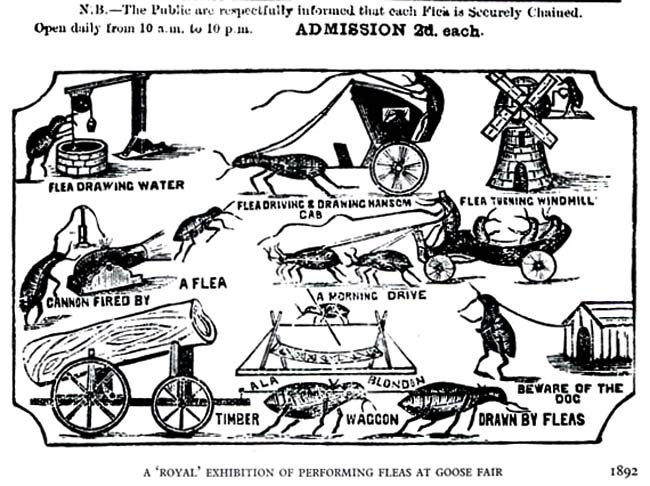
And don’t worry:

“Each flea is Securely Chained”

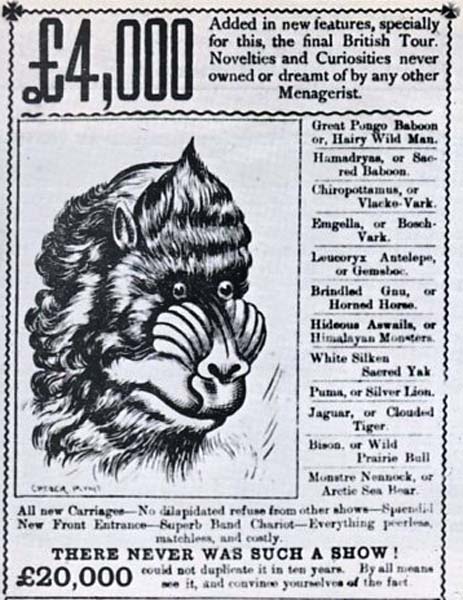
In 1899, for their last visit to Goose Fair, Bostock & Wombwell produced a special poster, which listed all of their animals.
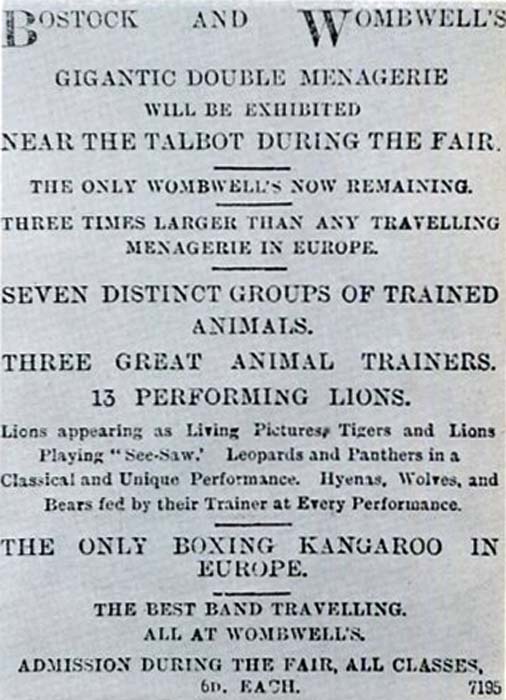
Their rivals, of course, boasted about their own animals which included “Novelties never owned or dreamt of by any other Menagerist.” There was the “Great Pongo Baboon”, the “Hamadryas, or Sacred Baboon”, the “Leucoryx Antelope or Gemsboc”, a “Brindled Gnu, or Horned Horse”, a “White Silken Sacred Yak”, a “Puma”, “Jaguar”, a “Bison, or Wild Prairie Bull” and the “Monstre Nennock”.

Here we are:
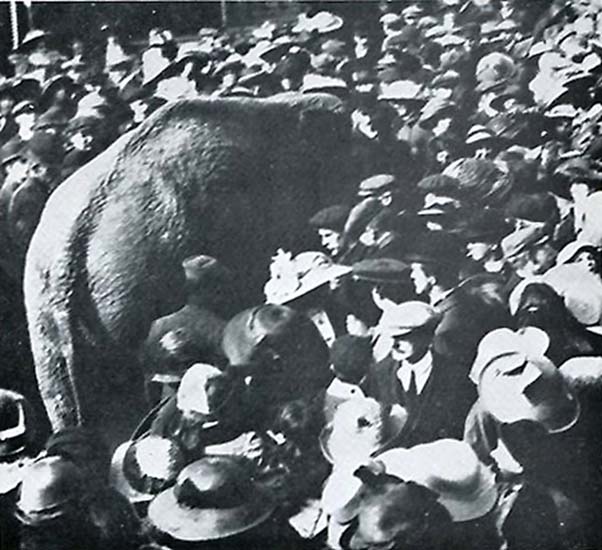
There was also a huge elephant christened “The Mighty Mastodon”. We still have photographs of him apparently pushing and shoving his way through the Goose Fair crowds, apparently unsupervised, making his way back home to his trailer. Don’t worry about safety, though. Only two years before the council were discussing whether it was dangerous to have brown bears in Upper Parliament Street. Talk about re-wilding!
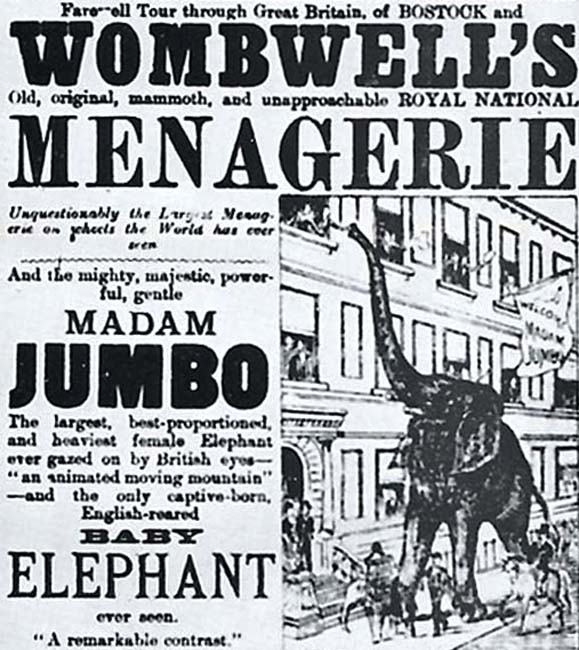
Even more frightening, apparently, was “Madam Jumbo”, an elephant of, well, elephantine proportions. It could actually lift people down from the second floor of the Post Office in Queen Street. Just look at the size of it. Look at the baby elephant in comparison, or the horse:
Amazingly, in King Street, “The Royal Monster Whale” was on exhibition for Goose Fair week, and for the week after that. It cost only threepence, with children half price. A “Royal Monster Whale” must have caused a great many difficulties for everybody, not just when it was delivered on a handcart, but in providing thousands of gallons of seawater in a city more than fifty miles from the sea. However, that may have been the least of their problems. As Monty Python so rightly said:

“Where are we going to get forty-four tons of plankton from every morning?”

An insoluble problem, unless, of course, “The Royal Monster Whale” was stuffed.

At least one lion at Goose Fair was personally supplied by the great Cecil Rhodes, the diamond billionaire who established the Rhodes Scholarships at Oxford University, the oldest graduate scholarships in the world. Every year, 102 full postgraduate scholarships are granted to students across the world. Here’s his lion, serving a life sentence by the look of it:

Sedgwick’s Menagerie had some baby lions, “Performing Elephants”, “Alphonso’s Group of Educated Lions”, “Lorenzo’s Performing and Talking Bears”, “Lorenzo’s Performing Wolves” and then you could see “Lorenzo performing with Nero and Brutus, the largest full-grown untameable African Forest Bred Lions”. Another threepence well spent, children half price.

One of Sedgewick’s chief attractions was “Blonko Bill”:

The first Goose Fair of the new twentieth century starred “the Mafeking Monkey”. During the Siege he had rung a bell every time the Boer artillery shelled the town:
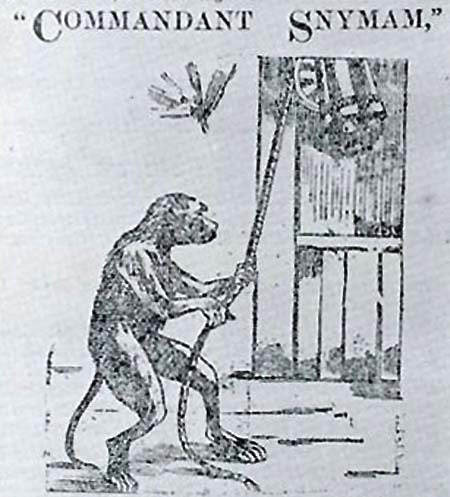
I still don’t see what’s so smart about him, though. Every time the town is shelled, he rings a bell to tell people that they’re being shelled. How is that helpful?

Alongside “the Mafeking Monkey” were “Professor Burnett’s Fencing Booth and Military Tournament”, “Walls Electric Boer Warograph” and “Twigdon’s Electric Palace.” There was also a hairless or “rubber-skinned” mare from the Transvaal, a horse with a mane and tail 21 feet long, a giant horse over 20 hands high and a miniature horse and mule both only 24 inches high.  In addition, there was the “smartest boxing kangaroo” in the world and, sadly, allocated to the animal section,”the giant negro Aaron Moore who is 8 feet in height.” In actual fact, Aaron is known to have been more like 7 feet 3 inches. He was from North Carolina, and, from the photographs I have seen, seems to have worn nearly all the time, a 9 inch high pillar box hat:

13 Comments

Filed under Africa, History, Humour, military, Nottingham

“A long forgotten war, wasted young lives” (2)

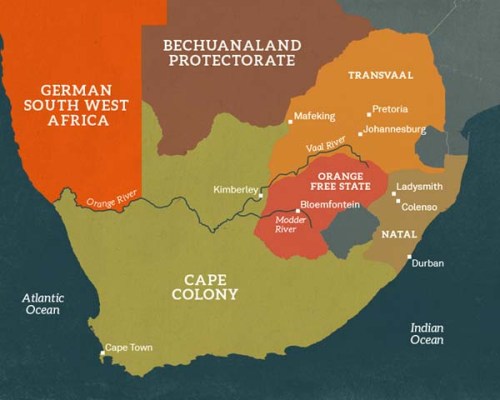
The Second Boer War (1899 – 1902) was fought between the British Empire and the two independent Boer (Dutch) states, the Republic of Transvaal and the Orange Free State, over the British Empire’s influence in South Africa. The British Empire owned Cape Colony and the Bechuanaland Protectorate.

The catalyst for the war was the discovery of diamonds and gold in the Boer states.

Major Alexander Bruce Wallis had already lost one of his three sons, Captain Alexander Frederic Wallis, on February 24th 1900. He was killed in action near Arundel, near Colesberg, in Cape Colony in South Africa. Major Wallis’ grief, though, was not over yet , not by a long chalk.

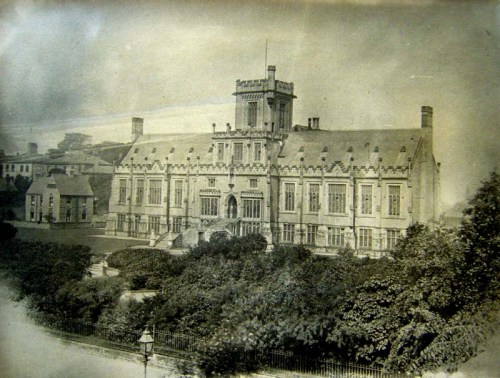
He had another, third and youngest, son whose name was Harry Wallis. Harry was born on September 17th 1869 and entered the High School on January 21st 1881 as Boy No 648. He was eleven years old. Hardly any details are available about an individual boy during this period of the school’s history. Set against this is the fact that Harry was there to watch the crisis which gripped the school during this period. Standards were plummeting and by November 1883 more than a quarter of the boys had left. By March 1884 the Headmaster was seriously ill, and was given three months sick-leave. Here is the School at the time.

An official inspection scrutinized the School and said:

“The School is at present not in an efficient or satisfactory state. Generally, there is a want of vigour and enterprise in the management and administration.”

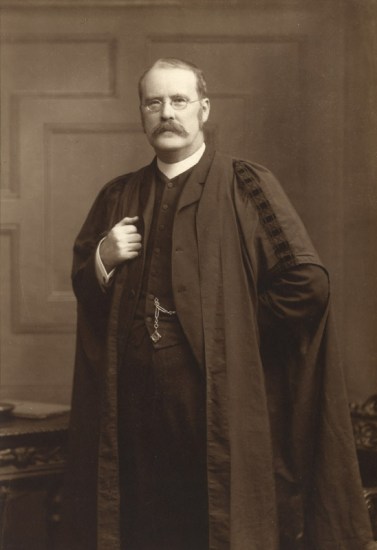
The Headmaster resigned and Dr James Gow took over.

Dr Gow was a lawyer, not a teacher. He saved the High School. He examined the dreadful situation analytically, and reported that:

“I am inclined to think that the School Buildings are not so grossly inconvenient and the School Staff is not so grossly incompetent as they have sometimes been represented. I am confident that by a few changes, mostly trivial, the School can almost at once be brought into a good state of efficiency.”

And he was right. And Dr Gow walked into history:

“He found a rabble and he left a public school.”

(It’s always better that way round, of course.)

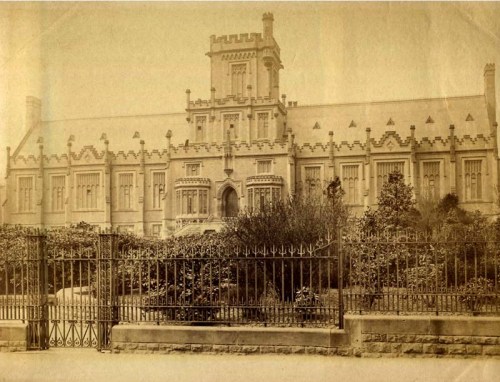
This is the albumen print of the High School which I used when I was talking about the tragic and, arguably, pointless death of Harry’s brother, Alexander Frederic. It is certainly of much better quality than the picture above. Can you see the patterned brickwork of the crenellations ?

Harry Wallis left the High School in July 1885. He went to work in Messrs Moore & Robinson’s Bank which operated from 1836-1901. They were based at Beast Market Hill in the Market Place, somewhere near where the Bell Inn is nowadays. The manager was Mr James Stedman. Here’s the Wright’s nineteenth edition of their Directory of Nottingham, published in 1898-1899 :

Harry knew he had the wrong job, working in a bank. Like his father and his elder brother, he yearned to enlist and to become a soldier. Mr Stedman gave him his discharge and Harry went to South Africa. One of his first tastes of adventure was the Jameson Raid. This fiasco took place from December 29th 1895 –January 2nd 1896. It was a botched British raid against the Dutch Republic of the Transvaal. Led by Dr Leander Starr Jameson and using his colonialist troops, these men were employed ostensibly as police officers in the police force, owned by Alfred Beit’s and Cecil Rhodes’ British South Africa Company.

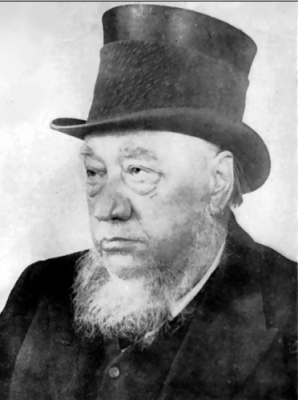
Supposedly the raid would encourage the Uitlanders, the pro-British citizens, to rebel against Paul Kruger, the Transvaal president, and his supporters. A pro-British government would quickly be set up. Then the British would get all of the Boers’ gold and diamonds. Here’s “Oom Paul Kruger” as he was called at the time :

Absolutely nothing happened and Jameson was arrested. The anti-English Boers, though, were by this time more than ready for a fight against the British when the Second Boer War came round.

Here is part of Harry’s epitaph taken from “The Forester”, the first School Magazine.

“Returning to England after the Jameson Raid, Harry then returned to South Africa and became a Lieutenant in the British South Africa Mounted Police. After doing much good work on active service, he died of enteric fever (typhoid) on April 21st 1900 at Gaberones, the capital city of the British Protectorate of Bechuanaland. He was thirty years old. Great sympathy is felt with his father who has thus lost two sons in the war.”

The sad father, Major Alexander Bruce Wallis, now had only one remaining son, Francis Edward Wallis, born on December 24th 1862 and the eldest of the three. He entered the High School on Friday, September 12th 1879 as Boy No 584. He was sixteen years old. I have found out no more than that about him, although I am fairly confident that he would probably have joined the Army at some point and perhaps then served in Africa. Hopefully, he joined just in time to hear somebody say :

“Have those Zulus definitely gone then?”

And Francis Edward Wallis was certainly not killed in World War One. Thank the Lord.


19 Comments

Filed under Africa, History, military, Nottingham, Politics, The High School