Tag Archives: Handley Page Hastings

Newark Air Museum (2)

Last time we looked at some of the Cold War aircraft in the Newark Air Museum, but there are a good many civil aircraft as well, most of them from this same period.

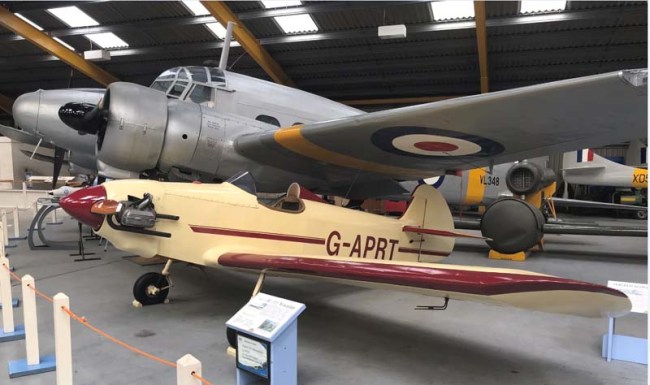
Let’s start with the exception, though, which would be the Avro Anson, even though this normally peace loving multi-engined aircrew trainer was originally designed as a maritime reconnaissance aircraft. In World War Two, the Anson finished up instead as the mainstay of the British Commonwealth Air Training Plan in North America, training pilots, navigators, air gunners and radio operators. Newark’s Anson C.19, though, was used as a light transport and communications aircraft. Top speed : 182 mph. The Anson is the bigger silver aircraft. The custard coloured one is a Taylor JT.1 Monoplane.
The Handley Page Hastings began life as the C1 troop-carrier and freight transport aircraft. The aircraft married a completely new fuselage to the wings which had been designed for the abandoned HP.66 bomber development of the existing Handley Page Halifax. This particular individual, TG517, was used in the Berlin Airlift, and then in meteorological flights and finally in the Cod Wars against the evil Icelanders from 1958-1976 . It had begun its career as a completely ordinary C1 but in 1958 was converted for RAF Bomber Command, acquiring a ventral radome to train V-bomber crews on the Navigation Bombing System (NBS). Top speed : 348 mph

The DH.104 Dove was a short-haul airliner manufactured by de Havilland. The aircraft was the monoplane successor to the pre-war Dragon Rapide biplane and was intended as a short-haul feeder for large airlines and airports. The Dove carried eight passengers and two crew, and overall, it was very popular, sales being in excess of five hundred.  Top speed : 210 mph

Now we reach a few nasty foreigners, beginning with the Russkies whose simple plan was to enslave us all. To do that, they might well have used the Mikoyan-Gurevich Mig-27, codenamed “Flogger”. This was a swing wing ground attack fighter based on the basic airframe of the MiG-23, but with a revised nose, hence its Russian nickname of “Platypus”. The “Flogger” was also used by Sri Lanka and later it was licence-produced in India by Hindustan Aeronautics as the Bahadur (“Valiant”).      Top speed : 1,171 mph.

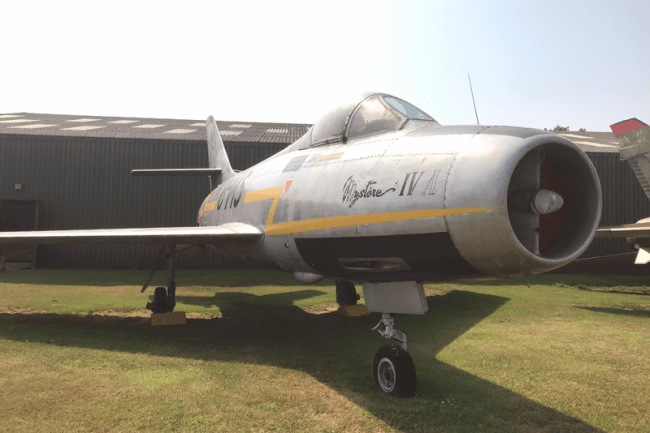
This next aircraft is French. It is a Dassault MD.454 Mystère IV and was used primarily in the 1950s and 60s as a fighter-bomber. It was the first French aircraft to break the sound barrier, and the first transonic aircraft to enter service with the French Air Force. It saw action with both the French and Israeli air forces in the Suez Crisis of 1956 and then again with the Israeli Air Force during the 1967 Six Day War, fighting Mig-17s and Mig-19s.
The Newark Air Museum also has a good many objects connected with the Dambusters’ Raid of May 17th 1943. They have a propeller from the crashed “S-Sugar” of 617 Squadron:

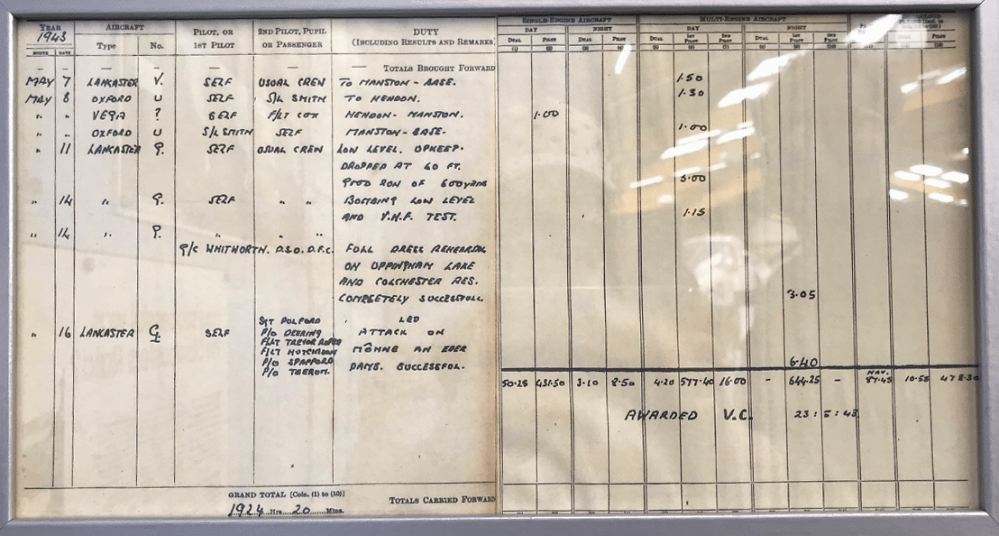
There is the relevant page from the logbook of Guy Gibson:
There is a piece of fuselage from a Lancaster:

And a man inside it demonstrates how many garments he has to wear:

There is a mid-upper turret from a Lancaster:

And finally, you can see the weight and distinctive shape of one of Barnes Wallis’ “Bouncing Bombs”, codenamed “Upkeep”. This particular bomb was built for testing purposes and was recovered from the waters off Reculver in Kent by Andrew Hemsley and the personnel of 101 Field Regiment TA, and 22 and 223 Squadrons.

All photographs courtesy of Lauren Knifton Fainberg


13 Comments

Filed under Aviation, Bomber Command, History, military, Personal

Three war crimes, two Sunderlands and one Ashley Wilkes (2)

Last time, I was showing you round what is probably the same aircraft in two different locations, that is, the Short Sunderland flying boat at Hendon and then at Duxford.  Just to remind ourselves, the Sunderland was a mighty war machine:

This slideshow requires JavaScript.

The Sunderland had a panoply of weapons. Something for every occasion:

This slideshow requires JavaScript.

There was also an astrodome for taking bearings from the stars, and ASV radar, visible above the cockpit area:

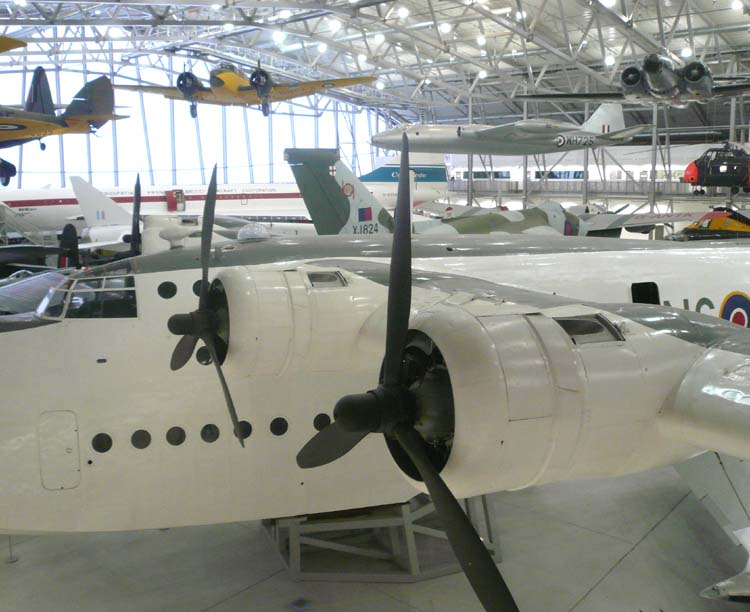
I saw just part of my first ever Sunderland on ‎February 14‎th 2008, ‏‎ at 11:24:44. And, as you might expect for that date, it was love at first sight. The aircraft was behind a Handley Page Hastings and below a Hawker Harrier, and it was terribly squashed in:

I had to wait until 2010 when I went to Hendon to see a Sunderland displayed a little more favourably, and in a much bigger and more open area:

This particular Sunderland you could go inside. Just look at the room. You could fly a model plane around inside it:

The walls have lots of useful instructions:

This slideshow requires JavaScript.

Overall, the Germans were very wary, if not simply afraid, of the Sunderland flying boat. It was an extremely heavily armed aircraft and a formidable opponent. No wonder they called it the “Flying Porcupine”. Porcupines look old, they look rather fat and are rightly known as being grumpy, solitary and always just wanting to be left alone. OMG. How many of those boxes can I tick? And don’t say “All of them”. Here’s a real porcupine at Newquay Zoo in Cornwall. They eventually sold him to Bristol Zoo for “excessive grumpiness”  :

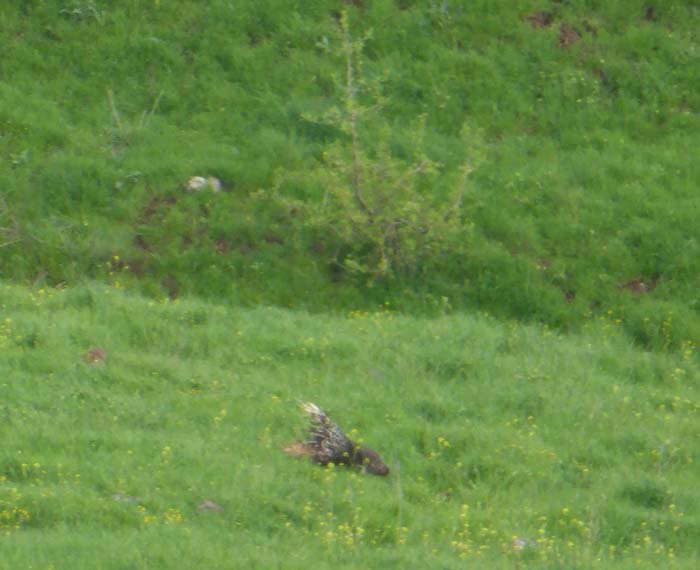
And here’s a wild one in the Golan Heights of Israel. A really rare sight:

Final thought. What is the German for “Flying Porcupine” ?

Why it’s “Das Fliegende Schtachelschwein”, a phrase which has proved particularly useful in my trips to the Fatherland, especially to Berlin Zoo which is conveniently close to the airport.


16 Comments

Filed under Aviation, Cornwall, Film & TV, History, Personal

Three war crimes, two Sunderlands and one Ashley Wilkes (1)

One of the world’s most bewitching aircraft is the Sunderland flying boat. When I was a boy, I never did save up enough pocket money for the Airfix kit, although it was only fifty pence or so in the 1960s. I should have bought it then, though. They’re fifty pounds now!

The Short S.25 Sunderland was a flying boat patrol bomber operated not just by RAF Coastal Command but also by the RAAF, the RCAF, the SAAF, the RNoAF and the Marinha Portuguesa. The last one’s a bit of a give away, but did you get all of the rest? This one’s Australian:

The Sunderland was designed and built by Short Brothers of Belfast, and the cynic inside me says that it was the only decent aircraft of their own that they made during the war. This model of the aircraft was numbered the S.25 because it was a warplane but it was a direct descendant of the S.23 Empire flying boat, the flagship of Imperial Airways. Here it is, a beautiful aircraft:

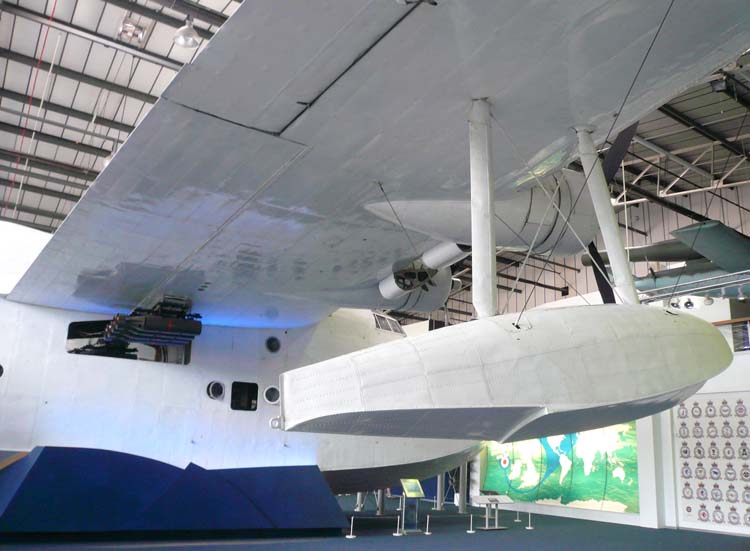
The new aircraft S25 was very well designed for its purpose. The Sunderland had a wingspan of 112 feet, a length of 85 feet and a height of 32 feet. It was a big aeroplane! Even the stabilising floats on the wings were as big as a rowing boat or a small plane. Compare one of them with the man with a pram, and the Walrus behind them both:

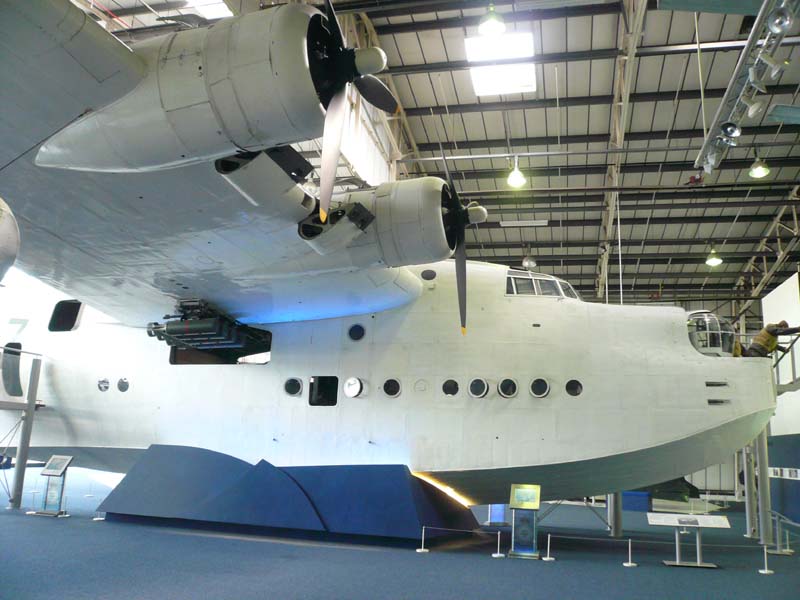
A Sunderland had four Bristol Pegasus XVIII nine-cylinder radial engines which gave it a total of 4,260 horse power:

And those powerful Pegasus engines gave it a range of around 1800 miles at a cruising speed of 178 mph Don’t fly too fast when you’re doing maritime reconnaissance!

The S 25 Sunderland featured a hull even more aerodynamic and more advanced than that of the S23. You can see why it’s called a “Flying Boat”:

Here’s lengthways:

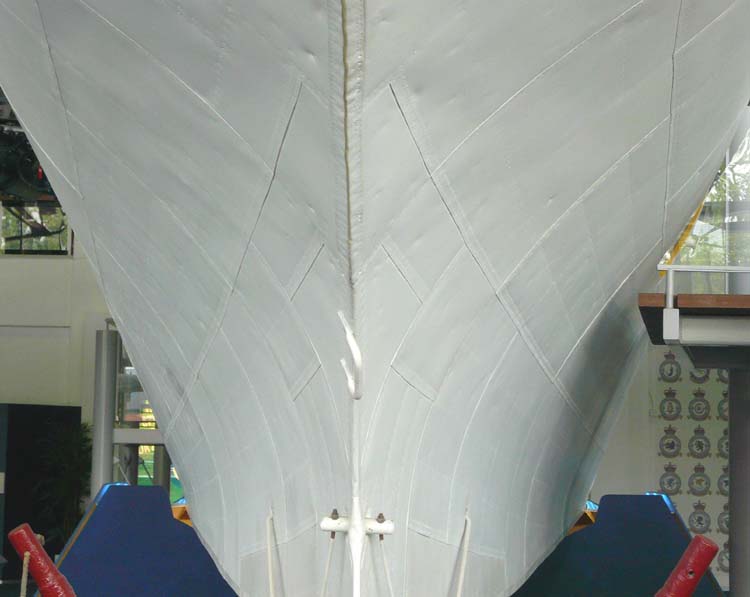
Here’s the nose end of that hull:

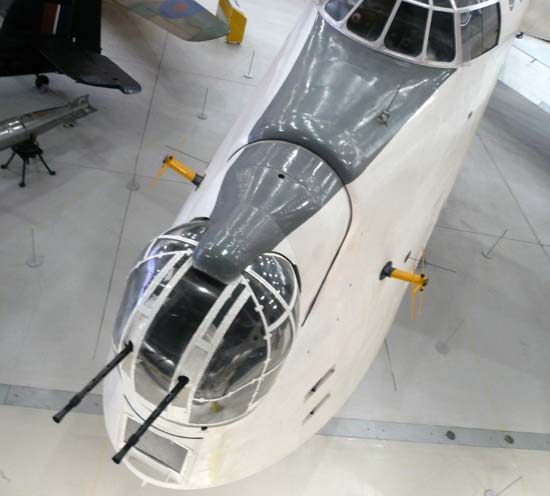
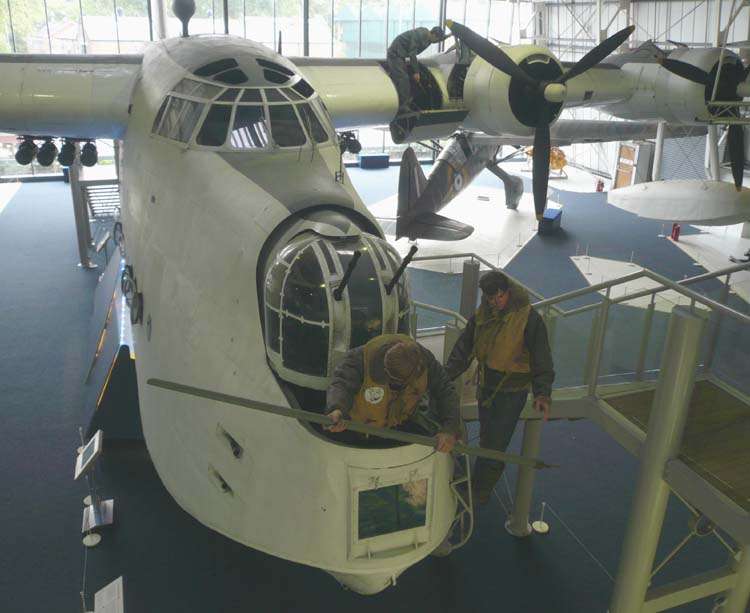
Weapons included machine guns in front and rear turrets. The front turret had rather weak 0.303 guns which could not always penetrate thick metal, but at least I got a good shot of it:

I even got a good shot of the three jokers who seemed to be making off with the plane from the Hendon museum, trying to push it backwards through the very large French windows:

Here’s some close-ups for the wanted posters:

This slideshow requires JavaScript.

I didn’t get any good photographs of the rear turret but it had heavier 0.50 calibre machine guns. You can just about spot it among the bits of other aircraft. It’s slightly right of centre:

There was also a heavy machine gun firing from each of the beam hatches. You can just about see one poking out here:

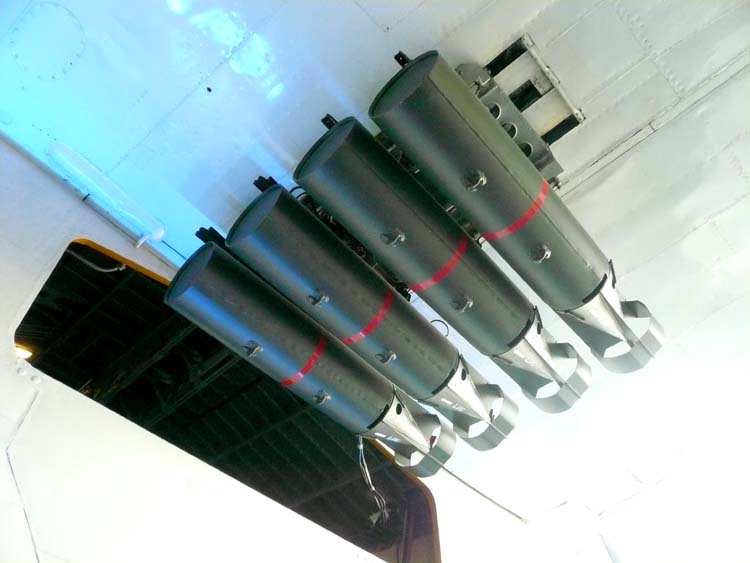
The Sunderland made extensive use of bombs, aerial mines, and depth charges. Here are four which have been winched out ready to drop. Hopefully, they are dummies:

Here they are in close up.

The Vickers Wellington’s immensely  powerful Leigh Lights, designed to light up U-boats on the surface at night, were rarely, if ever, fitted to Sunderlands.

Next time, a look inside the mighty Sunderland.


27 Comments

Filed under Aviation, Bomber Command, Film & TV, History, Personal