Tag Archives: hedgehog

Widdle (7) or, more accurately, the Rise of the Urban Fox

After the First World War, London began to expand as a city, particularly to the north and west. What had been farmland was now purchased and then built on. Many, but not all, of the woods were chopped down, the trees and branches were burnt, and new houses were then built on the site. The people who lived in those new houses for the most part worked in the centre of London and new words had to be invented to describe what they had to do in order to get to work. They took the train. Suburban, local trains, whose only purpose was to carry people who were now being called “commuters”, on their way to work. What they did was called “commuting”, and it obviously paid them to do it. Their salaries must have been high enough to justify adding a couple of hours to every one of their working days.

The very best paid commuters lived in what were called the “leafy suburbs”. They could even afford to buy a detached house near the golf course, with four or five bedrooms and a large private garden all the way round it:
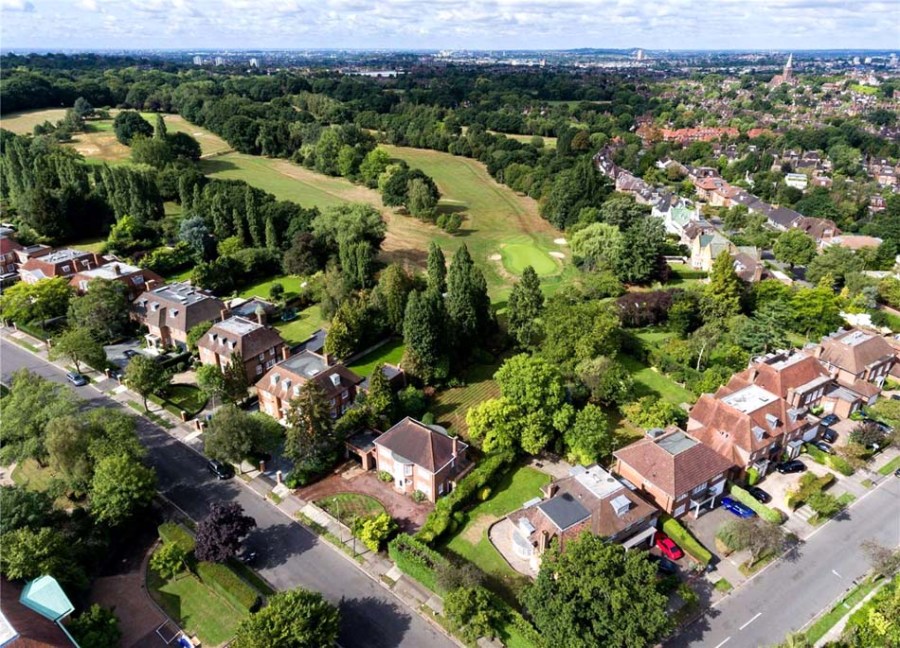
In some cases, the leaves of the new leafy suburbs were attached to trees which pre-dated the building of the new houses. Builders with a bit of vision had soon realised that they could save themselves a lot of cash, and finish up with a much better product if they kept as many of the mature trees as possible. All they had to do was to build the houses between them and to do the same with the streets, if they could. Look at the age of these trees:

That slight change in approach by the builders had quite an effect on the suburbs created at the ends of the hundreds of the suburban railway lines which linked the centre of London with the houses where their office workers lived. And, to their credit, instead of just moving on elsewhere, the creatures which had lived in the woods before the developers arrived, made enormous efforts to stay in their homes and not be forced out.

In some cases badger setts survived the building process and remained unnoticed behind the park-keeper’s new storage sheds.

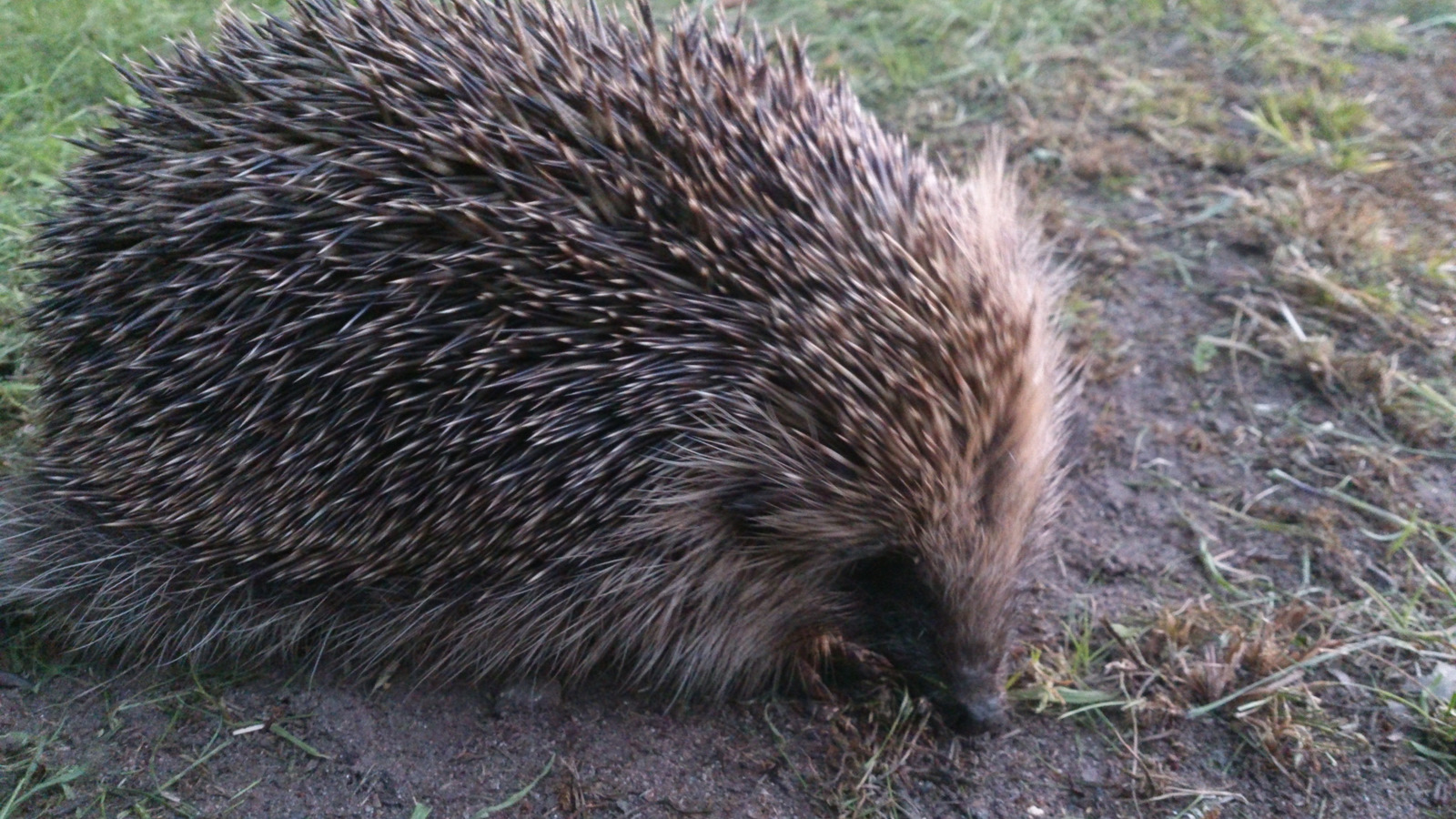
Hedgehogs hunted slugs and snails in rockeries and vegetable gardens, just as they had in spinneys, copses and woods.

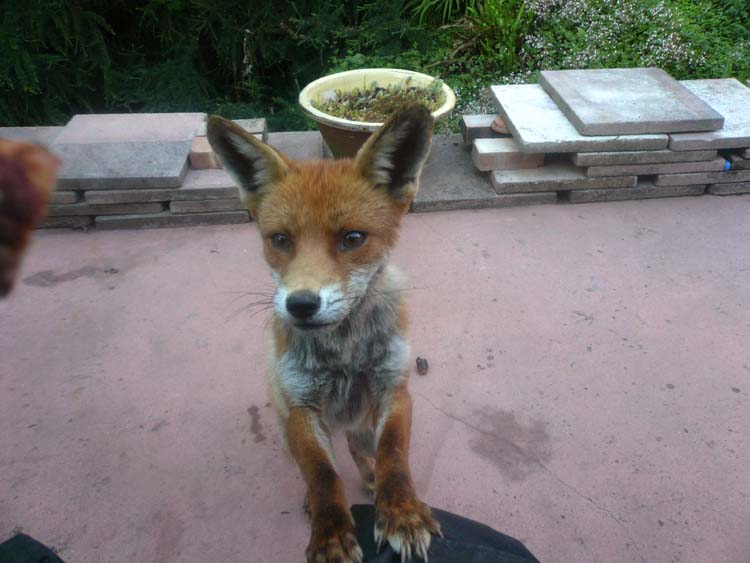
Mice, shrews and rats went unnoticed, as they always have. But above all, one animal benefited enormously. That was “vulpes vulpes”, better known as the fox. They carried on their lives pretty much as they always had done, taking little or no notice of human beings and their machines. If anything, life was considerably easier, and food more plentiful now that they lived in a city suburb, which was always a few degrees warmer than the bleak countryside. And very soon London had in excess of 10,000 urban foxes. And many other cities experienced the same process. Bristol. Birmingham. Sheffield. And Nottingham, the home of the most famous fox of them all…….
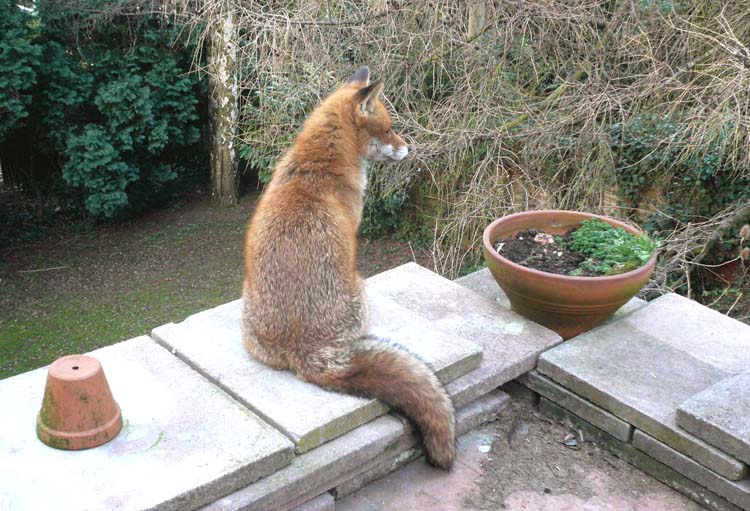
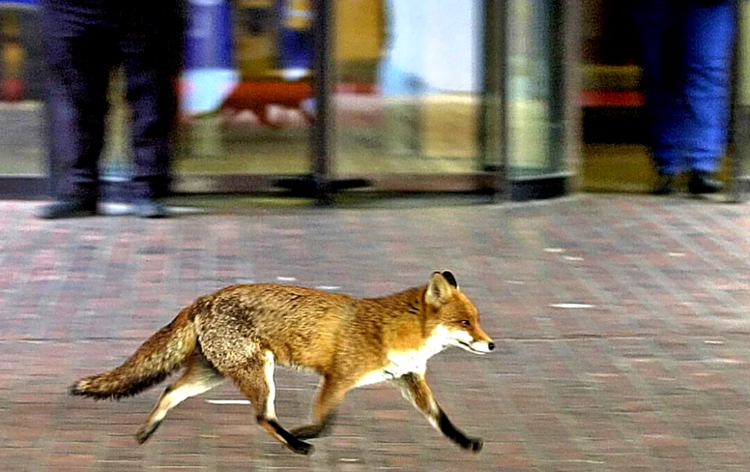
Here’s another of them, hurrying to the fish and chip shop to see if anybody couldn’t eat all of what are, hopefully, generous portions:
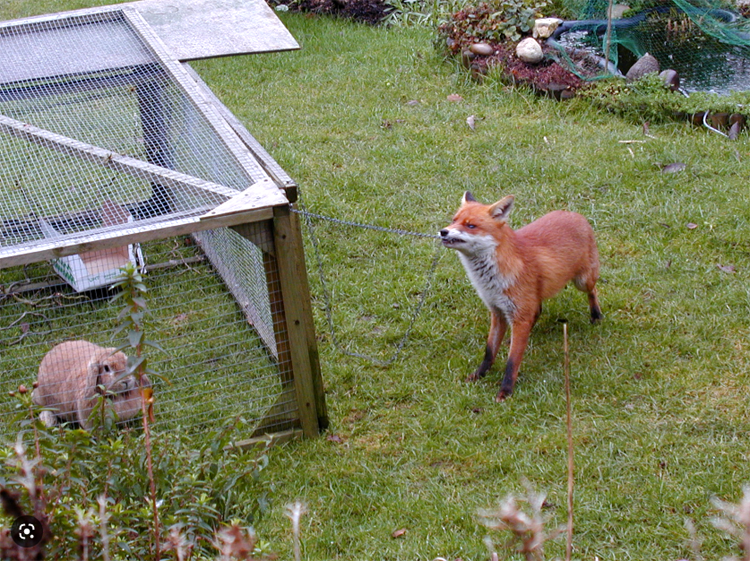
Foxes, like all undomesticated canids, are extremely intelligent. Once they have made a friend such as a big, fat rabbit, they always like to see if they can get even closer to him, perhaps by pulling a likely chain:
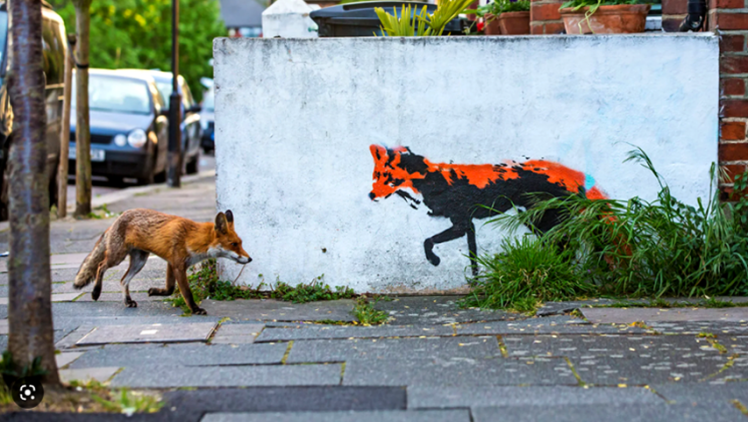
And here’s one of the very few photographs of Banksy Fox”…….
Next time, we take a look at the quality of the sausages available in the Iceland supermarket chain, exploring the views of one of their keenest consumers…………
17 Comments

Filed under History, My Garden, My House, Nottingham, Personal, Science, Widdle, Wildlife and Nature

A boar, a sow and a hoglet? Surely not!

Any of my readers in either the Americas or Australia will wonder what I am talking about when I get excited about the European hedgehog  (Erinaceus europaeus)…

Hedgehog shropos

But that will be because, according to Wikipedia….

“A hedgehog is any of the spiny mammals of the subfamily Erinaceinae, found through parts of Europe, Asia, Africa and New Zealand (by introduction). There are no hedgehogs native to Australia, and no living species native to the Americas.”

Hedgehogs are lovely, sweet animals, which often turn up in the more countrified or overgrown gardens just as darkness is beginning to fall on a warm summer night, and the bats are coming out to hunt.
It is a well-loved species, which has, however, declined sharply in England over the last ten years, with an overall decrease of at least 25%. Hedgehogs are, in actual fact, disappearing in Britain at a quicker rate than tigers are in their own jungle habitat in  southern Asia. The problems for hedgehogs are the usual ones. Gardens are nowadays generally tidier with lots of neat wooden decking, and hardly any patches of weeds and rough grass, full of slugs and juicy snails. More efficient fences have fewer holes in them to allow hedgehogs to range far and wide. The extensive use of insecticide means fewer insects, and a greater possibility of being poisoned. Road casualties are high because the animals’ first natural defence is to roll up into a spiny ball. Not too effective on a busy highway.
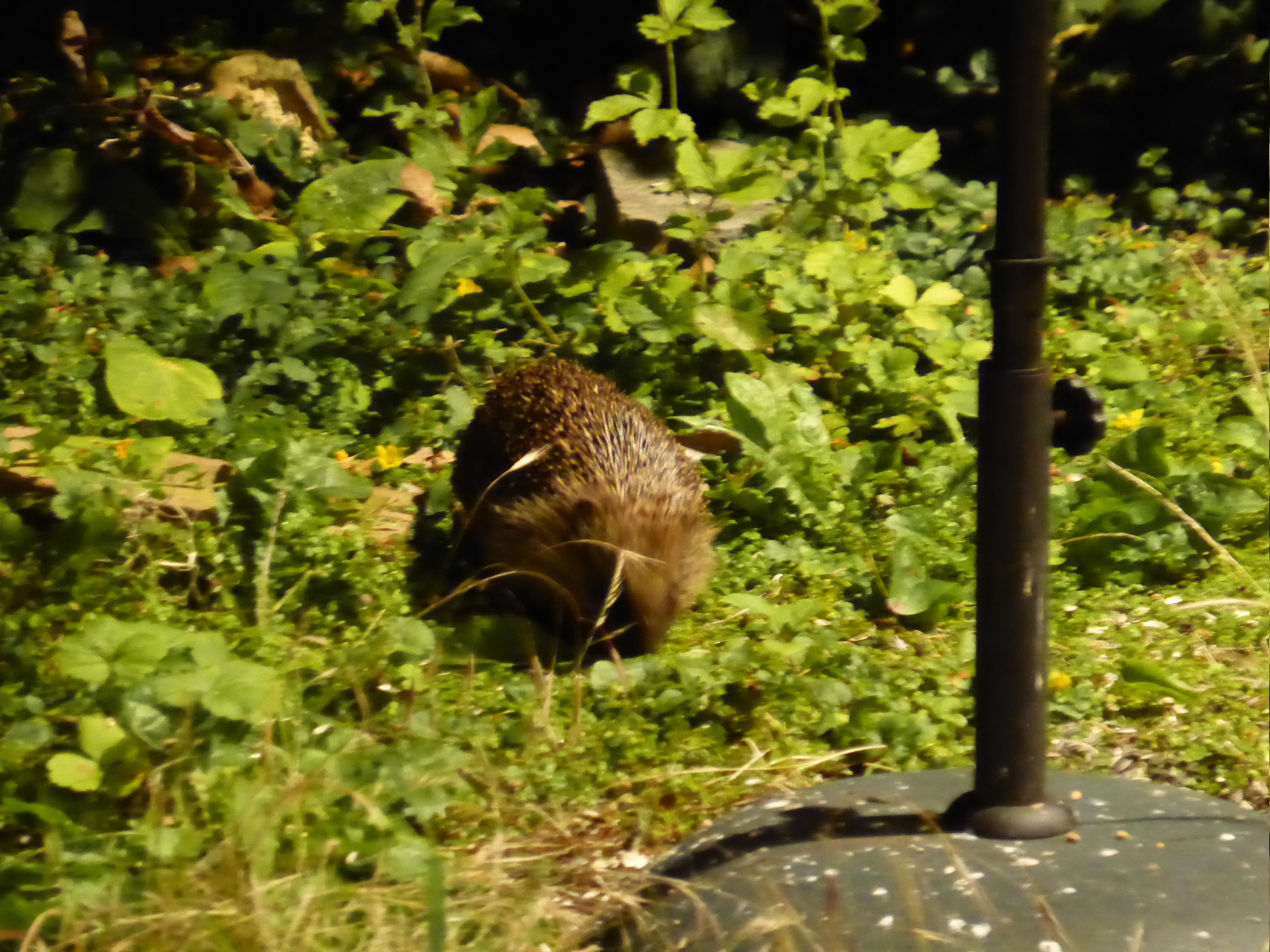
Recently though, in our wonderfully overgrown garden, we have been visited by two, possibly, three hedgehogs. We think that they are either a mother and two different children, or possibly, a father, a mother and one rather small and cute child. They snuffle about in the leaf litter, and yesterday morning, in the wee small hours, at about three o’clock, it was actually possible to hear their chewing and crunching from inside the house.
This is the mother, we think…
P1000798
And these individuals are all youngsters, although only their mother could tell them apart, and they may very well be the one and the same little chap photographed on three separate occasions. Spot the catfood…

This slideshow requires JavaScript.


I think the reason for the arrival of these lovely, sweet little animals is the prolonged spell of great heat and severe dryness that we are currently experiencing here in England.  The drought means fewer insects than normal, and the hedgehogs are forced to try their luck closer to man than they might otherwise venture. We have fed our visitors with, for example, wet and meaty cat food, and they certainly appreciate a bowl of water. Traditionally, you are supposed to feed them a bowl of milk with lumps of bread in it, but this is not really a very good idea for a lactose-intolerant insectivore, even one who is willing to consume dog food when times are bad.
In this video, the mother is looking out for suitable scraps from the bird table…

My daughter had to stop filming when the hedgehog was on her shoe!
Here is our video of a cute baby hedgehog eating catfood:

The babies are called “hoglets”, and Mummy and Daddy are a “boar” and a “sow”.
If you are successful in finding and feeding any hedgehogs, make sure that you send your data to the 2014 Hibernation Survey which lasts until August 31st of this year. The more scientific data we have about hedgehogs, the more can be done to increase their depleted numbers.

To find out more about how you can attract hedgehogs to your garden and what to feed them, take a stroll along Hedgehog Street.

Leave a comment

Filed under My Garden, Nottingham, Wildlife and Nature