
Every year, a huge fair is held in Nottingham. It lasts from the first Wednesday in October to the following Saturday. It dates back to a royal charter in 1284 although it is known that the Saxons had held “St. Matthew’s Fair” long before that. Modern belief is that the Saxon fair was based on a fair held by the fun-loving Vikings. A Viking army had captured Nottingham from the Saxons in 868 AD. Its leaders had two of the coolest names ever.
“Ivar the Boneless”
“Halfdan Ragnarsson”
Presumably his Dad was “Wholedan”, or even “Fulldan”.
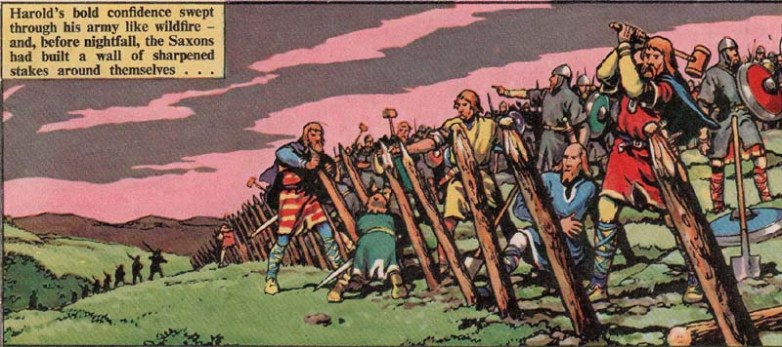
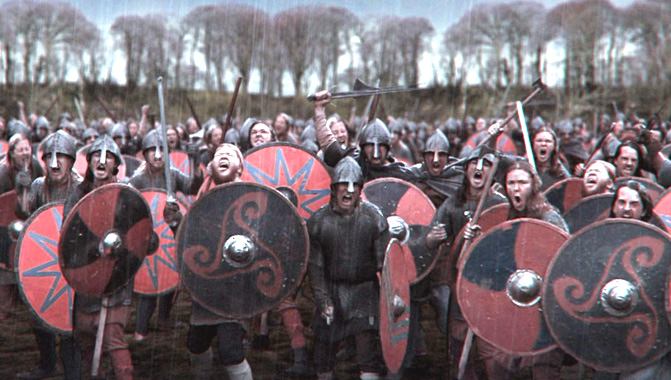
This combination of Saxons and Vikings would make the Goose Fair well over a thousand years old. Here are some Vikings:

And here are some Saxons:
The name “Goose Fair” comes from the thousands of geese that were driven to Nottingham on foot from Lincolnshire, Cambridgeshire and East Anglia. Their feet coated with tar and sand to protect them on the long journey of a hundred miles or more, the geese would provide the traditional Michaelmas dish of roast goose on September 29th. Goose Fair was traditionally held in the Old Market Square in the city centre, although it was moved to the Forest Recreation Ground in 1928. The fair has only been cancelled on very few occasions. In 1646 because of bubonic plague, during both World Wars, and finally in 2020 and 2021.
The Old Market Square was a very different place before 1928.

In the 1700s, the fair was no longer about geese, but was more to promote the sale of Red Nottingham, the local cheese which was traditionally made in the shape of a large wheel. The whole thing became a little too Red Nottingham in 1766, when the natives of the town got a little over exuberant and started “The Great Cheese Riot”. I shall be doing a blogpost about that glorious day when I have spoken to the Archivist of the Museum of the Fifteenth Dragoons to see if the names of the Nottingham peasants they slaughtered have been recorded anywhere.
By 1900, the fair was all about entertainment of every kind, with Aunt Sally’s (sic), shooting galleries, swing boats, roundabouts and merry-go-rounds (is there a difference?). There were theatres showing short films called “animated photographs”. These included boxing matches from the USA, bullfighting from Boulogne in northern France and the famous “Dreyfuss Affair” which was probably the series of eleven short silent films made by the famous French director, Georges Méliès. The very biggest attraction, though, and the most exciting thing on offer, was the increasingly large number of huge spectacular machines powered by electricity. As Pat Collins, the owner of many of the attractions, said:
“the build-up of the mechanical side was very rapid as the manufacturers turned out better machines in each succeeding year”.
One perennial attraction was the Children’s Corner which was situated away from the main fair, at the junction of King Street and Queen Street:

The enntire Market Square was lined with stalls, which also continued up Market Street. These stalls sold “gingerbread, without which Goose Fair would hardly be Goose Fair”, “coconuts, almost equally indispensable” and a profusion of “comestibles and indigestibles”, the latter including mainly children’s toys, books and fruit. On Market Street, the stalls sold a profusion of wash leathers and sponges, and, for the children, there were “penny prize packets” which contained a mixture of tiny sweets and chocolates. There was also a Cheese Fair and a Poultry Fair, and out at Eastcroft, a large cattle market was held. Punch and Judy shows were very popular and they frequently graced St Peter’s Square, or the area in front of the Talbot public house, a little further on than the junction with Market Street.
Next time, the “Nymphs of fashion”, an ironic title, perhaps, given how willing they were to divest themselves of their clothing.






 John Knifton