
Before the sudden advent of the huge electric amusement machines around 1900, exotic animals were a firm favourite of the Goose Fair hordes………

The big problem, of course, was the fact that, in the desire to exhibit the most unusual animals, the owners of the animals would often end up by going to an animal market and buying a creature that they themselves could not identify. So sit back and enjoy my own attempts to work out what the unknown animal really was………
Let’s start with……..
“Tiger Wolves direct from the Black Rocks of Abyssinia”. These were shown in Day’s “No 1 Royal Menagerie” in 1898 as a “Group of Wild and ferocious Tiger Wolves direct from the Black Rocks of Abyssinia”. Alongside them was a group of Baby Lions”.
There are wolves in Ethiopia, but they are red, so much so that they are also called “the Simien fox or Simien jackal or horse jackal”. Intriguingly, at this time, the name “Tiger-Wolf” was the accepted shortened form of “Tasmanian Tiger-Wolf”. This phrase was used to refer to the Thylacine, an unbelievably rare Australian animal to turn up in a fair in Nottingham. I really do wonder what these animals were!
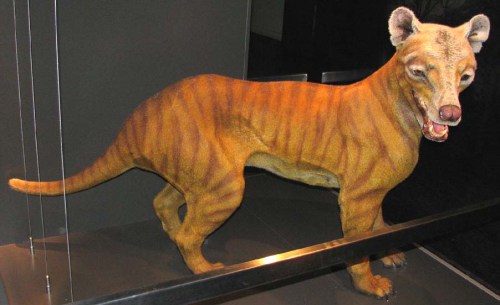
A slightly less colourful one:

I think you’re getting the idea…..
Day’s “No 1 Royal Menagerie” also had “Blonko Bill, King of the Lion Tamers” working for them.” I have been unable to trace the meaning of “blonko”, although if ever a word sounded like Australian slang, this is it! The internet was no help. One site said it meant “kind, entertaining, handsome”, another said it meant “fat, fat, fat”.
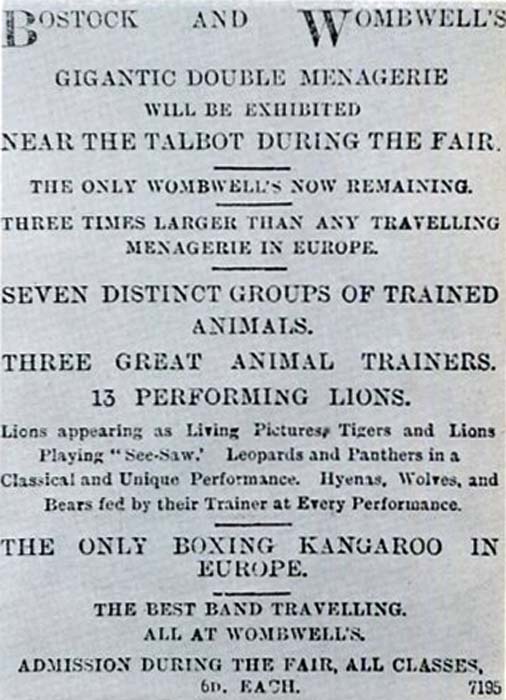
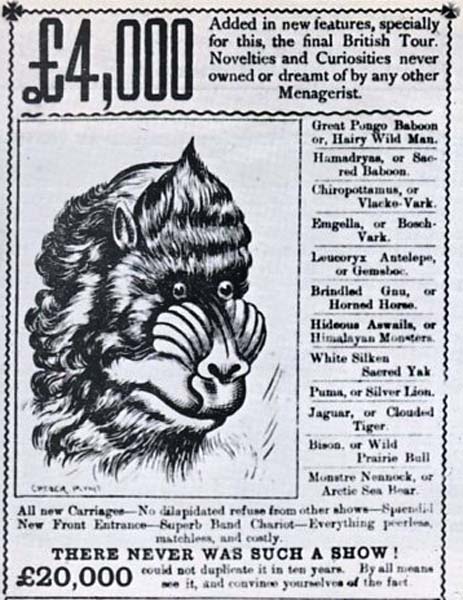
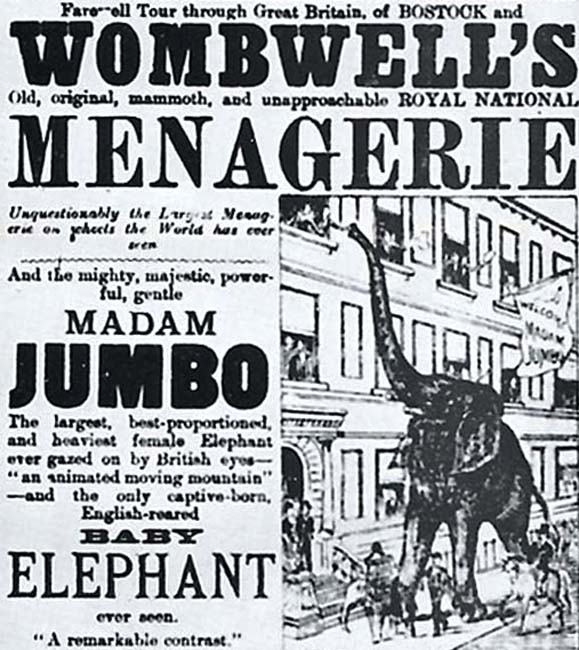
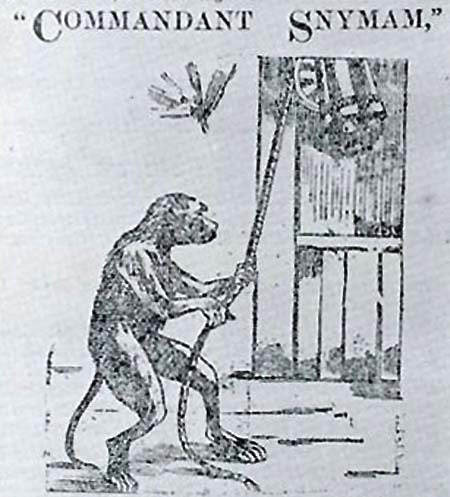
In 1899, Bostock & Wombwell produced a special poster listing all of their animals, including the “Great Pongo Baboon, or Hairy Wild Man”. Intriguingly, “Pongo” is the scientific name for the orangutan, thought to be a close relative of Bigfoot, hence the “Hairy Wild Man” epithet:
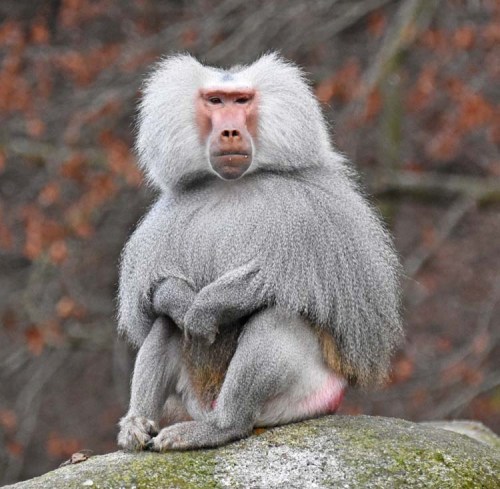
Another strange sounding animal on the Bostock & Wombwell poster was the “Hamadryas, or Sacred Baboon” although, ironically, it is very simple. The poster is referring to the Hamadryas Baboon from the Horn of Africa and the southwestern region of the Arabian Peninsula. You can just see the side of his bright scarlet posterior……
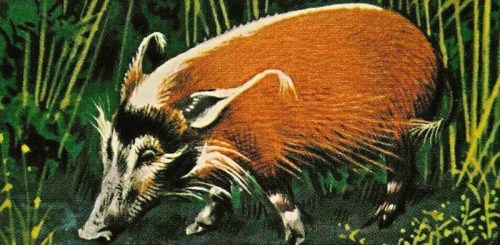
The same owners had a “Chiropottamus, or Vlacko-Vark” which is merely a sort of wild pig. It may be the Red River Hog, “a wild member of the pig family living in the Guinean and Congolian forests. Here’s the old Brooke Bond tea card from the “Wild Animals of Africa” collection….
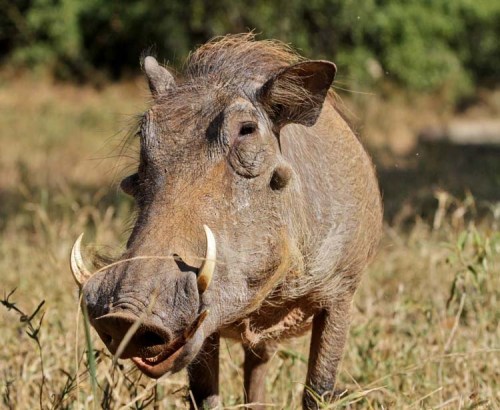
Alternatively, it may be the warthog which is the “vlakvark” in Afrikaans…..
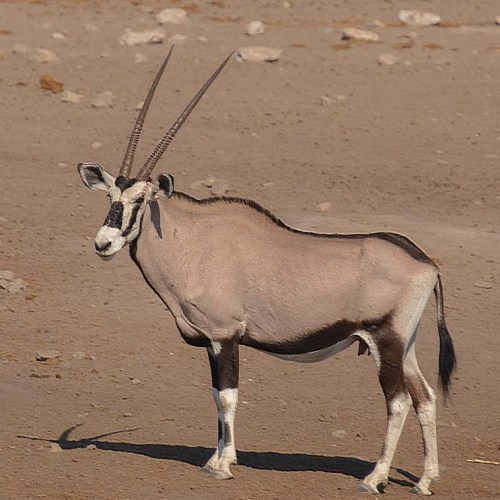
A “Leucoryx Antelope” sounds a very strange beast but it is also called the “Gemsboc” on the poster. And the “Gemsboc is the gemsbok, gemsbuck or South African oryx, native to the arid regions of Southern Africa, such as the Kalahari Desert. It is a very beautiful animal….
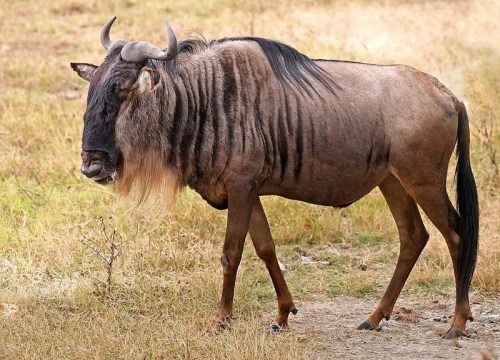
The “Brindled Gnu, or Horned Horse” is a lot easier, because we have all seen this strange word. Not totally unexpectedly, the Brindled Gnu is the blue wildebeest, also called the common wildebeest, the white-bearded wildebeest or the white-bearded gnu. It is one of the two species of wildebeest…..
The Bostock & Wombwell poster advertises a “White Silken Sacred Yak” which would have been a pure white yak. Nowadays, some 5% of the herds are white. They are regarded as an extremely auspicious animal since white represents light, a personification of the illumination of wisdom and the universal Buddha……

Some animals are very easy to sort out.
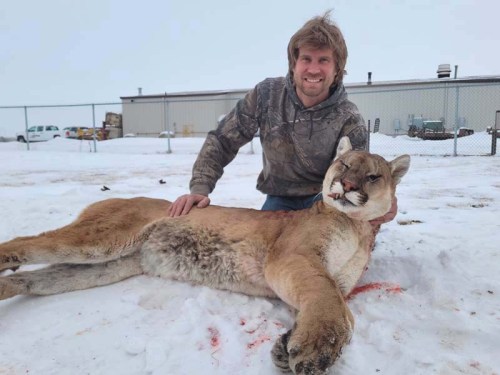
A “Puma or Silver Lion” was presumably a North American mountain lion, cougar or puma. Here’s a lovely picture of one of the first ever mountain lions to be found in North Dakota…..
A “Jaguar or Clouded Tiger” is nowadays called a “jaguar” or a “clouded leopard”……

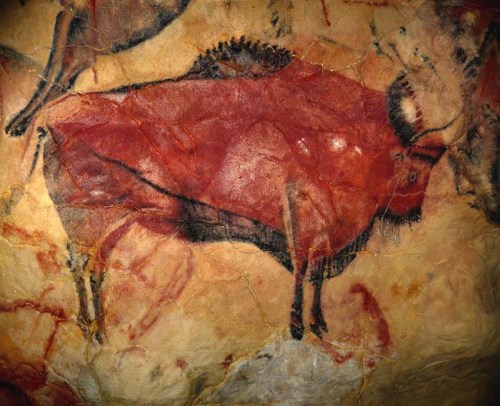
A “Bison, or Wild Prairie Bull” is most probably the North American bison…..
A “Monstre Nennock” sounds incomprehensible, but the alternate names give it away, with “Arctic Sea Bear” making it the polar bear. It would be nice to know what a nennock is, though. Incidentally, I’ve just turned my slides into digital photographs, photoshopped them to make them a little lighter and got rid of the hairs and general dirt. So, here is a nennock or two at Basel Zoo in Switzerland in 1979….

Two final animals though, are most intriguing. Just what were the “Hideous Aswaila”, or “Himalayan Monsters”? Were they a family group of yetis? I bet they were, but the people of the time did not know what yeti was…….

And last of all. What on earth were “Lorenzo’s Performing and Talking Bears”? Were they a family group of Bigfoots? Using their famous “Samurai Chatter” to pass comment about Nottingham and its inhabitants? Here’s a youtube video, and if you move swiftly to 4 minutes exactly, you’ll hear what “Samurai Chatter” is. At 4.40, you can hear the Bigfoot walking around the cabin. It’s really scary!






 John Knifton