
This post continues the story of the disastrous First Day of the Battle of the Somme, using the details discovered by the English historian. Peter Barton, in his careful studies of the German Archives. We now know, for example, that every single German knew about the ten minute delay between the end of the British artillery barrage and the beginning of their infantry attack…….

This allowed them to emerge from their concrete bunkers to prepare their machine guns and their artillery for action. And when the fighting started, thousands of young British soldiers would die unnecessarily……
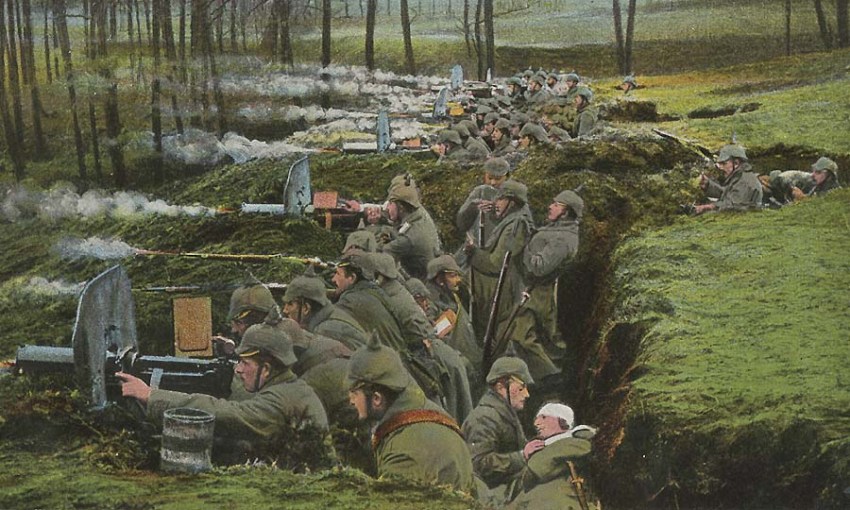
Peter Barton also discovered that the Germans possessed copies of the British textbook used to teach every aspect of British military tactics to would-be officers on special six-week courses. This wonderful find meant that Germans now had a minimum of a ten-week period to get to know, and how to combat, every single tactic likely to be used in the forthcoming Battle of the Somme, before the battle even began. Unbelievable! But very useful if you were a German.
As well as the book of British tactics, historian Peter Barton also found out from the German Archives that the Germans had in their possession all of the British plans overall and the detailed timetable of their individual attacks.
Part of those plans was to detonate the nineteen mines placed underneath many of the German front trenches. The British timetables the Germans possessed revealed that the mines were due to go off exactly twenty minutes before the main attack. This provided the Germans with a splendid reserve alarm clock, telling them how long they had to prepare their defences.

The Germans also knew all the details of the British artillery and the calibre of all the shells that they were firing.
The British soldiers who crossed no-man’s-land were the “New Model Army”. Recruited by Kitchener, they were very inexperienced and not particularly professional. Hardly any of the men had ever seen a German, and many of them were operating in “Pals” battalions. These were men from the same occupations or the same town and they had all joined up together, trained together, attacked together and, given their inadequacies, they might well all die together. You can probably imagine the effect of hundreds of local casualties on a small Lancashire or Yorkshire town.
Most of those casualties were the direct result of the tactics the British soldiers had been given by their officers….
“There is no need to charge. The Germans will have all been killed by the barrage.”
“Do not stop and try to shoot the Germans.
They will all have been destroyed by the British artillery.
Just walk over and take possession of the enemy’s trenches.”
The German Archives gave Barton further details about how they had managed to engineer such a slaughter of the young British lads.
Firstly, the German positions were physically higher up than the British. This allowed them to look out over the British front trenches and to see the Pals battalions much further back, preparing for their attack. And the German artillery could then prepare, at their leisure, when and where to fire as the Pals set off across no-man’s-land.
In similar fashion, the Germans were careful to set up their machine guns so that they could kill huge numbers of the British. The latter were slaughtered as they walked (as ordered) across no-man’s land.
Indeed, in many places, the location of the German machine guns, which were higher up than the British front trenches, allowed the Germans to fire over the heads of the troops in the British front line as they waited to attack. In this way, many of the British reserves and support troops much further back were killed before they had even reached their own front line, the departure point for the attack.
These more detailed researches go a long way to explaining why the first day of the Battle of the Somme was the worst day ever in the long history of the British Army.
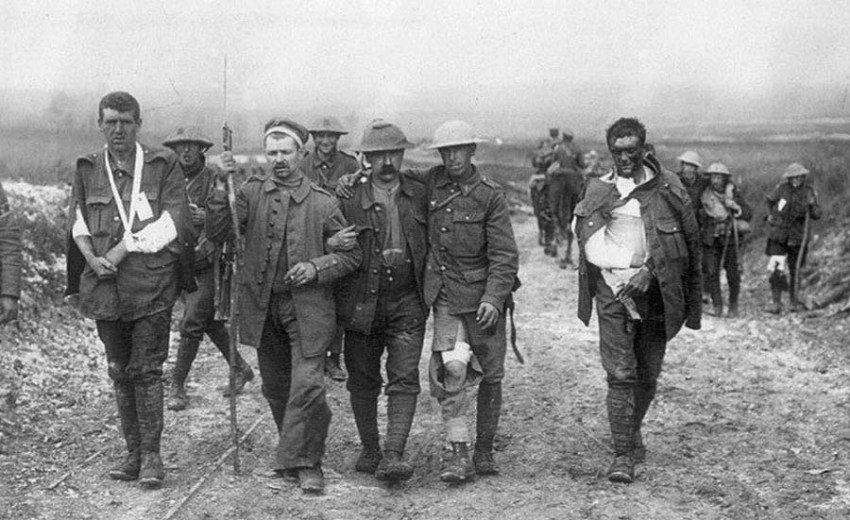
The German archives revealed clearly, for example, that the week-long bombardment had been a complete waste of time and money. British prisoners of war revealed to their German captors that most of the German barbed wire was still intact when they finally arrived in front of the German trenches. The Germans already knew that as few as 40% of most British shells actually went off.
The British top brass had expected around 10,000 casualties among the attackers. There were 57,470. One could even argue that the Germans would have had to have made catastrophic errors not to have achieved the best part of 60,000 British casualties in only 17 hours of battle.
Most ironic of all was the statement that Barton found in the German Archives which stated that the Germans were 100% sure that the British, had they attacked by charging them, would have overwhelmed the German defenders easily because of their numbers. As it was, the ridiculous tactic of walking across no-man’s-land as if they were taking the dog for a walk, ensured that the Germans were able to kill most of the young British attackers.



 John Knifton