Tag Archives: Sönke Neitzel

The Murder of Leslie Howard (2)

Last time, we read the most widely accepted version of the shooting down and killing of Hollywood star, Leslie Howard, by eight Luftwaffe Junkers Ju-88 heavy fighters:

Those two outstanding German authors, Sönke Neitzel and Harald Welzer, though, tell a much blacker story of the destruction of BOAC’s Dakota DC-3 “Ibis” in their recent book “Soldaten”.

………….During the war, the conversations of German POWs were recorded without their knowledge by their British captors. One of two prisoners in a particular prison camp near London had actually been in one of the Ju88s which had shot down Howard’s Flight 777:
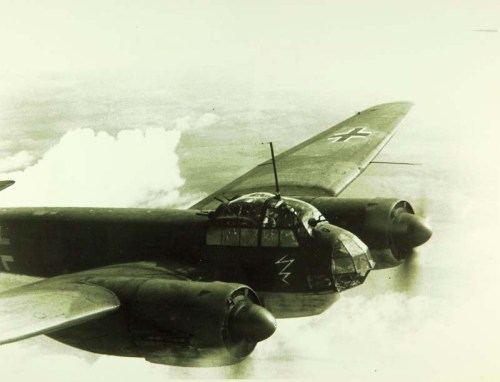
His name was Dock and he said:

“Whatever crossed our path was shot down. Once we shot down – there were all sorts of bigwigs in it: seventeen people, a crew of four and fourteen passengers; they came from London. There was a famous English film-star in it too; Leslie Howard. The English radio announced it in the evening.

Those civil aircraft pilots know something about flying! We stood the aircraft on its head, with the fourteen passengers. They must all have hung on the ceiling! (Laughs) It flew at about 3200 meters. Such a silly dog, instead of flying straight ahead when he saw us, he started to take evasive action. Then we got him. Then we let him have it all right! He wanted to get away from us by putting on speed. Then he started to bank. Then first one of us was after him, and then another. All we had to do was to press the button, quietly and calmly. (…..laughs…)……It crashed…. They were all dead. Those fools don’t try to make a forced landing, even if they can see that it’s all up with them.”
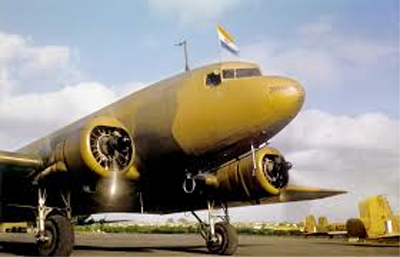
The Allies proclaimed the act a war crime, and so too did a large number of neutral countries. After all, the Germans had shot down an aircraft which belonged to a neutral country (the Netherlands).

Not all of the names of the Ju 88 pilots who carried out this war crime have survived the Nazis’ frenzied burning of their own archives and records, but among the guilty men were:

Oberleutnant Albrecht Bellstedt, Staffelführer Oberleutnant Herbert Heintze, Oberfeldwebel Hans Rakow, Leutnant Max Wittmer-Eigenbrot

Bellstedt and Wittmer-Eigenbrot were both killed in the war, the others I have not been able to trace. No more BOAC daytime flights from Lisbon took place until the end of the war.

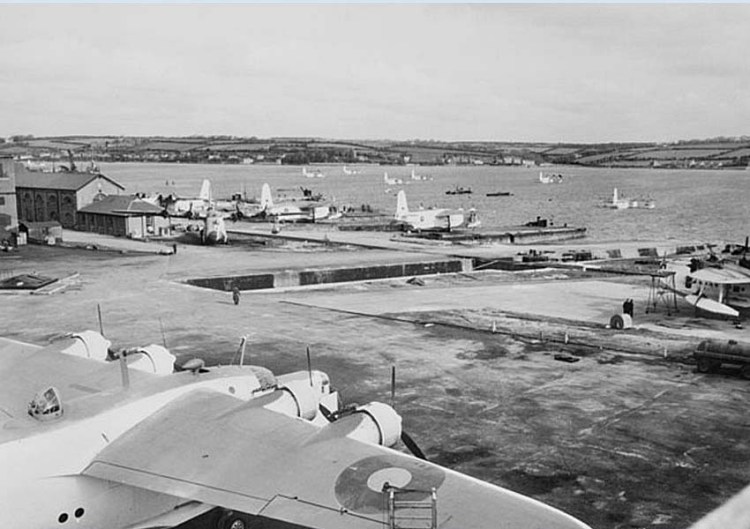
The flights which did take place were all at night, over a totally different route, completely beyond the range of a Ju-88. The British authorities responded to the DC-3’s failure to arrive by despatching a Short Sunderland GR3 flying boat to look for it. The aircraft, EJ134, was piloted by the brave Australians of 461 Squadron. The crew was James (Jim) Collier Amiss, Wilbur James Dowling, Alfred Eric Fuller, Ray Marston Goode, Albert Lane, Edward Charles Ernest Miles, Harold Arthur Miller, Kenneth McDonald Simpson, Philip Kelvin Turner, Colin Braidwood Walker and Louis Stanley Watson. Here’s a picture of RAAF 461 Squadron, looking for all the world like a flock of gigantic white geese:
The Australians found nothing whatsoever on the surface of the sea, but they did find the very same group of eight Ju88C-6s that the DC-3 had already met, at more or less the very same place where it had met them. Sunderland EJ134 and its crew then won their place in aviation legend. In a prolonged battle, the flying boat lost one engine and its tail turret. Messrs Dowling, Goode, Miller, Simpson and Walker were all injured and poor Ted Miles (27), one of the two side gunners, was killed. They did manage, though, to shoot down three of the eight German fighters. Of the other five, only two made it all the way back to Bordeaux. The other three were never heard of again. Six out of eight shot down. That should teach them not to attack unarmed airliners flying from neutral countries.

Overall, the Germans were very wary, if not simply afraid, of the Sunderland flying boat. It was an extremely heavily armed aircraft and a formidable opponent.

No wonder they called it

“Das Fliegende Schtachelschwein”, the Flying Porcupine”

This phrase  has proved particularly useful in all of my many trips to Germany, especially those to Berlin Zoo. And one day, when I ask for a cocktail called “A Flying Porcupine”, the barman will know how to make it!

14 Comments

Filed under Aviation, Film & TV, History, military, Politics, war crimes

“Soldaten” by Sönke Neitzel and Harald Welzer (4)

In my very first blog post in this book review, I mentioned how German academic, Sönke Neitzel, had discovered that during World War II, British Intelligence had taped German prisoners of war in secret and then transcribed their conversations. This process had produced 50,000 pages of foolscap transcripts. These transcripts have in their turn inspired a four hundred page book called “Soldaten” in which Neitzel and his co-author, Harald Welzer, examine the reasons for the war crimes committed by the Germans, and indeed, by the personnel of a number of other nationalities. Here are our authors and their book:

This slideshow requires JavaScript.

The bugged prisoners were kept in three locations – Latimer House near Amersham, Wilton Park near Beaconsfield, both in Buckinghamshire, and Trent Park near Cockfosters in north London. The first two held captured U-Boat submarine crews and Luftwaffe pilots, who were bugged for a week or two before being moved on to conventional captivity. Trent Park was often used for high-ranking officers of the Wehrmacht, whose own personal vanity led them to betray many secrets:

There were large numbers of pro-British German speakers, usually Jews, listening to prisoners’ conversations in a place known as the “M room”. The “M” stood for “Microphoned”. According to Helen Fry, the author of a book about this particular episode, the information pouring out of these pampered Prussians was so top secret that Churchill gave the whole operation an unlimited budget.

Last time we were looking at the reasons that men in war are capable of the most vile violence. Here are the ideas put forward by Neitzel  and Welzer so far . I have tried to include a few short clues of the examples they used:

“There is a  vast gap between what people believe about their moral standards and their actual behaviour”.  (The Good Samaritan episode at Princeton University)

“When you have reacted once in a particular way to a certain situation, you will continue to apply the very same rules.” (German soldiers killling Jews on a large scale)

“The unit was the entire world….what they thought was right, was right and what they thought was wrong, was wrong.” (Only one man refused to take part in the My Lai massacre in Vietnam)

“inhumanity with impunity…..if soldiers commit crimes, and are never punished, they will repeat their behaviour.” (German soldiers raping passing women in Kiev)

“a dynamic of violence” ……… anybody who tries to flee is automatically an enemy who should be shot.” ( A frequent attitude in Vietnam, probably because the Vietcong guerillas were difficult to identify)

One final extremely large motivation towards violence is revenge. In a film, revenge will be the simple, basic story of how a soldier is killed by the enemy, usually in particularly appalling circumstances, and, as he dies, his friend swears to avenge him. For every military revenge film, though, there are many more set in a civilian context.  This may not be the best example, but it’s certainly the most obscure:

In real life,  there were GIs in Vietnam who had re-enlisted to avenge their best buddy who had been killed in the fighting, or tortured to death, and so on. The authors have found a quote:

“I did not hate the enemy for their politics but for murdering Simpson, for executing that boy whose body had been found in the river…Revenge was one of the reasons I volunteered for a line company. I wanted a chance to kill somebody.”

In the Second World War, the situation could be slightly different. American GI, Joseph Shomon said:

“Even in hopeless situations, the Germans would fight to the last, refusing to surrender. Then, when their ammunition was gone, they were ready to give up and ask for mercy but because many Americans had been lost in this delay, our troop often killed the Germans.”

As well as revenge, of course, this shooting of surrendering Germans is a good example of a couple of other reasons for the occurrence of war crimes previously mentioned by Neitzel & Welzer. Firstly, if everybody commits acts of violence and nobody is ever punished for it, then clearly, they can:

“follow what they had already done”.

And secondly:

“what (the unit) thought was right, was right and what (the unit) thought was wrong, was wrong.”

Sometimes soldiers in the two World Wars were actually ordered not to take any prisoners. The latter were then very much more likely to be executed than to be taken back to base. In the Second World War, the German military were ordered by the Führer to hand over immediately to the Sicherheitsdienst (SD, or Security Service) all British Commandos, SAS, SOE and any other type of “irregular” soldier. This was the famous “Kommandobefehl” which you can read about here.

In actual fact, my own Grandad was placed in a similar position on at least one occasion during the First World War. It must have been on the anniversary of the execution of Edith Cavell on ‎October 12th 1915 that he and his colleagues in the Canadian army were told to take no prisoners during that day’s attack. Whether my Grandad carried out the order, I have no idea.

My own perception, though, is that rather than refuse to take prisoners in the usual way, and instead to kill them, it was far more frequent in World War One, to try and spare the lives of the men who had been ordered to attack but who were now in a situation which could only have one outcome. Harry Patch, for example,who at 111 years of age was “the Last Fighting Tommy”, has spoken of how he refused to kill a German soldier:

“Patch came face to face with a German soldier. He recalled the story of Moses descending from Mount Sinai with God’s Ten Commandments, including “Thou shalt not kill” and he could not bring himself to kill the German. Instead, he shot him in the shoulder, which made the soldier drop his rifle. However, he had to carry on running towards his Lewis Gun, so to proceed, he shot him above the knee and in the ankle.”

My Grandad was wounded in the legs on two occasions, so perhaps the Germans did the same kind of thing.

We have a long, bloody way to go with “Soldaten” yet, so let’s finish with some wise words from Harry Patch, the last British soldier of World War One, who lived to become a pacifist:

When the war ended, I don’t know if I was more relieved that we’d won or that I didn’t have to go back. Passchendaele was a disastrous battle—thousands and thousands of young lives were lost. It makes me angry. Earlier this year, I went back to Ypres to shake the hand of Charles Kuentz, Germany’s only surviving veteran from the war. It was emotional. He is 107. We’ve had 87 years to think what war is. To me, it’s a licence to go out and murder. Why should the British government call me up and take me out to a battlefield to shoot a man I never knew, whose language I couldn’t speak? All those lives lost for a war finished over a table. Now what is the sense in that ? “

20 Comments

Filed under Canada, Criminology, France, History, Politics, Science