Tag Archives: Supermarine Shrew

The Murder of Leslie Howard (3)

Last time we were looking at how the airliner in which Leslie Howard, the film star, was returning to England, was shot down in the Bay of Biscay by the German Luftwaffe, resulting in the deaths of every single person on board, including the children. Here is some of Leslie Howard’s best work, taken from the now controversial “Gone with the Wind” :


Since that first day of June 1943, there have been literally scores of theories put forward as to why Leslie Howard and the rest of the civilian passengers and crew of the DC-3 “Ibis” were all murdered in this callous fashion. Shot down into the waters of the cold Atlantic Ocean, while travelling to England in an aircraft which was unarmed and the property of a neutral country, namely the Netherlands. And this attack was clearly directed at somebody, because the attackers were eight Junkers Heavy Fighters, armed to the teeth and clearly, sent specifically to destroy this inoffensive DC-3 Dakota.
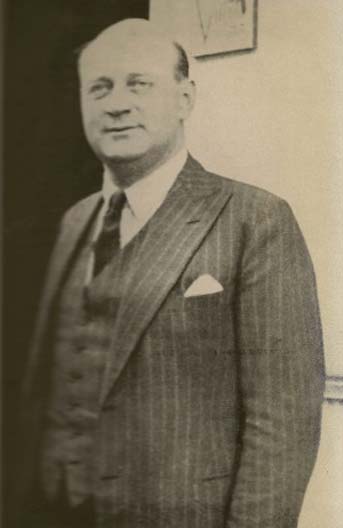
Leslie Howard’s business manager, Alfred Chenhalls was a fat, bald man who loved to smoke cigars and who occasionally drank alcohol in sensible quantities. It was extremely easy to mistake him for Winston Churchill. What do you think ? Did a German spy see Chenhalls get on the plane and immediatelyt telephone the German Embassy in Lisbon?

Which one is this?  Churchill or Chenhalls?
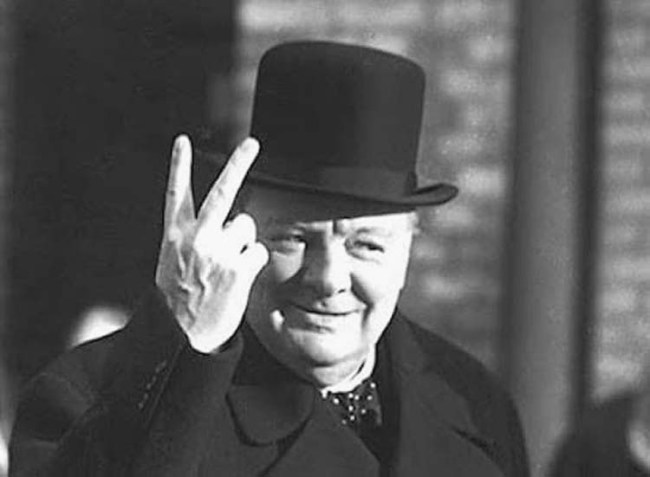
And is this the Prime Minister or a party going bon viveur, who liked nothing better than drinking the very best whisky in large quantities?

“Two bottles for each of us, barman !!! “
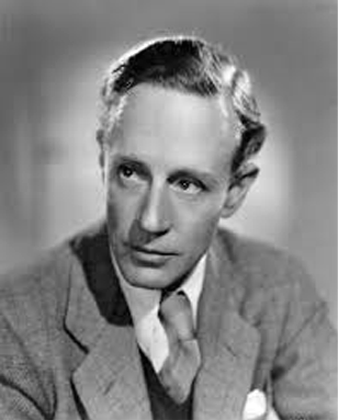
As we have seen elsewhere, Leslie Howard was not an English landowning gentleman, but a Hungarian Jew. He supposedly resembled Churchill’s bodyguard, Detective Inspector Walter Thompson. Similarly, Detective Inspector Thompson had the air of an archetypal English gentleman, self assured, self confident, upper class and, most of all, slim. Here’s Leslie Howard:
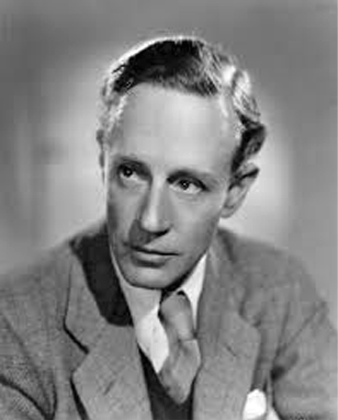
And here’s Walter Thompson, on the right:

There are other theories, of course.

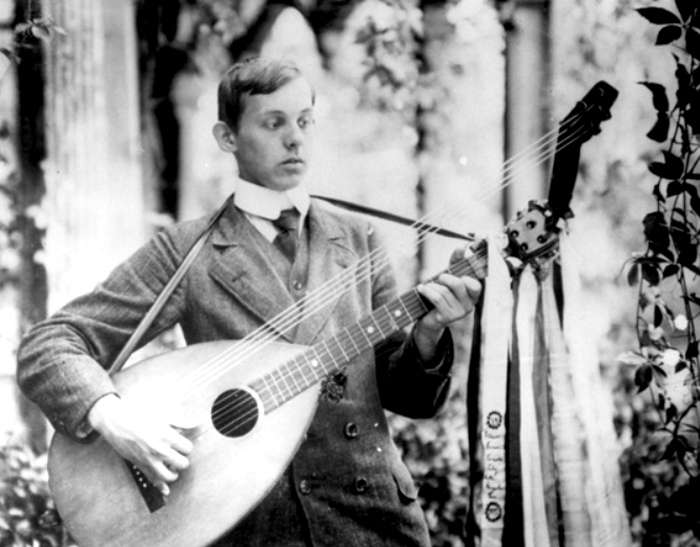
How valid is the theory, though, that Leslie Howard was supposedly the virtual double of Sir Anthony Eden, England’s Foreign Secretary at the time? Here’s Eden at the age of around twenty, as a student at Oxford University……….
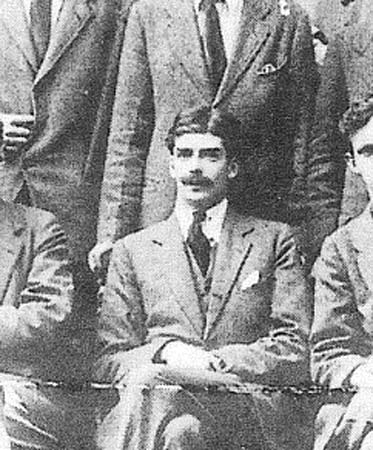
There is though, a bit of a giveaway which is tremendously helpful in any “Pick-out-Anthony-Eden” competition. The real Anthony Eden, for his entire adult life, had that stonking great moustache which he fixed into his nostrils at seven o’clock every morning and then didn’t take off until midnight.

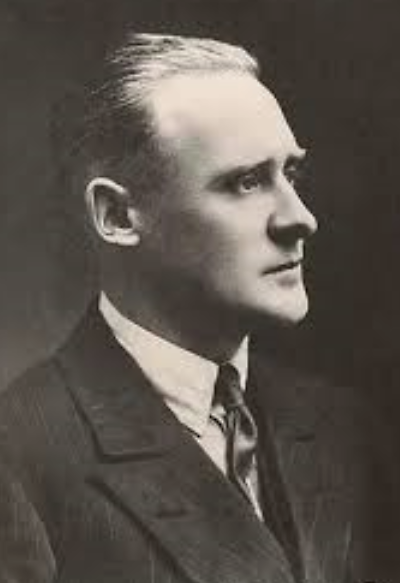
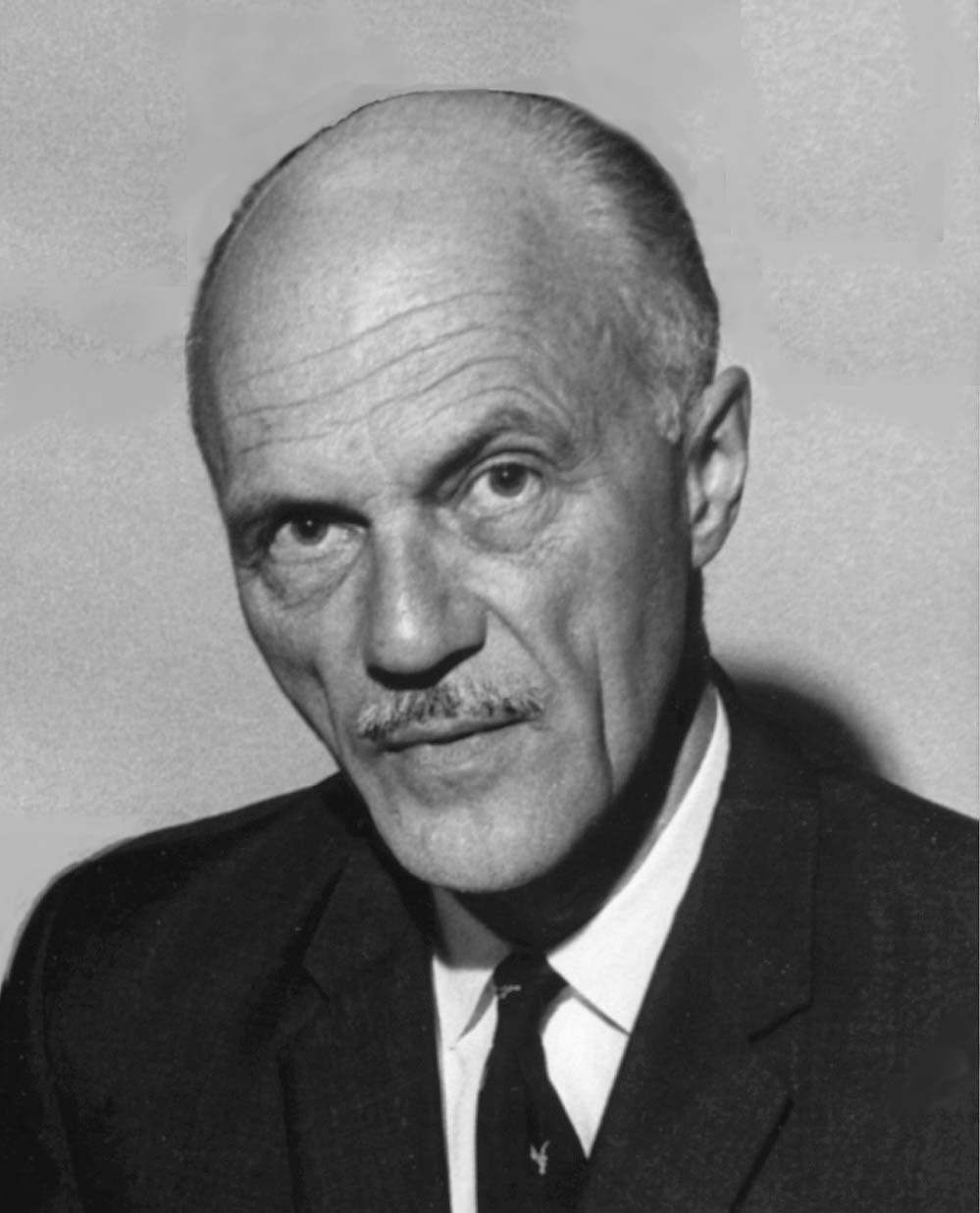
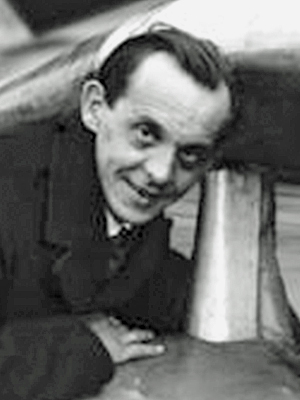
And what about the idea, quite widespread at the time apparently, that the Germans thought that Leslie Howard and Reginald Mitchell, designer of the legendary Spitfire, were one and the same man? Leslie Howard we have already seen, and here’s the designer of what began its life as the Supermarine Shrew :

In my mind, the best fit is “Churchill and Thompson v Howard and Chenhalls”.  And we must not forget that the only images of Churchill or Leslie Howard seen by most of the attendees of the Dakota’s take-off from London would have been either crudely printed photographs from newspapers or perhaps slightly better quality pictures from magazines. Moving pictures would have been from Howard’s films, or for Churchill , the two minute Pathé News films shown in cinemas during the interval. In other words, confusion was a great deal easier in 1943 than it was in 2023.

It was by no means a completely ridiculous idea, therefore, to suggest that “Churchill–Chenhalls” was on that plane from Lisbon. And for the Germans, it was well worth organising an attempt to shoot down the plane, even if the Prime Minister was supposedly at an important conference in Algiers.

How easy it would have been to alert Berlin, who could then have contacted the fighter base, probably at Mérignac near Bordeaux in southern France, and then telling those eight Junkers Ju88C-6 heavy fighters to take off and intercept the DC-3. Such attacks were in actual fact very rare in the Bay of Biscay, so this particular Luftwaffe operation must surely have been for a specific reason, and for a specific and important target.

And now a whole second level of conspiracy theories swings into action. Perhaps British Intelligence invented the entire story of Churchill’s being on board “Ibis” that day, so that he could fly back home to England in his own private aeroplane, an Avro York. Here’s an excellent short film giving you all the relevant facts about the Avro York, which was basically a different fuselage, set on a pair of Lancaster wings:


There were plenty of people who believed this story that British Intelligence had told the Germans that Churchill was returning to England in the DC-3 that particular day, and that he would be refuelling near Lisbon. In this way, his Avro York would be able to return to London in peace, even if the Dakota finished up in pieces.

And so it goes on, round and round in ever decreasing circles with very little beyond well informed guesswork and random supposition. These are certainly very far from being guaranteed truths.

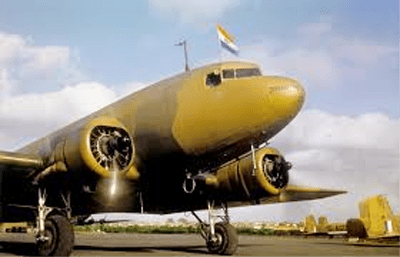
In 1943, the earliest rumours to surface were that “bon viveur” Alfred Chenhalls had actually been mistaken for Churchill by German agents as he walked out to the plane in Lisbon. Furthermore, this explanation is known to have been the one favoured by Churchill himself. At the same time, though, Churchill was certainly puzzled as to how German intelligence could possibly believe that he, with all the resources of the British Empire’s armed forces and those of the United States at his fingertips, should be reduced to travelling in an unarmed, relatively slow and vulnerable commercial airliner.
24 Comments

Filed under Aviation, Film & TV, History, military

The Supermarine Walrus (1)

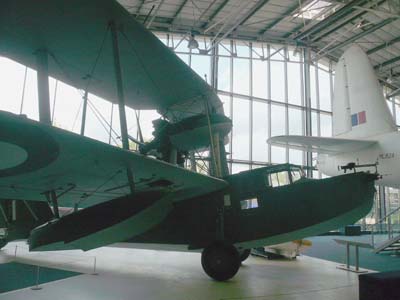
In a recent blog post, I wrote about the most famous flying boat of World War Two, the Short Sunderland. I was lucky enough to visit the RAF Museum at Hendon in north London, where the aircraft is positioned in a very large space, unlike the way it was rather cramped way it was displayed when I went to Duxford in 2009:

With the Sunderland, under its starboard wing almost, is a Supermarine Walrus, which is not a flying boat but an amphibian, an aircraft which can go on land as well as on water.

The Walrus is an extremely unattractive flying machine, and it is extremely difficult to imagine that it was designed by RJ Mitchell, the man who designed the world’s most beautiful aircraft ever. This was the fighter that was originally to be called the Supermarine Shrew, until the name was changed to Supermarine Spitfire (“just the sort of bloody silly name they would choose.” (Mitchell)).

The Walrus was intended to be a gunnery spotting aircraft for sea battles between big warships, but this only happened twice, in the Battle of Cape Spartivento and the Battle of Cape Matapan. In actual fact, the Walrus’ main task was to patrol the seas looking for German or Italian submarines and surface warships. By 1941, the Walruses, or perhaps Walri, had air-to-surface radar for this purpose, although by 1943, all catapult-launched aircraft on Royal Navy ships, including the Walrus, were being phased out as the catapult and the hangar took up too much deck space.

The Walrus was then used at sea only on aircraft carriers as its landing speed was very low and neither flaps nor a tail-hook was necessary. The Royal Navy didn’t have that many aircraft carriers, so the main use of the Walrus now became chiefly air-sea rescue from land bases.

Before the Walrus, the British had not had any aircraft specifically designed for air-sea rescue in home waters.

Here’s the Walrus from the front:

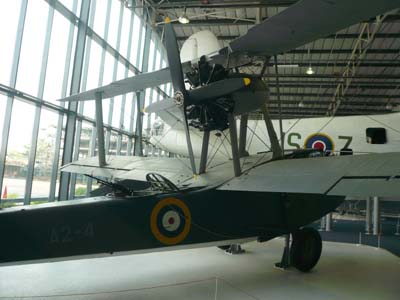
And here it is from the back. Notice how the four bladed propeller is so close to the rear gunner that it may give him a short-back-and-sides haircut if he is not careful:

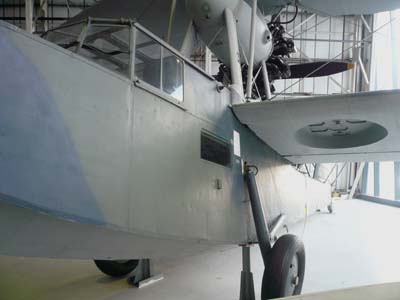
Here are the wheels which the pilot would lower before landing in the normal way on a runway. As I mentioned above, the Walrus had such a low stalling speed that it could land on an aircraft carrier without recourse to an arrester hook or to any safety nets. Presumably this allowed the Walrus to transport very badly wounded casualties to an aircraft carrier for immediate medical treatment, if the wounded man was too badly injured for a long flight to land :

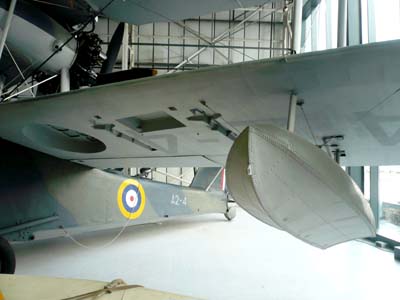
Here are the floats underneath each wing tip. They appear to have about three thousand of Rosie the Riveter’s finest holding them together:

And to finish up, here’s an overall view of a Walrus:

It flies at about 55mph, but finds long climbs rather challenging. No, just joking!

33 Comments

Filed under Aviation, History, Humour

The Battle of Britain (1)

We visited RAF Hendon on July 22nd 2010. It seems an age ago. Hendon is a fantastic museum, easy to get to from the M1 and FREE ENTRY. What is there not to like?

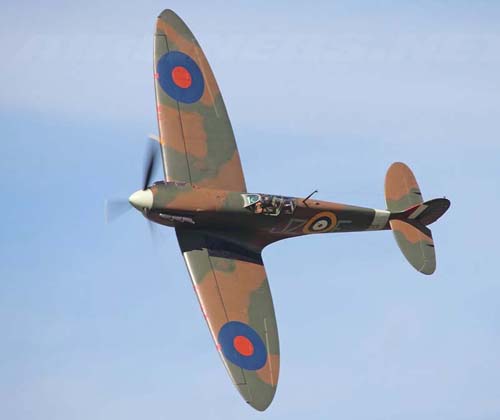
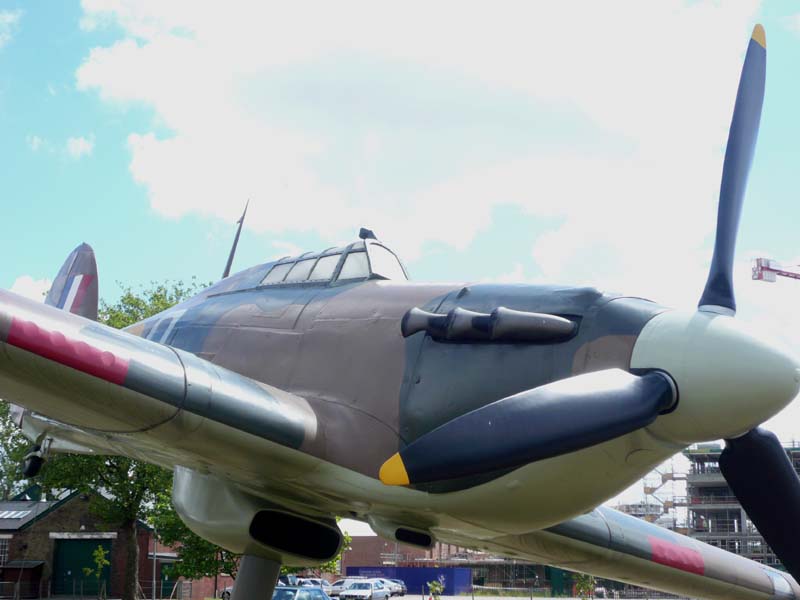
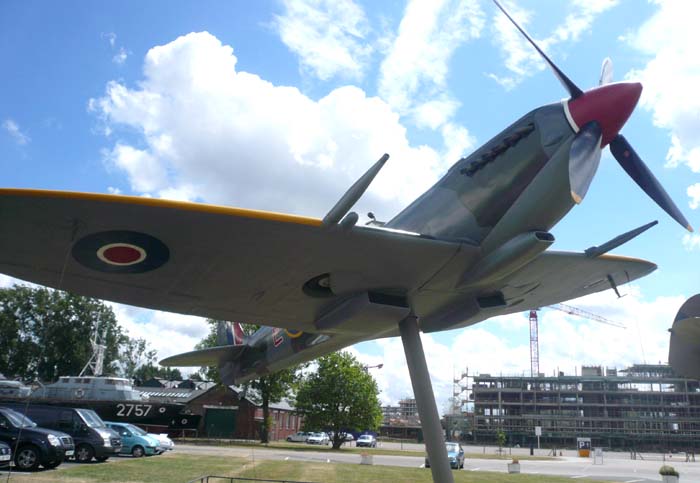
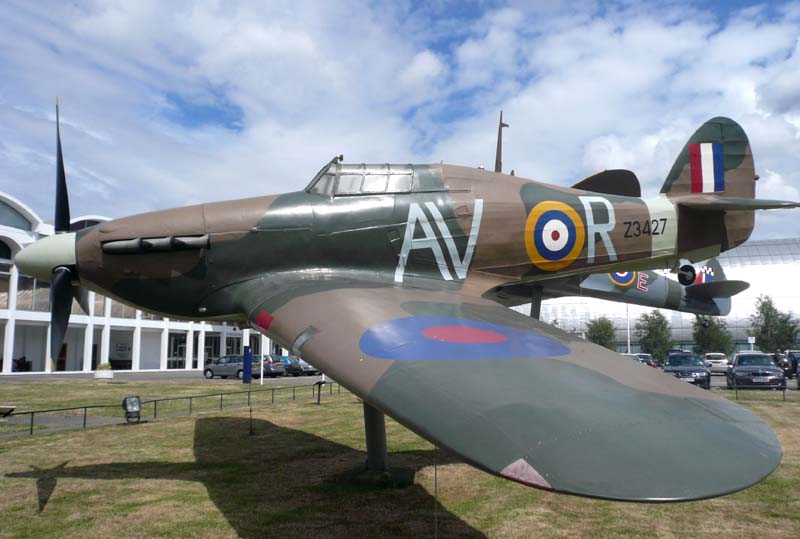
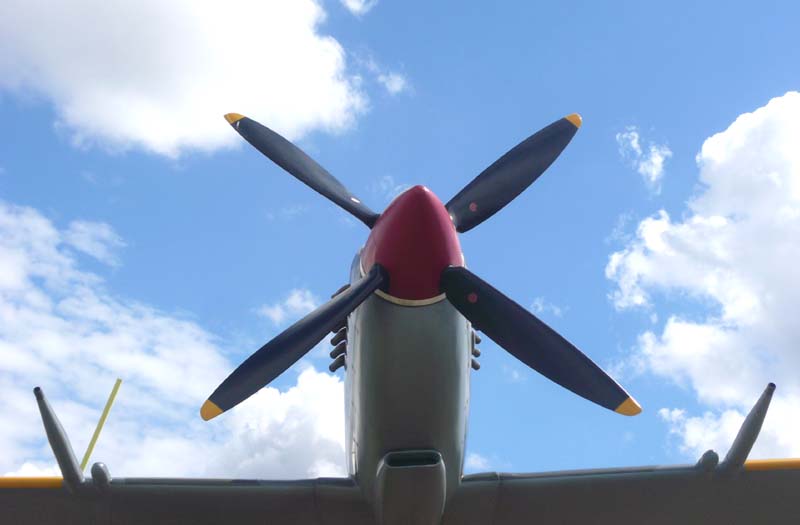
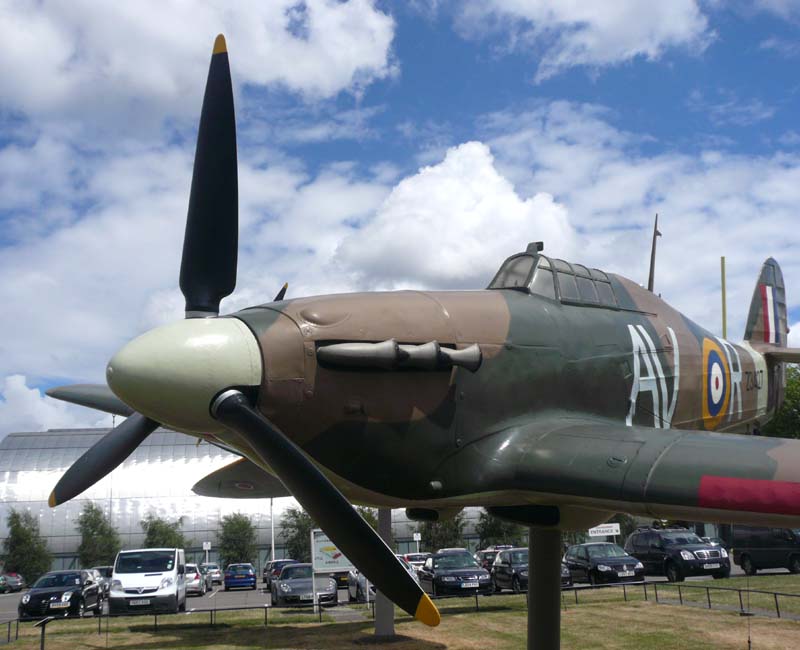
The first few photographs show the display outside the museum. One is a Hurricane and the other is a Spitfire. I’ll leave you to work out which is which. Here’s an aircraft with a cannon in each wing which, I think, means that it cannot have been a Battle of Britain participant:

Here’s another view of the very first aircraft:

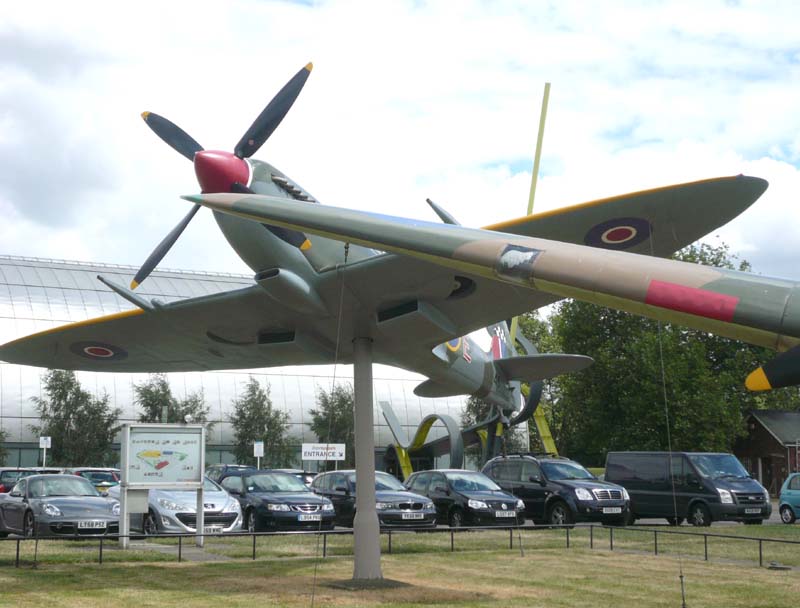
And the second aircraft again… This is as close as I get to that weirdo artistic sort of photograph:

Here’s the last picture of aircraft No 1 and 3:

And here’s a free clue to the identity of this aircraft. American readers…”Sorry!”

And here’s aircraft No 2 and 4 again:

Well, the odd numbers are the Hawker Hurricane and the even numbers are the Supermarine Spitfire, originally called the Supermarine Shrew. The way to tell them apart is that the Hurricane, or “Harry Kane” to give you the answer to the clue, has one huge radiator under the fuselage and the Spitfire always has two smaller ones, one under each wing.

It was months after our visit that I found out that both aircraft outside the museum were counterfeit. Made of plastic, apparently. The museum people don’t make that particularly obvious. I suspect that they’re scared that they’ll be killed in the crush of middle aged men who all want one for the front lawn.
The Spitfire was, of course, designed by Reginald Joseph Mitchell who worked for Supermarine Aviation of Southampton. Here he is:

Many Germans could not separate RJ Mitchell from the man who played him in the film, Leslie Howard. Here’s Leslie Howard:

They could be identical twins, couldn’t they?

The Spitfire’s wing was of an innovative shape at the time. I didn’t know though, that there was a good deal of input from Beverley Strahan Shenstone, a Canadian engineer. Here he is. He isn’t in the film. The British  always seem to have kept Australians, Canadians and New Zealanders well out of their films:

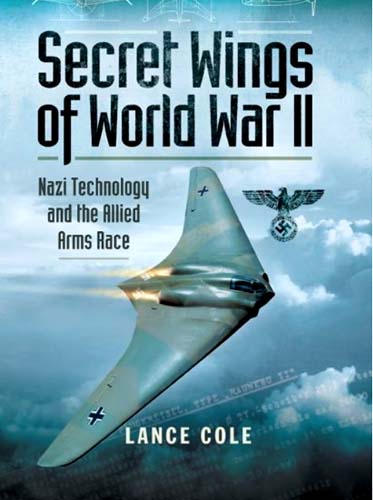
Beverley Shenstone studied in Germany under Hugo Junkers and Alexander Lippisch. I found this out in a marvellous book I read recently called “Secret Wings of World War II” by Lance Cole. Here it is. It’s an excellent book:

To quote the author:

“By 1932, Shenstone had authored several papers stemming from his German studies…he was soon employed by RJ Mitchell, Shenstone was the man who within four years had shaped the Spitfire’s ellipsoid wing, its wing fillet and many of its aerodynamic design features.”

A wing fillet is the smooth curve between the fuselage and the wing. It improves air flow. It isn’t particularly obvious in the plastic Spitfire above but there will be a Spitfire Mark I appearing soon and it’s a lot more obvious on that aircraft.

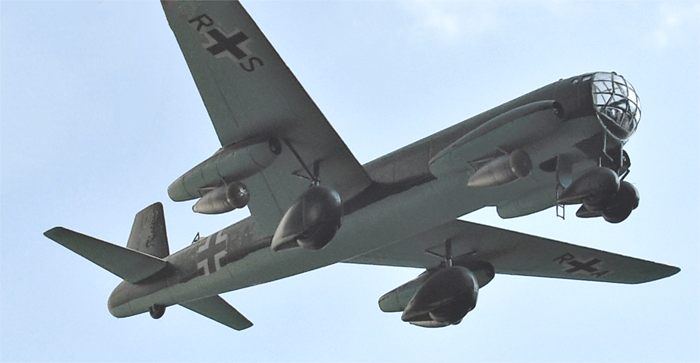
Hugo Junkers was beyond the cutting edge of aircraft design in 1945. This is his Junkers Ju 287 bomber with forward pointing wings. And yes, it flew perfectly:

Even in the 1930s, his designs were astounding. Swept back wings with propellers:

 And a flying wing, the J 1000 Super Duck:

Alexander Lippisch was even better than Hugo Junkers. Here he is:

His first aircraft was not very good:

But after that, by the standards of 1940, WOW!

 The Americans are still flying around in his thoughts and ideas:

This slideshow requires JavaScript.


30 Comments

Filed under Aviation, History, Humour