Tag Archives: Tirpitz

Enigma 4

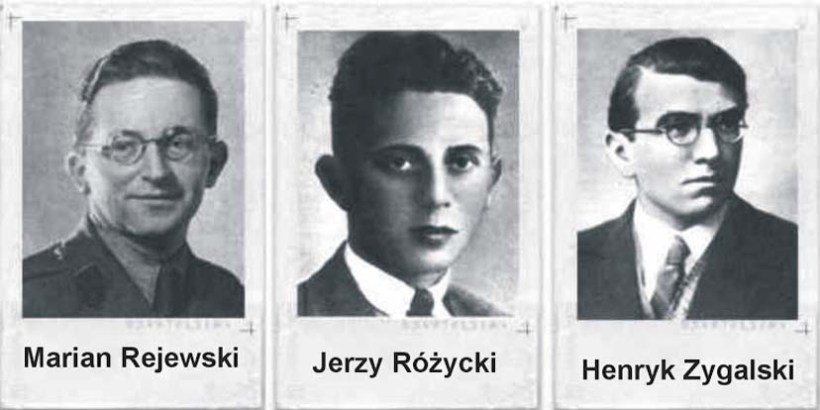
Last time, I was telling the story of how the three Polish whizz kid mathematicians, Marian Rejewski, Jery Rozycki and Henryk Zygalski, had told the British and the French, everything they had discovered about Enigma. Here they are:
That generous act enabled the British to begin decrypting German messages almost straight away, and, very soon, to start affecting the outcome of the war. In March-April 1941, Enigma revealed, for example, that Crete was going to be invaded from the air, using gliders and paratroopers. Everybody was ready for them and the German invasion force suffered heavy casualties, with as many as 4,000 men killed.

I also talked last time about how, in May 1941, the Royal Navy was told the whereabouts of all the supply ships that were servicing the Bismarck. They also ascertained on one particular occasion, that the Bismarck was headed to a harbour in France, rather than in Germany.

The stories all came from the book by John Jackson which relates the story of Enigma, the German encrypting machine used throughout the entire Second World War, the Germans always confident that their codes could never be cracked….

In July 1942, if the Royal Navy had been clever enough to believe the Enigma decrypt given to them, they would not have told the Arctic convoy PQ17 to scatter, an act which condemned 24 ships to a watery grave and 153 sailors to an early death. Arctic convoys were dreadful:

Temperatures were always unbelievably low, and the ships were  attacked more or less constantly:                                                                                                                                                                                                                                                                                                                               
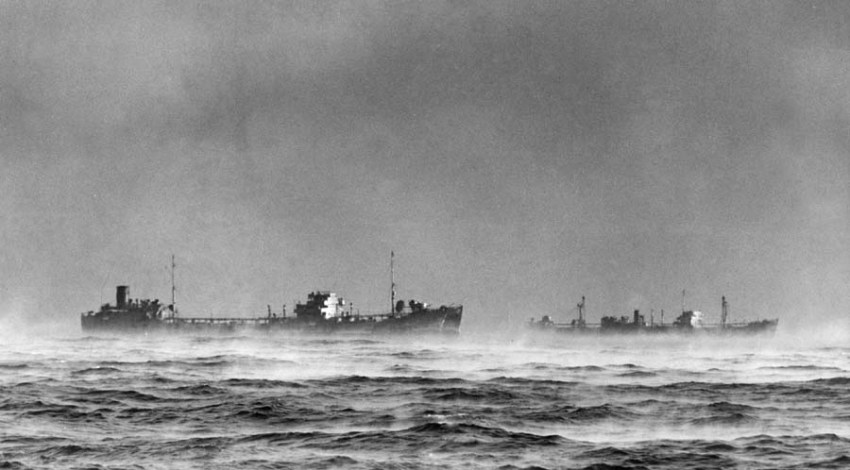
There was very little air cover, and the one constant threat was the mighty battleship, the Tirpitz:

Even Enigma cannot overcome the arrogance of unintelligent senior officers. And what was the reason for the mix-up?

Well, the great men at the top end of the Royal Navy believed that the Tirpitz had left port to attack the convoy. But, unbelievable as it may seem, they were actually mistaken and the biggest naval disaster of the Second World War ensued.

In April 1944, General Guderian went on a tour of the various armoured units that the Germans had stationed in Normandy. This enabled the Allies to know exactly which Germans were where, and gave them…….

“a splendid insight into the distribution of the armour a month before the landing.”

Here is General Guderian. He was the author of the definitive book on tank warfare called “Panzer”. If only one of the senior English officers had read it before the Panzers rolled into France in 1940:

Further Enigma decrypts in 1944 revealed exactly the strength of the Germans in northern France, with six top quality divisions in France and Belgium, along with fourteen divisions of lesser quality. Worryingly, perhaps, the Cotentin Peninsula, to the west of the D-Day beaches, was being heavily reinforced, although it was music to Churchill’s ears to hear the large number of complaints from a large number of various German units that petrol and oil were again in very short supply. The Prime Minister was also extremely pleased to hear that, day by day, Hitler and his generals were beginning to believe more and more strongly that the Allies would land not in Normandy, but in the Pas de Calais.

Enigma decrypts also revealed that in, May 1944, the Luftwaffe had a thousand aircraft including 650 fighters, although Allied numbers were much, much, higher. Interestingly, given that the weather satellite had not yet been invented, the Allies were delighted that on D-Day, thanks to Enigma, they would be able to use what were probably far more accurate forecasts than anything they had themselves, namely the Germans’ own weather forecasts.

In June 1944, Enigma also managed to decipher encrypted messages between Peenemünde and Blizna, a testing ground for the V1 and V2. Before long, everybody at Bletchley Park was familiar with the name of Werner von Braun, soon to give up being a career war criminal and to move to a cushy well paid job in the United States.

Here’s a V2 rocket:

They were tested initially at Peenemünde and then at Blizna. Not a lot went on without the Enigma decrypts letting the RAF know something about it. Peenemünde was heavily damaged after a huge number of RAF bombers bombed every square foot of the site. They included 103 Squadron, starring my Dad. The RAF were particularly keen to blast and obliterate Peenemünde, because they’d all been told……

“Destroy the secret weapon site tonight, or you’ll all have to go back tomorrow evening.” 

The main scientist in charge at Peenemünde was, of course Werner von Braun, not an SS war criminal who used slave labourers to build whatever he required but a helpful scientist who took Mankind to the Moon. Here he is, sharing one or two Slave Labourer jokes with his pals:
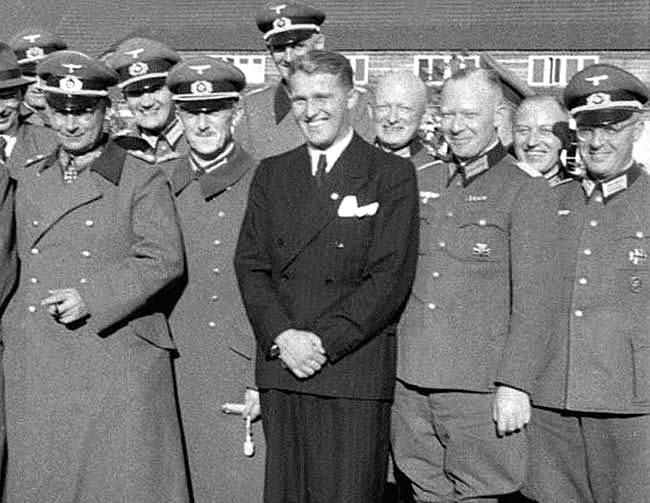
At the time, the people deciphering the Enigma messages were absolutely amazed at what the Germans were doing. They had never anticipated what were, after all, artillery shells, being propelled around a hundred miles to blow up either London or Antwerp. By late 1944, the so-called “Rocket Bradshaw” decrypts were providing everybody with the Germans’ timetable of all the V2 launches from the Hague area of the Netherlands, all of them targeted on London. The exact target was always Tower Bridge although they never got within a mile of it.

One final thought, which does not actually come from John Jackson’s book but from a TV programme I saw about the Final Solution. I hadn’t realised that there were still Enigma encrypts which had defied all attempts to decipher them. One of them was deciphered as recently as 2020. It was a careful record of how many Jews had been rounded up from the ghettoes in a score or more towns and cities in central and eastern Poland and had now been transported to Auschwitz-Birkenau and murdered. They were apparently using their strongest encryptions for that one.
18 Comments

Filed under Aviation, Bomber Command, History, military, Russia

Hendon objects 1

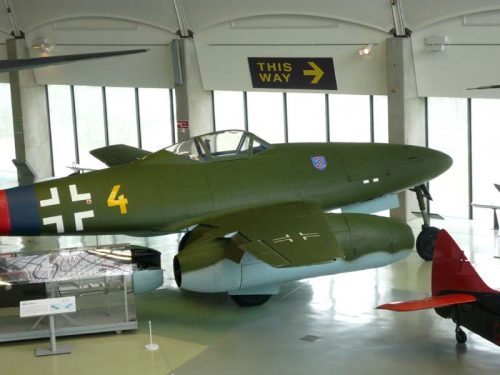
As you may have seen from previous blog posts, in 2010, I went with my family to the RAF Museum at Hendon. I did a whole series of articles, all of them based around one particularly iconic aircraft. In this case it is the Messerschmitt Me 262 jet fighter which you can read about here:

https://johnknifton.com/2018/07/27/the-messerschmitt-me-262-at-hendon/

If you want to read about any of the other aircraft, it would be easiest to search the whole blog for them. They were the Avro Lancaster, the Bristol Beaufighter, the Bristol Beaufort, the Curtiss P-40 Warhawk, the Gloster Meteor, the de Havilland Mosquito, the P-51 Mustang, the Short Sunderland, the Supermarine Southampton and the Supermarine Walrus.

It wasn’t all aircraft at Hendon, though. There were lots of identified non-flying objects and various pieces of metal rescued from aircraft as they awaited their turn in the scrapyard.

The famous German battleship, the Tirpitz, provided a battle flag:

There is also a decorated metal door from the ship’s interior. The ship itself was sunk on November 12th 1944 with the loss of up to 1204 sailors’ lives:

Here are the medals of Herman Goering the man in charge of Hitler’s Luftwaffe. As with many objects of this type, they are kept under glass and difficult, if not impossible, to photograph without reflections being included:

Here is the wall of an RAF hut, taken down carefully to preserve the artwork left on it by an anonymous artist. It shows a Short Stirling, the RAF’s first four engine bomber:

The particular aircraft in the picture is a Short Stirling Mark III of 199 Squadron based at North Creake in Norfolk. Its squadron letters were EXN and its serial number was LJ531 and its name was “N-Nan”. At 2219 hours on June 16th 1944, the crew took off to accompany 162 Halifaxes, 147 Lancasters and 12 Mosquitoes on a bombing mission which targeted the synthetic oil plant at  Sterkrade between Duisburg and Essen. They carried no bombs, but instead were to use their Mandrel, a noise jammer, to overwhelm the signals from the German Freya and Würzburg radar sets. Between them, nine such aircraft were capable of creating a 200 mile gap in the Germans’ radar coverage.

In the official records, the aircraft was “lost without trace” but modern sources on the internet suggest that it was shot down by Unteroffizier Josef Ottrin (Bordfunker/radar operator) to Feldwebel Trenke, of the 6./KG 51, some fifty miles north of Ostend. This incident took place at 02.00 hours at an altitude of 14,800 feet. They had taken off from Soesterberg in the Netherlands in a Messerschmitt Me 410 A-1/U2 to carry out an armed reconnaissance of London, probably to find targets for the new wonder weapons, the V-1 and the V-2.

All the crew of “N-Nan”were killed. They were:

Thomas Wilson Dale RNZAF (pilot, aged 25), the son of James Murray Dale and Maude Mary Dale of Wellington, New Zealand.

John Martin Watts (flight engineer, aged 19), the son of John and Ethel Rosetta Watts, of Caxton, Cambridgeshire.

Ronald Joffre Whittleston RNZAF, (navigator, aged 28), the son of Arthur William and Grace Whittleston and the husband of Frances Hellena Bertha Whittleston, of Frankton Junction, Auckland, New Zealand.

Kenneth Matthew Francis Swadling, (bomb aimer, aged 21), the son of Frank and Louise Marie Swadling, of Wembley Hill, Middlesex.

Francis Charles Brittain, (gunner, aged 21), the son of Charles Frederick and Hazel Margaret Brittain, of Kilburn, Middlesex.

Frank Lofthouse, (Mandrel specialist operator, aged 23), the son of Albert and Miriam Lofthouse, of Lupset, Yorkshire

John Critchley Higginbottom, (gunner, aged 21), the son of John Elliott Higginbottom and Lilian Jessie Higginbottom, of Streatham Hill, London.

William  McCreadie  Latimer, (gunner, aged 19) the son of George C. Latimer and Mary Latimer, of Garlieston, Wigtownshire in Scotland

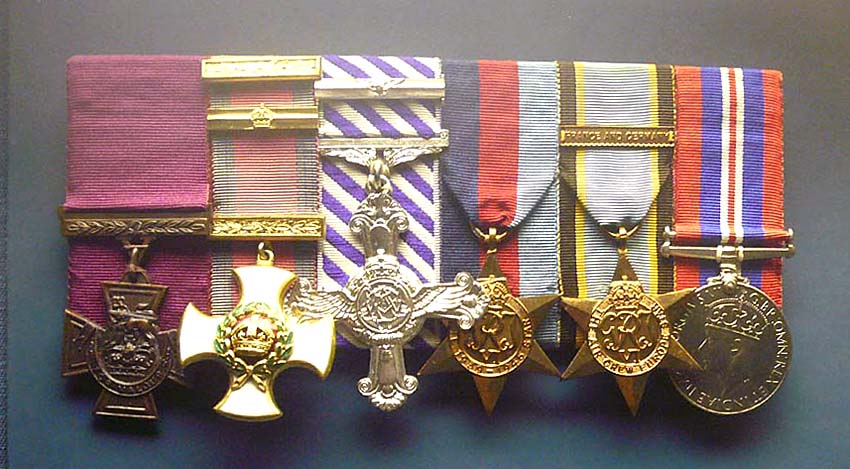
Also on display at RAF Hendon are the medals won by Guy Gibson, the Squadron Leader of 617 Squadron at the time of the famous Dambusters raid. On the left is the highest British award for gallantry, the Victoria Cross. The usual price at auction for this famous medal is usually around £500,000-£700,000. Guy Gibson’s personal medal, though, would be worth many millions.

And here’s the insignia on the collar of his dog, a big Black Labrador, which was run over and killed by a mystery car at the exact same moment as Gibson was leading the squadron in the attack om the Möhne dam.

The lettering reads:

“SQ.D.N LDR

C.P.GIBSON.D.F.C.

R.A.F.   

89 SQDN

His dog was buried at RAF Scampton and here is his grave today:

19 Comments

Filed under Aviation, Bomber Command, History, military, Personal

Two Old Nottinghamian brothers fighting fascism (1)

There is an interesting letter in the School Archives which begins:

“On December 10th 1988, my son, daughter and myself were visiting Nottingham to see my granddaughter who is at Trent University. We arrived on the Saturday morning, and found my old school, opposite the Forest but with locked gates. Then we suddenly noticed the gates opening. It was one of the teachers preparing to drive out before locking up. We were warm in our anoraks but although he was only wearing light clothes, this kind teacher offered to show us around the outside of the school buildings. The site of the former “Fives” court was, he told us, blocked by a newer building. Memories began flooding back.”

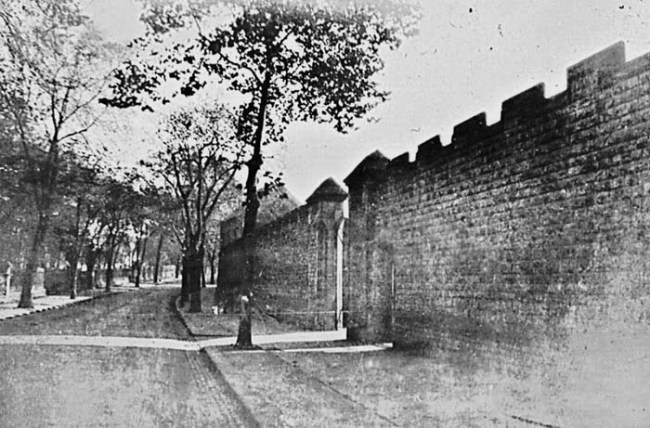
The writer was John T Jackson who left school in 1935 at the age of twelve. His father’s job was transferred to Birmingham and he and his brother transferred to Solihull Grammar School. Here are the school gates on Forest Road in 1932:

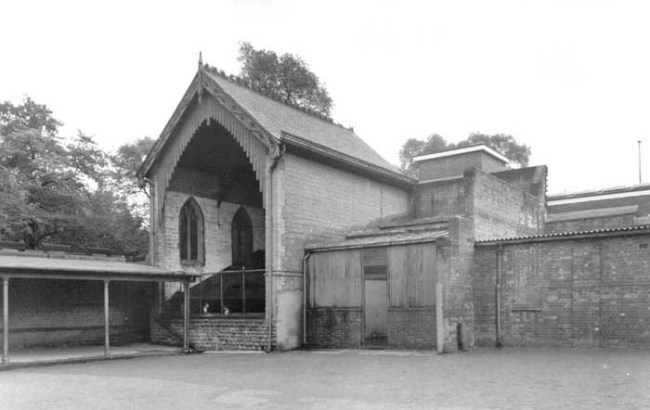
Here are the two fives courts, now replaced by the Sports Hall:

When young John Jackson attended the junior school, Mr Day was the headmaster. One day the boys were all taken outside to see the flight overhead of the new airship, the R101.

The buildings had not changed much as the little group all walked towards the front of the school. Mr Jackson remembered that the steps at the front of the school led to the Headmaster’s room. Then they saw the War Memorial. Mr Jackson had not realised that it would contain so many names. Over two hundred had died to halt fascism. He scanned the names, picking out his brother “Jackson RR”. He was very grateful to see this tribute to the courage and sacrifice that he and his fellow pupils had made.

Robert Renwick Jackson served in the RAF as a pilot in No 40 Squadron based at Chelmsford and flew on low level night intruder missions against enemy targets. In 1943 he was shot down in the coastal area of northern France. He and his observer are buried at Grandcourt in France:

After taking a few photos, John Jackson returned to his car, thanking the teacher for his kindness. When they found the gates locked they had been ready to accept that the best they could manage was to look from outside.

John Jackson had a far luckier war than his brother. He trained as a navigator in the RAF and was stationed at Kinloss in Scotland. His captain was Mac Hamilton, and they survived two tours in Bomber Command. After ten trips to Berlin with 619 Squadron, the whole crew volunteered to join 617 Squadron after Gibson’s successful raid on the dams. 617 was then commanded by Leonard Cheshire who had a precision way of marking targets with special bomb sights. They carried the Tallboy bomb weighing 12000 lbs and attacked special targets such as the U-boat pens, certain tunnels and canals, and rocket sites. Their last two operations were against the Tirpitz battleship. It took a total of three attacks to sink the Tirpitz.”

To be continued………..


6 Comments

Filed under Aviation, Bomber Command, France, History, military, Nottingham, The High School

Attack the Tirpitz!! In a Halifax??

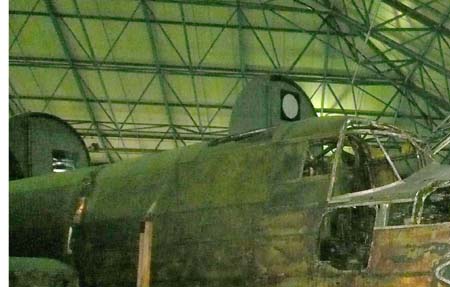
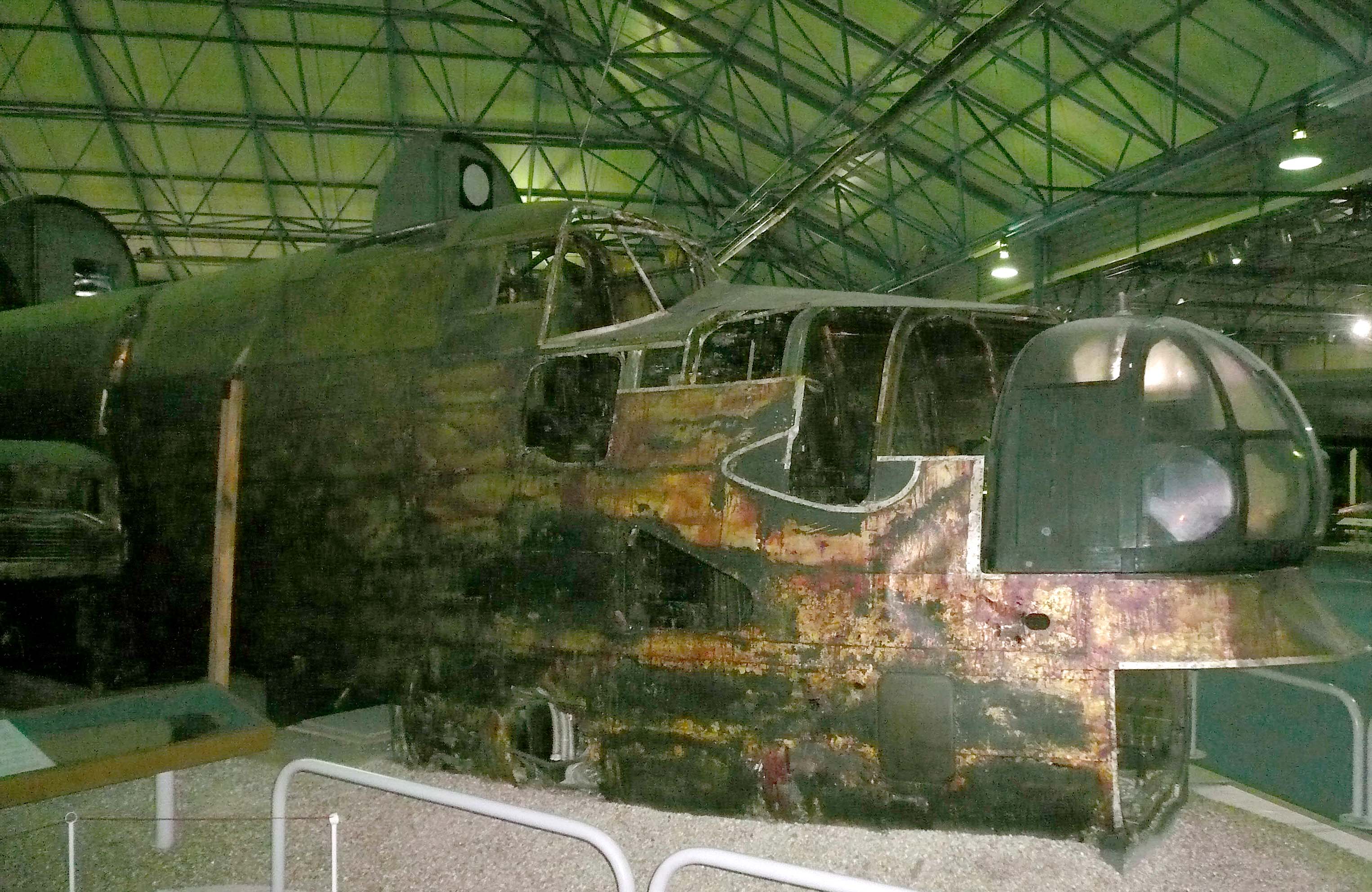
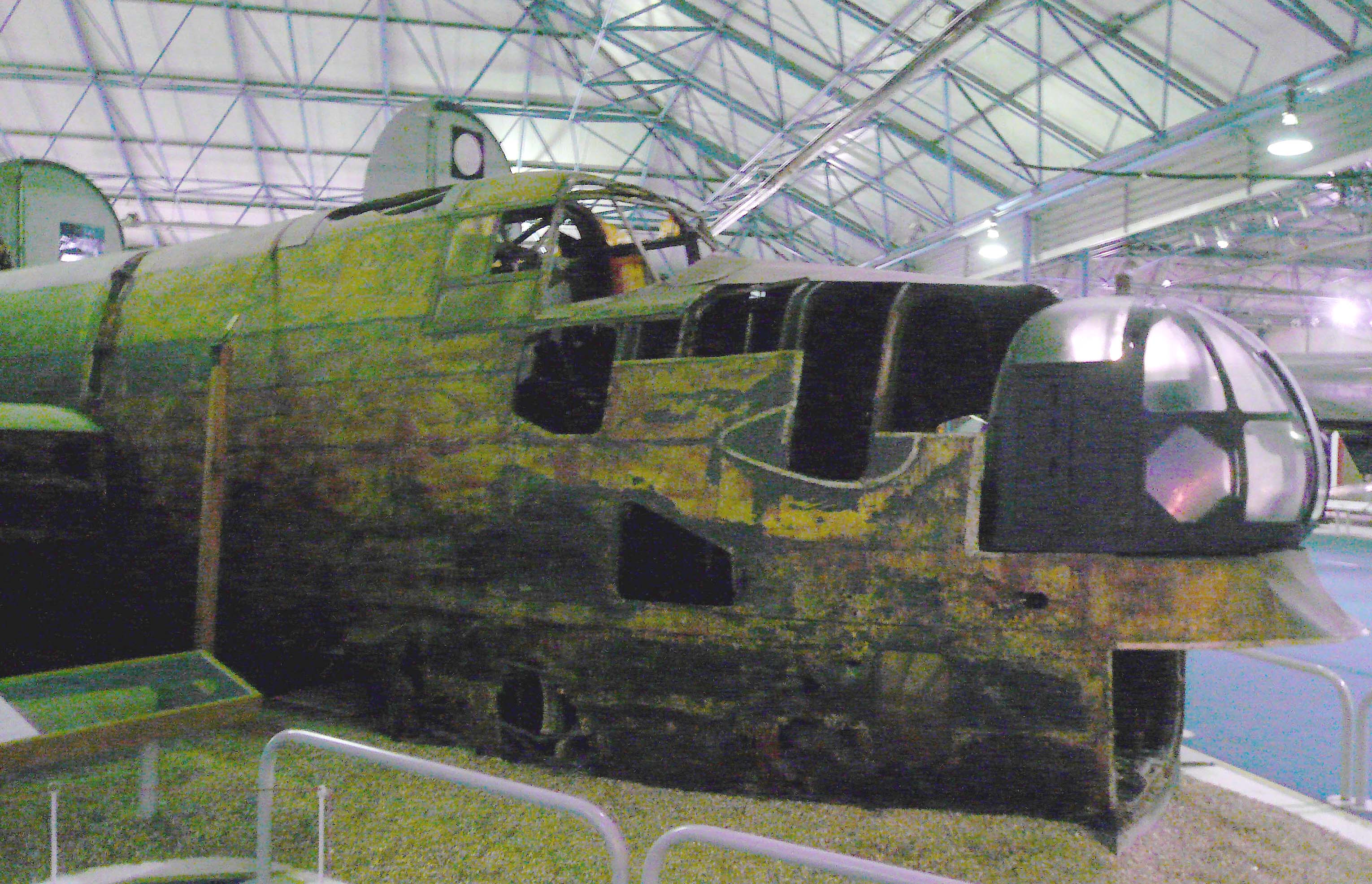
You are so lucky! You are going to see three photographs of a relatively rare aircraft, a Halifax Mark II, taken in the almost funereal gloom of the RAF Museum at Hendon. I apologise for the quality but in their efforts to preserve the original paint on the aircraft, the museum lights are kept very low indeed. For this particular aircraft, do not be put off by the fact that it seems apparently to have grown two enormous circular fins in the middle of its back. That is an Indian Air Force B-24 Liberator:

this one

The Halifax was the second British four-engined bomber to enter service in World War Two but it became the first to bomb Germany during a raid on Hamburg on the night of March 12th-13th 1941. Subsequent increasing losses on operations over Germany caused Halifax bombers to be used on less hazardous targets from September 1943.

The Halifax made over 75,000 bombing sorties and dropped almost a quarter of a million tons of bombs on Germany.

The Halifax continued in service with Coastal and Transport Commands after the war and the last operational flight was made by a Coastal Command aircraft in March 1952 from Gibraltar.
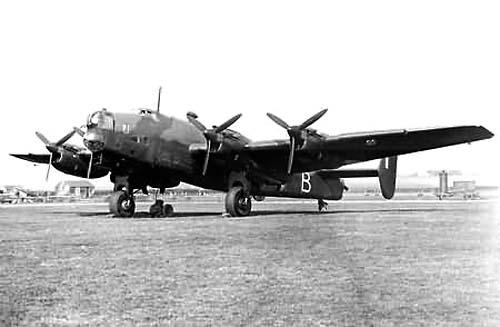
This s a Halifax B Mk II, Series I, with the serial number W1048. It was built by English Electric in 1942 at their factory near Samlesbury near Preston in Lancashire as part of a contract for 200 Halifaxes. This a similar aeroplane:

halifax_5

On March 27th 1942 it joined 102 Squadron at Dalton in North Yorkshire as “DY-S”.  The squadron was in the process of converting from the old Whitley Mark Vs
On April 9th 1942, six aircraft from 102 Squadron were exchanged with six aircraft from 35 Squadron because they were fitted with Gee radio navigation aid and could not be risked on a raid beyond the range of Gee stations  W1048 now became “TL-S” of 35 Squadron.
On April 15th the aircraft was taken on a training flight around Filey Bay followed by some low level practice bombing at Strenshall. Just over a week later, it  flew with ten other Halifaxes to RAF Kinloss in Scotland as an advance base for the raid on the German battleship, the Tirpitz.
It took off on April 27th 1942 at 2030 hours, the bomber’s first operational mission. “DY-S” was the  seventh of eleven bombers to depart and it was never heard of again. Until, that is, it was restored to the RAF Museum at Hendon;

P1320336xxxxxxxxxxxxxxxxxxxxxxxxxxxxx

The crew was Pilot Officer Don P MacIntyre who was 24 years old and came from Canada. The busy bee in the crew was Pilot Officer Ian Hewitt who was the observer, bomb aimer and navigator. He  later won a DFC. After the war, he moved to quieter pursuits and became a chartered accountant, dying peacefully at home in bed in June 2015, aged 94.
The Flight Engineer was Sergeant Vic Stevens and the first WOP/AG  was Sergeant Dave Perry
The mid upper gunner was another Canadian, Sergeant Pierre Blanchet.
The tail gunner was Sergeant Ron Wilson who in later life was to become a London cabby.
The aircraft was carrying four spherical mines of the Royal Navy type 19N. They each weighed a ton and their shape and size meant that the the bomb doors could not be closed.
The cunning plan was to roll the four mines down the steep mountainside into the gap between the ship and the shore.  They would then sink the ship because the underside was thinner and therefore more vulnerable.
At half past midnight, the eighth aircraft to attack, Don McIntyre followed by his friend Reg Lane set off to release their mines. McIntyre was first. As they had arranged, they descended to 200 feet but “DY-S” was hit by flak and too badly damaged to get back to Yorkshire or even to Sweden.
They were forced to land on the frozen surface of Lake Hoklingen, twenty five miles east of Trondheim.

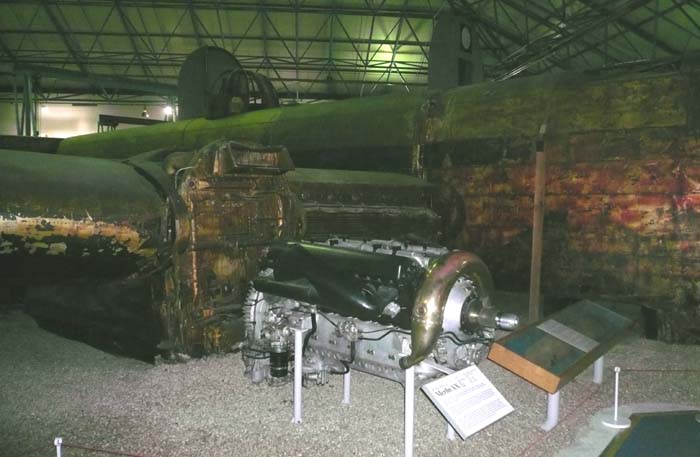
Here is the starboard inner engine nowadays in the museum:

P1320335

Vic Stevens broke his ankle and was eventually taken to hospital by the Germans. The other six came into contact with the Ling, the Norwegian underground and were helped to Sweden. Ian Hewitt and Don McIntyre returned to England after a few weeks, and Dave Perry,  Pierre Blanchet and Ron Wilson after a year. By this time Ron Wilson had rented a flat, found a job and made a start on a new life.
The poor old Halifax sank through the ice in the southern corner of the lake just twelve hours after the crash.
In 1971 the remains were found by local divers and in September 1972 by the RAF Sub Aqua Club. Everything was still there except for the starboard outer engine and one or two bits and pieces taken by souvenir hunters in the past.

Here is a photograph which is admittedly very similar to one of the others. I am quite proud of it, though, because my Idiots’ Guide to Photoshop has enabled me to turn a pretty well completely black picture into something understandable. Slight tinges of red are apparently the chemical which inhibits any further deterioration in the fresh air. Do they make that for humans?

P1320338xxxxxxxxxxxxxxxxxxxxxxxxxxxxx

By the end of June 1973, the Halifax had been retrieved from the lake, and after a lot of restoration, it was ready for the public by the end of 1982. Apparently a second Halifax from the same squadron and the same operation was discovered at the bottom of a nearby fjord in 2014. This exciting discovery was made by the Marine Technology Centre from the Norwegian University of Science and Technology in Trondheim. The wreckage is around 600 feet down, and is thought to be W7656 and to contain the remains of Sergeants Evans and Columbine, the wireless operator/gunner and the navigator respectively. I do not know if this will make any difference to plans to raise the aircraft and to restore it.

28 Comments

Filed under Aviation, Bomber Command, History, Personal