Author Archives: jfwknifton

A Barbarous Kingdom, Populated by Savages

This tale of barbarity is almost beyond belief for the date when it took place, June 21st 1786, and the location, the so-called civilised country of England. The details come from a source that I have used quite frequently before, namely “The Date Book of Remarkable Memorable Events Connected With Nottingham and Its Neighbourhood” and one other website:
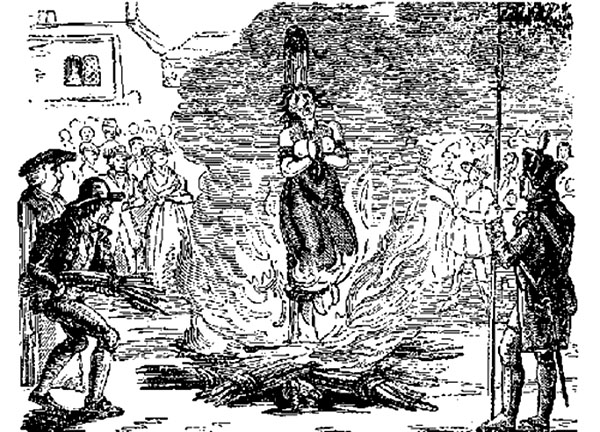
The savagery of the punishment meted out on this poor young woman would be difficult to believe were it not so well authenticated. I have translated some of ye more difficult fentencef into ye moderne Englifhe:

“The victim of it was a young woman of Nottingham extraction, her mother having been a native of the town. Her name was Phoebe Harris. She was small in stature, rather stout and of good figure, with a pale complexion, and pleasing features. Her age was 30, and she lived with her husband in London. She was caught while in the act of counterfeiting coins, to which she had been introduced by her husband, who, it appeared, was an old practitioner. For this offence she was tried at the Old Bailey, and sentenced to death.
She was conducted on a subsequent day by two constables to the open space in front of Newgate, in the presence of about 20,000 spectators, where a stake had been securely fixed in the ground, about eleven feet high, and with a curved projection of iron at the top, to which was fixed a rope. The prisoner was placed on a stool, with her back to the stake, and the rope was positioned around her neck. After the priest of the gaol had prayed with her for a short time, the stool was pulled from underneath, leaving her suspended by the neck, with her feet about a foot from the ground.”

According to V. A. C. Gatrell’s book “The Hanging Tree”, Phoebe then choked noisily to death over several minutes:

“After hanging there for half an hour, the executioner put an iron chain around her upper body and fastened it to the stake with nails.”

The Date Book takes up the tale with tasteful enthusiasm:

“Two cart loads of wooden faggots were then placed round her and set on fire:

The rope speedily snapped, and the body slipped, but was sustained by an iron chain passed round her waist and the stake. In the course of three hours the corpse was entirely consumed.

The unfortunate sufferer, Phoebe, was struck with so much horror at the idea of her body being burnt, that in the night previous to her execution she was quite frantic. When she was led to the stake, she appeared languid and terrified, and trembled excessively. The awful apparatus of death evidently struck her mind with consternation, and totally incapacitated her for her last prayer.
Until midday, while the victim was still burning, the spectators were loud in their angry denouncements of the officers of the law, but as soon as the latter had left, the people in the crowd amused themselves by kicking about her ashes.

An application had been made to the Sheriffs by the respectable inhabitants of the neighbourhood, praying that the execution might take place at Tyburn, or at some small distance from them, but without avail.

The consequences were serious : several ladies were taken very unwell, and many were severely affected by the offensive smell of the burning corpse.”
The consequences were a damn sight more serious for Phoebe. The locals, NIMBYs one and all, had actually organised and sent in a petition to prevent Phoebe being executed so near to their homes. They considered such savage practices should not be carried out in areas frequented by respectable folk. Genuine world class savagery should take place in a working class area where it would be better appreciated.

Even so, 20,000 spectators isn’t a bad turn out for a respectable area. I bet somebody wished that they could have charged entrance money.

The offence of counterfeiting:

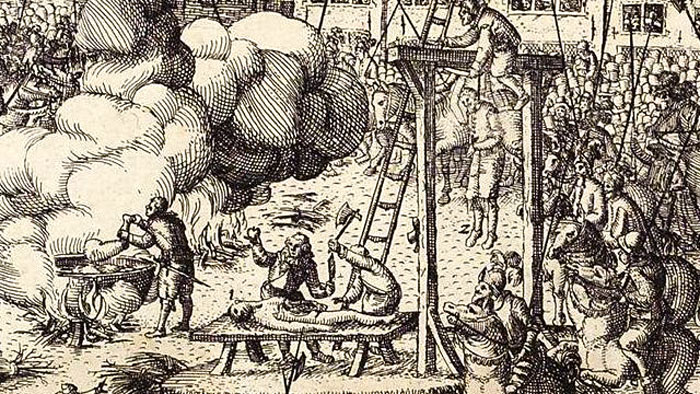
“for which Phoebe Harris suffered, was classed as High Treason. Blackstone accounts for the punishment of women for this crime being different from that of men, by stating that the natural modesty of the sex forbids the exposure and public cutting up of their bodies, and therefore they are burnt. The punishment of men for high treason was beheading, cutting the body into four parts, and burning the heart.”

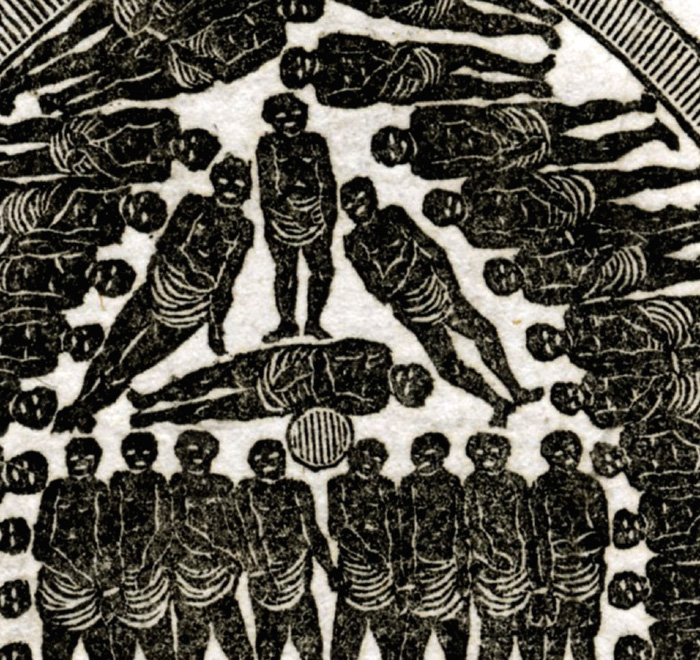
Here is the ‘quartering’ bit of that terrible trio of punishments:

And executions are always an excuse for a barbecue:
Only two more women would be killed in public in this grotesque way, and the dates may well be significant. One was Margaret Sullivan on June 25th 1788 and the other was Christian Murphy on March 18th 1789.

On July 14th 1789, the French people finally grew tired of a legal system presided over by a spoilt brat of a king and driven by an arrogant and self-serving nobility. It is not without significance that they attacked the Bastille prison as their first target. Neither is it without significance that the revolutionaries were keen to use a more humane method of execution, namely the Guillotine. Here is a charming painting of the Terror in full swing, with some lovely details if you look carefully, especially the little doggie. I couldn’t find Wally but I think I might have found his head :

I believe the judges back in London may well have noticed the developments in France, because when Sophia Girton was convicted of counterfeiting in April 1790, her execution by being strangled and burnt in public was postponed, as Parliament decided that hanging would be a better way to execute women.

Sophia was not hanged though. She was exiled to Australia where she made a new life for herself, admittedly in the most appalling of conditions:

27 Comments

Filed under Criminology, History, Personal, Politics

The Luckiest Man in the World (2)

In the previous post, I explained how the aircraft being used for training by Bomber Command were often very poor machines from the pilots’ point of view and in a very poor state:

This slideshow requires JavaScript.


Poor aircraft then, and, from Old Nottinghamian, Jack Sweeney’s point of view, it had also been a very poor decision when Ashbourne in Derbyshire was selected as the place to construct the airbase where he was to do his training in 81 OTU.

In the first place, the building of RAF Ashbourne was actually against regulations as it was higher than the ceiling height for the construction of airfields:

And everyone was well aware of the prevailing weather around Ashbourne. Driving rain, rain, sleet, snow, drizzle, fog and mist. As I write now, even the tripadvisor website, trying to attract tourists to Ashbourne, offers “Stunning walks & scenery – whatever the weather”:

And the 1940s had a lot worse weather than we experience nowadays.

Ashbourne, of course, has the nickname “the Gateway to the Peak District”. And that says it all. If you have lots of peaks, you should be thinking about whether that is the best place to allow inexperienced young men to fly around, often at night, in aircraft without radar aids of any kind, and only the most rudimentary of weather forecasting.

Only two or three miles north of the airfield there are steep slopes, rising up to extensive high land masses around Fenny Bentley and Kniveton. Given how many foggy nights used to occur in that area, such countryside is just not acceptable for pilot training.
Jack Sweeney was killed on January 31st 1944. Ironically he wasn’t flying from Ashbourne but from a satellite airfield nearby called RAF Tilstock. Like so many of the hundreds of airfields constructed in Britain at this time, Tilstock has been rather neglected over the past and could do with a little light weeding perhaps:

In the notes I made during my researches, I described the countryside around Tilstock as “quite hilly country, very variable, lots of steep slopes”, so it’s not too different from the nearby Ashbourne area.
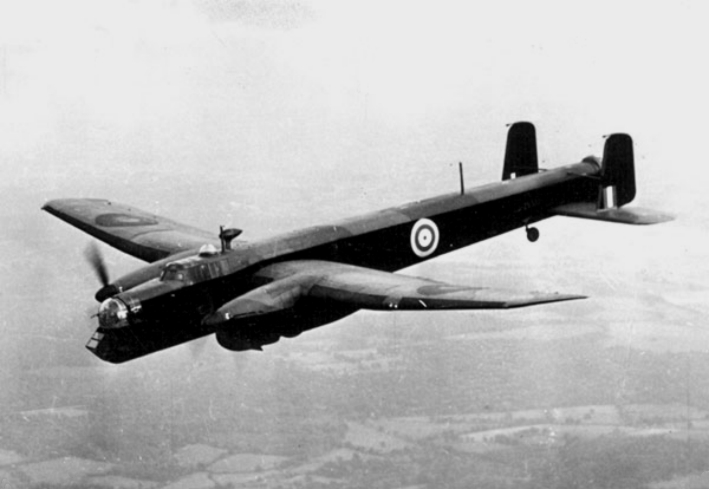
Sergeant Sweeney took off from RAF Tilstock in an Armstrong Whitworth Whitley Mark V, serial number LA 765:

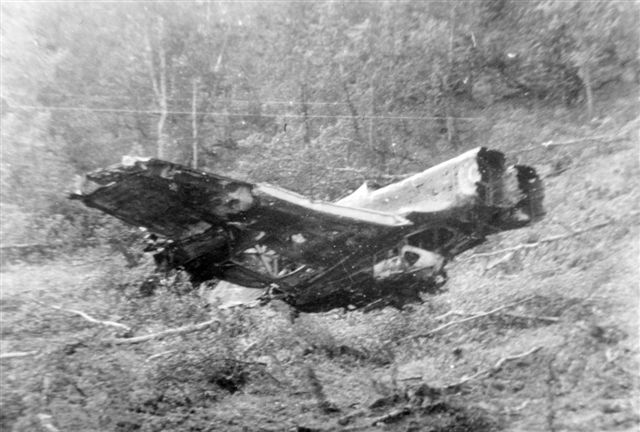
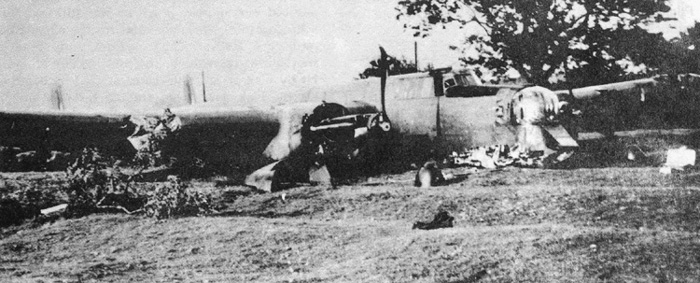
He crashed about 30 miles away near Hardiwick between Caverswall and Dilhorne, a tiny village situated in what looks to me to be quite a hilly landscape, perhaps 7 or 8 miles north east of Blythe Bridge. When our family all settled into our 1959 Ford Anglia saloon for the long trip from Derby to Wigan in the pre-motorway years of the early 1960s, Blythe Bridge was a familiar and exciting landmark for all of us, It meant that we were a third of the way there and only had 70 miles to go, unless, of course, in those pre-motorway years, we got lost:

25 Comments

Filed under Aviation, Bomber Command, History

The kings of slavery, and the queens (2)

Last time I promised you a quiz. Well, it’s not the kind of quiz they would broadcast on television, but let’s give it a go.
In 1710, if you ever saw an African slave who belonged to the Royal African Company, how could you tell?

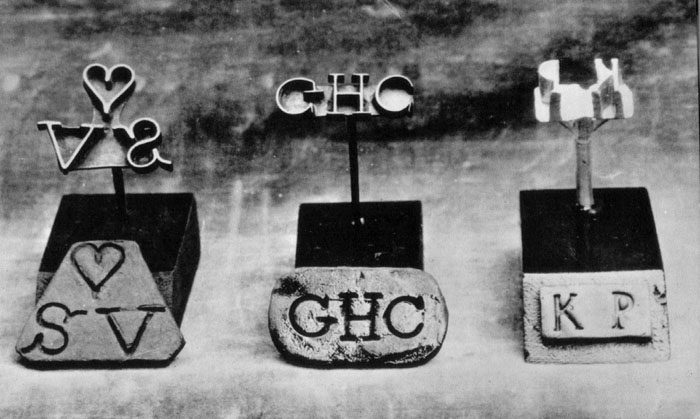
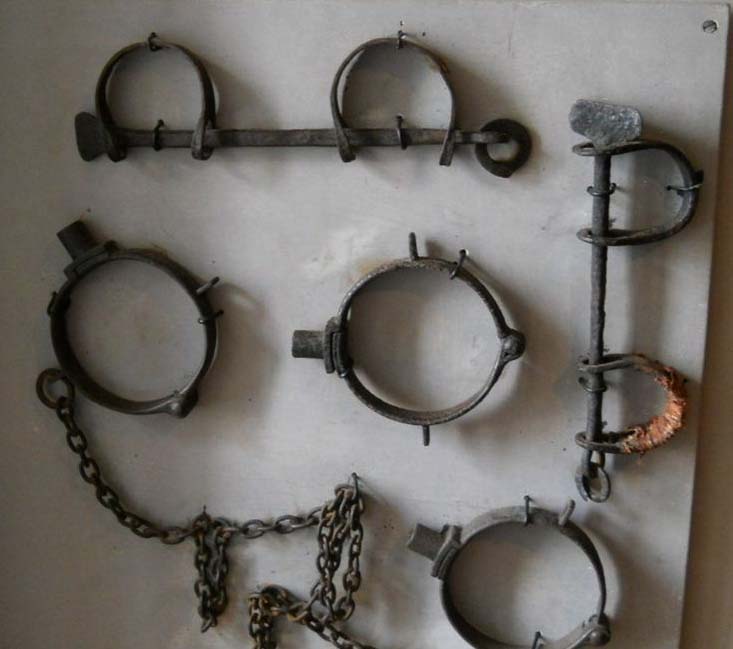
Easy…he would have the letters ‘RAC’ burned into his chest with a branding iron like the ones they use in cowboy films with cattle. I couldn’t find a photograph of that, but I did manage to find one with some branding irons on. These are actual branding irons for slaves, not cattle:

Here is the second question which is a little bit more difficult.
If you ever saw an African slave with the letters ‘DY’ branded on his chest, what did it mean?

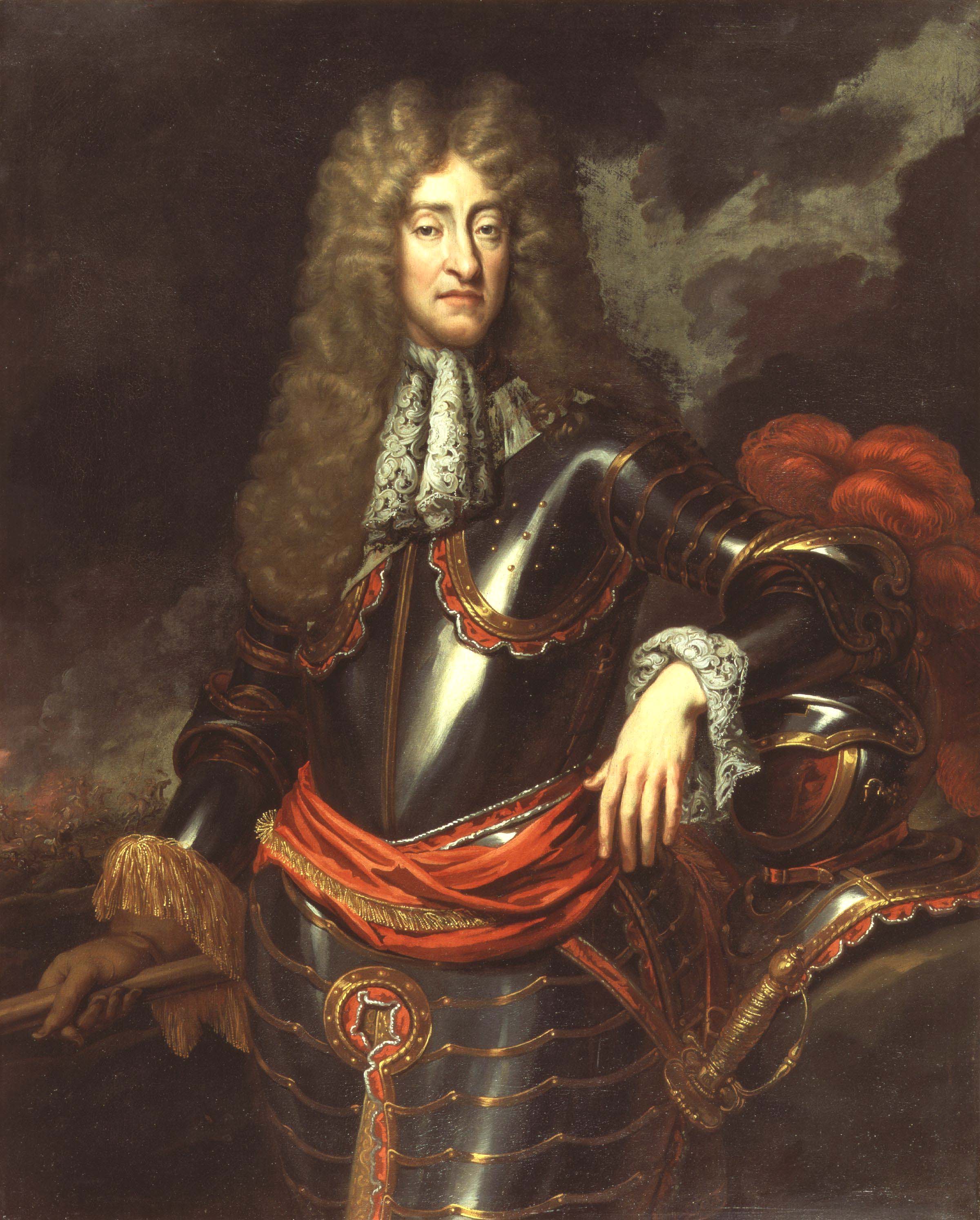
If you’ve been paying attention, though, it’s not that difficult. It meant ‘Duke of York’. It meant he was owned by the Duke of York, who later succeeded to the throne and became King James II.

An extra special bonus question. When the Duke of York became King James II, what did he have the slaves’ chests branded with?  Was it ‘J2’?

No, it wasn’t, he continued with ‘DY’. And I couldn’t trace it, but I would presume that his eventual successor, Queen Anne didn’t have ‘QA’ on her slaves but stuck to ‘RAC’.  And the money rolled in:

And more to come. Lots more:

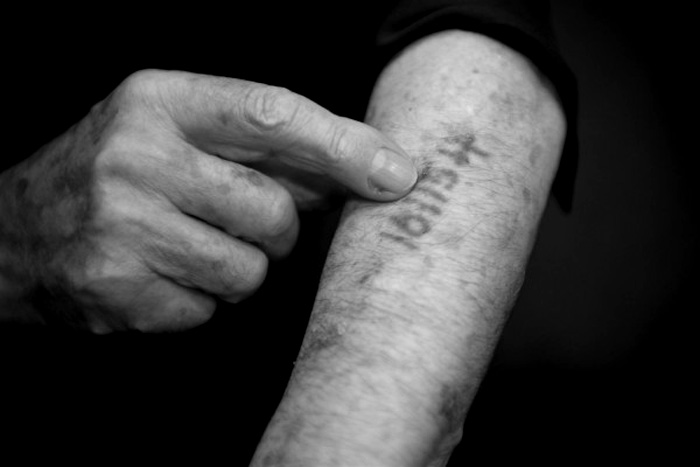
It’s just that branding people on the chest with a red hot piece of metal reminds me rather uncomfortably of one other way of marking your racial inferiors:

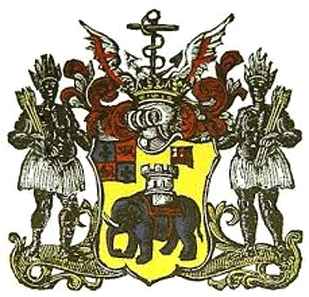
Forty years later, the British were awarded the monopoly on selling slaves to the Spanish for the next three decades. This monopoly was sold on to the famous “South Sea Company”. They dealt in turn almost exclusively with the Royal African Company. Here is their coat of arms. Look at the happy slaves, all set for a spot of weekend hunting, don’t you know?

Only a year after the Spanish deal was set up, Queen Anne owned 22½% of the shares in the Royal African Company. That means she owned more than a fifth of the British slave trade, the largest slave trade in the world at the time. She was quite possibly the biggest slave dealer on the planet.
When she died, King George I became king. He wasn’t happy owning a fifth of the British slave trade.

It wasn’t enough, so he increased his shareholding and made himself Governor of the whole sorry business. A business which transported around 64,000 slaves to the Americas in 15 or so years. George III carried on with the family business, accused by a slightly hypocritical Thomas Jefferson of waging “cruel war against human nature itself”.
There was some opposition to the Royal African Company though. Across the country, small businesses spoke out against the Company’s activities in the slave trade and especially, against their monopoly. In their campaign, they used the motto, “We want the freedom to traffic slaves too”. Smaller businesses, smaller boats, but there’s still money to be made:

But let’s not kick our lovely royal family too much. Instead. let’s look at the case of Christopher Codrington.  Christopher Codrington was the owner of a slave plantation in Barbados in the early 1700s. He died, presumably without children, in 1710. Being a pious man, who did he bequeath it to?

Correctamundo! The Church of England. I bet they shrieked in disgust. Threw their hands in the air and shouted “Free the Slaves! Free the Slaves!” Well, not exactly. They kept the slave plantation. They kept the slaves, and indeed, they kept the money. And there was lots of it:

It was used to finance the Society for the Propagation of the Christian Religion in Foreign Parts.

Now for the scary quiz question. If you worked for the said organisation, and you owned lots of slaves who might run away, clearly you needed to brand them on the chest, so they could be reclaimed after they had been recaptured. What did you use? Surely not the whole name? Of course not. What about “SPCRFP”? No, not at all. The Christian slave owners just branded “Society” across their slaves’ chests. Actually, SPCRFP would have been one letter shorter.

Actually, they probably used these as well:

The Christian slaves were, actually, slaves who didn’t last too long. Despite their obvious value to the company SPCRFP, by 1740, the death rate among the slaves newly purchased by the Church was up to 40%. Four out of every ten were dead within three years of purchase.
And it wasn’t just the SPCRFP who were trying to cash in. Other members of the church fancied a bit of the cash. All you had to do was get your Bible, cross out the bit about “Ye cannot serve God and mammon”, buy a few shares in your local slavery business and away you go.

This is Woodville K Marshall who is Emeritus Professor of History at the University of the West Indies:

He stated clearly and unequivocally:

“”It was not so much the SPG that the Church should be apologising for, as the activities of the individual parsons who kept plantations and slaves for sheer profit.”

Except that nobody apologises nowadays for slavery, because they risk being sued. Despite all their wealth, wealth dripping from them as they walk along, the descendants of the slavers will never say sorry. And let me make the point again, the same point I made in a previous post:

“The tragedy, of course, is that those individuals today have little, if anything, in common with their slave owning ancestors from so many years ago. On the other hand, they have inherited their wealth. What have they done to make amends for their slave owning ancestors? Built a school in the Windward Islands? Built a hospital in Barbados? Sponsored cataract operations in Jamaica?”


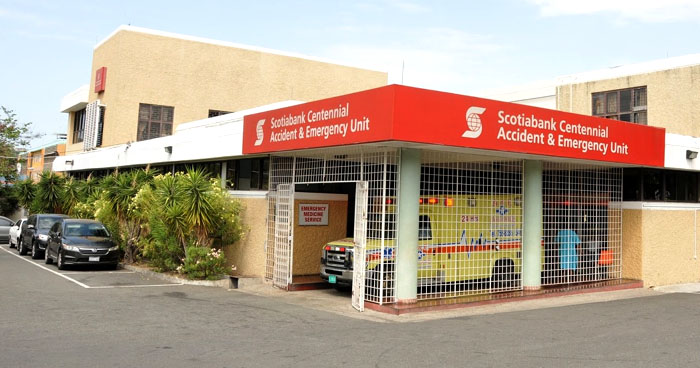
This Accident and Emergency Unit in Jamaica was built by the Scotia Bank Foundation, Canada’s third largest bank.  But why not by the individual rich men and women who are the present day descendants of those slave traders?

34 Comments

Filed under Criminology, History, Politics

The Luckiest Man in the World (1)

In his later years, my Dad, Fred, always used to say that training to fly in bombers was infinitely more perilous than flying on combat missions. He did his training with 20 OTU at Lossiemouth in north east Scotland. And certainly, casualty rates on the training airbases in Scotland were always extremely high.
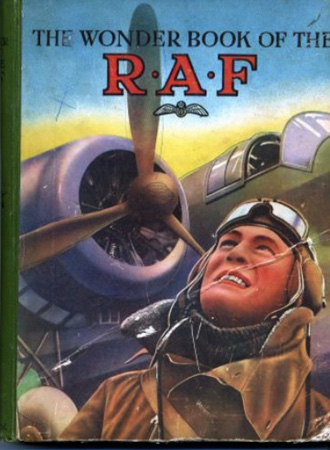
No matter where their OTU was, though, everyone soon became well aware just how dangerous their young lives were. The apparently modern aircraft, pictures of which would previously have filled publications for young boys such as “The Wonder Book of the RAF”, were in reality often second rate, or extremely dated, and were certainly not good enough to be front line combat aircraft. The mechanics too, being often extremely inexperienced, were frequently incapable of servicing the aircraft properly. The book looks exciting though:

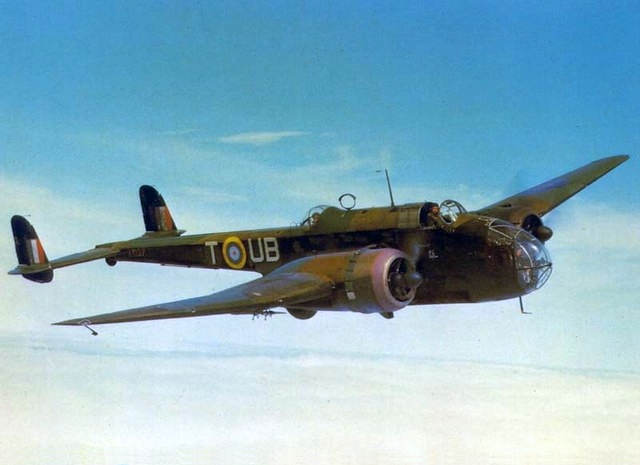
The aircraft types used included the Handley Page Hampden, which had a variety of nicknames  including the Flying Suitcase, the Flying Panhandle and the Flying Tadpole. Nobody liked it very much then!

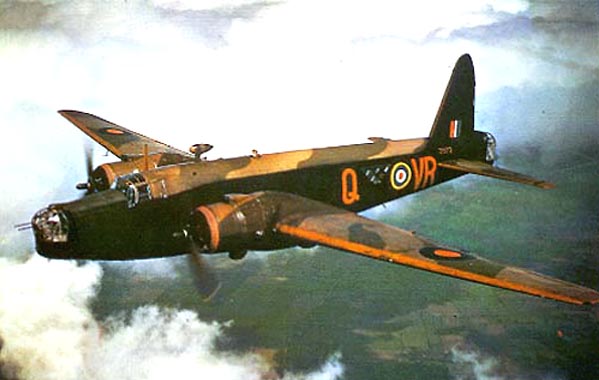
The very best of all the training bombers was the Vickers Wellington.


Overall, though, the problem was that crews were by definition inexperienced, and unlikely to be able to respond to any given emergency either sufficiently quickly or in the appropriate manner. They were more liable to make mistakes, and then to compound those initial errors by making even more mistakes. Indeed, statistically, it remains a fact that around 15% of Bomber Command’s fatalities during the Second World War occurred through crashes and accidents in training situations. In some O.T.U.s. casualty rates reached 25%. The situation was perhaps best summed up by the airman who said that the problem was “dodgy crews in dodgy aircraft.”

Here’s an example. It’s taken from the research I am currently doing about the Old Nottinghamians, Old Boys of the High School, who perished in the Second World War.

“…Jack was called to join 81 OTU and was listed to train as a bomber pilot. 81 OTU was formed in July 1942 and they were based at RAF Ashbourne training aircrews for night bombing using the Armstrong Whitworth Whitley:

This aircraft was obsolete by the time the war broke out. It had a small bomb load, it would not fly on just one engine and when it did fly, it had a most peculiar nose down attitude. This was caused by the angle of the wings which was very high to ensure a good performance when taking off or landing. But when cruising, there was an enormous amount of drag, restricting the aircraft’s fuel economy and forcing many pilots and their crews to ditch in the North Sea when they could not get all the way back to their airfield. The crews who did survive joked that the Whitley was “slow as a funeral” and called it the “Flying Wardrobe”, or, on a bad day, the “Flying Coffin”.

We’ll see why in more detail next time.


27 Comments

Filed under Aviation, Bomber Command, History

The kings of slavery, and the queens (1)

I have written quite a bit about slavery and its evils, but after that shock of finding out that my cherished heroes of stage and screen were the wealthy descendants of wealthy people who owned slaves, I had one more shock in store:


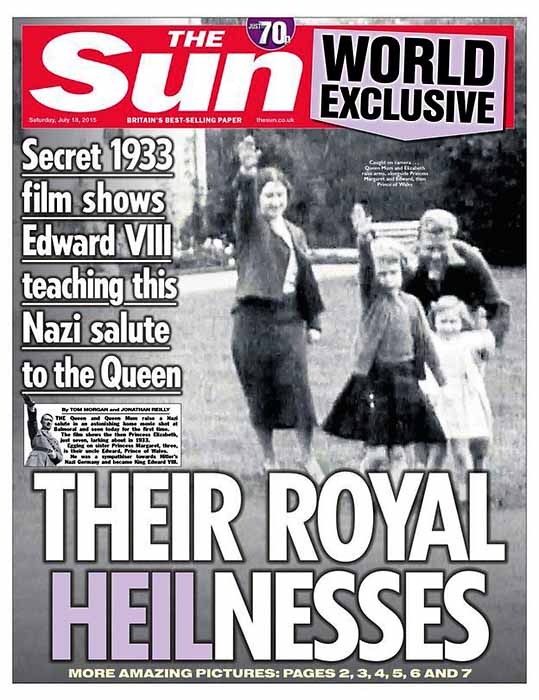
I found out that the Kings and Queens of England were involved in the slave trade. I knew that even now the modern royals have their dubious dark corners. What kind of man, for example, deludes a little girl into giving Hitler salutes?

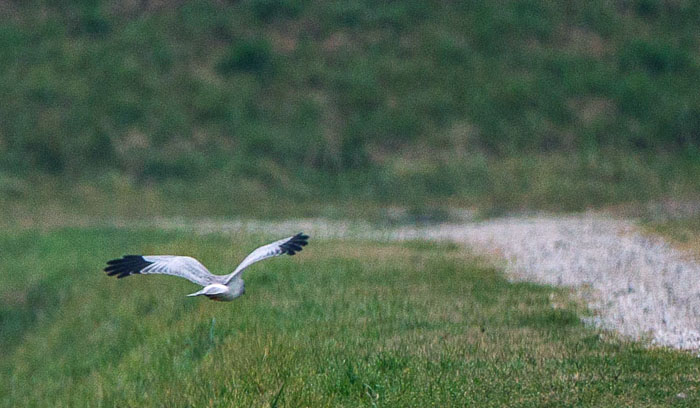
How did the witnesses of the illegal killing of a rare Hen Harrier feel when no charges were brought?

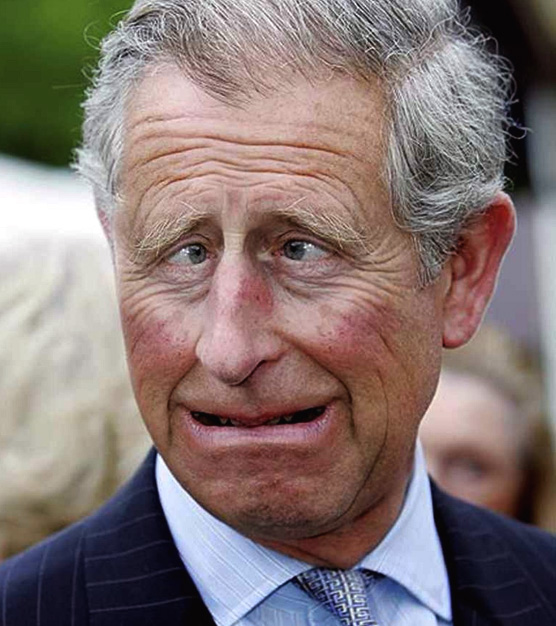
I knew how unbelievably rich Cornwall could make you, even if it is one of the poorest counties in the country. I knew that if anybody in the county died without a will and no heir could be found, everything went to Prince Charles:

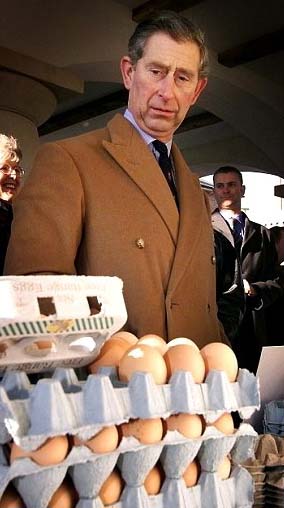
I knew from the Daily Mirror how one royal “required his chef to cook his eggs for three minutes; the chef usually boiled several batches to ensure they fit his precise preferences.” :

But slavery? Apparently, it began with Queen Elizabeth the First. She gave her royal support to Sir John Hawkins, the sea captain, who was one of the first to men to make a profit from transporting Africans to the Americas.
Then there were the Royal Adventurers into Africa, a company set up in 1662 to trade slaves. It involved the brother of King Charles II, namely the Duke of York, and the sister of King Charles II, Princess Henrietta, and the Queen Mother, Henrietta Maria, and Queen Catherine of Braganza and the Duke of Albermarle, Lord Arlington, Lord Ashley, Lord Berkeley, the Duke of Buckingham, Lord Craven, Lord Crofts, and Lord Sandwich and Baron Tom Cobley and all. In total, there were four royals, four barons, two dukes, five earls, seven knights and a marquess. And Samuel Pepys. And the so-called “philosopher of liberty” and “Father of Liberalism”, John Locke. By 1665 they were making £200,000 per year from slaves between them. (£6.5 billion today). The slaves didn’t make anything at all:

The Royal Adventurers into Africa were given a monopoly on the slave trade for a thousand years but ceased trading in 1672. That same year, King Charles II gave a monopoly on dealing in slaves to the Royal African Company. The Royal African Company (the name might have some significance here) was owned by his brother, His Royal Highness, James, Duke of York. Also involved were Sir George Carteret, Sir John Colleton, Lord Craven,  Lord Shaftesbury, 15 Lord Mayors of London, 25 Sheriffs of London and the so-called “philosopher of liberty” and “Father of Liberalism” and “lover of hard cash”, John Locke, whose ancestor had been a slave trader.
By 1680, they were transporting around 6,000 slaves a year to new homes in the West Indies and the same annual number to North America….

And next time, an exciting quiz…

10 Comments

Filed under Criminology, History, Politics

Attack the Tirpitz!! In a Halifax??

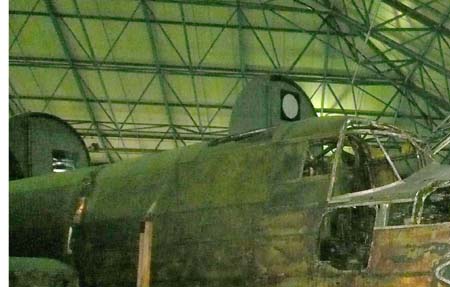
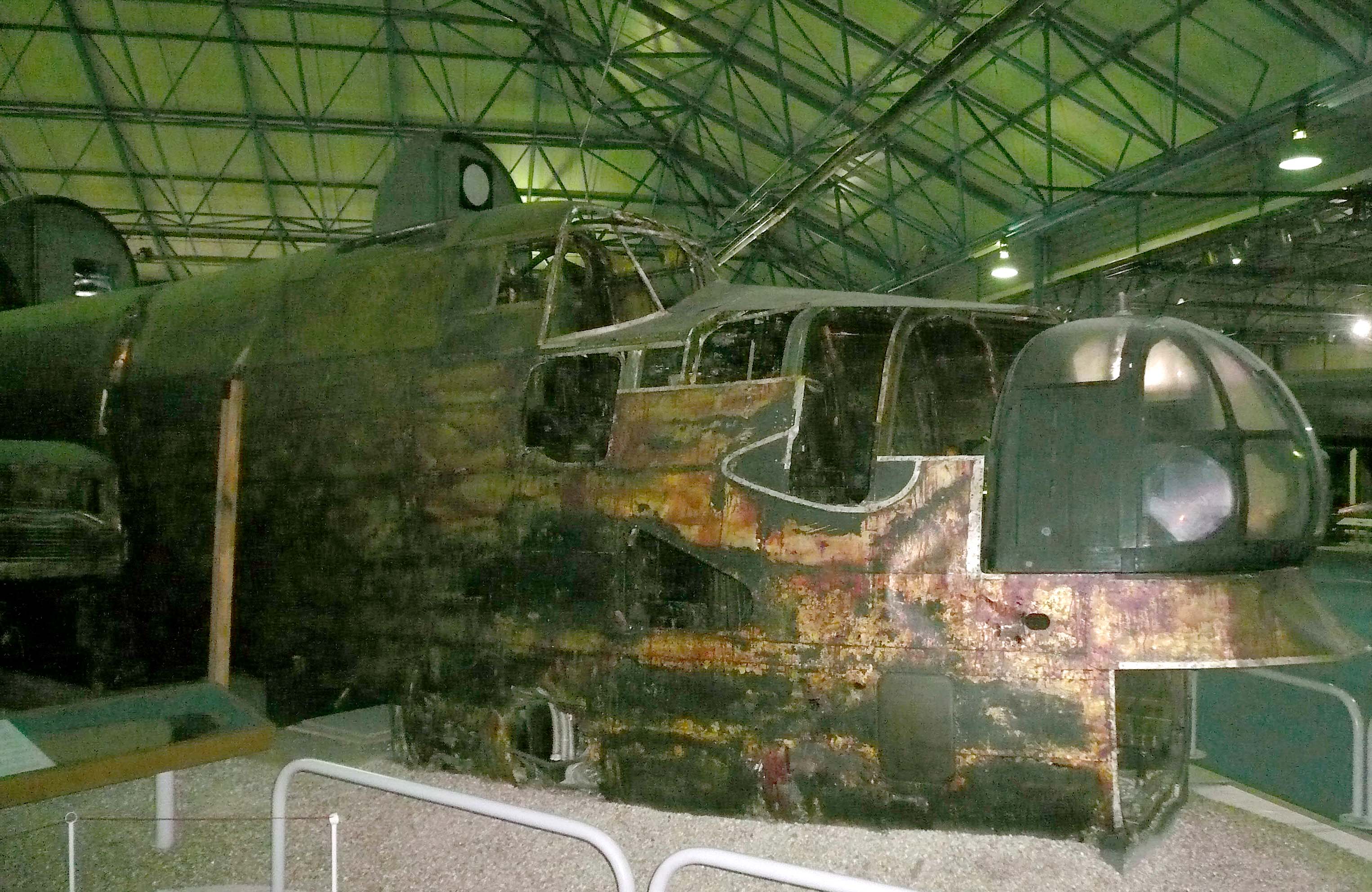
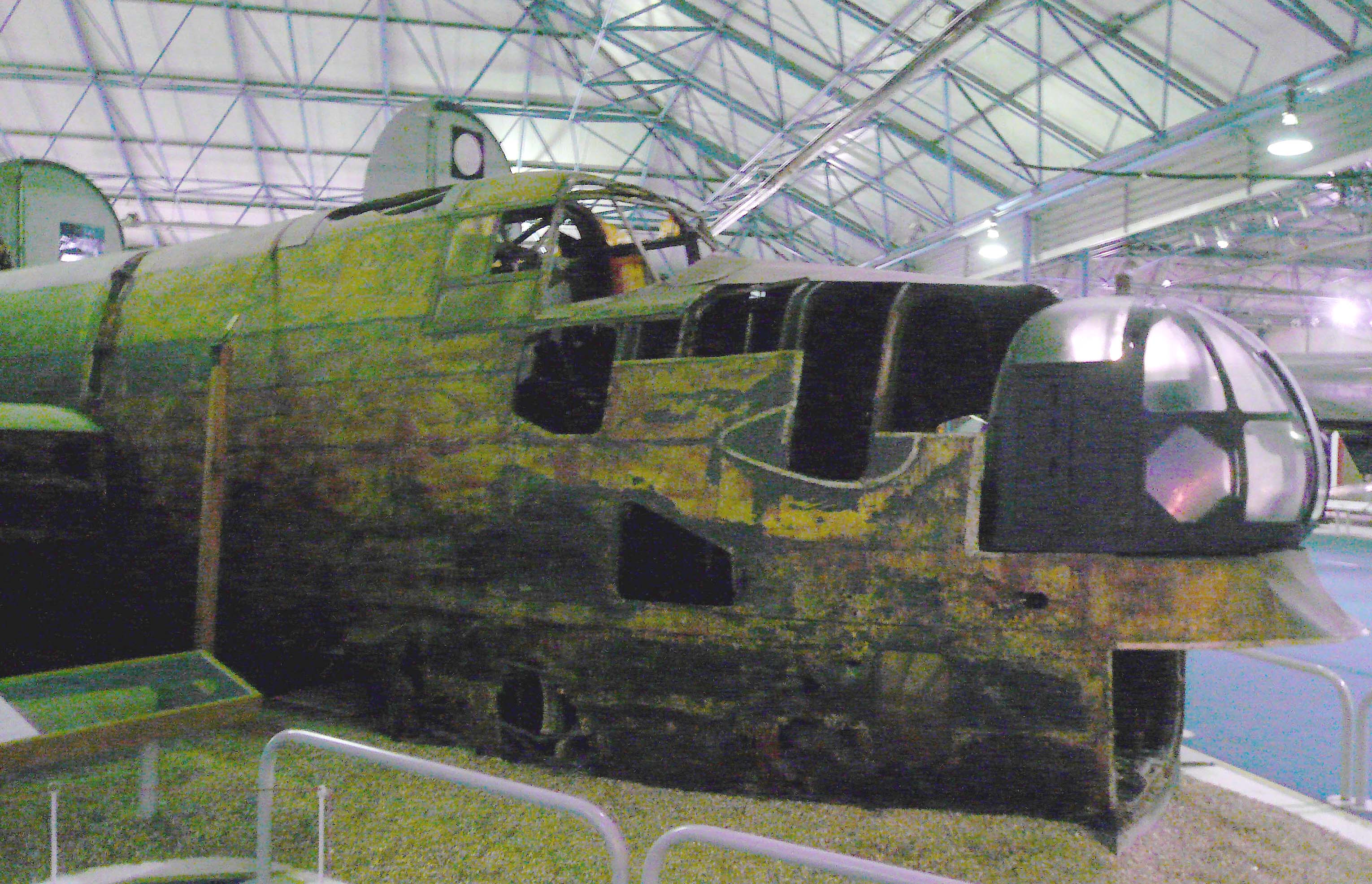
You are so lucky! You are going to see three photographs of a relatively rare aircraft, a Halifax Mark II, taken in the almost funereal gloom of the RAF Museum at Hendon. I apologise for the quality but in their efforts to preserve the original paint on the aircraft, the museum lights are kept very low indeed. For this particular aircraft, do not be put off by the fact that it seems apparently to have grown two enormous circular fins in the middle of its back. That is an Indian Air Force B-24 Liberator:

this one

The Halifax was the second British four-engined bomber to enter service in World War Two but it became the first to bomb Germany during a raid on Hamburg on the night of March 12th-13th 1941. Subsequent increasing losses on operations over Germany caused Halifax bombers to be used on less hazardous targets from September 1943.

The Halifax made over 75,000 bombing sorties and dropped almost a quarter of a million tons of bombs on Germany.

The Halifax continued in service with Coastal and Transport Commands after the war and the last operational flight was made by a Coastal Command aircraft in March 1952 from Gibraltar.
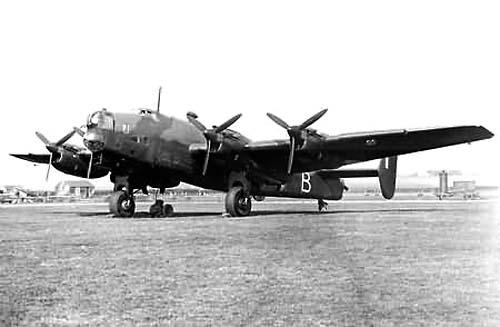
This s a Halifax B Mk II, Series I, with the serial number W1048. It was built by English Electric in 1942 at their factory near Samlesbury near Preston in Lancashire as part of a contract for 200 Halifaxes. This a similar aeroplane:

halifax_5

On March 27th 1942 it joined 102 Squadron at Dalton in North Yorkshire as “DY-S”.  The squadron was in the process of converting from the old Whitley Mark Vs
On April 9th 1942, six aircraft from 102 Squadron were exchanged with six aircraft from 35 Squadron because they were fitted with Gee radio navigation aid and could not be risked on a raid beyond the range of Gee stations  W1048 now became “TL-S” of 35 Squadron.
On April 15th the aircraft was taken on a training flight around Filey Bay followed by some low level practice bombing at Strenshall. Just over a week later, it  flew with ten other Halifaxes to RAF Kinloss in Scotland as an advance base for the raid on the German battleship, the Tirpitz.
It took off on April 27th 1942 at 2030 hours, the bomber’s first operational mission. “DY-S” was the  seventh of eleven bombers to depart and it was never heard of again. Until, that is, it was restored to the RAF Museum at Hendon;

P1320336xxxxxxxxxxxxxxxxxxxxxxxxxxxxx

The crew was Pilot Officer Don P MacIntyre who was 24 years old and came from Canada. The busy bee in the crew was Pilot Officer Ian Hewitt who was the observer, bomb aimer and navigator. He  later won a DFC. After the war, he moved to quieter pursuits and became a chartered accountant, dying peacefully at home in bed in June 2015, aged 94.
The Flight Engineer was Sergeant Vic Stevens and the first WOP/AG  was Sergeant Dave Perry
The mid upper gunner was another Canadian, Sergeant Pierre Blanchet.
The tail gunner was Sergeant Ron Wilson who in later life was to become a London cabby.
The aircraft was carrying four spherical mines of the Royal Navy type 19N. They each weighed a ton and their shape and size meant that the the bomb doors could not be closed.
The cunning plan was to roll the four mines down the steep mountainside into the gap between the ship and the shore.  They would then sink the ship because the underside was thinner and therefore more vulnerable.
At half past midnight, the eighth aircraft to attack, Don McIntyre followed by his friend Reg Lane set off to release their mines. McIntyre was first. As they had arranged, they descended to 200 feet but “DY-S” was hit by flak and too badly damaged to get back to Yorkshire or even to Sweden.
They were forced to land on the frozen surface of Lake Hoklingen, twenty five miles east of Trondheim.

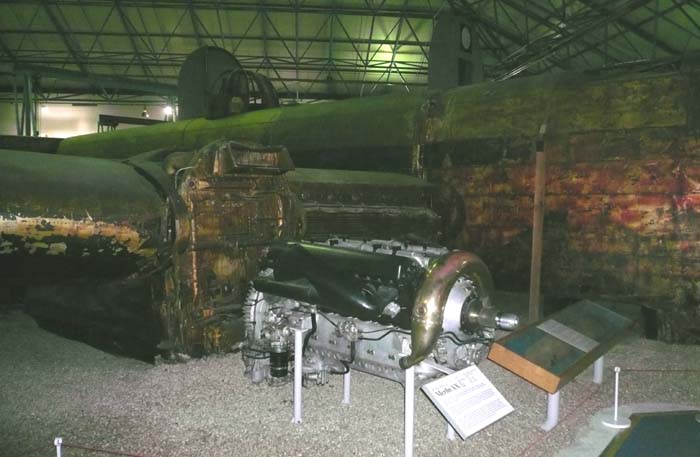
Here is the starboard inner engine nowadays in the museum:

P1320335

Vic Stevens broke his ankle and was eventually taken to hospital by the Germans. The other six came into contact with the Ling, the Norwegian underground and were helped to Sweden. Ian Hewitt and Don McIntyre returned to England after a few weeks, and Dave Perry,  Pierre Blanchet and Ron Wilson after a year. By this time Ron Wilson had rented a flat, found a job and made a start on a new life.
The poor old Halifax sank through the ice in the southern corner of the lake just twelve hours after the crash.
In 1971 the remains were found by local divers and in September 1972 by the RAF Sub Aqua Club. Everything was still there except for the starboard outer engine and one or two bits and pieces taken by souvenir hunters in the past.

Here is a photograph which is admittedly very similar to one of the others. I am quite proud of it, though, because my Idiots’ Guide to Photoshop has enabled me to turn a pretty well completely black picture into something understandable. Slight tinges of red are apparently the chemical which inhibits any further deterioration in the fresh air. Do they make that for humans?

P1320338xxxxxxxxxxxxxxxxxxxxxxxxxxxxx

By the end of June 1973, the Halifax had been retrieved from the lake, and after a lot of restoration, it was ready for the public by the end of 1982. Apparently a second Halifax from the same squadron and the same operation was discovered at the bottom of a nearby fjord in 2014. This exciting discovery was made by the Marine Technology Centre from the Norwegian University of Science and Technology in Trondheim. The wreckage is around 600 feet down, and is thought to be W7656 and to contain the remains of Sergeants Evans and Columbine, the wireless operator/gunner and the navigator respectively. I do not know if this will make any difference to plans to raise the aircraft and to restore it.

28 Comments

Filed under Aviation, Bomber Command, History, Personal

Vive l’Empéreur !! (3)

Last time I was busy listing all the things that Napoléon did to help his country and its ordinary people. They are the reason that he was so hated by the British aristocracy with their mad king and his disgraceful son. They were all afraid that Napoléon’s ideas would sweep away their comfortable and lucrative world.

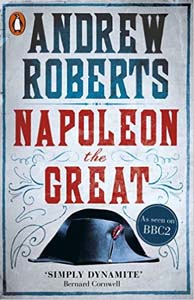
The best book about Napoléon was the source of the author’s TV series on BBC2:

cover

In it, Andrew Roberts summarises Napoleon’s legacy:

“The ideas that underpin our modern world–meritocracy, equality before the law, property rights, religious toleration, modern secular education, sound finances, and so on–were championed, consolidated, codified and geographically extended by Napoleon. To them he added a rational and efficient local administration, an end to rural banditry, the encouragement of science and the arts, the abolition of feudalism and the greatest codification of laws since the fall of the Roman Empire.”

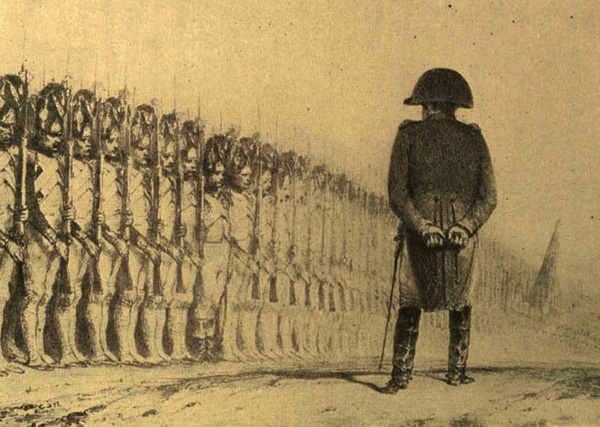
Napoleon had no time for the idea that men were superior just because of their birth. He believed totally in having people around him who were genuinely talented rather than members of the nobility:

napoleon-passant-en-revue

Napoleon had between 20-25 “Marshals of the Empire”. Here is a list of the occupations of their fathers. Nobody got a job with Napoleon because his Dad owned huge tracts of land:

“An officer in the Engineers, a Hussar, a well off farmer and an innkeeper, a small town lawyer, a surgeon (although his son enlisted in the army as a private), a shopkeeper, a fruit seller and servant, a small town prosecutor, a lawyer, a country solicitor, a surgeon barber, two farmers, a master barrel-cooper and ex-soldier, a farmer (whose son served in the army as a drummer boy), a Jacobite rebel, exiled from the Outer Hebrides, a brewer, a farmer and distiller of brandy, a silk manufacturer and a tanner.”

Napoleon made use of the nobility, with four major nobles and two members of the petty nobility. None of the noblemen he used, though, were from the absolute top of the Nobility Tree.  Napoleon chose one petty noble who was a Seigneur de Sort. His bizarre job was to act as a mole-catcher at the king’s horse breeding stud. Another was a mere sergeant in the city of his birth and had the job of locking the city gates every night. Another one had begun his career as a lowly page-boy.
This wasn’t how the English kings organised things. Nor indeed, the way anybody has ever organised things in England, right up till the present year.
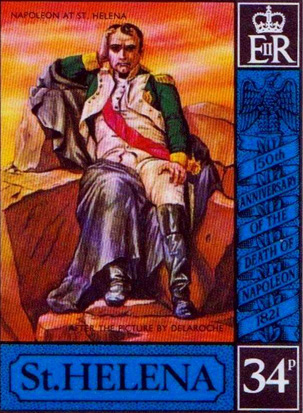
No wonder the English upper classes wanted Napoleon dead. And that is why they exiled him to a place where the appalling weather would soon kill him off, housing him in a property where water ran down the walls when the weather was damp:

napoleondeath

When the ship with Napoleon’s coffin arrived back in France from St Helena, a million people were waiting there to shout “Vive l’Empéreur !!” And this was 25 years after he was exiled from France for ever.

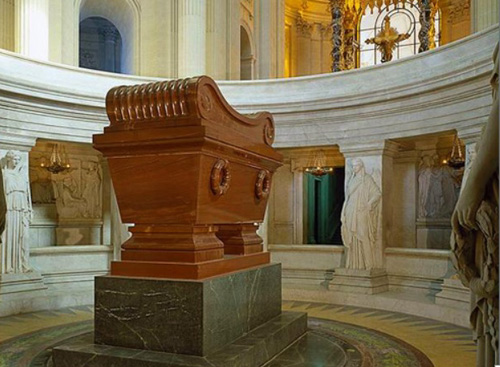
In Paris, between the River Seine and the site of his funeral at Les Invalides, another crowd of around a million people were assembled. There were in excess of 150,000 ex-soldiers there too, loyal veterans of the Emperor’s army. There would, no doubt, have been more spectators, had there not been a blizzard that particular day. Here is his ornate sarcophagus:

tomb

And here is how his people remember him. The man who crowned himself Emperor:

Napoleon[1]

18 Comments

Filed under France, History, Politics

What do you do with your Freed Slaves ? (6)

Last time we looked at two individuals whose families made huge fortunes from the ending of slavery when they were compensated for the slaves they had to release:

This slideshow requires JavaScript.

If you are intrigued by these revelations, then you should go and read the much fuller story here, where the journalists of the Daily Mail have done a splendid investigative job, and uncovered many famous people of today with a hideous skeleton in their cupboard. It really is worth five minutes of your attention. You may well be quite shocked. I was.

The tragedy, of course, is that those individuals today have little, if anything, in common  with their slave owner ancestors from so many years ago. On the other hand, they have inherited the wealth. What have they done to make amends? Built a school in the Windward Islands? Built a hospital in Barbados? Sponsored cataract operations in Jamaica?

Back in the nineteenth century, one added advantage for the ex-slave owner was the fact that now the slaves were free, there was no reason for him to provide his new workers with food and, indeed, he might even have been able to charge them rent for their hovel.

And let’s not think either that all the slaves in the plantations were black. I was pretty amazed to find that Irish people, usually so-called fallen women, were transported to Barbados and other West Indian islands:

white slaves

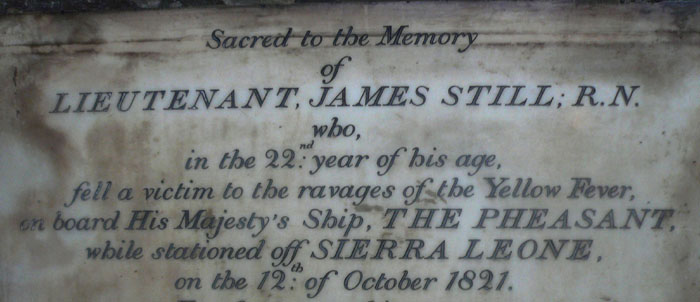
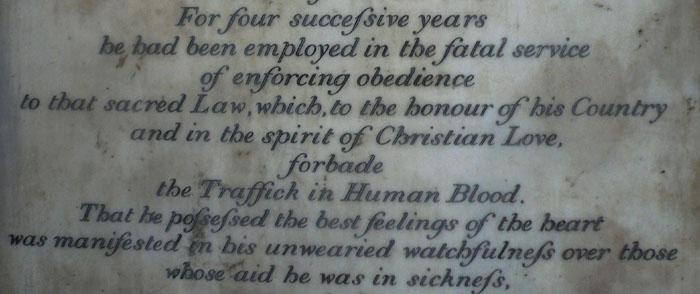
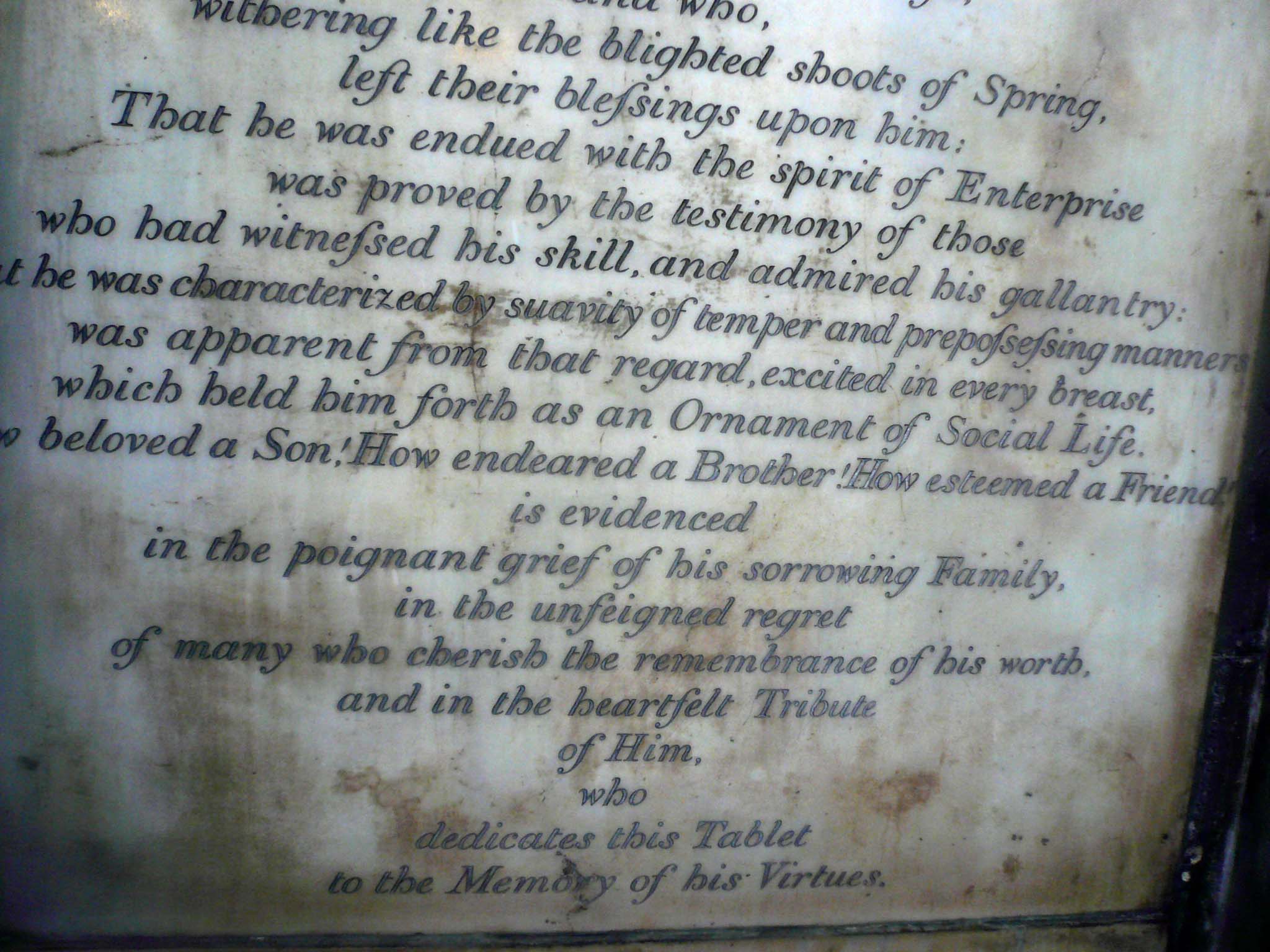
Let’s finish with a couple of pictures of a memorial in St Mary’s Church in Nottingham. It bears proud witness to a brave young Englishman, Lieutenant James Still, who gave his life in the cause of ending slavery. He was in one of the many Royal Navy warships which blockaded the coast of West Africa to prevent slave ships taking even more of the population away to a life of unhappiness:

image one

Here’s the next bit:

image two

The third bit is in a very dark area indeed, and I have done my best with it. The top two lines, half obscured should read “and who, withering like….” Lower down, a line should start with “That he was characterised…..” and lower still, “How beloved a son…”

And don’t forget that some of those apparent ‘S’ may be ‘F’ :

P1530664

And this link here is even more fun. There is a website about the British slave trade, and here is the link to the home page

If you click on the words on the right hand side, for example, (“commercial, cultural, historical, imperial, physical, political”) you can see where the slave money was reinvested or who improved their lot in life.
If you go to the search facility, you can even find out how much money the person received.

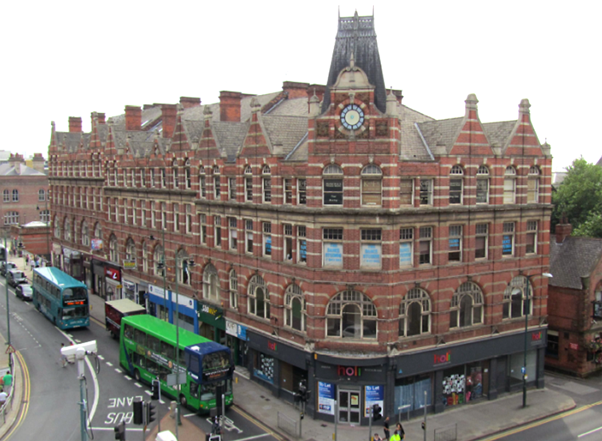
I live in Nottingham, and when I first moved here, the area I lived in was called “Carrington”. The city’s station is in Carrington Street. Here is the Edwardian shopping centre at one end:

carrington_street_t

But what is the origin of this? Why Carrington Street? And why was the area where I used to live called “Carrington”?

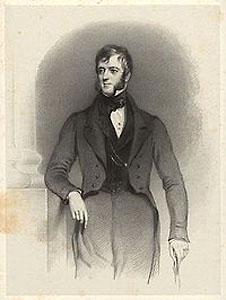
Was it possibly something to do with Robert Smith, 1st Baron Carrington ? I couldn’t find a picture of that gentleman but here is his son, the 2nd Baron Carrington:

-p 2nd_Baron_Carrington

The 1st Baron Carrington, Robert Smith, used to live at Dulcote Lodge in  Nottinghamshire. In the West Indies, he kept 268 slaves. He was paid £4908 eight shillings and five pence by the taxpayer to free them.

I felt quite sick when I read how much money that man eventually accumulated. And who his descendents were.

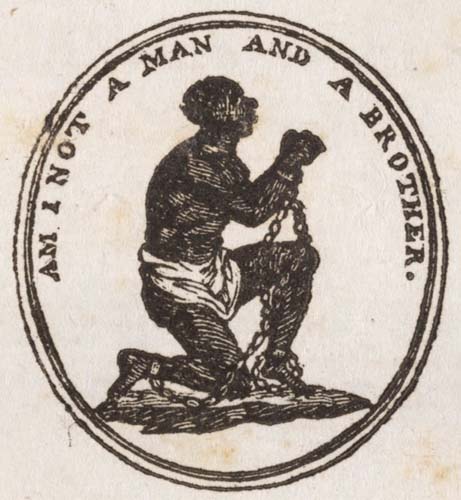
This, of course, is the answer to the problem:

Am_I_not_a_man

20 Comments

Filed under Criminology, History, Personal

Vive l’Empéreur !! (2)

Last time, I wrote about how Napoleon wanted to export the liberal values of the Enlightenment across Europe. And how the British upper classes wanted none of it. They wanted to keep society as it was, rotten the core, but with them in charge of every facet of life. And that’s why they paid countries such as Austria and Russia £65,000,000 over the years to attack and annihilate Napoleon, without any English lives being lost:

What a chance we missed by ignoring the ideas Napoleon eschewed. Just look at what Napoleon achieved in his own country.

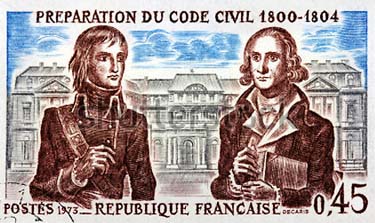
The Code Civil was “a fundamental change in the nature of the civil law legal system with its stress on clearly written and accessible law”.  It was created by committees of experts and closely monitored by the Emperor. He set up other codes for criminal and commercial law:

code civilxxxxxxxxxxxxxxxxxxx

He set up a system which established “due process”, the requirement that the state must respect the legal rights of its citizens, and which protects the individual from a powerful government.
Napoleon carried out steps which would allow both Germany and Italy to emerge within less than a century as unified nations. He helped the USA to expand with the Louisiana Purchase:

lousisa n purchase

He founded the Légion d’Honneur, awarded for excellence and achievements not just in war, but also for achievements by civilians which helped the French nation. Here is the first ever award, presented by the Emperor himself:

Debret_-_Premiere_distribution_des_decorations_de_la_Legion_d'honneur[1]

Napoleon abolished the ancient system which forced peasants to work as medieval serfs for their lord and master, carrying out specific jobs every year. This helped the growth of a money based economy, rather than paying rent, for example, by any other means, such as barter or the carrying out of physical tasks.

frenchrepubliccinqcent500francsxxxxxxxxxxxxxxxxxxxx]

Napoléon abolished the medieval guilds, allowing the birth of the entrepreneur.

He abolished ghettos for Europe’s Jews who were made equal to everybody else. In fact, everybody enjoyed equality in every field.

The power of the church was vastly reduced, especially their ecclesiastical courts. The Inquisition came to an end. (Nobody expected that.)

monty-python-spanish-inquisition_article_story_large[1]

His military innovations led Wellington to say, when asked who was the greatest general of the day: “In this age, in past ages, in any age, Napoleon.”

1415357107592.cached[1]

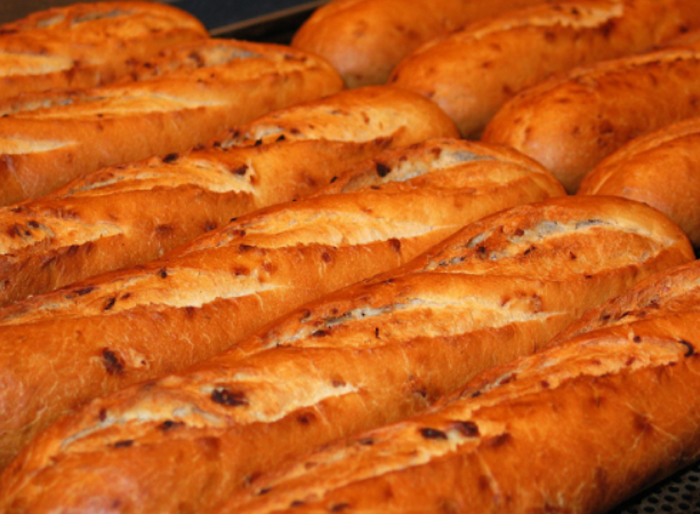
Napoleon gave enormous support to the metric system, introduced by the French revolutionary government in 1799. He made use of the process of storing and preserving perishable food in tins. His armies were the first to use the baguette:

French became the official language of the state. No more Basque, Breton, Corsican, Occitan nor, indeed, any of the countless dialects spoken in Europe’s second biggest country. Instead, everybody spoke French.

Secondary education was supported by the state, and lycées were established. State secondary schools followed the same system as nowadays. He made major efforts to keep education totally free from church interference. He introduced scholarships for poor students.

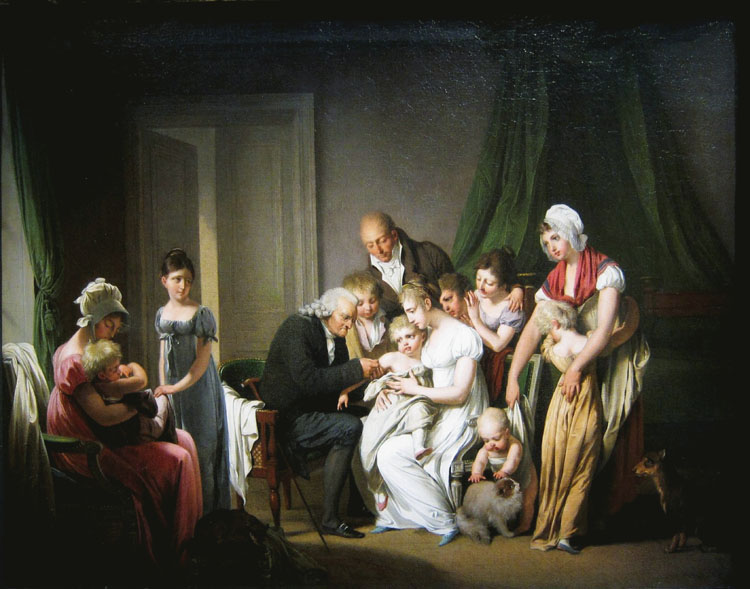
He introduced science into the school syllabus. In England, the church were still busy at this time trying to stop vaccination being introduced as anti-religious. Not so in France:

And that is not the end of Napoléon’s list. More next time.

22 Comments

Filed under France, History, Politics

What do you do with your Freed Slaves ? (5)

In my last article I posed the question of  “How did the British free their slaves?”. They had none of the difficulties faced by the USA (a bloody civil war), Russia (a bloody revolution and a bloody civil war) or France (a bloody revolution in Haiti).

west injdies plantation

Unbelievably, a decision was taken that the government would use taxpayers’ money, taken from the ordinary man in the street, to buy the owners’ slaves from them. This was a very cunning plan on so many levels. The government remained popular with the rich people. The rich people who owned no slaves remained rich. The rich people who owned slaves also remained rich. Nobody lost any money whatsoever except the poor old taxpayer, who now had to wait a little longer for his free medical care, free education, sanitation, decent roads, law and order in the streets and so on.

And what about the slave owners?

Carried_Slaveowner

Well, by this windfall, they became even more unbelievably rich. And then they went on to invest their cash in other ventures so they could make even more money.

They didn’t hate the politicians who had abolished slavery either, because the slave owners had suddenly been made so rich by their actions.  You can probably guess who came out of it badly…

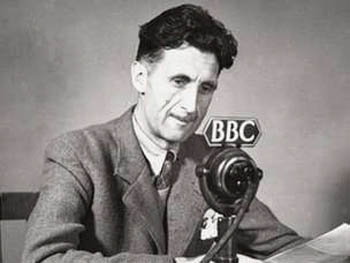
The population of black ex-slaves who now had nowhere to go. They couldn’t go down to the docks and catch a boat to West Africa. Instead they had to stay where they were and work for a pittance at their old job. This man’s family (218 slaves) made a good profit on the whole deal. They received £4,442 compensation, the equivalent of £3 million today. Don’t know who he is?:

orwell

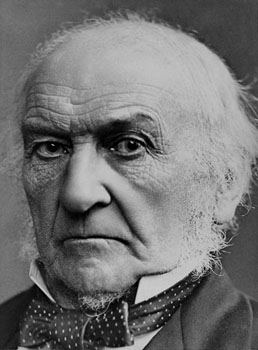
And this man’s father received £106,769, the modern day equivalent of £80 million. Don’t know who he is?:

1271754717_william-e_-gladstone

19 Comments

Filed under France, History, Politics