Author Archives: jfwknifton

Where did those three “merles” come from? Part One

Not many people would be able to answer this question.

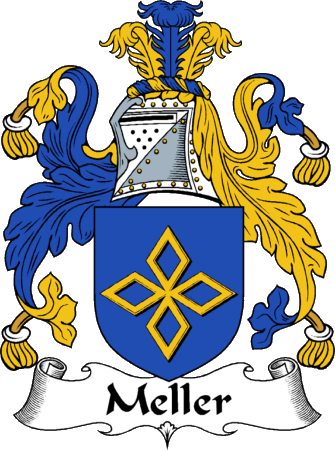
What exactly is “Ermine a Lozenge Argent charged with three Blackbirds rising proper on a Chief Gules an open Book also proper garnished Or between two Ducal Coronets of the last.” ?

Well, it’s one of these, more or less. What’s a lozenge between friends?:
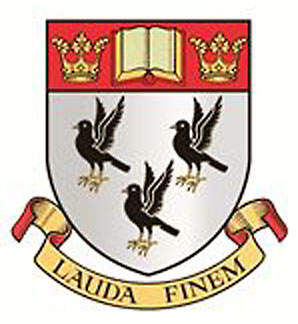
Notts Crest COLOUR xxxxxxxxxxx

The origin of the High School’s coat of arms has always been, to me, a major enigma. Apparently, there has always supposed to have been a connection between the arms of Dame Agnes’ family, namely “Mellers” and another family called Mellor, who lived in Mellor, a village between Stockport and Glossop.

(Where?)

(Well, let’s put it this way. in either town you can easily get a bus to Manchester. It’s a distance of some seven miles and twelve miles respectively)

Here is their coat of arms:
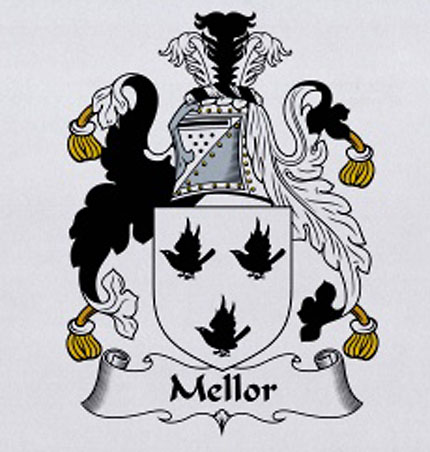
0mellor coat of

To me though there is quite a difference in spelling between Mellor and Mellers, although the Mellor coat of arms is obviously a reasonable fit with the school’s crest.

This theory, though, does rely almost totally on the supposition that Richard Mellers was related to this “Family in the North” whose coat of arms displayed three black birds. In actual fact, there is no reason to suppose any proven link whatsoever between the two families. After all, it’s a very long way between Nottingham and Stockport in late medieval times. More than ninety miles, in fact. The best part of a week on foot, not counting any unexpected meetings with Robin Hood and his Merrie Men.

Let’s look at a small number of other likely coats of arms. Let’s start with Mellers. It should be said that Dame Agnes herself always spelt her name as “Mellers” (but never as “Mellor”):

For “Mellers”, we find very few coats of arms, but there is this one:
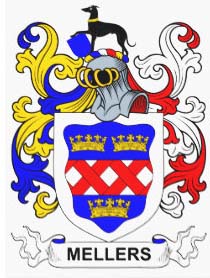
meller_c

Let’s try “Meller”. We do find this one, and furthermore, the very same shield is listed elsewhere as “Mellers” :
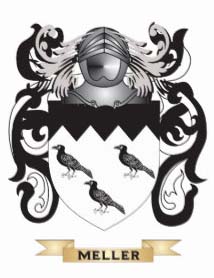
meller_cThat’s not the answer, though,, because we also find this shield for Meller, as well:
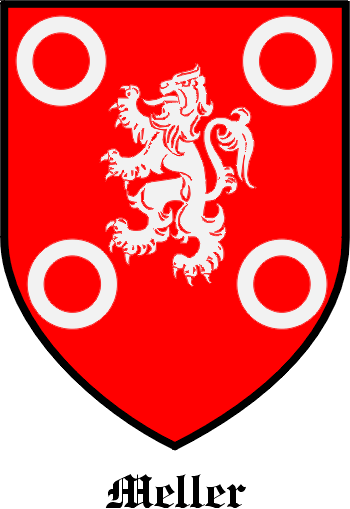
meller-ireland

And this one:

meller_large irish

And this one:

Smeller red

Clearly, something, somewhere, is not quite right. It may even be very wrong. There are problems here, and the first major one may well be connected with the simple issue of the spelling of Dame Agnes’ surname. Despite her own insistence on Mellers, mentioned above, a quick look at “Google Images” will reveal that Mellers, Mellor, Meller and probably Mellors, appear to be disturbingly interchangeable.Coats of arms just seem to come and go. They are different every tine you look at Google. This is because, I suspect, they are connected less with accurate heraldry than the desire to sell tee-shirts, mugs, key rings, ties and even underpants with your family crest on them.

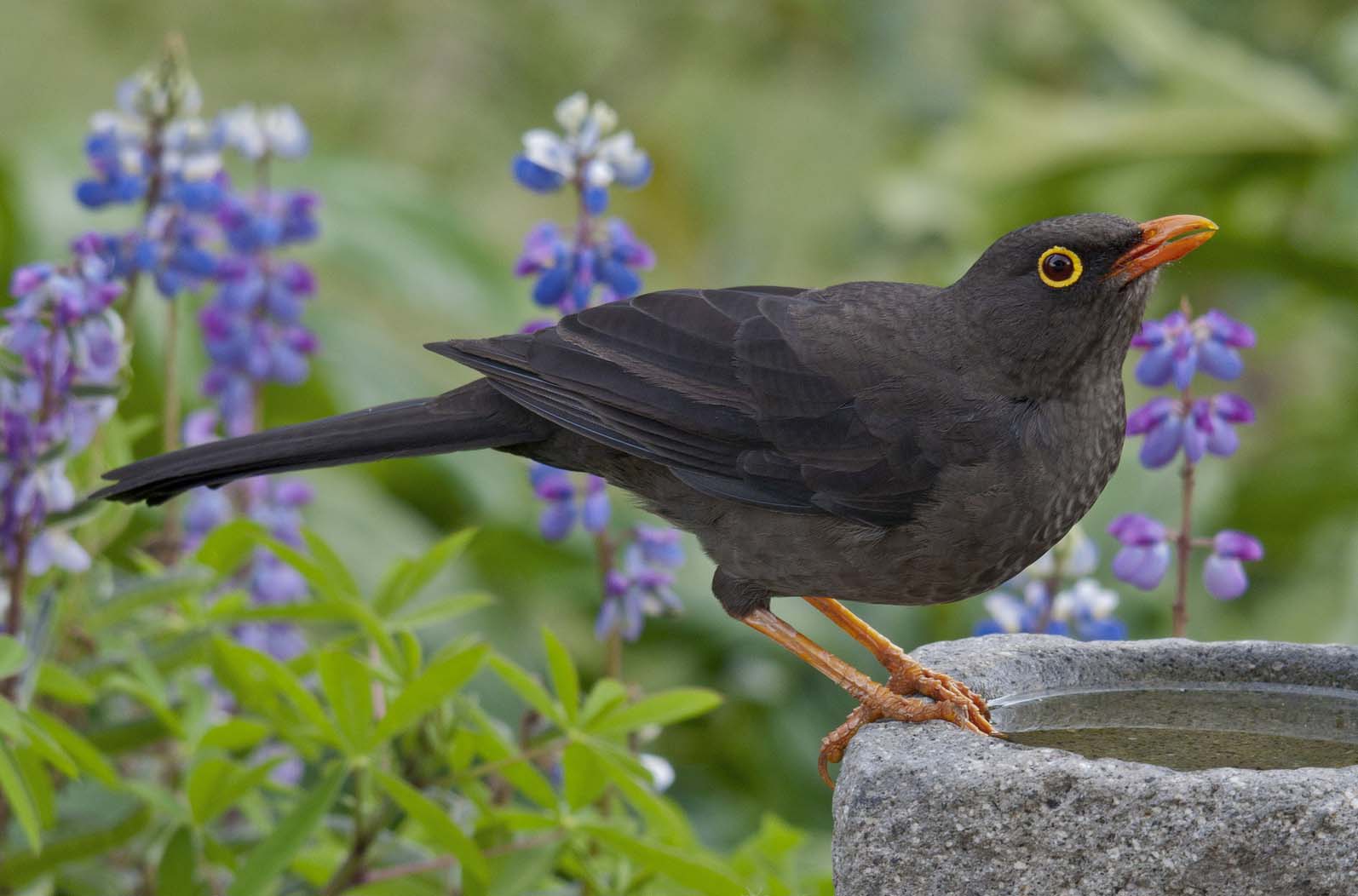
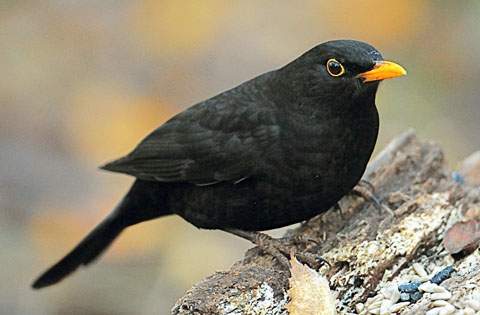
Those black birds on the High School shield have always been regarded as Blackbirds, an everyday bird species in England:
blackbird

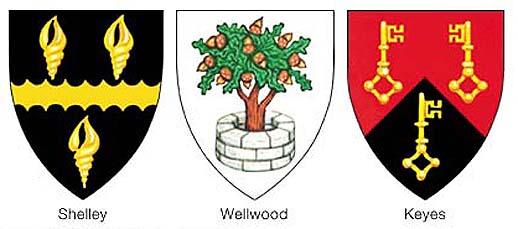
The theory is that the heraldic word for a blackbird is “merle”, taken from the French, and this gives us a devilishly funny pun for the surname “Mellers”. Such side splitters are called “Canting Arms”. They are used to  establish a visual pun, as in the following examples:
canting
I am just not sure about this word “merle”. Just because a coat of arms contains a number of black birds (as opposed to green ones), that does not automatically mean that we are dealing with canting arms, even if the French word “merle” refers to our familiar back garden bird, the Blackbird, aka turdus merula, and the name “Mellers” sounds perhaps, possibly, maybe, slightly, conceivably, like it.

What is more disturbing, though, is the discovery that “merle” appears to mean absolutely nothing whatsoever in English Heraldry. On Amazon, the search for “Heraldry” reveals five books, all with the same title. It is “A Complete Guide to Heraldry” by A.C.Fox-Davis:
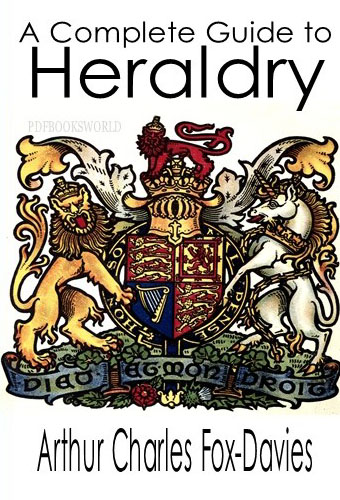
fox daviesThis rather old book is the standard work on English Heraldry and has been for quite a considerable time. It is a book of some 645 pages, but there is not a single “merle” on any one of them.  And more important still, if merles did actually exist in Heraldry, then why did the Heralds’ College, known also as the College of Arms, call these birds “blackbirds” when they made that formal grant-of-arms to the school as recently as 1949? Why didn’t they call them “merles” and thereby preserve the “Laugh, I nearly died” visual pun?
And don’t think that the College of Arms are just a bunch of fly-by-night door-to-door sellers of heraldic key rings and underwear. They were founded well before Dame Agnes Mellers, in fact as far back as 1484. To quote the definition on the Heraldry Society website:

“The College of Arms is the only official English authority for confirming the correctness of armorial ensigns — Arms, Crests, Supporters and Badges — claimed by descent from an armigerous ancestor, or for granting new ones to those who qualify for them.”

In other words, if they say it’s a blackbird it’s a blackbird. You can’t just decide to call it a “merle” because you feel like it, or because it seemed like a good idea at the time. It’s just not allowed. Here is another blackbird, just to refresh your memory:
Blackbird-01

In 1920 at least, nobody called it a “merle”. In June of that year, the new school magazine, “The Highvite” contained a “Sports Chorus”, including appropriately vigorous music. The words were…

“Score our High School / ye Highvites now score for victory.
Our High School / For Highvites, never, never, never shall be beaten
By any Worksop / Newark & c. team
At the Sign of the Blackbirds three.”

No “merles” there then. It is equally interesting to note that in “The Nottinghamian” of December 1921, the school’s emblem is again referred to as containing blackbirds, rather than merles. This overturning of tradition, however, does not mean that the use of three black birds does not connect us directly with Dame Agnes. Let’s look at it from a different angle, just for a moment.

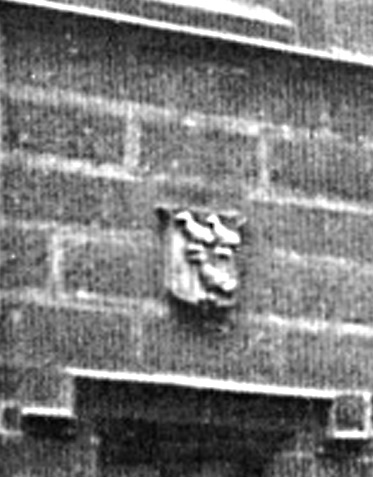
Many people have believed over the years that it was only when the school changed its site from Stoney Street to Arboretum Street in 1867 that the three black birds were first adapted. But this was definitely not the case since photographs from the mid-nineteenth century show quite clearly that a badge with three birds was displayed on the wall of the Free School building. In this case, though, their wings were folded rather than the modern version, flapping and ready for immediate and dynamic intellectual and sporting take-off:
stoney st enlarged

Indeed, it is thought that the three black birds were in evidence as an unofficial badge for the school from at least June 16th 1808 onwards. On this date, an unknown but apparently very bored clerk has decorated the title page of the funky new volume of the Schoolwardens’ Annual Balance Sheets with the traditional three black birds, so it has clearly been known as a symbol connected with the school for a very long time.

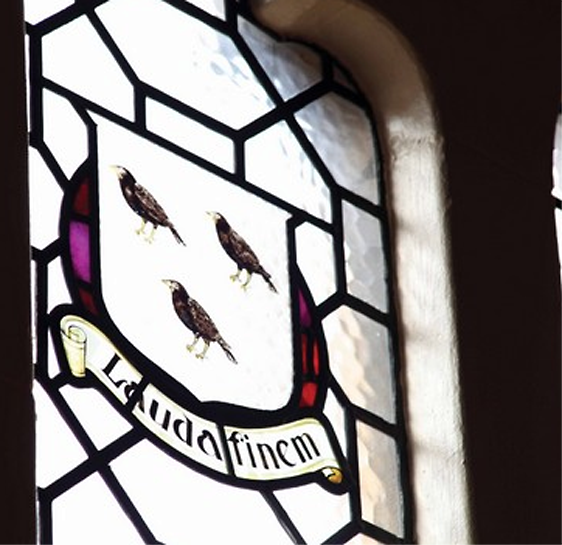
Interestingly enough, another slightly more modern place where the birds’ wings can be seen as folded dates from 1936, when some new stained glass sections were put into the windows at the back of the recently built Assembly Hall:
assembly hall

And nowadays, of course, this folded wings version forms the badge of the Old Nottinghamians’ Society. Presumably, that is why they appear in this guise on a car badge being sold off on ebay:
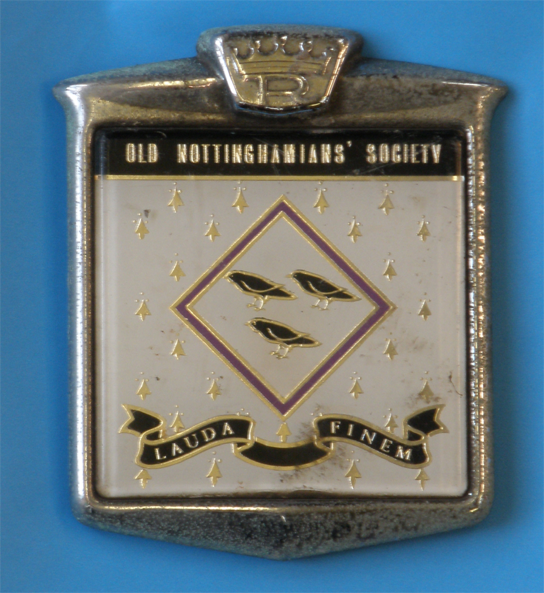
car badge

Next time, I will attempt to answer the question of where did those black birds come from? In the meantime here’s a clue. Not all black birds are Blackbirds:
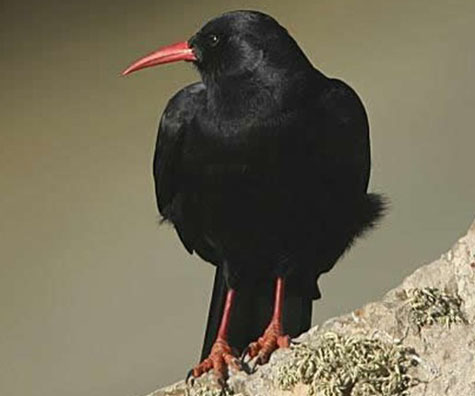
chough_nb_tcm9-94034


17 Comments

Filed under Criminology, History, Humour, Nottingham, The High School

“Go straight to Hell ! Do not pass Go ! ” Part Two

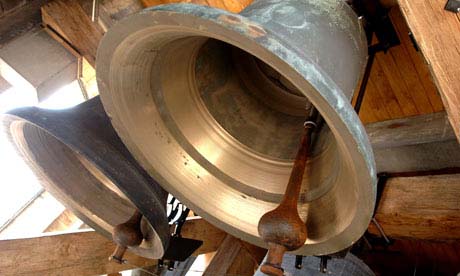
In the first part of this article, I demonstrated how Richard Mellers, the husband of Dame Agnes, was, at best, a fairly unscrupulous businessman. I ended by relating how, in 1507, Richard had received a pardon for having committed offenses against the statutes of weights and measures. This charge related to problems with the purity of his bells. The metal, apparently, was just not as valuable as he said it was. Richard’s pardon would have been granted because of his previous position as Mayor of Nottingham. A less prestigious person would have been in very, very, serious trouble:

Church-bells-001

Dame Agnes, of course, may well have known absolutely nothing whatsoever about any of this rather serious matter. Like many, many husbands over the centuries, Richard may have decided, quite simply, to tell her nothing at all about it. And if she did know about her husband’s cheating and double dealing, then, like many, many wives over the centuries, she may perhaps have turned a blind eye to it, hoping that one day her errant husband would rejoin the forces of light.

He didn’t though. At least not for long, because on or about Sunday, June 16th 1507, Richard Mellers died, with the ink on the pardon if not still wet, then certainly recognisably damp. I think Dame Agnes would have seen his sudden demise as a direct consequence of his previous wrongdoing. She must have thought that her husband’s death so soon after receiving a pardon was the true verdict from on high.

In more modern, medical, terms, Richard may well just have hastened a natural death by continually feeling guilty or by worrying too much about the outcome of the affair. He may, quite simply, have been a victim of early sixteenth century stress. Irrespective of the clinical truth, though, for a devout woman in Tudor times, these events must have seemed like a clear judgement from Heaven.

At the beginning of the sixteenth century, it would have been completely impossible for a sincere and devout Roman Catholic to be in any conceivable way ignorant of the rôle played by Hell in the scheme of things. How can Dame Agnes have possibly thought back about her husband’s life, misdemeanours and sudden death, and not have seen him as the proud possessor of a “Go straight to Hell, Do not pass Go, Do not collect a ticket to Heaven” card?

That must have been a very, very real fear in her mind.

Here’s how the Rock Combo “AC/DC” saw the situation, firstly on an album cover:

hqdefault

And then on stage:

More or less straightway after his death, therefore, Dame Agnes, the grieving widow, became a “vowess”. She resolved never to remarry, and instead to devote herself to the service of the church.

A “vowess” is defined in the Collins English Dictionary as:

“a woman who has vowed chastity or devotion to a religious life; a nun”.

Other dictionaries tell pretty much the same tale. One other interesting detail about vowesses is given in “The Customs of Old England” by F. J. Snell. Writing about how a vowess would view her obligations, he states that:

“Whatever fasts a vowess might neglect as non-obligatory, it seems probable that she would not willingly forgo any opportunity of showing reverence to the Blessed Virgin.”

More of this later.

Immediately after her husband’s death, Dame Agnes tried to repay many of his victims. She literally gave them back the exact sums of money which she was worried they had lost to her husband.

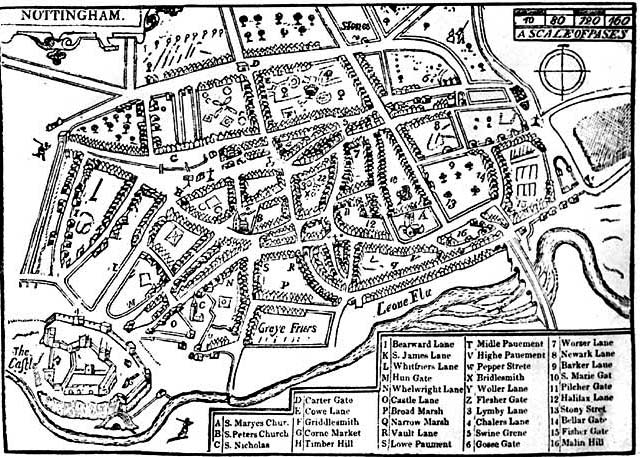
She then decided to spend the rest of Richard’s money on charitable causes. Most important of all, she decided to found a school. Or alternatively, she decided to fund a school which was already in existence and was clearly in need of financial assistance. She must have known that this one simple act would benefit the citizens of Nottingham in the long term, and make up for the occasions when, for short term gain, her late husband had cheated them. Here is the grateful city in 1610. St Mary’s church is marked with the letter “A”. Keep looking. It is there:

speed-map

Before the official first day of her school, February 2nd 1513, there had already been eleven apparent references to a “Nottingham Grammar School” between 1289 and 1513. At this point in time, of course, it is impossible to tell what connection, if any, there is, with Dame Agnes’ school. Indeed, we do not even know if the eleven schools mentioned before 1513 have a continuous history, or whether they were all short lived affairs.

Having said that, though, Dame Agnes may well have decided to develop an ancient original grammar school into her own school. This original establishment may have depended solely on fees paid by the pupils. Dame Agnes perhaps thought it would be a good idea to establish a foundation, which would then ensure a much better financial future for the school. Equally, she may well have wished to take personal dcontrol of an older school, and then, as a loyal Catholic, to bring it under the control of St Mary’s Church.

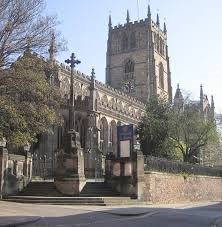
Whatever the details of founding, funding, refounding or whatever, from Dame Agnes’ point of view, the most important thing was that the school  should remain closely linked to St Mary’s Church. This, of course, carries out the words of F. J. Snell. Her efforts with this school clearly showed that Dame Agnes would “not willingly forgo any opportunity of showing reverence to the Blessed Virgin”. Here is St Mary’s Church nowadays:

ch 4

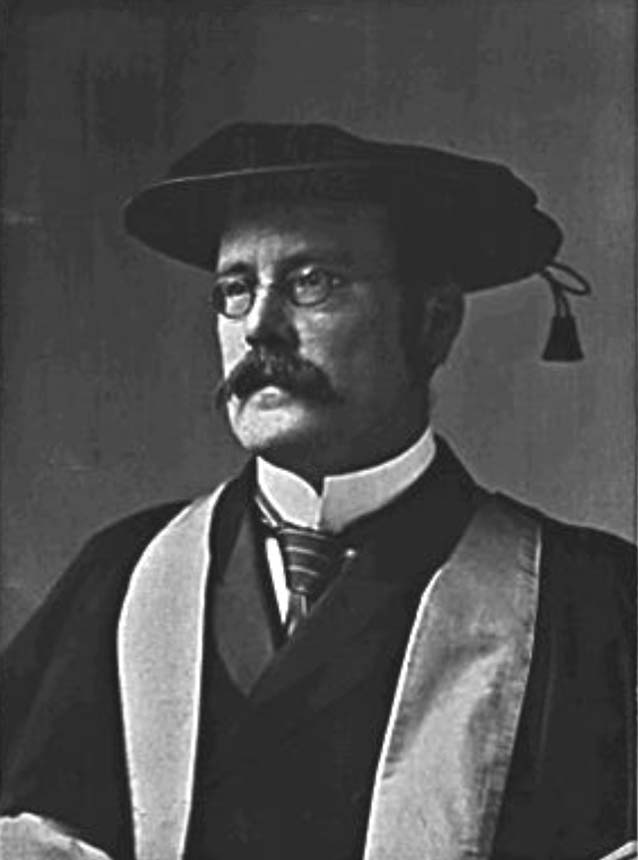
All this sounds like heresy now, of course, after a whole series of celebrations have commemorated the 500th Anniversary of the school, and books have been published, but these ideas are not actually mine own. In “The Nottinghamian” for 1924, for example, there was a clear connection stated in the school magazine between the older schools from before 1513 and the then Nottingham High School. Dr James Gow, the school’s greatest Headmaster, had died this particular year:

dr gow

In his obituary, it was said that:

“he was appointed Headmaster of the Nottingham High School, an ancient Grammar School, already existing in the thirteenth century, and refounded and endowed by Dame Agnes Mellers, under a Charter of King Henry VIII, in 1513.”

These words are anonymous, but were most probably written by Mr “Sammy” Corner who had been the school’s Deputy Headmaster until his retirement in 1914. Mr Corner had spent much of his spare time researching school history and had become a great expert. Much of this knowledge was to appear in the school magazine which he edited for many years, and which at one point had contained a serialised history of the school. After his retirement, the plan was that Mr Corner would finish writing his history of the High School.

Alas, this popular member of staff was destined never to write his book, as the Great War broke out only a month after he was due to start work, and, despite his advanced age, Mr Corner went off to do his bit for the war effort. At the end of the conflict, Mr Corner moved from Nottingham to Croydon, but his life’s work was to remain forever uncompleted, a source of great regret, as he later told Mr Reynolds, the Headmaster, in a letter. This is the great Sammy Corner in 1913, showing off the school’s charter in the 400th anniversary celebrations in 1913:

sammy corner s

On the afternoon of Monday, November 13th, 1933, similar ideas about the school’s history to those in Dr Gow’s obituary were being expressed by the Duke of Portland, when he performed the formal opening ceremony for two new High School buildings, the Gymnasium and the newly converted Library.

This very same interpretation was obviously still current around this time, when Mr.C.L.Reynolds, the Headmaster, wrote his own brief history of “The Buildings of Nottingham High School”. He described the events of 1513 as “…the re-foundation or endowment of the School by Dame Agnes Mellers.” Here is Mr Reynolds, seen with the prefects, in an unknown year, probably in the 1930s:

reynolds

Furthermore, a document more contemporary to Dame Agnes’ time said that what Dame Agnes was doing was to “…unite, create and establishe a Free Scole” as if there were some definite connection between her school and the Nottingham schools of previous centuries. Similarly, she is referred to in a number of other early documents not as a “foundress” but as a “fundress”, as if she were building and strengthening what was already there.

If this is the case, then it would give the High School a history of some seven hundred years, making it one of the oldest schools in the country. But not the oldest.

How that fear of the “Go straight to Hell, Do not pass Go, Do not collect a ticket to Heaven” card must have haunted Dame Agnes. As well as her wonderful achievements with the school, she also laid down that a service of commemoration for her deceased husband should be held every year on June 16th. This latter date is thought to have been chosen because it was the Feast Day of St Richard of Gloucester. Interestingly enough, St Richard’s shrine in Chichester Cathedral, at this time, was a magnificently decorated and popular destination for the Tudor Pilgrim. Perhaps Dame Agnes had been there herself as a dedicated vowess:

Chichester_Cathedral_epodkopaev

The ceremony which Dame Agnes had requested was, of course, a solemn Roman Catholic mass for the soul of her dear departed husband. It is thought that this mass was probably celebrated for about thirty five years, until such services were abolished by order of the then king, Edward VI. This same type of mass may then possibly have been revived under the Catholic Queen Mary, but it certainly would have disappeared for ever when the Protestant Queen Elizabeth I came to the throne in 1558.

Even in the 1660s though, some hundred and fifty years after Dame Agnes, the students still went every Friday during the period of Lent, with their teachers, to visit St.Mary’s church, and kneel in front of the tombs of Richard and Agnes Mellers, and say prayers for their souls, and the souls of all their relatives. And even nowadays, every year on Founder’s Day, the congregation still says prayers for the souls of Dame Agnes, and more importantly perhaps, her husband, Richard. This is Founder’s Day in 1957, a beautiful backlit day:

founders dfay

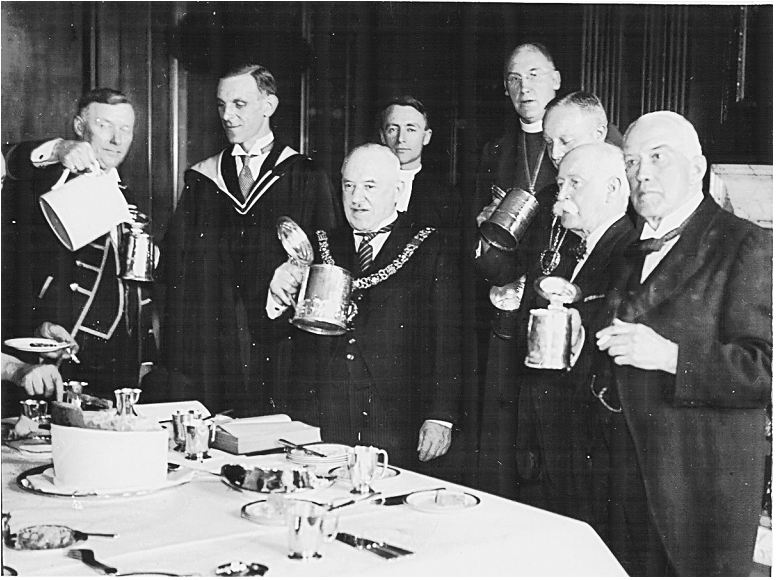
This is the Cheese and Ale Ceremony in the same year:

cheese and ale 1933

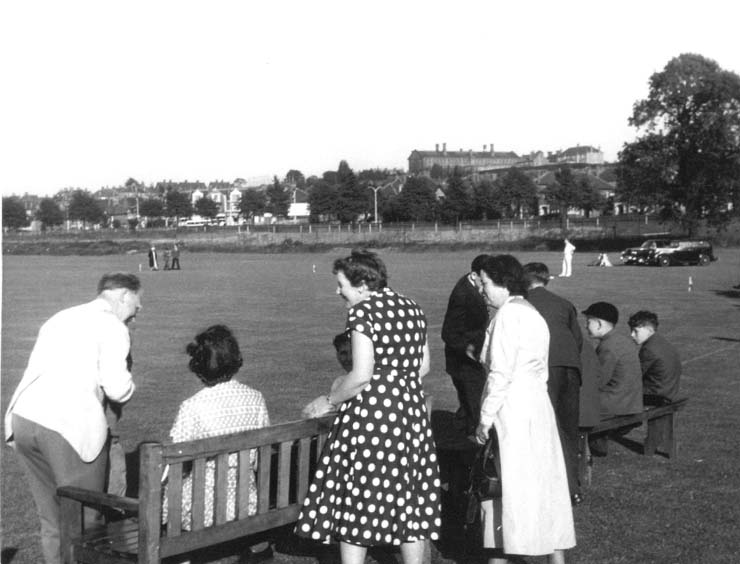
They’re going to get very drunk very quickly if they fill those tankards too frequently. Here is the traditional Cricket Match on that sunlit afternoon in 1957:

cricket 1957

18 Comments

Filed under Criminology, History, Humour, Nottingham, Politics, The High School

NEWS: RAF foil plan for major four-city attack on UK

All the time, somebody is watching over me. Thank God for the RAF.

Leave a comment

Filed under Uncategorized

Storks in Victorian Nottinghamshire

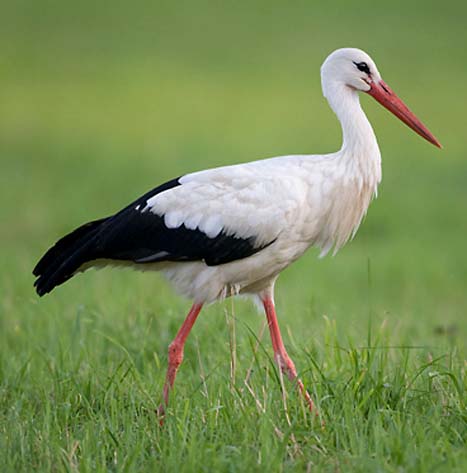
The White Stork is a very large and spectacular visitor to England. People have asked me on many occasions why we think that babies are brought by storks. My answer has always been that a good number of new babies have a red mark on their forehead when they are first born. This mark is triangular and it looks as if their head has been grasped for a considerable period of time in a stork’s beak. My own daughter certainly had the mark on her forehead when she was first born, although it usually fades with time.

Victorian Nottinghamshire recorded a number of storks, and in actual fact, the very best records come from the era of King George IV, Beau Brummell’s “fat friend”.  In 1825, therefore, a single bird was killed near Bawtry on an unrecorded date during the year:

white-stork-113589 xxxxxxxxxxxxxxx
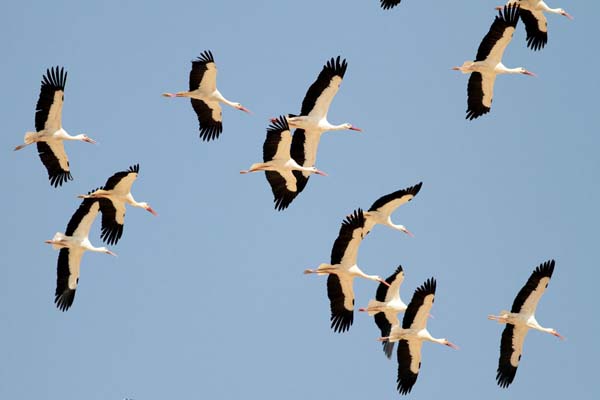
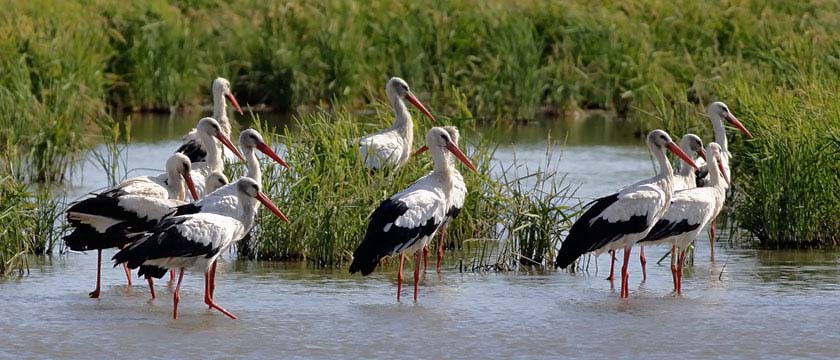
Four years later, in 1829 an entire flock of these magnificent birds was seen on the River Trent at the very same location as the 1825 individual:

white-storks-flockxxxxxxxxxxxxxxxxxxxxx

Two of them were subsequently shot as they overflew the nearby market town of Bawtry. Look for the orange arrows:

This slideshow requires JavaScript.

On Monday, April 12th 1915, a single bird was seen in flight over the road between Nottingham and Mansfield. The observer was Sir Herbert Chermside :

220px-Sir_Herbert_Chermside

In 1899 Sir Herbert had married Geraldine Katherine Webb, the daughter of Mr W.F.Webb, the owner of Newstead Abbey in Nottinghamshire. The poor lady was to die in 1910 without any children.

Sir Herbert immediately typed a letter to Joseph Whitaker, as soon as he reached home after seeing this wonderful bird:

“This morning a specimen of Cicogna Alba passed across the Nottingham-Mansfield high Road (sic) at 9.50 a.m. between the Pilgrim Oak and the Hutt House, the bird was in Spring plumage, with legs and beak very bright:

bilyl_leleka_pislja_opysu xxxxxxxxxxxxxx

It was, I think, a hen bird, and passed directly over me within easy gun shot, flying relatively low, over the tops of the Beech trees by a few feet. It is possibly a War Refugee from the Low Countries.”

The Pilgrim Oak or Gospel Oak stands opposite the Hutt at the main entrance to Newstead Abbey. This is the Hutt:

thre hutt

The Pilgrim Oak was the place where pilgrims would stop and read the gospels before entering the Abbey (not the pub). The age of the tree is unknown but it was already quite large in Lord Byron’s time. The American author, Washington Irving, described as “a venerable tree, of great size” when he visited the area in the early 19th century:

This slideshow requires JavaScript.

Here is the Pilgrim Oak in both spring and autumn:

This slideshow requires JavaScript.

Joseph Whitaker would have been totally gutted, to use the modern expression, that a non-birdwatcher had seen such a wonderful, spectacular bird, and he hadn’t:

white-stork-hungary-2007

Just under a week later, on Sunday, April 18th, Sir Herbert wrote again to Whitaker confirming the identity of a bird that he had already seen in many locations in the Middle East. This must really have twisted the knife, although, of course, unwittingly:

“I wish that you had seen the Stork instead of I (sic) although it is the first one that I have ever seen in England. Last year I was in the uplands of Algeria, south of Constantinople on the day of their arrival in very considerable numbers (early March) at the Dardanelles on the shores of the Sea of Marmora , 17th March is the day of their arrival. A day’s march from Gallipoli on the eastern side, they have a great assembly place-for both spring and autumn.

White-Storks_1164flock xxxxxxxxxxx

The natives allege that in Autumn, the birds of the year pair there, before the migration.”

All the way through this account, I have deliberately used the phrase “White Stork”. This is because there is a Black Stork as well. This is a much rarer bird, and one which I myself have yet to see:

This slideshow requires JavaScript.

In Victorian times there was just one report of this species being seen in the county. This was an unfortunate individual which was shot during the autumn of 1871 at Colwick by Mr John Brown of Old Moat Hall. Joseph Whitaker was told the facts in a letter from Mr P. Musters of West Bridgford. As Old Moat Hall is in Cheshire, I suppose we can presume that Mr Brown was a guest of one of the members of the extended Chaworth-Musters family, who were rich landowners in Nottinghamshire.

As far as I can see, their possessions included Annesley Hall, Colwick Hall, Wiverton Hall, Edwalton Manor, West Bridgford Hall and for Sundays, Felley Priory.

10 Comments

Filed under History, Nottingham, Politics, Science, Twitching, Wildlife and Nature

Ilyusin Il-2m3 Sturmovik

I enjoyed reading this article so much that I reblogged it. Originally it was written by “atcDave” and what I found especially interesting was the idea that in this particular case, history may have to be written by the losers. In the Comments section, the link provided by Pierre Lagacé is very good.

atcDave's avatarPlane Dave

One of the ubiquitous aircraft types of World War II, the Il-2 Sturmovik was used in mass formations over the eastern front to wreak havoc on German armor.

image

Let’s take a brief look at this key close support type.

View original post 755 more words

5 Comments

Filed under Uncategorized

The Beast of Veyreau….another cannibal killer!

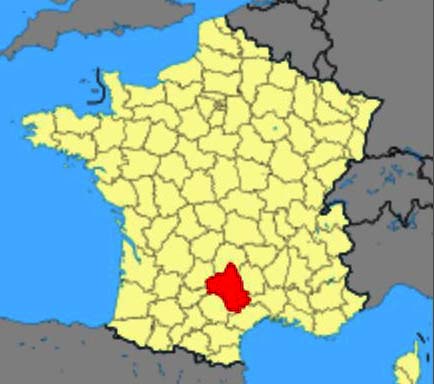
One more man eating monster to terrorise the local peasants of France was the “Bête de Veyreau”. At a time and in a place both relatively close to the Beast of Gevaudan, his bloodsoaked career peaked from 1799 onwards as he laid waste to an area of France called the “Causse Noir” or “Black Causse”. This beautiful countryside is situated more or less in the south of the Massif Central. Here is the old province of Rouergue, whose capital was Rodez:

rourgue

And this is a more detailed map, with a red square in the extreme east representing the village of Veyreau. The orange arrow refused to travel abroad:

map square

The province directly to the east of the green area is Gévaudan. The “Causse Noir” or “Black Causse” is dry, rugged and rocky.

1280px-Causse_Noir

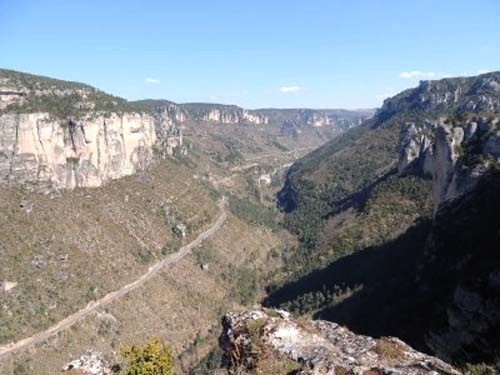
There are many mountainous areas and some notable gorges such as the “Gorges de la Jonte”:

gorges de la jonte

Normally, the best approach for these French monsters is to take an average of the various French websites. In this case however, that is not really going to work, because, as far as I can see, more or less every account of this creature is virtually the same, and probably owes a great deal to Wikipedia:

“The Beast of Veyreau was a man eating animal which ravaged an area in the “Causse Noir” not too far from Gevaudan, from 1799 onwards.  This was an area where livestock were raised and is nowadays part of the Département of Aveyron. These attacks filled the inhabitants with such immense fear, and the Beast had so many “dozens of victims”, that the locals thought the Beast of Gévaudan had come to their region.”

I have been able to find one person who could expand a little on that:

“around the year 1799, there appeared in the country a beast which filled all the inhabitants with great fear. Its build was slimmer and more willowy than a wolf. Its way of walking had such agility that it was seen first in one place, but then four or five minutes later in a different place perhaps several miles away. And woe betide any child that might meet the creature. The Beast would carry them off and eat them , first the liver and then the limbs. In the space of six months this beast killed three victims including a boy of six whose limbs they found hidden in the earth in the Malbouche Ravine, in the very same place which was, people used to say, the haunt of the ogre.”

Mention of “The Ogre” will lead me neatly to another blogpost in the future, when this long series of familiar crazed creatures, blood soaked beasts, maniacal monsters, feral dogs, wolf-dog hybrids, wolves with attitude or whatever nasty four legged beast you can imagine, becomes just for a few hundred words, a two legged cannibal killer, with the supercool name of Jean Grin.

To get back to the story, this is the tiny village of Veyreau:

Veyreau_aerien1

The very best version of the story of the “Bête de Veyreau” comes from a website designed to “découvrir et aimer la Lozère”, in other words to “discover and love La Lozère”, which is one of the most beautiful and picturesque areas of the “Causse Noir”. The account of the Beast below is quoted directly from the parish records of the village of Veyreau, which were collected together in 1870 by the then parish priest, Père Casimir Fages. The road sign  below shows that two languages were/are spoken in this southern part of France. “Veirau” is the village name in Occitan. Try the Wikipedia website to read about this ancient language. You will find a really interesting use of the Universal Declaration of Human Rights, which has been translated into a number of widely spoken languages but then into a good number of others such as Occitan, Gascon, Provençal and half a dozen others. At the very least, it has a wonderful moving map which you can click to enlarge:

veyreau_entree_panneau

As was so often the case in old France, the parish priest was the only literate person in the immediate area, and it was for him to record the history of tiny villages such as Veyreau. Père Fages’ church is still there:

eglise-de-veyreau-e1380921126557

The hard work for this website has all been done by an extremely dedicated gentleman, Monsieur Bernard Soulier. Bernard is the President of the Association “In the country of the Beast of Gévaudan”, in French,  “Au pays de la Bête du Gévaudan”. This organisation is based in Auvers, a small village in the Haute Loire district.

.
Here is Père Fages’ story:

“Around the year 1799, there appeared in the country, especially around the village of Paliès, a beast that filled all the people immense fear; its size was slimmer than a wolf ; Its way of walking had such agility that it was seen in one place, and four or five minutes later it was seen in another place perhaps a league away. It had the head and muzzle of a large greyhound ; it used to come into villages in broad daylight, and woe betide any child that might meet the creature, the Beast would carry them off and eat them, first the liver and then the limbs. One summer’s day, the Beast appeared at Paliès. Children spied it from a long distance away and ran to take refuge in a tree close to a house on the northern side of the village; faster than lightning, the Beast seized one of the children, who was already two metres off the ground and carried him off into Madasse Wood. Men shearing the sheep of a local farmer, including the father of the unfortunate child, ran at top speed to the place where the Beast had gone. The noise that they made caused the Beast to abandon the little boy who was found shaking on the ground with his insides ripped out! Seeing his father looking for him, he did, however, have the strength, to shout “I’m here”, but he died a few moments later. This child aged six, was called Pierre-Jean Mauri; in the register Monsieur Arnal who carried out the baptism ceremonies in 1794 when the child was fifteen months old, has added to the margin of that register, “Devoured by the ferocious Beast”.
Fifteen days later, the Beast took a child from the farm of Graille at Rougerie. In company with his older brother, he was keeping watch over the cattle close to the natural spring of St. Martin; the elder brother tried hard to help his brother, but when the beast stood up on its hind legs, he was so frightened that he fled and went for help at Veyreau ; it was a Sunday, a large crowd came to help, and searching the Malbouche property, they found the remains of limbs that the Beast had hidden in the earth. This same beast also seized a little girl named Julien who lived in Bourjoie ; her father was busy knocking nuts down from the trees; the small children were close to the tree, and the Beast, in full view of the father, seized the little girl; the father set off after her, but he could not catch her up, and a few days later, she was found buried in the undergrowth; her liver had been eaten.
These different characteristics of the Beast filled the people of Veyreau and St André with justified fear; several people saw the Beast which accompanied them, gambolling along, jumping about, but not daring to attack adults; One day in bright sunshine, the Beast walked through the village of St André, and stopped outside the door of a weaver’s house; they took it for a dog, and at the very moment when they were going to stroke it, it disappeared in  a flash. Monsieur Gaillard, the parish priest of St André, with whom I have discussed this extraordinary animal, assured me that he had heard it one evening in a small field below the duck pond, emitting howls like the braying of a donkey, something which was confirmed by several other people:

howl

All the local poachers met to hunt the creature, but when they encountered the Beast, they said that sometimes, especially when it was being shot at, the creature rolled around on the ground but then disappeared with enormous speed. The people who were children during this era, agree how great was the terror that it produced throughout the whole region of the “Black Causse”. Never attacking men or animals, because we had seen it pass through the middle of herds of cattle and flocks of sheep without doing them any harm, the Beast targeted only children. In the course of this year, from June to December, two boys and a girl were the sad victims of its ferocity; nobody dared walk outside on their own at night, and by day everyone carried a halberd at the end of a stick to defend themselves, in case they met the creature:

halberd

What was this Beast? It could not be classified as one of the known animals in the area; Monsieur Caussignac claimed that it was a hyena; Monsieur Gaillard, the village priest of St. André, thought it was a lynx, and the common people gave it the name of “Werewolf”, in French “Loup garou”:

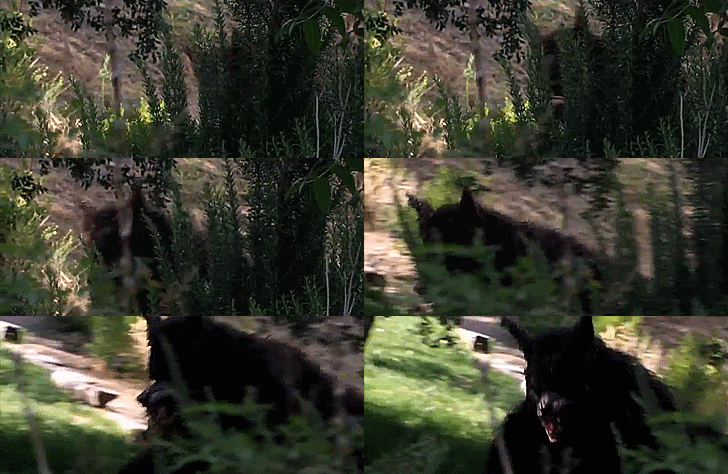
loup-garou-1
After some six months or a year, the creature disappeared without anybody knowing what had happened to it. About the same time, a similar beast was seen in the Sanvero woods near the village of Cornus in the Aveyron province; it almost managed eat a little girl that I was to know twenty-five years later; she was near her home in the village of Labadie, in the parish of St Rome Berlières ; her brother, older than her, rushed to her defence and grabbed her from the creature, he dragged her into the house ; through the cracks  in the closed door they could see the Beast watching and waiting for some time for the prey which had escaped, only by the skin of her teeth. Indeed, a bite from the creature had taken a considerable piece of skin from her side; this scar was never to fade throughout the rest of her life:

werewolf
Whatever this animal was, its appearance had an enormous impact throughout the whole area of the Black Causse. Uneducated people saw in the Beast something supernatural, especially after all the upheavals and ordeals of the recent Revolution.”

And there you have it. Yet another wolf that seems to be not quite a wolf. At the moment, I am favouring the idea that up until about two hundred years or so ago, there was a second, much fiercer and larger species of wolf living in the remote and most mountainous areas of France, some prehistoric survivor that had lingered on until the nineteenth century in ever diminishing numbers, until, after tens of thousands of years, it finally became extinct. I cannot believe that the locals were incapable of recognising an ordinary wolf when they saw one. I cannot believe either that wolves were hybridising with dogs across the whole of France to produce killer hybrids. Wolves don’t have steamy affairs with dogs. They eat them!

15 Comments

Filed under Cryptozoology, France, History, Science, Uncategorized, Wildlife and Nature

Anthony Bertram Lloyd

Corporal Anthony Bertram Lloyd was born in Staffordshire. He was the son of Bertram Harold Lloyd and Ada Lloyd, of Penarth in Glamorgan. He was a member of the High School from 1932-1939.

Tony had an:

“unswerving loyalty to the school, which he had revisited on several occasions during his military service…he was always in any mischief that was going, but under a seeming cloak of irresponsibility, there lay a deep respect for law and order…here was a comrade to have at one’s side in an emergency, a fellow whose courage steadied the nerves, and whose unfailing good humour showed a ray of hope in the blackest of moments”.

At school, not surprisingly perhaps, Tony was a promising boxer.
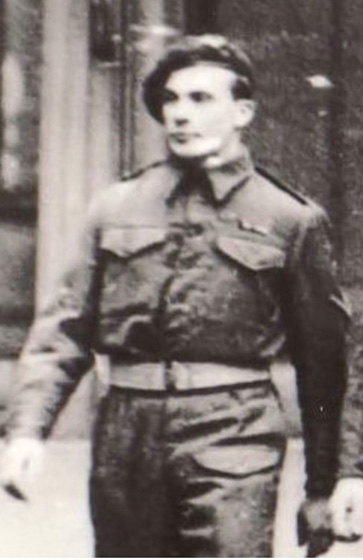
Shortly after war broke out, Tony enlisted into the Royal Welch Fusiliers and was serving with the 10th Battalion RWF when it began airborne duties in August 1942. Here he is, looking very dashing:

lloyd para

The Battalion was renamed the 6th (Royal Welch) Parachute Battalion and was incorporated into the 2nd Parachute Brigade. In early 1943, some of the 6th (Royal Welch) Parachute Battalion were engaged in fighting Axis forces in North Africa, during Operation Torch. On March 5th the Brigade handed this sector over to the Americans and moved eastwards to Tunisia.
On March 8th, a German force of divisional strength attacked the defensive positions of the 1st and 2nd Battalions. It was at this time that Anthony was awarded a Military Medal for his bravery:

“On the 8th March 1943 in the Tamera Sector, Tunisia, Private Lloyd was a member of a counter-attack Company. During the advance Private Lloyd and two other men became separated from their platoon. They came under heavy machine gun fire and Private Lloyd ordered the two men to cover him while he himself attacked the post. He charged over country showing a complete disregard for his own safety and succeeded in capturing the machine gun post and three men. By this act of gallantry Private Lloyd prevented severe casualties being inflicted to the Company which was advancing.”

On March 28th 1944, Tony was one of ten soldiers of the 1st Battalion who received their Military Medals at Buckingham Palace, all of them awarded for bravery in North Africa. It certainly looks to be a great moment when, with a group of your parachuting colleagues, you leave the Palace after the King has given you all a medal each:

receiving medals

Here is Tony, enlarged through the magic of Photoshop:

lllloyd 2

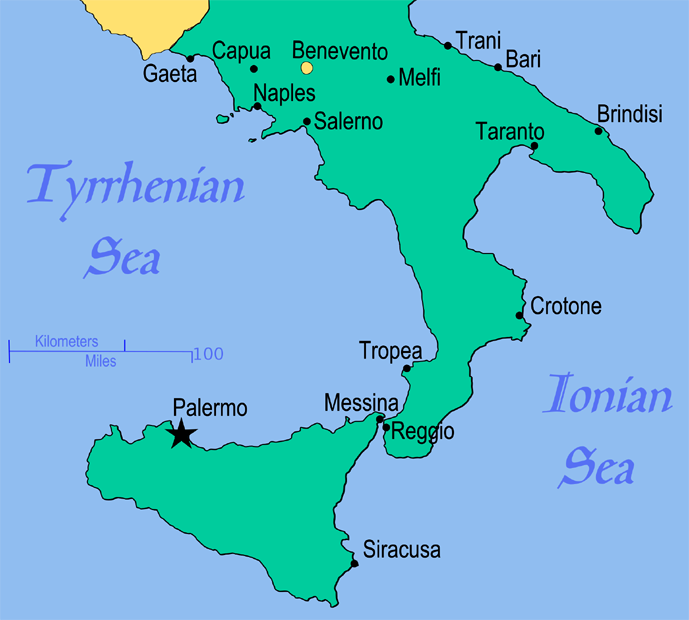
Once Generalfeldmarschall Rommel was defeated and North Africa was won, Tony was engaged in heavy fighting in Sicily, the island off the toe of Italy. Once Sicily was secured, he was part of the sea-borne landings at Taranto in mainland Italy in September 1943. Pushing north, they fought their way to Foggia before they were taken out of the line to return to the United Kingdom to prepare for D-Day:

2000px-Kingdom_of_Sicily_1154_svg

On Sunday, September 17th 1944, as the Allies pushed north eastwards, their bravery was again put to the test as the Battalion jumped onto Renkum Heath in an attempt to capture the Rhine crossings at Arnhem, the so-called, “Operation Market Garden”. By this time Tony was the Second in Command of 8 Section, No 11 Platoon, T Company.
Tony and his fellow parachutists suffered severe casualties around Den Brink and the Queen Elizabeth Hospital as they tried to rescue the 2nd Battalion who had been cut-off and surrounded at the bridge at Arnhem, the famous “Bridge too far”. Eventually however, Tony, along with the survivors of the 2nd Battalion, was forced to retreat to the Division perimeter which was by now surrounded and besieged at Oosterbeek.

1 para busy
It is believed that Tony was wounded in the fighting at Oosterbeek, in the area near the Regimental Aid Post at Kate ter Horst’s house. Unfortunately, Tony died from his wounds and he was one of 57 parachutists given a temporary burial in mass grave in the house’s garden. Tony was only 21 years old when he died on September 26th 1944.
Many years later, on March 18th 2010, an appeal appeared in the “Penarth Times”. It was from R R Tolhurst (Lofty), who had borrowed a picture from H Rowan, of T Troop, the 1st Parachute Battalion. He was in the same trench, right next to Tony Lloyd when the latter was killed. Earlier, Tony had taken a photo of H Rowan, busily engaged in shooting at German soldiers. After Tony’s death, it managed to make its way back to Penarth in Wales. In a wonderful magnanimous gesture however, Tony’s parents, Harold and Ada, sent it on to H Rowan after the war, presumably because it showed him on the photograph rather than their own son. Photographs taken in the heat of battle are not common, but any which are taken by soldiers rather than official war photographers are extremely rare. Here is the photograph:

corner street

Corporal Anthony Bertram Lloyd MM was, by anybody’s standards, a real hero. He had spent most of his time during the war performing the same deeds of brave derring-do that boys in the 1960s used to read about in their comics such as “Victor or “Valiant”.

hurricane

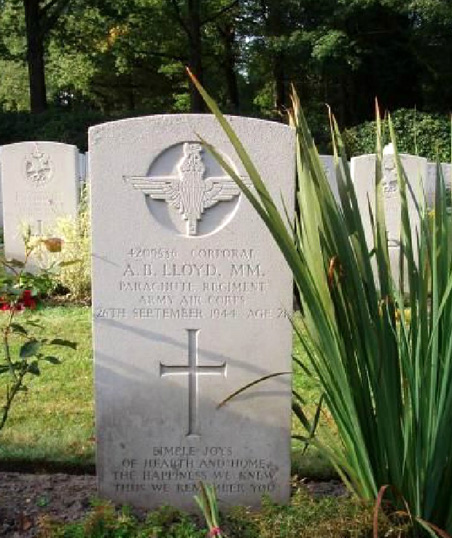
Tony now lies in Oosterbeek War Cemetery in Arnhem, the town he fought so bravely to liberate from Nazi occupation. People throughout the whole of Holland are now completely free to live their lives exactly as they wish, thanks to Tony Lloyd, and his countless thousands of brave companions :

grave

The inscription reads:

“Simple joys

of hearth and home,

The happiness we knew

Thus we remember you”

I could not have written this article without the help of these two websites.


21 Comments

Filed under Aviation, History, Nottingham, The High School

“Go straight to Hell ! Do not pass Go ! ” Part One

Having explored the history of the High School for more than twenty five years, I have always thought that the school’s beginnings are shrouded in mystery. For me, the High School has always been very like the Soviet Union:

“a riddle, wrapped in a mystery, inside an enigma”

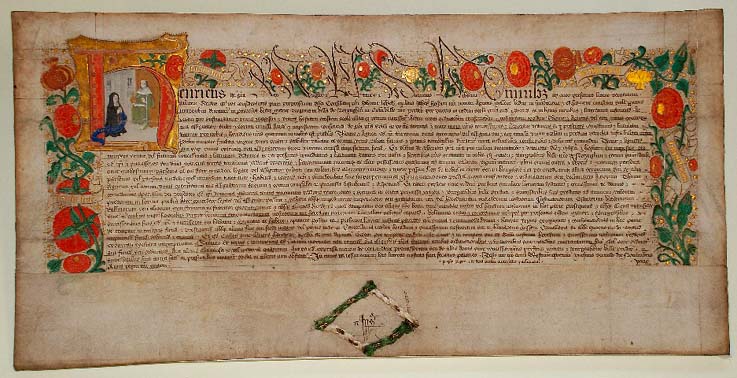
What do we know about the founder of the school, Dame Agnes Mellers, for example? What was she like as a person? There are a very few illustrations which are thought to be her. This is the school’s charter:

charter

And here is a close-up of Dame Agnes and King Henry VIII:

charter001

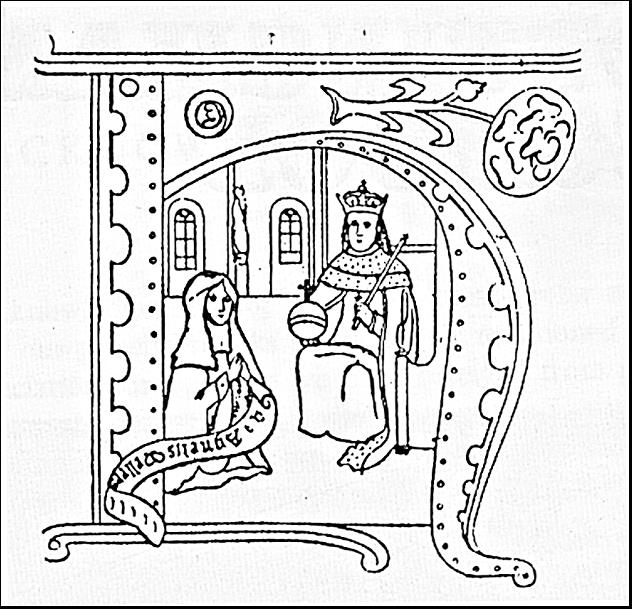
This is the charter changed into a line drawing:

agnes

For me, there have always seemed to have been two enormously important motivating forces in her character. The first was her staunch religious faith as a Roman Catholic with a sincere love of Jesus Christ and the Catholic Church. Dame Agnes seems in many ways to have been an uncomplicated soul, who viewed the world in a simple direct way. She tried to be a good person, with the sincere belief that we should all try to make things better rather than worse, that we should do good things rather than evil and that we should always strive to be on the side of the Angels.

The second motivation for her was the love she had for her husband, Richard, which seems as sincere and unswerving as her love for the Church. Richard was, as his name suggests, a rich man. He was at one time or another, Sheriff of Nottingham (1472-1473), Chamberlain (1484-1485) and Royal Commissioner and Mayor of Nottingham (1499-1500 and again in 1506). In 1499, he is known to have given twenty shillings to help repair the Hethbeth Bridge, as Trent Bridge’s predecessor was called. Here is one of the last photographs ever taken of the old bridge before it was superseded by the present Trent Bridge. You can certainly see why it was easier for the river to freeze up in those days:
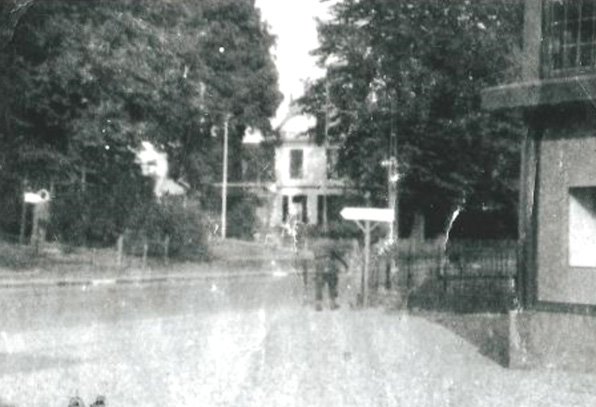
old-trent-bridge-1871xxxxxxxxxxxxxxxxx

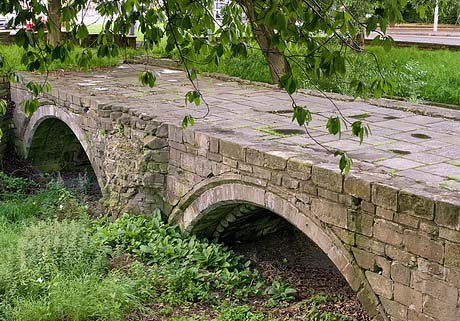
This is all that remains of the Hethbeth Bridge nowadays:

771942beth heth xxxxxxxxxxx

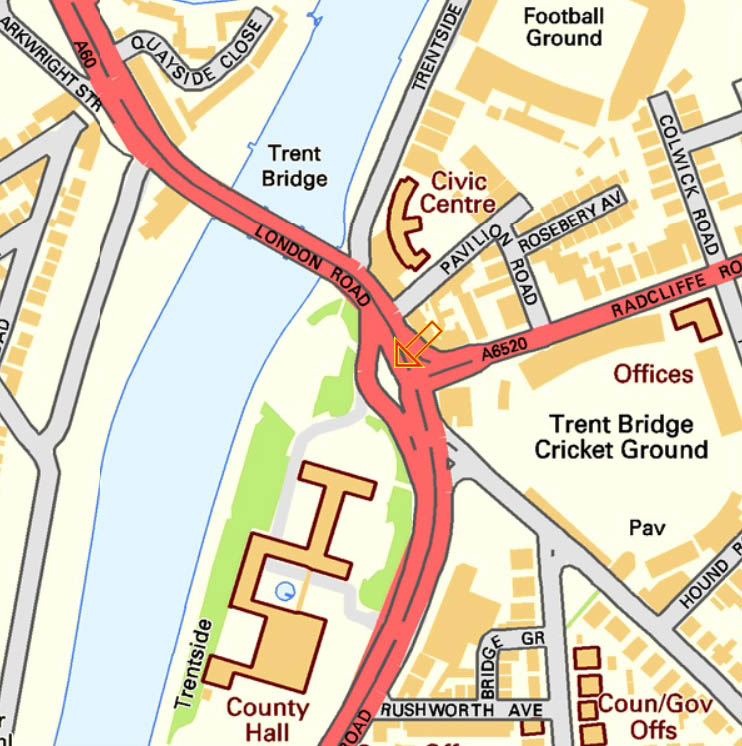
It is in the middle of a road island to the south of Trent Bridge. If you decide to take a look at it, be very careful of the traffic and use the proper crossings. Look for the (camouflaged) orange arrow in the centre of the (red) road junction:

trent

Richard Mellers was a brazier, and probably a potter, and he had certainly dealt in metal pots and dishes. Most important of all, he owned the largest church bell-foundry in the region. The site of his premises has long disappeared, but its exact location is still known today.

From 1888 onwards, just a very few yards north of the city centre, steps began to clear away:

“a curious V-shaped slice of slum property…a most unhygienic and immoral neighbourhood and nothing good could be said for it”.

This slum clearance took a number of years, and resulted in the formation of King Street and Queen Street, the latter being opened on June 22nd, 1892.

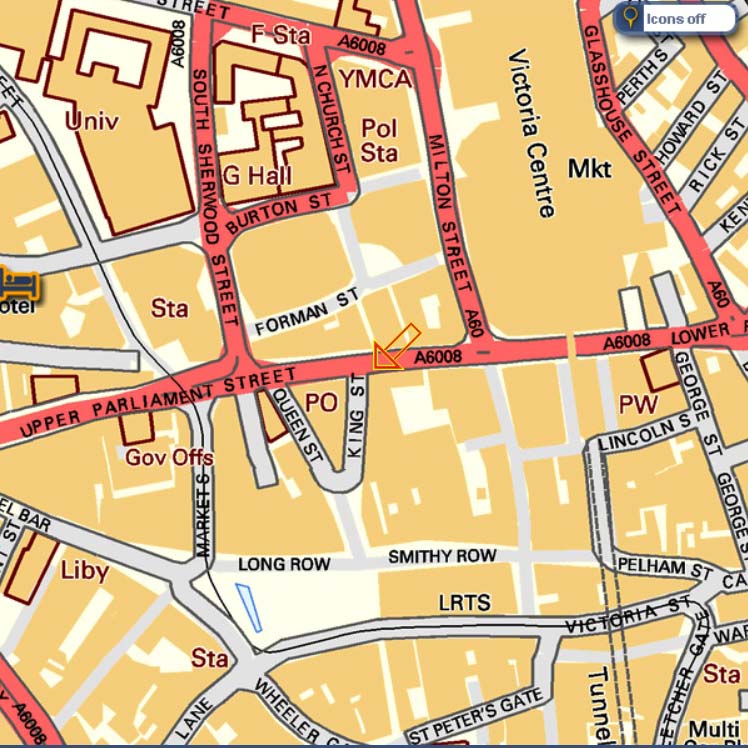
During this time, it was inevitable that, along with all the slums and all the undesirable features, a few other more reputable premises were destined to disappear. Among these was Richard Mellers’ Bell Foundry, which is known to have stood more or less exactly on the site of the present day Queen Street Post Office. The orange arrow points to the general area, and the letters PO stand for the purple edged Post Office:

king street

Perhaps it was working so close to such an “immoral neighbourhood” that deflected Richard away from the straight and narrow. He had, for example, already paid out £20 to be the Mayor of  Nottingham for twelve months. There wasn’t really much of the democratic process involved here, or indeed, much evidence of any genuine interest in the workings of democracy. That payment of £20, a rather sizeable sum of money by modern standards, may well have been the reason that, in the very same year, Richard had been so keen to do a good deed by paying  for the upkeep of the ever ailing Hethbeth Bridge.

Richard was certainly widely known as a fairly unscrupulous businessman. During his lifetime, in his efforts to acquire great personal wealth, he certainly seems to have cheated many of his bell buying customers. In 1507, for example, we know that Richard had received a pardon for having committed offenses against the statutes of weights and measures. This charge is believed to have related to problems with the purity of his bells and the metal they contained. The pardon would only have been granted because of his previous position as Mayor of Nottingham. A less prestigious person would have been in very, very, serious trouble. These bells, though, are all 100% the real peal:

100911_Lowell_bells_147.jpg

To be continued……………………….

13 Comments

Filed under Criminology, History, Humour, Nottingham, The High School

When the mighty Trent turned into a tiny stream…

In a couple of previous articles, I have mentioned two different extremes of weather at Trent Bridge, namely freezing ice and snow and then, quite frequently straight afterwards, horrific floods, when a sudden melt of huge snowdrifts overfills the river. Such a sequence of events may raise the water level by twelve or fifteen feet above normal and increase the rate of flow to a situation when 45,000 cubic feet of floodwater go past the bridge every second, as opposed to the more normal figure of 3,000. What I have not mentioned so far though, is a complete lack of rainfall and the consequent drought.

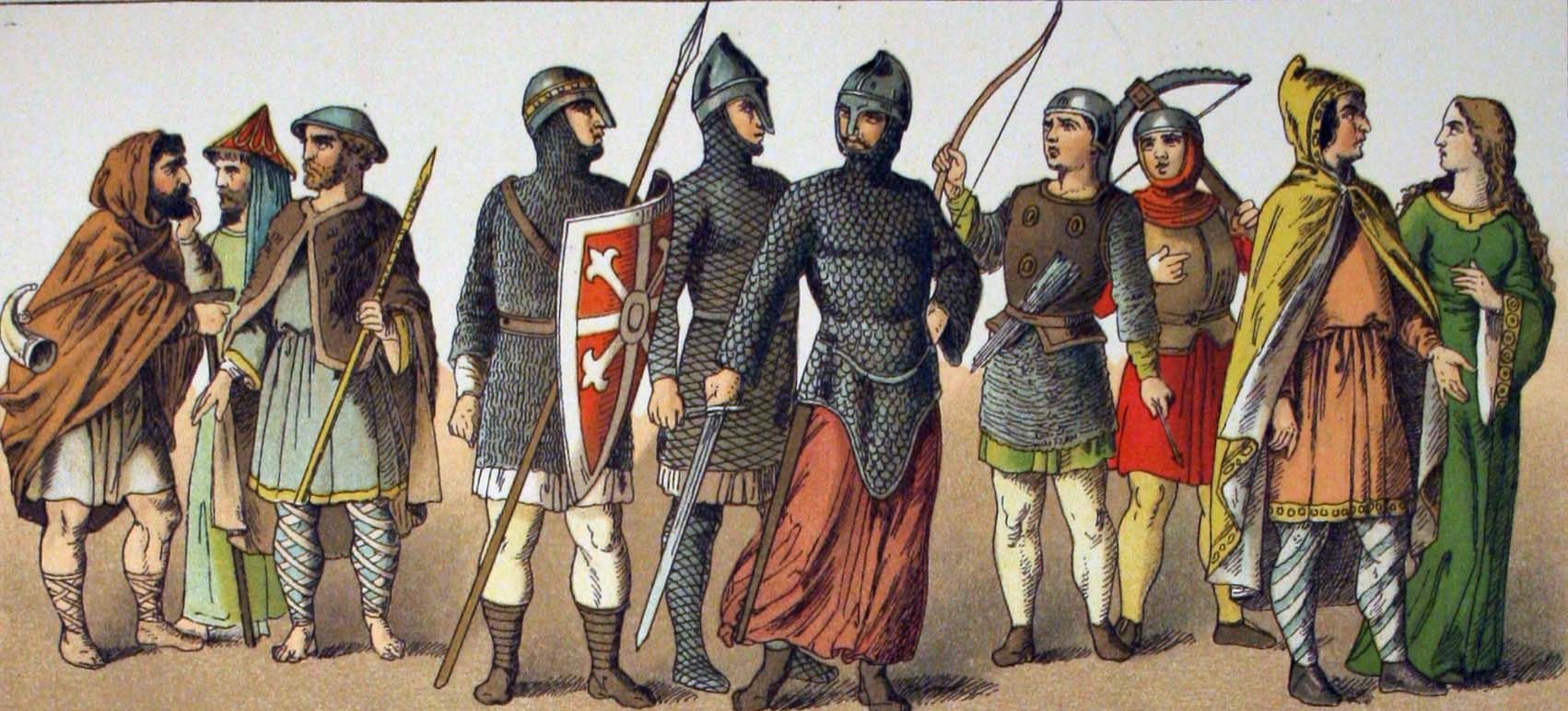
Almost a thousand years ago, in 1101, Nottingham experienced a terrifying earthquake. Here are some people in 1100. Can you spot Robin Hood? (He is wearing a cunning, yet comfortable disguise in his traditional Lincoln Green.)

1000-1100,_Norman_

Bizarrely, once the earthquake had stopped, the River Trent dried up and then ceased to flow for several hours, presumably as it drained into, and then eventually filled up, a huge crack or cavern in the ground that the earthquake had created somewhere upstream from Nottingham. Once that was done, the waters returned to normal.  Another source gives the date of this amazing event as 1110 and says that the River Trent was dry at Nottingham for 24 hours. Strictly speaking, though, that is not a genuine bona fide drought.

Two hundred years or so later though, in 1354, the weather was extremely dry in the whole of England:

“This year, the country was affected with a great drought, in which Nottinghamshire, from its peculiar geographical position, suffered extremely; in both Nottinghamshire and Derbyshire no rain had fallen from the latter end of March until the close of July.”

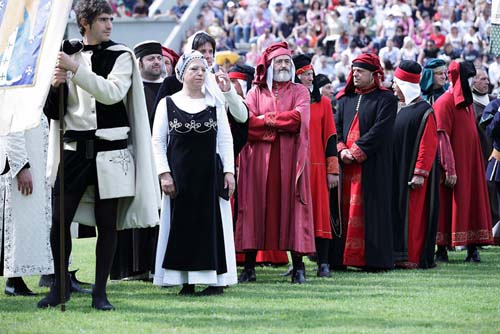
It is difficult to believe that this prolonged lack of rain would not have affected the amount of water flowing under Hethbeth Bridge. Here are some people in 1354. It looks like the start of a football match to me:

participants in mediaeval costume on field at the Corsa all'anello in Narni Umbria

The four years of 1538-1541 produced extreme drought throughout the whole country, with three successive fine and hot summers from 1538-1540. In the latter year, cherries could be picked and eaten by the beginning of June. Grapes were ripe by early July. Both 1540 and 1541 were exceptionally dry years overall, and in both summers, the River Thames was so low that sea water backed up above London Bridge. It would be interesting to know what effect such amazingly hot and dry weather must have had on the River Trent. Here are some people of this period, waiting for a shower of rain, but looking a little worried that global warming has perhaps started five hundred years too early. I wouldn’t have liked the hat with the feather:

tudor

That dry summer of 1540 was the warmest until 2003, and countries in Western Europe christened it the ‘Big Sun Year’. Very high temperatures prevailed from Germany to the Netherlands and no rain fell in Rome for at least nine months. Many people died of heat stroke and heart failure. Reportedly the waters of the River Rhine were so low that the river could be crossed on horseback. People could walk across the River Seine in Paris without getting their feet wet. In England during these four years:

“rivers and streams were drying out in parts. A remarkable series of droughts, with a burning sun during the summer”.

In 1541:

“At Nottingham a remarkable drought; almost all the small rivers dried up, and the River Trent diminished to a straggling brook. Many cattle died for want of water, especially in the county of Nottinghamshire, and many thousands of persons died from grievous diarrhoea and dysentery.”

“Trent a straggling brook”

I could not find any pictures of the Trent as a “straggling brook”, but this is close. And no, the hot weather did not attract any elephants to Nottingham:

elephsnts

Forty years later, in 1581 the River Trent apparently “dried up completely” but further details of this event are not very much in evidence, beyond the rather strange date when it was supposed to have occurred, supposedly December 21st. Perhaps a build up of ice higher upstream brought the river’s flow to a stop.

Ten years later, in 1591,

“A severe drought destroyed practically all the crops and vegetation in the areas around Nottingham. The rivers Trent and Erewash, plus other rivers, were almost without water.”

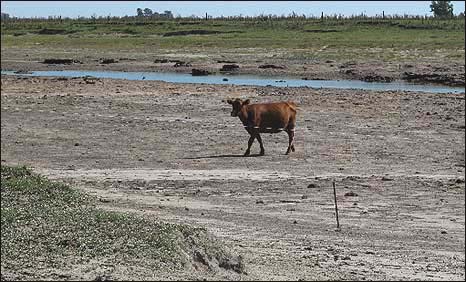
People actually remarked how like Texas the landscape had become:

cow

There was another “uncommon drought in Nottinghamshire” in the spring of 1592. In the summer there were strong westerly winds to dry the land even further, and hardly any rain fell.

“The Trent and other rivers were almost without water. In summer, the Thames was so shallow that horsemen could ride across near London Bridge & the River Trent was also said to be almost dry.”

This is the old London Bridge of this period:

london bridge zzzzzzzzzzzzzzzzz

After this, there is then a hiatus of some three or four hundred years until the twentieth century. I have been unable to trace any other noticeably dry periods during this intervening time. The next striking piece of dry weather comes in the mid-1970s, with an absolutely scorching summer in 1975. This initial heat and drought was followed by a very dry winter, and then the unforgettable drought conditions of the summer of 1976. These periods of extreme weather saw the River Trent during the end of the month of August 1976 at its very lowest level in modern times. Indeed, this summer produced what was called the Great European Drought with the lowest soil moisture readings in London since 1698.

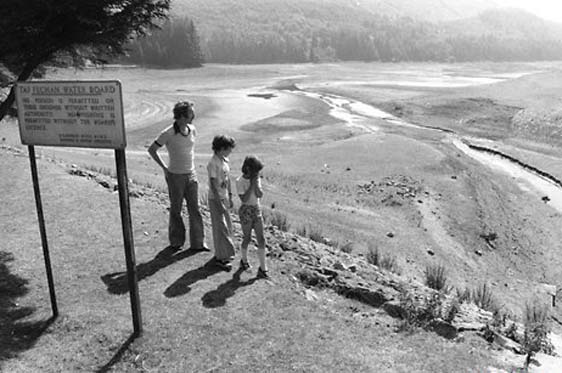
Unfortunately nobody in Nottingham seems to have thought of preserving this amazing weather with their camera. Instead, I will just show you one or two typical scenes. Here is an unknown reservoir which should have been a vast lake. Flap those flares:

_72775633_1976-drought

Here is a reservoir at Huddersfield in Yorkshire:

hudd ressser

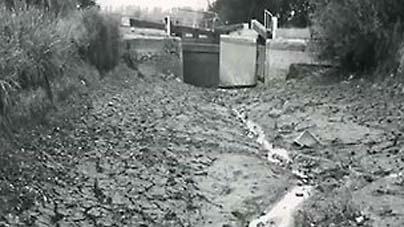
Here is a lock on what should have been a brim full canal:

foxton lock

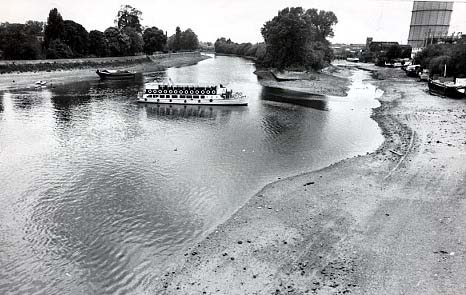
This is the River Thames at Kew near London. The River Trent at Nottingham would presumably have been comparable:

r thames kew

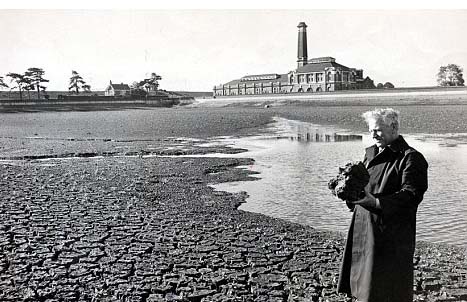
And finally, here is Walton Reservoir in Surrey, being monitored by the least appropriately dressed man in 1976:

reser at walton thsame ssurrey


11 Comments

Filed under History, Humour, Nottingham, Wildlife and Nature

The Face of Madness

Not all damage in war is physical. It can be mental and it can last a lifetime.

10 Comments

Filed under Uncategorized