Category Archives: Bomber Command

Poems in “The Nottinghamian” 1922-1946 (2)

Last time I showed you some of the poems which were published in the school magazine, the Nottinghamian, during the period of 1922-1946, although, to be honest, most of them were about the Second World War. Many of the poems are of a remarkably high standard, and give us quite an accurate snapshot of how boys saw events unfolding in an increasingly terrifying adult world.

During the war, countless thousands of children from British cities were evacuated to the peaceful countryside. Frank Alan Underwood of 51 Charnock Avenue, Wollaton Park, wrote this first poem, “Evacuated”, which appeared in April 1942. Frank was the son of a lecturer at the University of Nottingham. He left the High School in July 1943. He went to university with a State Bursary for Science:

EVACUATED

O for the City Smells once more,

For the asphalt under the rain,

For the harsh, unceasing, clanging roar

Of city streets again.


I am tired of cows and senseless sheep :

All is too quiet to let me sleep ;

But think of the harsh-hushed city din

That comforts me as sleep steals in.

I don’t know whatever happened to Frank, although I did find that a paper entitled “Textures in Metal Sheets” was issued in 1962 by Dr FA Underwood. Further googling yielded further results in the same field.

As the war dragged on, the shops seemed to have very little to sell. This is reflected in a poem entitled “Triolet” by Frederick Brian Perkins, a member of the Second Form A who lived at “Kingsley” in Egerton Road in Woodthorpe. His father was a timber merchant

What is a “Triolet”? Well, it’s an eight-line poem (or stanza) with a rhyme scheme of ABaAabAB. It is apparently very similar to a rondeau. Here’s one:

TRIOLET

In the shops nowadays,

There’s little to buy ;

We alter our ways ;

In the shops nowadays.

They have empty trays ;

And we all stand and sigh,

In the shops nowadays,

There’s little to buy.

The same tale of woe had been told by Donald Arthur Gospel of the Upper Fifth Form Classical in April 1942. Donald was the son of a departmental manager and lived at 70 Whitemoor Road in Old Basford:

VARIATIONS ON A WELL KNOWN THEME

Sing a song of chocolate:

The shoppers formed a queue,

Four and twenty people—

Soon everybody knew ;

When the shop was opened

The folk began to push ;

Now wasn’t that a silly thing,

To start another crush.


The profiteer was in his house,

Counting out his money ;

His friend was in the Black Market,

Selling jars of honey.

The folk were paying double

To have some extra cheese,

When off they went in a “Black Maria,”

Despite all their pleas.


In case you were unaware, this poem is a beautiful re-telling of the old nursery rhyme, “Sing a Song of Sixpence”:
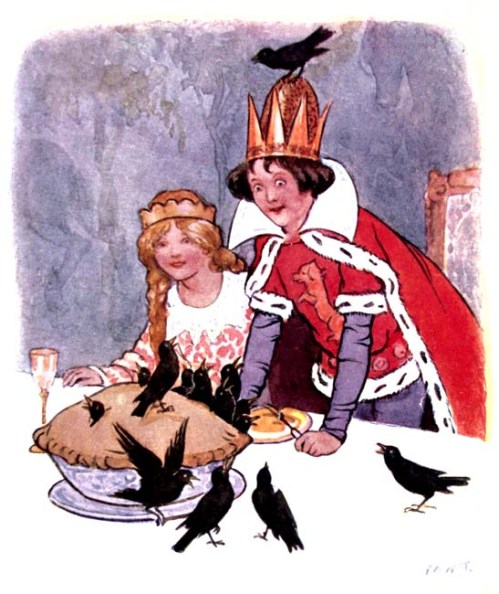
You can find the lyrics and a link to the video with the tune, HERE

Donald Gospel, our author, seems to have fought in the Indian Army in World War Two, moving from there in 1945 to be in the Sherwood Foresters and then the Queen’s Regiment in 1949. Donald passed away in 1995.

There was very little faith that there would be anything in the shops, or indeed, any end to the black marketeers, even eighteen months after the war’s end.

This poem was written by James Derrick Ward, born on December 19th 1933, who lived at 22 Windermere Road in Beeston. His father was the Chief Chemist in a Works Laboratory, possibly connected with one of the military depots at nearby Chilwell. The poem appeared in the Nottinghamian of December 1946. James left the High School in August 1950.

NOVEMBER 5TH, 1946

No squibs, no rockets,

Money in pockets

No fireworks in shop,

My spirits drop.

November.


No clothes for “Guys,”

Oh, hear my sighs !

No crackers leap,

My sorrow’s deep.

November.


No fiery wheels,

Nor thundery peals,

No happy night,

No bonfire bright.

November.

Fortunately, when victory had come almost eighteen months previously, there had been no shortage of fireworks in Moscow. Or people, if you look closely :

A lot of the High School boys had brothers or fathers in the forces. A rather pessimistic ditty occurs quite frequently in the Nottinghamian, with variations, regarding which particular branch of the forces and whether the location was the High School or a college at Oxford or Cambridge. Here we go. The first two refer to an Oxford or Cambridge college, where the main entrance is permanently manned by the college porters :

Nine little Undergrads, at the Porters’ Gate,

One is a sailor so now there are eight.”

And, a very similar poem:


Nine little Undergrads, at the Porters’ Gate,

One joined Bomber Command so now there are eight.”
But there is definitely one little poem which refers specifically to the actual High School in Nottingham:

“Nine Nottinghamians,

At the Forest Road gate,

One went to Bomber Command,

And then there were eight.”

And so on. And sadly, so true.



19 Comments

Filed under Aviation, Bomber Command, History, Humour, military, Nottingham, The High School

Two Old Nottinghamian brothers fighting fascism (1)

There is an interesting letter in the School Archives which begins:

“On December 10th 1988, my son, daughter and myself were visiting Nottingham to see my granddaughter who is at Trent University. We arrived on the Saturday morning, and found my old school, opposite the Forest but with locked gates. Then we suddenly noticed the gates opening. It was one of the teachers preparing to drive out before locking up. We were warm in our anoraks but although he was only wearing light clothes, this kind teacher offered to show us around the outside of the school buildings. The site of the former “Fives” court was, he told us, blocked by a newer building. Memories began flooding back.”

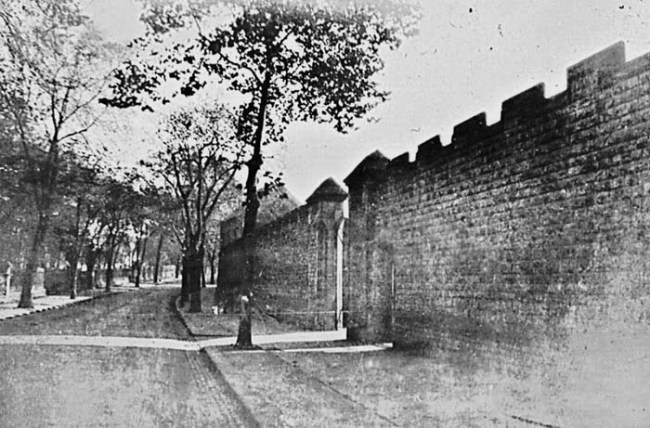
The writer was John T Jackson who left school in 1935 at the age of twelve. His father’s job was transferred to Birmingham and he and his brother transferred to Solihull Grammar School. Here are the school gates on Forest Road in 1932:

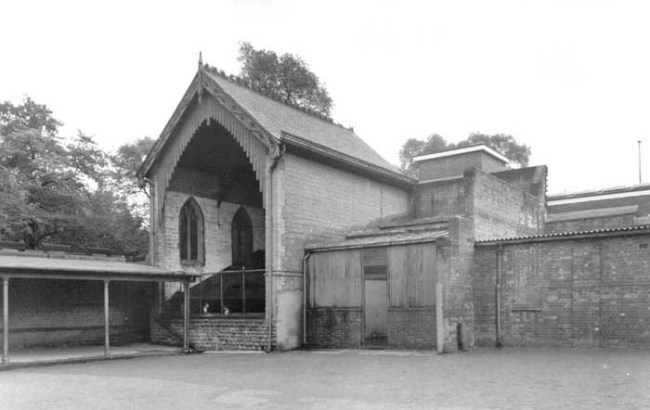
Here are the two fives courts, now replaced by the Sports Hall:

When young John Jackson attended the junior school, Mr Day was the headmaster. One day the boys were all taken outside to see the flight overhead of the new airship, the R101.

The buildings had not changed much as the little group all walked towards the front of the school. Mr Jackson remembered that the steps at the front of the school led to the Headmaster’s room. Then they saw the War Memorial. Mr Jackson had not realised that it would contain so many names. Over two hundred had died to halt fascism. He scanned the names, picking out his brother “Jackson RR”. He was very grateful to see this tribute to the courage and sacrifice that he and his fellow pupils had made.

Robert Renwick Jackson served in the RAF as a pilot in No 40 Squadron based at Chelmsford and flew on low level night intruder missions against enemy targets. In 1943 he was shot down in the coastal area of northern France. He and his observer are buried at Grandcourt in France:

After taking a few photos, John Jackson returned to his car, thanking the teacher for his kindness. When they found the gates locked they had been ready to accept that the best they could manage was to look from outside.

John Jackson had a far luckier war than his brother. He trained as a navigator in the RAF and was stationed at Kinloss in Scotland. His captain was Mac Hamilton, and they survived two tours in Bomber Command. After ten trips to Berlin with 619 Squadron, the whole crew volunteered to join 617 Squadron after Gibson’s successful raid on the dams. 617 was then commanded by Leonard Cheshire who had a precision way of marking targets with special bomb sights. They carried the Tallboy bomb weighing 12000 lbs and attacked special targets such as the U-boat pens, certain tunnels and canals, and rocket sites. Their last two operations were against the Tirpitz battleship. It took a total of three attacks to sink the Tirpitz.”

To be continued………..


6 Comments

Filed under Aviation, Bomber Command, France, History, military, Nottingham, The High School

Why no statue ? (2)

Last time, I talked of how men who were once famous but who had evil hidden deep in their souls can live on artificially through their statues. Without that statue, such men would soon be forgotten in the dustbin of history.

I would rather emulate John Hickenlooper, the Governor of Colorado, who, in 2014, told the descendants of those murdered by Colonel Chivington and his men at Sand Creek in 1864:

“We should not be afraid to criticize and condemn that which is inexcusable ……. We will not run from this history.”

And in 2015, construction of a memorial to the Sand Creek Massacre victims began.

And I certainly feel that, if there are people who do not want to have statues of these “dubious heroes”, who do not want to be reminded of their ancestors’ suffering, then so be it. And, by this method, such men will gradually fade away rather than be kept alive artificially by a statue.

An excellent example would be Werner von Braun. Operation Paperclip made him an American citizen, along with 1600 of his fellow scientists. These were the people who helped to mastermind manned space flight and the landing on the moon. An ordinary person might want a statue.

I can think of a few Jews who wouldn’t though. And Russians, and Poles or any other East European descendants of the ones who died, as tens of thousands of slave workers perished building concrete bunkers, blast proof shelters, and rocket launching ramps all over the island of Peenemünde. If these people feel strongly enough, then no statue.

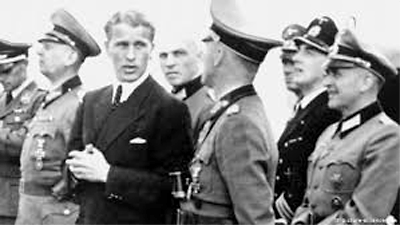
Back then, of course, von Braun was known as SS Sturmbannführer von Braun. And here is the SS Sturmbannführer with high ranking Nazis:

Here he is with the highest ranking Nazi of all. The SS Sturmbannführer is dressed as a civilian, middle of the next to back row:

This one is more difficult, but von Braun is behind Himmler, dressed up in his all black SS uniform:

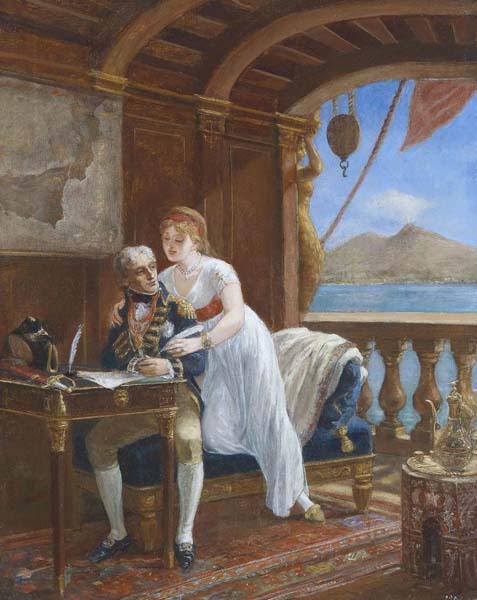
We’re not in the slightest bit short of people in this category. Lord Nelson was an excellent naval commander with a 100% belief in the British Empire. But by 1801, Nelson, already married to the unfortunate Mrs Frances Nelson, was living with another woman, Emma Hamilton. She was not his wife, and he shouldn’t have been living with her. In actual fact, she was the wife of one of his closest friends, Sir William Hamilton.

There will be a lot of men nowadays who will not be too bothered about Nelson’s little foibles, but I bet there are a lot of women who would not want a statue of him staring them in the face, especially in the nation’s capital city.

I wonder who bought more of these satirical jugs? Men or women?

High on the list of people from this period who have shocking sides to their character is Lord Byron, the Romantic poet. Not that he couldn’t knock out some famous poems when he put his mind to it:

She walks in beauty, like the night
Of cloudless climes and starry skies;
And all that’s best of dark and bright
Meet in her aspect and her eyes”

Or, perhaps more famous, “The Destruction of Sennacherib”

“The Assyrian came down like the wolf on the fold,
And his cohorts were gleaming in purple and gold;
And the sheen of their spears was like stars on the sea,
When the blue wave rolls nightly on deep Galilee.

Like the leaves of the forest when Summer is green,
That host with their banners at sunset were seen:
Like the leaves of the forest when Autumn hath blown,
That host on the morrow lay withered and strown.”

Lord Byron, though, ought to encounter a great deal of difficulty having a statue erected to him, and I don’t mean just his dress sense:

George Gordon Byron, the Sixth Baron Byron, was allegedly England’s greatest poet. Yet, it has been written that “By our own modern standards he was probably a paedophile and certainly a rapist, at least of the statutory kind.”

The evidence for these charges include the fact that Byron had an infatuation with a shapely fifteen year-old Greek boy, Lukas Chalandritsanos and spent enormous sums of money on him.

He had already had an incestuous relationship with Augusta Leigh, his own half-sister. Here she is:

Augusta gave birth to Elizabeth Medora Leigh, who was widely thought to be Byron’s child. Three days after the birth, Byron visited Augusta and the baby. He reported later to a friend, Lady Melbourne:

“It is not an Ape and if it is – that must be my fault.”

There was a widely held belief at the time that a child born of incest would be an ape.

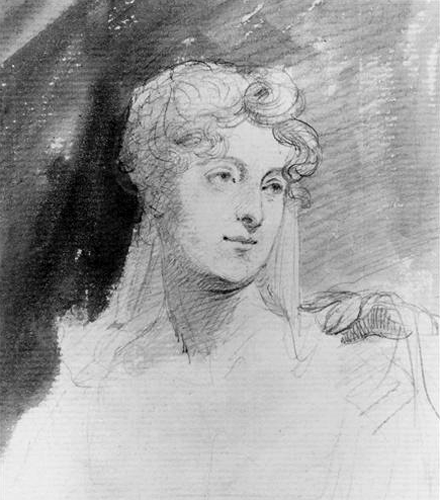
Byron’s wife was Anne Isabella Noel Byron, 11th Baroness Wentworth and Baroness Byron, Here she is:

Evidence from a servant says that Byron raped his wife only days before she gave birth to their daughter, Ada. And then he raped her again only days after she had given birth.

In those days, of course, a husband could not be refused by his wife. What would now be considered rape was just a gentleman exercising his conjugal rights. But by today’s standards, actions like that are repulsive, especially so soon either before or after the poor woman has given birth.

Byron’s appalling arrogance was equally in evidence in his love affair with Claire Clairmont. Here she is:

Claire gave birth to a daughter, Allegra, but Byron immediately forbade her all access to her child, whom he sent away to a convent. She died there aged five.

And to think that I criticised the baddies in the TV series “Poldark” as not being true to life!

20 Comments

Filed under Aviation, Bomber Command, Criminology, History, Humour, military, Politics, Science, war crimes

What would you do ? (12) The Puzzle

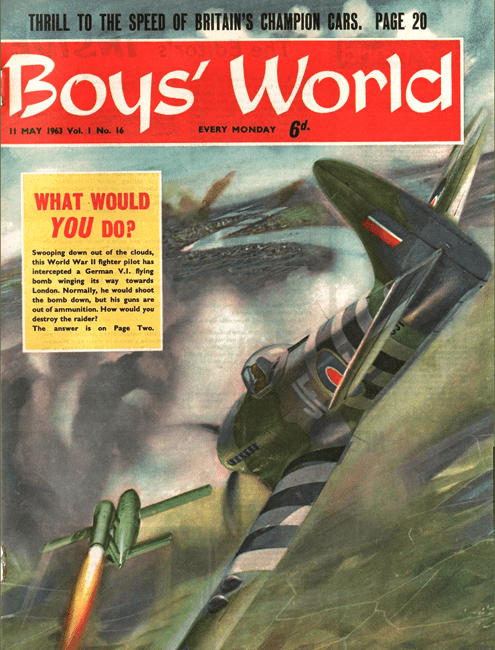
“What would you do ?” used to figure on the cover of a boys’ comic called “Boys’ World”. This was a publication, obviously, aimed at boys and first appeared on January 26th 1963. There were 89 issues before the comic was merged with Eagle in 1964. The last issue of “Boys’ World” came out on October 3rd 1964.

I used to buy “Boys’ World”, and this was mainly for the front cover which always featured a kind of puzzle. It was called “What would you do ?” and was based on somebody being in what Ned Flanders would call “A dilly of a pickle”:

Here’s the situation:

The yellow box sets the scene, and the task is for you to solve the situation. Perhaps you might like to write your idea in the “Comments” section.

Here’s the yellow box enlarged:

So…..a V.1 flying bomb, a “doodlebug”, as they were nicknamed by the people of London. You have to destroy it but your  Hawker Tempest V has run out of ammunition’

I think I can guess the answer, but be very careful. There’s a whole ton of explosives on board that Vergeltungswaffe Eins. So much for the indiscriminate bombing of women and children!

25 Comments

Filed under Aviation, Bomber Command, History, military

The Supermarine Walrus (4)

Last time, we looked at how practically no provisions whatsoever were made in 1940 to rescue RAF fighter pilots who were forced to bale out over the sea:

“A passing ship is bound to pick them up, and pretty damn speedily at that, don’t you know, what ? what?”

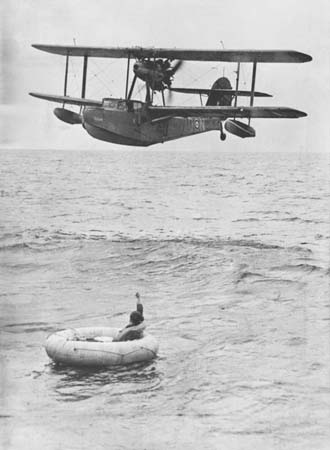
During the Battle of Britain, Flight Lieutenant RF Aitken of the RNZAF was so disturbed by the death rates among his fellow fighter pilots that he actually “borrowed” a Supermarine Walrus flying boat from the Fleet Air Arm. During this period of grotesque complacency on the part of the RAF top brass, Flight Lieutenant Aitken,  despite working single handed, managed to rescue thirty five British and German flyers from The Cruel Sea during the summer of 1940.

The situation though, did not really improve. Twelve hundred British airmen went “into the drink” between February 1941-August 1941. Of these 444 were picked up by the British. 78 were picked up by the German Seenotdienst and 678 were not picked up by anybody whatsoever and they all died. Every single one. It was lucky that their training cost so little.

At official levels, it was only on August 22nd 1940 that an emergency meeting was held under the chairmanship of Air Marshal Sir Arthur “Bomber” Harris to explore the shortcomings of air sea rescue provision.

And thus, from September 1941 onwards, the Air Sea Rescue Directorate became functional and gradually the RAF began to use the Supermarine Walrus more widely from coastal land bases as an Air Sea Rescue aircraft.

By the end of the war things had improved out of all recognition. The RAF now possessed not eighteen but 600 high speed rescue launches and numerous squadrons of specialist aircraft.

Even so, results were nowhere near 100%.

Many crews did not ever rescue anybody in all their years looking for stranded airmen. Some never found even a single dinghy. Worse still, some only ever found empty dinghies.

Some crews only ever found corpses, men frozen stiff with the cold, dead from exposure or any of the other conditions likely to occur in a dinghy which, for some reason best known to the top brass, did not have a covering of any kind and was completely open to the elements.

Old Nottinghamian, John Harold Gilbert Walker (1918-1942), died in this dreadful way. He was shot down in his Spitfire over St Omer, and four days later, the dinghy and his lifeless body were found, a mere eight miles south of Dungeness. John was only twenty three years of age and he had died of exposure waiting in vain to be rescued.

John’s remains were returned to his family in Nottingham and he was interred in the cemetery of St Leonard’s Church in Wollaton on May 19th 1942. If you’re ever out that way, go and put a few flowers on his grave.

34 Comments

Filed under Aviation, Bomber Command, History

In the Footsteps of the Valiant (Volume Three)

There must have been many people out there who thought that we were not going to publish any more volumes about the Old Nottinghamians of all ages who sacrificed their lives in the cause of freedom between 1939-1948.

But, while Covid-19 seized the world in its deadly grip, our work continued, albeit at a slower pace. And all those efforts have now ended with the publication of the third volume, detailing 24 of the High School’s casualties in World War II. Don’t think, incidentally, that we were running out of steam and had nothing to say. All five volumes have been deliberately constructed to contain the same amount of material as all of the others. And that material is all of the same quality.

This volume, therefore, portrays the families of these valiant young men, their houses, their years at school with Masters very different from those of today, their boyhood hobbies, their sporting triumphs and where they worked as young adults and the jobs they had. And all this is spiced with countless tales of the living Nottingham of yesteryear, a city so different from that of today. And as I have said before, “No tale is left untold. No anecdote is ignored.” Here are the teachers that many of them knew;

And as well, of course, you will find all the details of the conflicts in which they fought and how they met their deaths, the details of which were for the most part completely unknown until I carried out my groundbreaking research.

These were men who died on the Lancastria in the biggest naval disaster in British history or in the Channel Dash or in the Battle of the East coast when the Esk, the Express and the Ivanhoe all struck mines. Some died flying in Handley Page Hampdens, or Fairy Barracudas, or Hawker Hurricanes, or Avro Lancasters or Grumman Wildcats or even a North American O-47B. One casualty was murdered by a German agent who sabotaged the single engine of his army observation aircraft. One was shot by the occupant of a Japanese staff car who was attempting to run the gauntlet of “A” Company’s roadblock. One was the only son of the owner of a huge business that supported a small local town, employing thousands. When the owner retired, the factory had to close. He had no son to replace him. His son lay in a cemetery in Hanover after his aircraft was shot down. Thousands of jobs were lost. And all because of a few cannon shells from a German nightfighter. The work of a few split seconds.

They died in the Bay of Biscay, the Channel, the North Sea, Ceylon, Eire, Germany, Ijsselstein, Kuching, Normandy, Singapore, Tennessee. None of them knew that they were going to die for our freedoms. And certainly none of them knew where or when.

But they gave their lives without hesitation. And they do not deserve to be forgotten. That is why this book exists, and so does Volume One, and Volume Two and in due course, so will Volumes Four and Five.

We should never forget this little boy (right), playing the part of Madame Rémy, and killed in Normandy not long after D-Day:

We should not forget this rugby player, either, killed in a collision with a Vickers Wellington bomber.

We should not forget this young member of the Officers Training Corps (front row, on the left). A mid-upper gunner, he was killed in his Lancaster as he bombed Kassel, the home of at least one satellite camp of Dachau concentration camp:

We should not forget this young miscreant, either, mentioned in the Prefects’ Book for “Saturday, October 20th 1934. “Fletcher was beaten – well beaten.” By June 23rd 1944, though, he was dead, killed with twelve others when two Lancasters collided above their Lincolnshire base. He wanted to have a chicken farm after the war. Not a lot to ask for, but he didn’t get it:

We should not forget the Captain of the School, killed when HMS Express hit a German mine:

We should not forget the son of the US Consul in Nottingham, the highest ranked Old Nottinghamian killed in the war:

And we should not forget any of the others, wherever they may turn up. Killed by the Japanese in Singapore :

Killed in a road block firefight in Burma:

And this little boy, still years from being shot down on his 66th operational flight  by Helmut Rose, in his Bf109, German ace and holder of the Iron Cross First Class. And yes, that is the little boy’s Hawker Hurricane:

This slideshow requires JavaScript.

The First XV player, proud of his fancy jacket:

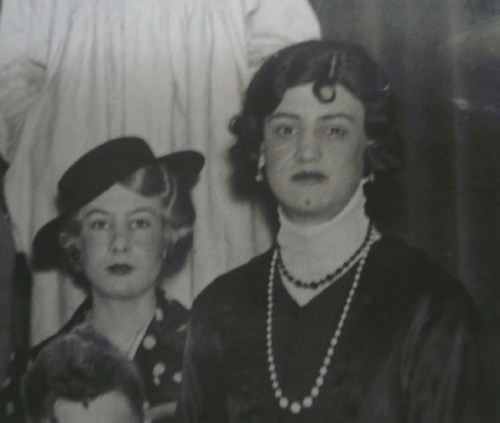
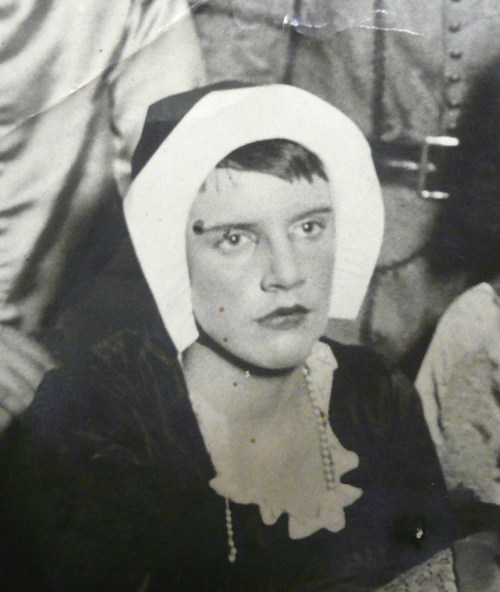
A young man tricked into having to dress up as a young woman in “Twelfth Night”:

Two years later, getting a part  as “Jean, a veritable Hercules….a convincing rural chauffeur”, in “Dr Knock”. Except that all of your friends think that you have got the part of the village idiot:

And a very frightened village idiot at that.


Please note:

All three of the titles published in this series so far are on sale with both Amazon and Lulu.  All royalties will be given to two British forces charities, and if this is important to you, you will prefer to buy from Lulu. This will generate a lot more revenue.

For example,

If Volume 3 is bought through Amazon at full price, the charities will get £1.23 from each sale.
If Volume 3 is bought through Lulu, that rises to £9.48.

Incidentally, if you see the price of the book quoted in dollars, don’t worry. The people at Lulu periodically correct it to pounds sterling, but it then seems to revert to dollars after a few days, although nobody seems to know why.


23 Comments

Filed under Aviation, Bomber Command, cricket, Football, History, military, Nottingham, The High School, the Japanese, Writing

Len Dorricott (3)

Last time, I was talking to you about Len Dorricott, who had flown a large number of missions as the navigator in one of the most famous Avro Lancasters of World War Two,  AR-G, G for George, of 460 Squadron of the RAAF. The vast majority of what you read, though, was written not by myself, but by Len’s wife, Rosemary. And meeting her future husband, apparently, was not Rosemary’s first encounter with the Avro Lancaster and the men who flew them.

She had actually had a much earlier connection with Lancaster aircrew. Here she recalls her childhood, and in particular the wonderful sights and sounds which were there at the end of her garden:

“Rosemary Dorricott : Childhood Memories Aged Nine

We stood in the garden in silence—and waited as dusk grew near—then the heavy throbbing of engines broke into the tranquillity of a summer’s night:

It was wartime—a time of austerity and uncertainty but the beautiful summer’s air belied the horrors of what war could bring!

Those heavy engines roared over our heads.

It was hard to believe those beautiful, graceful machines could be the bearers of destruction—but that was war and the means of our salvation!!

We thought of those young men going into the unknown whose mission it was to successfully accomplish the task they so bravely took on ! We counted each majestic machine, heavy with their bomb load and said a prayer for each one—and then the summer’s night returned to its tranquil peacefulness, as if there had been no disruption !!

It was dawn before we heard the first sounds of aircraft returning.

The sounds had changed—some with spluttering engines as they limped home.

Large gaps appearing in the order of their flight—and we knew, as we counted them back—that some would not return !!!

Dedicated to the Lancaster bomber

Bomber Command

World War Two 1939-1945

* * *

Over seventy years later, I stood on the tarmac at Coningsby with my veteran air crew husband. Bomber Command Memorial Occasions have taken a great part of his life recently, and he is now receiving great recognition for what he and his fellow RAF bomber crews did during the war, much deserved, and, not because of all this, I love and cherish him for the man he is — My Len ! !

Rosemary

                                                        August 2014”

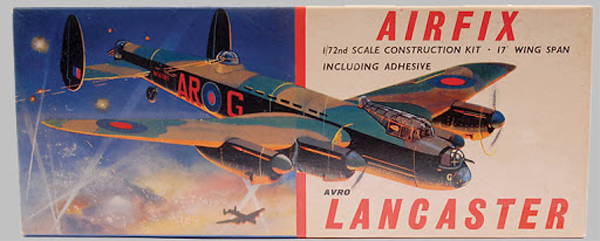
One final detail that I feel I should pass on is that G for George is probably the most widely recognised Lancaster among ordinary people and certainly among little boys over the age of fifty.

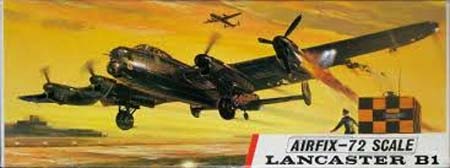
G for George was, of course, the first Lancaster that you could make a plastic model of, when Airfix  brought out their 1-72 scale kit. It was originally, I seem to remember, in a box , or perhaps with a fold-over card top that kept all the little bits of the kit safe in their plastic bag. I think it was a Series 5 kit, price 7/6, or 37½ pence.

Here is is the fold-over card top which had a transparent plastic bag full of parts stapled to it:

And then came the artwork of Roy Cross, when the kits were sold in large, sturdy cardboard boxes:

I’ve always thought that Cross’s work should have been turned into prints on good quality paper, suitable for framing.

22 Comments

Filed under Aviation, Bomber Command, History

Len Dorricott (2)

As I pointed out in my previous blog post about Len Dorricott, although Bomber Command’ casualties continued at an absolutely dreadful level, many men, thank God, lived to tell the tale. Indeed, Len Dorricott, the navigator of the famous “G for George” of 460 Squadron, was to live to the ripe old age of 91.

His wife, Rosemary, described him thus:

“Len, my husband

A quiet man, a gifted man who performed courageous acts during the Second World War. Hardly more than a child, he trained and volunteered for the RAF and so started his adventures through life. Bomber Command took men of great bravery for the mammoth tasks they undertook and Len was one of them, gaining a DFM for his courage.

This determination remained with him throughout his life. In later years, he gained a degree in Engineering (M.T.Mch.E) and was principal engineer specialising in the performance of gas turbines.

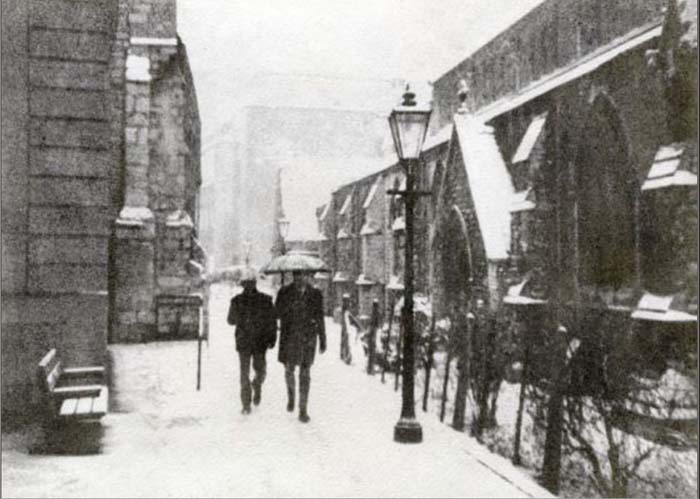
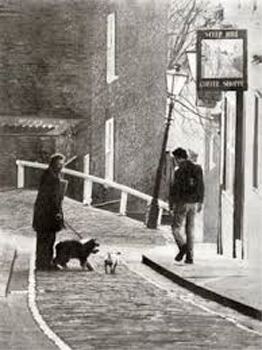
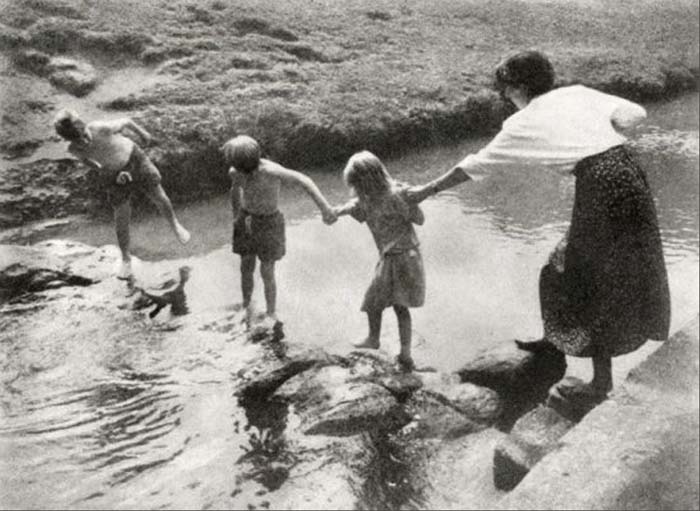
He had enormous artistic gifts in photography, particularly the Bromoil branch of this. He lectured and judged. He demonstrated his favourite Bromoils as well as other forms of photography and exhibited profusely. Many an accolade he received for these feats.”

Some of his Bromoils are on the Internet. Here is “Grayfriars in winter” :

“The Glory Hole” :

“Encounter” :

and “The Stepping Stones”

“Len did not stay that adventurous teenager he was in Bomber Command !! Like all of us, old age has seen him take a more peaceful and restful existence with cryptic crosswords and his love of books. His weekly visits to the camera club and Friday lunchtime visits to the Dambusters Public House in Scampton with his great pal, Richard.”

When the time came, his wife has described Len’s funeral.

“Len’s funeral was a celebration of his life, the crematorium filled to over flowing with a lovely service by the vicar and a reading of the Australian prayer dedicated to all 460 Squadron personnel who had passed away. Len was attached to this squadron and the plane he flew many ops in is now housed in the Canberra War Museum in Australia gifted to them by our government after the war.”

“It was a very moving service and afterwards we made our way to the Dambusters Inn and RAF Museum where those who could make it were treated to a hot buffet and an exhibition of Len’s prints. This public house is in Scampton, home of the famous Dambuster squadron and today’s Red Arrows. At 4.15 pm the landlord of this inn arranged for two of the Red Arrows team to do a flypast (they were practicing anyway) and they finished with the pass for fallen heroes—a fitting end to the wonderful life of my husband Len.”

“The family flowers only were in the form of the 460 badge “Strike and return” and donations made to the IBBC Trust (IBBC is the International Bomber Command Centre).”

“The funeral ended to the strains of Nimrod as he went on his way, we thought a fitting finale to his life

until the Red Arrows !!

It was a day to commemorate those airmen who flew on their missions during the war.

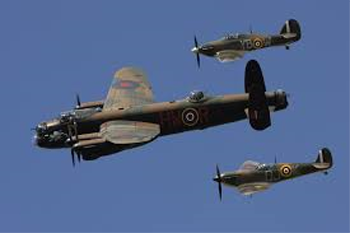
Coningsby is the home of today’s Royal Air Force and also the base for Bomber Command’s Memorial Flight, the City of Lincoln Lancaster together with the Hurricane and Spitfire.”

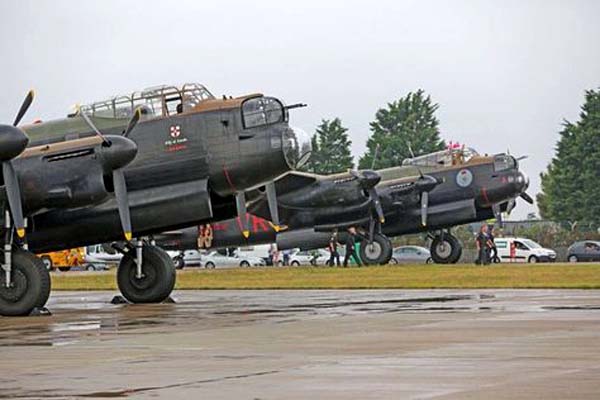
These were joined by the only other flying Lancaster that had come all the way over from Canada to tour this country and the day was made more special as the two Lancs sat side by side on the tarmac:

We were gathered there together with many fellow veteran airmen, to receive their well deserved clasps in recognition of their service by bomber command.

The summer weather had been lovely and we hoped that this would continue for the special day — but the British summer lived up to its reputation — and the heavens opened — so the planned flight of the two veteran aircraft was unable to take place —they still sat side by side on the tarmac !!

Seated in front of them were the veteran airmen one by one they were called to receive their clasps, a short synopsis was made of the war exploits of each one – then they were photographed in front of the planes ­ those who could stood —others in wheel chairs !!!

We were able to talk to and meet the crews of the two Lancs — a very great honour — and it was so moving to see the light in the eyes of those old airmen, some infirm — but that sparkle of adventure was still there !!

It was a privilege and an honour to share this day with them. A day that I will treasure and remember for the rest of my days !!

Rosemary CW Dorricott

                                                                          wife of Flight Lieutenant Leonard William Dorricott DFM

August 8th 2014

This may be the prayer that Rosemary mentioned.

Almighty and all-present Power,

Short is the prayer I make to Thee.

I do not ask in battle hour

For any shield to cover me.

The vast unalterable way

From which the stars do not depart,

May not be turned aside to stay

The bullet flying to my heart.

I ask no help to strike my foe,

I seek no petty victory here.

The enemy I hate, I know

To Thee is also dear

But this I pray:

Be at my side

when death is drawing through the sky,

Almighty God, Who also died,

Teach me the way that I should die.

Entitled, “An Airman’s Prayer ”, it was written by Hugh Brodie who was posted missing on June 3rd 1942 after the Wellington bomber in which he was the observer failed to return from a raid on Essen.


20 Comments

Filed under Aviation, Bomber Command, History

Len Dorricott (1)

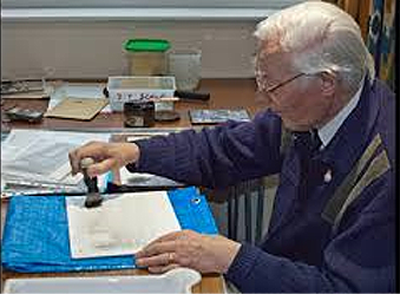
My wife’s hobby is photography and she specialises in a particular photographic printmaking process called “Bromoil”.

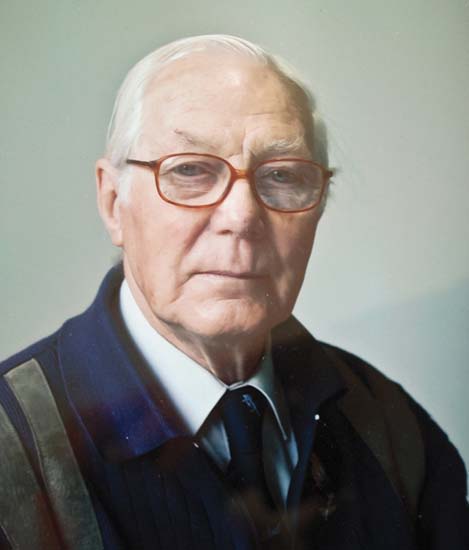
In the club she goes to, a few years ago, she met a gentleman who had stepped right out of the pages of history:

Here he is, busy Bromoiling:

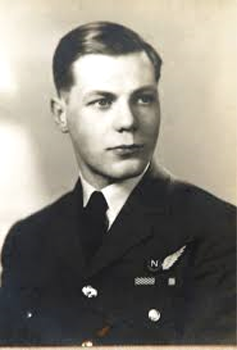
This pleasant old gentleman was called Len Dorricott and he had been a navigator in Bomber Command during World War II:

He had flown with 576 Squadron, 61 Squadron, 81 Squadron and 460 Squadron who were members of the RAAF. The latter squadron’s losses were almost unbelievable. 1018 aircrew (589 of whom were Australian) were killed and 181 aircraft were destroyed. Here’s their badge:

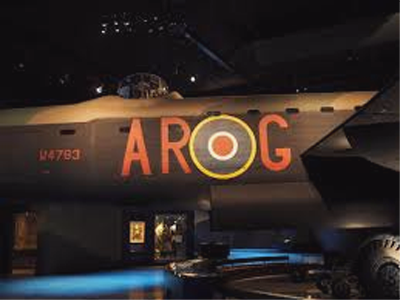
With them, Len flew 29 missions, a substantial number of them in the famous G for George, the Lancaster which in 1945 was flown to Australia by an all-RAAF crew of Bomber Command veterans and is now preserved at the Australian War Memorial (AWM) in Canberra:

Here are the three squadron letters, just in case you think that in the photograph above, it’s AB-C :

G-George flew 90 missions over hostile territory, but this famous aircraft did not ever lose a single member of its crew, even though thirty of them were eventually killed in other aircraft:

When he was with 576 Squadron, Len Dorricott also flew in Operation Manna in May 1945, He went from RAF Fiskerton to the Netherlands where he dropped bread and other food to the starving Dutch population:
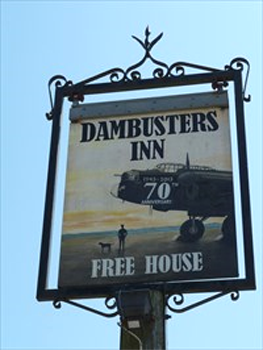
Len said later:

“It began as just another mission but it turned into something very special. The fact that it was daylight and we were flying so low meant we literally had a bird’s-eye view. I saw a German soldier, walking in the street with his rifle over his shoulder, looking up at us. The best thing of all was seeing the people on rooftops waving at us with anything they could. It was a marvellous feeling, the best thing I did in the war. I will always feel proud of that.”

Len lived to be 91 years old.

22 Comments

Filed under Aviation, Bomber Command, History

Books for Christmas (2)

I thought it might be nice if I gave you an idea of some of the best books that I have read over the past few years so that you could consider them as a Christmas present for one of your friends or family. All of the books featured are, in my opinion, well worth reading. They are all available on the Internet. In some cases, what appear to be very expensive volumes can be acquired for a fraction of the cost, if you go to abebooks or bookfinder, or if you consider the option of buying them second hand. It ‘s something I have never understood, but with some very expensive volumes, it is even possible to buy them brand new at a very much reduced price, again, if you shop around.

The first book is quite unusual since it is an attack by a German writer on the dastardly deeds of Bomber Command, and presumably, by extension , on the American Eighth Air Force. Jörg Friedrich obviously remembers very well Dresden, Hamburg, Darmstadt, Wurzburg, Pforzheim and so on. He seems to have forgotten the people who invented the indiscriminate bombing of innocent civilians at places such as London and even York Minster in WW1, and then Guernica, Rotterdam, Warsaw and so on. And there are some factual errors.

Overall the book reminds me of the verdict of a German friend of mine about the generation before his own:
“They start a war and then moan about losing it.”

Even so, “The Fire: The Bombing of Germany, 1940-1945” by Jörg Friedrich and Allison Brown is quite an intriguing book. Some of the things he says made me quite angry but perhaps because many of them are things that I have worried about myself, but loyally continued to defend.
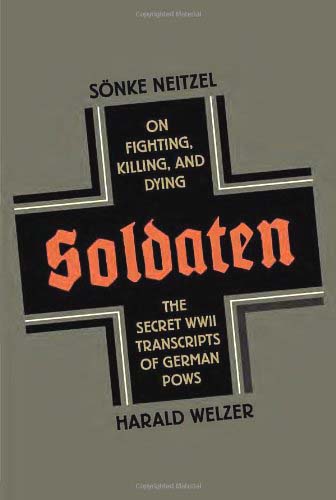
A nice contrast is the book by two German academics, Sonke Neitzel and Harald Welzer, entitled “Soldaten”.  They examine the dreadful, appalling things done by ordinary Germans in World War Two, and then look at whether the Americans in Vietnam or Iraq could have done the same. A really good book, which does not leave you feeling too good about your own morality.

In my previous selection, the best book was either “Subsmash” or “Bombing Germany : the Final Phase”. In this second selection, the book we should all read and take in is “Soldaten”:

It’s quite a contrast with our next book, “Lady Chatterley’s Lover” by DH Lawrence. There are a lot of different editions of this masterpiece, and I would recommend the one which has a preface or introduction by Doris Lessing. Do NOT be tempted by an edition “with extra new added pornography”. In any case, the book is also about WW1 and about the disappearing English landscape.

As you can see, the cover of the best edition has the gamekeeper putting his trousers back on, or, more likely, taking them off yet again.

Perhaps even better to read are Lawrence’s “Selected Stories”. You get 400 pages of his best short stories, including my own particular favourite “The Horse Dealer’s Daughter”.

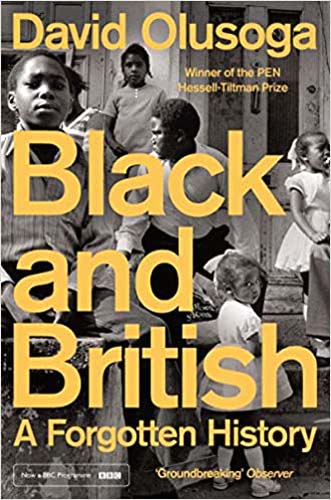
Next on the list is “Black and British: A Forgotten History” by David Olusoga. This book should be a compulsory read in every secondary school in England. How much really interesting history has been hidden away because of prejudice? Black Africans on Hadrian’s Wall, a black man killed by a white mob in Liverpool and the fight to abolish slavery, among many other long avoided stories.

Four books I haven’t read yet, although I’m certainly looking forward to them. Firstly, “Lend-Lease And Soviet Aviation in the Second World War” by Vladimir Kotelnikov. I have looked at the pictures of the P-39s and P-40s with red stars on them, and the Short Stirling, but I haven’t read the text yet. If it’s as good as the illustrations, it will be brilliant.

I haven’t read this book either, although I have read the companion volume about cricketers killed in World War One. It’s “The Coming Storm: Test and First Class Cricketers Killed in World War II” by Nigel McCrery. I have no reason to believe that this book will be anything other than extremely well researched and an interesting read.

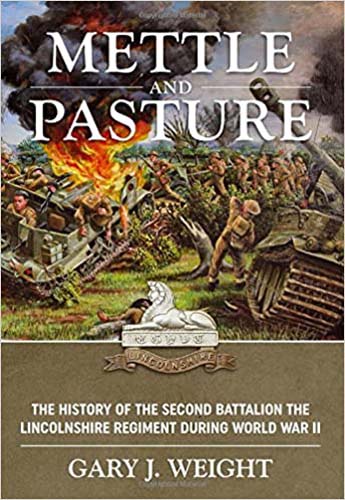
Next book in the “In Tray” is  “Mettle and Pasture”, the story of the Second Battalion of the Lincolnshire Regiment during WW2, written by Gary J Weight. I am hoping it will be a great read. It has certainly got some excellent reviews on amazon.co.uk.
The last book in the “In Tray” is called “Luftwaffe over America” by Manfred Griehl. The author examines the Germans’ very real plans to bomb the eastern seaboard of the United States during the Second World War,  using their Me 264s, Ju 290s and 390s and the Ta 400 from Focke Wulf. As a little boy, I was always intrigued by the fact that, on a trial flight, a Ju 290 supposedly got within ten miles of New York.

That’s all for now. Third and final part next time.


14 Comments

Filed under Africa, Aviation, Bomber Command, cricket, Criminology, History, Literature, military, Politics, Russia, war crimes, Writing