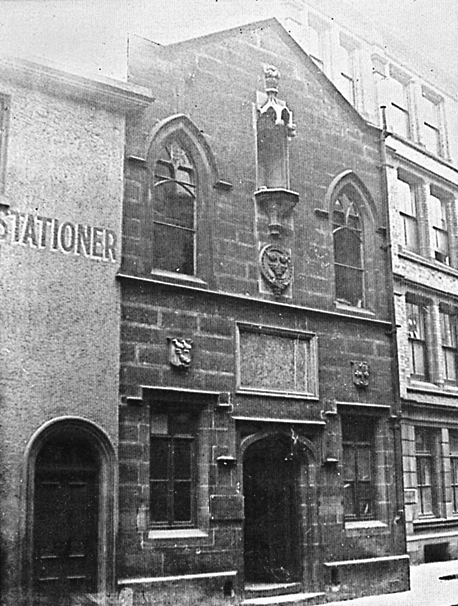
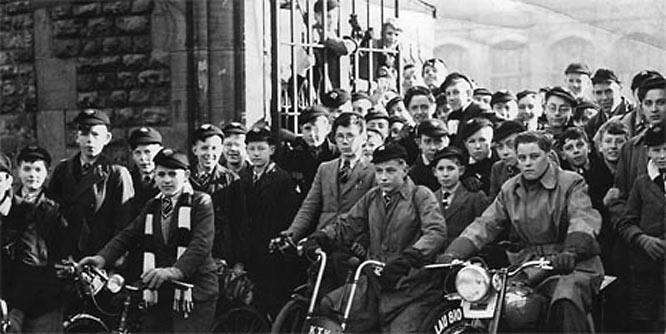
More about the Free School, as it was called in 1858. It was called that because the school was free at this time. And it was not in Arboretum-street as it is nowadays, but in Stoney-street. Look for the orange arrow:

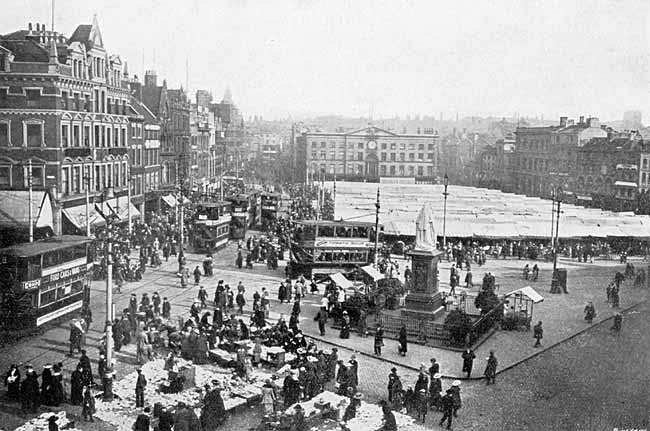
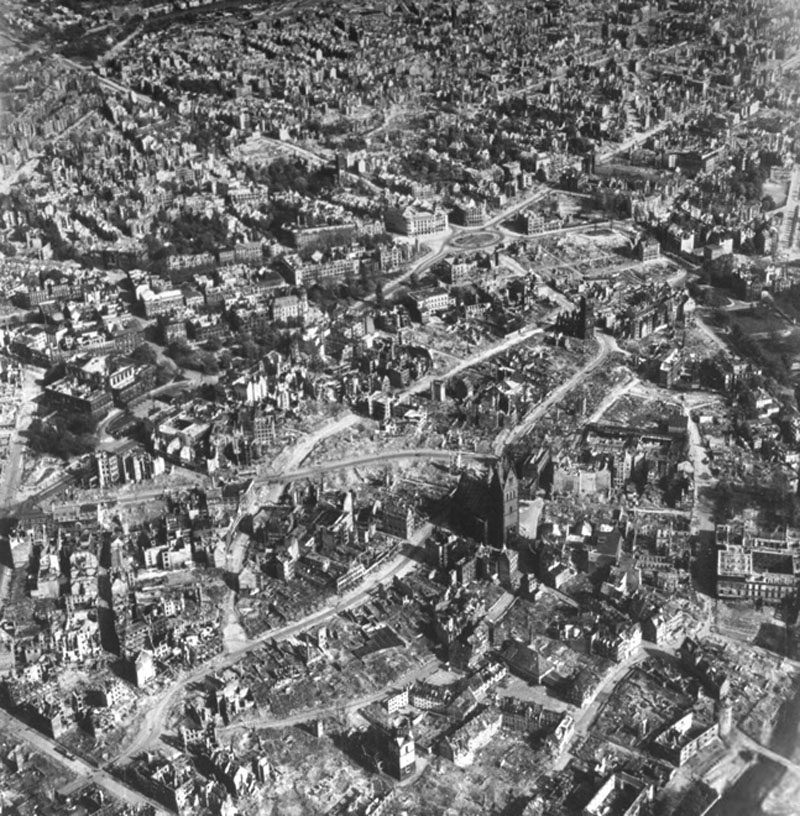
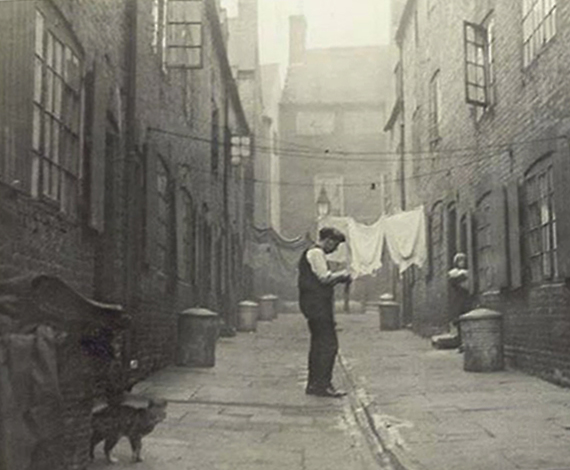
And is the lack of school fees reflected by the background of the pupils? Well, on the one hand, I have found in the Register the sons of bakers, butchers, cellarmen, clerks, a Foreman Porter, grocers, joiners, machinists, overlockers, painters, plumbers, porters and warehousemen. Some of them might have worked in the very centre of Nottingham, only a town at this time, not a city. It was very different, even around 1900:
Set against these jobs are a number of occupations which are decidedly less working class. They might require varying levels of training or education such as architects, bookkeepers, dental surgeons, doctors, draughtsmen, engineers, an engraver, a gilder, the Governor of the Town Gaol, the High Bailiff, a photographer, physicians, a Professor of Languages, solicitors, the Supervisor of Inland Revenue, surgeons, the Surveyor of Taxes, tailors, an upholsterer and a veterinary surgeon.
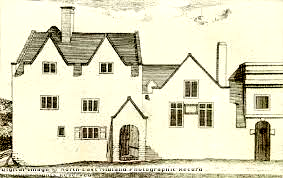
Others are jobs with managerial aspects…auctioneers, a beer house keeper, a bookseller, brokers, a coal master, a confectioner, an earthenware dealer, a hosier, an iron monger, a jeweller, Manager at Manlove & Alliott’s, a newspaper correspondent, a patent agent, publicans, shoemakers, tobacconists and a Victualler. Manlove & Alliott’s, by the way, was an engineering company set up during the 1830’s in Radford, and who later moved to their Bloomsgrove Works just off Ilkeston-road. The main entrance was on Norton-street. They moved to Scotland in 1970 and, like Augustus Caesar’s Spanish 9th Legion, they have never been heard of again:

Most interesting, of course, are the occupations directly linked with that of the period, 1858-1868. Some clearly had their place in history. Not many fathers nowadays are, quite simply, Gentlemen. And it is impossible nowadays to be the Adjutant of the Robin Hood Rifles. Bleacher is not really a very probable trade in this day and age and neither is cap manufacturer, cheese factor, coachmaker, cork cutter, framesmith, hatter, hay dealer, potato merchant, steam railway engine boiler maker or twisthand, a man who had to be strong enough to carry out certain specialised operations on a lace machine. A yarn agent is nowadays surely more likely to turn up telling stories in the Children’s Section of the local Library and if there is still a Clerk to the Lunatic Asylum then the job description is probably expressed in more delicate words. The Lunatic Asylum was on Porchester-road:
So too, there are pawnbrokers nowadays, but not too many of them, and you don’t see Life Insurance agents traipsing up and down from house to house like you used to, even in the 1950s and 1960s.
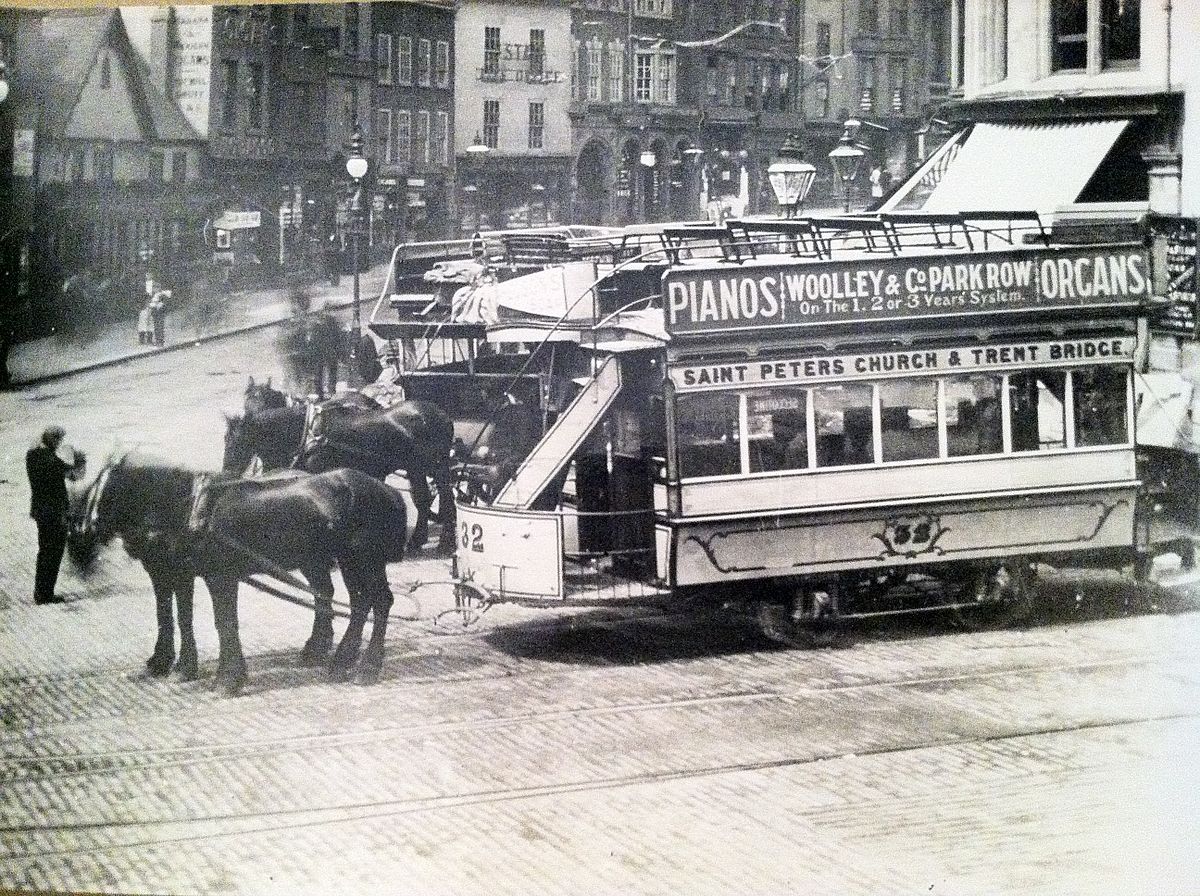
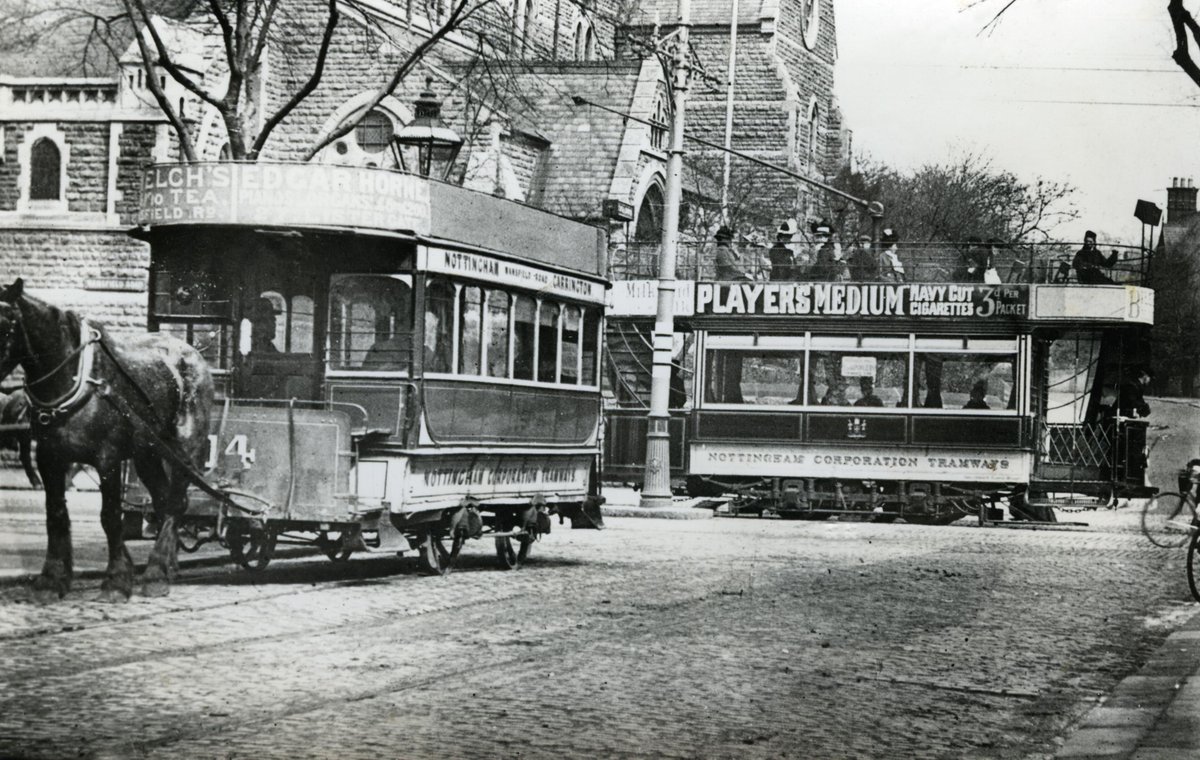
Some of those jobs, though, back in 1858-1868 , are just the first of many. They foretell the future with Estate Agents, Gas Fitters and Sharebrokers, wh0 are surely now called Stockbrokers. What we don’t have any more are all those jobs connected with religion. But back then, the parents included a Baptist Minister, the Incumbent of St Luke’s, an Independent Minister, the Minister of Canaan-street Chapel, a Sexton, two Scripture Readers, a Town Missionary, a Wesleyan Minister and an ordinary Missionary. Religion was so important it was even on the side of the horse drawn trams as a destination:
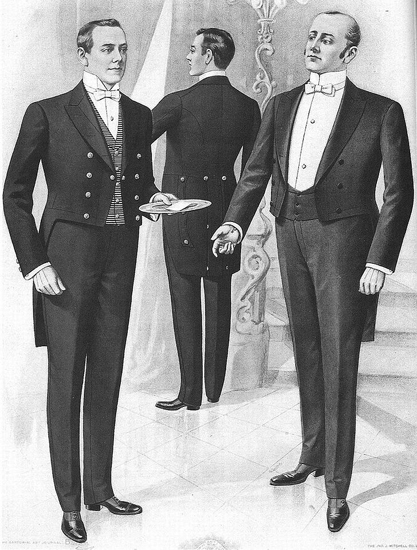
Best job of all though was Charles Bown of Carlton-road. He was a Butler.

























 John Knifton