Category Archives: Literature

Poems in “The Nottinghamian” 1922-1946 (4)

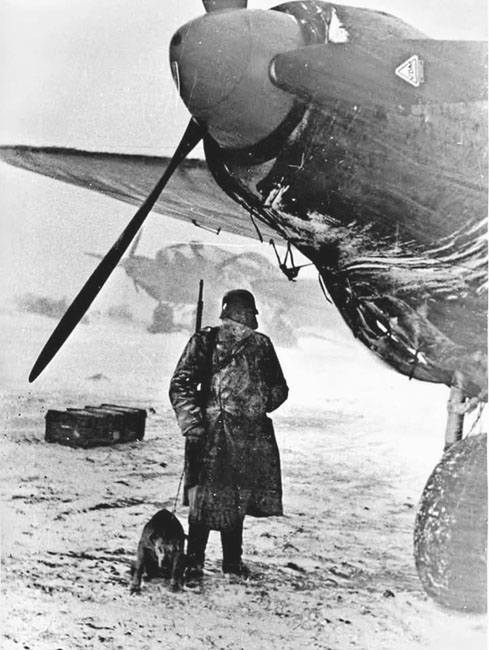
The author of the following poem which appeared in the Nottinghamian of December 1940 was Robert Norman Walters of VI Classics. Robert was the son of a “Master Fruiterer” and lived at 159 Cinder Hill Road in Bulwell. He was in the High School from 1930-1941. The winter of 1940-1941 was legendary for its severity and was excellent practice for anybody thinking of taking a winter break in Stalingrad a couple of years later.

SNOW

Snow shall fall and ice

Shall bind the lane in slithering shields

Of white and whitish blue.
Winds shall blow and howl and roar

And tiles shall fall.

Wood shall burst and split

Like statues known of old.

Rivers may cease to run

When snow shall whirl and swirl

And formless roofs gleam white.

Yet when this comes,

Let our strong, deep affections

Unfrozen, freeze not.

But with winter seen afar

Retain the burning heat

Of mid-June’s torrid air.

Robert left to go to Jesus College, Cambridge to study Classics. In the section of his poem :

“Winds shall blow and howl and roar

And tiles shall fall.

Wood shall burst and split

Like statues known of old.

Rivers may cease to run”

Robert has come remarkably near the words of Wace, who was possibly Robert Wace, a Norman poet, born in Jersey and brought up in mainland Normandy.
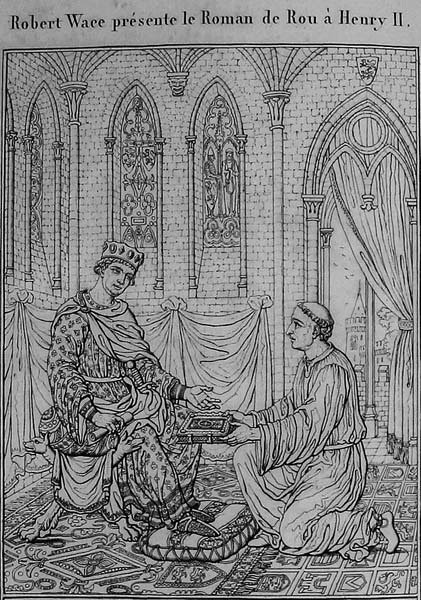
Wace was the first author to speak of the Round Table and the Court of King Arthur :

“Eventually

All things decline

Everything falters, dies and ends

Towers cave in, walls collapse

Roses wither, horses stumble

Cloth grows old, men expire

Iron rusts and timber rots away

Nothing made by hand will last.

I say and will say that I am

Wace from the Island of Jersey”

Wace lived, approximately, from 1100-1180.

James Theodore Lester was the son of a Leather Factor & Manufacturer who lived at 42 Bedale Road in Sherwood and then at Castleton House at 5 Castle Avenue in Arnold. The poem occasionally struggles for a rhyme, but the last verse is lovely.

“When I was six”

“When I was six I’d play at boats

And build a fort with many moats

Which I’d replenish with my pail

And put my little boats to sail.


Round and round and round they’d go

Till the water ceased to flow.

Then back home I would repair

And sit upon my rocking chair.


When it was time to go to bed,

Upon the pillow I’d put my head,

And think and dream of things I’d done,

And call the day a happy one.


We’ve already seen Frank Alan Underwood of 51 Charnock Avenue in Wollaton Park with his poem ““Evacuated”. This poem is a lot deeper and a lot more chilling. It was published in April 1943.

THE MIRROR

The dead man lay upon his bed

In the pause at dawn ere the Soul had fled,

And the Lamp burned dim as the East glowed red.

The Soul rose as the man had done

For twenty years at the beck of the sun:

But as yet it knew not that Death had won.

Then still as man and not aware

It looked in the mirror to brush its hair

–Looked in the mirror and found nothing there.

Ivan Keith Doncaster wrote a poem in The Nottinghamian in March 1937 which was pretty good:


THE FISHPOND

There’s a fishpond in our garden,

Not very big or wide ;

But fish just love to dart about,

Among the rocks inside.

And if you sit there on the bank,

You’ll see a sudden flash—

A big fat frog has just dived in,

And made a dreadful splash.


The frightened fish swim swiftly round

In search of safe retreat,

The frog looks at the golden line,

And croaks his sad defeat.

When ice seals up our gold-fish pond,

Neath winter’s frozen spell ;

We just catch golden gleams below,

To tell us all is well.


In summer when the fountain plays,

And sends forth silver rain,

The fish all frolic in great glee,

As cooling showers they gain.


We feed the fish with large ant eggs,

And when the days are warm

They jump to catch the flitting flies

Which o’er the pond do swarm.


Some happy moments there we spend,

Watching the fish at play ;

Spring, Summer, Autumn, Winter too,

They move in swift array.


Ivan Keith Doncaster only lived from 1923-1944 but he had already succeeded in the previous year in writing the most beautiful piece of poetry by any High School boy, bar none. It summarises how much we love our oh-so-beautiful lives, yet all the time are well aware of the price we will all one day pay as the distant bells toll our inevitable doom.

Keith paid his price in the mid-upper turret of a Lancaster over the German city of Kassel on October 22nd 1943, five days after his 20th birthday.

This poem appeared in April 1936 and had Keith lived, he would have been a great poet. He has a masterful touch and is capable of the most astonishing subtlety.

GATHERING SHELLS

“Along the silvery beach we run,

Gathering coloured shells.

We think that gathering shells is fun.

Along the silvery beach we run.

And as we go beneath the sun,

We hear the distant bells.

Along the silvery beach we run,

Gathering coloured shells.”

I have read that poem literally hundreds of times and I do not even begin to tire of it.



19 Comments

Filed under Aviation, Bomber Command, France, History, Literature, My Garden, My House, Nottingham, Personal, The High School, Wildlife and Nature

Two Old Nottinghamian brothers fighting fascism (3)

Old Nottinghamian, Robert Renwick Jackson was the pilot of a Boston III Intruder. He was killed on February 13th 1943 during an Evening Intruder Sortie to Nantes, carrying out a mission to drop propaganda leaflets for the occupied French. This type of activity was called “Nickeling”. In the rich slang of the RAF, the men who did it were called “bumphfleteers”:

I was really surprised when I found out exactly what they were distributing. Firstly, it was not necessarily a single sheet floating down. Some leaflets were up to sixteen pages. They are best thought of like an old football programme, with two or four or even eight sheets folded in two and then stapled.  Leaflets dropped on France in late 1942 included “We are winning the battle which will be decisive for victory” or “Winston Churchill Ami De La France”. There were precise verbatim reports such as “Speech by Mr. Winston Churchill to the House of Commons on September 9th 1942”, “Churchill talks on British war production” and accounts such as “Victory in Egypt – Prelude to the Allied Offensive”, referring to the Battle of El Alamein. One leaflet showed what the Free French in Great Britain were doing, trawler fishing and so on, and a second leaflet which firmly announced, “The Renault factories were working for the German Army. The Renault factories have been bombed”. Always mentioned were the times and frequencies of the BBC’s broadcasts to France.

There were two long running titles which were dropped many times in France. The first was “Courrier de l’Air” or “Postbag of the Air” with lots of short articles and photographs, of various happenings outside Hitler’s Europe:

On February 25th 1943, it contained “A heavy threat weighs on the Nazis in the Donetsk region”, “Heavy fighting in central Tunisia” and “The battleship Richelieu in New York”. Sometimes a single topic might fill the “Courrier” such as “I flew over the German army surrounded at Stalingrad”, “Stalingrad the Invincible”, “The condemned German army were waiting for the coup de grâce” and the sarcastic “Hitler has not forgotten you” under a photograph of five half, if not totally, frozen German soldiers:

Another favourite was the “Revue de la Presse Libre” or “The Magazine of the Free Press”. It carried editorials and articles in French taken from “The Times”, “The Telegraph” and other British newspapers. The leaflets were printed in hundreds of thousands and were dropped for several weeks, particularly if they were very general in nature. “Who was right?” ran from February 4th-April 11th 1943. “Edition Spéciale : Casablanca” ran from February 11th-14th 1943, and the January 1943 “Courrier de l’Air” was still being dropped in March. My own best guesses for the leaflets that Robert was delivering included “Courrier de l’Air 4 février 1943” which was dropped between February 11th-March 4th. My best guess No 2 would be the “Revue de la Presse Libre No 5” which was airlifted in by the RAF between February 11th-14th 1943. Waterlows had printed around 300,000 of them.

To be continued……….


8 Comments

Filed under Aviation, Bomber Command, France, History, Literature, military, Politics, Russia, The High School

Why no statue ? (3)

Last time I wrote about statues erected years ago to what we could well call “dubious heroes”. A monarch who was the Number One Slaver in the world. A president who kept slaves even in a country where everybody knew “that all men are created equal”.

I certainly feel that, if there are largish numbers of people who do not want statues of a particular person,  then so be it. Such men will then be gradually forgotten rather than commemorated by a statue and in this way be kept alive artificially.

Recently we have seen various groups of people smashing statues down, and even in one case throwing them into the harbour. But there does not necessarily have to be violence or hooliganism involved. Sometimes the local people can decide for themselves about a statue.

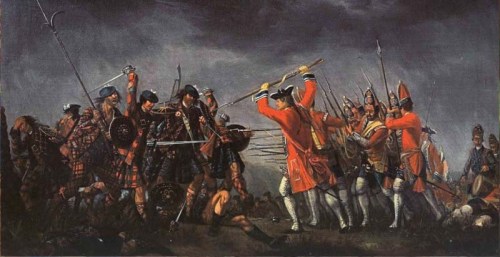
After James II was thrown out in the “Glorious Revolution” of 1688, various groups of people tried to put the Stuarts back on the throne of England. It all came to a head in 1745 when a Scottish army marched on London.  By 1746, though, their dream was shattered. The Duke of Cumberland had fought and won the decisive Battle of Culloden. The Highland Scots,  the vast majority of them Jacobites, and their army, were completely destroyed.

No mercy was shown. British soldiers killed all of the wounded Highlanders left on the battlefield. When Cumberland realised that a wounded man near him was a Jacobite, he told Major James Wolfe to kill him. The latter refused and a soldier completed the job.

In the Highlands, every single person thought  to be a rebel was killed and over a hundred in total were hanged. Villages were burned. Farm animals were stolen. In other words, it was not very different from the arrival of the Wehrmacht or the SS in a Russian village in 1941. Here is the great man:

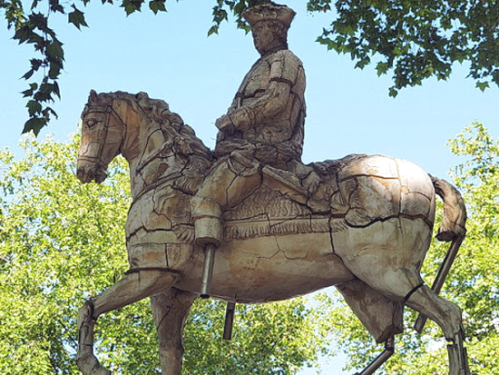
Not everybody in Georgian England thought the same way, though. In 1770 an equestrian statue of the Duke of Cumberland was erected in Cavendish Square in London to honour his exploits. Little regard had been paid, though, to the direction in which His Lordship should face. And sure enough, after a century of looking up a horse’s backside, the locals got fed up and in 1868 the statue had to be taken down.

One hundred and forty years later, a woman came up with a wonderful idea. She was a Korean artist called Mekyoung Shin. She constructed a life size statue of the Duke and put it back on the empty plinth. But her statue was made of soap and it gradually melted away, limb by limb:

To my mind, this idea of making statues of “dubious” people out of soap and then just letting them dissolve in the rain is an excellent one and should be encouraged widely.

We’ve already looked at Lord Nelson, and he would be an ideal candidate for a soap statue. And he was a sailor, so he must have liked water. Here he is:

But what about people who have reformed? Is it OK to erect statues to them?

Nowadays, Benjamin Zephaniah is a famous poet:

When he was a teenage boy, Benjamin Zephaniah, by his own admittance, was a member of a gang in Birmingham. He was a thief, he was a pickpocket, he was a burglar, he was a liar, he stole cars, he was violent and he took part in an attack on a gay man. He went to Borstal and to prison. But then, through poetry, he turned his life round. He now has 16 honorary degrees, he is Professor of Poetry at Brunel University and he narrowly lost the ballot for Professor of Poetry at Oxford.

Should we have statues to those who have reformed like Benjamin? Of course we should, and in his case, it should be placed outside whichever prison where he served half of his sentence, in such a way that it looks outwards to his future.

And finally one or two other rules. Every single statue should be retired after 200 years and auctioned off. Every city’s statues should be subject to a regular review to make sure their ethnic origin is not 100% white or male, and that there are a fair number of other categories represented.

And no famous sportsmen or women to feature. If statues of such people are needed, the fans themselves should pay. Or in the case of footballers, the football clubs they play for.

The only sportsperson to get a statue will have overcome great handicaps to become successful:

This slideshow requires JavaScript.


Next time, we will look at the people who have never had a statue erected to them.

picture of soap statue borrowed from urben 75


22 Comments

Filed under Criminology, History, Humour, Literature, military, Politics

Poems in “The Nottinghamian” School Magazine 1922-1946 (1)

All the poems in this particular selection have a flavour of the Second World War. Preparations seem to have started as early as 1922, the year when the eccentric and beloved caretaker, universally known as “Robert”, retired.

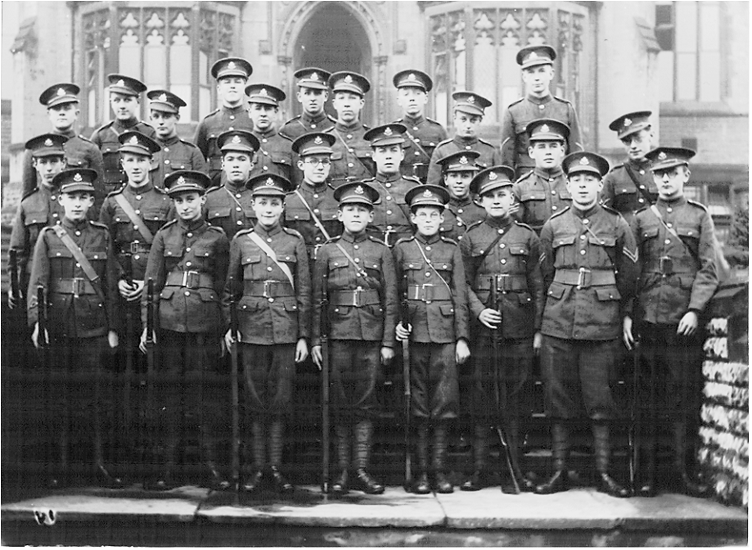
Almost totally deaf and a great favourite of the boys, Robert would have his own poems printed and then distributed around the school. Unfortunately, only one of them appears to have survived. On this occasion, he celebrates the school’s Cadet Corps, preparing slowly but surely  for the next world war:

“If you look through them gates

You’ll see Captain Yates

A-drilling of boys by the score.

So come on, my lads

Get leave of your dads

And join the High School Corps.”

And here is the High School Corps:

The next poem appeared in December 1943. It celebrates the Home Guard, the amateur soldiers, either too young or too old for the real army, who were tasked with defeating the invading Germans. It was written by Timothy John Norfolk DEAVILLE (aged 9) who was the son of the Reverend R Deaville, the vicar of St Andrew’s on nearby Mapperley Road:

The Home Guard

“Daddy’s in the Home Guard,

He’s helping win the war.

He’s donned a khaki uniform

Just as he did before.


He hasn’t won a medal yet,

He hopes he will do soon.

He’s only been a sergeant

This very afternoon.


His comp’ny’s got a kitten,

He helps to feed it now.

It claws him every morning

And makes him call out, “Ow!”


I’m glad he’s got promotion,

He has more leisure hours.

Commander says he’s clever

(He’s quite a friend of ours).


He hasn’t shot a German yet,

He wants to get a chance.

If “Jerry” tries his funny tricks

He’ll lead them quite a dance.”

Can you spot TV’s Mr Brown in this photograph of an unknown Home Guard unit?

If you remember the song, Mr Brown goes off to town on the 8.21. But he comes home each evening and he’s ready with his gun :

This next poem appeared in April 1945, and it was written by David Brian Bowler of the Science Sixth. It has a bit of a laugh at the various amateur organisations set up by the school to push the Huns straight back into the sea. “J.T.C.” is the Junior Training Corps, L.D.V. stood for the Local Defence Volunteers (or as they were usually called, “Look, duck and vanish”) and the H.G. is the Home Guard.

I don’t know what happened to young David, but I did find two companies where a “David Brian Bowler” is named as a director, shareholder or secretary. They were “Acem Geotechniques Limited” and “Bowler Geotechnical Pty Ltd”, both of them operating in Queensland and Papua & New Guinea.

The poem is called:

“Epic”

“In the grim days they feared the Hun

Would come by air or sea;

At the first observation point

They posted the J.T.C.


Through the chill nights with unknown sounds

Of foes they could not see

They waited, hoping for the chance

To give them ‘ell D.V.


And from those hearty pioneers

By way of L.D.V.,

With drill and guards and tireless work

Came the High School H.G.


First to stand up, last to stand down,

Wherever you may be,

Salute to you, the best of luck,

And thanks to the School H.G.”

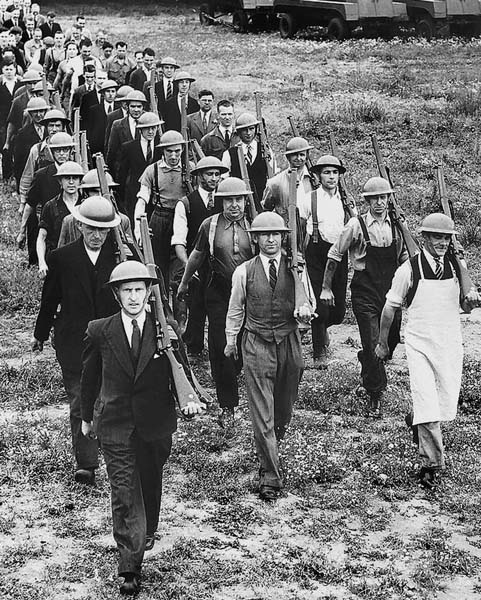
Here’s the final parade of the nation’s various Home Guard units, before they were stood down for ever on December 3rd 1944 before being completely disbanded on December 31st 1945.

In December 1940, the Nottinghamian contained a poem entitled

“ODE TO ELSTON (ACCOMPANIED BY WOODPIGEON)”

The title referred to the many boys who took part in a scheme organised by Mr Palmer and Mr Beeby, whereby Sixth Formers went off to work at three different agricultural locations, for the most part helping to get the harvest in. One farm was at Elston, a small village south west of Newark-on-Trent, another was at Car Colston north east of Bingham and the third was at Honey Lane Farm at Farndon which is also near Newark-on-Trent. On other occasions, boys went to a farm camp at Dowsby, just the far side of Grantham.  Ooooh   aargh:

“ODE TO ELSTON (ACCOMPANIED BY WOODPIGEON)”

‘S nice to be in the country

When summer suns are glowing ;

‘S nice to milk the brown cows—

‘S nice.

Cycle out to farmyard

Six o’clock in morning ;

Sweat and sweat and drink tea—

S’wet.


‘S nice to ‘staak’ the barley,

‘S nice to pick the oats,

‘S nice to staak the wheat,

‘S nice !


‘S nice to load the ‘cow-muck’ ?

‘S nice to pump the water ?

‘S nice to be in country

But it’s nicer to be in town !

The poem was written by Philip Blackburn of 6 Classics. He left the school in 1941 with a Studentship for Classics at University College, Nottingham, and a Nottingham Co-operative Society Scholarship of £25 per annum.

23 Comments

Filed under History, Humour, Literature, military, Nottingham, The High School

What would you do ? (10) The Solution

“What would you do ?” used to figure on the cover of a boys’ comic called “Boys’ World”. This was a publication, obviously, aimed at boys, and first appeared on January 26th 1963. There were 89 issues before the comic was merged with Eagle on October 3rd 1964.

I used to buy “Boys’ World”, and this was mainly for the front cover which always featured a kind of puzzle.

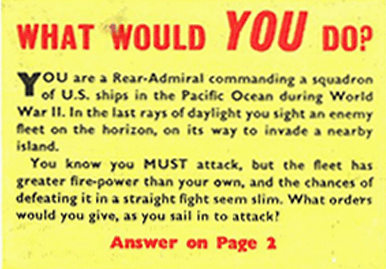
It was called “What would you do ?” and was based on somebody being in what Ned Flanders would call “A dilly of a pickle”. Here’s the situation, as always, explained in the coloured box:

So, you’ve finally been promoted to Rear-Admiral in the US Navy, and you are in charge of a squadron of ships in the Pacific Ocean. It is World War Two and you have just spotted an enemy fleet on the horizon in the growing darkness. They are on their way to invade a nearby island.

You MUST attack but the Japanese fleet has greater fire-power than you have and your chances of defeating it seem slim. What orders would you give, as you sail in to attack?

And the answer is on page 2 and here it is:

So, you order your squadron to manœuvre as per the diagram on the back of my packet of cigarettes. Steaming in the dark, the Japanese suddenly found the head of their column confronted by the American squadron broadside.  The Americans were able to bring all their guns to bear, while the Japanese were only able to fire forward, with their foremost ships. Outgunned , the Japs fled.

Well, well, well. How many of you got that one correct? I know I didn’t. Certainly the most difficult one so far.


29 Comments

Filed under cricket, Film & TV, History, Humour, Literature, military, Pacific Theatre, Personal, the Japanese

What would you do ? (10) The Puzzle

“What would you do ?” used to figure on the cover of a boys’ comic called “Boys’ World”. This was a publication, obviously, aimed at boys and first appeared on January 26th 1963. There were 89 issues before the comic was merged with Eagle in 1964. The last issue of “Boys’ World” came out on October 3rd 1964.

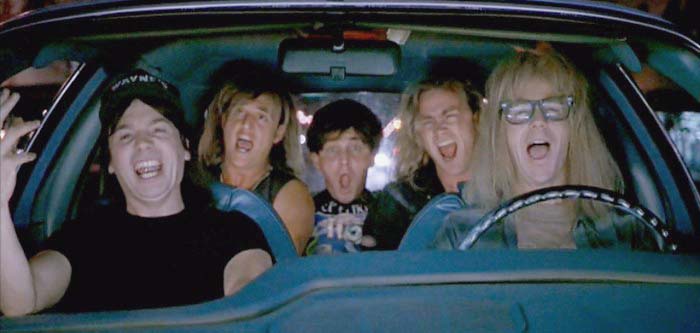
This is issue No 18 which came out on May 25th 1963. This was the day that the idea of amateur and professional players in cricket was abolished—and rightly so. It was also the Saturday when Mike Myers was born:

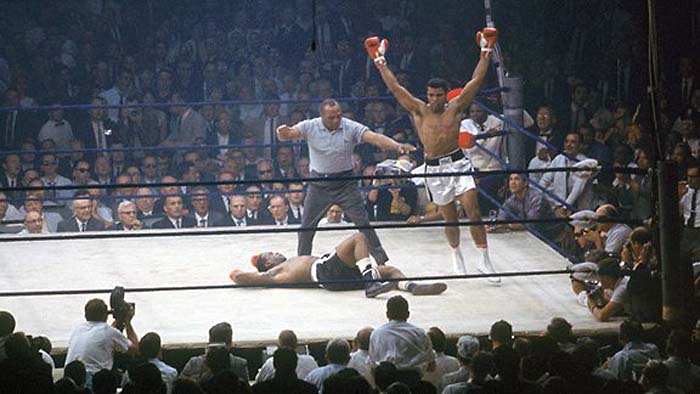
In 1965 it was the day when Muhammad Ali knocked out Sonny Liston in the first round of their world heavyweight title rematch in Lewiston, Maine:

I used to buy “Boys’ World”, and this was mainly for the front cover which always featured a kind of puzzle. It was called “What would you do ?” and was based on somebody being in what Ned Flanders would call “A dilly of a pickle”. Here he is again:

And here’s this particular front cover:

The yellow box sets the scene, and the task is for you to solve the situation. This time, there’s a white circle  to worry about,which explains that the Japanese ships are in two columns.

Perhaps you might like to write your idea in the “Comments” section.

Here’s the yellow box enlarged:

And in case you are reading this box through a glass, darkly, or perhaps you are colour blind, there is some good news for you. You’ve been promoted to Rear-Admiral in the US Navy, and you are in charge of a squadron of ships in the Pacific Ocean. It is World War Two and the last rays of daylight have just lit up an enemy fleet on the horizon. They are on their way to invade a nearby island.

You know that you MUST attack but the Japanese fleet has greater fire-power than your own and your chances of defeating it in a straight fight seem slim. What orders would you give, as you sail in to attack?

And don’t cheat by asking an expert!!!

For what it’s worth, my squadron will switch all their lights off, and then join onto the two Japanese lines. Our two front ships will torpedo their back two ships. Then our next to front ships will torpedo their next to back ships, and so on, until  we have sunk the lot. Then I will be writing to the Head of the US Navy to tell him that we need more than one torpedo per boat.


24 Comments

Filed under cricket, Film & TV, History, Humour, Literature, military, Pacific Theatre, Personal, the Japanese

My Dad, Fred, and the Hollywood cinema of yesteryear

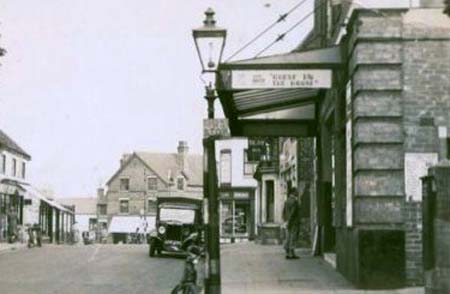
When he was a little boy, perhaps around ten or twelve years of age, around 1933, my Dad, Fred along with some friends, walked the mile or so to nearby Swadlincote, to go to the cinema. Here is the cinema:

That’s not the best of views, so here is the “Empire” but in later years:

Swadlincote has always had two cinemas but never at the same time. The sequence is usually

Cinema 1 open

Cinema 1 goes bust

Interval of five years

Cinema 2 open

Cinema 2 goes bust

Interval of five years

Cinema 1 is reopened by over-optimistic idiot

Cinema 1 goes bust

Cinema 2 is eventually reopened by another over-optimistic idiot

And so on

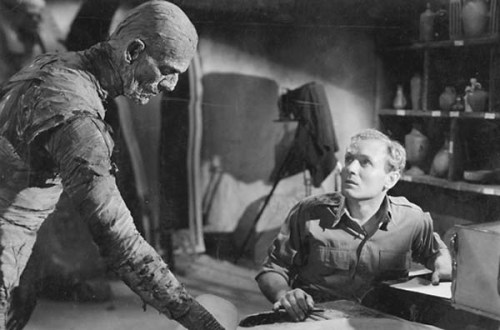
Anyway, Fred and his pals, all around ten to twelve years old, weren’t there to see any old film. They were there to see Boris Karloff in “The Mummy”, one of the most frightening horror films of that decade. Feeling extremely brave, they sneaked in and settled down, waiting to be frightened:

Fred was not, of course, like the modern child, immured to fear by hour after hour of relentless television, and he came out chilled to the core by Karloff, completely terrified by the whole film. And so did the rest of them.

There could be no sharper contrast, however, than that between this Karloff chiller and Fred’s favourite, and funniest, Laurel and Hardy film. The latter was “Fra Diavolo”, which, again, he would have seen at the cinema in Swadlincote:

One other tiny detail that I can remember my Dad supplying, which must have come from this era, was how, when watching silent films at the cinema, however old you were, you were expected to read the words of the dialogue for yourself. Nobody would help you. If you asked for assistance, you would be told contemptuously, “Learn to read !”

Overall, Fred must have been very interested in the cinema. His collection of old magazines, kept for thirty or more years in the glass fronted bookcase in the front room of his parents’ house, contained ones which featured German expressionist cinema of the 1920s, including both Fritz Lang’s “Metropolis” and “The Cabinet of Doctor Caligari”. The stills featured included Rotwang’s house, Maria the Robot and the somnambulist Conrad Veidt carrying his victim high above the rooftops.

This slideshow requires JavaScript.

On one occasion, Fred was actually able to meet a real, genuine Hollywood star. Just after the war ended, he was in Brighton for some long forgotten reason. He decided to visit a very distant cousin who worked in a local cinema, and who may well have been one of the Sussex branch of the Knifton family.

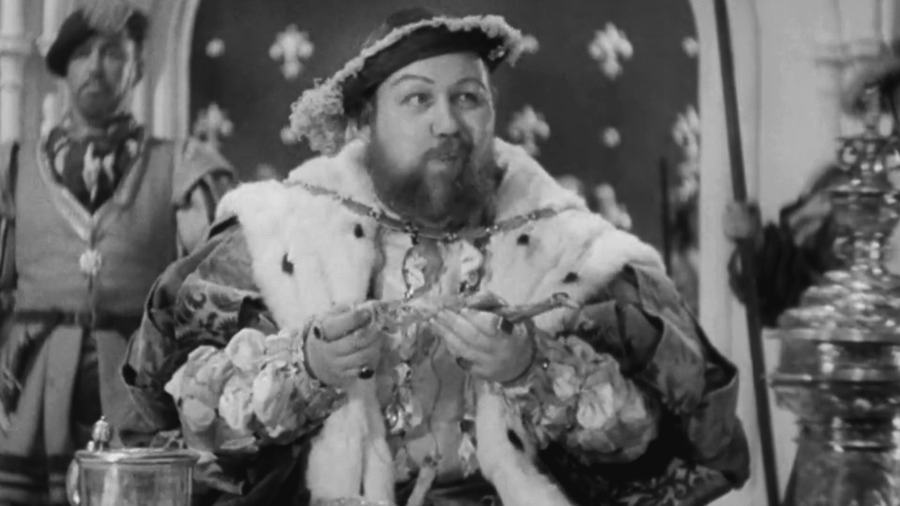
At the time, this particular cinema was the centre of all attention, as it was being visited by Charles Laughton, the world famous English and Hollywood film actor. Laughton was there to give a little publicity to one of his less famous films, a rather unloved feature entitled “The Beachcomber”, made with his then wife Elsa Lanchester in 1938. All of the cinema employees lined up to meet their famous guest, and Fred, at the urgent bidding of his cousin, joined on to the very end of the line, thereby managing, eventually, to shake hands with the great man:

Years earlier, of course, Fred had watched the inimitable Laughton in the 1933 film, “The Private Life of Henry VIII”. In common with countless thousands of other cinema goers, he had particularly vivid memories of the greedy king eating a whole chicken with his bare hands, and then throwing bits of meat and bone over his shoulder to the waiting hounds:

Who said that table manners were a thing of the past?

But, please be aware. Restaurants of all types seem to frown on throwing bits of meat and bone over your shoulder, and there are very seldom any waiting hounds to tidy up the mess.

19 Comments

Filed under Africa, History, Humour, Literature, Personal, Science

What would you do ? (9) The Puzzle

“What would you do ?” used to figure on the cover of a boys’ comic called “Boys’ World”. This was a publication, obviously, aimed at boys and first appeared on January 26th 1963. There were 89 issues before the comic was merged with Eagle in 1964. The last issue of “Boys’ World” came out on October 3rd 1964.

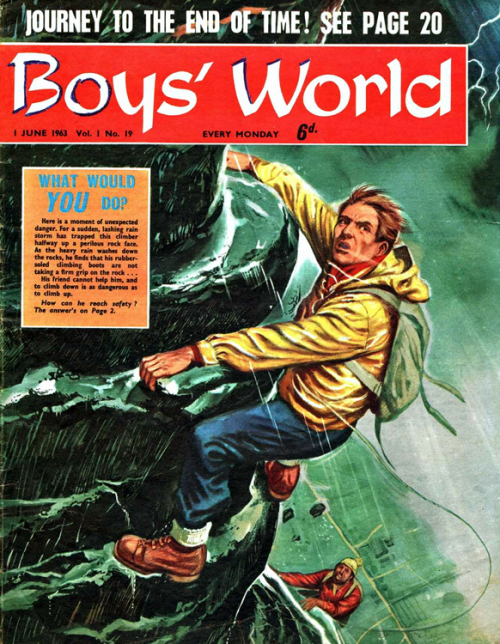
I used to buy “Boys’ World”, and this was mainly for the front cover which always featured a kind of puzzle. It was called “What would you do ?” and was based on somebody being in what Ned Flanders would call “A dilly of a pickle”. Here’s the situation:

Do you see him? Middle of the left hand side? The orange box. The worthless orange box, the father that the poor little orange arrow has been looking for ever since Big Box, as he then was, walked out and fled to Canada to escape the war.

The orange box sets the scene, and the task is for you to solve the situation. Perhaps you might like to write your idea in the “Comments” section.

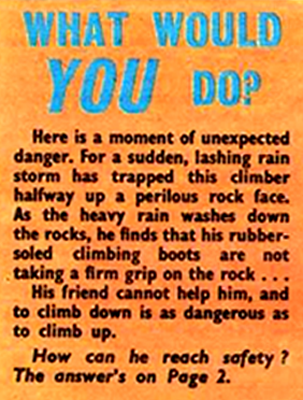
Here’s the orange box enlarged:

So…..it’s one “A dilly of a pickle”.

A climber is trapped half way up the rock face. The rock was covered in ice, but now there’s rain pouring over the already treacherous surface.  His friend below is next to useless. He hasn’t even brought an umbrella.

So what can the climber do? To go up is as difficult as going down. And his rubber soled boots are next to useless too.

What can  he do??


17 Comments

Filed under Literature, Wildlife and Nature

Books for Christmas (3)

I thought it might be nice if I gave you an idea of some of the best books that I have read over the past few years so that you could consider them as a Christmas present for one of your friends or family. All of the books featured are, in my opinion, well worth reading. They are all available on the Internet. In some cases, what appear to be very expensive volumes can be acquired for a fraction of the cost, if you go to abebooks or bookfinder, or if you consider the option of buying them second hand. It ‘s something I have never understood, but with some very expensive volumes, it is even possible to buy them brand new at a very much reduced price, again, if you shop around.

First of all, the book that explains all the hidden meanings in two of the great masterpieces of children’s literature. Why do hatters go mad? Which one of their pets did Victorian children often keep in a teapot? where did the Cheshire Cat get its grin?

It’s “The Annotated Alice: Alice’s Adventures in Wonderland and Through the Looking Glass” by Lewis Carroll and Martin Gardner. An indispensable guide to two of the world’s most influential books:

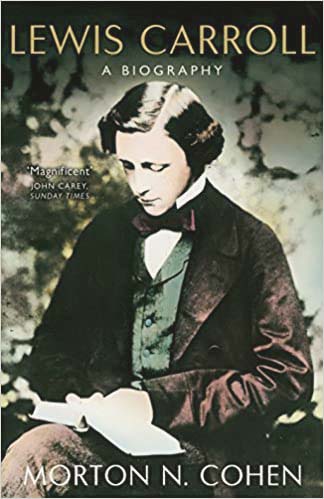
And here, a great follow-up to “Annotated Alice”, the book that is, in my opinion, the best biography of Charles Lutwidge Dodgson aka Lewis Carroll. It’s by Morton N Cohen, and you can pick up this very large book for quite a low price if you buy second hand and choose carefully.

I previously mentioned a book about the cricketers killed in World War Two and here is the much larger book about the cricketers killed in the previous conflict. It was amazing to see just how many upper class men had only ever played two or three games of first class cricket, but, equally, how many of them had a brother, or even two brothers who were also killed in the war. What a slaughter of decent men that dreadful war was:
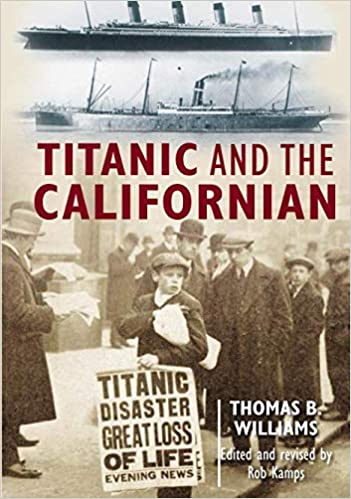
As the Titanic was sinking, the lights of another ship were seen, right on the horizon. This ship, though, did not sail over to help. The press decided the ship was the Californian and then made the life of its captain a living hell. And that was completely without justification according to “The Titanic and the Californian” by Thomas B. Williams and Rob Kamps. A gripping read:

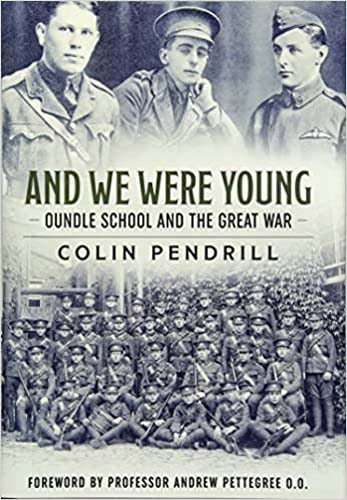
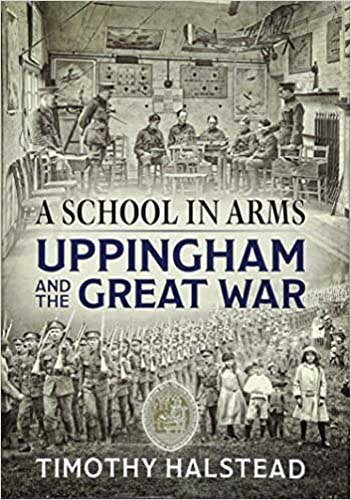
It’s not that long since the centenary of the Great War, when a great many books were published about that appallingly wasteful conflict. Being a teacher of nearly forty years’ standing, I was attracted by the books written about its effects on a number of English public schools. Apparently at Nottingham High School where I worked, the school flag was almost permanently at half mast. And that was far from unique. Such exclusive private schools provided the majority of the junior officers, Second Lieutenants, Lieutenants and Captains. The first two of those three finished with a casualty rate as bad as Bomber Command in WW2. Here are the four I enjoyed most. The first one is from Uppingham School whose website is here
The second one is Oundle. Again, you can see for yourself the school’s website which is here

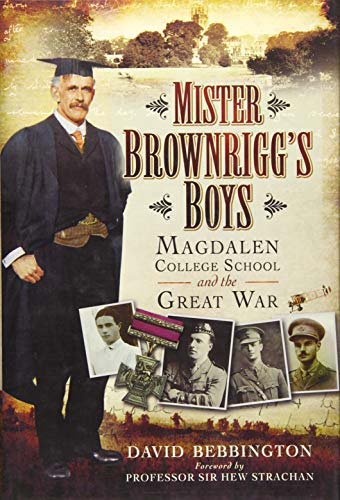
The third book was of Magdalen College School in Oxford with its Headmaster, Mr Brownrigg. Here is its website.

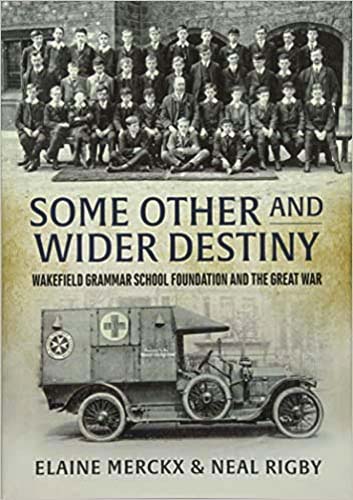
The last one was of a Yorkshire school called Wakefield Grammar. Here is its website.

Personally, I thought that Wakefield was the best of the four books, because it contained a lot of interesting details of life at the school at the time. Magdalen was possibly the most poignant, although Uppingham, of course, was the school of the three friends of Vera Brittain, and feature in her book, “Testament of Youth”.

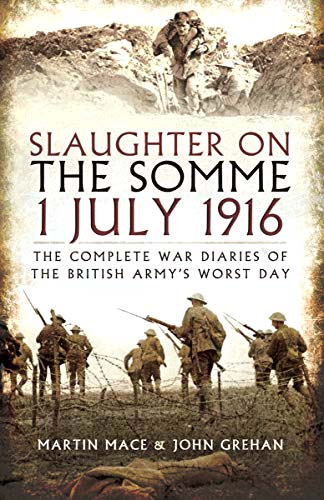
The next book is “Slaughter on the Somme 1 July 1916: The Complete War Diaries of the British Army’s Worst Day” by Martin Mace and John Grehan. This is definitely a book that can be picked up a lot cheaper than its full list price. The book consists largely of the reports of the worst day ever for the British army, written for the most part  by junior officers, who tended to tell the true version of events in plain language. What they recorded is quite simply astonishing. And the best sentence ? “It was apparent that matters were not progressing quite as favourably as had been anticipated.” Understatement or what?  57,470 casualties on the day, of which 19,240 men were killed. And in the entire three and a half month battle, around 420,000 British and Empire men perished.

I have always been fascinated by DH Lawrence, who seems to have been “a most peculiar man”. Of the next four books, I have not read a single one, but I can’t wait to get started. The first is “A MEMOIR OF D. H. LAWRENCE: \’THE BETRAYAL” by GH Neville. Neville used to travel by train to Nottingham High School with the fourteen year old Lawrence.

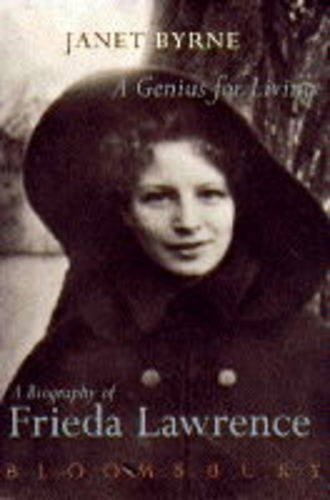
Later in life, Lawrence was to steal away the wife of a university professor at Nottingham, Dr Ernest Weekley. Her maiden name was Frieda von Richthofen, but she then became, eventually, Frieda Lawrence. So far, I have bought “Genius for Living:  a Biography of Frieda Lawrence” by Janet Byrne which may help me understand the behaviour of this very strange woman.

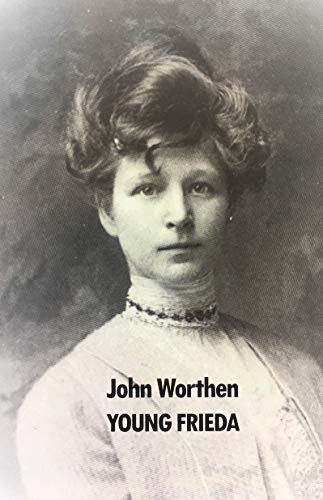
A modern day professor at Nottingham University, John Worthen, has gone as far as to write a novel about that shocking love triangle back in Nottingham in 1912. I am looking forward to seeing how he portrays some extraordinary events.

An outstanding aviation book is “Darwin Spitfires”, a book by a local teacher, Anthony Cooper, about the use of RAF and RAAF fighters against the attacks on Darwin by the Japanese. This one I have already read, and it is a marvellous eye-opener of a book, not to be missed:

“Fire from the Sky: Surviving the Kamikaze Threat” is a study by the American author, Robert C. Stern, of the phenomenon of the Kamikaze attacks on American and Australian ships. It is a superbly detailed book with a very interesting comparison of the kamikaze and the islamist suicide bomber.

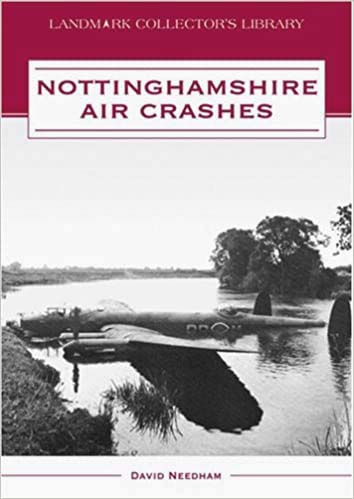
I was surprised to find that the next book was still possible to get hold of as it seems to be so local in its concerns. That point of view is somewhat incorrect though, because the book is really about any one of twenty or thirty counties where there were airbases during WW2. It is a very honest book, and if the behaviour of the locals is disgraceful, then the author is not slow to tell us about it. A little gem.

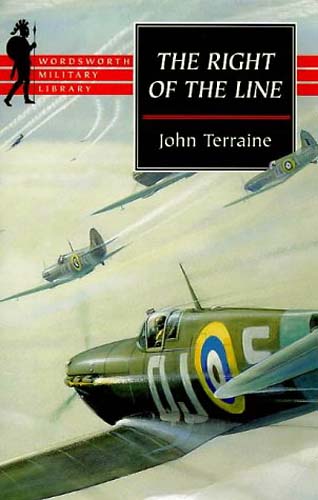
This book, with almost 900 pages and so many heavily reduced second hand copies around, has been described as a bargain door stop but that is a tad cruel.  Indeed, “The Right of the Line: The Role of the RAF in World War Two” by John Terraine is a wonderful reference book about the RAF with every facet of their war explained and examined. Definitely a book to be dipped into, it is a valuable encyclopedia about the events and intentions of the RAF in the Second World War.

So there we are. The best part of forty or fifty suggestions about what to buy the boring old fart in your family for Christmas. And all of them recommended by a fully paid up boring old fart of a blog post writer.
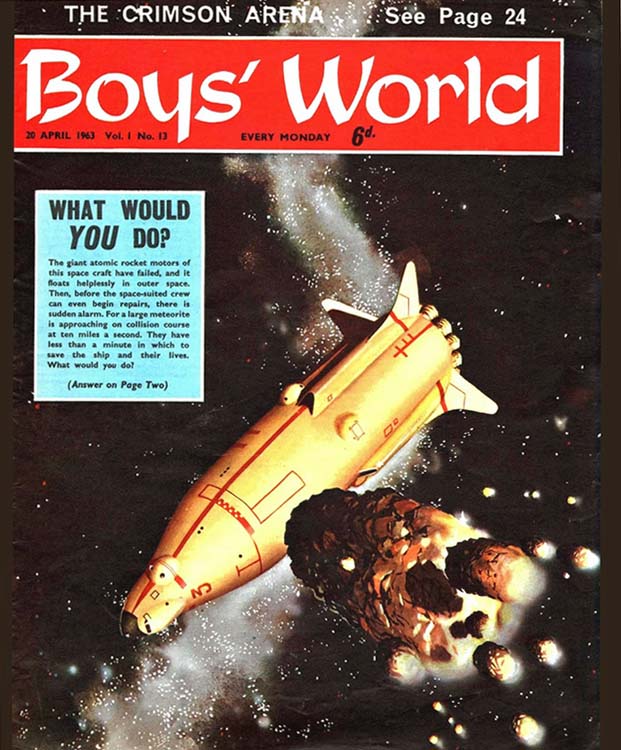
I can even offer you an insurance policy. If all else fails, then buy him a box set. How about this tumultuous tale of a chemistry teacher gone wrong ? Very, very, wrong…..


25 Comments

Filed under Aviation, cricket, History, Literature, military, Nottingham, Pacific Theatre, The High School, the Japanese, Writing

What would you do ? (7) The Solution

Here’s the emergency from last time:

And here’s the situation:

So, twenty seconds have already passed, and it’s already a dilly of a space pickle.

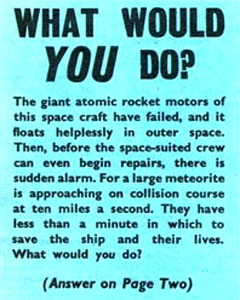
The space craft is still floating helplessly after the failure of the atomic motors. The crew have their space suits but they have had very little time to start the repairs to the motors before the alarm suddenly goes off. An extremely large meteorite is approaching them at ten miles a second. The time remaining before impact is less than forty seconds and decisive action is required.

What can the crew do ?

Well, page 2 of “Boys’ World” says that the correct solution is:

“There is only one thing they can do. They re-open both doors of the port airlock, allowing all the air to rush out of the ship. The rushing air acts like a rocket jet in the vacuum of space, and propels the ship away from the meteorite. Later the ship can be re-pressurised from their emergency air cylinders. “

And just to prove it, here’s the slightly blurry page of the comic:

“Why”, said the nine year old Ridley Scott. “What an amazing idea. When I’m a famous Hollywood director, I shall make use of it.”

“Stop daydreaming”, said his mother. “Have you done your paper round, Ridley? And have you done your English homework? That story about that woman on that space rocket?”

One intriguing thought is that Ridley Scott is known to have been a subscriber to “Eagle” comic. Did he used to read “Boys’ World” as well?

19 Comments

Filed under Aviation, Humour, Literature, Personal, Science, Writing