Category Archives: Nottingham

Storks in Victorian Nottinghamshire

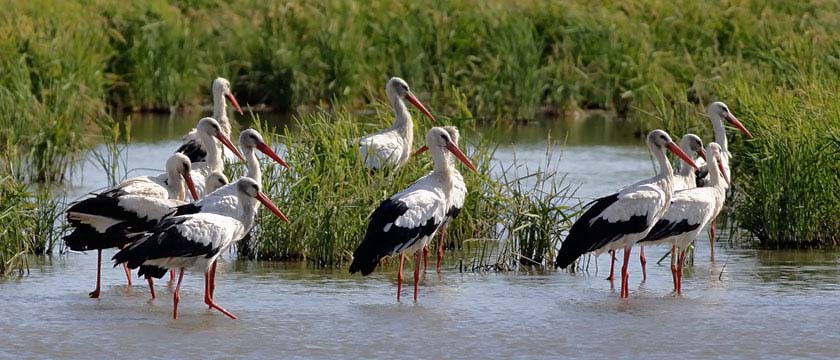
The White Stork is a very large and spectacular visitor to England. People have asked me on many occasions why we think that babies are brought by storks. My answer has always been that a good number of new babies have a red mark on their forehead when they are first born. This mark is triangular and it looks as if their head has been grasped for a considerable period of time in a stork’s beak. My own daughter certainly had the mark on her forehead when she was first born, although it usually fades with time.

Victorian Nottinghamshire recorded a number of storks, and in actual fact, the very best records come from the era of King George IV, Beau Brummell’s “fat friend”.  In 1825, therefore, a single bird was killed near Bawtry on an unrecorded date during the year:

white-stork-113589 xxxxxxxxxxxxxxx
Four years later, in 1829 an entire flock of these magnificent birds was seen on the River Trent at the very same location as the 1825 individual:

white-storks-flockxxxxxxxxxxxxxxxxxxxxx

Two of them were subsequently shot as they overflew the nearby market town of Bawtry. Look for the orange arrows:

This slideshow requires JavaScript.

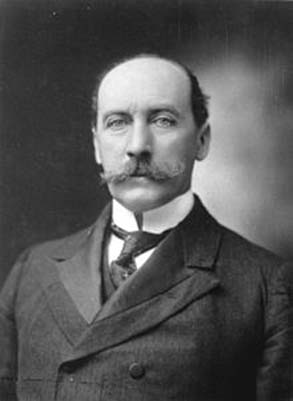
On Monday, April 12th 1915, a single bird was seen in flight over the road between Nottingham and Mansfield. The observer was Sir Herbert Chermside :

220px-Sir_Herbert_Chermside

In 1899 Sir Herbert had married Geraldine Katherine Webb, the daughter of Mr W.F.Webb, the owner of Newstead Abbey in Nottinghamshire. The poor lady was to die in 1910 without any children.

Sir Herbert immediately typed a letter to Joseph Whitaker, as soon as he reached home after seeing this wonderful bird:

“This morning a specimen of Cicogna Alba passed across the Nottingham-Mansfield high Road (sic) at 9.50 a.m. between the Pilgrim Oak and the Hutt House, the bird was in Spring plumage, with legs and beak very bright:

bilyl_leleka_pislja_opysu xxxxxxxxxxxxxx

It was, I think, a hen bird, and passed directly over me within easy gun shot, flying relatively low, over the tops of the Beech trees by a few feet. It is possibly a War Refugee from the Low Countries.”

The Pilgrim Oak or Gospel Oak stands opposite the Hutt at the main entrance to Newstead Abbey. This is the Hutt:

thre hutt

The Pilgrim Oak was the place where pilgrims would stop and read the gospels before entering the Abbey (not the pub). The age of the tree is unknown but it was already quite large in Lord Byron’s time. The American author, Washington Irving, described as “a venerable tree, of great size” when he visited the area in the early 19th century:

This slideshow requires JavaScript.

Here is the Pilgrim Oak in both spring and autumn:

This slideshow requires JavaScript.

Joseph Whitaker would have been totally gutted, to use the modern expression, that a non-birdwatcher had seen such a wonderful, spectacular bird, and he hadn’t:

white-stork-hungary-2007

Just under a week later, on Sunday, April 18th, Sir Herbert wrote again to Whitaker confirming the identity of a bird that he had already seen in many locations in the Middle East. This must really have twisted the knife, although, of course, unwittingly:

“I wish that you had seen the Stork instead of I (sic) although it is the first one that I have ever seen in England. Last year I was in the uplands of Algeria, south of Constantinople on the day of their arrival in very considerable numbers (early March) at the Dardanelles on the shores of the Sea of Marmora , 17th March is the day of their arrival. A day’s march from Gallipoli on the eastern side, they have a great assembly place-for both spring and autumn.

White-Storks_1164flock xxxxxxxxxxx

The natives allege that in Autumn, the birds of the year pair there, before the migration.”

All the way through this account, I have deliberately used the phrase “White Stork”. This is because there is a Black Stork as well. This is a much rarer bird, and one which I myself have yet to see:

This slideshow requires JavaScript.

In Victorian times there was just one report of this species being seen in the county. This was an unfortunate individual which was shot during the autumn of 1871 at Colwick by Mr John Brown of Old Moat Hall. Joseph Whitaker was told the facts in a letter from Mr P. Musters of West Bridgford. As Old Moat Hall is in Cheshire, I suppose we can presume that Mr Brown was a guest of one of the members of the extended Chaworth-Musters family, who were rich landowners in Nottinghamshire.

As far as I can see, their possessions included Annesley Hall, Colwick Hall, Wiverton Hall, Edwalton Manor, West Bridgford Hall and for Sundays, Felley Priory.

10 Comments

Filed under History, Nottingham, Politics, Science, Twitching, Wildlife and Nature

Anthony Bertram Lloyd

Corporal Anthony Bertram Lloyd was born in Staffordshire. He was the son of Bertram Harold Lloyd and Ada Lloyd, of Penarth in Glamorgan. He was a member of the High School from 1932-1939.

Tony had an:

“unswerving loyalty to the school, which he had revisited on several occasions during his military service…he was always in any mischief that was going, but under a seeming cloak of irresponsibility, there lay a deep respect for law and order…here was a comrade to have at one’s side in an emergency, a fellow whose courage steadied the nerves, and whose unfailing good humour showed a ray of hope in the blackest of moments”.

At school, not surprisingly perhaps, Tony was a promising boxer.
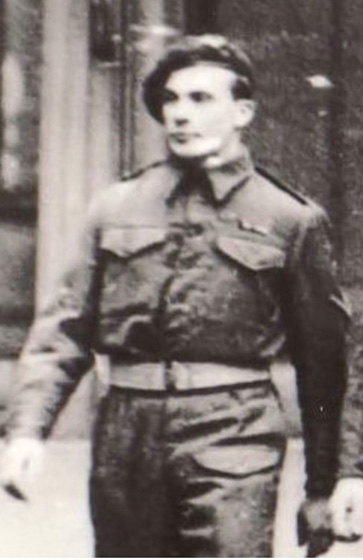
Shortly after war broke out, Tony enlisted into the Royal Welch Fusiliers and was serving with the 10th Battalion RWF when it began airborne duties in August 1942. Here he is, looking very dashing:

lloyd para

The Battalion was renamed the 6th (Royal Welch) Parachute Battalion and was incorporated into the 2nd Parachute Brigade. In early 1943, some of the 6th (Royal Welch) Parachute Battalion were engaged in fighting Axis forces in North Africa, during Operation Torch. On March 5th the Brigade handed this sector over to the Americans and moved eastwards to Tunisia.
On March 8th, a German force of divisional strength attacked the defensive positions of the 1st and 2nd Battalions. It was at this time that Anthony was awarded a Military Medal for his bravery:

“On the 8th March 1943 in the Tamera Sector, Tunisia, Private Lloyd was a member of a counter-attack Company. During the advance Private Lloyd and two other men became separated from their platoon. They came under heavy machine gun fire and Private Lloyd ordered the two men to cover him while he himself attacked the post. He charged over country showing a complete disregard for his own safety and succeeded in capturing the machine gun post and three men. By this act of gallantry Private Lloyd prevented severe casualties being inflicted to the Company which was advancing.”

On March 28th 1944, Tony was one of ten soldiers of the 1st Battalion who received their Military Medals at Buckingham Palace, all of them awarded for bravery in North Africa. It certainly looks to be a great moment when, with a group of your parachuting colleagues, you leave the Palace after the King has given you all a medal each:

receiving medals

Here is Tony, enlarged through the magic of Photoshop:

lllloyd 2

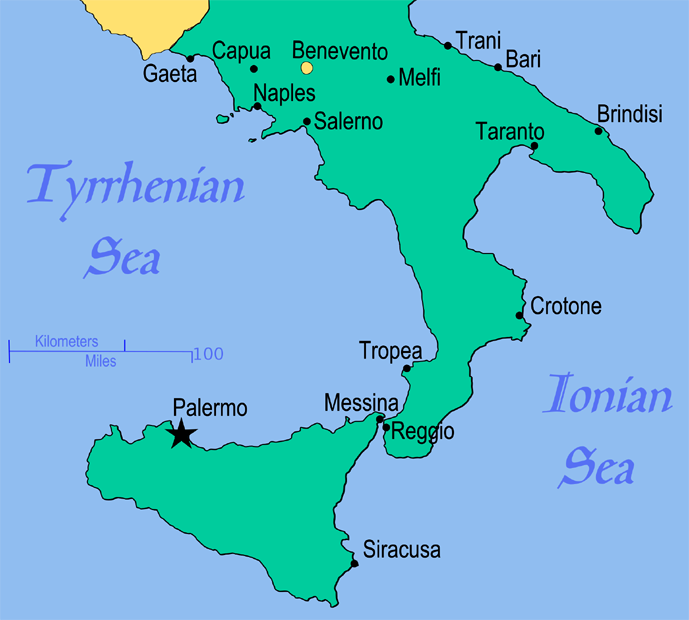
Once Generalfeldmarschall Rommel was defeated and North Africa was won, Tony was engaged in heavy fighting in Sicily, the island off the toe of Italy. Once Sicily was secured, he was part of the sea-borne landings at Taranto in mainland Italy in September 1943. Pushing north, they fought their way to Foggia before they were taken out of the line to return to the United Kingdom to prepare for D-Day:

2000px-Kingdom_of_Sicily_1154_svg

On Sunday, September 17th 1944, as the Allies pushed north eastwards, their bravery was again put to the test as the Battalion jumped onto Renkum Heath in an attempt to capture the Rhine crossings at Arnhem, the so-called, “Operation Market Garden”. By this time Tony was the Second in Command of 8 Section, No 11 Platoon, T Company.
Tony and his fellow parachutists suffered severe casualties around Den Brink and the Queen Elizabeth Hospital as they tried to rescue the 2nd Battalion who had been cut-off and surrounded at the bridge at Arnhem, the famous “Bridge too far”. Eventually however, Tony, along with the survivors of the 2nd Battalion, was forced to retreat to the Division perimeter which was by now surrounded and besieged at Oosterbeek.

1 para busy
It is believed that Tony was wounded in the fighting at Oosterbeek, in the area near the Regimental Aid Post at Kate ter Horst’s house. Unfortunately, Tony died from his wounds and he was one of 57 parachutists given a temporary burial in mass grave in the house’s garden. Tony was only 21 years old when he died on September 26th 1944.
Many years later, on March 18th 2010, an appeal appeared in the “Penarth Times”. It was from R R Tolhurst (Lofty), who had borrowed a picture from H Rowan, of T Troop, the 1st Parachute Battalion. He was in the same trench, right next to Tony Lloyd when the latter was killed. Earlier, Tony had taken a photo of H Rowan, busily engaged in shooting at German soldiers. After Tony’s death, it managed to make its way back to Penarth in Wales. In a wonderful magnanimous gesture however, Tony’s parents, Harold and Ada, sent it on to H Rowan after the war, presumably because it showed him on the photograph rather than their own son. Photographs taken in the heat of battle are not common, but any which are taken by soldiers rather than official war photographers are extremely rare. Here is the photograph:

corner street

Corporal Anthony Bertram Lloyd MM was, by anybody’s standards, a real hero. He had spent most of his time during the war performing the same deeds of brave derring-do that boys in the 1960s used to read about in their comics such as “Victor or “Valiant”.

hurricane

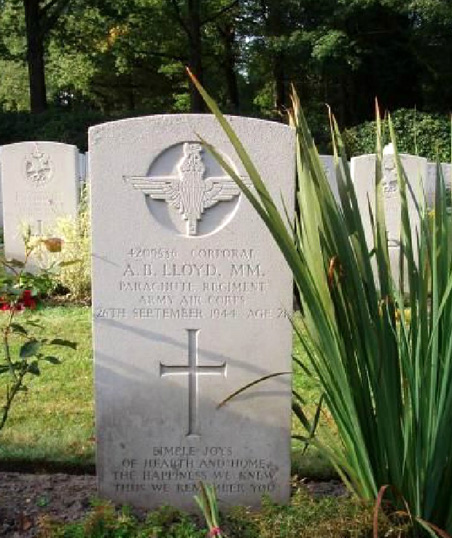
Tony now lies in Oosterbeek War Cemetery in Arnhem, the town he fought so bravely to liberate from Nazi occupation. People throughout the whole of Holland are now completely free to live their lives exactly as they wish, thanks to Tony Lloyd, and his countless thousands of brave companions :

grave

The inscription reads:

“Simple joys

of hearth and home,

The happiness we knew

Thus we remember you”

I could not have written this article without the help of these two websites.


21 Comments

Filed under Aviation, History, Nottingham, The High School

“Go straight to Hell ! Do not pass Go ! ” Part One

Having explored the history of the High School for more than twenty five years, I have always thought that the school’s beginnings are shrouded in mystery. For me, the High School has always been very like the Soviet Union:

“a riddle, wrapped in a mystery, inside an enigma”

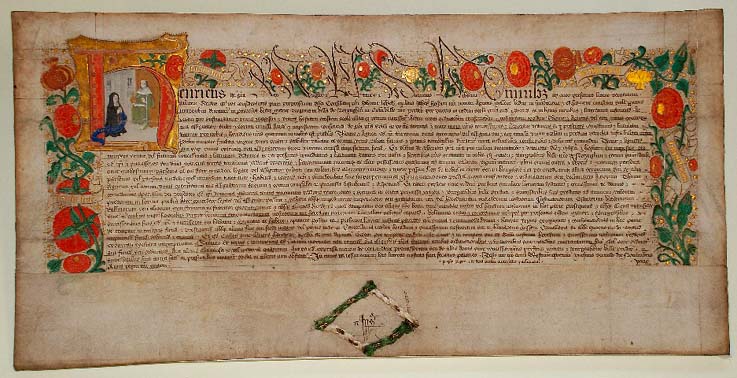
What do we know about the founder of the school, Dame Agnes Mellers, for example? What was she like as a person? There are a very few illustrations which are thought to be her. This is the school’s charter:

charter

And here is a close-up of Dame Agnes and King Henry VIII:

charter001

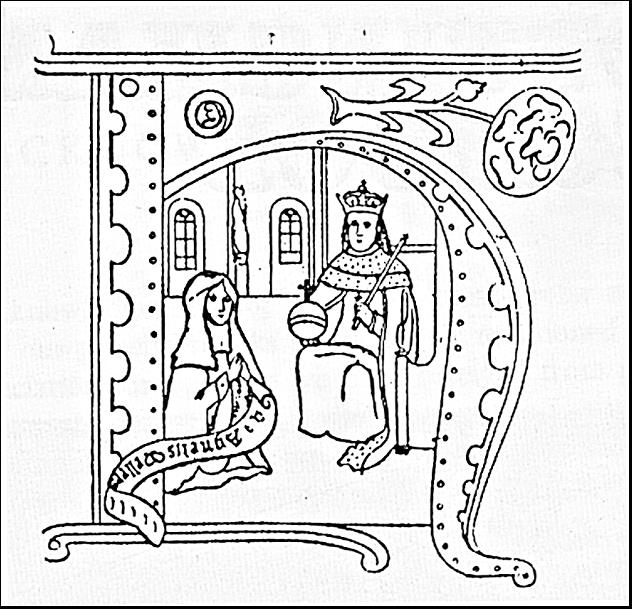
This is the charter changed into a line drawing:

agnes

For me, there have always seemed to have been two enormously important motivating forces in her character. The first was her staunch religious faith as a Roman Catholic with a sincere love of Jesus Christ and the Catholic Church. Dame Agnes seems in many ways to have been an uncomplicated soul, who viewed the world in a simple direct way. She tried to be a good person, with the sincere belief that we should all try to make things better rather than worse, that we should do good things rather than evil and that we should always strive to be on the side of the Angels.

The second motivation for her was the love she had for her husband, Richard, which seems as sincere and unswerving as her love for the Church. Richard was, as his name suggests, a rich man. He was at one time or another, Sheriff of Nottingham (1472-1473), Chamberlain (1484-1485) and Royal Commissioner and Mayor of Nottingham (1499-1500 and again in 1506). In 1499, he is known to have given twenty shillings to help repair the Hethbeth Bridge, as Trent Bridge’s predecessor was called. Here is one of the last photographs ever taken of the old bridge before it was superseded by the present Trent Bridge. You can certainly see why it was easier for the river to freeze up in those days:

old-trent-bridge-1871xxxxxxxxxxxxxxxxx

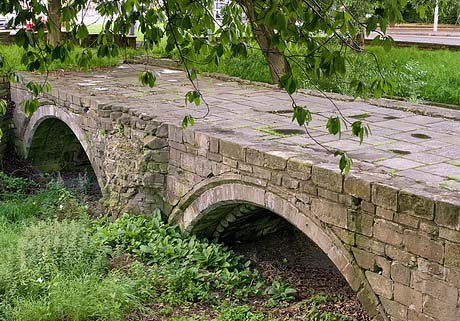
This is all that remains of the Hethbeth Bridge nowadays:

771942beth heth xxxxxxxxxxx

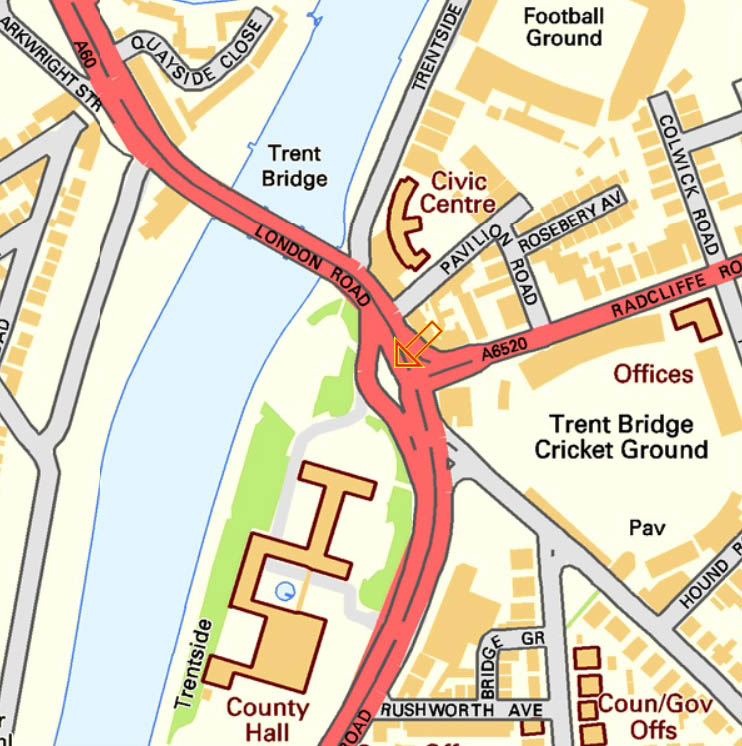
It is in the middle of a road island to the south of Trent Bridge. If you decide to take a look at it, be very careful of the traffic and use the proper crossings. Look for the (camouflaged) orange arrow in the centre of the (red) road junction:

trent

Richard Mellers was a brazier, and probably a potter, and he had certainly dealt in metal pots and dishes. Most important of all, he owned the largest church bell-foundry in the region. The site of his premises has long disappeared, but its exact location is still known today.

From 1888 onwards, just a very few yards north of the city centre, steps began to clear away:

“a curious V-shaped slice of slum property…a most unhygienic and immoral neighbourhood and nothing good could be said for it”.

This slum clearance took a number of years, and resulted in the formation of King Street and Queen Street, the latter being opened on June 22nd, 1892.

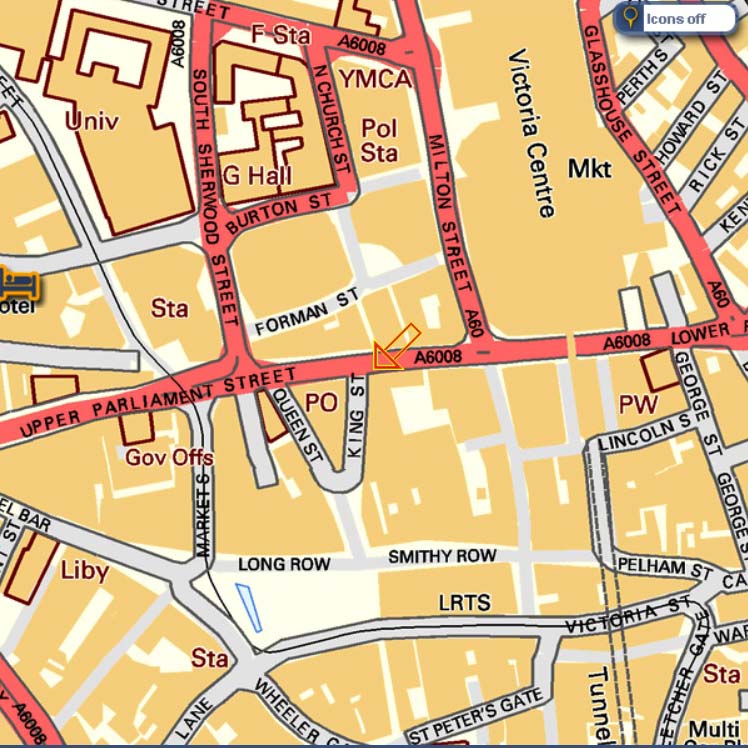
During this time, it was inevitable that, along with all the slums and all the undesirable features, a few other more reputable premises were destined to disappear. Among these was Richard Mellers’ Bell Foundry, which is known to have stood more or less exactly on the site of the present day Queen Street Post Office. The orange arrow points to the general area, and the letters PO stand for the purple edged Post Office:

king street

Perhaps it was working so close to such an “immoral neighbourhood” that deflected Richard away from the straight and narrow. He had, for example, already paid out £20 to be the Mayor of  Nottingham for twelve months. There wasn’t really much of the democratic process involved here, or indeed, much evidence of any genuine interest in the workings of democracy. That payment of £20, a rather sizeable sum of money by modern standards, may well have been the reason that, in the very same year, Richard had been so keen to do a good deed by paying  for the upkeep of the ever ailing Hethbeth Bridge.

Richard was certainly widely known as a fairly unscrupulous businessman. During his lifetime, in his efforts to acquire great personal wealth, he certainly seems to have cheated many of his bell buying customers. In 1507, for example, we know that Richard had received a pardon for having committed offenses against the statutes of weights and measures. This charge is believed to have related to problems with the purity of his bells and the metal they contained. The pardon would only have been granted because of his previous position as Mayor of Nottingham. A less prestigious person would have been in very, very, serious trouble. These bells, though, are all 100% the real peal:

100911_Lowell_bells_147.jpg

To be continued……………………….

13 Comments

Filed under Criminology, History, Humour, Nottingham, The High School

When the mighty Trent turned into a tiny stream…

In a couple of previous articles, I have mentioned two different extremes of weather at Trent Bridge, namely freezing ice and snow and then, quite frequently straight afterwards, horrific floods, when a sudden melt of huge snowdrifts overfills the river. Such a sequence of events may raise the water level by twelve or fifteen feet above normal and increase the rate of flow to a situation when 45,000 cubic feet of floodwater go past the bridge every second, as opposed to the more normal figure of 3,000. What I have not mentioned so far though, is a complete lack of rainfall and the consequent drought.

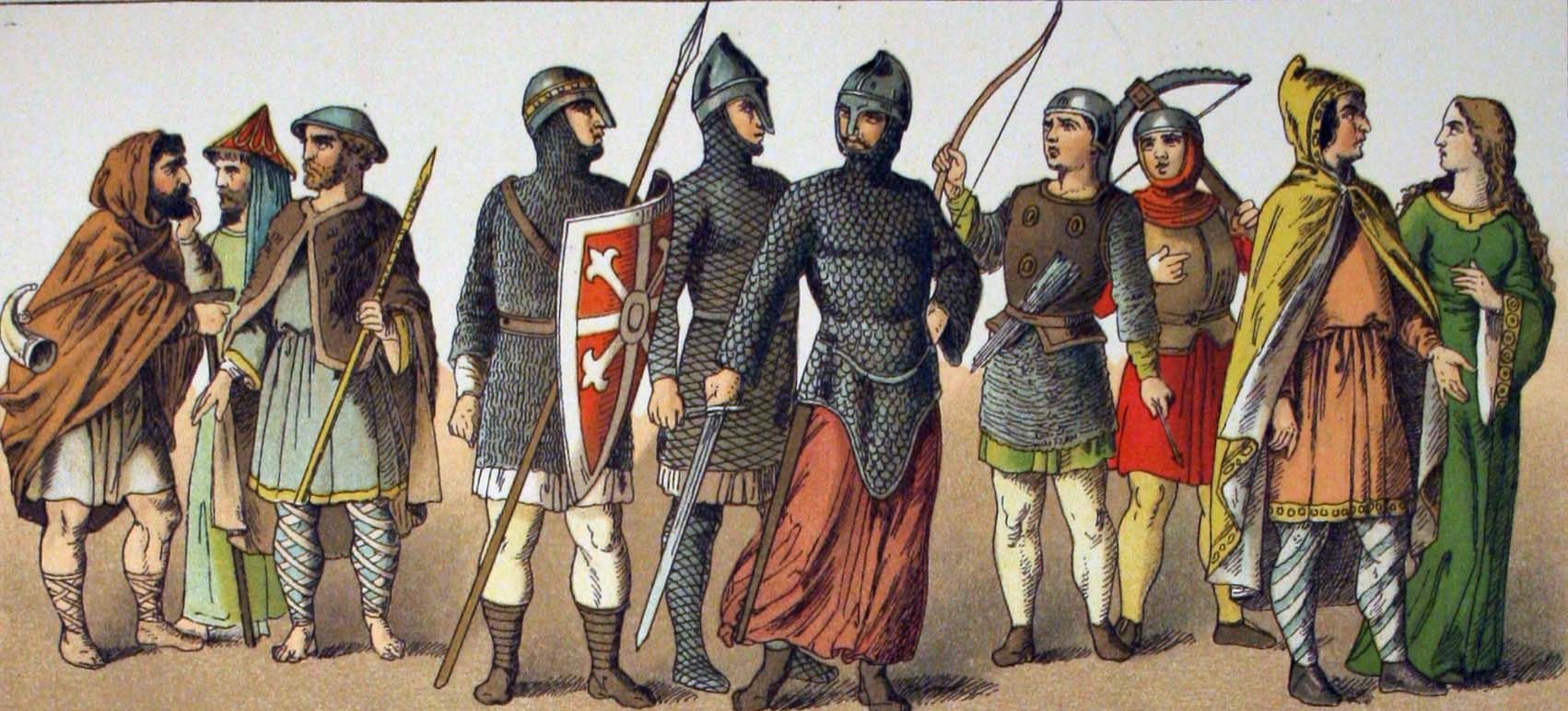
Almost a thousand years ago, in 1101, Nottingham experienced a terrifying earthquake. Here are some people in 1100. Can you spot Robin Hood? (He is wearing a cunning, yet comfortable disguise in his traditional Lincoln Green.)

1000-1100,_Norman_

Bizarrely, once the earthquake had stopped, the River Trent dried up and then ceased to flow for several hours, presumably as it drained into, and then eventually filled up, a huge crack or cavern in the ground that the earthquake had created somewhere upstream from Nottingham. Once that was done, the waters returned to normal.  Another source gives the date of this amazing event as 1110 and says that the River Trent was dry at Nottingham for 24 hours. Strictly speaking, though, that is not a genuine bona fide drought.

Two hundred years or so later though, in 1354, the weather was extremely dry in the whole of England:

“This year, the country was affected with a great drought, in which Nottinghamshire, from its peculiar geographical position, suffered extremely; in both Nottinghamshire and Derbyshire no rain had fallen from the latter end of March until the close of July.”

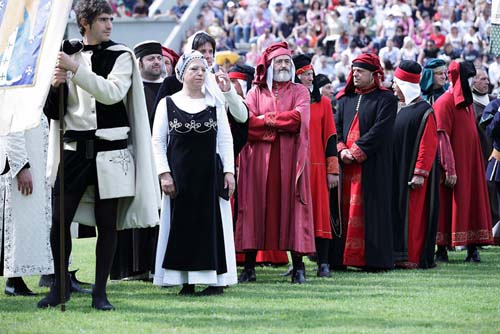
It is difficult to believe that this prolonged lack of rain would not have affected the amount of water flowing under Hethbeth Bridge. Here are some people in 1354. It looks like the start of a football match to me:

participants in mediaeval costume on field at the Corsa all'anello in Narni Umbria

The four years of 1538-1541 produced extreme drought throughout the whole country, with three successive fine and hot summers from 1538-1540. In the latter year, cherries could be picked and eaten by the beginning of June. Grapes were ripe by early July. Both 1540 and 1541 were exceptionally dry years overall, and in both summers, the River Thames was so low that sea water backed up above London Bridge. It would be interesting to know what effect such amazingly hot and dry weather must have had on the River Trent. Here are some people of this period, waiting for a shower of rain, but looking a little worried that global warming has perhaps started five hundred years too early. I wouldn’t have liked the hat with the feather:

tudor

That dry summer of 1540 was the warmest until 2003, and countries in Western Europe christened it the ‘Big Sun Year’. Very high temperatures prevailed from Germany to the Netherlands and no rain fell in Rome for at least nine months. Many people died of heat stroke and heart failure. Reportedly the waters of the River Rhine were so low that the river could be crossed on horseback. People could walk across the River Seine in Paris without getting their feet wet. In England during these four years:

“rivers and streams were drying out in parts. A remarkable series of droughts, with a burning sun during the summer”.

In 1541:

“At Nottingham a remarkable drought; almost all the small rivers dried up, and the River Trent diminished to a straggling brook. Many cattle died for want of water, especially in the county of Nottinghamshire, and many thousands of persons died from grievous diarrhoea and dysentery.”

“Trent a straggling brook”

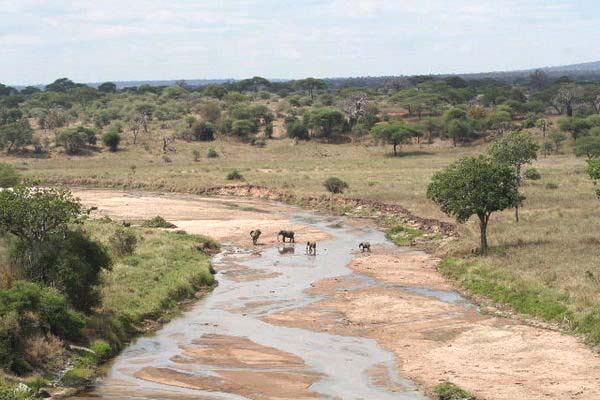
I could not find any pictures of the Trent as a “straggling brook”, but this is close. And no, the hot weather did not attract any elephants to Nottingham:

elephsnts

Forty years later, in 1581 the River Trent apparently “dried up completely” but further details of this event are not very much in evidence, beyond the rather strange date when it was supposed to have occurred, supposedly December 21st. Perhaps a build up of ice higher upstream brought the river’s flow to a stop.

Ten years later, in 1591,

“A severe drought destroyed practically all the crops and vegetation in the areas around Nottingham. The rivers Trent and Erewash, plus other rivers, were almost without water.”

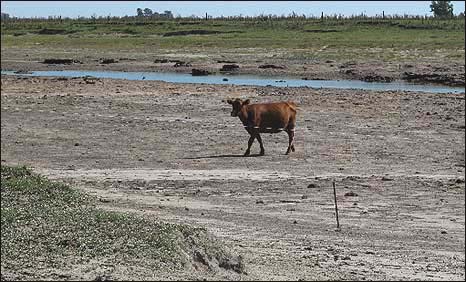
People actually remarked how like Texas the landscape had become:

cow

There was another “uncommon drought in Nottinghamshire” in the spring of 1592. In the summer there were strong westerly winds to dry the land even further, and hardly any rain fell.

“The Trent and other rivers were almost without water. In summer, the Thames was so shallow that horsemen could ride across near London Bridge & the River Trent was also said to be almost dry.”

This is the old London Bridge of this period:

london bridge zzzzzzzzzzzzzzzzz

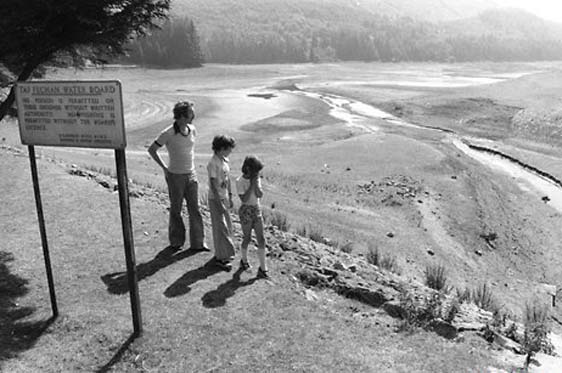
After this, there is then a hiatus of some three or four hundred years until the twentieth century. I have been unable to trace any other noticeably dry periods during this intervening time. The next striking piece of dry weather comes in the mid-1970s, with an absolutely scorching summer in 1975. This initial heat and drought was followed by a very dry winter, and then the unforgettable drought conditions of the summer of 1976. These periods of extreme weather saw the River Trent during the end of the month of August 1976 at its very lowest level in modern times. Indeed, this summer produced what was called the Great European Drought with the lowest soil moisture readings in London since 1698.

Unfortunately nobody in Nottingham seems to have thought of preserving this amazing weather with their camera. Instead, I will just show you one or two typical scenes. Here is an unknown reservoir which should have been a vast lake. Flap those flares:

_72775633_1976-drought

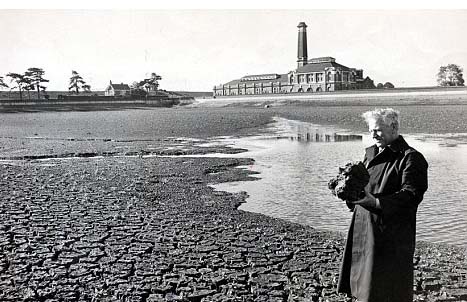
Here is a reservoir at Huddersfield in Yorkshire:

hudd ressser

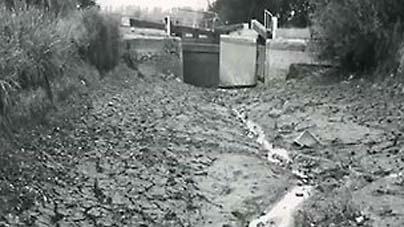
Here is a lock on what should have been a brim full canal:

foxton lock

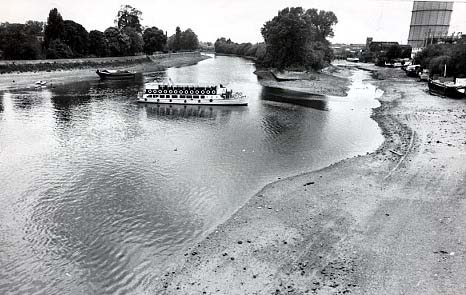
This is the River Thames at Kew near London. The River Trent at Nottingham would presumably have been comparable:

r thames kew

And finally, here is Walton Reservoir in Surrey, being monitored by the least appropriately dressed man in 1976:

reser at walton thsame ssurrey


11 Comments

Filed under History, Humour, Nottingham, Wildlife and Nature

“I have just had a Female Eider Duck come in shot to night…”

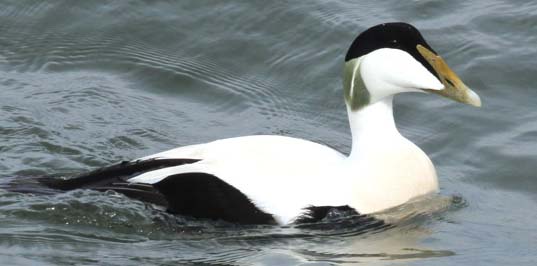
The male eider duck is a particularly beautiful bird:

male-eider-duck-i xxxxxx

It has a much imitated call. This is a recording by “markwilmot”:

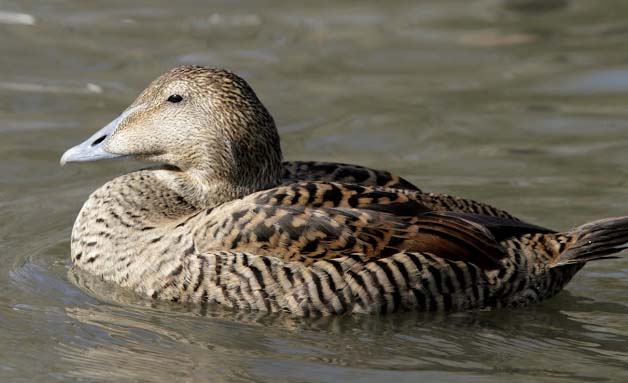
A female eider is a much drabber bird than the drake, and arguably, is barely recognisable as the same species:

eider duck female xxxxxxxxxxxx

Eiders are common enough birds around our coasts, particularly in the north east, but inland, they remain very much a rarity. This report details the only Victorian occurrence in Nottinghamshire:

“According to “The Zoologist” magazine, a female eider was shot near Nottingham on November 16th, 1882.  It had been attracted to the area by the large number of acres of farmland under water at the time and its acquisition brought the number of Notts species to 240.”

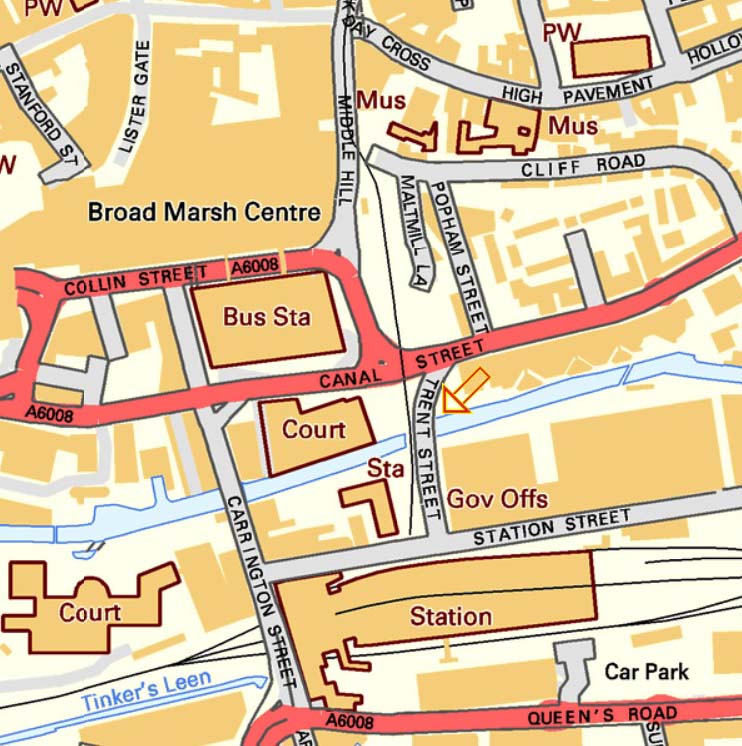
The unrecorded wildfowler who shot this rather drab, but extremely rare bird, immediately took it to Mr J Stanley the “Art Naturalist and Sporting Trophy Mounter” of 5, Trent Street, in the City of Nottingham. The wildfowler was probably ignorant of the bird’s identity, but he would have been well aware of its value. For his part, Mr Stanley would have bought the bird from him without a moment’s hesitation. Look for the orange arrow:

trent st

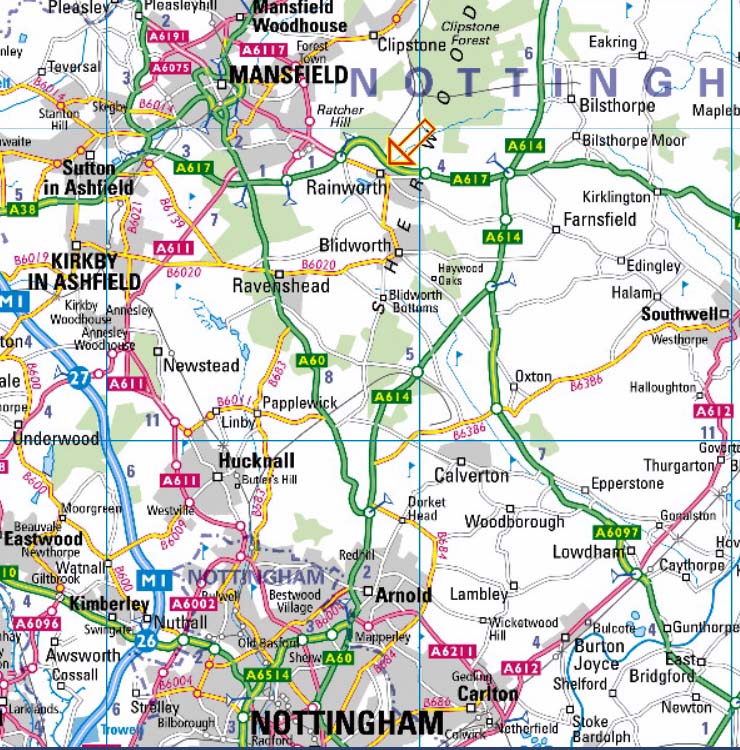
Mr Stanley knew very well what the bird was, and he knew equally well who would pay a very large amount of cash for it.  At 8 o’clock that evening, therefore, he sent a note, presumably by hansom cab, to Joseph Whitaker at Rainworth, some fifteen or so miles  from his shop. Again, look for the orange arrow:

rainworth

Mr Stanley must have been more or less totally certain that Joseph Whitaker, an avid collector of rare birds killed in Nottinghamshire, would pay him handsomely for such a rarity. Stanley’s note read, spelling mistakes and all:

“I have just had a Female Eider Duck come in shot to night in our Medowers it is left for me to buy if you have not got one & you would like it Please to right by return & oblidge your

faithefully

J Stanley”

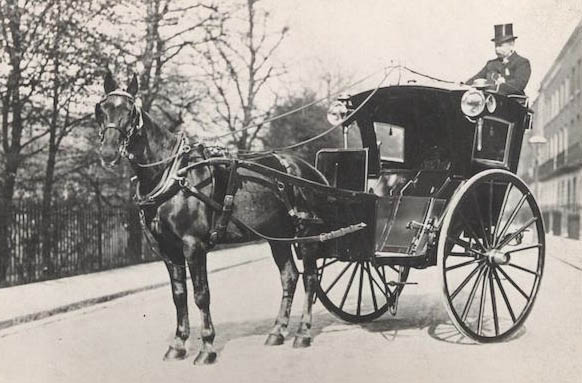
Joseph Whittaker, of course, came immediately to Nottingham, perhaps even in the same hansom cab in which Mr Stanley had sent the note:

1998-20707-hansom-pp

And Joseph Whittaker duly bought this exceptionally rare prize, although, unfortunately, we do not have any record of the price he paid.
Thirty years later, though, in 1913, Fred Smith, described by Whitaker on another occasion as “that shocking poacher”, was to charge him seven shillings for a pair of sheldrakes, a relatively common species, so we can only guess at what price was paid for a genuinely rare bird.

3 Comments

Filed under History, Nottingham, Twitching, Wildlife and Nature

The Last One to Die

So often when we feel that we are repeating history, it is almost always, the negative, tragic sort.

As we have already seen, young Dab Furley’s was a life cut tragically short at the age of only nineteen at Miranshah in Waziristan, in 1919.

another BIGGER close up

If only the powers that be had read about the young man who perished in the middle of nowhere in northern Nigeria in mid-December 1903.
Old Nottinghamian, Lieutenant Cyril Amyatt Wyse Amyatt-Burney was slaughtered by the natives in the village of Deckina in northern Nigeria. He was leading a force sent by British authorities who were keen to restore the King of Ankina to his rightful position, after he had been ousted from the throne by a usurper:

tanzania

Lieutenant Amyatt-Burney was:

“…a zealous officer and a young man of promise and energy.”

His body was never found, just a bundle of some of his blood stained clothes, secreted away at the back of a native hut.

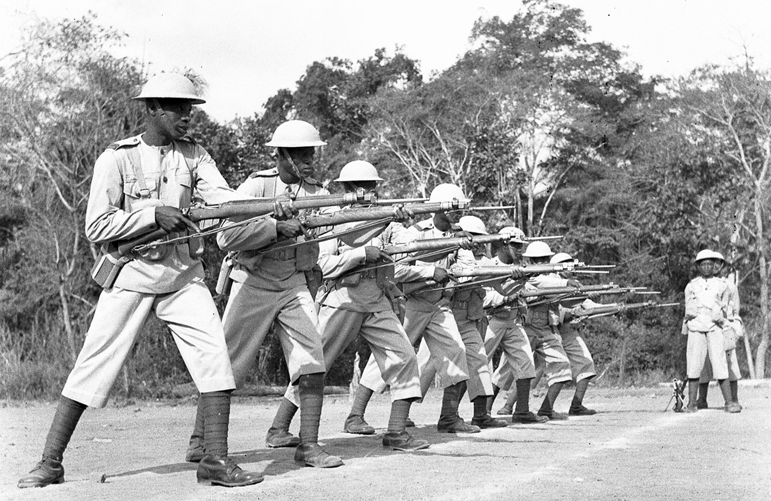
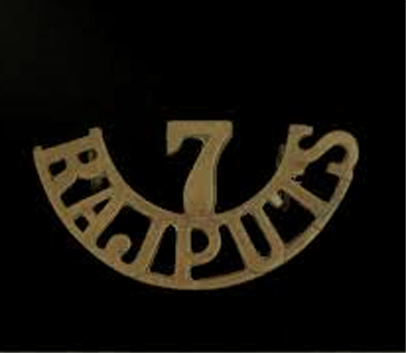
In 1937, another Old Boy, Lieutenant E.S.R.France, of the 3/7th Rajput Regiment, was to sacrifice his young life in the Shahur Gorge, on the Manzai-Wana road, on India’s North-West Frontier.

untitled 2

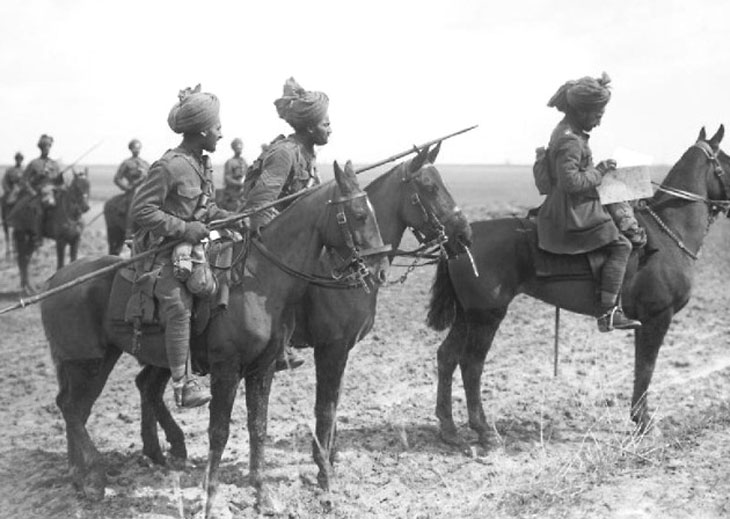
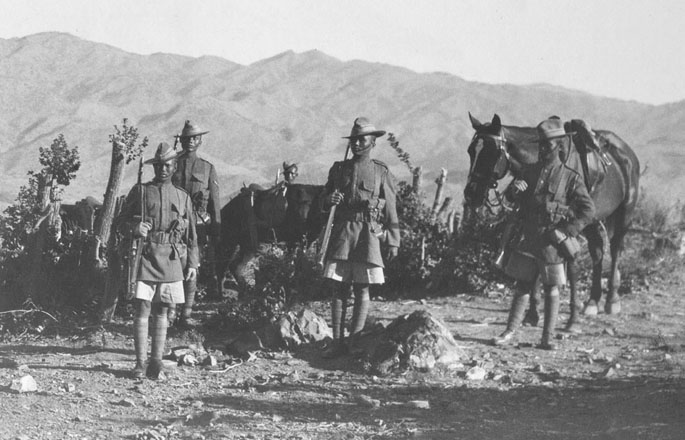
He was with twenty nine colleagues of the 3/7th Rajput Regiment:

cavalry

Lieutenant France, who had left the High School only five years previously, was just twenty three years of age.
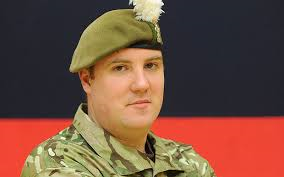
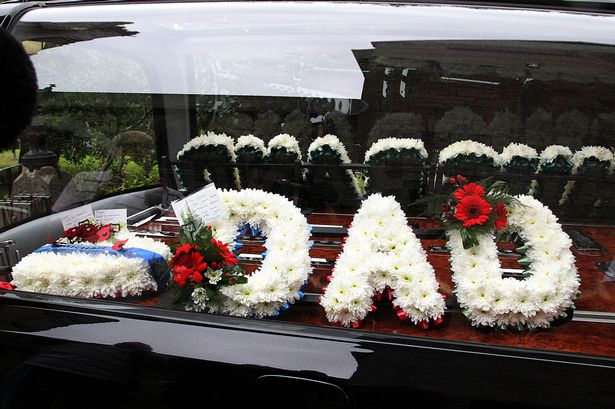
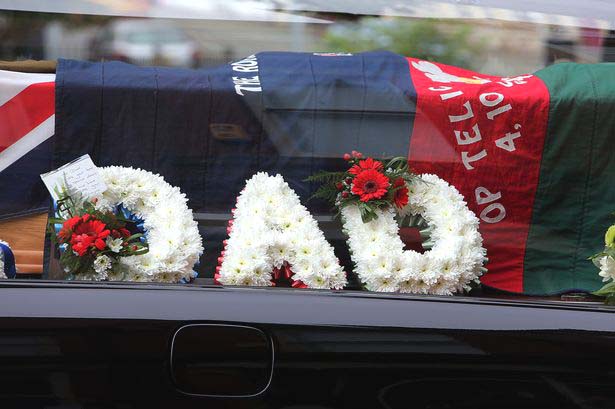
Literally as I wrote the stories of these two tragic deaths, though, news came in of the 454th member of the British Armed Forces to be killed in Afghanistan during the present era.  He died in hospital from his wounds on Thursday, July 24th 2015. Why not click on this link, and have a quick look at the 454 young people lost? the 454 families traumatised for ever? the 454 little photographs that mean so much to the people who know what they represent:

cammy
Lance Corporal Michael Campbell, of Colwyn Bay, in north Wales, had been shot while out on patrol with the 3rd Battalion, The Royal Welsh in 2012, more than three years previously.

tough British-Soldier-dies-from-Afghanistan-injuries

Michael, popularly known as Cammy, was a reservist and he died at Birmingham’s Queen Elizabeth Hospital. His fellow soldiers said the 32-year-old was an “outstanding soldier” who was always “determined” and “courageous”. Michael had a wife and four children.

carried
The Ministry of Defence said:

“Lance Corporal Campbell epitomised everything a reservist in 3 R Welsh should be – dedicated, professional and willing to volunteer on operations wherever he was required, a true Welsh warrior. The battalion has lost a charismatic and loyal friend and our thoughts and condolences are with his wife Chrissy and his wider family at this very difficult time.”

Funeral-of-Lance-Corporal-Michael-Campbell 4
Retired Lieutenant Colonel Stephen Webb said:

“Everyone who served alongside Lance Corporal Campbell will be devastated to learn of his passing.  He joined the battalion during our pre-deployment training and fitted seamlessly into his platoon and company. He was an outstanding soldier and very talented junior commander: skilful, determined, measured and very courageous: he set an excellent example to those around him.”

It is tragic that he has died three years after his initial wounding and the thoughts and prayers of all of us are with his family at this most difficult time.”

funera
Lieutenant Colonel R Manuel JP – the commanding officer of the 3rd Battalion, The Royal Welsh from December 2012 to June 2015 said:

“I was deeply saddened to hear of the tragic loss of Lance Corporal Campbell yesterday. I had known him for a number of years; he was a true reservist with a huge amount of operational experience under his belt. A larger than life character, always upbeat, at the heart of things and looking for the next challenge.”

Major Charlie Carver said Lance Corporal Campbell was “one of life’s true characters. One of the reasons that he was able to fit seamlessly into the company was his keen sense of humour; he excelled at the banter which only soldiers seem to understand.”

Campbell-593613

Major D Evans, described him as ‘reliable and professional’, adding:

‘Cammy always brought a smile to your face with his wit and cutting sarcasm and he was always on hand to pass on his experience to the new, and not so new, members of the company.
When I learnt that he had volunteered, yet again, to deploy on what would be his fourth tour, I told him that he had done enough already, his reply was “Well someone has to go and look after you, Boss.
That is what Cammy was truly about. He was a team player, who was committed to serving his country.

Funeral-of-Lance-Corporal-Michael-Campbell dad

Michael had joined the Army Reserves in April 2002 and was working as a platoon radio operator in October 2011.
He was wounded in the stomach while crossing a road in Helmand Province on April 3rd 2012, having been confronted by “accurate, heavy and sustained enemy fire”.
This enemy fire was returned, with Lance Corporal Campbell and his fellow soldiers vigorously attacking the Taliban firing positions. The Ministry of Defence said in a statement:

“Despite being wounded, Lance Corporal Campbell continued to suppress the enemy, drawing fire on to himself so that the remainder of the multiple could cross an open and exposed area to get into better cover.”

Funeral-of-Lance-Corporal-Michael-Campbell
Michael was evacuated by helicopter first to Camp Bastion and then to Birmingham’s Queen Elizabeth Hospital, where he was readmitted earlier this year. Initially, his recovery had appeared to be going well, as he left hospital to go to Headley Court, the military’s specialist rehabilitation centre for injured servicemen and women. Michael initially had to use a wheelchair but fought back and learned to walk again. All this time, though, he had to return to hospital for a series of operations.
Lance Corporal Campbell had served on a number of other tours, including Iraq, and proved to be a “highly capable soldier”, the Ministry of Defence said.
Defence Secretary Michael Fallon described Lance Corporal Campbell as

“proud and professional, a dedicated family man. The tributes of his comrades describe L/Cpl Michael Campbell as a popular and committed soldier devoted to his regiment and his family. Proud and professional, he epitomised the ethos of the Army reservist and he had completed numerous tours of duty in Afghanistan and Iraq. It is particularly tragic that Michael Campbell should die of wounds after such a period of time and I send my deepest condolences to his family and loved ones at this sad time.”

Sergeant Paul Thomas, who served with Lance Corporal Campbell, told the large crowd at his funeral:

“His knowledge and enthusiasm rubbed off on all around him, especially when guiding the younger members of the platoon. He had truly found his calling in life. He was hugely proud of being a Royal Welshman and even more so of his family. A better man you could not find.”

AFGHANISTAN-322225

I could not have written this article without the information provided on the Internet by the BBC, the Daily Express, the Daily Mail and the Daily Mirror.

And here’s that link that I mentioned at the beginning of the article. This one page of the Internet is a singularly humbling one. It contains the names of every single person who died in Afghanistan.
Every single person in this list had parents, perhaps brothers and sisters, maybe a wife or a husband, perhaps children, certainly friends and acquaintances, perhaps a pet, a hobby, plans to do things, places to visit, a garden, a car, all those things that make life so attractive. But no more.

6 Comments

Filed under History, Nottingham, Personal, Politics, The High School

“Dab” Furley Part Three

When he left the High School, Percival Henry Biddulph Furley went immediately to sit the Army Entrance Examination. He scored a record 10,000 points, over seven hundred more than the candidate in second place.

Dab was immediately sent out to India. During his short time there, he was described as…

“…specially marked as a man to keep on as a future adjutant…the officers and men loved him.”

And that was it for Second Lieutenant Percival Henry Biddulph Furley.  His game was up. He was mere hours from buying his farm.

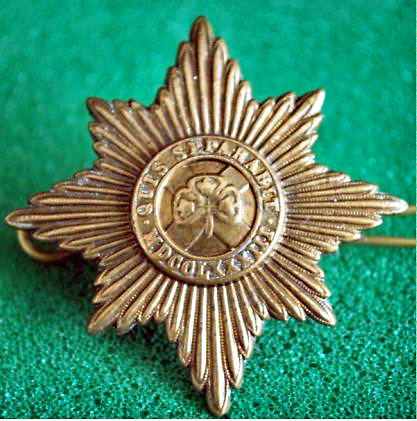
The Grim Reaper put his newspaper down, switched off the radio, got to his feet and reached for his trusty scythe:

Irish_Guards_cap_badgexxxxxxxxxxxxxxxxxxx

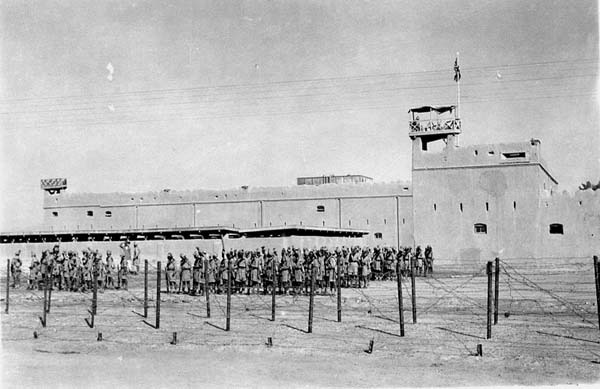
Dab Furley was only nineteen years old, but, instead of letting him get used gently to military life in India by posting him to some nice peaceful place, the authorities immediately sent him to the North West Frontier. Most probably, Dab went straight to the recently constructed Miranshah Fort, which the British had built in 1905 to control North Waziristan. There could have been no place more dangerous in the whole of the British Empire:

fortxxxxxxxxxxxxxxxxxxxx
Here, operations were continually being carried out against the Wazirs and the Mahsuds along what would nowadays be the border of Pakistan and Afghanistan. This is a condensed version of the official record of events:

“Reports had been very persistent at Miranshah of an impending advance by Afghan troops, but these were discounted by a reliable report that these forces were short of transport and supplies, and were adopting a defensive role.
Their leader continued to incite the Wazirs to attack and by May 31st large numbers of tribesmen had assembled. The General Officer Commanding the 67th (Bannu) Brigade decided to disperse these hostile tribesmen. They would also destroy certain villages whose inhabitants were known to have committed offences, and to have participated in attacks on the posts:

5thRoyalGurkhaRiflesNorth-WestFrontier1923

The following day the North Waziristan Militia moved out with 250 men and fought a very successful action. The enemy was put to flight with a loss of about 90 and the towers from where he had been sniping the Miranshah Fort were destroyed. Our casualties were Second Lieutenant PHB Furley, of the 1st/41st Dogras, and two Indian soldiers killed, and five Indian ranks wounded.”

Dab Furley was killed on June 1st 1919. He was just nineteen years old. His family church back in Nottingham expressed their sympathy in the All Saints Church News of August 1919:

“The sympathy of the Church goes out to the bereaved. Percival Henry Biddulph Furley, 72 Cromwell Street, 2nd Lieut. 41st Dogras Indian Army; killed in action at Miranshah, W India, June 1st 1919; age 19; Communicant; educated Nottingham High School, Captain of School and Cricket XI; first in all England Examination for Indian Army. Letters from his CO and Company Commander speak very warmly of his character and soldierly gallantry.”

allsaints-outsidexxxxxxxxxxxxxxxx

The Grim Reaper opened his back door, put his trusty scythe back in the kitchen cupboard alongside the vacuum cleaner, got a beer out of the fridge and went off to watch the football.

By 1919, various wars in this benighted land had already dragged on for the best part of a hundred years. They continued on and off during the 1920s. In the 1930s, the struggle was eagerly taken up by Mirza Ali, the Faqir of Ipi, who intensified violence in the region. Here he is. He reminds me very strongly of somebody, although I can’t quite put my finger on it:

Mirza-Ali-Khan-Faqir-of-Ipi

The interminable cycle of wrongdoing and violence still continues to this very day. In the early 1950s, the Pakistan Air Force carried out operations from Miranshah Airfield and Miranshah Fort against a serious revolt led by another rebellious Faqir.

After 9/11, the “War on Terror” saw almost countless strikes by pilotless drones of the US Central Intelligence Agency, in an attempt to kill militants and terrorists hiding in Miranshah or the surrounding area:

Predator_and_Hellfire

Dab’s death is commemorated on the Delhi Memorial in India, on Face 3.

This slideshow requires JavaScript.

Dab’s remains were actually buried in 1919 in the garden of the local political agent at Miranshah. At the time of writing, though, this grave was unfortunately not one of the many, many thousands to which the Commonwealth War Graves Commission is able to extend its protection, and Dab’s last resting place is nowadays presumably neglected or even lost for ever. It would be a very brave person indeed who tried to place a wreath on it at the present time. Here is Miranshah after a drone strike:

drone strike
Talking of the Great War, the school magazine “Highvite” had previously spoken of the keenly felt losses of such talented young men as Harold Ballamy, Charles Boyd, Walter Howard, James Turpin and John Wootton, but this last death of Dab Furley seems to have hit the High School very, very hard. It came after some 300 previous deaths in the Great War but worse than that, at a time when the country was preparing to celebrate peace at last.

another BIGGER close up
Dab was described as the…

“finest type of English boy…keen, intelligent and thoughtful ; all manly sports… gifted …hard-working, loyal and unselfish…straight and true… unfeignedly modest… of a stainless purity.”

How foolish our nation had been, to throw away the lives of so many hundreds of thousands of its most talented young men in these blood soaked and pointless conflicts.

13 Comments

Filed under History, Nottingham, The High School

“Dab” Furley Part Two

In January of 1918 Dab Furley was promoted to be a School Prefect. He joined a group of young men whose names and nicknames were listed in the new school magazine, The Highvite.
The Captain of the School was “Dicky” Bird, and the others included “Fuzzy” Barton, the Captain of Rugby, “Seaweed” Saward, “Fickle” Parr, “Nigel” Norris, “Our Stan” Buxton, “Dreg” Morley and “Jabez” King. Here is “Fuzzy” Barton at the time, wearing the uniform of the OTC:barton

“Dicky” Bird appears in similar uniform:

fa bird

And here he is, still looking desperately worried, as a member of the Mathematical and Science Sixth Form in 1915:

bird

The Highvite magazine also contained a number of humorous advertisements, with owners appealing for the return of their lost articles. They included a pair of socks, green stripes on a pink background, interspersed with yellow clocks, buff spots and heliotrope floral design (RJC Wood, 6B), a pair of parallel bars, supposedly ejected through the gymnasium window when RF Parr blew his nose (Staff-Sergeant Hall) and a white bulldog (Miss Pollard, the school secretary). There was also a list of recent additions to the literary world, including “How to Grow a Moustache” by Mr Barry Kipping, “What to Eat and How” by Dr RF Parr, and “The Evolution of Muscle” by Staff-Sergeant Hall.
I did in actual fact search the Internet for any mention of these young prefects. Results were inconclusive, but quite interesting. I did find a JA Saward in the lists of those who had served in the Royal Flying Corps in the Great War:

Royal_Flying_Corps_cap_badge

Coincidental evidence, of course, but probably enough to convince me. The same list of RFC personnel did also include a TLE Morley, as if the two young prefects had perhaps joined up for a great adventure together. No name was supplied for JA Saward but his friend was listed as Thomas Leslie Erskine Morley.
In similar vein, I also found that an N.F.Norris had relinquished his commission in the Irish Guards on April 1st 1920, and he thereby reverted to being a mere Second Lieutenant.
On the very same day, an R.F.Parr had done exactly the same thing, in the very same regiment. Perhaps these two young prefects from the High School had hoped to preserve their friendship when they both joined the same regiment together in 1918:

Irish_Guards_cap_badge
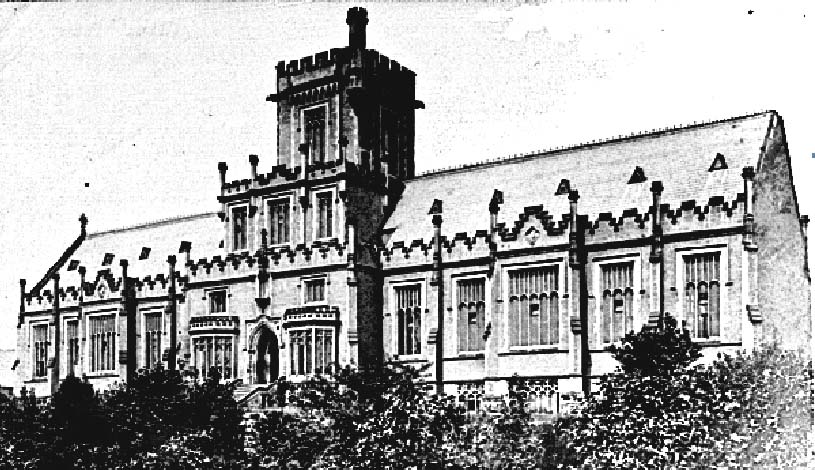
The Nottinghamian of the Great War era also carried an interesting account of the Prefects’ Room, which was situated in what is now the tower of the school…

“There are only seven chairs for the ten prefects, and Saward spends most of his leisure time chewing gum, and then trailing strands of it across the door. Towle then immediately amuses himself by electrifying these wires. Parr is usually sitting in the corner eating his dinner at 11 o’clock in the morning. Norris is rather bad tempered, and writes many private letters, and Morley and Furley do much tidying of the room, in the face of enormous odds:

close up 2

King practises Jiu-Jitsu on chairs, tables, air, or any unfortunate person whom he may happen to get hold of. The room has two doors, one for people, the other for draughts, and is lit with a gas fire that keeps popping, but does not give much heat.”

In a rather bizarre aside, the magazine goes on to say that Jacob (alias J.A.Saward) is shortly going to marry the Queen of Sheba (alias J.King); the wedding is to be a very quiet one and there are to be no flowers by request.
Of these Prefects, Messrs Bird, Barton, King and Saward were to be four of the five Captains of the School in 1918, as young men departed for the Front. During the Summer Term, it was Percival Henry Biddulph Furley’s turn to hold the Number One Job.
Dab’s elder brother was the splendidly named Athelstan Willis Furley, who was his senior by six years. During the Football Season in 1908-1909, he was one of six Fifth Form boys, were found guilty of “systematic and persistent slacking at football”. The wrongdoers were H.G.Ellis, A.M.Forsyth, A.W.Furley, P.K.Johnson, E.R.Oakden and R.Staniforth.  The Prefects, responsible for school discipline, offered them the choice of writing out fifty lines of Shakespeare, or two strokes of the cane. They all opted for corporal punishment, except for Staniforth, who wrote out the Shakespeare. During the 1910-1911 Season, the School’s annual Eight-a-side football competition was won by a team consisting of H.B.M.Groves (captain), E.P.Betts, W.Clayton, P.L.Coppock, E.I.Dexter, A.W.Furley, L.B.Kellett and A.L.Lowe. During the Great War, Athelstan Willis Furley served in the Nottinghamshire Battery of the Royal Horse Artillery:

NLS_Haig_-_Artillery_going_through_a_cutting_in_the_Canal_du_Nord

In 1929, Athelstan was back living with the family at 72, Cromwell Street, Nottingham.
What may well be a close relative of the Furley family was Edwin Furley Mellor who won a Standard Medal for football at the end of the 1909-1910 season. During the Great War he too was an Acting-Captain in the Royal Field Artillery. Perhaps one young man joined up to be with another member of his family. By 1929, Edwin was living at “Addison House”, 58, Addison Street, Nottingham, only five minutes walk from the school and from Cromwell Street.

At the turn of the century, a former pupil of the High School, Richard St.Clair Page, had written a short novel entitled “The Three Merles” which was a thinly veiled description of the High School around 1880-1890:

late 1890s

It was very reminiscent of works such as “Tom Brown’s Schooldays”, and described how a new headmaster had arrived at a quiet, comfortable school, and changed it completely by the very force of his personality. The new Headmaster was Dr.Govan (Dr.Gow), and other teachers were called “Sammy” or “Johnny” Horner (Sammy Corner), and “Old Mr.Bray”, (Charles Bray). The imaginary school, like the real one, had a Mr.Lupton, and a Sergeant Holmes as its School Porter. “Doctor Govan” changes the school uniform and this is when what I presume to be Dab Furley’s father makes an appearance:

“The end of that Summer Term drew near, and Ray was walking down town with Furley of the Fourth. Each boy wore the new cap recently introduced by the Doctor. The cap fitted close to the head, and bore the quaint lozenge shaped crest of the school, with its three merles on a white ground, a badge restored to use by the Doctor, and of which the boys were proud. It was known by the vulgar boys of the town as the “three crows”. But on the top of the cap there was a small white button, visible at a distance and marking a Grammar School boy from behind. The whole school resented this; some of the boys inked it over.”

The reason that the boys from the “Grammar School” did this, was that, out in the streets, having recognised their social betters, the “vulgar boys of the town” (in real life, of course Nottingham),  would throw anything to hand at them from behind to knock their caps off, safe in the knowledge that they would never be caught.

Tomorrow, the conclusion of Dab Furley’s brief life.

13 Comments

Filed under History, Nottingham, The High School

“Dab” Furley Part One

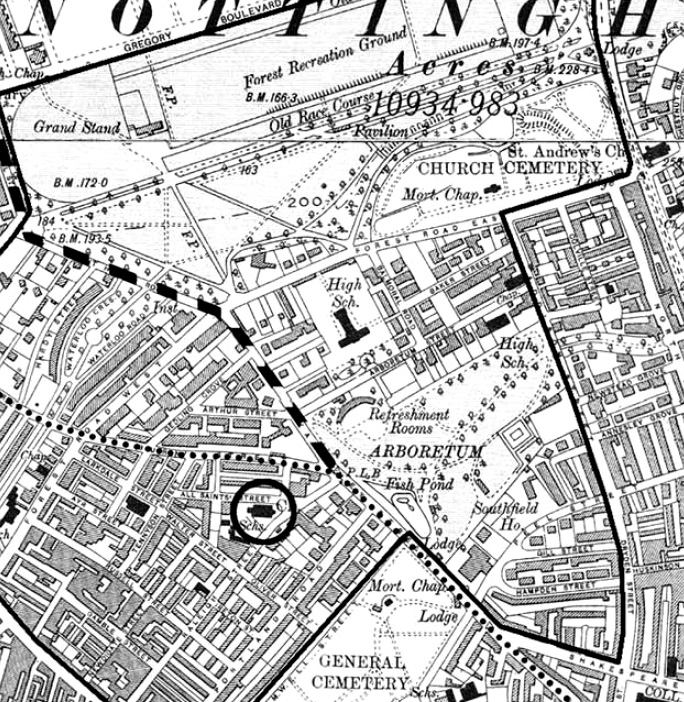
Percival Henry Biddulph Furley was born on February 10th 1900. He entered the High School on  October 2nd 1906 at the age of six. His father was Willis Furley and his mother was called Bertha. The family lived at 72, Cromwell Street, which is fairly close to the High School. Look for the orange arrow. The pale orange buildings of the High School, edged in maroon, are in the top middle of the map, bounded by Waverley Street and Arboretum Street:

streetmap

Willis Furley was a Hosiery Manufacturer, and the whole family used to go to All Saints’ Church in Raleigh Street, just a short walk from the family home. The church has a ring around it in this late 19th century map. Further towards the top of the map are the High School, looking like an inverted Letter “T”, and the Forest Recreation Ground, complete with Grandstand:

church

I do not know if this young man was called Percy at home, but he was certainly called “Dab” at school. Apparently, none of his contemporaries knew where his nickname came from. I have researched the word “Dab” as a nickname on the Internet, and the best solution comes from The Word Detective, who believes that “Dab” means “someone who is an expert in or proficient at something” as in the phrase “dab hand”. While “Dab” on its own dates apparently from 1691, this particular expression of “dab hand” first appeared at the end of the 19th century, with the oldest example being dated as 1870 (“He was a dab hand at water-colours.”)
The Word Detective is unable to supply a guaranteed origin for “Dab”, but I suspect that he is right to say that it comes from “dapper” which means “neat, elegant, smart, stylish or well-groomed”.
Dab certainly proved to be a dab hand at a great many things in his time at the High School, not least in his academic subjects. In 1912, after his first year, for example, he had clearly impressed enough to become a Foundation Scholar. Dab finally left the High School in May 1918.
He was always one of the favourites of Sammy Corner, the Deputy Headmaster, especially in the Latin and Ancient Greek classes in the Lower Sixth.
As a teacher, Mr Corner was famous for how easily he could be diverted from the work in hand. If anybody started talking about an interesting subject, especially in his Scripture lessons, the class would seldom, if ever, have to return to what they were supposed to be doing.
Dab’s other claim to fame was his talent in school plays. At this time, all the female parts were taken by boys, and, given his youthful good looks, Dab could always be made up into a very good looking girl or lady! Perhaps this was what made him an especially “Dab hand”.
The High School had stopped playing football, or soccer, at the end of the Christmas Term in 1914, ironically, just in time for the Christmas Truce in the Great War.  The First XI finished with a 2-7 away defeat against Leicester Wyggeston School on November 25th 1914. The Second XI, playing at home at Mapperley Park against the same opponents’ 2nd XI, lost by 1-5.  Dab probably did play for the High School at football, but we have no record of any of the team line-ups for this shortened season. When the school began playing rugby in early 1915, they did not play any official fixtures, but instead, spent their time trying to learn this rather complex game.
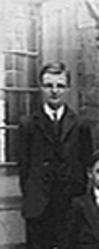
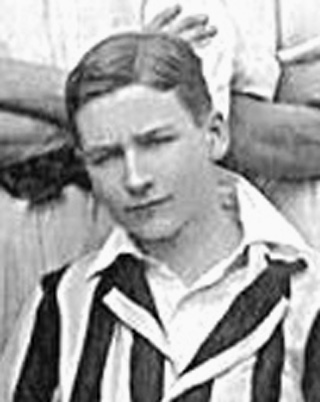
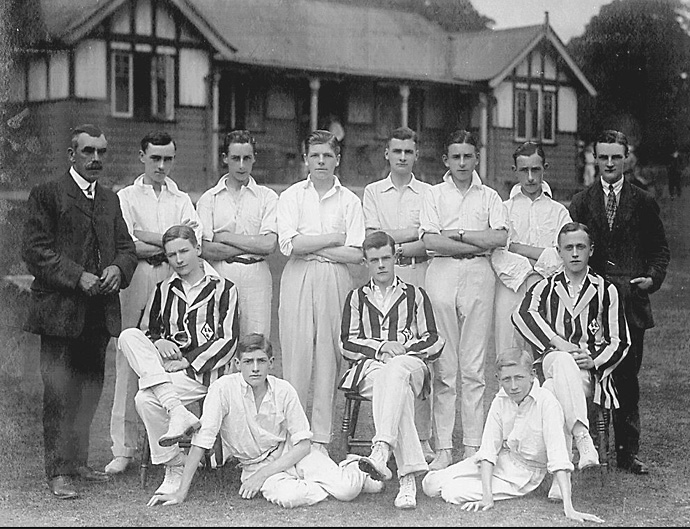
In the summer, though, Dab was to be a player in the school’s First Eleven at cricket for three years. The website “Cricket Archive” does have some of Dab’s performances listed. Here is the High School’s First Eleven in an unknown year. The coach on the left is the much respected Mr Onions, and the three young men in blazers are, left to right, Dab Furley, Roy Henderson and FL Oldham. Nobody else is named unfortunately:

furley

On May 29th 1915 against Derby School at Mapperley Park, Dab batted seventh and was run out for a score of two. He did not bowl. Derby School managed 58 all out but lost to the High School who were 78 all out, having batted on after victory, as was the custom at that time. On June 2nd 1915, playing in another home fixture, this time against Worksop College, Dab again did not bowl, but he batted sixth and was run out for a score of 17.  Worksop College were all out for 113, but the High School managed an all-out total of 125, having again batted on after victory was achieved. Here is my first attempt at an enlargement:

another BIGGER close up

The next season, on June 10th 1916, Dab travelled to Parker’s Piece, Chester Green, Derby to play against Derby School. This venue has been used for cricket from 1883 to at least 2006. Derby managed a record breaking low score of only 13 runs. JH Boyd took five wickets for only seven runs and GA Wright claimed four wickets for two runs. The rest of Derby’s total came from four extras. When the High School batted, Dab opened the innings as number two, and scored just three runs before he was out caught by Cotterill of the bowling of Stray. The High School, not surprisingly, were the victors, and batted on to score 158 all out.
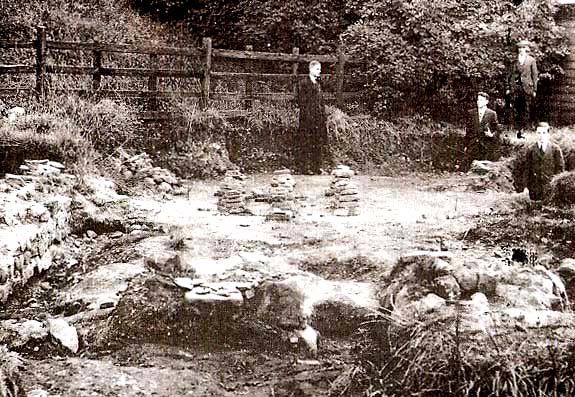
In later years archaeologists began an excavation to look for Roman remains at this site and duly found a Roman hypocaust just to the left of the pavilion:

Roman-Hypocaust-at-Parkers-Piece-Photo

Nowadays, the area has clearly gone downhill with even horrific dog attacks being reported there. Such things were clearly not a hazard in those bad old days of 1916!
I have found no more scores, but Dab went on to win the School’s Prize for the Best Batting Average during the 1917 season:

close up 2

The following year, in 1918, he was the Captain of Cricket, although this cannot have lasted long if he was to leave the school in May of that year.

Tomorrow, more about the life of Percival Henry Biddulph Furley.

3 Comments

Filed under History, Nottingham, The High School

The very first football season of them all 1888-1889 (Part 2)

In my previous article about the involvement of the High School’s ex-pupils in the newly invented Football League. I spoke in some detail about the career of Arthur Frederick  Shaw, who played twice for Notts County in that inaugural season of 1888-1889, before going on to make two more League appearances the following season. He then continued his career in the Second Division with firstly Nottingham Forest and then Loughborough. Here is the Notts County kit that he would have worn during that first season:

Capture 1 - Copy

When Arthur Shaw made his first appearance in the Football League on December 8th 1888, at home to Aston Villa, a narrow 2-4 defeat for the Magpies in front of 2,000 spectators, he was the inside right (No 8). In the same team, playing at left full back (No 3) was the splendidly named Herbert Durrant Snook, a fellow ex-pupil of the High School.

Born on December 23rd 1867, Herbert Snook entered the High School on September 11th 1876. He left at Christmas in 1882. Herbert was one of four brothers, the sons of James Snook, a wholesale merchant and draper. The family lived initially in Elm Avenue, Nottingham, before their fortunes improved dramatically and they moved to Penrhyn House, in Clumber Road, The Park, Nottingham:

penryn

The other three Snooks at the High School were James Brasher Snook, Frederick William Snook and Percy Walter Snook. All three played for Notts County in various F.A.Cup ties and friendlies, but never in the Football League.

In that first season of League Football, Herbert also played in three F.A.Cup ties. These were all home games, against Eckington (4-1), Beeston St.John’s (4-2) and Derby Midland (2-1). Herbert played as a right full back (No 2) against Beeston St.John’s, but as a left full back in the two other games. The Cup Ties against Eckington and Beeston St.John’s were both contested by Notts County’s reserve side. On the same day, the First Team played Football League fixtures against Blackburn Rovers (3-3, 4,000 spectators) and Burnley (6-1, 5,000 spectators), both games taking place immediately after the Cup games. The crowd against Beeston St.John’s and Burnley must have gone home happy. It isn’t often that County win two successive games and score ten goals doing it. Here is Notts County’s Meadow Lane. It is the football stadium in the top right. Nottingham Forest’s City Ground is towards the bottom of the picture, on the southern side of the River Trent:

meadoew lanexxxxxxxxxxxxxxxxxxxxxxxxxx

Herbert’s brother, Frederick William, played against Eckington and Beeston St.John’s, at centre forward (No 9) in the first game, and as inside right ((No 8) in the second.  A third Old Nottinghamian to play was Henry Harold Brown who was at the High School from 1874-1878. He appeared as outside left (No 11) in both games and scored a brace of goals against Beeston St.John’s. His brother, Gilbert Noel Brown, yet another ex-pupil of the High School, played as centre forward (No 9) in this game.

In 1890, Herbert Snook was one of the earliest shareholders in the newly formed “Notts Incorporated Football Club”, although during the 1888-1889 season he had played in two friendlies for Nottingham Forest, the first against Stoke City (1-2), the annual Shrove Tuesday match. Here is the Stoke City kit:

Capture 1 - Copy

The second game was against his old team, Notts County (2-5). In excess of 5,000 spectators watched the match. On March 12th 1891, Herbert appeared for the Old Boys in their 3-1 victory over the High School First XI at the Gregory Ground, the home of both the High School footballers and of Nottingham Forest.

Herbert was to spend most of his life living at “The Cedars”, Derby Road, Lenton, Nottingham. He was keen on tennis, and in partnership with Gilbert Noel Brown, held the county men’s doubles championship for many years. Herbert was well known in political circles as a liberal, and worked in the old established family business of James Snook and Company Ltd., who were wholesalers and clothing manufacturers in Houndsgate, Nottingham. In actual fact, Herbert was still working until well into his eightieth year, after forty years as chairman and managing director, and a grand total of sixty two years in the company. Immediately after Herbert’s retirement, the business was taken over by a Birmingham firm. Herbert died on October 13th 1947, at the age of seventy nine, after an illness lasting some months. He was buried in the family vault in the Church Cemetery on Mansfield Road. Here is the Church Cemetery, a Victorian masterpiece. It has a permanent staff of eight vampires:

graveyard

Playing at right half (No 4) on December 8th 1888, against Aston Villa, alongside Arthur Shaw and Herbert Snook, was a third ex-High School pupil, namely G.H.Brown. Strangely, there are two likely candidates of this name in the Victorian school registers at the High School.

The first possibility is George Henry Brown, the son of Samuel Brown, a fish and game dealer of 96, Sherwood Street, Nottingham. He would have been nineteen years of age when the match against Aston Villa took place. A better fit though, would be George Hutchinson Brown, the twenty one year old son of George Wilkinson Brown, a grocer and chandler of firstly 14, Colville Terrace, and then 62, Addison Street, Nottingham. We will probably never know the answer to this enigma, unless Notts County have a dusty box full of players’ contracts from this era, hidden away somewhere, perhaps among the cobwebs of  their trophy room.

George Hutchinson Brown was to wear his admittedly un-numbered shirt as a right half (No 4) for most of that historic first season. He played 19 times out of a possible 22 games. He had the honour of playing in County’s first ever League game, a 1-2 defeat away to Everton at Goodison Park, and also in their first ever home game, a 3-3 draw with Blackburn Rovers. Here is the Blackburn Rovers’ strip, very similar to the present day:

Capture 2 bottom - Copy

Notts County’s first ever league victory came in their fifth game of the season, and was a 3-1 home win over Everton. George Hutchinson Brown was again the team’s right half. Here is the Everton kit:

Capture 3 top - Copy

George also played in County’s first ever away win in the League. This was a long, long, wait, until Match 18 out of 22, a 2-1 win over Accrington on January 26th 1889, County’s only victory away from home in the whole season.  Here are the Accrington colours:

accrington-1892-1893-b

George Brown’s solitary goal came in a narrow 2-5 away defeat against Blackburn Rovers at Ewood Park, in front of 4,000 spectators, on December 15th 1888. One particularly exciting game must have been the last one of the season, another narrow defeat at home, this time by 3-5 against Derby County. The Rams wore this unusual kit:

Capture 1 - Copyxxxx

George had played in friendlies for County in both the 1886-1887 and the 1887-1888 seasons. He made 28 appearances and scored one goal, against the Sheffield Club. Interesting results came against Scottish club, Hibernian (0-6), Aston Villa (8-2), Corinthians (1-4), Nottingham Forest (0-0, 12 000 spectators) and the disastrous Notts Rangers match (0-8). Here are the Hibernian colours of the era:

hinerbnian

George played in five F.A.Cup ties for County, against Nottingham Forest (1-2), playing as a centre half (No 5), Derby Midland (2-1), Old Brightonians (2-0), and Sheffield Wednesday (2-3). Best of all, he played as a left full back (No 3) in the El Classico of the Victorian era, Notts County 13 Basford Rovers 0. Here is Meadow Lane from the spectators’ point of view, seconds after the end of the game:

1962MeadowLanxxxxxxxxxxxxxxxxxxxxxxx

At the end of the 1888-1889 season George left County for ever, and moved to Forest, where he was to play seven games in the Football Alliance, and a number of friendlies. Interesting results included games against Bootle (2-2), Grimsby Town (0-4), Long Eaton Rangers (3-5). Clapton (0-1), Walsall Town Swifts (0-1) and Everton (0-7).

A fourth Old Nottinghamian to play in County’s first season in the Football League was Harry Jackson, who was born on April 23rd 1864. His father, Charles J.Jackson, managed what the School Register rather grandly listed as a “Piscatorial Dépôt”, (probably a fishmongers, or even a fish and chip shop) and the family lived at 23, Carrington Street. Harry played on five occasions; as an outside left at Stoke (0-3), as a centre forward at Burnley (0-1) and Wolverhampton Wanderers (1-2, 1 goal), an inside left at Bolton Wanderers, (3-7, 1 goal), and an inside right at home to Derby County (3-5).

Here is the Burnley kit;
Capture 3 top - Copy - Copy

And here is the Wolverhampton Wanderers’ strip:

Capture 2 top y - Copy

Here are the Bolton Wanderers’ colours. Very little has changed here:

Capture 2 bottom - Copy (2)

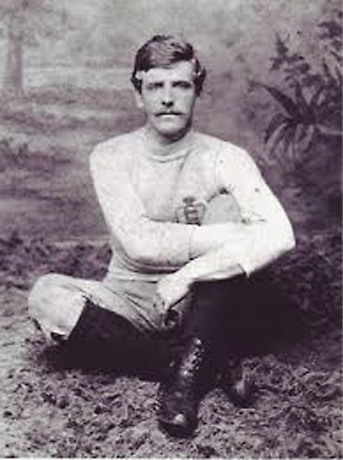
In his career with County, Harry also played in 21 F.A.Cup ties, and scored 19 goals. In other games for County, all of which would have been friendlies, he made 101 appearances, and scored 85 goals. This gave Harry Jackson an overall career total of 104 goals in 122 games for Notts County, both totals and a strike rate which  are only exceeded by those of Harry Cursham himself:

h cursham

A fifth Old Nottinghamian in that same inaugural season of 1888-1889 was Edwin Silvester Wardle. Edwin was born on January 11th 1870 and the family lived at Magdala House in Mapperley Road. He attended the High School from 1881-1883. He made two appearances in the League for County, the first as an outside left (No 11) at Goodison Park, Everton, in the very first match of the season (1-2), County’s début in the Football League. Strangely, he then appeared as an outside right in the very last fixture of the campaign, the 3-5 home defeat to Derby County. Prior to this, he had played in six friendlies, scoring three goals, two against Aston Villa (3-3) and one against Halliwell (1-4). He also appeared in four F.A.Cup ties, scoring one goal against Staveley (3-1).

Another particularly disappointed Old Nottinghamian, the sixth to play in that first season of 1888-1889, must have been John Alfred Brown, who made just one appearance for County, as an outside left (No 11) in a game at Villa Park against Aston Villa. County lost narrowly by nine goals to one, watched by an entranced crowd of some 4,000 spectators.

John Alfred Brown was born on March 20th 1866. Along with his elder brother, he entered the High School on August 10th 1874, at the age of eight, although the date when he left the High School remains unknown. He made his first appearances for County towards the end of the 1883-1884 season, when, after the New Year, he played as an inside left in away friendly games at Walsall Swifts (1-2), and Sheffield Attercliffe (0-2). Overall, he played in 34 friendlies between 1884-1888 and he scored a healthy total of 14 goals. Interesting games and scores in 1884-1885 included his two goals in a 5-0 defeat of Wednesbury Old Athletic, and another goal against Hendon in an 8-2 victory. There were also games against Blackburn Olympic (1-1 and 0-3), Preston North End (1-2), Sheffield Wednesday (1-0), the Sheffield Club (3-0), Blackburn Rovers (0-2), Notts Rangers (2-1) and Derby County (0-2). Here are the Blackburn Olympic colours:

Blackburn_Olympic

For the most part, John was an outside left, although he also played at inside left, and inside right. In 1885-1886, he appeared in home games against Bolton Wanderers (3-3) and Great Lever (1-3), and in away games against Queen’s Park (1-5), the Sheffield Club (6-1) and Wellingborough Grammar School (8-3). He scored a goal at Sheffield, although three of the scorers at Wellingborough remain unknown. Two games were at inside left, with one at outside left, and two at centre forward. The following season of  1886-1887, he played at the Sheffield Club (4-1) and Wolverhampton Wanderers (0-2). He also appeared against Preston North End, a game which County were narrow losers by 0-14. Here is the Preston strip:

Capture 2 top y
John’s most successful season was 1887-1888 with 10 goals in 14 appearances. These included Walsall Town (0-4), West Bromwich Albion (1-5), Nottingham Forest (1-0), Preston North End (2-5), Everton (1-3). He played in home fixtures against Leek (8-1), Aston Villa (8-2), Preston North End (2-3), Grimsby Town (4-0), and Corinthians (1-4). A substantial veil might be drawn over Mitchell St.George’s (0-10).

John scored four times against Leek and Aston Villa, with single goals in each game against Preston North End. All of his games were as an inside left.

By the way, the illustrations of old football kits came from the best ever website for the soccer nerd and all the boys who had more than twenty different Subbuteo teams. New Brighton Tower 1898? Oh, yes.



12 Comments

Filed under Derby County, Football, History, Humour, Nottingham, The High School