Category Archives: The High School

Staff cricket : the Golden Years (2)

I was talking last time about my glittering career with the staff cricket team.  I can actually remember taking two catches, probably in 1976. One was a steepling ball, hit so high that I had time to eat a chocolate bar before it came back down. By the time it finally returned from earth orbit, everybody for miles around was watching me. Some with binoculars. I was the cynosure of all eyes. Players, umpires, spectators and people in the street and people in buses going past the ground. And I caught it. I really did. I caught it. Nobody was more surprised than me. And the batsman was O. U. T.  spells OUT !!

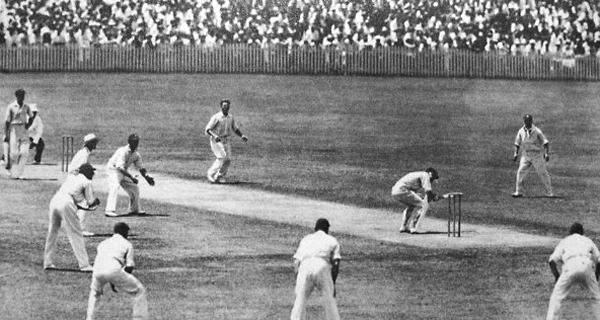
The second catch was when I was fielding about ten yards away from the batsman, as fellow French teacher David Padwick bowled his slow spinners, just like Bishan Bedi:

According to Bob Dickason, our wicketkeeper, the batsman hit the first ball so hard that I did not react. It passed under my arm, brushing the shirt in my armpit and the side of my chest. I just didn’t realise that this situation was really bloody dangerous and it was highly irresponsible of the captain to ask a naive novice to field there. The second ball hit me in the chest. It didn’t kill me by stopping my heart. It bounced up into the air. I dived forward and caught it one handed before it touched the ground. The batsman was O. U. T.  spells OUT !!.

I had a stunning bruise for weeks. You could read the name of the company who had made the ball. And their phone number.

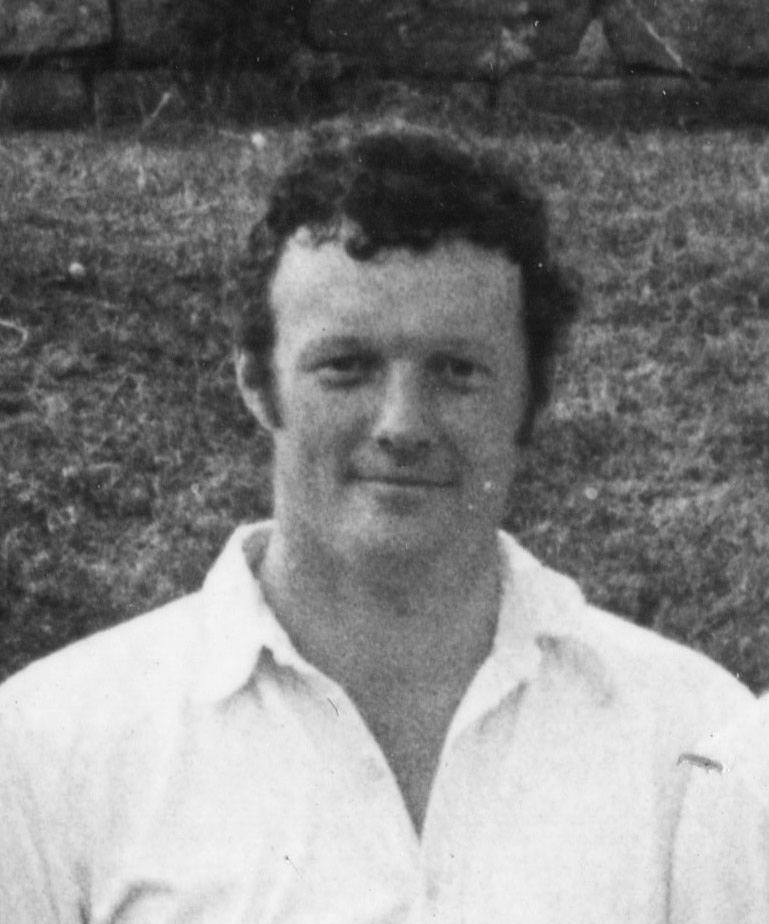
Here’s Bob and his curly red hair, pictured in black and white:
It may have been in that match that I was allowed to bowl an over…six balls that is. It didn’t go too badly. First one—a run. Second one—a run. Third one—a run. Fourth one—a run. Fifth one–the ball hit the edge of the bat and if they had let me have a fielder there as I had previously requested, it would have been a wicket taken. Sixth one–the batsman hit it to the boundary for four runs. And that was my complete cricketing career. I was never allowed to bat because they presumed I would be crap.

A couple of years later, one of the Top Men of the Staff Team, the Golden Boys, told me that “The Star Men of the team need ordinary people like you to do the fielding so that they can do all the batting and the bowling and show off all of their many talents.”  Yes, milord.
Incidentally, I had a second hand operation on February 8th, so I won’t be able to reply to any of your comments for, probably, a couple of weeks. As soon as I am able to, though, I will answer what you have been kind enough to contribute.

And everything in this post is 100% true, particularly what one of the Top Men of the Staff Team said to me.


15 Comments

Filed under History, Humour, Nottingham, Personal, The High School

Staff cricket : the Golden Years (1)

Just after I started work in the High School, my interest in cricket began to grow. Luckily, there was a well established Staff Cricket Team. Indeed, it was during the Summer Term of 1947, that the staff had fielded their own cricket team for the first time ever, playing several friendly fixtures against the staffs of other schools. The most likely suspects would be the local Grammar Schools, Bilborough and High Pavement, and possibly Henry Mellish and the Old Nottinghamians.
Sooo….I decided to give it a go and I asked the team if I could play. I am no expert at playing cricket, but I was assured that this was just social cricket, played merely for amusement and companionship. Weeks later, I realised that the staff matches that I played in were played for amusement and companionship as if they were the last decisive test in an Ashes series in Australia:

In my bestselling book and my two screenplays for both Hollywood and Bollywood films, “Nottingham High School: an Anecdotal History”, I mentioned staff cricket on a number of occasions. The first occasion was the year before I began at the High School in the Summer Term of 1974:

“One of the most famous incidents in staff cricket occurred when according to “The Nottinghamian”, David Matthews “courageously stopped the ball with his head”. It cost him a pair of glasses, and two black eyes. Other participants during the season were Paul Dawson and  Brian Hughes, specialist batsmen David Padwick and Dave Phillips, specialist bowlers John Hayes and Marcus Coulam, and Jimmy Sadler, who in one match took four wickets in the last over, to snatch an unlikely victory.  John Hayes and Allan Sparrow were the usual umpires.”

This old staff photo from 1973 has John Hayes (front left) and in the centre of the front row, Dave Phillips.

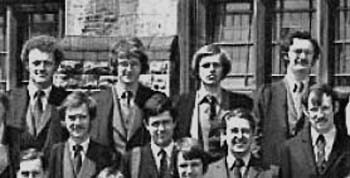
Alas, David Padwick has now passed away and the rest of those names must be well into their sixties if not older. Certainly, it is a good while since any of them taught a lesson at the High School. I did find one or two of them on some pictures of the staff which I scanned in the early 1980s. They are not very good, but they are recognisable. On this photo are Bob Dickason, Ed Furze, Chris Smith and Me on the back row, and Ian Driver, John Hayes, Edwin Harris and Dave Phillips in front.

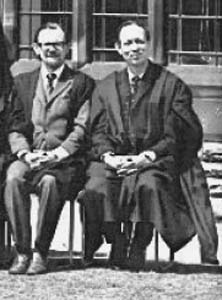
Here are David Matthews and David Padwick :

Luckily, colour film was invented in time to capture the greatest moment of John Hayes’ life. The day he took delivery of the High School’s first ever minibus::

It was during this season that David Padwick passed into legend. In a game against Trent Polytechnic, as it was then called, played at the Clifton campus, there was a fairly steep bank on two sides of the ground, about three feet high, just inside the boundary. Padders was fielding on the long on boundary, where he was theoretically unlikely to get up to too much mischief. At this point he was standing quietly at the top of the bank.

Suddenly, the ball was hit high, high, high into the sky in his direction. But he couldn’t judge the ball’s trajectory properly. Surely he was too far back to catch it. Quick, go forward, down the bank!  But no! Surely he was now too far forward to catch it. Quick, back up the bank! No, that’s wrong. Quick, quick, down the bank!  No, no, no!  Quick, back up the bank! For a good fifteen seconds or more, Padders became the cricketing Grand Old Duke of York. And did he catch it? Well, what do you think?

The next mention of staff cricket comes when:

“There was a report of staff cricket in 1977 in the Nottinghamian of December 1999.  It appeared in William Ruff’s “From the Archives” section of the magazine. Mention was made of Tony Slack, “our benevolent dictator”, Dave Phillips who “wields the straightest golf club in the business”, Phil Eastwood, “for whose particular torture the LBW rule was invented, and Clem Lee, “whose pectorals imitate the motion of the sea as he runs up to bowl”. The regular umpires this season were Allan Sparrow and John Knifton, although the latter did play in one game, “and took an impossible catch to win the game”. The more often I read that, the less possible it seems.

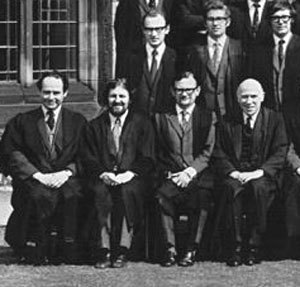
Again, I have found one or two old staff photos to enlarge. On the 1970 photo, there are Phil Eastwood (top right) and David Matthews again (No 3 on the front row). The back row also has Allan Sparrow and, I think, Brian Hughes  :

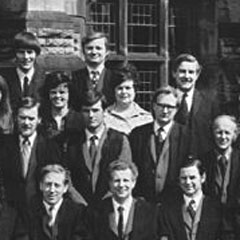
This photo has at least one more cricketer, Marcus Coulam, the young man to the right on the very back row:

The photograph also shows Norman Thompson, Dick Elliott, Stanley Ward, Ian Driver, Martin Jones, Chris Curtis, Jeff Leach, Gerry Seedhouse and, I think, Will Hurford. The two young ladies, I do not know.

More chat about the sporting superstars next time. Incidentally, I had a second hand operation on February 8th, so I won’t be able to reply to any of your comments for, probably, a couple of weeks. As soon as I am able to, though, I will answer what you have been kind enough to contribute.

31 Comments

Filed under History, Humour, Nottingham, Personal, The High School

And here is the news (4)……

I was talking last time about a book which I have started writing about the High School’s war dead from World War 2. At the moment, the book has no title but that will emerge!

I intend to incorporate a few poems in the book. You will be glad to hear that none of them are by me.

One comes from the writings of ‘Granta’ in the School Magazine, The Nottinghamian. To paraphrase his words:

Nine Nottinghamians,
At the Forest Road gate,
One went to Bomber Command,
And then there were eight.

And the poem by John Maxwell Edmonds:

Went the day well ?
We died and never knew.
But, well or ill,
Freedom, we died for you.

This poem was written by R. W. Gilbert and was featured by my friend Pierre Lagacé in his blog « RCAF 425 Les Alouettes »

REQUIEM FOR AN AIR GUNNER.
The pain has stopped, for I am dead,
My time on earth is done.
But in a hundred years from now
I’ll still be twenty-one.

My brief, sweet life is over
My eyes no longer see,
No summer walks, no Christmas trees,
No pretty girls for me.

I’ve got the chop, I’ve had it.
My nightly ops are done.
Yet in another hundred years
I’ll still be twenty-one.

I may incorporate a poem by a Bomber Command veteran, John Pudney:

“Do not despair

For Johnny-head-in-air;

He sleeps as sound

As Johnny underground.

Fetch out no shroud

For Johnny-in-the-cloud;

And keep your tears

For him in after years.

This slideshow requires JavaScript.

Better by far

For Johnny-the-bright-star,

To keep your head,

And see his children fed.”

I have not decided yet on which ones I will definitely use, except for the  following words which will certainly appear. They describe perfectly the job that, hopefully, I will have done. They were written by (possibly Robert) Wace, a Norman poet who was born in Jersey in the Channel Islands between 1099 and 1111 and who was last known to be alive in 1174. Wace was brought up in Caen in Normandy and eventually became Canon of Bayeux:

Eventually
All things decline
Everything falters, dies and ends
Towers cave in, walls collapse
Roses wither, horses stumble
Cloth grows old, men expire
Iron rusts and timber rots away
Nothing made by hand will last
I understand the truth
That all must die, both clerk and lay
And the fame of men now dead
Will quickly be forgotten
Unless the clerk takes up his pen
And brings their deeds to life again.

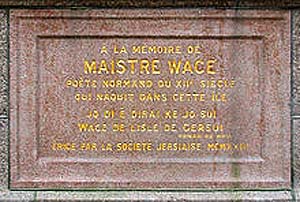
In Jersey’s Royal Square stands the States Building and a granite memorial  stone to Wace is built into one of its side walls:

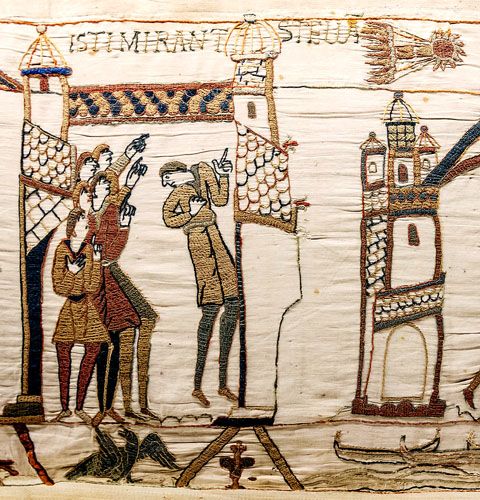
It has on it a proud quote from Wace’s major work, the Roman de Rou, the Tale of Rou, which tells the story of William the Conqueror and the Norman Conquest, including Halley’s Comet :

Jo di e dirai ke jo sui
Wace de l’isle de Gersui

In Modern French it would be

Je dis et dirai que je suis
Wace de l’île de Jersey

And in English

I say and will say that I am
Wace from the Island of Jersey

It is also recorded in Modern Jèrriais, a language I had never heard of, but it still has an admittedly declining number of speakers on the island :

J’dis et dithai qu’jé sis
Wace dé l’Île dé Jèrri

It was Wace who introduced the idea of Halley’s Comet to the Bayeux Tapestry story:

Watch what you’re doing with that arrow !!!!  You’ll take somebody’s eye out !!!!

Because I am a registered Nerd / parce que Je suis un geek de la langue française, I have the poem in Modern French and whatever language Wace spoke as well…Norman, Medieval French, Medieval Jèrriais, whatever. In the first section I have put ye Olde Frenche firste, and then modern French in Italics and then English. In the second section, see if you can think of the modern French words that ye Olde Frenche comethe fromme ….

Tote rien se tome en declin
Tout  décline
All things decline

Tot chiet, tot muert, tot vait a fin
Tout meurt, tout va à fin
Everything falters, dies and ends

Hom muert, fer use, fust pourrist
L’homme meurt, le fer use, le bois pourrit
Men expire, iron rusts and timber rots away

Tur font, mur chiet, rose flaistrit
la tour s’écroule, le mur tombe, la rose flétrit
Towers cave in, walls collapse, roses wither,

cheval tresbuche, drap viesist
cheval bronche, drap vieillit
horses stumble, cloth grows old,

Tot ovre fet od mainz perist
tout ce qui est fait de la main des hommes périt
Nothing made by hand will last
………………………………………..

Bien entenz è conoiz è sai,
I hear the truth well and I am aware and I know

Ke tuit morront  è cler è lai;
That all must die, both clerk and lay

E mult ara lor renomée
Emprez lor mort corte durée

And the fame of men now dead
Will quickly be forgotten

Se par cler ne est mise en livre,
Unless the clerk takes up his pen

Ne pot par el durer ne vivre
And brings their deeds to life again.

Wace, Romain de Rou, III, II, 131-142
(c 1170)

The translation is not such a close fit in the second bit rather than the first.


26 Comments

Filed under Aviation, Bomber Command, History, Nottingham, The High School, Writing

The High School Hell’s Angels, Chapter 6

More about the Free School, as it was called in 1858. It was called that because the school was free at this time. And it was not in Arboretum-street as it is nowadays, but in Stoney-street. Look for the orange arrow:

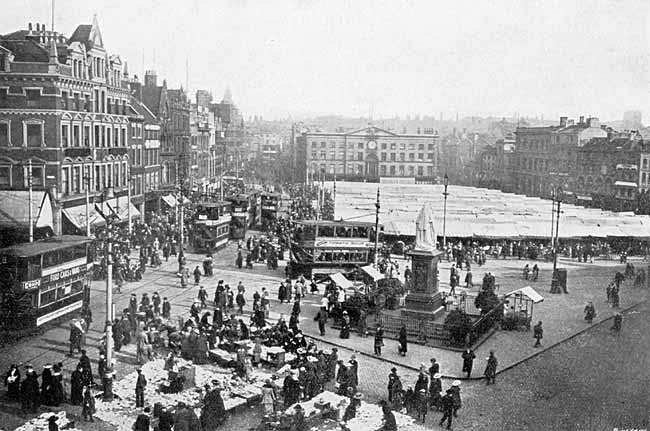
And is the lack of school fees reflected by the background of the pupils? Well, on the one hand, I have found in the Register the sons of bakers, butchers, cellarmen, clerks, a Foreman Porter, grocers, joiners, machinists, overlockers, painters, plumbers, porters and warehousemen. Some of them might have worked in the very centre of Nottingham, only a town at this time, not a city. It was very different, even around 1900:

Set against these jobs are a number of occupations which are decidedly less working class. They might require varying levels of training or education such as architects, bookkeepers, dental surgeons, doctors, draughtsmen, engineers, an engraver, a gilder, the Governor of the Town Gaol, the High Bailiff, a photographer, physicians, a Professor of Languages, solicitors, the Supervisor of Inland Revenue, surgeons, the Surveyor of Taxes, tailors, an upholsterer and a veterinary surgeon.

Others are jobs with managerial aspects…auctioneers, a beer house keeper, a bookseller, brokers, a coal master, a confectioner, an earthenware dealer, a hosier, an iron monger, a jeweller, Manager at Manlove & Alliott’s, a newspaper correspondent, a patent agent, publicans, shoemakers, tobacconists and a Victualler. Manlove & Alliott’s, by the way, was an engineering company set up during the 1830’s in Radford, and who later moved to their Bloomsgrove Works just off Ilkeston-road. The main entrance was on Norton-street. They moved to Scotland in 1970 and, like Augustus Caesar’s Spanish 9th Legion, they have never been heard of again:

Most interesting, of course, are the occupations directly linked with that of the period, 1858-1868. Some clearly had their place in history. Not many fathers nowadays are, quite simply, Gentlemen. And it is impossible nowadays to be the Adjutant of the Robin Hood Rifles. Bleacher is not really a very probable trade in this day and age and neither is cap manufacturer, cheese factor, coachmaker, cork cutter, framesmith, hatter, hay dealer, potato merchant, steam railway engine boiler maker or twisthand, a man who had to be strong enough to carry out certain specialised operations on a lace machine. A yarn agent is nowadays surely more likely to turn up telling stories in the Children’s Section of the local Library and if there is still a Clerk to the Lunatic Asylum then the job description is probably expressed in more delicate words. The Lunatic Asylum was on Porchester-road:

This slideshow requires JavaScript.

So too, there are pawnbrokers nowadays, but not too many of them, and you don’t see Life Insurance agents traipsing up and down from house to house like you used to, even in the 1950s and 1960s.

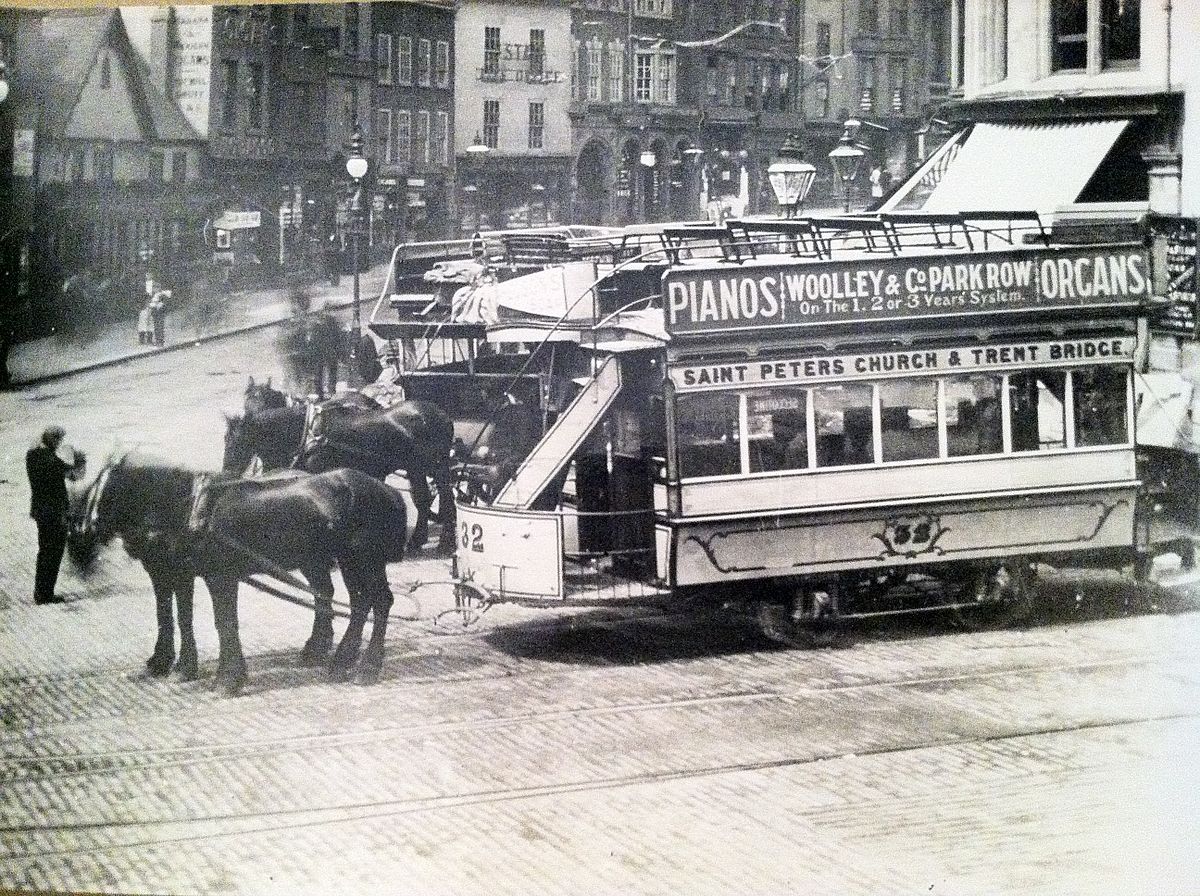
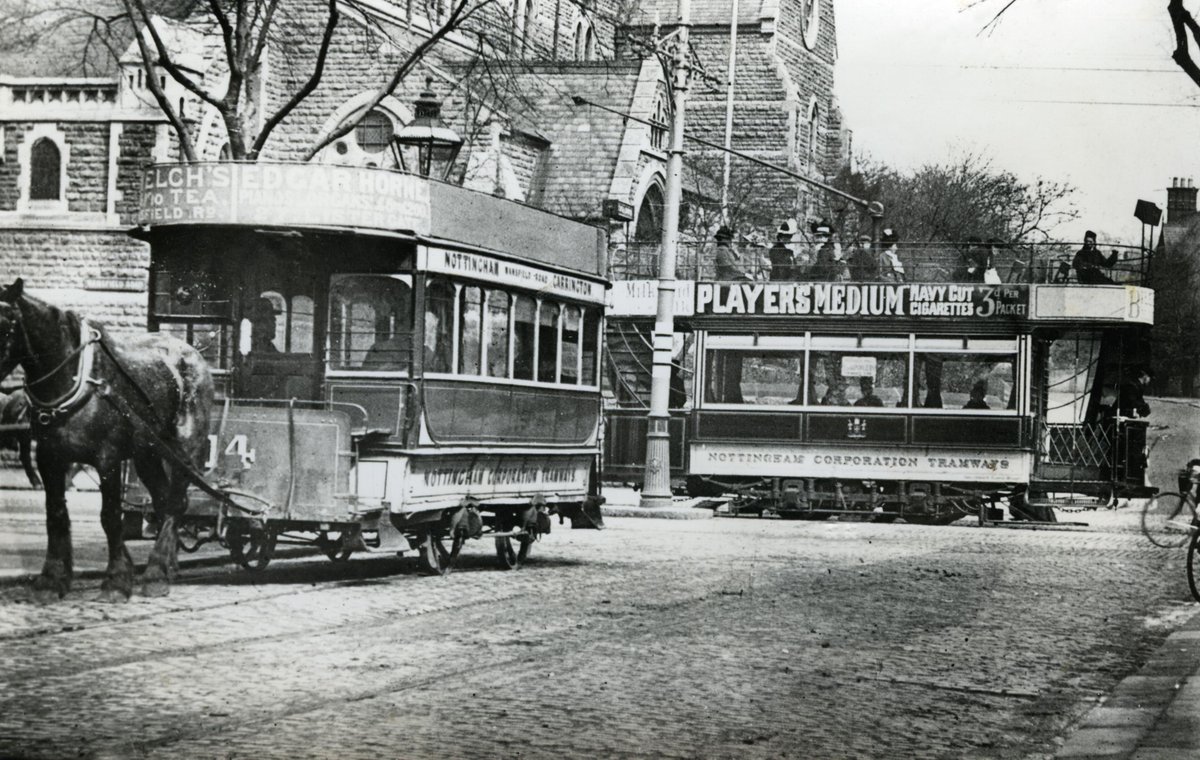
Some of those jobs, though, back in 1858-1868 , are just the first of many. They foretell the future with Estate Agents, Gas Fitters and Sharebrokers, wh0 are surely now called Stockbrokers. What we don’t have any more are all those jobs connected with religion. But back then, the parents included a Baptist Minister, the Incumbent of St Luke’s, an Independent Minister, the Minister of Canaan-street Chapel, a Sexton, two Scripture Readers, a Town Missionary, a Wesleyan Minister and an ordinary Missionary. Religion was so important it was even on the side of the horse drawn trams as a destination:

Best job of all though was Charles Bown of Carlton-road. He was a Butler.


19 Comments

Filed under History, Nottingham, The High School

And here is the news (3)……

In my Last Post, I told you what I had been up to of late. I have always been very impressed by a fellow teacher and friend of mine, Simon Williams, who has researched at very great length the young men from the High School killed in the First World War:

This slideshow requires JavaScript.

I decided that I would have a look at the war dead from the Second World War and I have been working for the last 18 months, two years, on researching those particular individuals.

I have been sadly surprised at just how many of them there were. I started with 82 from the official list but I have now pushed it up to at least 105 with probably quite a few more to come. The reason for this is that if Frederick Cyril Smith of 189, Station Road, Beeston, attended the High School from May 10th 1901 onwards, there is no way of being 100% certain whether or not he is the same Frederick Cyril Smith who was Able Seaman Frederick Cyril Smith, killed on May 23rd 1941 on HMS Zulu, particularly if there are no details of either his age, home address or parents’ names recorded on the Commonwealth War Graves Commission website:

And so far, I have found around 150 such cases, all of which are possible matches. They won’t all be ex-High School pupils, but if only one of them is an Old Nottinghamian then I don’t want to miss him.
And there is absolutely no way of guessing. One Old Nottinghamian was called Albert Frederick Aylott, born 1911, lived at 96 Glapton Road. Is he the same Albert Frederick Aylott as the Albert Frederick Aylott killed on March 31st 1945 in northern Germany ? In actual fact, probably not, but who would have thought so with such an unusual name?

On average, I’m producing around 4,000-5,000 words per person, listing his school record fully, his adult life before the war if possible and then his career in the forces with, hopefully, the reasons why he was where he was when he was killed. And if possible, the name of the man who pulled the trigger or pushed the button. The casualties took place everywhere, from Arnhem to Yugoslavia, with one ex-pupil who lived in Zimbabwe but was killed, probably, in Ethiopia.

Some more details next time.


14 Comments

Filed under Aviation, Bomber Command, History, Nottingham, The High School

The High School Hell’s Angels, Chapter 5

Last time, sad, sad, person that I am, I was sharing with you the electronic version of the Nottingham High School Register from the old Free School, which was then, of course, in Stoney Street in the Hockley area of Nottingham. Dating back to 1858, the Remarks Column in particular gave some very striking details of life in the school some 160 years ago:

January 1859 saw some fascinating details. Going down the column they read “ill. Out of town”, “middling”, “behaved well” and quite simply “dead”. That was poor William Henry Copley, of 2 Stafford-terrace off Shakespeare-street. He was the son of a Warehouseman and only 14 when he passed on. Stafford-terrace, I suspect, is now under the concrete and plate glass of Nottingham Trent University. A more spectacular death affected Benjamin Arthur Heald of High Pavement: “(at home) Died from the effects of over-bathing.” Well, you can have too much of a good thing. Or perhaps he was sharing the bathwater with the horse.

Quite a few boys were elected to a place at the Free School, but then “declined” to attend. Some “could not be found” as if alien abduction stretched back to 1858. Ironically, the boy labelled “cannot be found” lived on Forest-road within 100 yards of the school. Forest-road played host to one of the commonest means of transport of the day:

Some boys needed to buy a watch. “Did not come at the time appointed & was ordered to be crossed off.”

Not everything was easy. “Sent back twice, declined to try again July 1860”. Some abused the system, “Left without giving any notice”.

Some boys “behaved well” and others “Behaved badly, especially out of school hours”.  Truancy had been recently invented, “attended very irregularly”. Sometimes it was the parent’s fault “Behaved well and made good progress for the time, but was taken away too soon”. And what about poor Richard Thorpe, an orphan residing with his sister at 1, Northampton-terrace, off Portland-road?  “did very well, obliged to leave from ill health.”

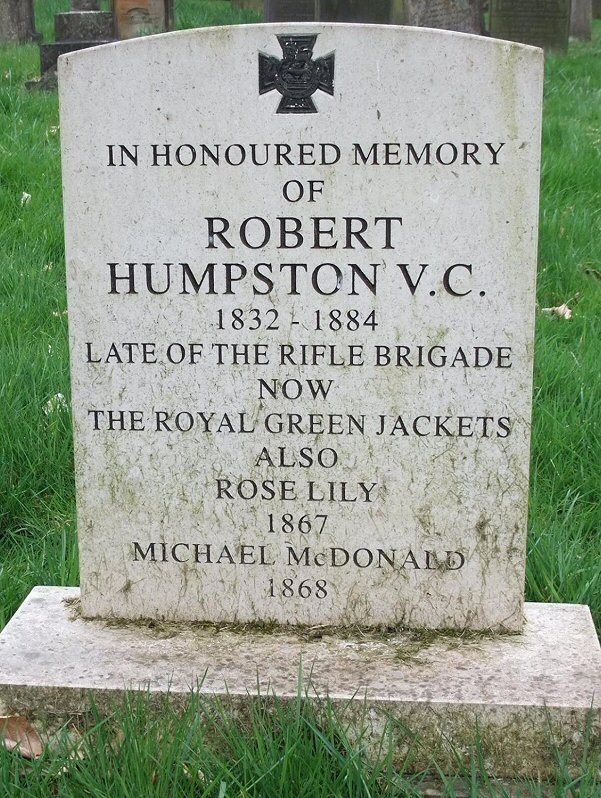
Portland-road is close to Waverley-street and the General Cemetery. I was very surprised to find this grave was in the General Cemetery during my researches:

Indeed, the Remarks column of the Register often comes very close indeed to stating the obvious truth about a boy’s transgressions, namely that it was the parent who should have been punished, “Junior Prize 1860.  Suspended in consequence of the Father’s claiming the right of keeping him from school at pleasure” and “Suspended because his father took him away from school for a fortnight without leave.  Not allowed to return.”
The staff could be hard men. “Expelled for dishonesty at home” and he was then sent to Trinity National School which may be the ancestor of present day Trinity School.  And what about lucky Thomas Henry Naylor, the son of a Lace Designer from Hutchinson-street in the Meadows, a thoroughfare now long disappeared: “Suspended for being privy to another boy’s dishonesty. Allowed to return on sufferance.” Or else, it may have been “previously a private pupil.  Removed by his father at my request.”

Many of the Remarks are not very different to what they would be nowadays. The same cannot be said of Nottingham. Here is the exact area, and the orange arrow marks the approximate site of the old Free School:

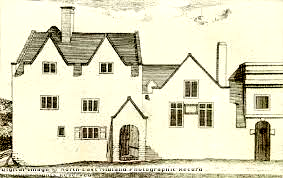
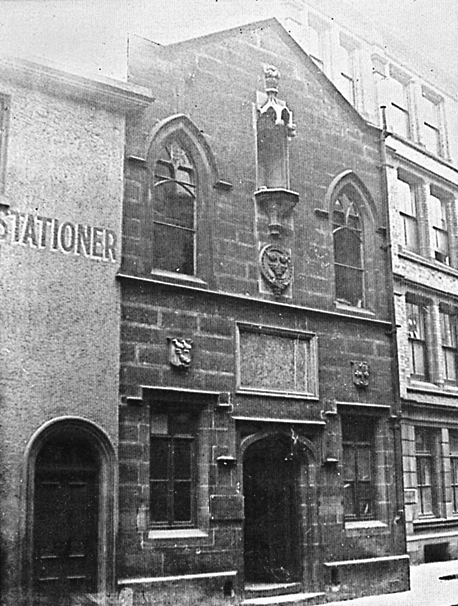
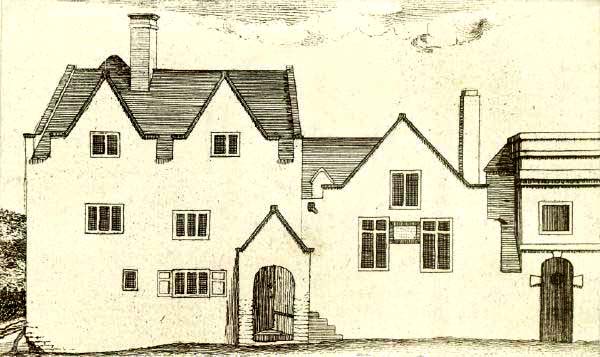
In the middle of the 16th century, this is where Mr.Francis Pierrepont, or “Collonell the Right Honourable Francis Pierepont”, had a large residence built next to the school, and wanted certain windows of the school building “stopped up” so the naughty pupils could not watch the serving wenches being chased around the extensive gardens . Pierrepont’s mansion was the second largest in Nottingham, after Wollaton Hall. It had 47 rooms with fireplaces. No photograph of that survives. Here is the only one I have ever seen of the old Free School:


14 Comments

Filed under History, Nottingham, Politics, The High School

And here is the News (2)……

I told you last time about my first book, “500 Happy Returns: Nottingham High School’s Birthday“.

I’m sure you will have heard about my second book, “Nottingham High School : an Anecdotal History”.

Nearly thirty years in the writing, I was quite happy with it and it seems to be selling quite well. I would just love to know where all the people who bought it lived. My first sales ever were two books in Tennessee. What a long, long way from Nottingham!

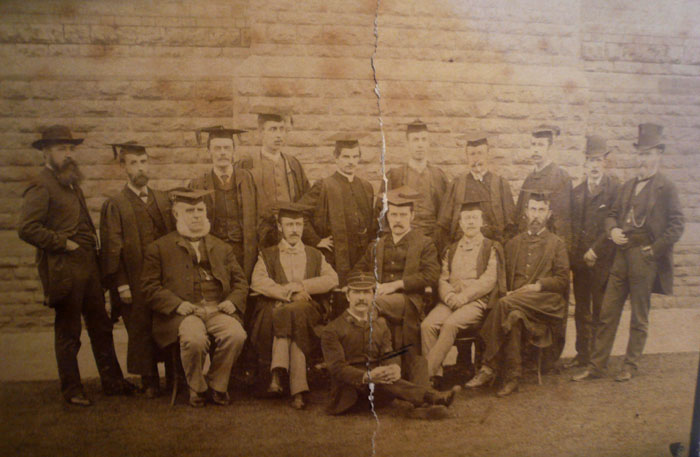
I still get a kick from all those old photographs. The staff in 1880 or thereabouts:

And then in 1901:

The man at the right hand end of the back row won a Victoria Cross in World War I. Theodore Hardy. Always late for his lessons though, apparently. But he never got told off, probably because he was a Reverend.

And here’s “Nipper” Ryles, with that blank expression on his face which all teachers have from time to time:


I started my next venture about 18 months ago. It was inspired by a fellow teacher and friend of mine, Simon Williams, who had researched the stories of the young men from the High School who were killed in the First World War. He suggested I took a look at the Second World War dead and that is what I’ve been doing.
I was sadly surprised how the numbers went up as I began my researches. It started with 82 on the official list but I have pushed it up to at least 106 with probably more to come.
I’m writing about every single one of them and I have researched both in the School Archives and on the Internet where some absolute treasure houses are to be found.

U-boat of the Day (bottom left)

Everything possible about the Royal Navy and who fired at my Dad’s plane?

Now I have started to write them all up and I’ve got 50 odd of them done. Most run to 4,000-5,000 words because a lot of explanation has to be given. It’ s no use just writing, “He was killed in his Whitley during Operation Husky” and leaving it at that. And I’ve also talked about where they lived, with most of the houses still there and occupied by people who know nothing of their history, nothing of the man who was killed by the Bismarck:


I have been amazed at where all these casualties occurred. Arnhem, The Battle of Britain, Burma, Canada, Dunkirk, India, Iran, Jerusalem, Milford Haven, Sicily, Singapore, Tobruk, Yugoslavia. Killed on a Death March.  Killed in a Spitfire, killed in a Lancaster, a Whitley, a Gloster Gladiator. A man who was in the SAS and whose death was so mysterious even they don’t know how he died. And all those who were killed in training. The man in Canada who flew off and was never seen again . The ones who died of pneumonia. The officer cadet who died of hypothermia. But they all started out as schoolboys:

This slideshow requires JavaScript.

The Great Army of the Dead, who all did what they were asked to :

This slideshow requires JavaScript.

It’s rather difficult to say that people will enjoy such a book, but it will certainly remind them of who preserved our freedom at the cost of their own life. I suppose what I am trying to do is what Robert Wace, a Norman cleric, said in the Roman de Rou in 1170:

Eventually
All things decline
Everything falters, dies and ends
Towers cave in, walls collapse
Roses wither, horses stumble
Cloth grows old, men expire
Iron rusts and timber rots away
Nothing made by hand will last
I understand the truth
That all must die, both clerk and lay
And the fame of men now dead
Will quickly be forgotten
Unless the clerk takes up his pen
And brings their deeds to life again

24 Comments

Filed under History, Nottingham, The High School

Hells Angels, High School Chapter 4

Recently, I came across the electronic version of the Nottingham School Register which had been painstakingly transferred to an Excel Spreadsheet. They go back as far as the very first boy in what must have been a new School Register in 1858. Here is one of the few illustrations we have…

At midsummer 1858, therefore, Arthur Law Gratton joined the School, which was then, of course, in Stoney Street in the Hockley area. Arthur lived at 13 Northampton Terrace, Portland Road. Ironically, Portland Road is within a two minute walk of the School’s present site on Arboretum Street. I cannot find a Northampton Terrace, so presumably this has been renamed or demolished. In those days, it was very frequent practice to write Northampton Terrace as Northampton-terrace or Portland Road as Portland-road. This persisted until at least the 1920s, but I’m going to give it a go in this post. Hope I don’t miss any!

Arthur’s father was deceased and his mother was now a widow named Eleonora Gratton. Arthur was 15 years 5 months old and he left at Michaelmas of 1860.  Michaelmas is on September 29th. The register states in the Remarks column, “Behaved well. Drowned while bathing June 1861”. Ironically, the summer of 1861 had “above-average rainfall, but not excessively so” although in Ireland the “summer was dramatically wet.”

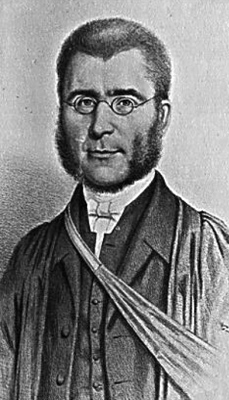
Henry Wheeldon came to the Free School on January 26th 1859.  He was 12 years old and his father said that he lived at Mr Peter Elliott’s (sic) at 29 Bromley-place. During the 1st half of 1860 (sic) he was dismissed for “not living in the town after repeated warnings as to the rule.” This is initialled by W.B. who was the Reverend W. Butler the Headmaster. Here is the Rev himself:

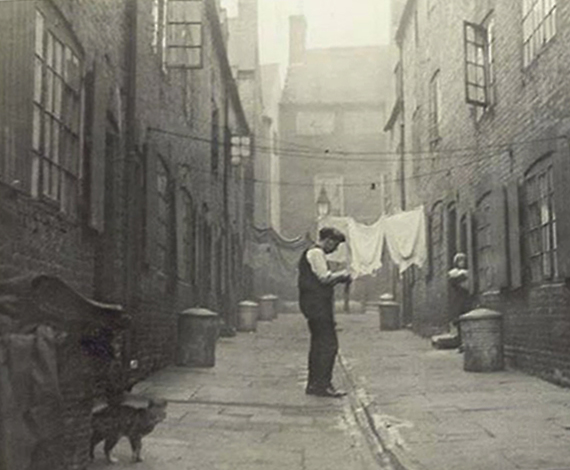
The Remarks Column is fascinating. We see that one pair of individuals were the victims of a paperwork foul up as they were “Entered by mistake twice”. Some boys were “elected” into the School but “declined” their place. Others moved house between being accepted and the first day of a new term, “left town before coming in”. As well as the clever boys who were educated for free, some less intelligent but more affluent boys paid to sit in with the classes. Thomas Hodson Sissling, the 14 year old son of Wright Calecraft Sissling, an Innkeeper on London-road “Remained six months as a private pupil”. Gordon Clarke, the son of John Clarke, a “General Dealer” in Rick-street (between Huntingdon-street and Glasshouse-street) remained for three months. Glasshouse-street was very beautiful even in late Victorian times. Don’t miss the cat and notice that it’s the day for the dustbin men to call:

More silliness next time…


23 Comments

Filed under History, Nottingham, Politics, The High School

And here is the news (1)……

I thought just for once I would keep you in the loop about what I am doing at the moment. As some of you will know, I am trying to become an author. I used to be a French teacher at Nottingham High School and on their 500th anniversary in 2013, I masterminded a book about the occasion. Helped enormously by lots and lots of other people, I managed to persuade both boys and staff, if they so wished, to write 100 words describing just one minute in their day. These were all put together to produce an account from 12.23 am to 23.57 pm….

From the beginning…

“I’m at my desk having a coffee and waiting for the arrival of unwell, injured or just Friday tired boys. I never know what real or imagined symptoms will come in but I am prepared – a headache, a grazed knee or a sore throat or it could be one of the more ‘interesting’ ones –a tick attached to a scalp from an adventurous trip to the Cheviots which needs removing, a glass pipette that has gone straight through a finger or just someone that needs a chat and encouragement– coffee drunk, ready to go!”

to late morning…

“I have double maths and I myself think I am doing very well that day.  Firstly, I finish off a piece of work from the day before called C2 temperature. Then I move on to Junior Maths. I finish that pretty quickly and what I have to do is use a ruler and write out the number of centimetres in our books for sections A B and C. Finally I move on to exercise eleven point two. I only do two questions on that because it is a bit more complicated. “

to very late morning…

“I am practicing my handwriting. It is getting much better! We write with capital letters and full stops.”

the best bit of the day…

“12 noon.  It’s Friday.  Fish and Chip day!!  Probably the most popular day in the School dining hall!!


After lunch, a brisk stroll around the Arboretum with a colleague, admiring the sunny spring-like day and the hundreds of spring flowers starting to push their way through for another cycle of life.
Who’d have thought that less than a week ago the Arboretum (and a lot of the entire country) was smothered in 4 inches of snow?”

An exciting afternoon

“2.20  We are told that a visitor is coming into school. We find out that this person is a Para Olympian who swam for the Australian team in the 1996 and 2000 Olympic games.

Elizabeth Wright shows us the medals; they looked amazing. I have the pleasure of asking questions about how she began swimming and about her disability. This is an amazing insight to a Olympian lifestyle.”

Boys just think about food…

“I am having my dinner and I am having chicken nuggets. They are my favourite!”

Some think deep thoughts…

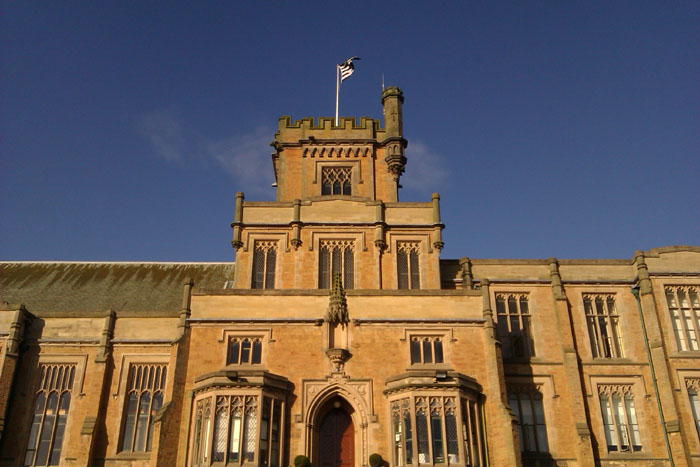
“As I gaze up and stare in awe at the School building, my mind drifts back through the years to ponder over what the first lesson will have been like 500 years ago.   A few children with some desks in their local church learn about their world whilst a gentle snow flurry comes down outside.  Nevertheless, the school looks grand; as its size and majestic architecture dwarf the people who inhabit it.  Each brick, each tile and each window are testament to a different age and the people of it.”

Some perhaps not quite as deep..

“I am eating my sausages with chips and I’m getting very full.”

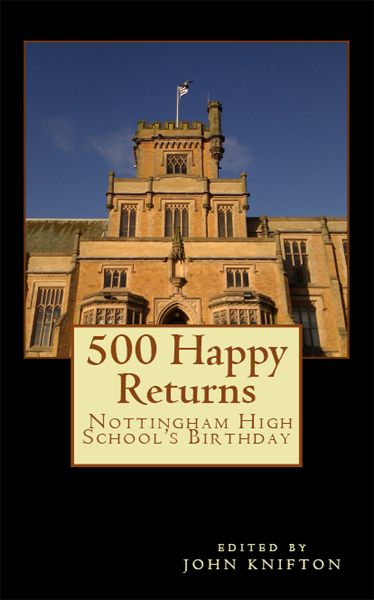
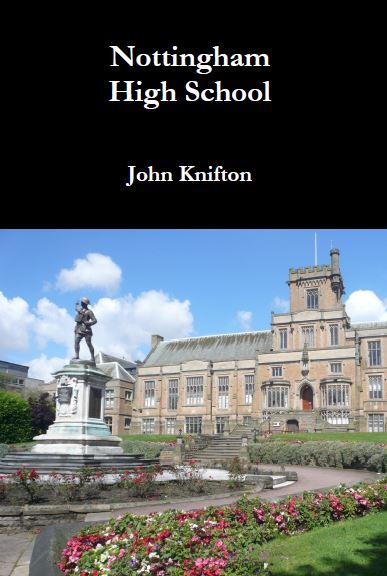
The book was used to raise money for charity and it did quite well. It’s still there on Amazon but I don’t know if it still sells. The cover was a photograph taken by a young man called Rishabh Motiwale:

As you know, my second venture was “Nottingham High School : an Anecdotal History”. Details about that, and my plans for the future in the next blog post.


23 Comments

Filed under History, Nottingham, The High School

The High School Hell’s Angels, Chapter 3

One fascinating thing which I found recently were all those old books which have been transcribed onto DVDs. They are sold on ebay in their hundreds. Some are not necessarily what I would want to read “Masonic Library, 430 Freemasons Books”, “Ukulele & Banjo, 29 Rare Vintage Books” and “Taxidermy, Vintage books on DVD – Stuffing and Mounting Animals, Birds, Insects and Fish”
I was happy to buy though, “76 Books, Derbyshire, Nottinghamshire, Mickleover, Headon, History Genealogy DVD”. It contains a lot about the history of Nottingham although the rest was not of much interest to me. That DVD, and another very similar one about Nottingham and Nottinghamshire, have provided me with a lot of information about the past. Above all, they have allowed me access to a number of different directories of Nottingham. So far I have, for example, the Pigot’s Directory for Nottingham for 1828 and 1841, the White’s Directory for 1832, 1864 and 1885, the MacDonald’s Directory for 1931, Slater’s for 1847, Wright’s for 1879 and Kelly’s for 1881, 1891, 1904 and 1928:
They are interesting in that they all tend to contain slightly different things, but basically they list all of the tradespeople in Nottingham, all of the business premises in the city, and the names of the occupants of all the different houses in all the streets of Nottingham.

So you might find a list of the city’s streets in alphabetical order, or all the people similarly listed, while other directories will provide the names of all the engineers, all the grocers. all the bicycle repairers and so on. It means that if you know Uncle George was a restaurant owner, you can often find out both where his business was and where he lived. And that may point you to the right place in a census. Very useful if you’re trying to trace your ancestors.
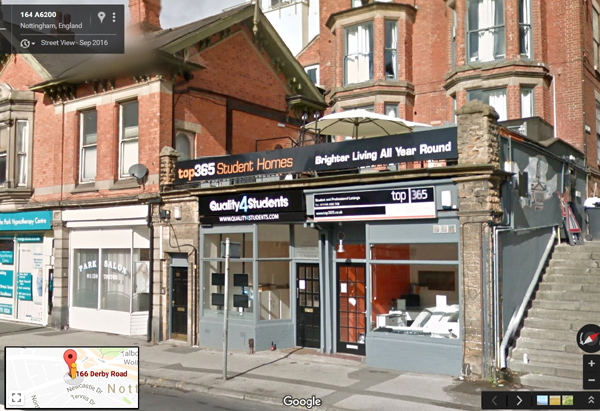
The directories also enable you to trace some of the changes in the use of individual buildings, buildings that you may walk past every day but don’t know the history of. One example would be the two premises on Derby Road, up near Canning Circus. One is called “Quality 4 Students” with the slogan “Top 365 Student Homes” :

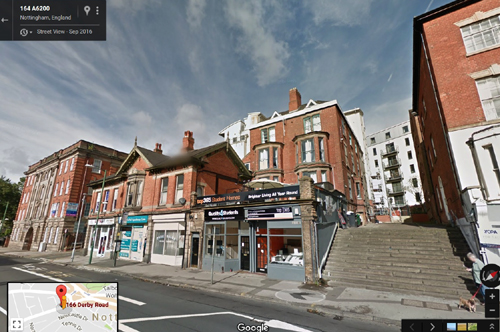
Next door, painted all white, there is what is now the “Park Hair Salon”. Here’s a view from further back:

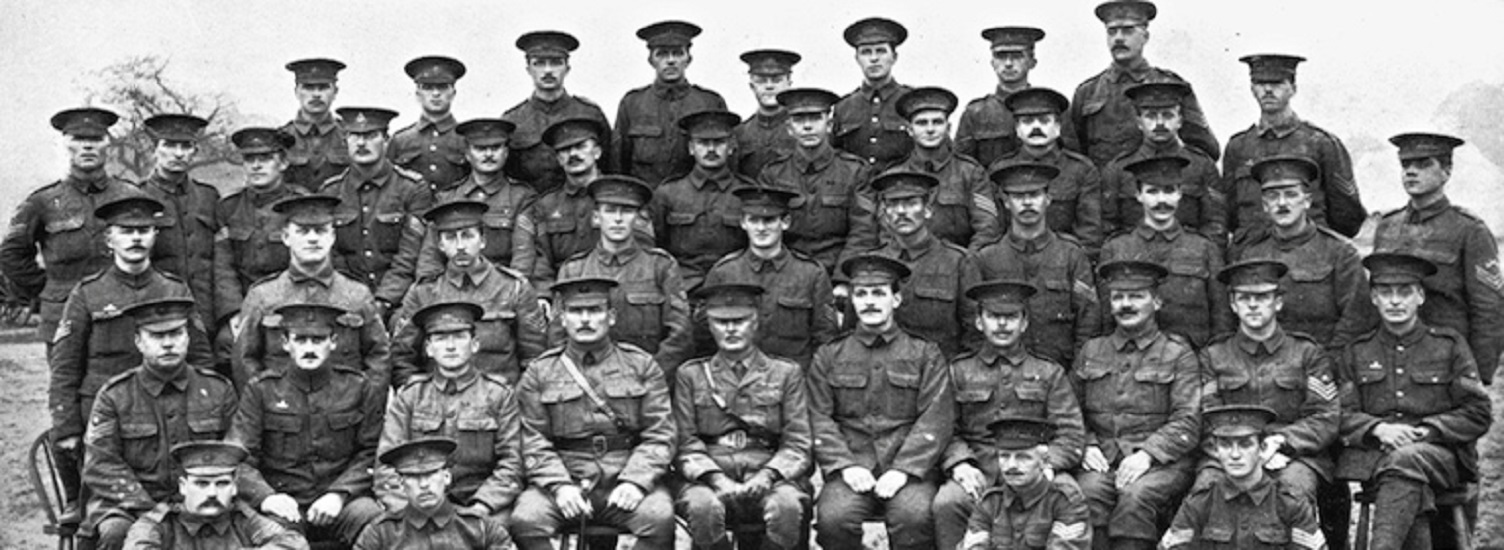
In 1928, the Park Hair Salon used to be the Headquarters of the Robin Hood Rifles, a local infantry regiment:

They used to have some wild, wild parties:

After that the building was derelict for a while and then it became “Butcher Brothers, House Furnishers”.

By 1928, both buildings had become the shop of AR Warren & Son, Grocers. I find all that fairly fascinating but more to the point perhaps, the directories also enabled me to uncover the humble beginnings of Alfred Highfield Warren, who was the “& Son” of “AR Warren & Son” mentioned above.  Alfred was an ex-pupil of Nottingham High School, and thanks to the High School, he was to move from being the son of a grocer to being the holder of an Open Exhibition at Worcester College, Oxford, a Nottingham City Scholarship to Oxford University of £50 per annum, and from the High School, a Sir Thomas White Senior Exhibition.
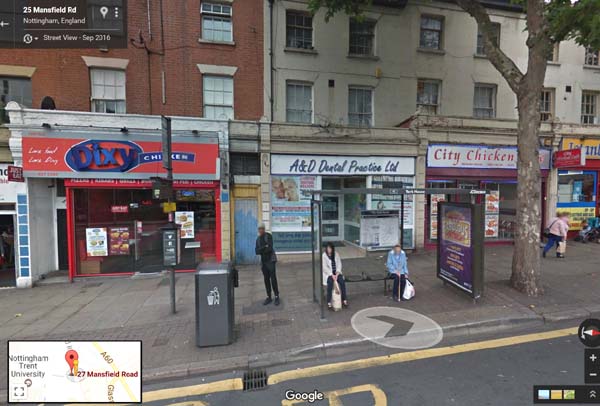
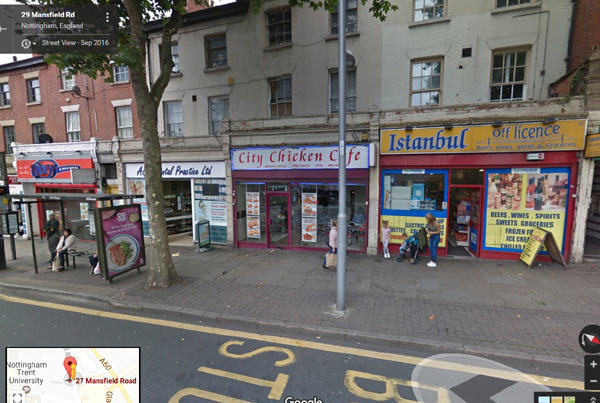
On Mansfield Road, there is nowadays the “A & D Dental Practice Ltd” and the “City Chicken Cafe”. In front of the Dental Practice is a bus stop used by hundreds and hundreds of High School boys every day…

And here is the City Chicken Café, sworn enemies of Dixy Chicken just two doors away and probably not too much in love with the Istanbul Off Licence next door.

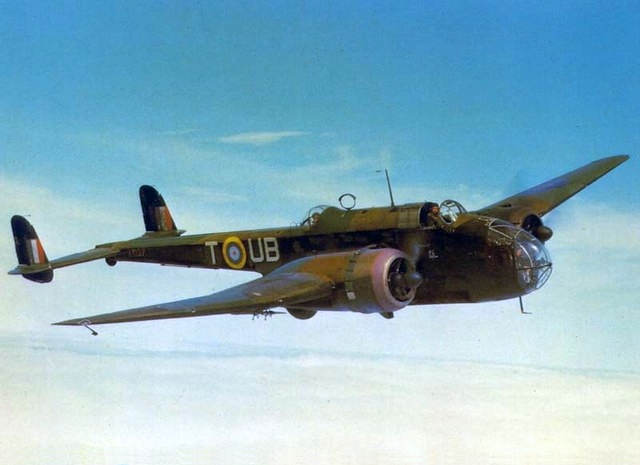
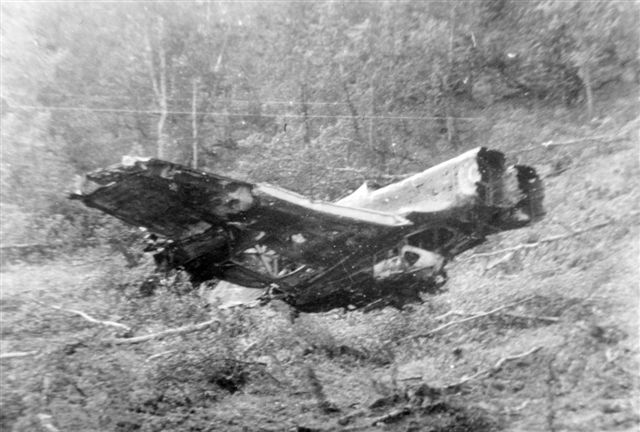
But in 1928, these two businesses, the “A & D Dental Practice Ltd” and the “City Chicken Cafe”, were the premises of LW King, a Draper who lived there with his family. That family included his son William King, a High School pupil, who became a pilot in the RAF in World War II. Alas, poor William was to die, with all his colleagues, in a catastrophic air crash in a Handley Page Hampden. Here is ‘Before’:

And here, far too often I’m afraid, is ‘After’

How many times have I walked or driven past those two businesses, but without realising they were previously the home of a young war hero? And how often do we do that in our everyday lives?


15 Comments

Filed under Aviation, Bomber Command, History, Nottingham, Politics, The High School