Category Archives: The High School

The Oldest Old Boy of Them All (3)

Many, many years ago, in 1990, my friend and colleague, Simon Williams, interviewed Roy Henderson who was then one of the oldest Old Boys still alive. In due course, I transcribed the taped interview and added some extra explanatory details where this seemed helpful to the reader. This is the third section of an eventual five, all of which describe the High School just before the outbreak of the Great War, and then during the first few years of the conflict.

Prominent boys in the High School at this time included Lancelot Wilson Foster, who, in the 1930s, was to become a vicar in Cheshire, and then a chaplain in World War Two.

William Donald Willatt became the Vicar of St.Martin’s, Sherwood, and eventually lived in West Bridgford. Here is St.Martin’s:

st martin sherwood ccccc

Along with Roy Henderson, William Willatt was later to start a school magazine called “The Highvite”. By Roy’s own admission, it was “a pretty dreadful magazine”, and only survived because it was financed by a variety of different adverts. The enterprising boys went round to local companies such as Sisson & Parker, and many other businesses. As editor of the other school magazine, Harold Connop was furious at the new rival. Roy didn’t get on very well with him at all.

Harold Arno Connop, however, was a first class scholar and very good rugby player. He was a fine three quarter, and a very fast runner, but for one reason or another, which Roy was not willing to divulge, he was, supposedly, never particularly well liked in the school, and in general, was apparently not a very popular figure. This may not have been totally unconnected, however, with Harold’s rare combination of outstanding academic prowess, and humble origins. His father was a mere Elementary School teacher, and Harold’s education throughout his time at the High School was entirely financed by his being both a Sir Thomas White Scholar, and a Foundation Scholar.

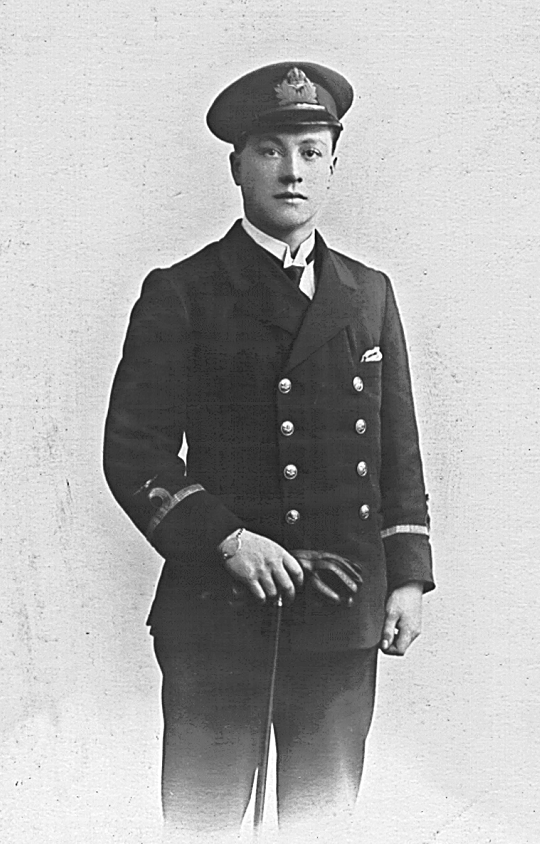
Harold eventually joined the Royal Naval Air Service, where he became a Lieutenant. He would not survive the conflict and was to die of his wounds on March 31st 1918. Here he is, resplendent in his uniform:
connop zzzzzzzzzzzzzzzzzz

Percival Henry Biddulph Furley always used to sit next to Henderson in the Classical Sixth. He was one of Deputy Headmaster Sammy Corner’s favourites. In actual fact, despite being well over sixty years of age, Mr Corner was to leave his post as Form Master of 5b to go to the Great War. Here is Mr Corner, showing the School Charter to interested parents on the occasion of the school’s 400th anniversary in 1913:

sammy corner s

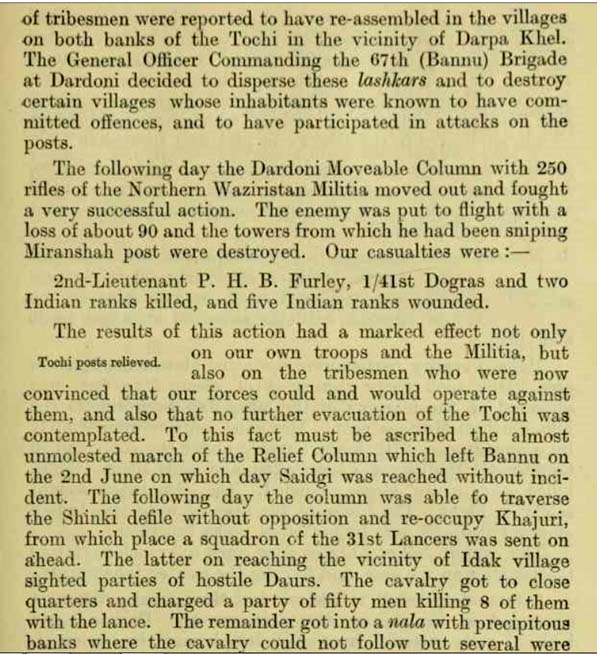
As a teacher, Mr Corner was famous for how easily he could be diverted from the work in hand. Anybody just had to get him started off on an interesting subject, especially in Scripture lessons, and the class would then seldom, if ever, have to return to what they were supposed to be doing. Percival Furley, for some unknown reason, was always nicknamed “Dab”. He was a member of the First Eleven at cricket for three years. His other claim to fame was his talent in school plays. At this time, all the female parts were taken by boys. Given his youthful good looks, “Dab” could always be made up into a very good looking lady or girl! When he left the High School, “Dab” joined the Army. He was eventually to be killed in a skirmish with some lashkars at Miranshah, in the North West Province of India, in June 1919. Here is the official account of that short rehearsal for our recent war in Afghanistan:
furley

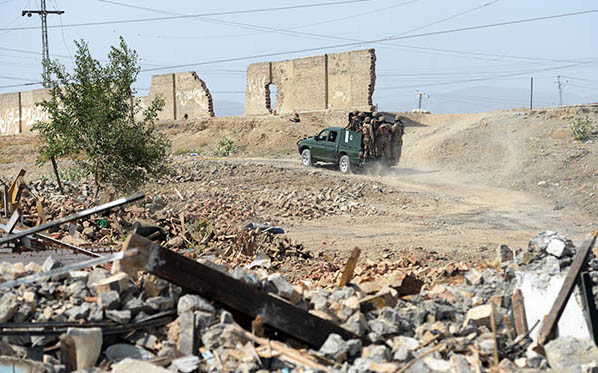
And here is Miranshah today, now that it is running its own affairs:
PAKISTAN-UNREST-NORTHWEST

According to Roy Henderson. the younger of the two Boyd brothers, John Hardy Boyd, was the best athlete in the school. He was captain of the school cricket team and of the Officer Training Corps. His elder brother, Charles Gordon Boyd, had been the school’s wicketkeeper, and had represented the school at football from 1910-1912. He was killed on May 3rd 1917, while serving as a Second Lieutenant in the  9th Battalion of the Leicestershire Regiment.

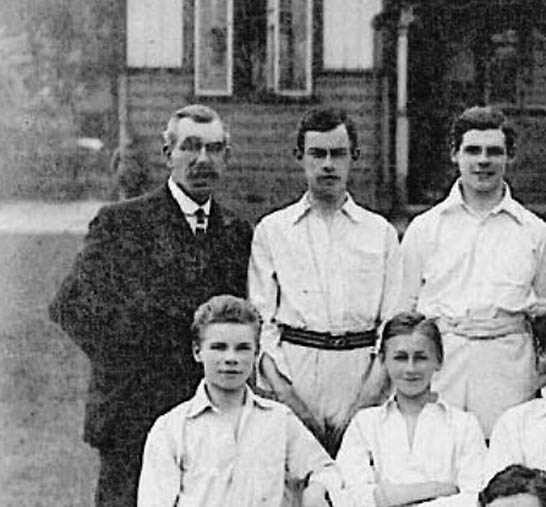
Allan Roy Stewart Grant was the son of a Presbyterian minister. For some subtle reason, possibly connected with his initials, he was always nicknamed “Pongy”. Thomas Wright was quite a good bowler, as was Daft, the grandson of the famous Nottinghamshire cricketer. Other cricketers included Francis Arthur Bird and James Wilcox, and Roy was himself one of the better bowlers and batsmen. The school cricket coach at this time was, of course, Mr A.G.Onion, seen here, perhaps, in his later years:
onion

In one year, Roy was the school Fives champion. In the year before this, it had been Donald Clarkson, who was to become that most vulnerable rank of officers, a Second Lieutenant, killed on August 9th 1918 with the 1/6th Sherwood Foresters. “Pug” Clarkson lived only a street away from where I am now writing, at 52, Caledon Road, Sherwood.

Other school Fives champions included Victor Guy Willatt and his brother, William Donald Willatt. William Norman Hoyte, the Captain of Mellers House was also a very fine athlete, as was Sidney Charles Trease. The latter was to become a Second Lieutenant in the 11th Scottish Rifles. He went  missing on September 19th 1918 at the age of only nineteen. He was the beloved son of George and Annie Trease, of 85, Waterloo Crescent, within just a couple of minutes’ walk of the school. His death came in a fairly pointless campaign in Greece and is commemorated on the Doiran Memorial.

The School was converted to rugby by Mr Kennard. He had the unfortunate habit with smaller boys of pulling them close and then tugging their hair very hard. It was extremely painful! There was no real reaction on the part of the boys to the change of sports from soccer to rugby. They just did as they were told.

Roy played as goalkeeper for the school on several occasions. He once let in eight goals against Trent College, and towards the end of the game he became what was probably the first player ever to be substituted in the history of school football, when he was replaced in goal by Donald Clarkson.

At the time, boys who represented the school were awarded ornate colour caps.

This article will be continued in the near future.


10 Comments

Filed under Football, History, Nottingham, The High School

The Second XI Football Team 1980-1981

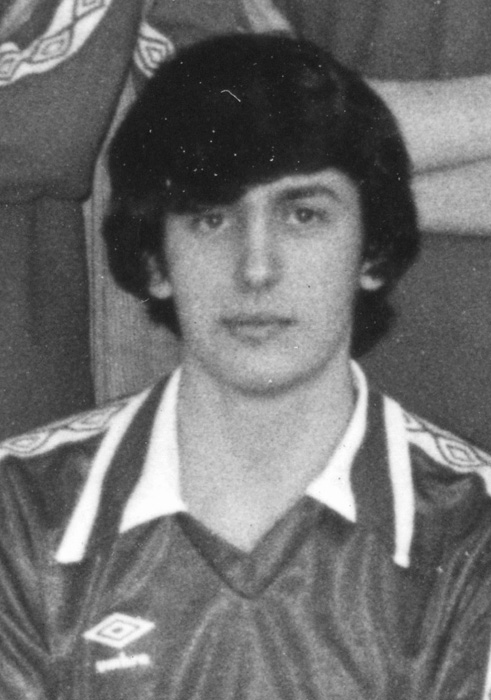
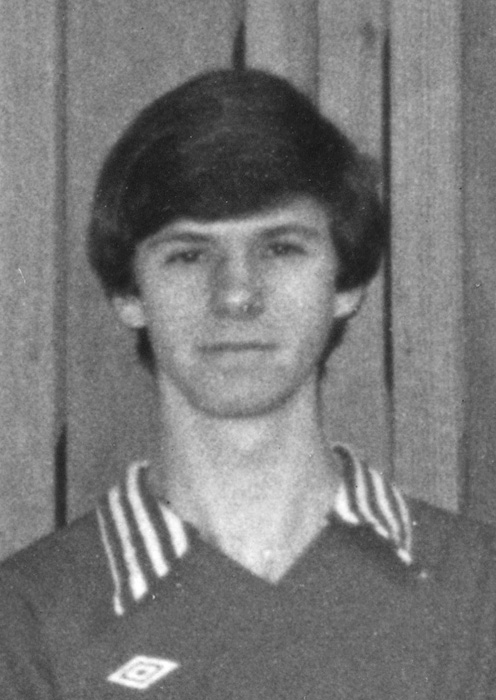
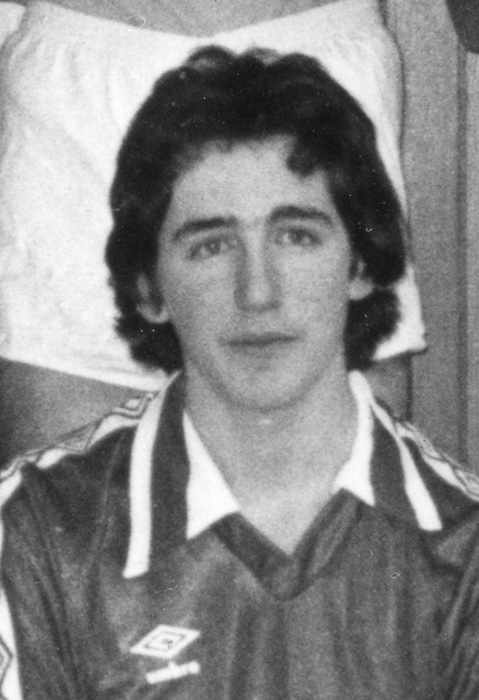
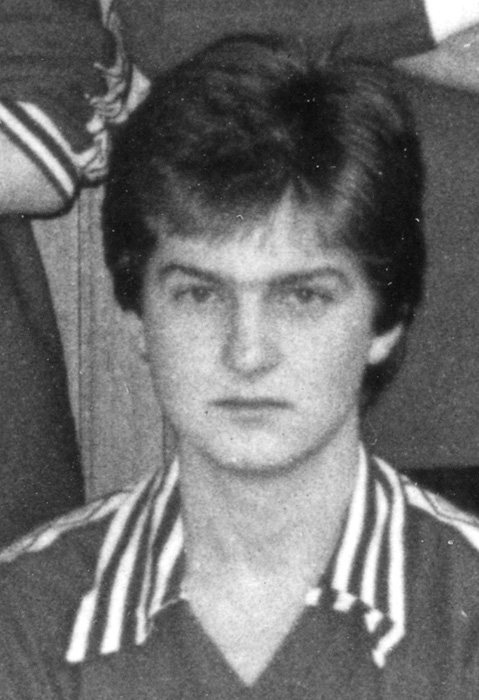
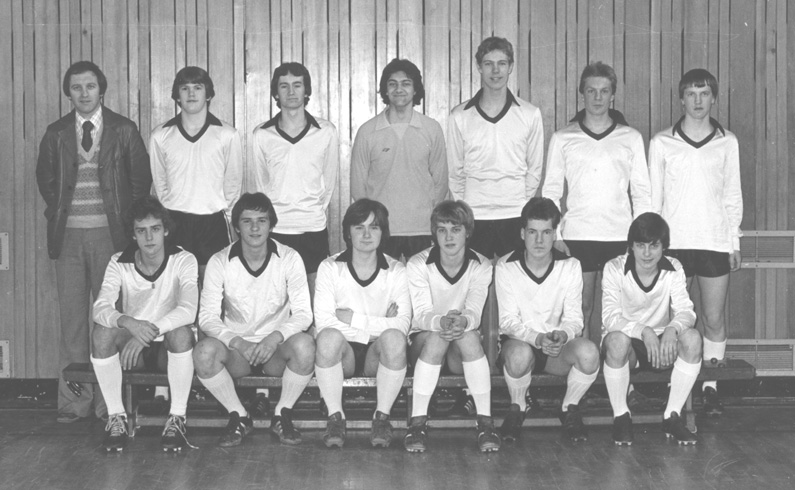
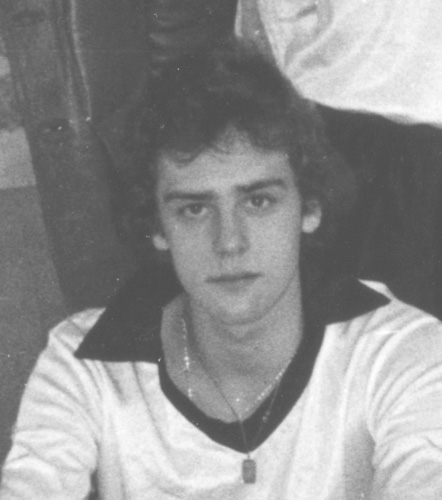
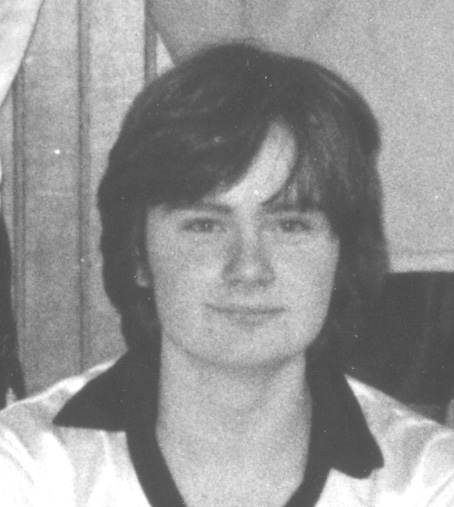
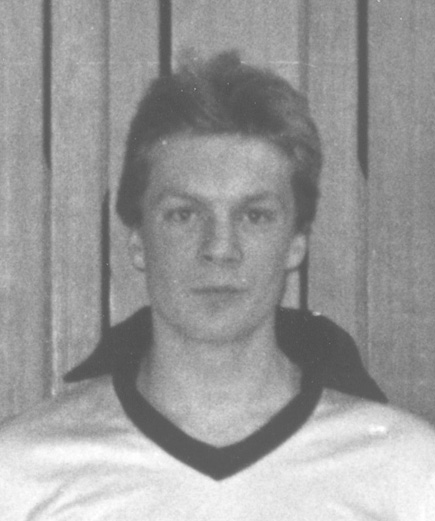
The Second XI had a pleasant and reasonably successful season back in 1980-1981, although it was possible to organise only seven fixtures. They lost their first match against Becket School, but were only to lose one more of the next five matches. Their record for the season of two wins, three draws and just two losses would have placed them comfortably in mid-table in the Premier League of today. Perhaps another Crystal Palace, Everton or West Ham. We drew games against High Pavement, Bramcote and Clarendon and then defeated Clarendon by 3-0 in the return and Bilborough by 5-2. Not a bad record for a team of eleven players picked from just nineteen available candidates:

asecond THE ONE

The goalkeeper was Richard Clark:

richard clark 700
And his deputy was, I think, David Lloyd:

other goalie

In defence we had Chris Turner:

chris turner 700

Alongside him was Julian Bower:

julian bower 700

Ken Blecher was the sweeper. He was the Team Captain, so he had the shiny satin finish shirt:
For some reason, we played in fairly dark blue shirts of a shade called ‘Admiral’ or ‘Azure’ apparently.  This had been worn as a change strip by Sunderland in the First Division a few years previously. The sleeves had a red and white design on them, as did the collars.

Ken Blacher

Now, back to the players.

Phil Sermon was a 100% team player who, although he was often a little quiet, always gave everything on the pitch:

phil-ser-mon-700

Paul Chappell was almost surgical in the strength and calmness of his tackles:

Paul Chasppell
Chris Batty was an accurate passer of the ball, with a powerful shot:

chris batty 7oo

Bert Crisp was a strong runner and created many chances:

bert crisp 700
Phil Colley supplied energy in midfield:

phil colley

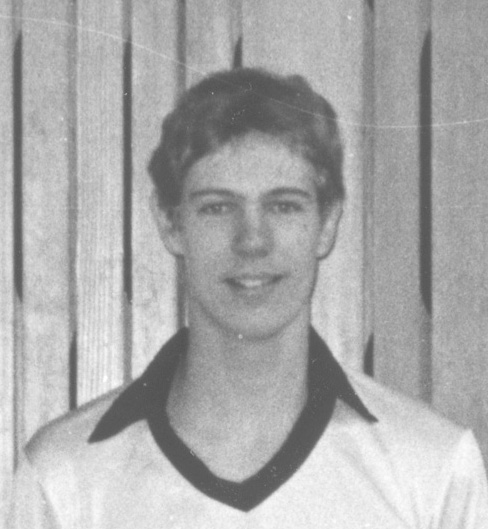
Chris Ffinch played well in attack:

Chrs Ffinch 700

Robert Harwood was a confident goalscorer:

robert harwood 700

Stuart Burns also contributed well in attack:

stuart burns 700

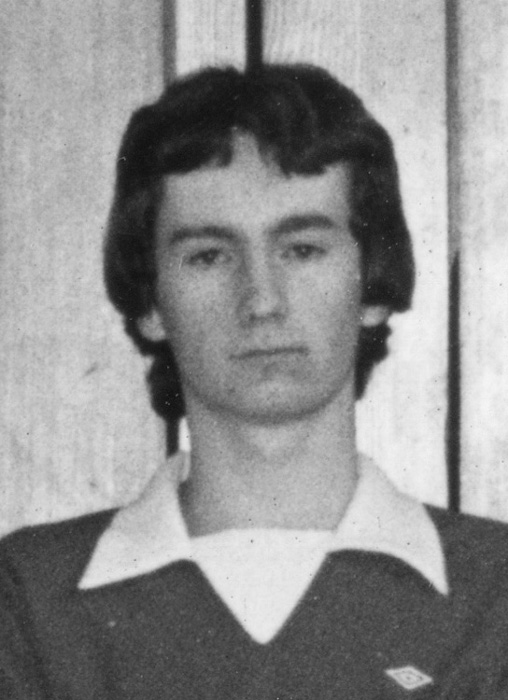
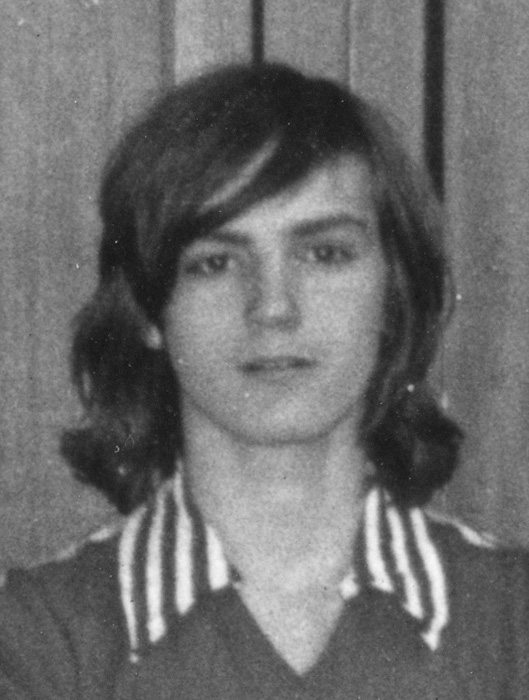
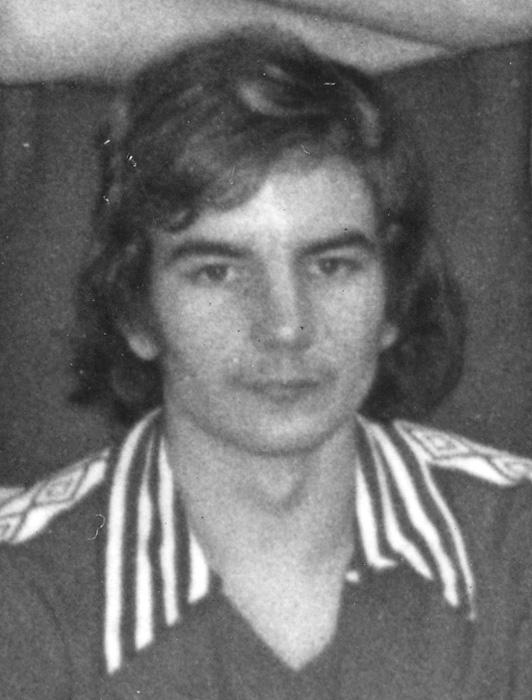
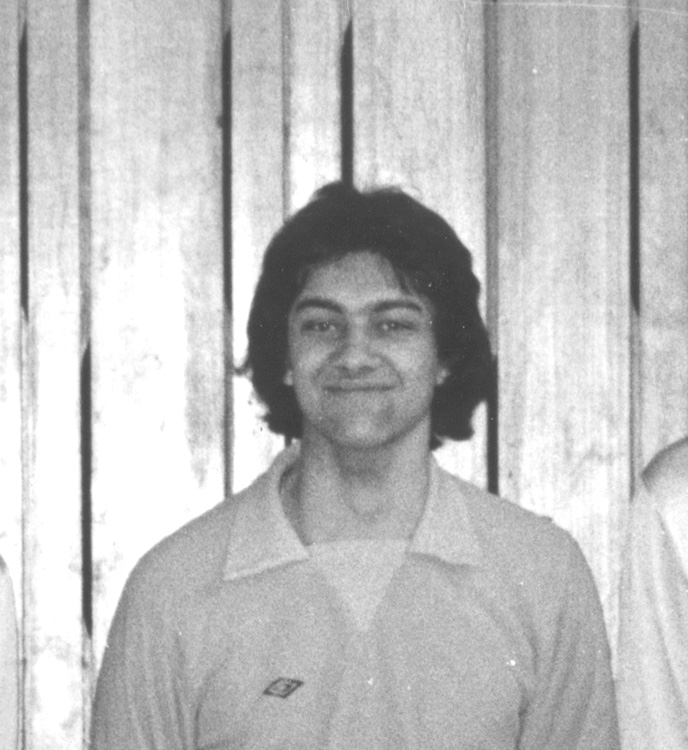
On the team photograph, two players remain a mystery to me, although this all took place some 35 years ago now. The first is CD Richardson:

one

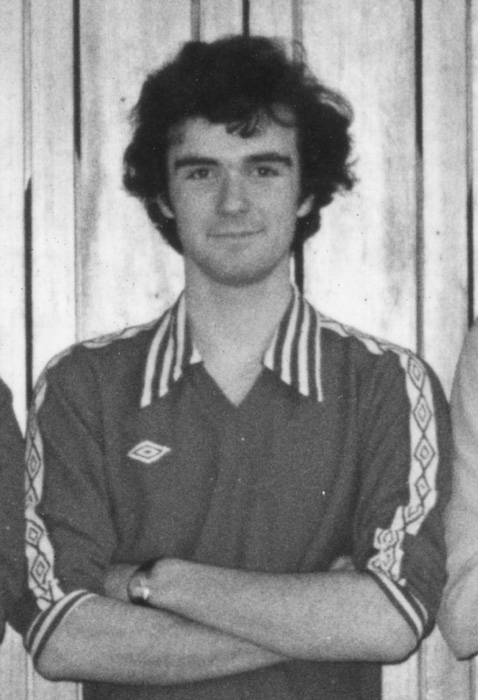
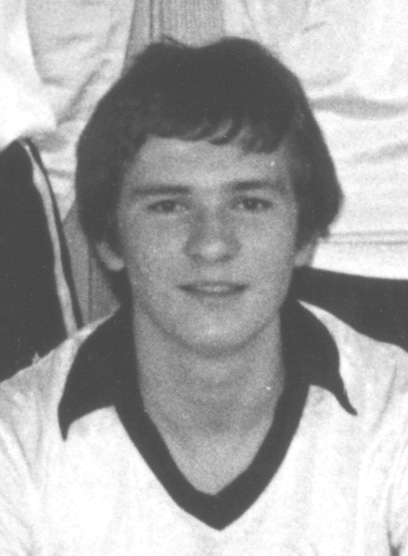
And the other is David Nowell, who, as you can see from the comments below, was the left full back, but who was unfortunately injured very early in the season :

three

Forgive me gentlemen.
Overall, the Nottinghamian reported that the players were “all keen to play and all contributed to a most enjoyable season. Everyone has done his best and given his all.”
A lot of my readers, of course, will not be familiar with any of these young men. Let them stand, therefore, for your own sporting efforts at school. Did you do your best and give it your all?
Perhaps you were not in a sports team of any kind. Well, just look at the faces of these sixteen, seventeen and eighteen year old young men. Look at their expressions. Their inner thoughts.
Nowadays they will be in their early fifties. Their team coach back in the day was in his late thirties. Well now, I am in my early sixties, and I just regret that I didn’t enter more Ché Guevara lookalike contests when I had the chance:

me close up

.

20 Comments

Filed under Football, History, Humour, Nottingham, Personal, The High School

The Oldest Old Boy of Them All (2)

Many, many years ago, in 1990, my friend and colleague, Simon Williams, interviewed Roy Henderson who was then one of the oldest Old Boys still alive. In due course, I transcribed the taped interview and added some extra explanatory details where this seemed helpful to the reader. This is the second section of an eventual five, all of which describe the High School just before the outbreak of the Great War, and then during the first few years of the conflict:

Nobody was ever allowed to speak to or approach girls from the Girls’ High School. For this transgression, boys were punished by being confined to their own school. Attitudes at this time were very Victorian.

Dr Turpin, the Headmaster, was always a popular figure. On one occasion, Roy was grounded for three months for putting chewing gum on the seats of other boys. Perhaps fortunately for him, he was caught when just about to put it on Jumbo Ryles’ seat. Mr Ryles came in, and Henderson thought that he would be expelled for this offence.

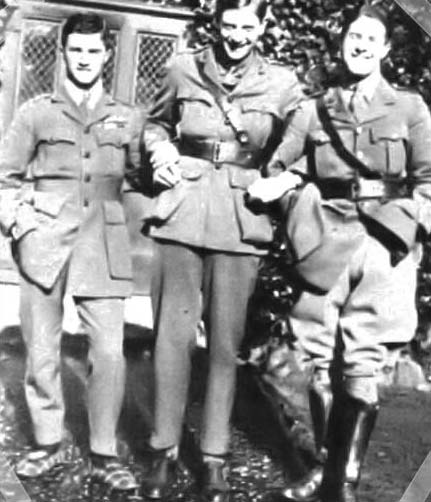
There were two Ball brothers in the school at the time. They were both in trouble most of the time. The more famous brother, Albert, was “a real card”. This is a photo taken during the time of the Great War. It shows Albert, apparently still wearing his brightly coloured slippers, his brother Cyril and an unknown officer of the Royal Flying Corps:

Albert25 bro, unklnow

At this time, music was not in the curriculum. There were just “a few ridiculous songs” for the prize giving ceremony. The Third Form music master was a Mr Dunhill, who had one eye which was straight, but the other looked outwards at an angle, rather like half past ten on a clock. Boys always used to make fun of him. Whenever he shouted “Stand up you! ! ! ” and looked at a certain naughty boy, four others would get up elsewhere in the room. “NO! NO! NOT YOU!! …YOU! ! ” The first four would then sit down, and another four completely unrelated boys would stand up elsewhere in the room.

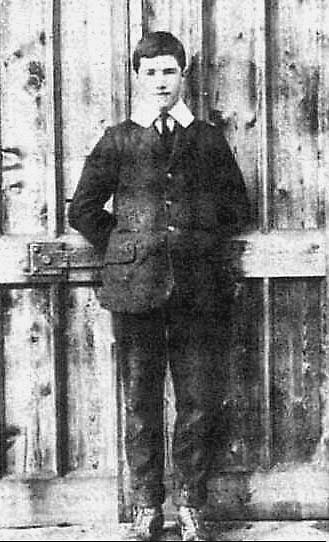
Albert Ball specialised in misbehaviour during these singing classes. He and his brother would invariably “kick up a terrible row”, and would then be sent out of the room. This is Albert in 1911:

Albert 1911 trent

According to one Old Boy from just a few years later, however, Albert Ball’s actual expulsion came from an incident which took place at morning prayers. Ball took in with him a huge bag full of boiled sweets, which, at one point, was allowed to burst, and hundreds of sweets were all dropped onto the floor. The whole school assembly then became one seething mass of boys, all scrabbling about on the floor, “heads down and bottoms up, completely out of control ”, trying to pick up as many sweets as they possibly could.

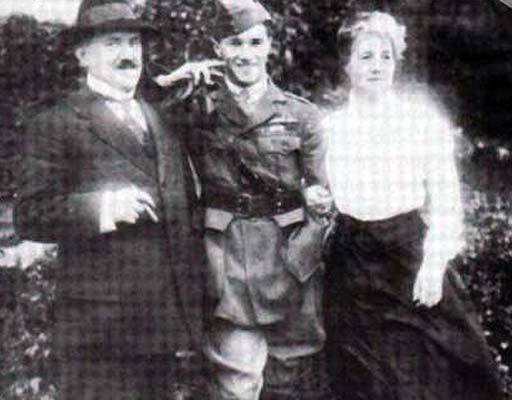
Albert Ball’s father was a City Alderman, but at the same time, he too was “a real character”. He took Roy trout fishing on several occasions around this period, but always used worms, never flies. This is Albert with his father, Sir Albert and his mother, Harriet Mary:

Albert22 family

Roy’s brother was also in the school around this time. He seemed always to be in scrapes when Roy was a prefect. Eventually he left Nottingham, and went to Millhill School. Roy himself enjoyed the High School, although he was never very good in the classroom. By his own admission, he was very poor academically, and was totally hopeless at exams.

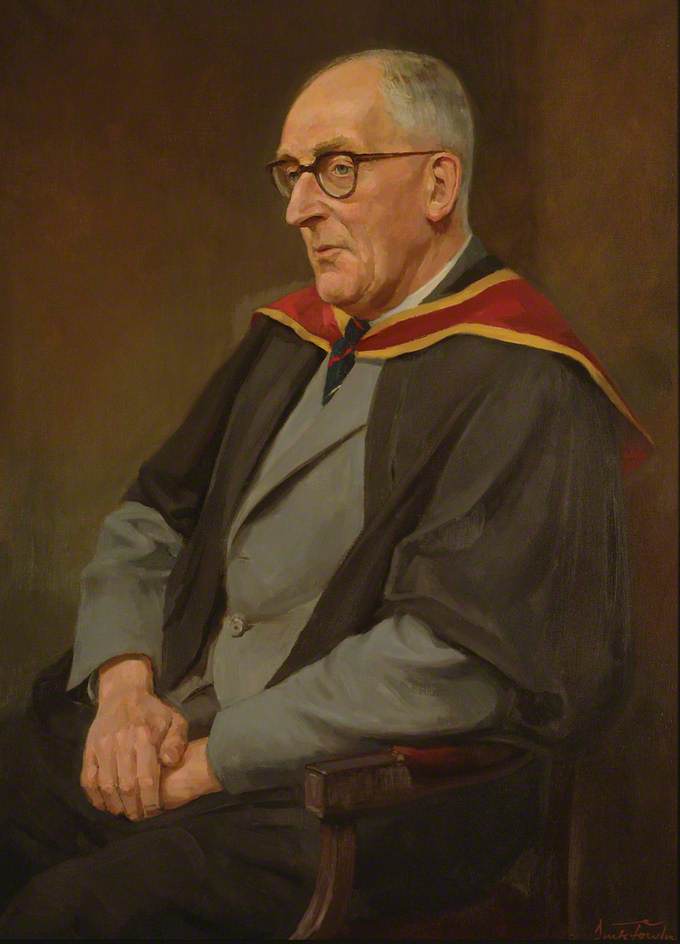
Roy was a best friend of Arthur Willoughby Barton, who was later to become the Headmaster of the City of London School. The pair of them always collaborated closely in Chemistry lessons with Dr Turpin. Henderson did the weighing and all the practical activities, while Arthur did all of the calculations. In lessons they always got full marks, but in examinations, Roy usually scored very low marks indeed. Arthur, of course, still got his ten out of ten. Here is the official paining of “Fuzzy” Barton as the Headmaster of the City of London School:

(c) City of London Corporation; Supplied by The Public Catalogue Foundation

The high point of Roy’s rather modest academic career came in the Sixth Form, when he finally won a prize, the Duke of Portland’s prize for an English essay. It was on “Militarism”, and Roy only won because the rest of the Sixth Form deliberately boycotted the competition, with the attitude of “It’s the only thing Henderson can do…..let him have it.”

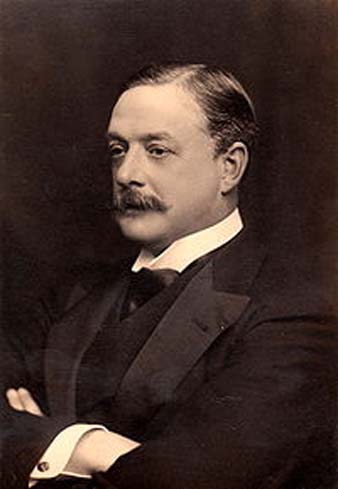
The Duke of Portland, in his capacity as the Lord Lieutenant of Nottinghamshire, was to unveil the school war memorial in 1922:

1900_Duke_of_Portland,_by_sssssssss

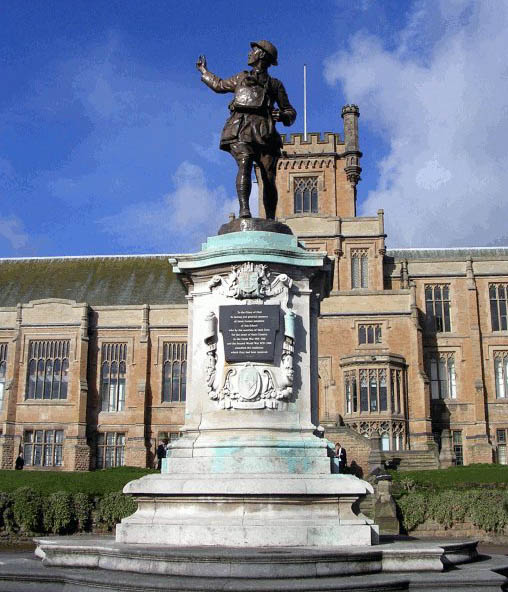
Roy sang a specially composed song, accompanied by a piano placed “at the top end, just inside the school”. A wonderful draught of wind blew outwards from the school throughout the very impressive and solemn ceremony. It carried his voice beautifully, but also gave him lumbago. Here is the school war memorial:

notting_high_school_war_memorial xxxxx

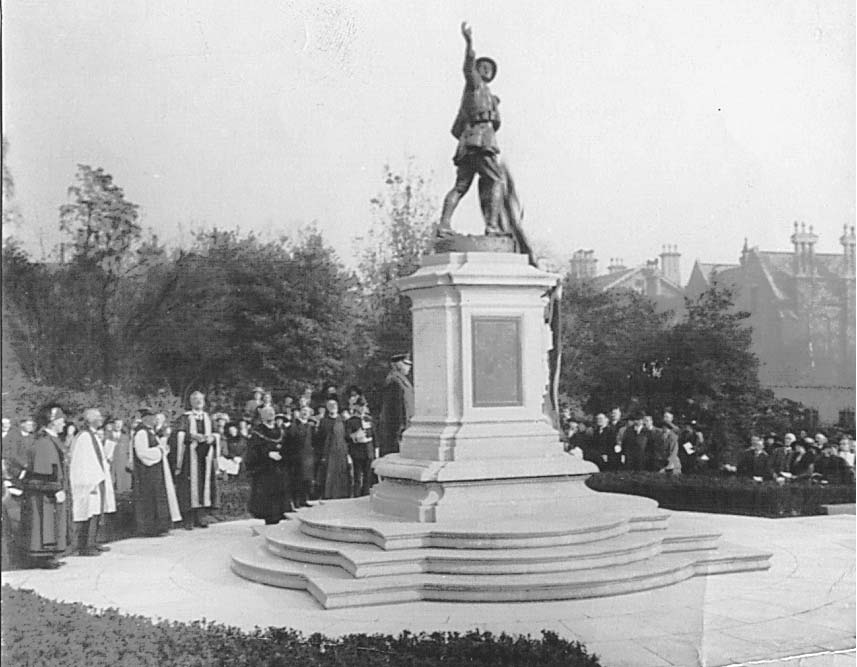
Here is a photograph of the dedication ceremony. One of the people is surely Roy Henderson. but I do not really know which one:

war meoorial ceremnoy

During the first year of the Great War, many of the Sixth Form members of the Officer Training Corps had gone to a special summer camp, working on a farm on the south side of Nottingham. It was hard, unpaid work, harvesting potatoes and hoeing turnips. The following year, Roy arranged his own summer camp, at a farm near Grantham. Six boys, all members of his father’s church, went with him. They were all Prefects, and comprised three pairs of friends, Harold Connop and Francis Bird, Thomas Wright and Lancelot Foster, and John Boyd and Roy Henderson. Unfortunately, as they waited for the train, the tent, which was supposed to arrive, did not turn up, so four of the boys went on to Grantham, while two had to stay behind in Nottingham. The farmer, unhappy with having to pick them up twice at Grantham, greeted the final two at the station with the words:

“What? What? My boy, I am not a little annoyed! ”

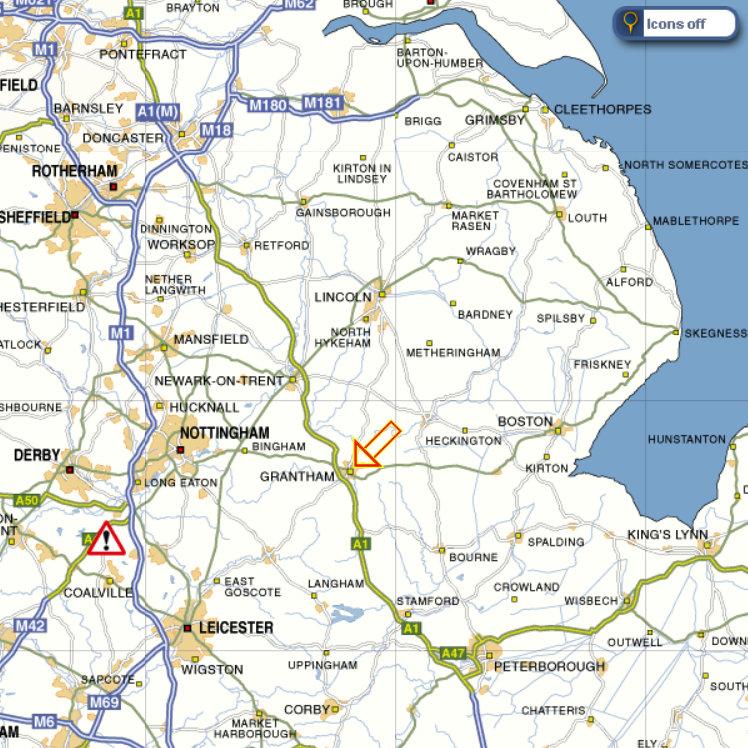
Here is Grantham relative to Nottingham. Look for the orange arrow:

granthsm

The boys were asked to load hay from a stack to the farm cart. They started piling it on enthusiastically, but they proved to be too quick for the man on the cart, a Mr Wright. The latter soon told them that half a load was enough, and then geed up the horse. When the cart set off, though, half the stack came with it, and the whole lot collapsed. Everyone found it immensely amusing, and they laughed about it for a long time afterwards. Other work for the boys included shaking the clover out of the cut wheat. At the end of the week, they enjoyed an amazing celebratory meal at the farmhouse. There was roast beef and duck, and by the end of the pudding, everybody was absolutely filled, collapsing with the weight of the food consumed. The farmer then sent for Henderson, obviously about to give him something as payment for the six boys’ work during the week.

When he returned they all quizzed him…“How much??? How much??? ” He replied “A pound.” There was a disappointed silence, which was broken only by Henderson’s single word “EACH!!” Everybody collapsed with excitement. They were totally flabbergasted, as, at the time, a pound was an absolute fortune. The boys were later invited to the farmhouse for dinner at Christmas. Under each of their plates, they found a ten shilling note as a gift from the generous farmer. In addition, the boys all went to the school’s army camp, but was a much more formal, military occasion.

This article will be continued in the near future.

12 Comments

Filed under Football, History, Nottingham, The High School

The High School’s best football season of the Modern Era

Overall, it must be said, the football team at the High School since 1968 has not really had a great deal of success. The exception to this, though, was the 1980-1981 season which was easily the most successful of the modern era. By the time the School Magazine, the Nottinghamian, was published, the team were undefeated in twelve matches. This record was extended to the very last game of the season which was a most unfortunate defeat at home by High Pavement Second XI who managed to score two goals without reply.

Here is the team photograph:

first eleven DAS BETTER Bxxxxxxxxxxxxxxxxxxxxxxxx

(back row) Dr.D.A.Slack, Norman Garden, Robert Crisp, Richard Mousley, Jon Bullock, Simon Derrick, John Ellis

(front row) Rob Persey, Raich Growdridge, Chris Peers, Neil McLachlan, Nick Cope, Chris Ingle

The team’s goalkeeper was Richard Mousley, whom the school magazine described as “reliable, agile, and when needed, very courageous.”

MOUSLEY 750 WWWWWWWWWWWWWWWW

They continued with the rest of the team:

In defence Richard Townsend was the left full back, replaced occasionally by Norman Garden. Both of them were deemed to be “consistently good players, and very determined in the tackle.” On the opposite side as right full back was Nick Cope, equally determined, and occasionally over-enthusiastic in the tackle:

Alas, Richard Townsend did not attend the team photograph on that coldish but fairly bright day in the Summer Term of 1981.

The central defenders included Raich Growdridge who was both team captain and sweeper. Raich was very skilful, with total commitment and a tenacious tackle. He was always capable of lifting the side when things were going against them. Raich had a trial with Derby County’s A team during the Spring Term, and is believed to have played perhaps three games for them. I was told by the Derby coach that had he not been over 18 years of age, they would have signed him for the club:

RACIH GROWDRIDGE 750 WWWWWWWWWyes yes yeas

The other central defender was Jon Bullock who was extremely commanding in defence and particularly useful when attacking at corners. He actually scored a hat-trick at Bilborough, an extremely unusual feat for a defender:

JONNN BULLOCKxxxxxxxxxxxxxxxxxxxxxxxxxxx

In midfield, Tim Little was hard working and consistent. He also scored some very useful and well taken goals when he moved into a more attacking role:

TIM LITTLE XXXXXXXXXXXXXXXXXX

Rob Persey was a tireless player, and a very determined tackler who possessed a great deal of skill when coming forward into attack. He was not the strongest defensive player, however:

ROB PERSEWY. 750 jpg XWWWWWW (2)

John Ellis played on the right, and scored a number of remarkable, even unbelievable goals, from between fifteen and thirty yards out:

JOHNNN ELLIS xxxxxxxx

Chris Peers was a fine left footed player, who could dribble well past a succession of opponents. He was a particularly skilful taker of corner kicks:

CHRIS PEERS WWWWWWWWWWWWW

Among the forwards,  Simon Derrick  was perhaps rather small, but very aggressive as a centre forward, with a lot of skill on the ground:

SIMONNNN DERRICK WWWWWWW

Chris Ingle was an excellent finisher, with tremendous pace. In the author’s humble opinion, he was the fastest High School forward of the modern era, with the possible exception of Leo Fisher. Chris scored nine goals in the season, with a hat-trick against St Hugh’s College, in Tollerton:

CHRIS INGLE ONE WWWWWWWWWWWWWWW

Other players to have figured in the squad included Neil McLachlan, who occasionally lacked total commitment, but had sufficient skill to play well as a replacement both in defence, midfield or attack. A veritable “Jack of All Positions”, the Nottinghamian called him and a valuable asset to the group!

NEIL MACxxxxxxxx33333333xxxxxxxxxxxxxx

Robert Crisp, universally known as “Bert” was a skilful midfielder, who never let the side down when called upon:

BERT CRISP WWWWWWWWWWWWWWWW

Both Ken Blecher and Chris Turner also played in the team:

Overall, the side played seventeen games and won eleven of them. Five games were drawn, and there was a single defeat, by 0-2, in controversial circumstances, if I remember correctly, against High Pavement 2nd XI. It is interesting to notice how many of these schools no longer exist nowadays, thirty four years later. The team’s victories came over Brunts of Mansfield (twice), Becket(twice), Bluecoat(twice), Forest Fields 2nd XI (twice), High Pavement 2nd XI, Bramcote, Bilborough and St Hugh’s College in Tollerton. Drawn games came against Bilborough, West Bridgford, Bramcote and twice against Trent Polytechnic.

The team’s goals were scored by Ingle 9, Ellis 8, Derrick 6, Bullock 3, Little 2, Persey 2, McLachlan 1 and two own goals.

The football report in the Nottinghamian paid the fullest tribute, and rightly so, to the endless support given to High School football by Tony Slack, who was retiring at the end of this splendid season:

TONY SLACKKKxxxxxxxxxxxxxxxxxxxxxxxx

He in turn generously praised the team’s achievements, despite the limitations of selecting a team from a very small number of players. Set against this, however, was the players’ commitment to the game, their willingness to work for each other, and their high level of team work, which, on many occasions, enabled them to defeat opponents who were, technically, far more skilled than they.

Nowadays, these young men will be in their early fifties. It would be interesting to find out where any of them are now, perhaps with a message in the “Comments” section?

22 Comments

Filed under Derby County, Football, History, Humour, Nottingham, The High School

The Oldest Old Boy of Them All (1)

Many, many years ago, in 1990, my friend and colleague, Simon Williams, interviewed Roy Henderson who was then one of the oldest Old Boys still alive.  In due course, I transcribed the taped interview and added some extra explanatory details of my own where this seemed helpful to the reader.

This is the first section of an eventual five, all of which describe the High School just before the outbreak of the Great War, and then during the first few years of the conflict.

Here is the High School around this time. Notice at least four boys in the picture, including one sitting down on the edge of the tennis court:

west end of school

Roy Galbraith Henderson arrived in the High School Preparatory Department in January 1909. He had been born in Edinburgh, although he had not lived there since the age of three. Given his Scottish background, he arrived at the school wearing a kilt. This proved not to be the wisest of decisions, since he was immediately picked on by two older boys called Jaffer and Dodds, both of whom were at least a foot higher than he was. On many occasions in the future, he was to have water poured down his neck by these two bullies.

The Head of the Preparatory Department was Mr Leggatt, who was one of the very first to volunteer to go off and fight in the Great War. The main game in the school playground at this time was called “relievo”. It was a particularly thrilling game to play in one of the era’s many dense fogs.

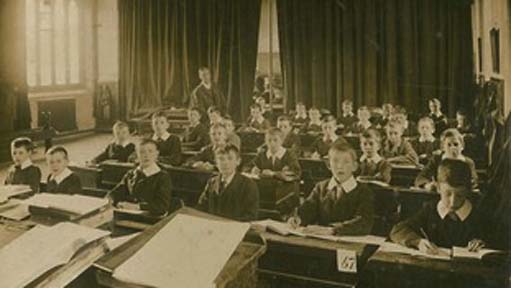
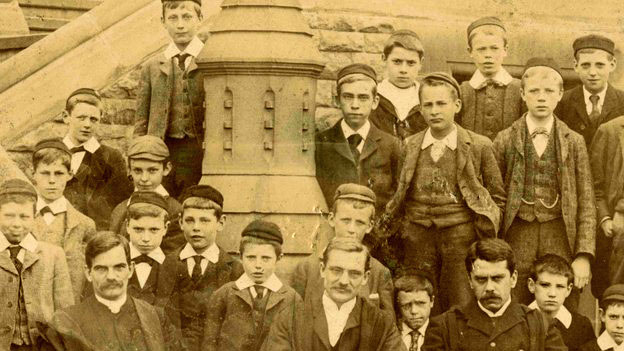
In the First Form, the form master was called Mr Radley, or “Pot-eye”. He always used to get the boys to begin work with a loud cry of “pens up!”. They would then write “like the blazes”, before the call of “pens down ! ”. Mr Radley is the third person from the left on the front row:

radley front 3rd from left

In Form 2a, “Nipper” Ryles was a very good master, and was thought to be one of the very few who did not possess a degree. Here he is:

jumbo ryles

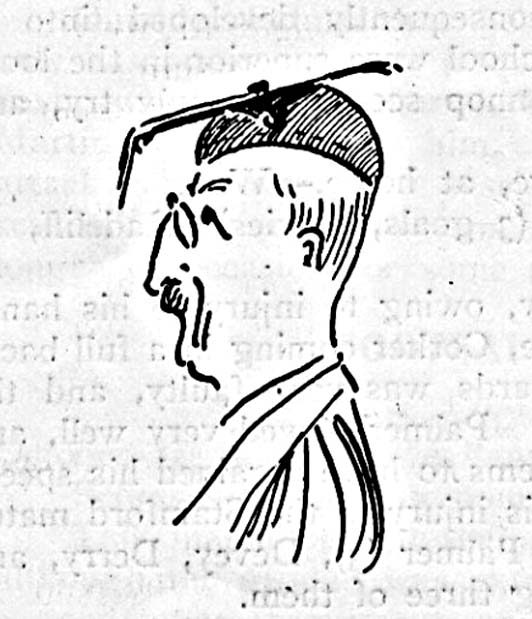
In the following year, in Form 3a, his brother, “Jumbo” Ryles, however, was “terrible, absolutely hopeless”. He used to have his feet up on the front desk all the time, and would practically go to sleep. The Drawing Master used to poke his nose around the door, and wake Jumbo up with a gentle cough. The latter would then rouse himself, and say to the class “Now get along there! Get along there! ” Jumbo’s teaching technique was to line boys up in a row for a series of questions. If they were correct, they would stay where they were. If they were wrong, they would go back to the end of the queue. This cartoon dates from just before “Jumbo” retired:

jumbo ryles left

In the Fourth Form, Mr Lloyd Morgan went to serve at the front during the middle of the school year, shortly after hostilities began. He was replaced by Mr D’Arcy Lever, who was the butt of many jokes, and found the boys extremely difficult to control. They made a lot of fun of him. Later in the conflict, retired teachers had to return to the school. Mr Trafford took over 3c, the worst form in the school, who were famed for their ability “to play up a lot”.

In Form 5a, Mr Brock was a “very nice chap, and very popular”. Everyone liked him very much. The Classical Sixth was looked after by Mr Strangeways.

In the yard, games tended to be played by years. In Form 1a, for example, everybody always had pockets full of marbles. They often played in the covered sheds near the Forest Road entrance.

This slideshow requires JavaScript.

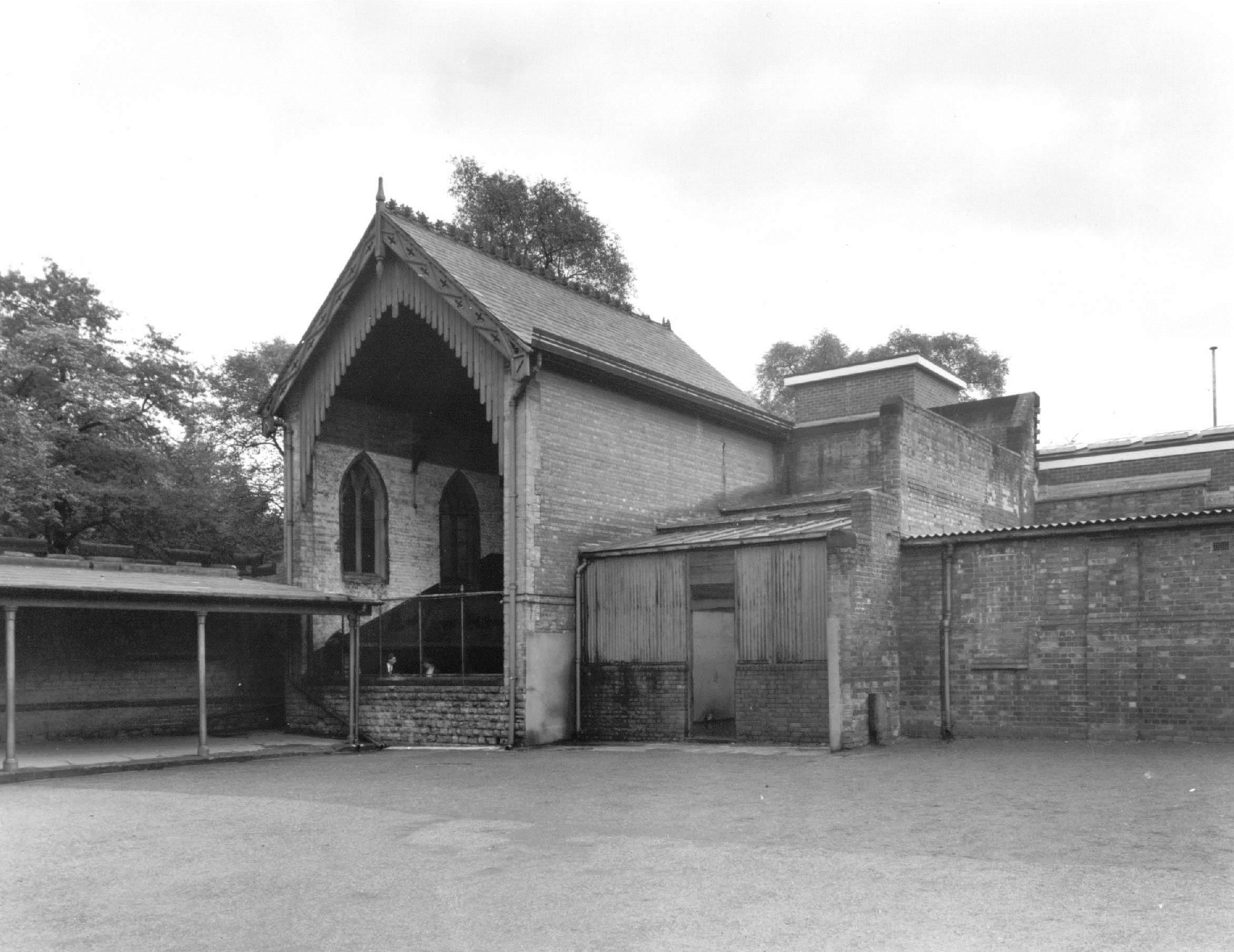
The yard also had two Fives courts, one of which was covered, and the other was left open to the elements.

fivers

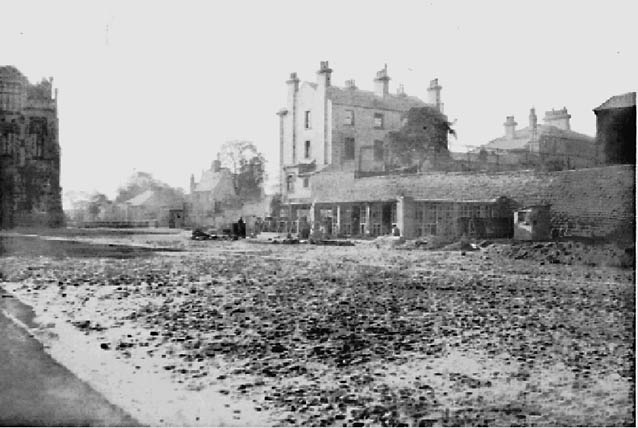
To the left as one entered the playground via the Forest Road entrance, there was some extremely dirty sand.

playgro 1932

This was used as a football pitch, with rough and ready goalposts at either end. Every year, around Easter, a competition was held among teams of eight players, each one of which was captained by a different member of the First Eleven. In 1913, Roy played in the winning team, which was captained by James Ivor Holroyd. On October 30 1917, Holroyd of the 1/28th London Regiment was to be reported missing, presumed dead, in the Second Battle of Passchendaele, at the age of only twenty one.

Form 2a enjoyed a game called “rempstick”. A member of one team would stand with his back to the wall, while one of the other members of his team stood with his head between the first boy’s legs. The next team member would then put his head between the legs of the second boy, and so on, until a long caterpillar-like scrum structure was formed, just one person wide. The members of the other team then took a long run-up, and, one by one, jumped onto the top of the human caterpillar. If they caused a collapse, then their team was allowed to have a second go. If the caterpillar held up, then its members were allowed to do the jumping:

This slideshow requires JavaScript.

In Form 3a, the main game was football, which was played on the left hand side of the playground. looking from the Forest Road entrance, right at the very far end. In Form 4a, football was played again to the left, but not as far along as in the Third Year.

The Fifth Form played their football under cover in the sheds along the Forest Road wall, kicking the ball against the wall in an effort to get past their opponent. Among these boys, Lancelot Wilson Foster was remembered as a particularly good full back.

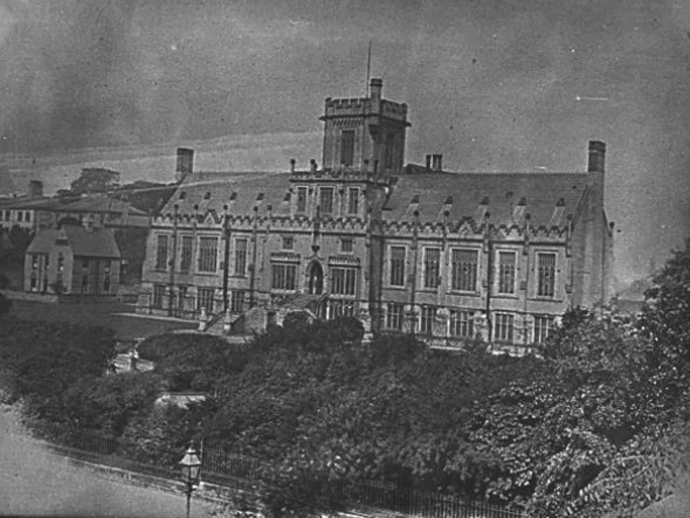
The Sixth Form spent most of their free time just walking and talking on the lawns at the front of the school:

front schoollll

Nobody was ever allowed inside the school during breaks, but it never seemed to rain!  In any case, all the boys were always very keen to get out of the building.

There were few facilities for the boys, including just six to eight cracked stone washbasins. There was a tuck shop, near the south eastern corner of the present day West Quadrangle. It was run by Robert, the School Caretaker. The small shop which boys at the end of the twentieth century called “Dicko’s” was at this time called “Baldry’s”, and it was a sweet shop. A female member of staff, a Mrs Digblair, lived above it. She was one of the school’s first ever mistresses, and members of the Sixth Form loved to go and have tea with her.

Finally, my own footnote on Mr Radley. He was a teacher with what would nowadays be considered ideas before their time. He loved literature, art and music, and taught the boys about understanding and peace among mankind. Indeed, this was perhaps not particularly surprising for a man who knew French, German, Italian, Russian and Welsh. On one occasion, he brought an Egyptian into school to show his pupils that there were “other men than Englishmen and other creeds than Christianity.” His obituary in the school magazine ended with the words “Goodbye, Mr Chips!”

This article will be continued in the near future.


22 Comments

Filed under Football, History, Nottingham, The High School

My latest book

snip-of-coverThose of you who follow my blog will be familiar with the many stories I have told about Nottingham High School; its Founders, its coat of arms, its war heroes, its caretakers and its one or two villains. I have recently finished compiling these stories, and many more, into a new book called Nottingham High School: The Anecdotal History of a British Public School, published with Lulu.com.

My history is an entertaining one about the people behind the institution – what they thought, said, and did from the reign of Henry VIII up to the modern era. I want to tell the stories of the ordinary people whose actions changed the history of Nottingham forever, and those whose lives had much wider influence on the history of our country and on the lives of people across the world. I tell the tales of all people connected with the High School – teachers, support staff, boys, alumni… from caretakers to kings!

image_update_72e24141db868b82_1348683417_9j-4aaqskThe book is written in diary form and runs from Thursday, June 30th 1289 to Thursday, July 12th 2012. It’s an easy read that you can dip in and out of as you wish. Find out about the antics of the boys, the excesses of the staff, the sacrifices of the alumni, and the castle-like school building in all its majesty.

My book contains new and previously unpublished research into the lives of some of the most famous ex-pupils of the school. Read about the childhood of scurrilous author D.H.Lawrence, whose controversial books were still banned 50 years after he wrote them. Read about the disruptive antics of Albert Ball V.C., the daring air ace who always fought alone. Read about American Old Boy, Major General Mahin of the U.S. Army, a man whose power and authority in the Second World War rivalled that of General Patton, until he was killed (or was it murder?).

The tone of my work is interesting and light, but at the same time, as you know from my blogposts, I can show my more serious side when occasion demands. A very large number of former pupils from the High School died in the two World Wars and their sacrifices are reflected in my book.

I have really enjoyed writing this new history book, and I hope that you will find it an entertaining and intriguing read. If you would like to give it a go, then it is now available from my page on Lulu.com.

p1040694

31 Comments

Filed under Aviation, Criminology, History, Literature, Nottingham, Personal, The High School, Writing

Warren Herbert Cheale

Warren Herbert Cheale, who lived with his family in Burton Joyce, moved to the High School in January 1944 to work as an Acting Pilot Officer with the School Flight of the Air Training Corps. He was a member of the Royal Air Force Volunteer Reserve:

RAF

On Thursday, September 7th 1944, while away at camp at Wenlock in Shropshire with the boys from the High School A.T.C., poor Warren was killed in a flying accident. He was only 44 years of age.  He left a widow and a teenage son and daughter. Despite his short stay at the High School, one of the boys described him as “one of the nicest people we had ever met”.
Warren, who was born in the first three months of 1900, seems to have been quite a colourful character. He lived originally at a house called Redhill in St. Helen’s Crescent. Hastings, in Sussex and the first mention of him that I can find seems to be at the age of three when, on November 28th 1903, he played the important part of Bubbles in a local production of Little Red Riding Hood:

little_red_riding_hood_and_wolf1

Not very long afterwards, Warren joined up for the Great War and eventually found himself in the Royal Flying Corps.

During this era, British pilots were not allowed to wear parachutes, so Warren must have thought his death was imminent when he was involved in a mid-air collision at an altitude of over two thousand feet. The two planes must have either spun or perhaps fluttered down to earth, though, because Warren escaped with his life. That life, however, was perhaps affected by Post Traumatic Stress Disorder to some extent. It is difficult to imagine that anybody could go through an experience like that and remain completely unaffected.

Fokker-DVII-Crash

On July 29th 1925, Warren married Alice Elisabeth Unwin at St. Martin-in-the-Fields Church in London.

Warren then seems to have remained in the new Royal Air Force, because the next mention seems to be in the Hastings and St Leonards Observer (Hastings, East) for June 28th 1930. Listed as a mechanic, he appeared in the local magistrates’ court, along with a young friend, who lived in the School House, North Street, Hornchurch. Both were found guilty of damaging a crop of rye in a local farmer’s field, a rather bizarre mark to leave on the pages of history, perhaps.

Certainly from 1931-1934, Warren continued to live in Hastings and St Leonards, presumably with his wife. It was a lovely place:Hastings_english_school_xxxxxxxxxxxxxxxxxxx1

Warren played local cricket, both as a batsman and a bowler, although life did not always go well. For whatever reason, his wife Alice Elizabeth filed for a divorce at the London Divorce Courts in 1936. The divorce may not have gone through, because the report contains the annotation, [wd] which may well have meant “withdrawn”.

Perhaps the family then moved northwards to Nottingham as a new start, hoping to put their marital difficulties behind them for the sake of the children.

Alas, we will never know, because 21 PAFU ORB reported on that fateful September evening:

“Flying accident at Wheaton Aston. An Airspeed Oxford LX509, with Flight Lieutenant Harrison as instructor, and Pilot Officer Cheale (Air Training Corps) took off for a night flying test from Wheaton Aston and was seen to dive into the ground shortly afterwards. Both occupants were killed instantly as a result of injuries sustained.”

Here is a general map showing the location of Wheaton Aston airfield:

wheaton aston

At the time, the Airspeed Oxford was considered to be, potentially, a rather dangerous aircraft to fly:

Airspeed_Oxford

Although designed as a twin engined trainer, and supposedly extremely docile, it could be, in actual fact, a rather unforgiving aeroplane.  Many aircraft used in RAF Training, of course, were well past their sell-by date and poorly maintained. These factors may well all have been contributory to the deaths of these two men. In actual fact, in the North Midlands, during the course of the Second World War, the majority of fatalities occurred in either Airspeed Oxfords or another old stager, the Vickers Wellington bomber. To help the situation, Oxford trainers were painted a conspicuous yellow:

Airspeed_Oxford_V3388_yellow

The crash location on the Accident Card for this particular incident is given as:

“At Colonels Covert?, Hatton Grange, Ryton. Map Reference OS765036, just south of Hatton Grange, to the north of Ryton and just south west of RAF Cosford”.

Here is a map which shows Hatton Grange:hatton

The verdict of the official  inquiry was that:

“It is not possible to form a conclusion. Investigation has not revealed the cause of the accident.”

The crew of the Oxford were:

“Flight Lieutenant Sydney Donald Harrison, aged just twenty one. He is buried in (St Ediths) Churchyard, Church Eaton, Staffordshire. He was commissioned as a Pilot Officer on February 5th 1943.
Sydney  was the beloved only son of Mr and Mrs Donald Harrison, Two Trees, Hernes Road, Oxford and the grandson of Mr and Mrs T E Clarkson, The Villa, Rancliffe, near Goole.
Pilot Officer Warren Herbert Cheale (177869), RAFVR, was aged forty four. His death is commemorated at the Nottingham Crematorium. No next of kin was given at the time.”

When application for a ‘Grant of Probate’ for Warren’s will was made, his address was listed as 123 Church Drive, Burton Joyce, Nottinghamshire. This is the Main Street in that lovely village:

18679784

Interestingly, when Probate was granted on February 13th 1945, it was not to Alice Elizabeth, his presumed wife from the 1930s, but to “Rose Cheale, widow”. Perhaps that divorce had actually gone through in 1936, and this was Warren’s new wife.

Two men had paid dearly, therefore, for the High School Flight of the Air Training Corps’ week long stay in Shropshire for their annual training.  They had been accompanied by at least one member of the academic staff, Mr D.C.Whimster, who was a Master at the school from 1939-1945. He was Form Master of the Fifth Form A, and may have been a teacher of English. In reminiscences published in the school magazine, the writer says, talking of drama productions:

“I wish the Society would tackle “The Knight of the Burning Pestle” again, with its greater resources and experience. Mr. D. C. Whimster’s production was interesting and creditable.”

The High School cadets were also accompanied by a person named in RAF reports as Pilot Officer Alder (Air Training Corps). This may have been somebody who normally worked at Wenlock, but I strongly suspect that this is a mis-spelling of the name of a second member of staff, namely Mr S.Allder who worked at the school from 1940-1946. As his name was “Stanley”, the boys, ever inventive, apparently called him “Stan”.

And so Warren Cheale’s extraordinary luck came to an end. In the Royal Flying Corps in 1918, he had somehow managed to avoid what must have seemed to him, as he fell earthwards for thirty seconds, perhaps a minute, a horrific and unavoidable death.

But this time, almost thirty years later, the Gods of the Air had claimed him as their own:

aerspeed


20 Comments

Filed under Aviation, Bomber Command, History, Nottingham, The High School

The Avro Lancaster at Duxford, January 28th 2009

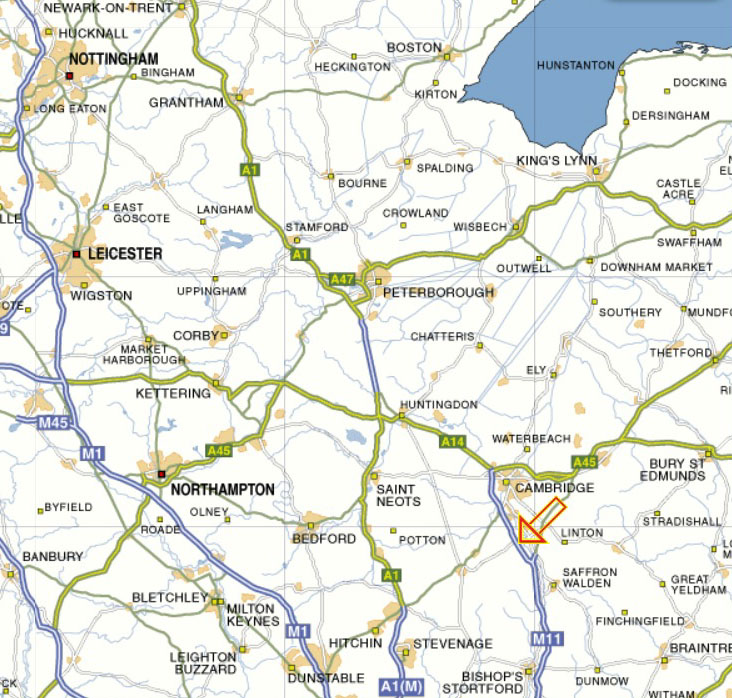
A few years ago, when I was still a teacher, along with four other teachers and more than a hundred members of Year 9, we all went in two coaches to Duxford near Cambridge to see the Imperial War Museum.  Look for the orange arrow:

duxf

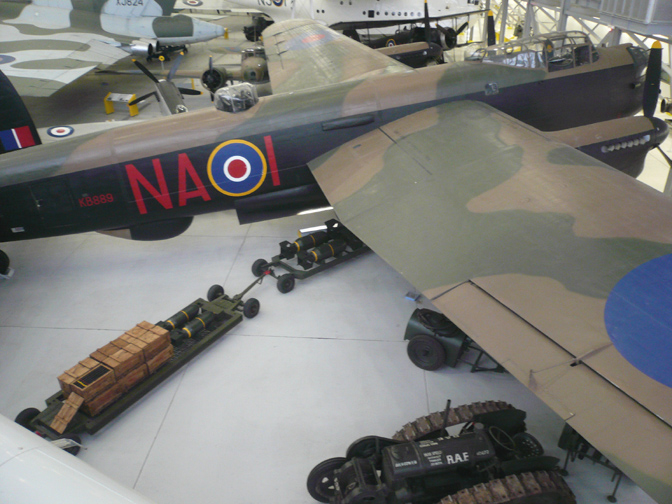
None of you will be surprised that the very first plane I rushed to see was the Avro Lancaster. The planes are rather crowded together, but there it was:

P1100840XXX

There were trolleys and a little tractor to transport the bombs to the bomb-bay:

P1100858XXX
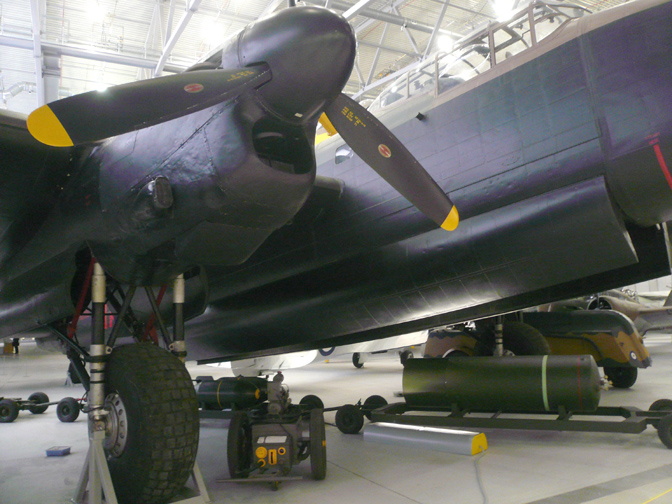
The bomb-bay is enormous, and eventually would be capable of taking a ten ton bomb, the “Grand Slam”:

P1100923XXX

The green cylindrical bomb in  the background in the below photograph is a blockbuster bomb or “cookie” and weighs 4,000 pounds which is around two tons. Quite often two of them were strapped together to make an 8,000 pound bomb. On occasion three of them would be bolted together to make things go with a real bang:

P1100930XXX
This is the mid-upper turret, armed with two .303 Browning machine guns. The gunners were seldom particularly happy that a target was provided underneath for the Luftwaffe night fighters to aim at:

P1210201XXX
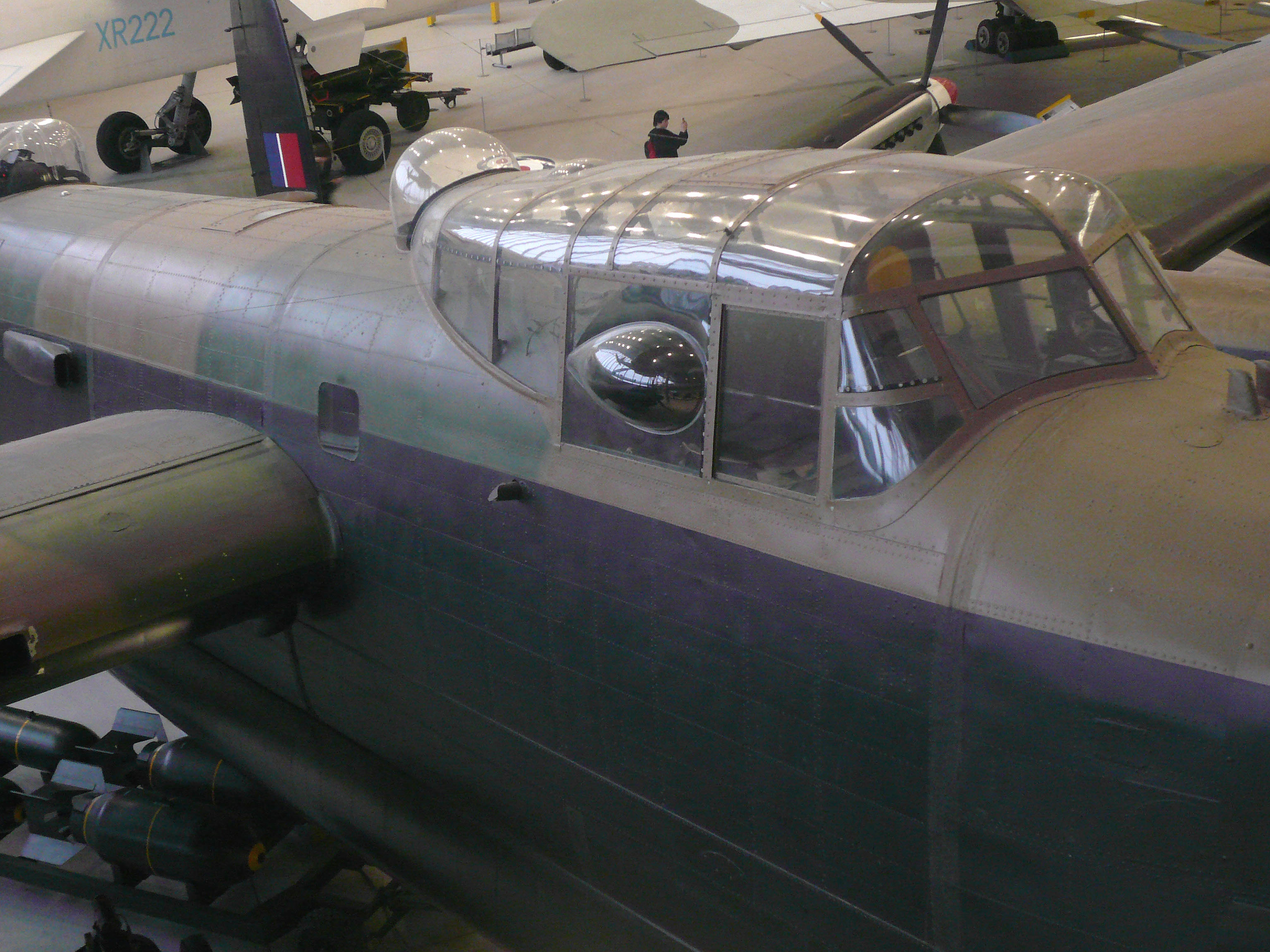
This is the radome, behind the cockpit canopy. On more than one occasion my Dad would stand there. looking out, as the bombers all taxied out to the end of the runway for the take-off. My Dad was abundantly aware of the enormous casualty rates in Bomber Command, and more than once he wondered to himself how many of the aircraft he could see slowly making their way to the runway to take off would be coming back in the morning:

vera

Overall, Bomber Command lost 8,325 aircraft to enemy action. A total of 55,573 young men, all of them volunteers, were killed, a casualty rate of 44.4%. Of every hundred airmen, 55 were killed, three were injured on active service, 12 became prisoners of war, two were shot down and made their way back to England and 27 survived. One of the two reasons my Dad was one of those 27 fortunate young men was the fact that he flew in Lancasters. “A Lanc will always get you back” he told me on more than one occasion. I owe my own existence, therefore, to the excellence of the Avro Lancaster.

taxi

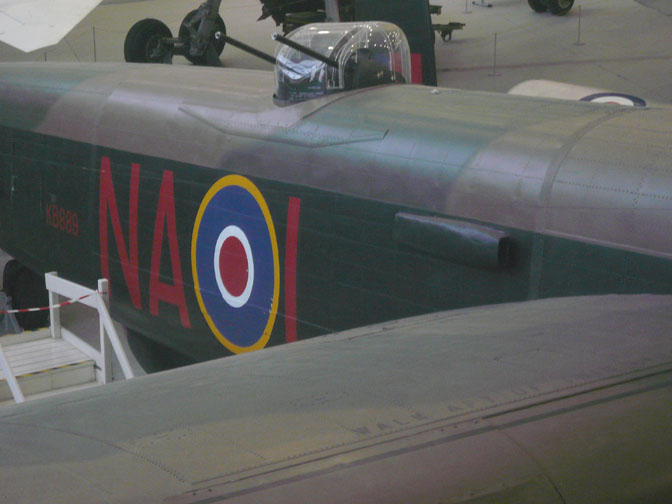
Sooooo….when the moment was right, a fat old man quickly jumped over the rope, walked up to KB889, gave it a good pat and said “Thank you for my life”.
There will, however, always be some idiot child who is seduced by the flighty, undependable glamour of fighter aircraft and who will stand there taking photographs of Spitfires until the bus leaves. Just look at him in this photograph here:

.
P1210197XXX

24 Comments

Filed under Aviation, Bomber Command, History, Humour, The High School, Writing

The School Leprechaun

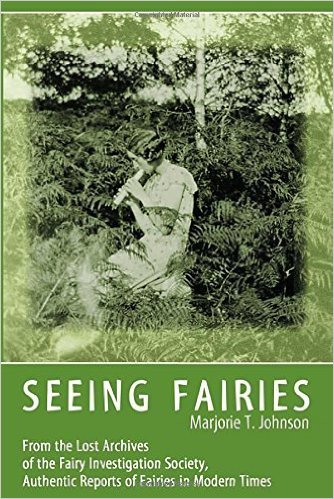
After reading all about gnomes, elves, pixies, fairies and such like, it should come as no surprise to hear that Wollaton is not the only place around Nottingham to have played host to fairies in recent times. Marjorie Johnson, the lady who saw fairies in her garden in Carlton was to become very famous in fairy circles. She wrote this best selling book:

fairy book

Here is a link to an account of fairies she saw in Nottingham, in Carlton to be more precise.

Belief in fairies persists still, even in our own time. When we went once to an isolated farm at Constantine in Cornwall, the farmer clearly believed that the huge ruined megalith in his bottom field was the home to fairy folk. He had seen their fairy lights on more than one occasion.

It is in Iceland that gnomes and fairies are taken most seriously. Over a half of Icelanders believe that these tiny entities are, at the very least, “possible”. They are thought to be from another dimension, usually making their homes inside huge boulders and outcrops of rock.

Known as huldufólk these beings are not regarded as trivial. Roads can be redirected on their behalf.

This report by Journeyman starts off in almost comic fashion, but does make some quite serious points:

This film by Torsten Scholl, aka “hatcast” has even more serious points to make:

This account by Richard Williams aka “rockuvages” is of the moment when the huldufólk seem to pop out of their own dimension:

Nowadays, we tend to see fairies and their like as something lovely and wonderful. This attitude has only come about since Peter Pan and Tinkerbell. Before that, fairies were considered by those who had regular contact with them to be malevolent beings who, if they were in any way annoyed, would readily kidnap adults, willingly do harm to them and, most of all, steal their babies, replacing them with changelings. This is why nowadays a lot of modern folklorists tend to equate ancient beliefs in fairies, with our current fondness for space aliens and little green men, who have continued in modern times to carry out all of these evil deeds:

green alien

Tales of fairies invariably involve abduction and poor innocent people forced to remain in Fairy Land, sometimes for ever. What difference is there between malevolent fairies holding people hostage in their realm and our modern tales of extra-terrestrial kidnap?

Other parallels are there. Some types of fairies, such as leprechauns and goblins, have green as their favourite colour, just as some aliens are literally “little green men”. Only medical experiments seem to be absent from the connections between the two groups, perhaps because in sixteenth and seventeenth century Ireland or Cornwall, there was no health care available and advanced medicine was not a subject on anybody’s mind. Only ointments and magic potions were on offer back then, and these simple remedies do figure from time to time in the more ancient tales of fairies.

Here is something more modern, a tractor beam, although some would argue that those fairy lights, leading innocent people out onto the marsh to drown or be abducted, did pretty much the same job:

uftgyu
This modern cartoon by “grackle” sums up best our ancient knowledge of fairies, who were by no means the magnanimous and well intentioned Peter Pan heroes of Walt Disney’s world.

Certainly, the Cornish and the Irish, for example, seem to view “piskies” or “the little people” as, at best, potentially tricky and at worst possibly, evil, and similar figures are met with in every human culture across the globe.

In North America, there are Ishigaq (Inuits), Jogahoh (Iroquois), Nimerigar (Shoshone) and the Yunwi Tsundi (Cherokee). In Hawaii, there are the Menehune, and for the Maoris, the Patupaiarehe. In Europe, there is a host of names such as the Brownies, the Kobolds in Germany, GoblinsGremlins, Pixies, Leprechauns and the Swedish “Di sma undar jordi”, who are clearly almost identical with the huldufólk of Iceland:

307228-mythical-creatures-troll

Let’s finish with a quite extraordinary piece of film.

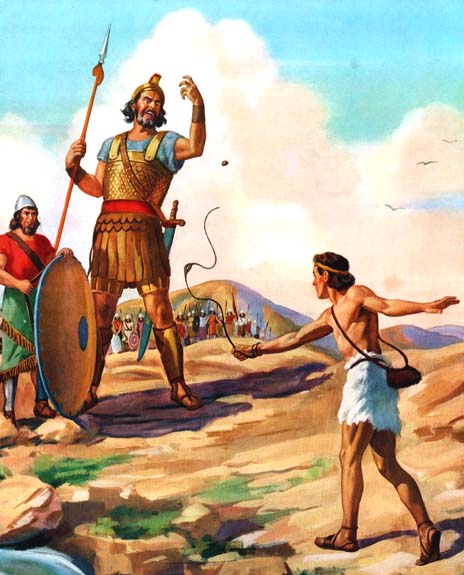
All over the world, of course, as well as “the little people”  there are the enormously large people. In Nepal, the “yeti”, in North America, “Bigfoot”, in Western Europe “the Wildman” or “Wodewose”. In Iraq, he was represented by “Enkidu” the companion of Gilgamesh. In Israel, he was “Goliath” whom David slew:

golithyuj

In Australia, the enormously large person is called the “Yowie” and he is very fierce indeed.

The huge Yowie, though, has a tiny equivalent. To the white man he is “Brown Jack” but to the blackfella he is the “Junjudee”. He is tiny and here is a purported film of one:

Any film by TheRusty222 is well worth watching. He tries to film Yowies but most of all, he ventures deep into the realm of the thickest parts of the Australian bush, an environment of staggering beauty if you ever watch one of his films.
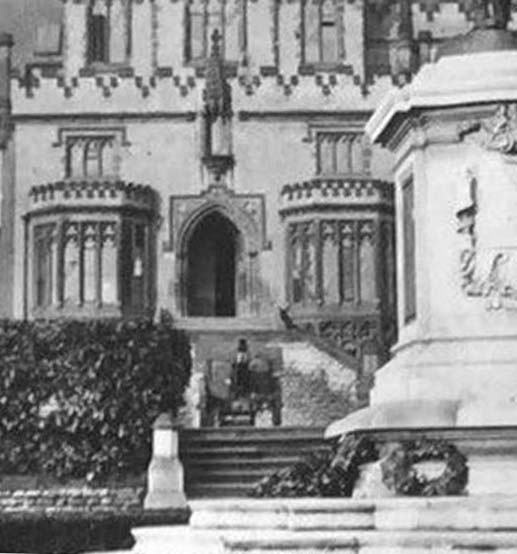
Talking of “Little People”, a few weeks ago, I bought a postcard of the High School taken in 1927. I was intrigued to see what is obviously the “School Leprechaun” busy guarding the front of the school:

lep[rechaun 1

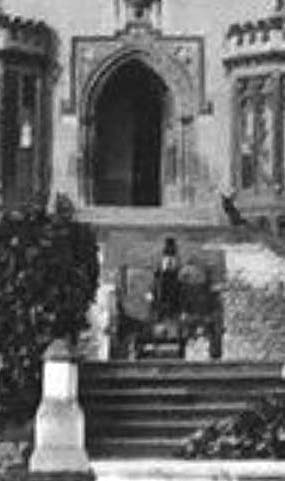
You can see his right hand, his jacket of Irish Green, his little fawn breeches and his lovely top hat. Here he is, slightly enlarged:

lep[rechaun 2

Do you see his mutton chop whiskers? And what about little Pumpkin Head, next to him, with his tiny hat and his little legs and boots?

Both photographs, courtesy of the Pareidolia Brothers.


17 Comments

Filed under Cryptozoology, History, Literature, Nottingham, Personal, The High School

George Brown

On Saturday, July 8th 1944, Old Nottinghamian, Lieutenant George Colin Brown, was killed in action during the aftermath of the D-Day landings. He was just 24 years of age. Lieutenant Brown was in the 2nd Battalion of the Lincolnshire Regiment (3rd Infantry Division). He is buried in the War Cemetery at Ranville near Caen in Calvados, Normandy. This cemetery houses some 2,567 war casualties.RanvilleCimetiere

Here is the church tower:

ranville ch

In actual fact, Ranville was the first village to be liberated in France.

George Colin Brown was born on February 22nd 1921. His father was WA Brown, a Schoolmaster of 10 Grove Street, Beeston. He entered the High School on September 16th 1932 when he was eleven years of age and immediately became a member of White’s House. He obtained his School Certificate in 1936.

At the High School, George was a keen cricketer, and the school magazine reported poignantly that his “fast in-swinging yorker on the leg stump was devastating on its day”:

crickxxxxxxxxxxxxxxxxxxxxxxx

George had appeared for the 1st XI in 1936, 1937 and 1938. I have only been able to trace the exact details of just one single game that George played in. On May 29th 1937, therefore, he appeared in a fixture at Valley Road against King Edward VII School, Sheffield. The High School scored 77 all out, but Sheffield managed a narrow win by two wickets, with their score of 80 for 8. George scored nine runs when he batted and was bowled by Fletcher. We do not know exactly what type of bowler he was, but his performance was eminently successful, taking three wickets for 28 runs. His performance was bettered only by GF Palmer, who took three wickets for only seven runs.

Boys still learn to play cricket down on the cricket pitches at Valley Road. Almost eighty years after George used his “devastating fast in-swinging yorker on the leg stump”, games against other schools are still won, drawn and lost, all in that same spirit of good sportsmanship that George would have recognised:

nhs

Overall, though, his “fast in-swinging yorker on the leg stump” must have been very effective. In 1938, George took six wickets out of ten against Burton Grammar School and conceded a paltry fifteen runs. Later in the same season, he exceeded this with a haul of seven wickets for twenty runs against Stamford Grammar School. During that distant summer of 1938, he played exceedingly well because in total George took 45 wickets at a cost of just 6.42 runs per wicket. This was the best performance by a High School bowler during the season, in which the First Eleven was victorious in six matches out of twelve. Opponents included such old friends as Forest Amateurs, Notts Amateurs, the Old Nottinghamians, Ratcliffe College, Stamford School and Trent College, left hanging on at 50 for 3, chasing a winning total of 162.

When George Brown played down there at Valley Road, just before the war, a gigantic tree stood very close to two of the pitches. Alas! It was blown down in the great hurricane of 1987. It used to stand on the grass, perhaps directly in front of the house on the left. As I mentioned, it was close to two of the cricket pitches, so not one but two teams would wait to bat under its canopy of leaves :

untitled
I have been unable to trace any exact details of poor George’s death, but I suspect it was in the battle to control Caen, as the Allies moved inland after D-Day.

A website which details the entire war day by day says:

“On July 8th 1944, a major British and Canadian attack began around Caen. 2,726 tons of bombs were dropped by 450 RAF bombers overnight as part of the preliminaries. The battleship HMS Rodney delivered hundreds of 16-inch shells. US forces coordinated an attack to the west. British and Canadian troops entered the outskirts of Caen, only to find SS Colonel Meyer’s Panzer tanks still firmly established outside the city.
The citizens of Caen stayed huddled in their cellars while the Germans stubbornly held out. Hitler had ordered that every square kilometre should be defended to the last man, but the Allies managed to penetrate into the very centre of the ruined city along the north bank of the River Orne. There they were stopped by Meyer’s men. In a month of battles, every single one of Meyer’s battalion commanders was killed and he received no replacements. Meyer wrote in his diary:

“My officers and men all know that the struggle is hopeless, but they remain willing to do their duty to the bitter end.”

That is the point of view of an apparently honourable man but ultimately, it was pointless fanaticism, which may well have resulted in the death of another honourable man, George Colin Brown, at only 24 years of age.

30_caen04xxxxxxxxxxxxxxxxxxxxxxxxx


20 Comments

Filed under France, History, Nottingham, The High School