French Monsters : the solution

I think that I have established by now, in a long series of articles, that large numbers of innocent people in France were being attacked, and frequently eaten, by wild creatures of some sort from the late 1400s possibly right up to the end of the nineteenth century.
My eagerly awaited conclusion to all this is that we are dealing here with an unknown creature which was essentially a wolf type animal and which is now extinct. It lived in thick forests and deep ravines, and behaved in a way so different from a modern wolf that it cannot possibly have been one. It killed and killed again.

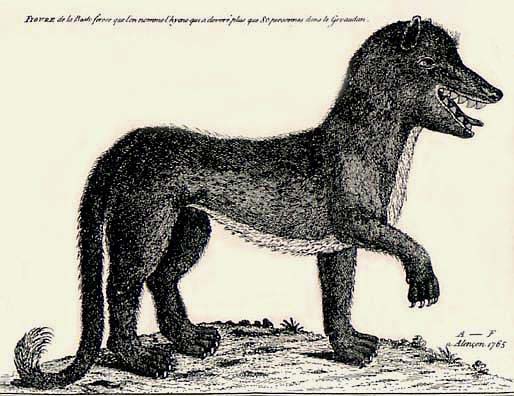
Some sources attribute 150 deaths to what they call “just one ordinary, but large wolf”. Impossible! At the same time, “The Prime Suspect” was not necessarily hyper distinctive, and may not have been totally obvious at first sight:
Gevaudanwolf xxxxxx

Let’s begin by looking at a list of creatures which could have been this wolf type animal. I have compiled it from as many French Internet sites as I could find! There may be some copying between the websites involved here, but I prefer to think that descriptions which are similar are describing the same species of unknown animal. And don’t forget, most of these monsters are separated by both time and space.

As a rough comparison, a French author, Pascal Cazottes, has found fifteen monsters of this type, carbon copies, more or less, of the Beast of Gévaudan. Here is my contribution to the list:
1500-1510, Fontainebleau. it was supposedly a wolf, a werewolf or a shape shifter. Possibly six individual animals.
1510, Fontainebleau. a lynx, or a hybrid of a wolf and a feline, it devoured young girls and little children.
1595-1598, Vendômois, south/central France, 25 people killed by “wolves”. This was not normal wolf behaviour.
1632 – 1633 and then possibly in 1672, Cinglais, Evreux, Caen, Falaise, Calvados, between 15-30 people killed. It was not a wolf but resembled a large mastiff of enormous speed and agility, capable of  leaping across the river. At first sight, it was like a wolf, but was longer, more red, and had a more pointed tail and wider haunches. It was eventually identified as a wolf, but the local peasants had serious misgivings about this middle class verdict.

perhaps cinglais
1633-1634, the Forest of Besnats, Anjou, more than 100 people were mutilated and killed, their bodies lacerated by claws. It was “an enormous beast”.
1650, Fontainebleau, apparently, a female wolf of enormous size, with supposedly more than 600 people killed.
1660, Gâtinais, near Fontainebleau, apparently a huge wolf, it would cross the river to seize children and animals
1690, Forest of Douvres Saint-Riez-en-Belin, Sarthe, there was a report of a child, Cécile Le Boet, devoured by “a fierce creature”
1693-1694, Benais, 200-250 victims. There were several beasts acting in concert which looked like wolves, but had a wider muzzle. They behaved in remarkable fashion, allowing themselves to be patted, but then leaping on the throat of the victim. They appreciated “fresh meat”, and ate the weakest people. It was supposedly a lynx, but lynxes don’t attack human beings:

loup cervier 1vvvvvv

1691-1702, Orléans, over 60 young victims in fifteen months. A huge beast was killed in the forest and was then picked out from 200 dead wolves. It cannot have been a normal wolf, therefore.
Great Winter of 1709, Orléans, in six months more than 100 people were killed and the same number were wounded. The Beast of Orleans only attacked women and children, and had the same way of moving, the same sharpness and even occasional timidity, as the Beast of Gévaudan. It was covered in scales and no weapon could harm it.  A cruel beast, it was thought to be a hyena:

beast 1709

1731-1734, Auxerre, a big wolf or a tiger, “like a wolf, but not a wolf”, with very aggressive behaviour.
1746, Corrèze, an eleven year old boy was killed “by some kind of wolf” called a “mauvaise bête”, an evil beast.
1747-1752, Primarette, seven  victims, thought to be a Lynx (see above).
1751,  Latillé, Vienne, eight children killed in three weeks.
1751, Benais, supposedly a wolf but the peasants frequently rejected wolf as an explanation. The animal had a wide muzzle, a bigger mouth than a wolf, and was covered in reddish fur, with a black mane, a black stripe between head and tail, a belly that dragged towards the ground and a full tail, which could even be used to strike people. It resembled the Beast of Gévaudan on all counts. It frequently behaved to people like a dog who wanted to be patted, but would then jump up and rip their throat out.

second-beast
1754-1756, the Beast of Lyonnais, Meyzieu, Savigny, a kind of large wolf with short legs, its skin was spotted with various colours, (“two fierce animals, one like a big pony, reddish, resembling a wolf except for a short tail , the other like a large mastiff , but white on the belly and a big long tail.”)

1763Dauphiné, the size of a very large wolf, rather light in colour, with a blackish stripe on the back, a belly of dirty white, a very large rounded head  a fluffy tuft on the head and next to the ears, a furry tail like a wolf but longer and upturned at the end. It ignored sheep to attack the shepherd boy. Many prominent people, both clergy and nobility, seem to have been totally convinced by the theory that this monster was the very same individual animal as the Beast of Gévaudan.

bete-du-gevaudanzzzzzzz

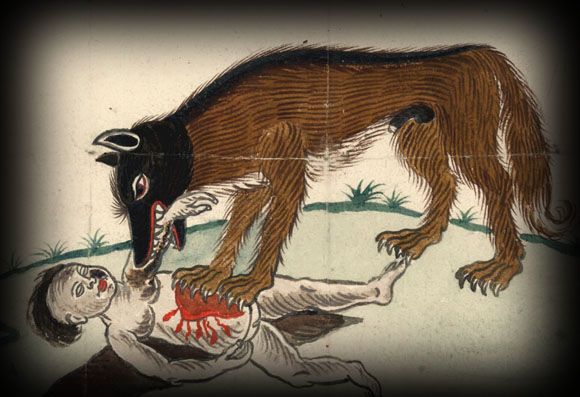
1764-1767, Gévaudan, witnesses were adamant that the animal was a canid, but not a wolf. It was an animal that they did not know. In addition, wolves cannot have a white breast and underparts. The many witnesses, all accustomed to wolves, spontaneously called it “the Beast”. It resembled a wolf but it was huge, between a calf and a horse in size. Its fur was mostly red, its back streaked with black. It had large dog-like head, a snout like a wolf and a mouth full of large formidable teeth. Its jaws could open very wide and seize a human head. It had small straight ears, smaller than a wolf, which lay close to its head, a strong neck and a wide chest. Its tail was immensely long, and somewhat like that of a panther. It possibly had claws. People struck by the tail said that it was a blow of considerable force.
666666

Professional hunters refused to believe that it was an ordinary wolf. It seemed relatively invulnerable, when hit by bullets, and would always stagger back to its feet. It did not ever fear man. In the face of resistance from the victim, it would retreat, sat down to think, and then renewed the attack. It was very aggressive, much more so than from mere hunger. It was very agile and could jump over high walls. It could perhaps manage some steps on its hind legs. It once attacked a man on horseback…not a wolf’s, or even a bear’s, behaviour.

66666

March-August 1766, Sarlat, 18 victims, it was supposedly a rabid wolf but “rabies is a quick killer” (3-4 days). One wolf of extraordinary size was killed.
When ready to seize its prey, it supposedly put up its hackles, and its eyes became flaming red. It raised itself up on its back legs and tried to seize the victim, often  by the head.
1791, Wales, between Denbigh and Wrexham. it was the size of a horse, eating livestock, dogs and men, and even attacked a stagecoach. It was an enormous black beast, almost as long as the coach horses, and was possibly an overgrown wolf. One farmer was found terrified, after witnessing an enormous black animal like a wolf kill his dog. The monster pounded on the door, stood up on its hind legs and looked in through the windows. Its eyes were blue, intelligent and almost human. It foamed at the mouth,

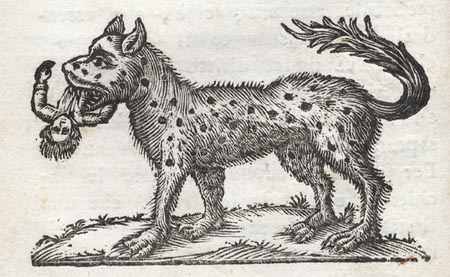
1792, Milan, northern Italy, an ugly beast as big as a dog, but with a horrible mouth. Children said: “a big head with big ears, a pointed snout and large teeth, black and coloured hair on top, whitish underneath, a thick, curly tail”. (with some variation depending on the child). A farmer said “As big as a normal calf, head like a pig, ears like a horse, white hair like a goat underneath, reddish on top, thin legs, large feet, long claws, a large, broad chest and slim flanks.”
It was not a wolf, but was perhaps an exotic animal. “Many have recognized the wolf in the beast, but some argue that it is a different animal.”
beast of milan

1796, Châteauneuf- Brimon region of France, it killed a dozen women and children.

1799, Veyreau, “tens of victims”, the locals thought the Beast of Gévaudan was visiting the region, It was slimmer and more willowy than a wolf and had such agility that it was seen first in one place, but then four or five minutes later in a different place perhaps several miles away. This was possibly evidence of a small population of these animals, or perhaps even some kind of migration or irruption.

1809-1817, Vivarais/Gard/Cévennes, 29 victims, it was the size of a donkey with brown fur, a black mane and large udders. Other witnesses described a creature like a wolf but the size of a calf, with a grey and red coat and black hair over its back. It had a huge belly with white fur, almost dragging on the ground, possibly with tiger/tabby coloured spots. The white fur underneath its body means that it was not a wolf. It had large, long ears, a long muzzle and head and a thick, heavy, luxuriant tail sticking up at the end. Six of its victims were beheaded. It was never captured or killed.

1810, the mountains of Cumberland, England, an unknown creature killed as many as eight sheep a night for six months. The victims had only a few bodily organs removed and eaten, and were drained of their blood. Recent theories have said that this monster was an escaped Thylacine, but my own researches have proved this to be untenable as a valid explanation.

December 6th, 1814, Chaingy, some women and children in the forest were attacked by a she-wolf, with two killed and eight injured. This behaviour is absolutely extraordinary. If it was rabid this was not mentioned when the animal was killed shortly afterwards. For me, definitely “a wolf but not a wolf”:
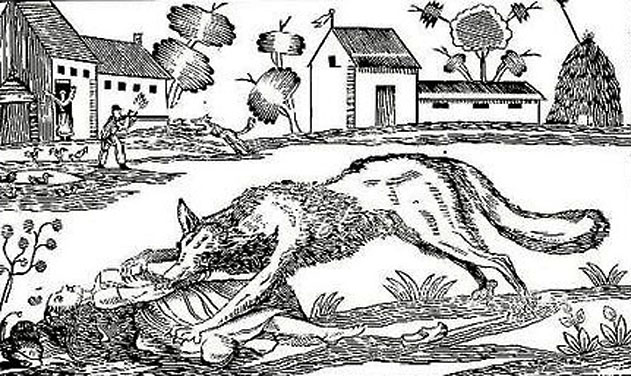
Bete_de_Chaingy_ws1028371882

1817, Trucy, a second carnivorous beast ravaged the forest around Auxerre/Trucy for a few months, at the exact same place as the animal from 1731-1734. It was like “a mastiff dog with pointed ears”

1874, County Cavan and Limerick, Ireland, a mystery animal killed sheep, as many as thirty in one night. Throats were cut, and blood sucked, but no sheep were eaten.

end of the 19th century, Fontainebleau, “a great evil beast which left the forest to attack farm labourers, shepherds and flocks. It attacked children, such as the little girl gathering nuts in the woods or a 9 year old boy devoured at Nanteuil-lès-Meaux.”

7777777

1966/7, Vaucluse,  Monsieur Henri C., a hunter, killed an unknown animal near a small wood at the edge of the Hautes Alpes. It was the size of a large dog (25 kilos). It had a head like a fox, but a sloping forehead gave it exceptional length. It had pointed ears and formidable fangs. Its fur was short and red, its paws were round, and it had a long tail.

1977, the Vosges area,  a witness described a beast of 60 kilos, with pointed ears, a drooping tail, a coat of yellowish-grey or red. It was larger than a German shepherd. Others thought it was like a wolf. Hair analysis said a canine, but nothing more exact. Existing photos are too poor for a conclusion.

.
A visit to a very interesting website called “La Taverne de l’Étrange” only served to confirm my ideas. The website author, Tyron, makes the point that in comparatively recent history, lions and
leopards, for example, could still be found in Europe, as could bears, wolves and lynxes, scattered more or less across the whole continent. France at the end of the Middle Ages, for example, was still covered with huge areas of forest wilderness, which, like the mountain regions, were practically uninhabited. Animals completely unknown to science could well have been living there.

One suggestion has been that the mystery species was a mesonychid, an animal last seen millions of years ago:

Another suggestion is that it was the Waheela, a giant predator which some, such as Alaska Monsters, still believe to be present in northern forests. Traditionally it decapitates victims, and supposedly lives in the Nahanni Valley in the Northwest Territories of Canada. Opinions differ about exactly what a Waheela is:
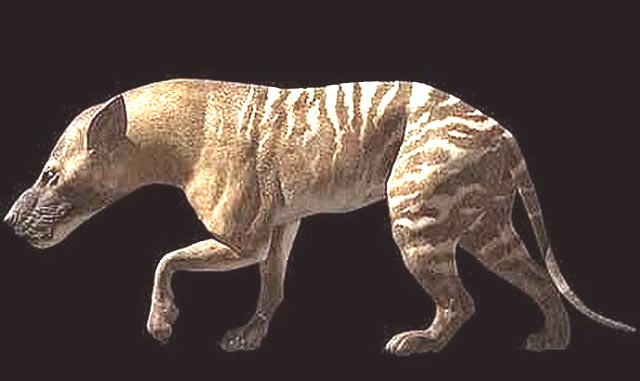
wahoooooooooooooooooooooooooo

Supposedly, it may be an Amphicyonid which is a prehistoric carnivore of the Miocene and Oligocene eras:

Amphicyon-ingens_reconstruction

Many people disregard the wolf interpretation of the Beast of Gévaudan completely and look at its behaviour, its long tail and its habit of swishing a long, rather heavy tail. It seems perhaps almost bizarre to suggest a felid at this point, but the fit is actually, quite a good one. This is a cave lion:
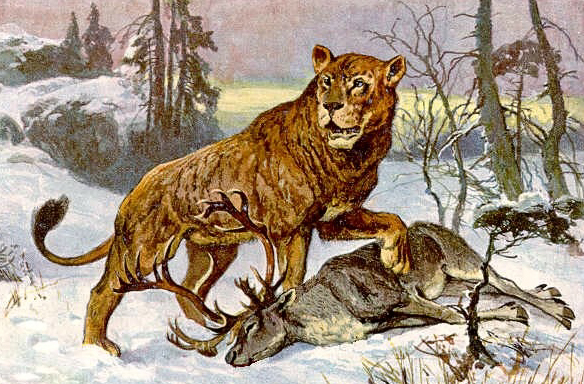
Hoehlenloewe_CaveLion_hharder

It was certainly big enough and fierce enough to fit the bill. The colours in the illustration are just guesswork, of course. The animal may well have had a coat of exactly the same colours as the Beast of Gévaudan. Furthermore, he Cave Lion is known to have occurred in southern Europe, and to have been present in the forests of Southern Germany and Central Europe until fairly recently at least. Perhaps as recently as 100 AD. And if the Cave Lion was there in 100 AD, it could equally well have persisted through to 1764 AD.

The unknown monster may equally well have been a prehistoric hyena:

cave hyena xxxxxxxx

It may have been a dire wolf, which was a large wolf but from the Pleistocene era:

This slideshow requires JavaScript.

In actual fact, the Dire Wolf is not that bad a suggestion, although so far, it has only ever been found as a fossil in the Americas.

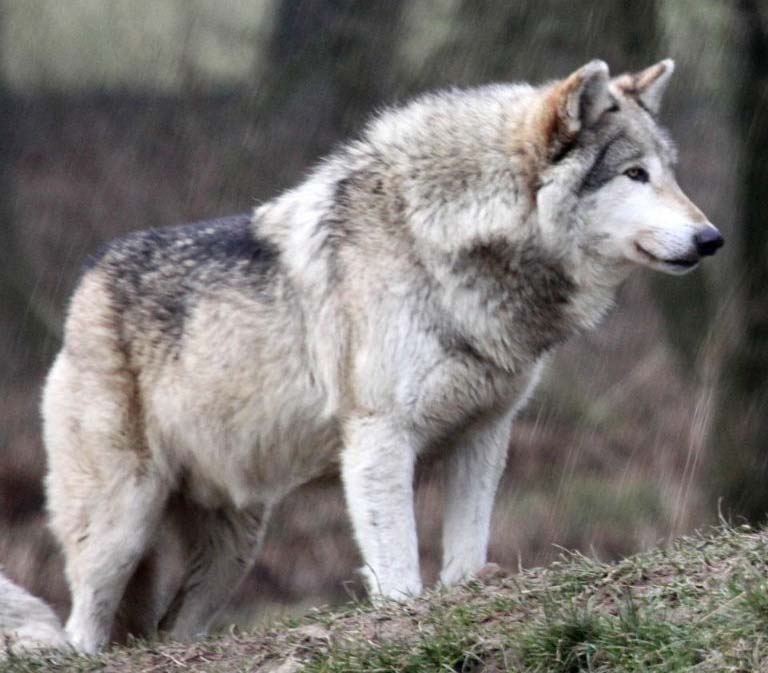
My favourite idea, though, is that this formidable killer was a species of canine completely unknown to science. It was not anything particularly strange, though, just an animal that was, with careful study, seen to be, to quote the peasants of the area, “like a wolf but not a wolf”. No doubt this fierce beast was some kind of leftover from a previous epoch. It had perhaps hung on desperately for centuries in the deep forests of Southern Germany, Central Europe or even Poland or Russia. For some reason, increasingly severe weather, lack of prey or whatever, some of them had now moved westwards to the beautiful countryside of France, perhaps establishing a small breeding population:
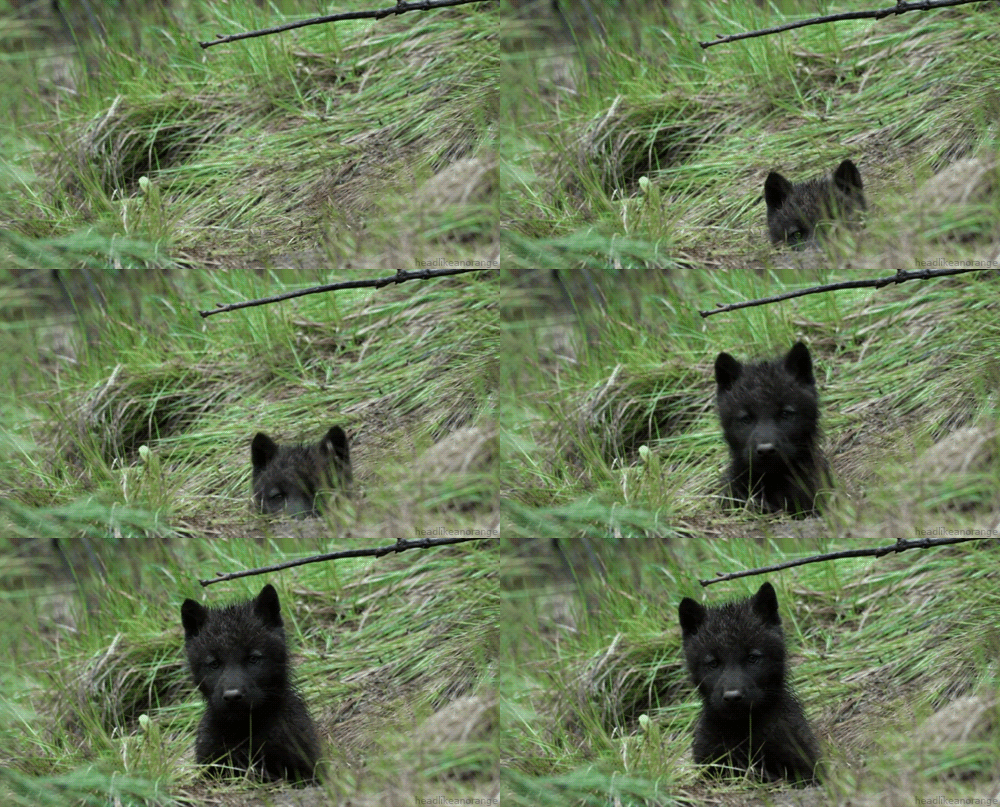
wolf baby

And from, say, 1500 onwards, they all gradually disappeared. Perhaps they were even wiped out during the continuing slaughter of the French wolf population, and nobody even noticed.
17 Comments

Filed under Cryptozoology, France, History, Science, Wildlife and Nature

A minibus trip to Norfolk

Friday, November 4th, 1988

.
(An extract from my old birdwatching diary “Crippling Views”)

.
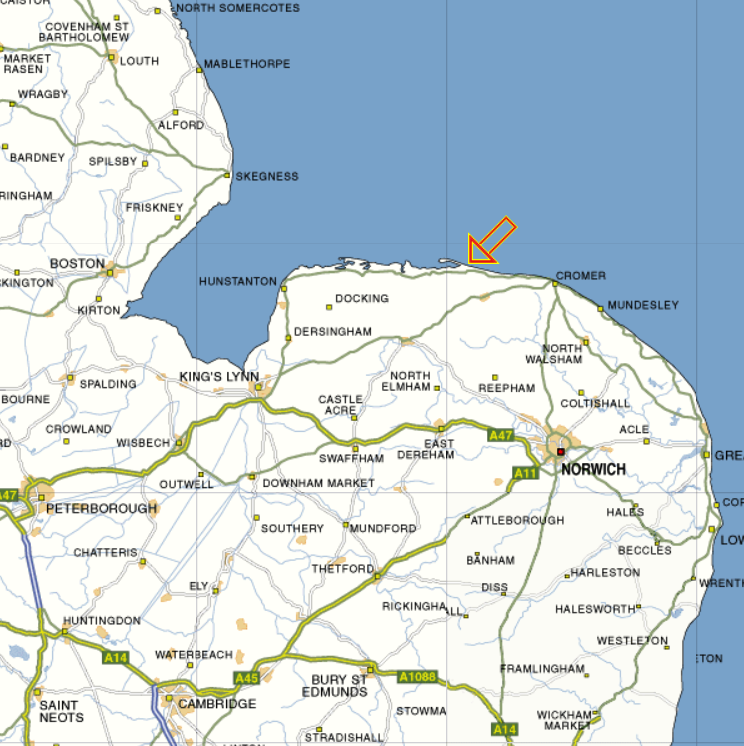
A new venture this time. An official  General Studies Birdwatching trip to Norfolk, taking the Sixth Form with me in a hired minibus. One thing is for certain, though… They’ll all get a lot of lifers… And I hope for one as well, the Indigo Bunting at Wells, which may just have lingered on from the previous weekend. There is every chance that nobody has really looked for it since then. The main priority, though, is to make sure that there is a constant stream of birds for the students, always as obvious and as spectacular as possible. We start at Cley-next-the-Sea, and then we plan to work our way steadily back westwards along the beautiful Norfolk coast. Look for the orange arrow:

Untitled

Arnold’s Marsh provides us with two nice birds, a late Curlew Sandpiper and a very spectacular Knot, still in bright brick red summer plumage:

red knot xxxxxx

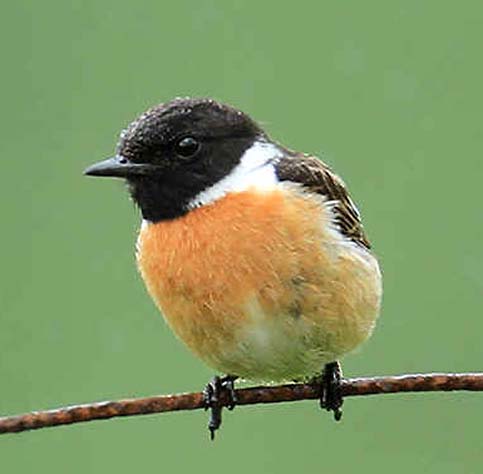
Further along the East Bank, we find a lovely Stonechat, obviously prospecting for an overwintering site:

Stonechat%20-3 xxxxxxx

At the far end, there is an exquisite flock of about a hundred or so Snow Buntings, flying with their tinkling calls up and down the shingle bank:

This slideshow requires JavaScript.

Unfortunately there is no sign of Boy George the famous Glaucous Gull, whichever plumage he may be in now, white adult or coffee coloured juvenile:

This slideshow requires JavaScript.

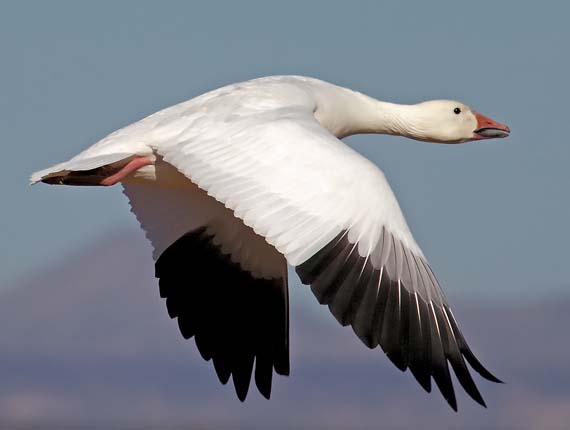
There are no Waxwings either at the traditional haunt of Winterton. So off we go to Wells, stopping only briefly to look at the goose flocks at the side of the coastal road. The lads are delighted to see a Snow Goose which they all insist has flown in the previous day from Arctic Canada, despite all my vigorous explanations to the contrary:

snow goose0df3f5bbxxxxxxxxx

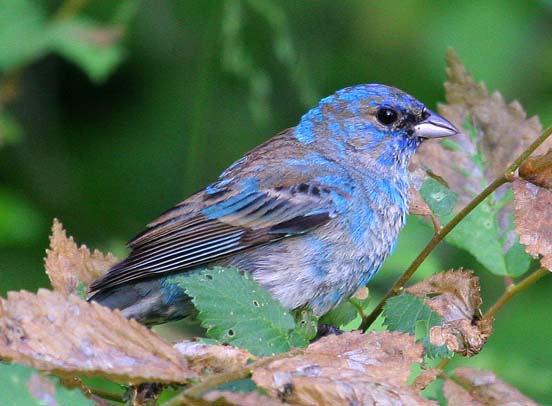
We get to Wells where I spend half an hour looking for The Bunting but without any success, either down by the old toilet block, or down in the Dell. It must’ve moved on or perhaps it’s been recaptured by its worried owner:

Indigo-Bunting1 xxxxxxxx

As we walk back to the car park, I see a starling like bird in silhouette. It flies over our heads and I don’t really pay it any attention, until it comes in to land. Instead of landing on the top of a nearby tree, it clings to the trunk like a woodpecker. That’s enough to attract my attention and when I look through binoculars, I soon realise that it is a Waxwing:

This slideshow requires JavaScript.


That is when the fun starts because we have only two pairs of binoculars between four of us and one pair is broken. Added to this is the fact that all the lads are very inexperienced, and it takes each one of them a really long time to find the bird on the tree trunk. There’s a lot of shouting, a lot of counting branches to the left and branches to the right, until the bird finally gets bored with it all and flies off. Two of the three without binoculars see it properly but, sadly, the last one does not. Holkham and Lady Ann’s Drive provide a couple of new birds for us, namely Golden Plover, and the almost jet black Brent Geese:

This slideshow requires JavaScript.

Amazingly enough, though, there are no Egyptian Geese to brighten the day. Titchwell is a little disappointing, with all the Marsh Harriers departed for sunnier climes and the Spoonbills that were asleep at the back of the pool three years ago also seem to have moved away. All we find are wigeon and teal.:

This slideshow requires JavaScript.

Still the lads are pleased. Indeed in a lot of ways, they teach me a thing or two. Any nice bird they see is a source of almost innocent wonder to all of them, particularly if it has more than three colours.


10 Comments

Filed under Twitching, Wildlife and Nature

The Christmas Truce of 1916: my Grandad was there.

When I was a little boy in the late 1950s and 1960s, my Grandad used to mention to me how there had been a Christmas truce with the Germans during his time with the Canadian Army. The most famous truce of all had already taken place at Christmas 1914 of course.

Trucecigarette

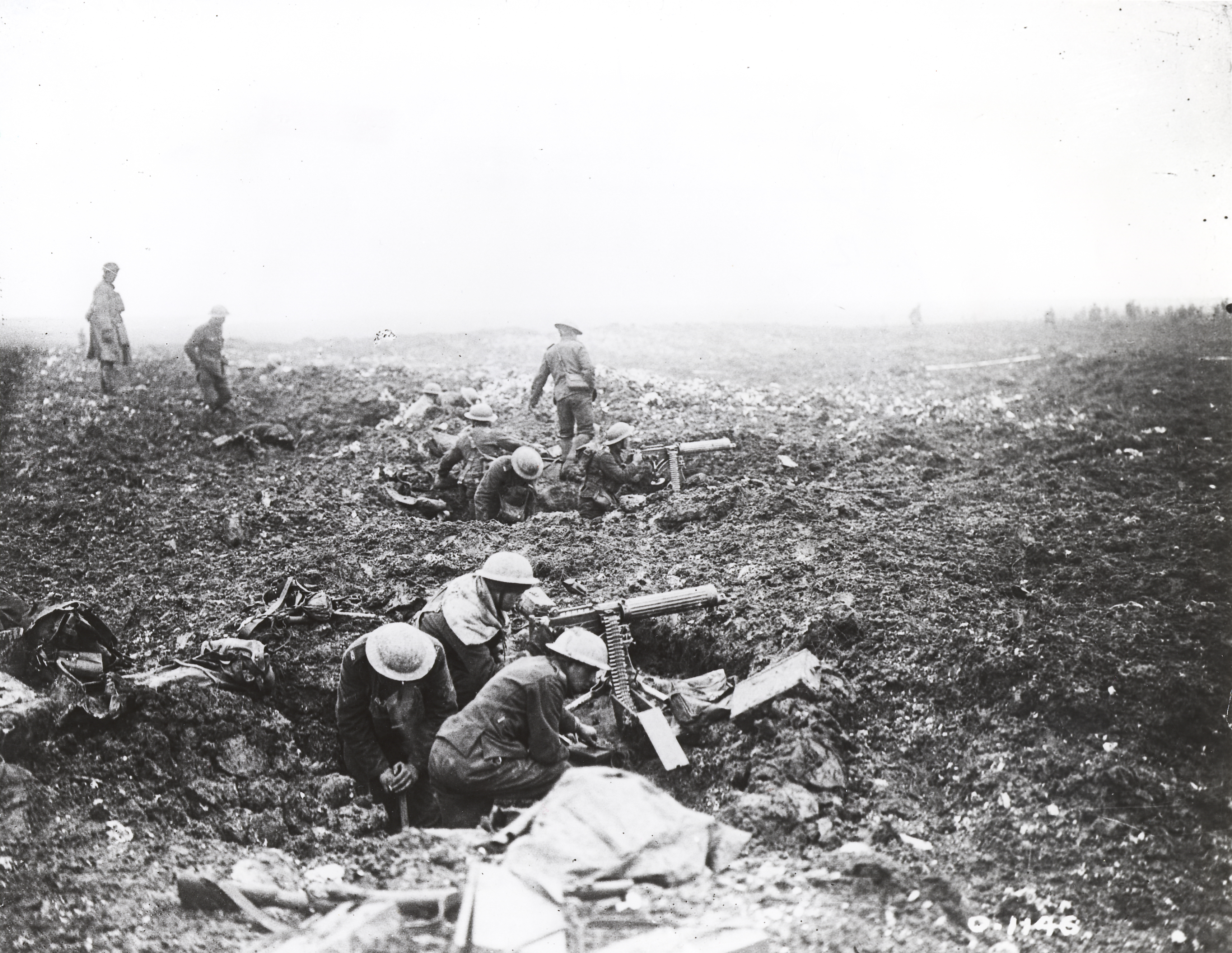
Having accessed my Grandad’s war records in later years, I knew that he hadn’t joined the Canadian Army until 1916, far too late for the famous Christmas Truce. I was also aware that he had fought at Vimy Ridge. How did I know that? Well, fifty or more years ago, he had told me so. Here are some Canadians at Vimy Ridge during the battle. Theoretically, my Grandad could be one of them, but I do know that he spent most of his time in the artillery. That was probably why he was so deaf when I knew him :Vimy_Ridge_-_Canadian_machine_gun_crews

And so it all remained a bit of a mystery, until I read in the media that:

“Evidence of a Christmas truce in 1916, previously unknown to historians, has recently come to light. German and Canadian soldiers reached across the battle lines near Vimy Ridge to share Christmas greetings and trade presents.”
In his book Hitler’s First War, Dr Thomas Weber, a historian at the University of Aberdeen had previously recorded various attempts at a Christmas Truce in 1916. None of them, however, were thought to have been successful, Dr Weber’s book explaining that that this wonderful goodwill gesture had been a complete failure. A war diary from Adolf Hitler’s own Brigade reported:
“Attempts at initiating fraternization by the enemy (calling out, raising of hands, etc.) were immediately quashed by the snipers and artillery men who had been ordered in and had stood ready to fire.”

On the Canadian side, the official version of events, which was reported in the diary of the Princess Patricia’s Canadian Light Infantry tells the other half of a very similar, and very pessimistic, story. The Germans had made efforts towards a ceasefire but nobody on the Canadian side had responded to it.
The entire situation changed radically, however, in November 2010, when the historian, Dr Weber, whose great-grandfather fought with the German army during the Great War, travelled to Canada. After a public lecture, he was approached afterwards by a member of the audience whose uncle, Ronald MacKinnon, had been deployed at Vimy Ridge at Christmas, 1916:

_50437465_ronald_mackinnon

Having heard from Dr Weber during the lecture how there had been only an unsuccessful attempt at a truce in 1916, the man had in his possession a letter from Ronald MacKinnon, a 23-year-old soldier from Toronto which proved that both the Canadian and the German soldiers had put down their weapons on Christmas Day and obeyed the phrase from the Gospel, “on earth peace, good will toward men”. Christmas greetings were shouted across no man’s land and presents, just as in 1914, were exchanged between the two sides.
Dr Weber immediately announced, quite rightly, that this letter was a “fantastic find” and offered proof of a hitherto completely unknown Christmas Truce, an impromptu break in the hostilities by German and Canadian troops. The letter also clearly demonstrated that the top brass had made extensive and determined efforts to downplay any Christmas truces subsequent to the first one in 1914. Dr Weber explained that, as officers always had to report significant events to their higher chain of command, they always had a personal interest in downplaying what might be viewed as negative events when they wrote the official version in their war diaries.
Private MacKinnon’s letter home was to his sister who also lived in Toronto, and it certainly does not downplay the significance of what happened on that Christmas Day 99 years ago:

Dearest Sister,
Here we are again as the song says. I had quite a good Xmas considering I was in the front line. Xmas eve was pretty stiff, sentry-go up to the hips in mud of course. I had long rubber boots or waders. We had a truce on Xmas Day and our German friends were quite friendly. They came over to see us and we traded bully beef for cigars. Xmas was “tray bon” which means very good.
mackinnon

Do you ever write to Aunt Minnie in Cleveland? If you do, see if she can give you the address of any of our mother’s relations in England. Aunt Nellie was saying that some of them lived in Grangemouth, which is not far from Fauldhouse. If you could get me their address I would be very pleased to see them when I am in Blighty again.
I am at present in an army school 50 miles behind the line and am likely to be here for a month or so. My address will be the same, No. 3 Coy., PPCLI. I left the trenches on Xmas night. The trenches we are holding at present are very good and things are very quiet.
I have had no Xmas mail yet but I hope to get it all soon. How is Neil getting on in the city? I’ll write to him some of these days. Remember me to all my many friends at home.”

Ronald MacKinnon, like so many soldiers in the Canadian Army, had very strong connections with Great Britain. His father was a Scot from Levenseat, near Fauldhouse in West Lothian. Ronald was to meet his Scottish relatives for the first time while he was engaged in his basic training in Britain, before being sent to the Western Front.
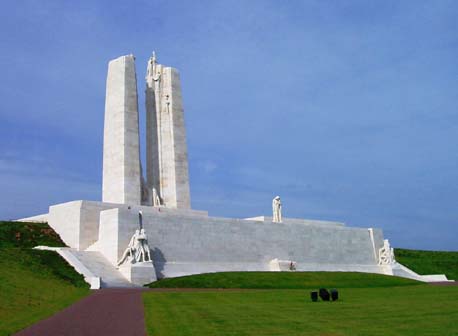
Not long after he wrote his amazing letter back to his sister at home in Toronto, Private MacKinnon was killed at an unknown time between April 9th-10th 1917, during in the Battle of Vimy Ridge, a bloody but successful attack up a strategic height of land in the northern French countryside, a great victory often remembered as Canada’s national coming of age. Here is the monument to the brave Canadians. It is at the top of the ridge:

Vimy_Memorialxxxxxxxxxxxxxxxxxxxxxxxxxxxxxxx

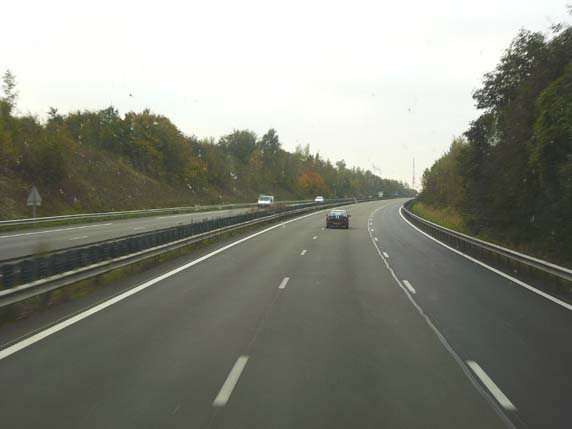
Nowadays, you can drive up the ridge effortlessly in a tour bus. There are no Germans around. Nobody shoots at you. Everybody is friends:

P1090648xxxxxxxxxxxxxxxxxxxxxxxxxxxxx

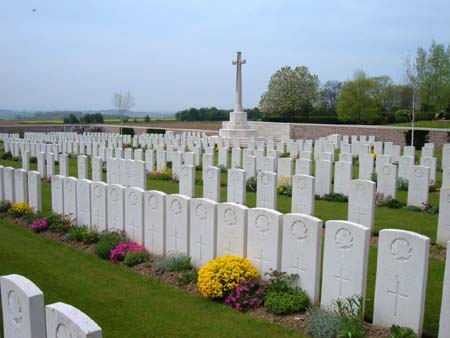
Ronald is buried in Bois-Carré British Cemetery in Thelus, in the Pas-de-Calais in northern France:

bois thelus zzzzzzzzzzzzzzzz

For some reason, his parents’ details are not listed on the Commonwealth War Graves Commission website.
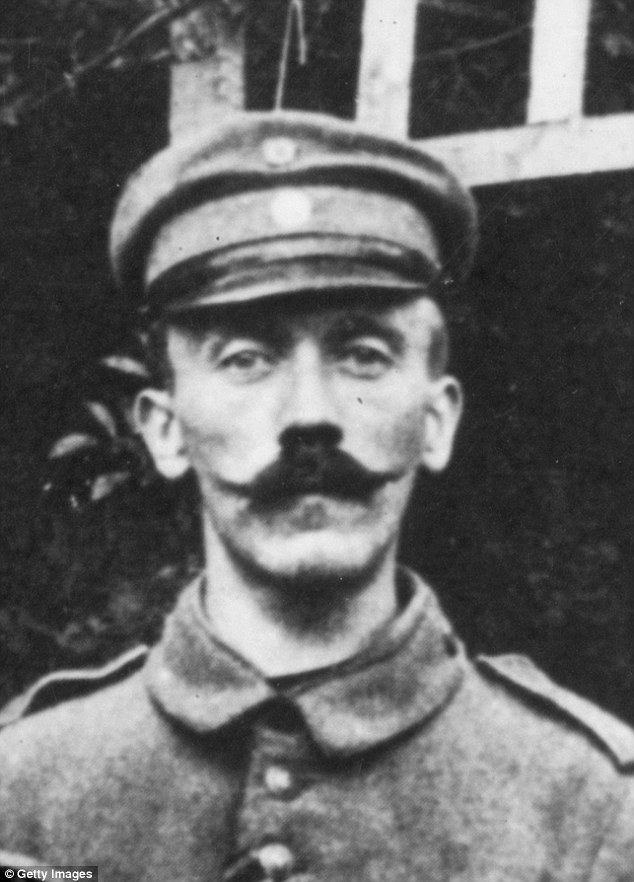
One last postscript is that, according to Dr Weber, Adolf Hitler’s own unit actually faced Canadian troops on Vimy Ridge throughout the period that I have been describing. Ever the sour fanatic, Adolf Hitler, of course, would never have participated in any truce, although as many as half of his fellow soldiers are thought to have done so. The Führer’s views on the previous Truce of 1914 were recorded by one of his fellow soldiers, Heinrich Lugauer, and there is no reason to suppose that he would have changed his ideas in two short years, filled, every moment, with hatred and anger:

“When everyone was talking about the Christmas 1914 fraternization with the Englishmen, Hitler revealed himself to be its bitter opponent. He said, ‘Something like this should not even be up for discussion during wartime.”

What a bitter loner Hitler was. More extreme than his colleagues, who were only too happy to fraternise with the young Canadian lads for a day. What a pity my Grandad didn’t have the chance to shoot the bugger:

hitler-giovane2
Last words should always be positive though: back to Dr Weber:

“The Christmas truce of 1914 involved 100,000 British and German troops on the Western Front in an exchange of gifts and food, to the horror of their commanders. But these displays of common humanity were much more frequent than suggested by official military histories, with evidence of similar festive get-togethers in 1915 and 1916, involving the Bavarian regiments. No doubt there were Christmas truces in 1917.

Soldiers never tried to stop fraternising with their opponents during Christmas.

This puts to rest the long dominant view that the majority of combatants during the Great War were driven by a brutalising and ever-faster spinning cycle of violence.”

I could not have written this article without accessing these websites.

23 Comments

Filed under Canada, France, History, Personal

Best Days

And as we all know, what they do in the USA one year, we will be imitating over here five years later if we’re not careful.

toritto's avatartoritto

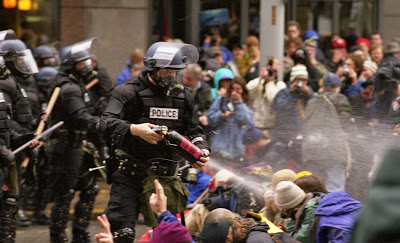
WTO_protests_in_Seattle_November_30_1999

It’s seventydegrees outside

while at Walmart the Christmas music plays

for those standing in line at the lay away counter

looking in their checkbook

mentally figuring out if they have enough

to pay for the children’s gifts

and next month’s rent

while on a giant flat screen

streaming news of murder and protest

lacking a name for the struggle

taking place before our eyes

in the streets and parks

as police club the people

pepper spray an old woman

endless images in the land of the free

of bloodied people, arms linked, standing still

carrying signs

When did we begin to hate our neighbors

take our guns to the movies

fear the future and one another?

Which day was it

when the sun set on our best days,

days when we ran free,

fearlessly through the streets

not worrying about the future;

when we truly loved our country

because we didn’t…

View original post 7 more words

7 Comments

Filed under Uncategorized

The Beast of Lyonnais

The Beast of Lyonnais was yet another killer monster (or monsters) in the long, long series of various creatures, beasts, feral dogs, hybrid dogs, wolves with attitude, sexual psychopath or good old fashioned serial killers who have ravaged different regions of France from around 1550 until the present day, with particular reference to the period 1750-1820.

I will freely confess that I knew nothing whatsoever of this type of event until very recently, when I started reading about the Beast of Gévaudan. Then I realised that there had been a Beast of Benais, a Beast of Auxerrois/Trucya Beast of the Cévennes/Gard/Vivarais (it did like to travel about a bit) and then a Beast of Sarlat.
There seemed to be any number of them, and I deliberately selected the ones which seemed not to be the most obvious of wolves. This is also the case with the Beast of Lyonnais, which, as we will see, hardly any of the witnesses at the time thought was good, old canis lupus lupus, even if all the noblemen at the time told them that they were mistaken (despite the fact that none of them had ever seen it):

wolf 1 xxxxx
Once again, I will begin by looking at a number of websites written in French, offering you my own translations and you can then take your own average between them.

We start with a hoary old favourite:

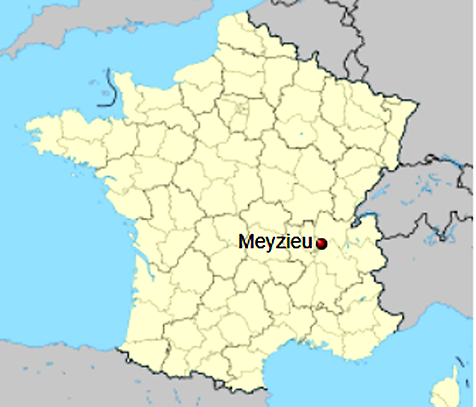
“The Beast of Lyon was a man eating animal behind a series of attacks on humans. The first attack was mentioned as being in the summer of 1754. Until the end of 1756, one or more ferocious beasts then ravaged the countryside, initially between Vienne in Isère, Meyzieu and then around Savigny in the Rhône area. This or these, animals claimed about thirty victims, mostly children or teenagers. Here is Meyzieu:

mey sssssssss

In early August 1754 the Royal Notary of Vienne was summoned by the most important individuals in the parish of Luzinay to proceed with the identification of the body of a young boy who had been found devoured. We know that at least two other attacks occurred in this same area, around Villette-de-Vienne and Régnié-Durette, before the Marquis of Marcieu, the Governor of the province, ordered a large hunt to trap the beast.
.
The Great Hunt took place on September 10th, 1754 and lasted two days. It mobilized around 2,000 hunters from 26 different villages, but had no effect other than increasing the extent of the predator’s territory. All trace of the Beast was lost in the last three months of 1754.

The beast resurfaced in February 1755 in the parish of Sarcey, where it killed a new victim. Until at least October, at least one death on average per month could be attributed to the creature, mainly around Savigny and L’Arbresle . There was then no more news of the creature during the winter of 1755-1756. Here is Savigny:

savigny

On Easter Tuesday, April 20th, 1756, a girl was found devoured in Saint-Julien-sur-Bibost. During this attack, for the first time, witnesses reported two beasts together.

In early 1757, the parish priest at Brietton in the parish of Sourcieux-les-Mines estimated that a total of some 25 people had been attacked in the local area since the Easter of 1755. According to the priest, the (two) creatures were wounding more people than they killed and these victims might equally well have been eaten if nobody had come to their rescue.

On November 24th 1756, the last victim was devoured and left half consumed at Montrottier. The local parish priest was the first to hypothesize that the beast might be a hyena. This hypothesis, which has been challenged by present day research, was also put forward at the time to explain the Beast of Gévaudan:

This slideshow requires JavaScript.

Following this apparently final attack in November 1756, the parish registers have no further mention of people being devoured by wild beasts in the vicinity of Lyon.
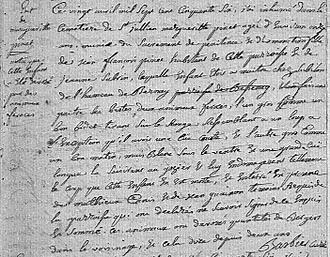
The accounts of burials that we still have give comparatively little information about the animal or animals ravaging the Lyon area between 1754 and 1756. The priest of Saint-Julien-sur-Bibost is the only one to have left us any evidence:

“This April 20th 1756, I buried in the cemetery of St Julien sur Bibost Marguerite Pinet, aged about eleven, the daughter of Jean-François Pinet, a resident of this parish & Jeanne Subrin. The child was employed by Monsieur Subilon in the hamlet of Bernay in the parish of Besenay to watch over his animals in the fields”

lyonnais xxxxxxxxx

“There were two ferocious animals, one as big as a small horse, reddish in colour, resembling a wolf, except that it had a short tail. The second animal was as big as a good sized mastiff, but it had white on the belly and a great long tail ; they seized Marguerite by the throat and neck causing enough damage to kill the child; she was buried in the presence of Mathieu Crois and Jean Guainon , witnesses required by the parish, who said they were illiterate and could not sign this form. These animals have devoured a good number of shepherds in the area. This has gone on for two years. Berbier, Priest.”

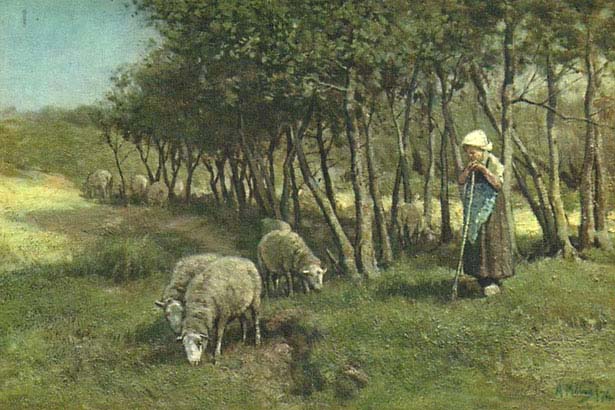
Here is a shepherdess, the meal of choice for the majority of monsters and beasts during this era. The sheep were usually ignored:

bergere xxxxxxx

The descriptions of the time mentioned a wolf, but with shorter legs. The fur was more coarse and the skin was mottled with several different colours. The evidence of the priest at Montrottier was that rumours of a hyena had currently gained momentum.

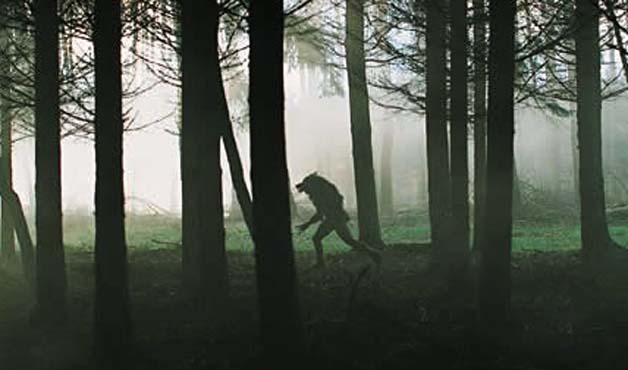
The theory of a werewolf was equally popular at that time and was mentioned by the Marquis of Marcieu in his instructions for Great Hunt held on September 10th, 1754:
“The Officers of both the Fusiliers and the Trackers must make every effort to destroy the ordinary people’s fanatical belief in werewolves:

Dog-Soldiers-2002-Movie-Ixxxxxxxxxxx

We must prove to them that these are just ordinary wolves which unfortunately are accustomed to eating human flesh.
Even if the woods are full of lynxes, bears and tigers, we must prove to them that these are just animals which a bullet from a rifle will kill, and which it is necessary to destroy.”

The French word “loup-cervier” appears on a number of occasions connected with these mystery monsters. I have found it impossible to trace the word in the Online dictionary which I normally use,
but Google Images for France provides any number of photographs of lynxes, mostly Canadian lynxes but also European ones. I eventually discovered that “loup-cervier” originally meant a lynx which hunts stags, and is used nowadays as a favourite metaphor for predatory financiers. “Cervier” seems to have no real existence except when attached to the word “loup” or very occasionally “chat”.

In any case, a Lynx, whether European or Canadian, is more or less out of the question as regards the Beast of Lyonnais. Lynxes are unbelievably shy and retiring creatures and it is inconceivable that they would attack human beings. In Europe their favourite prey item is Roe Deer. This is a European Lynx:

euraianLynx_lynx-2 xxxxxxxx

In North America, they hunt mainly Snowshoe Hares. This is a Canadian Lynx, the so-called “loup-curvier”:

loup cervier 1vvvvvv

To me, they are more kute than killer:

This slideshow requires JavaScript.

Wikipedia carried a list of the victims of the Beast(s) of Lyonnais:

Pierre Morel (5 years old), Claudine Tardif (45), François Beloud (8), Madeleine Joubert (?),Christophe Cambria (7), Anne Tricaud (14), Pierre Guillon (10), Marie Berchoud (13), Mathieu Gervais (9), Hélène Berquet (6), Marie Berger(6), Claudine L’Hospital (8), Catherine Cusset (10), an unknown toddler(2), Jean-Marie Duboy (13), Pierre Vaché (8), Benoite Daverdi (9), Marguerite Pinet (11), Benoît Thiver (10), Pierrette Devilard (7), Étienne Manu (6), Pierre Delorme (13), Jean-Baptiste Chazaud (7), Claudine Allioud (8), Anne Tiron (10), Elisabeth Blanc (11), Benoît Mortan (12), Jean Malaval (9), Marie Lombard (10), Benoit Barroh (sic) (1), Claudine Guillot (4), Pierre Paleron (6), Jean-Baptiste Bazin (14) and Anne Sarrazin(9).

This seems to be twice the usually quoted figure of seventeen. The first victim was killed on June 5th 1754 and the last on November 24th 1756. Very roughly, the deaths occurred perhaps once or twice a month, although in some months there were no killings at all. The original list gave dates without any further details but as far as I can ascertain, there were no occasions when two victims might have been killed together. On several occasions, one victim may have been quickly followed by another at the same location, but they were always killed on different days. In some cases, the animal or animals might have returned repeatedly to kill its prey, such as at the village of Savigny (6 slayings), Saint-Pierre-de-Chandieu (3) and Saint-Romain-de-Popey (2). This is Savigny nowadays. It looks a lot quieter:

280px-Savigny_1 xxxxxx
I just do not know if ordinary wolves would return to the scene of the crime like this, although all predators, both animals and birds, tend to be very much creatures of habit, following the same paths and game trails every single day.
Another familiar website tells a fairly similar tale, but comes to a very different conclusion:

In all, seventeen young men and children were bitten, ripped to pieces or even devoured. Those who saw the animal, or believed they saw it, said that it was approaching the size of a wolf, with shorter legs, a coarser coat and skin mottled with various colours-an exact portrait of a hyena.
From these accounts, people were all agreed that it was a real, genuine hyena. But who is unaware that fear may magnify things, or change them completely. The descriptions that people have given of this carnivorous animal have probably been inspired by their heated imaginations. Fleeing at top speed, how could exact measurements be taken by eye? And running along, the creature must have seemed a lot lower than he really was. The frantic motion of his entire body made his hair stand on end and lastly we know that glare changes shades of colour.  Take away these circumstances from your sighting, and instead of a hyena, much more likely it was a question of a big wolf driven by famine in that harsh winter of 1754.
The excessive winter weather of 1754 forced the animals of this latter species to seek in the villages what the countryside could no longer supply to them. Moreover, the hyena is an animal entirely foreign to our climate:

S H 3.png vvvv (2)

How would he have got to France? Can we suppose with any degree of probability whatsoever that he has crossed the immense expanses which separate us from his native home without leaving behind any traces whatsoever of his journey?

We are forced to conclude that too often we consider something miraculous when it is nothing out of the ordinary. “

Another description was of:

“two ferocious animals, one as big as small horse, verging on red in colour, like a wolf except it had a short tail. The other was the size of a large mastiff, but it had white on its belly and a big long tail”

When I wrote about the Beast of Gévaudan and examined in some detail the solutions to the mystery, I thought that the centuries old puzzle was solved. The Chastel family was the guilty party, and in particular, long and greasy haired Antoine. But then I read about the Beast of Cévennes/Gard/Vivarais whose behaviour was nothing like that of a wolf. And then came the puzzle of the Beast of Benais who the local people actually thought at the time was the “Beast of Gévaudan on Tour”. After that, it was the Beast of Sarlat which was supposedly a rabid wolf, although none of the locals thought so, preferring a werewolf as the likely explanation:

werewolf

Next came the Beast of Auxerrois/Trucy which was not a wolf, the locals said, but a tiger, a demon or a werewolf.
Throughout my articles, I had deliberately ignored obvious wolves as culprits and deliberately selected only the creatures which seemed to me not to be obvious wolves.

The enduring problem was that there just seemed to be any number of these strange creatures and so many of the “wolf but not a wolf” category. You can’t stretch the Chastel theory to explain away all of them.

Soooooo……..
I have returned to C.R. Rookwood who, in one of his blog posts, suggested that the Beast of Gévaudan, was a prehistoric mammal, a mesonychid, which were very large ancient predators with huge heads, long tails, and hooves instead of feet.

This slideshow requires JavaScript.

I do not have enough scientific knowledge to be quite so precise, but I would certainly go for some kind of relict creature, a fierce animal left over from a bygone age, its ever diminishing population dwindling on in the trackless forests and mountains of south-central Europe. Perhaps it was some kind of hyena such as the Cave Hyena. These photographs give an idea of their size:

This slideshow requires JavaScript.

I said that I did not think these monsters could be wolves, but the “Dire Wolf” is not a wolf. Or at the very least, it is a wolf, Jim, but not as we know it:

This slideshow requires JavaScript.

Who knows? And indeed, who ever will?

11 Comments

Filed under Cryptozoology, France, History, Science

“I have just had a Female Eider Duck come in shot to night…”

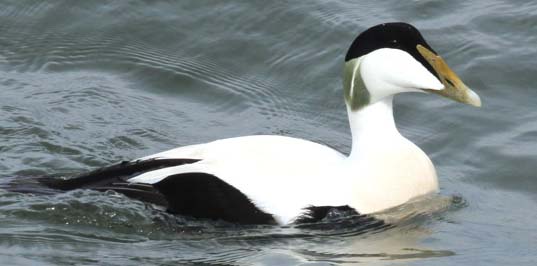
The male eider duck is a particularly beautiful bird:

male-eider-duck-i xxxxxx

It has a much imitated call. This is a recording by “markwilmot”:

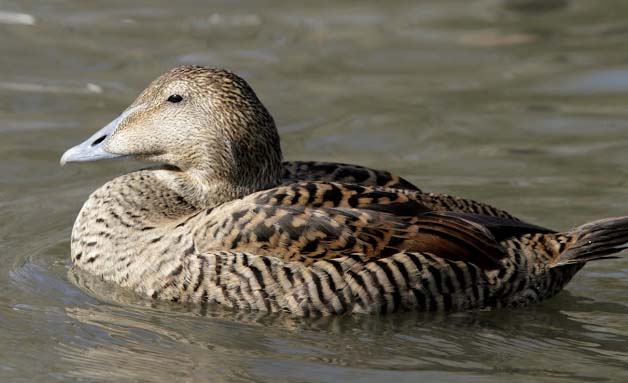
A female eider is a much drabber bird than the drake, and arguably, is barely recognisable as the same species:

eider duck female xxxxxxxxxxxx

Eiders are common enough birds around our coasts, particularly in the north east, but inland, they remain very much a rarity. This report details the only Victorian occurrence in Nottinghamshire:

“According to “The Zoologist” magazine, a female eider was shot near Nottingham on November 16th, 1882.  It had been attracted to the area by the large number of acres of farmland under water at the time and its acquisition brought the number of Notts species to 240.”

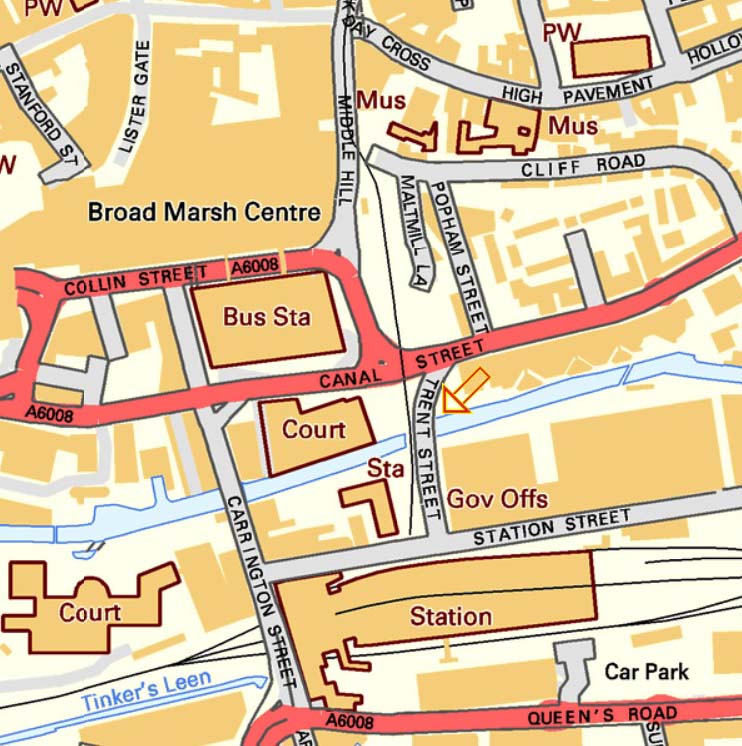
The unrecorded wildfowler who shot this rather drab, but extremely rare bird, immediately took it to Mr J Stanley the “Art Naturalist and Sporting Trophy Mounter” of 5, Trent Street, in the City of Nottingham. The wildfowler was probably ignorant of the bird’s identity, but he would have been well aware of its value. For his part, Mr Stanley would have bought the bird from him without a moment’s hesitation. Look for the orange arrow:

trent st

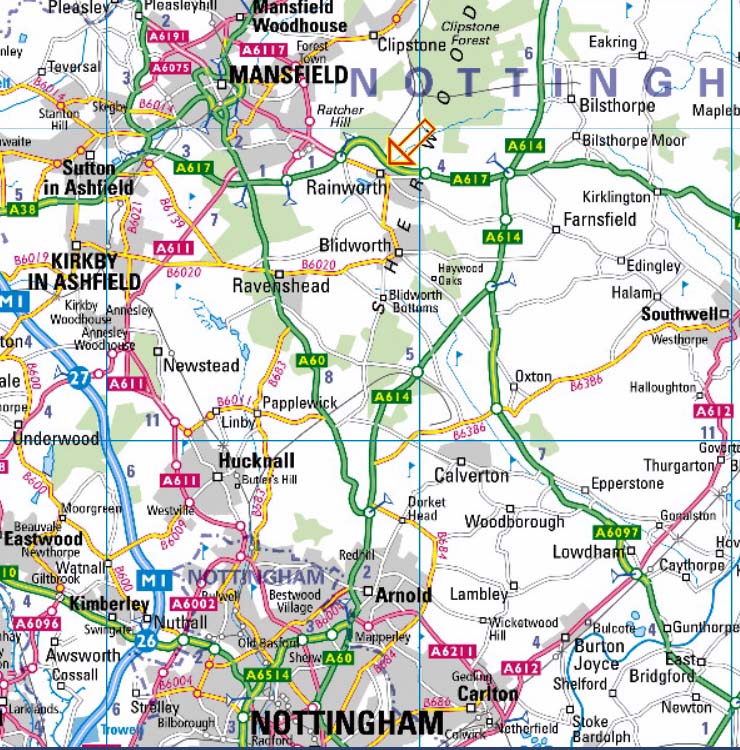
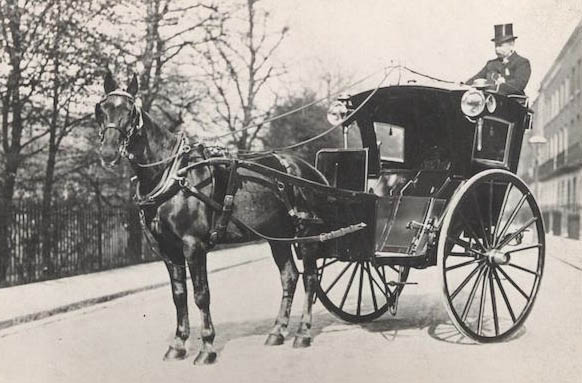
Mr Stanley knew very well what the bird was, and he knew equally well who would pay a very large amount of cash for it.  At 8 o’clock that evening, therefore, he sent a note, presumably by hansom cab, to Joseph Whitaker at Rainworth, some fifteen or so miles  from his shop. Again, look for the orange arrow:

rainworth

Mr Stanley must have been more or less totally certain that Joseph Whitaker, an avid collector of rare birds killed in Nottinghamshire, would pay him handsomely for such a rarity. Stanley’s note read, spelling mistakes and all:

“I have just had a Female Eider Duck come in shot to night in our Medowers it is left for me to buy if you have not got one & you would like it Please to right by return & oblidge your

faithefully

J Stanley”

Joseph Whittaker, of course, came immediately to Nottingham, perhaps even in the same hansom cab in which Mr Stanley had sent the note:

1998-20707-hansom-pp

And Joseph Whittaker duly bought this exceptionally rare prize, although, unfortunately, we do not have any record of the price he paid.
Thirty years later, though, in 1913, Fred Smith, described by Whitaker on another occasion as “that shocking poacher”, was to charge him seven shillings for a pair of sheldrakes, a relatively common species, so we can only guess at what price was paid for a genuinely rare bird.

3 Comments

Filed under History, Nottingham, Twitching, Wildlife and Nature

Friendship After Bombing Davao

This wonderful account really is worth reading. Just give it a few moments of your time and you will be a better human being for it.

Int'l Historical Research Associates's avatarIHRA

Two 63rd Squadron B-24 Snoopers took off from Owi Island on the night of September 4, 1944 to bomb Matina Airdome at Davao, Mindinao. One of the B-24s soon turned back due to radar failure. Captain Roland T. Fisher, pilot of the other B-24, “MISS LIBERTY,” continued on alone. Fisher had flown night missions with the Royal Air Force in 1941 and would soon be needing every ounce of skill he had acquired over the last few years.

Twenty-one years after this mission, Fisher recounted his experience: “I could see again the bright moon in the clear night sky and the green shadow of Cape San Agustin below. I had entered Davao Gulf by crossing from the Pacific over the peninsula into the head of the gulf and made nearly a straight-on approach over Samal Isle to Matina air strip. I remember thinking perhaps this would allow me to enter…

View original post 664 more words

3 Comments

Filed under Uncategorized

The Last One to Die

So often when we feel that we are repeating history, it is almost always, the negative, tragic sort.

As we have already seen, young Dab Furley’s was a life cut tragically short at the age of only nineteen at Miranshah in Waziristan, in 1919.

another BIGGER close up

If only the powers that be had read about the young man who perished in the middle of nowhere in northern Nigeria in mid-December 1903.
Old Nottinghamian, Lieutenant Cyril Amyatt Wyse Amyatt-Burney was slaughtered by the natives in the village of Deckina in northern Nigeria. He was leading a force sent by British authorities who were keen to restore the King of Ankina to his rightful position, after he had been ousted from the throne by a usurper:

tanzania

Lieutenant Amyatt-Burney was:

“…a zealous officer and a young man of promise and energy.”

His body was never found, just a bundle of some of his blood stained clothes, secreted away at the back of a native hut.

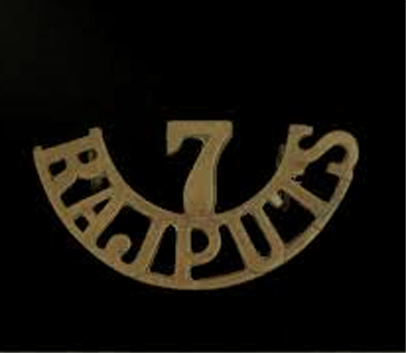
In 1937, another Old Boy, Lieutenant E.S.R.France, of the 3/7th Rajput Regiment, was to sacrifice his young life in the Shahur Gorge, on the Manzai-Wana road, on India’s North-West Frontier.

untitled 2

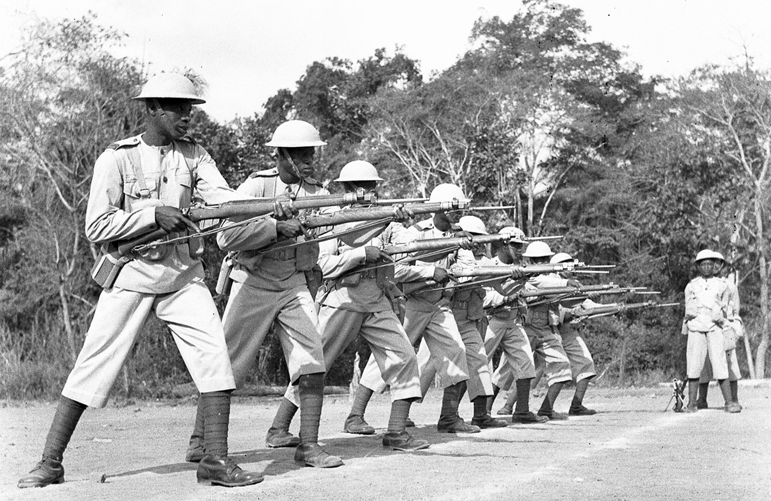
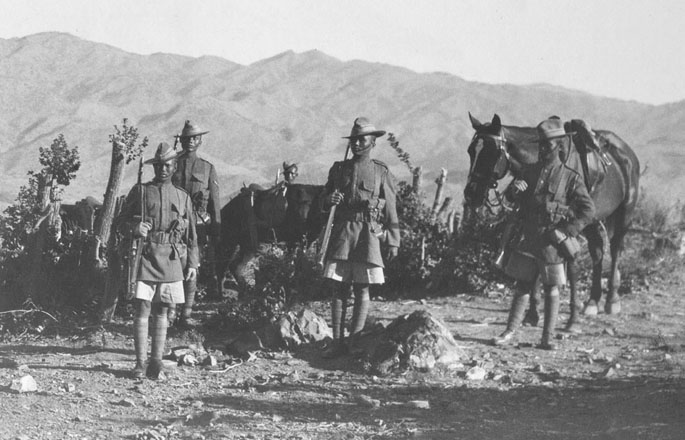
He was with twenty nine colleagues of the 3/7th Rajput Regiment:

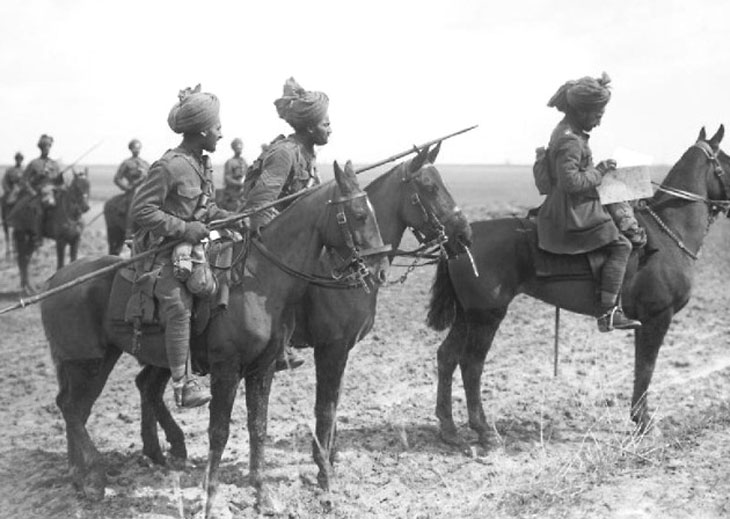
cavalry

Lieutenant France, who had left the High School only five years previously, was just twenty three years of age.
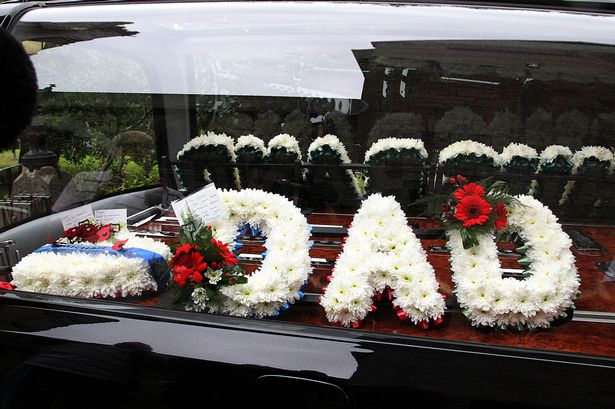
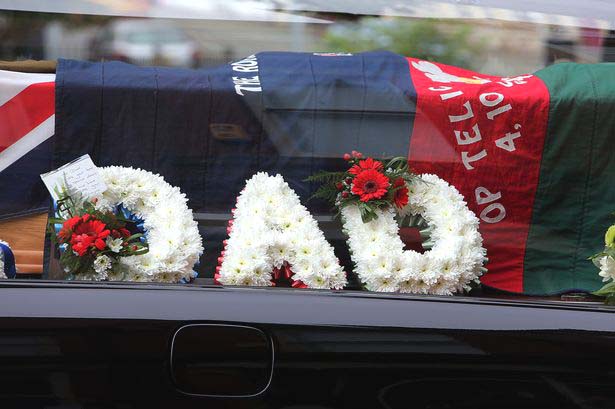
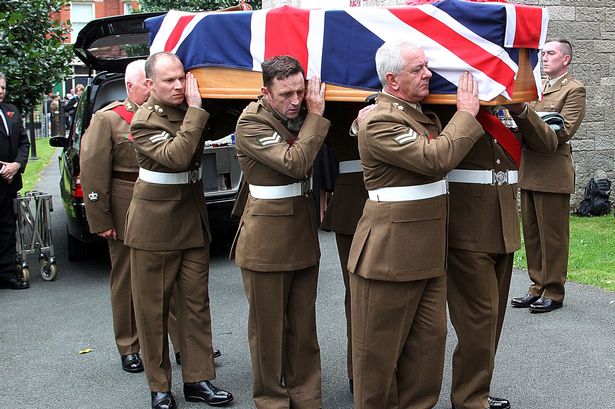
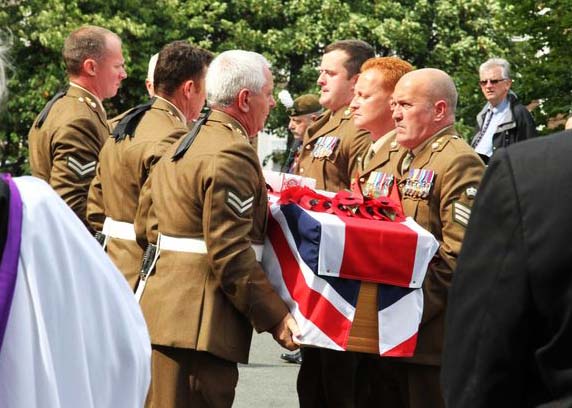
Literally as I wrote the stories of these two tragic deaths, though, news came in of the 454th member of the British Armed Forces to be killed in Afghanistan during the present era.  He died in hospital from his wounds on Thursday, July 24th 2015. Why not click on this link, and have a quick look at the 454 young people lost? the 454 families traumatised for ever? the 454 little photographs that mean so much to the people who know what they represent:

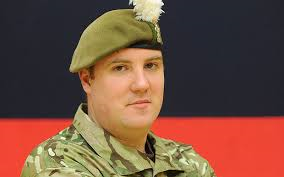
cammy
Lance Corporal Michael Campbell, of Colwyn Bay, in north Wales, had been shot while out on patrol with the 3rd Battalion, The Royal Welsh in 2012, more than three years previously.

tough British-Soldier-dies-from-Afghanistan-injuries

Michael, popularly known as Cammy, was a reservist and he died at Birmingham’s Queen Elizabeth Hospital. His fellow soldiers said the 32-year-old was an “outstanding soldier” who was always “determined” and “courageous”. Michael had a wife and four children.

carried
The Ministry of Defence said:

“Lance Corporal Campbell epitomised everything a reservist in 3 R Welsh should be – dedicated, professional and willing to volunteer on operations wherever he was required, a true Welsh warrior. The battalion has lost a charismatic and loyal friend and our thoughts and condolences are with his wife Chrissy and his wider family at this very difficult time.”

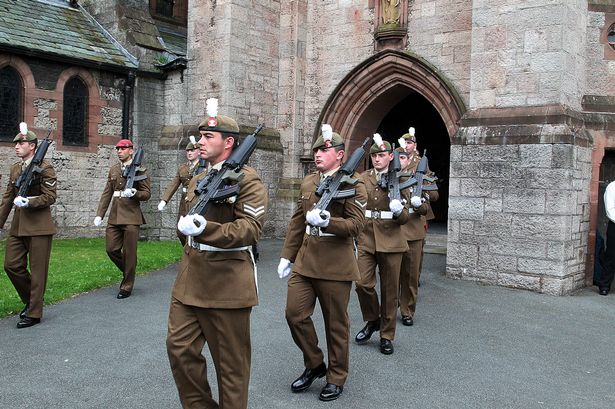
Funeral-of-Lance-Corporal-Michael-Campbell 4
Retired Lieutenant Colonel Stephen Webb said:

“Everyone who served alongside Lance Corporal Campbell will be devastated to learn of his passing.  He joined the battalion during our pre-deployment training and fitted seamlessly into his platoon and company. He was an outstanding soldier and very talented junior commander: skilful, determined, measured and very courageous: he set an excellent example to those around him.”

It is tragic that he has died three years after his initial wounding and the thoughts and prayers of all of us are with his family at this most difficult time.”

funera
Lieutenant Colonel R Manuel JP – the commanding officer of the 3rd Battalion, The Royal Welsh from December 2012 to June 2015 said:

“I was deeply saddened to hear of the tragic loss of Lance Corporal Campbell yesterday. I had known him for a number of years; he was a true reservist with a huge amount of operational experience under his belt. A larger than life character, always upbeat, at the heart of things and looking for the next challenge.”

Major Charlie Carver said Lance Corporal Campbell was “one of life’s true characters. One of the reasons that he was able to fit seamlessly into the company was his keen sense of humour; he excelled at the banter which only soldiers seem to understand.”

Campbell-593613

Major D Evans, described him as ‘reliable and professional’, adding:

‘Cammy always brought a smile to your face with his wit and cutting sarcasm and he was always on hand to pass on his experience to the new, and not so new, members of the company.
When I learnt that he had volunteered, yet again, to deploy on what would be his fourth tour, I told him that he had done enough already, his reply was “Well someone has to go and look after you, Boss.
That is what Cammy was truly about. He was a team player, who was committed to serving his country.

Funeral-of-Lance-Corporal-Michael-Campbell dad

Michael had joined the Army Reserves in April 2002 and was working as a platoon radio operator in October 2011.
He was wounded in the stomach while crossing a road in Helmand Province on April 3rd 2012, having been confronted by “accurate, heavy and sustained enemy fire”.
This enemy fire was returned, with Lance Corporal Campbell and his fellow soldiers vigorously attacking the Taliban firing positions. The Ministry of Defence said in a statement:

“Despite being wounded, Lance Corporal Campbell continued to suppress the enemy, drawing fire on to himself so that the remainder of the multiple could cross an open and exposed area to get into better cover.”

Funeral-of-Lance-Corporal-Michael-Campbell
Michael was evacuated by helicopter first to Camp Bastion and then to Birmingham’s Queen Elizabeth Hospital, where he was readmitted earlier this year. Initially, his recovery had appeared to be going well, as he left hospital to go to Headley Court, the military’s specialist rehabilitation centre for injured servicemen and women. Michael initially had to use a wheelchair but fought back and learned to walk again. All this time, though, he had to return to hospital for a series of operations.
Lance Corporal Campbell had served on a number of other tours, including Iraq, and proved to be a “highly capable soldier”, the Ministry of Defence said.
Defence Secretary Michael Fallon described Lance Corporal Campbell as

“proud and professional, a dedicated family man. The tributes of his comrades describe L/Cpl Michael Campbell as a popular and committed soldier devoted to his regiment and his family. Proud and professional, he epitomised the ethos of the Army reservist and he had completed numerous tours of duty in Afghanistan and Iraq. It is particularly tragic that Michael Campbell should die of wounds after such a period of time and I send my deepest condolences to his family and loved ones at this sad time.”

Sergeant Paul Thomas, who served with Lance Corporal Campbell, told the large crowd at his funeral:

“His knowledge and enthusiasm rubbed off on all around him, especially when guiding the younger members of the platoon. He had truly found his calling in life. He was hugely proud of being a Royal Welshman and even more so of his family. A better man you could not find.”

AFGHANISTAN-322225

I could not have written this article without the information provided on the Internet by the BBC, the Daily Express, the Daily Mail and the Daily Mirror.

And here’s that link that I mentioned at the beginning of the article. This one page of the Internet is a singularly humbling one. It contains the names of every single person who died in Afghanistan.
Every single person in this list had parents, perhaps brothers and sisters, maybe a wife or a husband, perhaps children, certainly friends and acquaintances, perhaps a pet, a hobby, plans to do things, places to visit, a garden, a car, all those things that make life so attractive. But no more.

6 Comments

Filed under History, Nottingham, Personal, Politics, The High School

“Dab” Furley Part Three

When he left the High School, Percival Henry Biddulph Furley went immediately to sit the Army Entrance Examination. He scored a record 10,000 points, over seven hundred more than the candidate in second place.

Dab was immediately sent out to India. During his short time there, he was described as…

“…specially marked as a man to keep on as a future adjutant…the officers and men loved him.”

And that was it for Second Lieutenant Percival Henry Biddulph Furley.  His game was up. He was mere hours from buying his farm.

The Grim Reaper put his newspaper down, switched off the radio, got to his feet and reached for his trusty scythe:

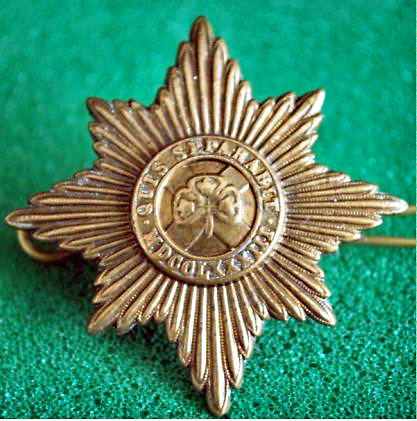
Irish_Guards_cap_badgexxxxxxxxxxxxxxxxxxx

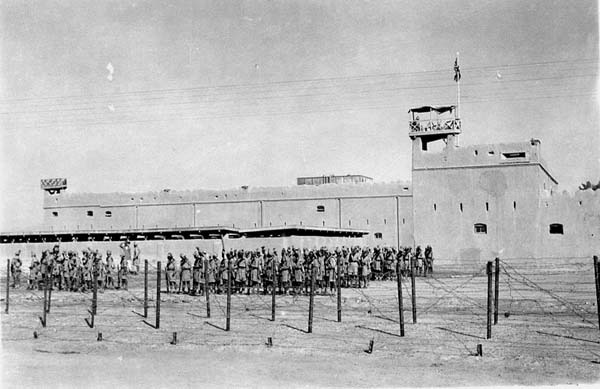
Dab Furley was only nineteen years old, but, instead of letting him get used gently to military life in India by posting him to some nice peaceful place, the authorities immediately sent him to the North West Frontier. Most probably, Dab went straight to the recently constructed Miranshah Fort, which the British had built in 1905 to control North Waziristan. There could have been no place more dangerous in the whole of the British Empire:

fortxxxxxxxxxxxxxxxxxxxx
Here, operations were continually being carried out against the Wazirs and the Mahsuds along what would nowadays be the border of Pakistan and Afghanistan. This is a condensed version of the official record of events:

“Reports had been very persistent at Miranshah of an impending advance by Afghan troops, but these were discounted by a reliable report that these forces were short of transport and supplies, and were adopting a defensive role.
Their leader continued to incite the Wazirs to attack and by May 31st large numbers of tribesmen had assembled. The General Officer Commanding the 67th (Bannu) Brigade decided to disperse these hostile tribesmen. They would also destroy certain villages whose inhabitants were known to have committed offences, and to have participated in attacks on the posts:

5thRoyalGurkhaRiflesNorth-WestFrontier1923

The following day the North Waziristan Militia moved out with 250 men and fought a very successful action. The enemy was put to flight with a loss of about 90 and the towers from where he had been sniping the Miranshah Fort were destroyed. Our casualties were Second Lieutenant PHB Furley, of the 1st/41st Dogras, and two Indian soldiers killed, and five Indian ranks wounded.”

Dab Furley was killed on June 1st 1919. He was just nineteen years old. His family church back in Nottingham expressed their sympathy in the All Saints Church News of August 1919:

“The sympathy of the Church goes out to the bereaved. Percival Henry Biddulph Furley, 72 Cromwell Street, 2nd Lieut. 41st Dogras Indian Army; killed in action at Miranshah, W India, June 1st 1919; age 19; Communicant; educated Nottingham High School, Captain of School and Cricket XI; first in all England Examination for Indian Army. Letters from his CO and Company Commander speak very warmly of his character and soldierly gallantry.”

allsaints-outsidexxxxxxxxxxxxxxxx

The Grim Reaper opened his back door, put his trusty scythe back in the kitchen cupboard alongside the vacuum cleaner, got a beer out of the fridge and went off to watch the football.

By 1919, various wars in this benighted land had already dragged on for the best part of a hundred years. They continued on and off during the 1920s. In the 1930s, the struggle was eagerly taken up by Mirza Ali, the Faqir of Ipi, who intensified violence in the region. Here he is. He reminds me very strongly of somebody, although I can’t quite put my finger on it:

Mirza-Ali-Khan-Faqir-of-Ipi

The interminable cycle of wrongdoing and violence still continues to this very day. In the early 1950s, the Pakistan Air Force carried out operations from Miranshah Airfield and Miranshah Fort against a serious revolt led by another rebellious Faqir.

After 9/11, the “War on Terror” saw almost countless strikes by pilotless drones of the US Central Intelligence Agency, in an attempt to kill militants and terrorists hiding in Miranshah or the surrounding area:

Predator_and_Hellfire

Dab’s death is commemorated on the Delhi Memorial in India, on Face 3.

This slideshow requires JavaScript.

Dab’s remains were actually buried in 1919 in the garden of the local political agent at Miranshah. At the time of writing, though, this grave was unfortunately not one of the many, many thousands to which the Commonwealth War Graves Commission is able to extend its protection, and Dab’s last resting place is nowadays presumably neglected or even lost for ever. It would be a very brave person indeed who tried to place a wreath on it at the present time. Here is Miranshah after a drone strike:

drone strike
Talking of the Great War, the school magazine “Highvite” had previously spoken of the keenly felt losses of such talented young men as Harold Ballamy, Charles Boyd, Walter Howard, James Turpin and John Wootton, but this last death of Dab Furley seems to have hit the High School very, very hard. It came after some 300 previous deaths in the Great War but worse than that, at a time when the country was preparing to celebrate peace at last.

another BIGGER close up
Dab was described as the…

“finest type of English boy…keen, intelligent and thoughtful ; all manly sports… gifted …hard-working, loyal and unselfish…straight and true… unfeignedly modest… of a stainless purity.”

How foolish our nation had been, to throw away the lives of so many hundreds of thousands of its most talented young men in these blood soaked and pointless conflicts.

13 Comments

Filed under History, Nottingham, The High School

“Dab” Furley Part Two

In January of 1918 Dab Furley was promoted to be a School Prefect. He joined a group of young men whose names and nicknames were listed in the new school magazine, The Highvite.
The Captain of the School was “Dicky” Bird, and the others included “Fuzzy” Barton, the Captain of Rugby, “Seaweed” Saward, “Fickle” Parr, “Nigel” Norris, “Our Stan” Buxton, “Dreg” Morley and “Jabez” King. Here is “Fuzzy” Barton at the time, wearing the uniform of the OTC:barton

“Dicky” Bird appears in similar uniform:

fa bird

And here he is, still looking desperately worried, as a member of the Mathematical and Science Sixth Form in 1915:

bird

The Highvite magazine also contained a number of humorous advertisements, with owners appealing for the return of their lost articles. They included a pair of socks, green stripes on a pink background, interspersed with yellow clocks, buff spots and heliotrope floral design (RJC Wood, 6B), a pair of parallel bars, supposedly ejected through the gymnasium window when RF Parr blew his nose (Staff-Sergeant Hall) and a white bulldog (Miss Pollard, the school secretary). There was also a list of recent additions to the literary world, including “How to Grow a Moustache” by Mr Barry Kipping, “What to Eat and How” by Dr RF Parr, and “The Evolution of Muscle” by Staff-Sergeant Hall.
I did in actual fact search the Internet for any mention of these young prefects. Results were inconclusive, but quite interesting. I did find a JA Saward in the lists of those who had served in the Royal Flying Corps in the Great War:

Royal_Flying_Corps_cap_badge

Coincidental evidence, of course, but probably enough to convince me. The same list of RFC personnel did also include a TLE Morley, as if the two young prefects had perhaps joined up for a great adventure together. No name was supplied for JA Saward but his friend was listed as Thomas Leslie Erskine Morley.
In similar vein, I also found that an N.F.Norris had relinquished his commission in the Irish Guards on April 1st 1920, and he thereby reverted to being a mere Second Lieutenant.
On the very same day, an R.F.Parr had done exactly the same thing, in the very same regiment. Perhaps these two young prefects from the High School had hoped to preserve their friendship when they both joined the same regiment together in 1918:

Irish_Guards_cap_badge
The Nottinghamian of the Great War era also carried an interesting account of the Prefects’ Room, which was situated in what is now the tower of the school…

“There are only seven chairs for the ten prefects, and Saward spends most of his leisure time chewing gum, and then trailing strands of it across the door. Towle then immediately amuses himself by electrifying these wires. Parr is usually sitting in the corner eating his dinner at 11 o’clock in the morning. Norris is rather bad tempered, and writes many private letters, and Morley and Furley do much tidying of the room, in the face of enormous odds:

close up 2

King practises Jiu-Jitsu on chairs, tables, air, or any unfortunate person whom he may happen to get hold of. The room has two doors, one for people, the other for draughts, and is lit with a gas fire that keeps popping, but does not give much heat.”

In a rather bizarre aside, the magazine goes on to say that Jacob (alias J.A.Saward) is shortly going to marry the Queen of Sheba (alias J.King); the wedding is to be a very quiet one and there are to be no flowers by request.
Of these Prefects, Messrs Bird, Barton, King and Saward were to be four of the five Captains of the School in 1918, as young men departed for the Front. During the Summer Term, it was Percival Henry Biddulph Furley’s turn to hold the Number One Job.
Dab’s elder brother was the splendidly named Athelstan Willis Furley, who was his senior by six years. During the Football Season in 1908-1909, he was one of six Fifth Form boys, were found guilty of “systematic and persistent slacking at football”. The wrongdoers were H.G.Ellis, A.M.Forsyth, A.W.Furley, P.K.Johnson, E.R.Oakden and R.Staniforth.  The Prefects, responsible for school discipline, offered them the choice of writing out fifty lines of Shakespeare, or two strokes of the cane. They all opted for corporal punishment, except for Staniforth, who wrote out the Shakespeare. During the 1910-1911 Season, the School’s annual Eight-a-side football competition was won by a team consisting of H.B.M.Groves (captain), E.P.Betts, W.Clayton, P.L.Coppock, E.I.Dexter, A.W.Furley, L.B.Kellett and A.L.Lowe. During the Great War, Athelstan Willis Furley served in the Nottinghamshire Battery of the Royal Horse Artillery:

NLS_Haig_-_Artillery_going_through_a_cutting_in_the_Canal_du_Nord

In 1929, Athelstan was back living with the family at 72, Cromwell Street, Nottingham.
What may well be a close relative of the Furley family was Edwin Furley Mellor who won a Standard Medal for football at the end of the 1909-1910 season. During the Great War he too was an Acting-Captain in the Royal Field Artillery. Perhaps one young man joined up to be with another member of his family. By 1929, Edwin was living at “Addison House”, 58, Addison Street, Nottingham, only five minutes walk from the school and from Cromwell Street.

At the turn of the century, a former pupil of the High School, Richard St.Clair Page, had written a short novel entitled “The Three Merles” which was a thinly veiled description of the High School around 1880-1890:

late 1890s

It was very reminiscent of works such as “Tom Brown’s Schooldays”, and described how a new headmaster had arrived at a quiet, comfortable school, and changed it completely by the very force of his personality. The new Headmaster was Dr.Govan (Dr.Gow), and other teachers were called “Sammy” or “Johnny” Horner (Sammy Corner), and “Old Mr.Bray”, (Charles Bray). The imaginary school, like the real one, had a Mr.Lupton, and a Sergeant Holmes as its School Porter. “Doctor Govan” changes the school uniform and this is when what I presume to be Dab Furley’s father makes an appearance:

“The end of that Summer Term drew near, and Ray was walking down town with Furley of the Fourth. Each boy wore the new cap recently introduced by the Doctor. The cap fitted close to the head, and bore the quaint lozenge shaped crest of the school, with its three merles on a white ground, a badge restored to use by the Doctor, and of which the boys were proud. It was known by the vulgar boys of the town as the “three crows”. But on the top of the cap there was a small white button, visible at a distance and marking a Grammar School boy from behind. The whole school resented this; some of the boys inked it over.”

The reason that the boys from the “Grammar School” did this, was that, out in the streets, having recognised their social betters, the “vulgar boys of the town” (in real life, of course Nottingham),  would throw anything to hand at them from behind to knock their caps off, safe in the knowledge that they would never be caught.

Tomorrow, the conclusion of Dab Furley’s brief life.

13 Comments

Filed under History, Nottingham, The High School