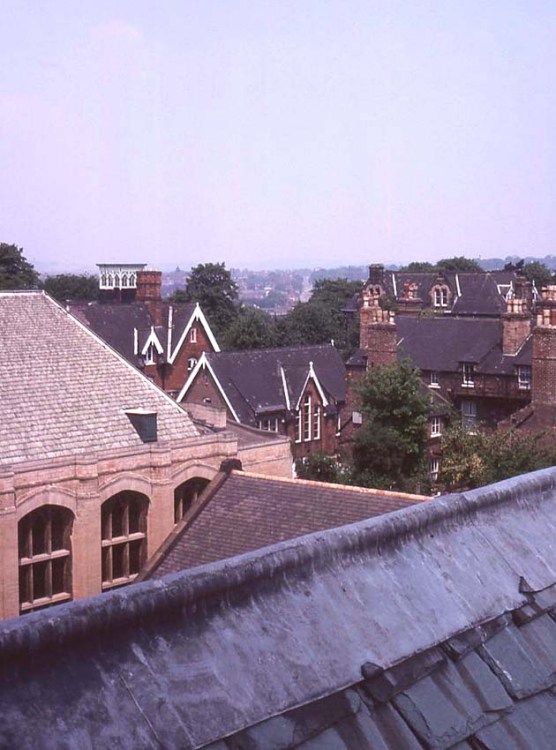
In the High School, there is a much vandalised stone mantelpiece over an old fireplace on the ground floor. Boys have carved their names on it well over a hundred years ago and the letters are only just beginning to disappear into the thick levels of gloss paint now used to cover the original stone. The fireplace is located between the General Office and the entrance to the Assembly Hall, so literally thousands of boys will have queued past it as they go into Morning Assembly.
On Wednesday, January 18th 1899, Thomas Ignatius Joseph Gillott entered the school. He was to leave during the course of his fourth academic year, in July 1902. Sadly Thomas died on Sunday, July 6th 1913, after a failed operation at the London Hospital. On that same day in 1899, his brother Bernard Cuthbert Gillott, also entered the school. He was destined to remain a pupil only until the end of that academic year and he left in July 1899. With the advent of the Great War, Bernard was to join the army, where he served as a Captain in the 6th Northamptonshire Regiment. A brave man, he won both the British Military Cross and the French Croix de Guerre. Eventually he was severely wounded, but thankfully he survived, and he was invalided home to England.
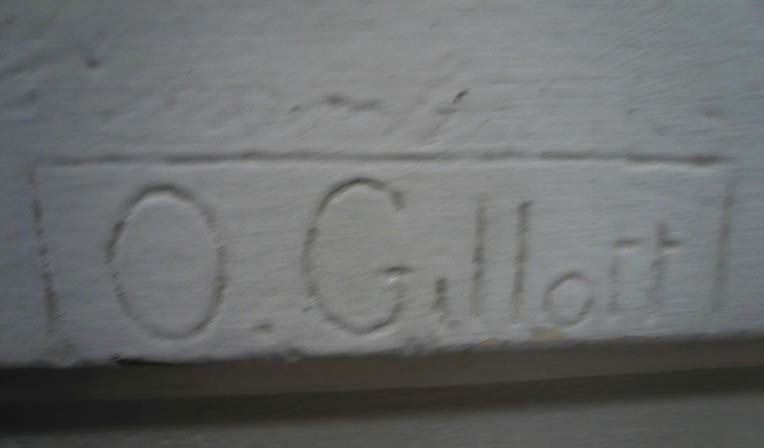
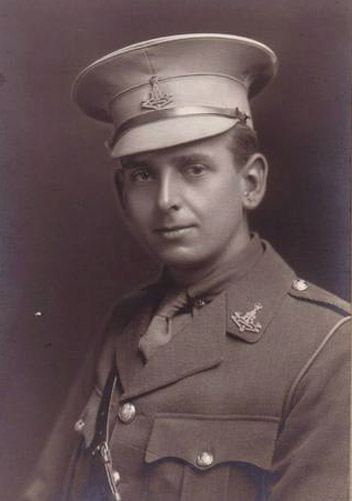
On Tuesday, September 12th 1899, the youngest of the three brothers, Oswald Cornek Gillot entered the school aged nine. Oswald was born in Ripley on July 22nd 1890 and his father was Thomas Gillot, M.I.C.E., a civil engineer whose address was given as either, Upland House, Eastwood, or Langley Mill near Ilkeston. Possibly towards the end of the Summer Term, 1905, Oswald carved his name on that extremely popular stone mantelpiece on the ground floor fireplace between the General Office and the Assembly Hall. Oswald left the High School in March 1907.
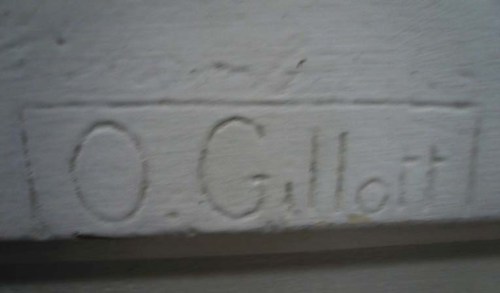
Taking decent photographs of these carved signatures has in actual fact, proved extremely difficult. They are located on the northern side of the school where the usually tropical English sun does not often penetrate, and they are surrounded by vast thick walls of stone and brick, with a singular lack of windows. This means that the whole area is more or less permanently dark from a photographic point of view. Added to this is the fact that in the century or so since these interesting acts of senseless vandalism were carried out, a succession of school caretakers, under the almost inhuman management pressure to hurry up that all school caretakers permanently face, have repainted the mantelpiece with a succession of layers of whitish gloss paint, all of them applied without having the time to remove the previous one. The stone therefore, now wears a building’s equivalent of an inflatable Sumo suit.
Consequently, I have been forced to Photoshop the pictures I took so that the now faint carvings stand out a little more clearly from the dimly lit and pale coloured background. One unfortunate young man, R.Salew, has proved completely impossible to conjure out of the camouflaging layers that now hide his signature. But he is definitely there.
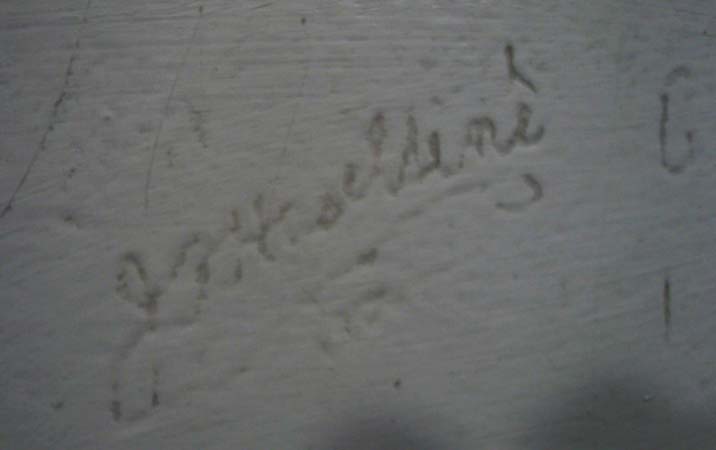
Towards the end of the Christmas Term, 1904, John Francis Haseldine carved his name, in rather florid handwriting, on that same stone mantelpiece.
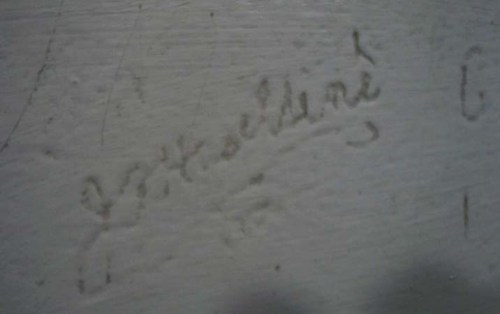
John was born on December 28th 1886 and entered the High School on May 4th 1896, aged nine. His father was Frank Haseldine, a lace manufacturer of St.John’s Grove, Beeston. John was a very good footballer (soccer player), and made his début for the First XI on Wednesday, March 26th 1902, in an away game against Loughborough Grammar School. We know that the school’s best player, J.B.Sim, worked hard throughout the match, but, according to the School Magazine of the time,“The Forester”, he was “too carefully watched” by the Loughborough defence, and the game was lost by 0-2. That particular spring, John had been in the team which had won the Football Sixes, a six-a-side competition organised within the school by the boys themselves, with the teams all drawn out of a hat. It was taken, of course, extremely seriously. Coincidentally, the winning team’s captain was that very same J.B.Sim, who was a well-known High School footballer of that era, with more than fifty appearances for the First XI.
On Wednesday, February 14th 1903, John scored his only goal for the school, in a 4-1 away victory over Mansfield Grammar School, “a rather poor and one-sided game”. As an ever present in the team, John won his football colours at the end of this season and was also awarded a “Standard Medal” for Football . In season 1903-1904, he became Captain of Football. John spent the Christmas Term of 1904 at the High School, but, like so many boys during this period, he left half way through the academic year in December 1904.
In the Great War John was a Major in the Royal Engineers, Special Reserve. He was Mentioned in Dispatches on June 3rd 1916 and received the Military Cross on January 1st 1917. By 1929, he was living at Northdene, New Barnet, in the northern suburbs of Greater London.
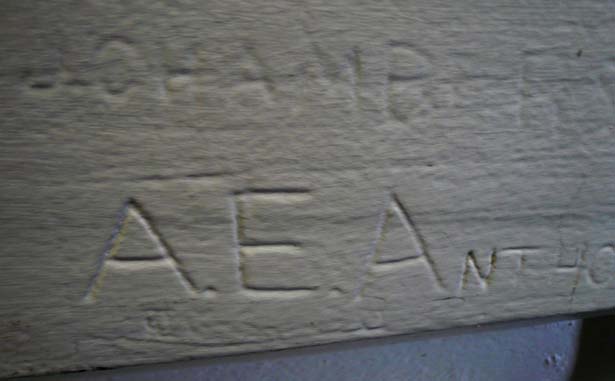
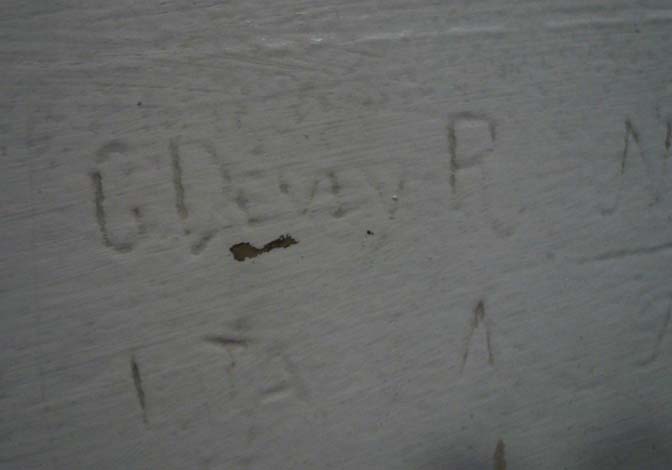
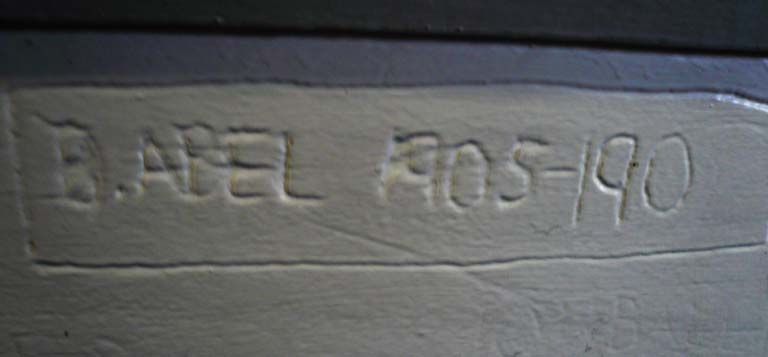
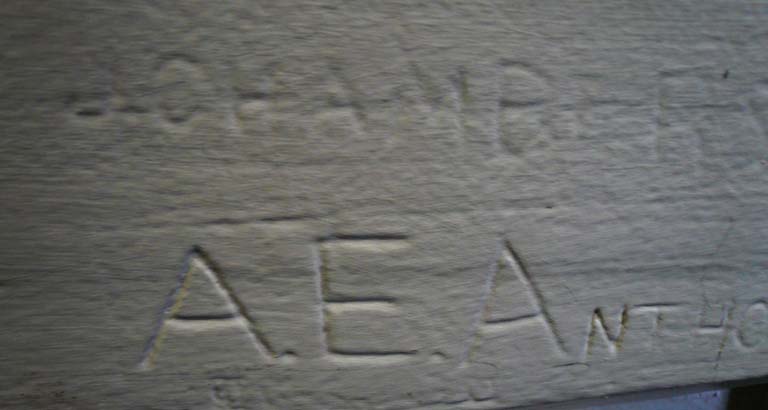
Among the other more legible carved names are “A.E.Anthony” and “G.Devey”. What is apparently “R.Salew” is also there, although there are many, many layers of gloss paint to obscure the lettering of this particular name, and the photo has not come out because of this. Another seems to read “B.Abel 1905-190” as if the young man had been interrupted, perhaps by a Master (teacher), as he came towards the end of his carving, and then did not ever return to finish the job.
Alfred Edward Anthony was born on June 12 1906, and entered the school on September 18th 1918, aged twelve. His father was F.W.Anthony of 120, Radcliffe Road, West Bridgford. He was the Managing Director of Gotham Co Ltd (apparently sic). Alfred left the school in December 1922.
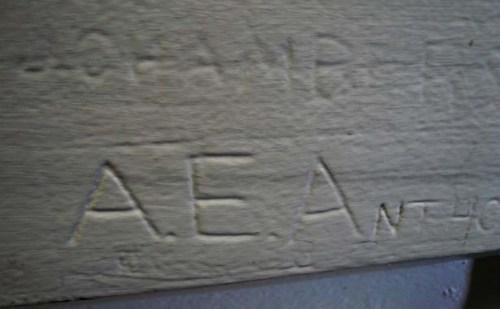
“G.Devey” was the elder brother of Reginald Devey, whose own name had already been carved on the fireplace upstairs, in the staffroom corridor, alongside that of D.H.Lawrence and L.S.Laver, the High School’s very own Latin Champion of the World.

This ground floor effort though, was Gerald Bertil Devey, who was born on June 10th 1903,. Gerald entered the school on May 27th 1918 at the rather late age of fourteen. His father was James Edward Devey, a civil servant, and the family lived at 22, Ebury Road, Sherwood Rise. Gerald left the High School in July 1919.
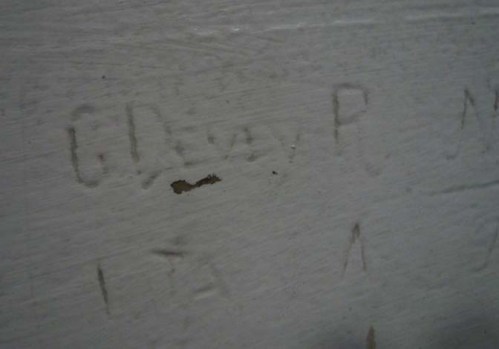
John Rylett Salew entered the school on May 4th 1916, aged fourteen. He left in December 1918. John was born on February 28th 1902 and his father was Joseph William Salew, an “agent” of 19, William Rd, West Bridgford.
Bertram Albert Abel was born on July 31st 1889 and entered the school on September 13th 1905, aged sixteen. His father was William Jenkinson Abel, a clerk to the Nottingham Education Committee. The family lived at 99, Waterloo Crescent, and Bertram left the school in July 1907.

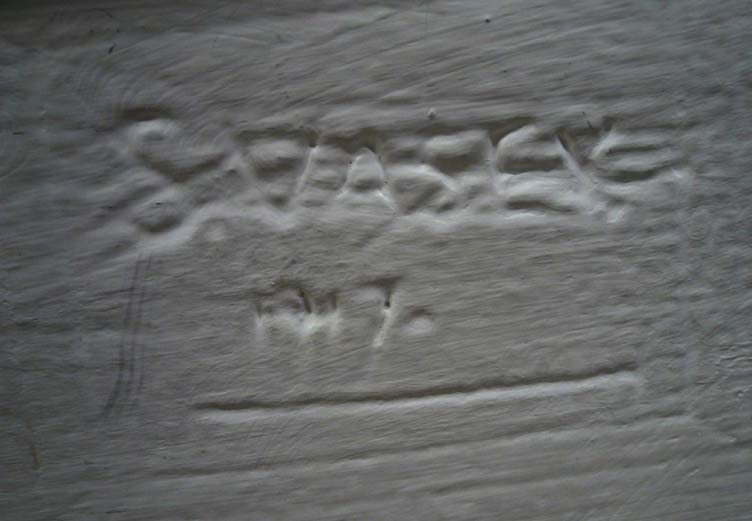
The fact that “S.Vasey” has carved his name in two different places on the stone, one of them complete with his own personal dates, namely “1917” and “1917-1922” shows not only that he had an extremely strong desire for immortality, but that, within the context of the High School, it has been fulfilled. He must have been a very swift, and fairly brazen, vandal.

Stanley Vasey was born on June 5th 1905 and he entered the school at the age of thirteen, on September 18 1918. His father was Alfred Vasey, a shop inspector, and the family lived at 15, Glebe Road, West Bridgford. He left in December 1922.
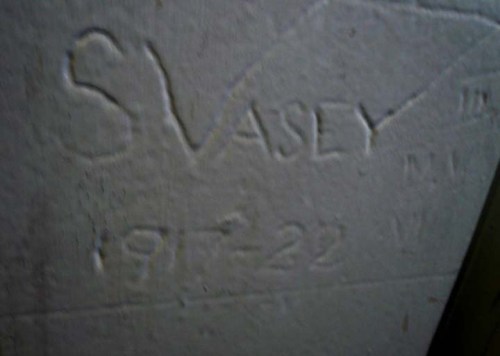
It is actually possible to best guess friendship groups among these carved names. Messrs Anthony, Devey and Vasey, for example, all joined the school in 1918. They all left in the latter half of 1922. They must surely have known each other. John Rylett Salew and Stanley Vasey both lived within a penknife’s throw of each other in the very posh Nottingham suburb of West Bridgford. Did the four boys seal their friendship by committing their names to the hard surface of that much painted fireplace ? Did three of them keep watch while the fourth scratched his name into the welcoming stone ?
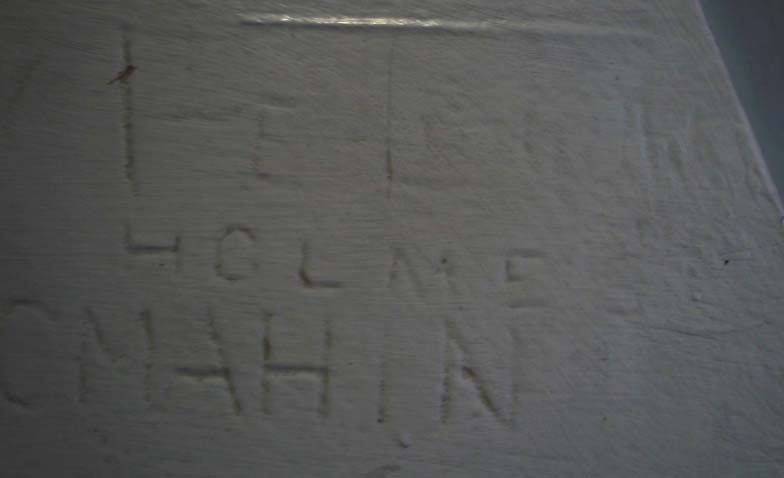
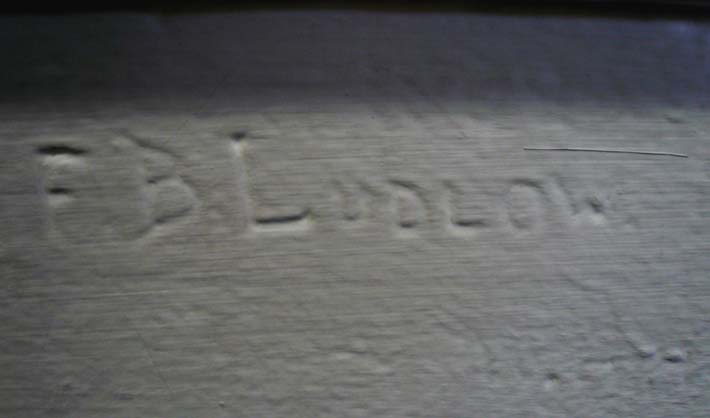
The other names on the fireplace, some of them extremely indistinct, include “F.B.Ludlow”, “N.G.Peet”, “Littler”, “Meigh” and “Holmes”. The latter was possibly the George Chudleigh Holmes who was a regular player in the First XI football team during the 1902-1903 season. Born on June 15th 1887, George entered the school on January 17th 1900, aged twelve. His father was George H.Holmes, a Lace Manufacturer of Gregory Street, Old Lenton. George left at Easter 1903, perhaps once the football season was over.

Fred (sic) Ball Ludlow was born on April 28th 1891. He entered the school on May 1st 1900 aged nine. His father was William Ludlow, a clerk in the Gas Depôt. The family lived at 10, Willoughby Avenue, Lenton in the western suburbs of the City. Fred left in June 1907.

Noel George Peet was born on December 26th 1901 and entered the High School on April 26th 1917, aged fifteen. His father was William George Peet, a “general agent”, and the family lived at 413, Mansfield Road. Noel left the school in July 1919. Perhaps he was a relative of Mrs.Mary Peet who was the school’s nurse during the late 1970s and the 1980s.
Samuel Littler was born on May 16th 1891. He entered the school on September 16th 1903 aged twelve. The family lived at 8, Appleton Gate, Newark-on-Trent, and his father, a veterinary surgeon, was also called Samuel Littler. Samuel junior left in July 1908.
Vincent George Meigh entered the school as an Agnes Mellers scholar on September 12th 1899 aged ten, the cost of his place in the school automatically paid for. His father was George Meigh, a schoolmaster of 3, Willoughby Avenue, Lenton. Vincent left in December, 1903.
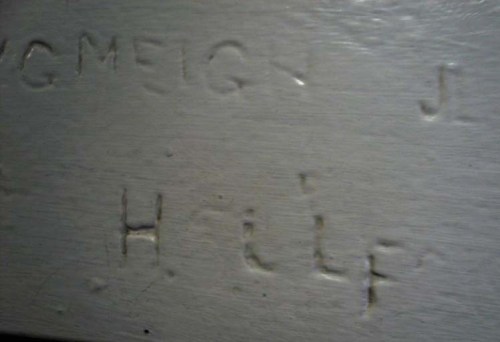
On the mantelpiece, one set of letters to set the heart a-flutter is “(illegible)BALL 1900-1907” , but this cannot be the famous air ace, as there are clearly a fair number of letters before the B-A-L-L. In any case, Albert Ball did not stay long in the High School, being expelled after an incident when he disrupted school assembly by emptying a large bag of bullseyes, gobstoppers and bouncing sweets onto the floor.
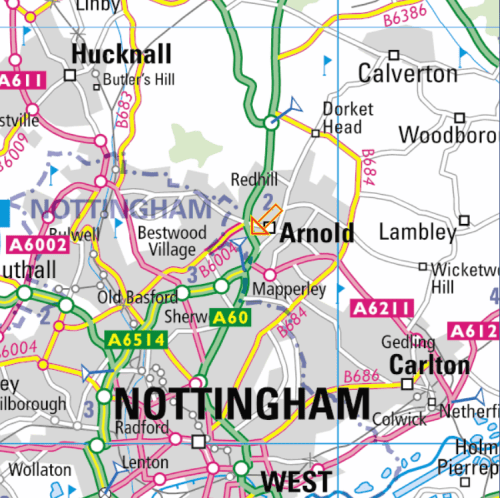
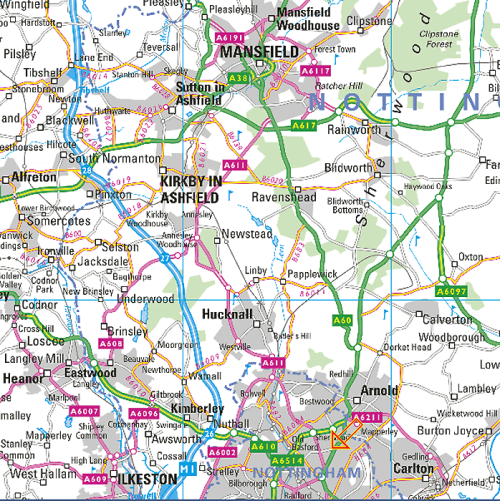
Best fit is probably Oliver Herbert Ball, who was born on August 13th 1891. He had entered the school on January 17th 1900, aged eight, as the third of three brothers. Oliver was to leave in July 1907. His mother was called Emma, and his father was Alfred Holmes Ball, the “Laundry Man” of “Sunnyside”, Daybrook, Notts. Presumably, this was the company which was eventually to become the massive “Daybrook Laundry”.’ It was situated opposite the Home Brewery on the Mansfield Road, and was only recently demolished during the first decade of the twenty first century. The Arnold branch of the “Aldi” supermarket chain has now been built on this site during the latter part of 2014. It was open for business by the end of the year. Look for the orange arrow:
During the Great War, Oliver Ball was to serve as a Second Lieutenant in the 10th Battalion of the Yorkshire Regiment. Aged only twenty five, he was killed on September 28th 1916 and is buried in the Guards’ Cemetery at Lesboeufs in France. Oliver’s death was part of the Somme offensive. He shares the cemetery with 1,492 identified casualties, and a grand total of 3.136 men.
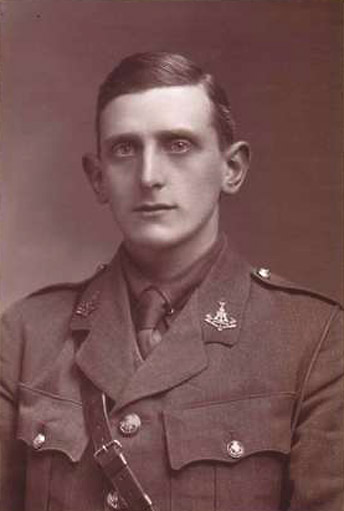
Oliver Ball’s elder brother was Walter William Ball, the second son of the three, and himself an Old Nottinghamian. Walter had returned to the Western Front, and the Yorkshire Regiment, from his leave in Nottingham on Friday, November 19th 1915. The “Nottingham Guardian” reported his death on Monday, November 29th 1915. He had apparently been shot through the head by a sniper while organising a firing party with his captain. The tragic news was communicated to his parents by his younger brother, Second Lieutenant Oliver Ball, who held a commission in the same regiment. According to the “Nottingham Guardian”, Walter was “well-known in Nottingham and had a large circle of friends”. He had received his commission as a Second Lieutenant a mere twelve months previously. Walter is buried in Houplines Communal Cemetery Extension in France, Plot 1, Row A, Grave 21. He was 28 years of age.

As far as I can trace, the third brother seems to have survived the war.
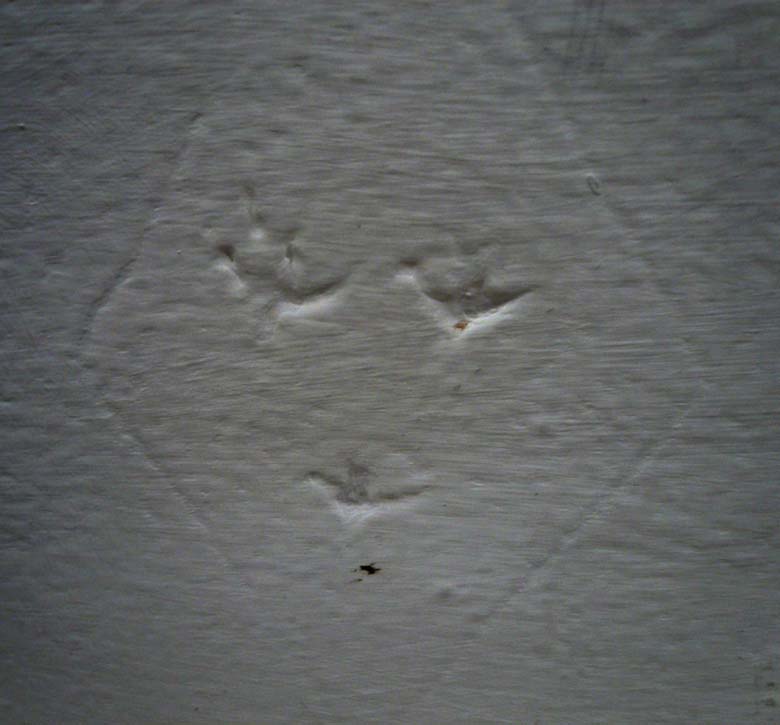
One of the more notable objects on the mantelpiece is perhaps the school badge which has been carved relatively large, and in primitive style, with the lozenge and the three merles or heraldic blackbirds still recognisable even now, the best part of a century after it was executed by some unknown, juvenile artist.
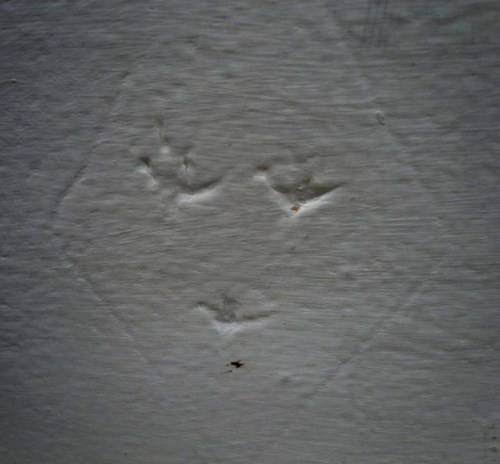
Less time proof perhaps, are the boys who managed to carve only their initials, namely “JL”, “MV”, either “WA” or “WR”, and either “BFW” or “SFW”. It is just so difficult to be certain about whose initials they might be. In some cases, there are literally dozens of possible candidates in the school registers, and it becomes almost a pointless effort to try and guess who has carved them.
Some boys seem to have been able to make only part of their name legible. We appear to have, therefore, a group of letters which seems to spell “H-LLF”.
Similarly, I have tried so hard to turn “—-NGTON” into Victor George Darrington, one of the very few young men to have captained the school at both football and rugby. The time is right (he entered the school in 1909, aged twelve) but the fact is that the blurred and multi-layer gloss paint painted-over obscured letters just do not look like they were ever meant to spell Darrington.
Even more striking is the young member of what is probably the “Chambers” family who did not manage to carve his initials clearly. The name can be seen just above “A.E.Anthony”, although the letters seem to be an even whiter shade of pale. Just a cursory perusal of the school registers reveals the existence, between 1897 and 1926, of “E.Chambers”, “W. Chambers”, “P. Chambers”, “N. Chambers”, “J.F. Chambers”, “J.S. Chambers”, “A. Chambers”, “C.G. Chambers”, “J. Chambers”, “B.J. Chambers”, “C.C. Chambers”, “S.H. Chambers”, “D.B. Chambers”, and a second “W. Chambers”

No doubt a really thorough search would reveal even more members of the apparently vast Chambers clan.
It would be nice to think, though, that the perpetrator was the (uninitialled) Chambers of Form IVb, whose doings are reported in the Prefects’ Book for Thursday, February 1st 1912….
“…A meeting was held before afternoon school, Towles and Haubitz (prefects) being absent. Chambers (IVb) had been reported for carrying a loaded revolver in his pocket. He admitted the offence, and produced the weapon, which proved to be loaded in four chambers. He was requested not to bring it to school again, and the School Captain decided to interview the Headmaster.”
Most unfortunately, no record has survived of the outcome of this conversation. Here again, it is possible to guess at putative friendships between the names in the stone. Two of the boys, for example, Fred Ball Ludlow and Oliver Herbert Ball, both joined the school in 1900, and their entries are virtually next to each other in the School Register. Perhaps the use of the surname of one as the middle name of the other hints at a blood relationship, rather than just one of mere friendship.
Coincidentally, a third name on this single ancient page of the school register is that of Harold Binks, who entered the school in the very same year of 1900, although Harold was never to carve his own name on the fireplace. From his reminiscences, published in April 1935, we know that one of his best friends in the Senior School was called Ball. It seems likely too that another of the friends was Oswald Cornek Gillot, who was already in the school when Ludlow, Ball and Binks arrived. All these boys were of the same age, and they all left the school in the latter part of the academic year 1906-1907. As we have already noted, Gillot lived near distant Ilkeston, but Holmes lived in Gregory Street, Old Lenton, very close to Ludlow and Meigh who themselves both lived in the same street, namely Willoughby Avenue, Lenton. Again, we can imagine two keeping watch while the third one carried out the evil deed with his penknife.
On Thursday, June 7th 1917, just ten years after carving his name on the stone fireplace, Oswald Cornek Gillott was killed at the age of twenty six, yet another hapless victim of the Great War. Even a school as small as the High School (400 pupils) was to provide some three hundred young men, all destined to die well before their time.
After he left the school, Oswald moved to Teesside, and became a twenty year old apprentice mechanical engineer living at 2, Woodland Terrace, Borough Road, Middlesbrough, Yorkshire. When the Great War came, Oswald joined the 68th Field Company of The Royal Engineers. They trained at Newark-on-Trent before sailing from Liverpool for Gallipoli at the end of June 1915. They remained at Lala Baba in Suvla Bay until December 19th and 20th 1915, when they withdrew and returned to Egypt by the end of January. Oswald was recorded as having been wounded during this period. In June 1916 the Division was ordered to France to reinforce the Third Army on the Somme. By July, they were in the Front Line and took part in the fighting at Thiepval. In early 1917 they were fighting on the Ancre, and then moved north to Flanders for the Battle of Messines
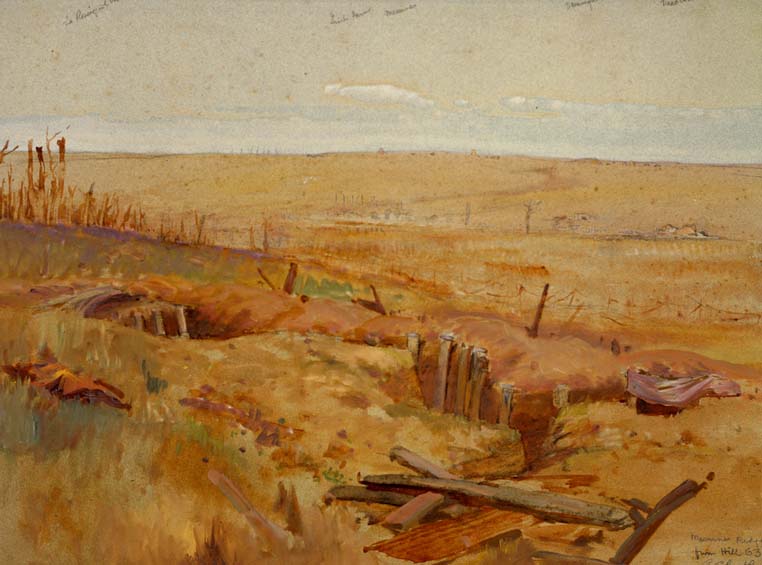
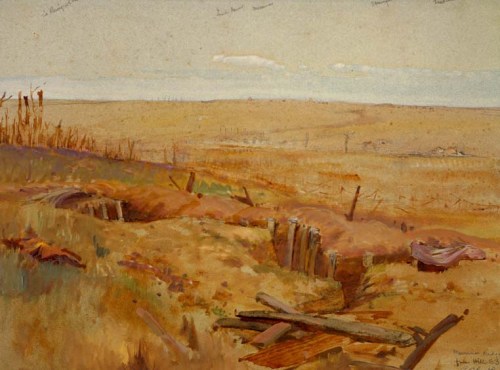 Second Lieutenant Oswald Gillott’s last day on Earth was June 7th 1917, coincidentally no doubt, the first day of the successful attack on the Messines Ridge. The assault was preceded by the detonation of nineteen large mines, in what was described at the time as “the loudest explosion in human history”. Oswald, as a member of the Royal Engineers, may well have been involved in this activity when he was killed. On the Commonwealth War Graves Commission website there are a mere three pages of Gillotts, with only thirty two men of this name killed. Oswald Gillott lies in the Messine Ridge British Cemetery in Mesen, West-Vlaanderen in Belgium along with the 577 of his colleagues whose remains have been identified.
This slideshow requires JavaScript.
Second Lieutenant Gillott, aged twenty seven was one of a trifling 24,562 casualties, as the British under Field Marshal Herbert Charles Onslow Plumer, 1st Viscount Plumer, GCB GCMG GCVO GBE slowly began to learn how to fight battles at much lower costs than previously. (Battle of the Somme, 623,907 dead).
The other side of the coin, of course, is the fact that if the Field Marshall and his lordly colleagues are not much more careful with the lives of their social inferiors, they will risk actually running out of men. The 623,907 men killed in the Battle of the Somme is a catastrophe, but the apparently much lower figure of 24,562 killed during the assault on Messine Ridge could well be regarded as every single man in a town the size of, say, present-day Arnold or Newark-on-Trent.
One set of initials I have not dealt with. That is F.C.Mahin, one of the High School’s very few Americans, and I will talk about his incredible and hitherto completely unknown life in another blog post.












 John Knifton