Tag Archives: Singapore

Newark Air Museum (1)

The original Newark, or Newark-on-Trent, is a market town in Nottinghamshire in England. It stands on three important routes, namely the River Trent, the ancient Great North Road or A1, which ran from London to Edinburgh and it is also on the main East Coast railway line:

Newark has an historic castle which was “slighted” or put beyond military use in 1648.

Outside the town, Newark also has an air museum.

Nowadays going out to visit anywhere is not really feasible for me, so my daughter went as my ambassador, accompanied by her boyfriend, urged to take photographs of whatever she thought was a warplane. And she is no aviation expert, but she certainly knows a hawk from a handsaw and a Halifax from a Hastings. She wouldn’t know a Hampden from a Hereford, though, or a Harrow from a Sparrow or a Bombay. Who would?

The majority of Newark’s aircraft are from the 1950s and the Cold War. Here’s an English Electric Canberra PR7, the photo-reconnaissance version. This one, WH 791, served at RAF Tengah in the western part of Singapore. Top speed : 580 mph
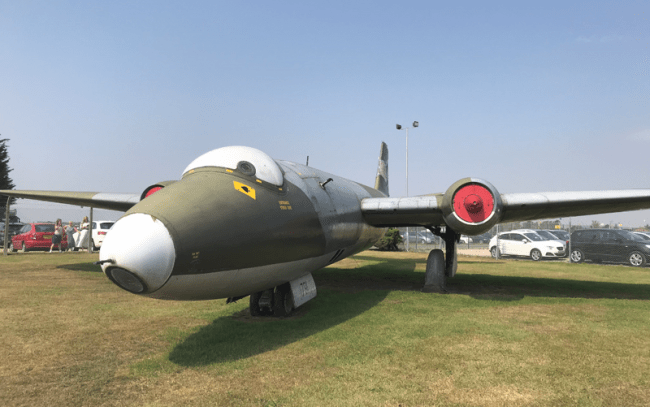
This is a Gloster Meteor two seat conversion trainer, the T7. This particular aircraft, VZ634, was in service from 1949-1958 with 247 Squadron, 609 Squadron, 141 Squadron and 41 Squadron. As a fighter, the Meteor was used by 16 foreign countries and Biafra. Top speed : 585 mph

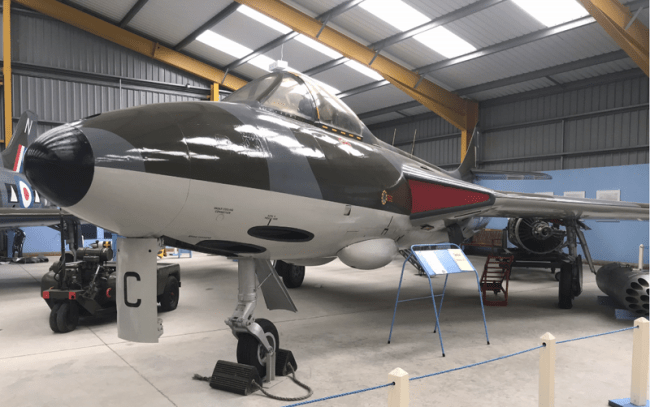
Here’s another fighter, the Hawker Hunter. At Newark, it’s an F.1 interceptor fighter, waiting eagerly for those Bears, Bulls and Badgers to show their evil Commie faces over the North Sea. Hunters were used by 21 other countries and had a Top Speed of : 623 mph. Nowadays everybody seems to have forgotten “The Black Arrows” aerobatic team and their manœuvre with 22 aircraft, certainly a world record at the time. There’s a link here.
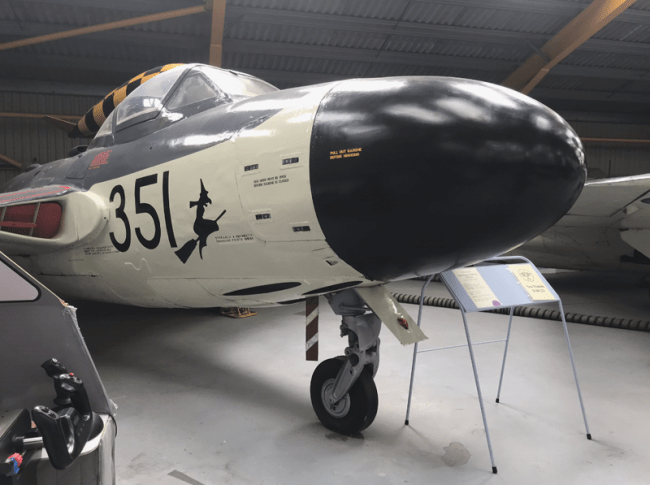
The de Havilland Sea Venom was a two seater shipboard strike fighter, one of the comparatively few aircraft to have been twin boom. At Newark there’s an “FAW.22” or “Fighter All Weather”, WW217, one of only 39 built. There’s a family tree here, starting with the de Havilland Vampire, then the Venom, the Sea Venom and finally the Sea Vixen which operated from carriers as late as 1972.
This is the Avro Shackleton, the last in the line which ran from the Avro Manchester to the Avro Lancaster to the Avro Lincoln and finally to the Avro Shackleton. It was a long-range maritime patrol aircraft, and was used by the British and the South Africans. Top speed : 302 mph

Here’s a closer view of some of those propeller blades:

The only American warplane here is the North American F-100D Super Sabre, a single-seat fighter-bomber. This individual was used by France’s Armée de l’Air, and served in France, Germany and the old French colony, Djibouti in the Horn of Africa, today’s Somalia. In total, it had a career of 4,459 hours in the air. Top speed : 924 mph, Mach 1·4.
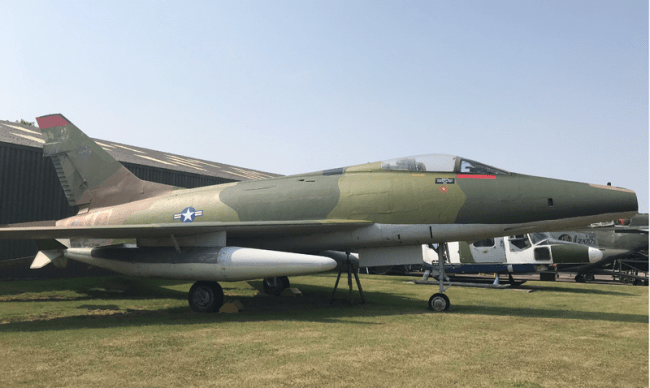
I think it was an F-100 that dropped the napalm in “Apocalypse Now”:

Next time, a look at some of Newark Air Museum’s civilian aircraft, some more of its foreign aircraft and its various bits of aircraft.
20 Comments

Filed under Africa, Aviation, Bomber Command, Film & TV, France, History, military, Personal

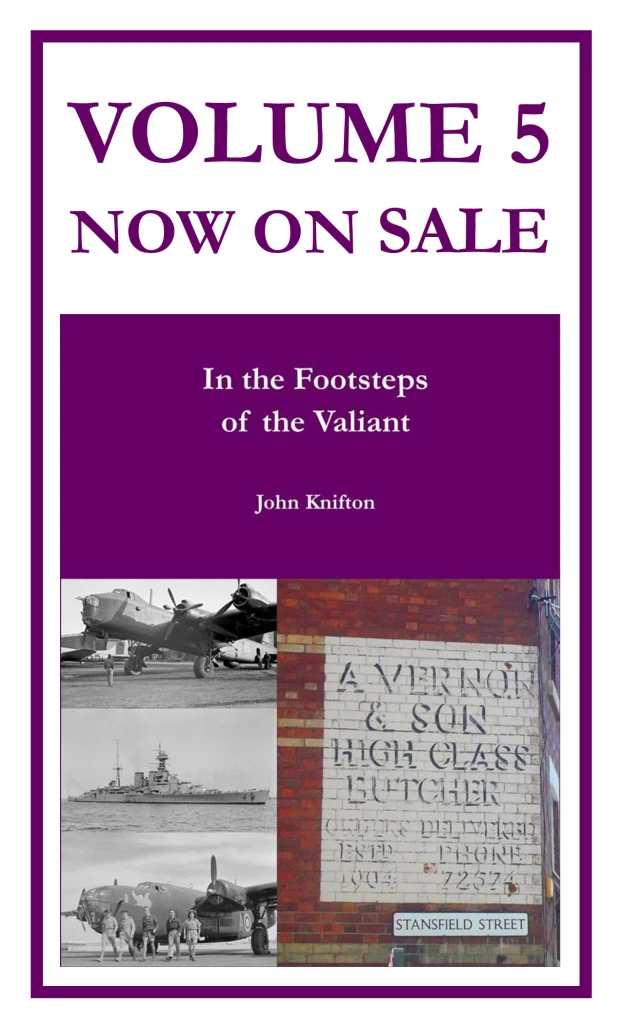
In the Footsteps of the Valiant (Volume Three)

There must have been many people out there who thought that we were not going to publish any more volumes about the Old Nottinghamians of all ages who sacrificed their lives in the cause of freedom between 1939-1948.

But, while Covid-19 seized the world in its deadly grip, our work continued, albeit at a slower pace. And all those efforts have now ended with the publication of the third volume, detailing 24 of the High School’s casualties in World War II. Don’t think, incidentally, that we were running out of steam and had nothing to say. All five volumes have been deliberately constructed to contain the same amount of material as all of the others. And that material is all of the same quality.

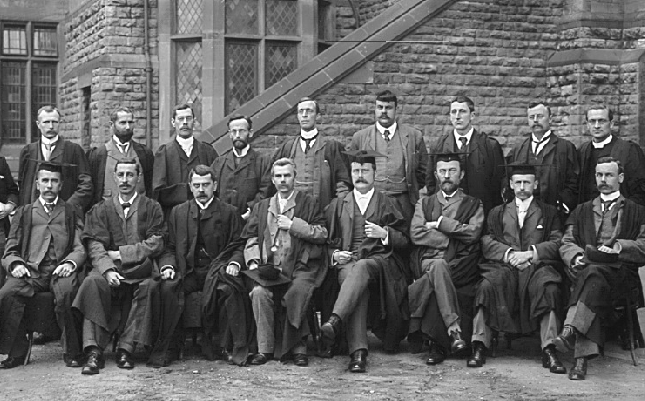
This volume, therefore, portrays the families of these valiant young men, their houses, their years at school with Masters very different from those of today, their boyhood hobbies, their sporting triumphs and where they worked as young adults and the jobs they had. And all this is spiced with countless tales of the living Nottingham of yesteryear, a city so different from that of today. And as I have said before, “No tale is left untold. No anecdote is ignored.” Here are the teachers that many of them knew;

And as well, of course, you will find all the details of the conflicts in which they fought and how they met their deaths, the details of which were for the most part completely unknown until I carried out my groundbreaking research.

These were men who died on the Lancastria in the biggest naval disaster in British history or in the Channel Dash or in the Battle of the East coast when the Esk, the Express and the Ivanhoe all struck mines. Some died flying in Handley Page Hampdens, or Fairy Barracudas, or Hawker Hurricanes, or Avro Lancasters or Grumman Wildcats or even a North American O-47B. One casualty was murdered by a German agent who sabotaged the single engine of his army observation aircraft. One was shot by the occupant of a Japanese staff car who was attempting to run the gauntlet of “A” Company’s roadblock. One was the only son of the owner of a huge business that supported a small local town, employing thousands. When the owner retired, the factory had to close. He had no son to replace him. His son lay in a cemetery in Hanover after his aircraft was shot down. Thousands of jobs were lost. And all because of a few cannon shells from a German nightfighter. The work of a few split seconds.

They died in the Bay of Biscay, the Channel, the North Sea, Ceylon, Eire, Germany, Ijsselstein, Kuching, Normandy, Singapore, Tennessee. None of them knew that they were going to die for our freedoms. And certainly none of them knew where or when.

But they gave their lives without hesitation. And they do not deserve to be forgotten. That is why this book exists, and so does Volume One, and Volume Two and in due course, so will Volumes Four and Five.

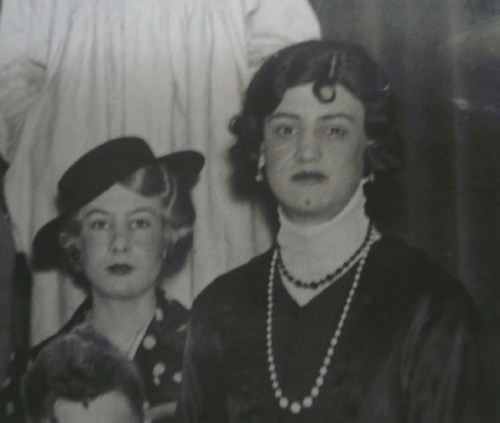
We should never forget this little boy (right), playing the part of Madame Rémy, and killed in Normandy not long after D-Day:

We should not forget this rugby player, either, killed in a collision with a Vickers Wellington bomber.

We should not forget this young member of the Officers Training Corps (front row, on the left). A mid-upper gunner, he was killed in his Lancaster as he bombed Kassel, the home of at least one satellite camp of Dachau concentration camp:

We should not forget this young miscreant, either, mentioned in the Prefects’ Book for “Saturday, October 20th 1934. “Fletcher was beaten – well beaten.” By June 23rd 1944, though, he was dead, killed with twelve others when two Lancasters collided above their Lincolnshire base. He wanted to have a chicken farm after the war. Not a lot to ask for, but he didn’t get it:

We should not forget the Captain of the School, killed when HMS Express hit a German mine:

We should not forget the son of the US Consul in Nottingham, the highest ranked Old Nottinghamian killed in the war:

And we should not forget any of the others, wherever they may turn up. Killed by the Japanese in Singapore :

Killed in a road block firefight in Burma:

And this little boy, still years from being shot down on his 66th operational flight  by Helmut Rose, in his Bf109, German ace and holder of the Iron Cross First Class. And yes, that is the little boy’s Hawker Hurricane:

This slideshow requires JavaScript.

The First XV player, proud of his fancy jacket:

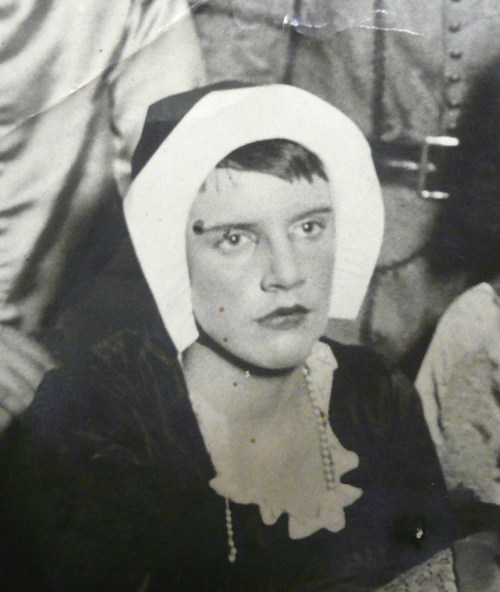
A young man tricked into having to dress up as a young woman in “Twelfth Night”:

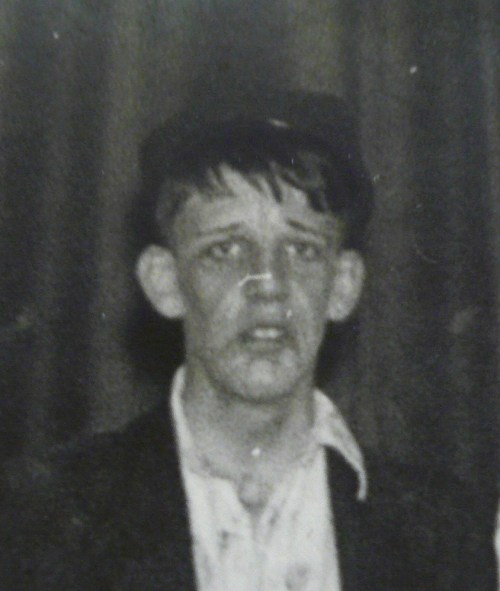
Two years later, getting a part  as “Jean, a veritable Hercules….a convincing rural chauffeur”, in “Dr Knock”. Except that all of your friends think that you have got the part of the village idiot:

And a very frightened village idiot at that.


Please note:

All three of the titles published in this series so far are on sale with both Amazon and Lulu.  All royalties will be given to two British forces charities, and if this is important to you, you will prefer to buy from Lulu. This will generate a lot more revenue.

For example,

If Volume 3 is bought through Amazon at full price, the charities will get £1.23 from each sale.
If Volume 3 is bought through Lulu, that rises to £9.48.

Incidentally, if you see the price of the book quoted in dollars, don’t worry. The people at Lulu periodically correct it to pounds sterling, but it then seems to revert to dollars after a few days, although nobody seems to know why.


23 Comments

Filed under Aviation, Bomber Command, cricket, Football, History, military, Nottingham, The High School, the Japanese, Writing

the Supermarine Southampton at Hendon

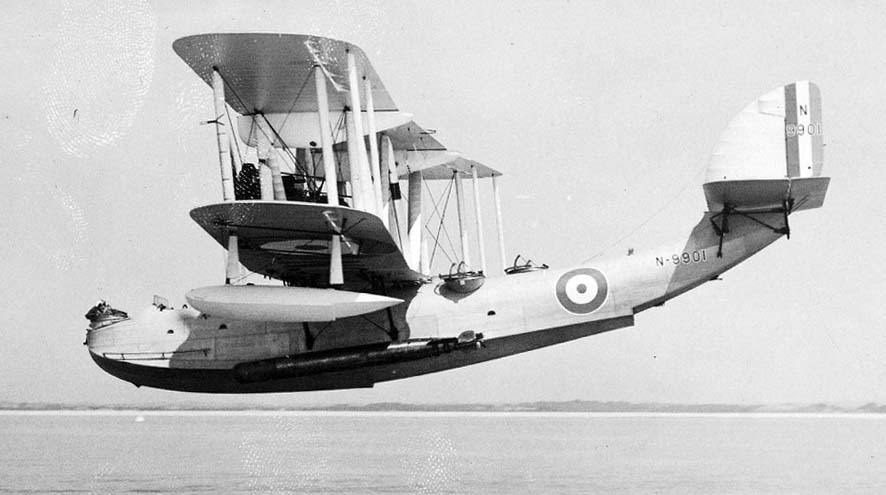
You don’t always expect to see a flying boat in a museum in London, but the RAF Museum at Hendon has, among many other seaplanes, a Supermarine Southampton, a type which, between the two wars, was an extremely successful aircraft in Royal Air Force service:

The Southampton was designed by the famous R J Mitchell and it immediately brought Mitchell’s name to the fore as an aircraft designer. At the same time, it also gave Supermarine an enormous amount of publicity, affording a much greater chance that their later designs might be approved:

The first 18 examples of the Mark I were made completely of wood. They were delivered in August 1925. The RAF, however, was now beginning to express a growing preference for metal aircraft and when the Mark IIs were delivered, they were made entirely of metal. They were much preferred to the older wooden Southamptons which, from 1929 onwards, were all gradually converted to have metal hulls:


The aircraft was amazingly durable and reliable and each one had an average service life of around eleven years. One source of their fame was a series of long distance formation flights to many different parts of the world. In 1927-1928, the “Far East Flight” travelled from Felixstowe to the Mediterranean and then on to India and Singapore, a total of some 27,000 miles:

This slideshow requires JavaScript.

The museum aircraft is a Mark I, N9899, from the very first ever batch of Mark Is which were numbered N9896-N9901. It was used by No.480 (Coastal Reconnaissance) Flight at Calshot in Hampshire. Here’s a general view. Not many aircraft have a ladder. At least, not on the outside.:

On September 7th 1925 the crew had an engine failure just off Wicklow Head in Ireland and had to be towed more than one hundred miles over the sea to Belfast Lough by HMS Calliope. On November 23rd 1928 N9899 was one of three Southamptons moored near Portland when it broke loose from its moorings in a gale and crashed violently into a breakwater. Only its engines were salvageable. In 1929 it was purchased privately so that its fuselage could be used as a houseboat, one of five flying boats to suffer such a fate at this time. N9899 then seems to have been towed to Felixstowe where it remained until the RAF bought it back and began a restoration scheme in the late 1960s.

What struck me about the aircraft was its vast collection of amazing old fashioned rivets and apparently heavy ironwork. Here is a closer view of the hull, revealing just how many rivets are holding the aircraft together. I haven’t bothered to count, but I bet there must be the best part of a couple of thousand. It’s a good job Mitchell’s most famous design, the Spitfire, was not too much like a Southampton!:

Notice the beautiful flowing lines of that tight, superbly graceful, bottom, or perhaps “hull” would be a better word. The museum still has that purple light to stop excessive fading of fragile old colours. I would think that aviation experts will see in the Southampton much of the design that Mitchell took forward to the Walrus.

This photograph shows a view from the rear, with the squadron letters of QN. I have the distinct feeling that every one of those silver metal panels might have a few rivets. The section around the gun turret, above the roundel, certainly does:

Here’s my final view, with the wheels used to bring the aircraft into the museum still in situ. They are not part of the aircraft because the Southampton was a flying boat, rather than an amphibian like the Consolidated PBY Catalina, which had its own undercarriage:

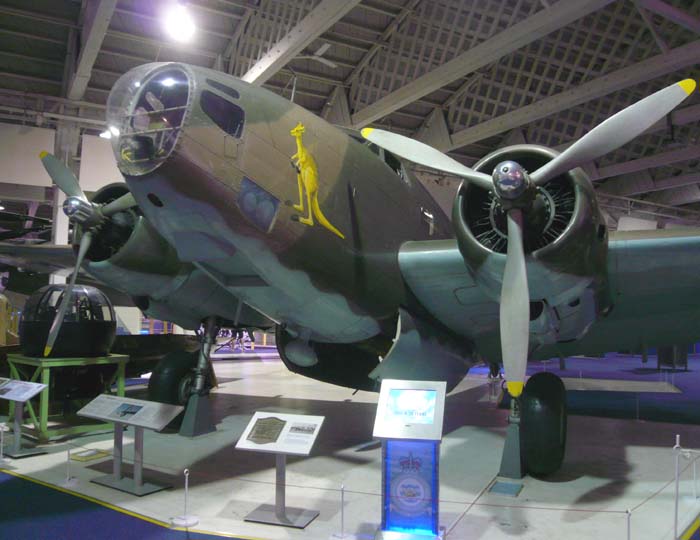
Notice behind the Southampton a Lockheed Hudson of the Royal Australian Air Force. Can you spot the kangaroo? Here’s a better view:

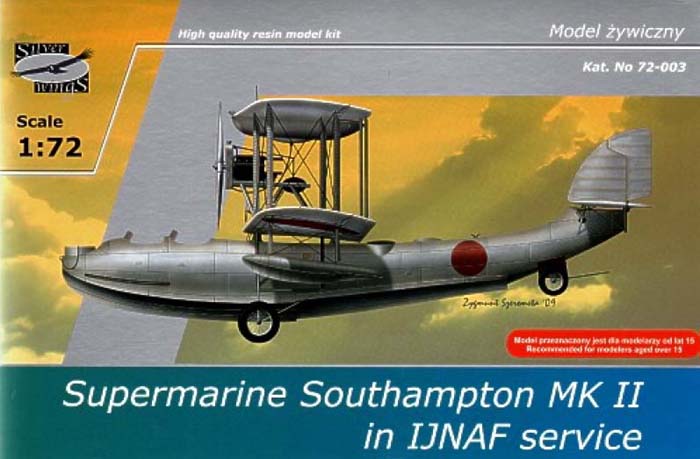
The Japanese used the Southampton as well as the RAF. Here’s a photograph of a modern day Polish construction kit:

I think that “IJNAF” stands for “Imperial Japanese Naval Air Force” (or something very like it.)


20 Comments

Filed under Aviation, History, Personal, Science