Tag Archives: Swarkestone Bridge

My Dad’s cars (1)

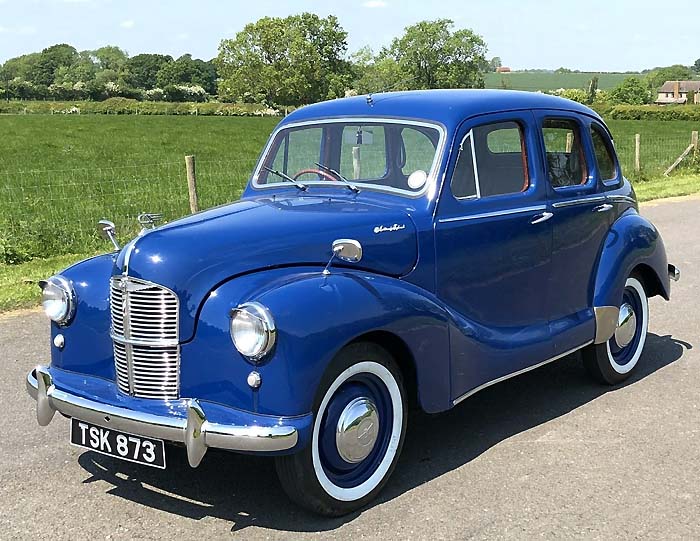
My Dad, Fred’s, first car was a Connaught green Austin A40 Devon, registration number “LXJ 701” (“seven-nought-one”). This car had been acquired in the early 1950s with the help of his in-laws, as a bargain for the newlyweds. It had previously belonged to the owner of a cement factory near Manchester, and for this reason, it proved almost impossible ever to get a good shine on the vehicle, as the painted surface had absorbed such a huge quantity of cement dust through being parked all day long in the office car park at the works. Here is a car of the correct colour, although it has been modified for use as a taxi:
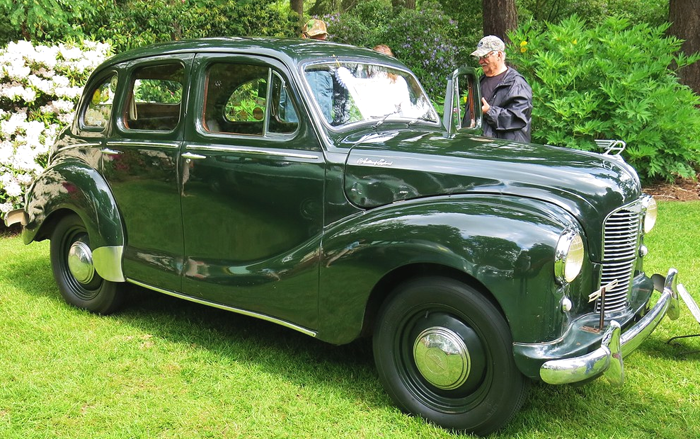
I really wish my Dad had bought an A40 of this revolting bright blue. And I’m an absolute sucker for white wall tyres:
Fred never seemed to use the car an enormous amount, but, like so many people during this era, we often went out for a drive as a family on a nice Sunday afternoon. I remember that on occasion we used to go out on trips towards Repton, but I cannot really recollect anywhere else that we went, although Fred assured me in later years that we had visited destinations as far afield as the church at Breedon-on-the-Hill, Calke, Staunton Harold and Swarkestone Bridge:

This slideshow requires JavaScript.

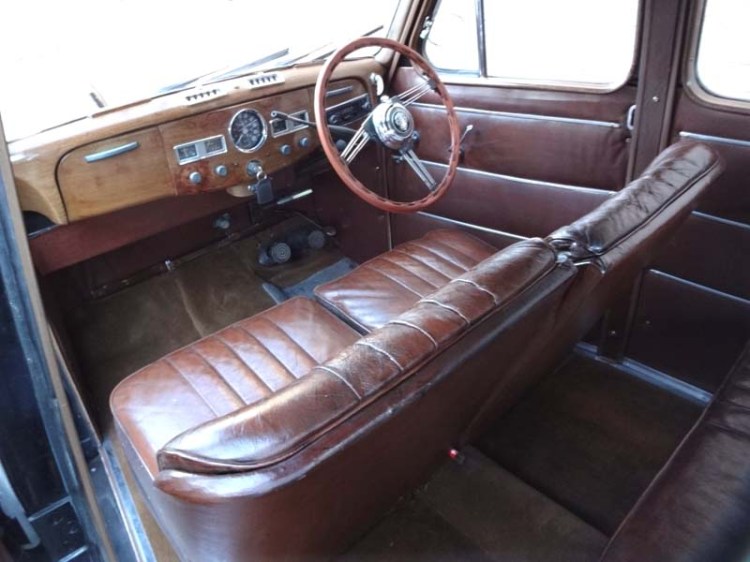
The one thing I do recall about these trips, though, was parking the car one day in a sunlit grassy field, and leaving all the doors wide open to let in the fresh air. The car had rich brown all leather upholstery, sewn lengthways in distinctive style:
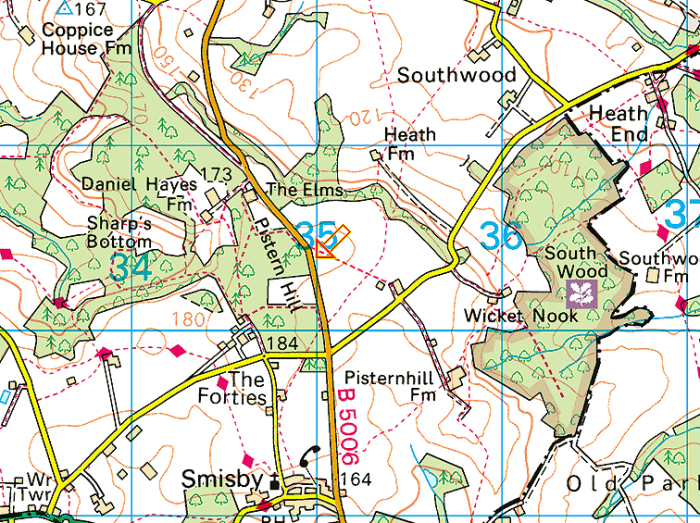
I must have been a very small boy indeed, when Fred had a crash in this car. We were out somewhere in the lanes around the village of Smisby, perhaps somewhere towards Pistern Hills, and I remember that at a T-junction, we failed to turn, but just drove straight on, ploughing into the bank below the hedge at the far side of the road. The Orange Arrow points at Pistern Hills where this accident may have taken place:
In the days before seat belts, I was projected forward, and the ignition key somehow smashed into my forehead between my eyes. I certainly was not taken to hospital with what in the 1950s was just a minor injury, but instead, I was transported to the nearest country cottage at the side of the road. All that I can recall now is sitting at a wooden table in an almost bare kitchen. A woman came in. She was wearing a white blouse and a voluminous long skirt. She was plump and reached up to the wooden shelf which ran all the way around the room, some six feet off the ground, because she had to stretch to reach the tin she was after. She passed it to me. It was a tin of biscuits and she let me eat a few. I do not remember any more. I still have the scar on my forehead.

18 Comments

Filed under History, Humour, my Dad, Personal

Fred walks home on leave

One beautiful summer’s afternoon, Fred was returning on leave from his airbase at Elsham Wolds in north Lincolnshire. The orange arrow is RAF Elsham Wolds, and Fred departed from a station near Elsham before continuing to Lincoln, to Nottingham and finally to Derby:

Derby was, and is, a huge station by English standards:

Fred arrived on time at Derby station, but there were no more trains to take him on to Burton-on-Trent (bottom left on the map above). He decided therefore to walk the twelve miles back home to the little mining village of Woodville, something which he had often done in the opposite direction in pre-war years, when he had been to watch Derby County play football at the Baseball Ground.

It was a Sunday, and after a couple of miles or so, Fred crossed the River Trent over the five spans of Swarkestone Bridge:

Fred then continued across the meandering  stone causeway, built by the Saxons, which crosses the floodplain of the River Trent. Things are a little bit different nowadays:

Or at least, things are a little different from what Fred would have known. These two photographs are taken from the same spot, but are separated by at least a century :

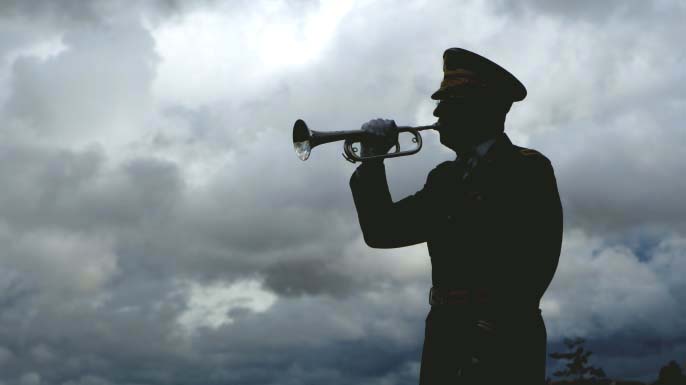
After the meandering charms of the ancient crossing, Fred then set off to the right, up the hill, towards the next village of Ticknall. As the evening moved slowly ever closer to sunset, everything grew very calm and very still, the light hovered on the edge of dusk, and just as he reached the top of the first long steady rise, Fred could hear, ringing out through the silence, the bugle sounding the Last Post at the nearby German prisoner of war camp:

Fred stopped to listen as the familiar notes echoed in evocative fashion over the late evening landscape, as the bright light of the sinking sun illuminated a pastoral scene in an England which is now long gone and will never return. It was a uniquely beautiful and unrepeatable moment in his life:

During the rest of his lifetime, Fred was never aware of a couple of facts about this moment. Firstly, he always thought that the prison camp was at Castle Donington but in actual fact it was somewhat closer to where he was, at Weston-on-Trent. I know that because I have just looked at the list of all the POW camps in the country.

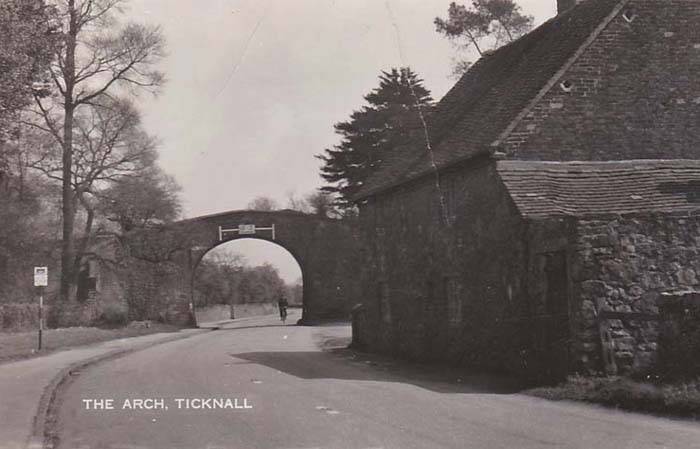
Secondly, as he walked through the village of Ticknall, under the bridge which used to carry the railway to the limestone quarry…

…as he walked past St George’s Church…

….he did not know that the building held, hidden away somewhere in a safe place, a great many records of his own family history. He did not know that his family had been baptised there, married there and buried there for centuries. They included…

his own grandfather, John Knifton (1850-1934), John’s father, Thomas Moor Knifton, and his mother, Jemima Knifton, and her mother, Katharine Knifton, and then her father, Richard Kniveton and lastly, George Kniveton, born, in all probability, before 1700.

Another England which is now long gone and will never return:

Fred would have walked past all the old water pumps at the side of the road, every fifty yards through the whole village. I bet some of them were still working then. If Fred had done his long walk previously, he might even have known which pumps could slake his thirst after perhaps seven or eight miles of walking:

Fred could not possibly have known, though, that only fifteen years later, in his Connaught green Austin A40 Devon saloon, he would drive, not walk, through the village, and his young son would count the pumps out loud as they passed along. Fred didn’t know that that was going to happen in the near future. He was too busy in the present, fighting to make sure that England had a future:


16 Comments

Filed under Aviation, Bomber Command, History, Personal