Author Archives: jfwknifton

Staff cricket : the Golden Years (4)

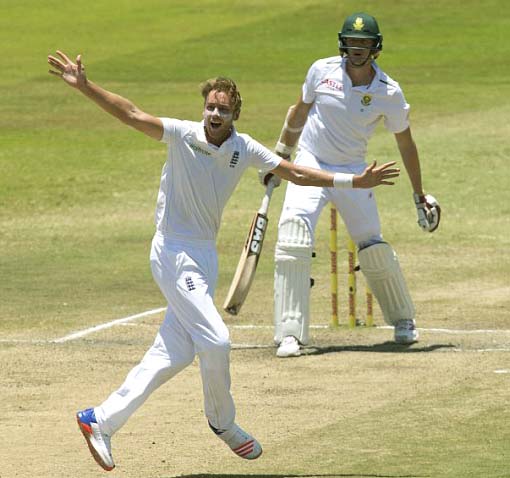
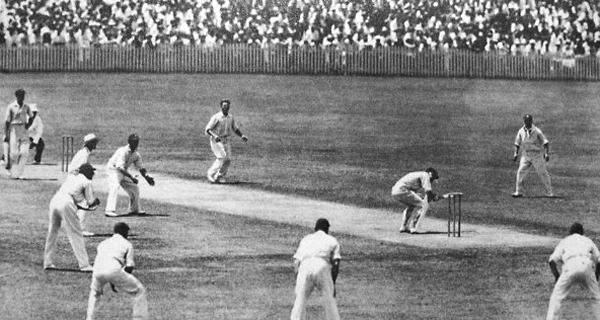
I know of only one photograph of the staff team in action. I don’t remember who the opponents were, but I believe the picture was taken by Allan Sparrow who was very keen on photography and who ran the School Photography Society which had its very own dark room in one of those tiny rooms off the very short corridor which leads to the Language Laboratory. Anyway, here is that photograph of a split second in time, forty years ago:
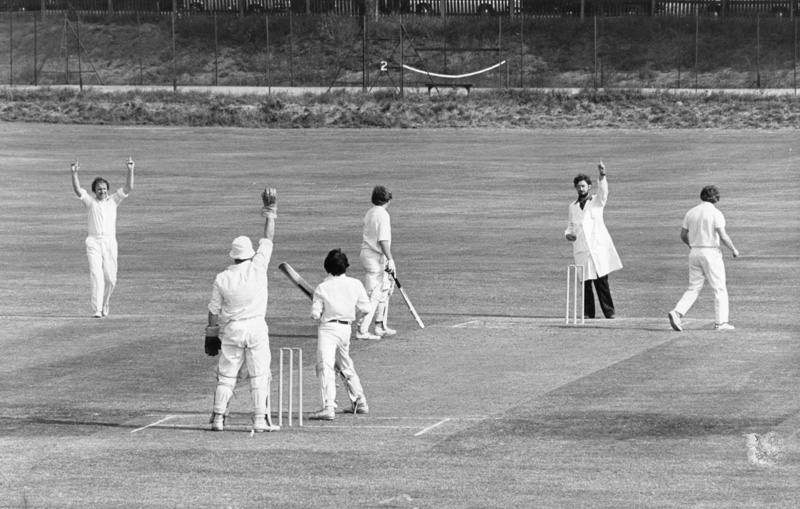
The batsman at this end, his name, alas, unknown, has been, literally, caught out, and the bowler, Clem Lee, makes his loud appeal, “Howzat !” to the Umpire. This is Me, dressed as Ché Guévara in a Surgeon’s outfit. On the left, Tony Slack, who, in one game he played, once hit the England fast bowler Freddie Truman to the boundary for four runs, adds his voice to the appeals. The only one not appealing is the batsman near me, who just turns around to await my decision. My raised index finger signifies “Out!”

Here’s the second photograph:

This photograph shows the staff team, I suspect, on the same summer’s evening as the previous one. In the back row, on the left, is three quarters of Chris Smith, the English  teacher who left the school as long ago as 1992:
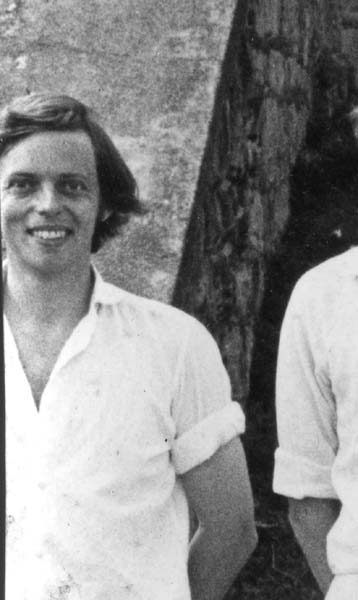
Next to him is Richard Willan, the best Chairman the Staff Common Room ever had:

Then there is Phil Eastwood, who must be very pleased indeed to see Manchester City doing so well:

Then Bob Dickason, teacher of German and French, who I haven’t seen for a very long time. He left in 1983, to go and teach in France, I believe:
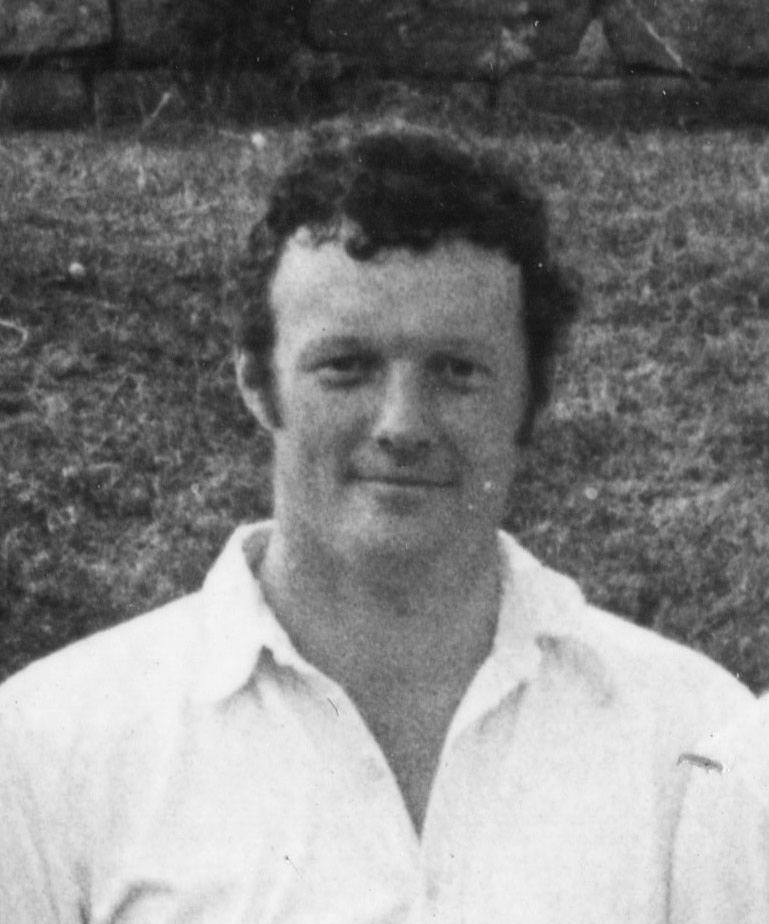
Then there’s Clem Lee, the Head of Games:
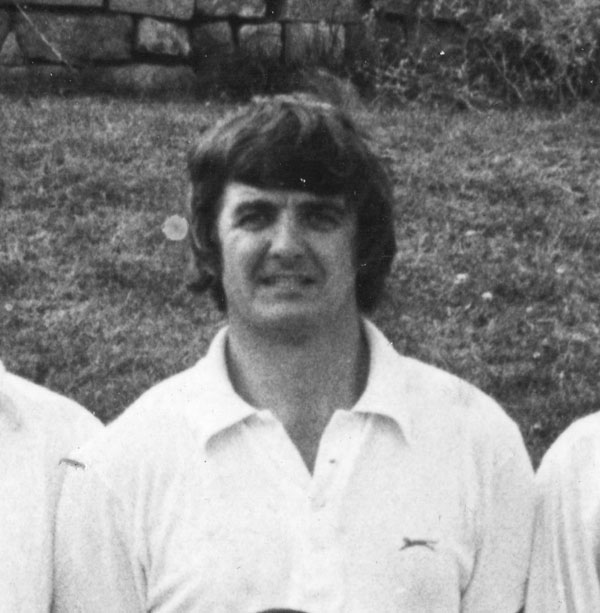
There’s Ray Moore with his hair much shorter than when he first arrived. He went to West Bridgford School, I have heard, and had unbelievable success running the girls’ football team.
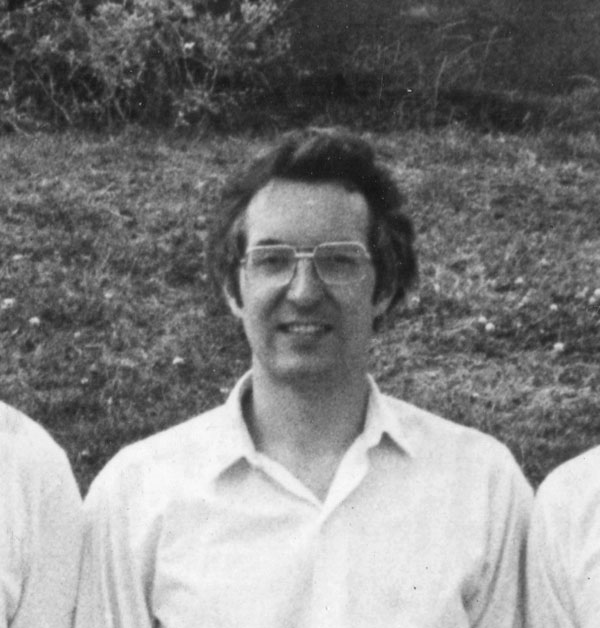
Then the best man at our wedding, Bob Howard, a friend I miss a lot and who I wish I had seen much more of over the years:
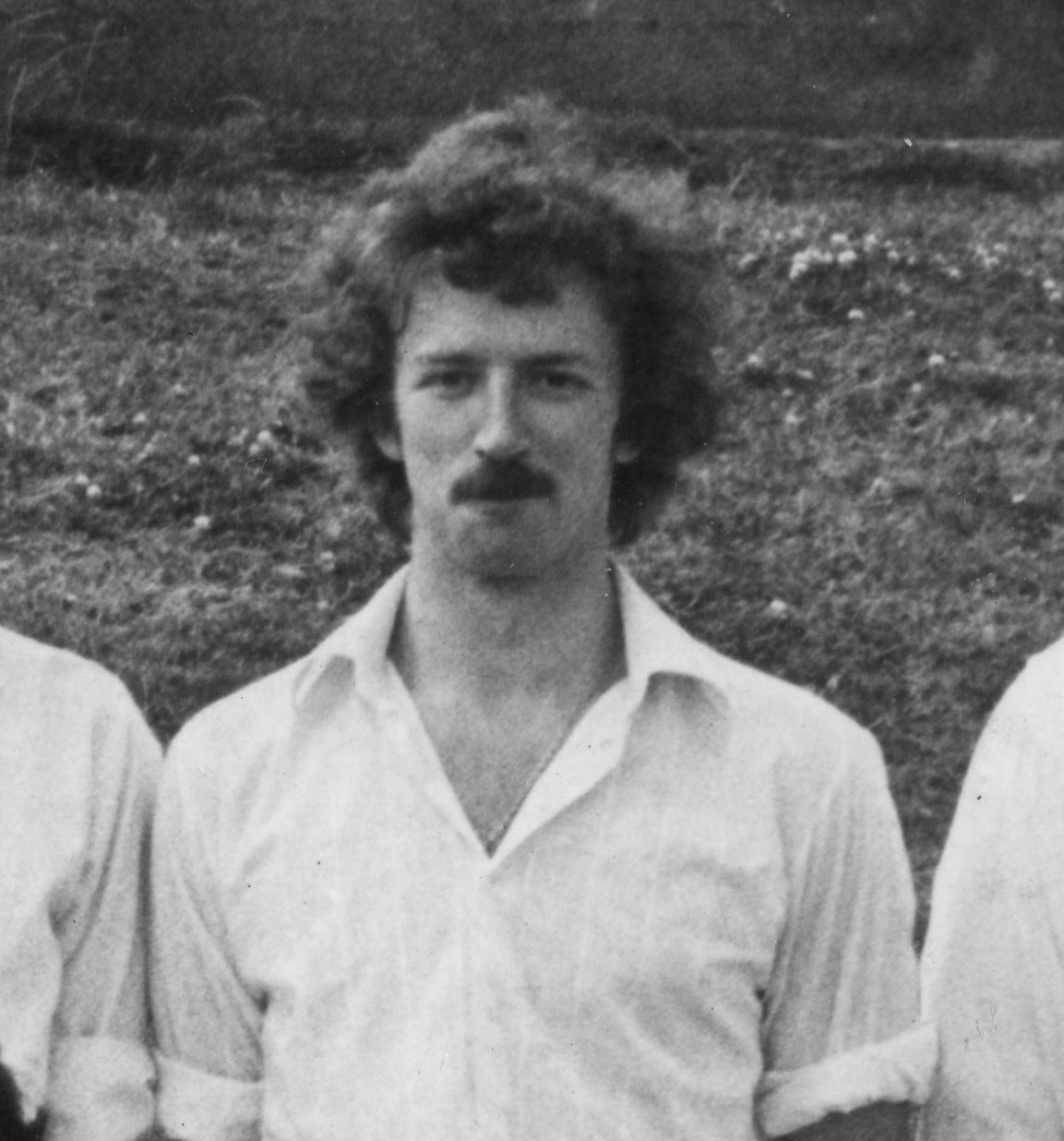
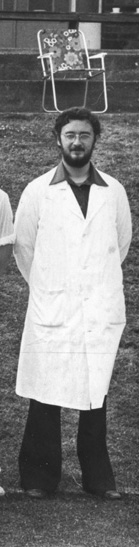
Then Me. That umpire’s coat must be the only thing I have ever worn that’s been too big for me. It also gave me the magic power to balance things on my head with consummate ease:
On the left of the front row is Norman Thompson the Head of Economics who taught at least one future Chancellor of the Exchequer:

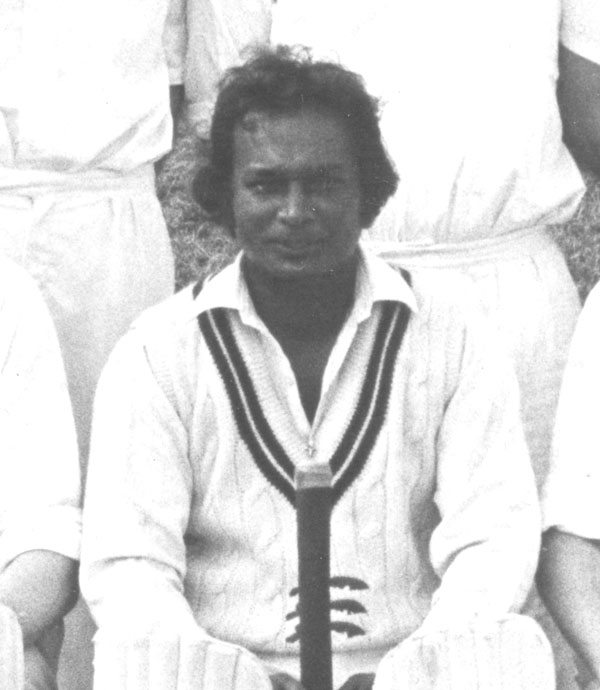
Next to him is Harry Latchman, the Groundsman and Cricket Coach. He was the only proper cricketer in the team, having played for both Middlesex and Nottinghamshire and in Minor Counties cricket, for Cambridgeshire. He was elected President of Middlesex County Cricket Club in 2015:
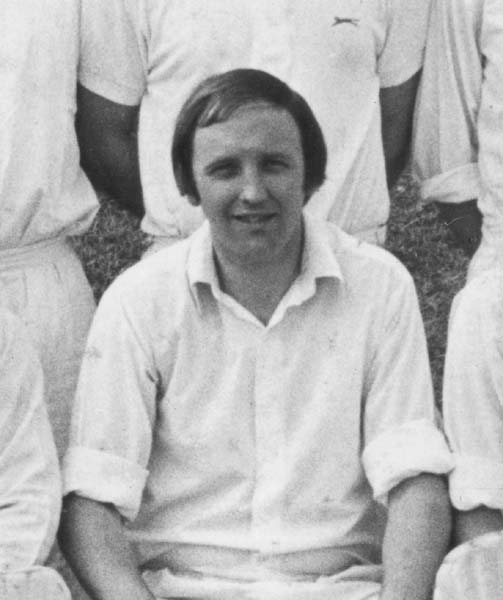
Then comes Tony Slack:
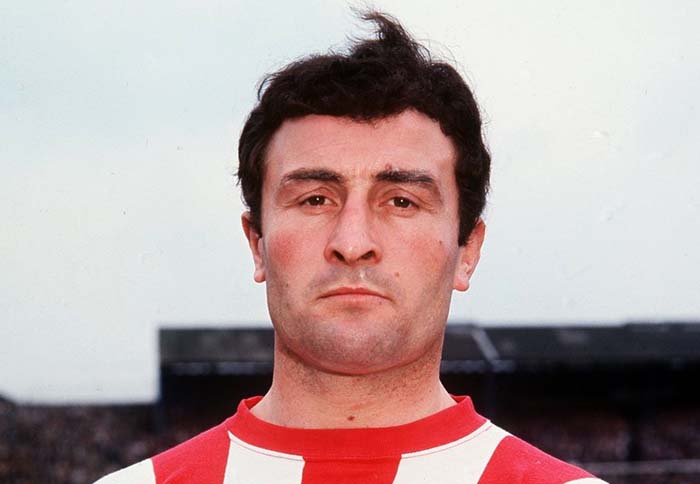
He has already appeared in a post about the First XI football team. In fact, a number of posts about the First XI football team. One. Two. Three.Tony taught Chemistry and then he took charge of the School’s computers. More impressive, he played for the reserves at Rotherham United, and in one game was personally threatened by Charlie Hurley, Sunderland’s Player of the Century:
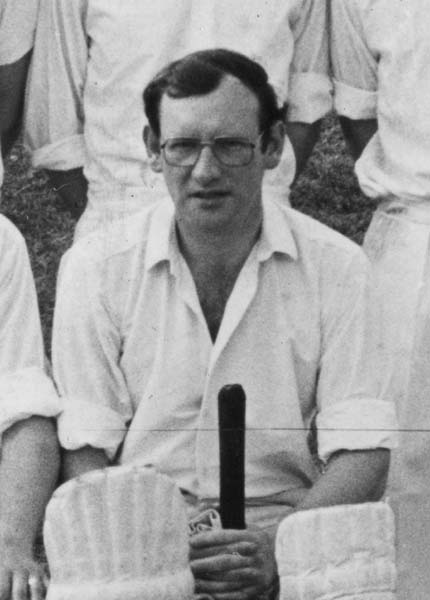
The final player is the Team Captain, David Phillips, the Maths teacher, who used to run both the Second XV and the Second XI if my memory serves me right. He worked at the High School for 37 years where he was an important rôle model for vast numbers of junior boys:
I don’t know if the staff still have a cricket team. The summer 2017 would mark their 70th Anniversary if they still played any fixtures.

22 Comments

Filed under History, Humour, Nottingham, Personal, The High School

The Starfish Thrower (4)

In my previous posts about St Ives, in western Cornwall, I mentioned a good many of its attractions:

This slideshow requires JavaScript.

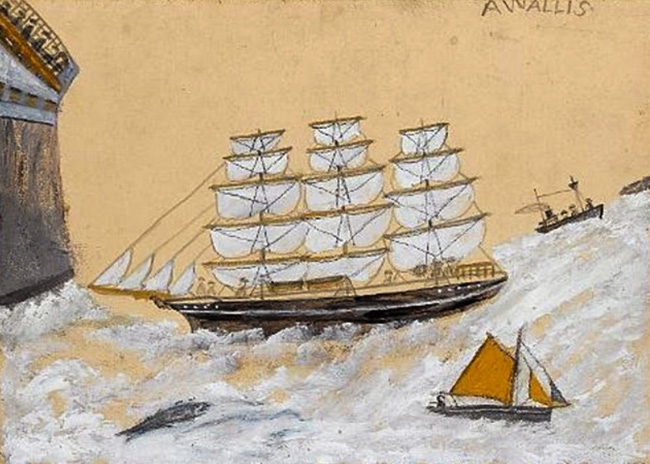
I also mentioned Alfred Wallis, the most famous artist to have lived and worked there. Alfred was born in Devon in 1855 but moved with his parents to Penzance at quite an early age. He became a deep sea fisherman and sailed on trawlers as far away as Newfoundland. When he was 20 he married Susan Ward who was then 41 years of age. Alfred still worked as a fisherman, but on land he was also a labourer and a dealer in marine supplies.  Around this time, the family all moved to St Ives. As he grew older, Alfred worked for a local antique seller and it was perhaps this which pointed him towards painting. After his wife died in 1922, he began to paint, making use of the limited number of colours available in chandlers’ shops to paint ships and boats. Here he is as an old man and a young artist:

Instead of canvas, Alfred made use of scraps of cardboard which had been used as packaging.

Here are some of his paintings. This is called “Windjammer and Cutter”:

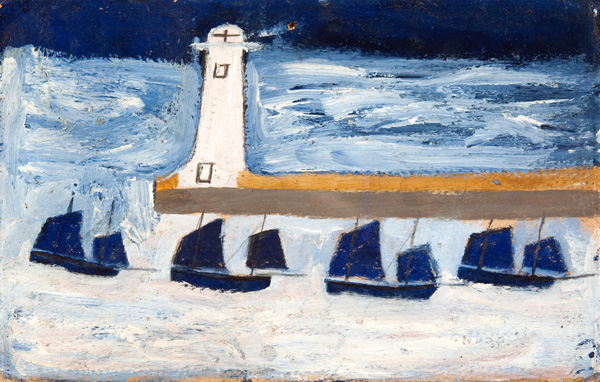
This is called “Four luggers leaving a harbour”:

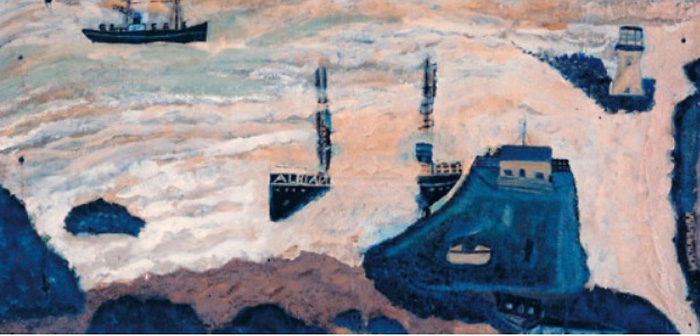
This one is “Wreck of the Alba”. It is possible to recognise Godrevy Island, the beach at Porthmeor, and The Island with the Coast Guard Lookout:

“The Hold House Port Meor Island” also has recognisable features of St Ives such as Porthmeor Beach, The Island with St Nicholas Chapel on the top as well as Wallis’ own house:

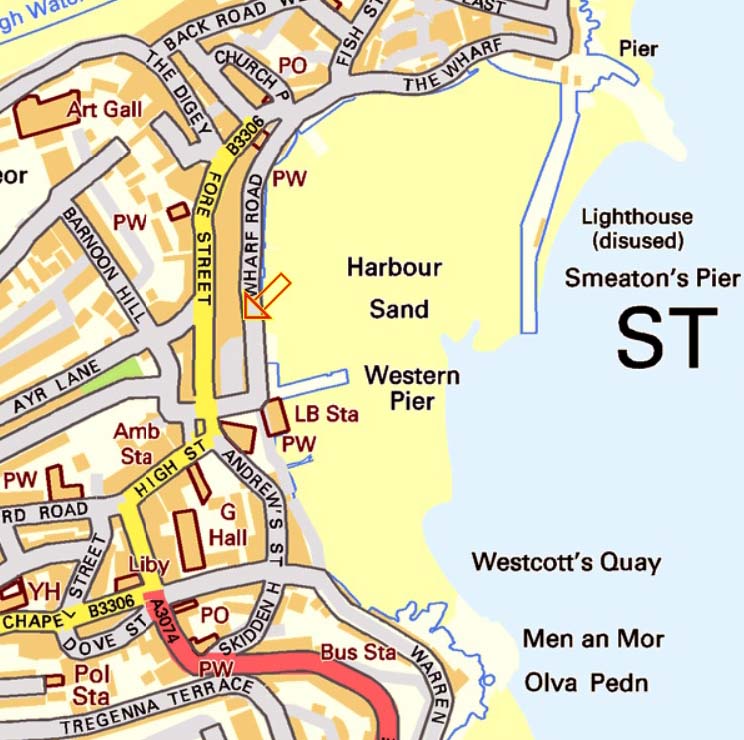
Here is the map of these two paintings. The white area at the top is called “The Island”:

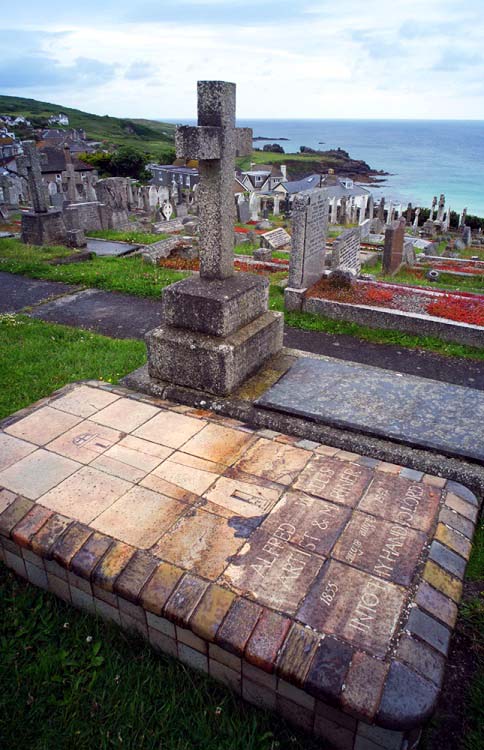
Here is Alfred’s rather unusual grave in Porthmeor Cemetery which overlooks the sea to the west of the word “(w)ater” on the map:

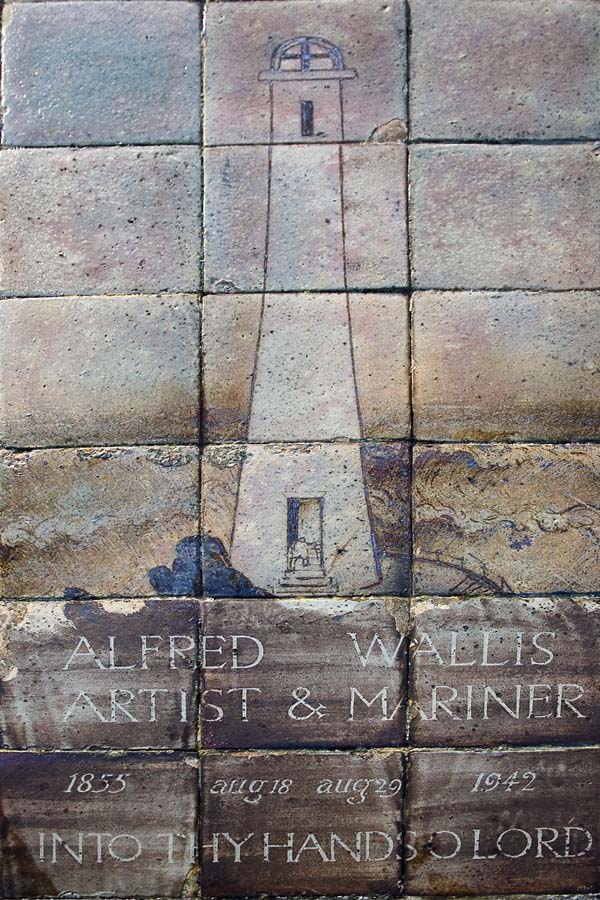
Here is the top, created in ceramic tiles by Bernard Leach:

One of the paintings above, and Wallis’ grave, both carry illustrations of a lighthouse. It is on Godrevy Island, a view which I have birdwatched for countless hundreds of hours over the years:

To study Wallis, your first port of call should be the Great Mother of Us All   After that, many of his paintings can be viewed at the Tate St Ives, which again, has a beautiful view over the Atlantic Ocean.

I have used some of these paintings at the Tate St Ives to illustrate this little introduction. If you are going to Cornwall this summer, make sure that you go there and check out this wonderful old man’s paintings. It’s certainly time better spent than wandering around the interminable surf shops and fast food eateries that are being allowed to spoil one of Britain’s most beautiful places.


8 Comments

Filed under Cornwall, History

We love you Stalin, we do, we love you Stalin, we do, we love you Stalin……

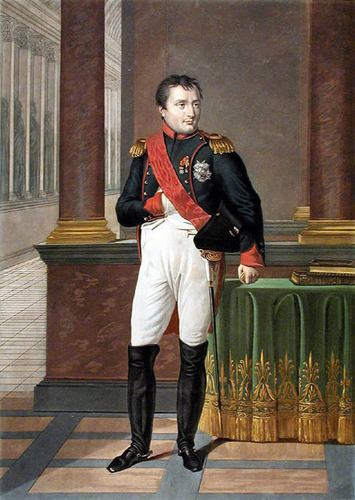
I found this picture when I was looking for illustrations of Napoleon for the blog posts about the great man I did a little while back. In actual fact I never used it:

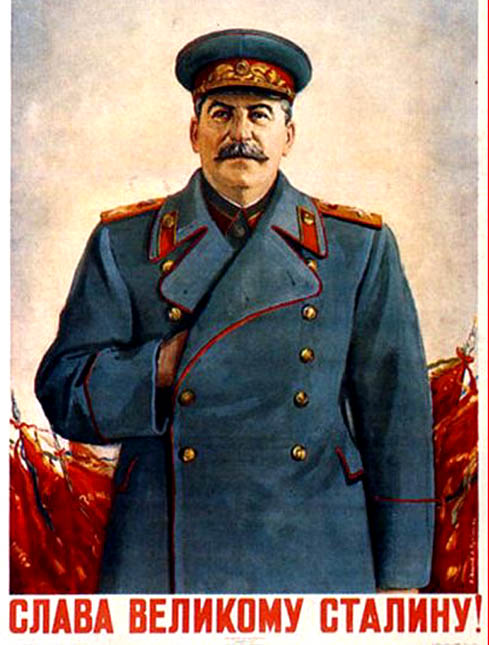
That pose of the hand inside the coat was considered quite normal and ordinary at the time of Napoleon, but it was used 140 years later by people who were far from normal and ordinary:

The Russian means “Glory to the Great Stalin!”

All things considered, I think that this is the best Stalin poster I found, though. Here it is:

The Russian means “Thank you, Beloved Stalin for a Happy Childhood!”

Runner-up was the uncaptioned:

That would look just wonderful on the back wall of one of Nottingham’s fast food shops.

“Thank you, Beloved Stalin for some Happy Fish and Chips! “

18 Comments

Filed under Criminology, History, Humour, Politics

The Starfish Thrower (3)

(If you haven’t already read “The Starfish Thrower (2)”, just let me say that you will understand this post a lot more easily if you do.)

OK. Back to St Ives:

And back to the moral of that story.

I was once told by a wise man, “You can always find a reason for not doing something”. And that is so true.

Why bother helping starfish?

It’s too hot

There are too many of them

What’s the point?

and so on.

But don’t just look for a reason to do nothing. It’s easy. Just throw the starfish back. You don’t need to train for 20 years and spend £300 on special equipment:

You don’t need to gather a crowd and you don’t need to wear special clothes:

And you never know. You might attract a helper:

Or get the grateful thanks of a mermaid.

With me, it’s always contributions to charity that I baulk at, whether that be my valuable time or my hard earned cash.

I give a little money to the Salvation Army because my Dad said that if you were freezing cold on a foggy station platform during the winter of 1943, the Salvation Army would always be there to help you. The Church of England never was. Nor was anybody else. So my Dad ordered me to donate a little money to them from time to time. But equally I could say to myself, “Well, I never saw my Dad give them any money himself, so why should I bother?”

In other words, “You can always find a reason for not doing something”.


Four days later, I was back in St Ives, wandering round a gallery stuffed with art that I like. Pictures of dogs, pictures of dogs playing cards, pictures of very large sharks, undersea divers, undersea divers being attacked by very large sharks, and most of all, aeroplanes.

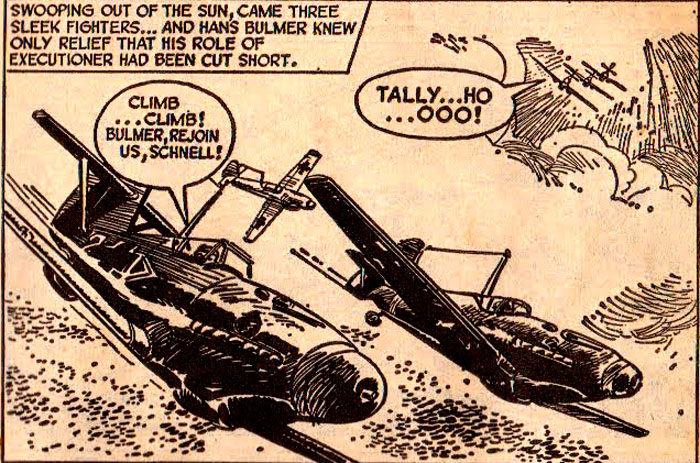
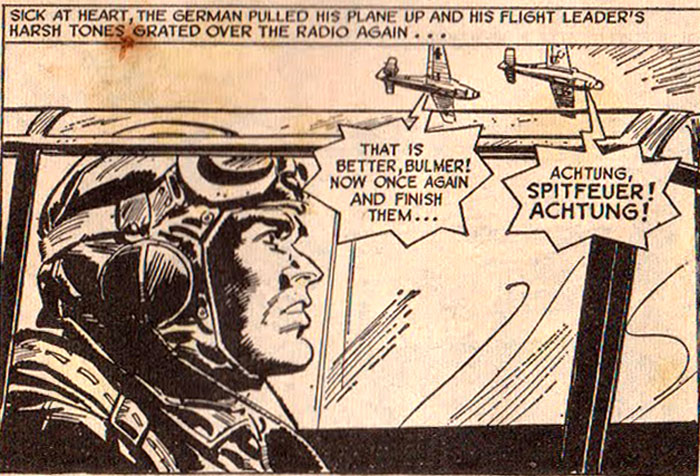
I used to read war comics when I was little. Ones like this…

And this…

And this…

Just look at that fantastic line “Spitfeuer! Achtung!!” I’m fluent in that kind of German. I often think I could have been a Kommandant of a Prisoner of War Camp, using just the German from war comics and films.

This art gallery had dogs and sharks and undersea divers. And it also had this wonderful print:

Nowadays, lots of Germans visit Cornwall and they visit St Ives. They all like to look around the art galleries.

Suddenly a little boy came in, closely followed by his Dad. He looked up at the aircraft print on the wall.

He pointed up at it and loudly and clearly, he said to his Dad, the line I had waited to hear somebody say for 50 years. He shouted:

“Achtung Spitfeuer!  Achtung Spitfeuer!  Achtung Spitfeuer!”


25 Comments

Filed under Cornwall, Cryptozoology, History, Personal, Wildlife and Nature

Staff cricket : the Golden Years (3)

In a previous post of this series on the heroic deeds of the staff cricket team, I had started going through a number of episodes which are also mentioned in my bestselling book, and my Hollywood and Bollywood screenplay, “Nottingham High School: an Anecdotal History”.  If I remember rightly I had just discussed how crap I was at cricket compared to one prodigiously gifted member of the team who merely needed me to be there to do the fielding while he and the other superstars did all the batting and the bowling and showed off all their talents.

Not that I felt insulted by his words. They did not make me angry. No, Not at all.

The next mention of staff cricket in the book comes on the evening of Wednesday, June 21st 1978.
By then, the staff cricket team had two usual umpires, the young idiot Me, and the much more experienced Allan Sparrow, a History teacher. Whereas the first named umpire, Me, lived in permanent dread of having to make a decision which would upset his elders and betters by sending them back to the pavilion some 96 or so runs short of their century, the senior partner,  Allan Sparrow, true to his own wonderfully analytical character, had no such scruples.
This particular day, in the very first moments of the game, the opposition’s opening bowler managed to trap, plumb in front of the wicket, with his score still stuck on zero, a very important batsman indeed. Standing far away at square leg, the young idiot, Me, thanked the cricketing gods that he was standing far away at square leg and would not be required to make a decision. The shrieked appeal  of “howzat” died away in the quietness of the evening:

Umpire Sparrow waited for a moment. Then he raised the dreaded digit to the skies. What an angry trudge back to the pavilion for a very disappointed batsman . It was the bravest thing I have ever seen in the history of sport.

During the following year of 1979, staff cricket continued on apace, counting among its stars such sporting luminaries as Chris Chittenden, Paul Dawson, Bob Dickason, Claude Dupuy, Phil Eastwood, Steven Fairlie, Simon Jenkins, Dave Phillips, Graham Powell, Tony Slack, Chris Smith, Roger Stirrup and Norman Thompson.

Here’s Bob Dickason, Phil Eastwood, Dave Phillips, Tony Slack, three quarters of Chris Smith, and Norman Thompson:

This slideshow requires JavaScript.

Claude Dupuy, by the way, was the French assistant, who, after living for a year in Mansfield went back to win the All-France University prize for speaking colloquial English. Chris Chittenden was a Geography teacher who worked at the School in the interval between Charlie Stephens and Bob Howard. Chris had four nationalities. His father was English, he was born in India, his mother was from New Zealand and he was brought up in Australia. Poor, poor man, he lived a healthy life only to be cut down by cancer at just 40 years of age. I will be eternally grateful to him because he was the man who organised for three of us to drive down to Wembley after school one evening to watch England-Holland at football and we all saw Johann Cruyff play at Wembley. And we saw him introduce the Cruyff turn to the world. Here’s Bob Howard:

Such was the fame of the staff team that a member of staff appointed as a teacher for the following Christmas Term actually came along to play in a number of fixtures.

This was Ray Moore, who at the time sported a fashionable Afro hairdo, unencumbered by any such refinement as a protective helmet. Here’s a picture of him a week after the game, when he’d lost that Afro:

On one occasion, Ray was facing an extremely wild fast bowler, whose main interest in life seemed to be scaring the living daylights out of opposing batsmen, with bouncer after bouncer. After a series of whistlingly fast deliveries, he finished his over with a fast, lifting ball, which actually went through Ray’s hair. The moment when Ray advanced down the wicket, shouting loudly, and waving a menacing cricket bat, was, I believe, the closest the staff team ever came to an actual punch-up.

19 Comments

Filed under History, Humour, Nottingham, Personal, The High School

The Starfish Thrower (2)

(And now, at last, you get to know exactly why these posts have such a bizarre title…..)

There is a second beach at St Ives in western Cornwall, just north of the pier. It is to the west of the Coast Guard (CG) Lookout and the Chapel of St Nicholas, the patron saint of fishermen.  On the map, it is the yellow area between the two words ‘brothers’ and ‘(w)ater’:

Here’s a general view from the chapel:

A closer view shows you the huge concrete monolith of the Tate St Ives Gallery. To the right is Porthmeor Cemetery which holds the grave of St Ives greatest artist, Alfred Wallis.


Which brings me back to the Art Gallery theme. More about it in a moment. In the meantime, here is St Ives’ most ironic hairdresser…

Last time, I gave you a brief introduction to St Ives. Its seals and its gulls and its main beach.
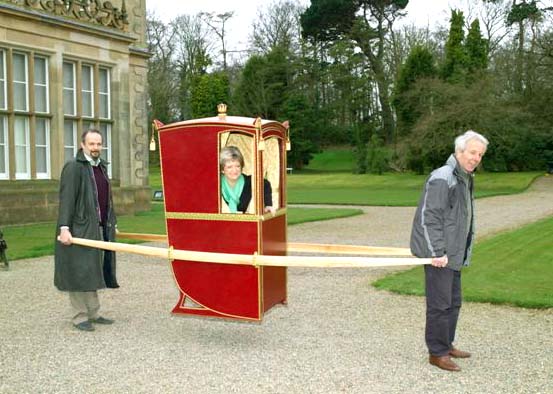
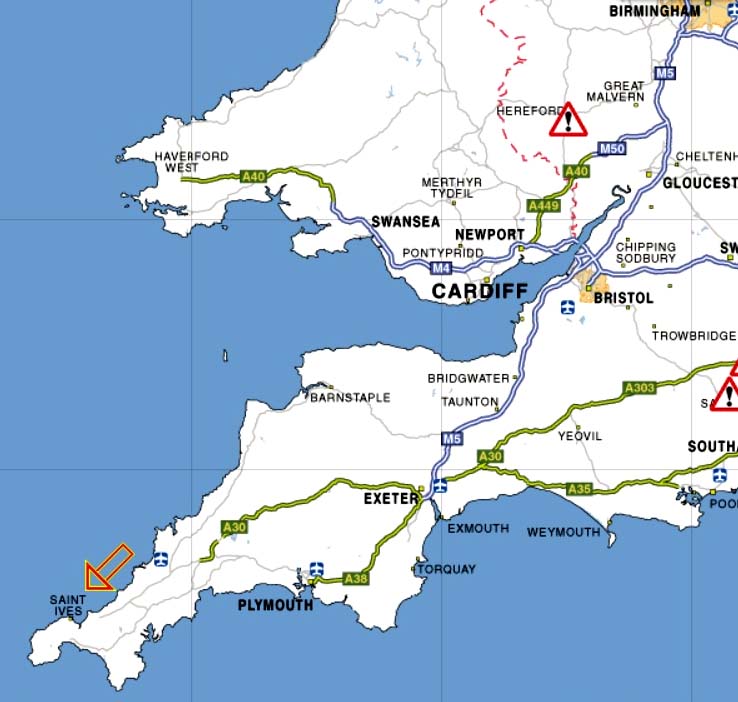
One day I strolled nonchalantly into an art gallery, looking for a picture with dogs in it because I don’t know much about art, but I know what I like. I was looking in particular for that picture where the dogs are all playing cards and they have cigars and shades over their eyes. Here is a map with the Orange Arrow marking the place:
I actually found a painting with a story written on the canvas. The story was obviously designed to be uplifting:
Now normally I don’t really go in a great deal for the bumper sticker wisdom you can find on many sites on the Internet. If Life were that easy, we’d all be perfect (inadvertently, I’ve just created one. Sorry about that).
I don’t think you’ll be able to read the story off the photograph, so I’ve copied it out.
I know it’s probably been printed and reprinted a thousand times over, but I had never seen it before, and I can still remember the effect it had on me the very first time I ever saw it:

Once upon a time, there was a wise man who used to go to the ocean to do his writing.  He had a habit of walking on the beach before he began his work.  One day he was walking along the shore.
As he looked down the beach,  he saw a human figure moving like a dancer.  He smiled to himself to think of someone who would dance to the day.  He began to walk faster to catch up.  As he got closer, he saw that it was a young man and the young man wasn’t dancing, but instead he was reaching down to the shore,  picking up something and very gently throwing it into the ocean.
He called out, “Good morning! What are you doing? ”
The young man paused, looked up and replied, “Throwing starfish into the ocean.”
I suppose that I should have asked, “Why are you throwing starfish into the ocean? ”
” The sun is up and the tide is going out. And if I don’t throw them in they’ll die.”
“But young man, don’t you realize that there are miles and miles of beach and starfish all along it.

You can’t possibly make a difference!”
The young man listened politely. Then he bent down, picked up another starfish and threw it into the sea, past the breaking waves. “It made a difference for that one ! “

22 Comments

Filed under Cornwall, History, Humour, Personal

Staff cricket : the Golden Years (2)

I was talking last time about my glittering career with the staff cricket team.  I can actually remember taking two catches, probably in 1976. One was a steepling ball, hit so high that I had time to eat a chocolate bar before it came back down. By the time it finally returned from earth orbit, everybody for miles around was watching me. Some with binoculars. I was the cynosure of all eyes. Players, umpires, spectators and people in the street and people in buses going past the ground. And I caught it. I really did. I caught it. Nobody was more surprised than me. And the batsman was O. U. T.  spells OUT !!

The second catch was when I was fielding about ten yards away from the batsman, as fellow French teacher David Padwick bowled his slow spinners, just like Bishan Bedi:

According to Bob Dickason, our wicketkeeper, the batsman hit the first ball so hard that I did not react. It passed under my arm, brushing the shirt in my armpit and the side of my chest. I just didn’t realise that this situation was really bloody dangerous and it was highly irresponsible of the captain to ask a naive novice to field there. The second ball hit me in the chest. It didn’t kill me by stopping my heart. It bounced up into the air. I dived forward and caught it one handed before it touched the ground. The batsman was O. U. T.  spells OUT !!.

I had a stunning bruise for weeks. You could read the name of the company who had made the ball. And their phone number.

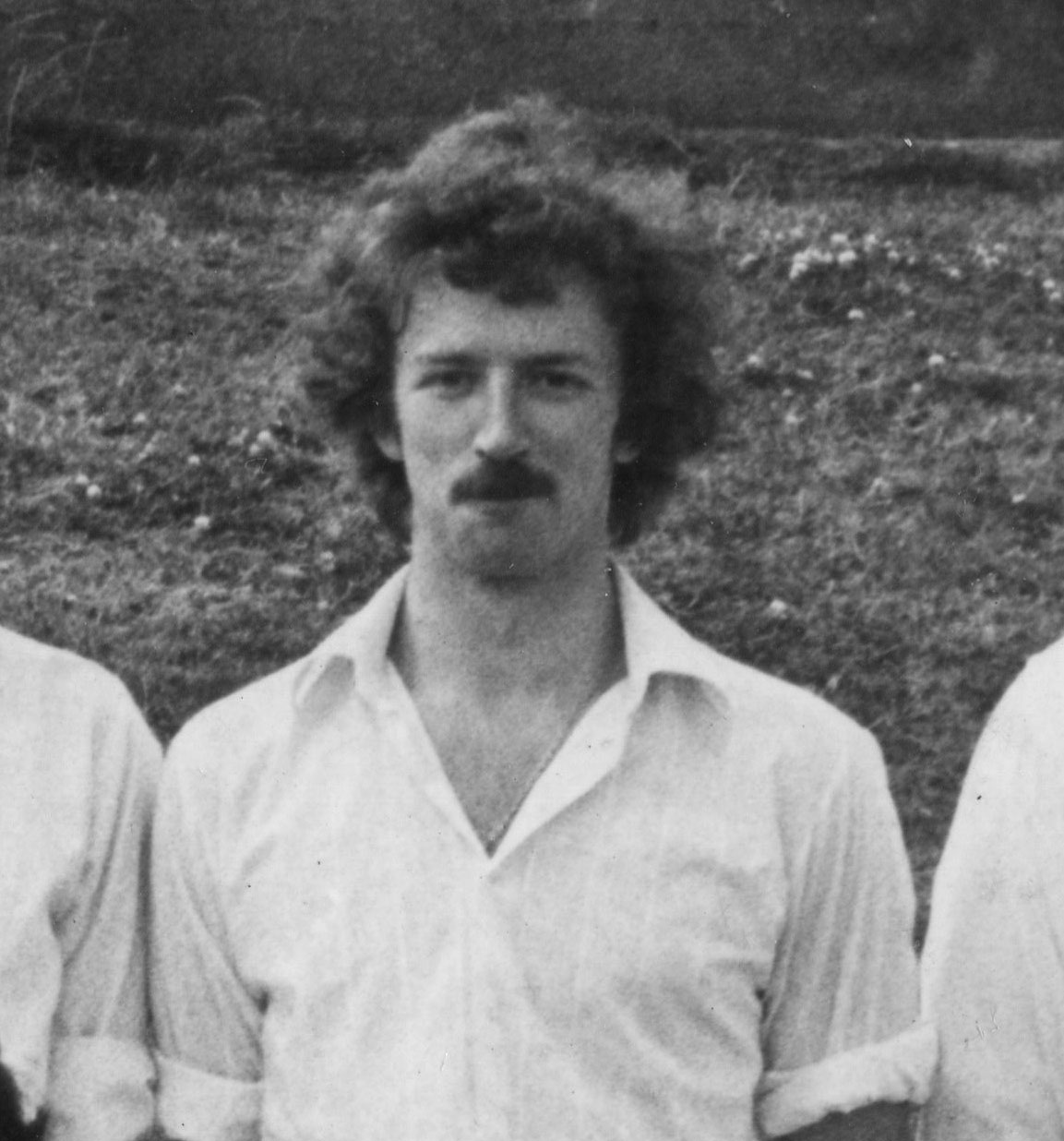
Here’s Bob and his curly red hair, pictured in black and white:

It may have been in that match that I was allowed to bowl an over…six balls that is. It didn’t go too badly. First one—a run. Second one—a run. Third one—a run. Fourth one—a run. Fifth one–the ball hit the edge of the bat and if they had let me have a fielder there as I had previously requested, it would have been a wicket taken. Sixth one–the batsman hit it to the boundary for four runs. And that was my complete cricketing career. I was never allowed to bat because they presumed I would be crap.

A couple of years later, one of the Top Men of the Staff Team, the Golden Boys, told me that “The Star Men of the team need ordinary people like you to do the fielding so that they can do all the batting and the bowling and show off all of their many talents.”  Yes, milord.

Incidentally, I had a second hand operation on February 8th, so I won’t be able to reply to any of your comments for, probably, a couple of weeks. As soon as I am able to, though, I will answer what you have been kind enough to contribute.

And everything in this post is 100% true, particularly what one of the Top Men of the Staff Team said to me.


15 Comments

Filed under History, Humour, Nottingham, Personal, The High School

The Starfish Thrower (1)

Until 2012, we always spent our family holidays in the very far west of Cornwall, near Penzance in a district called Penwith. One of the most famous places to visit is St Ives, a small town on the north coast. The map shows roughly where we are in England:

And here is St Ives. Welcome back, O Orange Arrow, which today marks the site of an Art Gallery, of which more later:

I love St Ives, even though it has changed enormously since we first went there in 1987.  Tiny interesting shops, faced with weekly rents of £2000 for a glorified phone box have all departed, unsurprisingly, leaving just fast food shops selling either traditional Cornish pizza and burgers, or surfwear shops, all tight and rubbery, and presumably not meant for the people who visit the fast food shops. St Ives is now really too expensive for locals to live there, thanks in the main to the London bankers and financiers, who can buy a house or two with their annual bonuses. Some streets are completely full of second homes so that from October to April, some areas of St Ives can become a ghost town.
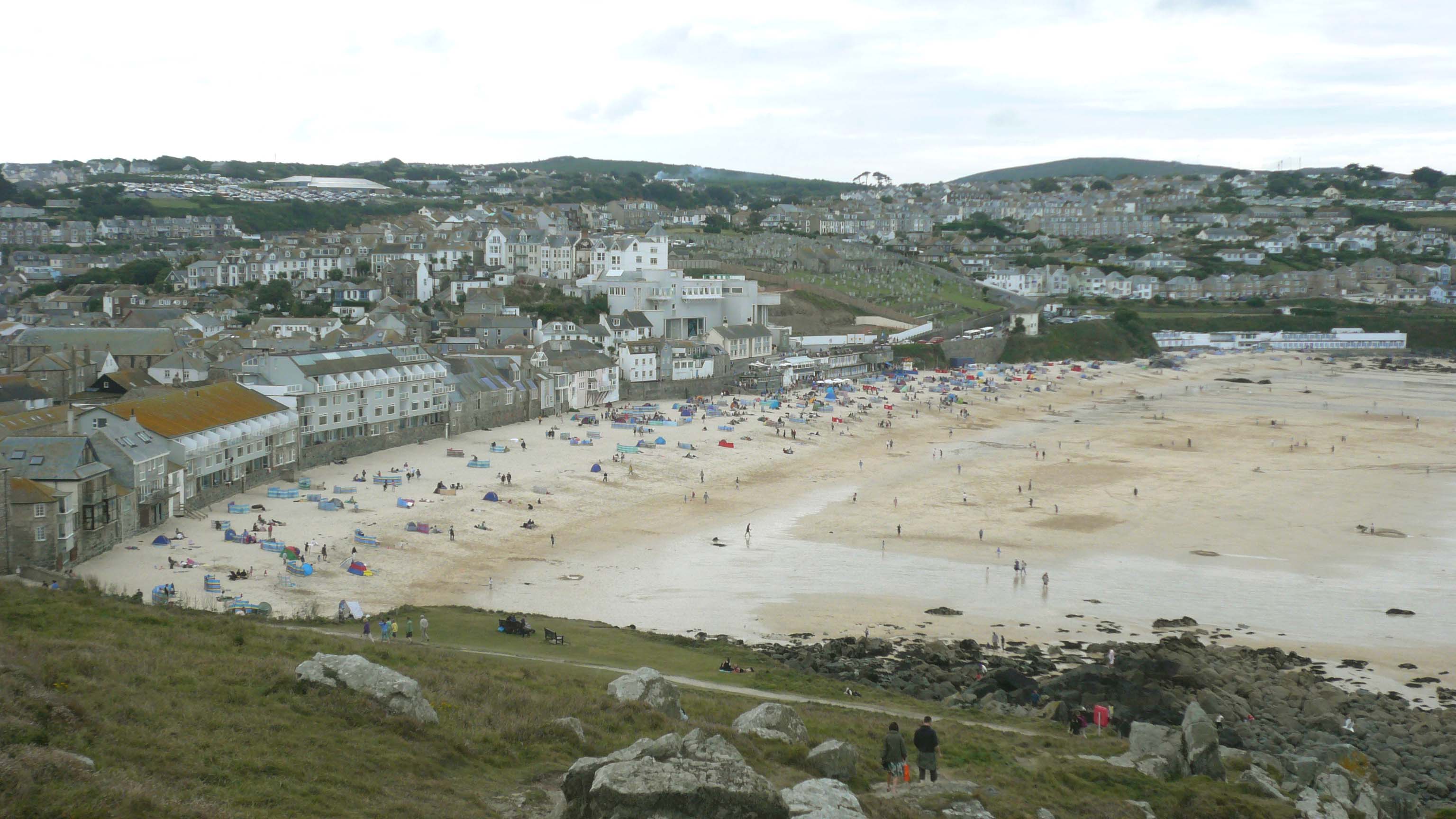
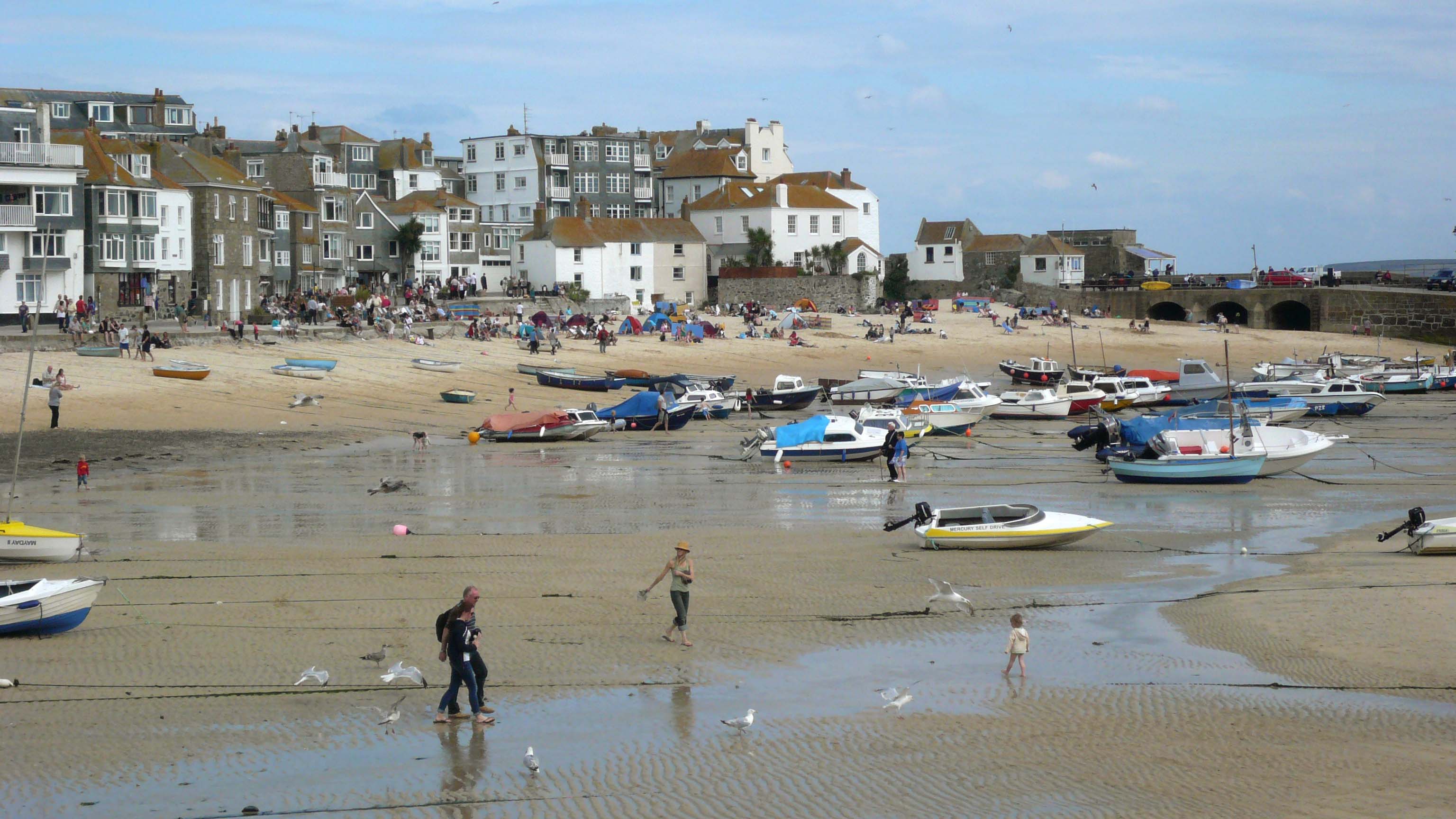
In summer though, it’s different. Here’s the beach on the map above, and in the background, all the houses have saffron yellow lichen on their roofs, a sure sign of clean air:

When the tide is completely in, the beach disappears and the real locals come in to see what they can steal. A male Grey Seal knows he can come swimming into the waters near the Pier and a fisherman will throw him some unwanted fish:

On the promenade, the cleverest individuals in St Ives move to the attack. They are Herring Gulls larus argentatus argenteus. The gulls just walk around on the pavement and people might give them a chip or some other scrap of food:

On other occasions they operate in twos and threes and behave just like velociraptors:

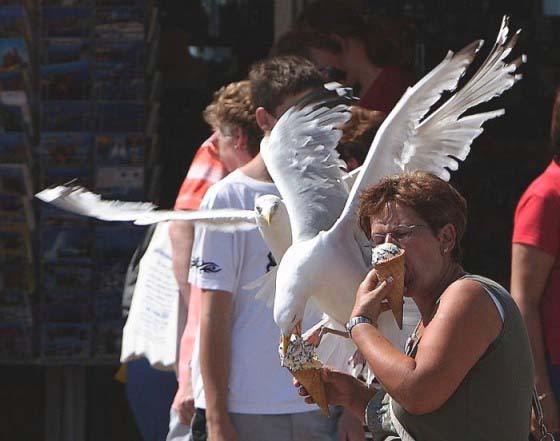
One gull will get your attention and the second one will fly in from the side and snatch your lunch. Don’t ever taunt them. I saw a slack jawed teenager do this once. She waved her ice cream to the female gull in front of her, taunting her with how much food she had and the bird had none. The teenager didn’t even see the male gull who crashed into her head from the side. She dropped her ice cream on the floor. The female picked it up and they both flew off. How I wish I’d been filming it!

I found this among many other photographs of naughty gulls on Google. The good proportion of them were taken at St Ives:

This lady is not the silly teenager that I spoke about earlier. She is a completely innocent and trusting bystander.

Incidentally, I had a second hand operation on February 8th, so I won’t be able to reply to any of your comments for, probably, a couple of weeks. As soon as I am able to, though, I will answer what you have been kind enough to contribute.

24 Comments

Filed under Cornwall, History, Personal, Wildlife and Nature

Staff cricket : the Golden Years (1)

Just after I started work in the High School, my interest in cricket began to grow. Luckily, there was a well established Staff Cricket Team. Indeed, it was during the Summer Term of 1947, that the staff had fielded their own cricket team for the first time ever, playing several friendly fixtures against the staffs of other schools. The most likely suspects would be the local Grammar Schools, Bilborough and High Pavement, and possibly Henry Mellish and the Old Nottinghamians.
Sooo….I decided to give it a go and I asked the team if I could play. I am no expert at playing cricket, but I was assured that this was just social cricket, played merely for amusement and companionship. Weeks later, I realised that the staff matches that I played in were played for amusement and companionship as if they were the last decisive test in an Ashes series in Australia:

In my bestselling book and my two screenplays for both Hollywood and Bollywood films, “Nottingham High School: an Anecdotal History”, I mentioned staff cricket on a number of occasions. The first occasion was the year before I began at the High School in the Summer Term of 1974:

“One of the most famous incidents in staff cricket occurred when according to “The Nottinghamian”, David Matthews “courageously stopped the ball with his head”. It cost him a pair of glasses, and two black eyes. Other participants during the season were Paul Dawson and  Brian Hughes, specialist batsmen David Padwick and Dave Phillips, specialist bowlers John Hayes and Marcus Coulam, and Jimmy Sadler, who in one match took four wickets in the last over, to snatch an unlikely victory.  John Hayes and Allan Sparrow were the usual umpires.”

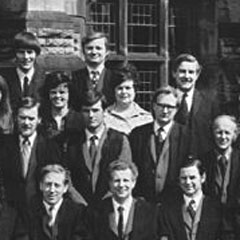
This old staff photo from 1973 has John Hayes (front left) and in the centre of the front row, Dave Phillips.

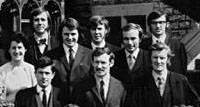
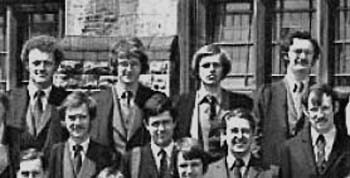
Alas, David Padwick has now passed away and the rest of those names must be well into their sixties if not older. Certainly, it is a good while since any of them taught a lesson at the High School. I did find one or two of them on some pictures of the staff which I scanned in the early 1980s. They are not very good, but they are recognisable. On this photo are Bob Dickason, Ed Furze, Chris Smith and Me on the back row, and Ian Driver, John Hayes, Edwin Harris and Dave Phillips in front.

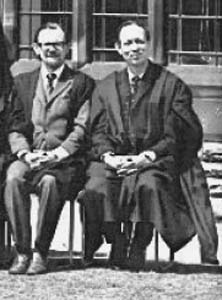
Here are David Matthews and David Padwick :

Luckily, colour film was invented in time to capture the greatest moment of John Hayes’ life. The day he took delivery of the High School’s first ever minibus::

It was during this season that David Padwick passed into legend. In a game against Trent Polytechnic, as it was then called, played at the Clifton campus, there was a fairly steep bank on two sides of the ground, about three feet high, just inside the boundary. Padders was fielding on the long on boundary, where he was theoretically unlikely to get up to too much mischief. At this point he was standing quietly at the top of the bank.

Suddenly, the ball was hit high, high, high into the sky in his direction. But he couldn’t judge the ball’s trajectory properly. Surely he was too far back to catch it. Quick, go forward, down the bank!  But no! Surely he was now too far forward to catch it. Quick, back up the bank! No, that’s wrong. Quick, quick, down the bank!  No, no, no!  Quick, back up the bank! For a good fifteen seconds or more, Padders became the cricketing Grand Old Duke of York. And did he catch it? Well, what do you think?

The next mention of staff cricket comes when:

“There was a report of staff cricket in 1977 in the Nottinghamian of December 1999.  It appeared in William Ruff’s “From the Archives” section of the magazine. Mention was made of Tony Slack, “our benevolent dictator”, Dave Phillips who “wields the straightest golf club in the business”, Phil Eastwood, “for whose particular torture the LBW rule was invented, and Clem Lee, “whose pectorals imitate the motion of the sea as he runs up to bowl”. The regular umpires this season were Allan Sparrow and John Knifton, although the latter did play in one game, “and took an impossible catch to win the game”. The more often I read that, the less possible it seems.

Again, I have found one or two old staff photos to enlarge. On the 1970 photo, there are Phil Eastwood (top right) and David Matthews again (No 3 on the front row). The back row also has Allan Sparrow and, I think, Brian Hughes  :

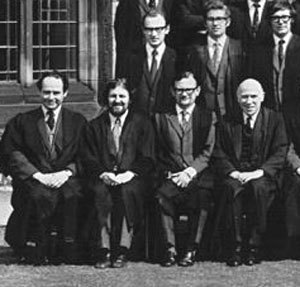
This photo has at least one more cricketer, Marcus Coulam, the young man to the right on the very back row:

The photograph also shows Norman Thompson, Dick Elliott, Stanley Ward, Ian Driver, Martin Jones, Chris Curtis, Jeff Leach, Gerry Seedhouse and, I think, Will Hurford. The two young ladies, I do not know.

More chat about the sporting superstars next time. Incidentally, I had a second hand operation on February 8th, so I won’t be able to reply to any of your comments for, probably, a couple of weeks. As soon as I am able to, though, I will answer what you have been kind enough to contribute.

31 Comments

Filed under History, Humour, Nottingham, Personal, The High School

Look at that fat bloke, Stan (6)

Please don’t look at this last blog post and think “I don’t like football” and then go on your merry way. All of these blog posts have been about much more than football. In particular they concern the eternal battle between sporting genius and cream cakes. In this one, you will see who wins. Were you ever in any doubt?

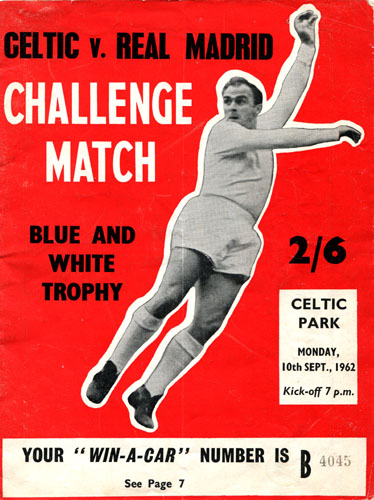
I’m going to finish just by looking at one or two programme covers from Puskás’ career. Real Madrid, being such a fabulous team, were very much in demand as opponents in friendly games:

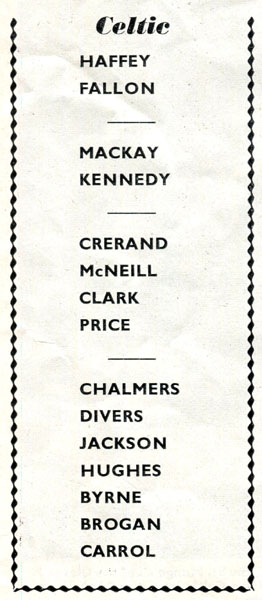
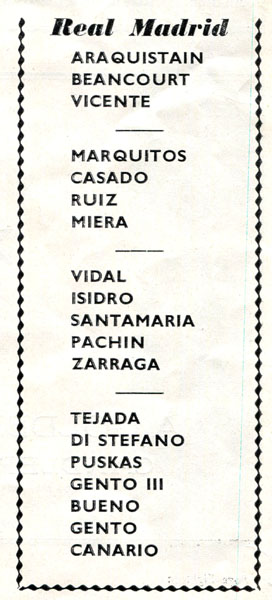
Here are the two lists of possible players at this prestige game in Glasgow:

The teams were actually, for Celtic:
Haffey; MacKay, Kennedy; Crerand, McNeill, Price; Lennox (Carroll, 45), Gallacher, Hughes (Chalmers, 45), Jackson, Brogan ( Byrne, 45).
Scorer: Chalmers (62)

And for Real Madrid:
Ariquistain; Casado, Miera; Muller, Santamaria, Pachin; Bueno, Amancio, Di Stefano, Puskas, Gento.
Scorers: Puskas (10), Amancio (30), Gento (61).

The Referee was the same as for the 1953 Wembley game, Leo Horn of Holland. 72,000 watched the game, and you can watch a bit of a different era, here, courtesy of boszikblogspot:

Then came a European cup tie against Rangers of Glasgow:

 Here are the two teams:

Full details of the match can be found here . The result was 1-0 to Real, with that fat bloke scoring the goal. In Spain, Real won 6-0 with 3 goals from Puskás. Here is the game in Scotland:

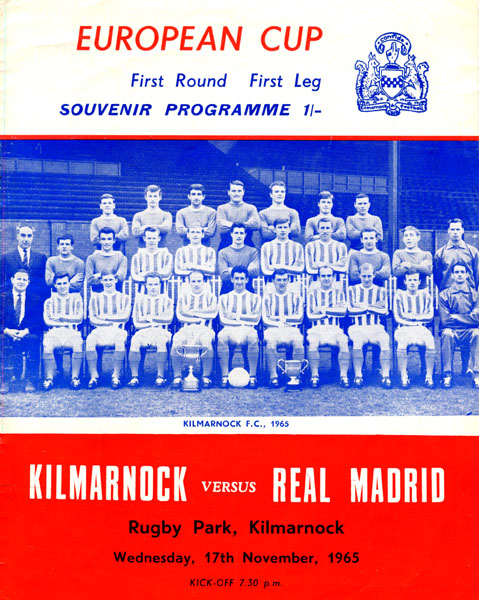
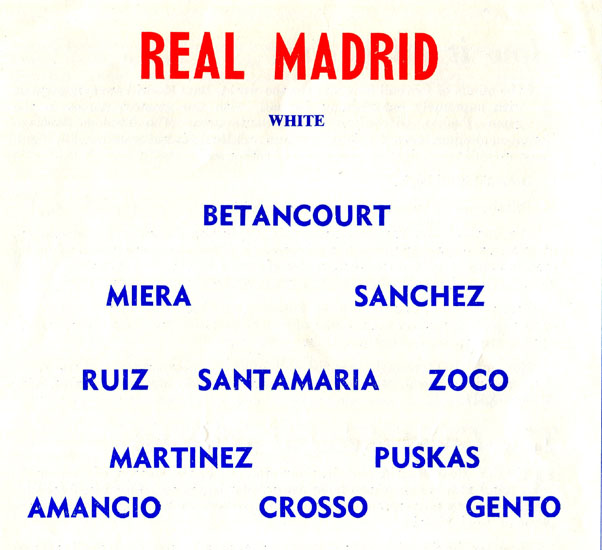
And then came another European game, against Kilmarnock, a tiny club in Scotland who had won the League that year against all the odds. A bit like Luxembourg winning the World Cup, or Leicester City winning the Premier League (just joking!) :

Here are the team line ups:

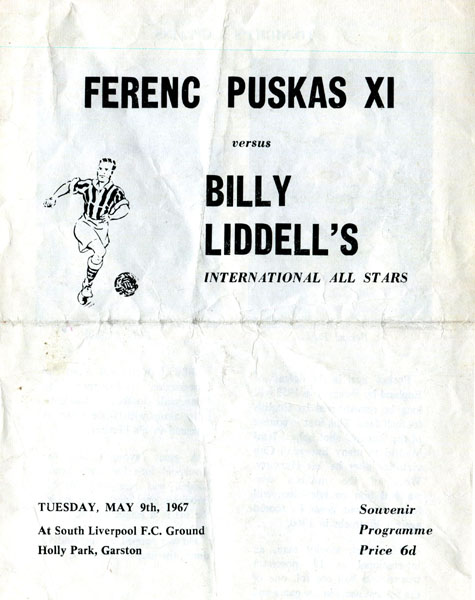
The result of the game was  2-2 but Puskás did not score. In the second leg Real won 5-1 for a 7-3 aggregate. Puskás was by now 38 years old. The last programme I have which features him is for a testimonial match playing as a 40 year old guest player for South Liverpool against Billy Liddell’s XI at Holly Park in Garston in Liverpool.The match raised £1,100 for Bankfield House, a local community centre:

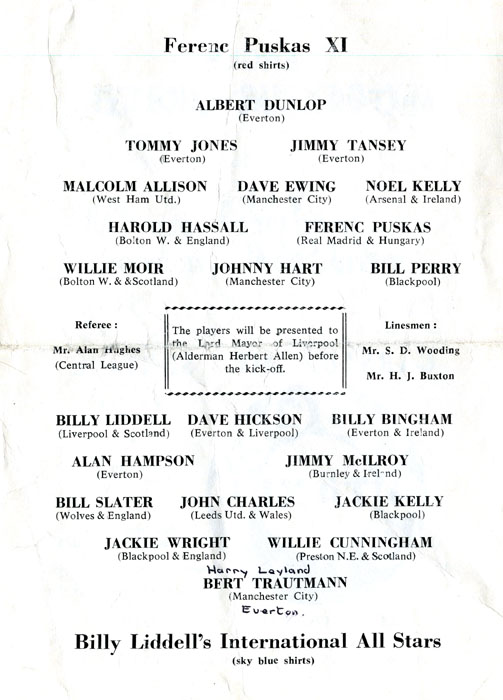
And here are the team line ups. How absolutely incredible to have a Real Madrid player playing in an obscure testimonial match like this! It is exactly as if Ronaldo went on loan and played a few games for Accrington Stanley:

Willie Moir was a friend of my Dad’s in the RAF. Notice how somebody has written in a team change. That means that this programme was very probably at the game. I do have a programme of the 1953 England-Hungary match where a traumatised English supporter has written the score on the front cover as he made his sad way home on the train. How close to real history is that?

Puskás was beloved by one and all. In 1998, he was named a FIFA/SOS Charity Ambassador. His country renamed their main stadium the Puskás Ferenc Stadion. He was declared best Hungarian player of the last 50 years and in 2009, FIFA inaugurated the Puskás Award for the player who scores the “most beautiful goal” during the past year. Here are the finalists for 2017. I’ll let you find out who was the eventual winner:

Puskás died of pneumonia on November  17th 2006. I think he was the greatest footballer who ever lived.

One final note. I had a second hand operation on February 8th, so I won’t be able to reply to any of your comments for, probably, a couple of weeks. As soon as I am able to, though, I will answer what you have been kind enough to contribute.


12 Comments

Filed under Football, History, Personal