Author Archives: jfwknifton

Hendon objects (2)

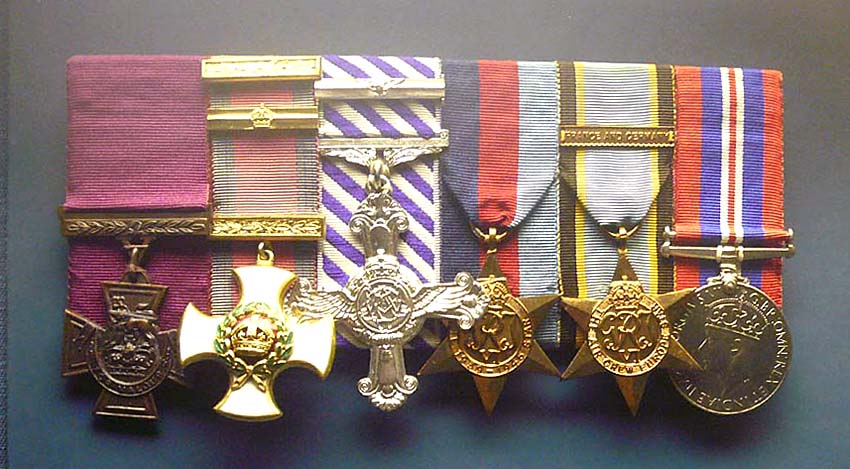
As you may have seen from previous blog posts, in 2010, I went with my family to visit the RAF Museum at Hendon. It wasn’t all aircraft at Hendon, though. There were lots of non-flying objects and various pieces of metal rescued/liberated from aircraft as they awaited their turn in the scrapyard. And there were the medals of some very brave men……

Here is the Victoria Cross won posthumously by Ian Bazelgette, a Canadian from Calgary in Alberta and a pilot of No. 635 Squadron, Bomber Command, RAF:

Here’s the citation……

When nearing the target his Lancaster came under heavy anti-aircraft fire. Both starboard engines were put out of action and serious fires broke out in the fuselage and the starboard main-plane. The bomb aimer was badly wounded.

As the deputy “master bomber” had already been shot down, the success of the attack depended on Squadron-Leader Bazalgette and this he knew. Despite the appalling conditions in his burning aircraft, he pressed on gallantly to the target, marking and bombing it accurately. That the attack was successful was due to his magnificent effort.

After the bombs had been dropped the Lancaster dived, practically out of control. By expert airmanship and great exertion Squadron-Leader Bazalgette regained control. But the port inner engine then failed and the whole of the starboard main-plane became a mass of flames.

Squadron-Leader Bazalgette fought bravely to bring his aircraft and crew to safety. The mid-upper gunner was overcome by fumes. Squadron-Leader Bazalgette then ordered those of his crew who were able to leave by parachute to do so. He remained at the controls and attempted the almost hopeless task of landing the crippled and blazing aircraft in a last effort to save the wounded bomb aimer and helpless air gunner. With superb skill, and taking great care to avoid a small French village nearby, he brought the aircraft down safely. Unfortunately it then exploded and this gallant officer and his two comrades perished.

His heroic sacrifice marked the climax of a long career of operations against the enemy. He always chose the more dangerous and exacting roles. His courage and devotion to duty were beyond praise.”

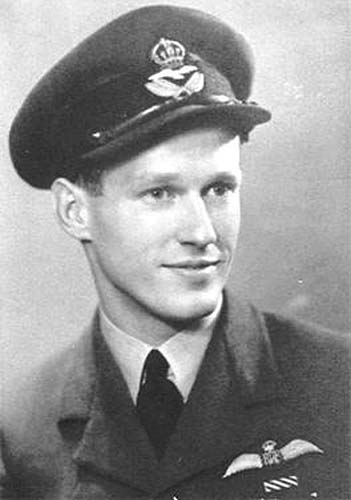
Ian Willoughby Bazalgette was one of the individual RAF airmen that my Dad, Fred, as a member of 20 OTU came into regular contact with. Bazalgette was reputed by some of his contemporaries to have been a concert pianist.  He apparently had the habit of flying when others either could not or would not, go up into the air. It was as if he just wanted to experience how rough the weather could be or was seeking the thrills of being aloft when conditions really were too dangerous for flying.

Eventually Bazalgette was to win the Victoria Cross. There were, however, those, Fred Knifton included, who thought that he was the kind of pilot who would end up by getting other people killed. How ironic that was, given the circumstances of his death!
All this, of course, contrasted very strongly with Fred’s more usual opinion of bomber pilots, a group of men to whom, after all, he had frequently had to entrust his life. Fred saw the best pilots as steady characters, who could always be trusted to push on slowly but surely, and to get the job done. They formed a strong contrast with the fighter pilots, who were far more extrovert characters, capable of great triumph, but also perhaps of great failure. Not so the pilot of the four engined bomber which slogged on through thick and thin like some very, very deadly old bus.

Research has revealed that Bazalgette, despite his own wishes to form a new Pathfinder unit, was stationed with 20 OTU at Lossiemouth from September 1943, as commander of ‘C’ Flight. He was not transferred away, to No. 635 (Pathfinder) Squadron, until April 20th 1944, when he became a flight commander with the rank of Squadron Leader.

Presumably then, Fred must have been present with 20 OTU at Lossiemouth at some point in this period of September 1943-April 1944. He could well have been at Lossiemouth both before and after Bazalgette’s time there.

Fred also spoke of “Pedlar Palmer” who, to give him his correct name, was Robert Anthony Maurice Palmer. He too, like Bazalgette, was with 20 OTU at Lossiemouth.

According to Fred’s own handwritten notes, discovered after his death in 2003, Palmer was posted to 20 OTU as a Flight Sergeant after finishing a tour of operations with 75 Squadron at Feltwell on February 13th 1941. He was then promoted to Pilot Officer in January 1942, while still at Lossiemouth.

Serving briefly alongside Bazalgette in ‘C’ Flight, he too wanted to return to operations, and his wish was granted on November 9th 1943, when he was transferred to the Pathfinder Force at RAF Warboys. He was then posted to 109 Squadron in January 1944 and eventually went on, after his promotion to Squadron Leader, to win a Distinguished Flying Cross on June 30th 1944, while flying a Mosquito. Six months later, on December 23rd 1944, Palmer attacked Cologne, this time in a Lancaster, and won a posthumous Victoria Cross. He was buried at Rheinberg.

And here is the badge of 103 Squadron where my Dad, Fred Knifton, served. In his time they were stationed at Elsham Wolds in north Lincolnshire. There are lots of squadron badges at Hendon:

And here’s our final picture, a photograph of a piece of nose art, on the nose belonging to a captured Argentinian  FMA IA 58 Pucará.

And from closer up:

Well, I got “Fuerza Aerea Argentina”. I have no idea what “Rescate” means, though. Just look how the Argentinian pilot had a Scottish surname.


11 Comments

Filed under Uncategorized

Enigma 2

Last time we finished with a really strange episode from the book which was the story of Enigma, the German encrypting machine…..

A rather large and peculiar parcel had been sent in obvious error to Warsaw’s main Post Office.  Nobody knew what it was. Nobody had a clue. When the Great Gift was opened, though, it was found to be a military grade Enigma machine, brand new, state of the art, and, as yet, unused.

So what did Anton Palluth, the Head of the Cipher Bureau, do with it? Well, we found out last time that the Poles had worked out for themselves that World War One codebreakers would not be clever enough to crack the new type of codes  being introduced at the time, that is to say, the early 1930s. They found three whizz kid mathematicians, all with first class degrees, at the top universities in Poland and gave them the job. Their names were Marian Rejewski, Jery Rozycki and Henryk Zygalski. As leader, Anton Palluth picked the man that he thought was the cleverest and the one likeliest to defeat Enigma. It was Marian Rejewski.

Marian was also given a file which contained everything that the Poles had already discovered about Enigma machines, both commercial, and military. Anton asked him to work on their brand new Christmas present n his spare time. After a reasonable interval, Marian finally cracked it. He knew how Enigma worked.  He knew how to programme it and he knew how to read the messages. This feat was called in the book by author John Jackson….

“a breakthrough in cryptography on a global scale”.

Marian deciphered his first Wehrmacht communication in January 1933. I could not resist saying that the first message he found was….

“Come home Machine No 476. All is forgiven.”

Here’s another shot of Marian Rejewski. He must have saved millions of lives with what he had discovered, and we all owe him a debt of gratitude that we cannot begin to repay.

At a meeting with the British and the French in January 1939, it was obvious that the two western countries knew very little indeed about Enigma. They had more or less no ideas whatsoever about how it worked.

On that occasion, the Poles kept their mouths firmly shut, but, in July 1939 at a second meeting in Warsaw, as German forces prepared to invade their country, the Poles realised that they had to come clean and to tell the British and the French everything that they had found out. There was nothing for them to lose. In actual fact, the Poles knew an enormous amount about Enigma. By September 1st 1939, the day the Germans violated the frontier, the Poles had intercepted and decrypted so many Wehrmacht messages that they know the exact identities of some 98% of the German units involved…..

The British and the French, who included a Professor of Mathematics from Cambridge, were dumbfounded to find out that the Poles had cracked Enigma.

They were dumbfounded and then, quite simply embarrassed at their own stupidity, when they asked the Poles for one particular thing that had totally beaten their cryptographers for months, namely……

“How are the wirings inside the Entry Disc set up? We have made no progress whatsoever on this one!”

And the Poles replied:

  “Well, the wiring sequence is “A-B-C-D-E-F-G-H-I-J-K-L-

and so on ”.

These Polish secrets saved the British at least twelve months’ work on Enigma. This was because the first Enigma machine was not captured in Norway until May 1940. Until then, any progress whatsoever would have been impossible for the British and the French.

Later in the war, the three Poles, Marian Rejewski, Jery Rozycki and Henryk Zygalski, came to England to help with code breaking. They were never allowed to work at Bletchley Park. I cannot imagine why.

In October 1944, Marian Rejewski asked for the return of the Enigma machine they had given to the British in 1939. The British refused.

Marian also asked the British to share what they had discovered about German codes since 1939.  They refused that too.

Marian also asked that the British should share any intercepted material with the Poles so that they could decipher it and, presumably, help the war effort. This too was refused.

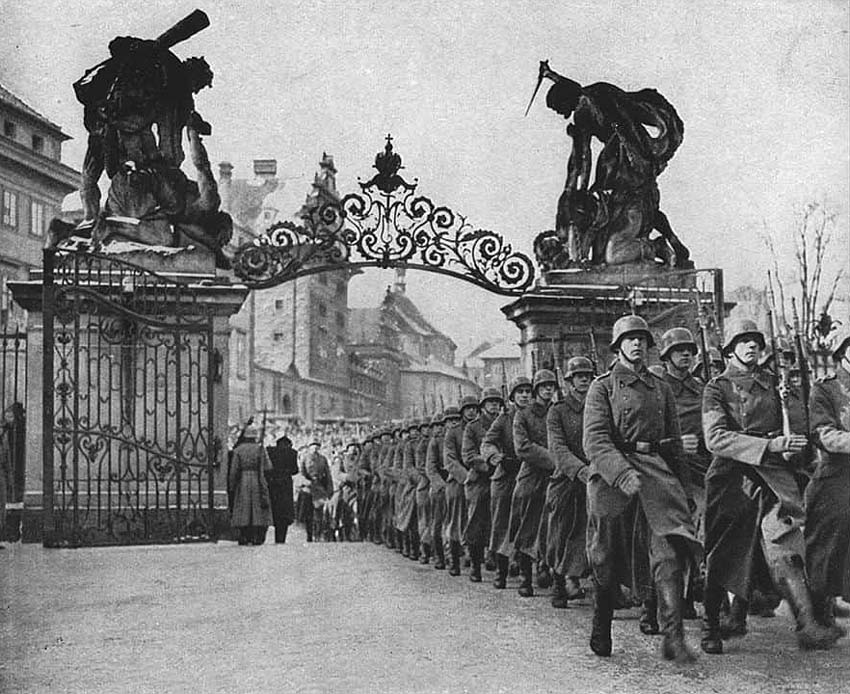
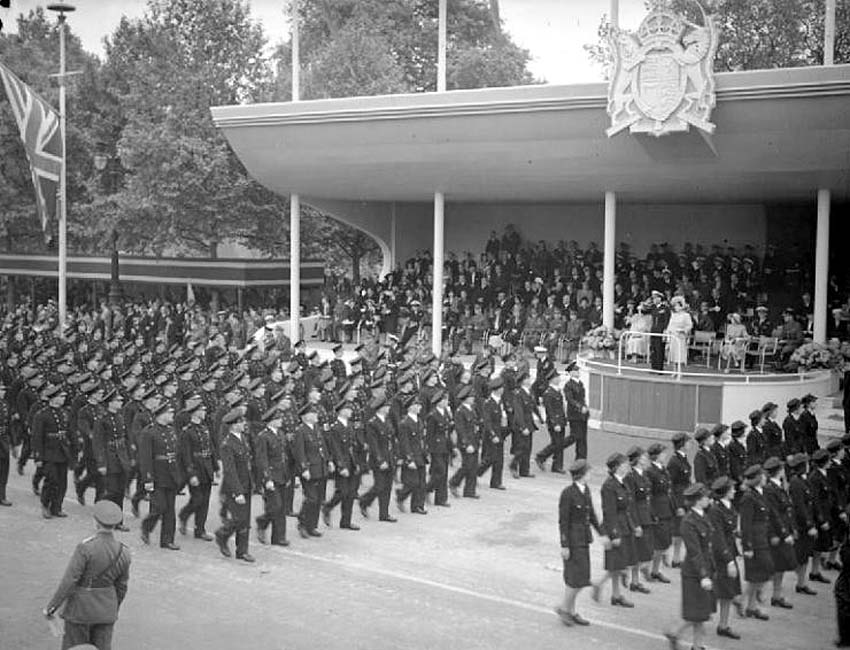
Conceivably, these slaps in the face were connected with the celebrations in London at the end of the war in 1946. The British Labour government failed to invite the Polish forces in exile who had fought under British High Command to participate in the Victory Parade which celebrated the end of the war in Europe. A number of MPs including Winston Churchill protested against the decision, which was described as an affront to the Polish war effort as well as an immoral concession to communist power, namely Stalin and the USSR.

The things we did to make jovial Joe Stalin feel better!! Here’s a bit of the celebrations:


There were no Soviet forces invited to participate either.


25 Comments

Filed under France, History, military, Russia

My Dad’s cars (1)

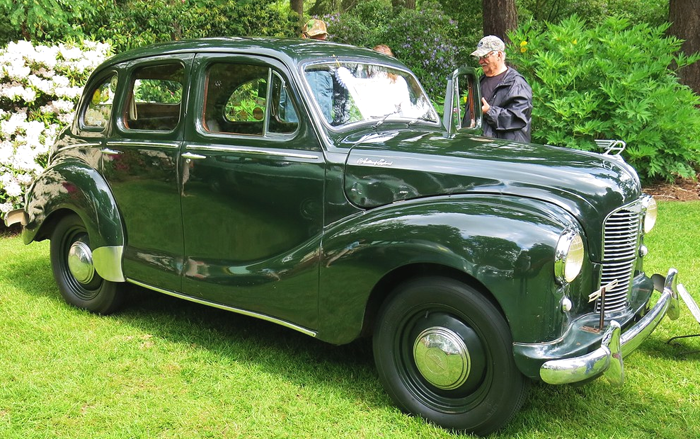
My Dad, Fred’s, first car was a Connaught green Austin A40 Devon, registration number “LXJ 701” (“seven-nought-one”). This car had been acquired in the early 1950s with the help of his in-laws, as a bargain for the newlyweds. It had previously belonged to the owner of a cement factory near Manchester, and for this reason, it proved almost impossible ever to get a good shine on the vehicle, as the painted surface had absorbed such a huge quantity of cement dust through being parked all day long in the office car park at the works. Here is a car of the correct colour, although it has been modified for use as a taxi:

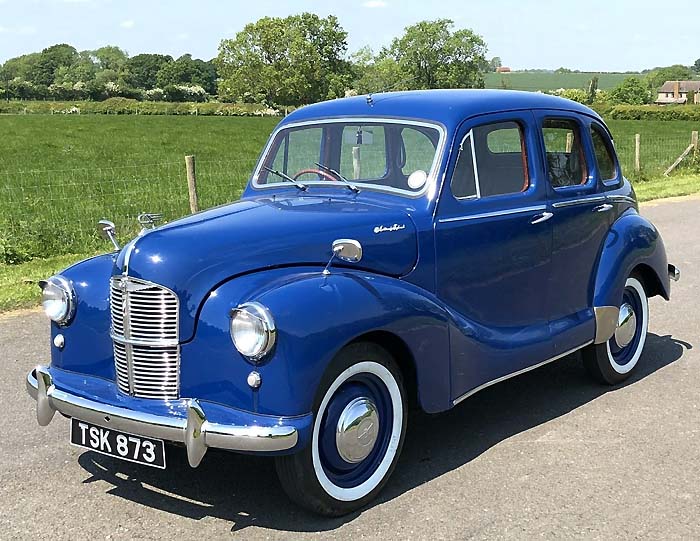
I really wish my Dad had bought an A40 of this revolting bright blue. And I’m an absolute sucker for white wall tyres:

Fred never seemed to use the car an enormous amount, but, like so many people during this era, we often went out for a drive as a family on a nice Sunday afternoon. I remember that on occasion we used to go out on trips towards Repton, but I cannot really recollect anywhere else that we went, although Fred assured me in later years that we had visited destinations as far afield as the church at Breedon-on-the-Hill, Calke, Staunton Harold and Swarkestone Bridge:

This slideshow requires JavaScript.

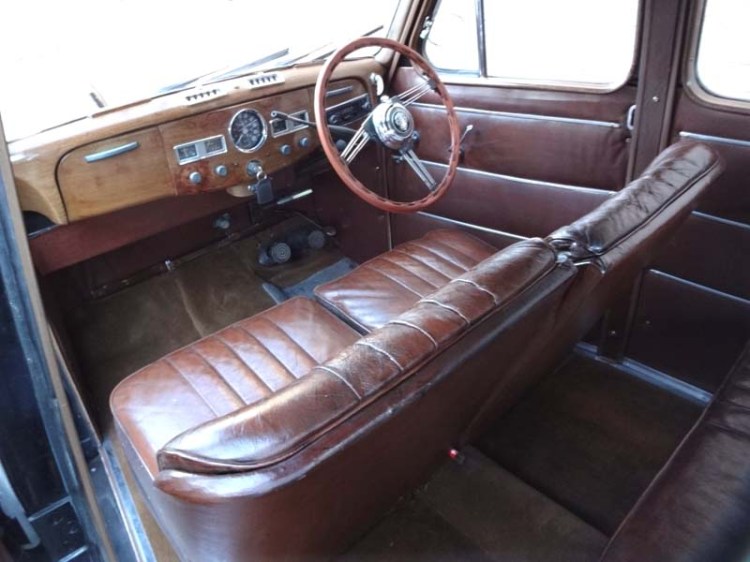
The one thing I do recall about these trips, though, was parking the car one day in a sunlit grassy field, and leaving all the doors wide open to let in the fresh air. The car had rich brown all leather upholstery, sewn lengthways in distinctive style:

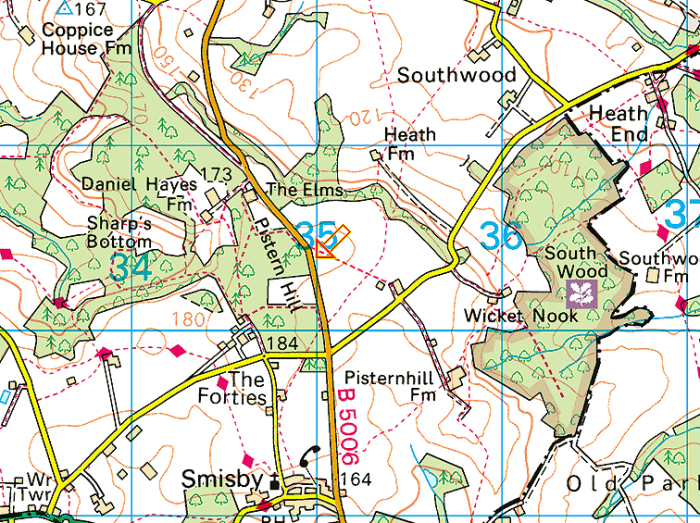
I must have been a very small boy indeed, when Fred had a crash in this car. We were out somewhere in the lanes around the village of Smisby, perhaps somewhere towards Pistern Hills, and I remember that at a T-junction, we failed to turn, but just drove straight on, ploughing into the bank below the hedge at the far side of the road. The Orange Arrow points at Pistern Hills where this accident may have taken place:

In the days before seat belts, I was projected forward, and the ignition key somehow smashed into my forehead between my eyes. I certainly was not taken to hospital with what in the 1950s was just a minor injury, but instead, I was transported to the nearest country cottage at the side of the road. All that I can recall now is sitting at a wooden table in an almost bare kitchen. A woman came in. She was wearing a white blouse and a voluminous long skirt. She was plump and reached up to the wooden shelf which ran all the way around the room, some six feet off the ground, because she had to stretch to reach the tin she was after. She passed it to me. It was a tin of biscuits and she let me eat a few. I do not remember any more. I still have the scar on my forehead.

18 Comments

Filed under History, Humour, my Dad, Personal

What would you do ? (18) The Solution

“What would you do ?” used to figure on the cover of a boys’ comic called “Boys’ World”. This was a publication, obviously, aimed at boys, and first appeared on January 26th 1963. There were 89 issues before the comic was merged with Eagle in 1964. The last issue of “Boys’ World” came out on October 3rd 1964.

I used to buy “Boys’ World”, and this was mainly for the front cover which always featured a kind of puzzle. It was called “What would you do ?” and was based on somebody being in what Ned Flanders would call “A dilly of a pickle”. Here’s the situation:

And the problem was:

The correct solution was always given inside the comic, in this case on page 2.  Here it is :

And just in case you wondered, here is the whole of pages 2 and 3 :

And what about the clue? Well, if you look very carefully at the front cover, there are large quantities of lemons hanging on the trees, both behind the Orange Box, and to the right of the sentry tower.

In actual fact, this is a rather strange clue to have. Hardly any German POW camps  were in locations where lemon trees grew. For example, the POW camps of Italy were staffed by Italian troops  until September 1943 when they surrendered. Many Allied prisoners took the opportunity to leave their camp and walk south to the Allied lines. The vast majority, though, obeyed their orders from London which said, basically,  “Sit tight and we will come and get you.” Within a couple of weeks, the Germans arrived and moved every single Allied prisoner to Germany, many of them as slave labour. Some of them finished up in a POW camp from where they had a grandstand view of the daily workings of the Auschwitz-Birkenau death camp. You can read all about this in “Spectator in Hell” by Colin Rushton. Many of these spectators were Nottingham men, captured when the Sherwood Foresters surrendered at Tobruk. In my researches, I discovered that one of them may have been John Arthur Finking, the son of a factory manager from 5 Selby Road in West Bridgford, and an Old Boy of Nottingham High School. John would be murdered by his captors as they marched all of their prisoners westwards to escape the Red Army in the snowy depths of the savage 1944-1945 winter.

Finally, there were no POW camps in the Balkans as far as I am aware or in Greece. This was because any escaper might well have been helped by the local people.

The main  criteria for the location of POW camps was (1) in Germany, surrounded by hostile civilians (2) if possible, on sandy or very light soil, so tunneling was difficult. This latter point was the reason that so many camps were located in what is now Poland, where the pine forests were gigantic, difficult to navigate in and devoid of any sympathetic locals, as those areas were then part of Germany. The soil was also extremely sandy. Finally, all of the POWcamps were as far to the east as possible, so that anybody who did escape had a very long walk to the west, and therefore a much greater chance of being spotted.


14 Comments

Filed under History, military

What would you do ? (18) The Puzzle

I used to buy “Boys’ World”, and this was mainly for the front cover which always featured a kind of puzzle. It was called “What would you do ?” and was based on somebody being in what Ned Flanders would call “A dilly of a pickle”. Here’s the situation:


The Orange Box sets the scene, and the task is for you to solve the situation.

And let me add, the Orange Arrow is over-the-moon to see his eldest son, “Yob” or “Young Orange Box”, becoming involved in the world of blogging. Anyway, perhaps you might like to write your idea in the “Comments” section.

What can he do?? Good luck with this one ! It’s certainly a dilly of a pickle, although you are helped by a clue in the picture.

16 Comments

Filed under History, military

My best friend, Widdle (5)

Last time,we were looking at what Widdle the Friendly Fox would eat and what he would turn his nose up at. Over time, we gradually built up a list of his likes and dislikes.

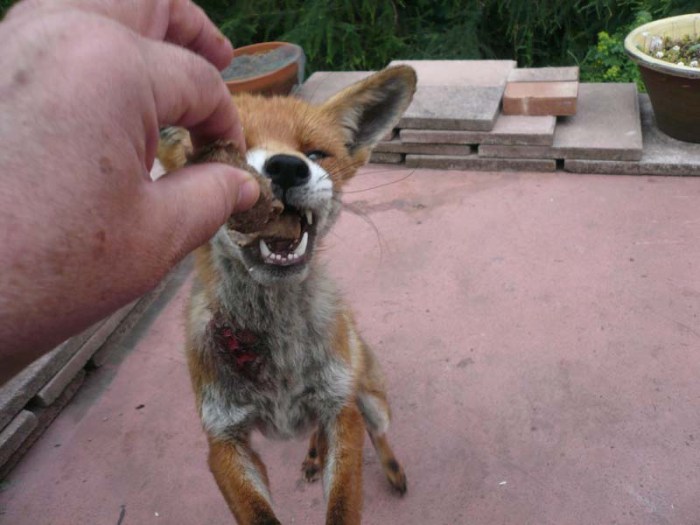
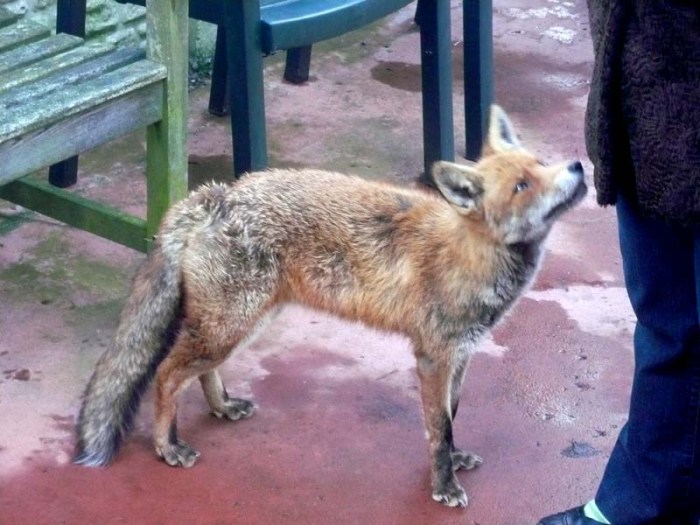
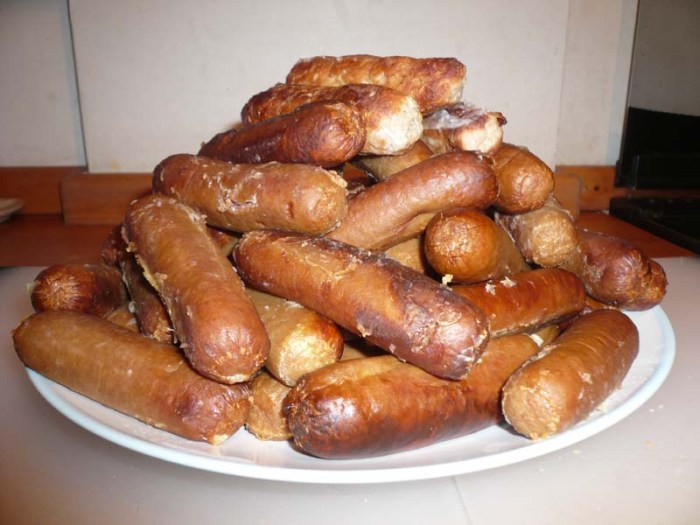
Physically, he was very thin and very wiry, but he was extremely strong for his size. If he pulled one end of a stick and you pulled the other, you could feel his muscles and his strength. Most of this came, in our opinion, because he wouldn’t eat bread or cakes. He wouldn’t eat curry or anything flavoured. He wouldn’t eat pizza. Even our local magpies wouldn’t eat pizza, incidentally. Widdle wouldn’t eat hamburgers, although we didn’t quite understand this. Perhaps he had his culinary standards. After all, the bar was set pretty high by our sausages (42% meat).

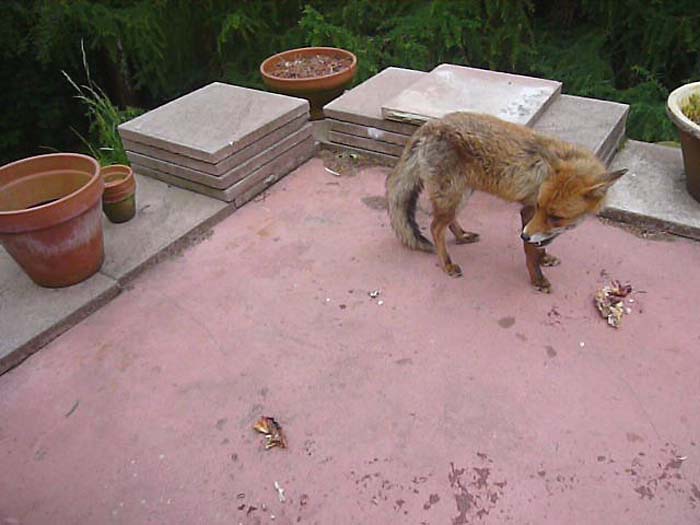
This photograph appears to show the biggest object Widdle ever managed to carry away. I have no idea what it was, but may have been a big bone or maybe some cut of meat that had gone past its sell-by date:

Raw bacon rind appears to be a delicacy in the fox world. Firstly, sniff what it is…

Don’t let it escape under any circumstances:


“A second piece? Don’t mind if I do!”

In the next picture, note the first piece of rind safely stashed on the floor. He didn’t find getting both in his mouth at the same time too easy!


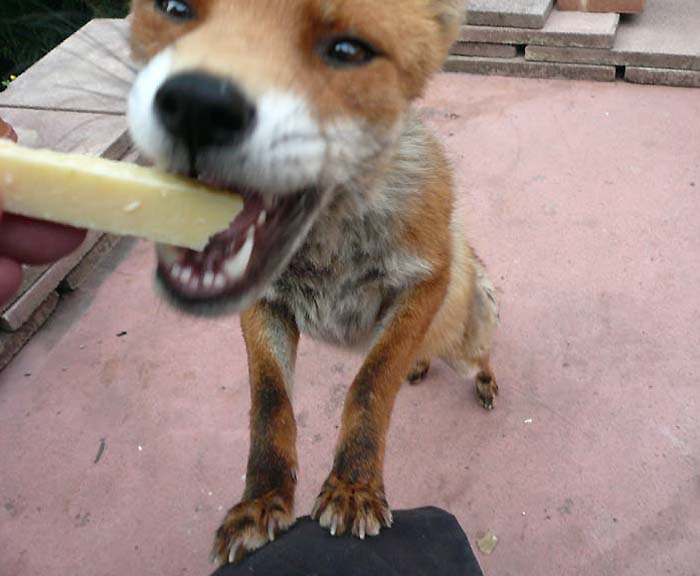
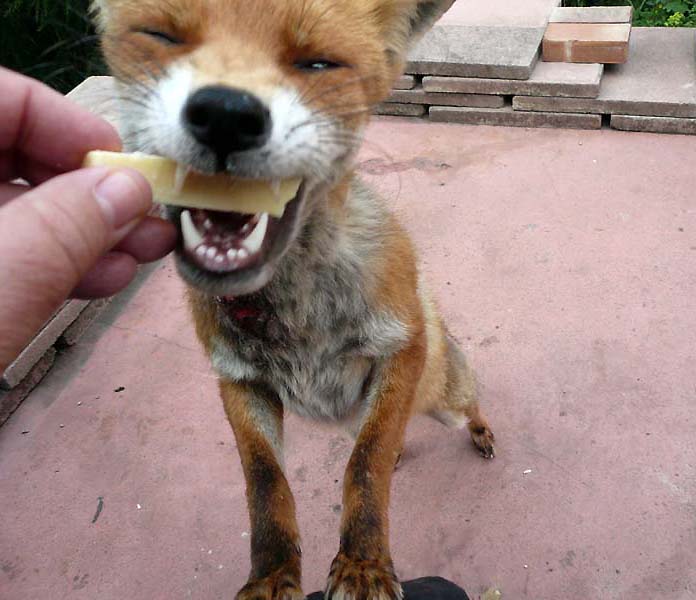
“Cheese is different. You have so many dreadful flavours in cheese. So make sure you sniff it first….”


“Take hold of it carefully. It may crumble and you might lose some.”

“Sniff the next piece carefully. Just because the first piece was cheddar, that doesn’t mean they all will be.”

“Yes, it’s OK. I’ll take it, please. It’s good for the teeth, cheese!”

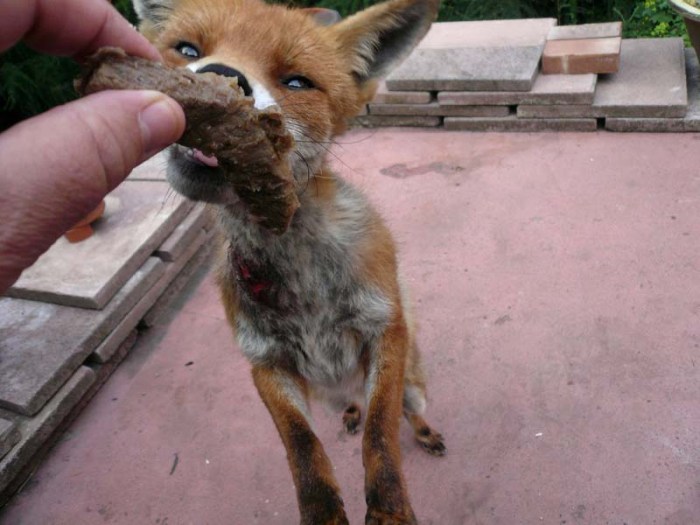
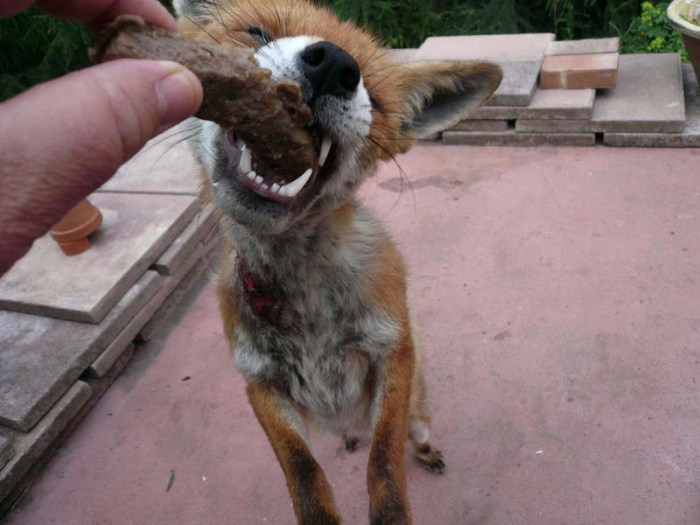
Not that Widdle would turn down proper meat.

“Would I like a bit of steak? You bet I would!”

“Mmm. Lovely!”

Watch what you’re doing. Fingers at your own risk!!”

Widdle usually took all the food that was offered to him. He filled his mouth up with sausages, bits of meat and so on, and took them back to Mrs Widdle in the den. She would eat some and share the rest with her cubs. The largest litter I ever saw in our garden was four, with No 4, the smallest one, perhaps only two thirds the size of the others. Mum and Dad taught them their table manners. Any transgression got a sharp nip on the backside to emphasise the point.

Notice how, in the last three photographs, Widdle has a great gaping wound on his chest. As I mentioned, male foxes frequently fight each other, and they bite their opponent’s muzzle and fore-limbs. I don’t know how Widdle acquired this particular wound, but it didn’t take long to heal up.

On four occasions, Widdle had bad injuries to one of his front legs and he could barely walk. In a wilder world, he would not have managed to hunt and he would have died, but his friends stepped in with Sausage-Aid and he got over it. That gave him five lives instead of the usual one, a minimum of four or five years of life compared to the usual two or three, and as many as fifteen cubs produced, instead of the usual figure of between none and four.

21 Comments

Filed under Humour, Nottingham, Personal, Widdle, Wildlife and Nature

My best friend, Widdle (4)

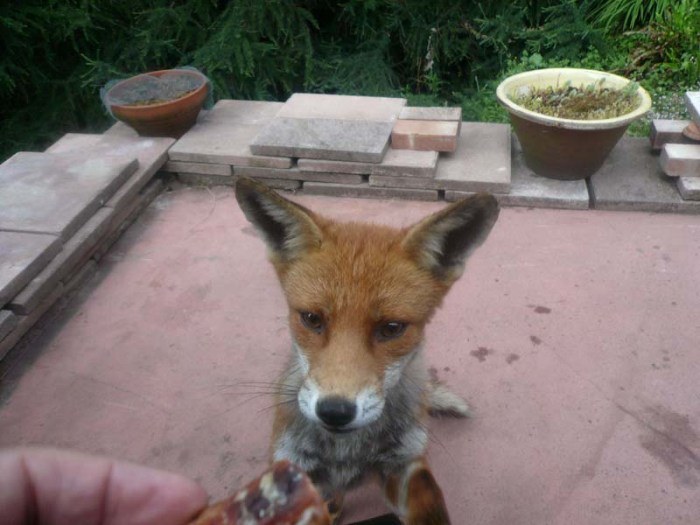
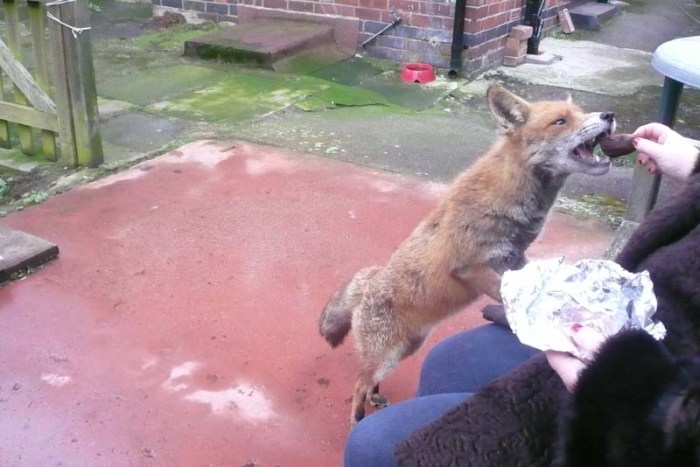
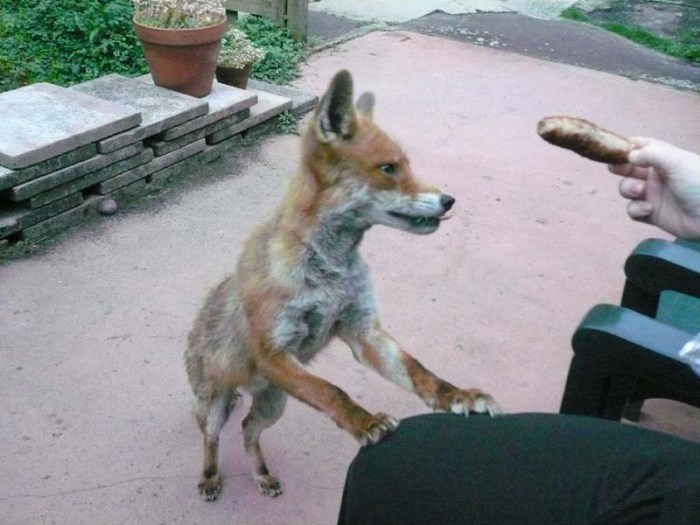
Between approximately 2007-2010, our family had a completely wild fox as a friend. When Widdle came to you like this, you knew that he had only one thought on his mind. Sausages!!

These are the brand he preferred. We used to buy them at a frozen food supermarket called Iceland. We wanted a cheap, but nourishing, sausage for our furry friend, so we looked round most of the butcher-type shops in our suburb of Nottingham and finally made the decision to buy at Iceland where the budget sausages were 42% meat, easily the highest percentage in the world for the budget sausage. Dog food was even more unbelievable. All of the cheaper ones I looked at were full of “ash”. I’d really like to know why!

And what type of ash was it, that was included in so many dogfoods? Surely not the ashes of former dog owners? :

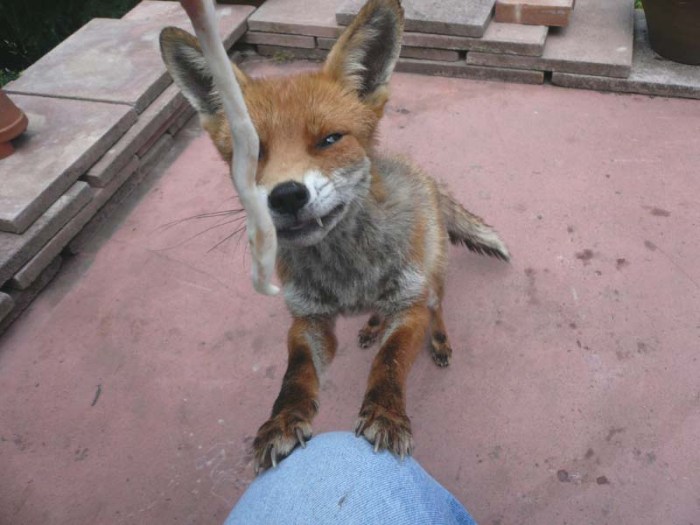
Sometimes Widdle was extremely polite, putting a fore-paw on each knee, showing you his pale brown eyes, and staring with a mixture of wistfulness and plain hunger:

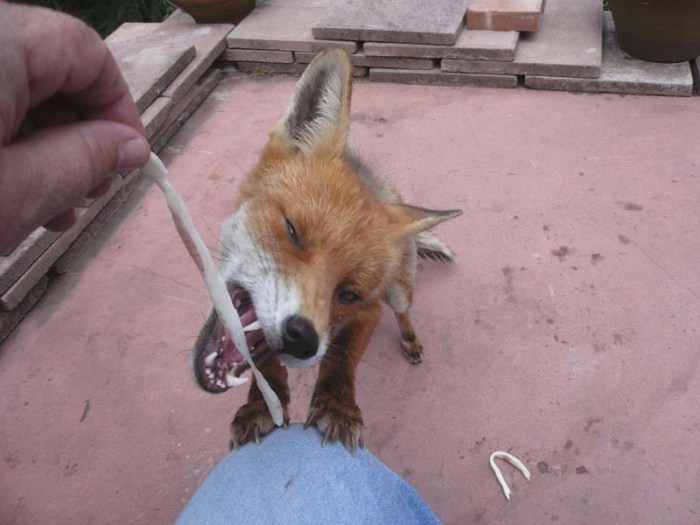
On other occasions, he was a lot more forthright, explaining with his pointy teeth, that he was pressed for time, so could you crack on with it, please? After all, we both know how it’s going to end:

I wasn’t the only person who could feed him, but that perfect lunge was always his favourite method. Keep still and you were perfectly safe:

On occasion he was over excited and perhaps got some sausage stuck on his teeth. He would always want to clean it off straightaway:

He made several trips back to “The Den” to feed the family. On his last trip, the sausage or sausages were always for him, and he would get over excited and lick his lips in anticipation:

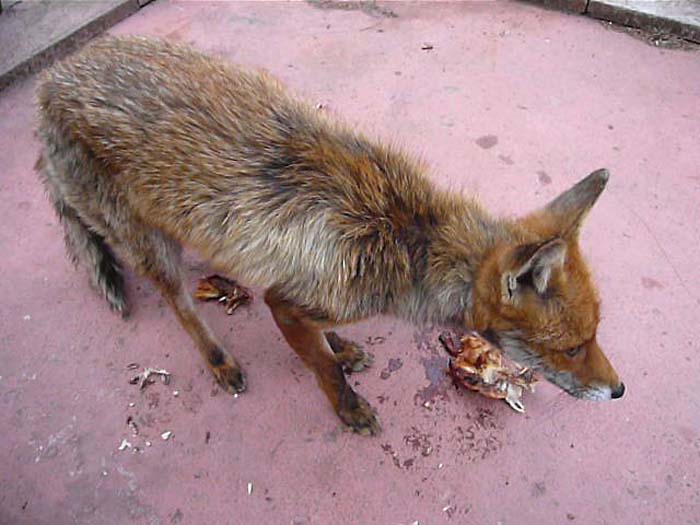
He was happy enough to eat leftovers. Here he has the carcass of a chicken, I think it is. Just look how, in this view, the early stages of his moult are easily visible:

This next picture comes seconds after the previous one. It catches Widdle in a strange pose. He has just heard a noise behind him and looks over to where the noise has come from. The angle makes it look as if he is being aggressive and snarling. But he isn’t. In actual fact, I never heard him make any noise of any kind. That pointy, sharp tooth is there though:

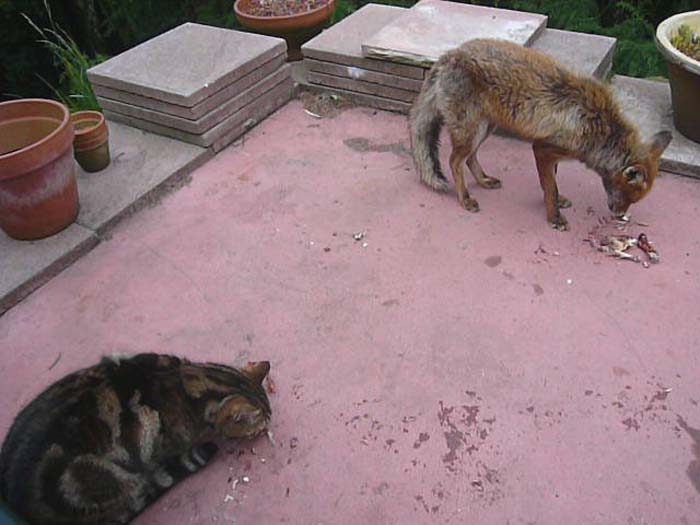
The noise came from next door’s cat, an old bruiser called Yin-Yang.  He was taken, as far as I know, as a young kitten, from a feral cat’s nest and brought up in a normal home. People always seem to think that foxes eat cats but Widdle and Yin-Yang didn’t ever take any notice of each other. Foxes are always extremely wary of a cat’s claws and the possibility of losing an eye in any fight with one.

Anyway, here they are, both sharing the same bits of the same chicken. Yin-Yang lived to be around seventeen or eighteen years old. He died in my daughter’s arms after some macho hero deliberately drove his car over him in front of our house. Yin-Yang was deaf, so he didn’t hear the car horn.


22 Comments

Filed under Humour, Nottingham, Personal, Widdle, Wildlife and Nature

Hendon objects 1

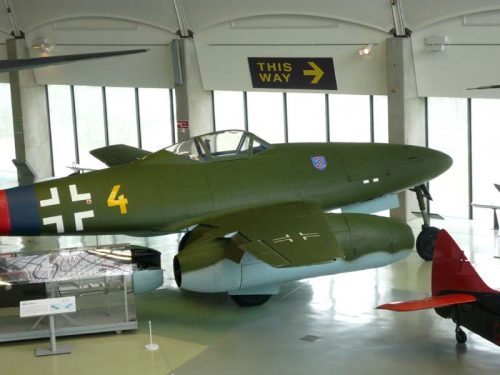
As you may have seen from previous blog posts, in 2010, I went with my family to the RAF Museum at Hendon. I did a whole series of articles, all of them based around one particularly iconic aircraft. In this case it is the Messerschmitt Me 262 jet fighter which you can read about here:

https://johnknifton.com/2018/07/27/the-messerschmitt-me-262-at-hendon/

If you want to read about any of the other aircraft, it would be easiest to search the whole blog for them. They were the Avro Lancaster, the Bristol Beaufighter, the Bristol Beaufort, the Curtiss P-40 Warhawk, the Gloster Meteor, the de Havilland Mosquito, the P-51 Mustang, the Short Sunderland, the Supermarine Southampton and the Supermarine Walrus.

It wasn’t all aircraft at Hendon, though. There were lots of identified non-flying objects and various pieces of metal rescued from aircraft as they awaited their turn in the scrapyard.

The famous German battleship, the Tirpitz, provided a battle flag:

There is also a decorated metal door from the ship’s interior. The ship itself was sunk on November 12th 1944 with the loss of up to 1204 sailors’ lives:

Here are the medals of Herman Goering the man in charge of Hitler’s Luftwaffe. As with many objects of this type, they are kept under glass and difficult, if not impossible, to photograph without reflections being included:

Here is the wall of an RAF hut, taken down carefully to preserve the artwork left on it by an anonymous artist. It shows a Short Stirling, the RAF’s first four engine bomber:

The particular aircraft in the picture is a Short Stirling Mark III of 199 Squadron based at North Creake in Norfolk. Its squadron letters were EXN and its serial number was LJ531 and its name was “N-Nan”. At 2219 hours on June 16th 1944, the crew took off to accompany 162 Halifaxes, 147 Lancasters and 12 Mosquitoes on a bombing mission which targeted the synthetic oil plant at  Sterkrade between Duisburg and Essen. They carried no bombs, but instead were to use their Mandrel, a noise jammer, to overwhelm the signals from the German Freya and Würzburg radar sets. Between them, nine such aircraft were capable of creating a 200 mile gap in the Germans’ radar coverage.

In the official records, the aircraft was “lost without trace” but modern sources on the internet suggest that it was shot down by Unteroffizier Josef Ottrin (Bordfunker/radar operator) to Feldwebel Trenke, of the 6./KG 51, some fifty miles north of Ostend. This incident took place at 02.00 hours at an altitude of 14,800 feet. They had taken off from Soesterberg in the Netherlands in a Messerschmitt Me 410 A-1/U2 to carry out an armed reconnaissance of London, probably to find targets for the new wonder weapons, the V-1 and the V-2.

All the crew of “N-Nan”were killed. They were:

Thomas Wilson Dale RNZAF (pilot, aged 25), the son of James Murray Dale and Maude Mary Dale of Wellington, New Zealand.

John Martin Watts (flight engineer, aged 19), the son of John and Ethel Rosetta Watts, of Caxton, Cambridgeshire.

Ronald Joffre Whittleston RNZAF, (navigator, aged 28), the son of Arthur William and Grace Whittleston and the husband of Frances Hellena Bertha Whittleston, of Frankton Junction, Auckland, New Zealand.

Kenneth Matthew Francis Swadling, (bomb aimer, aged 21), the son of Frank and Louise Marie Swadling, of Wembley Hill, Middlesex.

Francis Charles Brittain, (gunner, aged 21), the son of Charles Frederick and Hazel Margaret Brittain, of Kilburn, Middlesex.

Frank Lofthouse, (Mandrel specialist operator, aged 23), the son of Albert and Miriam Lofthouse, of Lupset, Yorkshire

John Critchley Higginbottom, (gunner, aged 21), the son of John Elliott Higginbottom and Lilian Jessie Higginbottom, of Streatham Hill, London.

William  McCreadie  Latimer, (gunner, aged 19) the son of George C. Latimer and Mary Latimer, of Garlieston, Wigtownshire in Scotland

Also on display at RAF Hendon are the medals won by Guy Gibson, the Squadron Leader of 617 Squadron at the time of the famous Dambusters raid. On the left is the highest British award for gallantry, the Victoria Cross. The usual price at auction for this famous medal is usually around £500,000-£700,000. Guy Gibson’s personal medal, though, would be worth many millions.

And here’s the insignia on the collar of his dog, a big Black Labrador, which was run over and killed by a mystery car at the exact same moment as Gibson was leading the squadron in the attack om the Möhne dam.

The lettering reads:

“SQ.D.N LDR

C.P.GIBSON.D.F.C.

R.A.F.   

89 SQDN

His dog was buried at RAF Scampton and here is his grave today:

19 Comments

Filed under Aviation, Bomber Command, History, military, Personal

Enigma (1)

In previous posts I have occasionally written a review of a book which I found particularly interesting. I have then related to the reader what the author found to say, in an effort to whet the potential reader’s appetite so that, hopefully, he or she might want to buy the book. This time, I decided to select an extremely interesting book which was not only fascinating but which taught me a great deal and introduced me to things that I had never previously known.

In this category belongs…….

“Code Wars

How ‘Ultra’ and ‘Magic’ Led to Allied Victory”

by John Jackson

One of the best things about this book is that it doesn’t try to instruct you on how the German “Enigma” machine encoded its messages. Such subjects are way beyond the capabilities of my brain and I enjoyed being able to read the book without proving to myself that I was a complete thickhead. Incidentally, along with encoding important messages, I also find Quantum Mechanics an equally impossible subject and most of Relativity too, even though much of the latter topic is getting on for being around a century old nowadays.

This is an Enigma machine. It’s a bit like one of those old fashioned portable record players, but without the turntable.

To spare my readers’ feelings, and my own, I have therefore decided to concentrate on the method by which we eventually acquired our knowledge of this famous German code, along with putting a special emphasis on the events in World War Two which turned out differently from how they might well have done, thanks to the British knowledge of Enigma.

After all, from 1945-1975 at least, nobody was aware of Enigma because it was still top secret. Before 1975, more or less every event in the war which unfolded in a particular way because Enigma had had a role to play in it, had to have a different story invented to explain its outcome. If you don’t understand that, don’t worry, you’ll soon see what I mean.

In the years immediately before the Second World War, the invention of the Enigma code machine had not really interested the British at all. Nor were the French or the Americans particularly bothered either.  No, it was the Poles who realised how crucially important the knowledge of the Enigma codes would be, if  a second world war broke out, as seemed likely.  For this reason, the Poles had, at the first opportunity, bought a commercial Enigma machine, in late 1932. Yes, you saw it right! Late 1932.

The purchase was made by Antoni Palluth of the Polish Cipher Bureau. In his private business life, he was also the co-owner of the AVA radio manufacturing company. AVA always wanted to help the Cipher Bureau as much as possible, and by February 1933, the company had back engineered their own replica of a commercial Enigma machine, and then produced a prototype according to the specifications of the three Polish “Five Star Codebreakers”. More of them. later.

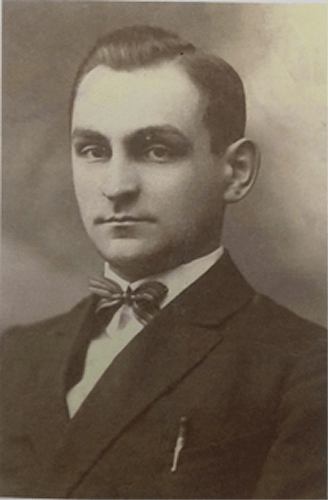
Here’s the rather handsome Mr Palluth….

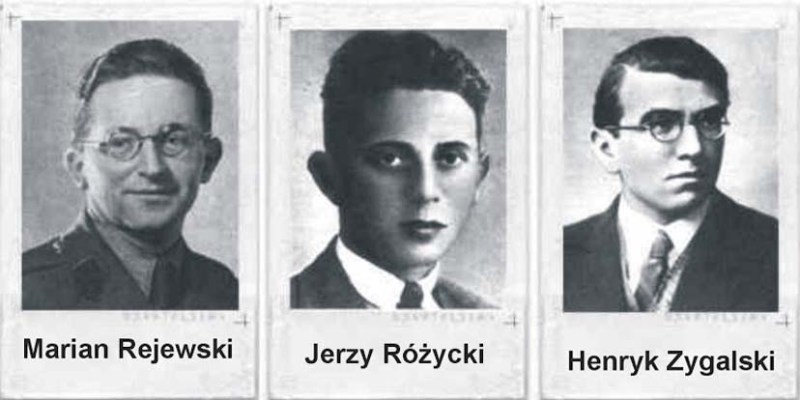
Four years previously, in 1928-1929, the Poles had worked out for themselves that the codebreakers of World War One would not be clever enough to crack the new type of codes now being introduced. What was needed were not men with secret pens and bottles of invisible ink which people kept throwing away because they thought they were empty, but whizz kid mathematicians with first class degrees at the top universities in the land. So the Poles cast around and found their own three whizz kid mathematicians and gave them the job. Their names were Marian Rejewski, Jery Rozycki and Henryk Zygalski. And here they are……

The Poles’ reward for taking the initiative like this was a bizarre event, a once in a lifetime event, an unforgettable occasion when, even though it wasn’t Christmas, Santa Claus brought them a very special present indeed.  It was a gift from God, a present from heaven.

Events began to kick off, when somebody rang up Anton Palluth, now the Head of the Cipher Bureau, and told him that a rather peculiar, rather large, parcel had been sent in error to Warsaw’s main Post Office.  Nobody knew what it was. Nobody had a clue. When the Great Gift was opened, they found that it was a military grade Enigma machine, brand new, state of the art.

Somebody, somewhere had committed a war-changing boo-boo.

This crass mistake was way beyond building the fastest jet fighter in the world and then slowing it down by putting bomb racks on the wings. No, this was the first steps in a process which would save the lives of millions of people and shorten the war by at least a couple of years.

Next time we see what Anton Palluth did with his gift from God, and he didn’t put it on ebay.


26 Comments

Filed under History

“Die Rote Armee” means “the Red Army” (2)

Last time I was showing you the front page of a propaganda leaflet I had bought on ebay. They were dropped in its tens of thousands from aircraft of the Red Air Force in an effort to persuade the German defenders of Berlin to surrender. After all, the defenders numbered just 766,750 and the Red Army had a gigantic 2,300,000 men on the case. Many of the defenders of the city were not really soldiers anyway. These three were apparently postmen:

Anyway, here’s the front of the leaflet :

Just as a matter of interest, the Russians do not call the Second World War by the same name that we do. They call it :

Великая Отечественная война

The first word is “Vyelikaya” which means “great”.

The second word is “Atyechyest-vyennaya”, a six syllable word which means “patriotic” and has its origins in the word “atyets” which means “father” (just like “patriotic” in actual fact)

The third word is “Vai-ná” which means “war”.

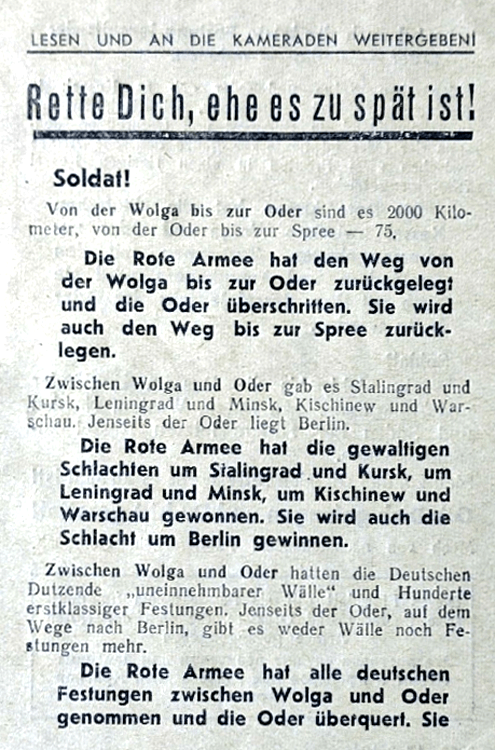
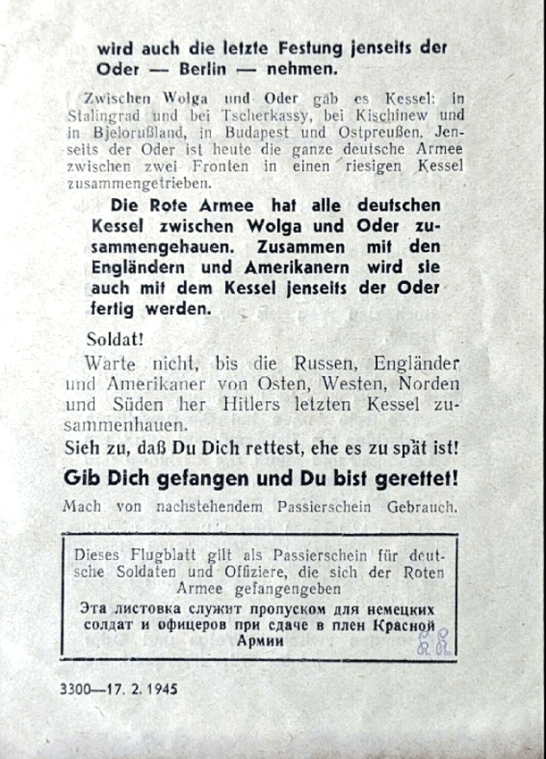
Here’s the back of the leaflet, where the word “wird” proves to be the second word of a sentence begun on side one:

If you remember, the pamphlet was reminding the Germans that the Soviets had won all of the battles at Stalingrad, Leningrad, Kishinev, Kursk, Minsk and Warsaw and had completed the crossings of the Rivers Volga and Oder. Now it is time for Berlin and the River Spree. The pamphlet continues with more of the same. If the Red Army has won in Stalingrad, Kursk and Warsaw, the last few troops on the banks of the Oder will not be a problem……
“Festungen zwischen Wolga und Oder gäb es Kessel: In Stalingrad und bei Tscherkassy, bei Kischinev und in Bjelorußland, in Budapest und Ostpreußen. Jenseits der Oder ist heute die ganze deutsche armee zwischen zwei Fronten in einem riesigen Kessel zusammangetrieben.”

“There would be fortresses between the Volga and the Oder: in Stalingrad and near Cherkassy, near Kishinev and in Byelorussia, in Budapest and East Prussia. On the other side of the Oder, the entire German army is now driven together between two fronts in a huge encircled area.”

The promise is repeated in the next section, but to this is added the fact that not only is the Red Army some two million+  strong but there is also the question of two other armies, the American and the British:

“Die Rote Armee hat alle deutschen Kessel zwischen Wolga under Oder zusammengehauen. Zusammen mit den Engländern und Amerikanern wird sie auch mit dem Kessel jenseits der Oder fertig werden.”

“The Red Army have cut down all the German encircled areas between the Volga and the Oder. Together with the British and Americans, it will also deal with the encircled area on the other side of the Oder.”

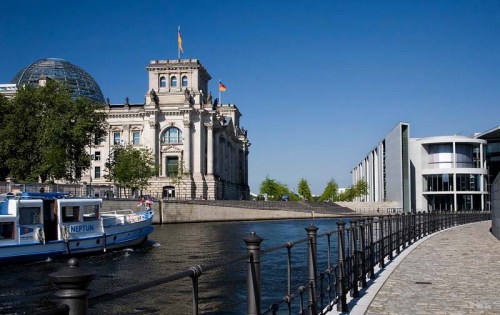
And here’s the very last river, the Spree, which flows right through the middle of Berlin. Right past the Re9ichstag building:

And then we come to the crunch. The whole point of the pamphlet…….

“Soldat!””Soldat!”

“Soldier!”


“Warte nicht, bid die Russen, Engländer und Amerikaner von Osten, Westen, Norden und Süden her Hitlers letsten Kessel zusammanhauen.”

“Do not wait until the Russians, British and Americans from east, west, north and south together, smash to pieces Hitler’s last encircled army.”


“Sieh zu, daß Du Dich rettest, ehe es zu spät ist !”

“Make sure you save yourself before it’s too late!”


“Gib Dich gefangen und du bist gerettet !”  

“Give yourself up and you will be saved!”


“Mach von nachstehendem Passierschein Gebrauch.”

“Use the pass below.”

“Dieses Flugblatt gilt als Passierschein für deutsche Soldaten und Offiziere, die sich der Roten Armee.”

“This leaflet is valid as a pass for German soldiers and officers who join the Red Army.”

It also contained that information in Russian…

“Эта листовка служит пропуском для немецких солдат и офицеров при сдаче в плен Красной Армии”

Which means….

“This leaflet serves as a pass for German soldiers and officers when surrendering to the Red Army.”

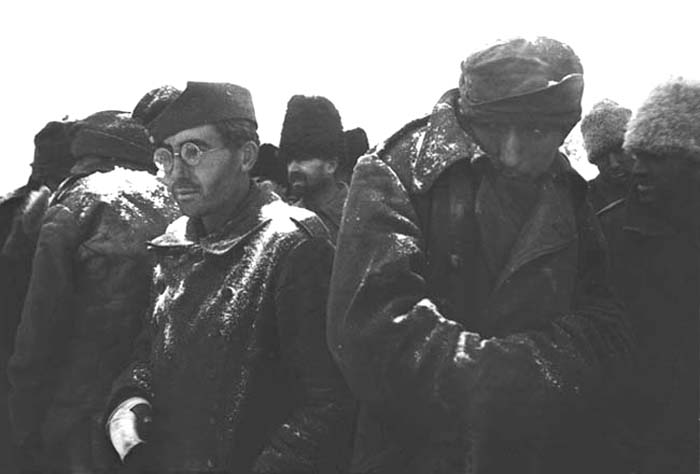
Alas, it didn’t all work out very well for all of the German POWs in Sunny Siberia:

According to the Soviets, 381,067 German POWs died in Russian camps (356,700 Germans and 24,367 men of other nationalities).

The West German government found that of 3,060,000 German prisoners, a total of 1,094,250 perished in the camps of the Soviet Union.

Historian Rüdiger Overmans calculated that there were 3,000,000 German POWs in the USSR, and the “maximum” number of deaths was 1,000,000.

And of the ones who did survive, the very last was released in 1956. Every single one had been busy rebuilding a shattered Soviet Union.

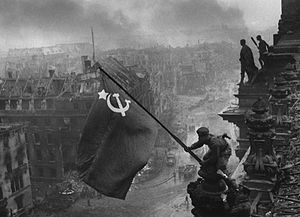
And to end with, let’s take another look at the Soviet “Photograph of the Month” for May 1945:


25 Comments

Filed under Aviation, History, military, Russia