Category Archives: Aviation

The Luckiest Man in the World (2)

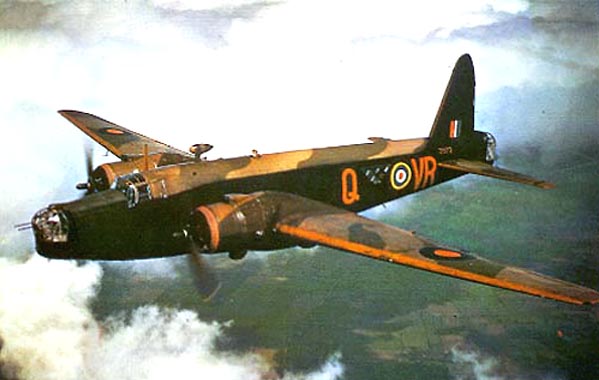
In the previous post, I explained how the aircraft being used for training by Bomber Command were often very poor machines from the pilots’ point of view and in a very poor state:

This slideshow requires JavaScript.


Poor aircraft then, and, from Old Nottinghamian, Jack Sweeney’s point of view, it had also been a very poor decision when Ashbourne in Derbyshire was selected as the place to construct the airbase where he was to do his training in 81 OTU.

In the first place, the building of RAF Ashbourne was actually against regulations as it was higher than the ceiling height for the construction of airfields:

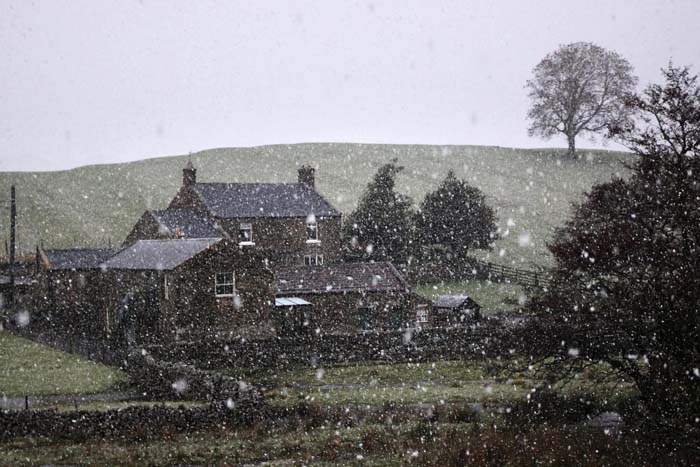
And everyone was well aware of the prevailing weather around Ashbourne. Driving rain, rain, sleet, snow, drizzle, fog and mist. As I write now, even the tripadvisor website, trying to attract tourists to Ashbourne, offers “Stunning walks & scenery – whatever the weather”:

And the 1940s had a lot worse weather than we experience nowadays.

Ashbourne, of course, has the nickname “the Gateway to the Peak District”. And that says it all. If you have lots of peaks, you should be thinking about whether that is the best place to allow inexperienced young men to fly around, often at night, in aircraft without radar aids of any kind, and only the most rudimentary of weather forecasting.

Only two or three miles north of the airfield there are steep slopes, rising up to extensive high land masses around Fenny Bentley and Kniveton. Given how many foggy nights used to occur in that area, such countryside is just not acceptable for pilot training.
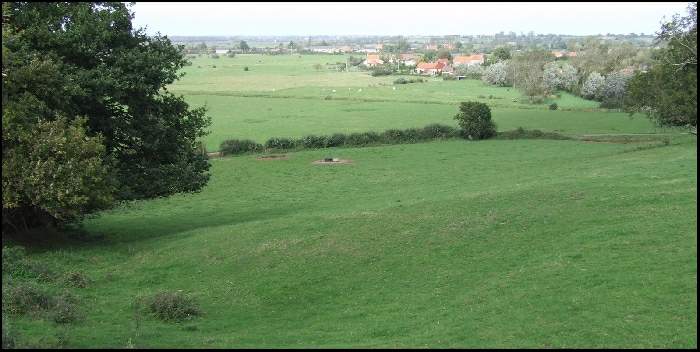
Jack Sweeney was killed on January 31st 1944. Ironically he wasn’t flying from Ashbourne but from a satellite airfield nearby called RAF Tilstock. Like so many of the hundreds of airfields constructed in Britain at this time, Tilstock has been rather neglected over the past and could do with a little light weeding perhaps:

In the notes I made during my researches, I described the countryside around Tilstock as “quite hilly country, very variable, lots of steep slopes”, so it’s not too different from the nearby Ashbourne area.
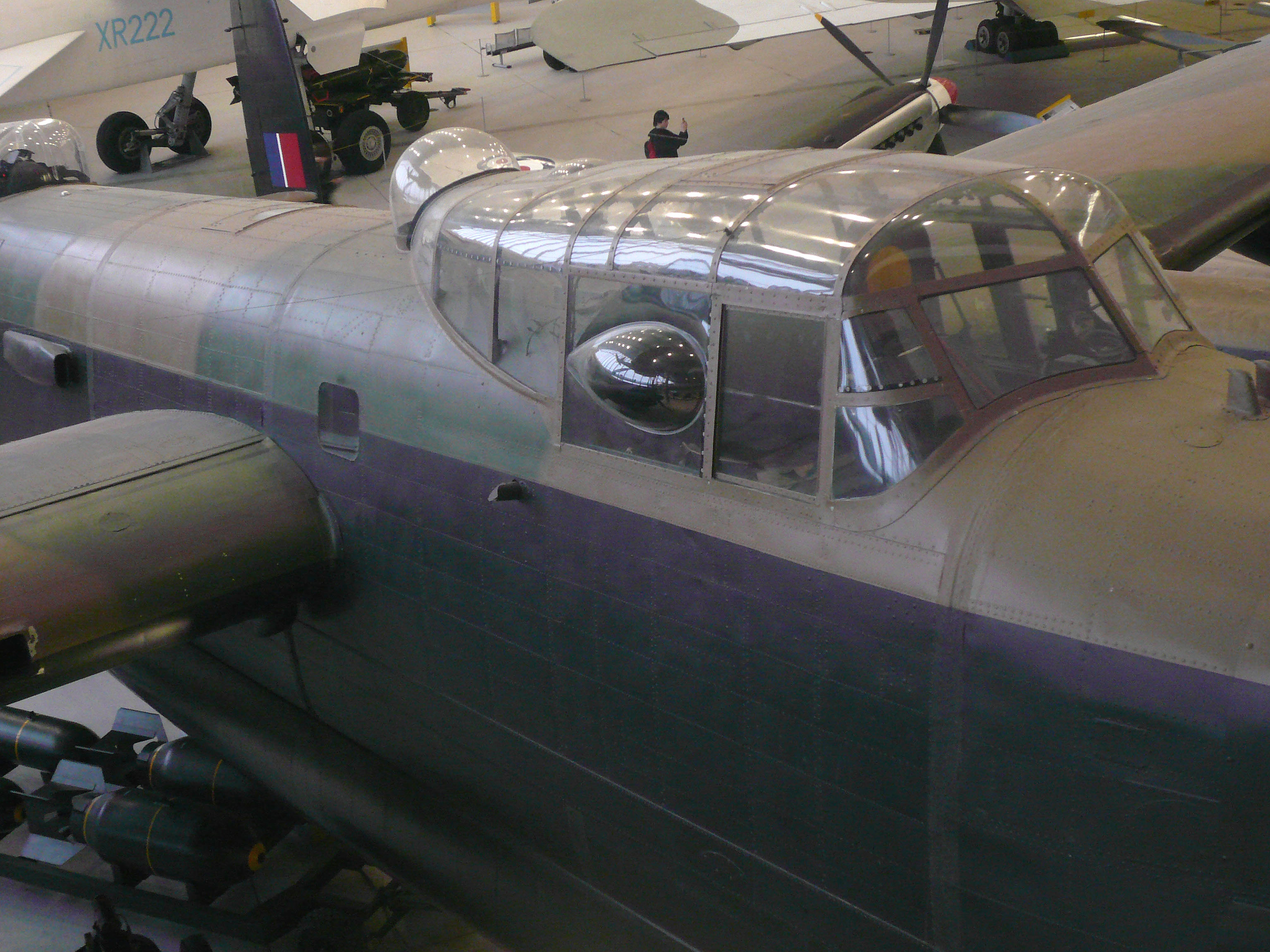
Sergeant Sweeney took off from RAF Tilstock in an Armstrong Whitworth Whitley Mark V, serial number LA 765:

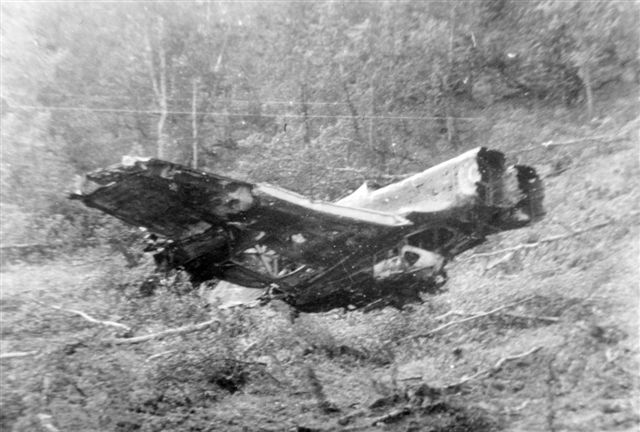
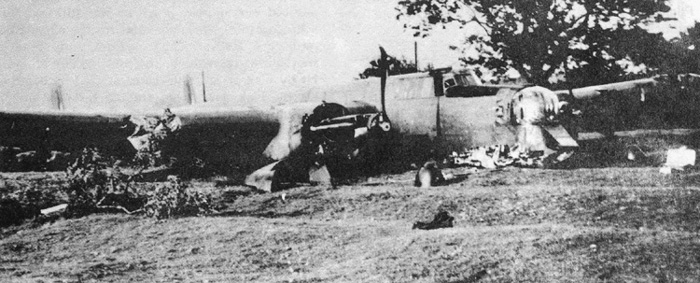
He crashed about 30 miles away near Hardiwick between Caverswall and Dilhorne, a tiny village situated in what looks to me to be quite a hilly landscape, perhaps 7 or 8 miles north east of Blythe Bridge. When our family all settled into our 1959 Ford Anglia saloon for the long trip from Derby to Wigan in the pre-motorway years of the early 1960s, Blythe Bridge was a familiar and exciting landmark for all of us, It meant that we were a third of the way there and only had 70 miles to go, unless, of course, in those pre-motorway years, we got lost:

25 Comments

Filed under Aviation, Bomber Command, History

The Luckiest Man in the World (1)

In his later years, my Dad, Fred, always used to say that training to fly in bombers was infinitely more perilous than flying on combat missions. He did his training with 20 OTU at Lossiemouth in north east Scotland. And certainly, casualty rates on the training airbases in Scotland were always extremely high.
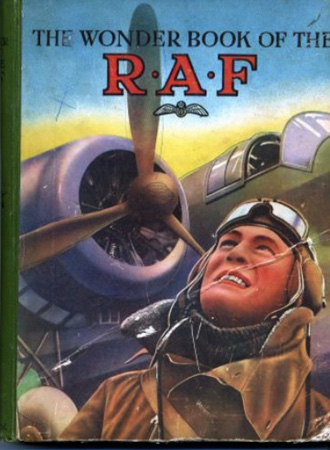
No matter where their OTU was, though, everyone soon became well aware just how dangerous their young lives were. The apparently modern aircraft, pictures of which would previously have filled publications for young boys such as “The Wonder Book of the RAF”, were in reality often second rate, or extremely dated, and were certainly not good enough to be front line combat aircraft. The mechanics too, being often extremely inexperienced, were frequently incapable of servicing the aircraft properly. The book looks exciting though:

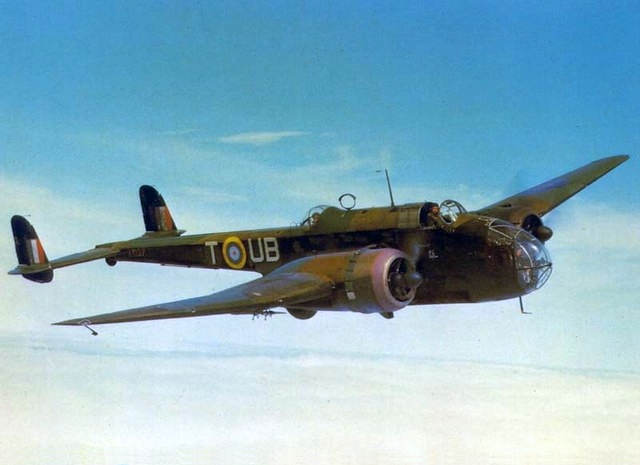
The aircraft types used included the Handley Page Hampden, which had a variety of nicknames  including the Flying Suitcase, the Flying Panhandle and the Flying Tadpole. Nobody liked it very much then!

The very best of all the training bombers was the Vickers Wellington.


Overall, though, the problem was that crews were by definition inexperienced, and unlikely to be able to respond to any given emergency either sufficiently quickly or in the appropriate manner. They were more liable to make mistakes, and then to compound those initial errors by making even more mistakes. Indeed, statistically, it remains a fact that around 15% of Bomber Command’s fatalities during the Second World War occurred through crashes and accidents in training situations. In some O.T.U.s. casualty rates reached 25%. The situation was perhaps best summed up by the airman who said that the problem was “dodgy crews in dodgy aircraft.”

Here’s an example. It’s taken from the research I am currently doing about the Old Nottinghamians, Old Boys of the High School, who perished in the Second World War.

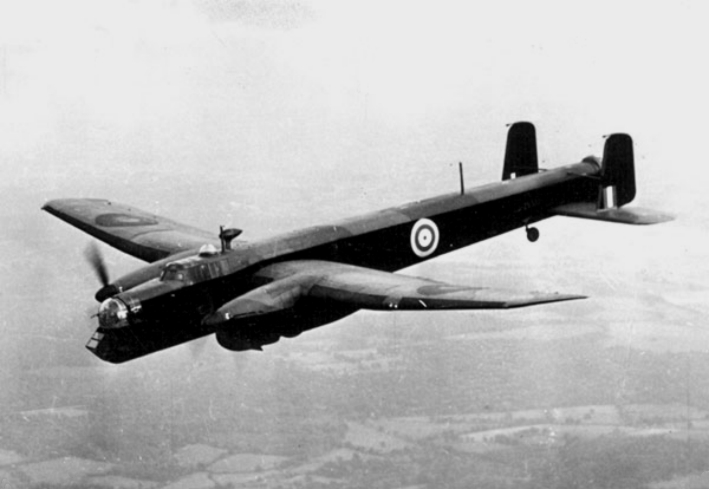
“…Jack was called to join 81 OTU and was listed to train as a bomber pilot. 81 OTU was formed in July 1942 and they were based at RAF Ashbourne training aircrews for night bombing using the Armstrong Whitworth Whitley:

This aircraft was obsolete by the time the war broke out. It had a small bomb load, it would not fly on just one engine and when it did fly, it had a most peculiar nose down attitude. This was caused by the angle of the wings which was very high to ensure a good performance when taking off or landing. But when cruising, there was an enormous amount of drag, restricting the aircraft’s fuel economy and forcing many pilots and their crews to ditch in the North Sea when they could not get all the way back to their airfield. The crews who did survive joked that the Whitley was “slow as a funeral” and called it the “Flying Wardrobe”, or, on a bad day, the “Flying Coffin”.

We’ll see why in more detail next time.


27 Comments

Filed under Aviation, Bomber Command, History

Attack the Tirpitz!! In a Halifax??

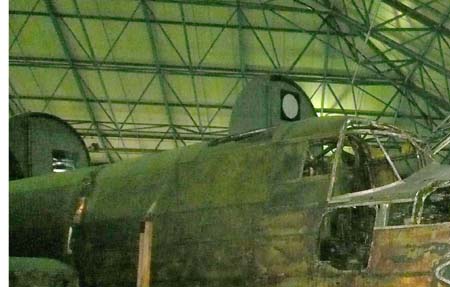
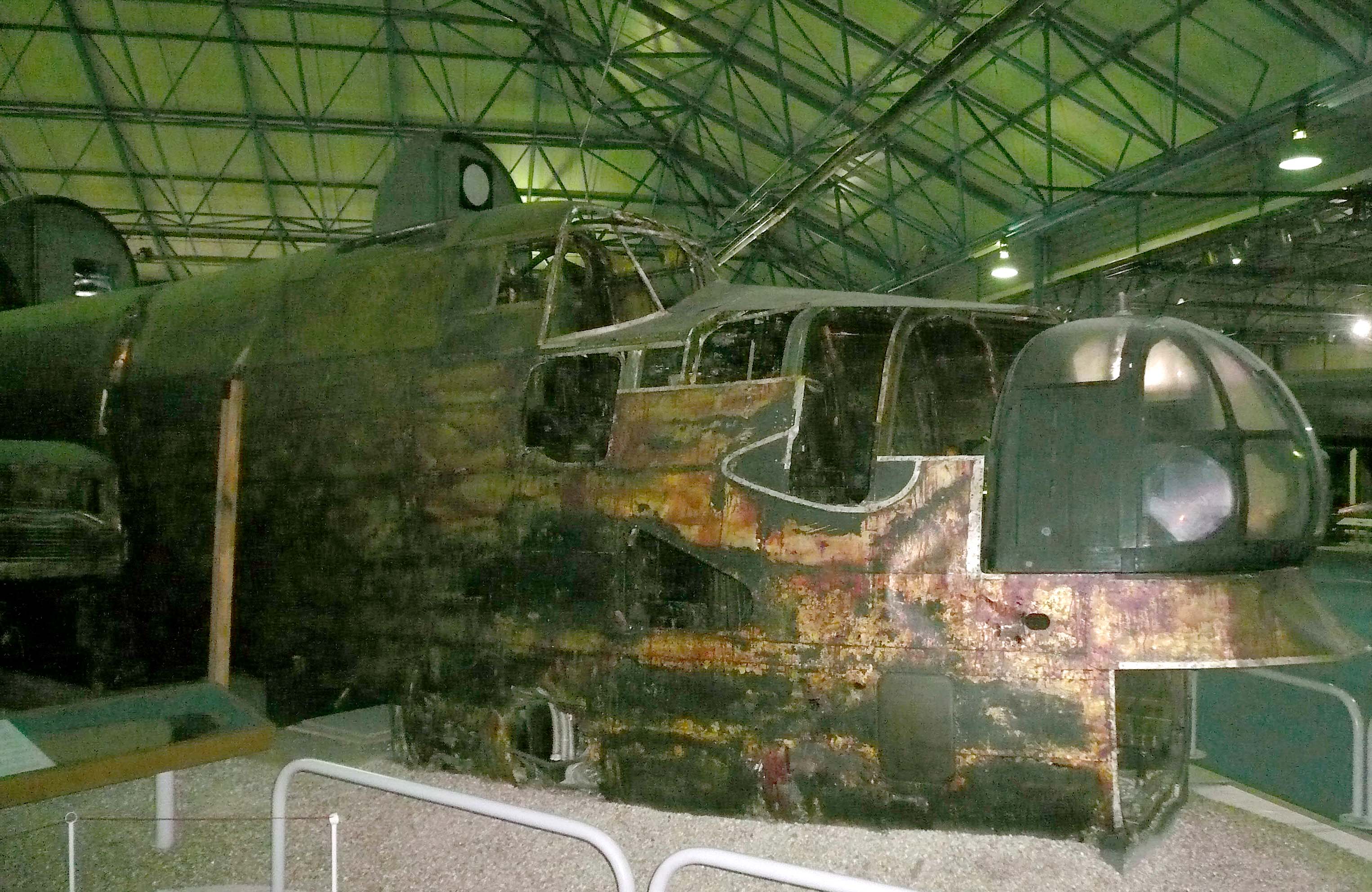
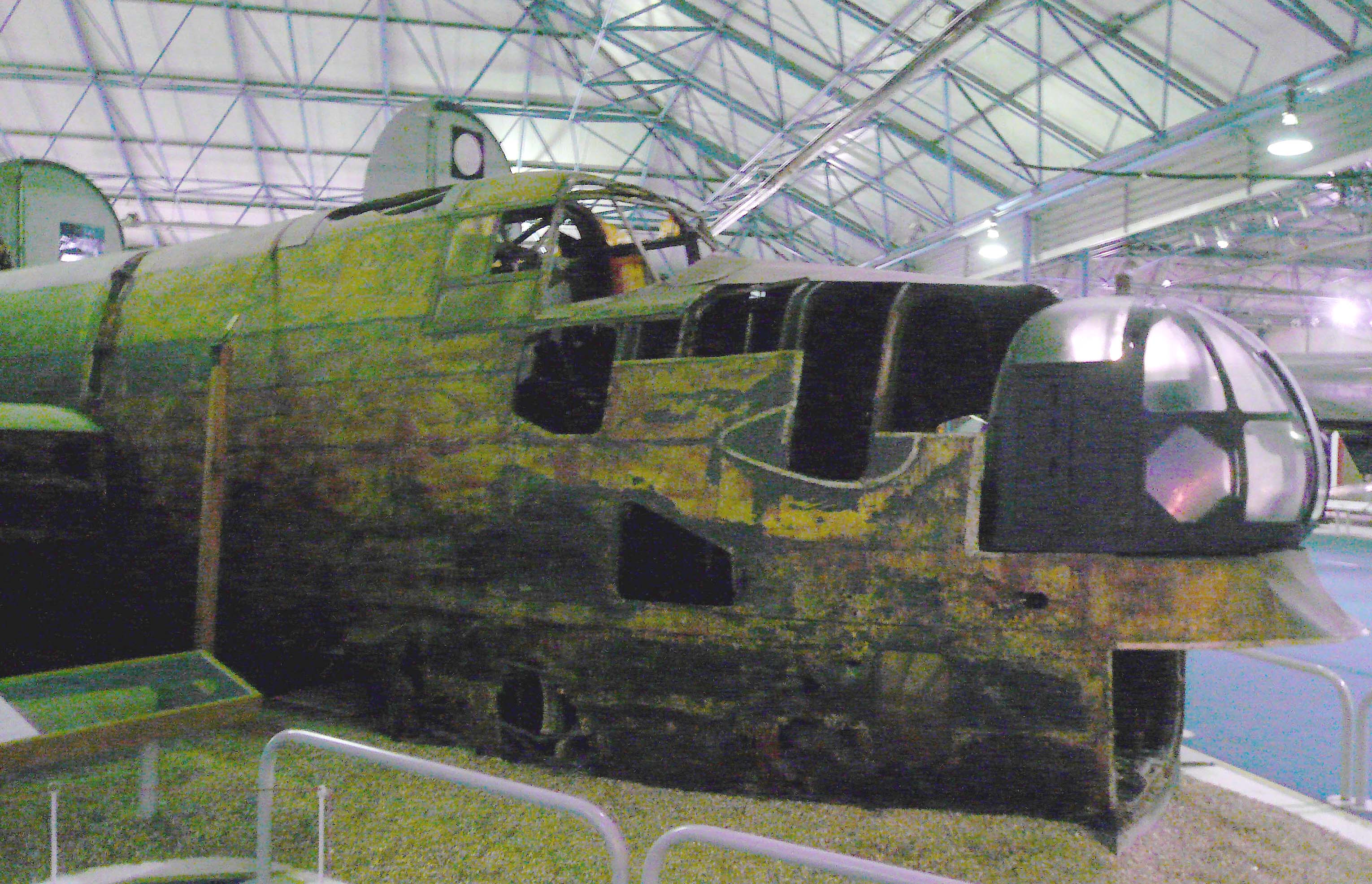
You are so lucky! You are going to see three photographs of a relatively rare aircraft, a Halifax Mark II, taken in the almost funereal gloom of the RAF Museum at Hendon. I apologise for the quality but in their efforts to preserve the original paint on the aircraft, the museum lights are kept very low indeed. For this particular aircraft, do not be put off by the fact that it seems apparently to have grown two enormous circular fins in the middle of its back. That is an Indian Air Force B-24 Liberator:

this one

The Halifax was the second British four-engined bomber to enter service in World War Two but it became the first to bomb Germany during a raid on Hamburg on the night of March 12th-13th 1941. Subsequent increasing losses on operations over Germany caused Halifax bombers to be used on less hazardous targets from September 1943.

The Halifax made over 75,000 bombing sorties and dropped almost a quarter of a million tons of bombs on Germany.

The Halifax continued in service with Coastal and Transport Commands after the war and the last operational flight was made by a Coastal Command aircraft in March 1952 from Gibraltar.
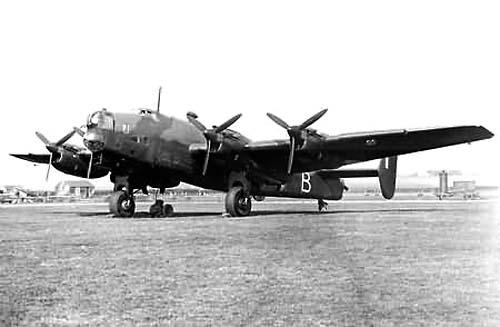
This s a Halifax B Mk II, Series I, with the serial number W1048. It was built by English Electric in 1942 at their factory near Samlesbury near Preston in Lancashire as part of a contract for 200 Halifaxes. This a similar aeroplane:

halifax_5

On March 27th 1942 it joined 102 Squadron at Dalton in North Yorkshire as “DY-S”.  The squadron was in the process of converting from the old Whitley Mark Vs
On April 9th 1942, six aircraft from 102 Squadron were exchanged with six aircraft from 35 Squadron because they were fitted with Gee radio navigation aid and could not be risked on a raid beyond the range of Gee stations  W1048 now became “TL-S” of 35 Squadron.
On April 15th the aircraft was taken on a training flight around Filey Bay followed by some low level practice bombing at Strenshall. Just over a week later, it  flew with ten other Halifaxes to RAF Kinloss in Scotland as an advance base for the raid on the German battleship, the Tirpitz.
It took off on April 27th 1942 at 2030 hours, the bomber’s first operational mission. “DY-S” was the  seventh of eleven bombers to depart and it was never heard of again. Until, that is, it was restored to the RAF Museum at Hendon;

P1320336xxxxxxxxxxxxxxxxxxxxxxxxxxxxx

The crew was Pilot Officer Don P MacIntyre who was 24 years old and came from Canada. The busy bee in the crew was Pilot Officer Ian Hewitt who was the observer, bomb aimer and navigator. He  later won a DFC. After the war, he moved to quieter pursuits and became a chartered accountant, dying peacefully at home in bed in June 2015, aged 94.
The Flight Engineer was Sergeant Vic Stevens and the first WOP/AG  was Sergeant Dave Perry
The mid upper gunner was another Canadian, Sergeant Pierre Blanchet.
The tail gunner was Sergeant Ron Wilson who in later life was to become a London cabby.
The aircraft was carrying four spherical mines of the Royal Navy type 19N. They each weighed a ton and their shape and size meant that the the bomb doors could not be closed.
The cunning plan was to roll the four mines down the steep mountainside into the gap between the ship and the shore.  They would then sink the ship because the underside was thinner and therefore more vulnerable.
At half past midnight, the eighth aircraft to attack, Don McIntyre followed by his friend Reg Lane set off to release their mines. McIntyre was first. As they had arranged, they descended to 200 feet but “DY-S” was hit by flak and too badly damaged to get back to Yorkshire or even to Sweden.
They were forced to land on the frozen surface of Lake Hoklingen, twenty five miles east of Trondheim.

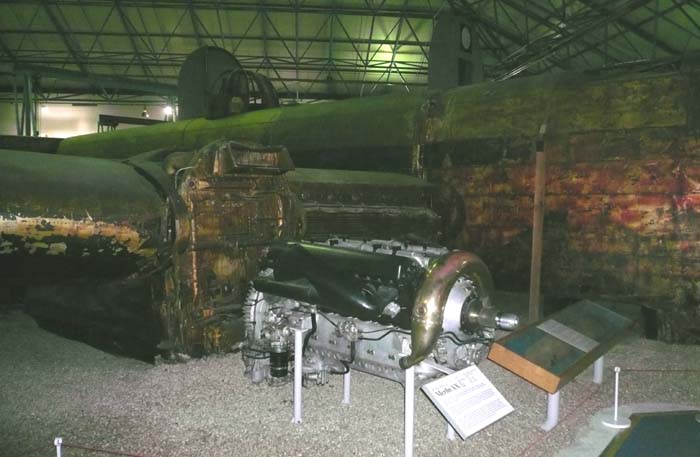
Here is the starboard inner engine nowadays in the museum:

P1320335

Vic Stevens broke his ankle and was eventually taken to hospital by the Germans. The other six came into contact with the Ling, the Norwegian underground and were helped to Sweden. Ian Hewitt and Don McIntyre returned to England after a few weeks, and Dave Perry,  Pierre Blanchet and Ron Wilson after a year. By this time Ron Wilson had rented a flat, found a job and made a start on a new life.
The poor old Halifax sank through the ice in the southern corner of the lake just twelve hours after the crash.
In 1971 the remains were found by local divers and in September 1972 by the RAF Sub Aqua Club. Everything was still there except for the starboard outer engine and one or two bits and pieces taken by souvenir hunters in the past.

Here is a photograph which is admittedly very similar to one of the others. I am quite proud of it, though, because my Idiots’ Guide to Photoshop has enabled me to turn a pretty well completely black picture into something understandable. Slight tinges of red are apparently the chemical which inhibits any further deterioration in the fresh air. Do they make that for humans?

P1320338xxxxxxxxxxxxxxxxxxxxxxxxxxxxx

By the end of June 1973, the Halifax had been retrieved from the lake, and after a lot of restoration, it was ready for the public by the end of 1982. Apparently a second Halifax from the same squadron and the same operation was discovered at the bottom of a nearby fjord in 2014. This exciting discovery was made by the Marine Technology Centre from the Norwegian University of Science and Technology in Trondheim. The wreckage is around 600 feet down, and is thought to be W7656 and to contain the remains of Sergeants Evans and Columbine, the wireless operator/gunner and the navigator respectively. I do not know if this will make any difference to plans to raise the aircraft and to restore it.

28 Comments

Filed under Aviation, Bomber Command, History, Personal

Albert Ball, the naughty hero

Today marks the 100th anniversary of that enigmatic character, Albert Ball. Nowadays, perhaps, Albert Ball is pretty much a forgotten name. He was, however, one of the greatest air aces of the Great War:
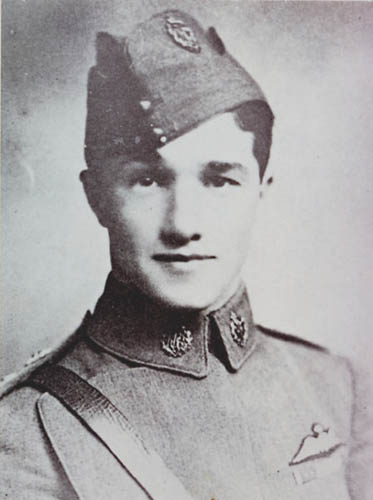
Ball photo

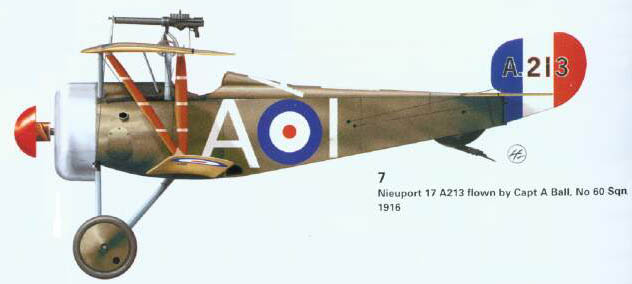
Albert was a natural fighter pilot, and initially, he always flew French Nieuport fighters (with a top speed of 110 m.p.h.):

This is a painting  of Albert’s very own Nieuport:

nieuport_ball cccccc

As well as the French fighter though, the English S.E.5 with its top speed of 138 m.p.h. was to hold a huge place in Albert’s affections in the latter period of his career:

Unlike many of his colleagues in the Royal Flying Corps, Albert gained widespread public fame for his achievements. In general, unlike the French or the Germans, the British did not use their aces for propaganda purposes, but Albert was the first brilliant exception. Almost like a medieval knight of the air, Albert shot down 44 enemy aircraft. In today’s world he would have been, quite simply, a superstar.

Albert was genuinely fearless, and the war weary English public of 1917 loved the way he flew alone, like a Knight of the Round Table, and always attacked the enemy aircraft, irrespective of the odds against him.  His favourite prey was the German Roland C.II, the so-called “Walfisch”:

Most of Albert’s victories came by attacking enemy aircraft from below, with his Lewis machine gun tilted upwards. It was very dangerous but, like the Schräge Musik cannons of a later conflict, was remarkably successful.

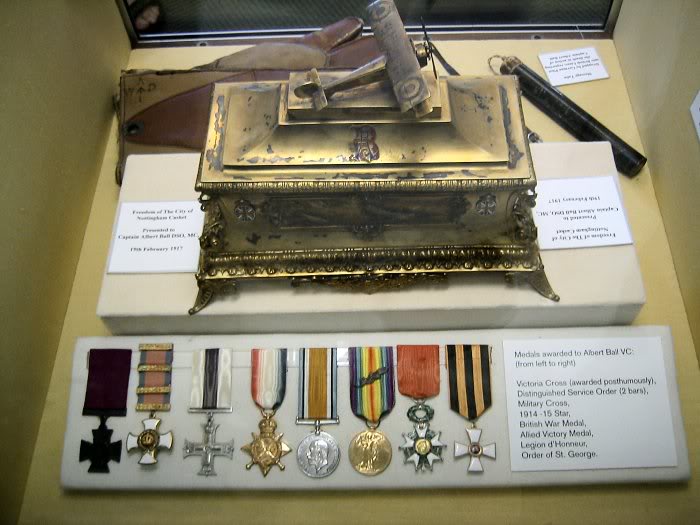
Flying without any other aircraft to support him, Albert was always going to be vulnerable, and he was finally killed out on patrol on May 7th 1917, shortly before his twenty-first birthday. For this last combat, Albert was awarded a posthumous Victoria Cross, to add to his Military Cross, Distinguished Service Order, Distinguished Flying Cross, Légion d’Honneur, Croix de Chevalier, Russian Order of St George and the American Medal.
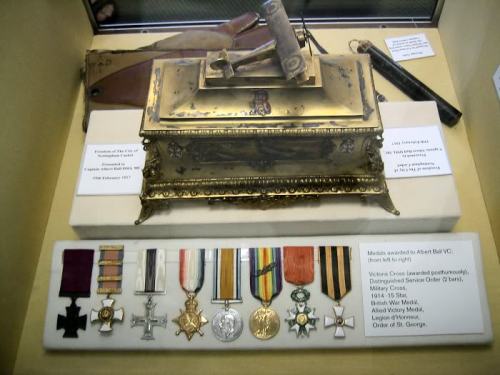
medals 2

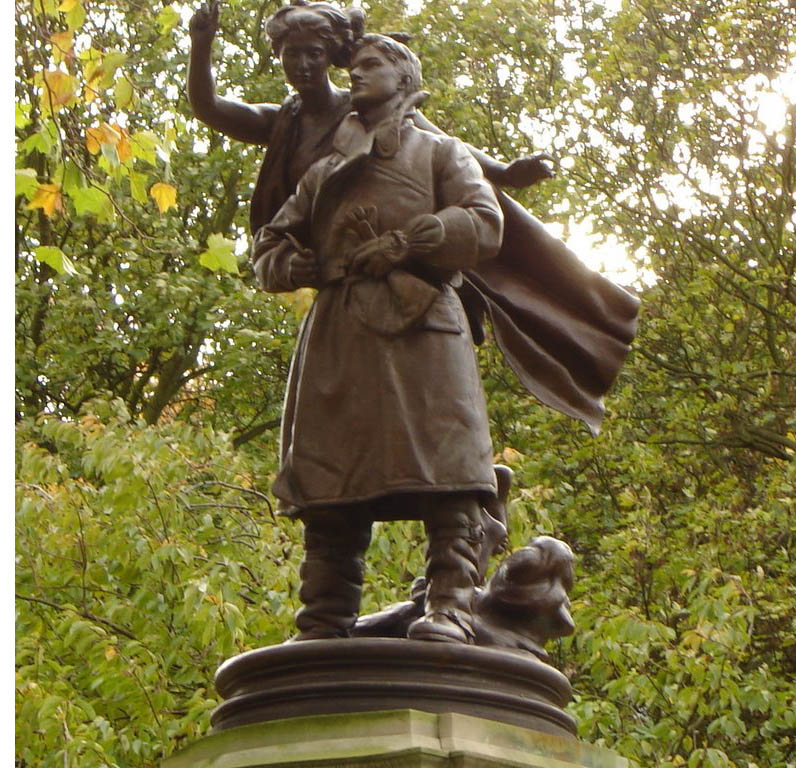
These medals can still be seen inside Nottingham Castle. Outside, in the gardens, is his statue:

statue xxxxx

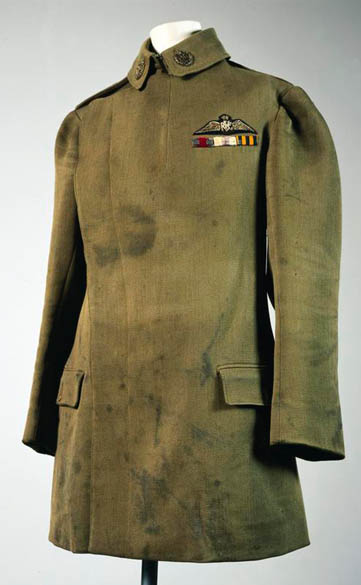
His battered uniform has been carefully preserved:

coatcccc

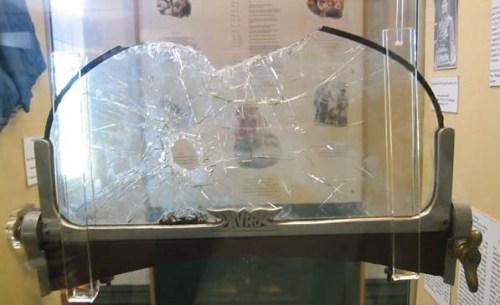
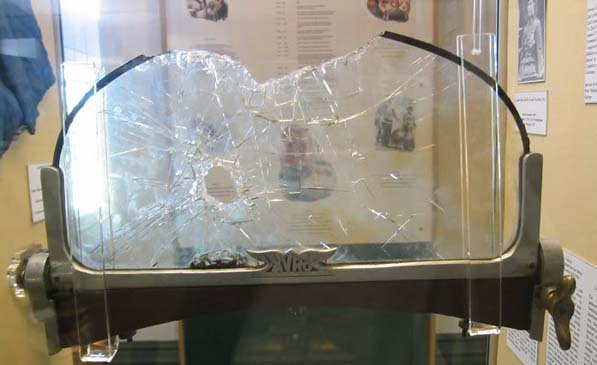
And so has his shattered windscreen:

windscreenxxxxxxxx

On a more scurrilous note, Albert was always one for the ladies and every photograph of the dashing hero seems to have him with a different young lady in tow. In some of his biographies he is credited with having left an unknown, but relatively sizeable, number of the young ladies of Nottingham in, shall we say, a very interesting state.  Indeed, it would be interesting to know if anybody nowadays claims kinship with this dashing young man.

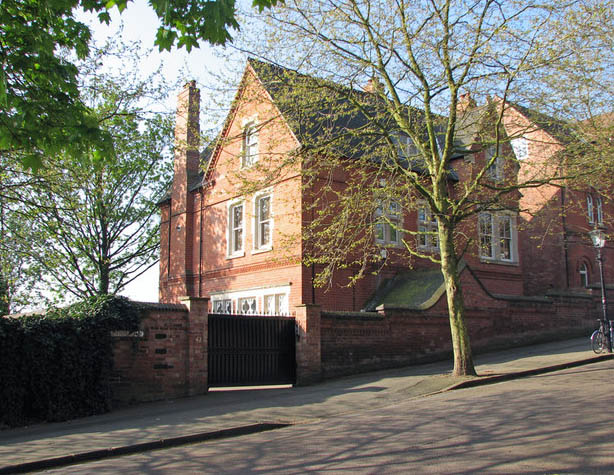
Albert was born on August 14th 1896 at the family home at 301, Lenton Boulevard (now 245 Castle Boulevard), Nottingham. He was the third child, and elder son, of Albert Ball and his wife, née Harriet Mary Page. A few years afterwards the family moved to Sedgley House, 43 Lenton Avenue, The Park, Nottingham, where they lived in a moderately wealthy fashion:
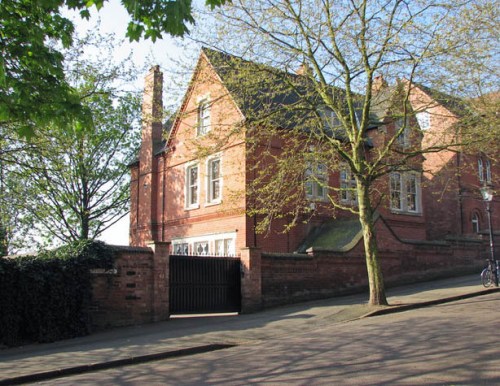
sedgly avenue xxxxxxx

Albert had a brother Cyril and a sister Lois. Their parents were always “loving and indulgent”. Albert Ball Senior had originally been a plumber, but he was an ambitious man and became an estate agent, and then a property speculator, as his fortunes improved. He was to be elected Mayor of Nottingham in 1909, 1910, 1920 and 1935.
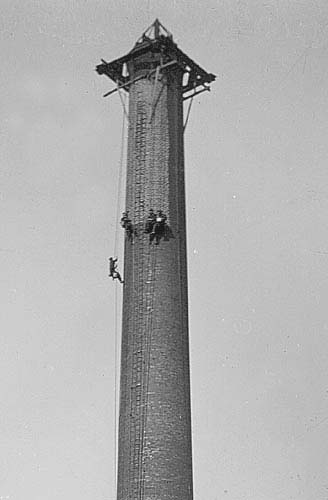
As a boy, Albert was interested in engines and electrics. He had experience with firearms and enjoyed target practice in the garden. Thanks to his wonderful eyesight, he was soon a crack shot. On his sixteenth birthday, Albert spent a lovely day as a steeplejack, as he accompanied workmen to the top of a tall factory chimney. He was completely unafraid and strolled around, not bothered in the slightest by the height:

steeplejack1

Albert’s education began at the Lenton Church School. He then moved, along with his younger brother Cyril, to Grantham Grammar School, which had a military tradition that stretched way back into the Napoleonic times of the early 19th century, well before the establishment of other schools’ Officer Training Corps, or Combined Cadet Forces.

Albert moved to Nottingham High School on Thursday, September 19th 1907 at the age of eleven, as boy number 2651. According to the school register, he was born on August 17th 1896, although on his birth certificate, the date is certainly given as August 14th. Later in life, Albert was to countersign a certificate from the Royal Aero Club on which his date of birth was written as August 21st. His father is listed in the High School register as Albert Ball, a land agent of 43, Lenton Road, Nottingham.

Albert did not last a particularly long time at his new school, as he was to be expelled for bad behaviour in 1910. Contemporary sources reveal that Ball particularly enjoyed misbehaving in music lessons:

“The Third Form music master was a Mr Dunhill, who had one eye which was straight, but the other looked outwards at an angle, rather like half past ten on a clock. Boys always used to make fun of him. Whenever he shouted “Stand up you ! ! ! ” and looked at a certain naughty boy, four others would get up elsewhere in the room. “NO !  NO !  NOT YOU !! …YOU ! ! ” The original four would then sit down, and another four completely unrelated boys would stand up elsewhere in the room.
Albert Ball specialised in misbehaviour during these singing classes. He and his brother would invariably “kick up a terrible row”, and were then sent out of the room.”
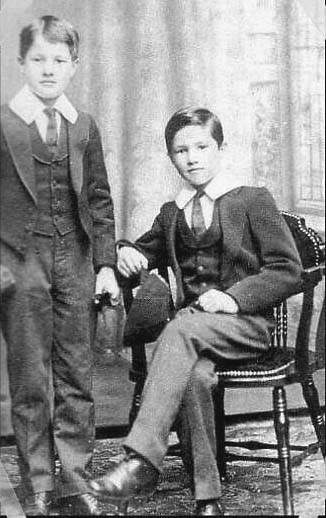
at trent college

According to one Old Boy from just a few years later, however, Albert’s actual expulsion came from:

“an incident which took place at morning prayers. Ball took in with him a huge bag full of boiled sweets. At one point it was allowed to burst, and hundreds and hundreds of sweets were all dropped onto the floor. The whole school assembly then became one seething mass of boys, all scrabbling about on the floor, “heads down and bottoms up, completely out of control ”, trying to pick up as many sweets as they possibly could.”

That did not necessarily mean, however, that Albert misbehaved with every single teacher. The Chief History master, C.Lloyd Morgan, was to recollect in later years:

“I think I taught Albert Ball but can’t recollect him.”

Albert moved next to Trent College, where he was a boarder. He was only an average student, but he possessed great curiosity for everything mechanical. His favourite lessons were therefore carpentry, model making, playing the violin and photography. He was also a member of the Officer Training Corps:

armoury door trent college

Albert eventually left Trent College at Midsummer 1913. His stay there seems to have been for the most part relatively happy, although it was not always a totally enjoyable experience, by any means. On at least one occasion, for example, the unhappy young Albert is supposed to have run away to sea, and he was only apprehended at the very last moment:

“covered in coal dust, in the engine room of an outgoing steamer”.

Whatever Naughty Albert’s long forgotten negatives, though, there is something genuinely cool about being featured on your very own stamp. As far as I know, Albert is the only Old Boy of the High School to have achieved this:
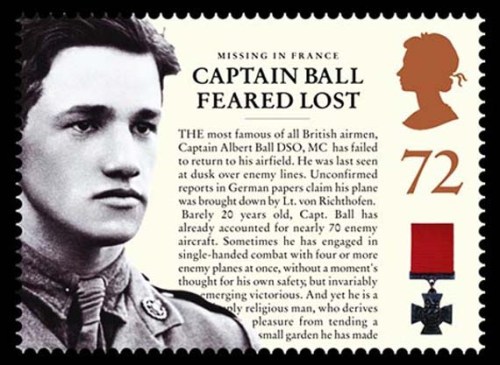
Albert_Ball_stamp zzzz

During his career, Albert secured 44 victories over enemy aircraft with a further 2 unconfirmed.  Nobody can fight alone for ever, though. After just 13 or 14 months of combat flying, Albert was killed.

The end came 100 years ago to this very day. I have tried to schedule the appearance of this post so that it is published to celebrate this anniversary.  There is no clear indication of what happened in his last combat although four German officers on the ground all saw his SE5 emerge from low cloud, upside down, and trailing a thin plume of oily smoke. Its engine was stopped and the plane crashed close to a farm called Fashoda near the village of Annoeullin. Albert was still alive and he was removed from the wreckage by Mademoiselle Cécile Deloffre. As she cradled him in her arms Albert opened his eyes once and then died. His death was later found to be due to his injuries in the crash. He had not been wounded.  The chivalrous Germans gave Albert a funeral with full military honours on May 9th. The original white cross with which they marked his grave, No.999, is still kept in the chapel at Trent College.

Albert’s father, Sir Albert Ball, was eventually to become Lord Mayor of Nottingham. After his son’s death, he bought the land where the crash had occurred. When he died in 1946 he bequeathed it to the inhabitants of the village to farm and to keep the memorial in good condition:


37 Comments

Filed under Aviation, History, Nottingham, The High School

The Bristol Beaufighter at Hendon

I went on a trip to RAF Hendon Museum a few years ago, and I intend to share one or two of the more interesting aircraft with you over the months. Hopefully I will only be using my own photographs, so here are my excuses first. The Museum is really quite dark, so that the daylight or bright artificial lights have no effect on the (poor quality) Second World War paint. The museum is also very cramped, so try as I might, I could not get all of the aircraft into the shot at once.

P1320446

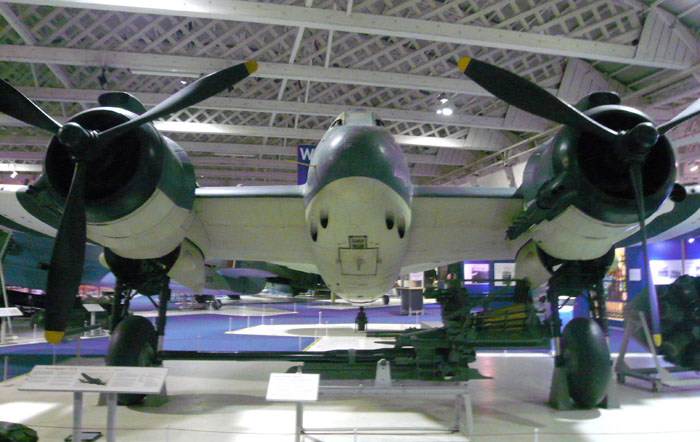
This particular aircraft is a Bristol Beaufighter Mk X. The Beaufighter flew for the first time on July 17th 1939 and the RAF received them in April of the following year. They were used as night fighters with airborne interception radar or, like this aircraft, as strike fighters, especially in Coastal Command. Armed with a combination of four cannons in the nose, machine guns, bombs, rockets or torpedoes, they were a formidable opponent. Production reached 5562 aircraft and they equipped 52 squadrons of the Royal Air Force:

P1320758
This particular example, RD253, BF-13 was built in October 1944 at Old Mixon in Weston-super-Mare. It has Bristol Hercules XVII engines and is one of a batch of 500 Mark Xs built there between September 1944-August 1945.

It is painted in Coastal Command colours of dark grey on the top, and underneath a much paler grey. The black and white stripes are there to undo all the work of the camouflage designers and painters in an effort to prevent friendly fire shooting the aircraft down. This could be a huge problem as one or two British anti-aircraft gunners apparently had Iron Crosses for five kills or more.

P1320433

This aircraft initially went to 19 Maintenance Unit at St Athan in Glamorgan on November 2nd 1944.
On March 7th 1945, it was sent to RAF Pershore in Worcestershire.

P1320445

Ten days later, on March 18th 1945,it was one of sixteen sent to Portela near Lisbon for use by the Portuguese Naval Air Arm, the Forcas Aereas da Armada. The aircraft was taken out of service in 1949 and then parked in the open in front of the Instituto Superior Tecnico.  It came to the Hendon Museum via South Africa, Bicester in Oxfordshire and  St Athan in Glamorgan, and was restored by 1968.

Overall, the Beaufighter strikes you as a very, very powerful and heavily armed aircraft. There must have been a lot of young men who really enjoyed the chance to fly it, armed to the teeth, with the sole aim of destroying anything belonging to the enemy that moved.


24 Comments

Filed under Aviation, History, Humour

The Bristol Beaufort at Hendon

I went on a trip to RAF Hendon Museum a few years ago, and I would like to share one or two of the more interesting aircraft with you over the months. Hopefully I will only be using my own photographs, so here are my excuses first. The Museum in  places is really quite dark, so that the daylight or bright artificial lights have no effect on the (poor quality) Second World War paint. This gives rise to a distinct purplish tone on many of the photographs. The museum is also very cramped, so try as I might, I could not get all of the aircraft into the shot at once.

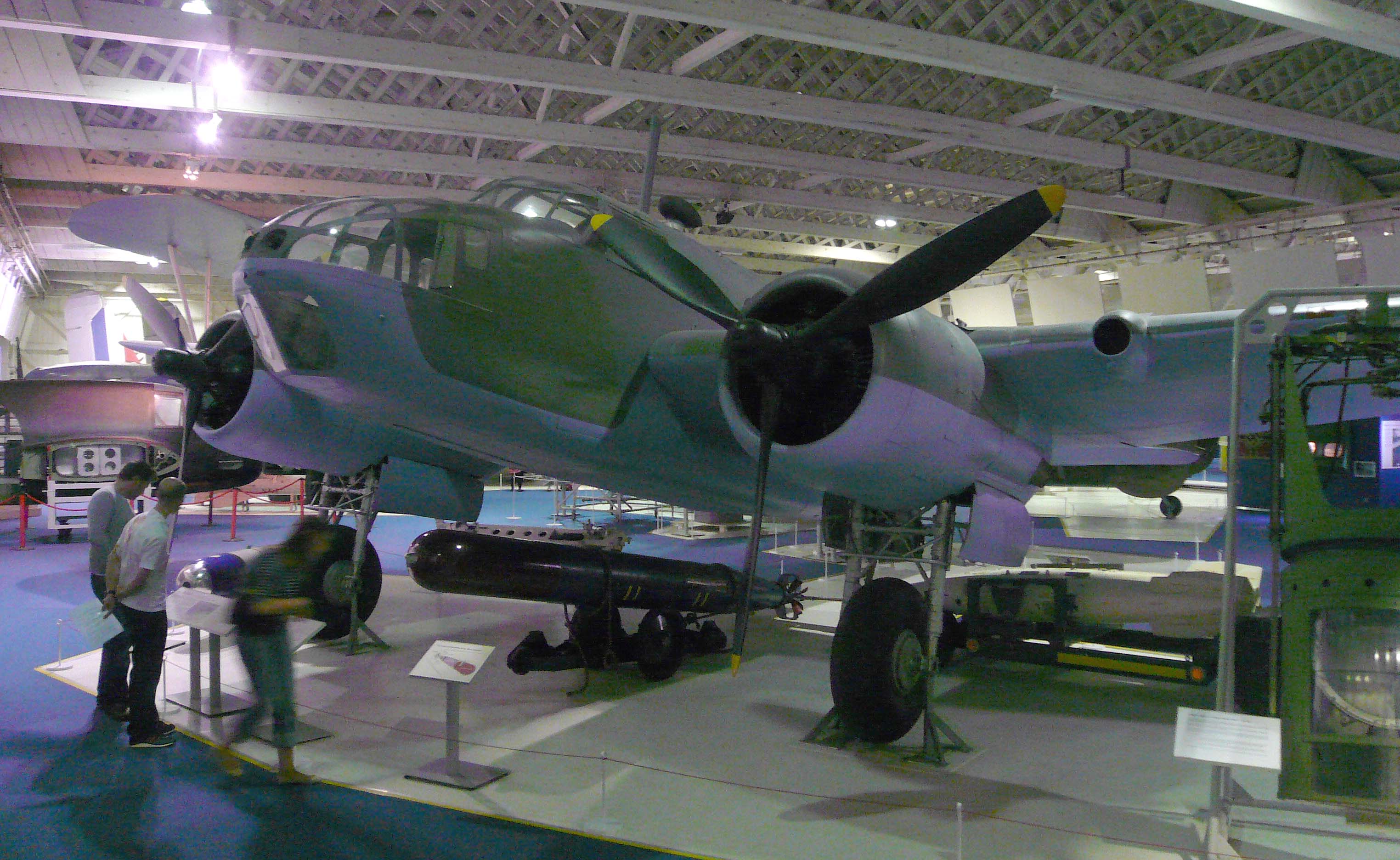
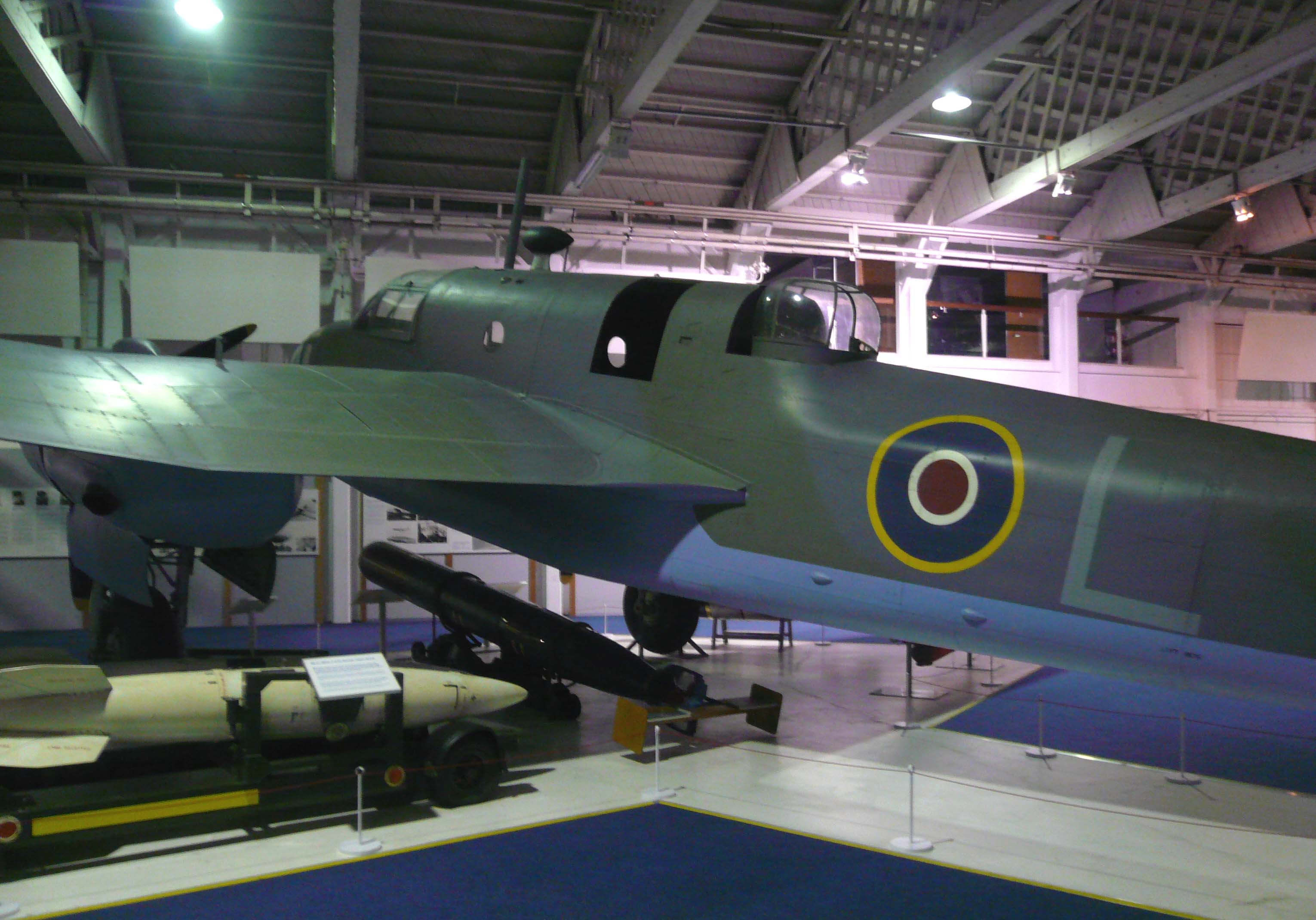
This is a Bristol Beaufort, the only monoplane produced for the Royal Air Force that was designed from the start for general reconnaissance and as a torpedo bomber. It was named after the late and great Duke of Beaufort, whose very large ancestral home was near to the headquarters of the Bristol company.

P1320429xxxxxxxxxxxxxxxxxxxxxx

The prototype first flew on October 15th 1938 and Beauforts entered service with No.22 Squadron in November 1939. They were Coastal Command’s standard torpedo bomber until 1943 and also laid mines.

The Beaufort was very successful as a torpedo bomber, and saw action over the North Sea, the English Channel and the Atlantic. In 1942, Beaufort squadrons were deployed to the Mediterranean and the Indian Ocean to meet a changing enemy threat. Malta-based aircraft were particularly successful in attacks on Axis shipping at a critical time in the war in North Africa.

Total Beaufort production was 1380, including 700 which were built in Australia.

P1320403xxxxxxxxxxxxxxxxxxxxxxxxxx

The Beaufort at Hendon was assembled from bits of various Australian aircraft found at Tadji Airstrip and West Sepik in Papua and New Guinea.  Five airframes were salvaged from these sites by Dr Charles “Bunny” Darby  in  1974  and as far as is known, significant bits of some 28 Beauforts are still there.
In October 1987, two Gate Guard Spitfire Mk XVIs were swapped for a P-40 Kittyhawk and a Beaufort. The latter eventually arrived at Hendon via a workshop in Hawkins, Texas and then Felixstowe and  Cardington in Bedfordshire.

To me, a Beaufort always looks like a half way between a Blenheim and a Beaufighter. Here is a proper photograph, purloined from my best friends at Google Images. I just didn’t want you to think that all Beauforts strongly resembled a very large twin engine blackcurrant:

bea

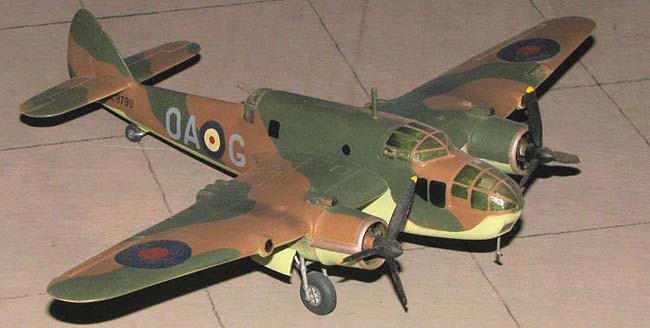
The best illustration of a Beaufort is, in fact, a model. There wasn’t an Airfix one, as far as I can remember, so perhaps this is a Frog kit or something even more exotic. I couldn’t find a good picture of a Beaufort in Australian colours:

beaufort

36 Comments

Filed under Aviation, History

My latest book

snip-of-coverThose of you who follow my blog will be familiar with the many stories I have told about Nottingham High School; its Founders, its coat of arms, its war heroes, its caretakers and its one or two villains. I have recently finished compiling these stories, and many more, into a new book called Nottingham High School: The Anecdotal History of a British Public School, published with Lulu.com.

My history is an entertaining one about the people behind the institution – what they thought, said, and did from the reign of Henry VIII up to the modern era. I want to tell the stories of the ordinary people whose actions changed the history of Nottingham forever, and those whose lives had much wider influence on the history of our country and on the lives of people across the world. I tell the tales of all people connected with the High School – teachers, support staff, boys, alumni… from caretakers to kings!

image_update_72e24141db868b82_1348683417_9j-4aaqskThe book is written in diary form and runs from Thursday, June 30th 1289 to Thursday, July 12th 2012. It’s an easy read that you can dip in and out of as you wish. Find out about the antics of the boys, the excesses of the staff, the sacrifices of the alumni, and the castle-like school building in all its majesty.

My book contains new and previously unpublished research into the lives of some of the most famous ex-pupils of the school. Read about the childhood of scurrilous author D.H.Lawrence, whose controversial books were still banned 50 years after he wrote them. Read about the disruptive antics of Albert Ball V.C., the daring air ace who always fought alone. Read about American Old Boy, Major General Mahin of the U.S. Army, a man whose power and authority in the Second World War rivalled that of General Patton, until he was killed (or was it murder?).

The tone of my work is interesting and light, but at the same time, as you know from my blogposts, I can show my more serious side when occasion demands. A very large number of former pupils from the High School died in the two World Wars and their sacrifices are reflected in my book.

I have really enjoyed writing this new history book, and I hope that you will find it an entertaining and intriguing read. If you would like to give it a go, then it is now available from my page on Lulu.com.

p1040694

31 Comments

Filed under Aviation, Criminology, History, Literature, Nottingham, Personal, The High School, Writing

Warren Herbert Cheale

Warren Herbert Cheale, who lived with his family in Burton Joyce, moved to the High School in January 1944 to work as an Acting Pilot Officer with the School Flight of the Air Training Corps. He was a member of the Royal Air Force Volunteer Reserve:

RAF

On Thursday, September 7th 1944, while away at camp at Wenlock in Shropshire with the boys from the High School A.T.C., poor Warren was killed in a flying accident. He was only 44 years of age.  He left a widow and a teenage son and daughter. Despite his short stay at the High School, one of the boys described him as “one of the nicest people we had ever met”.
Warren, who was born in the first three months of 1900, seems to have been quite a colourful character. He lived originally at a house called Redhill in St. Helen’s Crescent. Hastings, in Sussex and the first mention of him that I can find seems to be at the age of three when, on November 28th 1903, he played the important part of Bubbles in a local production of Little Red Riding Hood:

little_red_riding_hood_and_wolf1

Not very long afterwards, Warren joined up for the Great War and eventually found himself in the Royal Flying Corps.

During this era, British pilots were not allowed to wear parachutes, so Warren must have thought his death was imminent when he was involved in a mid-air collision at an altitude of over two thousand feet. The two planes must have either spun or perhaps fluttered down to earth, though, because Warren escaped with his life. That life, however, was perhaps affected by Post Traumatic Stress Disorder to some extent. It is difficult to imagine that anybody could go through an experience like that and remain completely unaffected.

Fokker-DVII-Crash

On July 29th 1925, Warren married Alice Elisabeth Unwin at St. Martin-in-the-Fields Church in London.

Warren then seems to have remained in the new Royal Air Force, because the next mention seems to be in the Hastings and St Leonards Observer (Hastings, East) for June 28th 1930. Listed as a mechanic, he appeared in the local magistrates’ court, along with a young friend, who lived in the School House, North Street, Hornchurch. Both were found guilty of damaging a crop of rye in a local farmer’s field, a rather bizarre mark to leave on the pages of history, perhaps.

Certainly from 1931-1934, Warren continued to live in Hastings and St Leonards, presumably with his wife. It was a lovely place:Hastings_english_school_xxxxxxxxxxxxxxxxxxx1

Warren played local cricket, both as a batsman and a bowler, although life did not always go well. For whatever reason, his wife Alice Elizabeth filed for a divorce at the London Divorce Courts in 1936. The divorce may not have gone through, because the report contains the annotation, [wd] which may well have meant “withdrawn”.

Perhaps the family then moved northwards to Nottingham as a new start, hoping to put their marital difficulties behind them for the sake of the children.

Alas, we will never know, because 21 PAFU ORB reported on that fateful September evening:

“Flying accident at Wheaton Aston. An Airspeed Oxford LX509, with Flight Lieutenant Harrison as instructor, and Pilot Officer Cheale (Air Training Corps) took off for a night flying test from Wheaton Aston and was seen to dive into the ground shortly afterwards. Both occupants were killed instantly as a result of injuries sustained.”

Here is a general map showing the location of Wheaton Aston airfield:

wheaton aston

At the time, the Airspeed Oxford was considered to be, potentially, a rather dangerous aircraft to fly:

Airspeed_Oxford

Although designed as a twin engined trainer, and supposedly extremely docile, it could be, in actual fact, a rather unforgiving aeroplane.  Many aircraft used in RAF Training, of course, were well past their sell-by date and poorly maintained. These factors may well all have been contributory to the deaths of these two men. In actual fact, in the North Midlands, during the course of the Second World War, the majority of fatalities occurred in either Airspeed Oxfords or another old stager, the Vickers Wellington bomber. To help the situation, Oxford trainers were painted a conspicuous yellow:

Airspeed_Oxford_V3388_yellow

The crash location on the Accident Card for this particular incident is given as:

“At Colonels Covert?, Hatton Grange, Ryton. Map Reference OS765036, just south of Hatton Grange, to the north of Ryton and just south west of RAF Cosford”.

Here is a map which shows Hatton Grange:hatton

The verdict of the official  inquiry was that:

“It is not possible to form a conclusion. Investigation has not revealed the cause of the accident.”

The crew of the Oxford were:

“Flight Lieutenant Sydney Donald Harrison, aged just twenty one. He is buried in (St Ediths) Churchyard, Church Eaton, Staffordshire. He was commissioned as a Pilot Officer on February 5th 1943.

Sydney  was the beloved only son of Mr and Mrs Donald Harrison, Two Trees, Hernes Road, Oxford and the grandson of Mr and Mrs T E Clarkson, The Villa, Rancliffe, near Goole.

Pilot Officer Warren Herbert Cheale (177869), RAFVR, was aged forty four. His death is commemorated at the Nottingham Crematorium. No next of kin was given at the time.”

When application for a ‘Grant of Probate’ for Warren’s will was made, his address was listed as 123 Church Drive, Burton Joyce, Nottinghamshire. This is the Main Street in that lovely village:

18679784

Interestingly, when Probate was granted on February 13th 1945, it was not to Alice Elizabeth, his presumed wife from the 1930s, but to “Rose Cheale, widow”. Perhaps that divorce had actually gone through in 1936, and this was Warren’s new wife.

Two men had paid dearly, therefore, for the High School Flight of the Air Training Corps’ week long stay in Shropshire for their annual training.  They had been accompanied by at least one member of the academic staff, Mr D.C.Whimster, who was a Master at the school from 1939-1945. He was Form Master of the Fifth Form A, and may have been a teacher of English. In reminiscences published in the school magazine, the writer says, talking of drama productions:

“I wish the Society would tackle “The Knight of the Burning Pestle” again, with its greater resources and experience. Mr. D. C. Whimster’s production was interesting and creditable.”

The High School cadets were also accompanied by a person named in RAF reports as Pilot Officer Alder (Air Training Corps). This may have been somebody who normally worked at Wenlock, but I strongly suspect that this is a mis-spelling of the name of a second member of staff, namely Mr S.Allder who worked at the school from 1940-1946. As his name was “Stanley”, the boys, ever inventive, apparently called him “Stan”.

And so Warren Cheale’s extraordinary luck came to an end. In the Royal Flying Corps in 1918, he had somehow managed to avoid what must have seemed to him, as he fell earthwards for thirty seconds, perhaps a minute, a horrific and unavoidable death.

But this time, almost thirty years later, the Gods of the Air had claimed him as their own:

aerspeed


20 Comments

Filed under Aviation, Bomber Command, History, Nottingham, The High School

The Avro Lancaster at Duxford, January 28th 2009

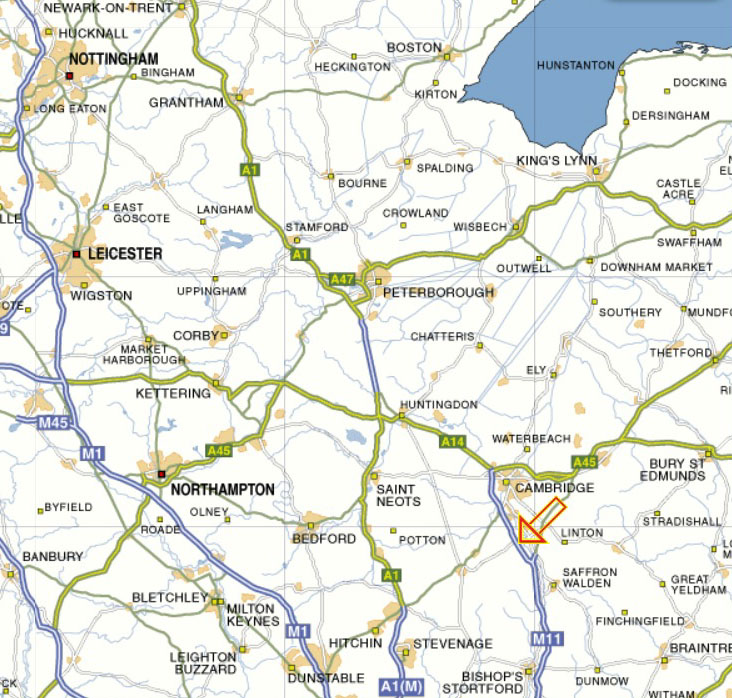
A few years ago, when I was still a teacher, along with four other teachers and more than a hundred members of Year 9, we all went in two coaches to Duxford near Cambridge to see the Imperial War Museum.  Look for the orange arrow:
duxf

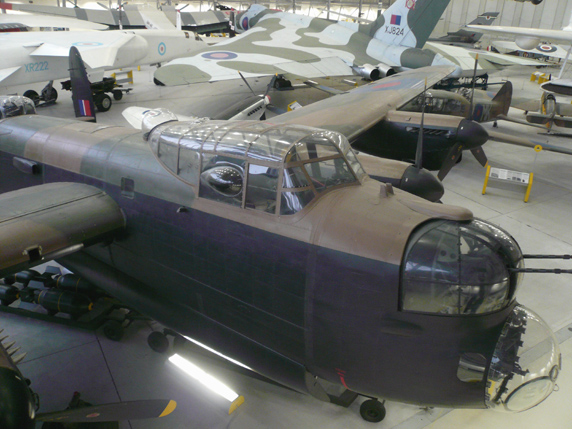
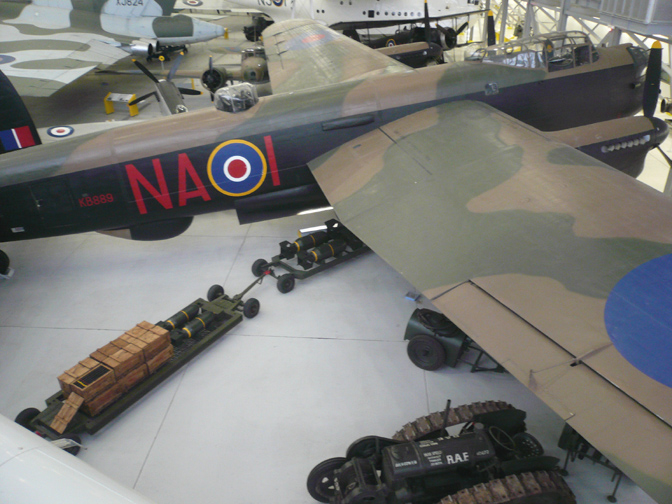
None of you will be surprised that the very first plane I rushed to see was the Avro Lancaster. The planes are rather crowded together, but there it was:

P1100840XXX

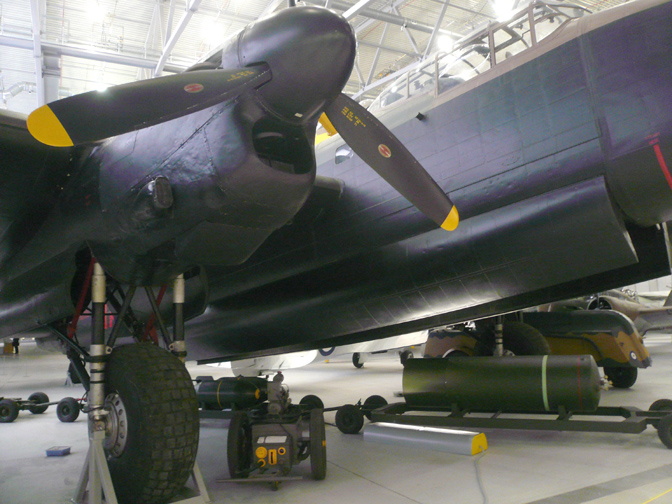
There were trolleys and a little tractor to transport the bombs to the bomb-bay:

P1100858XXX
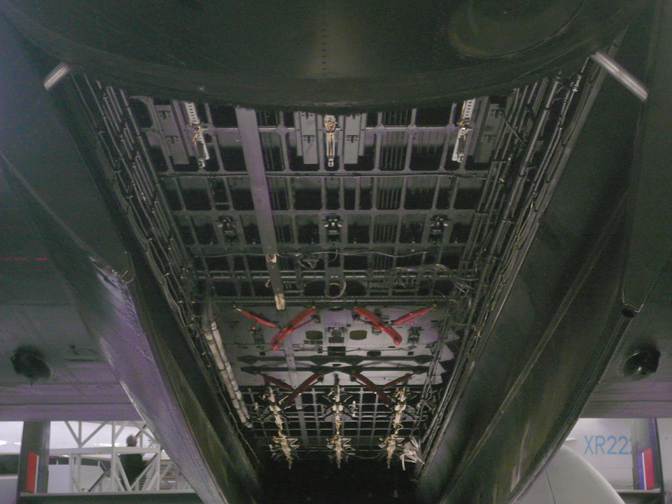
The bomb-bay is enormous, and eventually would be capable of taking a ten ton bomb, the “Grand Slam”:

P1100923XXX

The green cylindrical bomb in  the background in the below photograph is a blockbuster bomb or “cookie” and weighs 4,000 pounds which is around two tons. Quite often two of them were strapped together to make an 8,000 pound bomb. On occasion three of them would be bolted together to make things go with a real bang:

P1100930XXX
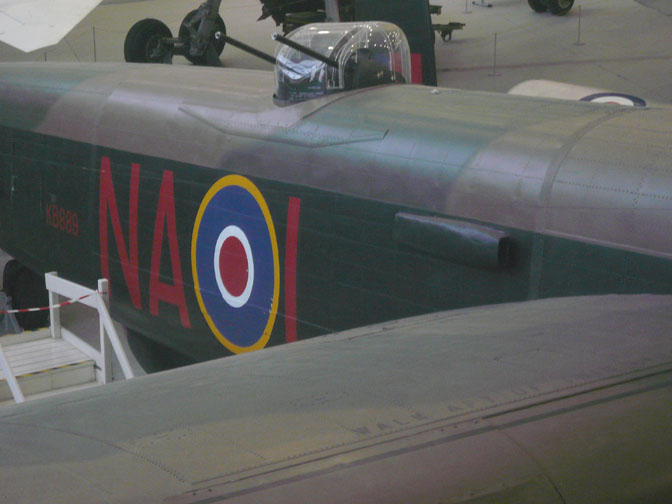
This is the mid-upper turret, armed with two .303 Browning machine guns. The gunners were seldom particularly happy that a target was provided underneath for the Luftwaffe night fighters to aim at:

P1210201XXX
This is the radome, behind the cockpit canopy. On more than one occasion my Dad would stand there. looking out, as the bombers all taxied out to the end of the runway for the take-off. My Dad was abundantly aware of the enormous casualty rates in Bomber Command, and more than once he wondered to himself how many of the aircraft he could see slowly making their way to the runway to take off would be coming back in the morning:

vera

Overall, Bomber Command lost 8,325 aircraft to enemy action. A total of 55,573 young men, all of them volunteers, were killed, a casualty rate of 44.4%. Of every hundred airmen, 55 were killed, three were injured on active service, 12 became prisoners of war, two were shot down and made their way back to England and 27 survived. One of the two reasons my Dad was one of those 27 fortunate young men was the fact that he flew in Lancasters. “A Lanc will always get you back” he told me on more than one occasion. I owe my own existence, therefore, to the excellence of the Avro Lancaster.

taxi

Sooooo….when the moment was right, a fat old man quickly jumped over the rope, walked up to KB889, gave it a good pat and said “Thank you for my life”.
There will, however, always be some idiot child who is seduced by the flighty, undependable glamour of fighter aircraft and who will stand there taking photographs of Spitfires until the bus leaves. Just look at him in this photograph here:

.
P1210197XXX

24 Comments

Filed under Aviation, Bomber Command, History, Humour, The High School, Writing

A few days after D-Day (5)

In my previous article, I revealed that it is now known that one member of the crew of that Lancaster Z-NH, serial number NE150, brought down by anti-aircraft fire over Lison, did not perish, but survived the crash, only to be then killed, proudly fighting alongside the 507th Parachute Infantry Regiment at Graignes.

For many years the tale had been told that the mystery aviator was an American fighter pilot who had been shot down, but in recent times, around 2008, the real truth has come to light. The mystery flyer was Flight Sergeant Stanley Kevin Black of the Royal Australian Air Force.
I found the full, detailed story prominently featured on Channel Nine News:

“For sixty years his family had thought he died on D-Day in a relatively straight forward situation when his plane was shot down over occupied France by enemy fire. “We knew that he had been in a crashed plane and we always thought that he died there and then,” his great niece Elissa Liggins said. But Sergeant Black survived the crash, and was taken in by a brave French family for the night.
After a good stiff drink and a sleep Sergeant Black asked to be taken to the nearby village of Graignes where he met a group of American paratroopers. Their orders were to defend the village. Even after a plane crash, Sergeant Black was determined to help.”

graignes
“Aided by the villagers, the paratroopers and Sergeant Black set up a perimeter around Graignes.
After a couple of days, the Germans attacked. The allies successfully fought them off the first time but the Germans successfully attacked again.
The S.S. then executed many of the survivors. It is not clear exactly how Sergeant Stanley Black died but he was probably killed on June 11th. He was just 21 years old. The little village never forgot their “Australian hero”.

Decades later an English lady who lives in the village, Liane Ward-Cleaveley, felt frustrated his name was not on the plaque commemorating the battle. She contacted a Lancaster enthusiast in Australia, Graeme Roberts, who tracked down Sgt Black’s relatives.

“We got a phone call from a gentleman called Graeme who had read a message from an English lady living in France,” Ms Liggins recalled.
“She had a bee in her bonnet because this Australian who had battled hadn’t got his name on a memorial.”
Accompanied by members of the RAAF, Ms Liggins flew to France for the unveiling of her great uncle’s name on the village plaque.

ryinedchurch

“I don’t think any of us appreciated how big it was going to be for the family – certainly not for me – it’s quite life changing,” she said.
Flight Lieutenant Mark Schmidt describes it as “an amazing experience”.
“It’s an incredible story and then to go to the village and connect with the villagers there… he’s a hero to those guys they call him ‘the Australian who fell from the sky’,” he said.

Every single evening at the Australian War Memorial in Canberra, a single Australian who died for his country is honoured. And recently, Sergeant Stanley Black was the chosen hero.
The Last Post was played and the Eternal Fame flickered. Ms Liggins and her family laid a wreath for their uncle. It was a poignant moment she will never forget:

“I sort of feel like I have a connection with him now, that just wasn’t there before, and I know his story intimately… it’s pretty powerful stuff,” she said.

A powerful story, to share with generations to come.
And what a story. The forces of darkest evil opposed by brave, brave men, women and children.

French villagers, French children, American paratroopers, British flyers and one very, very brave and determined Australian.

Here is a film of Graignes today.

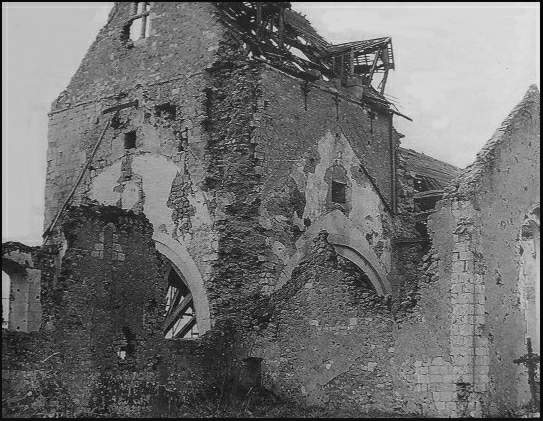
 The church has been left exactly as the cowards of the 17th SS Panzergrenadier Division left it.

There is another excellent film on the Channel 9 News site. It is well worth watching.

If you are feeling brave, then try this website. It has a picture of Madame Marthe His, one of the only surviving witnesses of this Nazi war crime.

marthe-his-temoigne-au-memorial-de-graignes

She watched what the SS did when she was only 12, and now, 73 years later, and a very young looking 83, she is determined that it should not be forgotten.
In a video lower down the page, she tells her story in French where, at the least, you should be able to recognise a few words.

Here is roughly the same story in French for you to read as homework:

“À 12 ans, Marthe His a vu soldats américains et civils se faire massacrer par les Allemands à Graignes. 71 ans plus tard, elle est revenue pour témoigner.

Derrière ses petites lunettes rondes, les yeux bleus de Marthe His ont gardé toute leur vigueur. Au moment de témoigner, hier après-midi au mémorial de Graignes (Manche), un voile de tristesse a peut-être atténué leur éclat pendant quelques minutes. C’est tout en pudeur que ce petit bout de femme, âgée de 83 ans, a revécu en souvenir les massacres de Graignes en juin 1944.

Des 200 Américains qui débarquent dans la maison familiale, au sauvetage de 23 soldats. Elle replonge dans cette histoire tragique du débarquement dans la Manche.
Un épisode sanglant où 43 soldats Américains et 30 habitants de Graignes trouveront la mort des mains des Allemands.”

This is the memorial to everybody who was slaughtered by the SS in that cowardly way:

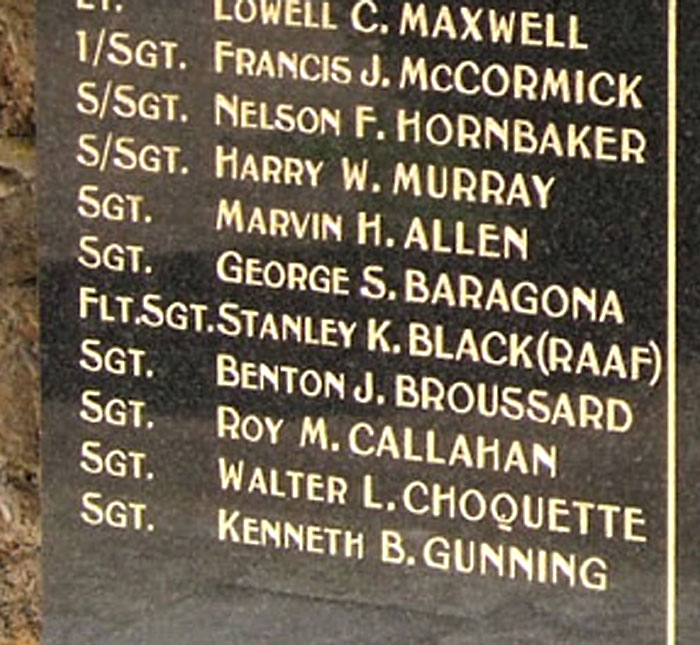
And don’t forget Flight Sergeant Stanley Black of the Royal Australian Air Force:

Stanley Black  didn’t need to do what he did. And it would probably cost him his life.

But he did it nevertheless. He was a true hero.


22 Comments

Filed under Aviation, Bomber Command, Criminology, France, History, Politics, The High School