Category Archives: Criminology

Heil Hitler Episode 5

So far I have written four articles about that famous quotation attributed to Edmund Burke:

“The only thing necessary for the triumph of evil is for good men to do nothing.”

All of the articles revolved, more or less, around the Nazis and their “Heil Hitler” salute which, by the 1930s, had become compulsory for all Germans to show their loyalty to their beloved Führer, the National Socialist Party, and his nation.
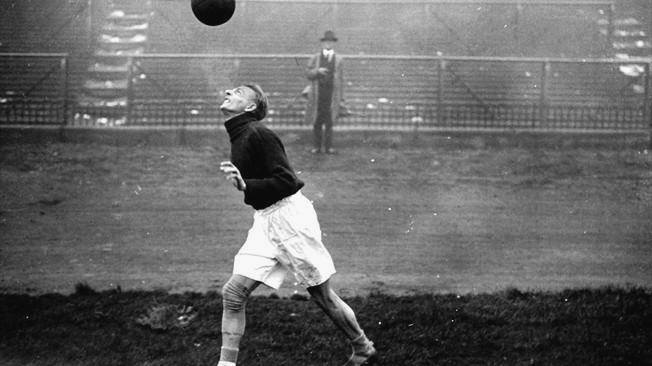
The first article mentioned the England football team who did a nice Nazi salute before a friendly game with Germany at the Olympic Stadium in Berlin on May 14th 1938. A more sinister aspect came when Hitler annexed Austria and left the Austrian international players with, literally, nothing to play for. Matthias Sindelar decided to take arms against a sea of troubles although despite all his best efforts, he definitely did not end them:

head tennis
The second and third ones talked about the war criminals’ friend, Bishop Alois Hudal, and the very many crazy Nazis that he helped avoid being put on trial for their evil deeds. Article Number 4 had a picture of the German supporters at a football match in London on December 4th 1935.

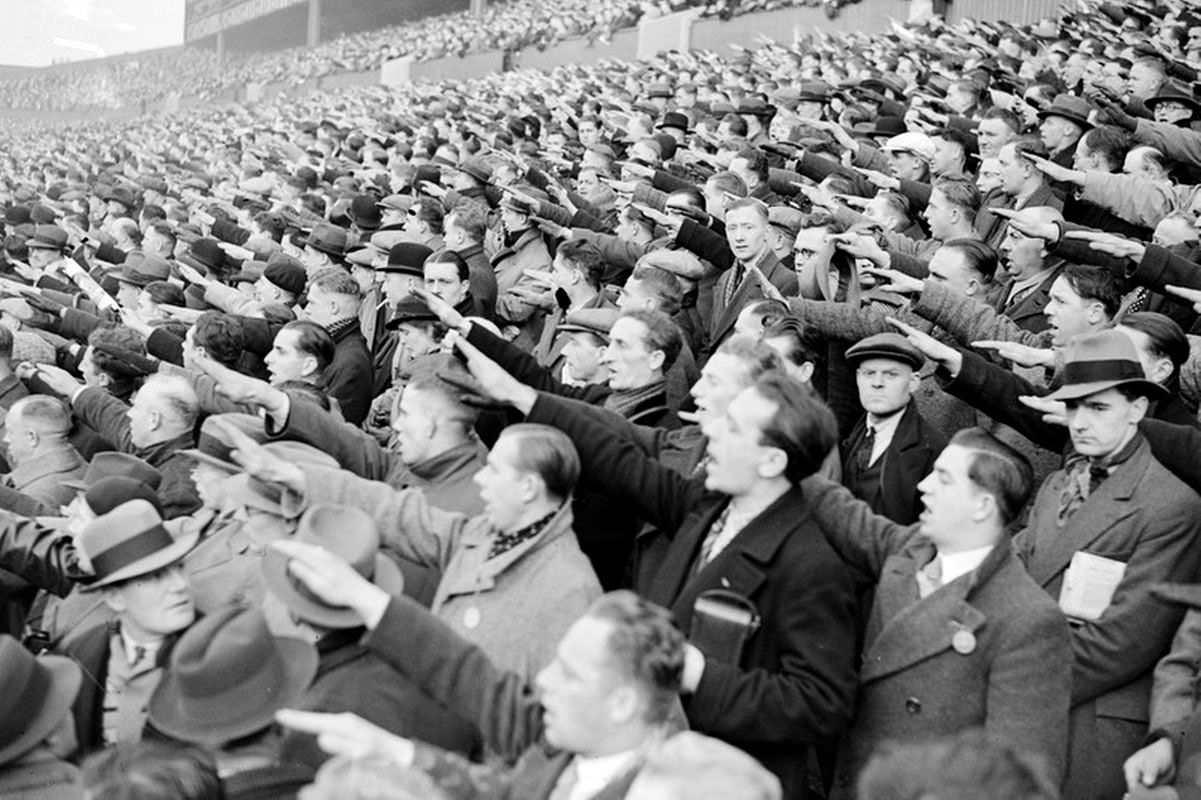
The enthusiastic German crowd were all Heil Hitlering and Seig Heiling for their beloved Führer. There were though, a number of people who were not joining in with the general joy and merriment. At least half a dozen of them:

This slideshow requires JavaScript.

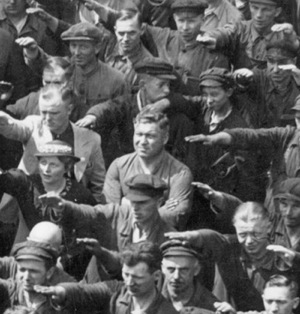
But let’s just look at this photograph. Are you ready for a game of “Spot the One Brave Man”?

big crowd

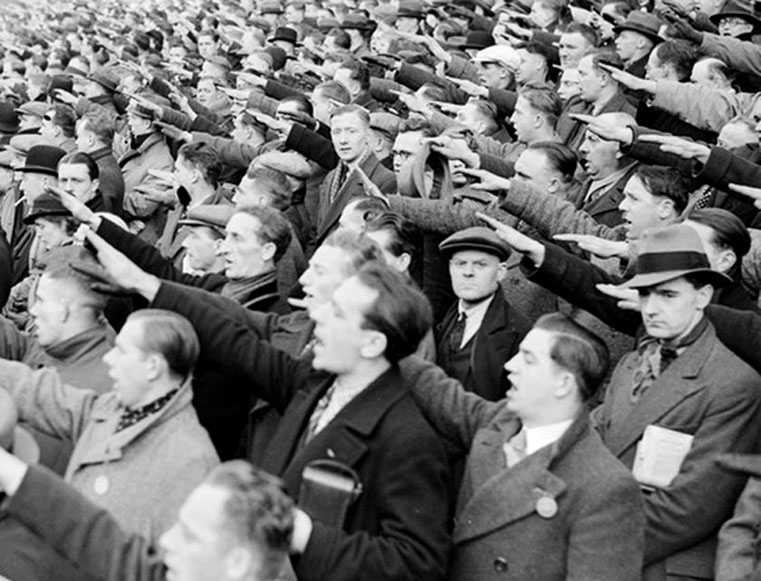
Did you spot him? Here he is:

ONE

And in close up:

refuses
The brave man was called August Landmesser, and his story is first told on a German website, for, if the first Nazis were Germans, then no country could have worked harder to cleanse and redeem itself than present day Germany.
But this is Fascist Germany in the 1930s. A new warship is being launched in the dockyards of Hamburg. All of the shipyard workers are ecstatic with joy. “Seig Heil!” they shout, and “Heil Hitler!” All except one.
In the early 1930s the German economy was in freefall, and August, watching the irresistible rise of Adolf Hitler, had joined the Nazi Party, the NSDAP, because he thought that having the right connections would help him to find a job in a flat lining economy.

By 1931, August was a loyal, card-carrying Nazi who began slowly to work his way up through the hierarchy of the Party, the only legal political grouping in the Third Reich.
But then, in 1934, the 25 year old August fell madly in love. Not to order. Not a blonde haired, blue eyed Aryan. Not a female member of the Master Race. Just an ordinary woman.

irma-ECKLER

She was three years younger than August. She was called Irma Eckler. She was a Jewish woman and August proposed to her at the beginning of 1935. She loved him too, and she accepted his proposal immediately.

We will see what happens to them next time.


20 Comments

Filed under Criminology, History, Politics

Match-fixing (2)

I have always wondered exactly what happened to Leeds City, a team that apparently just disappeared, after playing first class football for ten years or more. Of course, we have all heard of Leeds United, famous for its few triumphs and many near misses in the late 1960s and early 1970s. But what about Leeds City? How does a big football club just disappear?
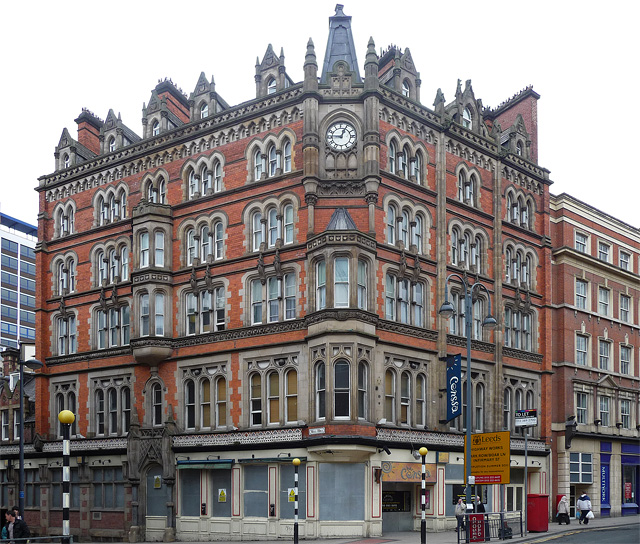
Well, they were founded at the Griffin Hotel in 1904.  Here is the Griffin Hotel nowadays. It doesn’t seem to be doing much better than Leeds City:
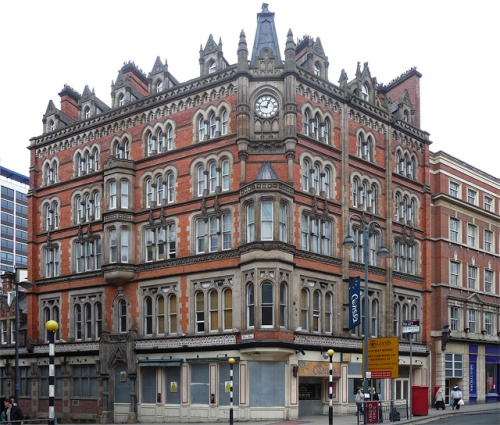
griff

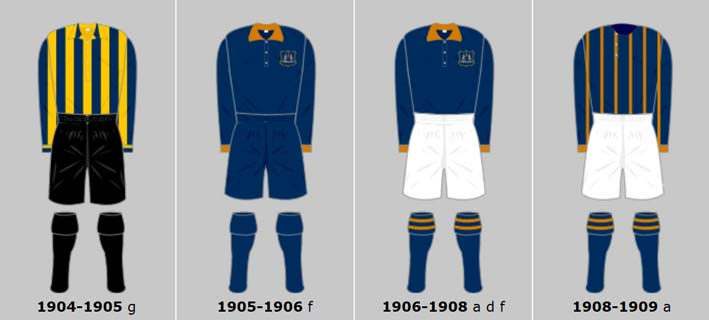
Leeds City were slated to be the primary football team in the city, somebody who could bring the delights of a relatively new sport to a rugby mad area.This allowed them to adapt the council’s coat of arms as their own and to wear the city’s colours of gold and blue for their shirts:
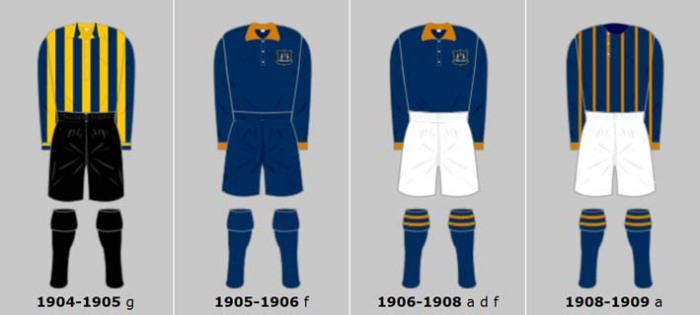
leeds city top row

Luckily for them, a local rugby club folded around this time, and Leeds City moved straight into their old stadium in Elland Road.
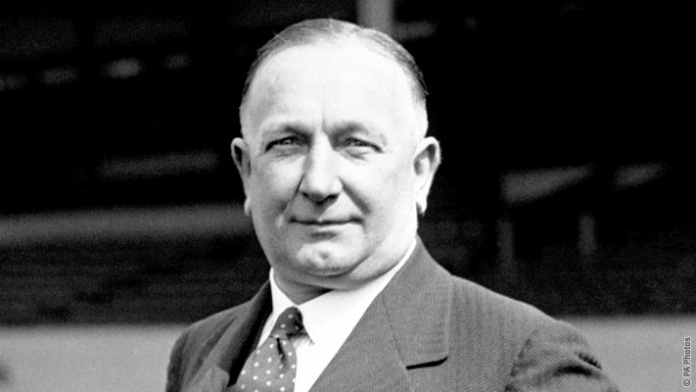
A decent ground enabled them to arrange friendly games against local league clubs, and after making powerful friends in this way they became members of the Second Division for the 1905-1906 season, when they finished sixth. Years ago, it was the club secretary who did what would nowadays be the job of team coach and club manager. City started with Gilbert Gillies (1904-1908) and then Frank Scott-Walford (1909-1912). The club’s record was fairly average until they appointed Herbert Chapman, the legendary manager of Huddersfield and Arsenal, who took City to fourth place in the Second Division, their highest position so far. Here is the great man. His ghost was said for many years to haunt Arsenal’s old ground at Highbury:
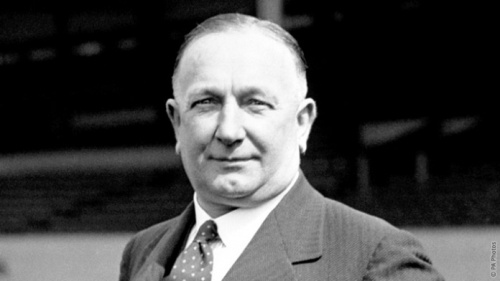
gun__1357732038_chapman_herbert1

Until the First World War, Leeds City continued to wear blue and gold as their colours, except for the 1910-1911 season. Research by David Tomlinson has revealed that their kit changed at this point, when they signed five young, inexperienced, but hopefully talented, Irishmen for the team. The Leeds Mercury, in their match report, said

“It must be remembered that these Irishmen are very young men, who have been brought into a higher class of football than that to which they have been accustomed, and that they were playing their first match amid unfamiliar surroundings. Mr Scott-Walford evidently had an eye to making his new men feel at home as well as to stage effect when he attired the team in green jerseys and supplied green flags to mark the centre line, and he apparently realised that their first match might go wrong when he  addressed them in his official programme: “Should your efforts deserve success, and it is denied you, we shall extend our sympathy, when you do badly we shall still think you have done your best.”

It certainly looks very strange for a team from Leeds:
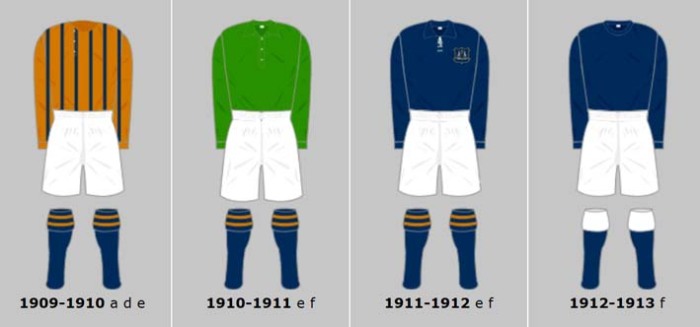
leeds city row. two

During the 1913-1914 season they adapted a kit which they would wear for the rest of their short history:
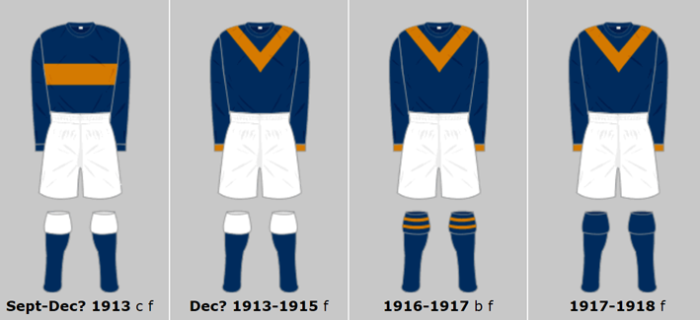
leeds city row three

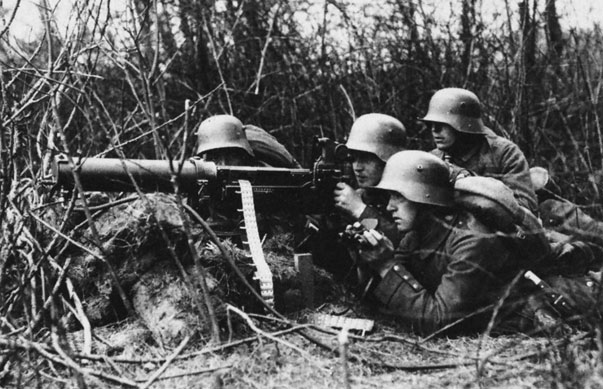
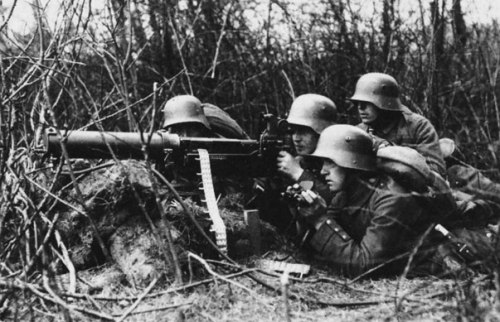
The Football Association has always been very adept at thinking up rules and regulations. It was strictly forbidden, for example, for a club to pay their players over the course of the Great War. No matter how dangerous it was fighting for King and Country, it was down to you to look after the wife and kids, rather than allow your rich erstwhile employer to help you out, even if that arrangement suited both sides. And woe betide, of course, anybody caught breaking the rules, even though many clubs did. It was a blind date with a bunch of Germans for you. Hopefully, you won’t get the one whose hat doesn’t fit:
a23_world_war_1_german_machine_gun_1

Leeds City were grassed up to the FA by a former player who told journalists that the club’s guest players for friendly games were being paid to turn out and play. The FA considered this to be an extremely serious offence, and began an investigation.
City, being both arrogant and stupid, did not help themselves by their poor choice of reaction to the FA’s questions. Instead of rolling over with a loud cry of:

“I am guilty, guilty, guilty but O how I regret my wrongdoing”

they basically told the Football Association:

“Get stuffed. You can’t look at the books”.

The FA’s reaction was to make a huge example of the wrong doers.  Immediate expulsion from the League sine die as they say, and the disbandment of the entire club.

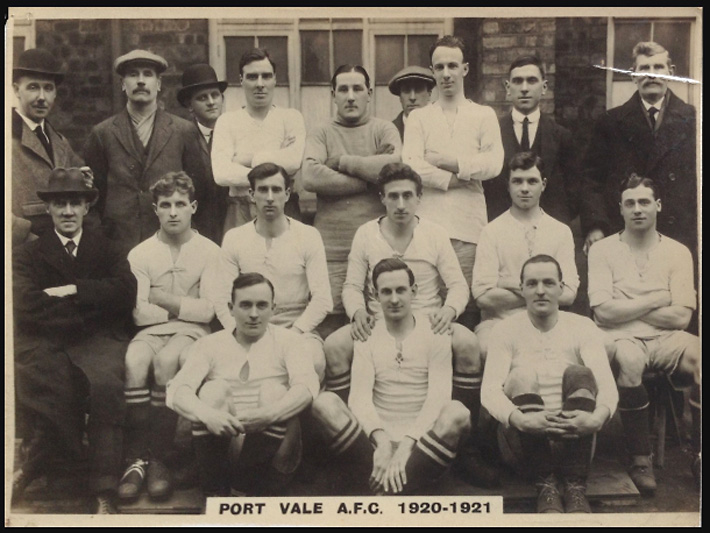
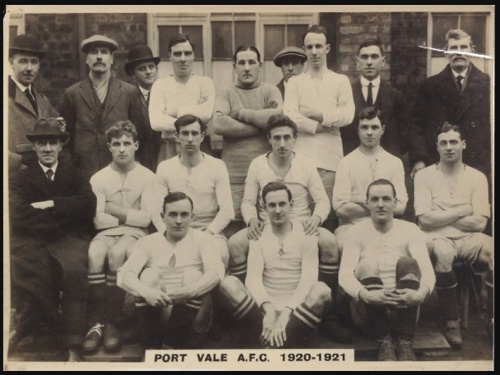
They had played only eight games of the 1919-1920 season and delighted Port Vale took over the rest of City’s fixtures. I bet the man with the rip across his face was the first one to die. I saw it in a horror film once:
port

Herbert Chapman, the club secretary, and a good few others, were also banned sine die. All the club’s assets were to be sold off. Not just the tables and chairs, but the players too.
At ten o’clock on October 17th 1919, therefore, an auction was held at the Metropole Hotel, where sixteen footballers were all sold to the highest bidder. They were bought by nine various clubs for a total of £9,250.
Billy McLeod £1,250 to Notts County
Harry Millership to Rotherham County (who??) and John Hampson to Aston Villa, both for £1,000.
Willis Walker to South Shields (who??) and John Edmondson to Sheffield Wednesday, both for £800
Other clubs who coughed up either £600 or less were Grimsby Town, Manchester City, Aston  Villa, Lincoln City and Hartlepool United.

Poor old Francis Chipperfield, worth only £100 to Lincoln City. I wonder if he just packed up football and went to join the circus?

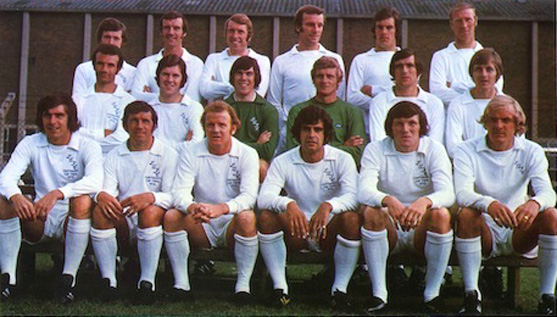
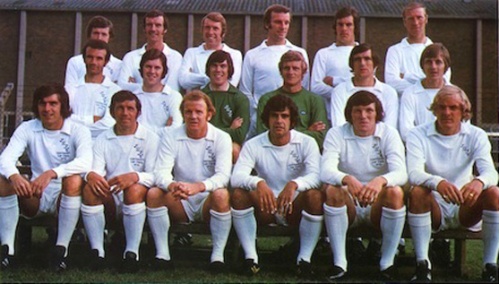
During the afternoon, after the auction, a number of other local officials, or at least, all the ones who were as pure as the driven snow, founded a new club, Leeds United, which could play in the now deserted Elland Road ground. United initially took over the fixtures of City’s reserves in the Midland League, but for the next season of 1920-1921, the club was promoted into the Second Division:
pasted-graphic-1

As I have done before in other posts, I would like to thank the website who supplied all of the illustrations of the old football kits from days of yore.

It is the best ever website for the soccer nerd and all those little boys who had more than twenty different Subbuteo teams.

15 Comments

Filed under Criminology, Football, History, Humour, Politics

Wolves (2) How to fight them off

Recently, I wrote about how Candice Berner, a thirty two year old special education teacher was killed by wolves as she jogged along a road outside Chignik Lake, a remote village in south western Alaska. It was the first ever fatal wolf attack in Alaska where between 7,700-11,200 wolves are resident. There has only been one fatal attack in the rest of North America, where between 50,000-60,000 wolves are resident. This was a man who regularly fed the wolves near his campsite.

Kenton_SKxxxxxxxxxxxxxxxxxxxxxxxxxx

Last time it emerged that Ms Berner’s slight, almost childlike build would have been attractive to the wolf. So too was the fact that she was out jogging. A running target always brings out the worst in any predator.

Her listening to music on a headset was thought by her father to be contributory, but was actually discounted because wolves are less noisy than the wind anyway.
A recent TV programme on Animal Planet also made one or two important points about this attack. They visited Chignik Lake and discovered that Ms Berner went running every day at the same time. This did not make it particularly difficult for any predator. The first thing every politician at risk of assassination is told is to vary their routine as much as possible. Ms Berner, they said, ran past the town dump, where both wolves and bears would routinely come to scavenge. As I said in a previous article, the local dump is a good way to habituate predators to humans. To show them how human scent equals food. If people take no notice of the predators’ presence, then they will gradually lose their innate fear of humans.
image_encounters

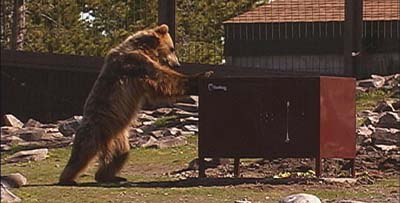
The locals at Chignik Lake considered the dump too dangerous a place to go. Most significantly, the TV reporters found that Candice Berger was the only person in Chignik Lake ever to go jogging outside the town. The locals at Chignik Lake considered this activity far too dangerous, although their primary fear was that of bears, who can chase you at a steady 35 mph. Hard luck Usain Bolt, tootling along at a pathetic 27 mph. The bear population around Chignik Lake was very high.

xjune-2013-bear_jpg_pagespeed_ic_q9hIvBROLI

The road out of Chignik Lake ran along the side of a hill, and as it curved, Ms Berner’s tracks made a sharp U-turn. This was thought to be the point at which she first noticed the wolves. She was running westwards and the wind was blowing from the west so the wolves may have had her scent blown towards them for some considerable time. Presumably, after she had turned sharply away, this provoked a predatory response. Either one or two wolves chased her, while a third ran higher than the road and then swooped down to either knock her down or cause her to slip over. The place she fell had bloodstains with a second depression three or four yards away as she fell for the second time. She had fled about fifty yards from the place where she first apparently turned away from the wolves. She then tried to crawl away but the wolves dragged her down the slope. By now she was in a very bad way. She finally succumbed in a clearing ten yards from the road. The fight was a very brief one and she died quickly. Her body was then dragged thirty yards to an area of small bushes. Blood on the road led to the discovery of her body, and later that night a wolf returned to drag it a further twenty yards downhill.

Nine sets of wolf tracks were found but the Fish and Game Department said that only four or five wolves had been involved.

pair-of-mexican-wolves

The Fish and Game Department then culled eight wolves within thirty miles of the attack site. The DNA from one of these wolves was found on the young woman’s body, but a second wolf who left DNA was never found. As always seems to be the case, the evidence of three or four other lots of DNA was impossible to prove.
I have researched exactly what happened in some detail because this attack was, at this time at least, totally unique.
As we have seen, the townspeople seemed deeply worried about the attack, by a member, or members, of a protected species. The Director of the Alaska Wildlife Alliance said that those who wanted to be allowed into the area around the town to kill all the wolves they could find were just:

“A lot of people who want to be macho and go out there and kill animals.”

Perhaps the last words should go to the poor young woman’s father:

“They were just doing what wolves do. Their nature happened to kill my daughter but I don’t have any anger towards wolves.”

Candice_Berner12

So what should you do? Well, the expert in my last article said that you should:

Never feed wolves

Don’t let them become habituated to humans (by leaving them a rubbish tip to visit, presumably)

If confronted by a wolf, don’t run

Face the animal, make yourself appear as large as possible

Yell

Wave your arms

Throws stones or other objects

Resist any attack

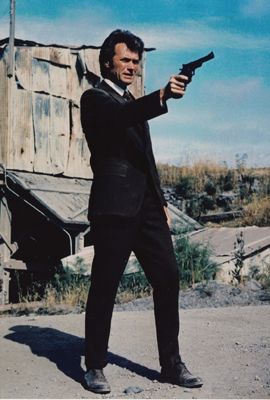
I would personally, if I were American, carry a revolver, one of those that Clint Eastwood carries, and learn how to use it for my own self defence:

dirty-harry328381
And if all else fails, I would try to climb a tree.
The Candice Berner case was notable as being the first fatal wolf attack in North America in which DNA evidence was gathered to confirm wolf involvement.

30 Comments

Filed under Criminology, History, Science, Wildlife and Nature

Match-fixing (1)

Corruption in football is nothing new. More than a century ago, in 1900, Burnley goalkeeper Jack Hillman attempted to corrupt the Nottingham Forest goalkeeper and the other players by giving them £2 each to let Burnley win on the last day of the season and perhaps thereby escape relegation. It didn’t work. Burnley went down with 27 points from 34 games, along with Glossop North End who managed only 18. Here’s Hillman, apparently twenty minutes after the invention of angora sweaters::

jack-hillman-264x300

Had the bribe succeeded, Burnley would have overtaken and relegated Preston North End (28 points) who would have taken their place in Division Two. Hillman was called to account by the authorities, but amazingly, they didn’t accept his explanation of “I was only having a laugh!” He got a rather lenient twelve month ban, although this meant no pay for that period and the loss of a benefit match which would have netted him around £300. Even worse for him, though, was the fact that he never played international football for England again, having just broken into the team
In 1905, at the opposite end of the table, Manchester City were trying to win the League title. Billy Meredith, their star winger, decided to make the task a little bit easier by offering the Aston Villa players £10 to let them win. Like Hillman, Meredith received a year long ban, but rocked the footballing boat by alleging that he had been ordered to bribe the Aston Villa player, Alex Leake, by his Manchester City manager, Tom Maley. Bribery, said Meredith, was common practice at Manchester City who finished the 1904-1905 season in third place behind champions Newcastle United and Everton. A whole selection of players were suspended, as were members of the club staff and directors from the boardroom. Here’s Meredith. He looks like he’s wearing in a new moustache for his shy, and rather strange, German penfriend:

meredith

Meredith actually wrote an open letter to the Athletic News:

“You approve of the severe punishment administered by the Commission AGAINST ME and state that the offence I committed at Aston Villa should have wiped me out of football forever. Why ME ALONE? when I was only the spokesman of others equally guilty.”

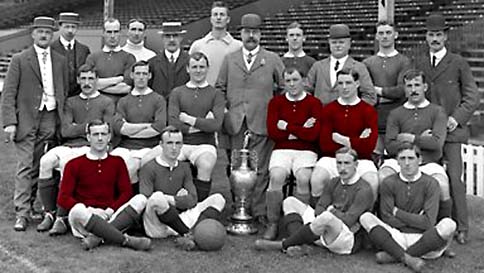
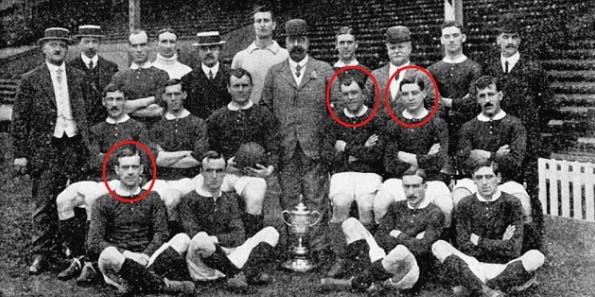
In 1915, Liverpool played so poorly as they lost 2-0 to relegation-threatened Manchester United that one of the many bookmakers who had taken bets on the game refused to pay out, at odds of 7-1.  He had probably heard of the clandestine meetings of players in the pubs of Manchester and Liverpool. And the poor old bookmaker was completely right. In the United team, Sandy Turnbull, Enoch West and Arthur Whalley were the guilty men and in the Liverpool team it was the fault of Tom Miller, Bob Purcell, Jackie Sheldon and the rather appropriately named Thomas Fairfoul. Can you spot the guilty players in this old picture of Manchester United?

wh turn wets

Would you like a second go?

betting-scandal-600x312

It looks like Liverpool are not quite so helpful towards the local detectives:

liverpool 1915

And no, the man with the cap is the trainer.

Jackie Sheldon as an ex-United man was the mastermind behind the coup but not everybody in the two teams was happy to cheat in this way. Both Fred Pagnam (Liverpool) and George Anderson (United) refused to participate. Indeed, when Pagnam shot and hit the opposing crossbar his teammates all showed their anger with him. It was perhaps his own fault, as before the match he had threatened to score a goal to spoil their nasty little plan. By now, whiter-than-white Billy Meredith was a United player, but everybody had taken great care not to tell him about what was happening and nobody passed to him throughout the game…something which, of course, aroused his suspicions as to what exactly was going on.  A penalty was missed by such a distance that the ball only just failed to hit the corner flag.  The crowd, feeling they had wasted their penny entrance money, grew increasingly angry with the proceedings.

Overall though, things were getting very much out of hand with match fixing. As an example, all seven of the Liverpool-Manchester United match fixers, along with an eighth player, Lawrence Cook of Stockport County, were banned from football sine die. (that effectively means “for life”)
Cynics might say that that was a fairly limp punishment as professional football had already been suspended because of the war. The even more cynical would point out that the Naughty Eight were given hints about a possible return to football, but only if they signed up for the Army and survived the carnage of the Western Front:

somme

A succession of away games on the Somme and at Passchendaele gave seven of the Naughty Eight their promised lifting of the ban. Fairfoul in fact turned away from football but the other six went back to their previous employment. For some reason “Lucky Enoch” West did not have his ban rescinded until 1945 when he was 59 years of age.

The_Battle_of_the_Somme_film_image1

Poor Sandy Turnbull had to be contented with a posthumous permission to resume his footballing career. He joined the 23rd Battalion of the Middlesex Regiment before a free transfer to the 8th Battalion of the East Surrey Regiment. He became Lance-Sergeant Turnbull and was killed on May 3rd in the Battle of Arras at the age of 33.  Sandy was the son of James and Jessie Turnbull, of I, Gibson St., Kilmarnock, Ayrshire and the husband of Florence Amy Turnbull, of 17, Portland Rd., Gorse Hill, Stretford, Manchester. He had won FA Cup medals with both Manchester City and Manchester United:

Deadgerman

The Grim Reaper has no favourites though. Sandy has no known grave and his death is commemorated along with that of almost 35,000 others from the United Kingdom, South Africa and New Zealand who died in this fairly pointless battle and whose bodies have never been identified. Overall, the Battle of Arras was quite a slaughter. Nearly 160,000 British lads and about 125,000 young Germans renounced their right ever to play football again. In a mere five weeks. Here is Polygon Wood where Sandy had tried to mark out a football pitch for himself and his pals:

polygonwood

Alas, they didn’t realise that a Great War average of one ton of explosives per yard of trench was going to be a really, really big problem with that.


22 Comments

Filed under Criminology, Football, History, Humour, Nottingham

Fire, I’ll take you to burn (1)

As you may already know, I am really head over heels with “The Date-Book of Remarkable Memorable Events Connected With Nottingham and Its Neighbourhood 1750-1879”, by John Frost Sutton. It records a world so similar and yet so different to our own. Fire, for example, was a very great concern when so many buildings were made of wood and the fire brigade arrived behind four horses.

First though, a couple of words of introduction. This is a bonnet front:

bonnet front

And so is this:

bbb onnet front

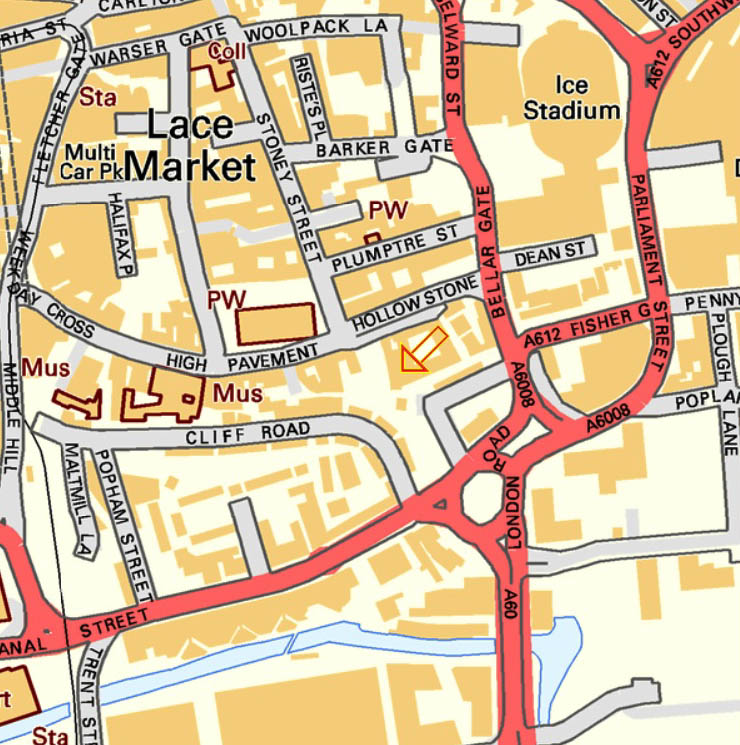
And this is Commerce Square, in the Lace Market area of the city. The letters “PW” indicate a “place of worship”, in this case, St Mary’s Church. The orange arrow indicates the exact location of the warehouse:

narow marsh

October 11 1866

Destruction by fire of the bonnet front warehouse of Mr. C. G. Hill, Commerce-square.”

“It appears that Mr Hill kept a large quantity of pigeons at the top of his warehouse and that after the workmen had left in the evening, he and some men went upstairs on some business to do with the birds.”

“While he was there Mr. Hill was surprised at a loud knocking at the warehouse door, and on going to the top of the stairs, he found that the lower portion of the premises was in flames, and that leaving by the stairs was impossible. Fortunately there was a trap door in the roof, through which they made their escape. The fire leaped upwards with fearful rapidity from floor to floor, and soon enveloped the whole of Mr. Hill’s premises in a glowing sheet of flame, which burst with great fury from the windows, lighting up a vast area, and presenting a spectacle of grandeur, particularly when viewed from the southern side of the town, which it overlooks”:

castle fire

“It was at one time feared that the burning building would fall into Narrow-marsh, and many of the inhabitants removed their goods, but beyond some falling pieces of burning timber, the massive roof of the building remained nearly intact. The interior, though, was completely burnt out, with nothing remaining but the shell. This building is eight stories high on the southern side. As the lower four stories in Narrow-marsh were occupied as houses, a fire-proof floor was inserted between the houses and the warehouse. This prevented the fire extending to the lower portions of the building, although they and their contents were much damaged by water. It was estimated that Mr. Hill’s stock was worth £10,000, he having from 10,000 to 15,000 boxes of bonnet fronts on hand. He was insured for £8,000, and the building, including the warehouses of Messrs. Hamel & Wright and Lottimer & Co, for £9,000. After Mr. Hill’s escape from the roof he climbed down into the building and turned off the gas, making his way out through the cellar grate.”

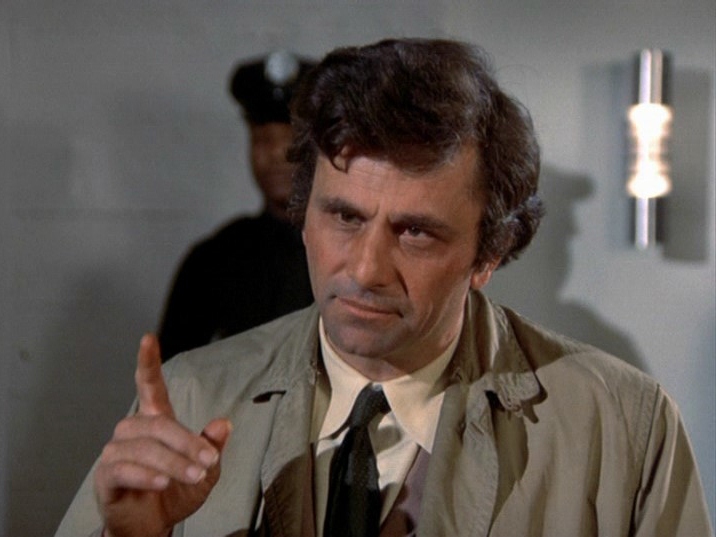
If Mr. Hill’s stock was worth £10,000, in today’s figures, that would be in the region of £1,140,000 nowadays. His insurance would have covered £912,000 by today’s reckoning,  with the insurance on  the warehouses of Messrs. Hamel & Wright and Lottimer & Co realising £1,026,000. Sounds like a job for Columbo to me:

columbo

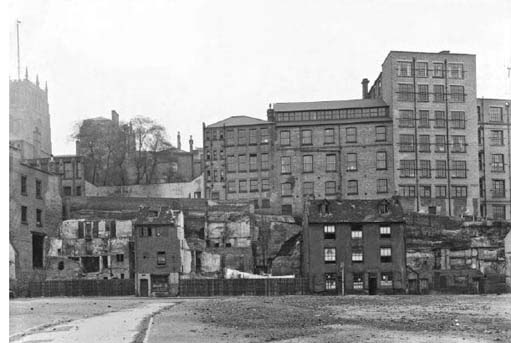
Narrow Marsh, the area below the Lace Market area, with, originally, a sandstone cliff at its back, was notorious in Victorian times as containing the worst slums in the British Empire, bar none, and being a place where only a mad policeman would attempt to go.

This photograph shows the many, many floors of some of the buildings, constructed against the cliff face itself:

narrow marsh

Here is a very ‘film noir’ shot of the streets below the cliff:

malt mill lane m=rrrow marsh

And, at last, the slums are torn down in the 1950s:

slum clearance 50s


10 Comments

Filed under Criminology, History, Nottingham

All Quiet on the Western Front (4)

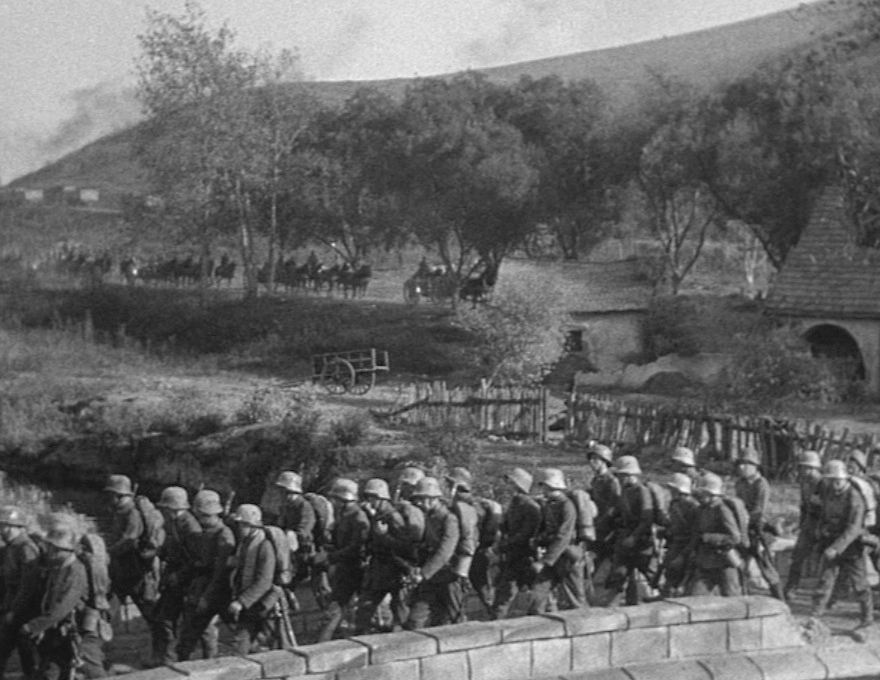
This is Part Four of a dialogue taken from “All Quiet on the Western Front”. A group of German soldier discuss their plight:

All-Quiet-hands

“I’ll tell you how it should all be done.
Whenever there’s a big war comin’ on, you should rope off a big field…”

“And sell tickets.”

“Yeah.”

all_quiet_ghosts

“And on the big day, you should take all the kings and their cabinets and their generals, put ’em in the centre dressed in their underpants, and let ’em fight it out with clubs. The best country wins.”

P1090550

Unfortunately, only one war has ever been carried out like that. It was the Israelites and the Philistines in the Old Testament when one side chose a champion and so did the other:

full_davidgoliath

It would certainly be something to think about, especially where wars are just dragging on in pointless fashion as the First World War and the now long forgotten Iran-Iraq War did.  Eight years and not too far short of a million casualties.

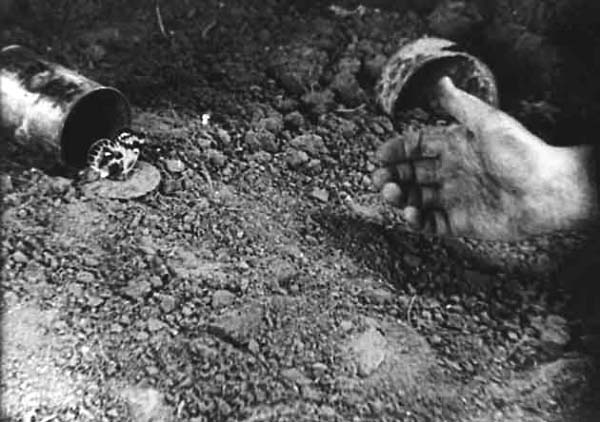
The film, though, comes to a famous end. The young hero, the last of his class to remain alive, is killed by a sniper as he reaches forward to touch a butterfly:

butterfly

16 Comments

Filed under Criminology, History

All Quiet on the Western Front (3)

This is Part Three of a dialogue taken from the film “All Quiet on the Western Front”:

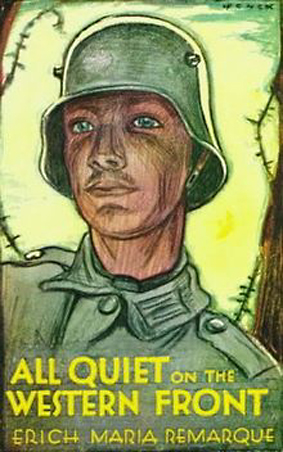
Remarque_Im_Westen_ book cover

A group of German soldiers discuss their plight:

“Somebody must have wanted the war. Maybe it was the English. No, I don’t want to shoot any Englishman. I never saw one ’til I came here. And I suppose most of them never saw a German ’til “they” came here. No, I’m sure “they” weren’t asked about it.”

“No.”

off to war

“Well, the war must be doing somebody some good.”

more shells

“I think maybe the Kaiser wanted a war.”

“I don’t see that. The Kaiser’s got everything he needs.”

group

“Well, he never had a war before. Every full-grown emperor needs one war to make him famous. Why, that’s history.”

“Yeah, generals, too. They need war.”

P1100069

And Prime Ministers and even Presidents come to that. They think it will make them look good when somebody else takes the risks on their behalf.


14 Comments

Filed under Criminology, History

All Quiet on the Western Front (2)

This is Part Two of a dialogue taken from “All Quiet on the Western Front”:

passchendale

A group of German soldiers in World War One discuss their plight:

“Well. how do they start a war?”

“Well, stupid, one people offends another.”

“Oh, well, if that’s it, I shouldn’t be here at all. I don’t feel offended.”

741px-second_battle_of_passchendaele_-_field_of_mud_

“It don’t apply to tramps like you.”

“Good. Then I could be goin’ home right away.”

“Ah, you just try it.”

“Yeah. You wanna get shot?”

“Me and the Kaiser felt just alike about this war. We didn’t either of us want a war, so I’m going home. He’s there already”

kaiser

Would it were so simple:

abbeville_arch12

You can see why Hitler’s Nazi Party sabotaged showings of this film in 1930s Germany. It would have brought home the grim reality to many of those willing to die for the Führer at the first glorious opportunity.

15 Comments

Filed under Criminology, History

All Quiet on the Western Front (1)

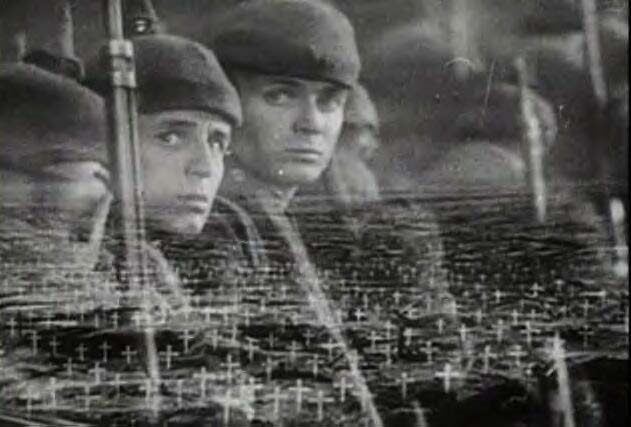
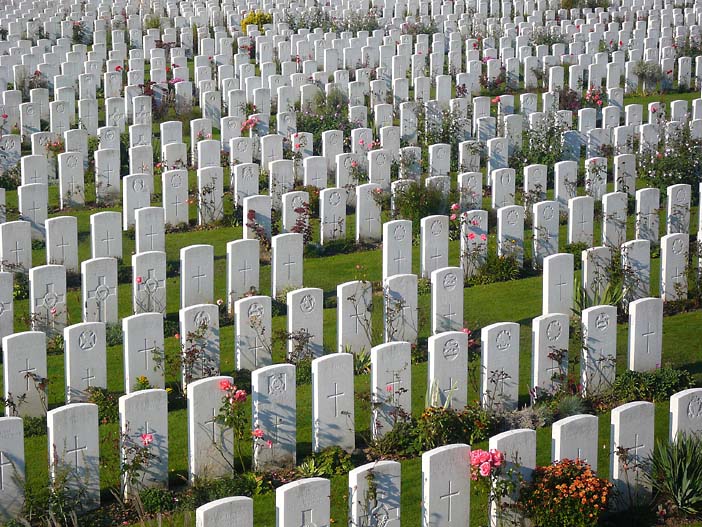
graves1

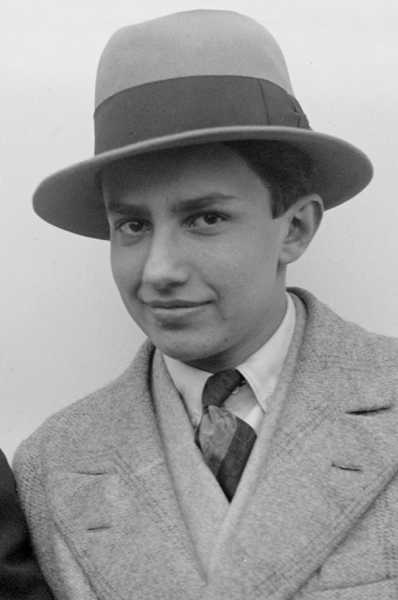
The film All Quiet on the Western Front was first shown in 1930. It won Oscars for its director, Lewis Milestone, and its producer, Carl Laemmle Junior:Carl_Laemmle_Jr

During his years as head of production at Universal studios, Carl Laemmle Junior was to be best known for overseeing  the classic old horror films such as Dracula (1931), Frankenstein (1931), The Mummy (1932), The Old Dark House (1932), The Invisible Man (1933), and Bride of Frankenstein (1935).

Lewis Milestone, born Leib Milstein, is best known for directing films such as Of Mice and Men, Anything Goes,  Halls of Montezuma Oceans Eleven and Mutiny on the Bounty.

My own favourite is All Quiet on the Western Front and that fondness for the film is based on a conversation that occurs right at the very end.

220px-AllQuietOnTheWesternFront

The film as a whole was written by Maxwell Anderson, George Abbott and Del Andrews. I do not know who was responsible for these particular extracts. The two writers who narrowly failed to win the Oscar for best writing were Andrews and Anderson. In it, one of the wise old soldiers gives his idea on the solution to war.

all-quiet-467 - Copy

I have decided to divide the dialogue into four sections. Here is Number One:

“Ah, the French certainly deserve to be punished for starting this war.”

“Everybody says it’s somebody else.”

“Well. how do they start a war?”

“Well, one country offends another.”

“How could one country offend another?”

“You mean there’s a mountain over in Germany gets mad at a field over in France?”

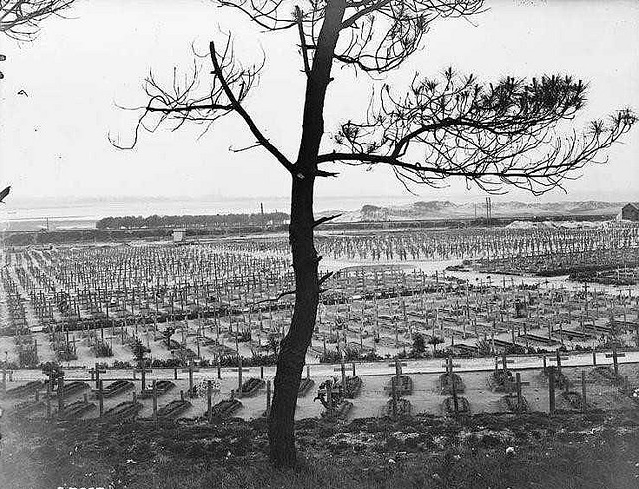
graves1

To be continued…


13 Comments

Filed under Criminology, History, Personal

Heil Hitler Episode 4

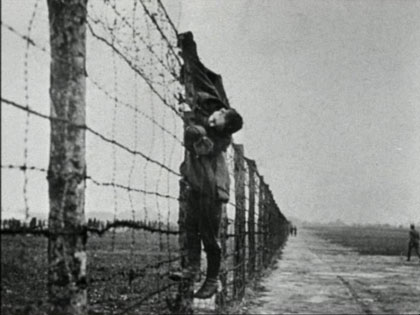
Nowadays, it is quite difficult to understand why people did not stand up to Hitler and the Nazi party in larger numbers.  The truth is, though, that it is a very difficult to deal with situations which are evil beyond belief. A little bit of cooking the books and stealing small sums of money from the Church Accounts is one thing, but these men were Satan’s Inner Council. They did not hesitate to kill people in thousands, if not hundreds of thousands. If not millions. If not tens of millions:

belsen

Or just one at a time:

one

No matter how evil or how terrifying these crazies became, though, there was still no shortage of brave Germans willing to stand up and be counted.
Look at these Germans here. At first glance, everybody is Heil Hitlering and Seig Heiling, and singing the company song:

We love you Adolf, we do,
O Adolf, we love you!

But look very carefully.  This is the football crowd at the England-Germany game at White Hart Lane, the home of Tottenham Hotspur, in December 1935 . A number of people appear not to be joining in with the general joy and merriment. There are about ten of them altogether. When you look more carefully, they seem, perhaps, to have all different motives for their non-participation:

german-football-supporters-giving-the-nazi-salute-during-the-international-match-against-england-at-white-hart-lane-london-december-1935

Disgust with their fellow citizens. Unwillingness to join in. Curiosity at the situation.  Puzzlement at why some other people are not joining in. Puzzlement at who is taking the photograph:

close up mny dissds

Apparently, then, no one single motive. But at least one of them, if not more, have the purposeful expression of a good man who has resolved not to do nothing any longer:

This slideshow requires JavaScript.

And as well as good, these are brave men. Brave anti-Nazi German men. We tend to forget nowadays, but there were lots of them. And brave anti-Nazi German women too. And boys. And girls.

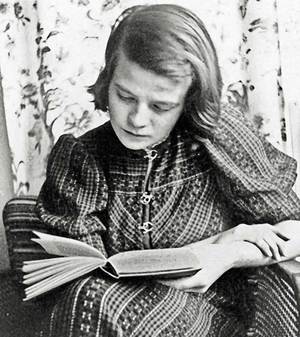
Sophie Scholl who has more schools named after her in Germany than Franz Beckenbauer:

scholl

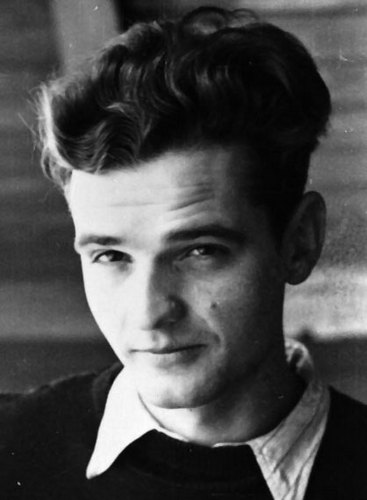
Her brother Hans:

HansScholl

Not everybody follows the rest. Not everybody wants to be evil. Some people will make their own protest. It may not be anything particularly spectacular, but it may well be extremely brave.

As we shall see next time.


12 Comments

Filed under Criminology, History, Politics