Category Archives: Literature

The Flannan Isle disappearances (1)

On February 17th 2021, I published a blog post about one of my Dad’s favourite poems, “Flannan Isle”, by Wilfrid Wilson Gibson, which was written in 1912. The poem concerned the mysterious disappearance of the three lighthouse keepers in December 1900. This strange incident has never been explained once and for all, and I was asked for my own ideas by a number of different people. Unfortunately, the subject proved so complex that I was unable to do it justice in fewer than four blog posts, although, on the other hand, I would argue that all four are as interesting as any that I have ever written.

So here we go……..

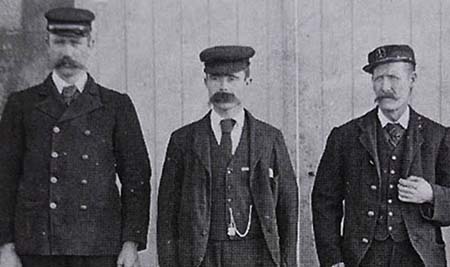
At midnight on December 15th, the steamship Archtor, nearing the end of its voyage from Philadelphia to Leith, passed the Flannan Isle lighthouse which was not showing a light. Instead of two quick bursts of light every 30 seconds, there was just darkness. Captain Holman, however, was unable to report this fact to the Northern Lighthouse Board, because the Archtor continued its voyage, but ran aground in the Firth of Forth. The NLB, therefore,  were unaware of the situation until their own supply ship, the Hesperus, made its usual regular visit to the lighthouse on December 26th.  The Master of the Hesperus, Captain Harvie, at the first opportunity, sent a telegram to the NLB. The significant elements can be read below:

“The three Keepers, Ducat, Marshall and the occasional have disappeared from the island. On our arrival there this afternoon no sign of life was to be seen on the Island. Fired a rocket but, as no response was made, managed to land Moore, who went up to the Station but found no Keepers there. The signs indicated that the accident must have happened about a week ago.”

The “occasional” was a temporary replacement for a full time lighthouseman who was ill. His name was Donald McArthur. Donald was due to be replaced by Joseph Moore, the third Assistant Lighthouseman allocated to Flannan Isle, now recovered from his illness. Joseph was on board the Hesperus and Captain Harvie sent him ashore to search the island. Captain Harvie then reported to the NLB the two key things that Joseph found during his search of the lighthouse and the island….

“…. The clocks were all stopped and other signs indicated that the accident must have happened about a week ago.”

Here’s Joseph Moore:
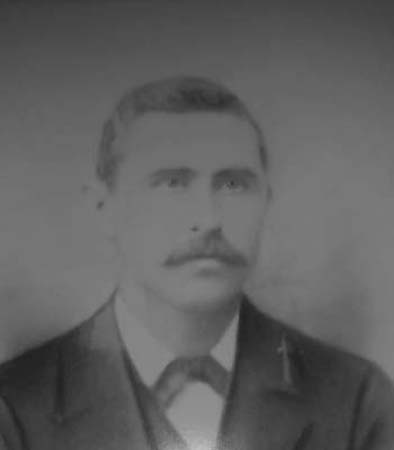
 

Joseph Moore also wrote his own letter to the NLB though, about what he had seen during his search of the island:

“On coming to the entrance gate I found it closed. I made for the entrance door leading to the kitchen and store room, found it also closed and the door inside that, but the kitchen door itself was open………..

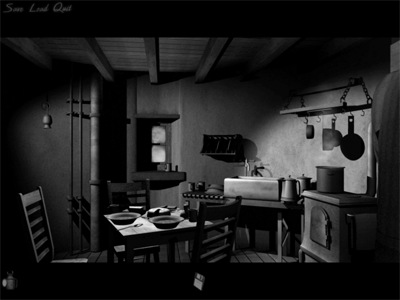
On entering the kitchen I looked at the fireplace and saw that the fire was not lighted for some days. I then entered the rooms in succession, found the beds empty just as they left them in the early morning.”

And………

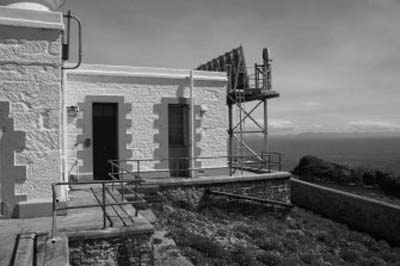
“Mr McCormack and myself proceeded to the lightroom where everything was in proper order. The lamp was cleaned. The fountain full. Blinds on the windows etc.”
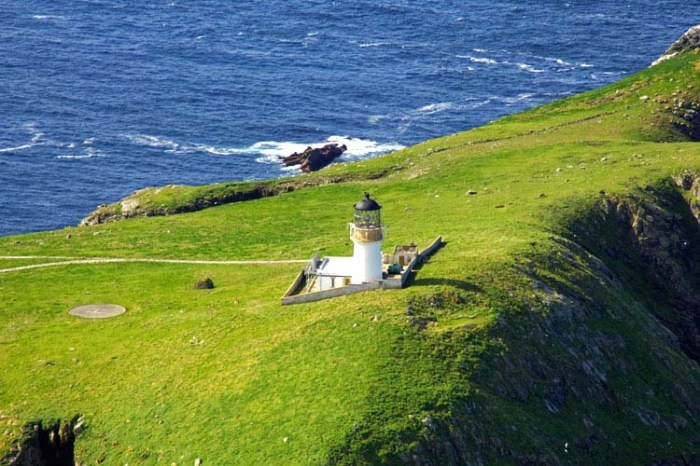
The island is so small that it could be searched in a very short time…..

“We traversed the Island from end to end but still nothing to be seen to convince us how it happened. Nothing appears touched at East Landing to show that they were taken from there. Ropes are all in their respective places in the shelter, just as they were left after the relief on the 7th.”

Both sides of the island were not the same though….

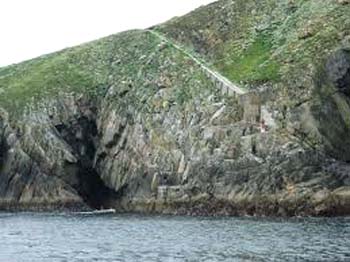
“On the West side it is somewhat different. We had an old box halfway up the railway for holding West Landing mooring ropes and tackle, and it has gone. Some of the ropes, it appears, got washed out of it, they lie strewn on the rocks near the crane. The crane itself is safe.

The iron railings along the passage connecting the railway with the footpath to the landing and started from their foundation and broken in several places (sic), also railing round crane, and handrail for making mooring rope fast for boat, is entirely carried away.”

Joseph Moore could also work out how the men were dressed…….

“Now there is nothing to give us an indication that it was there the poor men lost their lives, only that Mr Marshall has his seaboots on and oilskins, also Mr Ducat has his seaboots on. He had no oilskin, only an old waterproof coat, and that is away. Donald McArthur has his wearing coat left behind him which shows, as far as I know, that he went out in shirt sleeves. He never used any other coat on previous occasions, only the one I am referring to.”
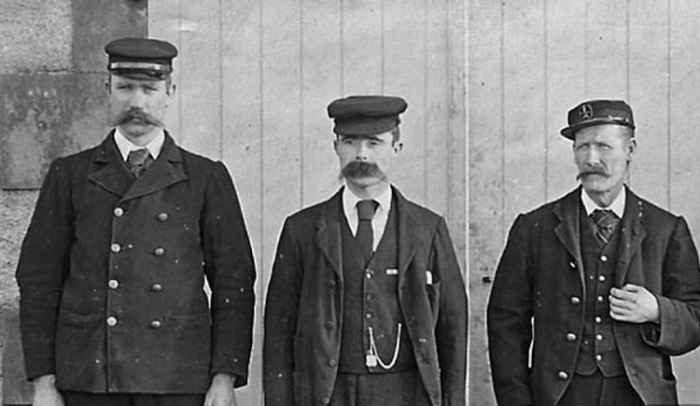
Some of the evidence above is important. To end this blog post, I will write out some of the things discovered by the NLB and perhaps you can have a think about what they prove, or, indeed, disprove……..

The clocks were stopped

The entrance gate I found …..closed

The entrance door ….. found it closed and the door inside (as well)

The kitchen door itself was open

The fire was not lighted for some days

I found the beds empty just as they left them in the early morning

In the lightroom everything was in proper order. The lamp was cleaned. The fountain full. Blinds on the windows etc

Nothing appears touched at East Landing

Ropes are all in their places
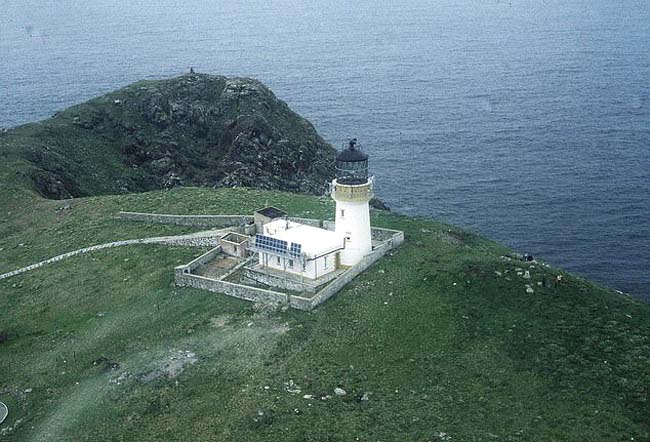
And then there is that huge contrast:

On the West side……… old box halfway up the railway ….has gone……the ropes…… got washed out of it, they lie strewn on the rocks.

The iron railings …….with the footpath to the landing …….started from their foundation and broken in several places…..railing round crane, and handrail for making mooring rope fast……. entirely carried away.”

Mr Marshall has his seaboots on and oilskins, also Mr Ducat has his seaboots on. He had no oilskin, only an old waterproof coat, and that is away. Donald McArthur has his wearing coat left behind him which shows, as far as I know, that he went out in shirt sleeves.

Next time, I will show you the conclusions of the NLB Superintendent who also visited the island. He, like Joseph Moore, was well aware that the box constructed to keep all the ropes and other equipment safe was 110 feet above the sea.

 

34 Comments

Filed under Criminology, Cryptozoology, Literature, my Dad, Wildlife and Nature

My Dad, Fred, and his favourite poetry (5)

When I was a little boy, my Dad, Fred, used to be a teacher at Hastings Road School in Gresley. Unfortunately excessive mining operations underneath the school led to its premature collapse.  My Dad is at the right hand end of the back row:

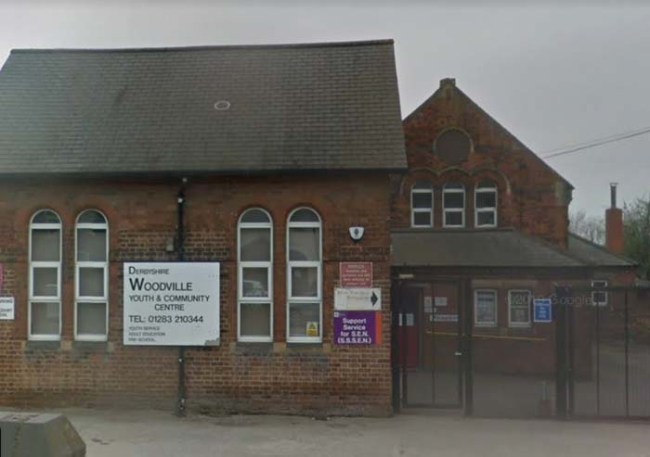
My Dad had to move to the Woodville Church of England Junior School, the school I attended, where, after a number of years, I finished up in his class, which was possibly Class 4. This is the school now.

One afternoon,  I can recall being one of the many children who were all so very frightened when my Dad read out to the fifty of us the narrative poem, “Flannan Isle”, by Wilfrid Wilson Gibson, written in 1912. Here’s the author:

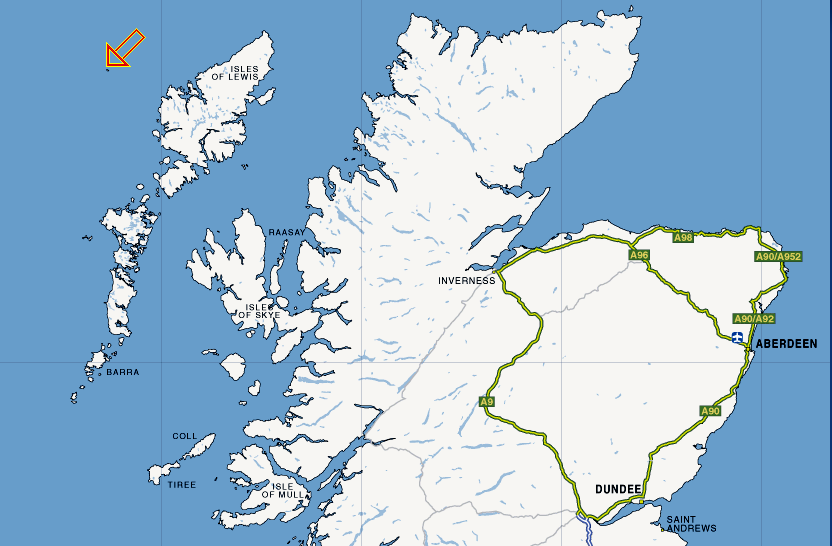
The Flannan Isles incidentally are pretty much as remote as you can get in Britain. The orange arrow is 553 miles from London, in a straight line, slightly less than London-Berlin:

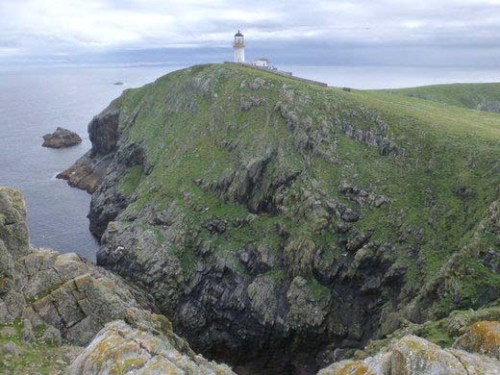
On an unknown date in December 1900, the lighthouse on Flannan Isle suddenly failed to shine. A few days later, when a group of lighthouse men came to investigate, they found that the whole island was completely deserted. The three lighthouse keepers had completely disappeared.

Fred used to recite this poem regularly to his classes, and I can still recall how intriguing many of us found this true story, and how animatedly and at what great length we discussed all the possible reasons for the disappearance of those three unfortunate lighthouse keepers only sixty years previously. We were all convinced that the men had been magically transformed into seabirds,  an absolutely horrific idea for nine year olds in that more innocent age of the early 1960s. Anyway, here’s the first section:

“THOUGH three men dwell on Flannan Isle
To keep the lamp alight,
As we steered under the lee, we caught
No glimmer through the night.” A passing ship at dawn had brought
The news; and quickly we set sail,
To find out what strange thing might ail
The keepers of the deep-sea light.
The Winter day broke blue and bright,
With glancing sun and glancing spray,
As o’er the swell our boat made way,
As gallant as a gull in flight. But, as we neared the lonely Isle;
And looked up at the naked height;
And saw the lighthouse towering white,
With blinded lantern, that all night
Had never shot a spark
Of comfort through the dark,
So ghostly in the cold sunlight
It seemed, that we were struck the while
With wonder all too dread for words.
That sets the scene, although, initially, when I came back to this poem after 60 odd years, I was a little disappointed with the quality of the poetry. Gibson seems so often to add an extra phrase or an extra couple of words, when the poem would actually read better without them.
Anyway, a possible solution is hinted at by the description below of the three strange seabirds:
And, as into the tiny creek
We stole beneath the hanging crag,
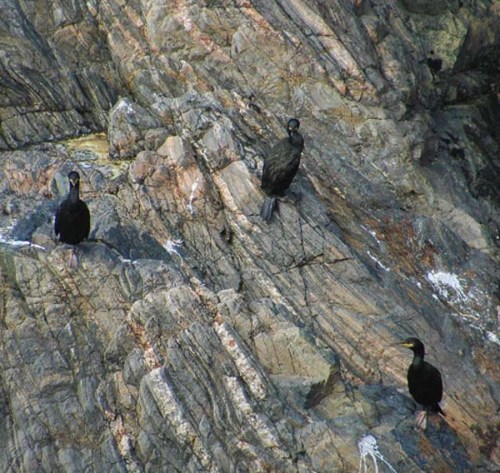
We saw three queer, black, ugly birds—
Too big, by far, in my belief,
For guillemot or shag—
Like seamen sitting bolt-upright
Upon a half-tide reef:
But, as we neared, they plunged from sight,
Without a sound, or spurt of white.

Those three birds, guillemots or shags, were the very things that would go on to terrify a bunch of 9-year olds.

And still to ‘mazed to speak,
We landed; and made fast the boat;
And climbed the track in single file,
Each wishing he was safe afloat,
On any sea, however far,
So it be far from Flannan Isle:
And still we seemed to climb, and climb,
As though we’d lost all count of time,
And so must climb for evermore.
Yet, all too soon, we reached the door—
The black, sun-blistered lighthouse-door,
That gaped for us ajar.


As, on the threshold, for a spell,
We paused, we seemed to breathe the smell
Of limewash and of tar,
Familiar as our daily breath,
As though ‘t were some strange scent of death:
And so, yet wondering, side by side,
We stood a moment, still tongue-tied:
And each with black foreboding eyed
The door, ere we should fling it wide,
To leave the sunlight for the gloom:
Till, plucking courage up, at last,
Hard on each other’s heels we passed,
Into the living-room.
Actually, at this point, I might well retract what I said before. The further I went into the poem, the more I realised, that it is clearly meant to be slowly and deliberately declaimed out loud. Have a go. You’ll see what I mean. And sincere apologies, Wilf !
Yet, as we crowded through the door,
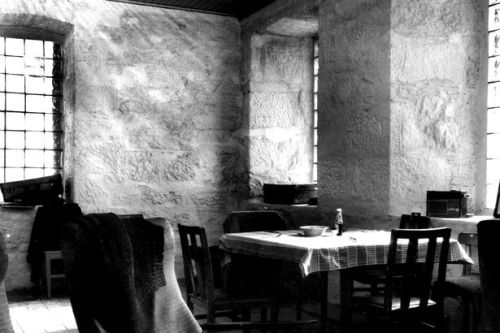
We only saw a table, spread
For dinner, meat and cheese and bread;
But, all untouched; and no one there:
As though, when they sat down to eat,
Ere they could even taste,
Alarm had come; and they in haste
Had risen and left the bread and meat:
For at the table-head a chair
Lay tumbled on the floor. We listened; but we only heard
The feeble cheeping of a bird
That starved upon its perch:
And, listening still, without a word,
We set about our hopeless search.
We hunted high, we hunted low;
And soon ransacked the empty house;
Then o’er the Island, to and fro,
We ranged, to listen and to look
In every cranny, cleft or nook
That might have hid a bird or mouse:
But, though we searched from shore to shore,
We found no sign in any place:
And soon again stood face to face
Before the gaping door:
And stole into the room once more
As frightened children steal.
Aye: though we hunted high and low,
And hunted everywhere,
Of the three men’s fate we found no trace
Of any kind in any place,
But a door ajar, and an untouched meal,
And an overtoppled chair.
And, as we listened in the gloom
Of that forsaken living-room—
A chill clutch on our breath—
We thought how ill-chance came to all
Who kept the Flannan Light:
And how the rock had been the death
Of many a likely lad:
How six had come to a sudden end,
And three had gone stark mad:
And one whom we’d all known as friend
Had leapt from the lantern one still night,
And fallen dead by the lighthouse wall:
And long we thought
On the three we sought,
And of what might yet befall.
Like curs, a glance has brought to heel,
We listened, flinching there:
And looked, and looked, on the untouched meal,
And the overtoppled chair.
We seemed to stand for an endless while,
Though still no word was said,
Three men alive on Flannan Isle,
Who thought, on three men dead.
Hopefully, you made it this far. It is definitely a great poem to be declaimed out loud. But you’ve got to take it slowly and deliberately. If you stumble at the words, go back and give it another go.
And here’s the three birds that we children all thought the lighthouse keepers had been transformed into:

In the future, I hope to produce some blog posts looking at the possible reasons that the three men disappeared.

Portrait of Gibson borrowed from poeticous

16 Comments

Filed under Criminology, Cryptozoology, History, Literature, my Dad, Personal, Science, Wildlife and Nature

My Dad, Fred, and his favourite poetry (4)

Fred had two poems which he really enjoyed. Last time we took a look at the first one of the two, “Tarantella”, which was written by Hilaire Belloc. Today, I’d like to introduce you to Fred’s second poem, “The Listeners” which was written by Walter de la Mare. This poem is great for children of around nine or ten, because it leaves so many questions unanswered and they can be asked to contribute their own ideas to the discussion:

‘Is anybody there?’ said the Traveller,
Knocking on the moonlit door;

And his horse in the silence champed the grasses
Of the forest’s ferny floor:
And a bird flew up out of the turret,
Above the Traveller’s head:
And he smote upon the door a second time;
‘Is there anybody there?’ he said.
But no one descended to the Traveller;
No head from the leaf-fringed sill
Leaned over and looked into his grey eyes,
Where he stood perplexed and still.

So….no answer when the grey-eyed traveller knocked on the moonlit door. The place is completely deserted. Or is it?

But only a host of phantom listeners
That dwelt in the lone house then
Stood listening in the quiet of the moonlight
To that voice from the world of men:
Stood thronging the faint moonbeams on the dark stair,
That goes down to the empty hall,
Hearkening in an air stirred and shaken
By the lonely Traveller’s call.

In other words, not just one ghost but a host of unidentified phantoms. Are they going to make their presence known?

And he felt in his heart their strangeness,
Their stillness answering his cry,
While his horse moved, cropping the dark turf,
‘Neath the starred and leafy sky;

The ghosts just prefer to remain still. Saying nothing and totally unseen. The Traveller knocks loudly a second time.

For he suddenly smote the door, even
Louder, and lifted his head: –
‘Tell them I came, and no one answered,
That I kept my word,’ he said.

But it has no effect. They can hear every word from the Traveller, but prefer to say nothing. And they can hear his departure. His foot into the stirrup and the horse’s shoes on the  stone cobbles.

Never the least stir made the listeners,
Though every word he spake
Fell echoing through the shadowiness of the still house
From the one man left awake:
Ay, they heard his foot upon the stirrup,
And the sound of iron on stone,
And how the silence surged softly backward,
When the plunging hoofs were gone.

And off he goes. The silent ghosts reclaim their building as soon as the Traveller is gone. And the building returns to its usual deserted state:

But why did he say ‘Tell them I came, and no one answered, That I kept my word,’? Alas, there are no hints given on that score, although clearly, there is some connection between all three protagonists, namely, the Traveller, the lone house and the listeners.

I think that the poem is as simple as that. It’s rather like when a stranger knocks on the door of the house next door to yours.  They wait for an answer but “answer came there none“. (Thank you, Lewis. Now just be quiet).

And you never do find out why they were knocking.


13 Comments

Filed under History, Literature, Personal, Writing

My Dad, Fred, and his favourite poetry (3)

Fred had two poems which he really enjoyed. I’m not so sure now that they didn’t both of them portray him as a man with a drink problem, insofar as they both have strong connections with establishments which sold alcohol, quite possibly in large quantities.

Anyway, the first poem of the two is called “Tarantella” and was written by Hilaire Belloc. The tarantella is a dance for two people which is supposed to mimic musically the very strong jerking spasms brought on by the bite of the wolf spider. The latter is a very large spider, but have no fear, there will be no pictures of arachnids here. Instead, just happy people enjoying a dance:

Those “strong spasms”, incidentally, are supposedly paralleled psychologically by the extreme emotions of falling in love.  In terms of the spider’s poison, however, love won’t stop the effects of the bite. Only dancing around like some kind of mad person can prevent the death of whoever has been bitten.

Here’s the first bit, a masterpiece of juggling with words, as the author tries to take Miranda back in time to one hell of a night that they shared years ago:

Do you remember an Inn, Miranda?
Do you remember an Inn?
And the tedding and the spreading of the straw
for a bedding,
And the fleas that tease in the High Pyrenees,
And the wine that tasted of tar,
And the cheers and the jeers of the young
muleteers
Under the vine of the dark veranda?
Do you remember an Inn, Miranda?
Do you remember an Inn?
And the cheers and the jeers of the young
muleteers
Who hadn’t got a penny,
And who weren’t paying any,
And the hammer at the doors and the din;
And the Hip! Hop! Hap!
Of the clap
Of the hands to the twirl and the swirl
Of the girl gone chancing,
Glancing,
Dancing,
Backing and advancing,
Snapping of the clapper to the spin,
Out and in
And the Ting! Tong! Tang! of the guitar?
Do you remember an Inn, Miranda?
Do you remember an Inn?
The next five lines of the poem show, though, how that memorable night of years ago has disappeared for ever into the past, and, like all our experiences as human beings, it can never be recreated, however hard we try:
  Never more;
Miranda,
Never more.
Only the high peaks hoar:
And Aragon a torrent at the door.

One critic, Oli Foster, has called the last twelve lines of the poem “a lament for all lost experience.” The poem finishes with the even more pessimistic final seven lines…

No sound
    In the walls of the Halls where falls
    The tread
    Of the feet of the dead to the ground
    No sound:
    But the boom
    Of the far Waterfall like Doom.

One final fact is that we actually know the identity of “Miranda”. She was Miranda Mackintosh, a Scottish lady, and Belloc met her during a walking holiday, at the hamlet of Canranc on the River Aragon in the Pyrenees in 1909.

Belloc wrote the poem in 1929 as a souvenir for Ms Mackintosh and he gave it to her as a New Year’s present.

Belloc in his private life was a very controversial character and in articles I have read about anti-Semitic poets, his name unfailingly crops up, usually fairly early in the list. His other political views are, to me personally, quite extraordinary. One of the best things to read that I found was here. Another point of view is his Wikipedia page .

Next time, we’ll look at the other one of the two poems my Dad, Fred, enjoyed so much.

16 Comments

Filed under History, Literature, my Dad, Writing

My Dad, Fred, and his favourite poetry (2)

Last time, I told you my Dad’s three favourite lines of poetry, which he would quote out loud at what he thought was the right moment.

Any mention of autumn, in any context, in real life, on TV, the fact that it was October, any of those would produce Keats’ line:

“Season of mists and mellow fruitfulness”

Sometimes he would manage the second line after it:

“Close bosom-friend of the maturing sun”

Any bird high up in the sky, perhaps a skylark but definitely not an eagle, pigeon or airliner would produce Shelley’s line:

“Hail to thee, blithe Spirit!

Bird thou never wert,”

And then, Fred’s improvement on the lines by William Henry Davies:

“What is this life if so full of care, we have no time to stand and stare ? ”

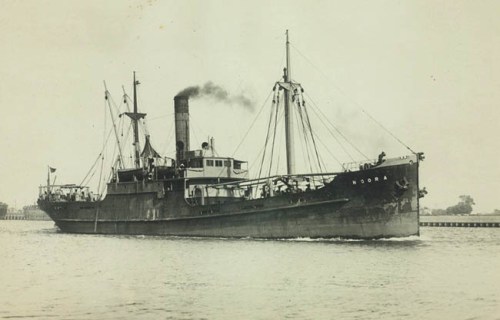
Any mention of ships though, either in real life or on television, would set him off with some phrases, or even a couple of lines, from another of Fred’s favourite poets, namely John Masefield. All the family, therefore, soon became familiar with the various vessels of his poem “Cargoes”, and their home ports.  There was a “quinquireme of Nineveh ” and a “ stately Spanish galleon coming from the Isthmus ” or, much more more likely in the North Sea off Skegness or Scarborough, perhaps, a “ dirty British coaster with a salt-caked smoke stack. ”

The first verse was a

“Quinquireme of Nineveh from distant Ophir,
Rowing home to haven in sunny Palestine,
With a cargo of ivory,
And apes and peacocks,
Sandalwood, cedarwood, and sweet white wine.”

The second verse was equally exotic:

“Stately Spanish galleon coming from the Isthmus,
Dipping through the Tropics by the palm-green shores,
With a cargo of diamonds,
Emeralds, amythysts,
Topazes, and cinnamon, and gold moidores.”

And here’s that very galleon:

In contrast, though, the third, and last, verse is about a ship of a much humbler origin:

“Dirty British coaster with a salt-caked smoke stack,
Butting through the Channel in the mad March days,
With a cargo of Tyne coal,
Road-rails, pig-lead,
Firewood, iron-ware, and cheap tin trays.”

And here it is:

And now, some of the meanings:

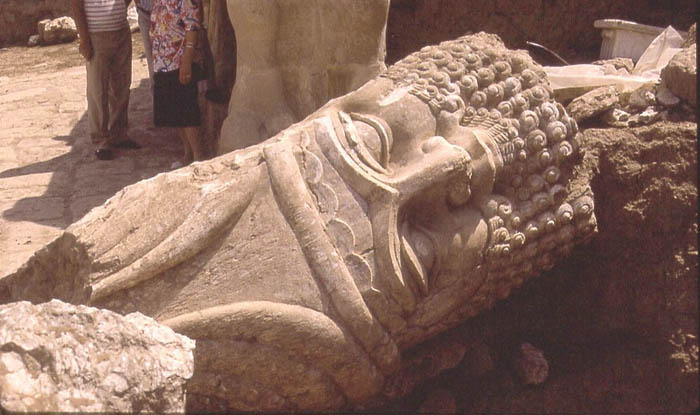
Nineveh was the ancient capital of Assyria. You can see its ruins on the opposite bank of the River Tigris from Mosul, in northern Iraq.

Ophir was probably one of the many empires which flourished either on the banks of the Nile or in the Horn of Africa. King Solomon received a cargo from Ophir every three years. It was a consignment of gold, silver, sandalwood, pearl, ivory, apes, and peacocks. Presumably, the quinqireme in the poem was on its way to Israel.

Amethyst is a violet variety of quartz. The name comes from the Greek “αμέθυστος“.

Moidores were a Portuguese gold coin of the early 18th century and then worth about 27 shillings.

Topaz is a silicate mineral of aluminium and fluorine with the chemical formula Al2SiO4(F, OH)2. Topaz crystallizes in the orthorhombic system, and its crystals are mostly prismatic terminated by pyramidal and other faces. (There will be a test next Monday).

As a preliminary to the test, which one is which? Moidores? Topaz? Amethyst?

This slideshow requires JavaScript.


16 Comments

Filed under Africa, History, Literature, my Dad, Personal

My Dad, Fred, and his favourite poetry (1)

My Grandfather, Will, had apparently always loved poetry, and in this respect, his son, and my Dad, Fred, was to follow willingly in his father’s footsteps. This burgeoning love of rhyme was nurtured and encouraged by the fact that, like many children in the British Empire, Fred possessed a set of  “The Children’s Encyclopedia” by Arthur Mee, a famous, familiar and popular book of the 1930s:

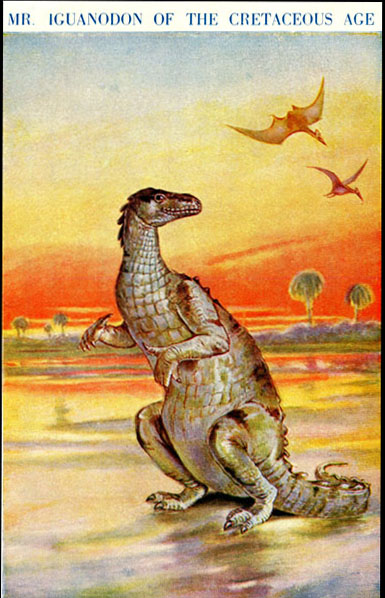
Arthur Mee believed that the English, and in particular the English boy, were the “peak of creation”, although my mother, well familiar both with me and her husband, thought he was a madman. Each volume of Mee’s ten volume set of encyclopedias contained sixteen different themes or subjects and great prominence was always given to the Poetry sections, which were selected by Sir John Hammerton, a famous contemporary historian. Fred also liked the dinosaur pictures too:

Fred would often quote poetry, and his three favourite lines were……

“Season of mists and mellow fruitfulness ”

This is a line of Keats which was automatically triggered by any mention whatsoever of autumn. Or by a walk into a wood in autumn. Or a TV programme about autumn.

Keats’ best pal, Shelley, wrote the lines which are in second place:

“Hail to thee, blithe Spirit!

Bird thou never wert,”

These words would invariably emerge should any sighting of a skylark occur, perhaps during a walk alongside a field of corn. Quite often, it would be just any bird seen to be doing skylarky type things:

In third place came the rather wise, and arguably, slightly incorrect ……

“What is this life if so full of care,

We have no time to stand and stare ? ”

The correct version has no “so” and, surprisingly, no question mark:

“What is this life if,  full of care,

We have no time to stand and stare. ”

The poem was written by William H Davies, a Welsh poet, who spent many years as a tramp or hobo, in the United Kingdom and the United States. Presumably my Dad did not know that he was Welsh. Being Welsh was never a plus point with my Dad.

Fred always professed that his favourite poet was John Clare.  You can read about him in one of my early and probably over long posts, here.

And this is John Clare, perhaps “before” and “after” the boiled egg hairstyle became popular:

This slideshow requires JavaScript.

In retrospect, I have always felt that Fred saw Clare as the simple, agricultural working class man, held firmly in his place in a world dominated by the upper classes, who were, for the most part as poets, fairly worthless and useless aesthetes, lacking Clare’s poetic talents, his intelligence and his capacity for accurate observation of the world around him. Perhaps too, as a native of the simple country village of Woodville, Fred could recognise the truth of the statement by Ronald Blythe, the President of the Clare Society, that the impoverished poet was “England’s most articulate village voice”.

It is not a giant leap, of course, to say that Fred probably saw his own life as directly paralleling that of Clare, denied as he was for purely financial reasons, the chance to go to a grammar school, and to have the same education as the more successful, and much less talented, upper class people that he would meet during the rest of his life, particularly in the RAF.

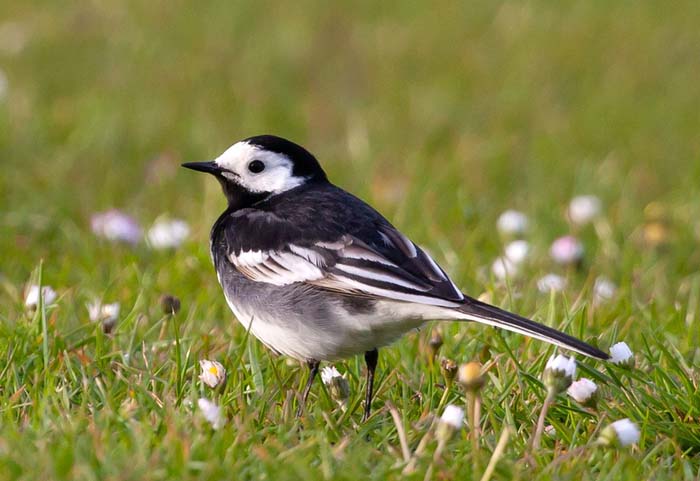
Given this love of John Clare, therefore, every time that he physically saw one running about, perhaps in a school playground when he was on yard duty, Fred would always identify this black and white bird as the “little trotty wagtail”, a phrase taken from one of Clare’s most frequently quoted poems:

Little trotty wagtail, he went in the rain,
And tittering, tottering sideways he near got straight again.
He stooped to get a worm, and look’d up to catch a fly,
And then he flew away ere his feathers they were dry.

Little trotty wagtail, he waddled in the mud,
And left his little footmarks, trample where he would.
He waddled in the water-pudge, and waggle went his tail,
And chirrupt up his wings to dry upon the garden rail.

Little trotty wagtail, you nimble all about,
And in the dimpling water-pudge you waddle in and out;
Your home is nigh at hand, and in the warm pigsty,
So little Master Wagtail, I’ll bid you a goodbye.


17 Comments

Filed under Bomber Command, History, Humour, Literature, my Dad, Personal, Wildlife and Nature

Classics Illustrated

In the 1950s and the 1960s, there was always a desire among middle class parents not just to encourage their children to read, but to read what people called at the time “classic books”, books which might improve you. One way of luring children to, mainly, 19th century masterpieces, was to introduce them to a very large collection of such books for sale, an act which would encourage children, hopefully, to buy more and more from the “approved” library.

When I was a child, I had a very small collection of “Olive Classics”, dark green books with a kind of faux-leather cover, and a cardboard mini-box to hold them in. I still have them all, and I was looking at them the other day. I think I read the lot, although this may be more a reflection of the small number of books I possessed than the quality of the works in question:

I bought them based on whether or not I had seen the film (The Hunchback of Notre Dame), whether I had heard of the book and thought it was a good one (Ivanhoe) and if my parents just bought it for me as a stocking filler at Christmas (South with Scott). I also had Ben-Hur (tedious and over long), Allan Quartermain (a fabulous book):

Another way to read books which would be good for you were the magazines entitled “Classics Illustrated”. These were a series of American comic books which told the stories in pictures with very few printed words, usually just a caption. I had one or two of these as well, and certainly read them all avidly. It was marvellous to see pictures bringing books to life, although, if truth be told, the standard of the artworks was very, very low. Let’s compare them with “Eagle” comic. “War of the Worlds is really quite crude, whether it is the cover:

or the inside, where there seems to have been a problem with the printing;

Here’s “Eagle”, a weekly comic:

I can remember owning relatively few Classics Illustrated. There was “White Fang” which I really enjoyed. It was a “Ripping Yarn”, well told:

And then there was “Black Arrow” which I had never heard of, found really unexciting and I couldn’t understand the plot, anyway. The two I liked best were technically not Classics Illustrated, but, in one case, a “Special Issue”. This was a one-off publication about “The Royal Canadian Mounted Police”, which I loved. I particularly liked the fact that they were originally the “North West Mounted Police”:

What a wonderful cover!  One thing I did like especially was the dog on page 54 which looks as daft as a brush:

And I also fully endorsed, at the tender age of 11, the largely wise approach of the Canadians to their own First Nation communities.

The magazine which I liked even more was one of the “Classics Illustrated World Around Us” special series which was called “The Crusades”. I was intrigued by one particular sentence which said, roughly:

“Things took a turn for the worse when, in IIII, the king decided to…..”

At the age of eight or nine, I just could not work out what “IIII” meant. It  never occurred to me that it was a date.

Overall, I wish I had had quite a few more Classics Illustrated than I did.  I would have liked to have had a chance to read “Alice in Wonderland” or “Journey to the Centre of the Earth”, or perhaps even “Gulliver’s Travels”:

This slideshow requires JavaScript.

And don’t forget………….

20 Comments

Filed under Africa, Canada, History, Literature, military, Science, Writing

“CAT, after D.H.Lawrence.” Part Two. What became of Dennis Rhodes.

A little while ago I introduced you to a young gentleman and Old Nottinghamian, called Dennis Everard Rhodes. He had written a poem in the School Magazine entitled “CAT (After D.H. Lawrence)” It was published in the Nottinghamian in July 1941, when Dennis was just eighteen. Here’s the High School at the time:

Amazingly, Dennis died only 18 months or so ago. He seems to have been one of the cleverest people who ever came to our school. A man of astounding brilliance and scholarship. I’m hoping in about 700 words to show you by how much he is cleverer than even a relatively clever person.

Firstly, let me quote you some of his obituary by Dr Lotte Hellinga which is expected to appear in The Library magazine in 2021:

“Dennis Everard Rhodes, Gold Medallist of the Bibliographical Society in 2007 and staunch contributor to The Library from 1952, died on April 7th 2020, aged 97…….

His studies began in 1941 with classical Greek, but he soon switched to Italian language and literature. During the war, he was already fluent enough in Italian to join the Intelligence Corps as interpreter during the Italian Campaign. He not only perfected his use of the language, but it discovered a country, its culture and its people that he came to love and where he felt at home. Italy in all its great cultural variety remained one of the two poles between which he conducted his life, the other being the British Museum, not less so when it was transformed into the British Library.

In 1950 he became Assistant Keeper in the Department of Printed Books at the British Museum Library. His mentors were both deeply immersed in the cataloguing and investigation of early printed books, and Dennis followed them in the same direction. He thrived in the Italian section, but his particular interest was in incunabula.

Dennis’ commitment to the library lasted his entire lifetime, through its separation from the Museum and becoming the British Library in 1973, then his appointment as Head of Incunabula in 1974,  his promotion to Deputy Keeper in 1978, his retirement in 1985, and the move to the new building in 1998; almost to the very end of his life he simply stayed on, most of those years continuing with work behind the scenes.”

An “incunabulum”, by the way, is “an early printed book, especially one printed before 1501.” “incunabula” is the plural. Surely you have not forgotten that old aide-mémoire:

“Please remember every day.

Neuter plurals end in “A”.”

Dennis’ obituary will reveal in much greater depth the all encompassing intellectual life of Dr Dennis Rhodes. You can read it here.

Dennis wrote a lot of very specialised books. You can fine a list of his book titles here. Here is one of the pages for you to look at if you follow the link. Just look how wide ranging these titles are:

This bookseller and dealer in fine art is selling an archive of some of Dennis’ work. He could almost sell it by weight! This picture below is only a tiny fraction of Dennis’ work :

Dennis’ books are held by most universities in the Western World. He did not always write in English. Here is the list of which of Dennis’ books are held just in the various libraries at the University of Gent in Belgium. Just click on “Search collection”.

Dennis’ publications are, of course, to be found in most of the universities of the world. Let’s look at the website.

First of all, there is an overview of who Dennis was, what type of things he wrote,  and, most impressive, how many of his works are held by libraries worldwide. And the answer? Well in excess of six thousand, scattered across the globe.

The same webpage begins that list of the more than five hundred of Dennis’ works, which are held by so many libraries.

With the last entry on the previous webpage, incidentally, we can see just how interested Dennis became in the spread of printing across Asia. What is even more impressive, of course, is that every single one of these first nine books on the list are held by a minimum of two hundred libraries world wide.

Dennis created an amazing volume of material in his lifetime and modern websites talk about Dennis’s prodigious productivity. As well as his books, in sixty-seven years he wrote over 450 such articles as well as about one hundred book reviews.

The first thing I did when I  came across the name “Dennis Everard Rhodes”, was to google it. I was amazed to find that in the first five pages, some fifty or so URL addresses, only a very few were not our DE Rhodes. In more than ten years researching Old Nottinghamians, I have never ever had a result like that. Just take the trouble to pause the gallery and to have a look at the titles (in blue). Surely these entries cover about as wide a spectrum as they possibly could :

This slideshow requires JavaScript.

Only on the fifth page are there any interlopers., with the Norfolk Record Office and the Jamaican Family Search.

And finally, the only picture of the Great Man I have been able to find.

I have borrowed the photograph from a page of PRPH Books.


8 Comments

Filed under History, Literature, Nottingham, The High School, Writing

Poems in “The Nottinghamian” 1922-1946 (6) or “The Cat”, after D.H.Lawrence

The famous novelist, David Herbert Lawrence, was a Nottingham County Council Scholarship pupil at Nottingham High School from 1898-1901.

For a number of reasons, despite his fame as one of the 20th century’s greatest novelists, Lawrence soon became persona non grata at his old school, and, even more so at his old university, which was then called University College, Nottingham.

The problem was that he wrote dubious books where the main characters indulged in naughty practices which embarrassed many of the good citizens of Nottingham and elsewhere:

Furthermore, in 1912, Frieda, the wife of  Professor Weekley, the Head of the Modern Languages Faculty at University College, Nottingham, had run off with Lawrence. She left behind her her three children, who, by the divorce laws of the time, she was forbidden to see. And it was all Lawrence’s fault, and everybody in Nottingham thought Lawrence was a cad and a bounder and they were all firmly on the side of the much wronged Professor Weekley.

This slideshow requires JavaScript.

Given that Lawrence was an Old Nottinghamian, and had behaved so badly, the School had little choice but to condemn him whenever the occasion arose. And those negative feelings extended as far as everything that Lawrence had ever written. Well, how could a cad and a bounder write anything of any value? And exactly the same thing happened at University College, Nottingham.

Imagine my surprise, then, when I opened the July 1941 edition of the School Magazine, the Nottinghamian, and found the following poem:


CAT

(After D.H. Lawrence)


In the daytime,

She only sits licking her back with a rough, pink tongue

Like emery paper rubbing on a wooden frame.

Or curls up in a chair before the fire and mews.

Only milk can tempt her into the kitchen, and then she

Laps,

As gold-fish nibble ant-eggs, or cows munch grass,

With an insatiable longing for more.

Her tail, swishing gently to and fro ;

Her little black funny nose.

She purrs, purrs more gently than a ticking clock or than a baby

breathing in his sleep.

Her small, black feet and glossy shining fur,

Her dark-green eyes blinking in the bright day sunshine.

No more lively than a tired horse, or an old man sitting on a seat in the

park.

Only occasionally does she ring in a sparrow, clawed in a moment of

fiendish exertion ;

Or a mouse, mauled by those deadly cat-claws.


But at night, when the dark shadows hide the corners of the roofs and

people sleep,

She goes out and meets the other cats from down the road.

Then life begins, night-life of a thousand cats,

The cat life.

The black life.

They go and roll on the irises, and on the lilies, and hold a cat-

conference behind dark trees.


Life returns,

The cat life.

Squealing, scratching, and miaouwing and chasing one another through

the shrubs.

Squealing like naughty children, and then miaouwing again.

And then they squeal.

I wake, and wonder what the squealing  is,

Like a child strayed from its mother.

Cats in the garden, sitting on the lilies or chasing one another through

the green shrubs.

The night-life.

The cat life.

The poem was written by DE Rhodes of 6 Cl. That is to say, Dennis Everard Rhodes of 6 Classics. Dennis was born on March 14th 1923. He was the son of the schoolmaster at East Bridgford, a country village to the east of Nottingham, and he entered the High School, on a Nottinghamshire County Council Scholarship, on September 20th 1934, at the age of eleven.

He left the school on July 29th 1941 and went to Sidney Sussex College, Cambridge with an Open Scholarship.

Dennis Rhodes lived to be 97, and he died only months ago. His adult life was on the academic world stage and some of it was so academic that a simple old codger like myself cannot even understand what he was doing. So, sometime soon, there will be a blog post about Dr Dennis Rhodes PhD, and what he got up to in the last seventy years of his life.


17 Comments

Filed under Literature, Nottingham, The High School, Wildlife and Nature, Writing

Poems in “The Nottinghamian” 1922-1946 (5) “Blackpool, summer 1939”

This poem was published in the School magazine, the Nottinghamian in July 1939. It was written by Alan Douglas Fluder Howard, the son of a school teacher. Alan was born on December 1st  1922 and the family all lived at 5 Alpha Terrace, between North Sherwood Street and Addison Street, fairly close to the High School. Alan entered the High School on September 2oth 1934, as Boy No 5845 and he studied there until the end of the School Year in 1941 when he left to go to Gonville & Caius College, Cambridge with an Open Exhibition of £40 per annum for Classics and a City of Nottingham Scholarship of £80 per annum. Here’s Gonville & Caius College, or at least, a picture of the entrance to Staircase K:

Alan then seems to have become an illustrator of children’s books such as, for example, “The Pimpernel and the Poodle” and “Limping Ginger of London Town” both of which are still on sale, intermittently, on the internet.

Alan died on Monday April 14, 2008 at the Mount Nursing Home in Shrewsbury. He was the much loved and loving husband of Margaret, the father of Shelagh and Jennifer, the grandfather of Laura, Joanna, Harry, Katy and Zachary and the brother of Marian.

Unlike many Cambridge men of his era, Howard did serve in the war. On October 1st 1945, he received an Emergency Commission to promote him from the ranks of the ordinary soldiers to become a Second Lieutenant in the Royal Signals.

This poem is one of the very best you’ll find in the school magazine. It is set in Blackpool in the very last summer before the war began on September 3rd 1939.

Blackpool was, and still is, England’s Holiday Capital. Its most famous building is Blackpool Tower, jealously copied by the jealous Parisian architects within a couple of years of its completion. There are three piers, North, Central and South, there is a huge Pleasure Beach and Blackpool has literally thousands of things to do. And it also has its problems, as this poem will gradually reveal to you……..

BLACKPOOL, 1939

I like to be at the seaside, the seaside, the seaside,

The jolly, jolly seaside, is just the place for me.


I love the bracing sea-breeze, the sea-breeze, the sea-breeze,

The sewage-fish-and-chips breeze,

Down by the sea.
 

Oh, how delightful, beautiful, adorable,

Just to spend a day down on the strand !

Gramophones, deck-chairs, chattering lunatics,

And sand sand sand jellyfish sand.


How nice to have a picnic,

All on the seashore,

Down by the briny.

Oh, how grand !


Lemonade, sandwiches,

All gone musty,

Bread-and-Butter, hard as granite,

Seaweed, sand


With sad, shrill wailing, high above the waters,

The slender white seagulls swoop and soar:

Listen to the salt waves softly sighing,

Listen to the breakers crashing on the shore—

“An I says to ‘er, I says—“   “I wanner sticker rock.”

“Johnnie’s gorn an’ pinched me bucket and spide.“

“Let’s ‘ave some fishanchips.“   “Buy me an ice-cream.”

“Wind up the gramophone.”   “Pass the lemonide.”


Look at that fat man,

Playing with a beach ball’

Just like a walrus,

Just like a walrus ;

Look at these chocolate papers, toffee papers, newspapers,

And those broken bottles, pleasant for the feet :


Here are the side-shows,

Hark! the showmen softly call—

Giraffe-necked women, three legged women,

Fat women, headless women.

Yonder people half-drunk, two-thirds-drunk, completely drunk.

Not a few hyper-drunk, rolling down the street,


Hurrah ! for the sea-shore,

The sand-castles,

(So-called).

Hurrah ! for the deck chairs,

(Twopence a time) ;

Cheers for the deep sea, the green sea, the dirty sea,

Covered with frothy-brown,

Smelly-brown

Slime.


‘Ray ! for the beastly rock,

Landladies,

Pickpockets,

Roundabouts,

Sideshows,

Gambling dens.

Ray ! for the bandstands,

Machines to tell your fortune ;

No wonder they call us

Homo sapiens.

All that remains now is to show you just one or two pictures of Blackpool.  Here’s the beach, pier  and tower :

And here is an aerial view of the most famous holiday resort in England:

Here are the attractions in the South  Shore area:

Here’s the North Pier. You’d think nobody had heard of any other seaside resort in England. Every single English family and their dog, has turned up:

And here’s the Empress Ballroom in the Winter Gardens:

And finally, a couple of family photographs, both of them taken at Blackpool. First of all, the rather bored little boy is my Dad, born 1922. He looks about eight or nine to me. The lady with him is his mother, my grandmother. Behind them is an escape convict, blending in very skilfully with the cloche hatted crowd :

My grandad, the one who went to Canada and fought in their army, was the husband of the lady above. His father was my namesake, John Knifton, who seems to have acquired a touch of dementia in his final years. On one occasion, at a rather advanced age, he went up to Dr Love’s surgery in High Street, Woodville, and told him that he had come for the job as a doctor. There was, of course, no job. Dr Love went down to see his son, my grandad, and announced to him that “the old professor has really flipped his lid !”

So, here’s the Old Professor:

The lady with him was his second wife, a rather vinegary lady who my grandad and his brothers hated with a will. They would eventually finish up walking down a gangplank onto the docks at Halifax, Nova Scotia, Canada, because of her.

And finally, did you spot him? Staircase K ?

17 Comments

Filed under Aviation, History, Humour, Literature, Nottingham, The High School