Category Archives: Personal

In memory of those who perished in the Holocaust

This is an extract from the history of the High School which I have been writing recently:

Tuesday and Wednesday, March 29th and 30th 2005

Organised by the Reverend Stefan Krzeminski, over the course of two days, the whole of Year 9 had the privilege of visiting what is now the National Holocaust Centre near Ollerton in north Nottinghamshire.

In past years the boys had been able to listen to the testimony of Arek Hersh, but on this occasion the speaker was Josef Perl ….

“It was not long before the train stopped and the front wagons pulled up at a platform. The people inside, who had clearly come directly from their homes, were marched away and disappeared down some steps straight to the gas chambers. We were in Auschwitz.

The doors of our wagons were unlocked and we had to jump down. There was a smartly dressed commandant deciding who would live and who would die.

Waving his riding crop, he indicated “links oder recht” (left or right) with a casual flick of the wrist. Those he sent to the left (over 70 per cent) went immediately to the gas chambers, those to the right had been selected, either for work or for experimentation.

It was Dr Mengele.”

I myself well remember hearing this chilling story of an encounter with the Angel of Death. At lunch, I was able to ask the question about concentration camps which had burned in my mind for years, namely, “Why, if you were all going to die anyway, didn’t you fight back and kill the Germans?”

Mr Perl answered my question and then asked me that, as a teacher, I should tell as many people as possible exactly what had happened in the Holocaust, so that it could never happen again.

I have never forgotten Josef Perl, or his request. Once again, therefore, I am happy, if that is the word, to do exactly as he asked.

1 Comment

Filed under History, Nottingham, Personal, The High School

The Christmas Truce (a review, excerpts and my own thoughts)

I have decided to examine the Christmas Truce by quoting the words of the men who were there in that late December of 1914. I found these quotations in a book which I originally bought many years ago when it was first published, I should think, to commemorate the 80th anniversary of the Christmas Truce in 1994. The book is called, naturally enough, “Christmas Truce” and this is the edition I have…
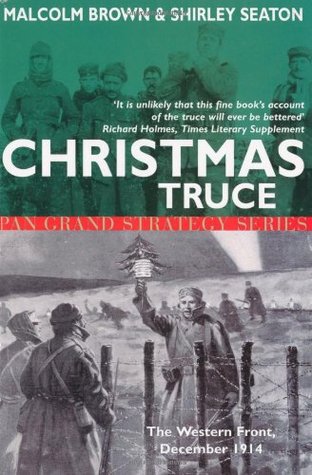
book
The authors are Malcolm Brown and Shirley Seaton. The volume is still there on Amazon in an updated edition and I would expect to find it on many other Internet book selling sites. It is a wonderfully written and extremely moving book which I would recommend to you wholeheartedly. It tells so very well the story of a brief poignant moment during the fire and fury of the Western Front. This book certainly inspired me to go deeper into this wonderful event. It is also now available in a more up to date edition, and is required reading for every student of the Great War, of whatever nationality.

new edition

There are many soldiers quoted in the book and I have used a good number of them, with a few abridgements here and there. Quite simply, the tales they told were so moving that I found it virtually impossible to select only a tiny few to use. The book, of course, provides many, many more of them and goes into great detail about what exactly transpired that cold and frosty day in late December 1914. I do hope, though, that you will enjoy these brief extracts from a book that I still look at regularly today, some twenty years after I bought it:

“Several of my chums had been able to get hold of two small Christmas trees complete with candles, to be mounted on the parapet of the trenches, while others dragged planks with them, usually used in the battle against water and mud. As was usual at that time, having settled in the trenches, we just fired the occasional shot from our outposts to let the enemy know we would not let ourselves be surprised.”

*****

On Christmas Eve we got the order to go into the trenches. The day before we had celebrated Christmas in our rest quarters with the civilian people and their children who were presented with chocolate, bonbons and cake. It was all in good humour.
Then at darkness we marched forward to the trenches like Father Christmas with parcels hanging from us. All was quiet. No shooting. Little snow. We posted a tiny Christmas tree in our dugout – the company commander, myself the lieutenant, and the two orderlies. We placed a second lighted tree on the breast work.
Then we began to sing our old Christmas songs “Silent Night Holy Night” and “O Du Fröhliche”, a German Christmas carol.

*****

It was a beautiful moonlit night, frost on the ground, white almost everywhere; and about seven or eight in the evening there was a lot of commotion in the German trenches. And then they sang “Silent night”, “Stille Nacht”. I shall never forget it.  It was one of the highlights of my life. I thought, “What a beautiful tune”.

*****

Suddenly a man from my company reported, “The English are letting off fireworks”. And sure enough across the way from us, the enemy trenches were lit up with fires and rockets and so on. We then made a few banners reading “Happy Christmas” with a couple of candles behind and a couple on top.

*****

I was gazing towards the German lines and thinking what a very different sort of Christmas Eve this was from any I have experienced in the past. In the ordinary way of things, my father would have been making rum punch from an old family recipe, which had been written out by his grandfather, and was kept, of all places, in the Family Bible! Earlier, after the evening meal, we would have decorated the living rooms and hall with traditional greenery, and would now be looking forward to wishing one another a Happy Christmas, and toasting the occasion in the results of my father’s labours. Instead of this, here was I, standing in a waterlogged trench, in a muddy Flemish field, and staring out over the flat, empty and desolate countryside, with no signs of life……
Then suddenly lights began to appear along the German parapet, which were evidently makeshift Christmas trees, adorned with lighted candles!  Then our opponents began to sing “Stille Nacht, heilige Nacht”. They finished their carol so we sang “The First Nowell”, and when we finished they began clapping; and then they struck up another favourite of theirs, “O Tannenbaum”. And so it went on. First the Germans would sing and then we would sing one of ours, until when we started up “O come all ye faithful” the Germans immediately joined in singing the same hymn to the Latin words “Adeste fideles”. And I thought, well, this was really a most extraordinary thing – two nations both singing the same carol in the middle of a war.
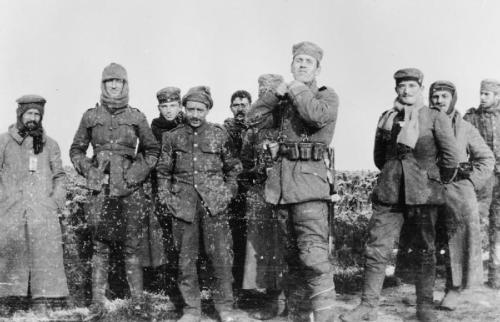
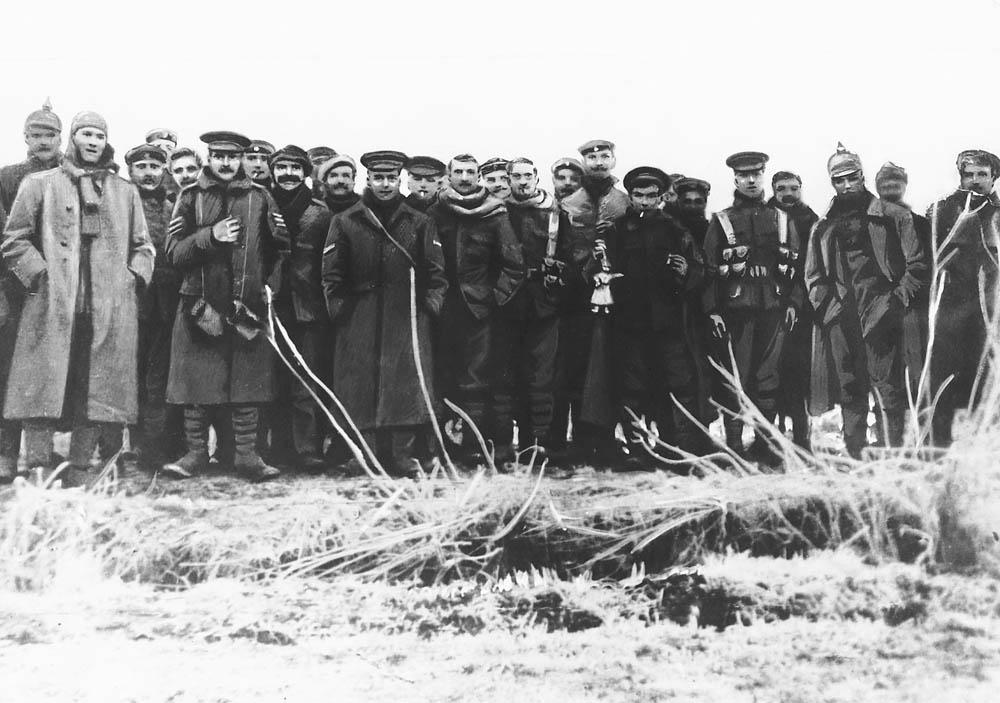
Christmas_Truce_1914_IWM_HU_35801

When I got back to the trenches after dark on Christmas Eve I found the Germans had got little Christmas trees burning all along the parapet of the trench. Meanwhile, unknown to us, two officers  got out of their trench and walked halfway to the German trench and were met by two German officers. They talked away quite civilly and actually shook hands!

*****

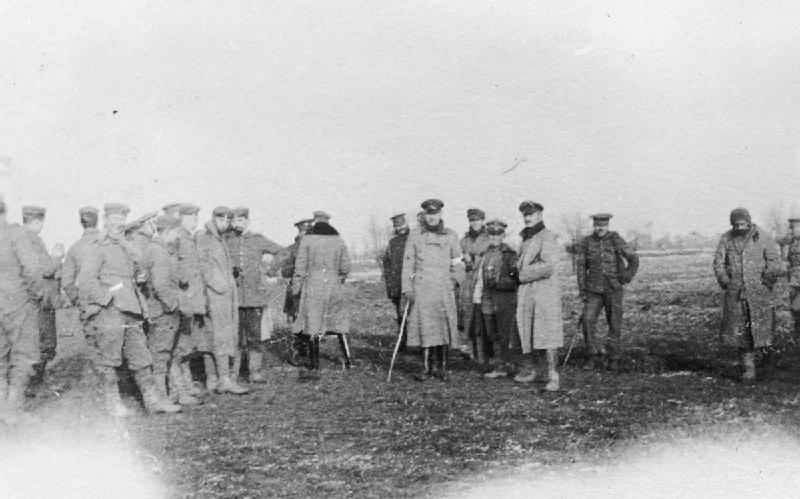
I have just been through one of the most extraordinary scenes imaginable. Tonight is Christmas Eve. Firing was going on all the time and the enemy’s machine guns were firing at us. Then about seven o’clock the firing stopped. I was reading the paper and the mail was being dished out. It was reported that the Germans had lighted their trenches up. I went out and they shouted “No shooting” and then somehow the scene became a peaceful one. All our men got out of the trenches and sat on the parapet, the Germans did the same, and they talked to one another in English and broken English. I got onto the top of the trench and talked German and asked them to sing a German folk song, then our men sang and each side clapped and cheered the other. Pope and I walked across and held a conversation with the German officer in command. He presented me to his officer. I gave permission to bury some German dead and we agreed to have no shooting until midnight tomorrow. We talked together, ten or more Germans gathered around. I was almost in their lines within a yard or so. We saluted each other, he thanked me for permission to bury his dead, and we fixed up how many men will do it, and that otherwise both sides must remain in the trenches.

Then we wished one another good night and a Happy Christmas and parted with a salute. I got back to the trench and the Germans sang “Die Wacht am Rhein”. Our men sang “Christians Awake”, and with a good night we all got back into our trenches. It was a lovely moonlight night, the German trenches with small lights on them, and the men on both sides gathered in groups on the parapets. At times we heard the guns in the distance  but about us is absolute quiet. I allowed one or two men to go out and meet a German or two halfway. They exchanged cigars and smoked and talked. The officer I spoke to hopes we should do the same on New Year’s Day. I said “Yes if I am here”.

Trucecigarette

I felt I must sit down and write the story of this Christmas Eve before I went to lie down. If one gets through this show it will be a Christmas Time to live in one’s memory. I am just going for a walk round the trenches to see all is well. Good night.

*****

The Germans came out, and we gravely saluted each other. I then pointed to nine dead Germans lying in midfield and suggested burying them. We gave them some wooden crosses, and soon the men were on the best of terms and laughing.

*****

 There was no firing, so each side began gradually showing more of themselves and then two of their men came halfway and called for an officer. I went out and found they were willing to have an Armistice for four hours and to carry our dead men back halfway for us to bury. Then both sides came out, shook hands, wished each other compliments of the season, and had a chat. A strange sight between two hostile lines.

*****

I was in the 2nd Battalion of the Westphalian Infantry Regiment 15. On Christmas Day, at about eleven o’clock, there was a continuous waving of a white flag from the English trench. Soon afterwards a number of Englishmen climbed out and came towards our front. My commander, Baron von Blomberg, ordered me to find out what the Englishmen wanted. I  went out of the trench and we heard that it was the wish of the Englishman to bury their dead and they asked us to cease enemy action for an adequate period. What were we to do? Time was short. Major von Blomberg therefore decided that there should be a local Armistice until one o’clock in the afternoon, telling the Englishman that their dead must be buried by that time.

*****

We then had a most wonderful joint burial service.  Our padre arranged the prayers and Psalms and an interpreter wrote them out in German. They were read first in English by our padre and then in German by a boy who was studying for the ministry. It was an extraordinary and most wonderful sight. The Germans formed up on one side, the English on the other, the officer standing in front, every head bare. Yes, I think it was a sight one will never see again. The ground between the two lines of trenches was soon swarming with men and officers of both sides, shaking hands and wishing each other a Happy Christmas.
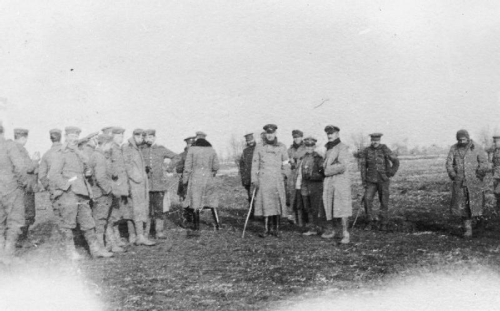
Christmas_Truce_1914

“No Man’s Land was full of parties of British and Germans laughing and talking together.
By breakfast time, nearly all our men were between the trenches, and were the greatest pals. In the middle of the war we had a Merry Christmas.”

*****

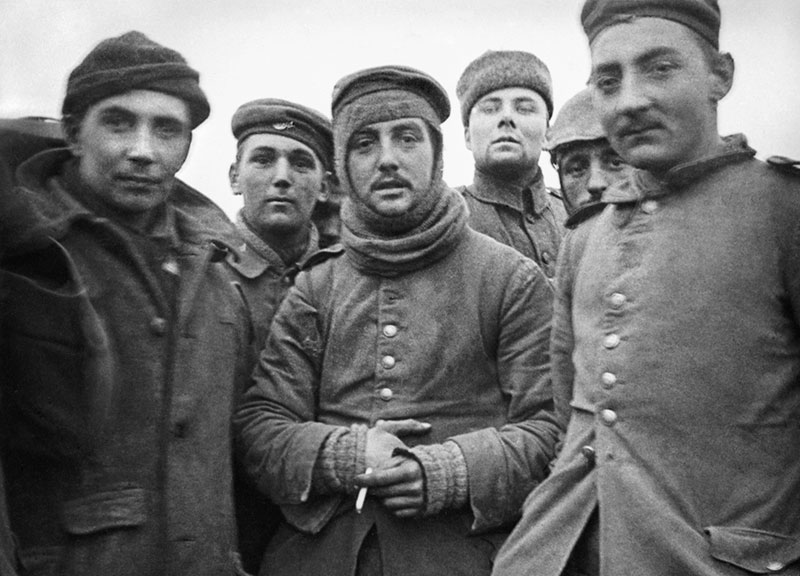
When morning came both sides shook hands and exchanged gifts. We were given corned beef, tea and cigarettes. They were mad about our cigars. I thought it would be a good idea to get rid of my uniform’s black metal shoulder titles, so I swapped them for very nice German belt with brass buttons and the words “God mitt Uns” on it, and I used that all through the rest of the wall to keep my trousers up.
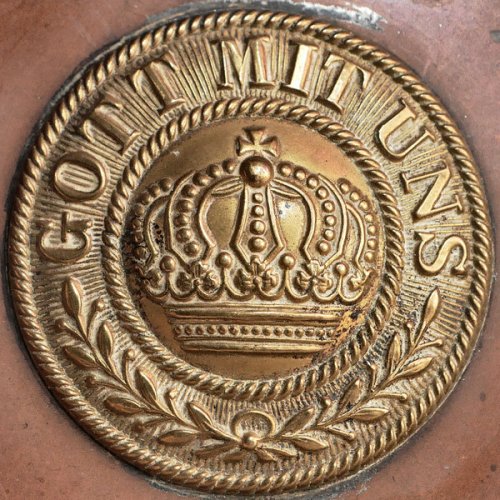
1304254501_got_mit_uns_by_daliscar-d3fbgkq

I spotted a German officer, and being a bit of a collector, I intimated to him that I’d taken a fancy to some of his buttons. We then agreed to do a swap. I brought out my wire clippers and, with a few deft snips, removed a couple of his buttons. I then gave him two of mine. One soldier swapped bully beef for a pointed German helmet.
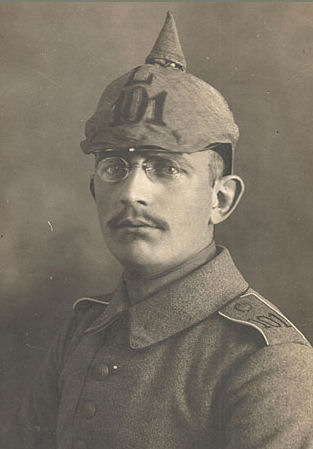
Pickelhaube

The helmet achieved fame as on the following day a voice called out “I want to speak to the officer.” He continued, “Yesterday I swapped my helmet for the bully beef. I have an important inspection tomorrow. You lend me my helmet, and I will bring it back afterwards.” The loan was made and the agreement kept, sealed with some extra bully beef. I had a drink of rum off one of the Saxons and then I drank his health. He nearly shook my hand off.

*****

All the morning we have been fraternising, singing songs. I have spoken to and exchanged greetings with a colonel, staff officers and several company officers. We have just knocked off a dinner, and have arranged a meeting afterwards.

*****

Captain Berryman came running up with the news that the Germans were out of their trenches  Sure enough I found a number sitting on the parapet of No. 2 Company’s trench, and also out in front of No. 1 Company. They were trying to converse with our men and giving them cigarettes, biscuits and boxes of cigars. As I could speak German I conversed with them. They all belonged to the 16th Regiment. They seemed very jolly as if they had just had a good dinner. One of them said to me that there must be “Friede auf der Erde”,  “Peace on Earth” on this day, being Christmas Day.
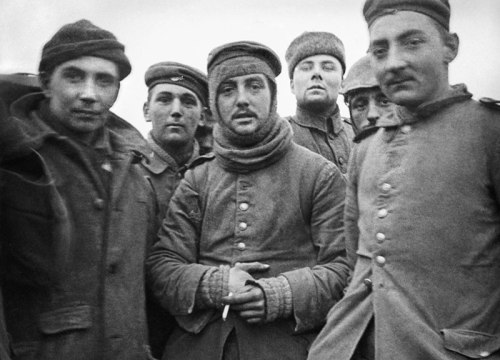
xmasPloegstreet-xxxxxxx

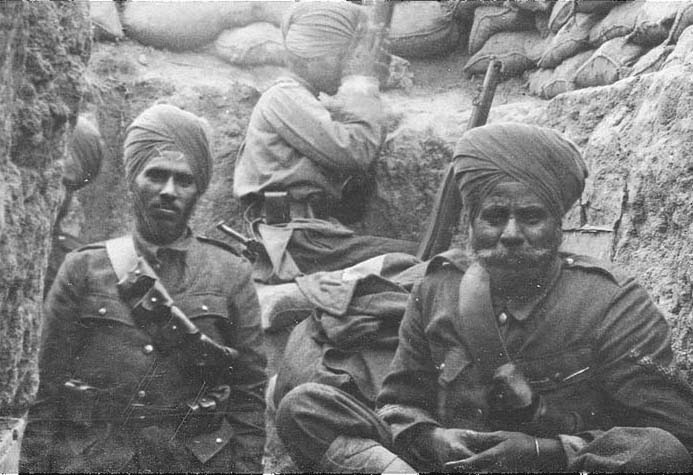
In the middle of No Man’s Land I met two English, one Indian and one German officer of the neighbouring company; we shook hands, wished each other a Merry Christmas, and then we exchanged some small presents like plum pudding, cakes, whisky, brandy, and so did our men. For an hour both sides walked about between the two lines of trenches, talking and laughing, swapping tobacco and cigarettes, biscuits etc….You would never believe that we have been fighting for weeks.

truce 1

One of the Germans asked me if I would like to bury a few dead Indians that were lying about their trenches. My chum and I set to work and buried about a dozen of them. All the Germans looked very fit. They were also very well clothed and looked well fed. One of their officers, a captain, clasped his hands together and looked towards heaven and said, “My God, why cannot we have peace and let us all go home!”

*****

A couple of bright sparks from the Staffordshire Regiment appeared – one clad in a tail coat, black trousers, and an old battered silk hat , the other decked out in blouse and skirt, an old bonnet and a broken umbrella. They paraded up and down and were joined by another joker who had found a broken bicycle with almost square wheels, which he trundled up and down. Many of the Germans had costumes on which had been taken from the houses nearby, and one fellow had a blouse, skirt, top hat and umbrella. My own platoon sergeant added a good deal to the Christmas party by going out to meet the Germans wearing a large skirt; this led to some earthy Teutonic byplay and caused plenty of laughs.

standard

We heard them singing and shouting in their trenches, and about midday they began lifting up hats on sticks and then they showed their heads, and then their bodies and finally they climbed out of their trenches into the open! Of course we could not shoot them in cold blood like that. We could hardly believe our eyes; we were just about to open fire when one of our officers gave us the order to unload our rifles. Seeing the Germans without any rifles, we stood up and answered them. Then they started to cheer. One of their men shouted out, “Here’s some cigars for you. Come and fetch them.” They shouted, “Come on, we will not fire on you.” The fellow who threw the cigars then came down off the top of his trench and picked up the box again, and started to walk over towards our trenches. Seeing this I climbed over the parapet of our trench to meet him. When we met in the middle he handed me the cigars and said, “A Happy Christmas to you”. I hardly knew what to do at first, but I shook hands with him and wished him the compliments of the season.
As soon as the Germans saw us shake hands they cheered like mad. They then started to come towards our trench.
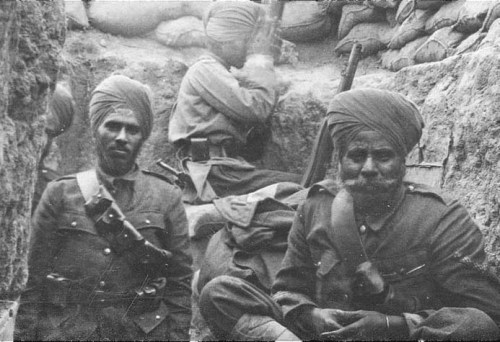
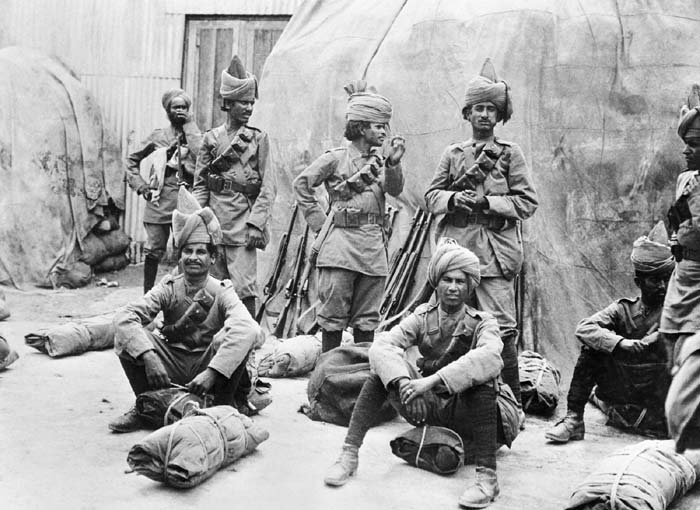
indians

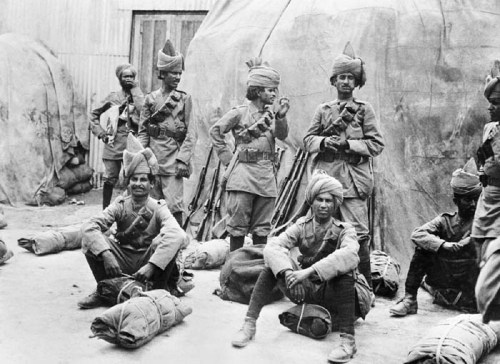
Our boys, all Indians by the way, started out to meet them as well. The scene that followed can hardly be described. To see our greatest enemy shaking hands with our Indian troops and giving them cigars and cigarettes was a sight I shall never forget.

Captain, come out, the British have started waving. There is no shooting, and our men are doing the same”. I rushed out and saw a strange unforgettable picture. The soldiers who were standing upright on top of their trenches without their weapons, shouting “Merry Christmas”. Some soldiers had advanced into No Man’s Land. They met in the middle, shook hands, talked and strolled about.…… They were trying to talk to our men and they were giving them biscuits and boxes of cigars.

*****

An officer amused us very much by clearing some soldiers away from his machine gun emplacement, but he finally had his photo taken arm in arm with one of our officers.

*****

Coming across from the German trenches was a solitary German, carrying a white flag high above his head. Having come about halfway he suddenly stopped and waited. Then one of our men went out to meet him, to bring him into our lines. Unfortunately the German had not been blindfolded, and he had to be made a prisoner of war. He protested and was awfully upset, but he had seen behind our lines. (The luckiest man I have heard of for a good while. The whole of 1915, 1916, 1917 and 1918 in a British POW camp!)
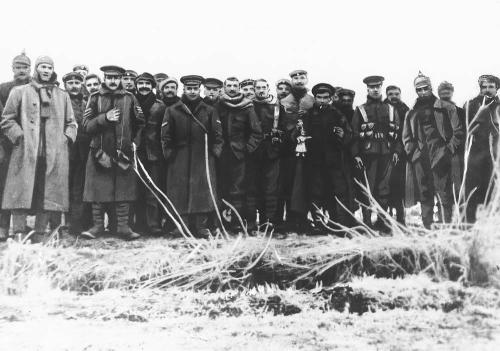
Christmasxxxxxxx truce

The Germans sent in a party with a white flag. Our bloody fool of a sentry brings one German in without blindfolding him and, of course, he had to be made a prisoner-of-war.

*****

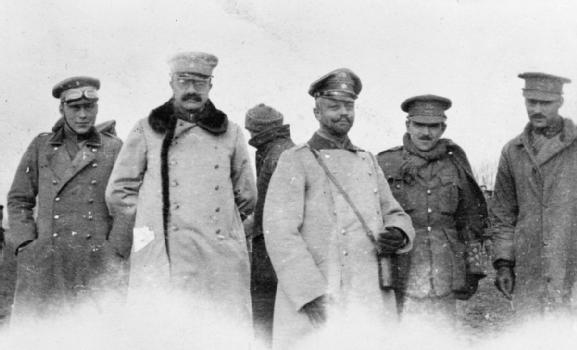
The German officers were taking photographs of mixed groups. One German brought us copies to send to the English newspapers. We  had our photographs taken by a German who was the proud possessor of a small camera. There were Indians and Germans shaking hands when he pulled the shutter.
indians 2
He took a photograph of three of our officers and three of their officers; our officers were placed between theirs. Suddenly one of the Germans ran back to his trench and presently appeared with a large camera. I posed in a mixed group for several photographs. No doubt framed editions of this photograph are now on some German mantelpiece!.

*****

“Dear Mother, I am writing from the trenches. It is 11 o’clock in the morning. Beside me is a coke fire, opposite me a ‘dug-out’ (wet) with straw in it. The ground is sloppy in the actual trench, but frozen elsewhere. In my mouth is a pipe presented by the Princess Mary. In the pipe is tobacco. Of course, you say. But wait. In the pipe is German tobacco. Haha, you say, from a prisoner or found in a captured trench. Oh dear, no! From a German soldier. Yes a live German soldier from his own trench. Yesterday the British & Germans met & shook hands in the Ground between the trenches, & exchanged souvenirs, & shook hands. Yes, all day Xmas day, & as I write. Marvellous, isn’t it?”

*****

Suddenly a Tommie came with a football and then began a football match. We marked the goals with our caps. Teams were quickly established and the Fritzes beat the Tommies 3-2.

*****

The regiment actually had a football match with the Saxons, who beat them 3-2.

*****

“A” company played against the enemy with an old tin for a ball: they won 3-2!

*****

Some of our boys tied up a sandbag and used it as a football, while a party of Germans enjoyed themselves sliding on a little frozen pond. Soon there were dozens kicking a made up football about in No Man’s Land.

*****

In the sector of the Argyll and Sutherland Highlanders, “it was recorded that a game was played and according to a letter  published by the Glasgow News, the Scots won by  4–1.

*****

He toured Britain last year with the Leipzig team and beat Glasgow Celtic 1-0. All day we walked to and fro with newspapers and our little photographs and parted, regretting that it was our duty to fight each other.

*****

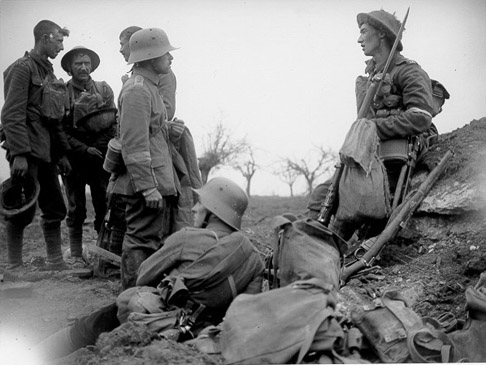
Men from the 1st Battalion came out from their trenches to play football. The Royal Welch Fusiliers played the German Battalion 371. The Germans won 2–1.
Christmas%20truce%202014-41-124316

As the fog lifted the Germans were playing football. We  climbed out of the trench armed with an entrenching tool handle and a jam tin and played rounders.

*****

We had a football out in front of the trenches and asked the Germans to send a team to play us but it had been freezing all night and it was a ploughed field so their officers stopped them doing it.

*****

A match against a German team (described as “Prussians and Hanovers”) was played near Ypres near the border of Belgium and France.

*****

The Lancashire Fusiliers, based near Le Touquet on the northern French coast, played a match against German soldiers using a ration tin as the “ball”.

*****

Captain Sir Edward Hulse reported “a sing-song which ended up with ‘Auld lang syne’ which we all, English, Scots, Irish, Prussians, Wurttenbergers, etc, joined in. It was absolutely astounding, and if I had seen it on a cinematograph film I should have sworn that it was faked!

*****

The ball appeared from somewhere, I don’t know where, but it came from their side, it wasn’t from our side. They made up some goals and one fellow went in goal and then it was just a general kickabout. I should think there were about a couple of hundred taking part. I had a go at the ball. I was nineteen. Everybody seemed to be enjoying themselves. There was no ill will between us. There was no referee, and no score. It was simply a mêlée. We had a rare old jolly vacation, which included football, in which the Germans took part.

sr_french_marines_01

On Christmas Day 1914 there was an Armistice between us and the enemy. A comrade of our company held up a sign with the inscription “Fröhliche Weinachten” (Merry Christmas). The English immediately responded in like manner. An English soldier shouted to us in imperfect German, asking if we wanted to remove the dead between the lines. We came to an agreement and our men climbed over the parapet, as did some of the English. Afterwards the Englishmen asked us to sing some Christmas songs. An English soldier came towards as and exchanged cigarettes and chocolate. The sight of opposing troops chatting to each other along a stretch of several hundred metres was a very strange one. As darkness fell both sides went back to their trenches. Such attempts at fraternisation have hardly been approved by the High Command; they remain, however, a wonderful testament to the human spirit.

*****

I gave them cigarettes and was given a box of tobacco which I will send home as a souvenir of  the most extraordinary event of the whole war – a soldiers’ truce without any higher sanction by officers and generals. We strolled up and down for about half an hour, shook hands, said goodbye, saluted and returned to our lines.

*****

And finally, the  very best one of all…

It was just the sort of day for peace to be declared. It would have made such a good finale. I should have liked to have suddenly heard an immense siren blowing. Everybody to stop and say “What was that? Siren blowing again: the appearance of a small figure running across the frozen mud and waving something. He gets closer – a telegram boy with a message! He hands it to me. With trembling fingers I open it: “War off, return home – George. King” Cheers! But no, it was a nice, fine day, that was all.

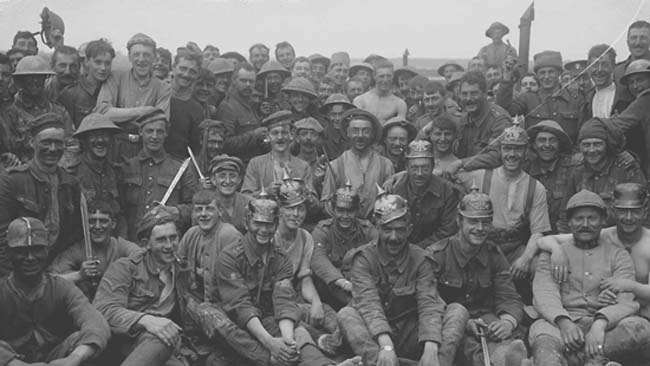
happy_soldiers_wwi

For me the Christmas Truce has always been the most wonderful achievement ever by ordinary working-class men, many of whom would never have even seen a German or an Englishman before the Great War broke out. And despite all the appalling self-serving jingoism in the newspapers, after just four months of  slaughter, both armies of ordinary men were ready to recognise that they had far more in common with their so-called enemies than they might previously have been allowed to know. The warmth and humanity of these men shines through still, even a century after the event. “Merry Christmas” or should I say “Fröhliche Weinachten”?
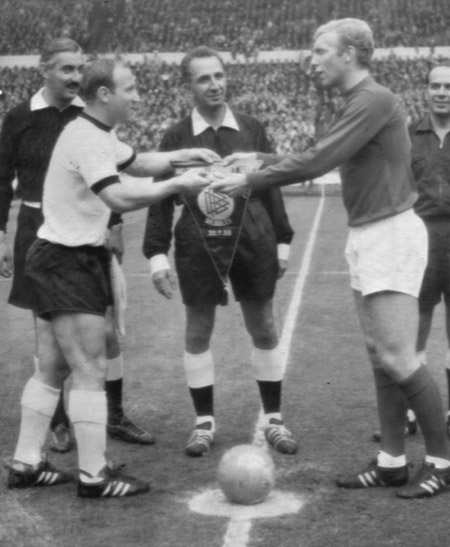
SportTo commemorate the hundredth anniversary of the impromptu football matches played in No Man’s Land during the Christmas Truce of December 1914, both English and German football supporters have come together this year, 2014, in the spirit of Christmas friendship. The highlight of the weekend-long meeting was a seminar entitled “The Referee”.

English supporters were able to show their German friends how it is possible for the referee to award a goal even though a tiny and almost insignificant proportion of the ball may not have completely crossed the line.

This slideshow requires JavaScript.

Our German friends were able to show how a referee, if he decides the ball is of the wrong colour or has been made by the wrong manufacturer, can refuse to award a goal, even though the ball may have crossed the line by several metres.

This slideshow requires JavaScript.

At the end of a wonderful day of comparing beers and consuming Christmas food, a collection was taken to fund methods of helping the referees of England-Germany games during the next century.

zzzzzz guide_dog_

1 Comment

Filed under France, History, Personal, Politics

A Greater Sand Plover? A Lesser? A Medium Sized??

(An extract from my old birdwatching diary “Crippling Views”)

Sunday, July 31, 1988

This Sunday, Ken is planning to go out somewhere, out there into the universe, to look for a decent bird (the story of his life actually). I get onto Paul, and between us we persuade him to go for the Greater Sand Plover in Cumbria, at a nature reserve on the Isle of Walney. It’s about 8,000 miles from Nottingham, but not too far for Ken and his Ford Escort XYZ 3i with Turbo intercooling and reheat.

-Ford-Escort-zzzzzzzzzz

Ken takes the concept of distance as a personal challenge. He occasionally gets under 70 miles an hour, and if the car’s on four wheels, he’s parked it. I’ve never even dared to tell him the type of car that I drive, GUR 25N, a bright orange Volvo 240 that weighs approximately the same as a canal barge.

volvo-240-hmb-645-n

To our great surprise, Ken agrees to go for this bird. He isn’t usually into twitching, since he dislikes crowds, (he has been a keen Notts County fan for years), and he much prefers a quiet stroll around North Norfolk, in the hope of finding his own birds.

First of all, we scorch to a pool in northern Lancashire, where a Grey Phalarope has been present for the last few days. It’s there when we arrive, but I am surprised how different it is to the individual I recently saw at Datchet Reservoir near London. It’s very active, flitting around the lake, and very loathe to come too close inshore. There are one or two birdwatchers there, but not very many. It makes me wonder where all the locals are. Do they know something we don’t?

Grey%20Phalaropexxxxxx
Onward and ever northward (look for the orange arrow).

north of englaND ZZZZZZZ

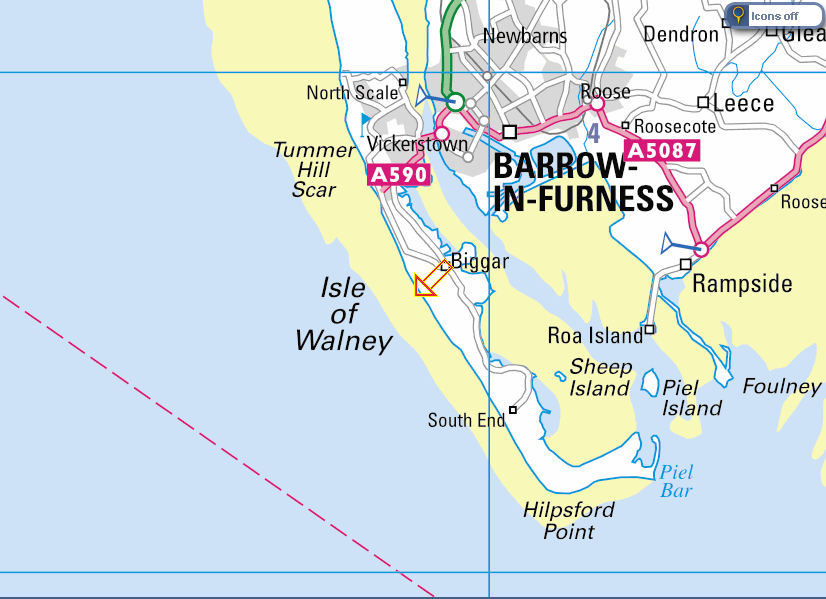
We leave the M6 and strike west towards Walney, passing our first patches of winter snow, and the odd few ragged beggars at the side of the A590. Just before we arrive at the Isle of Walney, we have to travel through Barrow in Furness, a really remarkable town. Most of it appears to be a single solitary shipyard, surrounded by thousands upon thousands of grey terraced houses, all clustered around the dock cranes for safety. Why is there nobody up there filming adverts,? Or those half hour documentaries that they put on after “The Bill”? Perhaps because overall, it is a grim, grim place, although nowhere near as bad as some of the localities I am yet destined to visit.

walney islandzzzzzz
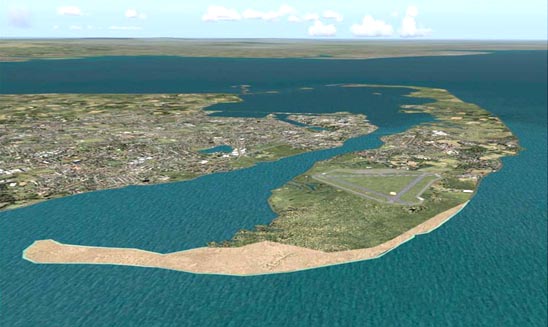
The Isle of Walney itself is a peculiar place, a bit like a grassy, tussocky version of Spurn Head. It has an infinitely worse road, though, but those years of training at Minsmere and Holme finally pay off. Unfortunately, we are not able to locate the appropriate turnoff for the bird itself.

walnet aerilxxxx

The tiny dirt track is supposed to be on the right, near the village rubbish dump, but we eventually have to go to the very end of the “road”, having fought our way past the thousands upon thousands of rather large seagulls that sit lugubriously around, all waiting for a piece of carrion to fall out of the sky at their feet. It reminds me very strongly indeed of the ending of “The Birds”, that well-known RSPB / Alfred Hitchcock co-production.

seagull-flock-jj zzzzzzzzzzz

The warden is tremendously friendly. We are the first people he has seen in four years. He explains that he has put up a sign at the side of the road, indicating the correct path to take. It’s not his fault that it’s fallen over. Anyway, all’s well that ends well, because we eventually do make it to the right bit of seashore. There is only one birdwatcher there, a local who says that the Sand Plover isn’t there, but not to despair, since it will be somewhere around, just waiting for us to refind it. And sure enough, one person, in the slowly growing knot of birdwatchers, does in fact refind it, after a delay of some twenty minutes or so. It’s with a largish group of Ring Plovers, and is a very distinctive pale brown. It’s extremely fluffy looking for some reason, and lacks the sharp black-and-white contrasts of its temporary colleagues. Indeed the Sand Plover is well capable of disappearing into the shingle very easily. It’s exceptionally well camouflaged, and tends to be obvious only after it has moved.

greater sand

The bird has, of course, been the subject of some pretty intense discussion about whether it is perhaps a Lesser Sand Plover and therefore a potential first for Britain. I’m only too happy to accept the views of the experts on this one, but nevertheless, our bird here does seem to have what seems to me a very small bill. Unless, of course, a Lesser Sand Plover has an extremely teeny-weeny-weeny-teeny bill, just like a pimple on the front of its head.

This lovely film was taken by Terence Ang in the Sand Plover’s usual habitat, in Hong Kong.

Having got over the excitement of seeing the bird, there is not a lot to keep us here. The day is bright, but the wind is strong, and rather gusty, and there are very few passing seabirds to look at. Locals say that sea watching here is generally very poor, and the only thing of interest that I can see are the tops of several obviously gigantic factory chimneys, just over the horizon to the North West. I never do find out what they are… Southern Scotland, the Isle of Man, or even Ireland. I don’t have a clue, and neither do any of the people I meet. I get the impression that I’m the first person who has ever noticed them. Perhaps they are an illusion… Some kind of mirage, reflected from the eastern United States… Perhaps they are a hologram of Three Mile Island, being transmitted as part of the twinning process with Windscale. (or is that Seascale?)

chimneys

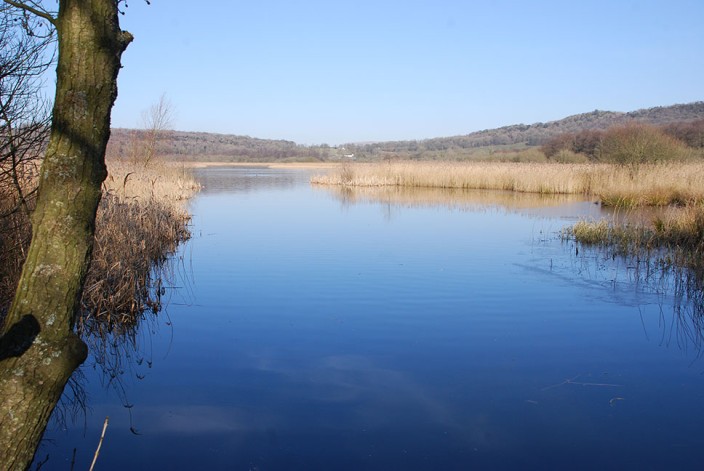
On our way back, we call in at Leighton Moss in Lancashire.

Leighton0Moss

I am obsessed with the desire to see a Bittern.

bittern xxxxxx

No luck, of course. Although this is the furthest north that Bitterns breed, and is, in actual fact, one of its strongholds, I don’t manage to see one. Apparently, the water levels are too high, and have forced them back into the reeds. What we do see however, are three juvenile Marsh Harriers, because this year the birds have bred, and have produced five young. It is particularly nice to see them in a new breeding area. It gives you a nice warm feeling inside to see a place where rare birds are on the increase rather than disappearing for ever.

Juvenile Marsh Harrier, Cley, Norfolk, August 2006 (Steve Gantlett).

That apart, I find Leighton Moss to be a somewhat boring place. There seem to be very few birds about, and if anything, the birdwatchers may actually outnumber them. The old out-of-date Annual Reports that they are selling off in the reserve shop are right little scorchers too.

5 Comments

Filed under Humour, Personal, Twitching, Wildlife and Nature

Hallowe’en Nights (4) Three ghosts from my past

My father was called Fred Knifton. He lived from 1922-2003, for the most part in Hartshorne Road, Woodville, which is to the south of Derby and Nottingham, in the East Midlands.

This slideshow requires JavaScript.

Woodville at the time was a village of some 5,000 people. It was exactly on the edge of  a geological fault line, so to the west, coarse, heavy clay was mined in opencast quarries, and sewer pipes and drainpipes were manufactured. To the east there was no clay, but instead there were open green fields with Friesian cattle and tall hedges of hawthorn.

SLD_Herd ddddddd

Although as far as I know he never experienced any of the RAF’s many ghostly occurrences, Fred once told me that there was a well-known haunted hangar somewhere out there in East Anglia, possibly in Norfolk, where mechanics as they repaired aircraft late at night, would often hear dance music, even though of course, there was no orchestra within miles.

A modern day equivalent may well have been the occasion when I stood at the bathroom sink one summer’s morning, a good few years after Fred’s death, looking out over the roof tops of Nottingham. I was listening to “American Patrol” being played by the Glenn Miller Orchestra on a CD.

This moment suddenly gave me probably the most distinctive feeling of “déjà vu” I have ever had. I have wondered ever since whether my father had perhaps done exactly the same thing on some airbase in Lincolnshire on a long forgotten day some sixty or so years previously.

Strangely enough, for a man who always had so many tales to tell, ghosts and phantoms did not feature particularly highly in Fred’s repertoire, and I would struggle to think of any direct reference he ever made about the afterlife, although I am sure that he was aware of the alleged haunted house down near the Bull’s Head Inn in Hartshorne.

As a native of nearby Woodville, Fred would certainly have heard all the tales of the phantom attached to this large black and white timber framed Elizabethan house which stood between the old Georgian coaching inn and the Anglo-Saxon church in the middle of Hartshorne.

This slideshow requires JavaScript.

Apparently, the story was often told of how….

“A brave group of people, made curious by the many ghostly accounts of bumps in the night, had gone up into the attic, unvisited through many decades of neglect, and found furniture piled up across the entire room. On the inaccessible far wall of the room, there was a delicate but obvious print in the centuries old dust, the unmistakeable impression of a ghostly human hand. Nobody could possibly have penetrated the great mass of tables, chairs and rubbish stacked across the floor. It could only have been the work of a phantom. ”

In 1970, I experienced an extremely strange happening when I accompanied my father, Fred, down to his parents’ house at number 39, Hartshorne Road. Fred’s parents, Will and Fanny, had both recently died recently within a few months of each other in hospital at Burton-on-Trent, with Fanny remaining mercifully unaware of Will’s demise after more than sixty years of marriage.

This slideshow requires JavaScript.

Fred was paying regular visits to the property, presumably attempting little by little to clear the house out so that it could be resold. At the time, as a teenager of some sixteen  years of age, I was unaware of this, although, with the benefit of hindsight, I wish I had been, and I could perhaps have stopped Fred from throwing away so many of his father Will’s Great War souvenirs, such as his complete Canadian Army uniform, his German soldier’s leather belt and his extensive collection of German guns and ammunition.

We entered the deserted house through the front door, and as I walked along the hallway towards the kitchen, I distinctly heard the upstairs toilet flush. I turned round and asked Fred, who had been following me into the hall, how this could have happened, and who it could have been, given that we both knew that the house was locked up and empty.

Fred gave me some non-committal answer at the time, but afterwards, perhaps when he had regained his composure a little, he told me that, as he was some way behind me, he had been able to look up the stairs when he heard the sudden noise of the toilet being flushed. He had distinctly seen his recently deceased father, Will, walk out of the bathroom, across the landing and into the front bedroom.

My father Fred certainly knew the story about how an aging Mrs.Edwards had sadly passed away. This old lady had lived in the village a hundred yards further down Hartshorne Road from Fred’s own house, in a Victorian house next to the entrance of a factory making drainpipes.

Her old  friend, and our own family friend, Gertrude Betteridge, went down to Mrs.Edwards’  house to pay her respects and offer her condolences to her daughter, Margaret Edwards. The latter greeted Gertrude and showed her into the front room. Margaret then invited her guest to sit down on the settee while she went into the kitchen to make “a nice cup of tea”.

After a couple of minutes, as Gertrude sat there quietly and politely with the sunlight streaming brightly through the front windows, the door opened. It was not, however, Margaret with the expected tray of tea and biscuits, but Mrs.Edwards herself, exactly as she had been in life, who came in. She walked across the room to Gertrude completely normally, and quietly and calmly said to her, “Tell Margaret not to worry. I’m all right.” Then she turned and walked away, opened the front room door and disappeared back out into the hall, never to be seen again.

 

5 Comments

Filed under Aviation, Bomber Command, History, Personal

Builders and plumbers transform the house

Last week we had the builders and plumbers around to our house to put in a new central heating system. At first it felt exactly as if the whole building had been hit by a tsunami. Not quite as dramatic or as destructive though as this one…

The problem was that every one of the six men was armed with his very own Mjölnir, his very own Hammer of Thor, with which he was capable of sending thunder echoing round the house whenever he felt like it.
P1000861

In actual fact, it was more that the jobs they had to do in the first couple of hours were by far the noisiest of the entire four days. Believe me, a dining room is no is no place for a pneumatic drill.

In 2013 we had the same company come round and put a multi-fuel stove in our living room. We were sick and tired of the money guzzling gas fire, to which the only other solution was to switch on the central heating for the entire house.  Here is our first stove which was put in last September.

P1280841 yerty

Over the course of the winter therefore, we lit our new multi-fuel stove in the late afternoon, and after feeding it sparingly with coal for the evening, we then discovered that it would then keep the room pleasantly warm for the whole night and for much of the next day. In addition, it also kept the bedroom above equally lovely and warm. Only very infrequently were we using the central heating.

We soon realised that having a second stove fitted in the dining room at the back of the house might have the same effect and save a great deal more money. So, as well as having our central heating revamped, we were having a second stove put in.

In the dining room, we had a ten or fifteen year old gas fire. It always seemed to remind me of somebody, perhaps a character out of Wallace and Gromit.

P1000846 y
First of all they removed the gas fire. Here is just a small selection of the rubble that the builders created. Notice though, that it is neatly put into special plastic buckets, so that nothing whatsoever remained at the end of the day.

P1000870 rtyuiop
Here is the old gas fire, and the old radiators, gone for ever…

P1000871qqqqqqq
The majority of the old radiators had to go. They had been there since probably the mid-1960s. Here, plans are being laid to put the new boiler in the bathroom where an old cabinet had been.

P1000876 tyuerw
In the loft, the old boiler had come to the end of the road. The fat lady really had sung for the last time.

P1000878 ccccccc

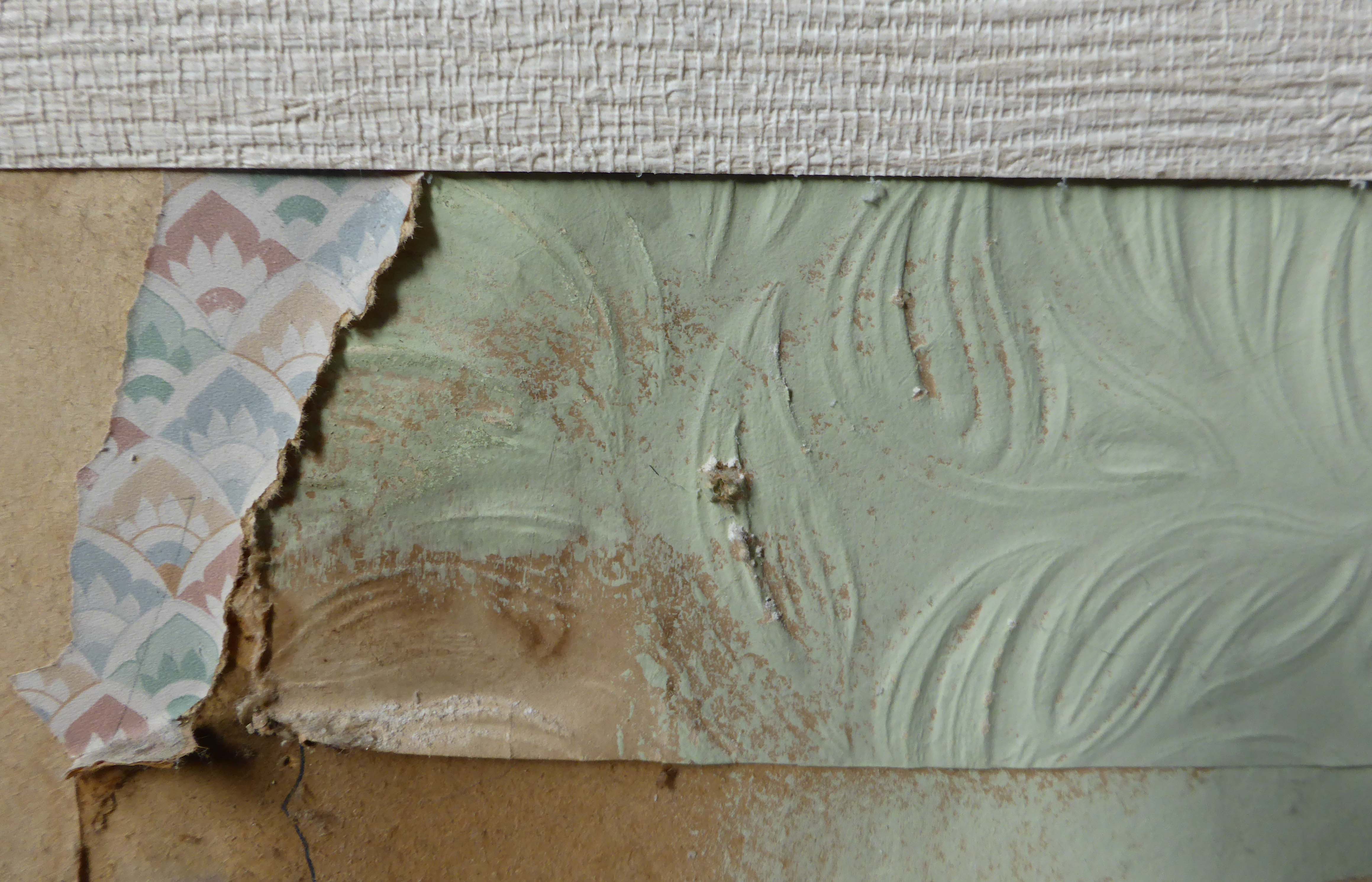
Unfortunately, here and there, the wallpaper will need repair, but there are very few things that a Pritt stick will not be able to remedy. In actual fact, in some places, a number of different layers of wallpaper were revealed.

green etcwewewewe

The top pale green one, I think, was our responsibility but the green leafy pattern looks to me to be either 1940s or 1950s, and the relatively bright coloured wallpaper to its left dates from the more optimistic days of the 1980s.
Here you can see not only Mjölnir, the hammer of Thor, but also the pneumatic drill which caused all the scariest noise for the first half hour or so.

P1000887a hjhjhjhj

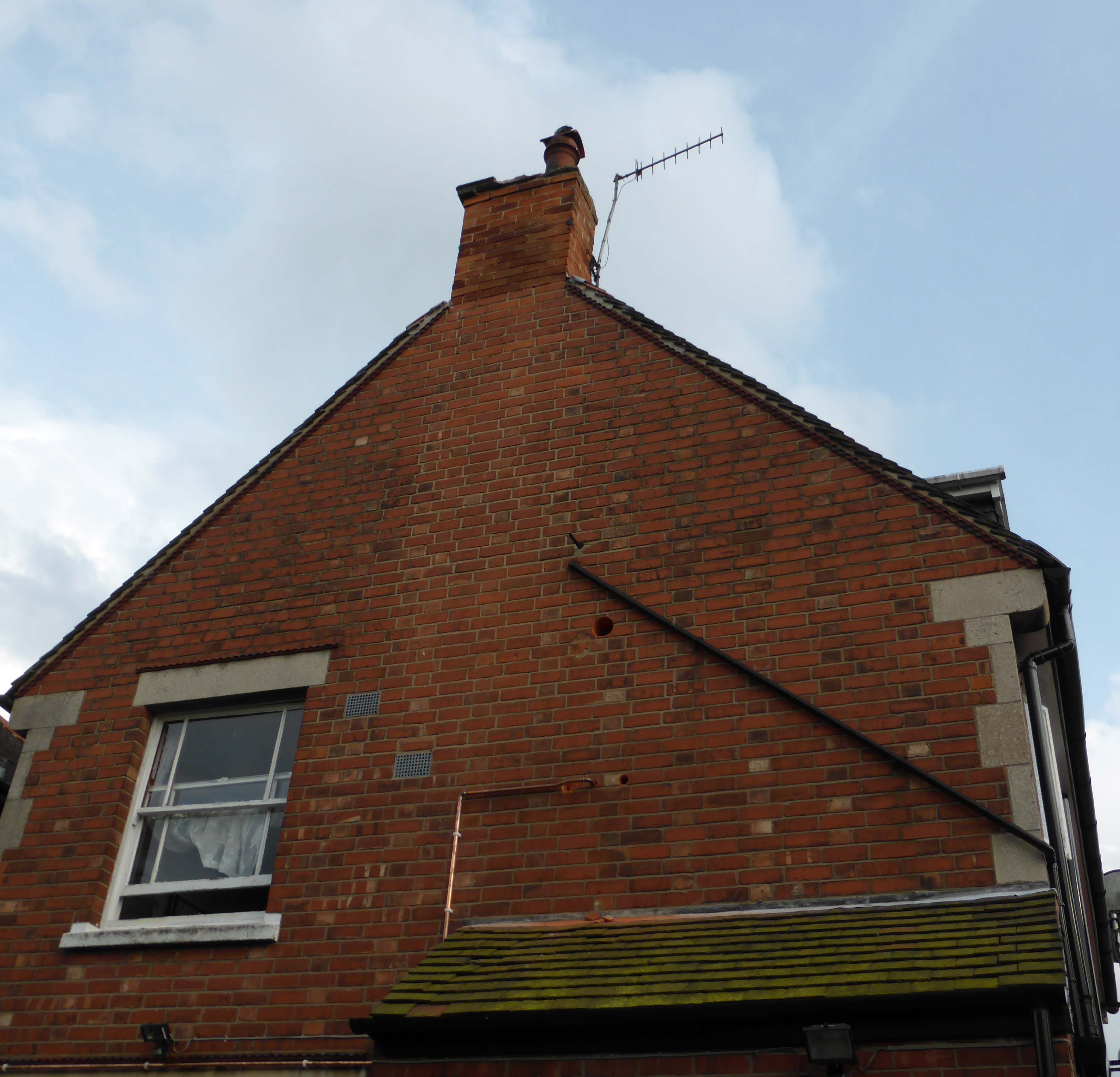
The chimney had to be inspected. Would an eighty year-old chimney be up to the job, or would it require extensive and expensive repairs? Well, what do you think?

P1000889 zzzzzzzzzzz
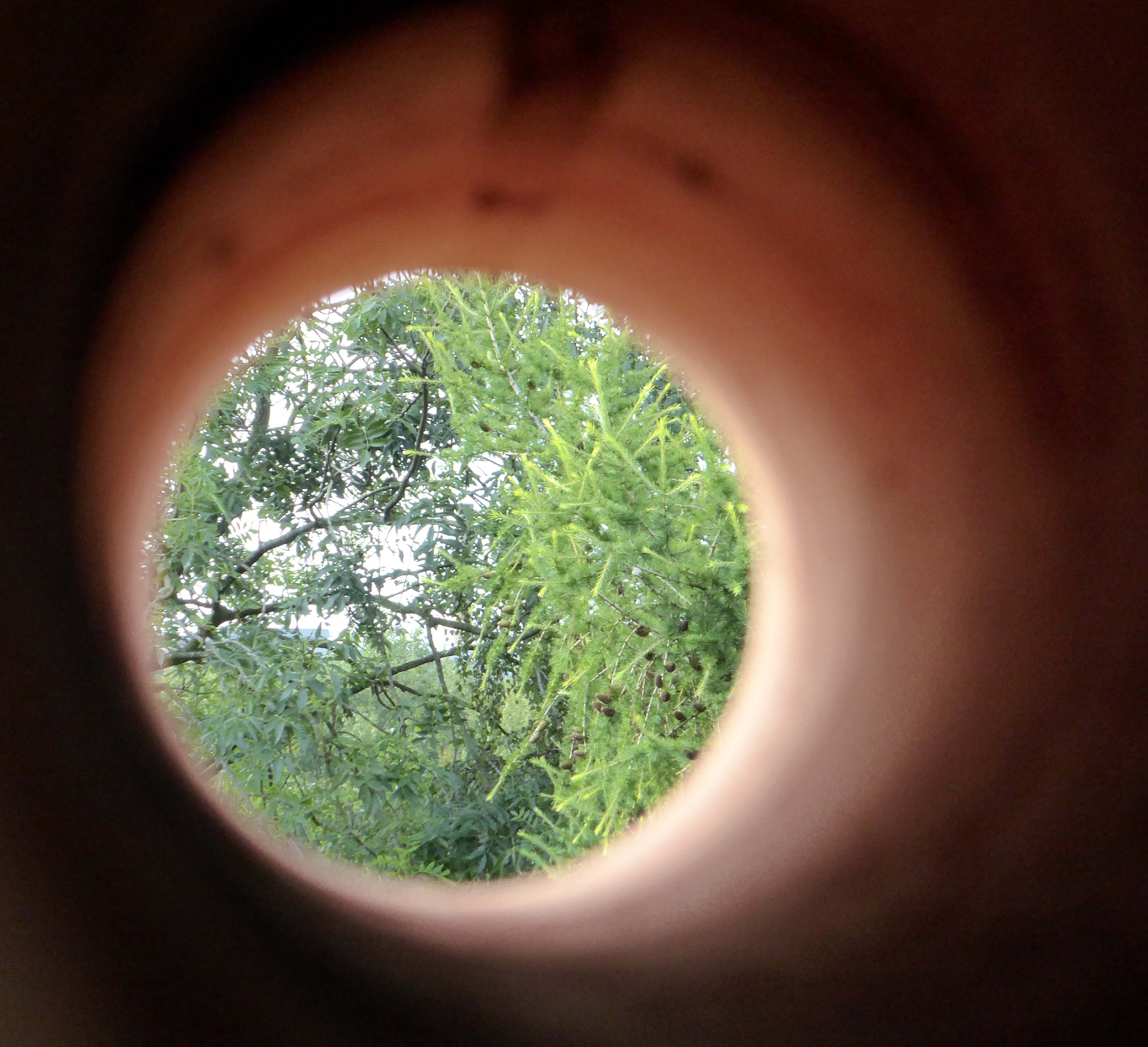
This hole, drilled in the bathroom wall for the new slimline boiler, gave a view over the garden which could be enjoyed for only twelve or so hours in nearly eighty years.

P1000891 jklnmjklnmjklnm

The princess of boilers is now in place.

P1000893  mmmmmmmmm

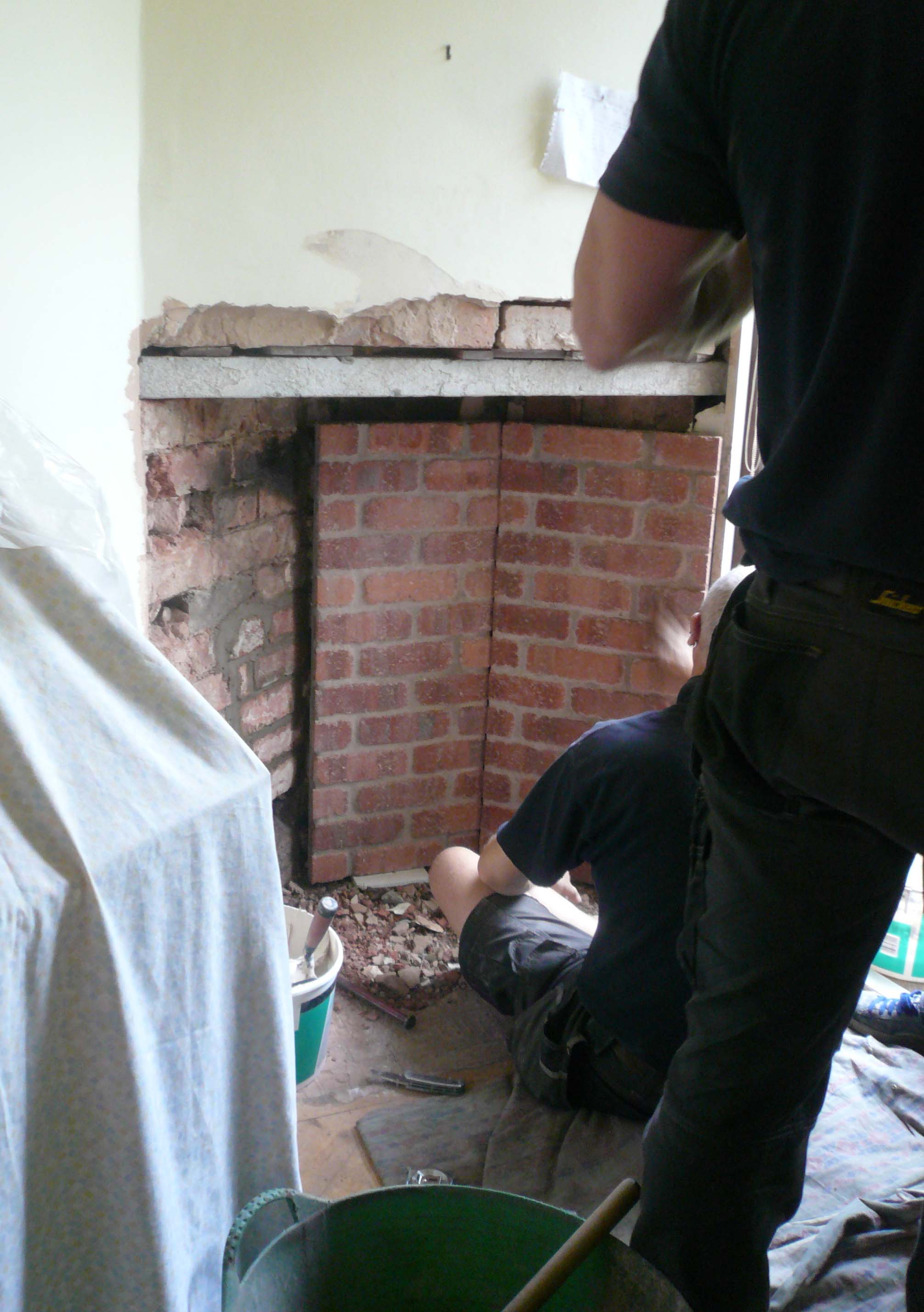
Meanwhile the new fireplace will need some imitation bricks. The builder works so fast his trowel is just a blur. Behind him is the Safety Superintendent.

P1000912 ggggggg
At last everything is ready. The stove is connected up. And then, the all important test firing.

P1000917 bbbbbbbbb
All those lovely warm happy flames. I do so love flames and lovely warm fire. Flames and fire. Fire and flames.

In the loft, originally christened “Ice Station Zebra”, there are now two radiators, one of which unfortunately takes up four shelves of what would have been my CD collection. I will have to look very carefully at where I can put my Captain Beefheart, Steve Harley and Cockney Rebel, Klaus Nomi, Jefferson Airplane and my Procul Harum.

P1530035 hhhhhhhhh
With two radiators now though, there will be no repetition of that unfortunate business with the polar bear.
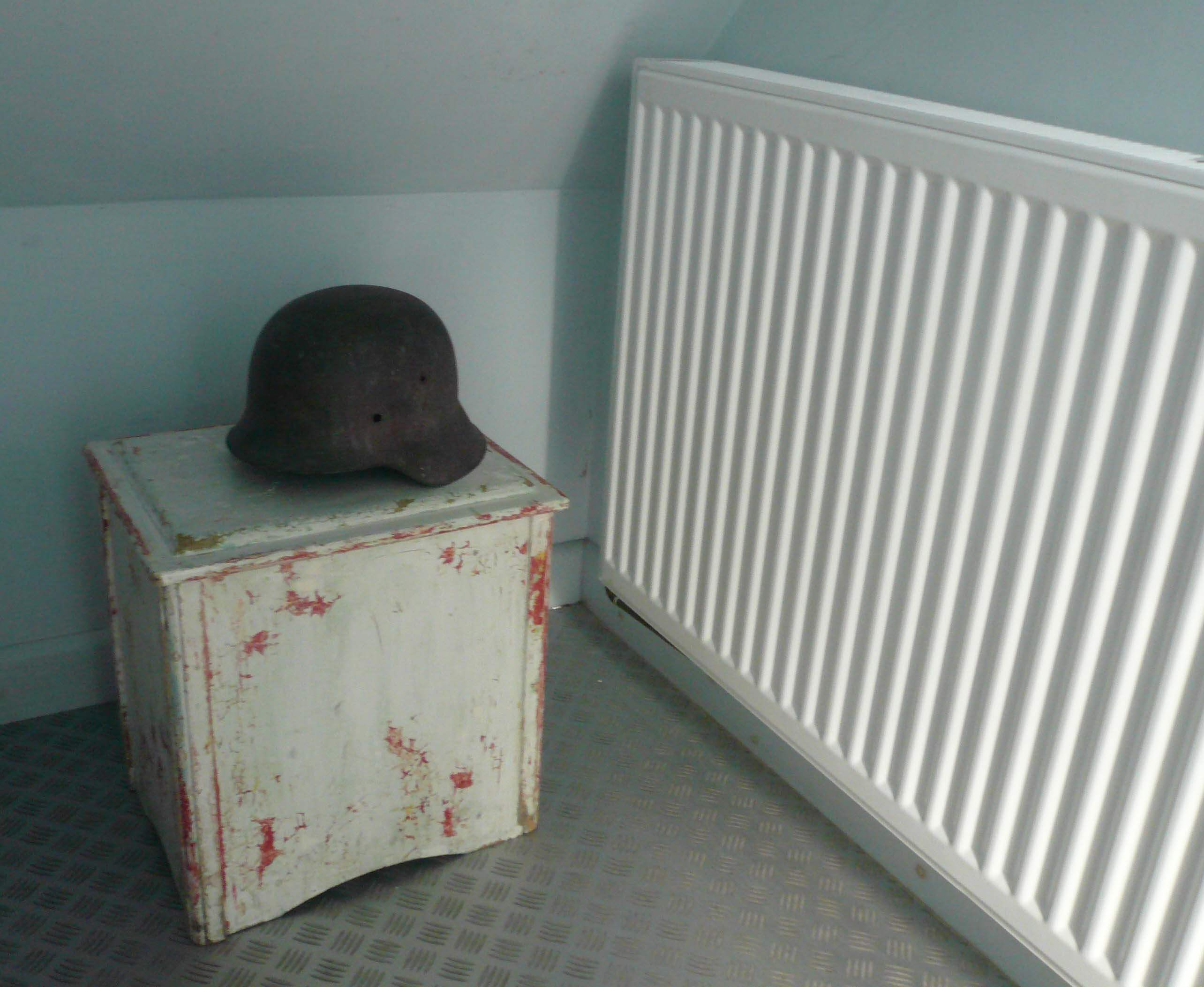
In the bathroom, there is yet another radiator. It will now be impossible for me to put my Stahlhelm on and re-enact “Showering Facilities on the Eastern Front”.

P1530036 qqqqqqqqq

Best of all though, is the fact that I took advantage of all this building work to have a new, much more powerful shower installed. No more problems now with having to wash like this…

Every single morning now, I’m in the new shower just like this.


2 Comments

Filed under Humour, My House, Nottingham, Personal

An intimate problem can always be shared

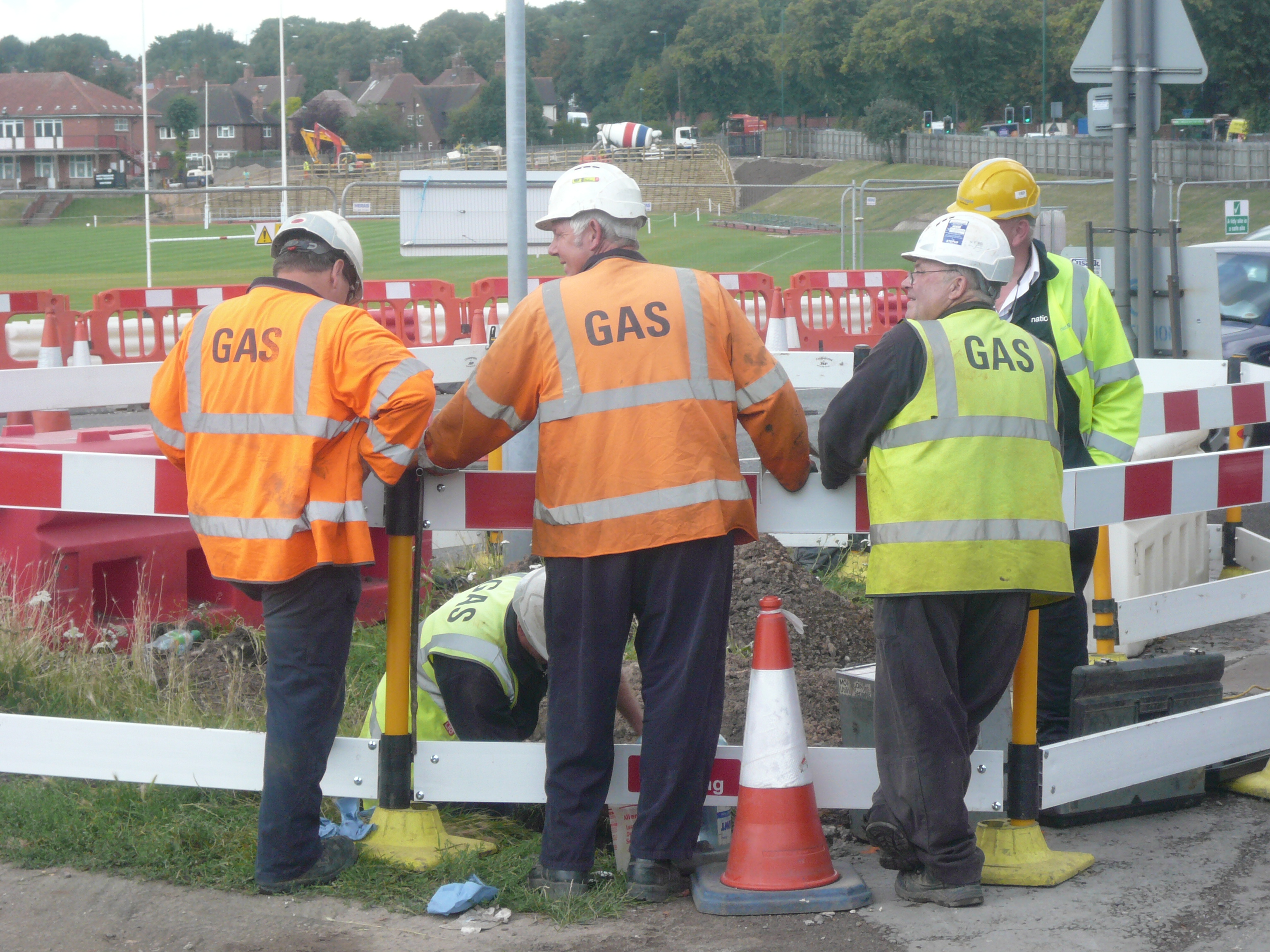
A lot of us, through shyness, keep our personal medical problems to ourselves. Not so these construction workers in Nottingham, who are more than willing, apparently, to let it all out.

P1530063 yes

So go for it, guys, your problem will soon be our problem.

3 Comments

Filed under Humour, Nottingham, Personal, Uncategorized

If I could fly, that’s what I’d be

There is not too much time left this summer, but you should still be able to see a few lingering Swifts flying high in the sky, before they make their migratory journey back to tropical Africa. Of all birds they are the most stunning fliers, and can make mere earthbound humans very jealous indeed…
swift 1
They are like a muscle powered flying torpedo…
SWIFT_tcm9-160960
They climb and bank with practiced ease…
swift_gc_tcm9-161003
Swifts feed on flying insects…
AMB_swift-catching-fly
They are so committed to continuous flight that they even mate on the wing…
Swifts-mating-(2)
Swifts spend the first two years of their lives continuously aloft, before building a rather rudimentary nest in a crevice in a cliff. In a modern city, they might nest on high-rise buildings, perhaps even in a man-made nest box.
nestbox
The bird’s Latin name “apus apus”  means “without feet”, and indeed, if a swift should ever fall to the ground, it will have the greatest difficulty in getting back into the sky, and may require assistance from a kindly passing human.
With their scythe shaped wings, swifts are a fairly large bird, and can be seen easily from quite a distance, even with the naked eye…


They often fly with House Martins, whose buzzing call is distinctive…

Here are a few swifts in slow motion

In Italy, you can even have dinner and still bird watch!

Swifts often fly round in family circles, screaming to each other, as here in Denmark…

Don’t you wish you could fly like that?


Leave a comment

Filed under My Garden, Nottingham, Personal, Wildlife and Nature

My Grandad in the First World War

My grandfather had a very eventful journey through the First World War. He joined the Canadian Army on June 12th 1916, and fought at Vimy Ridge, Passchaendale and the Somme. The highlight, though, was when he married his childhood sweetheart, on July 15th 1917,  I am writing this account on his 97th wedding anniversary.

Will has left an enormous amount of material behind him, including a piece of German shrapnel, his leather dog tags, and a piece of camouflaged fabric he cut off the wing of a German aircraft which had crashed in front of him in no-man’s-land.

He was, as can be judged from the surviving photographs, a hard man. He was one of what must have been the thousands of impoverished Englishmen who all set off to make their fortune in the distant reaches of the British Empire

A1 hard man

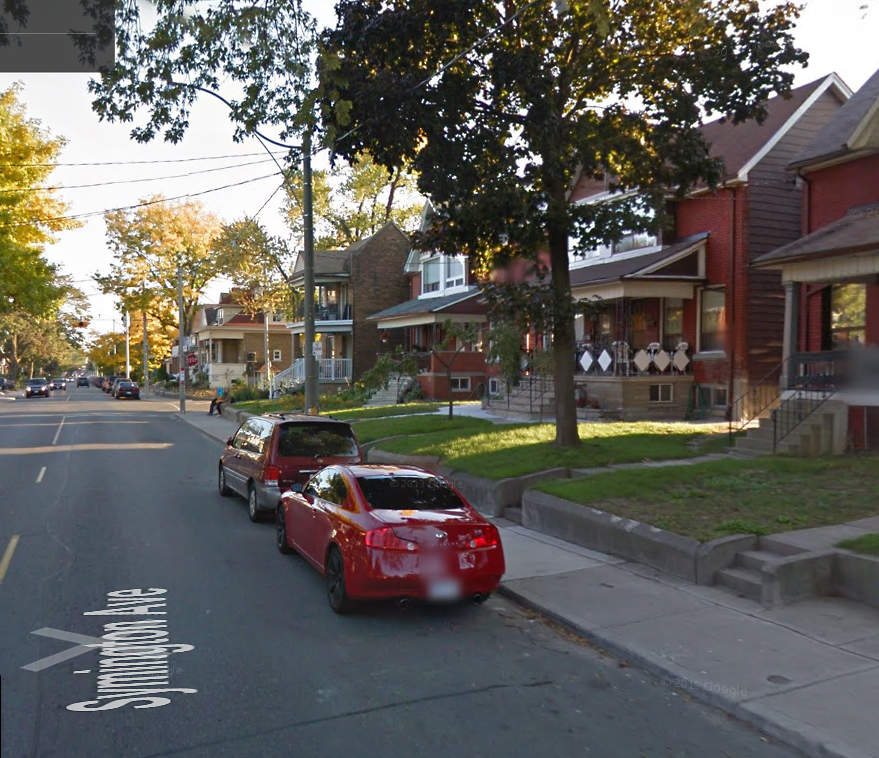
He lived at 266, Symington Avenue, Toronto.

symington avenue

He was employed as a locomotive fireman on an enormous Canadian Pacific Railways train, number 2528, which ran between Chapleau, Ontario, right across the Great Plains to Winnipeg. In this picture, Will is actually in the cab of the giant locomotive…

cab paint

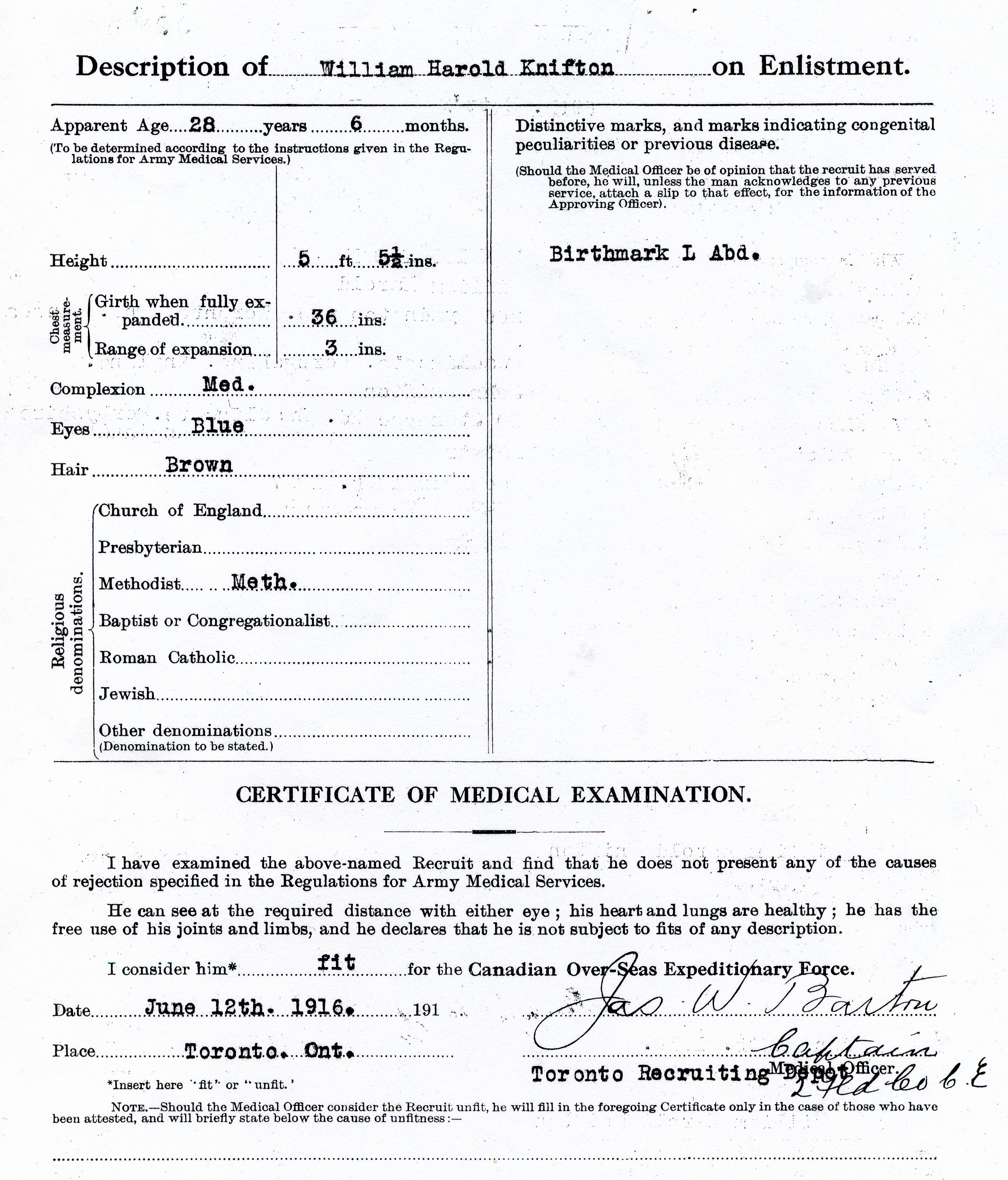
Will was to join the Canadian Army at the Toronto Recruiting Depot on June 12th 1916. He weighed 123½ pounds, and was considered by Captain J.W.Barton to be fit enough to join the Canadian Over-Seas Expeditionary Force.

physical

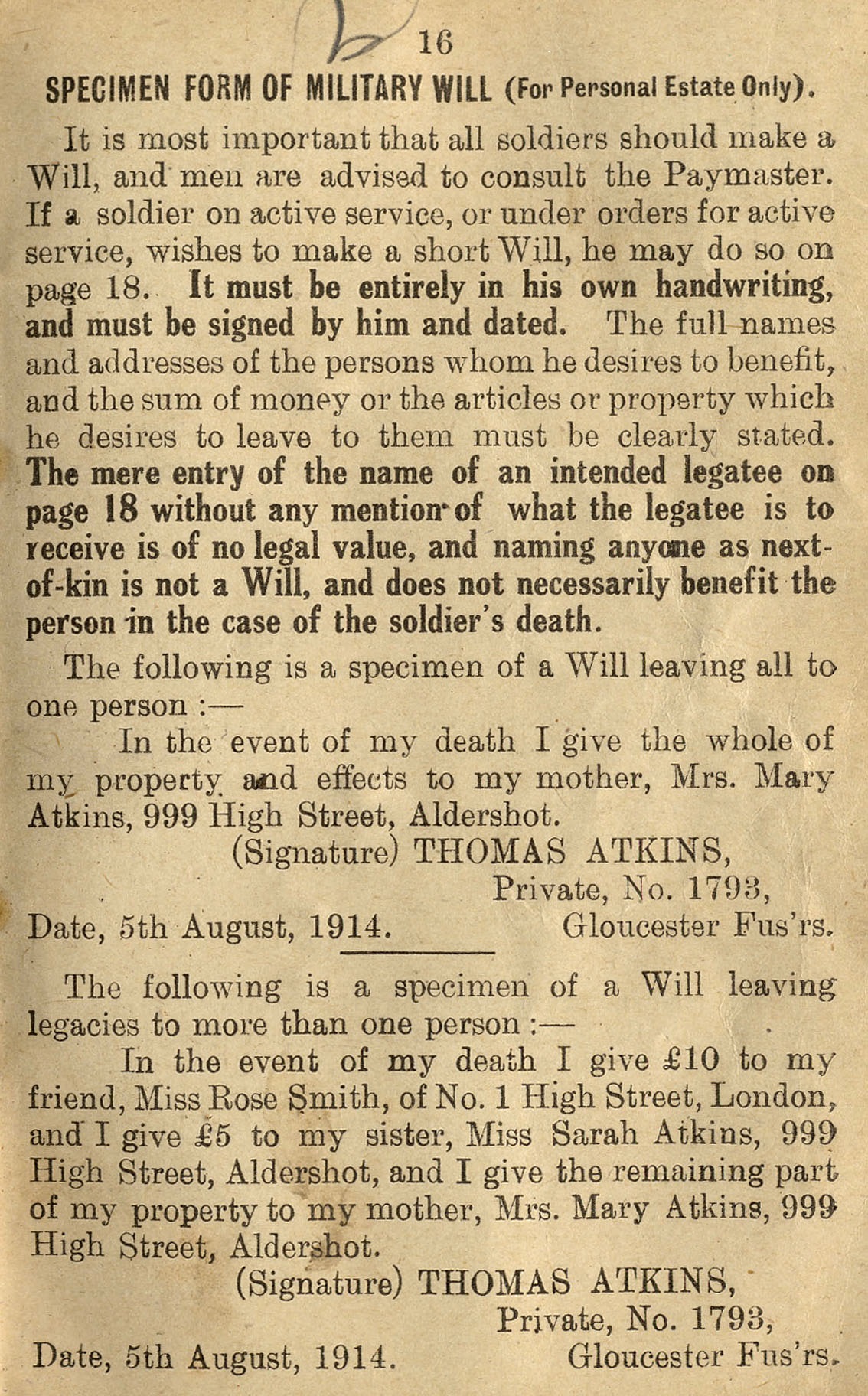
On July 6th 1916, he made a will, witnessed by the Orderly Room clerks, Messrs Irving and Smith. Judging by the small print, this document was eventually to make Mrs Mary Atkins of 999, High Street, Aldershot, a very rich woman indeed, particularly after the Battle of the Somme.

will

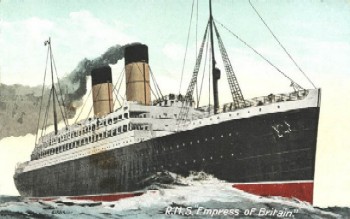
Will sailed from Canada to the Western Front on July 16th 1916 on the “S.S.Empress of Britain”.

ss_empress_of_britain

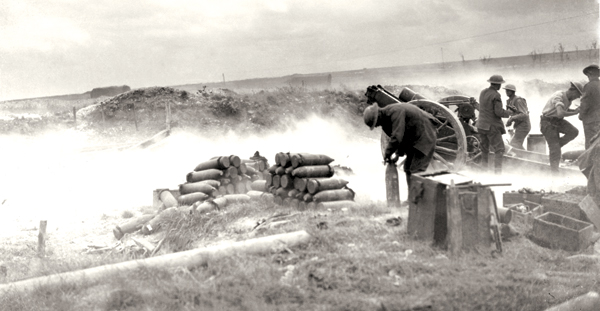
On July 25th, he arrived in England, and was taken on strength at Shorecliffe in Kent. On November 23rd 1916, he arrived in France and went straight into the 69th Overseas Battery of the Canadian Field Artillery, where he was eventually to become a Gunner.

WWI-C-GBS034

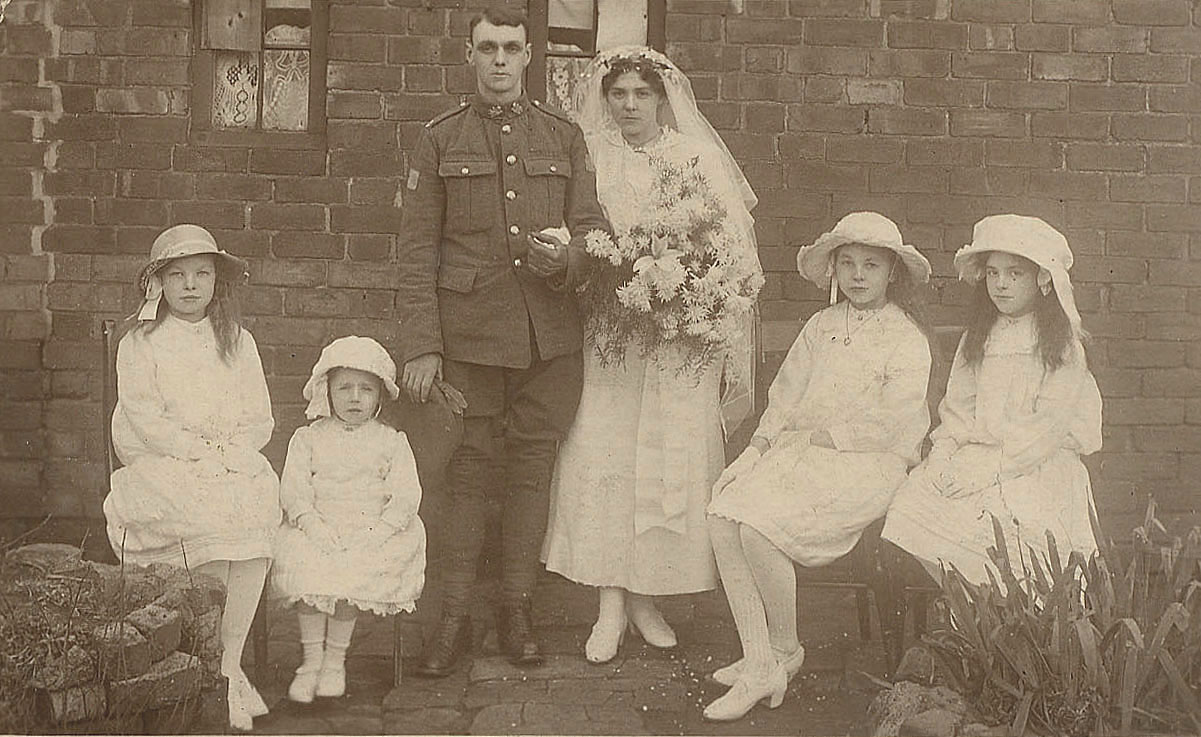
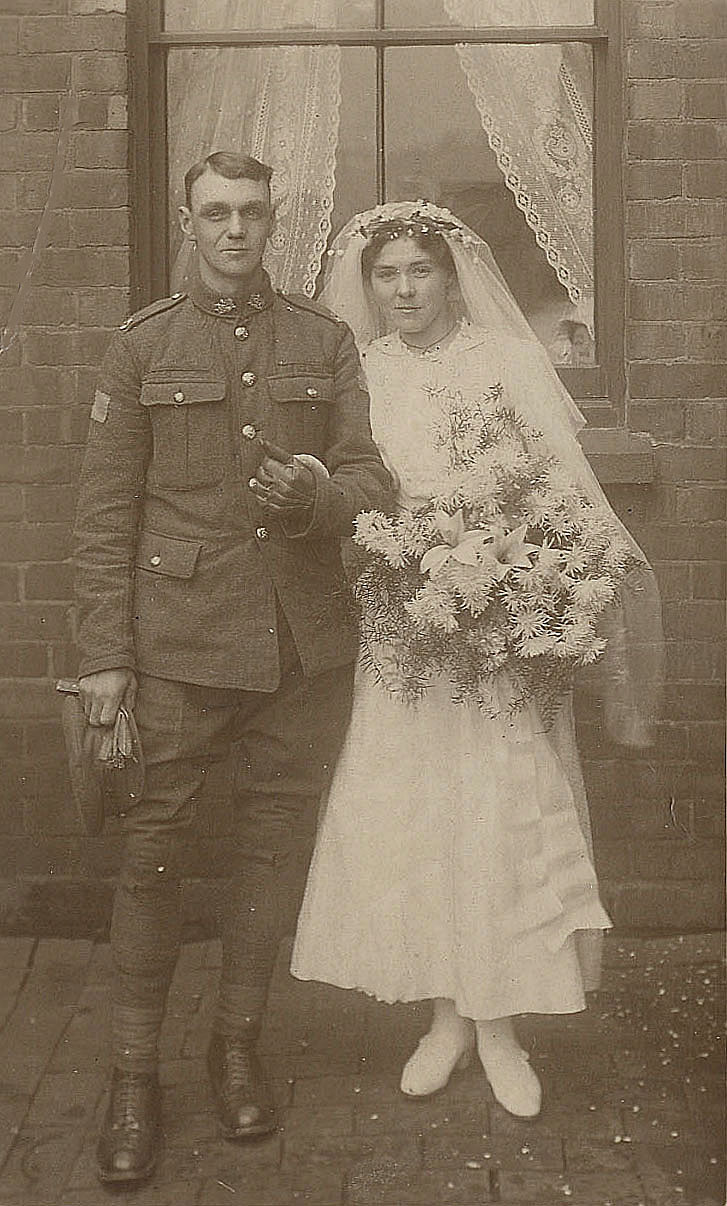
In the early part of his military career, Will seems to have earned some fifteen Canadian dollars per month, which then appears to have risen eventually to thirty dollars in 1917 and 1918. Perhaps the most significant event in Will’s war service was being given permission to marry, back in the sunny and rather more safe, South Derbyshire. The happy day was July 15th 1917…

marriage 2


marriage 1

When I was a boy, my grandfather spoke to me not of wedding dresses, though, but of events in the war. He talked of having fought at Bapaume, at either Pozières Wood or Polygon Wood, and above all, at Vimy Ridge.

WWI-B-V023-600x467

Canadian author Pierre Burton writes wonderfully of

“…soldiers, trapped in the horrors of a silly and senseless war and enduring almost indescribable conditions”.

But at the same time, it was the day when a fledgling nation came of age, when a colony became an independent nation……

“On a chill Easter Monday in 1917, with a blizzard blowing in their faces, the four divisions of the Canadian Corps in France did what neither the British, nor the French armies had been able to do in more than two years of fighting.

They seized and held the best-defended German bastion on the Western Front – a muddy scarp known as the Vimy Ridge. The French, who had lost 150,000 men trying to take the ridge, didn’t believe it could be done. Nor did the Germans; even the British were sceptical. But the Canadians triumphed!

They went over the top at dawn. By lunchtime, most of the ridge was in their hands – at a cost of ten thousand casualties. ”                                                                 (Pierre Burton)

canadian_graves b w

This is the Canadian Memorial, at the top of the ridge…

imagesV23ORIUB

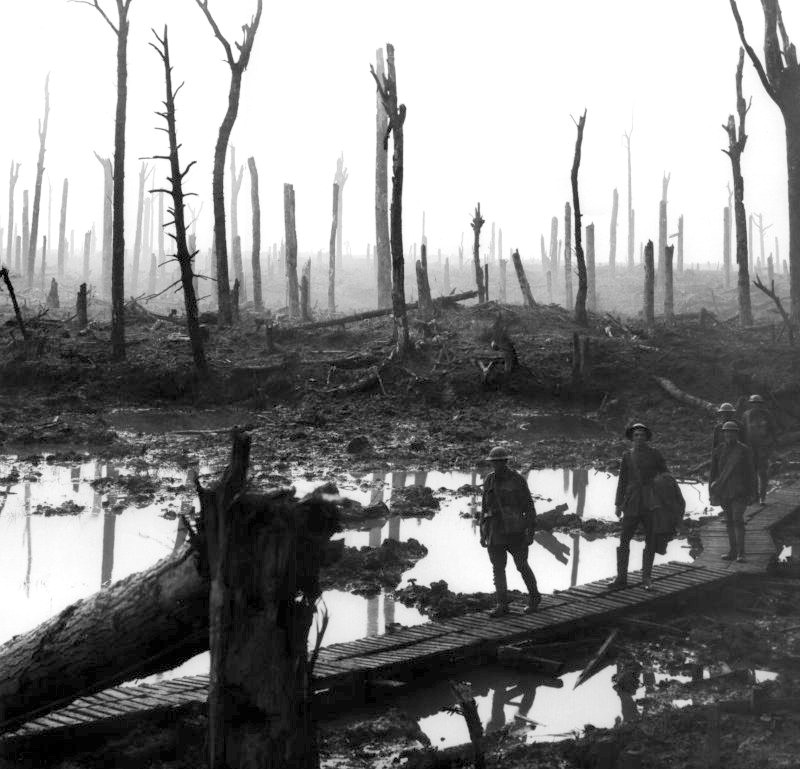
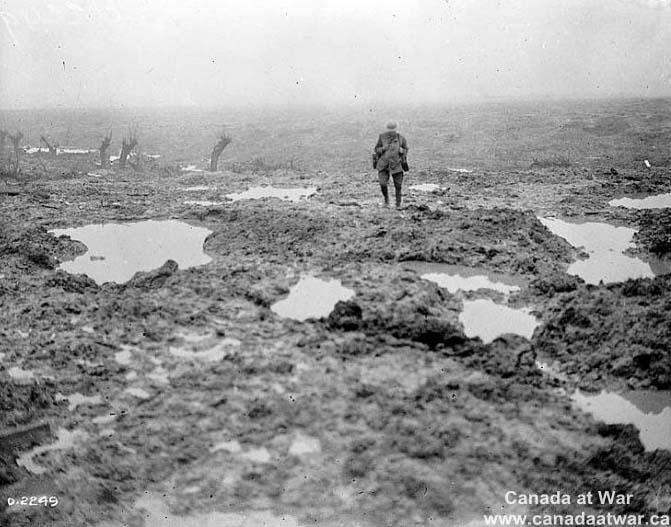
Will was certainly a veteran of Passchendaele in 1917, and in 1918, I believe, fought in the Somme area where blood soaked battles had taken place some two years earlier….

Chateau_Wood_Ypres_1917pdale_mud

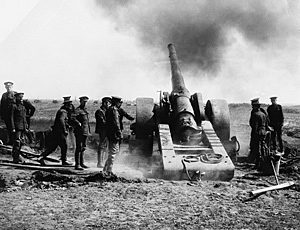
In later life, of course, Will was to become profoundly deaf. It is tempting to think that the very first steps in this unfortunate process began with the enormous volume of noise he must have experienced in the Canadian artillery during the First World War.

ii-gun-300-cp-861262

Will finally left France for the last time, and proceeded to England, via the French port of Le Havre. He was finally discharged from the army on May 23rd 1919.

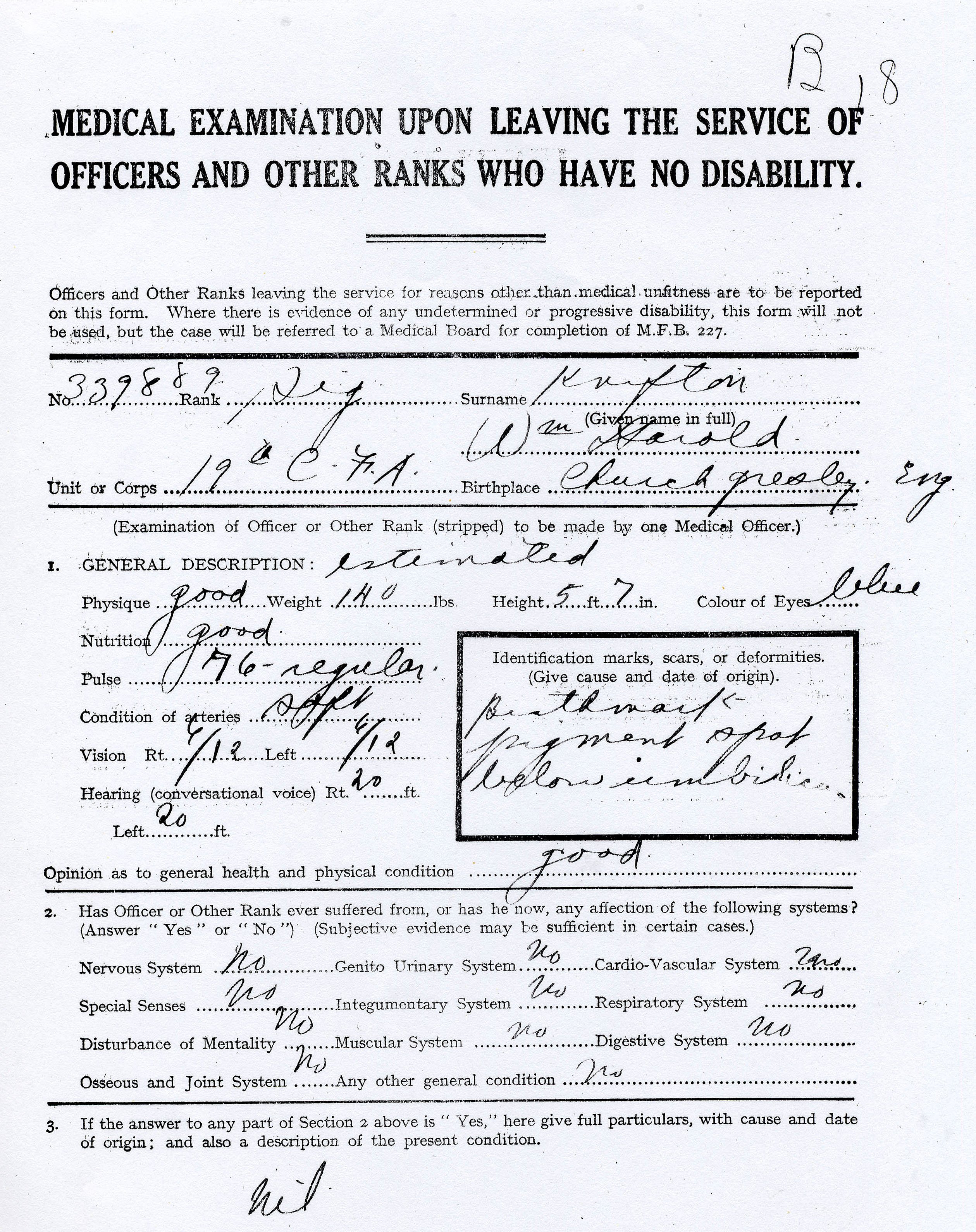
From his medical examination, he had put on some sixteen pounds during his time in the army, and now weighed a hundred and forty pounds, a glowing testimony to the quality of the food in the Canadian Over-Seas Expeditionary Force. He had also apparently grown half an inch taller.

medical after war

Still, at least Will did actually come back home safe and sound. It was not a speedy process, however. It was six months before he was no longer a soldier.

On March 4th and 5th 1919, at Kinmel Park in Denbighshire, north Wales, Canadian troops had rioted against their dreadful living conditions, sick of the constant, apparently pointless delays, and longing to be allowed to go home at last back to their families in Canada. The rioters were fired upon by British troops.

Five brave Canadians were killed and 23 were wounded. It was one of 13 mutinous riots by Canadian troops, all for exactly that same reason.

_45533022_kinmelgraves_466

Records of Canadian soldiers in the First World War can be accessed online at the Library and Archives Canada website.

For my grandfather, two pages are viewable. I know from my own experience, though, that if you pay your money, you will have access to page after page of  extremely interesting material.

15 Comments

Filed under Canada, France, History, Personal

End-of-Year Hootenanny

Recently, I was invited by members of staff to attend the end-of-year buffet. After serving thirty eight years hard labour at the school, I could hardly refuse.  Given my disabilities, though, I thought it best to treat it as a pop concert. There should be a continuous medical presence, preferably with pessimistic posters…
A1
These are the people who really run the place. Today they will judge the acts…
A6
You will need a fabulous sound system and an expert to run it…
A3
And will you need reliable security…
A7
The first two acts were real blasts from the past…

A critical audience prepared their ammunition…

B1Expectations were high, after that wonderful food and the odd snifter, all on offer at prices to suit the teachers’ pocket….
B2
First, a familiar warm-up act…
B4
…introduced the most cultured man I have ever met…
B6
He spoke wise words for those with power over education at a national level…

By now, a slight shuffling feet of the audience betrayed their desire for something a little lighter, perhaps. A country-and-western singer?
F3
Or perhaps a stand-up comedian?
F4
Reactions were varied. Some seemed not to really like that kind of thing…
F4a

Others were even more disapproving…
F4c
Simon’s disappearing microphone trick was completely lost without trace…
F10
But thank goodness, though, not before he remembered to introduce, in the most moving terms, Jim, one of nature’s true gentlemen, and a man who lives up to his faith every single second of the day…
F11
Finally found the microphone though…
H1
Just in time to bring on the star turn, Old Whispering Jim…
H2
The inventor of the paper aeroplane…
H4
“Order!! Order!! Order!! Quieten down please!! You’ve all seen a paper aeroplane before!!
H8
And then the familiar music echoed forth, as we awaited some death defying stunt…
J2
Next it was Paul, with the prototype of his recently invented self-camouflaging tie…
M3
An Everton supporter then suddenly rushed on stage, trying to re-enact the events of the 1966 F.A.Cup Final, attempting vainly to gate-crash the whole event…..
P2
The jury were by now ready for the “Best Dressed” contest. Their empty flying bottles of Budweiser, however, would not be allowed to affect the result…
P22
Would it be the same winner for the previous six years?? A lucky seventh triumph?? And would she want a croquet set as first prize??
P28
But no, controversy then ensued! Professor Major’s hat took all the votes, but should he have been wearing it inside in the first place??

Still, at least Everton Mcgibbon can give us a song…

It hasn’t been easy to turn all these different photographs into a coherent story. I hope nobody has been offended. Let’s finish with a slide show of the others that didn’t quite make the cut. There were quite a few suggestions to explain away the occasional blurring. A room that was surprisingly dark for photography? A lens which had to be open for as long as one eighth of a second? Or just a camera with beer goggles?

This slideshow requires JavaScript.


Happy retirement, everybody. You have more than earned it.


4 Comments

Filed under Nottingham, Personal, The High School

Doctor….Doctor….

P1290408 yHello world! After months of inactivity, racked with illness and apathy inducing painkillers, my DD is teaching me how to write my blog, and to bring entertainment and information to my many fans. Did you know, for example, that Durham University recently held its graduation ceremonies, and my DD became Dr DD ? She was dressed in a tasteful costume that made her look like a fourteenth century Holland supporter. I was so pleased that, at last, the financial expenditure was possibly drawing to its end, that early the following morning, I climbed the nearest hill, threw my last £6.17 to the winds, and waved my crutches at the rising sun.

P1000503

Leave a comment

Filed under Personal