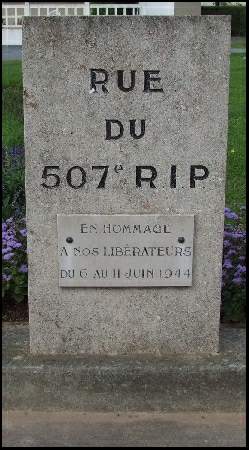
In my previous article, I revealed that it is now known that one member of the crew of that Lancaster Z-NH, serial number NE150, brought down by anti-aircraft fire over Lison, did not perish, but survived the crash, only to be then killed, proudly fighting alongside the 507th Parachute Infantry Regiment at Graignes.
For many years the tale had been told that the mystery aviator was an American fighter pilot who had been shot down, but in recent times, around 2008, the real truth has come to light. The mystery flyer was Flight Sergeant Stanley Kevin Black of the Royal Australian Air Force.
I found the full, detailed story prominently featured on Channel Nine News:
“For sixty years his family had thought he died on D-Day in a relatively straight forward situation when his plane was shot down over occupied France by enemy fire. “We knew that he had been in a crashed plane and we always thought that he died there and then,” his great niece Elissa Liggins said. But Sergeant Black survived the crash, and was taken in by a brave French family for the night.
After a good stiff drink and a sleep Sergeant Black asked to be taken to the nearby village of Graignes where he met a group of American paratroopers. Their orders were to defend the village. Even after a plane crash, Sergeant Black was determined to help.”
“Aided by the villagers, the paratroopers and Sergeant Black set up a perimeter around Graignes.
After a couple of days, the Germans attacked. The allies successfully fought them off the first time but the Germans successfully attacked again.
The S.S. then executed many of the survivors. It is not clear exactly how Sergeant Stanley Black died but he was probably killed on June 11th. He was just 21 years old. The little village never forgot their “Australian hero”.
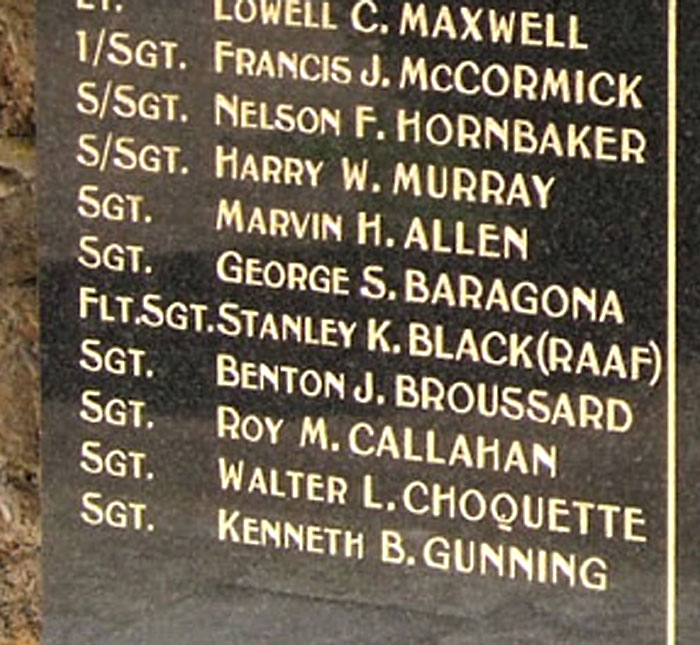
Decades later an English lady who lives in the village, Liane Ward-Cleaveley, felt frustrated his name was not on the plaque commemorating the battle. She contacted a Lancaster enthusiast in Australia, Graeme Roberts, who tracked down Sgt Black’s relatives.
“We got a phone call from a gentleman called Graeme who had read a message from an English lady living in France,” Ms Liggins recalled.
“She had a bee in her bonnet because this Australian who had battled hadn’t got his name on a memorial.”
Accompanied by members of the RAAF, Ms Liggins flew to France for the unveiling of her great uncle’s name on the village plaque.
“I don’t think any of us appreciated how big it was going to be for the family – certainly not for me – it’s quite life changing,” she said.
Flight Lieutenant Mark Schmidt describes it as “an amazing experience”.
“It’s an incredible story and then to go to the village and connect with the villagers there… he’s a hero to those guys they call him ‘the Australian who fell from the sky’,” he said.
Every single evening at the Australian War Memorial in Canberra, a single Australian who died for his country is honoured. And recently, Sergeant Stanley Black was the chosen hero.
The Last Post was played and the Eternal Fame flickered. Ms Liggins and her family laid a wreath for their uncle. It was a poignant moment she will never forget:
“I sort of feel like I have a connection with him now, that just wasn’t there before, and I know his story intimately… it’s pretty powerful stuff,” she said.
French villagers, French children, American paratroopers, British flyers and one very, very brave and determined Australian.
Here is a film of Graignes today.
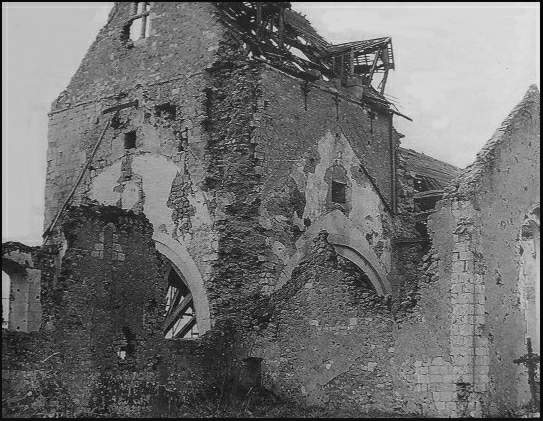
The church has been left exactly as the cowards of the 17th SS Panzergrenadier Division left it.
There is another excellent film on the Channel 9 News site. It is well worth watching.
If you are feeling brave, then try this website. It has a picture of Madame Marthe His, one of the only surviving witnesses of this Nazi war crime.
She watched what the SS did when she was only 12, and now, 73 years later, and a very young looking 83, she is determined that it should not be forgotten.
In a video lower down the page, she tells her story in French where, at the least, you should be able to recognise a few words.
Here is roughly the same story in French for you to read as homework:
“À 12 ans, Marthe His a vu soldats américains et civils se faire massacrer par les Allemands à Graignes. 71 ans plus tard, elle est revenue pour témoigner.
Derrière ses petites lunettes rondes, les yeux bleus de Marthe His ont gardé toute leur vigueur. Au moment de témoigner, hier après-midi au mémorial de Graignes (Manche), un voile de tristesse a peut-être atténué leur éclat pendant quelques minutes. C’est tout en pudeur que ce petit bout de femme, âgée de 83 ans, a revécu en souvenir les massacres de Graignes en juin 1944.
Des 200 Américains qui débarquent dans la maison familiale, au sauvetage de 23 soldats. Elle replonge dans cette histoire tragique du débarquement dans la Manche.
Un épisode sanglant où 43 soldats Américains et 30 habitants de Graignes trouveront la mort des mains des Allemands.”
This is the memorial to everybody who was slaughtered by the SS in that cowardly way:
And don’t forget Flight Sergeant Stanley Black of the Royal Australian Air Force:
Stanley Black didn’t need to do what he did. And it would probably cost him his life.
I wrote a previous article about an Avro Lancaster Mark III bomber which took off from Metheringham, in Lincolnshire, ten miles south east of Lincoln, at twenty five minutes past midnight on June 7th 1944. Its squadron letters were Z-NH and its serial number was NE150.
Operating in the direct aftermath of D-Day the crew were tasked with bombing Coutances, a beautiful little town just south west of Caen in Normandy, in an effort to disrupt the German transportation of troops.
Unfortunately, the aircraft was one of two hit by heavy anti-aircraft fire over Lison, and it crashed near the village of St Jean de Daye. All of the crew were killed except two.
The first of two subsequent articles told the story of John “Jock” Drylie, the aircraft’s navigator, and the only member of the crew who ever managed to return home, in his case, to Fife in Scotland:
This is the second article of the two, and tells the extraordinary story of Flight Sergeant Stanley Kevin Black of the Royal Australian Air Force. He was the bomb aimer, only 21 years of age and the beloved son of George and Lillian Eliza Black, of North Fitzroy, Victoria, Australia.
On June 7th 1944, Stanley survived the crash, and, in fact, was virtually unscathed.
He soon met some American gentlemen, however, and then a very dark and grim tale indeed began to unfold.
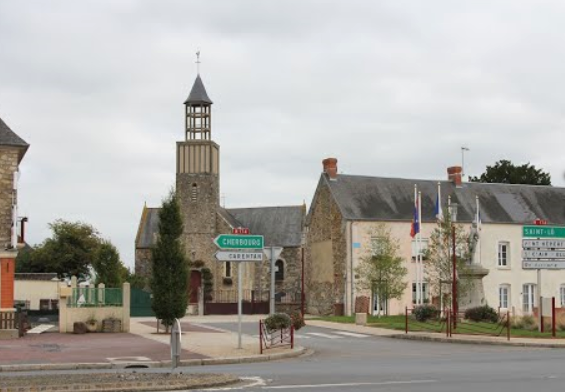
These American gentlemen turned out to be the élite troops of the 507th Parachute Infantry Regiment of the American Army. Just after two o’clock in the morning of June 6th 1944, twelve planeloads of them had been dropped in error some eighteen miles from their correct drop zone. Wandering more or less at random around the marshes near Carentan, they were now very close to the village of Graignes:
At daybreak, the village mayor of Graignes, Monsieur Alphonse Voydie, woke up and suddenly noticed that the grass field behind his house was absolutely full of American soldiers. As Mayor, he called an immediate emergency meeting of everybody in the town. The brave townspeople decided unanimously to feed the American soldiers, despite the very real risk that the Germans would shoot them all, both villagers and soldiers. Under the forceful command of Madame Germaine Boursier, all the women of the village began cooking around the clock to serve the Americans with at least two hot meals every day. At the same time, teams of villagers, men, women and children, began filling any wheeled vehicle with lost American equipment and then bringing it back to its rightful owners.
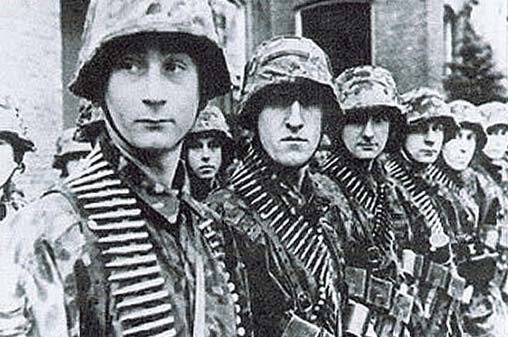
In view of what was about to happen, the fact that these Nazi troops were from the 17th SS Panzergrenadiers was supremely ironic. The unit had been raised near Poitiers in south-central France in October 1943.
It consisted mainly of conscripts, many of whom were Rumanian Germans with a good number of French Fascist volunteers.
The SS duly attacked the 507th Parachute Infantry Regiment, who were by now entrenched in the village. It took the Germans until June 11th to overwhelm the village, with just the church left to be captured:
The Americans had, by this point, claimed perhaps five or six hundred dead Germans, with the roughly the same number wounded.
“The 17th SS stormed the church and found Captain Sophian’s medical aid station. They forced the Captain and all of the wounded outside against a wall. The men were divided into two groups and marched away. One group was marched down to the edge of a shallow pond behind Madame Boursier’s café. At the edge of the pond, the SS bayoneted the wounded men and threw them into the water one on top of the other. The other group of 507th paratroopers was forced to march to a field near the village of Le Mesnil Angot. There, the nine wounded men were forced to dig a pit. As soon as the pit was complete, the SS shot each one of them in the back of the head and dumped their bodies in the pit one on top of the other.
Other Germans began a round-up of the French civilians. The SS men knew that the church’s belfry had been used as an observation point to direct mortar fire accurately onto their attacking troops. The SS soldiers therefore burst into the church rectory, dragged Father Leblastier and Father Lebarbanchon into the courtyard and shot them both to death. They then discovered Madeleine Pezeril and eighty-year-old Eugenie DuJardin. Overwhelmed with fear, the two old ladies had been cowering in their quarters ever since the end of the battle. The Germans shot and killed both women in their beds. Meanwhile, forty-four villagers had been rounded up and were being interrogated. They were threatened with immediate execution if they did not divulge the names of any villagers who had actively assisted the Americans. Not a single one of the villagers turned in a single name. And none of them revealed either the role that Alphonse Voydie had played in the Graignes drama. Had the Germans known what Voydie had done, they would most certainly have executed him too.
On Tuesday June 13th, the Germans burned the village. They poured gasoline over the bodies of Father Leblastier, Father Lebarbanchon, Eugenie DuJardin and Madeleine Pezeril and then set them on fire. The ensuing blaze was allowed to burn out of control, destroying 66 homes, the boys’ school, Madame Boursier’s café and the 12th-century church. Another 159 homes and other buildings were damaged either as a result of that fire or the fighting. Before the June 11th battle and the German retaliation that followed, the village of Graignes had consisted of just over two hundred homes and other structures. Afterward, only two houses survived unscathed.”
« A leur départ, l’école et l’église de Graignes n’existent plus, le village n’est qu’une ruine fumante. C’est un autre Oradour et un autre Maillé, la signature des SS aux abois en 1944 dans le pays. Au total, ils laissent derrière eux 63 morts. Seul le clocher du XIIème siècle resté debout défie toujours l’occupant. »
On July 6th 1986, a ceremony was held in the ruins of the church at Graignes during which eleven villagers were presented with the Award for Distinguished Civilian Service for their role in assisting the men of 3rd Battalion/507th. Six of those awards were posthumous.
Only one member of the SS was punished in any way for this incident, the rather unlucky Erwin Wilhelm Konrad Schienkiewitz who went to prison for life. If you look at the Wikipedia entry for 17th SS Panzergrenadiers, there is a shortish list of the war crimes for which some of them received prison sentences.
For the most part, they were to do with killing concentration camp prisoners, but they also executed the Mayor of a German town who wanted to surrender to the Allies and avoid unnecessary deaths. And they murdered a Jewish dentist. What bravery from the élite troops of the Master Race.
Like so many members of the Waffen SS, however, their commander, SS-Standartenführer Otto Binge, lived out a full life and died peacefully in a warm bed on June 18th 1982.
And why am I telling this great long-winded tale, other than the fact that it deserves to be told anyway?
Well, because it is now known that one member of that crew of the 106 Squadron Lancaster Z-NH, serial number NE150, was killed proudly fighting alongside the 507th Parachute Infantry Regiment at Graignes.
For many years, the tale had been told that there was an American fighter pilot involved in the fighting, but only in recent times, around 2008, has the real truth come to light. The mystery fighter pilot was none other than Flight Sergeant Stanley Kevin Black, bomb aimer of the Royal Australian Air Force.
I will bring this tale to a conclusion in the near future.
To end with, let me repeat that none of these three articles about the Avro Lancaster III from Metheringham, Z-NH, NE150, shot down on June 7th 1944, could have been written without recourse to the websites and forums which I have indicated. I just hope that what I have written, tales which deserve to be heard, will reach another audience by my re-telling them.
I have written two previous articles about an Avro Lancaster Mark III bomber which took off from Metheringham, in Lincolnshire, ten miles south east of Lincoln at twenty five minutes past midnight on June 7th 1944. Its squadron letters were Z-NH and its serial number was NE150.
Operating in the direct aftermath of D-Day the crew were tasked with bombing Coutances, a beautiful little town just south west of Caen in Normandy, in an effort to disrupt German transportation of troops:
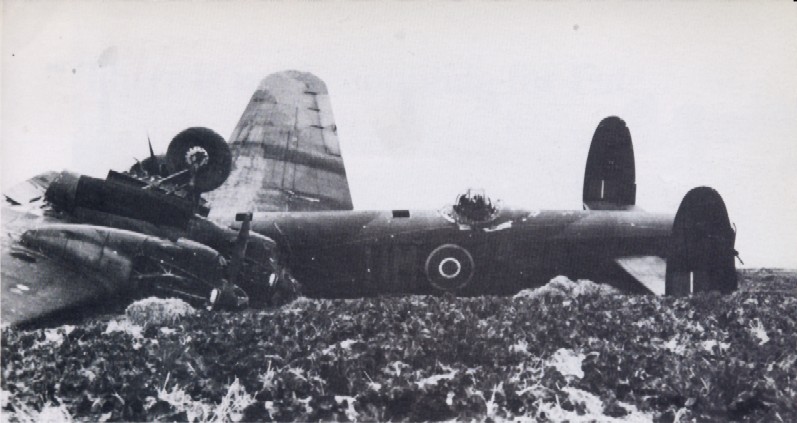
Unfortunately, the aircraft was hit by heavy anti-aircraft fire over Lison, a town near Coutances, and it crashed near the village of St Jean de Daye. All of the crew were killed except two.
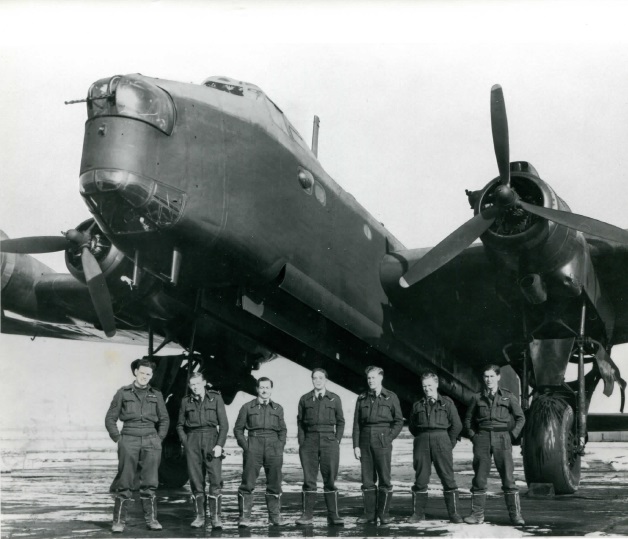
The first of two articles will tell the story of John “Jock” Drylie, the aircraft’s navigator, and the only member of the crew who managed, eventually, to return home, in his case, to Fife in Scotland. “Jock” Drylie is known to be on this photograph of a Short Stirling bomber and its crew, but the names of the individual flyers remain unknown:
I found John’s story on a forum, one of what must be hundreds devoted to the aircraft of the RAF in the Second World War.
The tale of John Drylie was posted by Michel Tardivat in 2014:
“When the aircraft crashed, five members of the crew were either unconscious or dead. He buried his parachute and hid in the deep bushes of Normandy for two or three days, he did not know how long. Driven by hunger, he knocked on the door of a farm near the village of Saint-Fromond. The owner of the farm was Arthur Michel who carefully checked John’s proof of identity with the local French Résistance. At this time, it was only too easy for German agents to pose, for example, as British soldiers, or downed flyers, in order to penetrate the Résistance network. Brave Monsieur Michel kept John at his farm, pretending, as the Scot could speak no French whatsoever, that he was a deaf and dumb farm worker.
All of the crew members from NE150 were initially reported as missing in action. His family, and especially his young fiancée, Margaret, were devastated. She was working at Stirling Castle as a radio operator for the Army.
In actual fact, John was already on his way back home. Arthur Michel continued his heroism by driving John to Bayeux. Again, the Germans had only one penalty for people caught helping Allies soldiers, and that was death. After that, the equally brave men and women of the Résistance network continued the process, and Flying Officer Drylie was back in Britain by July 19th 1944.
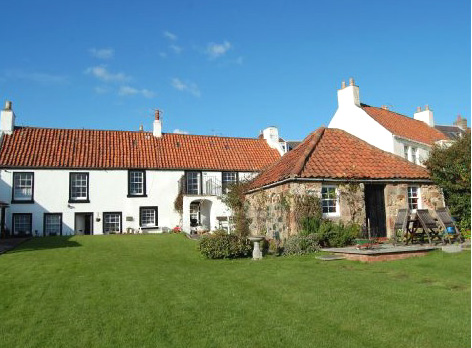
In the late 1940s, Farmer Michel took a wife and she was able, in the era of rationing and postwar shortages, to wear a silk wedding dress made from the material of John Drylie’s parachute. Arthur Michel and his lucky wife had just one daughter who was the village teacher at Saint-Fromond all her working life. At the moment, she lives in the family farm, which has been converted into a Bed and Breakfast establishment.
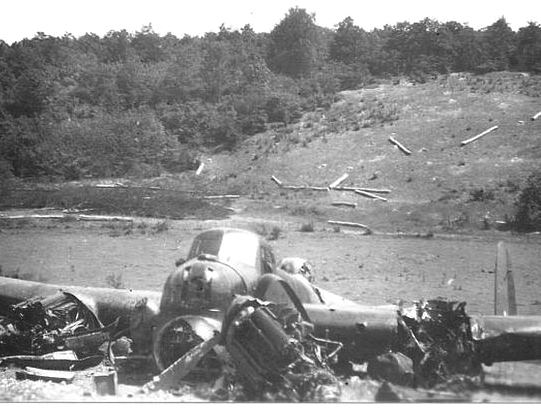
During the 1950s, the Drylie family would visit their French friends and their son Peter, would play around the wrecked fuselage of the Lancaster bomber which remained virtually untouched in a field near the village for many, many years.
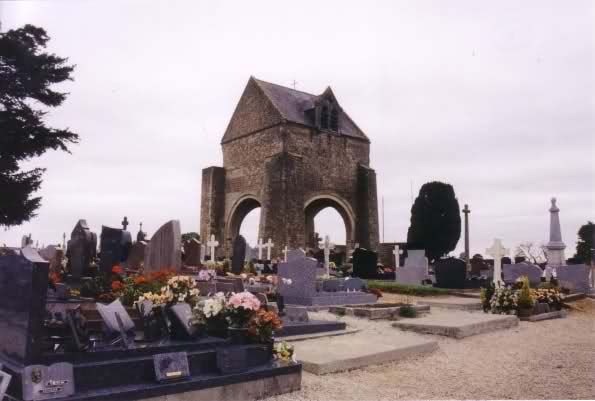
Nowadays, in the cemetery at Saint-Fromond, brave Arthur Michel rests in peace. On his tomb is fixed a medal. It was placed there by the grateful RAF.”
John Drylie seems to have been very greatly affected by the events of June 7th 1944. He hardly ever spoke about what had happened to him in that doomed Lancaster. He never wore his wartime medals. He never attended any official ceremonies connected with that terrible night.
Just once,though, he came with three generations of his family, his children and grand-children, to visit the most famous places from D-Day, namely, Saint-Lô, Bayeux, Sainte-Mère-Église and Colleville. It is unknown whether he visited the cemetery at Saint-Fromond or at Bayeux, but I would be very surprised if he did not. He was certainly seen to be very deeply moved as he stood silently at the places he visited
“Jock” Drylie was a chartered-accountant for all of his life. He travelled extensively between workplaces in Paris and in Scotland. He passed away in September 1990, in his house, “Balguthrie”, in Lower Largo, Fife, Scotland:
He was buried in the local churchyard with his wife Margaret and his son Peter.
Personally, I would posit that John Drylie, who hardly ever spoke about what had happened, never wore his wartime medals and never attended any official ceremonies, was a classic sufferer from Survivor Guilt.
To quote Wikipedia:
“Stephen Joseph, a psychologist at the University of Warwick, has said: “There were three types of Survivor Guilt: first, there was guilt about staying alive while others died; second, there was a guilt about the things they failed to do – these people often suffered post-traumatic ‘intrusions’ as they relived the event again and again; third, there were feelings of guilt about what they did do, such as scrambling over others to escape. These people usually wanted to avoid thinking about the catastrophe. They didn’t want to be reminded of what really happened.”
I am sure that, by now, Jock will have met up with all his old pals in Heaven and they will have told him that he should feel no guilt. In Bomber Command, death was so often decided by blind chance, nothing more:
To end with, let me repeat that none of these three articles about the Avro Lancaster III from Metheringham, Z-NH, NE150, shot down on June 7th 1944, could have been written without recourse to the websites and forums which I have indicated. I just hope that what I have written, tales which deserve to be heard, will reach another audience by my re-telling them.
Frank Leonard Corner attended the High School just a few years before before the Second World War. He spent at least one season as the young scorer for the School’s First XI cricket team:
Of the three cricketers behind young Frank Corner, the one on the extreme right is George Brown. Playing for the School cricket team, George was a real asset with his “devastating fast in-swinging yorker on the leg stump”. On a forgotten Saturday in July 1944, however, now Lieutenant Brown, he was killed in action during the aftermath of the D-Day landings. He was just 24 years of age. Lieutenant Brown was in the 2nd Battalion of the Lincolnshire Regiment (3rd Infantry Division) and on that day, the blast of an exploding German mortar shell was even more devastating than his “devastating fast in-swinging yorker on the leg stump”.
Young Frank Corner, though, left the High School and its cricket team, on the faintly ominous date of July 31st 1939. First of all, he worked briefly for the Notts War Agricultural Committee. Around this time, he had also played rugby for the Old Nottinghamians’ Wartime XV.
Frank, though, like so many hundreds of thousands of other young men, was soon to feel the “Call of the Skies”. He joined the Royal Air Force Volunteer Reserve and was soon promoted to be Flight Sergeant Corner.
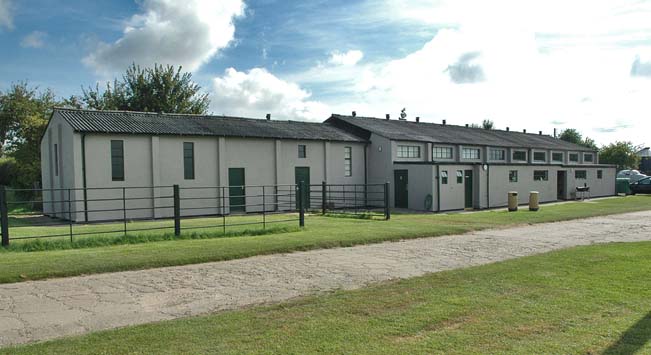
In due course, Flight Sergeant Corner joined 106 Squadron, stationed at Metheringham, in Lincolnshire, just south east of Lincoln itself. Here is the old gymnasium, still left after all these years:
Here is the building used to practice dropping bombs accurately:
And here is the beautifully maintained Memorial Garden:
Frank was the Flight Engineer in an Avro Lancaster Mark III. Its squadron letters were Z-NH and its serial number was NE150.
Operating in the direct aftermath of D-Day the bomber took off from Metheringham at twenty five minutes past midnight on June 7th 1944. It was tasked with bombing Coutances, a beautiful little town just south west of Caen in Normandy.
“there was a total of 1,065 aircraft, made up of 589 Lancasters, 418 Halifaxes, and 58 Mosquitos. They were to bomb the lines of communication behind the D-Day battle area. All of the targets were in or near French towns. 3,488 tons of bombs were dropped on targets at Achères, Argentan, Caen, Châteaudun, Conde sur Noireau, Coutances, St Lô, Lisieux and Vire. Every effort was made to bomb accurately but casualties to the French civilians were inevitable. Cloud affected the accuracy of the bombing at many of the targets and, at Achères, the Master Bomber ordered the raid to be abandoned because of cloud and no bombs were dropped. 10 Lancasters and 1 Halifax were lost in these raids; 6 of the Lancasters were lost in the No 5 Group raid at Caen, where the main force of bombers had to wait for the target to be properly marked and then fly over an area full of German units and guns at bombing heights below 3,000ft. Some details are available of the effects of the bombing. At Argentan, Châteaudun and Lisieux, much damage was done to railways, although the towns, Lisieux in particular, were hit by many bombs. Important bridges at Coutances were badly damaged and the town centres of Caen, Condé sur Noireau, St-Lô and Vire were all badly bombed and most of the roads through those towns were blocked.
….19 aircraft were minelaying in the Brest area, and 26 aircraft on Resistance operations. No aircraft lost.
Total effort for the night: 1,160 sorties, 11 aircraft (0.9 per cent) lost.”
On June 11th 1944, the Wing Commander of 106 Squadron actually sent a report to the Air Ministry, explaining that the crew of Z-NH had been told to bomb bridges in Caen. This is thought possibly to explain why the aircraft finally came down near St Jean de Daye. They had been hit by anti-aircraft fire over Lison, where a worker at the railway yard remembers how the German gunners celebrated the fact that they had shot down a bomber.
Frank was just twenty one years old when he died. His service number was 222039 and his parents were Captain Leonard Leslie Corner and Florence Edna Corner, of Whiston, Yorkshire.
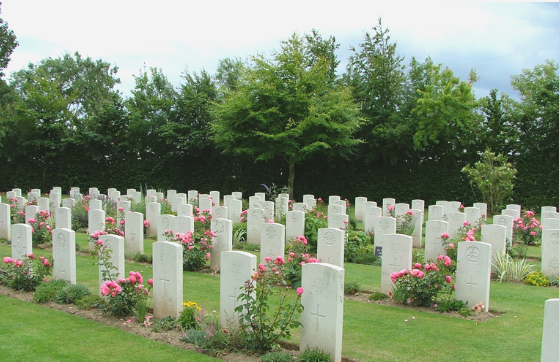
Frank is buried in the War Cemetery in Bayeux, in Calvados, Normandy, France along with 3,805 other war casualties. He has paid with his young life the price of our freedom:
In 1935, ten years after that poor little fox was shot by Mr Hallam the School Caterer, Mr.Boot the lovable School Caretaker, was promoted to the post of “School Marshal” or “Porter”. The advertisement to fill his job as a mere caretaker attracted 1,475 applicants, a measure, perhaps, of the depths of the economic recession into which the country had been allowed to sink. Mr.Boot was then succeeded by Mr.Hubbuck, whom Mr.Reynolds was to call the “Beau Idéal” of caretakers.
During the 1930s, there had been a Porter’s Lodge next to the Western Porch, with a parlour, kitchen, scullery, three bedrooms and some cellars. Eventually, the cellars of the Porter’s Lodge became the School boiler house, and the parlour became a storeroom, where generations of caretakers brewed their tea, until Mr.Boot drank the very last cup, shortly before demolition in 1939:
During the Second World War, in 1940, what might have been a very serious fire in the new West Block of the School was only prevented by the vigilance of the ever watchful School Caretaker, Mr.Hubbuck. It started in the Quartermaster’s Room, which later became the Book Room, right up in the roof, and soon spread to the N.A.A.F.I., later to become the Prep Handicraft Room. Mr.Hubbuck saw soldiers rushing up the stairs carrying buckets of water, and promptly called the Fire Brigade. Only minor damage was caused by the flames, but, typically, much more was done by the water from the Forest Road fire hydrants used to put them out. For months afterwards, the roof of that corner of the building had to be covered by a tarpaulin while it was being repaired.
Not long after this episode, the school became a sorting depot for troops who had survived the Dunkirk evacuation, and the South Notts Hussars departed, taking a large amount of stolen school equipment with them:
On one evening in Arboretum Street, Mr.Hubbock came across a group of local youths who were stealing ropes from the gymnasium of the Girls’ High School. He got the ropes back by pretending to be a plain clothes policeman, but was astonished to find that the Army had left the school without even locking it. This, sadly, was minor fare by the standards of the military. Many large country houses commandeered by the Army had been picked completely clean of all valuables by 1945 and in some cases, the damage done was so extensive that the houses had to be demolished.
In one edition of the “Nottinghamian”, Anthony R. Broome (1944-1950) reminisced about how….
“During the Second World War, lunch was taken in the School Refectory. I am quite sure providing food for energetic and growing boys during and after the conflict must have been a nightmare for those responsible. The fare provided could be described as reasonably acceptable to fairly awful. On one occasion a friend looked at his meat, winced, looked at me and said, “That reminds me …I have not seen Mr.Ings’ dog this week.”
Mr.Ings was the caretaker and his dog was a large Alsatian. Sadly the remark was overheard by Miss Fraser, the Matron, who was supervising the lunch. She went berserk. A master appeared in an instant and we were sent outside where the untimely arrival of the dreaded Mr.Reynolds the Headmaster added to our discomfort. That afternoon we arrived home later than usual…and hungry as well.”
Fortunately, in Easter Term 1949, sweet rationing came to an end, to the great relief of Bill Boot, the then Caretaker, who was operating the Tuck Shop at the time.
In another edition of the “Nottinghamian”, Staff Member, Bill Neville, an ex-Head of Biology, reminisced about how Bill Boot had occupied the corner room which contained D.H.Lawrence’s carved initials, in the same corridor as the Staff Room.
“Bill Boot had been for many years the School Caretaker, and later became the School Marshal. The Caretaker’s House occupied the space between the West Block and what is now the Founder Hall. Where the Caretaker’s Bungalow now stands was an open space on which stood a hut, where the CCF Signal Section was housed. When the CCF Radio Net was started in 1951 (?), a radio station, complete with aerial mast was installed, to the considerable annoyance of the then caretaker, Mr. Ings, who protested that transmissions interfered with reception on his newly installed television (9 inch, black and white screen) -he may well have been one of the earliest members of the school to have a TV set. Certainly there was no set in the school for several years to come”.
Here are those famous initials of D.H.Lawrence, Schoolboy Vandal:
These photographs now show the luxurious Caretakers’ Room which was newly constructed in the early 1950s. They were taken by that very popular teacher from the past, the Reverend Charlie Stephens:
This slideshow requires JavaScript.
In December 1949, F.Martin Hall and John G.Golds celebrated Bill Boot’s birthday with the following poem which appeared in “The Nottinghamian”. It was dedicated to the ever popular figure of the school caretaker and although I have already quoted it in another blogpost, I make no excuse for repeating it. …
To Bill Boot on his 70th birthday
You are old, Father William, the schoolboy said,
And your tooth is of marvellous length,
Yet your tap on the door makes the whole building rock,
Where on earth do you find all that strength ?
In my youth, said the Sage, when I fought for the Queen,
Frequent exercise, Generals demanded,
I chased Kruger each morning around Spion Kop,
Do you wonder my muscles expanded ?
You are old, Father William, the schoolboy said,
And your hair has long since turned quite grey,
Yet your voice like a clarion round the School rings,
How d’you manage such volume, I pray ?
In my youth, said the Sage, when I served with Lord “Bobs,”
His commands could not travel by wireless
So I bawled them (in code) right across the Transvaal,
And my throat, by this means, became tireless.
You are old, Father William, yet your eagle eye
Seems as bright as the stars high in heaven,
Pray, how does your eyesight thus function so well,
With no help from Aneurin Bevan ?
I have answered your questions, the wrathful Sage said,
And as sure as my name’s William B.,
If you pester me further, my patience will go,
So be off, or I’ll put you in D.
(With apologies to Lewis Carroll. In the last verse it was considered impolite to suggest that Mr. Boot would actually threaten to kick anyone downstairs.)”
William “Bill” Boot was to retire in December 1950 after twenty-eight years’ service. He was replaced by Mr.T.H.Briggs, who had previously worked as a policeman in the city. Bill Boot had fought in the Boer War, and was famed for his rapid, shuffling gait, and his extremely rapid speech, which, with his accent, was frequently almost unintelligible. His hobby was fishing, and he travelled widely at weekends. When he retired, he received a small pension, but, alas, did not live very long to enjoy it, as he was sadly killed while crossing the road on December 7th 1952. Another victim, perhaps, of the “Curse of the High School Caretaker”.
The caretaker’s house, which was only a yard or two away from the entrance to the Founder Hall, was demolished in April 1965. This photograph shows the land during one of its many transition points:
The present day bungalow was built for Mr and Mrs Oldham, the School Caretaker and his First Lady. At the end of August 1976 though, poor Eric Oldham collapsed and died one sunny Saturday evening, as he walked round the school, locking up all the gates. Another popular man, the “Nottinghamian” described him as “one of the school’s most devoted servants and a warm hearted friend”:
Two memorable characters then appeared on the scene as School Caretakers. The first was Tony Hatcher:
The second was Ray Eastwood. Together they were two of the nicest men I ever had the privilege to meet during my 38 years at the High School. Ray Eastwood was to retire as School Caretaker after many years’ valuable service, on Thursday, January 31st 2008. He was an unfailingly nice man who always did his very best to be helpful. He always carried what appeared to be the largest bunch of keys in the world:
Neither Ray Eastwood nor his colleague, Tony Hatcher, will ever be forgotten by those who had the privilege of knowing them.
This is the third section of an eventual four, all of which tell the story of the remarkable characters who have worked as caretakers at the High School over the last 150 years.
In July 1950, Miss S.J.Webb, a teacher who was retiring after 23 years’ service in the Preparatory School for Boys from 7-11 years of age, had her “Memories of the Old Preparatory” published in the School Magazine:
“When I came in 1917, there were four Forms, 1A, 1B, 1C and 1D, and they occupied the four front rooms of houses No. 9 and No. 11, Miss Richmond was in charge and she and I lived in No.11. Mrs. Richardson was caretaker and as there was no dining hall, she provided dinner…for about twenty-two boys from the senior school. Her dinners soon became very popular, especially her puddings of which there always seemed an unfailing supply, and which were of a kind that usually finds favour with a hungry boy. The Prep. boys went home to dinner. This was possible as we had a very long dinner hour and in those days meat coupons had to be given up at each meal where meat was provided. Talking of caretakers, I can see old Holmes, caretaker of the big school, going down the steps and jangling a bunch of keys, calling out to the boys : “Doctor’s orders is . . .” (referring to Dr. Turpin, the Headmaster). His hobby was birds and his house seemed full of them:
He lived in the house now occupied by Mr.Ings on Waverley Mount, only it looked very different then. The Old Prep. was a very happy, busy, place and yet how leisurely compared with to-day! (1950)”
When Robert Holmes, the school’s eccentric and beloved caretaker, retired in the early 1920s, the following poem appeared in “The Nottinghamian”, in celebration of an individual who was universally known as “Robert”. Almost totally deaf, and a great favourite of the boys, Robert was well-known for his poems, which he would pay to have printed, and then distribute himself around the school, to both boys and staff. In this way, for example, he celebrated the end of the Great War. Most unfortunately, few of his poems appear to have survived to the present day, although it may well be that the following effort, by “FROG”, is in the style of the great man. It starts by expressing the writer’s regrets at having eaten too many little cakes in Robert’s tuck shop:
TO ROBERT.
I.
Ah ! Robert, would that I could be
As free from pain as when
I had not yet gone on the “spree”
In thine enticing den!
When I did buy a penny cake.
And had a joyous chew,
I little thought that tummy ache
Would make me want to – – – – !
II.
And yet I curse my cruel fate
That I must parted be
From thee. O man of mighty weight
Who bid’st “good-day” to me
When up the steps of N.H.S.
At one past nine I race…..
Thou let’st me in, so heaven bless
Thy brightly beaming face,
III
In heat, in cold, in wet, in dry,
I hear thy morning bell
And sometimes if I’m lucky, I
Get in, and then all’s well:
But oft I’m late, and then, Ah Woe!
With fifty lines I’m vexed,
Or in detention have to go –
(Yes muse? Thank you for next.)
IV.
My muse forsakes me wherefore here
Mine eloquence I’ll stay;
Before I go away
May Allah ever champion thee,
And bless thy kind old heart —
Yes, Robert ? Doctor’s orders, eh?
All right, I will depart!
This cartoon of Robert appeared in “The Nottinghamian” in July 1922. It was his job to ring the school bell:
In 1923, sadly, both Robert, the School Caretaker, and his wife passed on. Robert had always been a writer of very vivid letters, and, as we have seen, he wrote much poetry. This is how he celebrated the early days of the Cadet Corps…
“If you look through them gates
You’ll see Captain Yates
A-drilling of boys by the score.
So come on, my lads,
Get leave of your dads
And join the High School Corps.”
During this period in the 1920s, many boys used the extensive rail network which criss-crossed the county at this time. Local stations included the Victoria Station, from which there was a long and tiring trudge up a never ending hill to the High School, firstly along Shakespeare Street and then up Waverley Street. Here is the long demolished station:
Quite often, the boys who were late would be able to hear the caretaker distantly tolling the school bell, and this event was later to be described by a great author, D.H.Lawrence himself. Another station which many boys used to use was on the far side of the Forest, at what is now the eastern end of Gregory Boulevard. Those boys could then make use of the many footpaths which came up the hill towards the school, around the back of the Church Cemetery. The “Train Boys” of course, were continually subject to the vagaries of the railway system, but, at the same time, they were famed for their ability to use this to explain away their extreme lateness, absence of homework etc. etc
On the evening of Tuesday, June 16th 1925, a simply dreadful event occurred. Mr.Hallam, the School Caterer, shot and killed a fox. the so-called “Mrs.Reynard”, and surely one of Nottingham’s first ever urban foxes. This cruel man provided a very sharp contrast with Robert Holmes, the Caretaker,who had loved all of God’s creatures.
The fox was a vixen who had been a particular favourite of the senior boys and who had introduced them to “unknown parts of the shrubbery”, in front of the school, where they had been able to take a keen interest in her activities. One prefect had even ruined his trousers by following her through the dense undergrowth:
One day, however, the fox went too far, and allegedly attacked the School Caretaker’s cat. The School Caretaker then asked Mr.Hallam, the School Caterer, for help, and the latter turned up one evening “in the playground armed to the teeth with a gun and two tame rabbits.” The staff and their wives, playing on the tennis courts, were then rather amazed to see Mr.Hallam leave the two tame rabbits on the lawn and await developments. Sure enough, the fox soon arrived, attempted to eat the rabbits, and was promptly shot dead.
The “Shrubbery” was a dense jungle of vegetation at the front of the school at this time. Nowadays, it has been opened up and gentrified somewhat, as the Lower Lawns. The jungle certainly appears thick enough to allow naughty boys, or naughty young men, to smoke a cigarette or two in there at break. This old postcard shows just how dense the foliage was:
This article will be concluded in the near future.
This is the second section of an eventual four, all of which will tell the story of the remarkable characters who have worked as caretakers at the High School over the last 150 years.
When “Knolley” Knowles retired from his post as School Porter in 1898, his place was taken by Mr Robert Holmes, the brother of the Army Drill Serjeant, George Holmes. The latter, after long years of faithful service, was allowed to move into “Knolley’s” old house on Clarendon Street, but only on condition that he found accommodation for his brother, Robert Holmes, the new caretaker. He, therefore, moved Robert into the rooms which he himself had just occupied, but had been forced to vacate because of the terrible fumes from the heating system.
The recently retired “Knolley”, unfortunately, did not live very long to enjoy his hard earned retirement presents, a “handsome easy chair, and a case of silver spoons”. He died on Sunday, March 25th 1900 at his home at 36, Hartley Road. He was seventy-two years of age, and his real name, unknown to nearly everybody at the High School, was William Knowles Keach. The funeral took place at the Church Cemetery on Mansfield Road on Thursday, April 27th and was attended by Dr Gow, the Headmaster, and a number of senior teachers including Mr Corner, Mr W.E.Ryles, Mr Liddell and many of the senior boys of the school. There were many handsome wreathes and crosses in evidence:
Mrs Rebecca Keach was to outlive her husband by several years. She eventually passed away in June 1911, at the family home in Hartley Road.
During the last few years of the nineteenth century Dr Gow would coach his Classical Sixth Form class to Oxbridge Scholarship standard, usually teaching them for four periods a day, keeping just one period free mid-morning for seeing parents:
There was no telephone in those days. Visitors’ cards and telegrams were brought to Dr Gow during class teaching time by Robert Holmes, the caretaker. One telegram particularly amused both the great man and his class. “Dear Headmaster, Please tell the boys that Bovril says Mafeking is relieved”…a slick piece of advertising.
Just after the Great War, a short novel entitled “The Three Merles” appeared in the bookshops of the nation:
It portrayed the High School at the turn of the century and had been written by a former pupil of the school, Richard St.Clair Page. Set in an imaginary school, just like the real one, the plot had a Mr.Lupton, and a Serjeant Holmes as its School Porter.….The book’s sergeant was new to the job, having just been promoted from being caretaker in a warehouse in the town. Hence he was always very polite when he brought a message:
“Dr.Govan wishes to see Master Grier at the break”
When the newness began to wear off, “Master” before a small boy’s name would soon just disappear. The Doctor had called him “The Porter”, when he introduced him to the school after prayers the week before.
“Boys, I wish you to know Serjeant Holmes, the new porter of the school.” And the sergeant, with his medals shining very brightly, had saluted the whole school.
As a body the school resented him. He belonged to the new order of things, and the school thought it preferred the old times to the many new things which were being introduced.”
Now though, let’s meet the real High School’s real George Holmes, who was the school’s Drill Serjeant. He was responsible for:
“…the usual manual exercise and marching drill, bayonet exercise, sword drill for infantry and cavalry and Indian club exercise.”
In this photograph of the staff, taken possibly in 1885, he is sitting on the grass:
Every time I see that photograph, I can imagine the Rolling Stones using it as an album cover. Perhaps that’s what the unfortunate fold is. Damage caused by Mick Jagger.
In 1901, the school magazine, “The Forester”, decided once again to look back into the past. It published “A Memory” of old Mr Knowles, the long serving school caretaker, who had retired just three years previously, and who had recently died. “Knolley” had obviously been so well loved in the school that everybody wanted to remember him. They just could not let him disappear for ever. He had:
“a wonderful sense of humour and a stock of jokes. With what gusto he rang that bell so that you stopped up your ears at the deafeningness of it. When raking out the fires, with what quiet satisfaction he gave the finishing touch, a smart single rap of the poker on the bar ! Never did he cause irritation, he was universally liked.”
“What Old Boy cannot remember the occasions when, by forgetting his books, he has obtained the privilege of making an awesome journey, with Knowles as guide, through the mysterious Coal Hole?
Who cannot recall the many times when the front door has been held open by Knolley’s friendly hands while a frantic headlong rush up the front steps has just saved a punishment for lateness? Who after the heat of the game hasn’t refreshed himself with a glass of cold water or excellent herb beer at Knowles’ Lodge?”
Equally respected was his wife, Mrs Knowles, who:
“was as kind as a mother to small boys…if we had scratched a finger, fallen in the mud, bumped a forehead, or met with any other of a boy’s accidents.”
In December 1915, Robert Knowles, “Knolley”s brother, who had been appointed as caretaker in 1898, set up the Nottingham High School Pets’ Club which took place every Wednesday. He spoke to potential members for forty minutes at an inaugural meeting, and kept them enthralled by his enthusiasm for the subject, offering advice on the care of pets and how to purchase them:
Old Boy, Roy Henderson, was later to speak about the school just before the Great War….
“Nobody was ever allowed inside the school during breaks, but it never seemed to rain! In any case, all the boys were always very keen to get out of the building. There were few amenities for the boys, including just six to eight cracked stone washbasins. There was a tuck shop, near the south eastern corner of the present day West Quadrangle. It was run by Robert, the School Caretaker. The small shop on Forest Road which boys at the end of the twentieth century called “Dicko’s” was at this time called “Baldry’s”, and it was a sweet shop. A female member of staff, a Mrs Digblair, lived in the rooms above it. She was one of the school’s first ever mistresses, and members of the Sixth Form loved to go and have tea with her.”
This superbly detailed view of the school was taken from an overflying biplane in 1921. Waverley Mount, bottom left, used to be called Clarendon Street, and the first house on the left as you walked away from the High School was the “Caretaker’s Cottage”. In the garden, just to the right, the white areas are, in actual fact, lines of washing which has been put out to dry. Presumably, this means that the photo was taken on a Monday morning. Notice the figures on the tennis court. They are surely waving to this mechanical marvel as it passes overhead:
This article will be continued in the near future.
This is the first section of an eventual four, all of which will tell the story of the remarkable characters who have worked as caretakers at the High School over the last 150 years.
When I first became a teacher, my Dad, who had spent most of his life doing exactly that same job, gave me some valuable advice. He asked me “Who is the most important person in any school?”
I gave him a list of likely candidates, but he dismissed them all as incorrect by some margin. The correct answer of course, was “The caretaker.” If there is no Head Teacher, it’s no problem, and lessons will go on. A teacher is missing, off sick? Somebody else will cover the lessons, no problem. No caretaker and the toilets are blocked? No school, we all have to go home!”
I have found it more or less impossible, though, to create a complete list of High School caretakers over the last 150 or so years, because such men are quite simply not considered to be important enough to be remembered, unlike Headmasters, the names of which are all displayed on the wall behind the Reception Desk.
That is not to say, however, that the High School does not value its caretakers very highly. In school magazines such as “The Nottinghamian” and before that, “The Forester”, there are many affectionate reminiscences either by or about the school’s caretakers. And in these reminiscences, it soon becomes abundantly clear that the High School’s caretakers have always been very popular, well loved figures, especially with the boys.
William Knowles Keach was one of the very first caretakers, towards the end of the nineteenth century. His daughter provided some trips down Memory Lane from the period 1880-1883…
“My father, Mr.Keach, was the first caretaker of the School when it was moved to its present site in 1868 ; he remained until about 1890 : for some unknown reason, he was always known as Knowles, or by the affectionate nickname “Knolley”. He was initially employed by Lawyer Patchett , a leading Nottingham figure. My father was an expert at his work for which he received 13s. 0d. a week, but lost his pay during “wet time.”, that is to say, periods when rain forced him to wait inside for the weather to improve. Mr.Patchett suggested to my father that he should try for the job at the new school which was being built. Naturally, my mother was consulted, and she thought it “a good thing, Bill” since the wage was to be 18s. 0d. a week, plus house, coal and gas, with no loss of money in wet weather. Children, however, were frowned upon, but my father gave an assurance that there would be no trouble, and his application was successful. The caretaker’s house was at that time a part of the school building and consisted of a kitchen and parlour on the ground floor, a cellar and three bedrooms upstairs – one over the side door, another over the bay window, and the third over Mr Liddell’s classroom (later 4A room). I was born in this house in 1870, and lived there with my father and mother, three brothers and three sisters. The family did all the caretaking and cleaning in the school. My father was also responsible for the upkeep of the grounds and garden:
He did all the lawn mowing, and supervised the removal of the sandstone when the yard and gardens of to-day were excavated – no small task. In winter we helped him to clear snow from the paths. For general repairs a Mr. Rushworth was called in. He was known as “quarter-to-three” feet, on account of the way he walked!
In those days the school yard was all open country, with grass and gorse bushes. There was no wall on Forest Road, a street where windmills still stood or had perhaps only recently disappeared. There were no railings on Arboretum Street, just a rough fence. The grounds immediately around the buildings consisted of sandstone outcrops, loose sand and plantations of trees and shrubs, some of which were on the site of the present caretaker’s house and the present Music Room, though at a higher level. Here is some of that loose sand, still there in the 1930s:
The Headmaster, Dr, Dixon, lived in the end house of Waverley Mount (then called Clarendon Road). This house later became part of the “Preparatory School.”, and was demolished to build the present building. The other part of the large house was occupied by Mr. Taylor, the veterinarian. Many years later the great “Drawing Room” with its barrel roof was built on top of the north wing, and our house had to be partly demolished to make way for it. The present caretaker’s house was then built. Mr.Tait was responsible for the erection, under Mr.Patchett’s direction, and Mr.Jelly was the joiner for the Drawing Room. There was a bit of jealousy between them about the cost.”
In 1880 a new and rather grand sounding Porter’s Lodge was completed to the south east of what is now called Waverley Mount. Previously, Mr.Keach, aka Mr.Knowles, had lived with his family in a room at the southern end of the class-room corridor (near present day W2). As mentioned above, his wife had given birth to at least one baby in this rather cramped accommodation. Young Miss Keach appears to be the only baby ever born in the High School, unless, of course, somebody knows better….
Mr.Knowles, as School Caretaker, had the duty of locking up all the gates on Forest Road at 2.15p.m. His greatest delight was to lock up just before the appointed time, and then beam at the small batch of boys who came running up from the Forest, where they had stayed to see the first horse race, which was generally timed to start at 2 o’clock. This meant their running round Waverley Street to another school entrance and a bad mark if they were late! Here is the Forest in the 1880s, looking down towards the horse racing course:
Mr.Knowles was also remembered for the occasions when he would come to put extra coal on the huge coal fires which were used to heat every classroom. If the Master’s desk was sited in the correct position, “Knolley” was able to go up behind the Master with his dirty, blackened, coal encrusted hands and pretend to move forward and seize the Master’s often bald head, as if to leave black sooty handprints on it. This caused enormous merriment among the watching schoolboys.
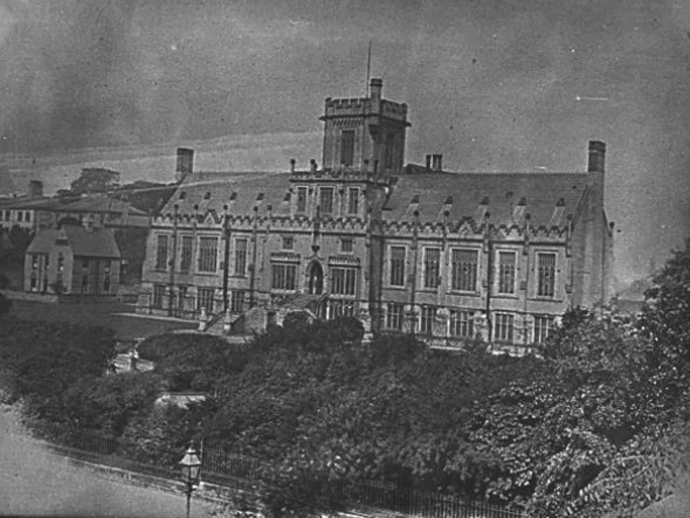
This marvellous photograph shows the school at the end of the nineteenth century. Notice the many chimneys all contained in large chimney stacks, and all obviously requiring frequent injections of fresh coal. Notice also the three boys lounging at the corner of the building. Their companion is sitting on the edge of the tennis court:
On Wednesday, December 21st 1898 the High School broke up for Christmas, and Mr.Knowles, now the School Porter, retired after thirty three years of service. The school prefects had organised a collection, and the boys of the school contributed over £33. This enormous sum of money was used to purchase a “handsome easy chair, and a case of silver spoons”. The balance, a total of twenty five sovereigns, was presented to Mr.and Mrs.Knowles by W.A.Blackwall and the other prefects, together with a beautifully illuminated address.
This article will be continued in the near future.
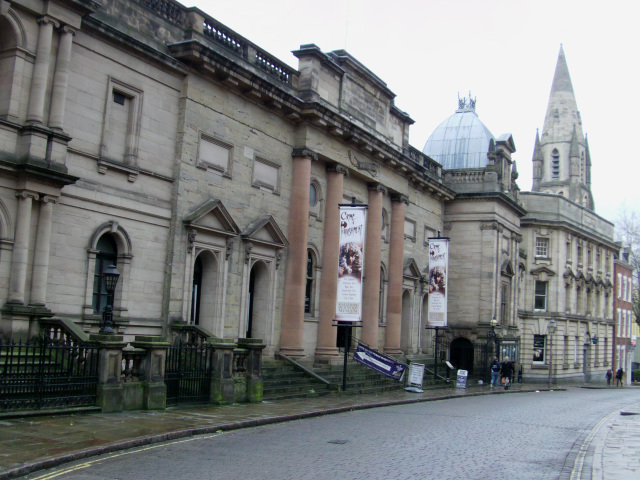
In the nineteenth century and before, the Master (what would now be the Headmaster) of the Free School in Stoney Street, often acted as Chaplain to the Town Gaol which was housed in the same building as the current Galleries of Justice:
This meant that every time somebody was hanged, the Master was required to attend. In a previous article, I have already told the story of how the Reverend William Butler attended the execution of one John Fenton, a blacksmith and publican, who was hanged at the age of thirty-seven for the murder of Charles Spencer at Walkeringham on March 6th 1860.
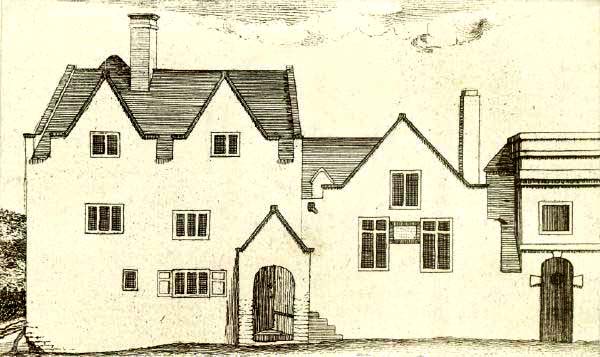
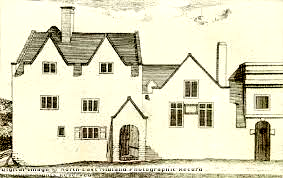
In actual fact, William Butler was not to stay in his job as Master for very much longer. He was not a well man, having had his health weakened by a huge scandal in the town about the Sir Thomas White’s Loan Money, which had not been used properly over the previous few years. Once again, the well tried defence of “The money was just resting in my account.” was not accepted. Worse still, the Reverend’s son had died in 1858. Butler was a tired man, and was replaced by Frederick Cusins, who actually worked as temporary Acting Headmaster for an amazing seven years. This is the Free School:
On 8 o’clock on the morning of Wednesday, August 10th 1864, it was Frederick Cusins’ turn to witness a fellow human being put to death. The man who was being hanged on this particular day was Richard Thomas Parker, aged twenty-nine:
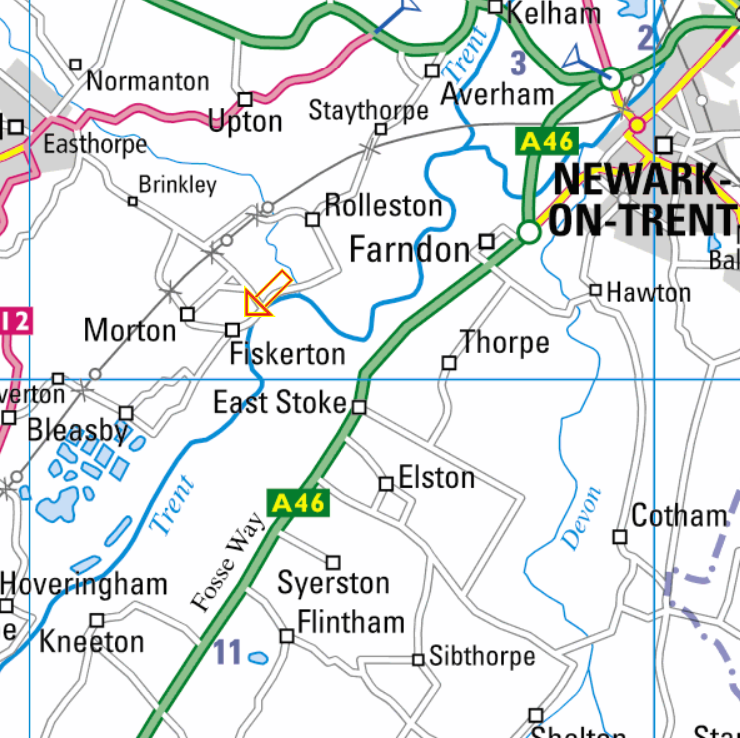
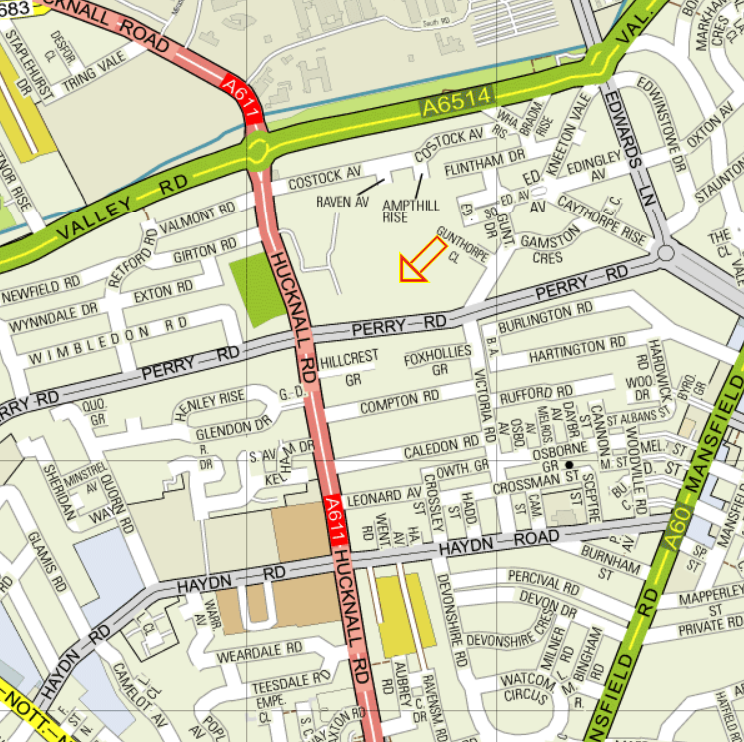
Parker was born in Thurgarton on October 26th 1834, the only son of his mother’s second marriage. Surprisingly for this era, she must have been in her mid to late forties when she gave birth to him. Parker was initially apprenticed to Mr Bee the Butcher of Sneinton Street in Nottingham. When his apprenticeship finished, he set up in business in Fiskerton where he again worked as a butcher, but not a particularly sober or upright one. He was publicly declared bankrupt in November, 1862 at Newark-on-Trent. Here is a map of the area. Look for the orange arrow:
Not helped by an entire lifetime of being thoroughly overindulged and spoilt by his parents, and in particular his mother, who had waited so long for this unexpected child, Parker was dissolute and never slow to turn to physical violence. One day in 1864 he went to a cricket match at Newark-on-Trent, and in his attempt to drink the beer tent dry, consumed, as was his wont, too much alcohol. Always quarrelsome and confrontational after even the slightest amount of drink, he then returned to the family home in Fiskerton and had a violent drunken argument with his father, Samuel Parker, who promptly left the house and set off down the road. His wife, Elizabeth, rushed out of the house to warn her husband that “Tom’s got a gun”. Firing from the window of the house, Parker shot his father, Samuel, and his mother, Elizabeth as she tried to protect her husband. One internet source said that she was “formerly Miss Tutbury”. It took me far longer than it should have done to realise that, in actual fact, this was referring to her maiden name, rather than her career in the beauty pageant business. I must confess, I did actually Google “Miss Tutbury”. I think I found “formerly Miss Tutbury and the current Miss Tutbury” or perhaps they are “Miss Tutbury and Mrs Tutbury, her Mum”:
Anyway, Samuel Parker, the father, recovered from his wounds, but his seventy-six-year old wife did not quite pull through. She lingered on for several weeks but finally died on May 16th 1864. Her favourite son finished up here, in the gaol in Nottingham:
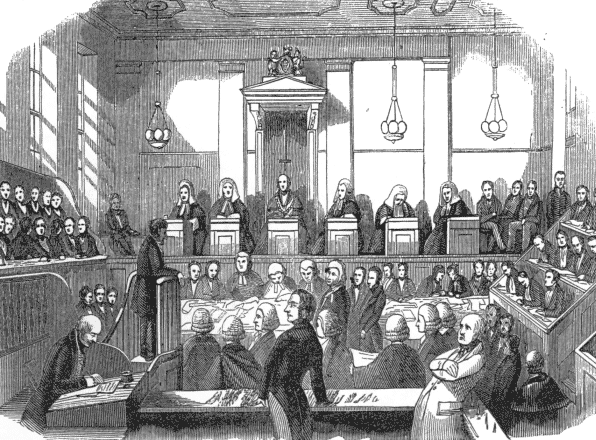
Not surprisingly, Parker was found guilty by the jury. There was only one possible sentence, which was pronounced by the judge, as:
“Richard Thomas Parker you are sentenced to be taken hence to the prison in which you were last confined and from there to a place of execution where you will be hanged by the neck until dead and thereafter your body buried within the precincts of the prison and may the Lord have mercy upon your soul”.
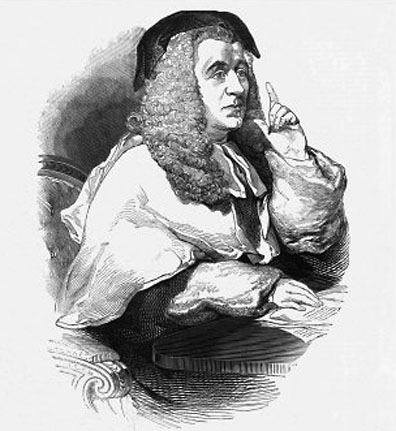
During this part of the trial, Mr Justice Blackburn would have been wearing his black cap as the sentence pronounced was one of death:
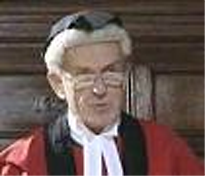
I did not realise that this famous item of legal wear was based on court headgear from Tudor times. Likewise, I did not know that, even since the permanent abolition of the death sentence in 1969, High Court judges still carry the black cap, but only when they are required to wear their full ceremonial dress. Perhaps some judges still harbour secret hopes of “Bring back the Cap”:
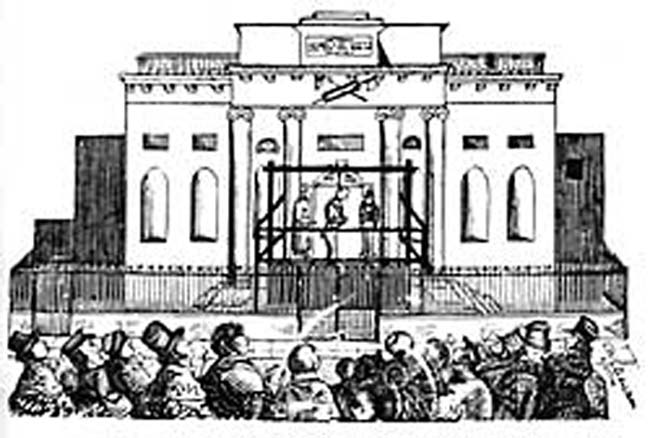
Parker was executed on the steps of the Shire Hall. This was the very last public execution in Nottingham, and building the scaffold was carried out by a local architect, Richard Charles Sutton. I have been unable to ascertain if the days of clothing with the sponsors’ name had yet been thought up. I suspect not, but this would have been a splendid way to bring your architect’s business to the public, as photographs of the hanged man were known to be very popular souvenirs of events like this.
And it was a really “Good day for a Hanging”:
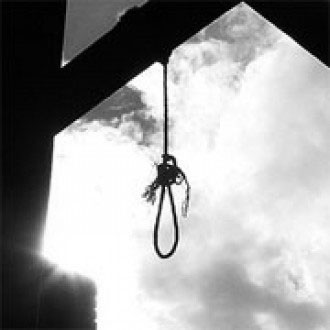
A crowd of more than 10,000 spectators was in attendance. Perhaps lower league football teams should examine these figures more carefully. Apparently, there was a wooden board more than four feet high to prevent the crowd from seeing the hanged man’s dead body once he had taken the fateful plunge. Again, this may well have been a sponsorship opportunity missed. As the moment drew near, Parker was praying earnestly. A white hood was put over his head and when the Chaplain finished the sentence “In the midst of life we are in death”, that was the exact moment for the bolt on the trapdoor to be drawn. Parker then suffered, as they say, “the extreme penalty of the law”:
Twenty or more years later, in 1886, in one of life’s great ironies, Mr Sutton the Architect was to stand as the Liberal candidate for the Sherwood Ward of Nottingham Town Council. And of course, he won.
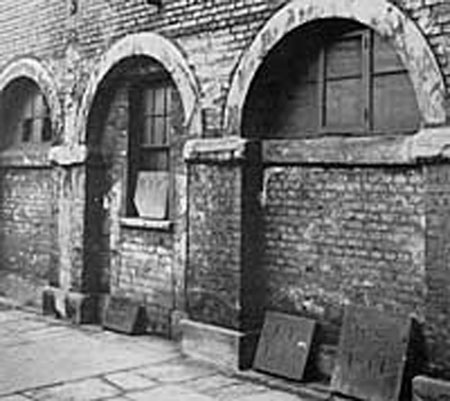
After being left hanging around for an hour, Richard Thomas Parker was cut down and buried inside the gaol. This usually involved extensive use of large quantities of quicklime inside the coffin. In Lincoln Castle, the hanged man was interred with a very small gravestone which might well carry just his initials and the date. Traditionally, they would also have their feet facing in the wrong direction. Apparently in Nottingham, the bodies were buried under the flagstones of the yard behind the building. Slabs with the barest of identification details, usually just the hanged man’s initials were then placed against a side wall:
The whole brutal process was too much for temporary Acting Headmaster Mr Cusins. An old boy reminisced how, just like William Butler had done on a previous occasion, Mr Cusins, looking very pale, staggered into the classroom and said:
“Boys, I have just seen a man hanged. I cannot teach you today. You may all go home.”
It may have been the frequency of attendance at public executions by Masters of the School which led to the rather grim tradition that every time a criminal was executed outside Nottingham Gaol, only some two hundred metres or so from the Free School, the boys were all given a holiday.
The very last execution in Nottingham took place on April 10th 1928. This was in the privacy of Nottingham Prison, which, at the time, was called Bagthorpe Prison. The map shows the area now occupied by a much enlarged prison, more in keeping, perhaps, with these lawless times:
The last man to be hanged was called George Frederick Walter Hayward. He was 32 years of age and had worked as a commercial traveller. He lived at the White House, Little Hayfield, Derbyshire.
The period when the seventeenth century turned into the eighteenth was not the easiest of times for the Nottingham Free School, the ancient predecessor of the present day High School. You only have to look at the wooden board behind the school receptionist’s desk at the High School, and the list of names and dates that is up there. During this period, some three hundred years ago, Headmasters come and go, thick and fast. Just to refresh your memory:
Edward Griffith 1691 – 1707 Richard Johnson 1707 – 1720 William Smeaton 1718 – 1719 William Saunders 1719 Thomas Miles 1719 John Womack 1720 – 1722 John Swaile 1722 – 1731
Let’s look at the diary of these turbulent and potentially disastrous twenty years. Edward Griffith, the first Headmaster on the list, seems to have been an astonishing man. He could have talked his way into so many jobs in our own time, most of them probably in politics. Or maybe even financial advice:
August 1697
Edward Griffith, the Headmaster for the last six years, was summoned to court “for neglecting the school, whereby the school is much decayed in its reputation.” Griffith promised to concentrate on the school and never to work again as a full-time clergyman as well as his main job as the Headmaster.
early 1698
Griffith took up a lucrative post as the new Vicar of Stapleford.
Friday, December 19th 1698
The Town Council gave Edward Griffith the sack, alleging that
“…he has very much neglected his duty, whereby the said Free School is very much decayed and lessened, ….. the School Wardens do give him a discharge, which they have done accordingly. And if he shall refuse to leave the said Free School, that they shall withdraw his Salary.”
Griffith made no reply whatsoever to this decision. Sit tight and it will all blow over. May 1699
The Town Council issued a second decree that Griffith should quit his post. He took absolutely no notice of this one either. January 1700
It was agreed by the Town Council that Griffith should keep his job and salary until further notice. Result!! January 1705
The Town Council told Griffith that he was “discharged from being Schoolmaster any longer”, an order which, not surprisingly perhaps, he again ignored completely. He did, however, make a promise to depart in the very near future. June 1705
Griffith was again told to leave his job, and that his salary would henceforth not be paid. March 1706
The school wardens were told by the Town Council to pay the £85 of Griffith’s wages which had not been paid to him over the past two years. Once he had been given this cash settlement, Griffith had promised to leave. March 1707
Griffith at long last departed, a mere ten short years after being told to do so. And now, Richard Johnson…..
1707
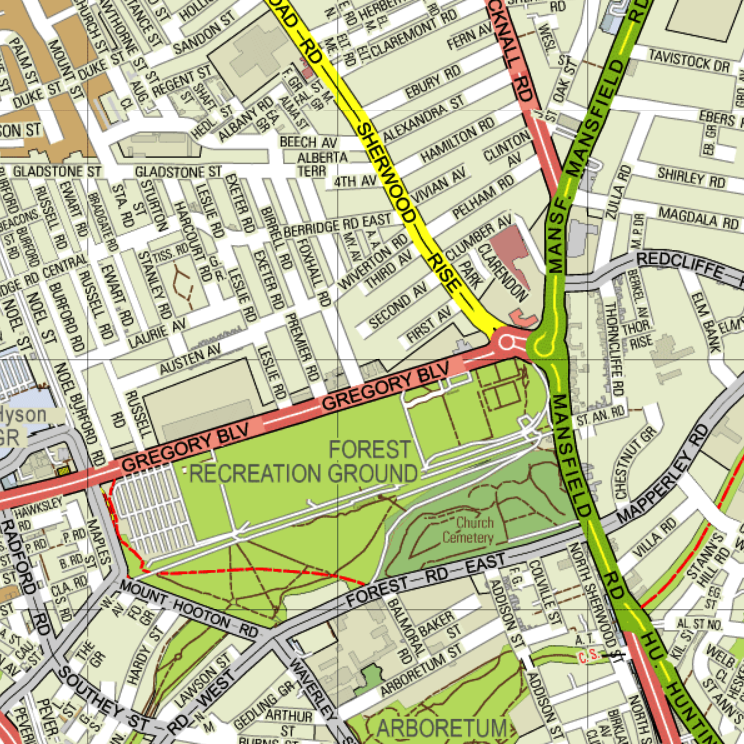
The new Headmaster, Richard Johnson, seems to have been, for the first five years or so of his reign, a vast improvement on his predecessor. Johnson was the author of an impressively long Latin poem describing a horse race on the Forest Recreation Ground, which was then called “The Lings”. Here is the site nowadays:
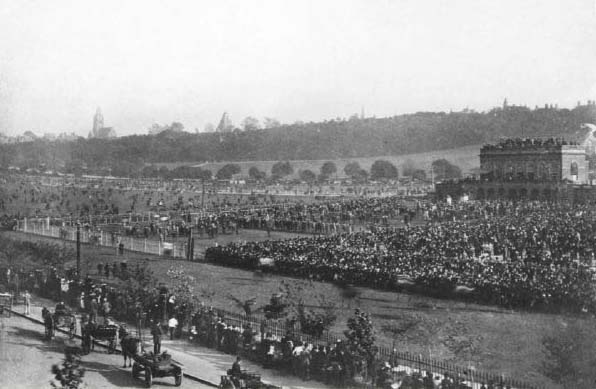
Race meetings used to take place in July of every year, and they attracted prominent people from miles around. Here is the Racecourse in the late nineteenth century:
In 1708, the race was won by the Earl of Cardigan on his horse, Carlessus. Johnson’s long Latin poem mentions the Duke of Rutland, Sir Thomas Willoughby of Wollaton Hall and Sir Thomas Parkyns of Bunny. It refers specifically to the fact that, because of the recent outbreak of smallpox in the town, comparatively few women were present…
“Now, to enhance the glories of the race,
See, many lovely women bring their grace.
Yet others, eager for the festive day,
With tearful prudence choose to stop away,
Lest swift and dreaded pestilence arise,
And desecrate that loveliness they prize.”
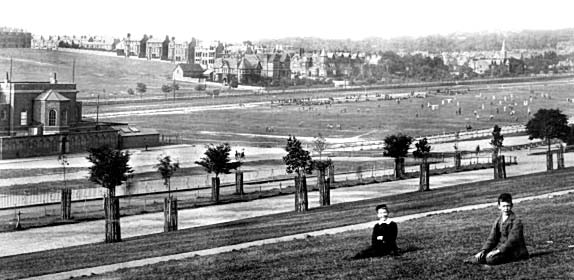
Here is another, mid-Victorian view of the Forest Racecourse with two boys, who may well have been members of the new High School. Notice the distant footballers busy playing in the middle of the racecourse:
1708
The newly appointed Headmaster, Richard Johnson, gave so many promises about how well he would perform in his new job at the Free School that it was decided to improve his living quarters and to build extra classrooms for all the new pupils who were bound to be attracted by the extreme excellence of this new Headmaster. Plans were already afoot to appoint two more members of staff, namely a second Usher and a visiting Writing Master, giving an overall staff of four. That should cope with the almost countless hordes, all eager for a free education of a very high standard.
(This won’t end well. It all sounds like pie in the sky to me.)
June 1718
Very little is known about what happened in the school in the years between 1711-1718, but, as an expert on the subject, I was 100% right about the pie.
The Council now sought to sack Richard Johnson, given that they thought he was a madman:
“…for all or most of the time…he very much omitted and neglected to teach and instruct the Sons of Nottingham….For the space of three Months and upward, he hath been, and is now, Delirious and Non Compos Mentis. He is incapable of performing and executing the Office of the Headmaster of the said school.”
Certainly, Johnson had fallen ill in 1714. He wrote ….
“I suffered such pains in my limbs that for a whole year I could not sleep without the aid of opium.”
(A drug addict running the school. That’s just what we need.)
More seriously, though, Johnson does seem to have suffered from a certain amount of ill health. The Town Council’s motivation for removing him from his position, though, may have had more to do with politics than any touching concern for his welfare or the school’s success. They conceivably exaggerated the Headmaster”s medical problems to create a trumped up charge of incompetence, which could then be used to remove a political thorn from the Town Council’s side.
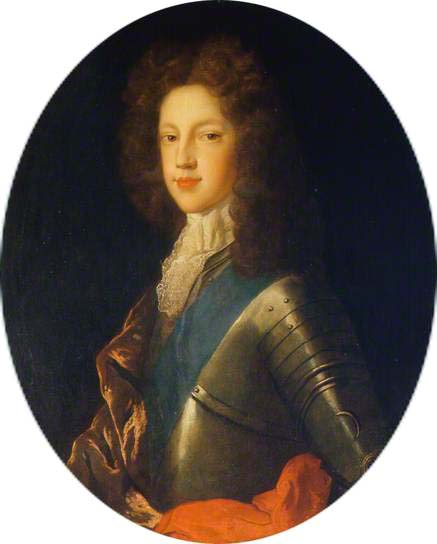
Inadmissible circumstantial evidence it may well be, but Johnson’s difficulties certainly seem to have begun not long after the national Jacobite rebellion in 1715, which was led by the so-called “Old Pretender”, James Stuart. Here he is in his younger days:
Nottingham was a Whig town, and Johnson may well have been a Jacobite. Around this time many other schoolmasters throughout England lost their jobs because they were Jacobites.
For whatever reason though, madness, drugs or politics, the Town Council tried to throw Johnson out. Johnson may well have spoken to his predecessor, Edward Griffith, though, because he decided that the best policy was, quite simply, to refuse, point blank, to leave.
(If that happens, just ignore the situation, and bring in another Headmaster of your choice)
August 11th 1718
The Town Council appointed William Smeaton as Headmaster.
(In that case, Jacobite Johnson, just ignore them. Take no notice whatsoever)
August 12th 1718
Johnson refused physically to leave the school.
Later on in late 1718 or, more probably, early 1719
Fed up with the whole situation, Sulky Smeaton resigned in an apparent fit of pique, and eventually got out of Dodge, never to be heard of again.
1719
The Council then appointed a local man, William Saunders, but at a much reduced salary. A legal action to eject Johnson from the school was taken, but in court Clever Clogs Johnson did not bother with a lawyer. He conducted his own defence with great skill. He duly won his case:
Johnson explained to the court how unreasonable it was to leave a man of his advanced age penniless in the world, and asked that he be given a decent reference, so that at the very least he could go elsewhere and earn an honest living. At one point, Councillor Abney, knowing of Johnson’s previous mental frailty, accused him:
“…what has happened to you is what Felix said of St.Paul ; much learning has made you mad.”
Johnson replied to the Councillor
“…you will never go mad from the same cause.”
(That got a lot of laughs)
The school now had, arguably, more Headmasters and ex-Headmasters than pupils. There were only five students left. The Deputy Headmaster, George Bettinson, taught two, and Johnson, gallant to the end, did the lion’s share of the work with the other three. Indeed, there were so few pupils that they could well have had a couple of windows each:
Very soon afterwards, the Town Council was again repeating its charge that Johnson had been delirious for the last eighteen months and that he was, to use the technical terms of psychology, as mad as a fish.
Finally, though, a compromise was reached. Johnson would leave and in return, he would be paid a pension of £10 a year for life.
(Mmm…..Nice)
William Saunders, the Town Council’s very, very recently appointed choice for the job, was now told that he too had to leave town before sundown.
later in 1719
Thomas Miles was made Headmaster.
(Problem solved !! Result !!)
Thomas Miles did not take up the post.
(Oh, noooooooooooooo!)
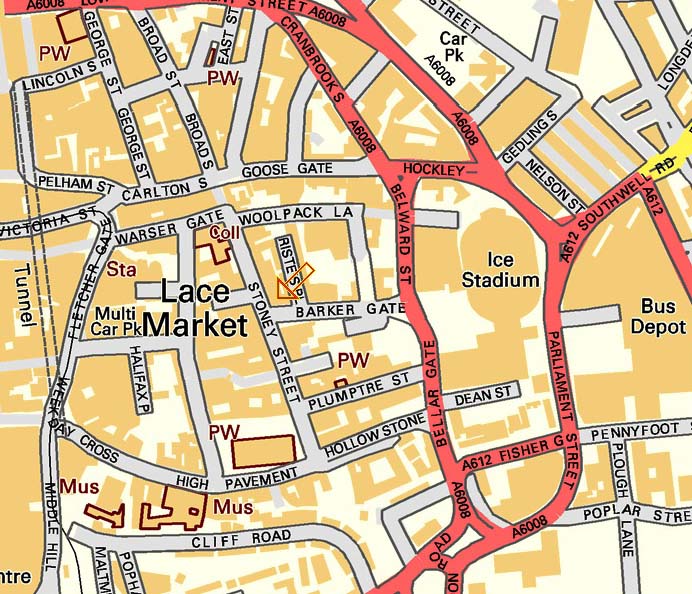
Amazingly and incomprehensibly, Thomas Miles said he didn’t want to work in an atmosphere of such considerable confusion. There was no confusion with the boys, though. Their parents voted with their feet. Numbers were still exceedingly low. On a good day, classes could have fitted inside a telephone box, if they had only been invented. Here is the site of the very confused Free School. No traces remain nowadays of the original building on the corner of Stoney Street and Barker Gate. Look for the orange arrow:
1720
Next up to the plate was John Womack, a Bachelor of Arts from Corpus Christi College at Cambridge University, no less. I have been unable to trace if he was related to Bobby Womack, but this is still a superb soul classic. Enjoy:
Neither John Womack nor Bobby Womack held the poisoned chalice for long. John Womack died in April 1722. By now, the school was well on its way to six headmasters in three years. It was beginning to look like an unsuccessful football club.
But then the knockabout fun of “The Free School meets the Crazy Gang” came to an abrupt end.
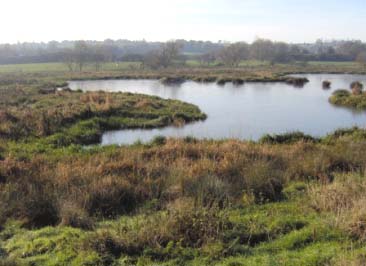
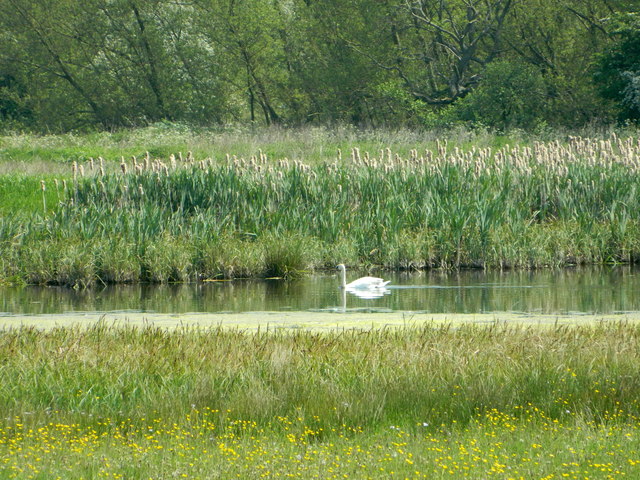
Richard Johnson, Headmaster Number Two in a Series of Seven, Johnson the Madman, “Mr Delirious”, “Mr Non Compos Mentis”, “Jacobite” Johnson the Opium Addict, the Drug User, went out one day into the Nottingham Meadows, found a small stream which ran through it, and then, in a fit of despondency, he apparently drowned himself:
A witness spoke:
“of the extreme horror of meeting, one evening as I was walking in the Meadows, a venerable grey-haired man, carried dead on a stretcher. It was Richard Johnson. He appeared to have been sitting on the bank of the river, and was found in shallow water with his head downward.”
The incident was even reported in London newspapers:
“They write from Nottingham that some days since, the Reverend Mr. Richard Johnson, lately Master of the Free School there, being a little Melancholly, took a walk into the Meadows, and drowned himself in a Pit near the Old Trent.”
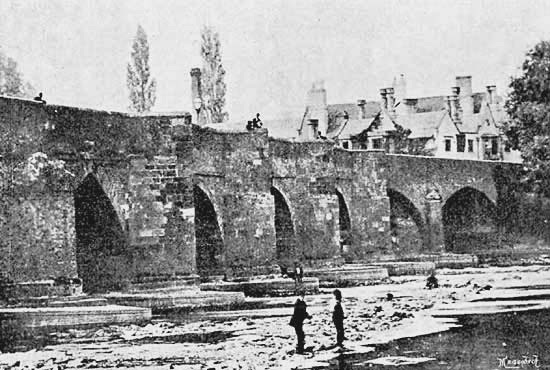
Here is the old Trent Bridge of the time, the so-called Bridge of Hethbeth:
Despite his apparent suicide, Johnson was eventually allowed to be buried in consecrated ground. He was probably given the benefit of the doubt, and his death was adjudged to be an unfortunate accident. And indeed, he may have had some kind of seizure or fit, perhaps brought on by trying some of those Ecstasy tablets which contain dog de-worming substances. (Unbelievably, yes, some of them do.) Equally, if Johnson’s death were suicide, then it may well have been decided that he was insane at the time he committed the act.
All of these strange circumstances have led a number of historical analysts to suggest, though, that Johnson’s burial in consecrated ground came about, not because his death was not the result of suicide, but because somebody knew very well that that his unfortunate demise was actually murder. Consider some more circumstantial evidence. Johnson was an awkward so-and-so as his appearances in court show only too well. He was a political problem as a possible Jacobite, eager to see a different monarch in place and a return to Roman Catholicism. He was a financial burden to the Town Council with his Golden Goodbye of a pension of £10 a year for life.
Shadowy figures might well have decided that their own lives would be easier with one less Johnson in the world. One fewer ex-Headmaster above ground. Scratch one Jacobite. The questions are there to be asked. Why the mysterious drowning? Why did a man racked with pain in all his limbs go for a long walk at the side of a river? How did he then manage to drown in the “shallow water” of a “small stream” ?
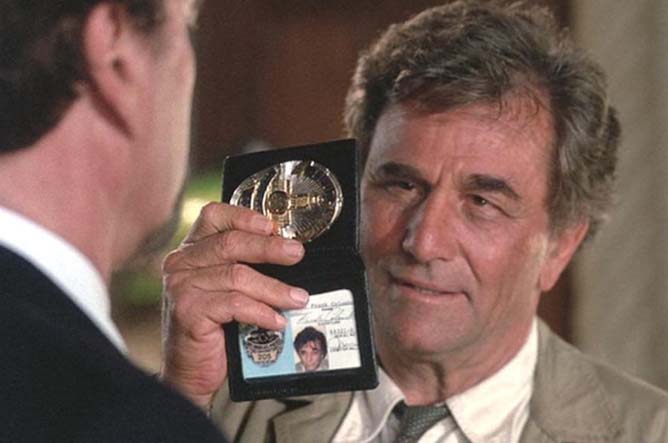
If only one sadly missed detective had been around:
Whatever the reason, this era marks probably the lowest level to which the school has ever sunk.
For years and years afterwards, wary of appointing another highly qualified and learned man who might turn out to be a second Johnson, the Town Council limited itself to local men, whose good character was well known, even if that meant that they did not have any university experience.
During this period, in the summer, the classes used to begin at 7 am, and then continued until 11 am The afternoon then began at 1 pm, and finally finished at 5 pm, or even later, if the Master so decided. From October 14th to February 14th, school started at 8 am, and finished at 4 pm. It was a six day week, but the Master was allowed to grant holidays and extra playtimes up to twelve hours per week.
(Not a bad deal. Twelve hours free every single week, if you feel so inclined! Twelve hours!)
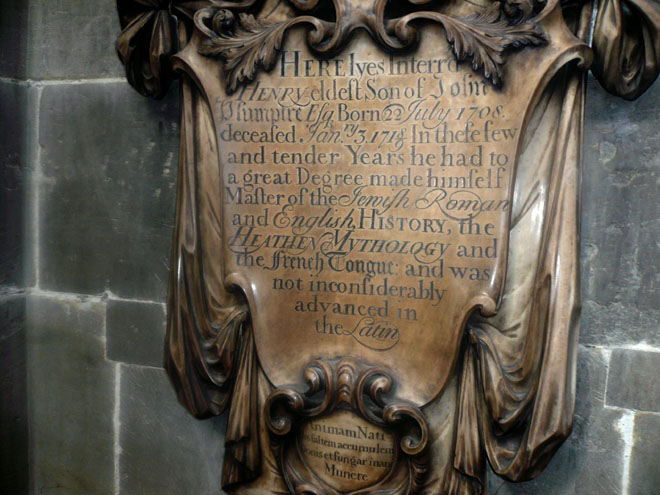
A poignant plaque in St.Mary’s Church has always been considered to be a description of the education given at the Free School. I have translated it from Ye Olde Englishe:
“ Here lies interred
Henry eldest son of John
Plumptre Esquire.,
Born 22 July, 1708
Deceased January 3, 1718.
In these few
and tender years he had to
a Great Degree made himself
Master of the Jewish, Roman
and English History, the
Heathen Mythology and
the French tongue, and was
not inconsiderably advanced in
the Latin ”
1722
Not quite the end! Let’s not forget, John Swaile. He succeeded John Womack, and steadied a very shaky ship over the next nine years, 1722-1731. He did, however, have his problems with George Bettinson, the Usher or Second Master , who, after serving under six different headmasters in just two and a half years, was well used to running the school himself, and did not take kindly to some fool of a new Headmaster trying to give him orders. But that, as they say, is a different story…






















 John Knifton