Category Archives: Twitching

A Greater Sand Plover? A Lesser? A Medium Sized??

(An extract from my old birdwatching diary “Crippling Views”)

Sunday, July 31, 1988

This Sunday, Ken is planning to go out somewhere, out there into the universe, to look for a decent bird (the story of his life actually). I get onto Paul, and between us we persuade him to go for the Greater Sand Plover in Cumbria, at a nature reserve on the Isle of Walney. It’s about 8,000 miles from Nottingham, but not too far for Ken and his Ford Escort XYZ 3i with Turbo intercooling and reheat.

-Ford-Escort-zzzzzzzzzz

Ken takes the concept of distance as a personal challenge. He occasionally gets under 70 miles an hour, and if the car’s on four wheels, he’s parked it. I’ve never even dared to tell him the type of car that I drive, GUR 25N, a bright orange Volvo 240 that weighs approximately the same as a canal barge.

volvo-240-hmb-645-n

To our great surprise, Ken agrees to go for this bird. He isn’t usually into twitching, since he dislikes crowds, (he has been a keen Notts County fan for years), and he much prefers a quiet stroll around North Norfolk, in the hope of finding his own birds.

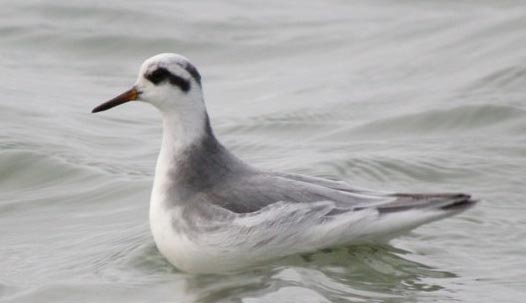
First of all, we scorch to a pool in northern Lancashire, where a Grey Phalarope has been present for the last few days. It’s there when we arrive, but I am surprised how different it is to the individual I recently saw at Datchet Reservoir near London. It’s very active, flitting around the lake, and very loathe to come too close inshore. There are one or two birdwatchers there, but not very many. It makes me wonder where all the locals are. Do they know something we don’t?
Grey%20Phalaropexxxxxx
Onward and ever northward (look for the orange arrow).

north of englaND ZZZZZZZ

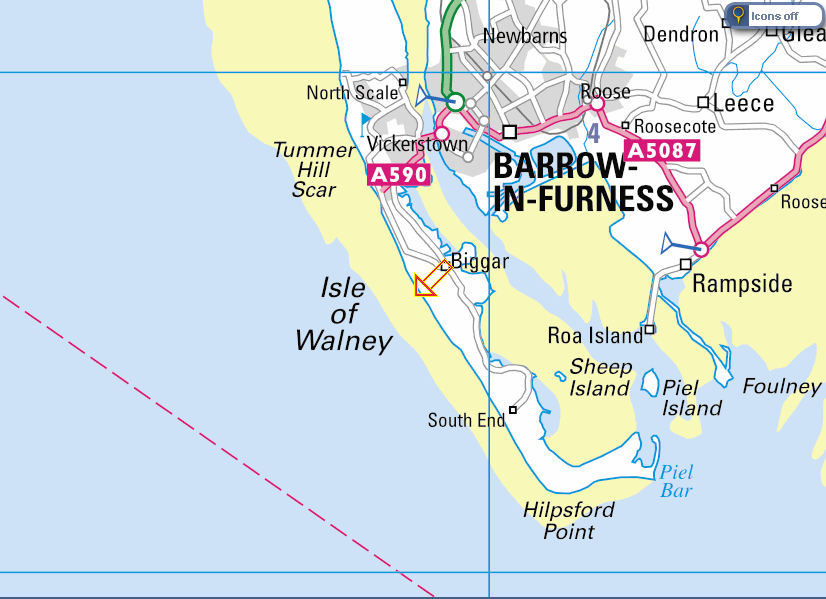
We leave the M6 and strike west towards Walney, passing our first patches of winter snow, and the odd few ragged beggars at the side of the A590. Just before we arrive at the Isle of Walney, we have to travel through Barrow in Furness, a really remarkable town. Most of it appears to be a single solitary shipyard, surrounded by thousands upon thousands of grey terraced houses, all clustered around the dock cranes for safety. Why is there nobody up there filming adverts,? Or those half hour documentaries that they put on after “The Bill”? Perhaps because overall, it is a grim, grim place, although nowhere near as bad as some of the localities I am yet destined to visit.
walney islandzzzzzz
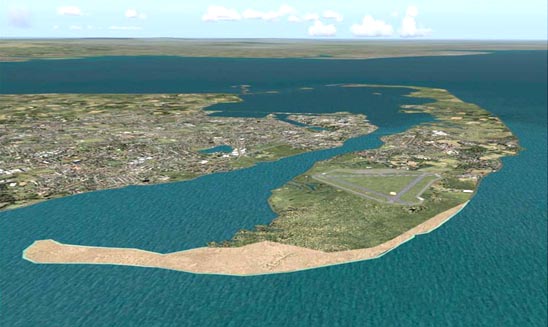
The Isle of Walney itself is a peculiar place, a bit like a grassy, tussocky version of Spurn Head. It has an infinitely worse road, though, but those years of training at Minsmere and Holme finally pay off. Unfortunately, we are not able to locate the appropriate turnoff for the bird itself.
walnet aerilxxxx

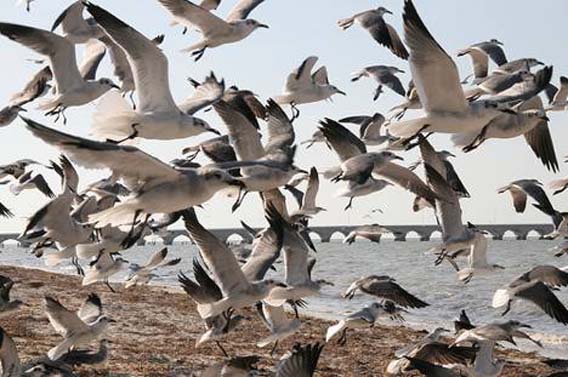
The tiny dirt track is supposed to be on the right, near the village rubbish dump, but we eventually have to go to the very end of the “road”, having fought our way past the thousands upon thousands of rather large seagulls that sit lugubriously around, all waiting for a piece of carrion to fall out of the sky at their feet. It reminds me very strongly indeed of the ending of “The Birds”, that well-known RSPB / Alfred Hitchcock co-production.
seagull-flock-jj zzzzzzzzzzz

The warden is tremendously friendly. We are the first people he has seen in four years. He explains that he has put up a sign at the side of the road, indicating the correct path to take. It’s not his fault that it’s fallen over. Anyway, all’s well that ends well, because we eventually do make it to the right bit of seashore. There is only one birdwatcher there, a local who says that the Sand Plover isn’t there, but not to despair, since it will be somewhere around, just waiting for us to refind it. And sure enough, one person, in the slowly growing knot of birdwatchers, does in fact refind it, after a delay of some twenty minutes or so. It’s with a largish group of Ring Plovers, and is a very distinctive pale brown. It’s extremely fluffy looking for some reason, and lacks the sharp black-and-white contrasts of its temporary colleagues. Indeed the Sand Plover is well capable of disappearing into the shingle very easily. It’s exceptionally well camouflaged, and tends to be obvious only after it has moved.

greater sand

The bird has, of course, been the subject of some pretty intense discussion about whether it is perhaps a Lesser Sand Plover and therefore a potential first for Britain. I’m only too happy to accept the views of the experts on this one, but nevertheless, our bird here does seem to have what seems to me a very small bill. Unless, of course, a Lesser Sand Plover has an extremely teeny-weeny-weeny-teeny bill, just like a pimple on the front of its head.

This lovely film was taken by Terence Ang in the Sand Plover’s usual habitat, in Hong Kong.

Having got over the excitement of seeing the bird, there is not a lot to keep us here. The day is bright, but the wind is strong, and rather gusty, and there are very few passing seabirds to look at. Locals say that sea watching here is generally very poor, and the only thing of interest that I can see are the tops of several obviously gigantic factory chimneys, just over the horizon to the North West. I never do find out what they are… Southern Scotland, the Isle of Man, or even Ireland. I don’t have a clue, and neither do any of the people I meet. I get the impression that I’m the first person who has ever noticed them. Perhaps they are an illusion… Some kind of mirage, reflected from the eastern United States… Perhaps they are a hologram of Three Mile Island, being transmitted as part of the twinning process with Windscale. (or is that Seascale?)

chimneys

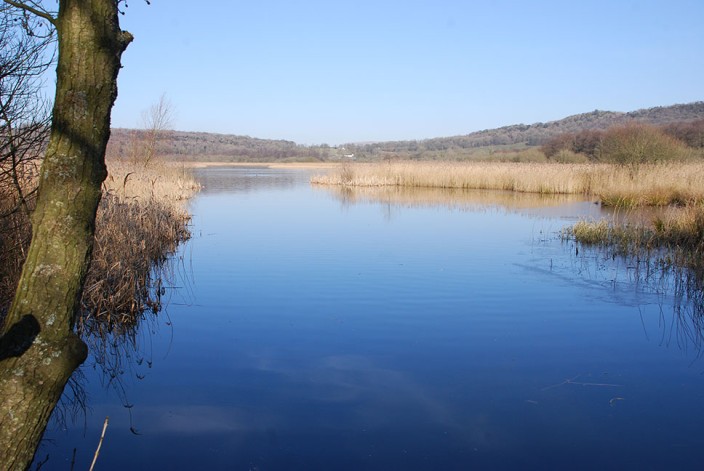
On our way back, we call in at Leighton Moss in Lancashire.
Leighton0Moss

I am obsessed with the desire to see a Bittern.

bittern xxxxxx

No luck, of course. Although this is the furthest north that Bitterns breed, and is, in actual fact, one of its strongholds, I don’t manage to see one. Apparently, the water levels are too high, and have forced them back into the reeds. What we do see however, are three juvenile Marsh Harriers, because this year the birds have bred, and have produced five young. It is particularly nice to see them in a new breeding area. It gives you a nice warm feeling inside to see a place where rare birds are on the increase rather than disappearing for ever.

Juvenile Marsh Harrier, Cley, Norfolk, August 2006 (Steve Gantlett).

That apart, I find Leighton Moss to be a somewhat boring place. There seem to be very few birds about, and if anything, the birdwatchers may actually outnumber them. The old out-of-date Annual Reports that they are selling off in the reserve shop are right little scorchers too.
5 Comments

Filed under Humour, Personal, Twitching, Wildlife and Nature

A twitch to Dorset and the Beautiful South

(An extract from my old birdwatching diary “Crippling Views”)

I used to be a very keen twitcher, driving hundreds of miles to see a rare bird. It sounds really stupid now, but it wasn’t. It was exciting…

Saturday, July 23, 1988
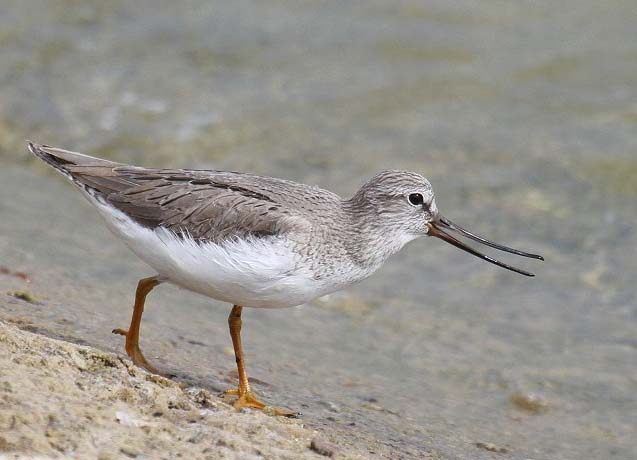
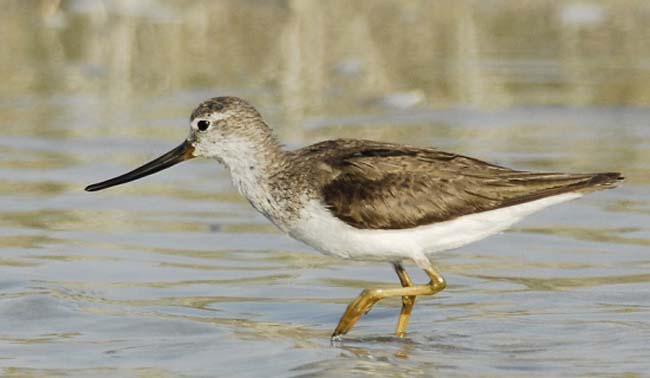
A late-night phone call and by 10:30 p.m., I’m being picked up to drive overnight in an attempt to see a Terek Sandpiper, one of the very few birds to have an upturned beak.

550px-Terek_Sandpiper zzzzzzzzzzzz

At the time, this wader was extremely rare in this country, and for reasons best known to itself, this particular individual was a very long way indeed from where it should have been. Yellow is summer, and blue is winter…

rangeccccccc

Our target bird is a good drive from Nottingham, at Stanpit Marshes, near Christchurch, far down in deepest Dorset…

We go past all sorts of romantic dual carriageway turnoff signs, Oxford, Salisbury, all places I wouldn’t mind seeing one day, but not tonight, or rather today, for as we arrive at Stanpit, Rosy fingered Dawn is just beginning to lighten the eastern sky.

MARSH  vvvvvvvvvvvvvvvvvvv

I feel terrible, truly awful. We all sleep for the best part of half an hour, slumped in the car. When we emerge the light is really quite good, but the drawback is that it is pelting down with heavy drenching rain, which is the worst possible thing for glasses and valuable optics. We walk out onto the marsh, where there is the normal selection of shelducks and black headed gulls, sitting out on a shingle bank, but anything more subtle is going to be difficult in this appalling weather. Cleaning off my glasses has already soaked my one and only handkerchief, and I am very loathe  to get either my binoculars or my telescope out from under my old waxed jacket. I hate the rain.
In the hour before we left, I did a little bit of research on the Terek Sandpiper. The literature that I read said that they were not amazingly different from Common Sandpipers, especially when seen badly or from a distance. One particularly good point, though, is that they feed at a much quicker rate than the Common Sandpipers with which they often associate. Bearing this in mind, I take a closer look at three Common Sandpipers feeding in a creek….

common sand.jpg zzzzzzzzzzzzzzz

One individual is pecking away a lot quicker rate than the other two, and seems rather dumpy and portly to me. Whether its beak is upturned or not, I just cannot see, the rain is coming down too hard. I call Paul, but he can’t penetrate the gloom either. The other two birdwatchers I’m with are a lot more experienced than I am, so I just meekly point out the birds to them, say that I think that they are worth looking at, but don’t labour the point. Neither of them seems to be particularly impressed, because they stalk off into the middle distance, without even a backward glance. Unabashed, I try to get closer to the three birds, but succeed only in flushing them, and they all fly off along the edge of the creek. I presume that that is the end of it.
It isn’t though, because we soon come across a group of birdwatchers, all intently watching a Terek Sandpiper.

another terekxxxxxxxxxxxxxxxx

It has just flown in with two Common Sandpipers apparently (LOL, you would say nowadays). It is visible at the edge of the main creek. We watch it for a good while. It’s a rather delicate, if pot-bellied bird, as it feeds rapidly in the shallows. It even bathes briefly, preening itself with what in the telescope is obviously a wonderfully upturned bill.
Our next port of call is a little village called Corfe Mullen, a really posh place, compared to our pathetic Northern Hovels. All great big mansion houses, with huge country gardens, all filled with exquisitely trimmed conifers. Here is a beautiful Southern Hovel…housesxxxxxxxxxxxxxxxxxxxxxxxx

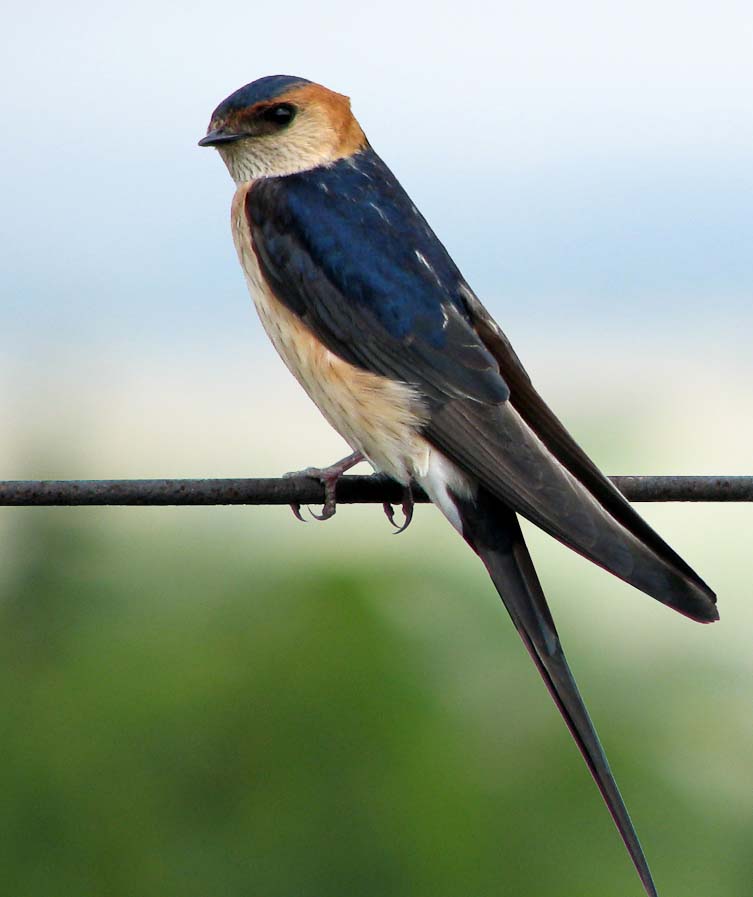
There’s a small triangle of grass in the middle of the village, surrounded by lots of lovely telegraph wires, all eager to support the delicate weight of a Red-rumped Swallow.

Red-rumped-Swallow WIRE xxxxxxxx

Not today, though. We stroll along the surrounding lanes, turning up a few swallows and housemartins. It’s not a great day for hirundines, because it’s a bit drizzly still, and somewhat cold. There cannot be many insects up there for them to catch. After a couple of hours searching, we suddenly hear a cry. I look up and see the bird, completely distinctive with its dark rear end, and nobody is any doubt as it disappears over a distant line of trees.

RED RUMP FLYING zzzzzzzzzzzzzzzzz

After this, we return to the M3, M25 and M1, all equally delightful in their own way. By the time I get to the services at Leicester Forest East, I feel like one of the extras in “Return of the Zombie Twitchers”. Still, you forget the distance covered, and the discomfort, when you look at your life list. Soon be two hundred.

2 Comments

Filed under Science, Twitching, Wildlife and Nature

A twitch to west Norfolk

(An extract from my old birdwatching diary “Crippling Views”)

As I mentioned in a previous blogpost, I used to be a “twitcher”, the sort of birdwatcher who might travel hundreds of miles to see a species which is rare in whichever country he lives. A hardcore British twitcher, therefore, would travel vast distances without any hesitation to see a Common Grackle or a Red-bellied Woodpecker in Great Britain.

An American twitcher would react equally strongly to news of a Northern Lapwing or a Eurasian Siskin in his own country.
Twenty five years ago, I kept a diary of where I went in search of unusual birds. So, on Sunday, August 21st 1988, I know exactly where I was, and what I was doing…

“A minibus trip to North Norfolk this time.”

transit zzzzzz
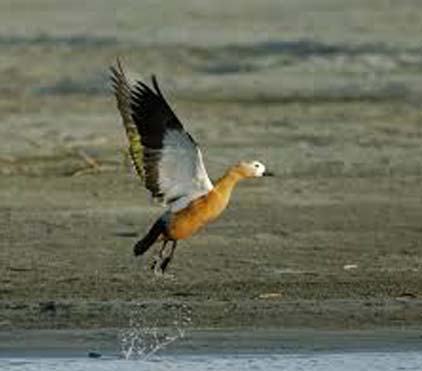
“Not a lot on Birdline to chase, but one half decent bird is a Ruddy Shelduck.”

ruddy 8 zzzzzz


Here’s a short, but lovely, film taken by “paulboyish”

“This beautifully plumaged waterbird will be, hopefully, still at Lynn Point, just a few miles north of north of King’s Lynn.”

“I try to persuade the minibus driver to hotfoot it out there straightaway but he’s very reluctant. He thinks the bird must be one of those from a zoo that you can never hope to count, one of those wonderfully colourful birds that is almost by definition an escape. Something along the lines of Golden Pheasant, Mandarin or Carolina Wood Duck. Or Red-breasted Goose.”

This slideshow requires JavaScript.

“O Ye of Little Faith. The mood of the passengers is one of optimistic keenness to go and see a new bird. When the minibus driver poses the hoary old question of how many people would actually like to go and see the Ruddy Shelduck, in an effort to prove once and for all that there will not be enough to fill a minibus, and therefore, we ought not to bother going, his effort at token democracy turns out all wrong. Absolutely everybody wants to go to Lynn Point to see this stunning bird, no matter how dubious the tick might be.”

“I navigate for the first bus, and Alan navigates for the second. We have a short diversion around the docks at Fisher Fleet, which was the scene of my first ever Mediterranean Gull, only a year or so previously, watched at close range as it fed from the wagons full of steaming hot shellfish waste which emerged at regular intervals from the factory.”

med gull


“We eventually find the mud-bath that rejoices in the flattering title of car park and set off along the seawall, out towards Lynn Point. It is throwing it down with heavy rain, and I begin to get very nervous indeed at the mood of the other birdwatchers, as we gradually get wetter and wetter. They seem to walk terribly slowly and not at all to like the idea of leaving the car-park. One woman actually says within earshot, “We’re a very, very long way from the bus.”, obviously racked with terror at the prospect being any distance whatsoever from her preferred method of vehicular transport. I begin to understand what Moses must have felt like.”

moses
“Things are not helped one little bit by having to make a gigantic detour inland to the concrete bridge which allows you to cross one of the many enormous drainage ditches that are met with so frequently in this sodden landscape.
To be honest, it isn’t pleasant marching into driving rain, but on the other hand, for a new bird it’s obviously worth it. Suddenly catastrophe strikes. We are faced with a bright green electrified fence that the farmer has erected across the path. We all stand there like a flock of lost sheep, milling around, not knowing what to do. Several people wring their hands and talk seriously of turning back. No chance. In for a penny, in for a pound. With a loud cry of “Twenty years in an SAS Suicide Squad taught me this one”, I step over the fence, followed by Alan, and then, with his trousers at their usual go-faster low-slung crutch height, Paul. The fun really starts when Paul’s wife makes the attempt to get over the fence, and gets electrocuted. Not badly, but just enough to make her squeal loudly with surprise. It’s all Alan’s fault of course. As always, it’s the husband who gets the blame. We all want to dissolve into unsympathetic howls of laughter, mostly at Alan’s attempts to smooth things over, but none of us dare.”
“Off we go again, into the hurricane and the sleet and the slight rain of volcanic ash and the radioactive nuclear fallout that has just started to come down. Eventually, we decide to walk to a certain spot in the distance, stop there and then take a good look around the saltings. If there is no Ruddy Shelduck on view, we will all come back and not pursue the quest any further. We do this, and, sure enough, Alan, who has a wonderful talent for finding specific targets, locates the Ruddy Shelduck within less than thirty seconds. It’s with a flock of twenty or so ordinary shelducks, swimming about thirty yards off shore, slowly making its way towards the opposite side of the estuary, then finally reaching the muddy bank and striding ashore. It’s at fairly long range, but would seem to me to be a female. A prime candidate for genuine vagrancy I would say, particularly as it’s in the correct part of Britain, at the right time of year, with exactly the required winds, namely, gentle warm south easterlies. Indeed, Paul reckons that there are several other birds from roughly the same part of Europe and the Middle East, present in Britain at the same time.”

“On the other hand, we are also in exactly the right place for one of the Dutch feral population to have made landfall across the North Sea. King’s Lynn may not be exactly Amsterdam, but it’s not that different for a Ruddy Shelduck in a storm. Soooo… overall, it’s not a complete tick, well, only if you’re either unscrupulous or plain desperate. Still, at least, it’s a moral victory.”

This short film is by Peiselkopp

“On the Long March back, we see a Marsh Harrier, and we are treated to one of Kevin’s by now legendary live commentaries on the bird’s progress, delivered in his fantastic foghorn of a voice. He sounds like a reversing bus….MARSH HARRIER… MARSH HARRIER… MARSH HARRIER… OVER THE BANK… BEHIND THE TREES… MARSH HARRIER… MARSH HARRIER… FLYING AWAY… IT’S FLYING AWAY…IT’S NEARLY GONE… IT’S REALLY GOING NOOOOOW… IT’S GONE”

This lovely film is by Thomas Harris

and this one, equally atmospheric, is by John Watson, and was taken  on the Norfolk Broads in East Anglia.

“Nobody on any of the three shores of the Wash could have been in any doubt whatsoever about what was happening at that stage in the development of Kevin’s universe.

As we cross the huge dyke, a couple of waders fly up, and whirr off along the edge of the water.”
wood sand zzzzz
“Closer inspection reveals them to be Wood Sandpipers, two very decent birds indeed to see almost as an afterthought. Indeed, I can’t remember ever finding a completely wild Wood Sandpiper for myself before. All the others were plastic dummies carefully placed by the Warden out on the marshes at Cley-next-the-Sea to attract middle aged visitors.”

Leave a comment

Filed under Twitching, Wildlife and Nature

One good tern deserves another… Cemlyn 1988

(An extract from my old birdwatching diary “Crippling Views”)

As I mentioned in a previous blogpost, I used to be a twitcher and ranged far and wide across Great Britain in search of rare birds. The furthest I ever went in a day from my home in Nottingham was to Glasgow and back, a distance of 633 miles, in a successful attempt to see an American Black Duck, which was, at the time, an extremely rare bird. My greatest ever failure was when I went to an island off the south west tip of Wales and failed to see the little American bird which was then called a Yellow-Rumped Warbler (270 miles). At the other end of the spectrum, I once saw an extremely rare bird from the USA, a Cedar Waxwing, as I drove the mile and a half to work in Nottingham. I hastily parked on the empty pavement, walked across to view a flock of birds, and became the fourth person to see this particular individual, the second ever for Great Britain.
I put together many of my twitching tales into a book called “Crippling Views”. I was unsuccessful with every single publisher, and back in the day, there was no Kindle to help the budding author. So……I published it myself as a ring-bound book, and sold it at £5 for a hundred or so pages. It didn’t make my fortune, but the reserve goalkeeper at Liverpool Football Club, Mike Hooper, bought a copy, so that was good enough for me.
One day, “Crippling Views” may see the light of day on Amazon’s print-on-demand, but for now, here is an extract…

“Saturday, July 14th 1988
…over the weeks, I have become increasingly dissatisfied with the in-flight views of Roseate tern that I had at Rhosneigr, Anglesey, in north Wales, that when a Bridled Tern is found at Cemlyn Bay, only a few miles along the coast, I decide to go for it…”

upperparts

Oman
Bridled Tern may be rare in Great Britain, but it’s not particularly uncommon in New Zealand…

new zealand

“Bridled Tern and Roseate Tern. I’ll be killing two birds with one stone, as it were. Indeed, I may not even have to go to Rhosneigr since the ternery at Cemlyn Bay is a secret site for breeding Roseates anyway. I feel fairly confident that we’ll get both birds. After all, one good tern deserves another….”

“It’s a very long trip to Cemlyn from Nottingham, well over two hundred miles, and the furthest I’ve been for a bird so far. The roads get gradually narrower and narrower, once we leave the A55, which is like a motorway compared to the increasingly countrified A5 as it approaches Holyhead. One of my friends is delighted that we go through Llanfairpwyllextremelysillylongwelshname and he bores all of us rigid with his ceaseless repetition of it. We finally know that we are nearing our destination, as we find ourselves hurtling down that true Welsh speciality, the Single Track Road Without Any Passing Places Whatsoever. I still can’t really understand why you seem never to meet anything, but you never do. Does Wales have a gigantic nationwide one way system for tourists?
At last, we reach Cemlyn Bay. As we squeal to a halt in the car park, another birdwatcher shouts to us that the bird has just flown in.”

birders
“This is good, since the bird is apparently in the rather dubious habit of disappearing far out to sea for hours and hours on end. We are therefore, rather lucky in our timing, since, theoretically, if the bird has been out fishing, it shouldn’t be too hungry and should stay loafing around for a good while. There then follows a long trek across the relentless shingle to the ternery.”
shingle
“The whole place is rather peculiar, and perhaps unique from a morphological point of view.”
cemlynbay aerial
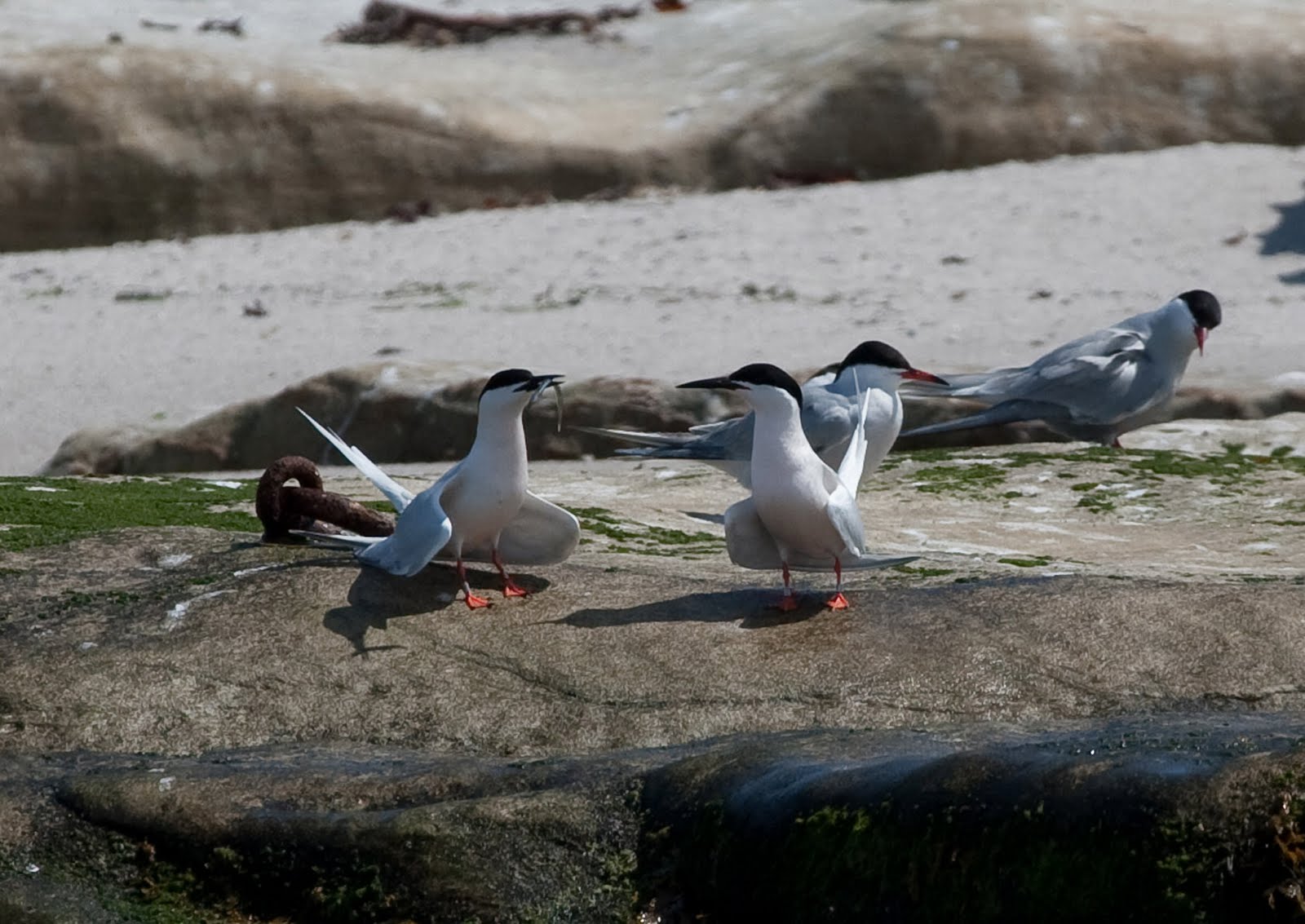
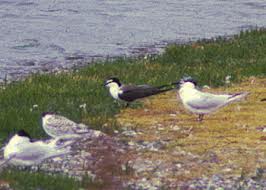
“There’s a beautiful, wide sweeping bay, with a shingle bar at one end, and between this and the land, there is a pool of probably salty, or possibly fresh, water. In the middle of this little lake, there is a flat island, covered in dry, scrubby vegetation, with plants all about a foot high. This is where the terns nest. They are mostly Arctic Terns, but with just a few Common Terns, and a whole host of noisy Sandwich Terns with their shaggy caps and black bills, replete with bright yellow tips. There are also a good few Roseates, up to perhaps twelve, sitting on a row of stones, preening.”
Roseate Tern-1b-06-11
“They have lovely all black beaks, and short little red legs. They don’t, however, have the great long tail streamers that they are supposed to have…I presume that they must have broken these off during the busy period of feeding the young. And unfortunately it is also too late in the season for their white breasts to have the pinkish tinge that they are famous for. Nevertheless, they are fairly distinctive birds, particularly in flight, when their broad wings are very noticeable. Overall, they are very pale birds, and we realise that the birds we saw two months ago at Rhosneigr, far out over the sea, were in actual fact Roseates.
The star of the show, the Bridled Tern, stands quietly at the back of the ternery, half masked by vegetation, and other birds.”
imagesA0DNWR5R
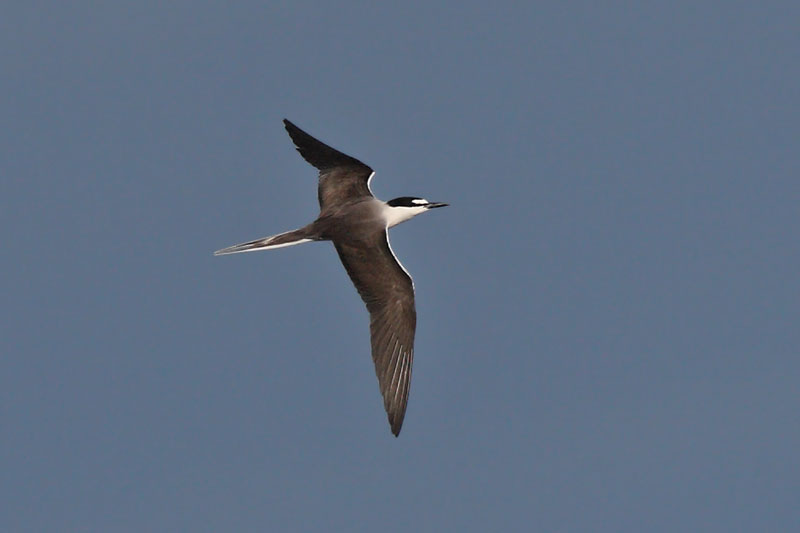
“This oceanic bird truly is a magnificent creature, a really tropical looking individual. Its colour is most enigmatic, a kind of brownish black that one of my friends says they use in the fabrics at the factory where he works. As a shade of dress material, it’s called “taupe”. I just don’t know, but it is a rather striking colour. I cannot get over just how exotic the bird looks. After ten minutes or so, it does a series of little flypasts, showing off its darkly coloured upperparts, and its sparklingly white undersides, the whole set off by a kind of negative bandit’s mask, white instead of black.”


“It is straight into my Twitching Charts at Number One.
Probably more significant in terms of bird behaviour though, are the Herring Gulls that perch on top of a distant building, and every now and then swoop down into the ternery , pick up a single unattended tern chick, and then fly off to eat it. They are like Mother Nature’s version of Russian Roulette. If you’re number’s up, it’s curtains. Evolution in action, as the more heedless birds don’t get to pass on their genes.”

That account doesn’t seem almost thirty years ago. It isn’t just Bridled Terns that fly!
They are still, though, a rare bird in this country. Just a month or so ago this year, one was found in the Farne Islands off the coast of Northumbria. In my opinion, these three are the very best of many videos….


Bridled Tern Farne Islands 21 Jun 14

Bridled Tern, Inner Farne


2 Comments

Filed under Nottingham, Twitching, Wildlife and Nature

Locustella fluviatilis

(An extract from my old birdwatching diary “Crippling Views”)

Have you ever noticed how, in crime films, the detectives always say to the criminal suspects, “Do you remember where you were on July 14th 1989?”
And the criminal suspect will always reply, “Why, yes, I was sitting at home watching Hawaii Five-O” or perhaps, “Why, yes, I was sitting at home, having a cup of tea and some Garibaldi biscuits, because I had just finished the somewhat tricky and tiring erection of an MFI office desk.”
The rest of us though, are usually not quite so lucky. We may not manage to remember even a single thing we did in 1989. We may not remember even who we were, twenty five years ago.
But not so, if you were……a twitcher.
At lunchtime on July 14th 1989, I rang Birdline, the recently introduced method of discovering which rare birds were where, and discovered that a River Warbler had been found at Boughton Fen in western Norfolk. This was only the fourth occasion ever that this bird had occurred in this country, having, presumably, experienced some major snafu with its migratory instincts. Normally, it lives here…
images

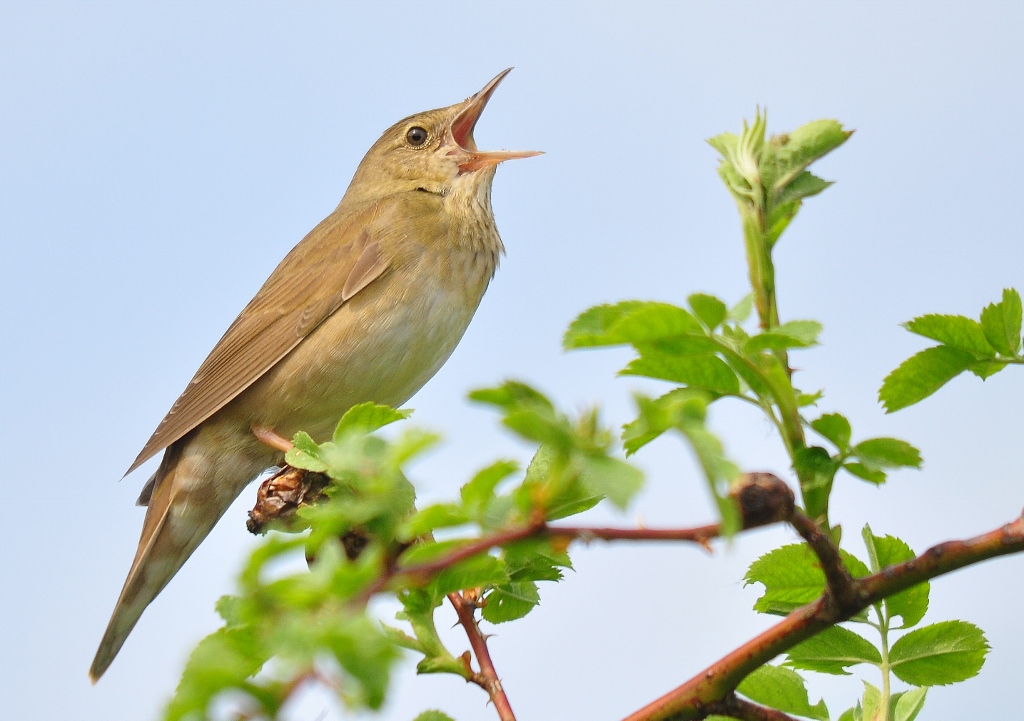
And soooo….I left school slightly early because I had a free period, and drove off a hundred miles to see if I could locate a specific small bird on a particular twig on a particular bush on the other side of the country. The bird should look something like this…
River best shot (1024x721)
I remember only one thing from the journey there, namely, passing a road sign which I thought probably directed fans to the house of a rich oilman in “Dynasty” or “Dallas”. It read “Boughton Barton Bendish”, and was just one of that whole series of countrywide road signs which indicate people rather than places. Foremost among these, of course, is the Lincolnshire hamlet of “Norton Disney”
boughton
I reached Boughton Fen pretty rapidly because this was well before the days of speed cameras, and when things were urgent, this could easily be reflected in your driving. The bird was not difficult to see either, because it was almost constantly on view as it sang, perched on the same twig at the top of a single isolated bush.
river 2
I am terrible at birdsong, but it did sound rather like a slowly approaching steam train….
http://www.xeno-canto.org/species/Locustella-fluviatilis?view=3
I can remember very little more of this twitch. The crowd was not exceptionally large…
twitchers-new
or fierce…
SONY DSC

and neither was Lord Nelson there, testing out his six-footer…
very-british-twitchers
One very famous birdwatcher that I do have vague memories of seeing may well have been present at Boughton. He is Lee Evans, who is the self-appointed policeman who vets all the birdwatchers’ lists to make sure that they are not claiming to have seen very rare species when this is not the case. Lee styles himself, therefore, the “judge, jury and executioner” for British and Irish twitchers. He regards himself too as the George Michael of birdwatching.
LGREatBirdFair
I may have forgotten the people somewhat, but the date…never.
So, when that detective comes back a second time, a few months later, and says to me, “Do you remember where you were on July 12th 1990?”, I can always look in my notebook, and without any hesitation whatsoever, I can reply, “Why, yes, I was sitting at the top of a cliff at the western tip of the Isle of Wight, watching an adult Alpine Accentor pick insects from between the rocks.”
alpacc90

The photographs of both the River Warbler and the Alpine Accentor have been taken from the website http://www.aabirdpix.com/megas.htm which provides an absolutely wonderful glimpse of the rare birds seen in Great Britain and Ireland over the last twenty or thirty years.

Leave a comment

Filed under Twitching, Wildlife and Nature