Category Archives: Wildlife and Nature

“The Nottingham Lion Saga”

Originally, it was the “Surrey Puma” which had caused all the fuss throughout the 1960s. The first possible sightings had been recorded in 1959, but by the mid-sixties, at Godalming Police Station alone, 362 reports were received over a two-year period.  And then, in August 1966, a former police photographer took a pale, blurry grainy snap which he claimed showed the Surrey Puma at Worplesdon, near Guildford. The photo was published in the “News of the World”, and showed an animal almost surprised by the fuss.
surrey puma original
It was enough to get the local plods out of the chip shop, though, and out on patrol…


They found little (if anything). Ten years later, in the very early morning of July 29th 1976, the focus was very much on the Queen of the Midlands, the beautiful City of Nottingham…
nottingham_councilhall_0
Not on the stone lions on the Council House, the rendez-vous point of countless lovers since they were placed there by the Third Reich School of Architecture in the late 1920s…


Not even the local ice hockey team…..

??????????????????????????
But rather on a country lane a few miles from the city centre. It must have been a very countrified area at the time, with lots of now disappeared open fields, and the grassy expanses of the airstrip at Tollerton, the rather grandiosely named “Nottingham Airport”. It was one of the two years of extreme drought in the mid-1970s, and it was….

“…shortly after 6am, 29 July 76, when two milkmen were delivering to a bungalow opposite the entrance to Nottingham airport on Tollerton Lane between Nottingham and Tollerton. Different accounts put it at  15 or 50 yards away from the men; they were in no doubt: “We both saw together what to us us was certainly a lion….its head down and its tail had a bushy end. It was walking slowly away from us.”

It is unclear whether it was a male or a female, but presumably they would have said “lioness” if that was what they had seen.

This slideshow requires JavaScript.


It must have been difficult to be mistaken though even at fifty yards’ range.

“They watched it walk around the edge of a field, then called the police from the bungalow. By nightfall, the police mounted a huge search, with dogs, guns, loud hailers and a helicopter, in the Tollerton and West Bridgford areas. The police also said they had calls from people telling of the mysterious restlessness of their pets on the night of the 28/29th; and a local farmer at Clipstone, near Cotgrave, reported ‘strange paw prints’ on his land.”

As is often the case…

“The police found nothing. They checked zoos and private lion-owners within 100 miles, but ‘no-one appears to have lost a lion.’ They said they were taking at least 15 sightings seriously. The hunt hit a turning point in its second day when a sighting at Radcliffe-on-Trent turned out to be somebody’s Great Dane. At the same time a sighting came in from Bassingfield. One of the reports was from as far away as Norfolk by a couple who said they saw a lion in a lay-by at Lowdham (a country village near Nottingham) but did not report it they didn’t think they’d be believed. Yet despite these sightings, the police were getting disappointed by the lack of anything positive. As in the ‘Surrey Puma’ cases, the lack of any killed livestock, no pets missing etc as there would be if there were a lion conventionally on the loose. The milkmen were rechecked and both (David Crowther and David Bentley) were unshaken in their belief that they had actually seen a lion.”

How different from the present day. I cannot imagine that there are too many zoos or private lion-owners within a hundred miles of Nottingham nowadays. It is certainly strange, though, that the two milkmen were adamant about what they had seen…

“On the third day of the hunt, reports were still coming into West Bridgford, the nerve-centre of the operations. One caller heard something big crashing through Bunny Woods, and another heard something in a copse near Trent Lane church at East Bridgford. In fact, the police were obliged to maintain the alert.
Martin Lacey, a former Nottingham zoo owner, enters the fray, saying all the noisy activity has driven the lion into hiding, and offers the use of his lion-hunting Rhodesian ridgeback hounds.”

rhodesian
Just as the press were losing interest in the ‘Nottingham Lion’ the story receives a shot in the rump.

“John Chisholm, a doctor of Normanton-on-the-Wolds, near Tollerton, saw a large animal trying to break through some undergrowth to get to a stream on the evening of 1st Aug, while he was walking near his home. When he returned home he and his wife watched it leave the area from their upstairs window. Police said they were following up several other sightings in the same area.”

Curiouser and curiouser….

“2nd Aug police searching the A610 at Temple Lake, near Kimberley, found a large tortoise on the embankment. They were unable to trace any owner so they adopted it.”

The saga continued…

“The dailies for the next day (3rd) run the story of Dr.Chisholm’s sighting. Naturally in everybody’s eyes the fact that he is a deputy coroner makes the sighting more impressive and believable. (The police were) now 98% certain that there was an animal in the area…..

By the 6th Aug the lack of results was telling on the police. They issued a statement saying they no longer believed there was a lion at large despite 65 reported sightings in the last 8 days. They said that they proved to be mistakes, large dogs, and even a large brown paper bag.”

This slideshow requires JavaScript.

After this negative statement, the police announce three more reports of it in the Plumtree and Normanton areas.

It is rather difficult to sort out this East Midlands X-file. If we accept that the two milkmen were not liars, however, and they had not just misidentified somebody’s Great Dane, it would make a lot more sense of they saw a lioness…

With the benefit of 38 years’ hindsight, I suspect that what they actually saw was

In other words, a common-or-garden “Alien Big Cat”

Nowadays, of course, nobody would think twice about claims of seeing a so-called “Alien Big Cat” in this area south of Nottingham, even though it is probably a lot more built-up than it used to be.

I recently saw a TV programme which claimed that there were two identifiable big cat territories centred on Rutland Water, giving a long list of the many different places in the area where animals had been seen. There have been suggestions, too, that these cats, whatever they may be, are making use of disused railway lines to travel around, possibly even penetrating into the suburbs of large cities, rather like foxes have done in the past.

Some ABCs are reported as melanistic…

black panther

But do be careful over the question of size, however…

diagram

Otherwise your claims to the Nottingham Evening Post may leave you looking more than a little stupid…

tomcat
But it’s not all over yet… there are still lions out there, back in 1976…

“No sooner had the Nottingham mystery been killed off, it turns up over 70 miles away just south of York. On the night of the 9th Aug, Alan Pestall was on his way to his local walking down the moonlit main street of Thorganby, when a black shadow crossed in front of him, by the church. He thought it was a dog and spoke to it.

Then I realised it had a cat’s face and a long tail. It was about 3 to 4ft long and nearly 3ft high. Before I had a chance to run, it leaps over a fence and was away over the fields.’

He kept walking slowly to the pub, believing if he hurried or turned it would attack him. Police took his story seriously and mounted a search on the 10th, but found no sign of a lion.”

A police spokesman said

“We have no reason to connect this report with the recent sightings of a lion in Nottinghamshire.”

Almost thirty years later, it was the turn of Norfolk’s Boys in Blue to take on the Killer Menace of the Big Cats..

Thankfully, perhaps, Alan Partridge kept out of it.


The picture of the Rhodesian Ridgebacks is used by kind permission of Jackie Ellis whose website is http://www.zejak.co.uk/. Even if you don’t particularly like dogs, there are some lovely cute puppies there…and the bonus is that they’ll protect you from the Nottingham Lion!
 

13 Comments

Filed under Cryptozoology, Film & TV, History, Nottingham, Wildlife and Nature

A boar, a sow and a hoglet? Surely not!

Any of my readers in either the Americas or Australia will wonder what I am talking about when I get excited about the European hedgehog  (Erinaceus europaeus)…

Hedgehog shropos

But that will be because, according to Wikipedia….

“A hedgehog is any of the spiny mammals of the subfamily Erinaceinae, found through parts of Europe, Asia, Africa and New Zealand (by introduction). There are no hedgehogs native to Australia, and no living species native to the Americas.”

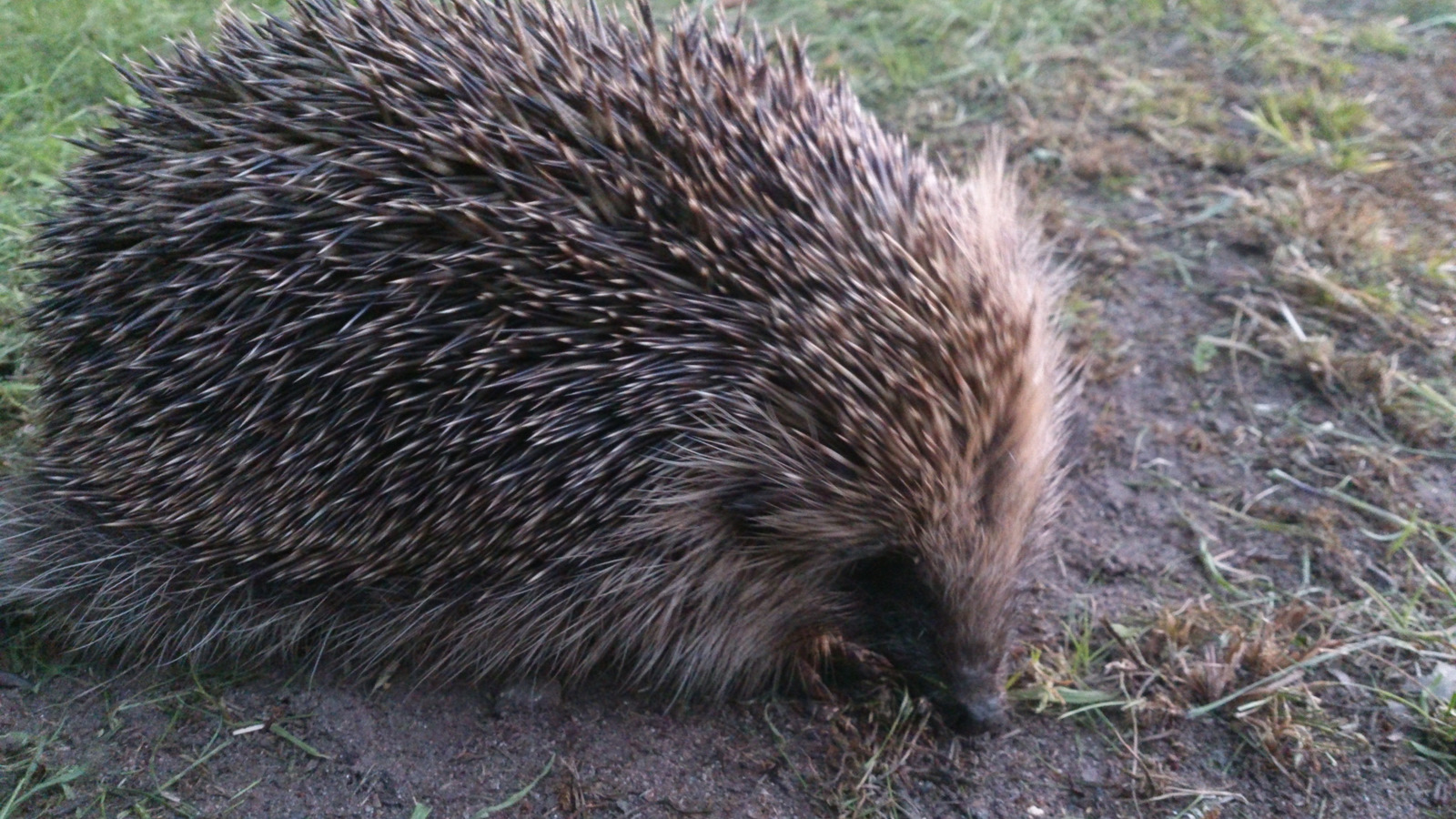
Hedgehogs are lovely, sweet animals, which often turn up in the more countrified or overgrown gardens just as darkness is beginning to fall on a warm summer night, and the bats are coming out to hunt.
It is a well-loved species, which has, however, declined sharply in England over the last ten years, with an overall decrease of at least 25%. Hedgehogs are, in actual fact, disappearing in Britain at a quicker rate than tigers are in their own jungle habitat in  southern Asia. The problems for hedgehogs are the usual ones. Gardens are nowadays generally tidier with lots of neat wooden decking, and hardly any patches of weeds and rough grass, full of slugs and juicy snails. More efficient fences have fewer holes in them to allow hedgehogs to range far and wide. The extensive use of insecticide means fewer insects, and a greater possibility of being poisoned. Road casualties are high because the animals’ first natural defence is to roll up into a spiny ball. Not too effective on a busy highway.
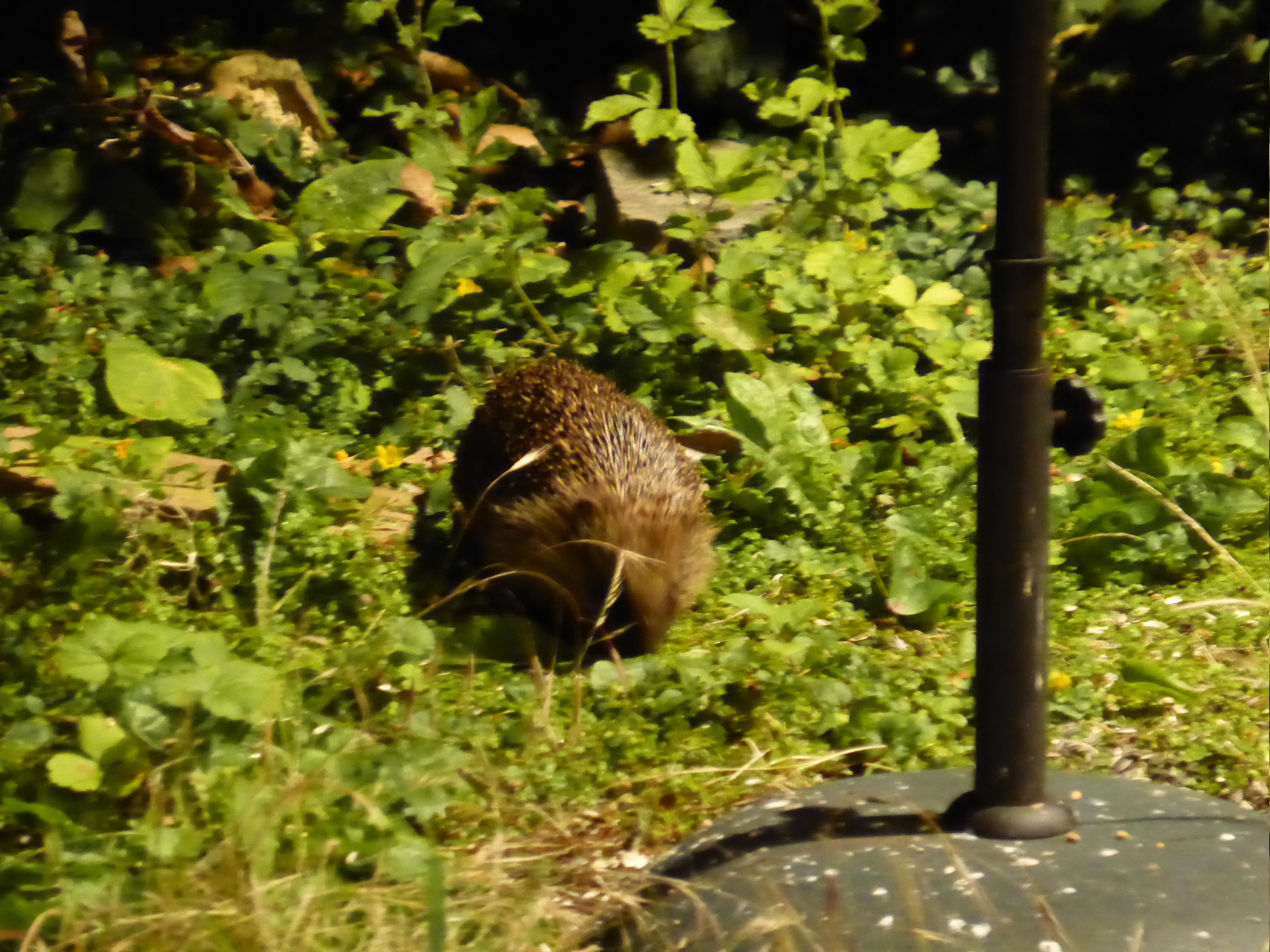
Recently though, in our wonderfully overgrown garden, we have been visited by two, possibly, three hedgehogs. We think that they are either a mother and two different children, or possibly, a father, a mother and one rather small and cute child. They snuffle about in the leaf litter, and yesterday morning, in the wee small hours, at about three o’clock, it was actually possible to hear their chewing and crunching from inside the house.
This is the mother, we think…
P1000798
And these individuals are all youngsters, although only their mother could tell them apart, and they may very well be the one and the same little chap photographed on three separate occasions. Spot the catfood…

This slideshow requires JavaScript.


I think the reason for the arrival of these lovely, sweet little animals is the prolonged spell of great heat and severe dryness that we are currently experiencing here in England.  The drought means fewer insects than normal, and the hedgehogs are forced to try their luck closer to man than they might otherwise venture. We have fed our visitors with, for example, wet and meaty cat food, and they certainly appreciate a bowl of water. Traditionally, you are supposed to feed them a bowl of milk with lumps of bread in it, but this is not really a very good idea for a lactose-intolerant insectivore, even one who is willing to consume dog food when times are bad.
In this video, the mother is looking out for suitable scraps from the bird table…

My daughter had to stop filming when the hedgehog was on her shoe!
Here is our video of a cute baby hedgehog eating catfood:


The babies are called “hoglets”, and Mummy and Daddy are a “boar” and a “sow”.
If you are successful in finding and feeding any hedgehogs, make sure that you send your data to the 2014 Hibernation Survey which lasts until August 31st of this year. The more scientific data we have about hedgehogs, the more can be done to increase their depleted numbers.

To find out more about how you can attract hedgehogs to your garden and what to feed them, take a stroll along Hedgehog Street.

Leave a comment

Filed under My Garden, Nottingham, Wildlife and Nature

One good tern deserves another… Cemlyn 1988

(An extract from my old birdwatching diary “Crippling Views”)

As I mentioned in a previous blogpost, I used to be a twitcher and ranged far and wide across Great Britain in search of rare birds. The furthest I ever went in a day from my home in Nottingham was to Glasgow and back, a distance of 633 miles, in a successful attempt to see an American Black Duck, which was, at the time, an extremely rare bird. My greatest ever failure was when I went to an island off the south west tip of Wales and failed to see the little American bird which was then called a Yellow-Rumped Warbler (270 miles). At the other end of the spectrum, I once saw an extremely rare bird from the USA, a Cedar Waxwing, as I drove the mile and a half to work in Nottingham. I hastily parked on the empty pavement, walked across to view a flock of birds, and became the fourth person to see this particular individual, the second ever for Great Britain.
I put together many of my twitching tales into a book called “Crippling Views”. I was unsuccessful with every single publisher, and back in the day, there was no Kindle to help the budding author. So……I published it myself as a ring-bound book, and sold it at £5 for a hundred or so pages. It didn’t make my fortune, but the reserve goalkeeper at Liverpool Football Club, Mike Hooper, bought a copy, so that was good enough for me.
One day, “Crippling Views” may see the light of day on Amazon’s print-on-demand, but for now, here is an extract…

“Saturday, July 14th 1988
…over the weeks, I have become increasingly dissatisfied with the in-flight views of Roseate tern that I had at Rhosneigr, Anglesey, in north Wales, that when a Bridled Tern is found at Cemlyn Bay, only a few miles along the coast, I decide to go for it…”

upperparts

Oman
Bridled Tern may be rare in Great Britain, but it’s not particularly uncommon in New Zealand…

new zealand

“Bridled Tern and Roseate Tern. I’ll be killing two birds with one stone, as it were. Indeed, I may not even have to go to Rhosneigr since the ternery at Cemlyn Bay is a secret site for breeding Roseates anyway. I feel fairly confident that we’ll get both birds. After all, one good tern deserves another….”

“It’s a very long trip to Cemlyn from Nottingham, well over two hundred miles, and the furthest I’ve been for a bird so far. The roads get gradually narrower and narrower, once we leave the A55, which is like a motorway compared to the increasingly countrified A5 as it approaches Holyhead. One of my friends is delighted that we go through Llanfairpwyllextremelysillylongwelshname and he bores all of us rigid with his ceaseless repetition of it. We finally know that we are nearing our destination, as we find ourselves hurtling down that true Welsh speciality, the Single Track Road Without Any Passing Places Whatsoever. I still can’t really understand why you seem never to meet anything, but you never do. Does Wales have a gigantic nationwide one way system for tourists?
At last, we reach Cemlyn Bay. As we squeal to a halt in the car park, another birdwatcher shouts to us that the bird has just flown in.”

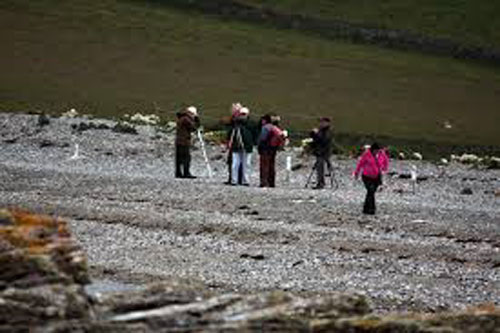
birders
“This is good, since the bird is apparently in the rather dubious habit of disappearing far out to sea for hours and hours on end. We are therefore, rather lucky in our timing, since, theoretically, if the bird has been out fishing, it shouldn’t be too hungry and should stay loafing around for a good while. There then follows a long trek across the relentless shingle to the ternery.”
shingle
“The whole place is rather peculiar, and perhaps unique from a morphological point of view.”
cemlynbay aerial
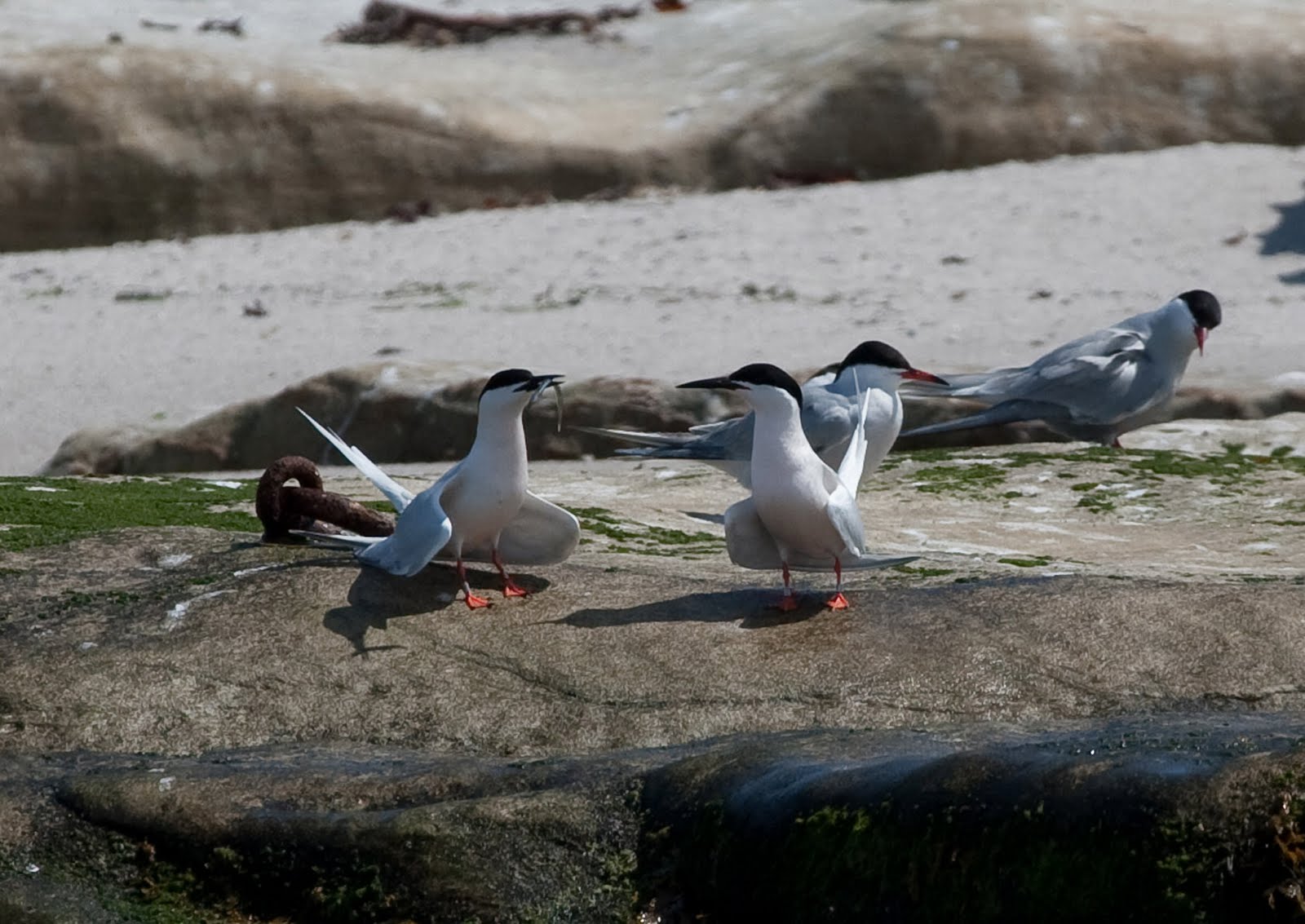
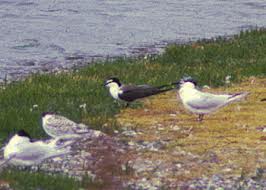
“There’s a beautiful, wide sweeping bay, with a shingle bar at one end, and between this and the land, there is a pool of probably salty, or possibly fresh, water. In the middle of this little lake, there is a flat island, covered in dry, scrubby vegetation, with plants all about a foot high. This is where the terns nest. They are mostly Arctic Terns, but with just a few Common Terns, and a whole host of noisy Sandwich Terns with their shaggy caps and black bills, replete with bright yellow tips. There are also a good few Roseates, up to perhaps twelve, sitting on a row of stones, preening.”
Roseate Tern-1b-06-11
“They have lovely all black beaks, and short little red legs. They don’t, however, have the great long tail streamers that they are supposed to have…I presume that they must have broken these off during the busy period of feeding the young. And unfortunately it is also too late in the season for their white breasts to have the pinkish tinge that they are famous for. Nevertheless, they are fairly distinctive birds, particularly in flight, when their broad wings are very noticeable. Overall, they are very pale birds, and we realise that the birds we saw two months ago at Rhosneigr, far out over the sea, were in actual fact Roseates.
The star of the show, the Bridled Tern, stands quietly at the back of the ternery, half masked by vegetation, and other birds.”
imagesA0DNWR5R
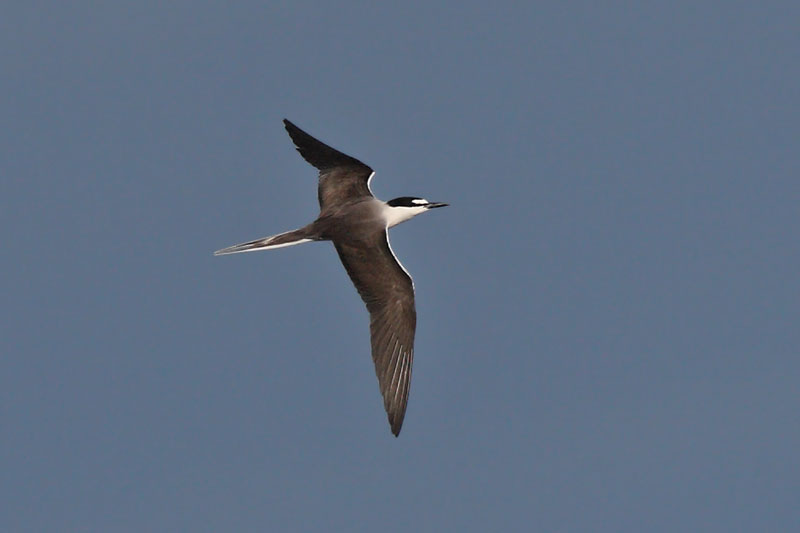
“This oceanic bird truly is a magnificent creature, a really tropical looking individual. Its colour is most enigmatic, a kind of brownish black that one of my friends says they use in the fabrics at the factory where he works. As a shade of dress material, it’s called “taupe”. I just don’t know, but it is a rather striking colour. I cannot get over just how exotic the bird looks. After ten minutes or so, it does a series of little flypasts, showing off its darkly coloured upperparts, and its sparklingly white undersides, the whole set off by a kind of negative bandit’s mask, white instead of black.”


“It is straight into my Twitching Charts at Number One.
Probably more significant in terms of bird behaviour though, are the Herring Gulls that perch on top of a distant building, and every now and then swoop down into the ternery , pick up a single unattended tern chick, and then fly off to eat it. They are like Mother Nature’s version of Russian Roulette. If you’re number’s up, it’s curtains. Evolution in action, as the more heedless birds don’t get to pass on their genes.”

That account doesn’t seem almost thirty years ago. It isn’t just Bridled Terns that fly!
They are still, though, a rare bird in this country. Just a month or so ago this year, one was found in the Farne Islands off the coast of Northumbria. In my opinion, these three are the very best of many videos….


Bridled Tern Farne Islands 21 Jun 14

Bridled Tern, Inner Farne


2 Comments

Filed under Nottingham, Twitching, Wildlife and Nature

A bird table is a joy every single day!

There were some lovely visitors to our bird table this morning…….
Great tits…
A1  great tit
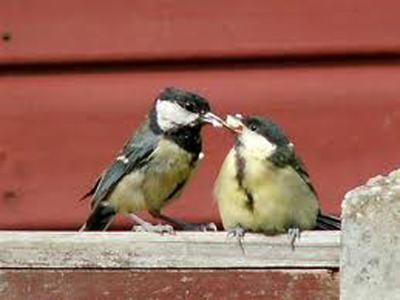
Only a very few are still feeding their babies…
A2 g tit feeding baby
Thank goodness!
a3a BABY GREAT TITS
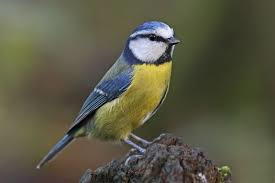
There were Blue tits….
A5  blue tit
With plenty of less gaudily coloured youngsters in attendance….
© Marshall Faintich London, UK July 12-19, 2011
For some unknown reason, it can be spelt either Coal or Cole tit, but they were there anyway…

Coal_tit_UK09 wiki
With what I felt were possibly the more dully plumaged youngsters…
Coal_Tit_juvenile_2
There was plenty to look at, with lots of recently fledged youngsters in evidence, taking the easy way to find food.

Soon I will be taking a more in depth look at bird tables, and also at what I am seeing as an increasingly worrying lack of insects in our organic garden.


1 Comment

Filed under My Garden, Nottingham, Wildlife and Nature

If I could fly, that’s what I’d be

There is not too much time left this summer, but you should still be able to see a few lingering Swifts flying high in the sky, before they make their migratory journey back to tropical Africa. Of all birds they are the most stunning fliers, and can make mere earthbound humans very jealous indeed…
swift 1
They are like a muscle powered flying torpedo…
SWIFT_tcm9-160960
They climb and bank with practiced ease…
swift_gc_tcm9-161003
Swifts feed on flying insects…
AMB_swift-catching-fly
They are so committed to continuous flight that they even mate on the wing…
Swifts-mating-(2)
Swifts spend the first two years of their lives continuously aloft, before building a rather rudimentary nest in a crevice in a cliff. In a modern city, they might nest on high-rise buildings, perhaps even in a man-made nest box.
nestbox
The bird’s Latin name “apus apus”  means “without feet”, and indeed, if a swift should ever fall to the ground, it will have the greatest difficulty in getting back into the sky, and may require assistance from a kindly passing human.
With their scythe shaped wings, swifts are a fairly large bird, and can be seen easily from quite a distance, even with the naked eye…


They often fly with House Martins, whose buzzing call is distinctive…

Here are a few swifts in slow motion

In Italy, you can even have dinner and still bird watch!

Swifts often fly round in family circles, screaming to each other, as here in Denmark…

Don’t you wish you could fly like that?


Leave a comment

Filed under My Garden, Nottingham, Personal, Wildlife and Nature

A Monarch in the garden?

By far and away the best garden plant for attracting butterflies and bees is the buddleia, named by Linnaeus himself, after the Reverend Adam Buddle (1662–1715), a botanist and rector from Essex, England.
buddleia-flowers_2317869b
This nectar rich plant originally came from Asia, Africa and the Americas, and reached England only as late as 1730. Nowadays, it is ubiquitous, and can easily be seen on almost every piece of derelict land.
Buddleia must surely be the easiest plant in the world to grow cuttings from.
Once your buddleia bush is reasonably large, after a couple of years, you will need to prune it annually, right down to about a foot or so above the ground,  before it starts to grow too tall. This is best done around May 1st, to avoid late frosts. Virtually every bit that you cut off could be planted for new plants, and your neighbours will probably enjoy your free gift. If you prune your bush back vigorously, you will always get a lot more flowers than foliage.
With a little bit of luck, you should get a peacock…
peacock
or a small tortoiseshell
10_Buddleia
With luck, a Red Admiral…
Red-Admiral-Photos
or even, for punctuation fans, a Comma…
P1280277

You might get something really weird. I don’t know what this is, but it ought to be called the Jaws Butterfly…
c
This year, we had our first ever Hummingbird Hawk-moth, hovering like its namesake…

In your wildest dreams, a Monarch butterfly may cross the Atlantic from the USA and replenish its energy in your garden….
Monarch-Butterfly-earth-lovers-8585417-800-600
Good luck!


Leave a comment

Filed under My Garden, Wildlife and Nature

Locustella fluviatilis

(An extract from my old birdwatching diary “Crippling Views”)

Have you ever noticed how, in crime films, the detectives always say to the criminal suspects, “Do you remember where you were on July 14th 1989?”
And the criminal suspect will always reply, “Why, yes, I was sitting at home watching Hawaii Five-O” or perhaps, “Why, yes, I was sitting at home, having a cup of tea and some Garibaldi biscuits, because I had just finished the somewhat tricky and tiring erection of an MFI office desk.”
The rest of us though, are usually not quite so lucky. We may not manage to remember even a single thing we did in 1989. We may not remember even who we were, twenty five years ago.
But not so, if you were……a twitcher.
At lunchtime on July 14th 1989, I rang Birdline, the recently introduced method of discovering which rare birds were where, and discovered that a River Warbler had been found at Boughton Fen in western Norfolk. This was only the fourth occasion ever that this bird had occurred in this country, having, presumably, experienced some major snafu with its migratory instincts. Normally, it lives here…
images

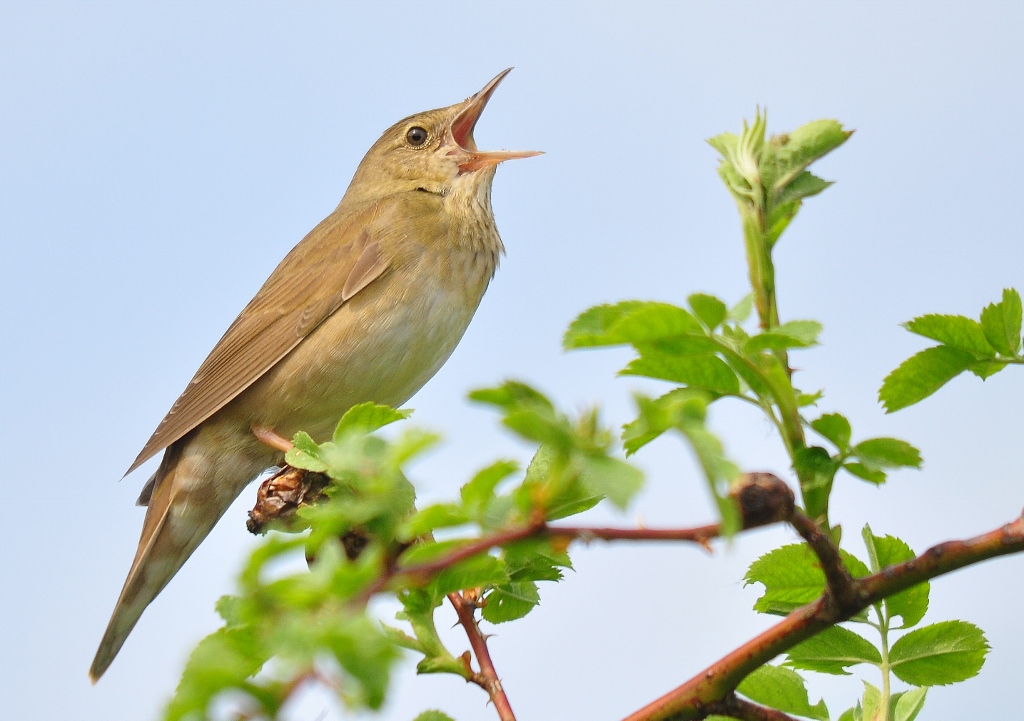
And soooo….I left school slightly early because I had a free period, and drove off a hundred miles to see if I could locate a specific small bird on a particular twig on a particular bush on the other side of the country. The bird should look something like this…
River best shot (1024x721)
I remember only one thing from the journey there, namely, passing a road sign which I thought probably directed fans to the house of a rich oilman in “Dynasty” or “Dallas”. It read “Boughton Barton Bendish”, and was just one of that whole series of countrywide road signs which indicate people rather than places. Foremost among these, of course, is the Lincolnshire hamlet of “Norton Disney”
boughton
I reached Boughton Fen pretty rapidly because this was well before the days of speed cameras, and when things were urgent, this could easily be reflected in your driving. The bird was not difficult to see either, because it was almost constantly on view as it sang, perched on the same twig at the top of a single isolated bush.
river 2
I am terrible at birdsong, but it did sound rather like a slowly approaching steam train….
http://www.xeno-canto.org/species/Locustella-fluviatilis?view=3
I can remember very little more of this twitch. The crowd was not exceptionally large…
twitchers-new
or fierce…
SONY DSC

and neither was Lord Nelson there, testing out his six-footer…
very-british-twitchers
One very famous birdwatcher that I do have vague memories of seeing may well have been present at Boughton. He is Lee Evans, who is the self-appointed policeman who vets all the birdwatchers’ lists to make sure that they are not claiming to have seen very rare species when this is not the case. Lee styles himself, therefore, the “judge, jury and executioner” for British and Irish twitchers. He regards himself too as the George Michael of birdwatching.
LGREatBirdFair
I may have forgotten the people somewhat, but the date…never.
So, when that detective comes back a second time, a few months later, and says to me, “Do you remember where you were on July 12th 1990?”, I can always look in my notebook, and without any hesitation whatsoever, I can reply, “Why, yes, I was sitting at the top of a cliff at the western tip of the Isle of Wight, watching an adult Alpine Accentor pick insects from between the rocks.”
alpacc90

The photographs of both the River Warbler and the Alpine Accentor have been taken from the website http://www.aabirdpix.com/megas.htm which provides an absolutely wonderful glimpse of the rare birds seen in Great Britain and Ireland over the last twenty or thirty years.

Leave a comment

Filed under Twitching, Wildlife and Nature