Tag Archives: Norfolk

A twitch to west Norfolk

(An extract from my old birdwatching diary “Crippling Views”)

As I mentioned in a previous blogpost, I used to be a “twitcher”, the sort of birdwatcher who might travel hundreds of miles to see a species which is rare in whichever country he lives. A hardcore British twitcher, therefore, would travel vast distances without any hesitation to see a Common Grackle or a Red-bellied Woodpecker in Great Britain.

An American twitcher would react equally strongly to news of a Northern Lapwing or a Eurasian Siskin in his own country.
Twenty five years ago, I kept a diary of where I went in search of unusual birds. So, on Sunday, August 21st 1988, I know exactly where I was, and what I was doing…

“A minibus trip to North Norfolk this time.”

transit zzzzzz
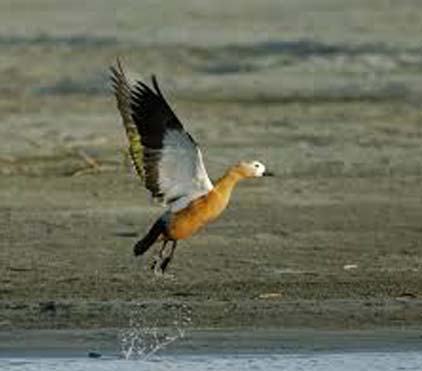
“Not a lot on Birdline to chase, but one half decent bird is a Ruddy Shelduck.”

ruddy 8 zzzzzz


Here’s a short, but lovely, film taken by “paulboyish”

“This beautifully plumaged waterbird will be, hopefully, still at Lynn Point, just a few miles north of north of King’s Lynn.”

“I try to persuade the minibus driver to hotfoot it out there straightaway but he’s very reluctant. He thinks the bird must be one of those from a zoo that you can never hope to count, one of those wonderfully colourful birds that is almost by definition an escape. Something along the lines of Golden Pheasant, Mandarin or Carolina Wood Duck. Or Red-breasted Goose.”

This slideshow requires JavaScript.

“O Ye of Little Faith. The mood of the passengers is one of optimistic keenness to go and see a new bird. When the minibus driver poses the hoary old question of how many people would actually like to go and see the Ruddy Shelduck, in an effort to prove once and for all that there will not be enough to fill a minibus, and therefore, we ought not to bother going, his effort at token democracy turns out all wrong. Absolutely everybody wants to go to Lynn Point to see this stunning bird, no matter how dubious the tick might be.”

“I navigate for the first bus, and Alan navigates for the second. We have a short diversion around the docks at Fisher Fleet, which was the scene of my first ever Mediterranean Gull, only a year or so previously, watched at close range as it fed from the wagons full of steaming hot shellfish waste which emerged at regular intervals from the factory.”
med gull


“We eventually find the mud-bath that rejoices in the flattering title of car park and set off along the seawall, out towards Lynn Point. It is throwing it down with heavy rain, and I begin to get very nervous indeed at the mood of the other birdwatchers, as we gradually get wetter and wetter. They seem to walk terribly slowly and not at all to like the idea of leaving the car-park. One woman actually says within earshot, “We’re a very, very long way from the bus.”, obviously racked with terror at the prospect being any distance whatsoever from her preferred method of vehicular transport. I begin to understand what Moses must have felt like.”

moses
“Things are not helped one little bit by having to make a gigantic detour inland to the concrete bridge which allows you to cross one of the many enormous drainage ditches that are met with so frequently in this sodden landscape.
To be honest, it isn’t pleasant marching into driving rain, but on the other hand, for a new bird it’s obviously worth it. Suddenly catastrophe strikes. We are faced with a bright green electrified fence that the farmer has erected across the path. We all stand there like a flock of lost sheep, milling around, not knowing what to do. Several people wring their hands and talk seriously of turning back. No chance. In for a penny, in for a pound. With a loud cry of “Twenty years in an SAS Suicide Squad taught me this one”, I step over the fence, followed by Alan, and then, with his trousers at their usual go-faster low-slung crutch height, Paul. The fun really starts when Paul’s wife makes the attempt to get over the fence, and gets electrocuted. Not badly, but just enough to make her squeal loudly with surprise. It’s all Alan’s fault of course. As always, it’s the husband who gets the blame. We all want to dissolve into unsympathetic howls of laughter, mostly at Alan’s attempts to smooth things over, but none of us dare.”
“Off we go again, into the hurricane and the sleet and the slight rain of volcanic ash and the radioactive nuclear fallout that has just started to come down. Eventually, we decide to walk to a certain spot in the distance, stop there and then take a good look around the saltings. If there is no Ruddy Shelduck on view, we will all come back and not pursue the quest any further. We do this, and, sure enough, Alan, who has a wonderful talent for finding specific targets, locates the Ruddy Shelduck within less than thirty seconds. It’s with a flock of twenty or so ordinary shelducks, swimming about thirty yards off shore, slowly making its way towards the opposite side of the estuary, then finally reaching the muddy bank and striding ashore. It’s at fairly long range, but would seem to me to be a female. A prime candidate for genuine vagrancy I would say, particularly as it’s in the correct part of Britain, at the right time of year, with exactly the required winds, namely, gentle warm south easterlies. Indeed, Paul reckons that there are several other birds from roughly the same part of Europe and the Middle East, present in Britain at the same time.”

“On the other hand, we are also in exactly the right place for one of the Dutch feral population to have made landfall across the North Sea. King’s Lynn may not be exactly Amsterdam, but it’s not that different for a Ruddy Shelduck in a storm. Soooo… overall, it’s not a complete tick, well, only if you’re either unscrupulous or plain desperate. Still, at least, it’s a moral victory.”

This short film is by Peiselkopp

“On the Long March back, we see a Marsh Harrier, and we are treated to one of Kevin’s by now legendary live commentaries on the bird’s progress, delivered in his fantastic foghorn of a voice. He sounds like a reversing bus….MARSH HARRIER… MARSH HARRIER… MARSH HARRIER… OVER THE BANK… BEHIND THE TREES… MARSH HARRIER… MARSH HARRIER… FLYING AWAY… IT’S FLYING AWAY…IT’S NEARLY GONE… IT’S REALLY GOING NOOOOOW… IT’S GONE”

This lovely film is by Thomas Harris

http://www.youtube.com/watch?v=JkjOitrAZWI

and this one, equally atmospheric, is by John Watson, and was taken  on the Norfolk Broads in East Anglia.

“Nobody on any of the three shores of the Wash could have been in any doubt whatsoever about what was happening at that stage in the development of Kevin’s universe.

As we cross the huge dyke, a couple of waders fly up, and whirr off along the edge of the water.”
wood sand zzzzz
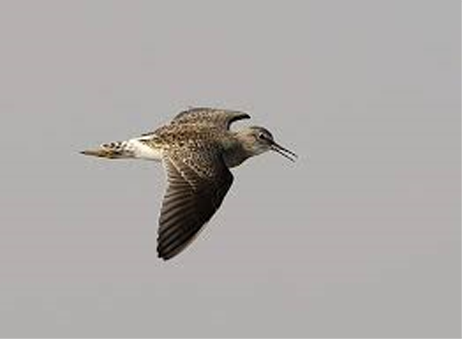
“Closer inspection reveals them to be Wood Sandpipers, two very decent birds indeed to see almost as an afterthought. Indeed, I can’t remember ever finding a completely wild Wood Sandpiper for myself before. All the others were plastic dummies carefully placed by the Warden out on the marshes at Cley-next-the-Sea to attract middle aged visitors.”
Leave a comment

Filed under Twitching, Wildlife and Nature

“The Nottingham Lion Saga”

Originally, it was the “Surrey Puma” which had caused all the fuss throughout the 1960s. The first possible sightings had been recorded in 1959, but by the mid-sixties, at Godalming Police Station alone, 362 reports were received over a two-year period.  And then, in August 1966, a former police photographer took a pale, blurry grainy snap which he claimed showed the Surrey Puma at Worplesdon, near Guildford. The photo was published in the “News of the World”, and showed an animal almost surprised by the fuss.
surrey puma original
It was enough to get the local plods out of the chip shop, though, and out on patrol…


They found little (if anything). Ten years later, in the very early morning of July 29th 1976, the focus was very much on the Queen of the Midlands, the beautiful City of Nottingham…
nottingham_councilhall_0
Not on the stone lions on the Council House, the rendez-vous point of countless lovers since they were placed there by the Third Reich School of Architecture in the late 1920s…


Not even the local ice hockey team…..
??????????????????????????
But rather on a country lane a few miles from the city centre. It must have been a very countrified area at the time, with lots of now disappeared open fields, and the grassy expanses of the airstrip at Tollerton, the rather grandiosely named “Nottingham Airport”. It was one of the two years of extreme drought in the mid-1970s, and it was….

“…shortly after 6am, 29 July 76, when two milkmen were delivering to a bungalow opposite the entrance to Nottingham airport on Tollerton Lane between Nottingham and Tollerton. Different accounts put it at  15 or 50 yards away from the men; they were in no doubt: “We both saw together what to us us was certainly a lion….its head down and its tail had a bushy end. It was walking slowly away from us.”

It is unclear whether it was a male or a female, but presumably they would have said “lioness” if that was what they had seen.

This slideshow requires JavaScript.


It must have been difficult to be mistaken though even at fifty yards’ range.

“They watched it walk around the edge of a field, then called the police from the bungalow. By nightfall, the police mounted a huge search, with dogs, guns, loud hailers and a helicopter, in the Tollerton and West Bridgford areas. The police also said they had calls from people telling of the mysterious restlessness of their pets on the night of the 28/29th; and a local farmer at Clipstone, near Cotgrave, reported ‘strange paw prints’ on his land.”

As is often the case…

“The police found nothing. They checked zoos and private lion-owners within 100 miles, but ‘no-one appears to have lost a lion.’ They said they were taking at least 15 sightings seriously. The hunt hit a turning point in its second day when a sighting at Radcliffe-on-Trent turned out to be somebody’s Great Dane. At the same time a sighting came in from Bassingfield. One of the reports was from as far away as Norfolk by a couple who said they saw a lion in a lay-by at Lowdham (a country village near Nottingham) but did not report it they didn’t think they’d be believed. Yet despite these sightings, the police were getting disappointed by the lack of anything positive. As in the ‘Surrey Puma’ cases, the lack of any killed livestock, no pets missing etc as there would be if there were a lion conventionally on the loose. The milkmen were rechecked and both (David Crowther and David Bentley) were unshaken in their belief that they had actually seen a lion.”

How different from the present day. I cannot imagine that there are too many zoos or private lion-owners within a hundred miles of Nottingham nowadays. It is certainly strange, though, that the two milkmen were adamant about what they had seen…

“On the third day of the hunt, reports were still coming into West Bridgford, the nerve-centre of the operations. One caller heard something big crashing through Bunny Woods, and another heard something in a copse near Trent Lane church at East Bridgford. In fact, the police were obliged to maintain the alert.
Martin Lacey, a former Nottingham zoo owner, enters the fray, saying all the noisy activity has driven the lion into hiding, and offers the use of his lion-hunting Rhodesian ridgeback hounds.”

rhodesian
Just as the press were losing interest in the ‘Nottingham Lion’ the story receives a shot in the rump.

“John Chisholm, a doctor of Normanton-on-the-Wolds, near Tollerton, saw a large animal trying to break through some undergrowth to get to a stream on the evening of 1st Aug, while he was walking near his home. When he returned home he and his wife watched it leave the area from their upstairs window. Police said they were following up several other sightings in the same area.”

Curiouser and curiouser….

“2nd Aug police searching the A610 at Temple Lake, near Kimberley, found a large tortoise on the embankment. They were unable to trace any owner so they adopted it.”

The saga continued…

“The dailies for the next day (3rd) run the story of Dr.Chisholm’s sighting. Naturally in everybody’s eyes the fact that he is a deputy coroner makes the sighting more impressive and believable. (The police were) now 98% certain that there was an animal in the area…..

By the 6th Aug the lack of results was telling on the police. They issued a statement saying they no longer believed there was a lion at large despite 65 reported sightings in the last 8 days. They said that they proved to be mistakes, large dogs, and even a large brown paper bag.”

This slideshow requires JavaScript.

After this negative statement, the police announce three more reports of it in the Plumtree and Normanton areas.

It is rather difficult to sort out this East Midlands X-file. If we accept that the two milkmen were not liars, however, and they had not just misidentified somebody’s Great Dane, it would make a lot more sense of they saw a lioness…

With the benefit of 38 years’ hindsight, I suspect that what they actually saw was

In other words, a common-or-garden “Alien Big Cat”

Nowadays, of course, nobody would think twice about claims of seeing a so-called “Alien Big Cat” in this area south of Nottingham, even though it is probably a lot more built-up than it used to be.

I recently saw a TV programme which claimed that there were two identifiable big cat territories centred on Rutland Water, giving a long list of the many different places in the area where animals had been seen. There have been suggestions, too, that these cats, whatever they may be, are making use of disused railway lines to travel around, possibly even penetrating into the suburbs of large cities, rather like foxes have done in the past.

Some ABCs are reported as melanistic…

black panther

But do be careful over the question of size, however…

diagram

Otherwise your claims to the Nottingham Evening Post may leave you looking more than a little stupid…

tomcat
But it’s not all over yet… there are still lions out there, back in 1976…

“No sooner had the Nottingham mystery been killed off, it turns up over 70 miles away just south of York. On the night of the 9th Aug, Alan Pestall was on his way to his local walking down the moonlit main street of Thorganby, when a black shadow crossed in front of him, by the church. He thought it was a dog and spoke to it.

Then I realised it had a cat’s face and a long tail. It was about 3 to 4ft long and nearly 3ft high. Before I had a chance to run, it leaps over a fence and was away over the fields.’

He kept walking slowly to the pub, believing if he hurried or turned it would attack him. Police took his story seriously and mounted a search on the 10th, but found no sign of a lion.”

A police spokesman said

“We have no reason to connect this report with the recent sightings of a lion in Nottinghamshire.”

Almost thirty years later, it was the turn of Norfolk’s Boys in Blue to take on the Killer Menace of the Big Cats..

Thankfully, perhaps, Alan Partridge kept out of it.


The picture of the Rhodesian Ridgebacks is used by kind permission of Jackie Ellis whose website is http://www.zejak.co.uk/. Even if you don’t particularly like dogs, there are some lovely cute puppies there…and the bonus is that they’ll protect you from the Nottingham Lion!


13 Comments

Filed under Cryptozoology, Film & TV, History, Nottingham, Wildlife and Nature

Locustella fluviatilis

(An extract from my old birdwatching diary “Crippling Views”)

Have you ever noticed how, in crime films, the detectives always say to the criminal suspects, “Do you remember where you were on July 14th 1989?”
And the criminal suspect will always reply, “Why, yes, I was sitting at home watching Hawaii Five-O” or perhaps, “Why, yes, I was sitting at home, having a cup of tea and some Garibaldi biscuits, because I had just finished the somewhat tricky and tiring erection of an MFI office desk.”
The rest of us though, are usually not quite so lucky. We may not manage to remember even a single thing we did in 1989. We may not remember even who we were, twenty five years ago.
But not so, if you were……a twitcher.
At lunchtime on July 14th 1989, I rang Birdline, the recently introduced method of discovering which rare birds were where, and discovered that a River Warbler had been found at Boughton Fen in western Norfolk. This was only the fourth occasion ever that this bird had occurred in this country, having, presumably, experienced some major snafu with its migratory instincts. Normally, it lives here…
images

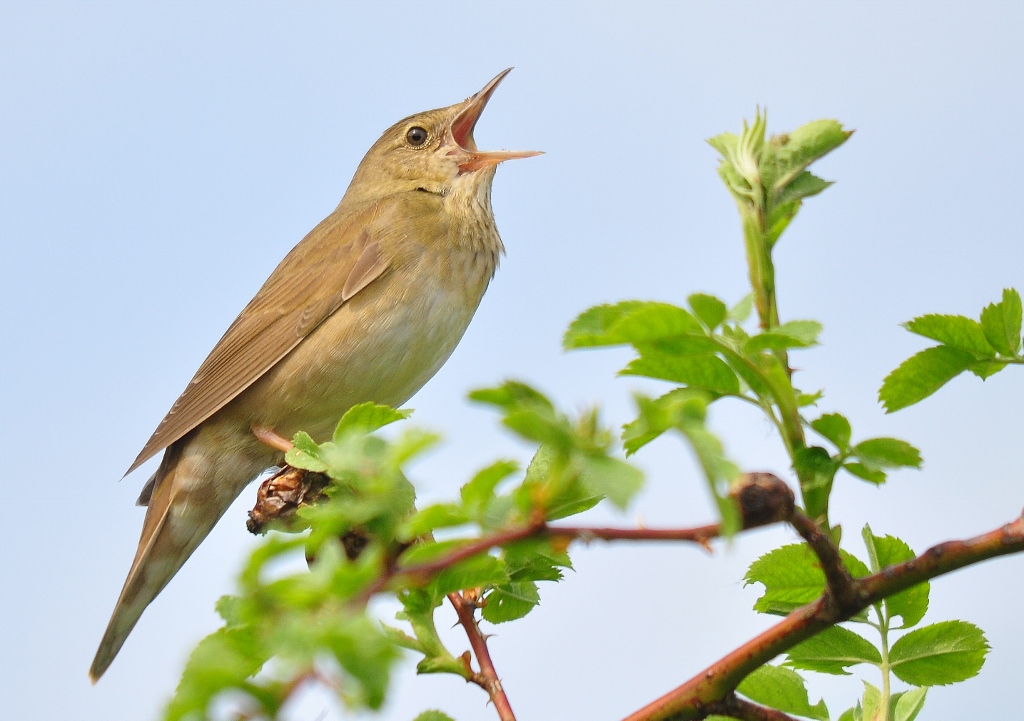
And soooo….I left school slightly early because I had a free period, and drove off a hundred miles to see if I could locate a specific small bird on a particular twig on a particular bush on the other side of the country. The bird should look something like this…
River best shot (1024x721)
I remember only one thing from the journey there, namely, passing a road sign which I thought probably directed fans to the house of a rich oilman in “Dynasty” or “Dallas”. It read “Boughton Barton Bendish”, and was just one of that whole series of countrywide road signs which indicate people rather than places. Foremost among these, of course, is the Lincolnshire hamlet of “Norton Disney”
boughton
I reached Boughton Fen pretty rapidly because this was well before the days of speed cameras, and when things were urgent, this could easily be reflected in your driving. The bird was not difficult to see either, because it was almost constantly on view as it sang, perched on the same twig at the top of a single isolated bush.
river 2
I am terrible at birdsong, but it did sound rather like a slowly approaching steam train….
http://www.xeno-canto.org/species/Locustella-fluviatilis?view=3
I can remember very little more of this twitch. The crowd was not exceptionally large…
twitchers-new
or fierce…
SONY DSC

and neither was Lord Nelson there, testing out his six-footer…
very-british-twitchers
One very famous birdwatcher that I do have vague memories of seeing may well have been present at Boughton. He is Lee Evans, who is the self-appointed policeman who vets all the birdwatchers’ lists to make sure that they are not claiming to have seen very rare species when this is not the case. Lee styles himself, therefore, the “judge, jury and executioner” for British and Irish twitchers. He regards himself too as the George Michael of birdwatching.
LGREatBirdFair
I may have forgotten the people somewhat, but the date…never.
So, when that detective comes back a second time, a few months later, and says to me, “Do you remember where you were on July 12th 1990?”, I can always look in my notebook, and without any hesitation whatsoever, I can reply, “Why, yes, I was sitting at the top of a cliff at the western tip of the Isle of Wight, watching an adult Alpine Accentor pick insects from between the rocks.”
alpacc90

The photographs of both the River Warbler and the Alpine Accentor have been taken from the website http://www.aabirdpix.com/megas.htm which provides an absolutely wonderful glimpse of the rare birds seen in Great Britain and Ireland over the last twenty or thirty years.

Leave a comment

Filed under Twitching, Wildlife and Nature