Tag Archives: The Flying Porcupine

The Murder of Leslie Howard (2)

Last time, we read the most widely accepted version of the shooting down and killing of Hollywood star, Leslie Howard, by eight Luftwaffe Junkers Ju-88 heavy fighters:

Those two outstanding German authors, Sönke Neitzel and Harald Welzer, though, tell a much blacker story of the destruction of BOAC’s Dakota DC-3 “Ibis” in their recent book “Soldaten”.

………….During the war, the conversations of German POWs were recorded without their knowledge by their British captors. One of two prisoners in a particular prison camp near London had actually been in one of the Ju88s which had shot down Howard’s Flight 777:
His name was Dock and he said:

“Whatever crossed our path was shot down. Once we shot down – there were all sorts of bigwigs in it: seventeen people, a crew of four and fourteen passengers; they came from London. There was a famous English film-star in it too; Leslie Howard. The English radio announced it in the evening.

Those civil aircraft pilots know something about flying! We stood the aircraft on its head, with the fourteen passengers. They must all have hung on the ceiling! (Laughs) It flew at about 3200 meters. Such a silly dog, instead of flying straight ahead when he saw us, he started to take evasive action. Then we got him. Then we let him have it all right! He wanted to get away from us by putting on speed. Then he started to bank. Then first one of us was after him, and then another. All we had to do was to press the button, quietly and calmly. (…..laughs…)……It crashed…. They were all dead. Those fools don’t try to make a forced landing, even if they can see that it’s all up with them.”
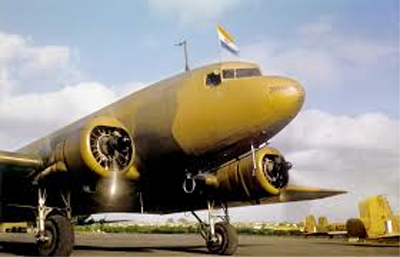
The Allies proclaimed the act a war crime, and so too did a large number of neutral countries. After all, the Germans had shot down an aircraft which belonged to a neutral country (the Netherlands).

Not all of the names of the Ju 88 pilots who carried out this war crime have survived the Nazis’ frenzied burning of their own archives and records, but among the guilty men were:

Oberleutnant Albrecht Bellstedt, Staffelführer Oberleutnant Herbert Heintze, Oberfeldwebel Hans Rakow, Leutnant Max Wittmer-Eigenbrot

Bellstedt and Wittmer-Eigenbrot were both killed in the war, the others I have not been able to trace. No more BOAC daytime flights from Lisbon took place until the end of the war.

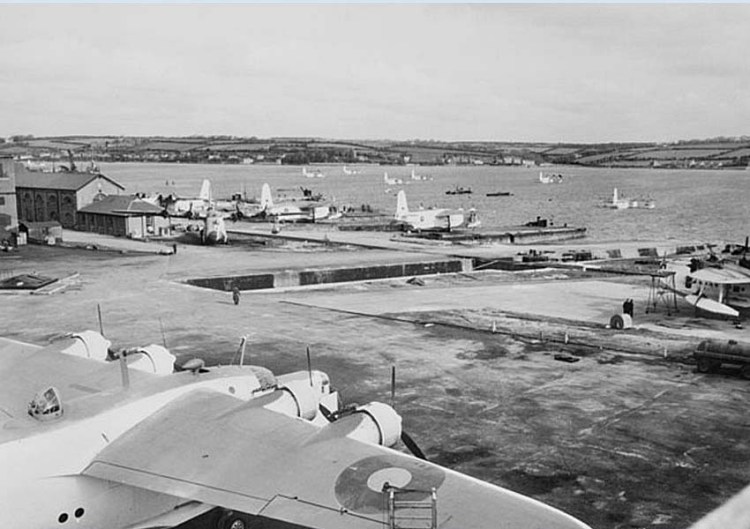
The flights which did take place were all at night, over a totally different route, completely beyond the range of a Ju-88. The British authorities responded to the DC-3’s failure to arrive by despatching a Short Sunderland GR3 flying boat to look for it. The aircraft, EJ134, was piloted by the brave Australians of 461 Squadron. The crew was James (Jim) Collier Amiss, Wilbur James Dowling, Alfred Eric Fuller, Ray Marston Goode, Albert Lane, Edward Charles Ernest Miles, Harold Arthur Miller, Kenneth McDonald Simpson, Philip Kelvin Turner, Colin Braidwood Walker and Louis Stanley Watson. Here’s a picture of RAAF 461 Squadron, looking for all the world like a flock of gigantic white geese:
The Australians found nothing whatsoever on the surface of the sea, but they did find the very same group of eight Ju88C-6s that the DC-3 had already met, at more or less the very same place where it had met them. Sunderland EJ134 and its crew then won their place in aviation legend. In a prolonged battle, the flying boat lost one engine and its tail turret. Messrs Dowling, Goode, Miller, Simpson and Walker were all injured and poor Ted Miles (27), one of the two side gunners, was killed. They did manage, though, to shoot down three of the eight German fighters. Of the other five, only two made it all the way back to Bordeaux. The other three were never heard of again. Six out of eight shot down. That should teach them not to attack unarmed airliners flying from neutral countries.

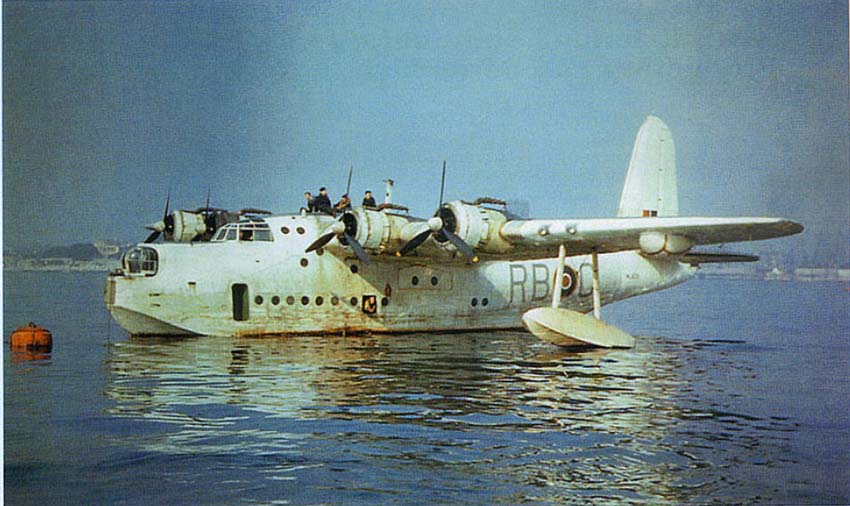
Overall, the Germans were very wary, if not simply afraid, of the Sunderland flying boat. It was an extremely heavily armed aircraft and a formidable opponent.

No wonder they called it

“Das Fliegende Schtachelschwein”, the Flying Porcupine”

This phrase  has proved particularly useful in all of my many trips to Germany, especially those to Berlin Zoo. And one day, when I ask for a cocktail called “A Flying Porcupine”, the barman will know how to make it!
14 Comments

Filed under Aviation, Film & TV, History, military, Politics, war crimes

Three war crimes, two Sunderlands and one Ashley Wilkes (4)

Last time I was explaining the connection between the Short Sunderland flying boat and “Das Fliegende Schtachelschwein”, “The Flying Porcupine”:

I promised that I would show you the connection between this spiny porcine killer and Leslie Howard, a suave, sophisticated English actor, who used to boast that he “didn’t ever chase women but couldn’t always be bothered to run away from them”. Here he is in “Journey’s End”:

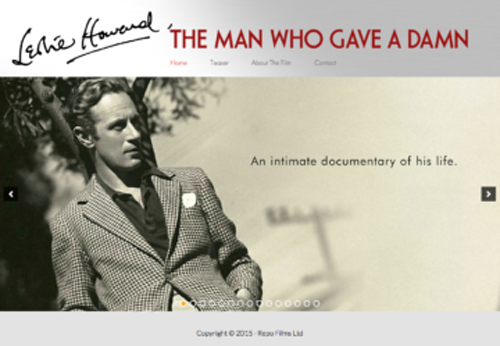
I recently watched an excellent documentary film about Howard. It was called “The Man who gave a Damn”:

The film was about the life, and particularly the death, of the famous film star, the actor who had played Ashley Wilkes in “Gone with the Wind” only two years before his death. Cue film extract:

Leslie Howard was English and he did not hesitate to stand up for the values of our country and those of our friends and allies. He did not hesitate to name and shame.

In one of his films made after “Gone with the Wind”, he speaks of the Germans’ aims:

“Every day reveals the utter and desperate determination to smash us to bits, root and branch, to wipe out every trace of democracy.”

But we English and Americans are better than the Germans, as he says in “From the Four Corners” (1941) as he addresses troops from the USA who have just arrived in England:

“And so our fathers’ minds crept along and their ideas of justice and tolerance and the rights of man took shape in the sunlight and the smoke, sometimes standing still, sometimes even slipping back, but slowly broadening with the centuries. Some of those ideas are written down in the constitutions of our commonwealth and some are unwritten. We just try and carry them in our hearts and in our minds. Perhaps the men who came nearest to putting them into words were those Americans, many of them the sons of British pioneers, who, founding an independent nation, proclaimed:

“We hold these truths to be self-evident, that all men are created equal, that they are endowed by their Creator with certain unalienable Rights, that among these are Life, Liberty and the pursuit of Happiness.”

Those words and that spirit were born and nourished here, and your fathers carried them to the ends of the earth. They are our inheritance from the past, our legacy to the future. That’s why you came here – to defend them.”

The documentary film was made by Derek Partridge, now an old man, whose young life was inadvertently saved by Leslie Howard. Here’s Derek:

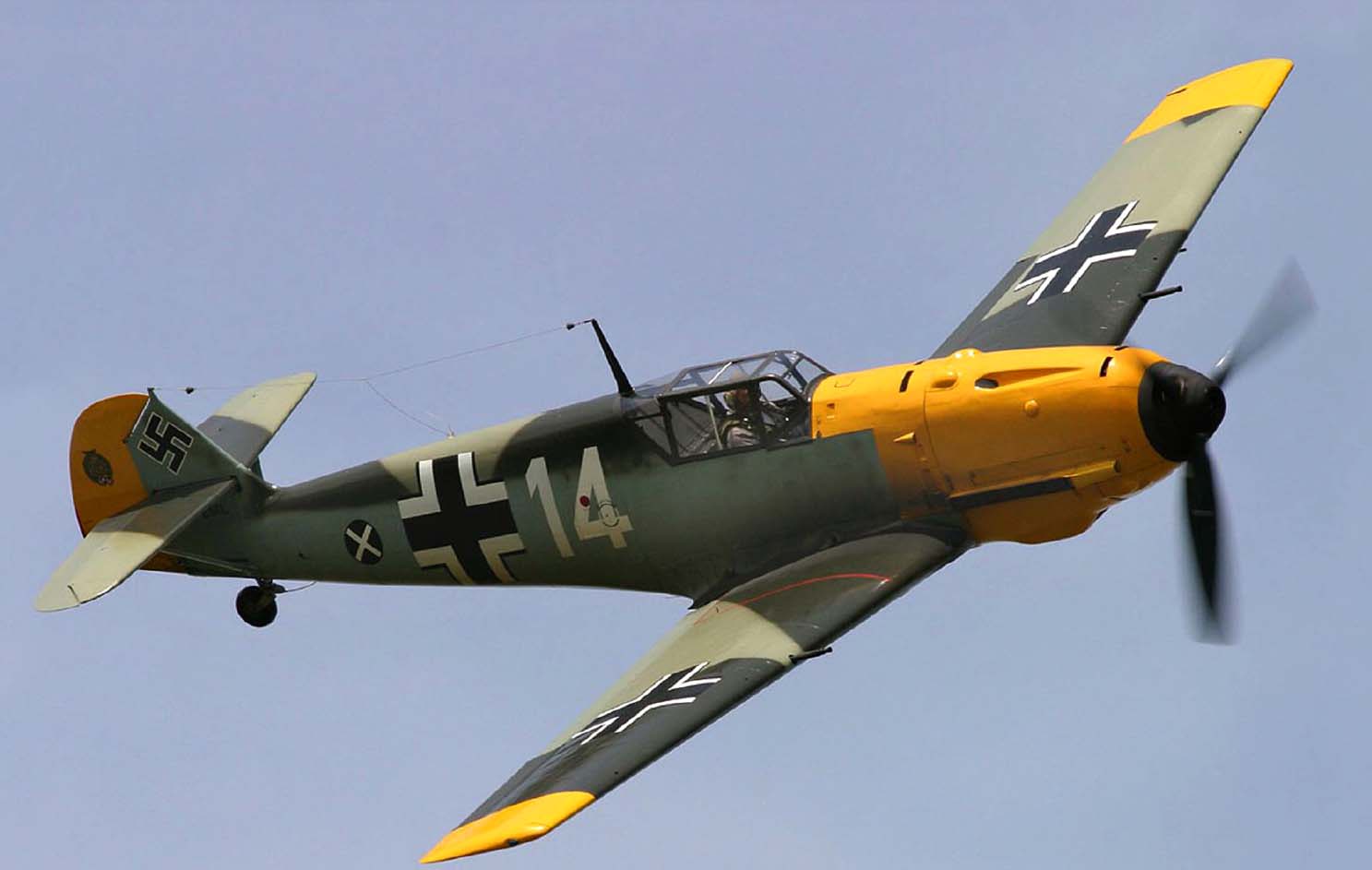
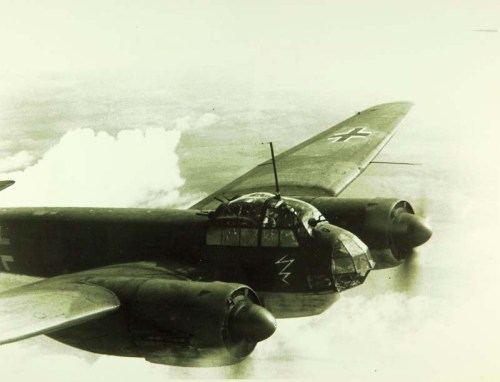
On June 1st 1943 Derek and his brother were asked to give up their seats on an airliner travelling on the Lisbon-Bristol route, to allow Leslie Howard to get to a London film premiere on time. The two boys survived because they were not on the aircraft, a Dutch owned BOAC Douglas DC-3 Dakota, when it was shot down into the Atlantic Ocean. This war crime was carried out by eight Junkers Ju88C-6 fighters of Gruppe V / Kampfgeschwader 40. V/KG 40 was a heavy fighter unit which dated from 1942, when it was set up to intercept the bombers of RAF Coastal Command. It was the only long range maritime fighter unit the Luftwaffe ever had. The RAF answered them with firstly the Bristol Beaufighter and then the Mosquito. Here is a lovely shot of the aircraft of V/KG 40 in flight:

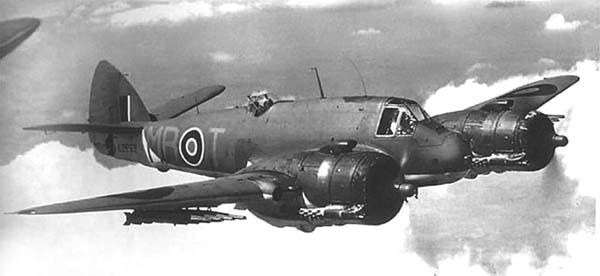
And here is a Bristol Beaufighter, a very powerful and well armed fighter:

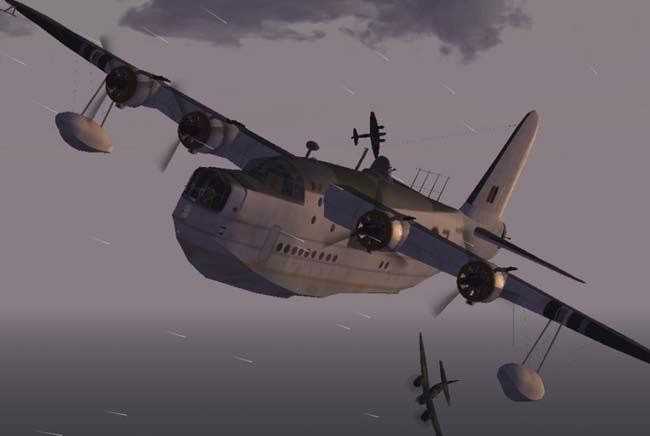
In the immediate aftermath of these events, the British responded to the DC-3’s failure to arrive in Bristol by sending out a Short Sunderland GR3 flying boat to look for it on the following day. Here we go. Ein fliegende Schtachelschwein:

Don’t worry. He’ll sort ’em out.


29 Comments

Filed under Aviation, Cornwall, Film & TV, History, Personal, Politics

Three war crimes, two Sunderlands and one Ashley Wilkes (3)

Last time I was explaining the connection between the Short Sunderland flying boat and “Das Fliegende Schtachelschwein” aka “The Flying Porcupine”.

This thorny porcine epithet comes from an aircraft which was based at Invergordon in north east Scotland in 1940. My story will be based primarily on the work of John Robertson in 2010. I had never heard any explanation of the nickname and it is a tale of heroism well worth telling and re-telling, believe me.

The particular Sunderland was N9046. It belonged to 204 Squadron and its squadron letters were KG-F. Here it is, although it seems to lack the KG-F:

The crew left their northern Scottish base on April 3rd 1940, tasked with carrying out a ten hours protection patrol, looking after a convoy bound for Norway. There was absolutely no sign of the enemy, until two Junkers Ju88s, probably from II./Kampfgeschwader 30, appeared at low altitude over the water, seemingly having arrived from a base in southern Norway, or perhaps in Denmark. Here is a nice Junkers Ju88 in full-ish colour:

And here’s the Airfix kit box:

Seeing the Sunderland, one of the two Ju 88s made a head on attack but the Sunderland’s front turret opened up and the two Junkers aircraft seemed to take flight into the leaden clouds. Here’s that front turret again, with its rather light .303 guns.:

Four more Junkers then attempted to attack the ships but they were driven off by the convoy’s various defences. Less than a quarter of an hour later, six Junker Ju88s came in, four of them almost certainly Ju88A-4s. Two of them came for the Sunderland which went right down to the water to make itself a more difficult target. That didn’t stop the Germans who both attacked fiercely, but the flying boat’s gunners drove them off and they eventually fled.

The situation had now become dramatic enough for it to form the basis of a modern computer game:

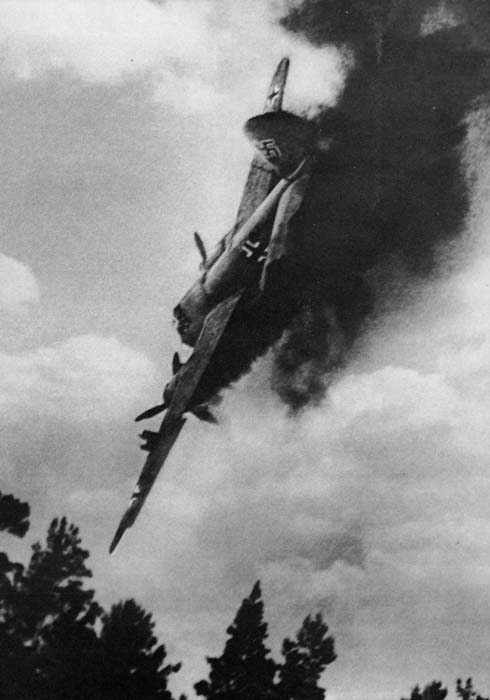
The other four Ju88s, having already released their bombs, then made a line astern attack on the Sunderland but the rear gunner, Corporal William Gray Lillie, with his slightly heavier 0.5 machine guns sent the first one spiralling in flames into the cold, cold waters of the North Sea. Ignore the trees. It’s actually seaweed:

Corporal Lillie blasted the second German in his port engine which was soon pothering black oily smoke and flames. The German pilot left for his land base in Norway, uncertain if he would reach it with only one engine performing properly. In actual fact, he was forced to crash land in the as yet unoccupied northern section of Norway where the crew were forced to set their aircraft on fire before being arrested and interned.

Rather imaginatively, the final two Ju88s then attempted to drop their bombs onto the Sunderland. They missed and finally cleared off home.

N9046 reached Scotland safely and had no problems until Wednesday,  December 11th 1940 when, riding at anchor in Sullom Voe in the Shetlands, it suddenly caught fire and was completely destroyed.

Here is brave Corporal Lillie:

Did he survive the war? Well, sadly, no. He was killed in combat on July 21st 1940, shot down by a Messerschmitt Bf109 of 8./JG77:

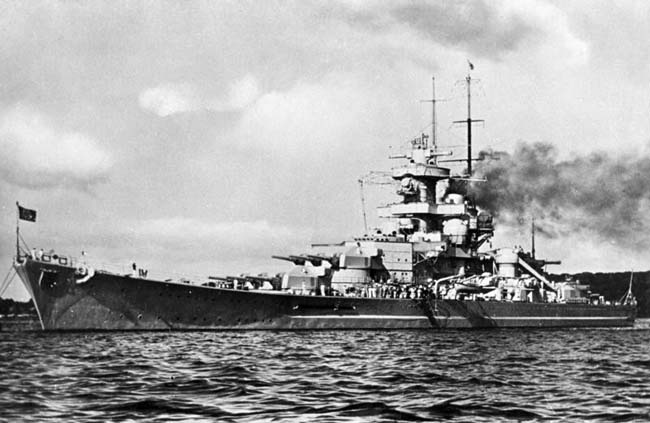
Corporal Lillie was the rear gunner in Sunderland N9028. They had been sent to Trondheim in Norway on a clandestine reconnaissance mission to check the submarine base and to see if the Gneisenau had left the port. Here it is:

Next time, I will show you how a suave English actor is connected to the Short Sunderland and, indeed, the Junkers Ju88.


24 Comments

Filed under Aviation, Cornwall, Criminology, Film & TV, History, Personal, Politics