Category Archives: Aviation

My Book (2)

With the books that I eventually produce, my main intention will be to preserve our knowledge of the sacrifices made by these men, but at the same time, I do feel that I have one other main aim, which is to demonstrate that, as we live our own lives, we are surrounded by history of all kinds.

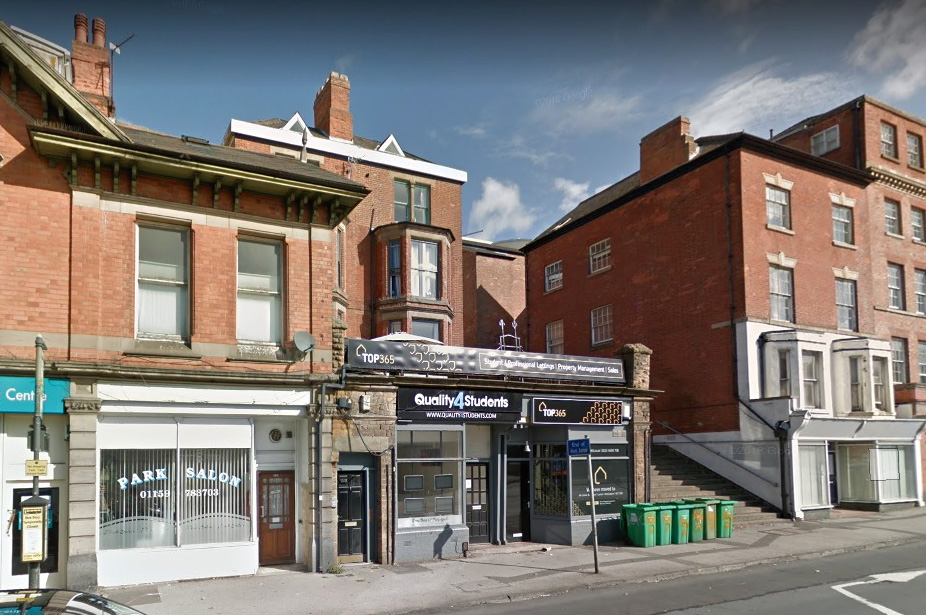
History is always there, hiding in the streets we walk down and in the houses we walk past. It is there, hiding in the buildings of a great city and it is hiding even in the corridors and rooms of the High School. It hides behind the modern frontage of the Park Salon and Quality4Students on Derby Road, up near Canning Circus:

History even hides behind the steamed up windows of the City Chicken Cafe and the Istanbul Off Licence on Mansfield Road:

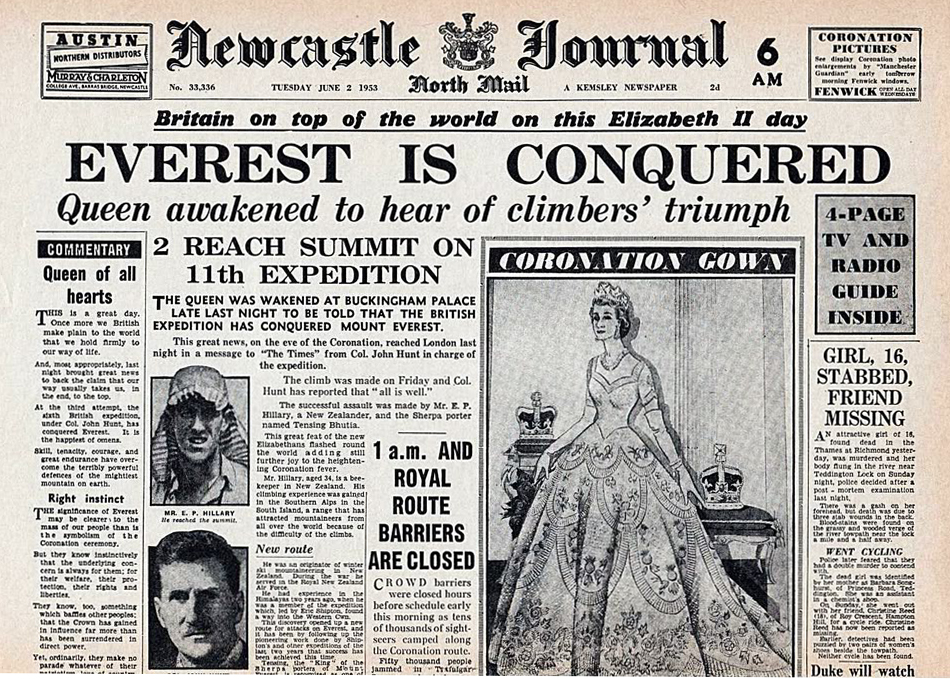
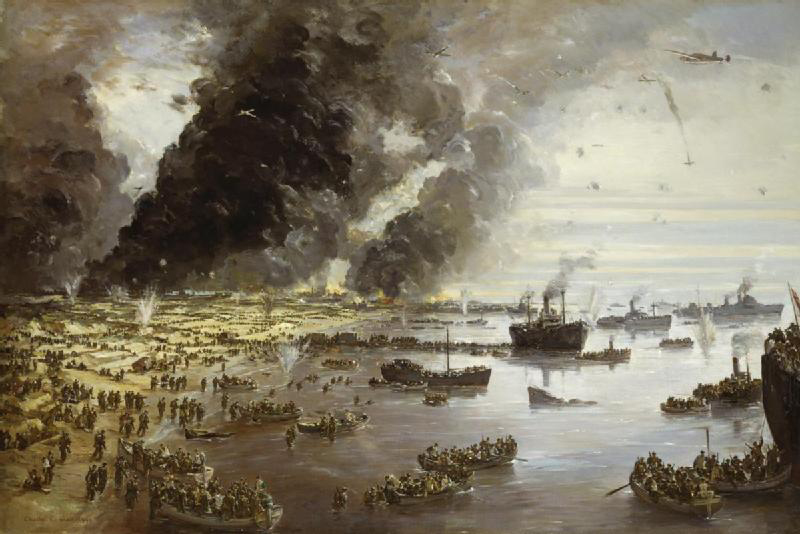
It hides catastrophic defeats:
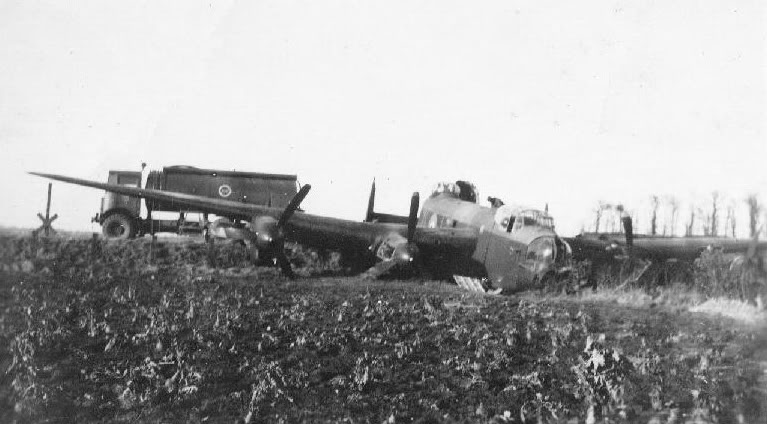
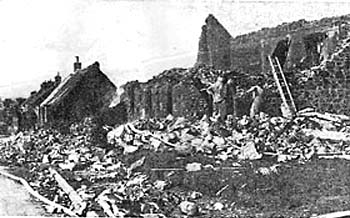
And it hides catastrophic accidents:


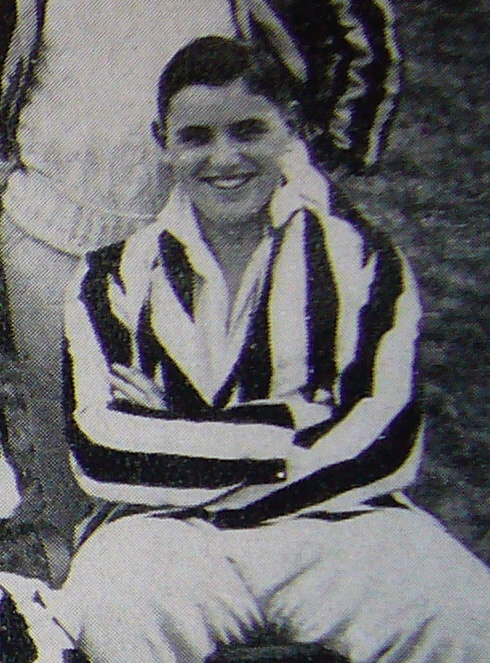
There’s no blue plaque to remember Peter Vernon, though. No flag flies over the home of “Watty” Watson. We have no statue in Edwards Lane of “Farmer” Richardson. No films are ever shown on our televisions of George Brown, the young man:

“whose fast in-swinging yorker on the leg stump was so devastating on its day.”
But I do not want this secret history of ordinary people to be forgotten. The modest men in these books all died for our freedom. Freedom from oppression, freedom from racism, freedom from random prejudice, from arrest without reason, from chance execution, from a quick death in a gas chamber or a slow death as a slave labourer :

They saved us from a society without free speech, without choice and with no discussion of the future of us all:
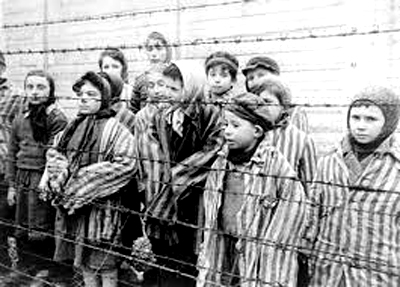
They saved us from a political system which, at the end of the war, was quite willing to kill a substantial percentage of its own citizens as the best way forward towards a better life.
In this book, therefore, you will find as much as I could discover about well over a hundred men from Nottingham High School who gave their lives willingly in the cause of freedom.
That sounds a great many people and it was, for a school with total numbers of between five and six hundred at any one moment during the period under review.

The criteria for being added to the list were, for the most part, inclusion in the long list kept by the Commonwealth War Graves Commission, which uses its own date limits for the casualty’s death of September 3rd 1939 to December 31st 1947. I did stretch the definition slightly to include the men who died while working to support the Allied cause. A university lecturer who is killed in an aircraft crash as he travels from place to place on a lecture tour around the Mediterranean theatre will be in the list, just as much as the man who organises food for a million refugees in India and who prevents the outbreak of a typhoid epidemic. Both are clearly making contributions to the war effort. They are both, to quote a famous football manager, “Getting us closer to the top of the hill.”
14 Comments

Filed under Aviation, Bomber Command, History, Nottingham, Politics, The High School, Writing

Eagle Comic (4)

In Eagle Comic, the sponsored stories and advertisers’ contributions were  always very interesting.  Walls Ice Cream had their ordinary run-of-the-mill  adverts:

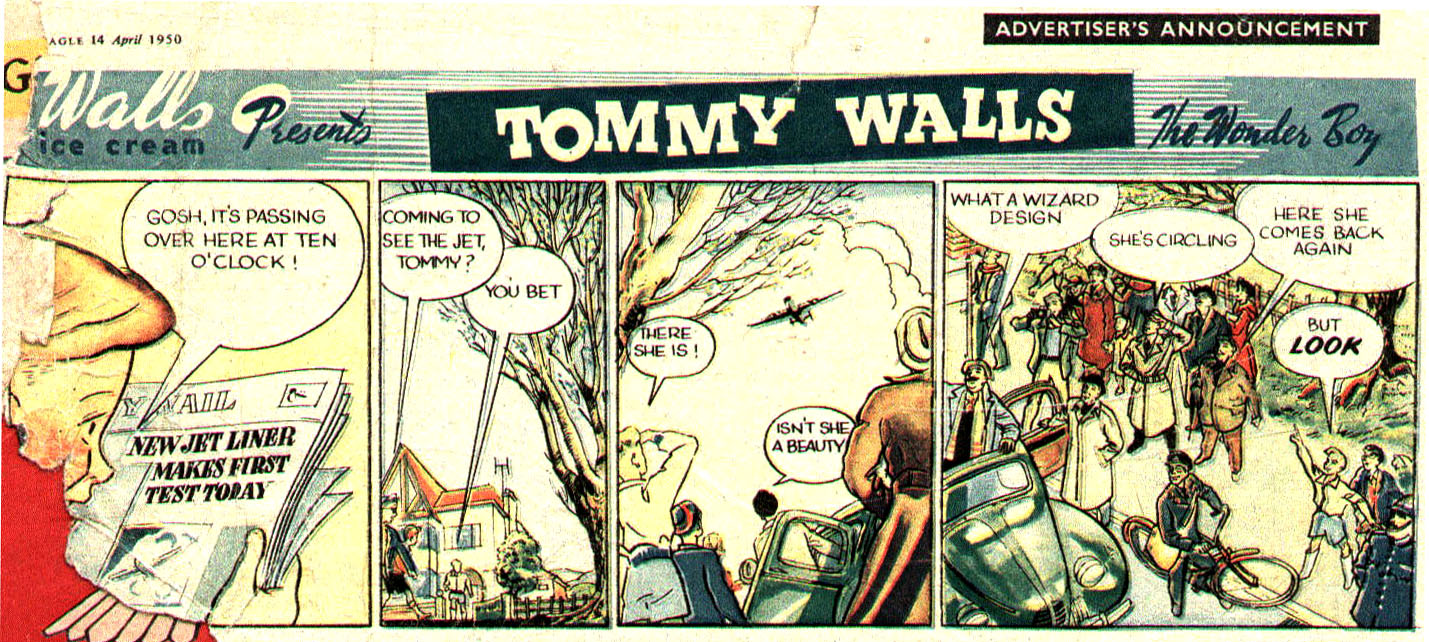
But they also had “Tommy Walls- the Wonder Boy”. The first stirrings of product placement. The perfect planting of a brand name in young, impressionable minds. I think that lots of the young readers actually thought that this story was part of the comic itself. I know I did:

The first picture says “NEW JET LINER MAKES FIRST TEST TODAY”

The last one says “WHAT A WIZARD DESIGN” which is countered by “BUT LOOK

Clearly something has gone drastically wrong, but if you eat lots and lots and lots of Walls ice cream, you’ll be able to save the day:

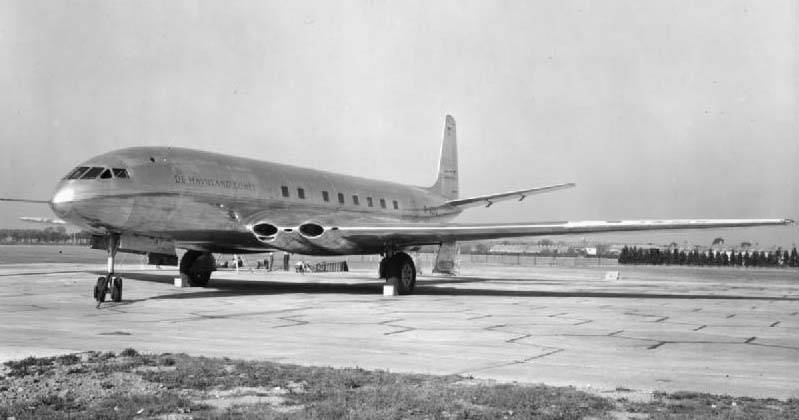
It must take sacks and sacks of sugar consumed to have the strength to hold the wing and the fuselage of a jet airliner together as it flies to an airport and makes a normal landing. Where was Tommy Walls when the De Havilland Comet was crashing all over Europe?

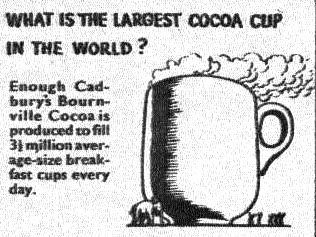
Cadbury’s came a close second with their “Cadbury’s Corner Quiz”. Here’s the first question:And Question 2:And Question 3:

And the final question:

And, of course, there were the ordinary quarter page adverts. Television told our mothers not to forget the Rowntrees Fruit Gums. Only listen to this irritating tune if you have always wanted your brain reformatted :

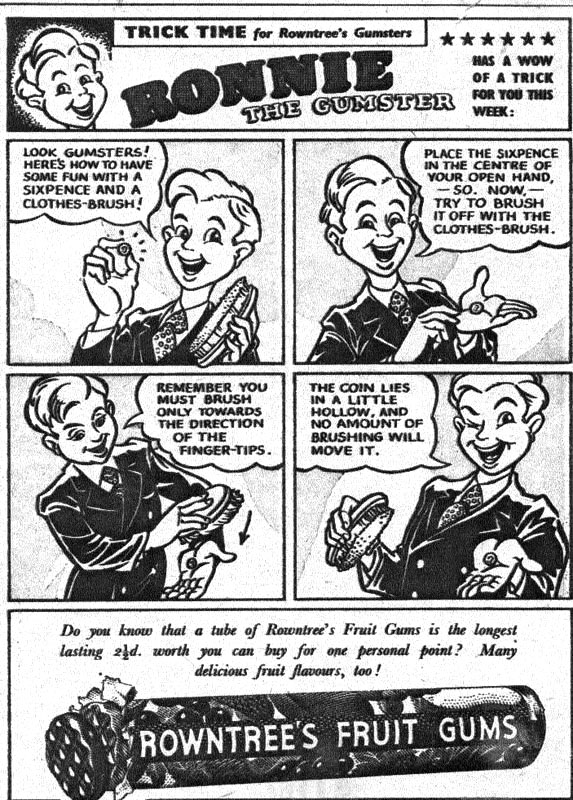
As well as the commercial links between our mothers and Rowntrees Fruit Gums, ‘Eagle’ Comic also emphasised the point with a comic strip starring “Ronnie the Gumster” :


But what’s a “Gumster” ? Something you find in a Forrest? Like Forrest Gumster.

17 Comments

Filed under Aviation, Film & TV, History, Literature, Personal, Science, Writing

My Book (1)

It is a long time since I shared with you what I was up to, away from the knockabout world of blog posting. Some of you will know that for the last four years at least I have been researching the boys of the High School who gave their lives in the Second World War. At first, it was seven days a week, four hours a day, but I am now down to six days a week with three hours as a minimum and the usual being around three and a half hours. It’s difficult to describe what a huge job it was:

I began this mammoth task because as far as I was aware, nobody had ever carried out any research whatsoever about the brave Old Nottinghamians who gave their lives during the Second World War. At the moment I have around 120 people to include in an eventual book, of which 110 are men who qualify 100% as war casualties. Because of the volume of information I have discovered, hundreds of thousands of words, the final work is likely to be in three volumes if not four:

The majority of research I have carried out on the Internet which has supplied me with details which have never been known before. Most of all, I have discovered a large number of former pupils who deserve to be recognised as Old Nottinghamian war casualties but who were not included when the original lists were being compiled:

That is far from a criticism. In the late 1940s, how could anybody have found out that a little boy of eight or nine who spent just a couple of terms in the Preparatory School in the early 1920s had been killed in a tank three miles east of Hamburg five years before? Communication by letter:

and communication by postcard:

with other information distributed in newspapers could not possibly have coped with demands of this kind:

On occasion, the School Magazine, the Nottinghamian, got me started with my researches, but overall, the solutions were largely provided by the men who have dedicated their entire lives to the recording of the minutest details of the Second World War. Men who have recorded the names of every RAF man killed in an aircraft of Bomber Command. Men who have recorded the names of every sailor who did not come home from the sea in World War Two. Every U-boat captain and his every kill. Every nightfighter pilot and every bomber he shot down:

I just felt that, unless I did produced some committed and detailed research of my own right now, there was a real risk that nothing would have been done by the time we reached the centenary of the beginning of the conflict in 2039.
In many ways, that absence of detailed research by others might even be seen as a bonus, because there would be very few people out there who could contradict what I had written. On the other hand, I do feel that after so many thousands of hours working on the project, there should be no huge errors in what I have produced. (Touch wood). Even my best guesses have often proved later to be quite reasonable ones, based on what, in many cases, is a paucity of actual facts.

26 Comments

Filed under Aviation, Bomber Command, History, Nottingham, Politics, The High School, Writing

Eagle Comic (3)

Last time we were trying very hard to get the Ovaltineys song out of our heads. I was trying to make the point that Dan Dare was not the only character in the comic:

Eagle had sporting personalities. I have even written myself about the first one ever to appear:

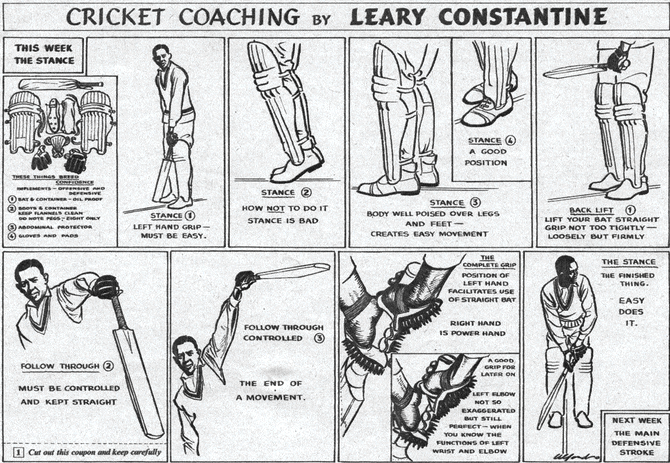
There was cricket coaching, and, thirty years before its time, and in a largely all white society, it was presented by a black man, Leary Constantine, a cricketer who achieved more in his life than most of  us do:

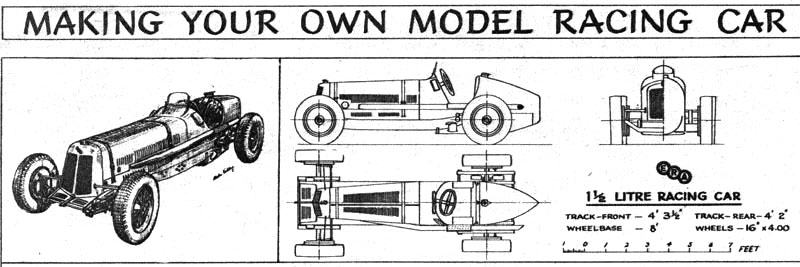
There were features about how to make models:

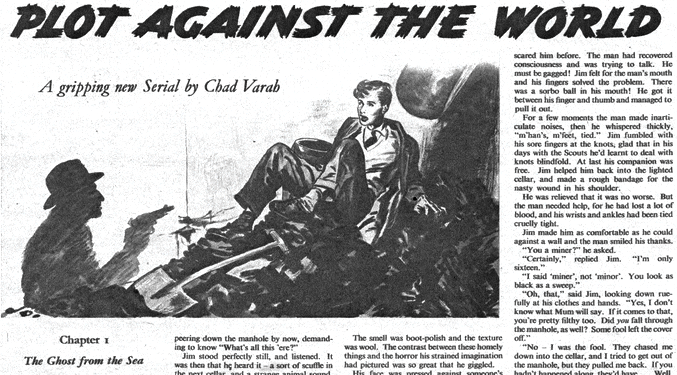
There were two written serials with solid text rather than just pictures. “Plot against the World” was the first ever to appear:

There was a half page about road safety. It was presented by Billy Steel, the famous Derby County footballer of the day:

During the 1950s lots and lots of children would be killed on the roads, because the drivers in England knew very little about how to drive safely and the children of England, accustomed to just a couple of cars a day going past, had very little road sense. Around 1963, a little boy in our class called Nigel Sparrow was killed by a car as he cycled along country lanes looking for bluebells for his mother. He was in hospital for two weeks or so before he passed away. We prayed for him every day in our school assembly but it was all in vain. He succumbed to his injuries and died. That was the first time I ever had any serious doubts about the religion I had been given. I think about Nigel regularly, poor little boy.

Billy Steel offered a lot of very good advice:

He offered advice a lot better than he played football for Derby County.

Years ago, I actually wrote about him, but only in the context of my Dad, Fred, who thought he was “a right twerp”:

“As regards football players, in the late 1940s, Fred was always less than impressed by Derby’s then record signing, a young man they bought as they attempted to stop their slow but inexorable slide out of the First Division. This was a handsome young forward called Billy Steel, whose dark tousled hair was, for Fred, his best, and probably only, positive feature. Fred was just unable to stomach how Steel would miss an easy chance to score a goal, and then merely laugh about it as if it were nothing important.”
Next time, the other features that made Eagle the best selling comic in English history:

16 Comments

Filed under Aviation, Derby County, Film & TV, Football, History, Literature, Personal, Science, Writing

Eagle Comic (2)

Last time we looked at the appearance of a brand new comic called “Eagle”, which was an almost revolutionary step forward in the world of boys’ comics in England. The eponymous hero of the comic was space pilot Dan Dare, always combatting something or other, in this case Psycho-Rocket-Repair-Man :

Dan wasn’t the only person in the comic though. There was “Rob Conway” who seems to have been some kind of aviation detective:

Note the three aircraft, a Hawker Seahawk, an Avro Lancaster and possibly a Gloster Meteor.

There was PC 49, where ‘PC’ does not necessarily stand for “politically correct” :

And “Seth and Shorty – Cowboys”, wrangling away deep in the heart of Texas :

Seth’s grandson is probably better known to you as Dr Sheldon Cooper:

“The Great Adventurer” was a comic strip that predicted Middle East politics seventy years ahead of its time:

And there was even Captain Pugwash:

There were cutaway drawings of the latest technological marvels of the day:

And more science from Professor Brittain, now that radar wasn’t top secret any more:

“Discovering the Countryside” featured the hedgehog and an adder:

We learnt about aviation from reading “Heroes of the Clouds”:

There were the Ovaltineys, another paramilitary group I have previously written about:

They had their own little section, with a quiz about British town names:

And nobody gets out of here without a little sing-song. A song you cannot get out of your head. Go on, you know you want to:

Next time, safety, science fiction, serials, sport and Steel. And no, that last one isn’t a typo.

26 Comments

Filed under Aviation, Film & TV, History, Literature, Personal, Science, Writing

“Eagle Comic” (1)

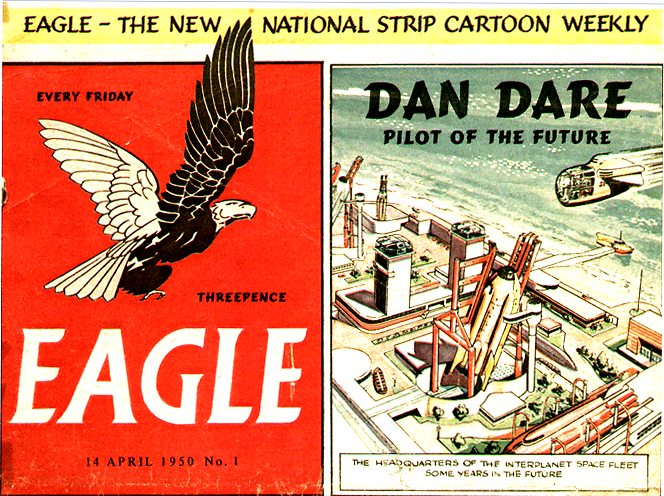
The first edition of ‘Eagle’ comic came out on April 14th 1950. It was the brainchild of Marcus Morris, a Lancashire vicar from Southport and it was illustrated by Frank Hampson who had previously worked on the vicar’s parish magazine. The Reverend Morris wanted a comic which told stories based on Christian ethics. Here’s the front cover, with the top half of the first ever Dan Dare story:

Dan Dare was the hero of this famous science fiction epic. It was perhaps a little like a cross between Flash Gordon and Star Trek. There was a villain as the equivalent of Ming the Merciless, and Dan belonged to the Interplanet Space Fleet who were a little like Captain Kirk’s United Federation of Planets. Here’s the second half of that historic first page:

I found it very difficult to create a clear illustration of the first edition where it is possible to read the text. The important thing, though, is the fact that a rocket is taking off, bound for outer space. In a 1930’s comic, it would have been a biplane, bound for Edinburgh.

The story continued in full colour on the back page. Here’s the bottom half of that very first second page, complete with jet propelled gyroscopic jeep:

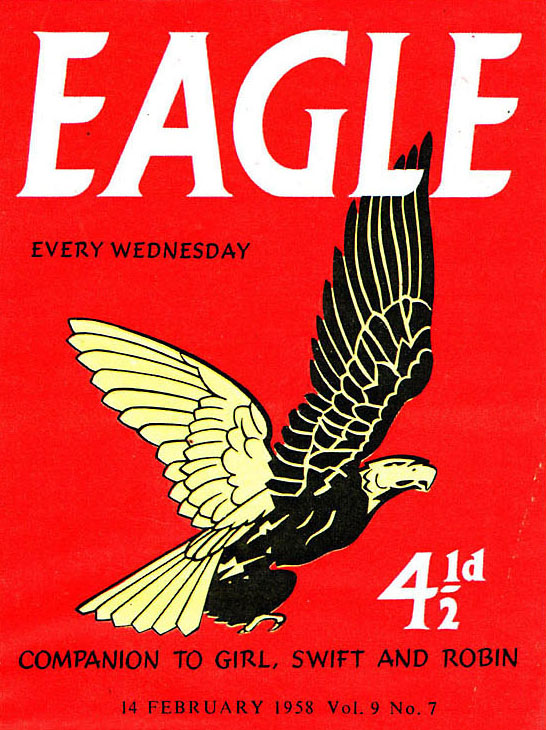
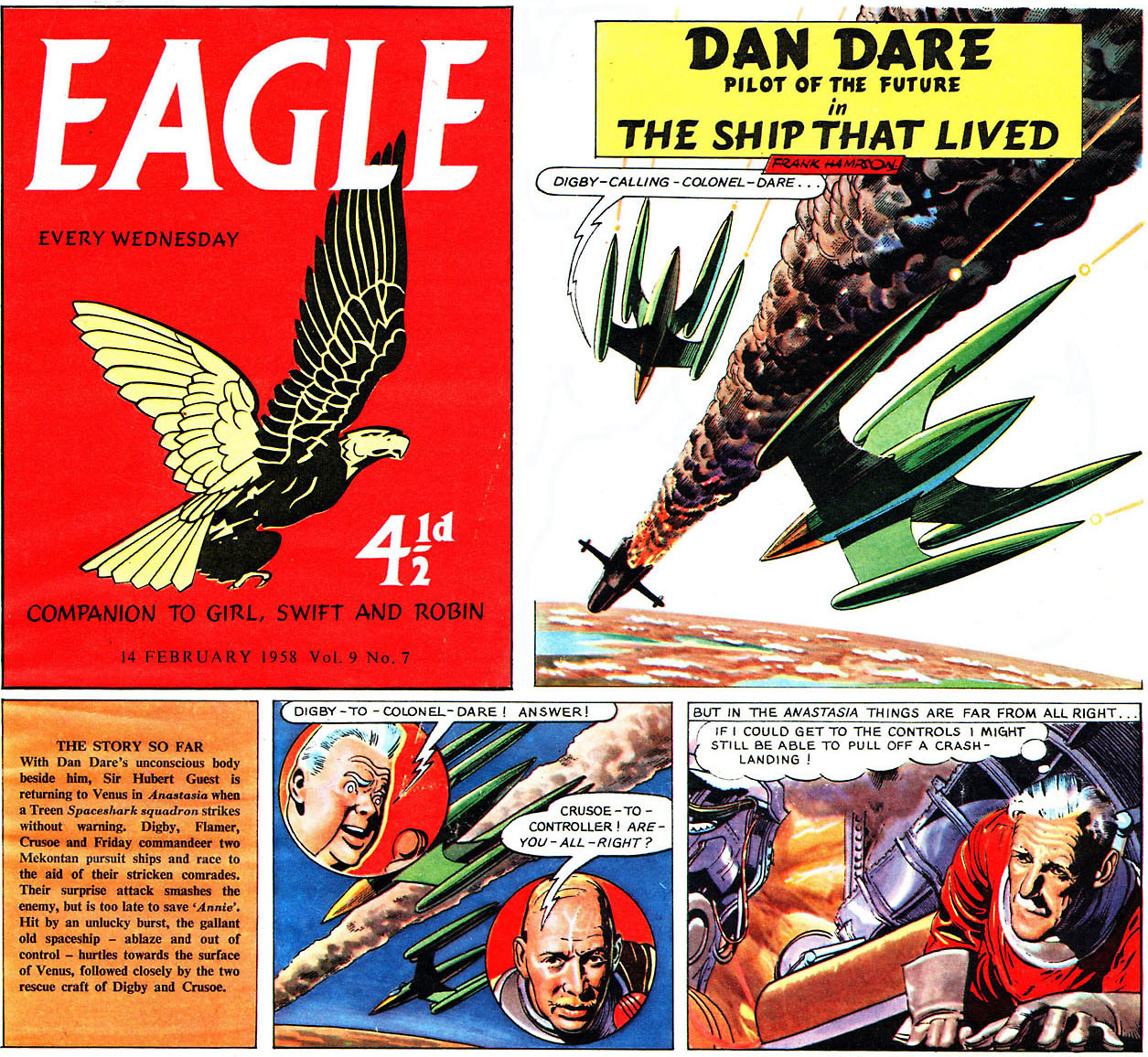
What is important, though, is that the printing, both of the words and of the illustrations, would be unrecognisable by 1958. Mind you, the cost of the comic had gone up from the original threepence to four and a halfpence. Just look at the quality now:

Next time, we’ll look at some of the other characters to appear in that first edition of Eagle comic:

27 Comments

Filed under Aviation, Film & TV, History, Literature, Personal, Science, Writing

The Nightingale and Bomber Command

This is a very famous recording of a nightingale singing its little heart out, only to be interrupted by the enormous noise of a large number of Bomber Command aircraft approaching and then flying over. Undaunted, the nightingale carries on with its beautiful song as the bombers leave and the roar of their engines gradually fades away. The recording lasts quite a long time but it is well worth listening to in its entirety, particularly if you have never heard it before. It comes from spud4x:

The recording was made from a garden in Surrey, England during the evening of May 19th 1942 as 197 aircraft flew over on their way to bomb Mannheim. There were 105 Wellingtons, 31 Stirlings, 29 Halifaxes, 15 Hampdens, 13 Lancasters and 4 Manchesters:

This slideshow requires JavaScript.

47 men would be killed and 23 would finish up as prisoners of war. Eleven days later would come the first 1,000 bomber raid on Cologne. And in the woods of England, and indeed Germany, the war would count for very little. The bluebells would be lingering on and the nightingales would be starting to sing.

The nightingale has a very powerful, very famous, but not necessarily hyper distinctive song. On birdwatching trips, I have often seen people listen to a hidden blackcap or garden warbler and walk away happy that they have heard a nightingale. John Keats too, may have been misled. Some critics have mentioned that the bird’s behaviour as Keats describes it, is on occasion not dreadfully nightingaley. But the poetic thoughts are dreadfully, well, poetic:

“Thou wast not born for death, immortal Bird!
         No hungry generations tread thee down;
The voice I hear this passing night was heard
         In ancient days by emperor and clown”
Perhaps John Clare, of whom I wrote long. long ago, had a better idea:
“See there! she’s sitting on the old oak bough,
Mute in her fears ; our presence doth retard
Her joys, and doubt turns every rapture chill.
Sing on, sweet bird! may no worse hap befall
Thy visions, than the fear that now deceives.”

Anyway, there’s only one nightingale and here it is…

And here’s another version of that BBC recording:

If you’re interested, this is also to be found on Youtube. It is a recording made of a Bomber Command crew on a bombing mission over Germany:

As a fully paid up very sad person, I have two CDs  of this type of thing, bought many years ago from Amazon and I have listened to them many times.

This is the first one and this is the second one. They are particularly good for driving through rush hour traffic on your way to work. Goggles optional.


34 Comments

Filed under Aviation, Bomber Command, History, Humour, Personal, Wildlife and Nature

Fred walks home with Will

As I mentioned before, my Dad, Fred, during his time in the RAF, was frequently given 24 hour passes which ran from 00:00 hours on the first day to 23:59 on the second. They weren’t much use when he was with 20 Operational Training Unit in Lossiemouth which even nowadays, using the motorways, is a there-and-back trip of almost 930 miles. Here’s the old Lossiemouth from a wartime picture:

And here’s the brand new sign at the gate:

Here’s the journey by car today:

On the other hand when Fred was stationed at Elsham Wolds in Lincolnshire, two day passes were fine. Here’s the home of 103 Squadron in 1943:

Fred was often forced to travel in the early morning because he wanted to make use of the first few hours of his pass, usually from around 00.40 by the time he had walked down to Barnetby Station, to when the earliest train left Barnetby at, say, 01.10.

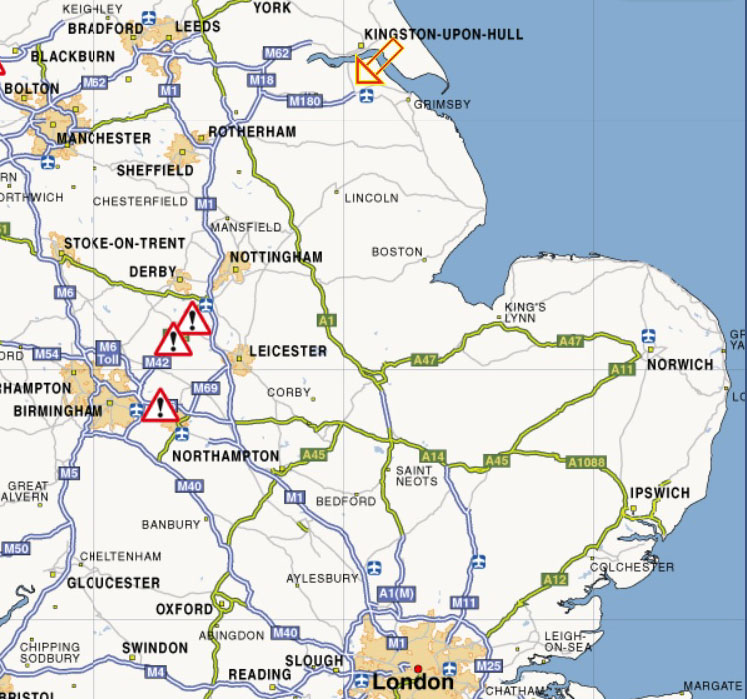
From Barnetby he usually travelled to Lincoln, then Nottingham and then Derby, although he could carry on from Derby to Burton-on-Trent if he so wished. The orange arrow points to Elsham Wolds, and Burton-on-Trent has been hidden, more or less, by the first triangular sign with an exclamation mark, just to the south of Derby:

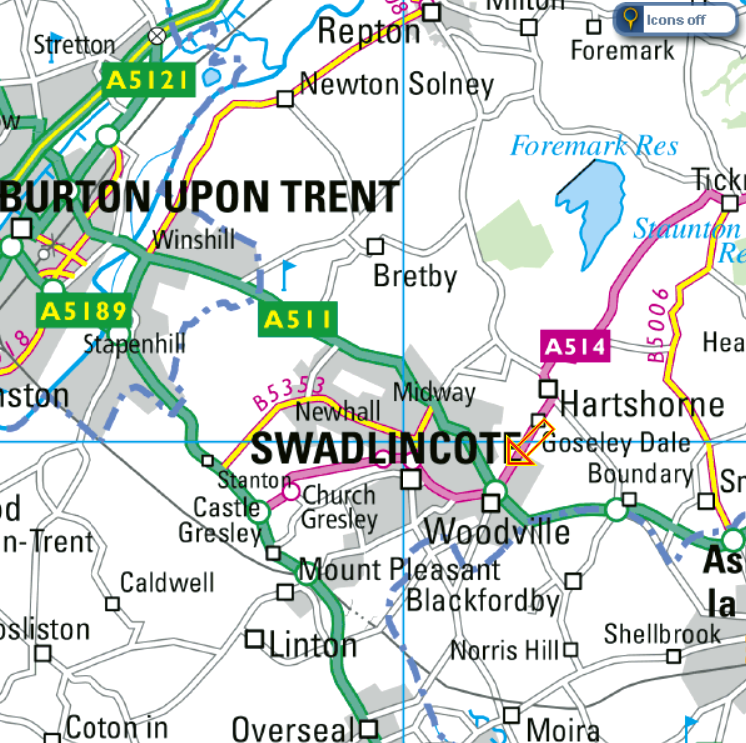
Here’s a map of the local area around Woodville, the mining village where Fred lived. His house was quite close to the tip of the orange arrow, in actual fact. The station at Burton-on-Trent is the tiny white  dot on the spindly black thread running from north east to southwest near the town, just below the “U-R” of “BURTON” :

The problem Fred faced at this point, however, was that from Burton-on-Trent to Woodville where he lived, there would be no buses running if it he had arrived at Burton Station at four o’clock in the morning. If that were the case, there was only one remedy…what used to be called “Shanks’s Pony”. Do check out the link. It is quite an interesting origin for this phrase and useful for the American version of it too.

On one occasion, Fred came back on leave from Elsham Wolds and he then continued through Derby station to the local station at Burton-on-Trent. When he emerged onto the street, knowing full well that he had a five mile walk in front of him, he found that his father, Will, then in his mid-fifties, had spent at least a couple of hours of the early morning darkness walking the five miles from their house in Woodville to meet his son at the station as he got off the train:

They walked back together in the fresh, bright summer sunshine, the road even more deserted than normal as it was so early in the morning. Not a single word was said between father and son at any point in their journey. Their mutual respect and solidarity, their love, was expressed not by words but by a deed, the walking of five miles just to be with somebody that extra couple of hours, even if the time together were to be passed in total silence.

In later years, Fred was to say that one of the greatest regrets of his life was that he had never said anything to his father during this walk and that his father had never said anything to him. In general, Fred wished that there had been much more obvious affection shown during his life with his parents. Will had never hugged Fred or even held him in his arms as a young child. Never in his entire live did he ever express his undoubted love for his son by such gestures, which he would have thought unmanly.

Here they are, in a local park on holiday in Blackpool. Notice the fashion statements. Will is wearing those two coloured shoes and Fred has one of those elasticated belts that fastens with a metal snake device:


18 Comments

Filed under Aviation, Bomber Command, History, Personal

Fred walks home on leave

One beautiful summer’s afternoon, Fred was returning on leave from his airbase at Elsham Wolds in north Lincolnshire. The orange arrow is RAF Elsham Wolds, and Fred departed from a station near Elsham before continuing to Lincoln, to Nottingham and finally to Derby:

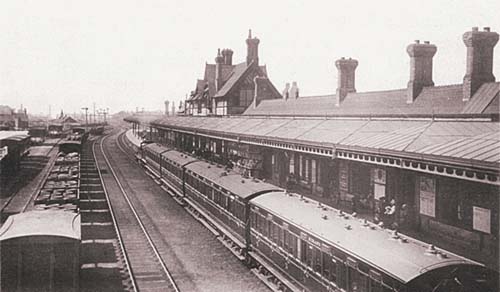
Derby was, and is, a huge station by English standards:

Fred arrived on time at Derby station, but there were no more trains to take him on to Burton-on-Trent (bottom left on the map above). He decided therefore to walk the twelve miles back home to the little mining village of Woodville, something which he had often done in the opposite direction in pre-war years, when he had been to watch Derby County play football at the Baseball Ground.

It was a Sunday, and after a couple of miles or so, Fred crossed the River Trent over the five spans of Swarkestone Bridge:

Fred then continued across the meandering  stone causeway, built by the Saxons, which crosses the floodplain of the River Trent. Things are a little bit different nowadays:

Or at least, things are a little different from what Fred would have known. These two photographs are taken from the same spot, but are separated by at least a century :

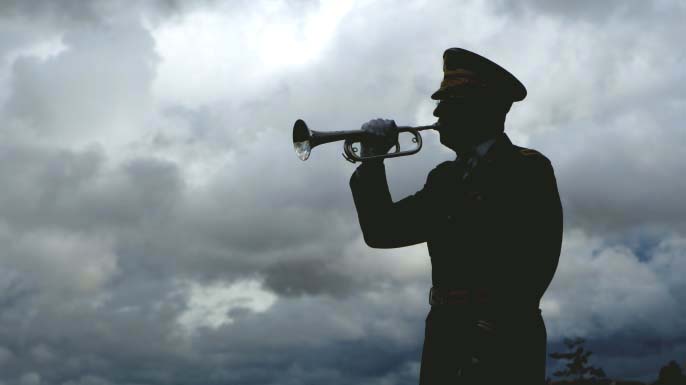
After the meandering charms of the ancient crossing, Fred then set off to the right, up the hill, towards the next village of Ticknall. As the evening moved slowly ever closer to sunset, everything grew very calm and very still, the light hovered on the edge of dusk, and just as he reached the top of the first long steady rise, Fred could hear, ringing out through the silence, the bugle sounding the Last Post at the nearby German prisoner of war camp:

Fred stopped to listen as the familiar notes echoed in evocative fashion over the late evening landscape, as the bright light of the sinking sun illuminated a pastoral scene in an England which is now long gone and will never return. It was a uniquely beautiful and unrepeatable moment in his life:

During the rest of his lifetime, Fred was never aware of a couple of facts about this moment. Firstly, he always thought that the prison camp was at Castle Donington but in actual fact it was somewhat closer to where he was, at Weston-on-Trent. I know that because I have just looked at the list of all the POW camps in the country.

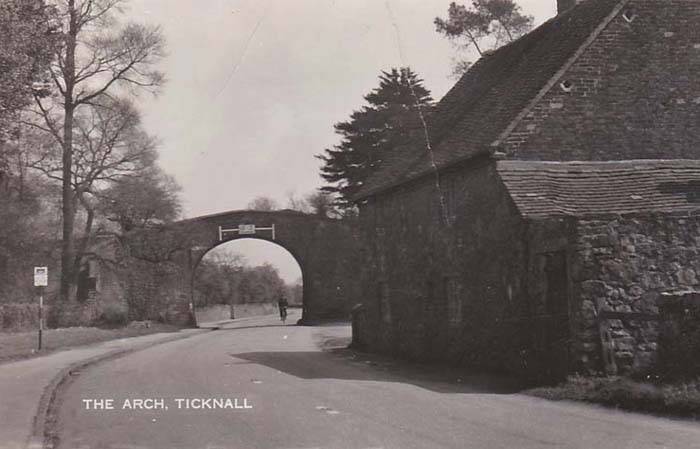
Secondly, as he walked through the village of Ticknall, under the bridge which used to carry the railway to the limestone quarry…

…as he walked past St George’s Church…

….he did not know that the building held, hidden away somewhere in a safe place, a great many records of his own family history. He did not know that his family had been baptised there, married there and buried there for centuries. They included…

his own grandfather, John Knifton (1850-1934), John’s father, Thomas Moor Knifton, and his mother, Jemima Knifton, and her mother, Katharine Knifton, and then her father, Richard Kniveton and lastly, George Kniveton, born, in all probability, before 1700.

Another England which is now long gone and will never return:

Fred would have walked past all the old water pumps at the side of the road, every fifty yards through the whole village. I bet some of them were still working then. If Fred had done his long walk previously, he might even have known which pumps could slake his thirst after perhaps seven or eight miles of walking:

Fred could not possibly have known, though, that only fifteen years later, in his Connaught green Austin A40 Devon saloon, he would drive, not walk, through the village, and his young son would count the pumps out loud as they passed along. Fred didn’t know that that was going to happen in the near future. He was too busy in the present, fighting to make sure that England had a future:


16 Comments

Filed under Aviation, Bomber Command, History, Personal

George Norman Hancock, Old Nottinghamian (3)

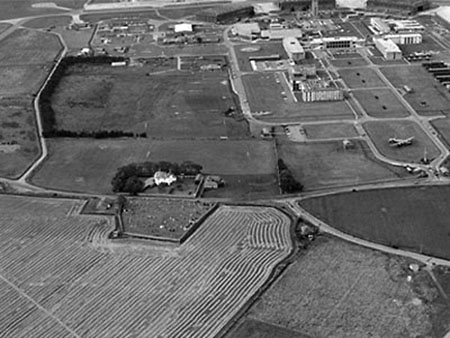
As we saw last time, George Norman Hancock was killed on March 31st 1954. At the time he was working with the Ministry of Supply as the Senior Air Force Representative to the Controller of Guided Weapons and Electronics in the Ministry of Supply. He was flying a Gloster Meteor F8 with the serial number WH312:

The first jet fighter built by the British, the Meteor would eventually be produced in the thousands and be used by at least 15 other countries. Its shape was not as impressive as the Messerschmitt Me 262 but it was relatively successful and state-of-the–art, until aircraft like the Mig-15 and the F-86 Sabre came along. As somebody once wrote, it was “not a sophisticated aircraft in its aerodynamics, but proved to be a successful combat fighter.” The Meteor had two Rolls-Royce Derwent turbojets and could reach 600 mph and 43,000 feet with a range of 600 miles. It was armed with four 20 mm Hispano cannons and could also carry various combinations of rockets on the wings:

Norman was flying a Meteor F8 which seems to have been a distinct improvement on the F4. It had a longer fuselage, carried more fuel and had an improved tail shape and an ejection seat as standard.

Norman had taken off at 14:30 from Farnborough for what is called a familiarisation flight, which means that he was just making sure that he could fly the plane and knew what it could do and what it couldn’t do. In case of problems, this is often carried out at altitude and apparently Norman had been flying around at about 36,000 feet without any dramas whatsoever. As he returned to land at Farnborough, though, he reported that one of the engines was acting up. Around 15:14, he radioed the Farnborough Control Tower with the words, “This is Wicker 98. Downwind on one” which means that one engine was now not working at all. “Wicker 98” was his call-sign. Apparently the Control Tower asked him if this was just a practice but when he replied in the negative, they scrambled all the crash and rescue vehicles out onto the runway.

As it drew close to Farnborough witnesses saw the Meteor, at first, flying apparently quite normally until it began to plunge down towards Runway 25. The Meteor’s port wing seemed to lose its lift because of the loss in power of the stricken engine and the aircraft began to descend inexorably towards 400 feet and lower. Poor George had lost power and he had therefore lost lift. A catastrophic combination.
The aircraft was now only just clearing the tree tops and then sank so close to the ground that George clipped the cowshed of Mytchett Farm at Frimley Green and then brushed the adjacent roof of a garage. The Meteor performed a cartwheel and hit the ground:

It exploded in a fireball of aviation fuel and broke up into thousands of pieces:

Poor George must have been killed in a split second and hopefully, he didn’t realise what was happening. In the fiery aftermath, both buildings and up to six vehicles were destroyed.

George’s will produced one or two interesting footnotes. At the time of his death, he was living at The Old Manor House, West End, Beeston. Beeston is to the south west of Nottingham and West End is between the Police Station on Chilwell Road and the Recreation Ground and Bandstand on Queens Road. The Old Manor House, is reckoned to be the oldest surviving house in Beeston. Nowadays, it is a Grade II listed building and is currently used as a dance studio:

George left £10,751 and his estate was administered by his sister Grace, who never married.

20 Comments

Filed under Aviation, History, Nottingham, The High School