Category Archives: Aviation

The Mosquito at Hendon (2)

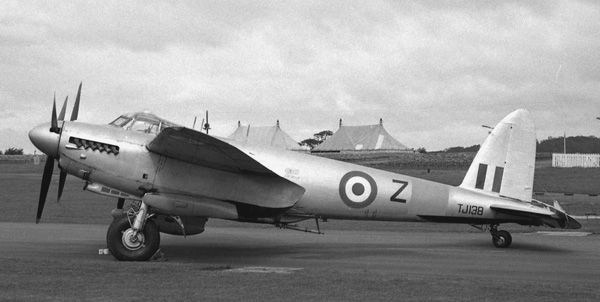
Last time, I wrote about the De Havilland Mosquito at the RAF Museum at Hendon. This individual is painted as a Mosquito B.35, TJ138, in 98 Squadron markings, reflecting the squadron’s time spent at Celle in Lower Saxony, flying Mosquitoes during the occupation of West Germany from 1945-1951:

The squadron badge is Cerberus, the 3 Headed guardian of Hell because, quoting the RAF website:

“This squadron claims to have barred the way (front and rear) during the German retreat in 1918 and so considered Cerberus, as the watchdog of Hades, a suitable badge.”

I don’t understand that to be honest, but if the RAF are happy with it, then so am I.

And I’ve never known what that ridge along the fuselage was for:

Such slim, sleek lines:

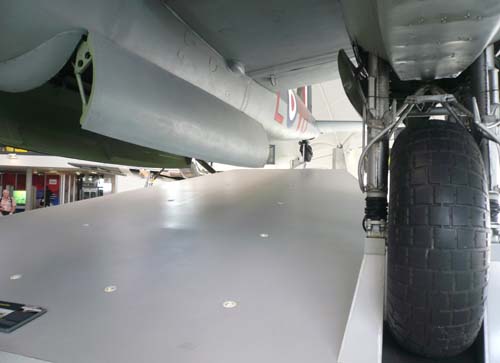
A bit closer. You can see why Mosquito crews had to be careful of these propellers. They are so close to the fuselage:

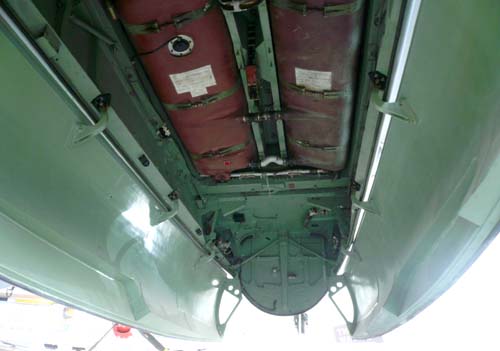
Here’s the bomb bay:

And even closer up:

The Mosquito was capable of carrying 4,000 lbs of bombs. Best of all, it had an uninterrupted bomb bay, with no struts or barriers to prevent the aircraft from carrying a 4,000lb Cookie. That meant that two Mosquitoes and the four men in them could carry the same as a B-17 with 10 men. A Lancaster carried 14,000lb with 7 men, the only heavy bomber capable of outdoing the Mosquito in this kind of contest.

Here’s one of the two very powerful Merlin engines. Behind it, something so modern and so boring that nobody would want to fly it:

Did you spot the mystery item behind the Mosquito on the left? My guess is that it is part of the lighting system or perhaps a flying Stealth Lawnmower invisible to radar.

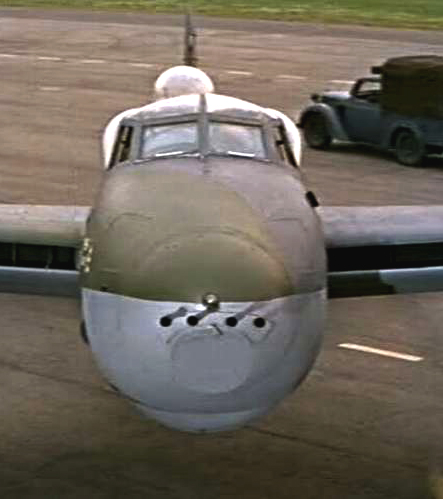
Here’s where the bombardier sat. The next time you watch “633 Squadron”, notice how the inaccurate swines have painted over the Perspex in a vain effort to disguise a bomber pure and simple as a fighter bomber with four cannons:

It’s so shocking and so obvious when you look at it:

One thing you can be sure of though. This particular Mosquito was not in “633 Squadron”, surely the only flying Mosquito in the world that was not used. Perhaps it was an economy measure. The owners of all those different Mosquitoes did charge a whopping £2 a day to rent one.

The last photograph shows two people (not with me) and three other aircraft. One is Japanese and if it’s not a Kawasaki Ki 100 then I don’t know what it is. The World War I aircraft top right, I really don’t know what that is, either. I’ve just forgotten. Perhaps an SE5?

The aircraft on the left has the distinctive tail of the Fokker DVII and guess what? It is one!


A note to say that my hand is now capable of a little light typing so I have managed to catch up on my replies to all the kind comments you made on my previous six blog posts. From now on, it should be back to normal, although I am well aware that operations go in pairs, and it will only be a matter of time until the right hand needs a full service.


30 Comments

Filed under Aviation, Bomber Command, Canada, History

In for a penny, In for a pound : The Adventures and Misadventures of a Wireless Operator in Bomber Command (2)

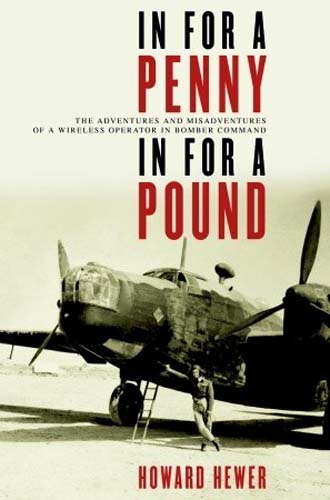
When I wrote the first part of my review of the book “In for a Penny, In for a Pound : The Adventures and Misadventures of a Wireless Operator in Bomber Command” written by Howard Hewer, I had never written a book review before, so I suppose I can now say “Welcome to my second book review”.

Last time I mentioned how the author talked about his experiences in the RAF in Britain, but how he was then transferred to the Middle East, bombing the Germans and Italians with Vickers Wellingtons:

In actual fact the Wellington was probably the best bomber used in this theatre of war in the early years. At least they weren’t using these Bristol Bombays as bombers:

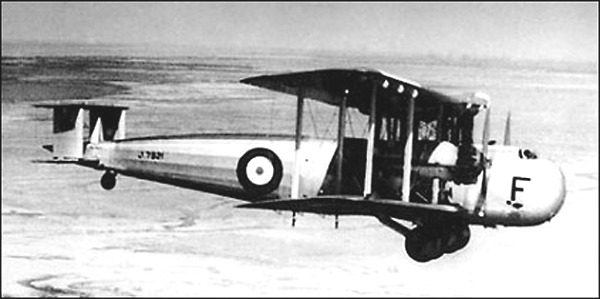
And they weren’t forced to use these biplanes as bombers, for want of any aircraft at all (which did actually happen!):

Howard Heyer describes how the anticolonial attitudes encountered in England continued in the Middle East when he is posted to RAF Kabrit near the Suez Canal:

At Kabrit, the Station Commander lived in a “sumptuous two storey permanent house”. The officers were all billeted in nice wooden houses next to the Officers’ Mess but the sergeants lived elsewhere, in the desert, sleeping on straw mattresses in tents outside the camp. The single shower was just a pipe with no showerhead and the water was heated by the sunshine. The food wasn’t very good either with the buns at Christmas dinner containing not caraway seeds but weevils, regarded by the rather cynical diners as a valuable source of protein. Here is the author, in the middle of the crew of five:

When the time came for introductions, the commander of the base, Squadron Leader B, singled the two Canadians out from the rest and said:

“I see that two of you are Canadians. I’ll tell you right now that if we have any trouble with you, it’s the high jump for both of you.”

Howard is flying combat missions at such long range that they need to land their aircraft at airstrips in the desert both on the way to the target and on the way back. That doesn’t prevent the station commander, who doesn’t fly in combat, stopping his car as he drives past Howard and telling him off for having a button which is not shined properly. Such attitudes eventually lead to a mutiny.

On January 29th 1942, Squadron Leader B had a notice put up ordering:

“All aircrew are to report, properly dressed, to the Station Warrant Officer’s Office at 1300 hours”.

Every member of aircrew had already “been on Ops” in the previous week and in some cases, the night before:

In such cases, men are supposed to have a whole day’s rest with no reporting anywhere. The fact that the Station Warrant Officer has the nickname, “Louie the Rat”, probably sums up the attitude of the 50 men who assembled. He told them to draw rifles for rifle drill. They told him that sergeants only carry side arms so they don’t do rifle drill. Louie then gave them the message from Squadron Leader B that the men were all slack and they all needed smartening up.

At the first command of “Order Arms”, an Australian gentleman told Louie a convenient place to stick his rifle and threw his gun to the floor. He was immediately placed under close arrest and marched off to the Guard Room followed by 50 or so angry sergeants of all nationalities who demanded to be placed under close arrest as well.

And the account goes on from there for another couple of pages. Again, something I have never heard of before, and, like the Cranwell Riot, unknown to Google as well. The book does have a good summary of the situation though, one which could have been applied to a good many RAF bomber squadrons during this period…

“…a long period of minor abuse and lack of caring, a condition of “negative leadership.”

And what’s “negative leadership”?

Well, it can perhaps be summed up in the words of the officer who welcomed the crews to RAF Marham, right at the beginning of the book…

“Well chaps, the glamour period is over. Casualties in this command have been high, and they are on the rise as we make more and more flights further into Germany. I must tell you then that many of you will not be with us a few weeks or a month from now. Good luck to you all.”

Unbelievably, this officer was outdone by the Squadron Medical Officer:

“I hope it doesn’t happen to any of you, but in the event that you find yourself trapped in a burning aircraft with no chance of escape, best to get things over with in a hurry. Lean directly over the flames, open your mouth and inhale strongly. The fire should scorch the lungs and cause almost instant death, much preferable to burning slowly. Well good luck chaps.”

The Bomber Command men, all volunteers, of course, and a huge proportion of them from Australia, Canada and New Zealand, still got on those planes and did their jobs, often at the expense of their lives. The book concludes on a more positive note:

“I have never considered myself a brave man. But I was put into the company of brave men, and I could not very well have let them down.
I don’t believe I did.”

And my overall verdict? It’s a book very well worth a look especially if you can pick up a copy with a bit of history!

One final point I would like to make is that I had a minor operation on my hand recently and for that reason I will not be able to reply to any of your comments in the immediate future. If you do want to make a comment, by all means please do so, but I will not be able to write any replies until after December 6th as a minimum. After this date, with luck, I should be back in business.


30 Comments

Filed under Aviation, Bomber Command, Canada, History, Politics

The Mosquito at Hendon (1)

“Knock, knock.”

“Who’s there?”

“Amos.”

“Amos, who?”

“A Mosquito.”

Terrible, but according to my Dad, a genuine RAF joke from World War II. Well, I suppose they had to do something while they waited for colour television to be invented:

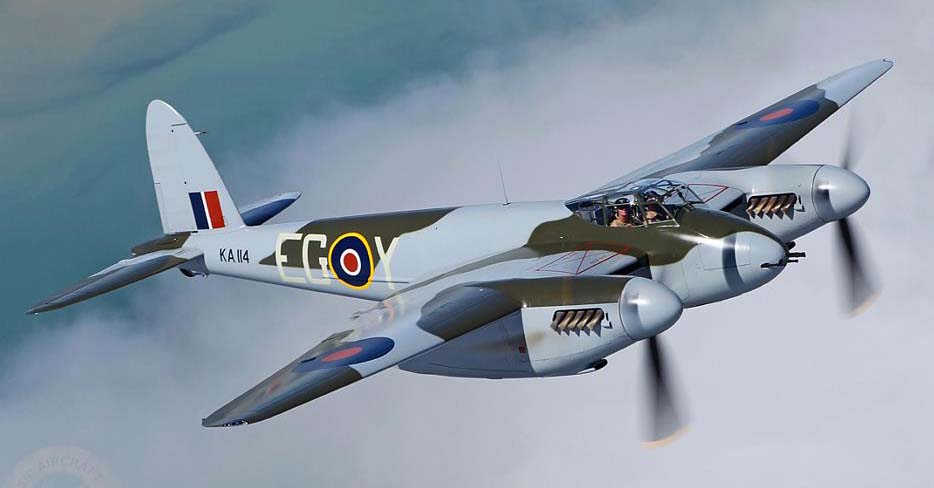
Of all the exciting aircraft of World War Two, the De Havilland Mosquito is perhaps the most exciting. This amazing aeroplane really was the result of thinking outside the box.

Give it powerful engines. Make it more or less entirely out of wood. It will be so fast that no enemy fighter will be able to catch it. It will be one of the few bombers of any era which was regularly unarmed. No surprise that it was nicknamed “The Wooden Wonder”:

And so it came to pass, although the Mosquito could not escape the rule which says that every fast aircraft ever built always has its speed reduced by being forced to carry something extra under its wings.

The very first Mosquitos made their début in May 1942 as daylight bombers. After that, they found work with the Pathfinder Force and performed many other tasks within Bomber Command.

The Mosquito was a great success as a night fighter and an intruder aircraft, as well as an anti-shipping strike aircraft. They were used for photographic reconnaissance at both low and high level by the Royal Air Force and the United States Army Air Force. Some Mosquitoes managed a huge number of missions, as their casualty rate was less than 0.5%.

We went to RAF Hendon in July 2010 and of course, they have a Mosquito there. According to their maze of a website, I eventually found out that TJ138 is a bomber variant, the Mosquito B 35, capable of a maximum speed of 422 mph and a cruising speed of 276 mph. I think only an Me262 jet would be able to catch that.

The B35 was the final mark of this amazing aircraft and it made its first test flight on March 12th 1945. This particular B35 was built in 1945 at Hatfield as part of a contract for 80 aircraft. It was never used in combat and indeed went into storage at No.27 MU Shawbury, Shropshire as early as August 28th 1945, with another period in storage from May 20th 1948. In October 1950, it was sent to Celle in West Germany with 98 Squadron, which means that TJ138 is the only Mosquito still in existence which actually served with a squadron. In 1953 it was converted into a target tug and eventually finished up flying THUM flights. A lovely acronym which means “Temperature and Humidity Flight”.

And to finish the first instalment, here’s a picture of this very Mosquito, TJ138, waiting patiently to go off on some more THUM flights:

One final point I would like to make is that I had a minor operation on my hand recently and for that reason I will not be able to reply to any of your comments in the immediate future. If you do want to make a comment, by all means please do so, but I will not be able to write any replies until after December 6th as a minimum. After this date, with luck, I should be back in business.

39 Comments

Filed under Aviation, Bomber Command, Canada, History

In for a penny, In for a pound : The Adventures and Misadventures of a Wireless Operator in Bomber Command (1)

I haven’t written a book review before, but last week I was quite struck by this particular book, entitled “In for a penny, In for a pound : The Adventures and Misadventures of a Wireless Operator in Bomber Command” written by Howard Hewer. It is by no means a new book. My copy was published in 2000 and I bought a used copy from Abebooks. It was from a bookseller in Toledo, Ohio and the book had been a Library Copy from Greater Victoria Public Library at 735 Broughton St, Victoria, British Columbia, V8W 3H2, Canada.

With used library books, especially foreign ones, I always spend time wondering where the book has been, who borrowed it, what their lives were like and so on. I was most intrigued to find a till receipt still inside, detailing the book’s being taken out at precisely 10.41 am on June 16th 2001. Who read it? Did they enjoy it? And most exciting, did they get it back to the library on time by June 30th?

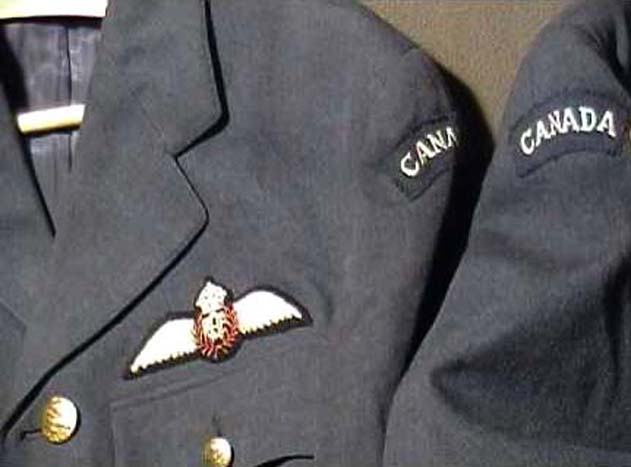
The book tells the story of a young Canadian who joins up and then spends the war in the RAF, mainly in Europe and the Middle East. He is in Bomber Command where casualties, of course, were enormous. There are, really, any number of such books. Some are written to be exciting, some to be poignant and some as detailed historical records. This one is a little bit different and tells the story from the point of view of a Canadian:

I just did not realise that the British would drag innocent young blokes half a world away from their homes to do their fighting and then insult them for their pains…

“We encountered the ‘colonial label’ usually with some snide remark. We grew restive and increasingly rebellious.”

Their reactions were pretty easy-going though, compared to one group. The Aussies:

“erupted in a near riot and refused to appear on parade or in class…Things reached a climax one day in the mess hall. This day the food was particularly inedible and one Aussie grabbed his plate and flung it against the wall just as an RAF air commodore walked through the door…this was not an isolated incident”.

Indeed, he speaks of the Canadian involvement in the “Cranwell Riot”, calmed only by the intervention of Canadian diplomats and Canadian officers. This may be what is being referred to in “The Cream of the Crop: Canadian Aircrew 1939-1945” by Allan D English (page 120) but I haven’t read that book yet. I could find nothing about the episode on the Internet.

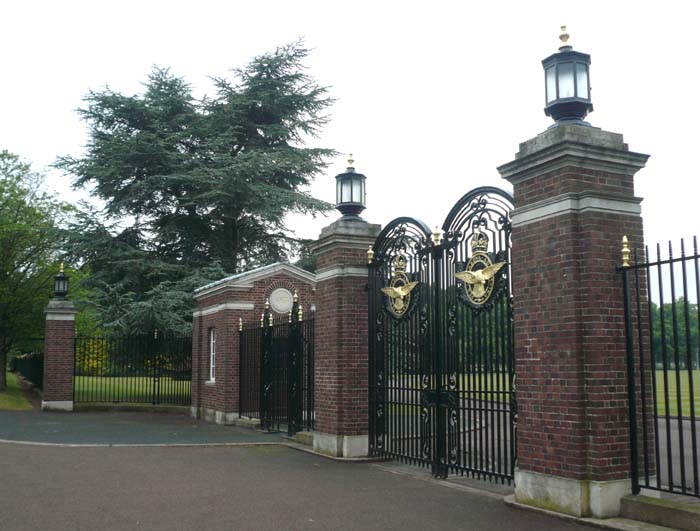
We visited Cranwell in May 2010. It was a dull rainy day but here is the main building:

The gates are typical architecture of the time:

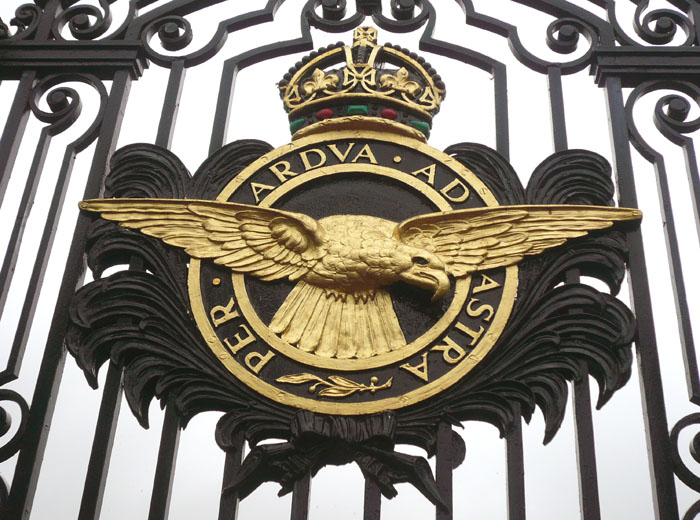
They are decorated with the superb badge of the RAF:

I read a lot about the RAF in World War Two but this book presents so much that is new to me. One intriguing footnote tells of the author’s neighbour in 1995 who told him of a fairly amazing incident. The Irish, always pretty anti-English at that time, were supposedly allowing U-boats to refuel in Cork Harbour, so, in late 1942 or early 1943, the RAF sent a force of 8 Blenheims to bomb the harbour “most bombs purposely landing in the bay.”

Well, I’ve never heard this before, but that doesn’t mean it isn’t true. Some 20,000 Irishmen from the Republic were in the British forces, but there were a good few who were very sinister in their activities. In his book, “Clouds of Fear”, Roger Hall alleges that more than one RAF flyer was killed by Irish parachute packers who deliberately sabotaged their parachutes. The men murdered this way included a young man from the High School but that is, as they say, a story for another day.

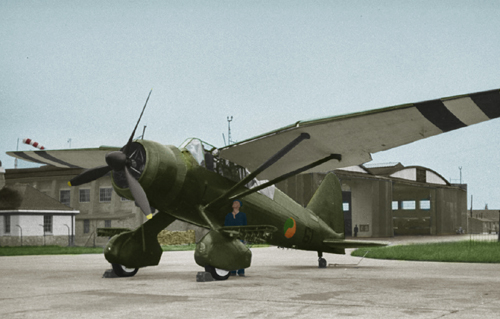
Bombing Cork, even Blenheims would have been safe from the Irish Air Corps, who used Lysanders:

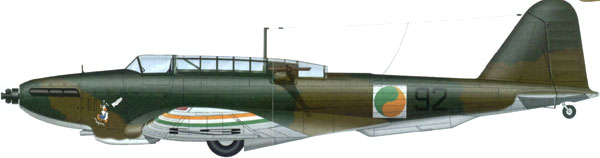
And the Fairey Battle:

Going back to Howard Hewer’s book, when he was posted to the Middle East, I was really surprised to hear for the first time, of the practice in North Africa of bombing targets which were so far away that the aircraft had to refuel both on the way there and on the way back. The book discusses the conditions at these stopover sites “situated on dried up salt lakes…We carried our bomb load from base, and had to land fully and lethally loaded…we slept on the floor of the aircraft in winter, under the wings during the summer months…we were not issued with sleeping bags…” Presumably, the advent of B-24 Liberators would have helped to phase out these stopovers which were unavoidable with the Wellingtons:

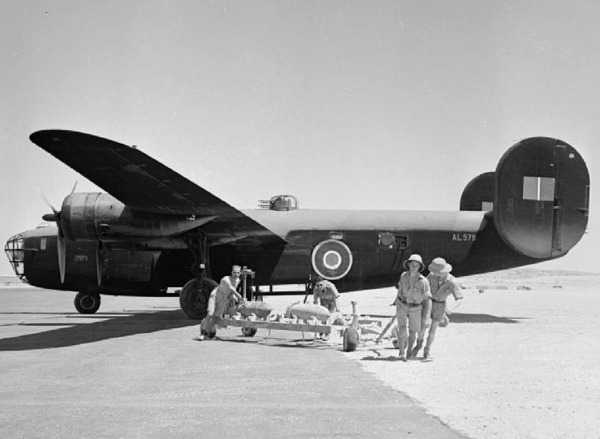
The Liberator had a much better range. Here is one of the first that the RAF received:

Next time, I’ll carry on with Howard Hewer’s adventures in Egypt. There are many more stories about the RAF officers that I had never heard, but they all have that ring of truth.

21 Comments

Filed under Aviation, Bomber Command, Canada, History, Literature, Politics

And here is the news (4)……

I was talking last time about a book which I have started writing about the High School’s war dead from World War 2. At the moment, the book has no title but that will emerge!

I intend to incorporate a few poems in the book. You will be glad to hear that none of them are by me.

One comes from the writings of ‘Granta’ in the School Magazine, The Nottinghamian. To paraphrase his words:

Nine Nottinghamians,
At the Forest Road gate,
One went to Bomber Command,
And then there were eight.

And the poem by John Maxwell Edmonds:

Went the day well ?
We died and never knew.
But, well or ill,
Freedom, we died for you.

This poem was written by R. W. Gilbert and was featured by my friend Pierre Lagacé in his blog « RCAF 425 Les Alouettes »

REQUIEM FOR AN AIR GUNNER.
The pain has stopped, for I am dead,
My time on earth is done.
But in a hundred years from now
I’ll still be twenty-one.

My brief, sweet life is over
My eyes no longer see,
No summer walks, no Christmas trees,
No pretty girls for me.

I’ve got the chop, I’ve had it.
My nightly ops are done.
Yet in another hundred years
I’ll still be twenty-one.

I may incorporate a poem by a Bomber Command veteran, John Pudney:

“Do not despair

For Johnny-head-in-air;

He sleeps as sound

As Johnny underground.

Fetch out no shroud

For Johnny-in-the-cloud;

And keep your tears

For him in after years.

This slideshow requires JavaScript.

Better by far

For Johnny-the-bright-star,

To keep your head,

And see his children fed.”

I have not decided yet on which ones I will definitely use, except for the  following words which will certainly appear. They describe perfectly the job that, hopefully, I will have done. They were written by (possibly Robert) Wace, a Norman poet who was born in Jersey in the Channel Islands between 1099 and 1111 and who was last known to be alive in 1174. Wace was brought up in Caen in Normandy and eventually became Canon of Bayeux:

Eventually
All things decline
Everything falters, dies and ends
Towers cave in, walls collapse
Roses wither, horses stumble
Cloth grows old, men expire
Iron rusts and timber rots away
Nothing made by hand will last
I understand the truth
That all must die, both clerk and lay
And the fame of men now dead
Will quickly be forgotten
Unless the clerk takes up his pen
And brings their deeds to life again.

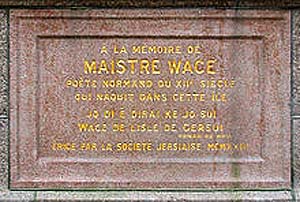
In Jersey’s Royal Square stands the States Building and a granite memorial  stone to Wace is built into one of its side walls:

It has on it a proud quote from Wace’s major work, the Roman de Rou, the Tale of Rou, which tells the story of William the Conqueror and the Norman Conquest, including Halley’s Comet :

Jo di e dirai ke jo sui
Wace de l’isle de Gersui

In Modern French it would be

Je dis et dirai que je suis
Wace de l’île de Jersey

And in English

I say and will say that I am
Wace from the Island of Jersey

It is also recorded in Modern Jèrriais, a language I had never heard of, but it still has an admittedly declining number of speakers on the island :

J’dis et dithai qu’jé sis
Wace dé l’Île dé Jèrri

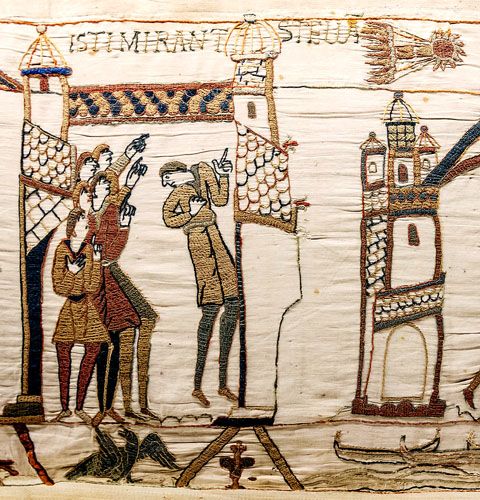
It was Wace who introduced the idea of Halley’s Comet to the Bayeux Tapestry story:

Watch what you’re doing with that arrow !!!!  You’ll take somebody’s eye out !!!!

Because I am a registered Nerd / parce que Je suis un geek de la langue française, I have the poem in Modern French and whatever language Wace spoke as well…Norman, Medieval French, Medieval Jèrriais, whatever. In the first section I have put ye Olde Frenche firste, and then modern French in Italics and then English. In the second section, see if you can think of the modern French words that ye Olde Frenche comethe fromme ….

Tote rien se tome en declin
Tout  décline
All things decline

Tot chiet, tot muert, tot vait a fin
Tout meurt, tout va à fin
Everything falters, dies and ends

Hom muert, fer use, fust pourrist
L’homme meurt, le fer use, le bois pourrit
Men expire, iron rusts and timber rots away

Tur font, mur chiet, rose flaistrit
la tour s’écroule, le mur tombe, la rose flétrit
Towers cave in, walls collapse, roses wither,

cheval tresbuche, drap viesist
cheval bronche, drap vieillit
horses stumble, cloth grows old,

Tot ovre fet od mainz perist
tout ce qui est fait de la main des hommes périt
Nothing made by hand will last
………………………………………..

Bien entenz è conoiz è sai,
I hear the truth well and I am aware and I know

Ke tuit morront  è cler è lai;
That all must die, both clerk and lay

E mult ara lor renomée
Emprez lor mort corte durée

And the fame of men now dead
Will quickly be forgotten

Se par cler ne est mise en livre,
Unless the clerk takes up his pen

Ne pot par el durer ne vivre
And brings their deeds to life again.

Wace, Romain de Rou, III, II, 131-142
(c 1170)

The translation is not such a close fit in the second bit rather than the first.


26 Comments

Filed under Aviation, Bomber Command, History, Nottingham, The High School, Writing

Eagle Comic foretells the Aeronautical Future

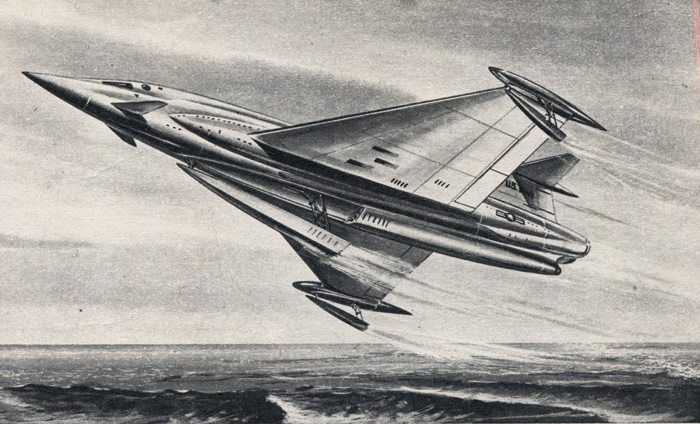
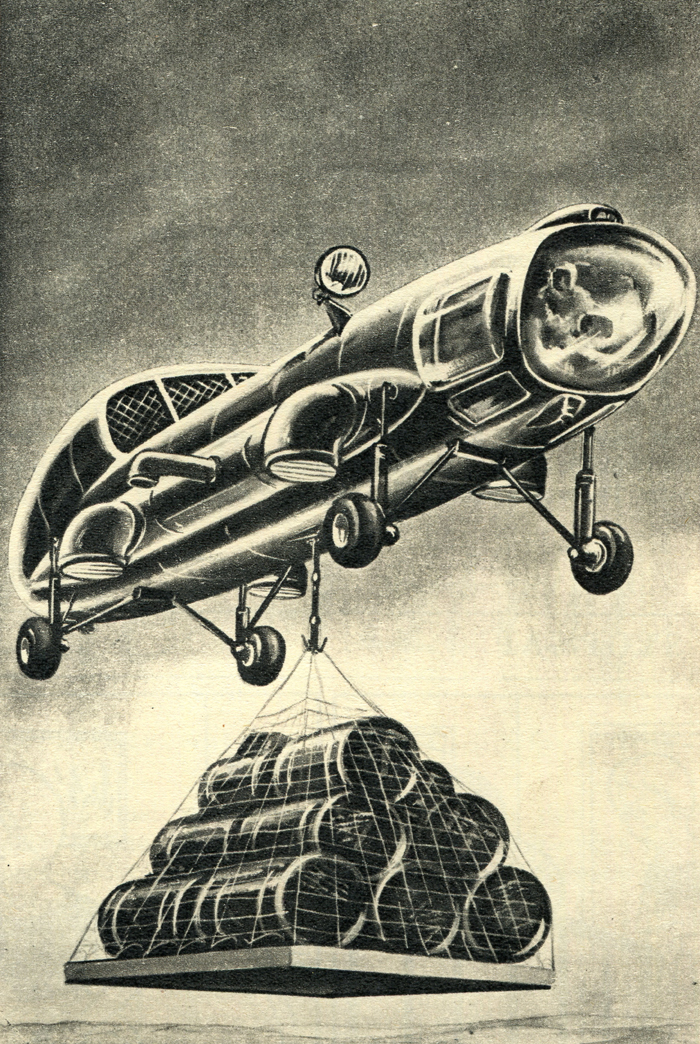
In 1962, Eagle Annual carried an article about the aircraft of the future.

I thought I would take just a quick look with you at what the aviation buffs of that distant time though we were going to see in 2017.  This was one of their suggestions:

Strangely reminiscent of a Convair Sea Dart for me. Did the writers know something that the readers didn’t know?


This slideshow requires JavaScript.

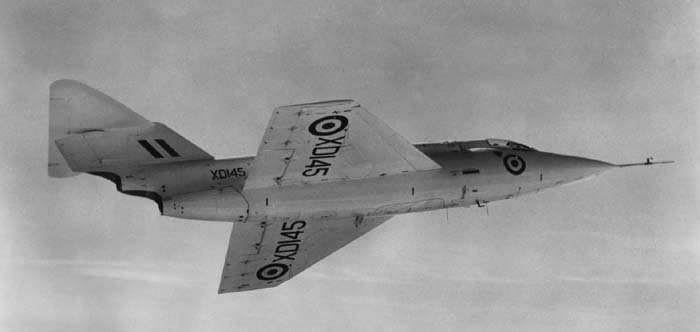
Alternatively, was it the doppelgänger of the Saunders Roe SR53? The rocket powered interceptor of the 1950s that was so unlucky to have been scrapped. It would have been a brilliant aircraft. And why didn’t the Germans buy it?

Here’s one I photographed myself at RAF Cosford, I think:

Here’s another suggestion from Eagle:

Rather like the B-70 Valkyrie, n’est-ce pas?

This is more like a completely fresh thought, not based even subconsciously on anything the writers had ever seen:

Well, perhaps not. This is Fireball XL5 from the Gerry Anderson puppet series of the same name:

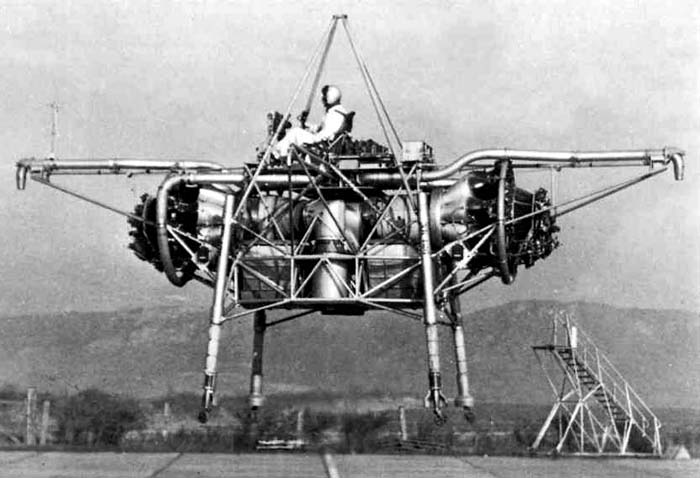
The likeliest aircraft to make the cut is this VTOL workhorse. It’s rather like the cultivated well mannered cousin of the Flying Bedstead:

The Flying Bedstead, of course, had no covering of any kind over the structure of the machine:

Although the Short SC1 did, and that took it a huge leap towards the Eagle VTOL aircraft of the future:

To me, it almost looks as if the writers of the Eagle article, perhaps subconsciously, included real aircraft, usually experimental types or prototypes, in their portfolio of supposedly imaginary aeroplanes of the future.

This was the real aircraft of the future when it made its appearance:


23 Comments

Filed under Aviation, Film & TV, History, Personal, Science

And here is the news (3)……

In my Last Post, I told you what I had been up to of late. I have always been very impressed by a fellow teacher and friend of mine, Simon Williams, who has researched at very great length the young men from the High School killed in the First World War:

This slideshow requires JavaScript.

I decided that I would have a look at the war dead from the Second World War and I have been working for the last 18 months, two years, on researching those particular individuals.

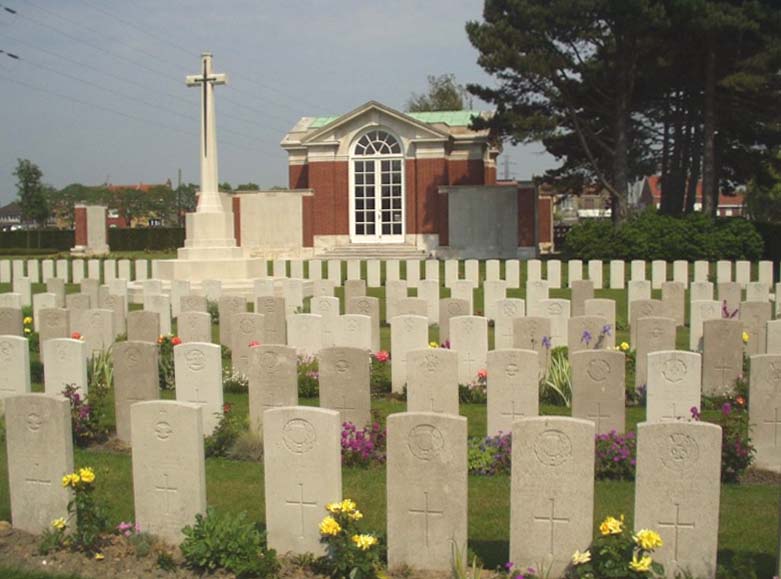
I have been sadly surprised at just how many of them there were. I started with 82 from the official list but I have now pushed it up to at least 105 with probably quite a few more to come. The reason for this is that if Frederick Cyril Smith of 189, Station Road, Beeston, attended the High School from May 10th 1901 onwards, there is no way of being 100% certain whether or not he is the same Frederick Cyril Smith who was Able Seaman Frederick Cyril Smith, killed on May 23rd 1941 on HMS Zulu, particularly if there are no details of either his age, home address or parents’ names recorded on the Commonwealth War Graves Commission website:

And so far, I have found around 150 such cases, all of which are possible matches. They won’t all be ex-High School pupils, but if only one of them is an Old Nottinghamian then I don’t want to miss him.
And there is absolutely no way of guessing. One Old Nottinghamian was called Albert Frederick Aylott, born 1911, lived at 96 Glapton Road. Is he the same Albert Frederick Aylott as the Albert Frederick Aylott killed on March 31st 1945 in northern Germany ? In actual fact, probably not, but who would have thought so with such an unusual name?

On average, I’m producing around 4,000-5,000 words per person, listing his school record fully, his adult life before the war if possible and then his career in the forces with, hopefully, the reasons why he was where he was when he was killed. And if possible, the name of the man who pulled the trigger or pushed the button. The casualties took place everywhere, from Arnhem to Yugoslavia, with one ex-pupil who lived in Zimbabwe but was killed, probably, in Ethiopia.

Some more details next time.


14 Comments

Filed under Aviation, Bomber Command, History, Nottingham, The High School

The High School Hell’s Angels, Chapter 3

One fascinating thing which I found recently were all those old books which have been transcribed onto DVDs. They are sold on ebay in their hundreds. Some are not necessarily what I would want to read “Masonic Library, 430 Freemasons Books”, “Ukulele & Banjo, 29 Rare Vintage Books” and “Taxidermy, Vintage books on DVD – Stuffing and Mounting Animals, Birds, Insects and Fish”
I was happy to buy though, “76 Books, Derbyshire, Nottinghamshire, Mickleover, Headon, History Genealogy DVD”. It contains a lot about the history of Nottingham although the rest was not of much interest to me. That DVD, and another very similar one about Nottingham and Nottinghamshire, have provided me with a lot of information about the past. Above all, they have allowed me access to a number of different directories of Nottingham. So far I have, for example, the Pigot’s Directory for Nottingham for 1828 and 1841, the White’s Directory for 1832, 1864 and 1885, the MacDonald’s Directory for 1931, Slater’s for 1847, Wright’s for 1879 and Kelly’s for 1881, 1891, 1904 and 1928:

They are interesting in that they all tend to contain slightly different things, but basically they list all of the tradespeople in Nottingham, all of the business premises in the city, and the names of the occupants of all the different houses in all the streets of Nottingham.

So you might find a list of the city’s streets in alphabetical order, or all the people similarly listed, while other directories will provide the names of all the engineers, all the grocers. all the bicycle repairers and so on. It means that if you know Uncle George was a restaurant owner, you can often find out both where his business was and where he lived. And that may point you to the right place in a census. Very useful if you’re trying to trace your ancestors.
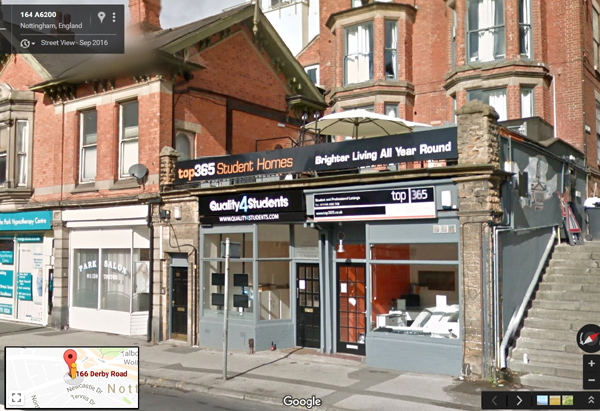
The directories also enable you to trace some of the changes in the use of individual buildings, buildings that you may walk past every day but don’t know the history of. One example would be the two premises on Derby Road, up near Canning Circus. One is called “Quality 4 Students” with the slogan “Top 365 Student Homes” :

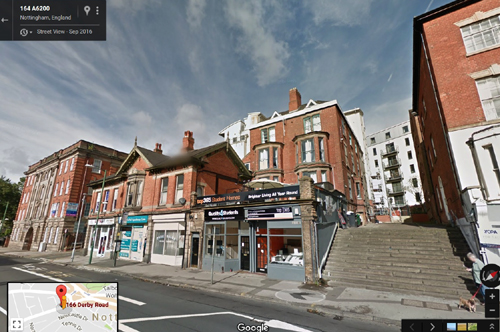
Next door, painted all white, there is what is now the “Park Hair Salon”. Here’s a view from further back:

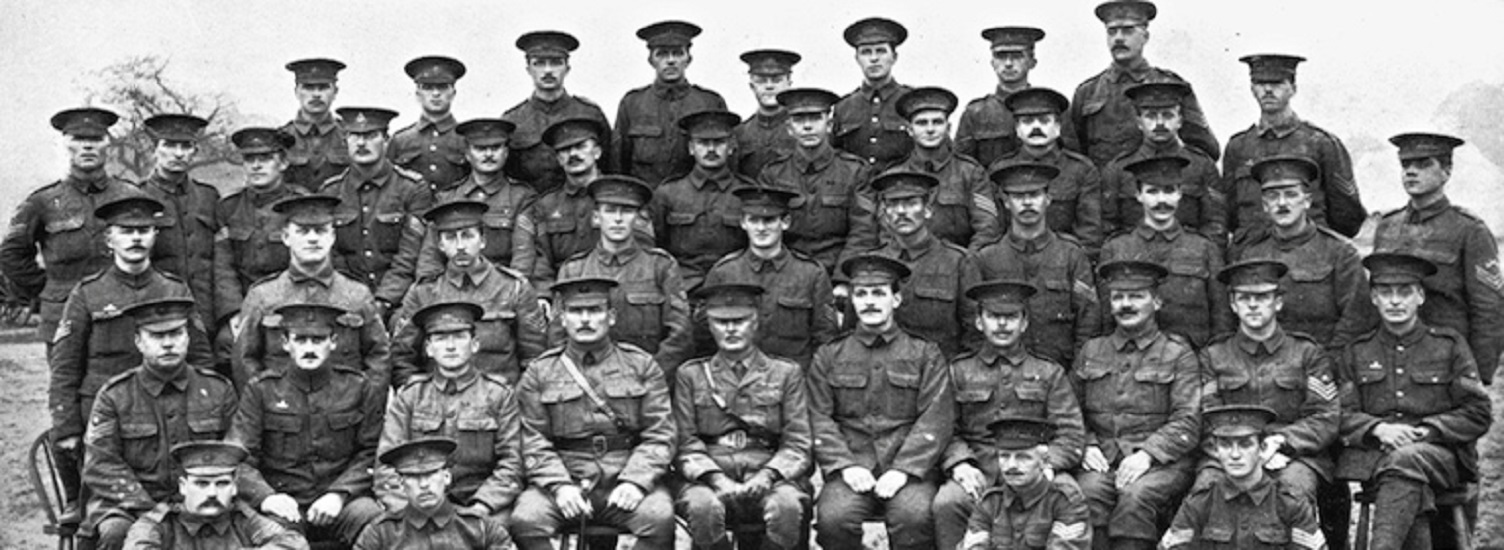
In 1928, the Park Hair Salon used to be the Headquarters of the Robin Hood Rifles, a local infantry regiment:

They used to have some wild, wild parties:

After that the building was derelict for a while and then it became “Butcher Brothers, House Furnishers”.

By 1928, both buildings had become the shop of AR Warren & Son, Grocers. I find all that fairly fascinating but more to the point perhaps, the directories also enabled me to uncover the humble beginnings of Alfred Highfield Warren, who was the “& Son” of “AR Warren & Son” mentioned above.  Alfred was an ex-pupil of Nottingham High School, and thanks to the High School, he was to move from being the son of a grocer to being the holder of an Open Exhibition at Worcester College, Oxford, a Nottingham City Scholarship to Oxford University of £50 per annum, and from the High School, a Sir Thomas White Senior Exhibition.

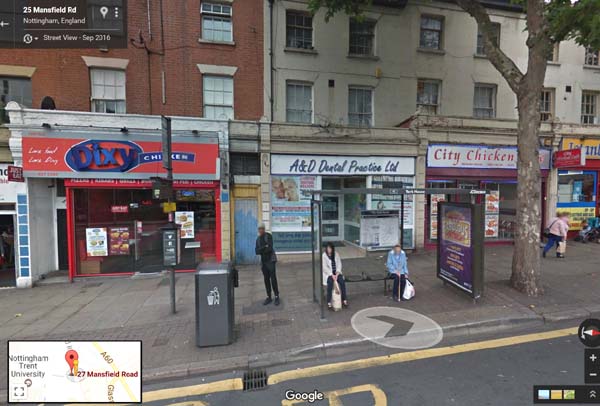
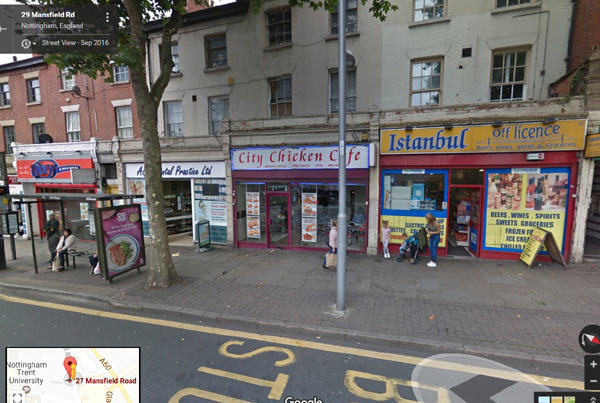
On Mansfield Road, there is nowadays the “A & D Dental Practice Ltd” and the “City Chicken Cafe”. In front of the Dental Practice is a bus stop used by hundreds and hundreds of High School boys every day…

And here is the City Chicken Café, sworn enemies of Dixy Chicken just two doors away and probably not too much in love with the Istanbul Off Licence next door.

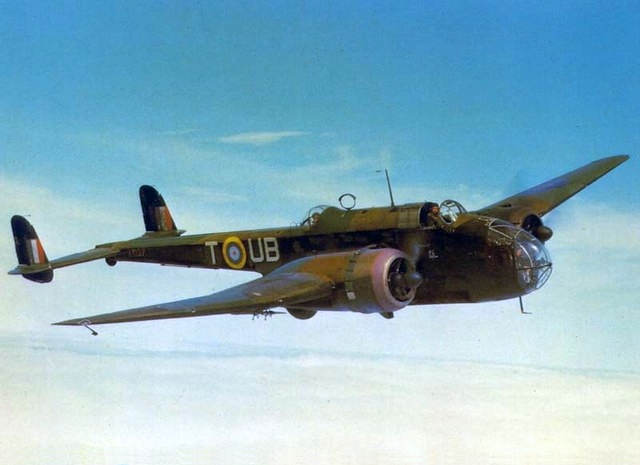
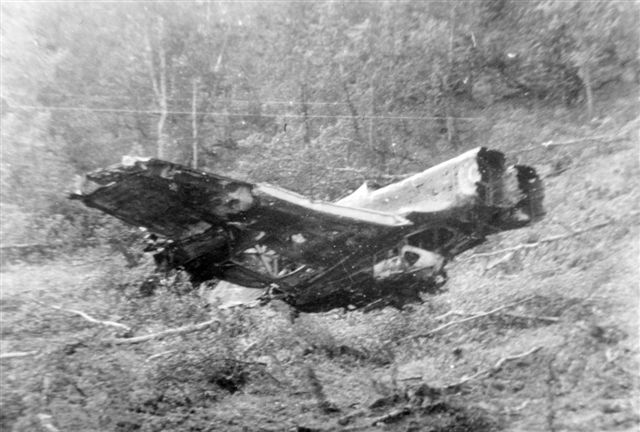
But in 1928, these two businesses, the “A & D Dental Practice Ltd” and the “City Chicken Cafe”, were the premises of LW King, a Draper who lived there with his family. That family included his son William King, a High School pupil, who became a pilot in the RAF in World War II. Alas, poor William was to die, with all his colleagues, in a catastrophic air crash in a Handley Page Hampden. Here is ‘Before’:

And here, far too often I’m afraid, is ‘After’

How many times have I walked or driven past those two businesses, but without realising they were previously the home of a young war hero? And how often do we do that in our everyday lives?


15 Comments

Filed under Aviation, Bomber Command, History, Nottingham, Politics, The High School

The Luckiest Man in the World (4)

Flight Sergeant Thomas Weightman, as we have seen, survived the crash at Dilhorne described in my last post The Luckiest Man in the World (3). Tom is listed as an Air Gunner. I suspect that he was the tail gunner and that is why he was not killed. The impact he had to endure was much less forceful at the back of the aircraft. Furthermore, he was further from any fire than the rest of the crew. And so, he survived. By this time he must have felt that he was extremely lucky. Perhaps he even experienced “survivor guilt”:

Let’s finish on a positive note. And one that explains the title of the post. After his fortunate escape, Tom Weightman joined 644 Squadron who flew Halifaxes and transported supplies for Special Operations Executive operatives, usually to Norway and Denmark:

On April 23rd 1945, probably without the dog, Tom flew off to Scandinavia in a Halifax Mark VII, serial number NA337, squadron letters 2P-X. It was Operation Crop 17, tasked with supplying the Norwegian resistance, the Ling, with 13 containers and 2 packages containing rifles, food, and clothes. These were successfully dropped but the aircraft flew off course by accident and was hit by German anti-aircraft fire. The pilot had to land somewhere, so he ditched the stricken plane in Lake Mjøsa which was the only flat area around:

The dinghy should have deployed automatically but it failed to do so. I presume that the members of the crew, as the cold, cold waters rose around them, must have decided to try to swim to shore. They could not have known that this was the largest lake in Norway. Alas, they all died from hypothermia. Flight Engineer Goronwy Amman Bassett (34) from Swansea. Wireless Operator Alec Naylor (22) from Oakenshaw in Yorkshire. Navigator Walter Reginald Mitchell (23) from East Dulwich in London. Bomb Aimer Gordon Russell Tuckett (23) from Cardiff and Pilot Alexander Turnbull (27) from Edinburgh.

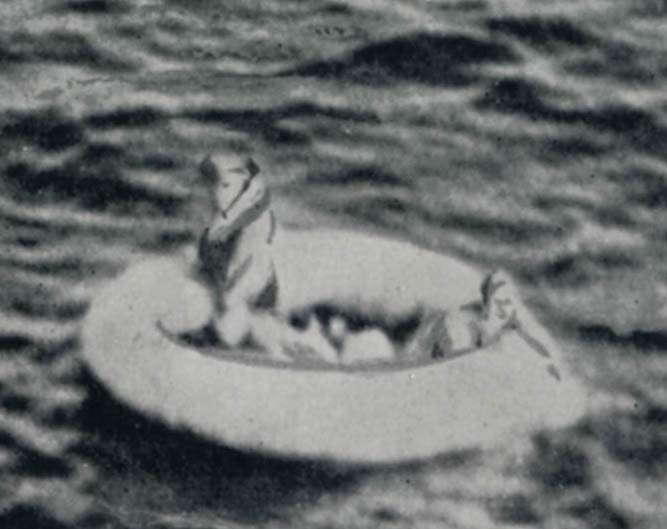
The Tail Gunner and “The RAF’s Luckiest Man”, Tom Weightman, meanwhile, had by now recovered consciousness after being knocked out by the impact of the aircraft hitting the surface of the lake. He awakened to find all of his colleagues had gone. Water was still rising inside the Halifax so he climbed out through the upper escape hatch and walked out onto the wing. The dinghy was still in its special cupboard in the wing so he climbed back into the aircraft and released it manually with a winch. He then set off paddling across the cold waters of the lake trying to find the rest of his crew. This is the only picture I could find of a deployed dinghy:

There were no replies, though, to Tom’s shouts and it was far too dark to see anybody in the ice cold water. When it got light, the locals found Thomas in his dinghy and looked after him and made sure he was in good health. And then, quite rightly, they handed him over to the German Army because they feared, quite rightly, appalling reprisals to their families if they harboured an RAF flyer. And after just 14 days of captivity, the war ended and Tom Weightman was a free man. He was to have 62 more years of life than his colleagues in the 644 Squadron Halifax and 63 more years of life than Jack Sweeney.

Even his plane was lucky. It lay sleeping peacefully at the bottom of the lake for 50 years. And then somebody’s sonar turned up a very strange fish:

And then the Halifax Aircraft Association dived down, found it, rescued it, restored it in magnificent fashion, took it to the RCAF Memorial Museum at Trenton in Ontario and there it remains to this very day. If you ever manage to see it, make sure you look carefully at the rear turret and wonder what made the man in it so special.:

The Norwegian lake is still there. In winter it freezes over and recently it played host to some of the events in the Winter Olympics:

I could not have written this blog post without recourse to this website.

36 Comments

Filed under Aviation, Bomber Command, History

The Luckiest Man in the World (3)

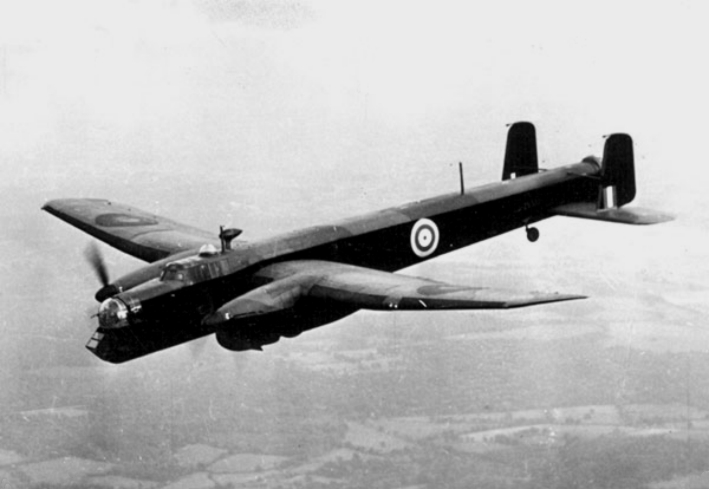
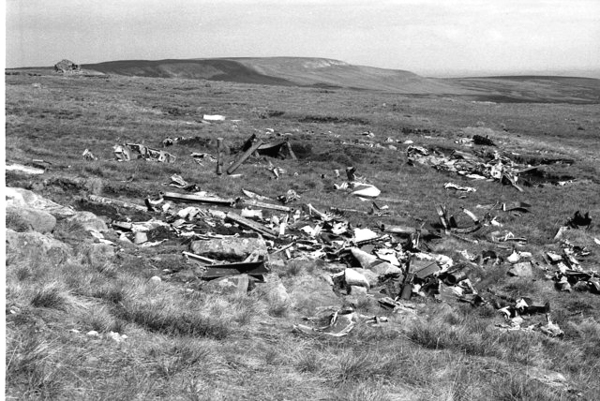
In a previous post, I told in the barest of details how Jack Sweeney was killed in an Armstrong Whitworth Whitley Mark V when he took off from RAF Tilstock on January 31st 1944:

During my researches I found a video on the Internet, uploaded by someone called “1tothirtysix”, which is an interesting walk around the crash site and puts together all the various details to produce a coherent account of what occurred.

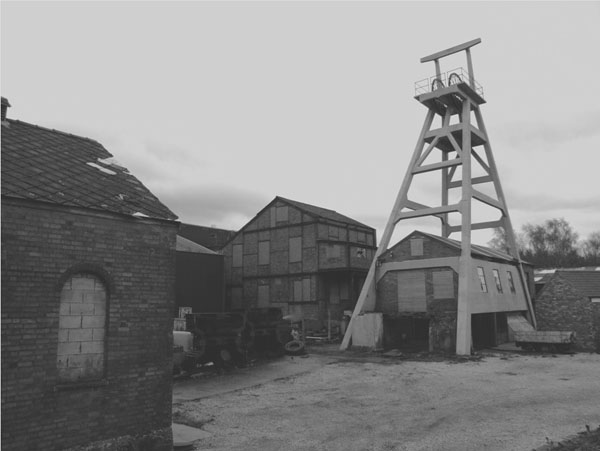
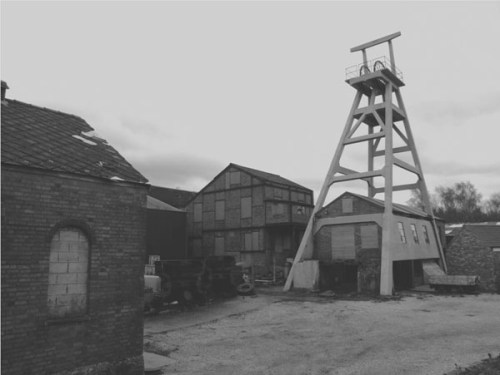
In March 1989, the land was still owned by the farmer at the time of the accident, Mr Challenor. He could remember coming to the crash site immediately after the impact, which took place around 8.30 in the morning. He found a sheet which obviously covered a body, and lifted it to see the blackened and burnt features of one of the aircrew. There was one survivor, Flight Sergeant Thomas Weightman who made his way along the hedge and then downwards to the mine which was operating then, although is now closed down. This is Foxfield Colliery which may be the mine referred to in the account. The tower like structure is modern:
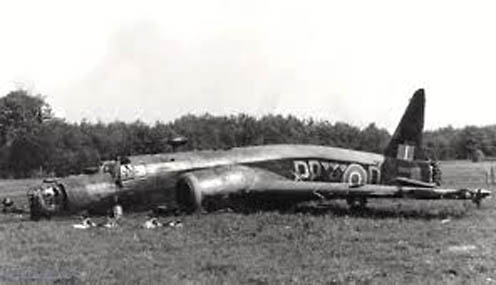
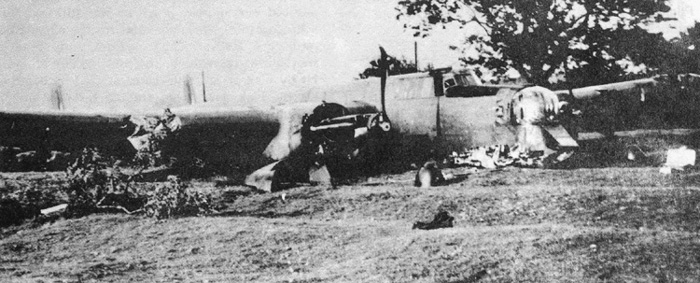
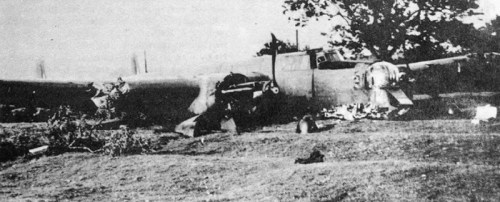
Once Flight Sergeant Weightman told the miners the news, they raised the alarm, although it was far too late by now. Indeed, the three other crew members were already dead even as Weightman climbed out of the crashed aeroplane. The bomber had first hit high up on the hill, half way between the two woods near the mine. Having hit this field near a pond, the aircraft careered across it, then smashed through a hedge and skidded, nose first, down the very, very steep slope to the good sized stream at the bottom. The Whitley finally came to a stop, smashed to smithereens with its nose almost in the water. The three dead crew members were still on board and when fire broke out, the bodies were all burned to a greater or lesser extent. This is a crashed Whitley:
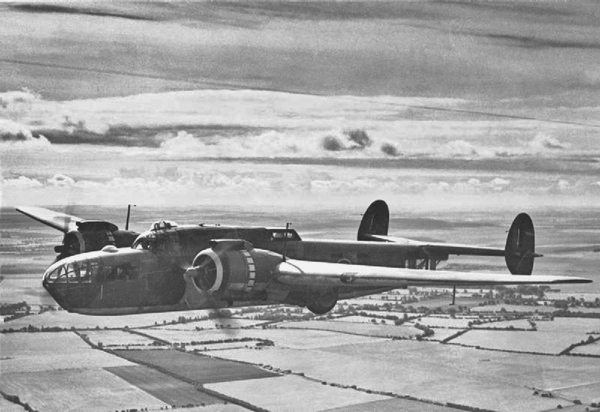
There were, of course, many, many crashes in this North Midlands area. The aircraft were extremely varied with 7 Wellingtons, 3 Whitleys, 2 Blenheims and 2 Halifaxes, but also 4 Thunderbolt P-47s, and single B-17s, Martin Baltimores, Fairey Battles and Armstrong Whitworth Albemarles. A majority of the aircraft were operated by either 27 OTU or 42 OTU. Here is an Albemarle:
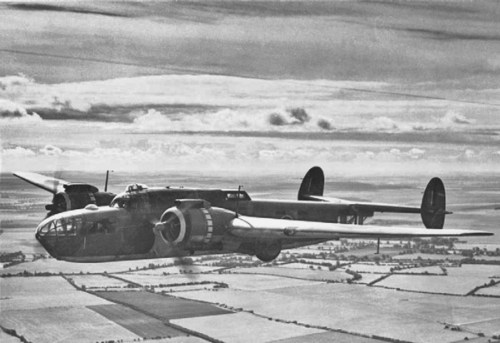
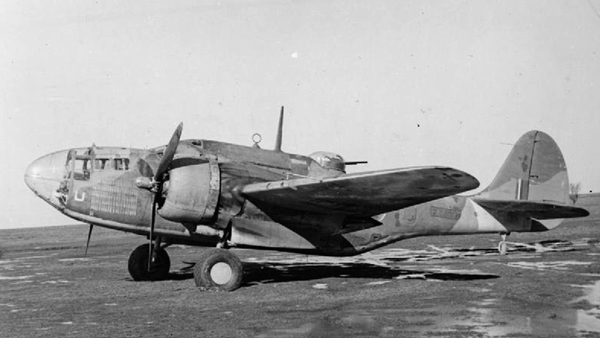
And here is a Martin Baltimore, used widely in North Africa and very popular with its crews:

Jack Sweeney was killed in January 1944. A brief look at all the OTUs in Britain during this month  reveals that every single fatality listed came in Wellingtons, a sorry state of affairs…January 1st (1 dead), January 2nd (6 dead), 3rd (7), 4th (5), 9th (2), 11th (5), 17th (2), 20th (5), 21st (10), 23rd (6), 24th (3), 25th(6), 27th (16), 29th (4), 30th (7).

After leaving an OTU, the next step for everybody was an HCU, a Heavy Conversion Unit. Here, trainees tried their hand at four engined bombers, usually Stirlings and Halifaxes. The deaths in January 1944 were, in Halifaxes… January 3rd (7 dead), January 10th (7 dead), 13th (6), 18th (6), 21st (7), 22nd (3), 23rd (9) and the 31st (6). In Stirlings, it was January 4th (5 dead), 14th (8), 20th (14), 21st (2), 26th (8), 29th (8) and 31st (5).

Quite a toll. In the OTUs, in just one month in 1944, a total of 85 men died.

In the HCUs, a total of 51 died in Halifaxes and 50 in Stirlings.

Not that far short of 200 dead without ever seeing a German.

A couple of pictures will show you why so many were killed. Here is a crashed Halifax:
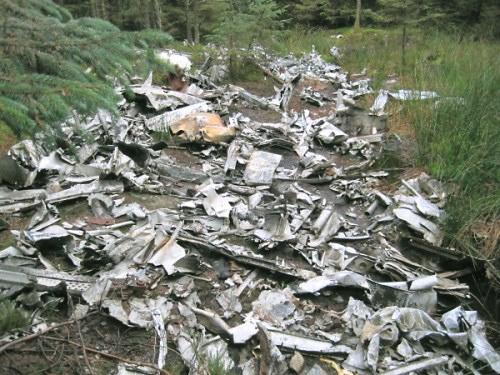
And here is a crashed Stirling:
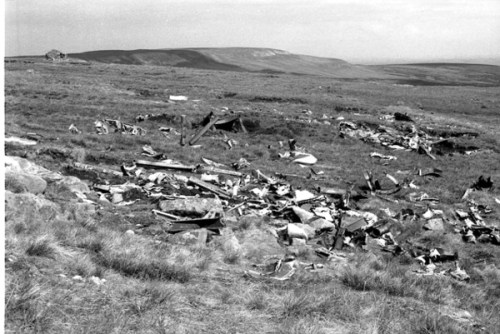
After further research, I was also surprised to see that Dilhorne where Jack Sweeney crashed was pretty much the local “Magnet of Death”, surrounded by higher ground and relatively close to a number of OTU airfields.

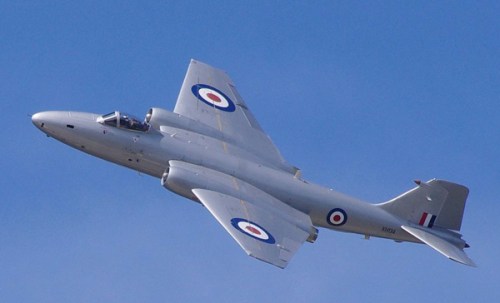
On January 30th 1943, a Wellington, R1538 of 28 OTU, crashed there after leaving RAF Wymeswold near Loughborough. Sergeant Thomas Butterly from Portsmouth and Sergeant Allan Priest from Reading were killed. On March 27th 1953, a jet bomber crashed at Dilhorne. It was a Canberra WH669 of No 10 Squadron. This resulted in the death of the Pilot, Flying Officer Patrick Esmond Reeve, the Navigator / Plotter, Pilot Officer John Golden Woods and the Navigator / (Set Operator), Vivian Owen.

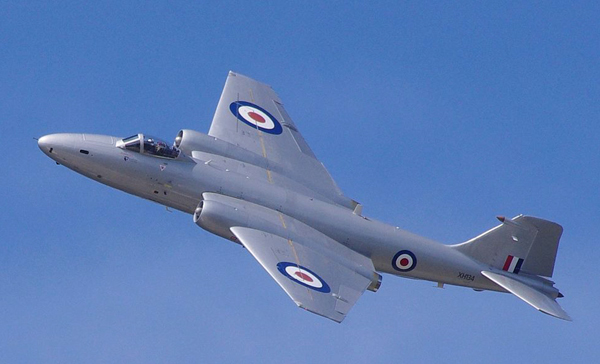
Here’s a Canberra:
Who died with Jack Sweeney?
Well, Flying Officer John Frederick Cusworth was the Navigator. He was the son of Harry Cusworth and Clara Cusworth, born in 1912 at North Bierley in the West Riding, 2 miles south east of Bradford. After a few years, the family moved to Pudsey, a market town now incorporated into the City of Leeds. John was 31 years of age and he was married to Grace Edna Bowen at Strood in Kent in 1940. The couple lived in Pudsey. John was cremated and his sacrifice is commemorated at Leeds (Lawnswood) Crematorium along with 73 others. His name is just visible on this side of the special column:

Sergeant George Victor Bourne was the Bomb Aimer. He was the son of Albert Ernest Bourne and Maude Penelope Bourne from East Ham in the London Borough of Newham. East Ham is right next to West Ham. George was only 21. Did he go to the football? Did he shout “Up the ‘ammers!!” every fortnight? Like John Cusworth, he would have had a strong accent. Did they joke to each other about the way they talked? George was buried close to the airfield, at Whitchurch, a small town in Shropshire near the Welsh border. There are 14 other Commonwealth casualties buried there, but also 52 Poles and Czechs because the No 4 Polish General Hospital was at Iscoyal Park, four miles to the west. This is the West Ham United badge:

Andrew Harkes Robertson was the Wireless Operator/ Air Gunner. He was 30 years old. He was the son of George Robertson and Lizzie Robertson from Edinburgh. Andrew was buried in Inveresk Parish Churchyard. Inveresk is a small village in East Lothian to the south of Musselburgh. It is so pretty that it has been a conservation area for the last 50 years or so. There are 72 casualties buried in the churchyard at St.Michael’s Church. Here it is:
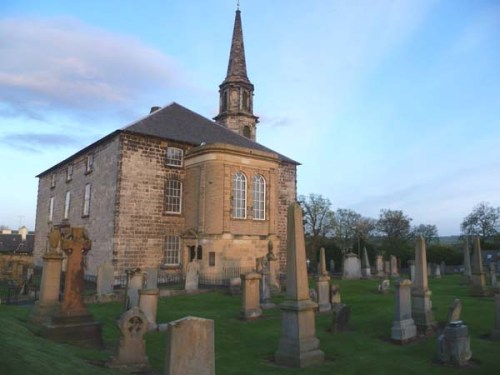

Flight Sergeant Thomas Weightman, as we have seen, survived his crash. I will tell you about him next time. He is the man who has given me the title of this series of blog posts. You will find out exactly why next time.

I could not have written these posts without help from here and here and here.

17 Comments

Filed under Aviation, Bomber Command, History