Category Archives: Aviation

Schweinfurt One: sixty B-17s downed, 559 airmen killed

I am sure that most people would understand the difference between “hot courage” and “cold courage”. During a robbery, the person who suddenly confronts the would-be robber and tries, as the English say, to “have a go” is showing hot courage. The same would be true of the person who tries to drag an unconscious victim out of a burning car crash. In the context of war, it may be the man who solves the sudden problem of an enemy tank by jumping onto the top of it and throwing a hand grenade in through the hatch.
All of these acts show great heroism, but as far as I am concerned, “cold courage” takes it all into a different dimension. “Cold courage” is the person who faces a painful terminal disease without losing his dignity. “Cold courage” is the person who sets off to walk along a highwire stretched hundreds of feet off the ground between two skyscrapers. “Cold courage” is the fireman who looks up at that staircase in the North or South Tower, and starts climbing, because he knows that it is his duty to try and save people, even if it may be at the expense of his own life. In the context of war, “cold courage” is the man who sits on his bunk for a whole afternoon, waiting for the chance to get into a bomber at nine o’clock and then fly off into the night skies over Germany, not only risking death, but knowing that, statistically, death is a very likely outcome. The only thing more difficult than doing this as far as I’m concerned, would be the chance to fly over Germany in broad daylight, when you have the opportunity to see exactly what is happening to everybody else, and may well happen to you.
Early on in the Second World War, the RAF tried to place their tiny bombs accurately on exclusively military targets during the hours of daylight when, theoretically, it should have been relatively easy to do so. The only problem was that the German fighters of the day were all easily capable of shooting down these poorly armed bombers without any real problems. Between May 10th-May 28th 1940, losses of the Bristol Blenheim bomber, for example, were almost unbelievable. (Search for “Known Individual Aircraft Records”)
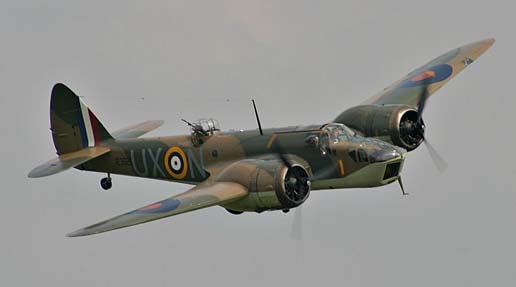
bristol-blenheim-xxxxx

For that reason, the RAF soon turned to night bombing. Equally swiftly, they found that it was virtually impossible to hit relatively small military targets with any accuracy at night. They would be better employed in bombing the areas of the city around the enemy factories, in an effort to kill or injure the workers who worked there. This new tactic carried out the directive that had been agreed on at the Casablanca Conference.

“Your Primary object will be the progressive destruction and dislocation of the German military, industrial, and economic system, and the undermining of the morale of the German people to a point where their capacity for armed resistance is fatally weakened.”

When the United States came into the war in Europe, effectively in 1942, their bombers were equipped with the famous Norden bombsight, which was supposedly capable of dropping a bomb into a pickle barrel from 30,000 feet up. Putting their faith into the bombing accuracy achievable with their marvellous bombsight, the Eighth Air Force ignored British advice that, because of the very high standards of Luftwaffe fighter pilots, bombing at night was the only sustainable method of carrying on the struggle against the Germans. The Americans, therefore, persisted with their daylight raids.

B-17G%20Flying%20FortresszzzzzzzzAfter a few months of daylight bombing, much of it over France rather than the Reich itself, the idea was mooted that enormous and significant damage could be inflicted by bombing the German factories which produced ball-bearings, as they were vitally important to the entire German war machine. Virtually every single military vehicle and aircraft depended on them. The Mighty Eighth, therefore, exactly a year to the day after their first gentle raid, Mission 1 on August 17, 1942 against the Sotteville Marshalling Yard at Rouen in France, decided to attack these important factories . This would be Mission 84, scheduled for August 17, 1943, a complex two-pronged attack on the ball-bearing works at Schweinfurt and the Messerschmitt aircraft works at Regensburg. The raid would be the furthest penetration into German territory to date, some 800 miles from the coast. What happened is the most wonderful example of “cold courage” that anybody could wish to meet.
The greatest problem for the Eighth Air Force was that none of their own fighters, nor those of the RAF, had anywhere near the range required to escort the slow, heavily laden B-17s to their targets. The main defensive tactic, therefore, was to form up the Flying Fortress bombers into huge boxes, where, theoretically, every single aircraft could protect, and could be protected by, all the other aircraft.

1157x829xBoeing-B-17E-Flying-Fortresses-form-up-over-England-1942_jpg_pagespeed_ic_CkVpDznVhI

This procedure took a very long time to organise with hundreds of bombers to be fitted into the formation. And this was the first problem: all this activity was completely visible to the German radar. I can remember my own father telling me how he had watched these brave young men get ready to go into battle…

“ On a number of occasions, Fred had stood on a long forgotten airfield in East Anglia and watched the American Eighth Air Force prepare to depart on a daylight raid over Germany. Their B-17 Flying Fortresses would circle seemingly for hours over their bases, as they slowly and precisely formed up into their famous defensive boxes, intricate arrangements of, perhaps, up to a thousand heavily armed bombers whose almost countless machine guns, in theory, were capable of offering covering fire to all of their fellow aircraft. Once the B-17s were ready, it was as if somebody blew a bugle unheard far below on the ground and all the bombers would then suddenly set off to war, tracing their gleaming contrails across the blue sky, eastwards in the sunshine towards the Third Reich.”

This slideshow requires JavaScript.

The Eighth Air Force raid caused a 34 per cent loss of production at Schweinfurt but this was soon made up for by surplus supplies of ball bearings from all over Germany. The industry’s infrastructure, while vulnerable to a sustained campaign, was not vulnerable to destruction by a single raid.
The Nazi Minister of Armaments, Albert Speer , later wrote that the Eighth Air Force’s major error was to attempt a second attack on Regensburg at the same time as the main attack on Schweinfurt, and not to continue with further raids on Schweinfurt after the first one.
Some of the B-17s were over Germany for a period in excess of two hours with no fighter protection whatsoever, and the Luftwaffe were quick to take advantage of the situation. Given the fact that they had picked them up on radar over East Anglia, the Germans were able to call up extra fighters from all of their bases, stretching from southern France to Norway in the north. Many fighters were able to expend their ammunition in massed attacks on the American bombers, land again for fresh supplies of fuel and weapons and then rejoin the battle.

This slideshow requires JavaScript.

The German fighters were well aware of the B-17s’ inadequate forward armament and their vulnerability to head-on attack. Against the 0.50 calibre Browning machine guns of the Flying Fortresses, the German fighters were all equipped with cannon which fired explosive shells. In theory, just one hit could bring down a bomber. Much longer ranged than the machine guns, this enabled the Germans to fly well out of the range of the B-17s’ machine guns and fire off short bursts of cannon shells at intervals. Some fighters carried sophisticated rocket weapons, including mortars propelled by rockets, all of them capable of wiping out a B-17 in just one shot.
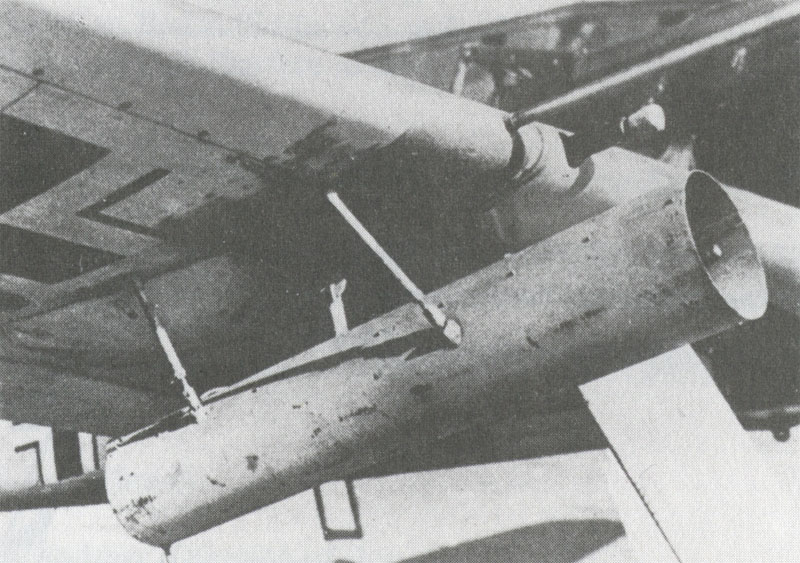
rocket tubes

Tales are also told of the Germans using either obsolete combat aircraft or training aircraft to fly high above the American formation and drop air-to-air bombs.
This account from  Archie J.Old Junior, a thirty seven year old Texan,  is quoted in “The Mighty Eighth” by Gerald Astor

“The fighters were all over us. They really got interested in me. German fighters came up from every point of the compass after our fighters turned around. (Just before the German frontier). And they were already throwing flak at us when we were five to ten minutes away from the target.” (Some thirty or forty miles)

In “Eighth Air Force”, Donald L.Miller describes pretty much the same situation, once the P-47s had been forced to turn back…

“…a hailstorm of fighter assaults that continued almost all the way to the target. (Beirne Lay, Jr) wrote, “I knew that I was going to die, and so were a lot of others.”
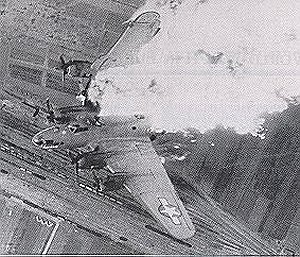
b17_direct%20hit

Overall, American casualties were way beyond the sustainable. For Bomber Command that most basic of figures had been set at 4%. On this raid 230 bombers had taken part, and sixty of these were destroyed. A tiny number finished up in Switzerland, and “thanks to the luck and the skill of the RAF Air-Sea rescue teams”, everybody who went into the icy waters of the North Sea (yes, even in August) was rescued. Five hundred and fifty two men were killed in the air, and seven poor souls made it back home, but, alas, were to succumb to their injuries. Twenty one men were badly wounded.
Beyond the sixty B-17s shot down, between 55-95 further aircraft were badly damaged. Of these, many were too severely damaged ever to be repaired.

This slideshow requires JavaScript.

Of the fighter escort, two P-47s of the 56th Fighter Group were destroyed and so too were two Spitfires from the RAF. The fighters claimed more than 30 kills, but the gunners on the B-17s were very optimistic with their claim of 288 German fighters destroyed. After the war, Luftwaffe records showed just 27 aircraft had been lost.
The very biggest problem of daylight raids by the Eighth Air Force deep into enemy territory was the lack of adequate long-range fighter escort. Some of the Schweinfurt Flying Fortresses were over German-occupied territory for three hours and thirty minutes. Of this period of time, there was no fighter support whatsoever for two hours and ten minutes, which included all of the time spent over Germany itself.

By one of those extraordinary coincidences which are sometimes thrown up, the night of August 17th-18th 1943, saw the British RAF engaged in “Operation Hydra”, which turned out to be one of the more significant raids of the war. Using 324 Avro Lancasters, 218 Handley Page Halifaxes and 54 Short Stirlings, attacks were made on the V-Weapon rocket testing grounds at Peenemünde in the Baltic to the east of Denmark.

Clearly, rocket weapons of the calibre of the V-1 and the V-2 quite simply had to be destroyed, certainly with the Allies envisaging a landing on the coast of France within less than a year.

Indeed, the bomber crews were actually told at their briefings that unless they were successful that particular night, they would be going back to Peenemünde again on the 18th, the 19th, the 20th, and, indeed, they would keep returning until the target was completely destroyed. This certainly concentrated their minds enormously, and, with  operations directed for the first time by a “Master Bomber”, namely  Group Captain John Searby, the Commanding Officer of 83 Squadron, they achieved great success.
Joseph Goebbels, Hitler’s Minister of Propaganda, himself said that the raid had cost the German efforts “six to eight weeks”, a figure agreed by the RAF who wrote in their official history that the attack “may well have caused a delay of two months.”

Although there were those who judged that the raid was “not effective”, an important figure, Chief Engineer Walther, was killed, but most significantly perhaps, so too was the hugely influential Doctor Walter Thiel who had provided the key ideas for the A4 rocket engine, later used to power the horrendous V-2 and indeed, in its developed form, NASA’s rockets into space.
The protection of the darkness was obvious in the casualty figures. Bomber Command lost 6.7% of their bombers and a total of 215 men were killed out of an approximate total of just over four thousand participants. Focke-Wulf Fw 190 night fighters claimed 29 of the 40 bombers shot down. Coincidentally again, the German night forces had employed for the first time ever, three twin engined Messerschmitt Bf 110 fighters with the deadly combination of radar and Schräge Musik upward firing cannons.

This slideshow requires JavaScript.

To make their night fighters even more formidable, the Luftwaffe taught  all their crews exactly where a Lancaster’s most vulnerable spots were…the enormous fuel tanks.

schrage-004

In another blog post, I will look at what the Eighth Air Force did next after the Schweinfurt raid, and their continuing “cold courage”, as they regrouped their strength after what must surely be considered, despite the immense resolution and extraordinary bravery of the Americans, one of the great catastrophes of the Allied air war.

12 Comments

Filed under Aviation, Bomber Command, History

And the Hallowe’en winner is………..

Around ten or fifteen years ago, I was a teacher of Religious Studies as well as my main subject of French. We were  studying the Afterlife, so, towards the end of, I think, the Christmas term, I asked the boys to write down for homework their own ghostly experience or a ghostly encounter that either their parents or anyone close to them had had. Here is a selection of the stories they came up with.
And, of course, yes, boys can tell lies just like everybody else, but by then I had taught this class for four months, seeing them for an hour and a half every week and I did not really think that anybody was lying. They may have been mistaken in their interpretation of events, but I’m sure they were sincere in what they thought was happening. This effort came from the parent, or even grandparent, of one of the pupils…

“My ghost story”

from Daniel J Furse who lived in the Old Manor House from 1956 to 1964.

gregory_st_manor

“I bought the house from one of the printer Milward family and he told me that when he moved in there was a row of wire operated bells hanging in the passage by the kitchen, although they were all disconnected. Every now and then, at night, these bells would ring wildly. On investigation, no one was ever seen but the bells were all swinging on their springs!
Our own contribution was fairly mundane but baffling. In what was the dining room – next to the kitchen where there now appears to be a door, we had a very large Jacobean oak sideboard tight against the wall, and above it hung a picture. Sometimes, when coming down in the morning, we would find the picture neatly stowed under the sideboard, with the hook still in the wall, and the cord intact.”
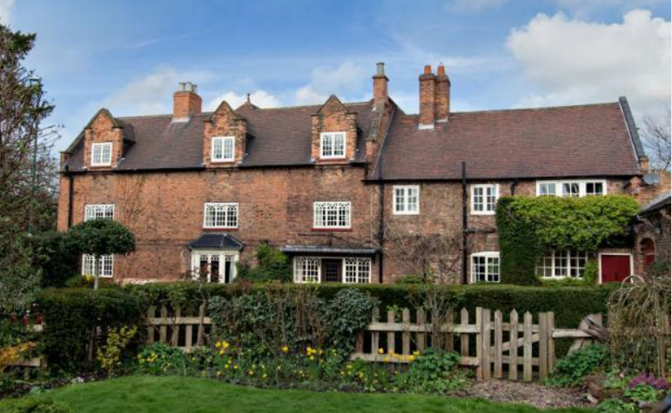
I live in the Old Manor House in Lenton regularly referred to as haunted. We have some accounts of manifestations of the ghost in the past one of which I have quoted above. There is one room that is thought to be the “haunted” room. It was in this room that someone was so frightened by what they saw or heard that it caused the previous owners to have an exorcism in the house. We ourselves have had some strange experiences. We seem to have a “Visitor’s curse”. More often than can be explained, something has happened with our lighting, heating or kitchen appliances when a guest was either there or coming. Sometimes just one system fails, but the most dramatic was when a bar of spotlights fell down from the ceiling near some guests. Another time when we were expecting guests for Christmas, all lighting, heating and cooking appliances, including the Aga which runs on gas and the electric cooker which relies on electricity, refused to work.
Hopefully we can have a ghost- free Christmas this year!”

olg manor house cccccc

This was a very popular topic indeed with boys of fourteen and fifteen.
One young man told me the story of how he had seen a ghost when he met up with one of his friends who attended another school in, I think, Grantham. The boy went from Nottingham to spend the whole weekend as his friend lived quite a long way out in the Lincolnshire countryside. They stayed in the friend’s house which was very large with a very large garden. On the Friday evening, as soon as the visitor had unpacked, both boys went outside to see if they could see the phantom which the host had already explained could often be seen as it walked in the garden. The visitor from Nottingham was very excited that the garden was haunted and that he might actually see a real ghost.
The young man told me that as he stood there with his Lincolnshire friend in the early evening they saw not a sharply defined ghost, but a pale blue patch of mist or smoke, shaped like a human form. It moved across the end of the garden from right to left and by the time it reached the left-hand edge it was beginning to disappear.
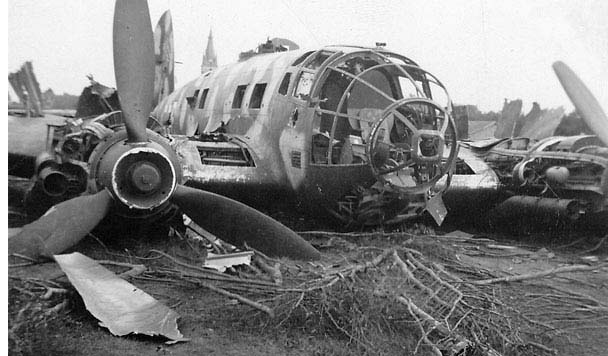
Supposedly, it was the ghost of a Second World War Luftwaffe flier whose aircraft, a Heinkel III bomber had been shot down, and he had been killed.

he111-5 zzzzz

Previously, I had been told about a slightly similar ghost by a now retired school technician called Frank. When he was young he used to live on the southern side of the Humber Estuary in Lincolnshire. Naturally, as a boy, he was keen to explore, and on one occasion he went with two of his friends out onto the salt marshes south of the estuary. He told me that there was a lookout tower right on the edge of the land, overlooking the waters of the estuary and of the North Sea. It had been put there for military purposes, probably either in the First or the Second World Wars. It was now in ruins but the shell of the brick built building was still there.

tower-inst xxxxxxxxxx

As the three boys made their way across the absolutely flat landscape, a saltmarsh covered in vegetation which was no more than four or five inches high, they suddenly saw a figure on the top of the tower.
Apparently an adult man, he stood there for a little while, and the boys watched him. I do not remember from the account whether he seemed aware that he was being watched, but I suspect that he did not. Anyway after five minutes or so, the figure leapt off the top of the tower which was at least twenty or thirty feet high, exactly as if he was doing a parachute jump or, as they always say, something silly. The three boys certainly thought so because they ran along the path which led to the building, to see if they could help what they presumed would be a fairly severely injured man. When they got there though, the place was completely deserted. Nobody was there.
What makes it so strange is that the landscape was such that he could not possibly have run away across either the saltmarsh or to the distant sandy beach without the boys seeing him. In any case it had not taken the boys long enough to get to the tower for him to have disappeared. He had not passed them on any of the paths which led across the marsh. They searched the tower but he was not there. They presumed therefore that he was a ghost of some kind. Later on, Frank explained that tales had been told of an occurrence just like this having been seen before in the very same location, but nobody had ever been able to explain what it was.

Two other stories were very scary indeed…..

“The crippled Ghost that learns to walk

Every so often when I lie awake in my bed at night and I leave the door open I see an old man in a brown wheel chair. He has grey hair and a mutilated face like it’s been taken off and jumbled about and then stuck back on.
It moves towards me without using its hands to move the wheels at all. Then when it reaches the door it stops and stands up. It starts to walk towards me. At that point I turn away and face the wall and try to force myself to believe it’s not real, it’s not real.

Then when it reaches my bed, it reaches out to touch me. The reason I know this is because I see its shadow on the wall. But as soon as it touches my head it disappears and so does the wheelchair which disappears as soon as he gets out of it. The only other thing that is strange about the man is that he is extraordinarily long thin fingers and shoulder length white hair.”

This extraordinary tale is recounted more or less exactly as the boy wrote it down. I have not altered anything at all except to make the tense used the present tense, rather than a mixture of several different ones.
What would be really interesting would be to try and trace in the history of the house if there was anybody who ever lived there who had the long fingers and long white hair, perhaps of a musician, or the mutilated face and the wheelchair of, perhaps, a Great War victim. It is however, even with the Internet, extremely difficult to trace who has lived in any house, and what his job was, or the hardest thing of all, what he did during his life and what happened to him.
And the winner is…….
…….This very last final story, which was clearly connected with my preparations for Christmas with the class. It is dated November 4th 2005, and is entitled…

“The white man with no face”

Interview with my Dad:
What size and age did the ghost appear to be?
He was a six-foot male…age impossible to say.
But roughly did he look middle-aged or quite young?
He was oldish but that’s the most accurate description I could give.
Did you contact any spiritualists or mediums about the ghost?
No I didn’t; it never crossed my mind. It didn’t really bother me personally, but I never thought to ask my wife whether she thought we should get somebody in to try and sort things out.
What was the scariest thing about the ghost?
It would be that every time you were fast asleep, this ‘thing’ could be looking over you; I wasn’t frightened about it at all, but it didn’t do anything… just stared endlessly at you.
If only I had ever seen the ghost and you hadn’t, would you believe me about it being ‘around’ or not? Would you look out for it?
I would believe you, but I wouldn’t go out of my way to find something that could only be found if ‘it’ wanted to be.
How did the ghost appear and what did it look like?
I was in deep sleep and there was a wind as if all the windows were open, and my shoulders felt cold like ice. Both your mum and I woke up basically at exactly the same time, and we saw ‘it’. All it did was just look down at us. I can’t remember the curtains blowing just a fairly strong wind, so the windows were definitely not open. My wife asked me: “Tell me what you just saw?” trying not to put any ideas into my head, and her expression when I replied, confirmed this was not a dream. We both looked away, and after a period of time I cannot remember, I eventually look back to see ‘it’ had vanished.
Did you ever feel like you are being watched?
Well obviously you knew there was something around but you just had to ignore it. My wife at the time was so terrified; she nearly moved out of the house and lived with her parents for a short time.
Did you ever stay on your own in the house?
Yes, of course, it didn’t bother me that much, it was your mum who was worried about it the most. However, this was one of the reasons why we eventually moved house. My mum has told me that for weeks she was terrified of the ghost reappearing, and too many times felt her shoulders turn ice cold even during the summer (just like when she first saw the ghost).
Apparently I saw the ghost on many occasions – more than my parents – and that I asked them “Who the white man in my room was” more than once. The ghost could communicate with “the living” as it asked me what my name was.
Chloe my sister regularly saw the ghost – which was obviously concerned my mom, and on one occasion she told my parents “a white man with no face keeps waking me up and then just staring at me”. At the time she wasn’t afraid of ‘it’ as she was too young to realise what was happening. Chloe can’t recall any of this but my parents remember it all too well.

3 Comments

Filed under Aviation, History, Nottingham, The High School

Hallowe’en Nights (4) Three ghosts from my past

My father was called Fred Knifton. He lived from 1922-2003, for the most part in Hartshorne Road, Woodville, which is to the south of Derby and Nottingham, in the East Midlands.

This slideshow requires JavaScript.

Woodville at the time was a village of some 5,000 people. It was exactly on the edge of  a geological fault line, so to the west, coarse, heavy clay was mined in opencast quarries, and sewer pipes and drainpipes were manufactured. To the east there was no clay, but instead there were open green fields with Friesian cattle and tall hedges of hawthorn.

SLD_Herd ddddddd

Although as far as I know he never experienced any of the RAF’s many ghostly occurrences, Fred once told me that there was a well-known haunted hangar somewhere out there in East Anglia, possibly in Norfolk, where mechanics as they repaired aircraft late at night, would often hear dance music, even though of course, there was no orchestra within miles.

A modern day equivalent may well have been the occasion when I stood at the bathroom sink one summer’s morning, a good few years after Fred’s death, looking out over the roof tops of Nottingham. I was listening to “American Patrol” being played by the Glenn Miller Orchestra on a CD.

This moment suddenly gave me probably the most distinctive feeling of “déjà vu” I have ever had. I have wondered ever since whether my father had perhaps done exactly the same thing on some airbase in Lincolnshire on a long forgotten day some sixty or so years previously.

Strangely enough, for a man who always had so many tales to tell, ghosts and phantoms did not feature particularly highly in Fred’s repertoire, and I would struggle to think of any direct reference he ever made about the afterlife, although I am sure that he was aware of the alleged haunted house down near the Bull’s Head Inn in Hartshorne.

As a native of nearby Woodville, Fred would certainly have heard all the tales of the phantom attached to this large black and white timber framed Elizabethan house which stood between the old Georgian coaching inn and the Anglo-Saxon church in the middle of Hartshorne.

This slideshow requires JavaScript.

Apparently, the story was often told of how….

“A brave group of people, made curious by the many ghostly accounts of bumps in the night, had gone up into the attic, unvisited through many decades of neglect, and found furniture piled up across the entire room. On the inaccessible far wall of the room, there was a delicate but obvious print in the centuries old dust, the unmistakeable impression of a ghostly human hand. Nobody could possibly have penetrated the great mass of tables, chairs and rubbish stacked across the floor. It could only have been the work of a phantom. ”

In 1970, I experienced an extremely strange happening when I accompanied my father, Fred, down to his parents’ house at number 39, Hartshorne Road. Fred’s parents, Will and Fanny, had both recently died recently within a few months of each other in hospital at Burton-on-Trent, with Fanny remaining mercifully unaware of Will’s demise after more than sixty years of marriage.

This slideshow requires JavaScript.

Fred was paying regular visits to the property, presumably attempting little by little to clear the house out so that it could be resold. At the time, as a teenager of some sixteen  years of age, I was unaware of this, although, with the benefit of hindsight, I wish I had been, and I could perhaps have stopped Fred from throwing away so many of his father Will’s Great War souvenirs, such as his complete Canadian Army uniform, his German soldier’s leather belt and his extensive collection of German guns and ammunition.

We entered the deserted house through the front door, and as I walked along the hallway towards the kitchen, I distinctly heard the upstairs toilet flush. I turned round and asked Fred, who had been following me into the hall, how this could have happened, and who it could have been, given that we both knew that the house was locked up and empty.

Fred gave me some non-committal answer at the time, but afterwards, perhaps when he had regained his composure a little, he told me that, as he was some way behind me, he had been able to look up the stairs when he heard the sudden noise of the toilet being flushed. He had distinctly seen his recently deceased father, Will, walk out of the bathroom, across the landing and into the front bedroom.

My father Fred certainly knew the story about how an aging Mrs.Edwards had sadly passed away. This old lady had lived in the village a hundred yards further down Hartshorne Road from Fred’s own house, in a Victorian house next to the entrance of a factory making drainpipes.

Her old  friend, and our own family friend, Gertrude Betteridge, went down to Mrs.Edwards’  house to pay her respects and offer her condolences to her daughter, Margaret Edwards. The latter greeted Gertrude and showed her into the front room. Margaret then invited her guest to sit down on the settee while she went into the kitchen to make “a nice cup of tea”.

After a couple of minutes, as Gertrude sat there quietly and politely with the sunlight streaming brightly through the front windows, the door opened. It was not, however, Margaret with the expected tray of tea and biscuits, but Mrs.Edwards herself, exactly as she had been in life, who came in. She walked across the room to Gertrude completely normally, and quietly and calmly said to her, “Tell Margaret not to worry. I’m all right.” Then she turned and walked away, opened the front room door and disappeared back out into the hall, never to be seen again.


5 Comments

Filed under Aviation, Bomber Command, History, Personal

The Last British Lancaster

Yesterday we went to Westdale Lane in Nottingham to see the flypast by the Battle of Britain Memorial Flight’s  Avro Lancaster.
This particular aircraft was completed at Hawarden Airfield, Chester on May 31 1945 and its serial number is PA474.
This sole remaining British Lancaster is currently painted as “Thumper Mk III“.

thumper

Thumper Mk III” was an aircraft of 617 Squadron, the home of the very, very best.

Here are my photos. They are woefully unworthy of the world’s most beautiful bomber.

This slideshow requires JavaScript.


2 Comments

Filed under Aviation, Bomber Command, History, Nottingham

“The Lancaster: Britain’s Flying Past”

Last night, I watched the superb BBC documentary “The Lancaster: Britain’s Flying Past”

The ranks of those who flew Lancasters with Bomber Command in the Second World War have, with the inevitable passage of time, thinned out somewhat, but the BBC has managed to put together the requisite crew of seven combat veterans. There were, therefore, a pilot, a flight engineer, a navigator, a bomb aimer, a wireless operator, a mid-upper gunner and a rear gunner…”tail-end Charlie”.
john sergesant
Every single man in Bomber Command was a proud volunteer. During the course of the war, they were to suffer 55,573 casualties from a total of 125,000 aircrew (a 44.4% death rate). The average bomber usually lasted for fewer than ten sorties. Life expectancy for crew members could be as low as two weeks, the same as a soldier in the Battle of the Somme in the First World War. Of every hundred airmen who joined Bomber Command, forty five were to be killed outright, six would be badly wounded, eight were captured by the enemy, and only forty survived physically unscathed. From the men who were serving in Bomber Command on September 3rd 1939, only 10% made it through to the end of the war some six years later.
There was no knighthood for Bomber Command’s leader  though, and no campaign medal for his “old lags”. In 1945, Roosevelt and Churchill had been asked by Stalin to destroy Dresden for him, and the two Western leaders were only too eager to demonstrate their ability to slaughter the enemy, be it German, or perhaps, even, one day, Russian. But when Bomber Command, as the best area bombers in the world, carried out this ghastly task, as they had been ordered to do , they then found themselves ostracised by those very same politicians, who now wanted to be popular as humanitarians, and to win elections after the end of the war.
It was eventually public subscription that finally paid for Bomber Command’s well-deserved memorial, fifty years or so too late, perhaps…
memorial
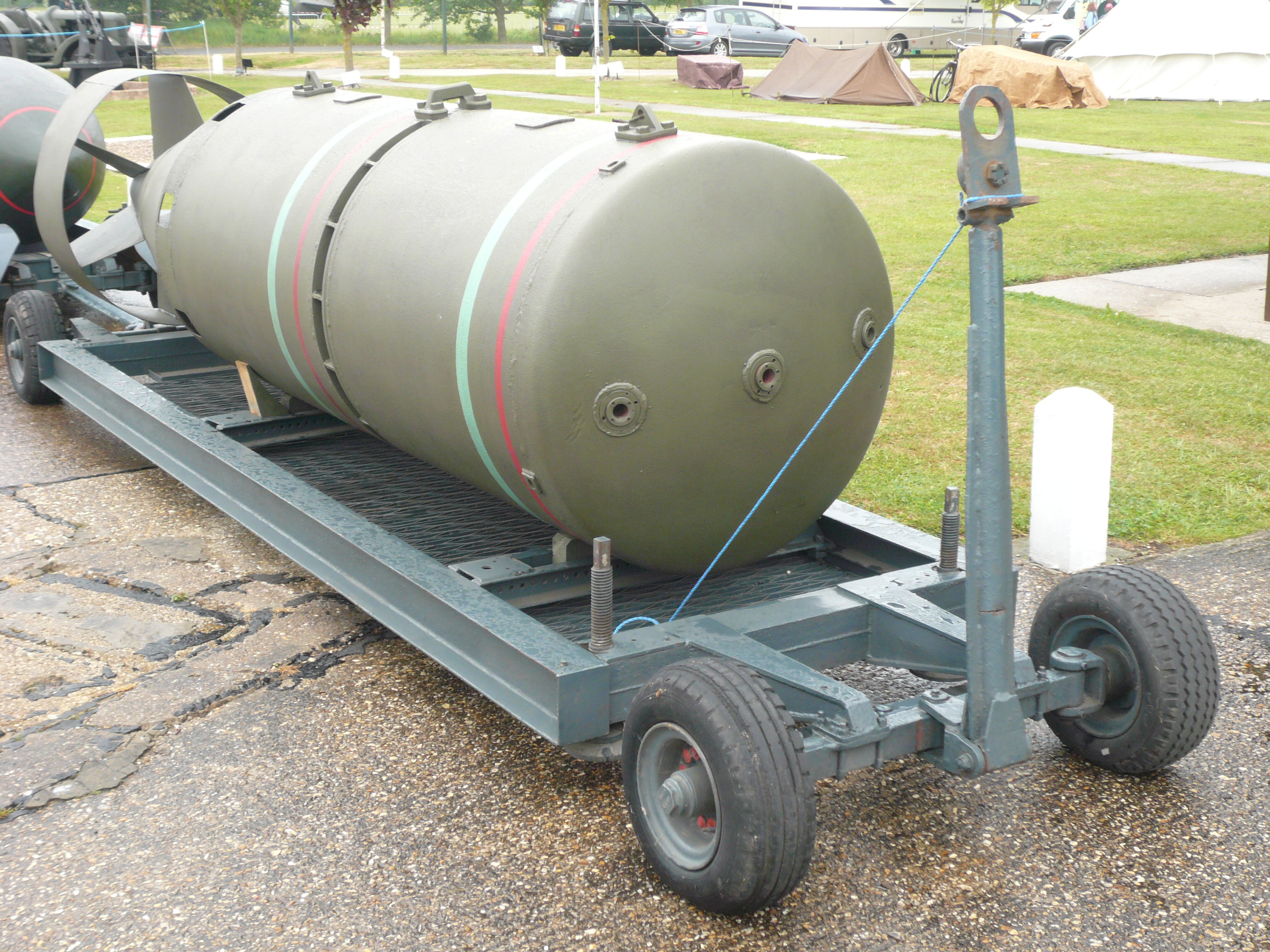
The “Lanc” was the greatest bomber ever made. It could fly at 300 m.p.h. and carry an enormous weight of bombs, with the more usual 4,000 pound “cookies” often bolted together to form either 8,000 or 12,000 pound “blockbuster”bombs. A Lancaster might carry hundreds of incendiaries, and some specially adapted aircraft could carry the 22,000 pound, ten ton “Grand Slam” bomb designed by Barnes Wallis.

P1300996 bomb

What an enormous bomb bay….
P1300780zzz
The aircraft’s immense power came from four magicians, well, four Merlin engines to be more precise…
P1300766
The Lancaster is a very large bomber; museums often struggle to fit them in, as here at Duxford

This slideshow requires JavaScript.


Best of all is the Lancaster in the RAF Museum at Hendon in north London (very easy to reach off the motorway)

P13203hend
Don’t miss the vain boast of Hermann Göring, painted on the nose of the bomber(with his name misspelt!).

This slideshow requires JavaScript.

The Reichsmarschall was also foolish enough to say that if any enemy plane did fly over the Reich, then , as the man in charge of the Luftwaffe, people could call him “Herr Müller”, a common Jewish name. Well, guess who had the last laugh?
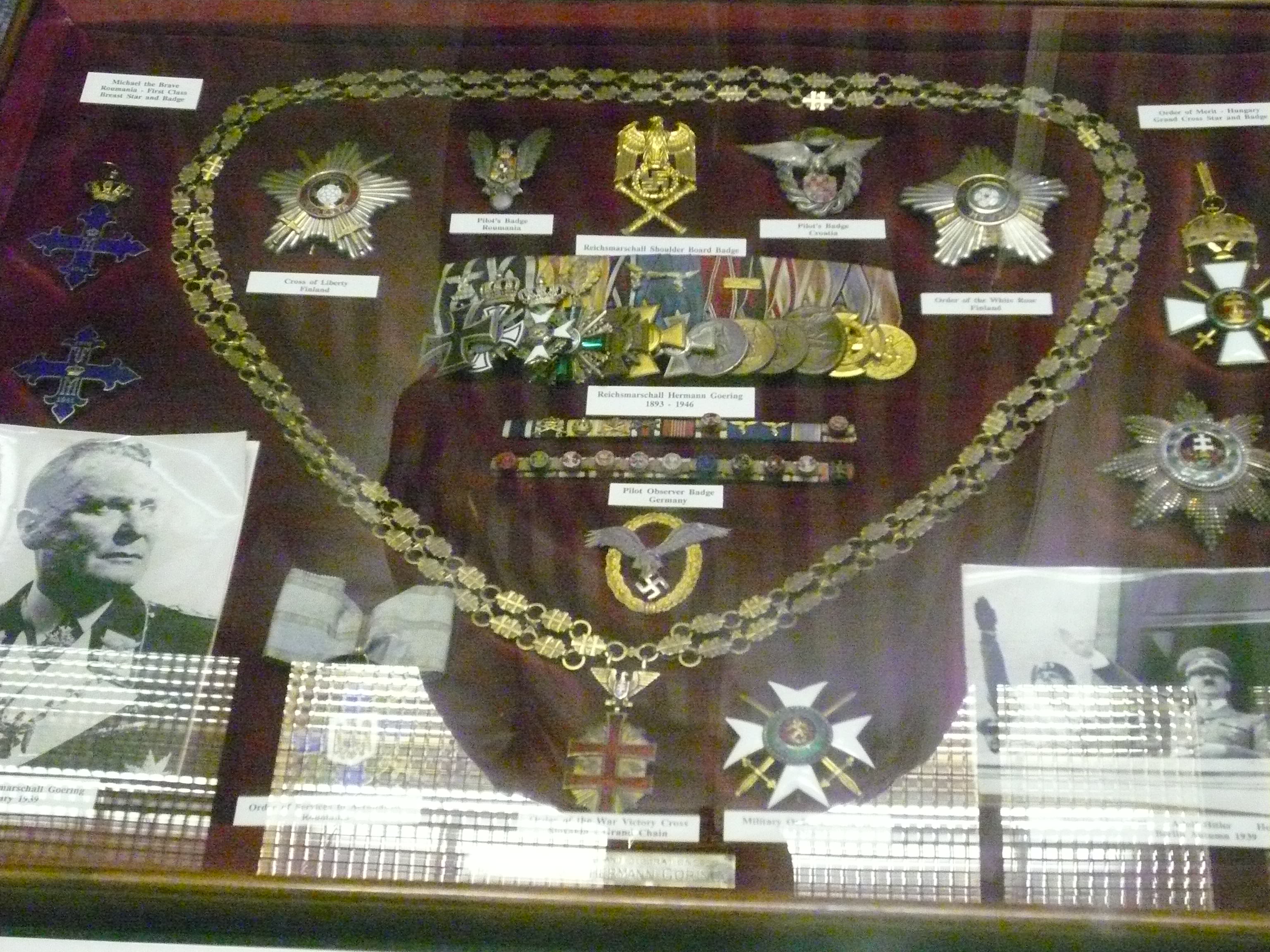
Göring‘s medals too, are in the museum…
P132medals
A couple of years ago, I really enjoyed visiting East Kirkby in Lincolnshire to see their Lancaster.  The aircraft does not fly but is taxied around the airfield every day.
P1300617 EK
What a beautiful machine, painted here as “Just Jane”, a fictional character in the wartime newspaper, the Daily Mirror.

This slideshow requires JavaScript.

The force of the engines being warmed up is amazing…

Then it sets off around the very large field…

Before returning, eventually, back to its rightful place…

It’s just such a pity that there are so few Avro Lancasters left for us all to enjoy!

7 Comments

Filed under Aviation, Bomber Command, Film & TV, History