Category Archives: Bomber Command

Look at that fat bloke, Stan (3)

Please don’t look at this series of blog posts and just think “I don’t like football” and then go on your merry way. All of these blog posts are about much more than football. In particular they concern the eternal battle between sporting genius and cream cakes.

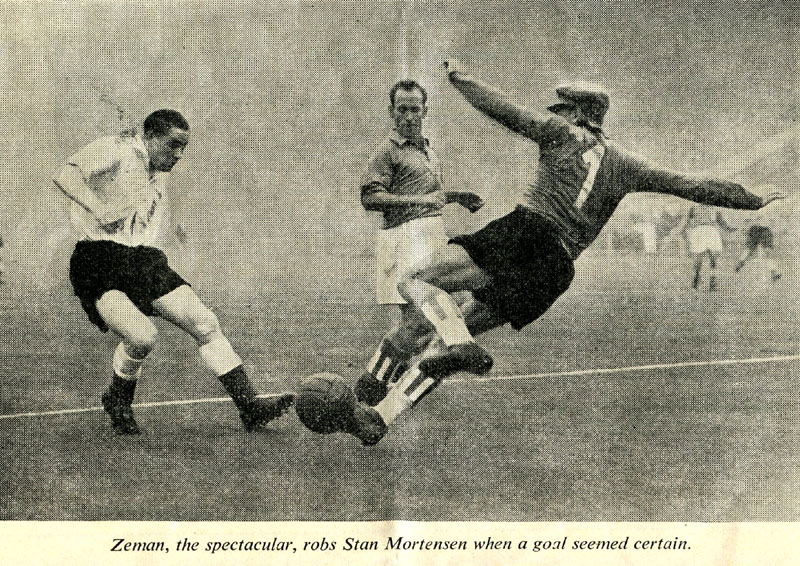
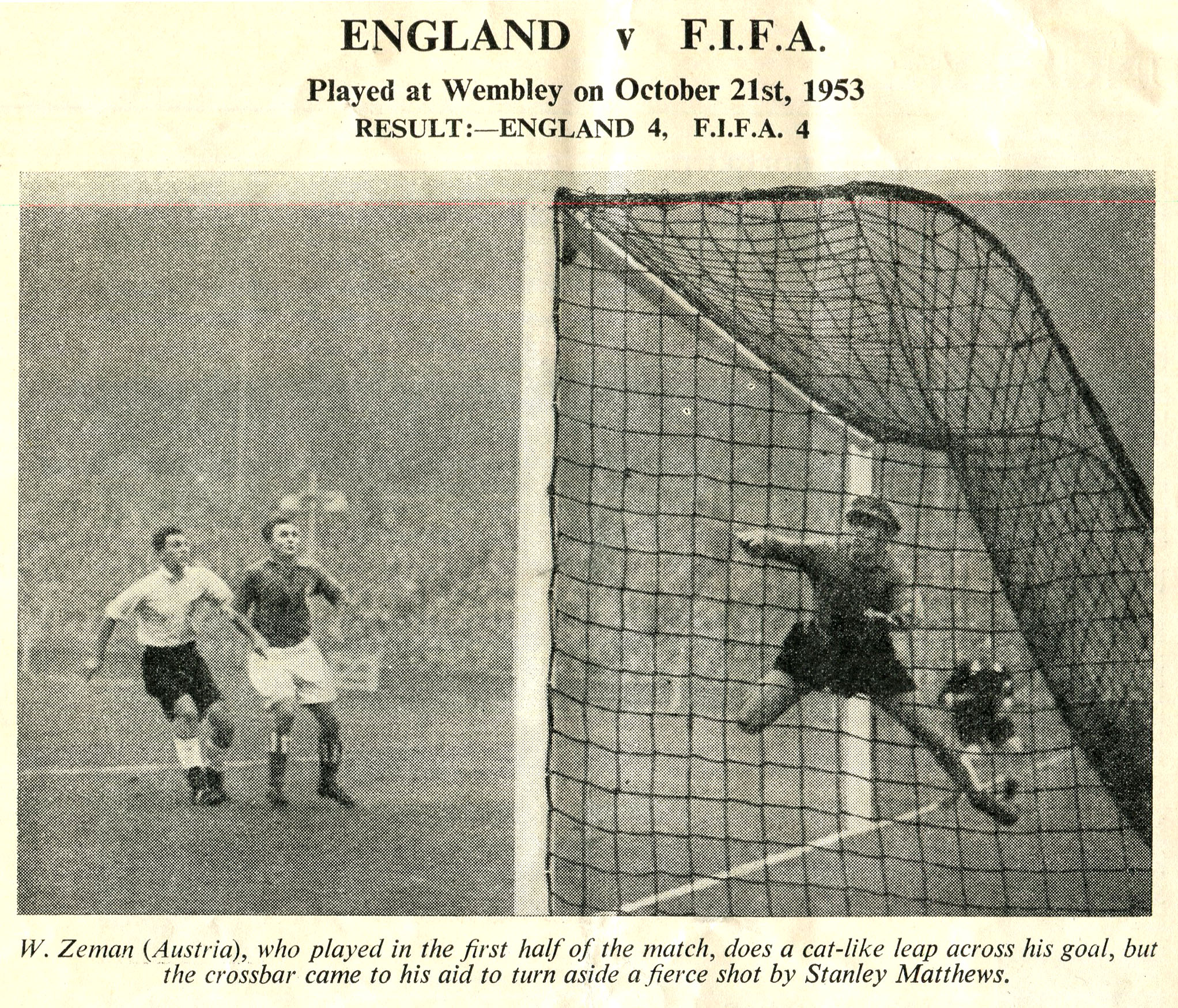
In the last post, I talked about the one football match I wish I had seen. It was England v Hungary, played on November 25th 1953 at 2.15 pm because there were no floodlights at Wembley. This game would later be called the “Game of the Century”. Hungary were the Olympic champions, undefeated since 1950. The programme took comfort in offering us pictures of previous successes by the England team. The first one shows an exhibition game against FIFA, the World Federation of Football, only a few weeks previously. General Montgomery was the guest of honour. He was brilliant at beating foreigners :

Another picture showed Stan Mortenson being hypnotised by a cheating foreign goalkeeper and his brightly striped socks:
This photo from the game would have been used for the “Spot-the-Ball” contest until somebody eventually spotted that the ball had never ever been there in the first place:
A full programme of activities would precede the match itself:

I don’t know if there were many Hungarians in the crowd, but the effort had certainly been made  to include some appropriate music with ‘Hungariana’ and ‘Bond of Friendship’. And then , at 2.05…. pm….

I’m not too sure that anybody would have stayed behind for a second go at the national anthem.

If you didn’t like foreign music, then you could content yourself with reading the players’ pen pictures. I copied a couple of the best English ones. First of all Stanley Matthews:
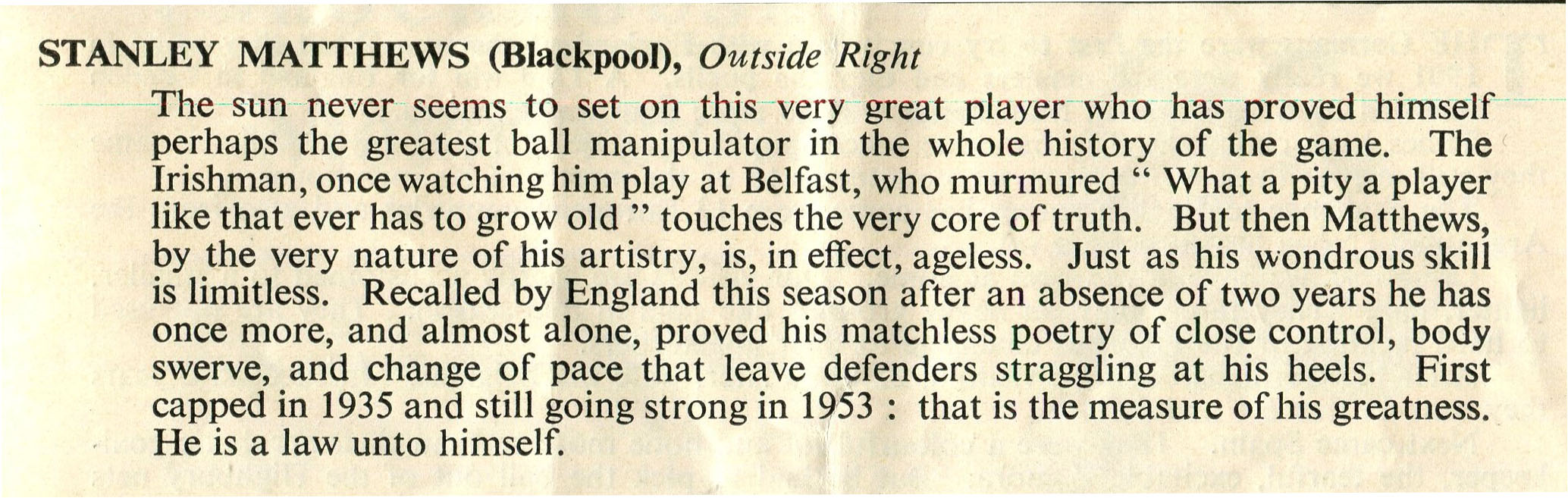
Alas, Stan would soon be proved NOT to be the “greatest ball manipulator in the whole history of the game”. The second Stan was Stan Mortensen, who also played at Blackpool:
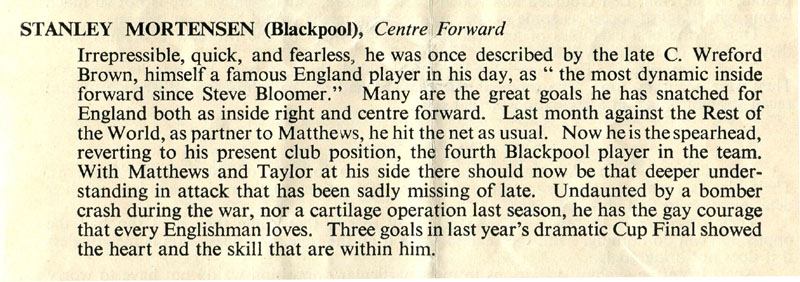
I don’t know about “the gay courage that every Englishman loves” but Stan Mortenson was a very brave man. He was a wireless operator in the RAF and was almost killed in a practice parachute jump. A short time later, after a serious plane crash in a conifer plantation while flying in a Vickers Wellington, Stan escaped death by the narrowest of margins.  Both the pilot and the bomb aimer were killed. The navigator lost one of his legs and Stan suffered severe head injuries, necessitating 12 stitches. He was plagued by insomnia for the rest of his life:
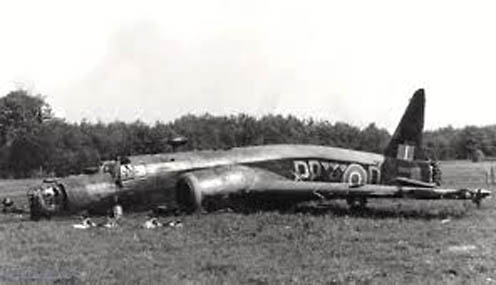
Like Stan Mortensen, my Dad was stationed in Lossiemouth in northern Scotland. He met the famous footballer on one occasion:

“My Dad was a fellow wireless operator in the RAF. One day he was travelling on the train from Elgin in northern Scotland down to Crewe in north western England. He was in the same compartment as Stan Mortensen, the famous professional footballer. Mortensen played on many, many occasions as a centre forward both for Blackpool in the First Division, and in international games for England. Indeed, during the course of his career, Mortensen managed 222 goals for Blackpool in just 354 appearances, and 23 goals in 25 games for his country. In later years, he was to appear in the 1953 F.A.Cup Final, when the whole country was firmly behind Stanley Matthews in his third attempt to win a cup winner’s medal. Blackpool duly triumphed against Bolton Wanderers, but, in the euphoria over Matthews’ medal, the fact that Mortensen had himself scored three vital goals has always tended to be rather forgotten. Indeed, the match itself was to become known as “The Matthews Final”, with never a mention of Mortensen’s unique feat. In later years as an old man, Mortensen was to joke grimly that when he finally passed on, they would call his interment “The Matthews Funeral”:

On this particular occasion, another RAF man was in the crowded train compartment, and, during the long and tedious journey south, he began boasting about his extensive triumphs in the world of football. He had played in any number of games and scored any number of vital goals. He went on and on, with everybody else in the compartment, who were all well aware of Mortensen’s identity, acutely embarrassed. Finally, the man turned to Mortensen and said “Do you play at all, mate?” and Mortensen replied “Yes, just a bit.” Mortensen left the train shortly afterwards, and everybody was then able to tell the boastful buffoon just who his erstwhile travelling companion had been. The stupid young man was completely mortified.”



19 Comments

Filed under Bomber Command, Football, History, Personal

The Mosquito at Duxford

“Knock, knock.”

“Who’s there?”

“Dee.”

“Dee, who?”

“Dee Havilland Mosquito.”

I made that one up myself.  If I had a time machine, I could send it back in time to 1944.  Well, they had to do something to amuse themselves while they waited for limited overs cricket to be invented. My final Mosquito is actually the one I saw first of the three. It is the Mosquito at Duxford, which is near Cambridge.

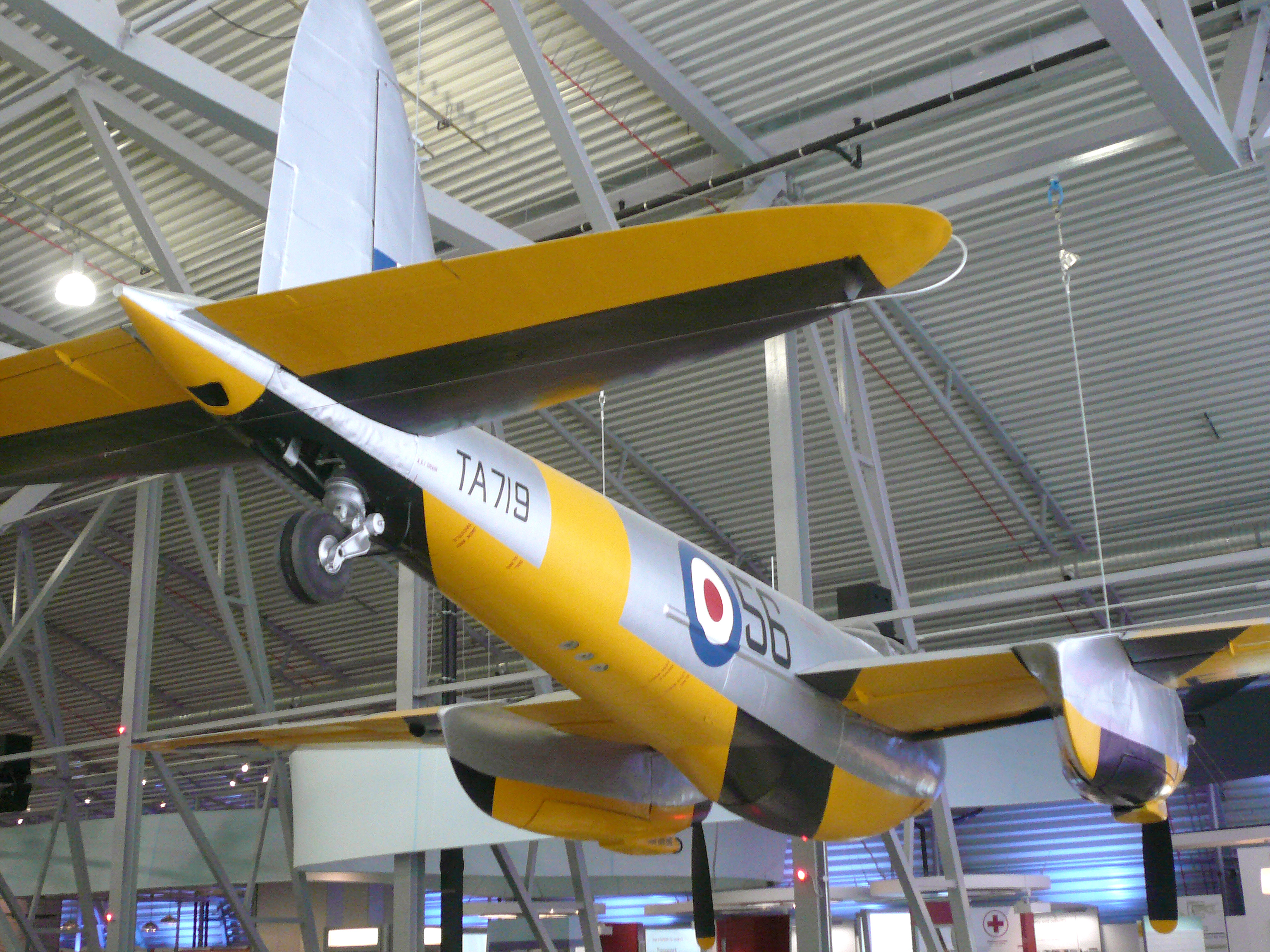
Its registration number is TA719 and it is now a Target Tug, a TT.35 to be precise. It has had better days, especially when it was built in June 1945 and the cunning plan was for it to be a Mark 35 bomber.

Its greatest glory days came though, when, like its friend at Cosford, it took part in 633 Squadron. At that time, the aircraft had been demobbed, had left the RAF and had become a Bird of Peace, a civil aircraft with the lettering G-ASKC.
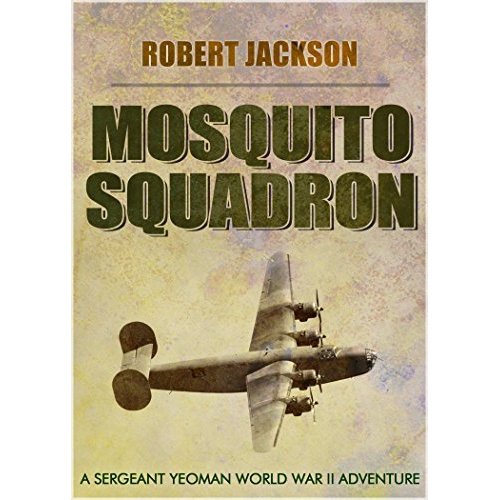
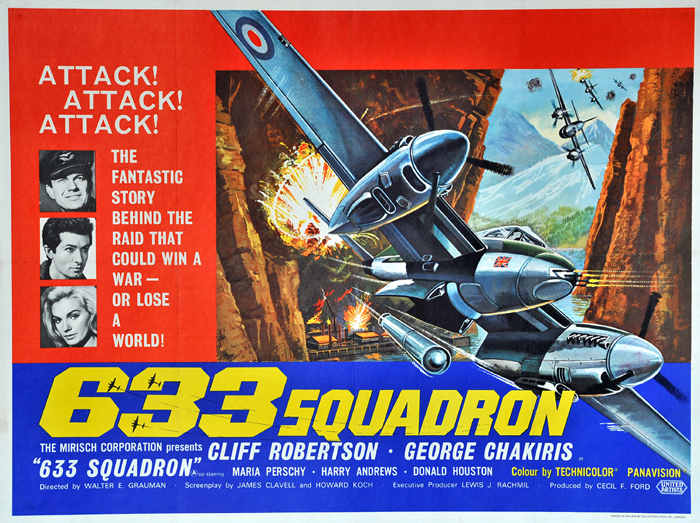
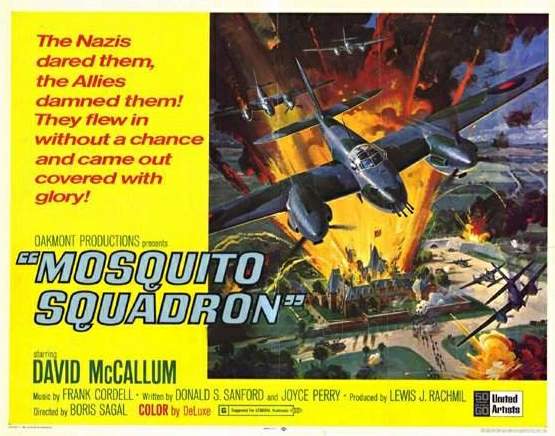
The next Mosquito film made after 633 Squadron always tends to be forgotten. It was not a sequel but just a film that was produced because all the matériel for a war film with Mosquitoes was at hand. And the daily rent for an airworthy Mosquito was just £2. The film’s plot verged on the ridiculous but the flying was good. It was called Mosquito Squadron and let’s be honest, some critics did say that the acting was as wooden as the aircraft. If the film was poor (and here’s the poster)…

…the book cover was even worse. Can anybody see today’s deliberate mistake?

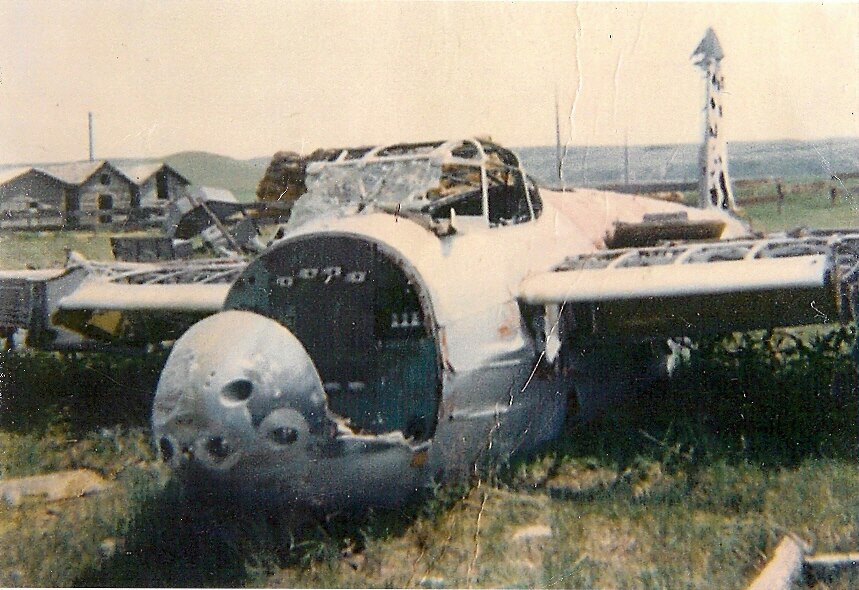
This is a strange photograph. It’s the best bits of a Mosquito on its way to Boreham Wood Film Studios:

TA719 has finally settled down at Duxford as a TT35 with the “Keep away!!!!” black and yellow stripes. These Mosquitoes were used to tow targets which always seem to me to have been merely a more sophisticated cousin of the airfield’s windsock. The towing cable could be extended as far as 6,000 feet but being a Target Tug was still a dangerous job with all those inexperienced potential fighter aces firing at a moving target.
Two last points about the Mosquito. So few are left because, being made of wood, they tended to fade away very quickly. Of nearly 8,000 only a few remain:

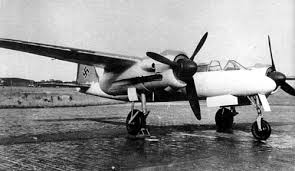
At least, the British Mosquito did not have the same problem as the German imitation , the Focke Wulf Ta 154. an aircraft where the glue wasn’t always right and the wings, quite literally, fell off:

Here’s a video:

The loss rate of Mosquitoes to the enemy was very small, some 0.5 %, but the aircraft were sometimes dangerous to the crew. During a landing without undercarriage, the wood was little protection to the crew’s legs. And sometimes the proximity of the propeller blades to the side of the fuselage produced horrendous accidents with a tired crew getting out of the plane. Which brings me to a nice story about my Dad:

“One day at Lossiemouth in northern Scotland, a fine frosty clear blue winter’s day, a photo reconnaissance Mosquito came in for an emergency landing. The aircraft had been taking photographs over occupied Norway and was very badly damaged. Unarmed and made of wood for lightness and performance, it had no working undercarriage and scraped along the length of the runway, coming to an eventual stop in a cloud of smoke. Two men, Fred and an officer, ran out with fire axes. Despite the still whirling propellers they both jumped up onto the smoking aircraft and smashed the Perspex of the canopy. They dragged out the two members of the crew.
For this gallant deed, the officer received a medal. Fred did not, and the episode confirmed his belief that rank and class counted for a hell of a lot in the RAF at that time.”

This event cannot now be dated and, conceivably, it was connected with 617 Squadron’s attempts to bomb the Tirpitz. Here’s Lossiemouth, then and now:

This slideshow requires JavaScript.

Indeed, if Fred’s memory was playing him just slightly false some five decades after the event, it may well have been that this unfortunate aircraft was actually one of 617 Squadron’s own Mosquitoes. These twin engined planes were used, from 1944 onwards, to mark targets accurately before the rest of the squadron bombed them.

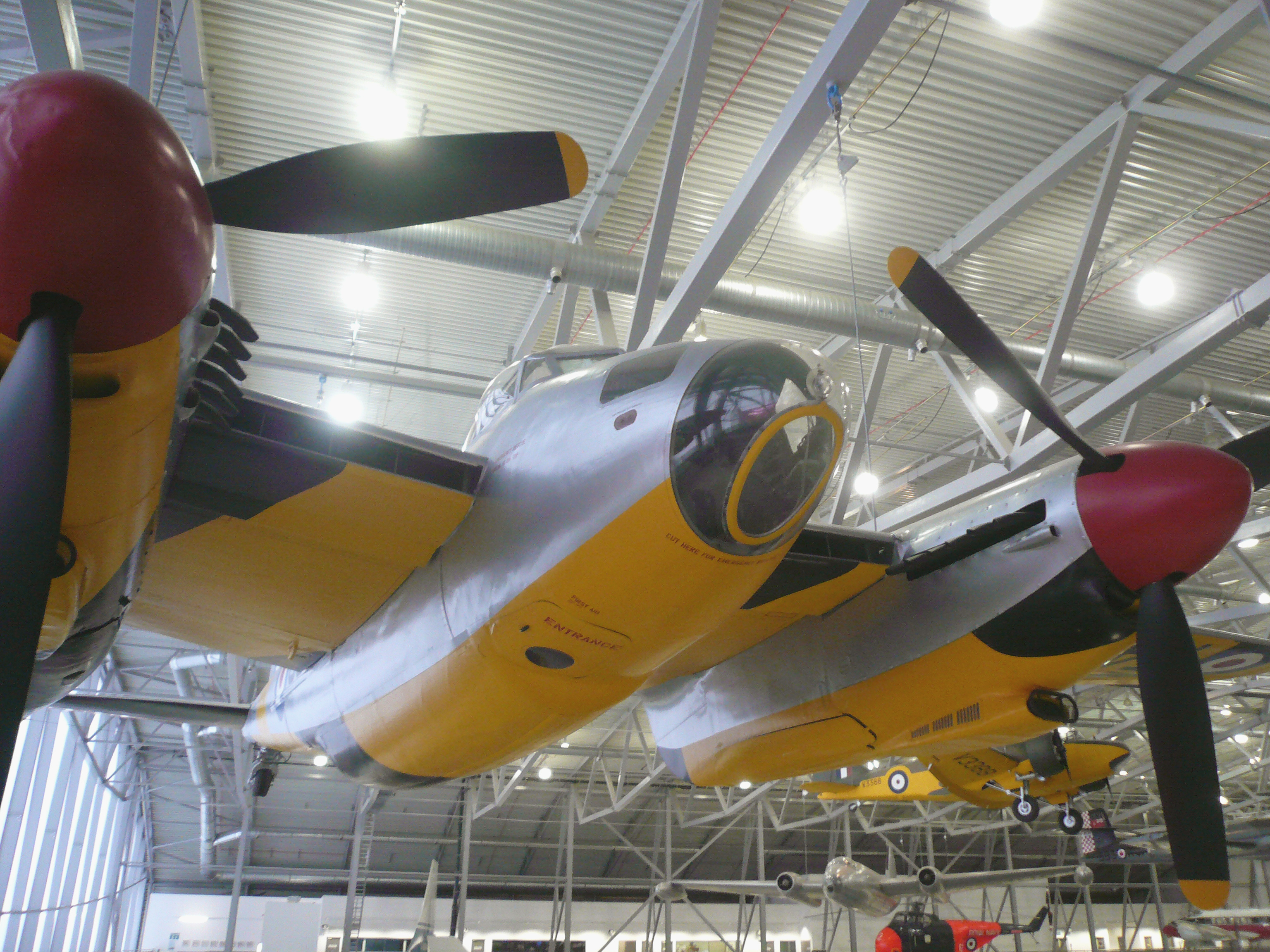
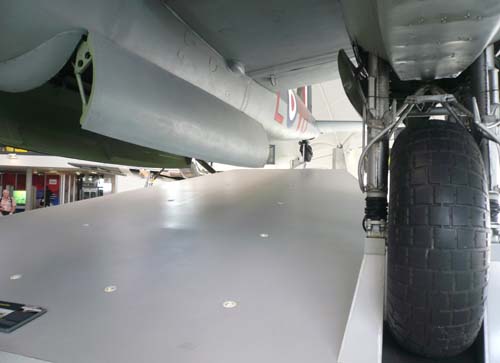
The Mosquito  at Duxford is painted in garish fashion. This was the closest I could get to going underneath it:

This view is very similar:

Here’s the view from the front:

This is perhaps very slightly better:

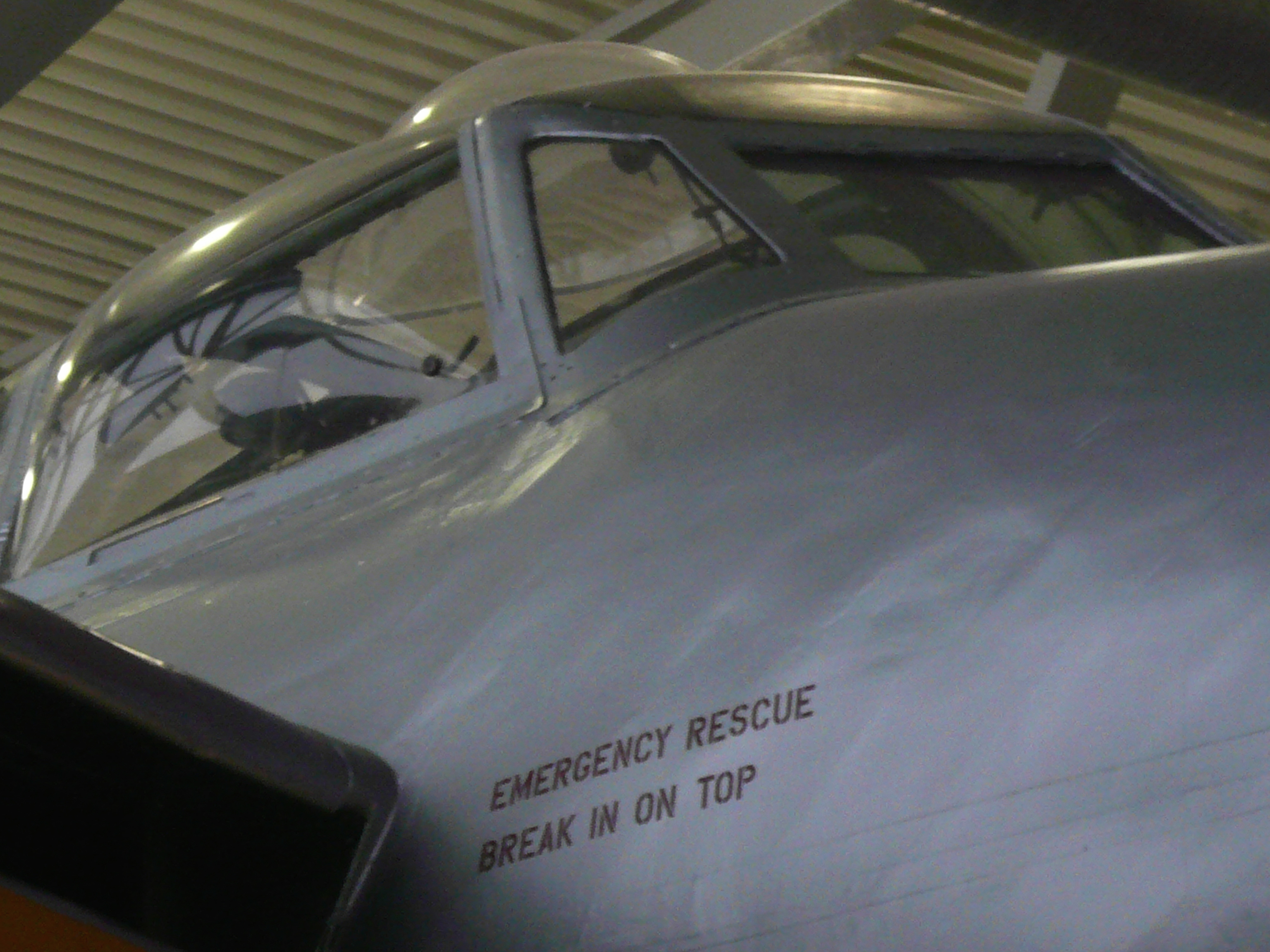
It was a pity my Dad wasn’t there to see this bit,. but it would probably have just set him off again. He just thought that whatever medals they got or did not get, it should have been the same for both of them:

And here is an enlargement  of those ironic words:


26 Comments

Filed under Aviation, Bomber Command, History

The Mosquito at Cosford

“Knock, knock.”

“Who’s there?”

“Yetta.”

“Yetta, who?”

“Yetta nother Mosquito.”

An even more terrible joke, but according to my Dad, a genuine RAF joke from World War II. Well, I suppose they had to do something while they waited for Premier League football to be invented.

We went to RAF Cosford in April 2011.  Like Hendon, they too have a Mosquito.

This is TA 639, which is a Mark 35 Target Tug. The website explained that “After the war Mosquitoes continued in use as fighters until 1952 and others, including this example, were converted to tow targets for anti-aircraft gunnery practice.”

How sad. A Mosquito pulling targets. It’s like going into the park and finding your greatest sporting hero as a fat, helpless drunk, semi-conscious on a park bench.

Mosquitoes could do anything.

Mosquitoes could free prisoners from Amiens jail.

This slideshow requires JavaScript.

Here is a Pathé news broadcast:

And here is a film, almost an hour long:

In Operation Carthage, Mosquitoes could bomb the Shell House, headquarters of the Danish Gestapo, and destroy the buildings and the German records and release Resistance prisoners. Here’s a short video:

And a stretched version of 20 odd minutes

In a tragic twist, Operation Carthage went wrong and 86 schoolchildren and 18 adults were killed when a nearby school was bombed. I recently read a really good book about the Danish Resistance, “Hitler’s Savage Canary” and I must admit that the Danes of the time viewed events in a much more positive way than we would nowadays. Danes in 1945 seemed to consider the deaths an unfortunate price that had to be paid for a whole nation’s resistance network to survive.

This slideshow requires JavaScript.

The greatest of all Mosquito squadrons, although fictional, was 633 Squadron. Originally it was a book:

And you could name your own price for a mint condition film poster:

Here is just one of almost 250 videos taken from the film on Youtube….

Here are my photographs from Cosford. Here’s a general view. It seems to be painted as a bomber but I bet given half a chance it would be back with those targets, dragging them around the sky:

From behind it looks as if the mystery line has been omitted from this aircraft:

The great lumbering brute behind is an Avro Lincoln. I already did a post about this development of the Lancaster. Indeed, it was called the Avro Lancaster Mark IV until somebody pointed out that it didn’t look that much like a Lancaster.

Last look at the Mosquito. If only I could see one doing what it does best, rather than just sitting in a museum:


23 Comments

Filed under Aviation, Bomber Command, Canada, France, History

The Mosquito at Hendon (2)

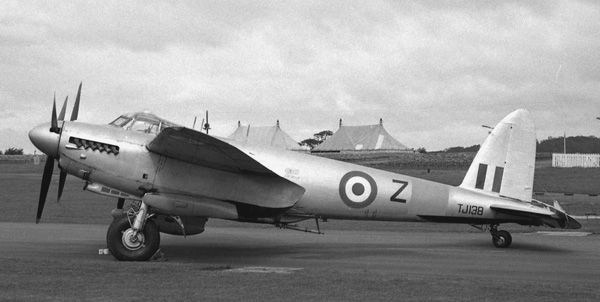
Last time, I wrote about the De Havilland Mosquito at the RAF Museum at Hendon. This individual is painted as a Mosquito B.35, TJ138, in 98 Squadron markings, reflecting the squadron’s time spent at Celle in Lower Saxony, flying Mosquitoes during the occupation of West Germany from 1945-1951:

The squadron badge is Cerberus, the 3 Headed guardian of Hell because, quoting the RAF website:

“This squadron claims to have barred the way (front and rear) during the German retreat in 1918 and so considered Cerberus, as the watchdog of Hades, a suitable badge.”

I don’t understand that to be honest, but if the RAF are happy with it, then so am I.

And I’ve never known what that ridge along the fuselage was for:

Such slim, sleek lines:

A bit closer. You can see why Mosquito crews had to be careful of these propellers. They are so close to the fuselage:

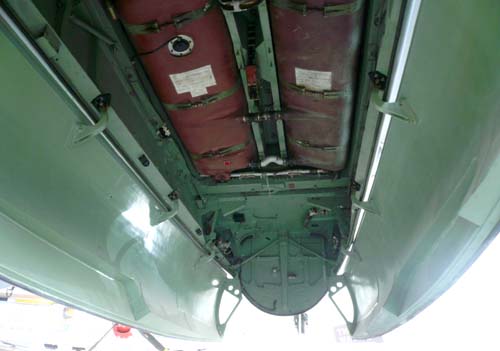
Here’s the bomb bay:

And even closer up:

The Mosquito was capable of carrying 4,000 lbs of bombs. Best of all, it had an uninterrupted bomb bay, with no struts or barriers to prevent the aircraft from carrying a 4,000lb Cookie. That meant that two Mosquitoes and the four men in them could carry the same as a B-17 with 10 men. A Lancaster carried 14,000lb with 7 men, the only heavy bomber capable of outdoing the Mosquito in this kind of contest.

Here’s one of the two very powerful Merlin engines. Behind it, something so modern and so boring that nobody would want to fly it:

Did you spot the mystery item behind the Mosquito on the left? My guess is that it is part of the lighting system or perhaps a flying Stealth Lawnmower invisible to radar.

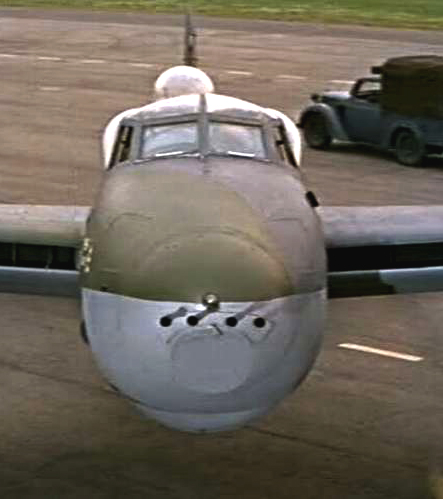
Here’s where the bombardier sat. The next time you watch “633 Squadron”, notice how the inaccurate swines have painted over the Perspex in a vain effort to disguise a bomber pure and simple as a fighter bomber with four cannons:

It’s so shocking and so obvious when you look at it:

One thing you can be sure of though. This particular Mosquito was not in “633 Squadron”, surely the only flying Mosquito in the world that was not used. Perhaps it was an economy measure. The owners of all those different Mosquitoes did charge a whopping £2 a day to rent one.

The last photograph shows two people (not with me) and three other aircraft. One is Japanese and if it’s not a Kawasaki Ki 100 then I don’t know what it is. The World War I aircraft top right, I really don’t know what that is, either. I’ve just forgotten. Perhaps an SE5?

The aircraft on the left has the distinctive tail of the Fokker DVII and guess what? It is one!


A note to say that my hand is now capable of a little light typing so I have managed to catch up on my replies to all the kind comments you made on my previous six blog posts. From now on, it should be back to normal, although I am well aware that operations go in pairs, and it will only be a matter of time until the right hand needs a full service.


30 Comments

Filed under Aviation, Bomber Command, Canada, History

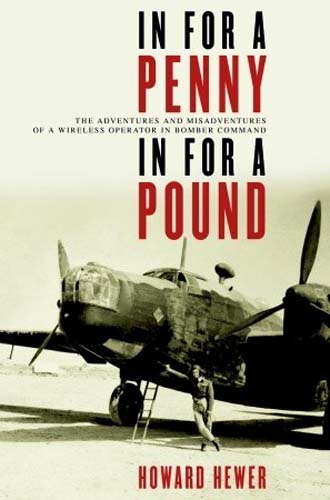
In for a penny, In for a pound : The Adventures and Misadventures of a Wireless Operator in Bomber Command (2)

When I wrote the first part of my review of the book “In for a Penny, In for a Pound : The Adventures and Misadventures of a Wireless Operator in Bomber Command” written by Howard Hewer, I had never written a book review before, so I suppose I can now say “Welcome to my second book review”.

Last time I mentioned how the author talked about his experiences in the RAF in Britain, but how he was then transferred to the Middle East, bombing the Germans and Italians with Vickers Wellingtons:

In actual fact the Wellington was probably the best bomber used in this theatre of war in the early years. At least they weren’t using these Bristol Bombays as bombers:

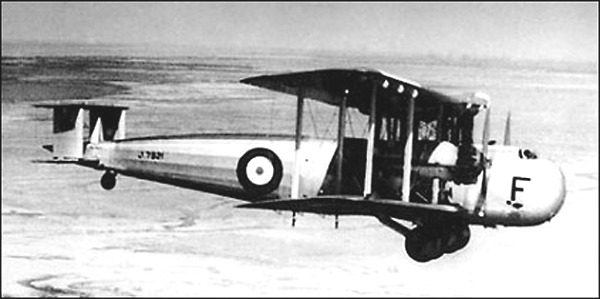
And they weren’t forced to use these biplanes as bombers, for want of any aircraft at all (which did actually happen!):

Howard Heyer describes how the anticolonial attitudes encountered in England continued in the Middle East when he is posted to RAF Kabrit near the Suez Canal:

At Kabrit, the Station Commander lived in a “sumptuous two storey permanent house”. The officers were all billeted in nice wooden houses next to the Officers’ Mess but the sergeants lived elsewhere, in the desert, sleeping on straw mattresses in tents outside the camp. The single shower was just a pipe with no showerhead and the water was heated by the sunshine. The food wasn’t very good either with the buns at Christmas dinner containing not caraway seeds but weevils, regarded by the rather cynical diners as a valuable source of protein. Here is the author, in the middle of the crew of five:

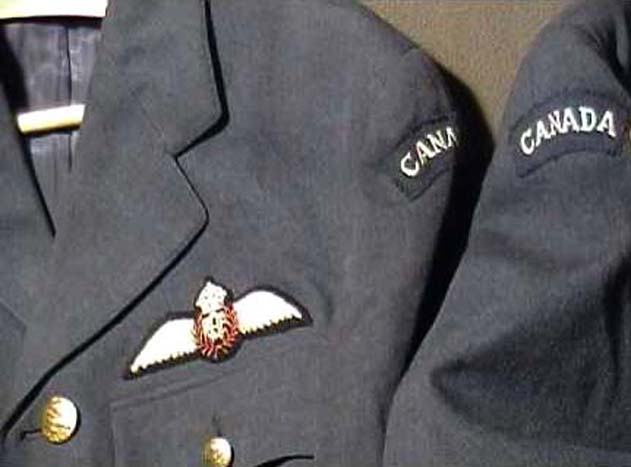
When the time came for introductions, the commander of the base, Squadron Leader B, singled the two Canadians out from the rest and said:

“I see that two of you are Canadians. I’ll tell you right now that if we have any trouble with you, it’s the high jump for both of you.”

Howard is flying combat missions at such long range that they need to land their aircraft at airstrips in the desert both on the way to the target and on the way back. That doesn’t prevent the station commander, who doesn’t fly in combat, stopping his car as he drives past Howard and telling him off for having a button which is not shined properly. Such attitudes eventually lead to a mutiny.

On January 29th 1942, Squadron Leader B had a notice put up ordering:

“All aircrew are to report, properly dressed, to the Station Warrant Officer’s Office at 1300 hours”.

Every member of aircrew had already “been on Ops” in the previous week and in some cases, the night before:

In such cases, men are supposed to have a whole day’s rest with no reporting anywhere. The fact that the Station Warrant Officer has the nickname, “Louie the Rat”, probably sums up the attitude of the 50 men who assembled. He told them to draw rifles for rifle drill. They told him that sergeants only carry side arms so they don’t do rifle drill. Louie then gave them the message from Squadron Leader B that the men were all slack and they all needed smartening up.

At the first command of “Order Arms”, an Australian gentleman told Louie a convenient place to stick his rifle and threw his gun to the floor. He was immediately placed under close arrest and marched off to the Guard Room followed by 50 or so angry sergeants of all nationalities who demanded to be placed under close arrest as well.

And the account goes on from there for another couple of pages. Again, something I have never heard of before, and, like the Cranwell Riot, unknown to Google as well. The book does have a good summary of the situation though, one which could have been applied to a good many RAF bomber squadrons during this period…

“…a long period of minor abuse and lack of caring, a condition of “negative leadership.”

And what’s “negative leadership”?

Well, it can perhaps be summed up in the words of the officer who welcomed the crews to RAF Marham, right at the beginning of the book…

“Well chaps, the glamour period is over. Casualties in this command have been high, and they are on the rise as we make more and more flights further into Germany. I must tell you then that many of you will not be with us a few weeks or a month from now. Good luck to you all.”

Unbelievably, this officer was outdone by the Squadron Medical Officer:

“I hope it doesn’t happen to any of you, but in the event that you find yourself trapped in a burning aircraft with no chance of escape, best to get things over with in a hurry. Lean directly over the flames, open your mouth and inhale strongly. The fire should scorch the lungs and cause almost instant death, much preferable to burning slowly. Well good luck chaps.”

The Bomber Command men, all volunteers, of course, and a huge proportion of them from Australia, Canada and New Zealand, still got on those planes and did their jobs, often at the expense of their lives. The book concludes on a more positive note:

“I have never considered myself a brave man. But I was put into the company of brave men, and I could not very well have let them down.
I don’t believe I did.”

And my overall verdict? It’s a book very well worth a look especially if you can pick up a copy with a bit of history!

One final point I would like to make is that I had a minor operation on my hand recently and for that reason I will not be able to reply to any of your comments in the immediate future. If you do want to make a comment, by all means please do so, but I will not be able to write any replies until after December 6th as a minimum. After this date, with luck, I should be back in business.


30 Comments

Filed under Aviation, Bomber Command, Canada, History, Politics

The Mosquito at Hendon (1)

“Knock, knock.”

“Who’s there?”

“Amos.”

“Amos, who?”

“A Mosquito.”

Terrible, but according to my Dad, a genuine RAF joke from World War II. Well, I suppose they had to do something while they waited for colour television to be invented:

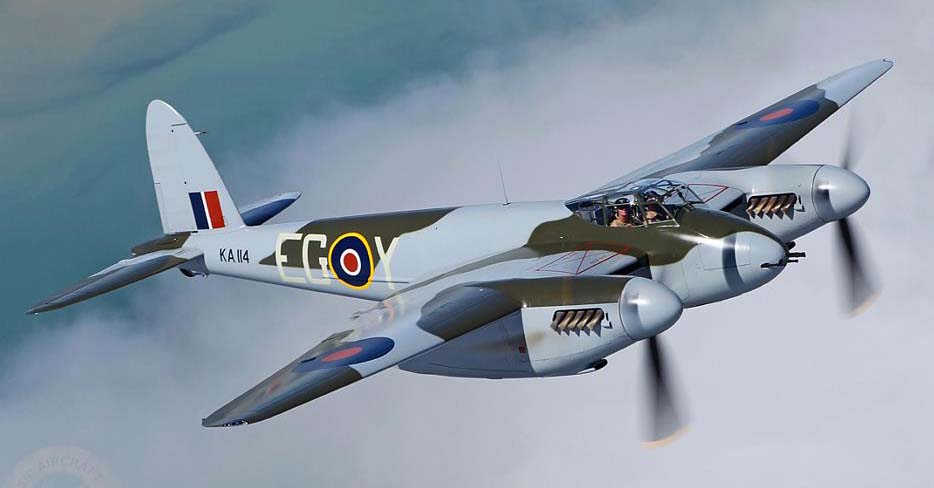
Of all the exciting aircraft of World War Two, the De Havilland Mosquito is perhaps the most exciting. This amazing aeroplane really was the result of thinking outside the box.

Give it powerful engines. Make it more or less entirely out of wood. It will be so fast that no enemy fighter will be able to catch it. It will be one of the few bombers of any era which was regularly unarmed. No surprise that it was nicknamed “The Wooden Wonder”:

And so it came to pass, although the Mosquito could not escape the rule which says that every fast aircraft ever built always has its speed reduced by being forced to carry something extra under its wings.

The very first Mosquitos made their début in May 1942 as daylight bombers. After that, they found work with the Pathfinder Force and performed many other tasks within Bomber Command.

The Mosquito was a great success as a night fighter and an intruder aircraft, as well as an anti-shipping strike aircraft. They were used for photographic reconnaissance at both low and high level by the Royal Air Force and the United States Army Air Force. Some Mosquitoes managed a huge number of missions, as their casualty rate was less than 0.5%.

We went to RAF Hendon in July 2010 and of course, they have a Mosquito there. According to their maze of a website, I eventually found out that TJ138 is a bomber variant, the Mosquito B 35, capable of a maximum speed of 422 mph and a cruising speed of 276 mph. I think only an Me262 jet would be able to catch that.

The B35 was the final mark of this amazing aircraft and it made its first test flight on March 12th 1945. This particular B35 was built in 1945 at Hatfield as part of a contract for 80 aircraft. It was never used in combat and indeed went into storage at No.27 MU Shawbury, Shropshire as early as August 28th 1945, with another period in storage from May 20th 1948. In October 1950, it was sent to Celle in West Germany with 98 Squadron, which means that TJ138 is the only Mosquito still in existence which actually served with a squadron. In 1953 it was converted into a target tug and eventually finished up flying THUM flights. A lovely acronym which means “Temperature and Humidity Flight”.

And to finish the first instalment, here’s a picture of this very Mosquito, TJ138, waiting patiently to go off on some more THUM flights:

One final point I would like to make is that I had a minor operation on my hand recently and for that reason I will not be able to reply to any of your comments in the immediate future. If you do want to make a comment, by all means please do so, but I will not be able to write any replies until after December 6th as a minimum. After this date, with luck, I should be back in business.

39 Comments

Filed under Aviation, Bomber Command, Canada, History

In for a penny, In for a pound : The Adventures and Misadventures of a Wireless Operator in Bomber Command (1)

I haven’t written a book review before, but last week I was quite struck by this particular book, entitled “In for a penny, In for a pound : The Adventures and Misadventures of a Wireless Operator in Bomber Command” written by Howard Hewer. It is by no means a new book. My copy was published in 2000 and I bought a used copy from Abebooks. It was from a bookseller in Toledo, Ohio and the book had been a Library Copy from Greater Victoria Public Library at 735 Broughton St, Victoria, British Columbia, V8W 3H2, Canada.

With used library books, especially foreign ones, I always spend time wondering where the book has been, who borrowed it, what their lives were like and so on. I was most intrigued to find a till receipt still inside, detailing the book’s being taken out at precisely 10.41 am on June 16th 2001. Who read it? Did they enjoy it? And most exciting, did they get it back to the library on time by June 30th?

The book tells the story of a young Canadian who joins up and then spends the war in the RAF, mainly in Europe and the Middle East. He is in Bomber Command where casualties, of course, were enormous. There are, really, any number of such books. Some are written to be exciting, some to be poignant and some as detailed historical records. This one is a little bit different and tells the story from the point of view of a Canadian:

I just did not realise that the British would drag innocent young blokes half a world away from their homes to do their fighting and then insult them for their pains…

“We encountered the ‘colonial label’ usually with some snide remark. We grew restive and increasingly rebellious.”

Their reactions were pretty easy-going though, compared to one group. The Aussies:

“erupted in a near riot and refused to appear on parade or in class…Things reached a climax one day in the mess hall. This day the food was particularly inedible and one Aussie grabbed his plate and flung it against the wall just as an RAF air commodore walked through the door…this was not an isolated incident”.

Indeed, he speaks of the Canadian involvement in the “Cranwell Riot”, calmed only by the intervention of Canadian diplomats and Canadian officers. This may be what is being referred to in “The Cream of the Crop: Canadian Aircrew 1939-1945” by Allan D English (page 120) but I haven’t read that book yet. I could find nothing about the episode on the Internet.

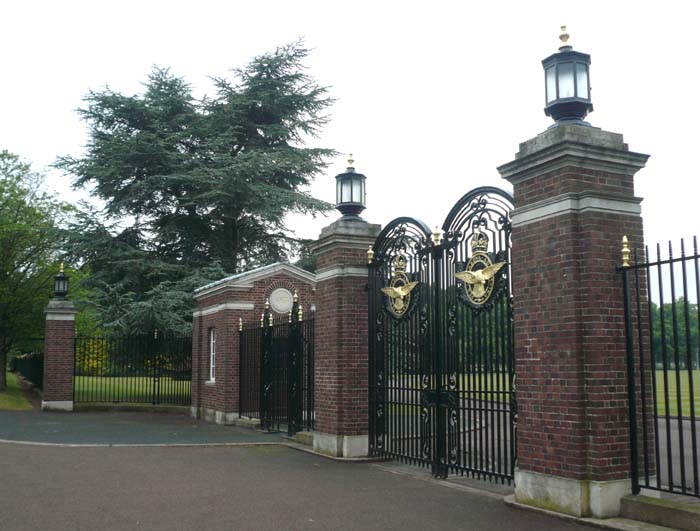
We visited Cranwell in May 2010. It was a dull rainy day but here is the main building:

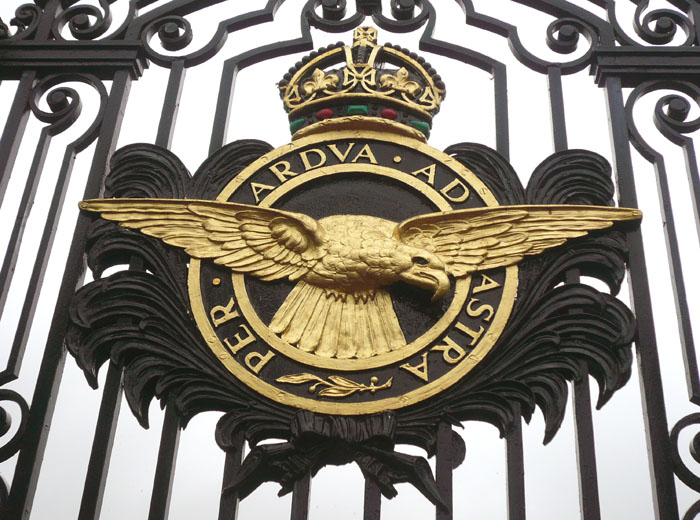
The gates are typical architecture of the time:

They are decorated with the superb badge of the RAF:

I read a lot about the RAF in World War Two but this book presents so much that is new to me. One intriguing footnote tells of the author’s neighbour in 1995 who told him of a fairly amazing incident. The Irish, always pretty anti-English at that time, were supposedly allowing U-boats to refuel in Cork Harbour, so, in late 1942 or early 1943, the RAF sent a force of 8 Blenheims to bomb the harbour “most bombs purposely landing in the bay.”

Well, I’ve never heard this before, but that doesn’t mean it isn’t true. Some 20,000 Irishmen from the Republic were in the British forces, but there were a good few who were very sinister in their activities. In his book, “Clouds of Fear”, Roger Hall alleges that more than one RAF flyer was killed by Irish parachute packers who deliberately sabotaged their parachutes. The men murdered this way included a young man from the High School but that is, as they say, a story for another day.

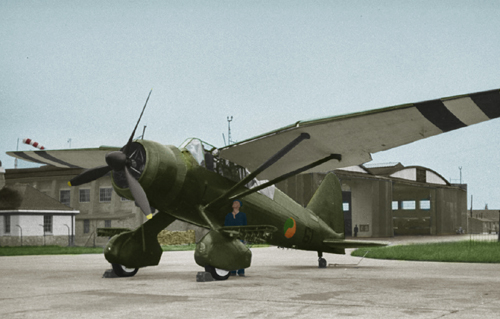
Bombing Cork, even Blenheims would have been safe from the Irish Air Corps, who used Lysanders:

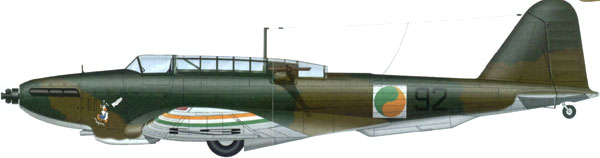
And the Fairey Battle:

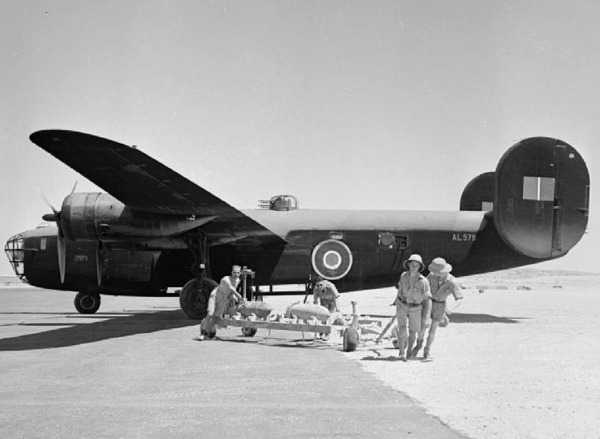
Going back to Howard Hewer’s book, when he was posted to the Middle East, I was really surprised to hear for the first time, of the practice in North Africa of bombing targets which were so far away that the aircraft had to refuel both on the way there and on the way back. The book discusses the conditions at these stopover sites “situated on dried up salt lakes…We carried our bomb load from base, and had to land fully and lethally loaded…we slept on the floor of the aircraft in winter, under the wings during the summer months…we were not issued with sleeping bags…” Presumably, the advent of B-24 Liberators would have helped to phase out these stopovers which were unavoidable with the Wellingtons:

The Liberator had a much better range. Here is one of the first that the RAF received:

Next time, I’ll carry on with Howard Hewer’s adventures in Egypt. There are many more stories about the RAF officers that I had never heard, but they all have that ring of truth.

21 Comments

Filed under Aviation, Bomber Command, Canada, History, Literature, Politics

1937: The Clouds of War (1)

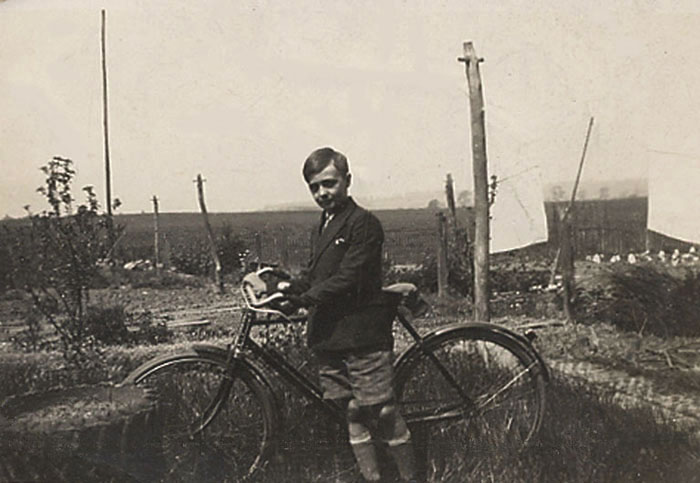
What must have been among the most magical moments in my father, Fred’s, long and eventful life, came one day, or rather one evening, around 1937. In a long golden English summer, he and three of his childhood friends decided to use their knowledge from the Wolf Cubs and the Boy Scouts and to go off camping. Those three other boys were Jonty Brearley, Bernard Swift and John Varty. Here’s my Dad, with his bicycle. Behind him, there is nothing but fields. Nowadays, there is nothing but houses:

AG with bike 1930 8

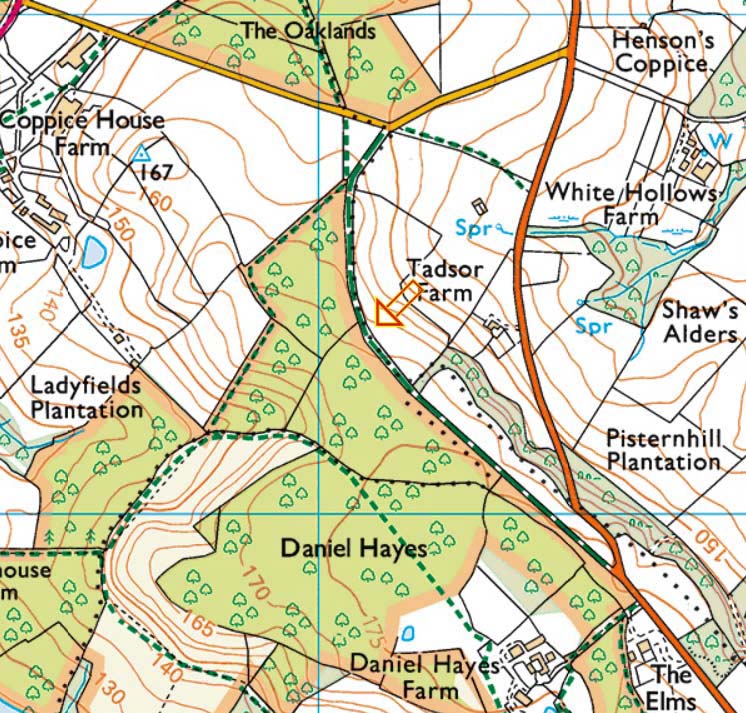
The boys all went by bicycle down Hartshorne Lane, into the village of Hartshorne itself, past the Georgian coaching inn and the haunted old Elizabethan house. Look for the camouflaged orange arrow which points at Fred’s house. The boys rode into the top right hand corner of the map, towards the church with a square tower:

journey 1

They cycled resolutely past the old Saxon church of St Peter:

Hartshorne_Church_web

Then they took the road westwards out towards Repton. The next orange arrow on the map below points to Hartshorne Church.

Repton, off to the west, was the village where, in the winter of 873-874 AD, the Danish Great Heathen Army, led by the reputedly nine feet tall Ivar the Boneless, spent a few months resting up and slaughtering the locals:

Fred and the boys ignored these ruffians, though, and they turned off to the north, the top right corner of the map, towards the villages of Ticknall and Foremarke, home of Fred’s ancestors from the days of the Stuarts:

journey 2

At the very top of the hill, though, by now high up on the horizon, they turned yet again, eastwards along the yellow-marked Coal Lane, before they turned for the last time into Green Lane, indicated by the orange arrow. They followed this grassy track for a good distance until it joined the steep orangey road towards Pistern Hills:

journey 3

Just look how many features on this map refer either to types of tree, the shape of the landscape or the name of a long forgotten landowner.

Just before the road junction, they put their bikes in the hedge and made camp.

journey 5

Green Lane, originally, formed part of an ancient trackway, dating back perhaps to Stone Age times. I don’t have a photograph, but this is what it would have looked like in that more countrified era:

green 1xxxxxxx

No insecticides then, or petrol powered machines to cut back the homes of the bee, the butterfly and the wood mouse:

green-lane-narrowing-11xxxxxxxxxxxxx

In a word, it was a countryside paradise. We’ll see who plays the part of the Serpent next time.

31 Comments

Filed under Bomber Command, History, Personal, Wildlife and Nature

And here is the news (4)……

I was talking last time about a book which I have started writing about the High School’s war dead from World War 2. At the moment, the book has no title but that will emerge!

I intend to incorporate a few poems in the book. You will be glad to hear that none of them are by me.

One comes from the writings of ‘Granta’ in the School Magazine, The Nottinghamian. To paraphrase his words:

Nine Nottinghamians,
At the Forest Road gate,
One went to Bomber Command,
And then there were eight.

And the poem by John Maxwell Edmonds:

Went the day well ?
We died and never knew.
But, well or ill,
Freedom, we died for you.

This poem was written by R. W. Gilbert and was featured by my friend Pierre Lagacé in his blog « RCAF 425 Les Alouettes »

REQUIEM FOR AN AIR GUNNER.
The pain has stopped, for I am dead,
My time on earth is done.
But in a hundred years from now
I’ll still be twenty-one.

My brief, sweet life is over
My eyes no longer see,
No summer walks, no Christmas trees,
No pretty girls for me.

I’ve got the chop, I’ve had it.
My nightly ops are done.
Yet in another hundred years
I’ll still be twenty-one.

I may incorporate a poem by a Bomber Command veteran, John Pudney:

“Do not despair

For Johnny-head-in-air;

He sleeps as sound

As Johnny underground.

Fetch out no shroud

For Johnny-in-the-cloud;

And keep your tears

For him in after years.

This slideshow requires JavaScript.

Better by far

For Johnny-the-bright-star,

To keep your head,

And see his children fed.”

I have not decided yet on which ones I will definitely use, except for the  following words which will certainly appear. They describe perfectly the job that, hopefully, I will have done. They were written by (possibly Robert) Wace, a Norman poet who was born in Jersey in the Channel Islands between 1099 and 1111 and who was last known to be alive in 1174. Wace was brought up in Caen in Normandy and eventually became Canon of Bayeux:

Eventually
All things decline
Everything falters, dies and ends
Towers cave in, walls collapse
Roses wither, horses stumble
Cloth grows old, men expire
Iron rusts and timber rots away
Nothing made by hand will last
I understand the truth
That all must die, both clerk and lay
And the fame of men now dead
Will quickly be forgotten
Unless the clerk takes up his pen
And brings their deeds to life again.

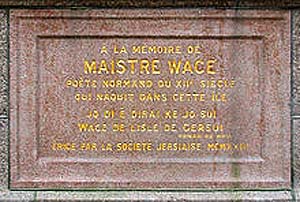
In Jersey’s Royal Square stands the States Building and a granite memorial  stone to Wace is built into one of its side walls:

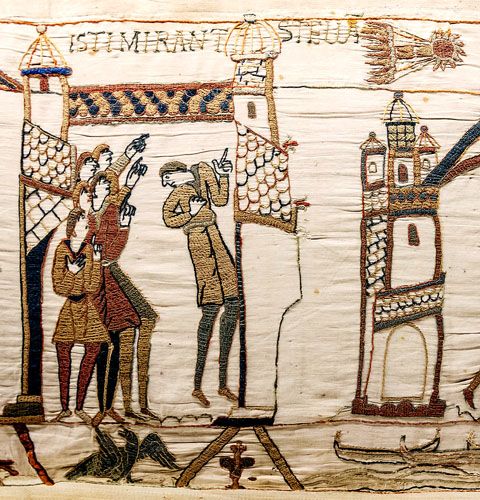
It has on it a proud quote from Wace’s major work, the Roman de Rou, the Tale of Rou, which tells the story of William the Conqueror and the Norman Conquest, including Halley’s Comet :

Jo di e dirai ke jo sui
Wace de l’isle de Gersui

In Modern French it would be

Je dis et dirai que je suis
Wace de l’île de Jersey

And in English

I say and will say that I am
Wace from the Island of Jersey

It is also recorded in Modern Jèrriais, a language I had never heard of, but it still has an admittedly declining number of speakers on the island :

J’dis et dithai qu’jé sis
Wace dé l’Île dé Jèrri

It was Wace who introduced the idea of Halley’s Comet to the Bayeux Tapestry story:

Watch what you’re doing with that arrow !!!!  You’ll take somebody’s eye out !!!!

Because I am a registered Nerd / parce que Je suis un geek de la langue française, I have the poem in Modern French and whatever language Wace spoke as well…Norman, Medieval French, Medieval Jèrriais, whatever. In the first section I have put ye Olde Frenche firste, and then modern French in Italics and then English. In the second section, see if you can think of the modern French words that ye Olde Frenche comethe fromme ….

Tote rien se tome en declin
Tout  décline
All things decline

Tot chiet, tot muert, tot vait a fin
Tout meurt, tout va à fin
Everything falters, dies and ends

Hom muert, fer use, fust pourrist
L’homme meurt, le fer use, le bois pourrit
Men expire, iron rusts and timber rots away

Tur font, mur chiet, rose flaistrit
la tour s’écroule, le mur tombe, la rose flétrit
Towers cave in, walls collapse, roses wither,

cheval tresbuche, drap viesist
cheval bronche, drap vieillit
horses stumble, cloth grows old,

Tot ovre fet od mainz perist
tout ce qui est fait de la main des hommes périt
Nothing made by hand will last
………………………………………..

Bien entenz è conoiz è sai,
I hear the truth well and I am aware and I know

Ke tuit morront  è cler è lai;
That all must die, both clerk and lay

E mult ara lor renomée
Emprez lor mort corte durée

And the fame of men now dead
Will quickly be forgotten

Se par cler ne est mise en livre,
Unless the clerk takes up his pen

Ne pot par el durer ne vivre
And brings their deeds to life again.

Wace, Romain de Rou, III, II, 131-142
(c 1170)

The translation is not such a close fit in the second bit rather than the first.


26 Comments

Filed under Aviation, Bomber Command, History, Nottingham, The High School, Writing

And here is the news (3)……

In my Last Post, I told you what I had been up to of late. I have always been very impressed by a fellow teacher and friend of mine, Simon Williams, who has researched at very great length the young men from the High School killed in the First World War:

This slideshow requires JavaScript.

I decided that I would have a look at the war dead from the Second World War and I have been working for the last 18 months, two years, on researching those particular individuals.

I have been sadly surprised at just how many of them there were. I started with 82 from the official list but I have now pushed it up to at least 105 with probably quite a few more to come. The reason for this is that if Frederick Cyril Smith of 189, Station Road, Beeston, attended the High School from May 10th 1901 onwards, there is no way of being 100% certain whether or not he is the same Frederick Cyril Smith who was Able Seaman Frederick Cyril Smith, killed on May 23rd 1941 on HMS Zulu, particularly if there are no details of either his age, home address or parents’ names recorded on the Commonwealth War Graves Commission website:

And so far, I have found around 150 such cases, all of which are possible matches. They won’t all be ex-High School pupils, but if only one of them is an Old Nottinghamian then I don’t want to miss him.
And there is absolutely no way of guessing. One Old Nottinghamian was called Albert Frederick Aylott, born 1911, lived at 96 Glapton Road. Is he the same Albert Frederick Aylott as the Albert Frederick Aylott killed on March 31st 1945 in northern Germany ? In actual fact, probably not, but who would have thought so with such an unusual name?

On average, I’m producing around 4,000-5,000 words per person, listing his school record fully, his adult life before the war if possible and then his career in the forces with, hopefully, the reasons why he was where he was when he was killed. And if possible, the name of the man who pulled the trigger or pushed the button. The casualties took place everywhere, from Arnhem to Yugoslavia, with one ex-pupil who lived in Zimbabwe but was killed, probably, in Ethiopia.

Some more details next time.


14 Comments

Filed under Aviation, Bomber Command, History, Nottingham, The High School