Category Archives: Criminology

Three war crimes, two Sunderlands and one Ashley Wilkes (5)

Last time we were looking at how the English film star, Leslie Howard, was killed when the aircraft he was in, a DC-3 Dakota, was shot down over the Bay of Biscay, by the Luftwaffe.

That Dakota, though, was actually completely unarmed and it was no match whatsoever for a single Junkers Ju88, let alone a group of eight of them. As well as being unarmed, it was also registered in a neutral country (the Netherlands) and flying from a neutral country (Portugal) to England.

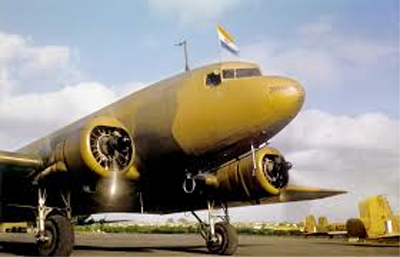
Nobody took very much notice of this at the time, but, because of these seemingly innocuous details, the entire episode therefore crossed the line of human decency and became a war crime. Here’s the DC-3 in question. Note the Dutch flag, with the prominent orange:
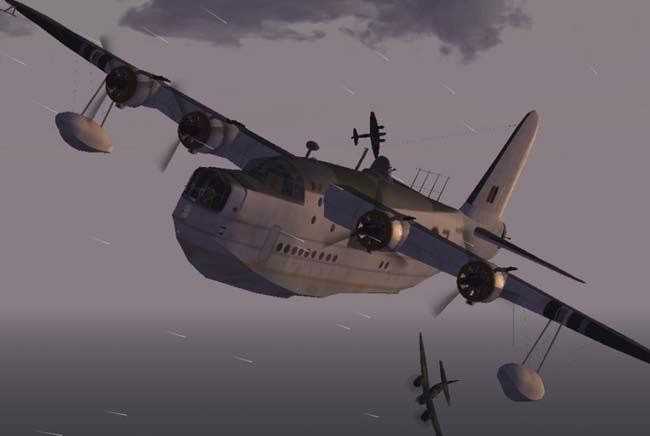
In the immediate aftermath of the DC-3’s failure to arrive in Bristol, the British sent out a Short Sunderland GR3 flying boat to look for it on the following day (June 2nd 1943):

The aircraft carried the serial number EJ134 and it was piloted by the brave Australians of 461 Squadron. The crew was James (Jim) Collier Amiss (Second Pilot), Wilbur James Dowling (First Pilot), Alfred Eric Fuller (First Wireless Operator / Air Gunner), Ray Marston Goode (Tail Gunner), Albert Lane (Third Wireless Operator / Air Gunner), Edward Charles Ernest Miles (First Flight Engineer), Harold Arthur Miller (Second Wireless Operator / Air Gunner), Kenneth McDonald Simpson(Navigator), Philip Kelvin Turner (Second Flight Engineer), Colin Braidwood Walker (Captain) and Louis Stanley Watson (Rigger).
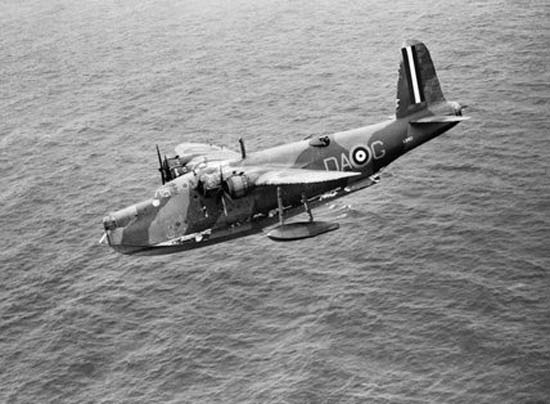
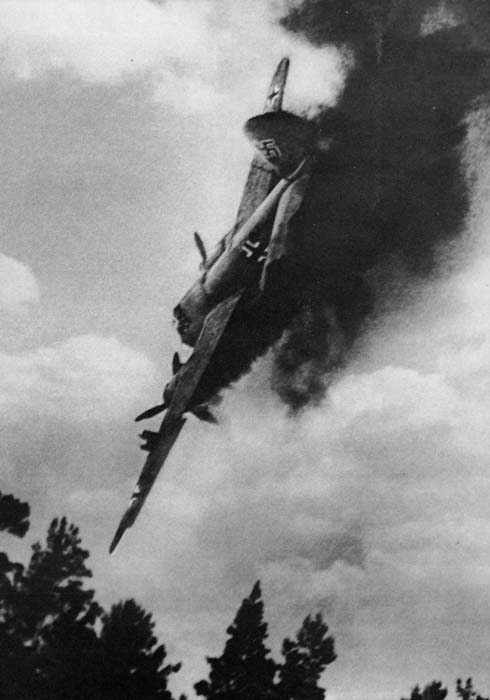
The flying boat found nothing whatsoever on the surface of the sea, no wreckage at all. What they did find though, were surely the very same eight Ju88C-6s that Leslie Howard had already met, at more or less the very same place where they had met them. Sunderland EJ134 and its crew then won their place in aviation legend. In a prolonged battle, the flying boat lost one engine and its tail turret. Messrs Dowling, Goode, Miller, Simpson and Walker were all injured and poor Ted Miles, one of the two side gunners and just 27 years old, was killed. The battling Aussies did manage, though, to shoot down three of the eight German fighters:
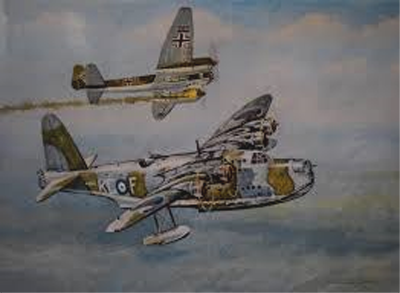
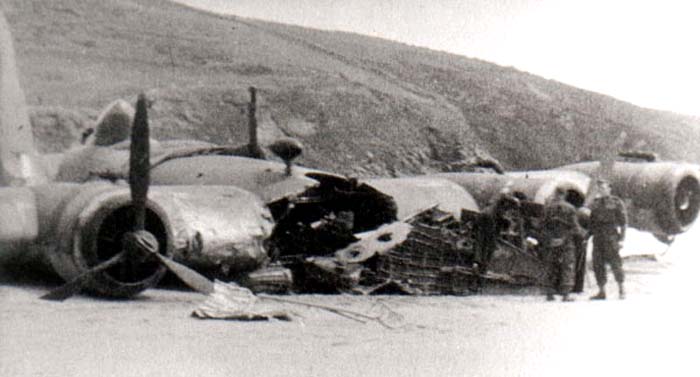
Of the other five, only two made it all the way back to Bordeaux. The other three were presumed to have crashed into the waves as they were never heard of again. Six out of eight shot down. That should teach them not to attack unarmed airliners flying from neutral countries. The now shot to pieces and extremely battered Sunderland EJ134 made it the 350 miles back to western Cornwall, not to Penzance, but only as far as a beach on the south Cornish coast, at Praa Sands:

The fierce Atlantic waves, however, ultimately smashed it to smithereens:
Young Ted Miles, just 27 years old, was buried at Pembroke Dock Military Cemetery joining 72 more casualties, 40 from World War I and 32 from World War II, including five Australians. On his grave his parents had written:

“There is no death: our stars go down to rise upon some fairer shore”.

The family came from Brixton in London. Ted’s parents were Edward Charles Miles and Florence Mabel Miles. His young wife was Frances Margaret Miles.

Around eight weeks later, virtually the same 461 Squadron crew was lost without trace out on patrol over the Bay of Biscay on Friday, August 13th 1943 in a Short Sunderland Mk III, serial number DV968. The last message that they transmitted was that they were being attacked by six Ju88s. The victory was claimed by Leutnant Artur Schröder so this particular incident may not have been exclusively carried out by members of the original eight, especially as Schröder was in 13 / KG40, not V/KG 40:

The men from EJ134 who were killed in DV968 were Wilbur James Dowling (34), Alfred Eric Fuller (20), Ray Marston Goode (34), Albert Lane (27), Harold Arthur Miller (23), Kenneth McDonald Simpson (28), Philip Kelvin Turner (26) and Louis Stanley Watson (25). The new members of the crew who died were David Taylor Galt (28), James Charles Grainger (24) and Charles Douglas Leslie (Les) Longson (20). Not flying that day were James (Jim) Collier Amiss and Colin Braidwood Walker from the original “Flying Porcupine”, Sunderland EJ134. Both men would survive the war and go home to Australia. Hopefully, they lived out very long and happy lives. Perhaps they followed a sports team:

Or perhaps they preferred the beach:

16 Comments

Filed under Aviation, Cornwall, Criminology, History, Personal, Politics

Three war crimes, two Sunderlands and one Ashley Wilkes (3)

Last time I was explaining the connection between the Short Sunderland flying boat and “Das Fliegende Schtachelschwein” aka “The Flying Porcupine”.

This thorny porcine epithet comes from an aircraft which was based at Invergordon in north east Scotland in 1940. My story will be based primarily on the work of John Robertson in 2010. I had never heard any explanation of the nickname and it is a tale of heroism well worth telling and re-telling, believe me.

The particular Sunderland was N9046. It belonged to 204 Squadron and its squadron letters were KG-F. Here it is, although it seems to lack the KG-F:

The crew left their northern Scottish base on April 3rd 1940, tasked with carrying out a ten hours protection patrol, looking after a convoy bound for Norway. There was absolutely no sign of the enemy, until two Junkers Ju88s, probably from II./Kampfgeschwader 30, appeared at low altitude over the water, seemingly having arrived from a base in southern Norway, or perhaps in Denmark. Here is a nice Junkers Ju88 in full-ish colour:

And here’s the Airfix kit box:

Seeing the Sunderland, one of the two Ju 88s made a head on attack but the Sunderland’s front turret opened up and the two Junkers aircraft seemed to take flight into the leaden clouds. Here’s that front turret again, with its rather light .303 guns.:

Four more Junkers then attempted to attack the ships but they were driven off by the convoy’s various defences. Less than a quarter of an hour later, six Junker Ju88s came in, four of them almost certainly Ju88A-4s. Two of them came for the Sunderland which went right down to the water to make itself a more difficult target. That didn’t stop the Germans who both attacked fiercely, but the flying boat’s gunners drove them off and they eventually fled.

The situation had now become dramatic enough for it to form the basis of a modern computer game:

The other four Ju88s, having already released their bombs, then made a line astern attack on the Sunderland but the rear gunner, Corporal William Gray Lillie, with his slightly heavier 0.5 machine guns sent the first one spiralling in flames into the cold, cold waters of the North Sea. Ignore the trees. It’s actually seaweed:

Corporal Lillie blasted the second German in his port engine which was soon pothering black oily smoke and flames. The German pilot left for his land base in Norway, uncertain if he would reach it with only one engine performing properly. In actual fact, he was forced to crash land in the as yet unoccupied northern section of Norway where the crew were forced to set their aircraft on fire before being arrested and interned.

Rather imaginatively, the final two Ju88s then attempted to drop their bombs onto the Sunderland. They missed and finally cleared off home.

N9046 reached Scotland safely and had no problems until Wednesday,  December 11th 1940 when, riding at anchor in Sullom Voe in the Shetlands, it suddenly caught fire and was completely destroyed.

Here is brave Corporal Lillie:

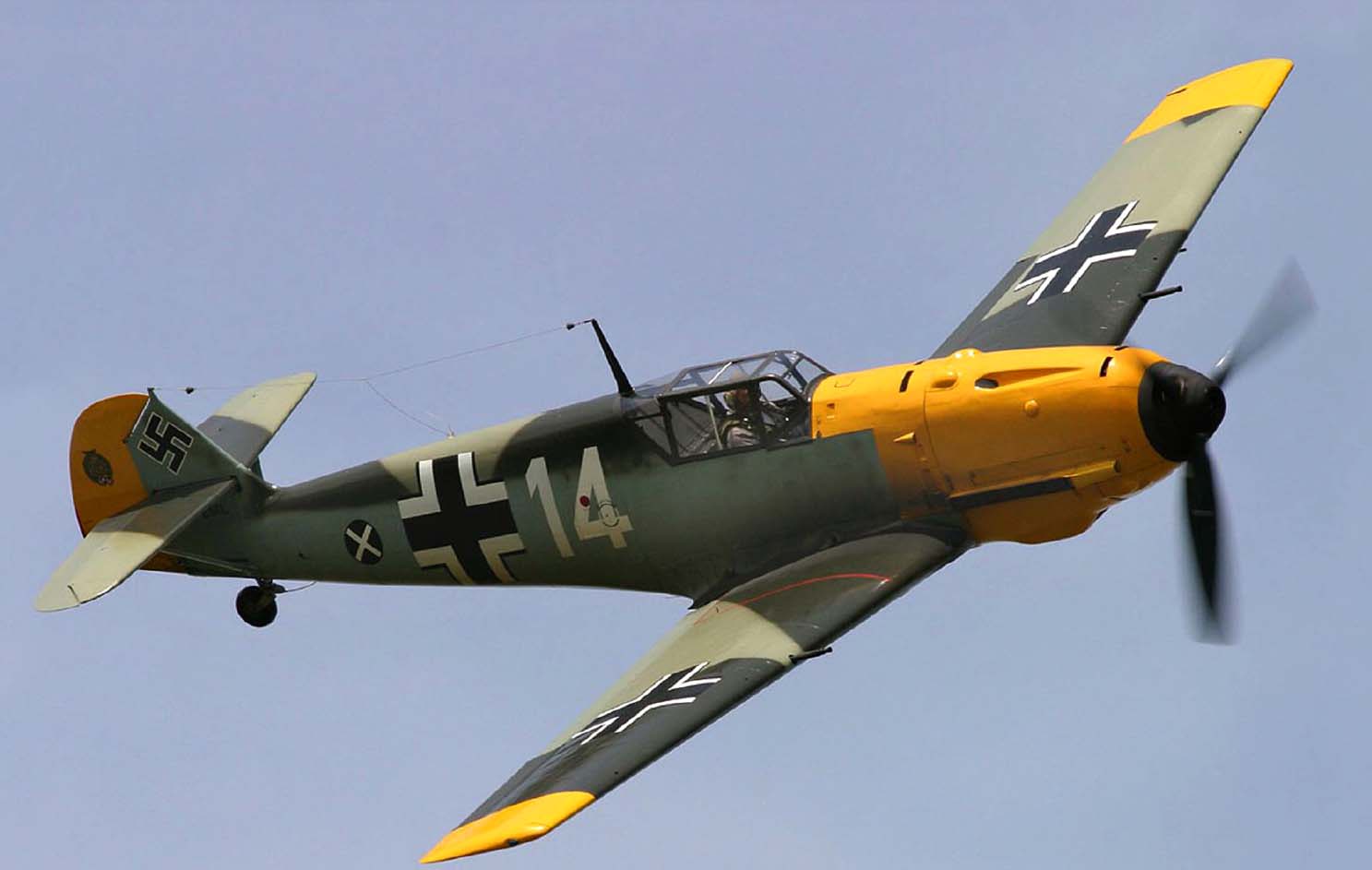
Did he survive the war? Well, sadly, no. He was killed in combat on July 21st 1940, shot down by a Messerschmitt Bf109 of 8./JG77:

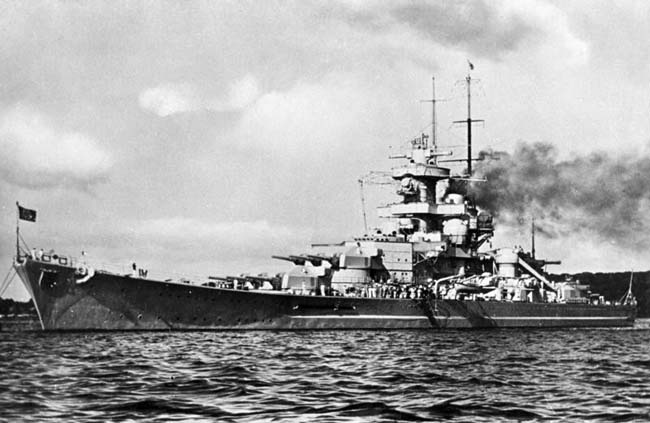
Corporal Lillie was the rear gunner in Sunderland N9028. They had been sent to Trondheim in Norway on a clandestine reconnaissance mission to check the submarine base and to see if the Gneisenau had left the port. Here it is:

Next time, I will show you how a suave English actor is connected to the Short Sunderland and, indeed, the Junkers Ju88.


24 Comments

Filed under Aviation, Cornwall, Criminology, Film & TV, History, Personal, Politics

“The Devil’s Doctors” by Dr Mark Felton (4)

Last time I was talking about “The Devil’s Doctors” by Dr Mark Felton which describes how, at Mukden POW Camp in Manchuria,  Allied prisoners of war, primarily Americans, were used to test Japanese biological weapons developed at Pingfan, the nearby headquarters of Unit 731. Dr Felton also broadens the scope of his writing to include events after the war, when large numbers of Japanese doctors were found guilty of war crimes, in many cases on American personnel, but no sentences were ever carried out. “Why did this happen?” the author asks, but quickly reveals the real truth. The Americans were now thinking about war with their erstwhile allies, the Soviets:

To wage the next war and win, the American government wanted to know immediately everything about the Japanese biological weapons so that they could use the information for their own purposes. On August 13th 1945, before even the end of this war, in Operation Flamingo, the American government set up an OSS team to

“secure all Japanese documents and dossiers, and other information useful to the United States government”.

Indeed, fifteen military intelligence operatives were about to be parachuted into Pingfan to gather up scientists and data, when the Japanese, terrified by the thought of Stalin’s savage soldiers invading the sacred Japanese homeland, suddenly surrendered:

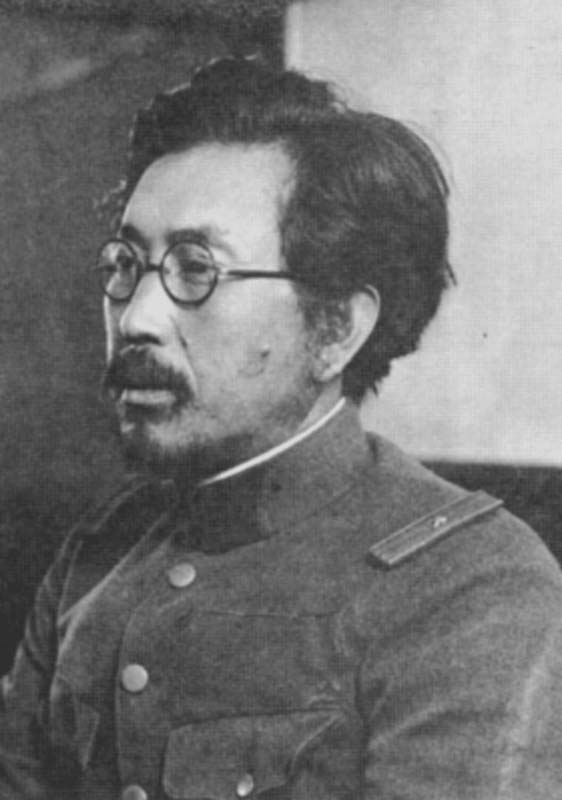
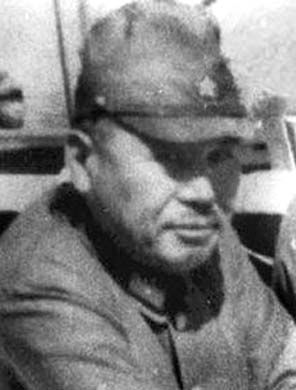
Shiro Ischii and his colleagues fled from Manchuria to Japan with all their data. According to the author, they eventually finished up talking to Columbia University’s Dr Murray Sanders to whom General MacArthur had personally given the job of investigating the Japanese biological warfare programme. Here’s Ischii again:

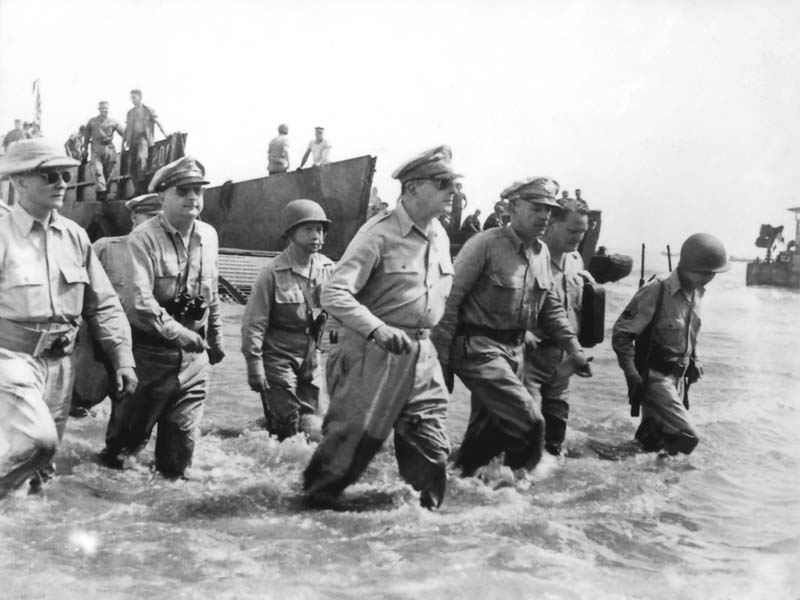
Everything that Dr Sanders found out was taken to MacArthur who decided that the Japanese data was “almost incalculable and incredibly valuable to the United States”. He wanted it “on an exclusive basis”. The Americans offered Ischii and his colleagues from Pingfan a “blanket immunity from prosecution in perpetuity”. The people who made this offer were well aware that living Allied prisoners had been experimented on. Both Pacific Stars and Stripes and the New York Times had published allegations in 1946 and in 1947 American Military Intelligence found 12 independent witnesses all giving the same details about the live vivisection of Allied POWs. Here’s MacArthur:

According to the author, when J Edgar Hoover, head of the FBI, tried to look into the affair, he was told by MacArthur’s investigating agent that “information of the type in question is closely controlled and regarded as highly sensitive”. In other words, he was told to get lost. Here’s Hoover, who does not seem to have pressed the point:


So Ishii and all of the rest got their lifelong immunity and were never put on trial. Had they appeared in court, the British and the Soviets would have acquired all of the data that only the Americans had at the time. Ishii went to live the American Dream in Maryland where he died in 1959. According to the author, the prominent Unit 731 vivisectionist, Masaji Kitano, went back to Japan and became the president of a large pharmaceutical firm. Here’s Kitano:

Sadly, the author, Dr Felton, does not name the vivisectionist who became Governor of Tokyo, nor the one who was President of the Japan Medical Association nor the one who headed the Japan Olympic Committee. Even so his research at this point could not be bettered, with some very dark and disgusting political stones being overturned.

As the war slipped away, the Japanese were keen to use their new Biological Weapons in the USA. Again, the author’s research into events at this point could not be bettered. A first feasibility trial consisted of a submarine launched spotter plane which dropped incendiary bombs in the forests of the West Coast. It was too wet and not a lot happened.

In August 1943, the Japanese Navy tested  large paper balloons, again launched from submarines, and again with the intention of setting fire to the forests. That project was abandoned in favour of an Army project to use bigger balloons carrying incendiary and anti-personnel bombs. Sadly, six people were killed near Bly in Oregon, possibly because the powers-that-be did not release news of what the Japanese were doing, because it might have caused mass panic.

The final piece in this well researched jigsaw came when the Japanese Navy commissioned the huge I-400 submarines which would have carried three aircraft each, Aichi M6A1 Seiran torpedo bombers:

This slideshow requires JavaScript.

These aircraft would have overflown San Francisco, Los Angeles and other American cities and then  dropped canister type bombs or possible even crop sprayed them with Today’s Maniac Special… bubonic plague, typhoid, dysentery, perhaps even a nerve gas. Shiro Ishii would surely have had some ideas about what to do?

So why did it not happen? Well, the author’s persistent research has turned up a good few reasons. Firstly, Japan found it difficult to produce the huge I-400 submarines and the planes to go with them. Furthermore, a “morally bankrupt” Imperial Army still had one or two who remembered dimly how decent human beings led their lives. Quite simply, the Chief of the General Staff, Yoshijiro Umezu put a stop to it. He told his officers:

“If bacteriological war is conducted it will grow from the dimension of war between Japan and America to an endless battle of humanity against bacteria. Japan will earn the derision of the world”.

Overall, I would strongly recommend this book which lays bare the extremely dirty secrets of the Japanese and the Americans, and I suppose those of the Soviets too, because, although they never received any of the material scooped up and taken away by their American allies, they definitely wanted to have it. So too did the British, and there is a lengthy section about their activities with plagues and nerve gases, centred on the top secret centre at Porton Down in Wiltshire. The book is 198 pages and if you can buy yourself a copy, then you really should. It’s a fine tale about just where a Master Race complex can lead you.

26 Comments

Filed under Criminology, History, Politics, Russia, Science

“The Devil’s Doctors” by Dr Mark Felton (3)

Last time I was talking about “The Devil’s Doctors” by Dr Mark Felton which describes how, at Mukden POW Camp in Manchuria,  Allied prisoners of war, primarily Americans, were used to test Japanese biological weapons developed at Pingfan, the nearby headquarters of Unit 731:

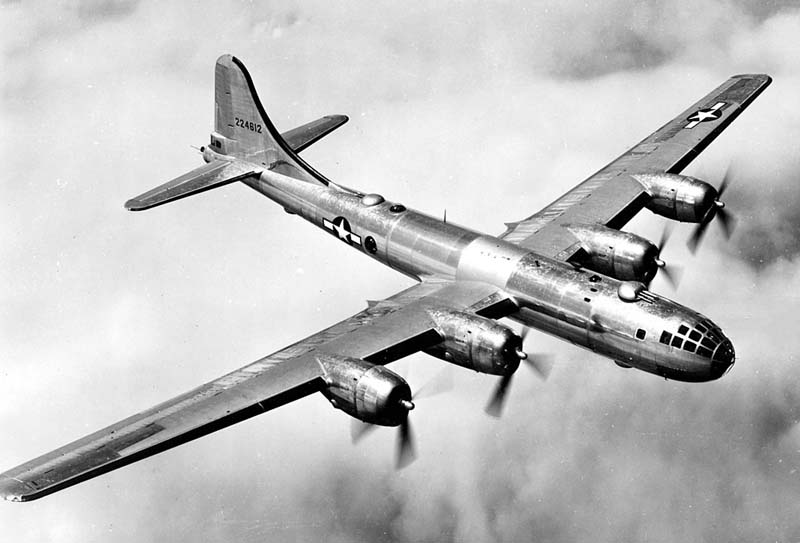
The author then extends his account to some of the other atrocities carried out at other locations within the Japanese sphere of influence. In the last post I spoke of what happened to the crew of a B-29 Superfortress, brought down over Japan on May 5th 1945:

The crew were all murdered in the vilest fashion  and 30 Japanese eventually stood trial in an American court. Dr Fumio Ishiyama, the university’s chief of surgery, committed suicide to avoid justice. Of the remaining 29 Japanese, 23 were found guilty. There were five death sentences, four life imprisonments and prison for all the rest. Sadly, the sentences, awarded for war crimes up to and including cannibalism, were never carried out.

The author then reveals that the American government, having realised that their erstwhile allies, the Russians, were in actual fact, total savages and vile people and worse than that, a bunch of Commies, decided to do very little indeed with the guilty Japanese defendants. After all, the Japanese people were a lovely lot who well might fight on our side against the Russians if we were very, very kind to them. Nobody was hanged and every single war criminal was free as a bird by 1958. Personally, I’m only surprised that the thirty Japanese weren’t asked to write a best selling recipe book.

One of the most striking things in the author’s research is that the 700 page Official History of Kyushu Imperial University devotes just one page to the vivisection experiments it carried out for years on hundreds of innocent people. It reminded me of one German company’s attitude to the 80,000 concentration camp slave labourers they used. They don’t even get a mention.

The doctor in charge at Pingfan was Shiro Ischii:

Ischii wanted to discover how diseases affected the human body, and hundreds of thousands of Chinese people paid the ultimate price to help him. Aerial sprays were used from aircraft and bombs made of ceramic material but full of germs were dropped on Chinese civilians. It must have been a little bit like spraying forest fires nowadays:

Poisoned food and water was frequently offered to Chinese victims. Fleas carrying bubonic plague were released by Japanese aircraft over the Chinese cities of Ningbo (1940) and Changde (1941). At least 400,000 people died as a result of this. Here are the two cities nowadays:

This slideshow requires JavaScript.

In comparison, casualties at Hiroshima were 90,000–146,000 and at Nagasaki between 39,000–80,000.
Dr Felton has researched Pingfan in enormous detail. The centre was divided into various ‘Divisions’, all under the command of Shiro Ischii. Division 1 worked with anthrax, bubonic plague, cholera, tuberculosis and typhoid, frequently introducing it to live people. As test volunteers, between 300-400 Chinese were kept confined at a local camp and numbers were always maintained around that level. Division 2 worked on weapons to deliver the toxins, trying to invent radical new ways to contaminate the western USA. Division 3 constructed artillery shells for shorter range operations and Division 4 developed new biological agents.
The book tells exactly what kind of medical and surgical war crimes were committed by Unit 731 personnel but I will not inflict them upon you. You will need to buy the book! Suffice it to say that the treatment meted out to these poor Chinese people was vile, beyond contempt. It still affects Sino-Japanese relationships today, mainly because of the extreme reluctance on the part of the Japanese to accept their guilt and to apologise in a meaningful and sincere way.

10 Comments

Filed under Criminology, History, Politics, Science

“The Devil’s Doctors” by Dr Mark Felton (2)

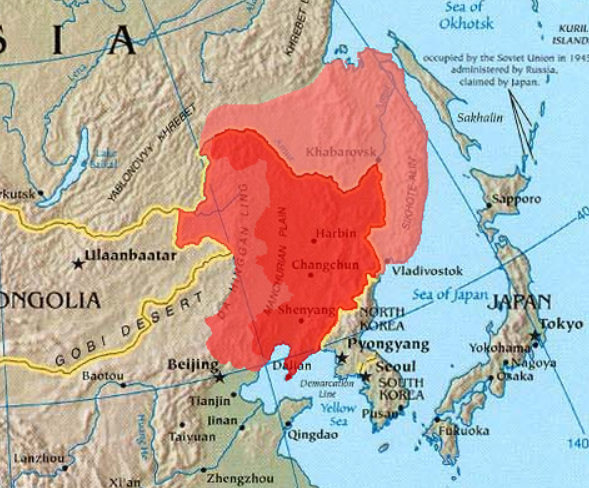
Last time I was talking about “The Devil’s Doctors” by Dr Mark Felton which describes how, at Mukden POW Camp in Manchuria,  Allied prisoners of war, primarily Americans, were used to test Japanese biological weapons developed at Pingfan, the nearby headquarters of Unit 731. This is Manchuria:

The events at Mukden were not a unique series of atrocities, however. By no means:

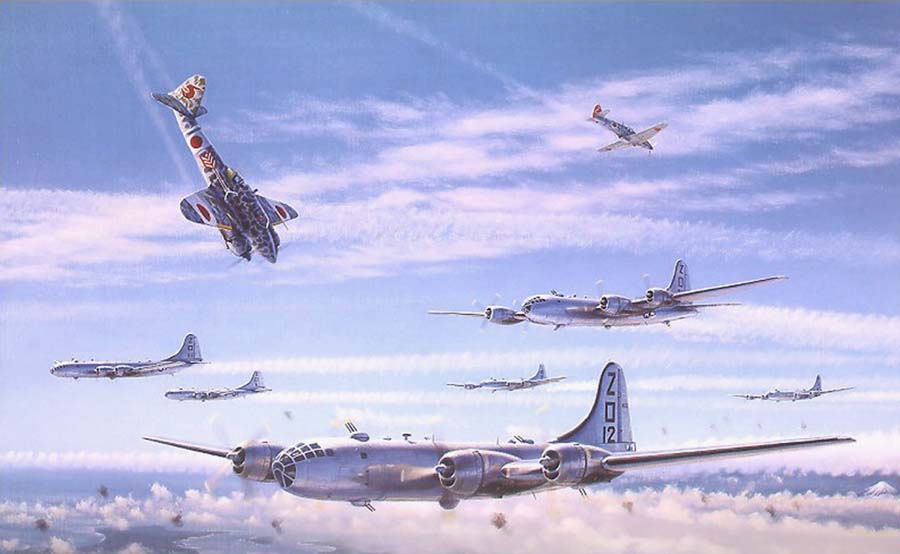
The author relates the dreadful events which took place on May 5th 1945 when a B-29 was rammed and brought down over Japan by a kamikaze fighter pilot. Of the crew, the first fatality had his parachute lines cut in mid-air by the wing of a second Japanese fighter aircraft. A second American was attacked by a mob of Japanese civilians who came running across a field to kill him. With the six bullets in his revolver he shot five of them and then himself. A third man was shot by civilians. A fourth man was never found. A fifth was sent to Tokyo to be questioned under torture. The rest were rounded up and taken to Kyushu Imperial University where they were murdered by the medical staff who dissected them alive in the post mortem room. The witness to all this was Dr Toshio Tono, a young medical assistant at the time.

In the 1980s he wrote a book about the event which named names, most of whom were, by then, in senior posts within the university. According to the author, the dissection of the prisoners paid particular attention to the brain, heart, liver and stomach. Times and places are given. On May 17th 1945, two Americans were dissected, on May 22nd two more, on the 25th a single man and on June 2nd, the last three men died. The horror is not over yet. On June 3rd the last victim’s liver was preserved for a party that evening in the Officers’ Hospital. More than one witness has come forward to say that the meat was chargrilled, seasoned with soy sauce and served as an hors-d’œuvre to the military and civilian guests, who knew what they were eating and enjoyed the meal.

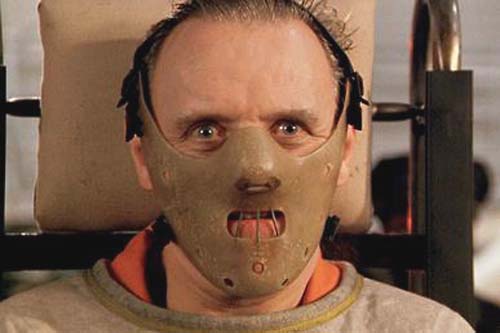
I suspect that this incident may well have inspired Hannibal Lecter.


14 Comments

Filed under Criminology, Film & TV, History, Pacific Theatre, Politics, Science, the Japanese, war crimes

“The Devil’s Doctors” by Dr Mark Felton (1)

I haven’t done many book reviews over the course of my blog posts but every now and again, I come across a book which recounts almost unbelievably serious wrongdoing which has gone unpunished, often deliberately on somebody’s part. I feel that such incidents deserve to be given a little publicity. In such a category is “The Devil’s Doctors” by Dr Mark Felton.

The book’s subtitle says it all: “Japanese Human Experiments on Allied Prisoners of War”. It recounts how the Japanese, terrified of the ultimate loss of face when they lose a war they themselves have started, make huge efforts to develop and perfect Biological Weapons, BWs. Before they are used, these weapons will need to be tested on both Europeans and Americans. The latter group are more important for the tests because Japanese attacks will target the West Coast of the USA, physically much closer to Japan.

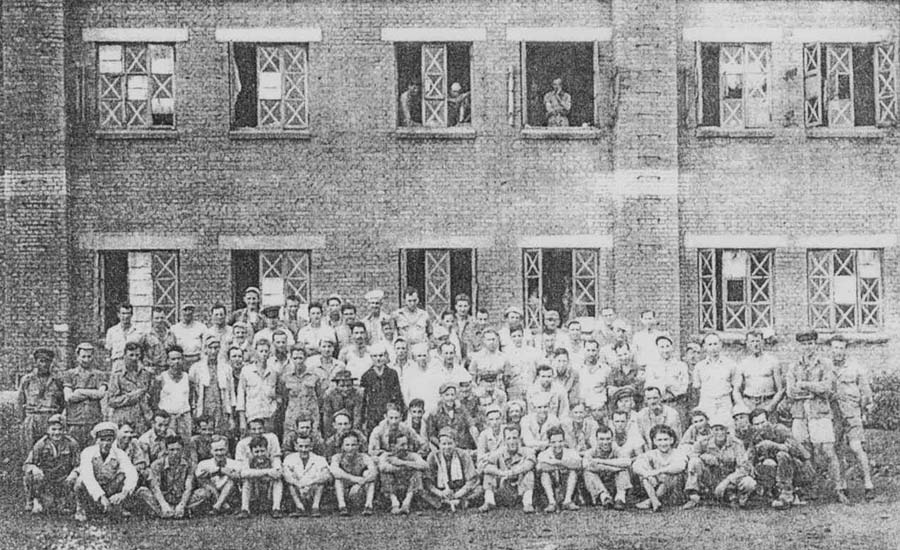
“The Devil’s Doctors” concerns itself with the Allied prison camp at Mukden in Manchuria. Between one and three men are dying every day, only a short time after suddenly developing sickness and severe diarrhoea. On March 12th 1943, the senior officer records in his diary that 195 men have died in 126 days. All of the men who died were Americans with “not a single British, Australian or New Zealand prisoner“ involved. Here are some prisoners at Mukden during the time of the book:

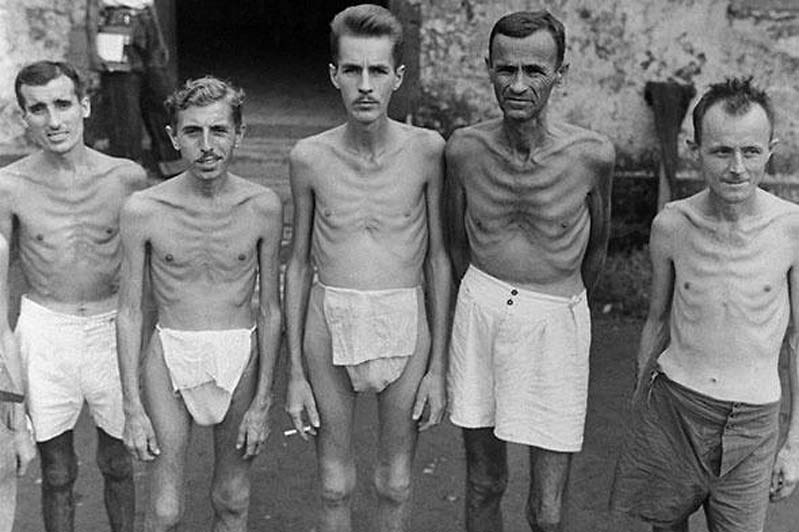
As you can just about see in that photograph, conditions in the camp are infinitely better than the average Japanese POW camp, with clean fresh drinking water, hot water in the  bathhouse and three meals a day, with as many as 3,000 calories consumed. Discipline is enforced in a much more lenient way, with no random beatings or beheadings. Why is this? Why are men dying when there seems little reason for this to happen? Why are conditions so much better than, say, the Burma-Siam railway? Are the Japanese trying to reproduce life in California so that their testing of biological weapons produces accurate results? Here are some typical Japanese POWs. They are nothing like the prisoners at Mukden:

The author carefully follows the dreadful trail to the truth. Is there a link between biological weapons tests and the “barrage of hypodermic injections” to which the prisoners at Mukden are subject. Why do the deaths increase just after the injections have been administered? Why do the deaths increase just after the distribution of fresh fruit to the prisoners? And what about the reports from prisoners about being awakened in bed by Japanese orderlies touching their faces with feathers. Just what is going on at Mukden?

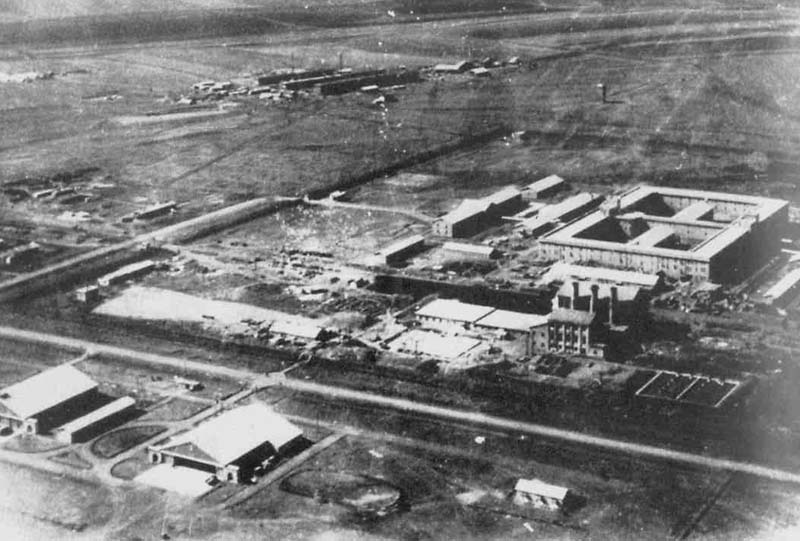
The feather stories and the injections and the free fruit might all be construed as just silliness were it not for link the author makes with the proximity of Pingfan to the camp. Pingfan is the home of Unit 731, where Japanese doctors and scientists carry out acts of appalling barbarity and cruelty on thousands of Chinese nationals. Although there were seventeen other places in the South East Asia Co-Prosperity Sphere where this frightful barbarism went on in secret, Pingfan was the undoubted capital of this Evil Empire. The author will spend most of the book exploring the idea, persistent over the last seventy years, that the doctors of the nearby Mukden POW Camp were testing BWs developed at nearby Pingfan on white men of varying origins. This is Pingfan:

It wasn’t as if such treatment of prisoners was unique among prisoners of  the Japanese.  The author quotes evidence of horrific medical experiments at Shinagawa Hospital in Tokyo where Captain Hisikichi Tokada injected the bile from prisoners with amoebic dysentery into prisoners with tuberculosis. POWs were sprayed facially with dysentery amoebas, a practice which is known to have been carried out at Mukden. And these were Tokada’s more responsible deeds:

You can read about Tokada’s other Mengele moments when you buy the book! Tokada, thank goodness, would be hanged after the war:

More to come next time.


31 Comments

Filed under Criminology, History, Personal, Politics, Science

1792 : a vintage year

The details that I found for the year 1792 come from a source that I have used quite frequently before, namely “The Date Book of Remarkable Memorable Events Connected With Nottingham and Its Neighbourhood”.

The year started in spectacular fashion on February 25th:
“Between the hours of eight and nine this evening an alarming shock of an earthquake was felt in the Midland counties, but particularly at Nottingham, many of the inhabitants running out of their houses, expecting them to fall upon their heads. The shock was preceded by a rumbling noise like the rolling of a cannon ball upon a boarded floor.”

A bit like this, then:
At this time, there was, of course, no real sport in the city…no Nottingham Forest, no Notts County, no Nottingham Panthers, no Nottingham Outlaws, no Nottingham Rugby Club. And so people had no choice but to busy themselves by showing enormous interest in council planning applications:

May 9th . “On the arrival of the intelligence that the bill authorising the formation of the Nottingham Canal had received the royal assent, the bells of both churches were set a-ringing, and other congratulatory manifestations indulged in.”

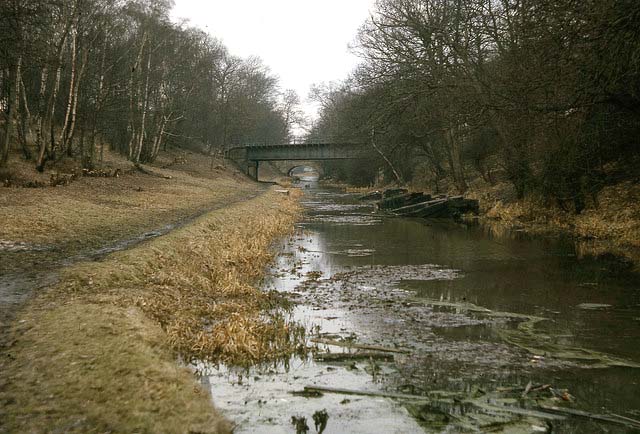
Thank the Lord. We’re going to build a canal. Canals are wonderful :

If you look after them, and remember, like pot plants, to water them regularly:

I think by now people’s nerves were already on edge after over indulging in their personal celebrations of the success of the planning application for building the new canal. They were a little like small children who get fractious and behave badly after their routine is disturbed:

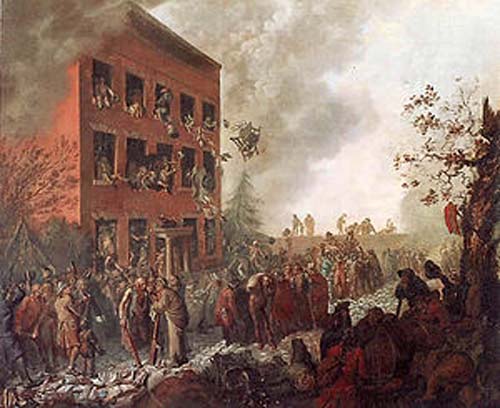
May 12th.  “A number of people assembled in a riotous manner in the Market-place, on account of the high price of butchers’ meat:

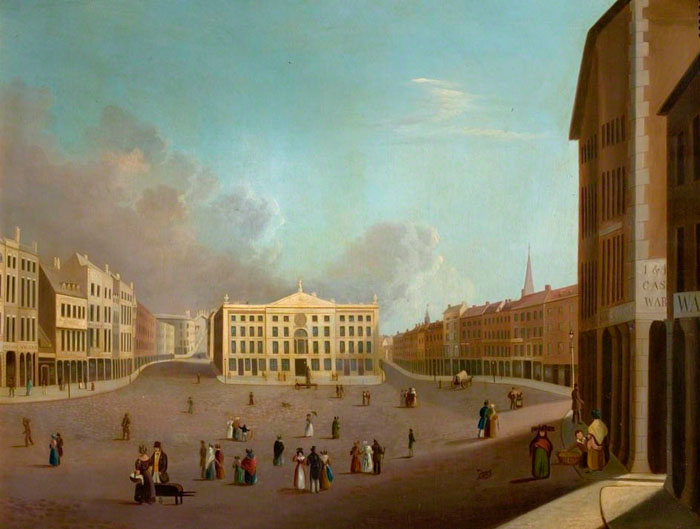
The Market-place did look quite different then:

The account continues:

After a stout endeavour to retain possession of their property, when further resistance might have proved dangerous, the butchers retreated from the Shambles, and left the mob in undisturbed possession. It being Saturday, the stock of meat was large and in a few moments the whole of it disappeared.

The magistrates at once called out the military, and by the expostulations of the Mayor, and the firing of the soldiers in the air, the mob dispersed, and the military returned to their quarters.”

Here come the military. They do look a little bit regimented, I suppose, but they are a lot easier to draw this way:

“Very unexpectedly, in the course of the evening the depredators reassembled, and bearing down upon the Shambles with renewed force, destroyed and conveyed away every door, shutter, implement, and book they could find in the shops, and made a great bonfire of them in the Market-place, yelling and shouting round it like  savages. The fire was burning from eleven at night till one in the morning, when the military succeeded in extinguishing it, and tranquillity was restored.”

For a moment there, it must have been touch and go:

I would think that for the second military intervention, they used the soldiers with the silly hats. Most people, when faced by these picked German troops, just ran away clutching their stolen sausages:

“For several days after, symptoms of a recurrence of the disorder were apparent, but the vigilance of the authorities at length finally suppressed them.”

Nobody nowadays ever thinks of England as ever being on the edge of revolution, but it had already happened once during the reign of King Charles I when the king was executed. The end of the 18th century saw a fair few Englishmen holding up the French Revolution as an example of good practice. They were pushed into that by a royal family who were perhaps the least charismatic of the many Germans who have ruled over our country. Parliament was no better. It was a place where rich landowners were vastly over represented. Their excessive number of MPs kept the price of the food their estates produced artificially and permanently high.

Many revolutions around the world have started with hungry people robbing shops full of food they wanted to eat but could not afford.


22 Comments

Filed under Criminology, France, History, Nottingham, Politics

Fred joins the RAF (4)

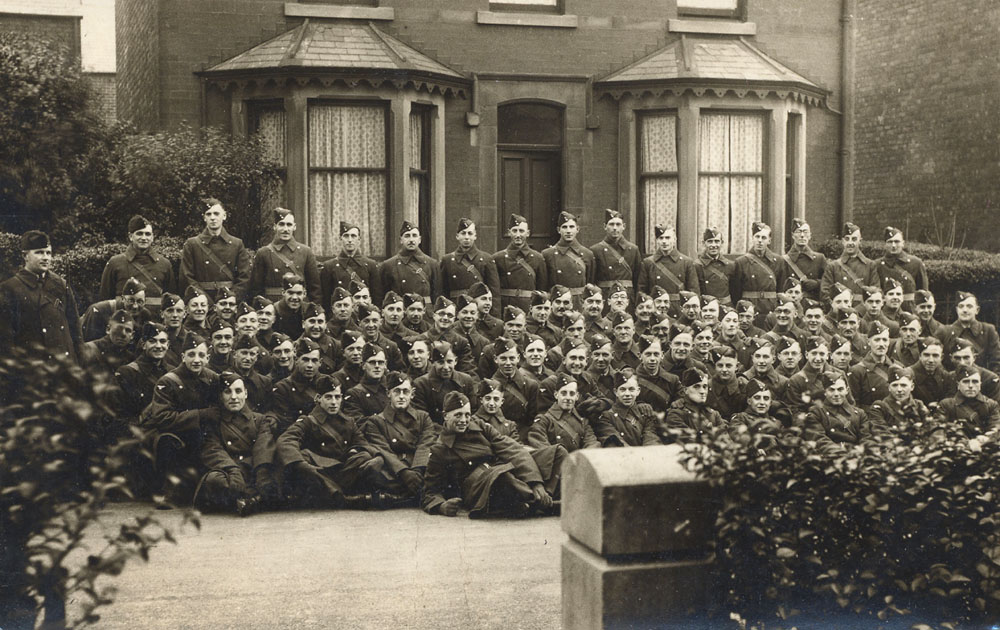
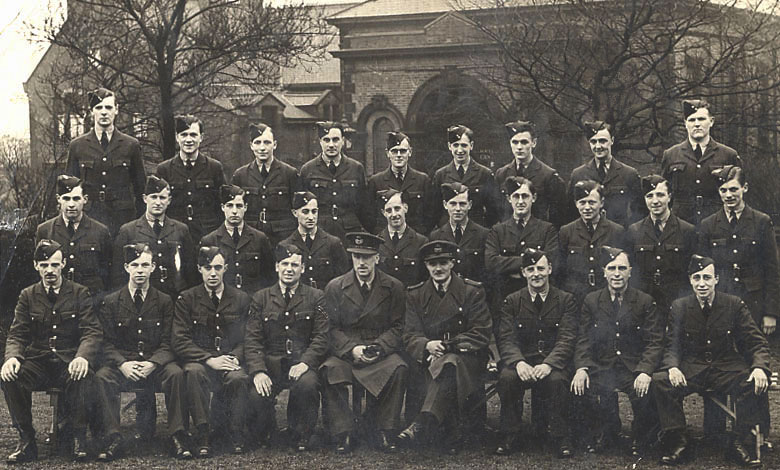
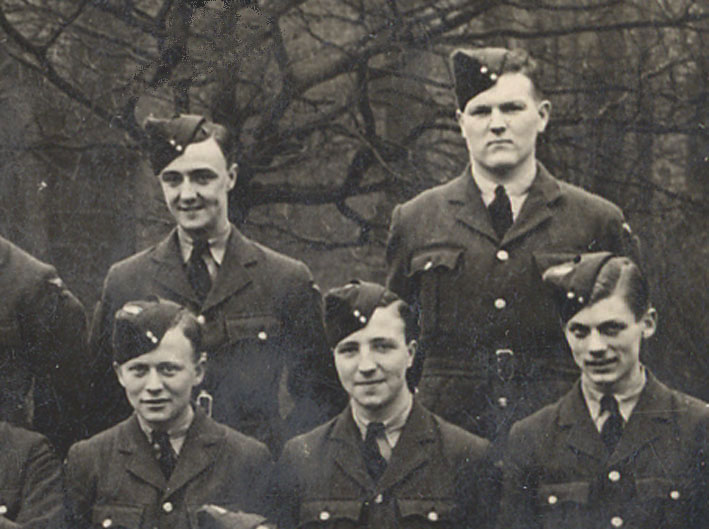
We left Fred last time in Blackpool doing his basic training with Sergeant Parry. All of the RAF’s young volunteers were billeted in boarding houses which, in peacetime, would have accommodated holiday makers. Here are Fred and his friends:

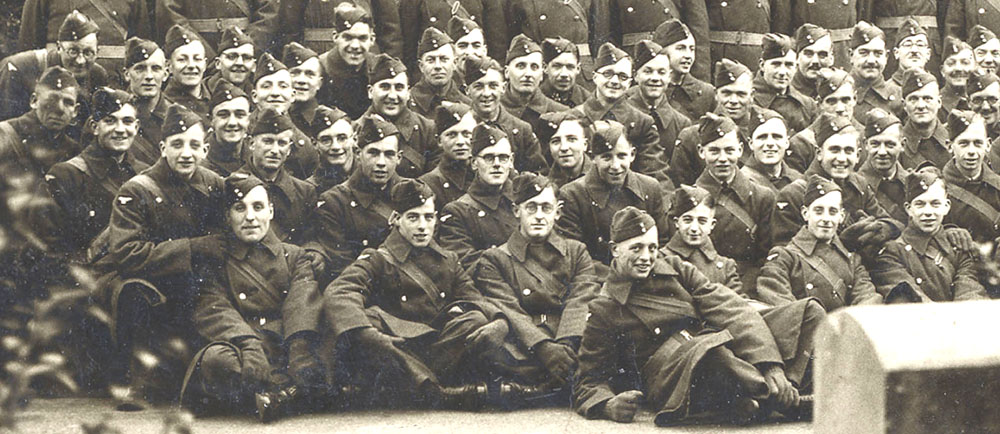
And here is the section with Fred in it. It always reminds me of the RAF version of “Where’s Wally?”:

The boarding house landladies in Blackpool were paid for every recruit they took, but a substantial minority saw this as a fine opportunity to profiteer, accepting money for meals that were never to materialise in the quantities that the payments might have implied. Instead, these unscrupulous women either ate the food themselves, or, more frequently, sold it to their neighbours, who were themselves short of food because of rationing.

In the boarding house where Fred was billeted, thanks to their particular greedy grasping landlady, the individual portions served, were, at best, markedly small. One day, after Physical Training on the beach, Fred and his friend Jacques, came back early from their exercise.

Jacques was Fred’s best pal at this time. He was the son of a Yorkshire farmer, with the physical build, and indeed the appetite for food, to match his origins. Here is the group as a whole in a formal class photograph:

And here are Fred and Jacques as a close-up :

If you remember,  Fred and Jacques had come back early from their Physical Training on the beach. Fred went straight upstairs to wash and make sure he was properly dressed for the meal. Jacques, however, went immediately into the dining room where he found a whole ham, meant for twelve hungry young recruits, waiting in the centre of the table. Jacques, clearly accustomed to Yorkshire farmer sized servings, immediately presumed that the meat was for him and without further ado, he ate the lot.

The reaction of his colleagues when they eventually arrived from their afternoon’s exertions, has not been recorded for posterity, but at best, they were not very impressed.

One of the other men in Fred’s boarding house had  a knowledge both of chemistry and of the behaviour of dogs. One fine, sunny day he went down to the local chemist’s shop, and bought a very large quantity of aniseed concentrate which he then proceeded to dilute:

He took this magic potion and laid scent trails through the streets of Blackpool, all of which led back to the boarding house. He then continued the trails inside the building, entering through both the front and the back doors, leading up the stairs to the different floors, then onto the landings, into the bedrooms and into the bathrooms. In short, his aniseed trails reached every single square inch of the property. Aniseed is desperately attractive to dogs. Once they get the scent…

…off they go, like addicts to their next fix:

They just cannot resist that aniseedy smell:

The result was one glorious afternoon of revenge, as every dog in Blackpool, driven crazy by the overpowering and intoxicating scent of aniseed, arrived at the house and ran berserk, up and down the stairs, careering backwards and forwards along the landings, chasing in and out of the rooms, widdling, piddling and scent marking up every wall and in every recess and corner as they went.

Never make an enemy of the RAF.

17 Comments

Filed under Aviation, Bomber Command, Criminology, History, Humour, Personal, Science, Wildlife and Nature

Fred joins the RAF (3)

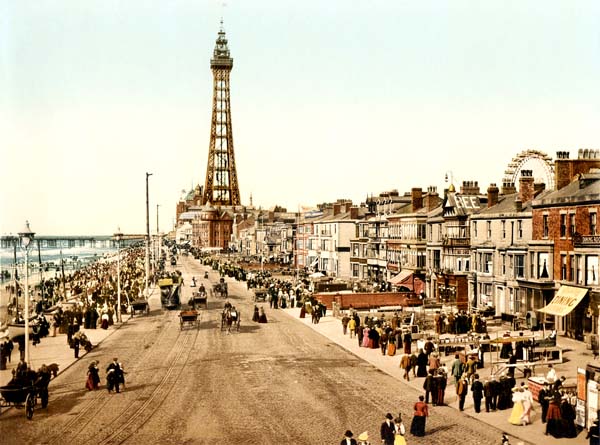
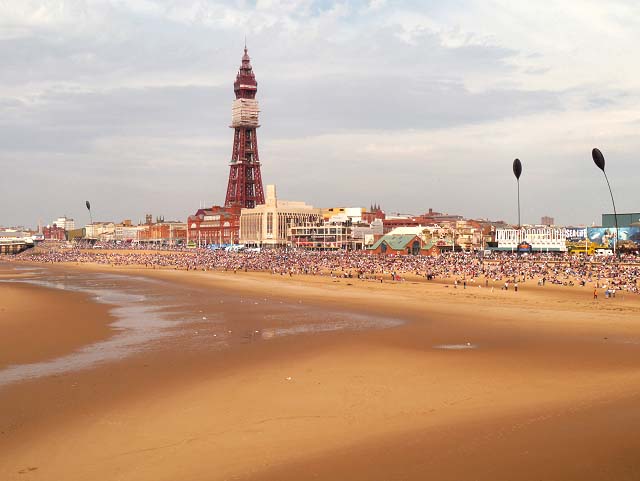
For ab initio training, new recruits to the RAF were often sent to Blackpool. The popular seaside resort had an abundance of boarding houses and small hotels to provide accommodation and food. There were plenty of nice, wide promenades to practice marching:

There were lots of even wider beaches for improving physical fitness:

In Blackpool, Fred was taught how to salute, to hold a rifle, to march, and, in general, how to behave as an Aircraftman Second Class, by Sergeant Parry. It was Sergeant Parry’s proud boast that

“One day you’ll be walking along the street, years after this war has finished, and you’ll suddenly hear me shout “Ah..ten…SHUN ! ! ” and you’ll pull up straightaway, and come to attention, even if you are 55 years old.”

In actual fact, this never happened to Fred, but when he was 75 years old, he was admitted to Burton-on-Trent Hospital, where, although he was eventually to recover, he was for some length of time, gravely ill. The Victorian ward he was in had very large metal framed windows, pale green and beige walls, and a yellowish grey light. It clearly reminded a very confused Fred of his original RAF barracks, and the nurses reported that on more than one occasion he was heard to call out, in his delirium,

“It’s all right, Sergeant Parry, I’m coming, don’t worry, Sergeant Parry, I’ll be there in a minute.”

Presumably, Sergeant Parry was marginally more pleasant than the only other drill instructor that Fred ever mentioned. Ironically, Fred never actually met the man in question face to face.

Instead, shortly after arriving at a training base where he was to serve, Fred heard the story of a sergeant instructor who regularly shouted and screamed at the young men in his charge and who, in his treatment of them, regularly overstepped the mark by a considerable distance. He was a bullying, aggressive man, and basically, everybody soon grew to hate him.

One day, a German raider arrived and began strafing the airfield:

The instructor raced away across the grass and jumped into one of the many slit trenches which crisscrossed the base, constructed for surviving just such an occasion as this. What he did not realise when he jumped in was that the trench was almost completely filled with water.

Unable to swim, he drowned. There were men there who could have helped him but they chose just to watch him thrash about in the water. They could have saved his life, but he had abused too many of them for anybody to want to help him now.

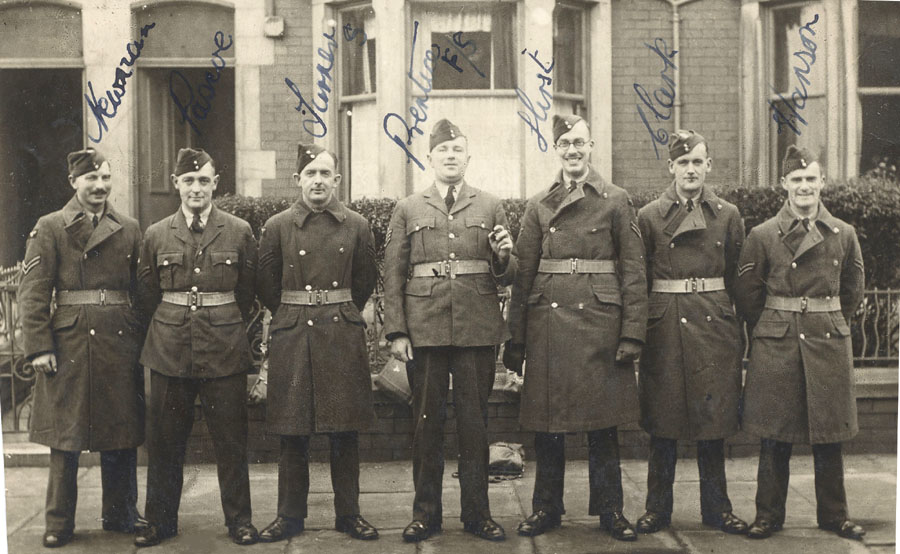
Here are seven of Fred’s instructors during his “ab initio” training, probably at Blackpool:

They are Messrs Newman, Pascoe, Turner, Flight Sergeant Prentice, Hirst, Clark and Hanson.


11 Comments

Filed under Aviation, Bomber Command, Criminology, History, Personal

Will Knifton v the Kaiser (Round 4)

This is the fourth, and final, round of my Grandfather, Will’s, tales about his life in the First World War.

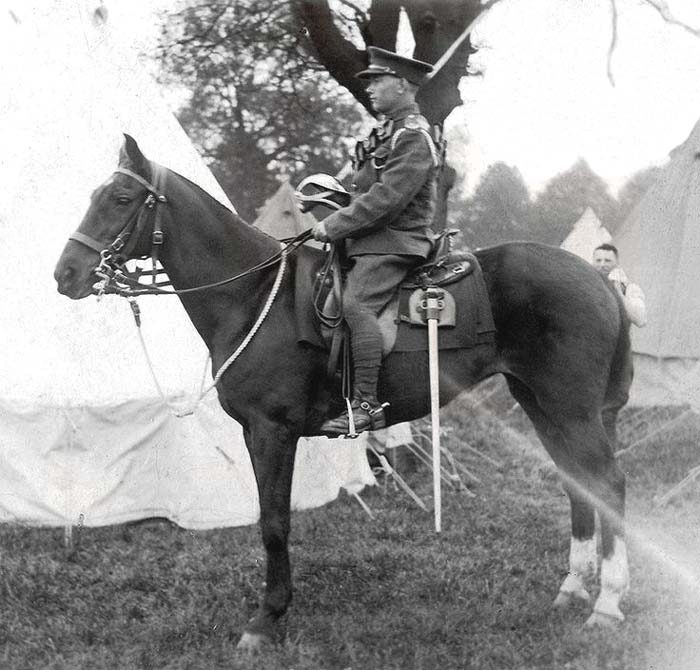
The pinnacle, or perhaps, nadir, of Will’s relationship with the upper classes came when he was given an officer’s beloved horse to look after. This was the kind of thing:

In the stable, the highly strung beast decided it would kick Will, very hard and very painfully. Will, however, was not a man to take things lying down, so he took a run up, rather like a football goalkeeper about to take a goal kick, and kicked the animal very, very hard in the testicles. This would have been honours even, perhaps, but unfortunately, the officer had just returned to the stable to see how his pride and joy was faring, and was actually standing right behind Will as he did the evil deed.

For his crimes, Will was charged, court martialled, found guilty, and given Field Punishment Number One, which consisted of being handcuffed, fettered and then tied to a gun carriage wheel for twenty-four hours. This picture is the closest fit I could find:

In similar vein, I remember as a teenager, talking to another veteran, an old man who used to spend all day, every day, sitting on the bench seat, watching the traffic go around the Tollgate roundabout in our small mining village, Woodville. This man had been gravely wounded on July 1st 1916, the first day of the Battle of the Somme. When a shell went off in that disastrous attack, he had been knocked unconscious, coming round to find that he had lost both of his legs in the explosion.

Luckily for him, as he acknowledged later, he was found by the Germans, who saved his life. He was always to say that the levels of care among the German forces were so much better than those in the British Army, where the officers’ horses tended to be better looked after than the men. This is a German military hospital:

Much to my very great regret, I have forgotten the name of this man, but I will never forget the bitterness or the truth of his words. Sharply resentful, he told me how every day, for almost sixty years, he had no choice but to put on his two artificial legs. He began with leather straps under each groin, and then the large strap around his waist. Then came more straps over both of his shoulders.

Even after all these years, he had persistent sores wherever the rough leather rubbed into his skin, particularly on his shoulders, and the poor man was in constant pain. Many people in Woodville thought that he was just a moaner, but he had a lot to moan about. Like my grandfather, he was not much of a fan of Field Marshall Haig either.

At the end of the Great War, Will returned from France directly to Woodville, and the life he had known before he emigrated to the New World. He went back to his church in Church Gresley, where everyone was delighted to see him. So much so, in fact, that they presented him with his own copy of “The Methodist Hymn Book”

Inside the front cover, it was inscribed…

“Wesleyan Church, Church Gresley

Presented to Mr.W.H.Knifton as a token of gratitude to God for his preservation while on Active Service during the Great War, and as a momento of the hearty good
feeling with which he is welcomed on his return.

On behalf of the Church and Sunday School,

L.GREGSON
W.WILTON
A.DYTHAM ”

Will never seemed to suffer from Post Traumatic Stress Disorder, but the war certainly affected some aspects of his thoughts and behaviour. In the trenches, for example, there was a seemingly permanent shortage of sugar. For this reason, long years after the conflict had finished, Will would never fail to celebrate the existence of the delectable white powder. If you visited him and he made you a cup of tea, he would normally put between six to eight spoons full of sugar in it, and even when there were objections, nobody ever escaped with fewer than four spoons full.

Another fear which Will brought back from the trenches, beyond that of running out of sugar, was the much more real one of rats. There were certainly plenty of them about. Here is a French military ratcatcher, “un dératiseur” and his dog:

Will knew very well that besides an entire suite of unpleasant, and occasionally sickening, behaviours, rats carried Weil’s Disease, an ailment which even now, as I write, has no known cure. In 1941, during his ab initio training for the RAF, Fred was to experience the same fear as his father had known twenty or so years previously, as rats, bold and unafraid, ran over his chest and feet as he camped out in the winter woods.

Incidentally, a lot of people nowadays want to think that the First World War was a “war for democracy”. It wasn’t. It was a war for power and empire. Just to knock the democracy idea firmly on the head , the figures I found on the Internet were that 7,694,741 people were eligible to vote in 1914. The population of the United Kingdom and its colony of Ireland was approximately 46 million. That is 16.72 percent who were able to vote. And who do you think did most of the fighting? The 16% or the 84%?


25 Comments

Filed under Canada, Criminology, France, History, Personal, Politics