Category Archives: Criminology

Six Kings and Two Queens (3)

So why is this rambling windbag of a tale called Six Kings and Two Queens ?

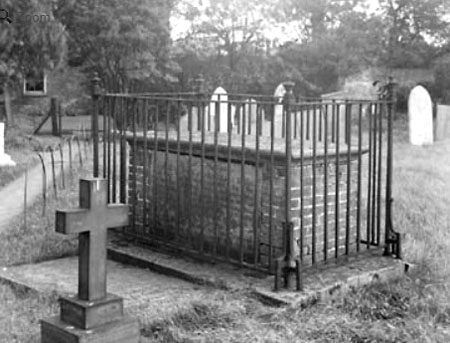
Well, the hero, John Deane, the entrepreneur, the sea captain, the ex-cannibal, the ex-poacher, the ex-deer stealer and the ex-butcher’s apprentice lived a very long life. And when he eventually succumbed, Captain Deane, as the locals all called him, was buried in the churchyard at Wilford:

john deane tombxxxxxx

He had lived through the reigns of six kings and two queens.

He was born during the reign of Charles II. To me, Charlie looks a real sleeze of a man. He couldn’t keep his hands off Nell Gwynne’s oranges and he appears to me to be just the type to be arrested by the police for having inappropriate images on his computer:

charles II

And here is History’s most famous orange seller, Charles’ mistress Nell Gwynne. This was his own personal pin-up:

gwynn

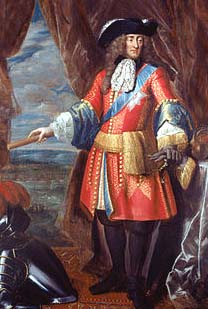
Next came James II. Here he is. He was chucked out eventually because he was a Roman Catholic, and because of this, the Protestant nobles thought that he would eventually want to be an absolute monarch and then they would all have to work for a living:

James_II_(1685)

The Glorious Revolution of 1688 brought in William and Mary:

william_and_mary

Is is just me, or does Mary look like a man?

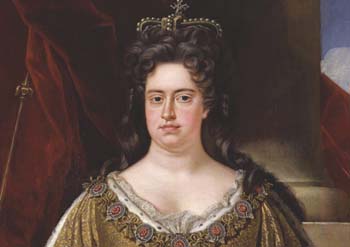
Queen Anne was definitely not a man. She had seventeen children but, poor woman, none of them survived to become adults:

annexxxxxxxxxxxxxxxxxxxxxxx

No silly jokes about her. She is too sad a person for that. All of her weight gains came from what must have been more or less continuous pregnancies.

Enter George I, a German who spoke little or no English:

King_George_I_

Like all of the Hanoverians, George I hated his son and his son hated him. Here is George II. He was the last English king to lead his troops into battle, at Dettingen in 1743. He galloped so fast his wig blew off:

george II

George III was mad, mad, mad. He lost the American colonies, of course. Perhaps they thought they would be better off without a registered lunatic in charge?

King George III

George III  was the last monarch of John Deane’s long life. Six and out, to borrow a cricketing phrase.

Mr Spielberg, I have the film script for all of this nearly half finished…


22 Comments

Filed under Criminology, History, Humour, Nottingham

Six Kings and Two Queens (2)

Hopefully, you have already read the first part of the blood soaked story of Captain John Deane and the wreck of The Nottingham Galley on the ice cold, wind swept rocks of Boon Island, just off the coast of New Hampshire:

cheat

The Date-Book of Remarkable and Memorable Events connected with Nottingham and its neighbourhood by John Frost Sutton does not disappoint with its continuation of the story.

Captain Deane returned to Nottingham where he wrote a bestselling book about the tragedy. Surprisingly, he was the hero.

The First Mate, Christopher Langman, did exactly the same. He wrote his own book where he was the hero.

Two very different stories, with each author accusing the other of being a liar and a cheat.

According to Stephen Erickson, the controversy lasted for a good while. It was essentially the two boat owners, the Deane brothers, versus the members of the crew.  John Deane in particular, was to become an eighteenth century spin doctor for the rest of his life, telling and re-telling the story with himself as its hero, over and over again, to whoever would listen.

Books were written in the immediate local area, such as Great Shipwrecks of the Maine Coast by Jeremy D’Entremont.

book

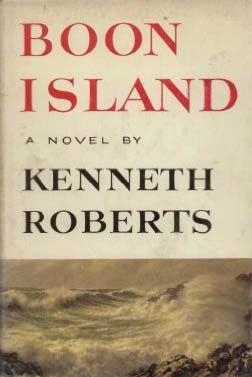
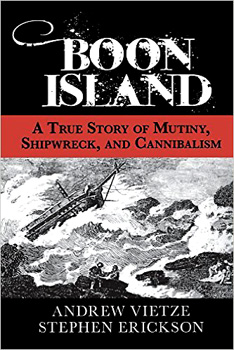
The same events were related in Great Storms and Famous Shipwrecks of the New England Coast by the aptly named Edward Rowe Snow. The most recent book is Boon Island: A True Story of Mutiny, Shipwreck, and Cannibalism by Stephen Erickson and Andrew Vietze.  And Boon Island by Kenneth Roberts turned the story into a novel:

book novel

Modern authors have added to the drama with suspicions of insurance fraud and the allegation that The Nottingham Galley could have arranged beforehand with French privateers to be captured for financial gain.
Most interesting perhaps is the Wreck of the Nottingham Galley published by the Book Arts Studio at the University of Maine at Machias. This contains everybody’s two cents’ worth, with five significant histories of events: Captain John Deane’s original account; the crew’s rebuttal; Cotton Mather’s rendition; a sensationalized, anonymous narrative; and John Deane’s expanded final account.

wreck of the npottingham gaslley

As if all that controversy, from 1711 to the present day, were not enough, according to The Date-Book of Remarkable and Memorable Events connected with Nottingham and its neighbourhood:

“….a very sad and fatal affair arose. Dr Jasper Deane, the brother of Captain John, resided in Fletcher-gate. He had embarked considerable property in The Nottingham Galley, and whenever he met his brother, the Captain, he yelled at him so long and loud about the cause of his serious financial loss, that they finally just avoided each other’s company.
At length their animosity appeared to subside, and under the condition that the subject of the shipwreck should not be brought up, the Captain met the Doctor at a party. There was every appearance of a restoration of friendship on both sides. No mention was made of The Nottingham Galley, and instead of separating, the Captain agreed to accompany his brother back to his house. Unhappily, the Doctor’s stifled feelings broke free, and in Fletcher-gate he again gave way to prolonged and bitter abuse of his brother. They had nearly reached his door when the Doctor assumed a threatening attitude, the Captain pushed him away with his open hand, and the Doctor fell. He ruptured a blood vessel, and died immediately. Whether the rupture was caused by excitement or the fall could not be ascertained.”

In 1714, Captain Deane commanded a ship of war in the service of the Czar of Muscovy, which he retained until 1720. We know this Czar of Muscovy better as Peter the Great. the founder of the Russian Navy:

Peter_der-Grosse_1838

Captain Deane was subsequently British Consul at the ports of Flanders and Ostend, until 1738, when he retired to Wilford near Nottingham with a handsome pension. Wilford was a live wire sort of place in 1740. In actual fact, the man you can see fishing in the River Trent in this picture is still there to this very day. He is a kind of Flying Dutchman figure, cursed by his wife never to come home from his fishing for the rest of eternity:

wiklford ferrry

The Date-Book hasn’t finished the tale yet:

“The retired Captain built the two neat dwellings near the entrance of the village from the ferry. The one nearest the river was the one he occupied first; the other, very similar in appearance, was erected afterwards:”

his house the palazzo
“In 1748, whilst walking in his own grounds in broad daylight, the Captain was attacked by a robber, who plundered him of everything valuable he had about him, even to the sleeve buttons from his wrists. The despoiler, whose name was Miller, was apprehended, and a few months afterwards he was executed.”

Miller was hanged in public on a wooden gallows. This execution would have taken place on the Forest Recreation Ground as I have previously described in my article “Gun Battle on Derby Road

One more bit to the story…..


16 Comments

Filed under Criminology, History, Nottingham

What do you do with your freed slaves? (3)

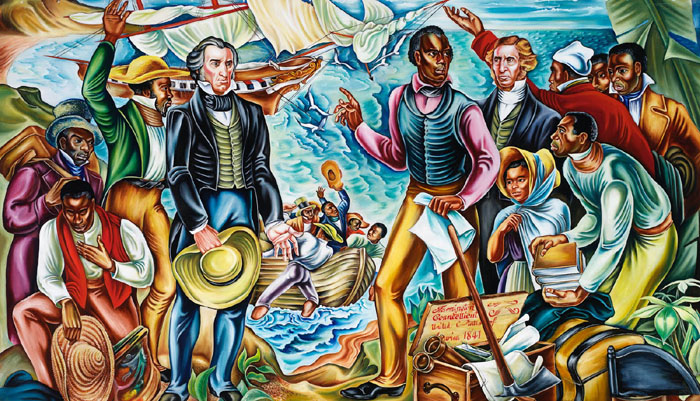
I suppose that the major problem with abolishing slavery is knowing what exactly to do with this newly created army of probably uneducated people, who may well be quite ill fitted to deal with an independent life. Jefferson, the man who coined the expression “all men are created equal” seems to have supported a gradual process, with slaves being first educated and then freed as they reached adulthood:

Thomas_Jefferson_Regular_Issue_1968-1c

Apparently he later realised that this would created an inadequate return on the slave owner’s investment, if that’s the word, and altered the age of freedom to 45. After that, they would be taken back to Africa:

Repatriationxxxxxxxxxxxxxxxxxxxxxxxxxxxxxxx

Overall though, mainly for various personal reasons, Jefferson did not have a lot to say about slavery.
He did recognise one dilemna though.

The difficulties of freeing the slaves and the difficulties of not freeing the slaves:

“There is not a man on earth who would sacrifice more than I would, to relieve us from (slavery).
We have the wolf by the ear, and we can neither hold him, nor safely let him go. Justice is in one scale, and self-preservation in the other”

Jefferson was not the only one to have worries about “safely letting go” the country’s slaves.. In 1806, the Virginia General Assembly grew so concerned about the number of free black people living in the state that they changed the law to make freeing slaves more difficult.  From 1790-1810 the population of black people there had risen from virtually nothing to more than seven percent. In Delaware, they too were worried about freeing their slaves. By 1810, 75% of the state’s slaves had been given their liberty.

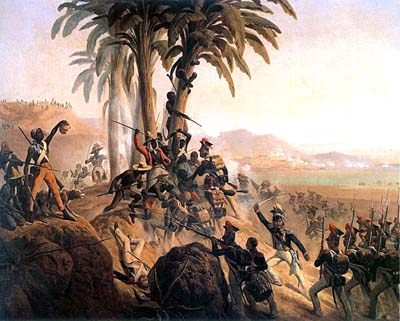
Many of these politicians were equally worried about the influence Haiti might have on the thinking of black people in the USA. Around this time, of course, Haiti was a revolutionary state on an island in the Caribbean to the south of the USA. A little like a black Cuba rather than a red one:

revolution in haiti

And presumably, the Americans did not want similar scenes of bloody revolution in their own southern states:

haiti

In 1801 President Jefferson was delighted to see the French intention to take back the island and thereby stop it becoming a base which might foment black revolution in the United States. He loaned the French $300,000 “for the relief of whites on the island.”

The southern slave owners in the US, of course, were just as scared of similar rebellions in their own states as President Jefferson. He said of this dilemma:

“If something is not done and soon, we shall be the murderers of our own children.”

But, in practical terms, what could be done?  Another article to follow in the near future.

19 Comments

Filed under Criminology, France, History, Politics

Six Kings and Two Queens (1)

“The Date-Book of Remarkable and Memorable Events connected with Nottingham and its neighbourhood” by John Frost Sutton does not disappoint with its entry for August 18 1761:

“Death of John Deane, Esquire, at his residence at Wilford, in the 82nd year of his age. Captain Deane was born in the reign of Charles II, in the year 1679, and was the youngest son of a gentleman of moderate fortune living in Nottingham. When he attained a proper age for business he took the strange fancy of being apprenticed to a butcher.  He was not satisfied with this, but being bold and spirited, he became associated with a gang of poachers and deer stealers. At length, dreading detection, he thought it prudent to go to sea.

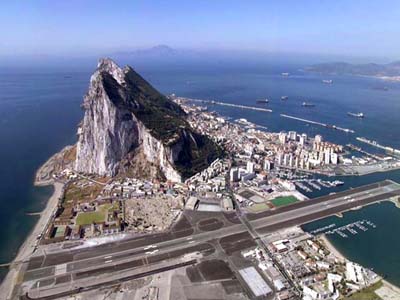
In this new occupation Deane was happy in his job, and there is strong reason for believing that he was with Sir George Rooke at the capture of Gibraltar, where he was raised for his bravery to the rank of a naval captain.

Here is the striking shape of the “Rock of Gibraltar”:

gibraltar5xxxxxxxxxxxxxxxxxxxxxxxxxx

In 1710, when laid up and without employment, Deane, along with his father and brother, purchased a vessel which they named, The Nottingham Galley. After filling the ship with merchandise, Captain Deane took command and sailed for North America.

Here is that happy, happy ship:

nottingham galley

The ship was unfortunately wrecked on the New England coast.

Here is a sketch from the time:

wreck of the npottingham gaslley

The crew landed with great difficulty on a barren island.

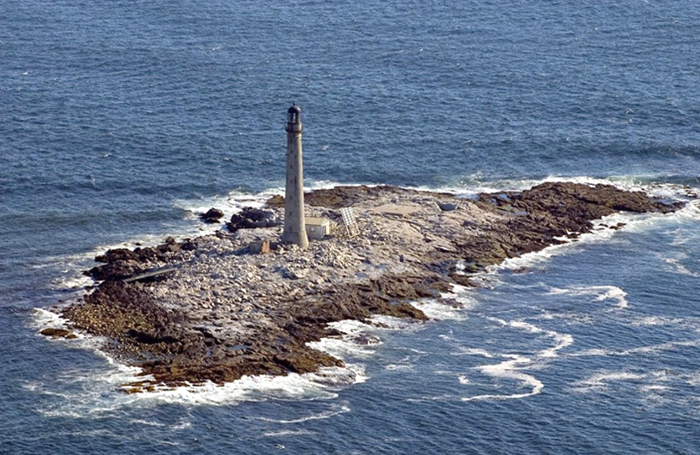
The island was actually called Boon Island, and was well known as a very good place to die:

cheat

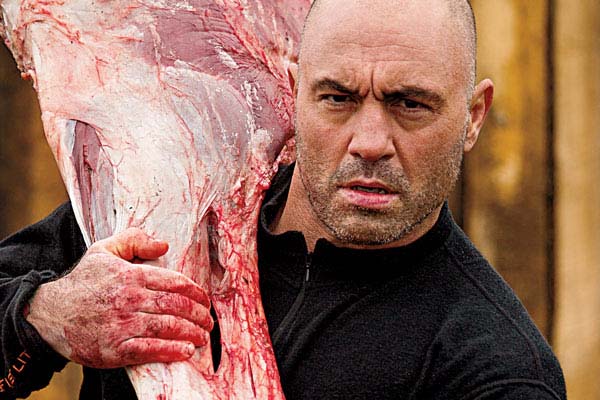
Deane and his crew were destitute of both clothes and provisions, the sea having swallowed up everything. Here they remained for twenty-six days exposed to severe hunger and cold. Three of the seamen perished, and the survivors were driven to the horrid and revolting necessity of feeding upon one of the dead bodies.

“Here we are!! Come and get it! Raw leg again!!”

eating cabinboy

On the 5th of January, 1711, a vessel came near enough to perceive their signals, and when despair had almost driven them mad, they were providentially rescued.”

A number of websites attach a great importance to this shipwreck, given its almost four weeks of bleak, desperate horror.

A good example would be ‘boonislander’  or  Stephen Erickson, who, in his own words, is a resident of Portsmouth in New Hampshire and a co-author of a new book on the wreck of the Nottingham Galley, the splendidly titled Boon Island:  A True Story of Mutiny, Shipwreck and Cannibalism. He wrote:

“The Nottingham Galley is one of the most important episodes in maritime history for a number of reasons.   It may have been the most well-known shipwreck controversy prior to the Bounty mutiny.  The story is famous for cannibalism; they ate the ship’s carpenter.

book xxxxxxx

No shipwreck castaways were ever less prepared for the subfreezing temperature they were forced to endure, and lived to tell about it; they were without food, freezing, and compelled to lie for weeks at a time, huddled together on solid rock. “

The shipwrecked men had certainly been forced to rely on their own ingenuity. A piece of sail provided a shelter of sorts and there was enough cheese soaked in salt water to last around a week. Ironically, the first to die was the cook. They respectfully consigned him to the waves. The next to go was the ship’s carpenter. He was out of luck, because by now they were hungry enough to eat him, allegedly wrapped in pieces of seaweed.

seawweeedd

They were unable to light a fire, so it had to be raw. What a pity they were never able to kill a seal and eat that.
For those of you interested in the precise details of gastronomy, the usual tale is that:

“they hacked off the feet and hands, gutted the bodies and then cut them into quarters like a pig or a cow.”

And presumably:

“Wrap in raw seaweed and serve at Atlantic Ocean temperature. Serves up to a dozen.”

Later, despite severe frostbite for those who had not yet eaten their own hands and feet, the men tried to build a boat, but it sank and took two men with it. A second boat fared equally badly but a corpse drifted to the mainland and alerted the locals as to what was happening on Boon Island. They were finally rescued in the early days of January 1711.

Steak-and-Chips


26 Comments

Filed under Criminology, History, Nottingham

A Good Man doesn’t Stand By (2)

In the late spring of 1934, just as Hitler was consolidating his Nazi hold on the German state, Derby County toured Nazi Germany for a series of friendly matches.  At the time, two years before the Berlin Olympics, many Britons were still blissfully unaware of the political turmoil unfolding in central Europe, and the frightening rise of the Nazi Party and their shamelessly racist attitudes.
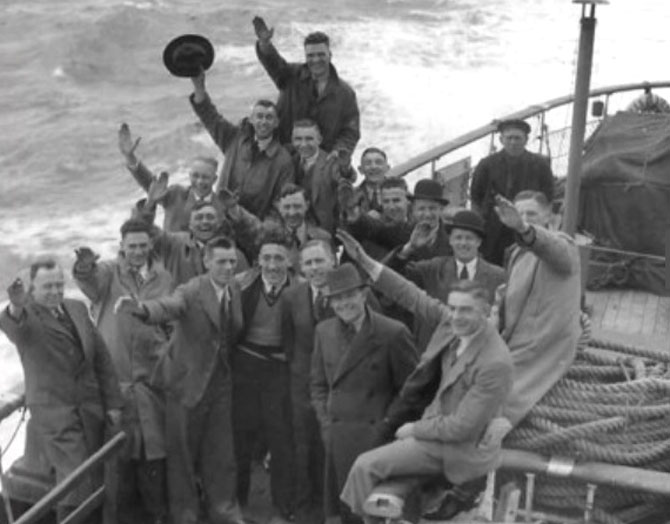
The Derby contingent took a train to Dover and then a cross-Channel steamer to Ostend. They dutifully practiced their Seig Heiling and their Heil Hitlering on the boat:

derby practice

They eventually reached the German border to find the swastika emblem flying everywhere they looked:

LandmesserIreneBaby

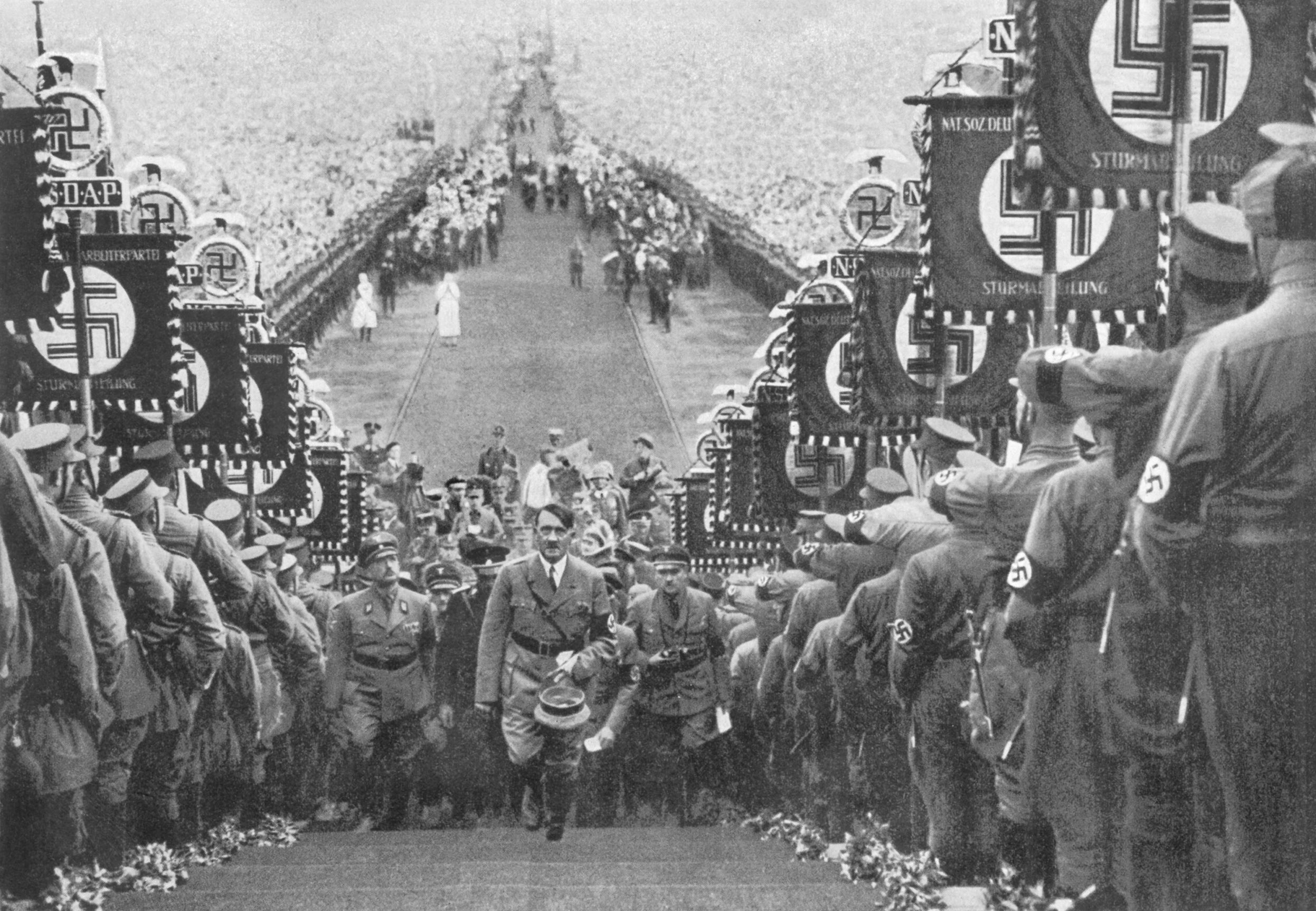
The Germans, to a man, worshipped Adolf Hitler. He couldn’t even go out for a football paper on a Saturday night without bringing the place to a complete standstill:

hitler

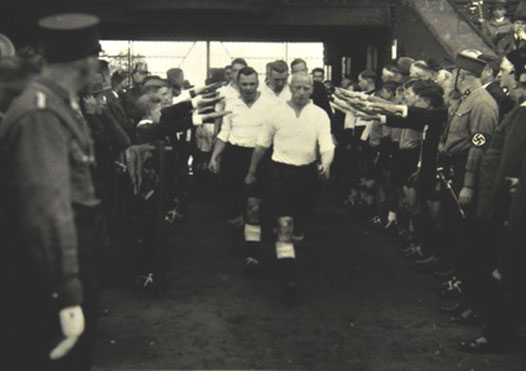
The four matches which Derby played were all against teams designated as a “German XI”. The Rams lost their first match by 5-2 in Frankfurt but then drew 1-1 in Dortmund. Here are Derby running out at the start of the game. Some of those Hitler salutes could take your eye out if you weren’t ready for them:

running out

Here is a scene thought to be from that game:

derby at playxxxxxxxxxxxxxxxxxxxxxxxxxxxxxxx

Derby lost by 5-0 in Cologne. We have a picture of the team going for a run to warm up before the match:

waltstadionframnforut

After two defeats at the hands of the Master Race, Derby triumphed in their last game in Dusseldorf by 1-0.

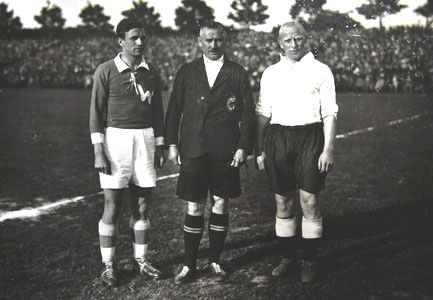
Here is the start of that game:

start of gameccccccccccccccccccccccccccc

On the advice of the Foreign Office, to please Adolf Hitler, all the Derby players had been instructed to give the Nazi salute, with right arms outstretched, just before the start of every single game.

Before his death, at the age of 83 in 1989, Rams full-back George Collin, who was the captain of the Derby County team for the second half of the tour, when full back Tommy Cooper left the party to play for England, recalled how:

“We told the manager, George Jobey, that we didn’t want to do it. He spoke with the directors, but they said that the British ambassador insisted we must.

“He said that the Foreign Office were afraid of causing an international incident if we refused. It would be a snub to Hitler at a time when international relations were so delicate.

“So we did as we were told. All except our goalkeeper, Jack Kirby, that is.”

jfk0072208206

Jack Kirby was from old South Derbyshire mining stock and he was adamant that when the players were asked to perform the Nazi salute, he, quite simply, would not do it:

“When the time came, he just kept his arm down and almost turned his back on the dignitaries. At the time nobody really noticed and nothing was said. It was only years later, with hindsight, that we can see what he is doing on the photograph. He is a lot better known for it now.”

There is, in actual fact, a famous photograph taken just before one of the matches which proves this very point. Jack Kirby, looks down the Derby County line up with utter disdain. His hands are firmly by his sides, and he looks rather embarrassed. He clearly does not know where to put himself, as he waits for the imminent start of the match. His ten white shirted colleagues all duly salute the Führer.

So Hitler went unheiled by at least one Englishman. And at least one Seig would remain equally unheiled:

enlarge thisxxxxxxxxxxxxxxxxxxxxxxxxxxxxxxx

And here is Jack the Hero anti-Nazi Fighter in close up:

derby nazi closer

Jack Kirby may have been a rather lackadaisical character to be the goalkeeper of a top First Division team, but he was not slow to stand out from the rest. He was not slow to make sure that he would not be the good man who did nothing and let evil prosper. He refused adamantly to kowtow to the Fascist bully-boys:

sa
Jack Kirby left Derby County in August 1938 he became player-manager of Folkestone Town, a position he held until August 1939. And then war broke out.

And million upon million of innocent people were slaughtered. Many of them children. How different it might have been if one or two people with real power had done something when they had the chance and not just stood idly by, giving evil the chance to prosper.

Never again.

34 Comments

Filed under Criminology, Derby County, Football, History, Politics

A good man doesn’t stand by (1)

Some time ago, I showed you a picture of the England football team all making their Nazi salute at the Olympic Stadium in Berlin on May 14th 1938:
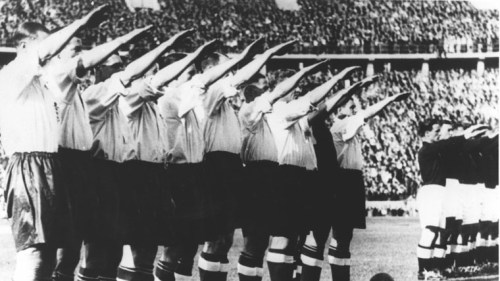
England-Germany 1938 nazi.xsderftgyhb

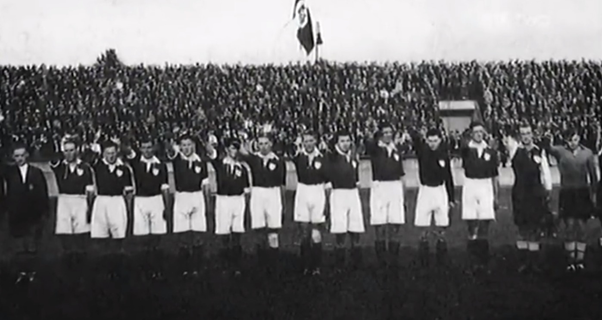
They were not the only foreigners to greet the Führer with a cheery “Sieg Heil”. Here, just a year later, is the Republic of Ireland football team engaged in pretty much the same behaviour:
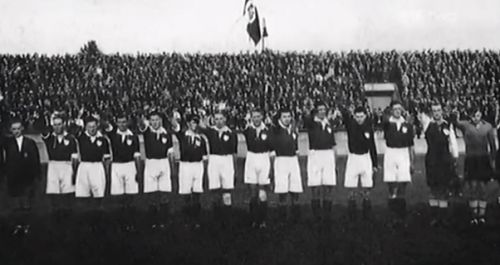
Ireland-Germany-1

Let’s just leave that for a short while, and move westwards to the English Midlands. To South Derbyshire, and more precisely, the little village where my Dad, Fred, grew up.

During those long sunny summers and cold snowy winters after the Great War, Fred’s home was at Number 39, Hartshorne Lane, Woodville. The house was called “Holmgarth”, and it was the very last house in the little village of Woodville as you went down the hill towards the neighbouring village.

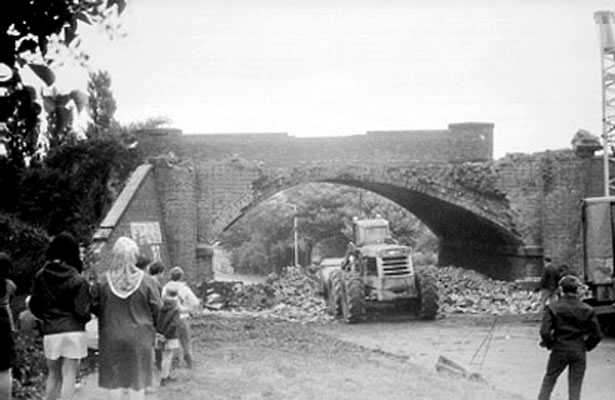
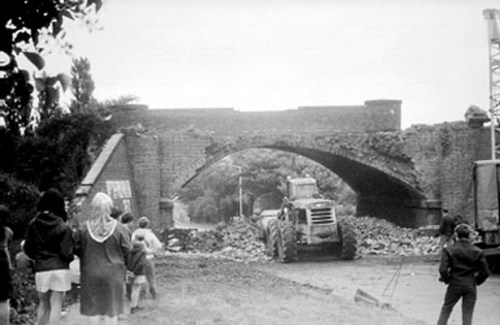
After Fred’s house, the only dwellings were just a couple of very large detached houses set well back from the road, either side of a small, shared, lake. This was just a few yards beyond the massive blue brick railway bridge, which carried the old passenger railway line from Woodville Station towards the neighbouring town. Here it is, being demolished in the early 1980s:
demolition

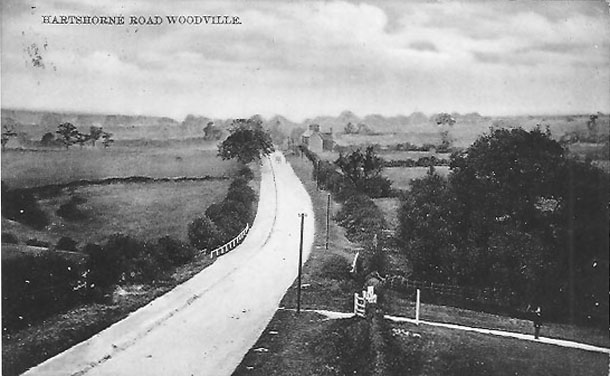
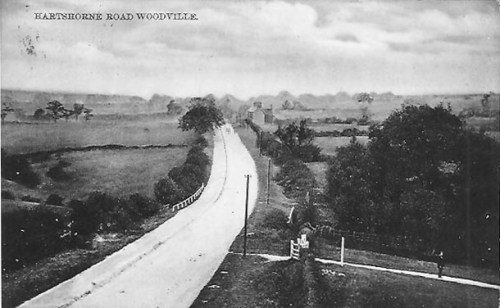
Hartshorne Lane in the 1930s was made of gravel, and there was so little traffic that it was perfectly possible for boys to play football or cricket all day long without any interruption whatsoever. Boys, including Fred, regularly knocked their cricket stumps into the soft surface of the road:
hart road 2 START HERE

Indeed, the whole area was still so countrified, that one day in 1929, a seven year old Fred saw a stray cow walking around in the front garden of the house, and rushed to tell his mother. She was busy with her housework, and just told him that he was being silly and telling lies. Eventually, though, she looked out of the kitchen window and she too noticed the cow which had by now made its way around the house to the kitchen garden. She was very startled and cried out in fear. Fred though, thought that this was a good example of somebody getting their just deserts.

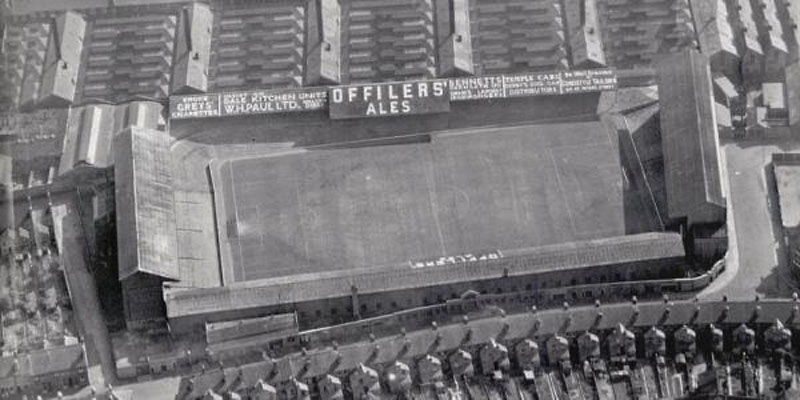
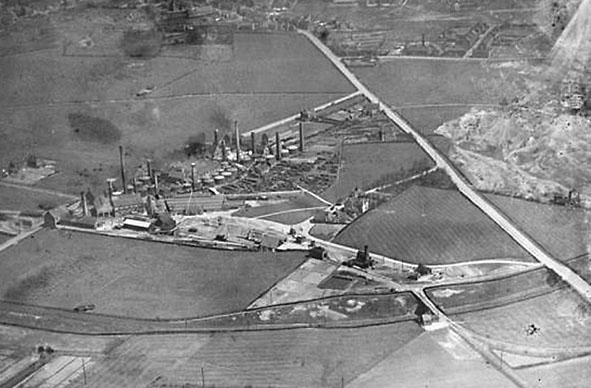
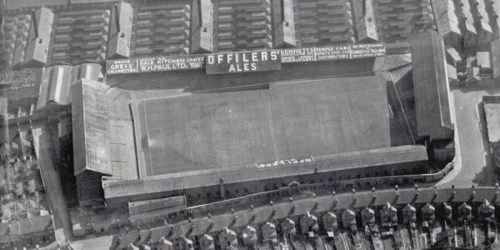
Fred’s father, Will, used to work at either Wraggs or Knowles clayworks, a couple of miles away. He would finish his working week at lunchtime on Saturday, and then return home immediately to make sure that he did not miss the football match at Derby, which started at three o’clock:
aerial 1

First of all, though, he would always strip to the waist and wash off all his grime in the kitchen sink.

When Fred was too young to accompany him, Will would walk to the match at the rather strangely named Baseball Ground in Derby. His knowledge of shortcuts, and his willingness to walk over the fields, meant that he could reduce the usual distance by road of twelve or thirteen miles to a walk of only some ten miles or so.

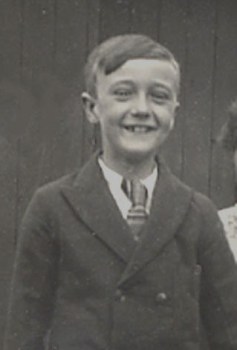
This all came to an abrupt end, though, when Will began to take his young son Fred to the match:
AD with grandma 3

Everything had to change. They would both stroll the short distance down Hartshorne Road until they reached the so-called Lovers’ Walk, a path, complete with romantic tinkling brook, which ran as a well-known short cut, up to the end of Station Street. From here father and son would take the train together from Woodville Station to the Baseball Ground at Derby, hiding away in the middle of a thousand terraced houses.
baseballground_ssssssssssssssssssssssss

Sometimes, though, they preferred to catch the ordinary bus in Hartshorne Lane. There was, in actual fact, great competition between the train and bus companies, with occasional, but regular, price wars. The usual fare was one shilling and a halfpenny, but first one, and then the other, company would knock the halfpenny off in a bid to steal a march over their rivals.

Whatever method of transport they used, Fred and Will always left for the match around one o’clock or half past one.

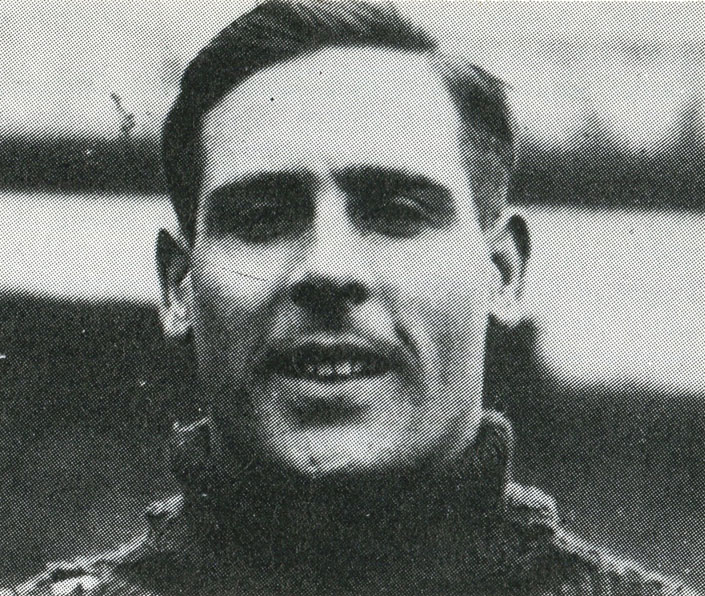
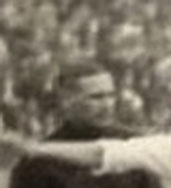
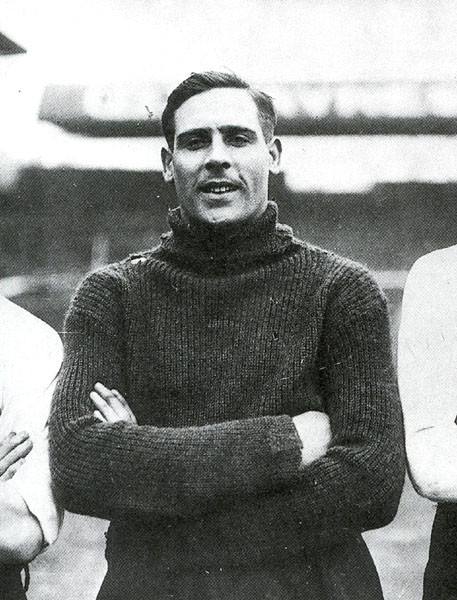
In the early 1930s, Derby County’s goalkeeper was a man called Jack Kirby. He came from Newhall, a mining village just the other side of Swadlincote from Woodville. Kirby had joined Derby County, a professional soccer team in the top division, from a little amateur team, Newhall United, in April 1929. He made his debut for Derby at the top level in the 1929-30 season:
kirbhy

In those days, footballers did not assemble for a pre-match meal at some prestigious hotel. Indeed, Jack used to travel to every Derby home game on his bicycle from his terraced house in Newhall. This was a distance of some thirteen or fourteen miles.

On alternate Saturdays, therefore, Kirby would come slowly past Fred’s house on his bicycle at around one o’clock.  He still had, perhaps, an hour and a half to travel the twelve or so miles to Derby. Fred and his father Will would watch out for him, have a quick chat, and invariably joke that Jack was going to miss the start of the game. Kirby never hurried, though, keeping always to what Fred and Will both considered to be a worryingly snail like pace.

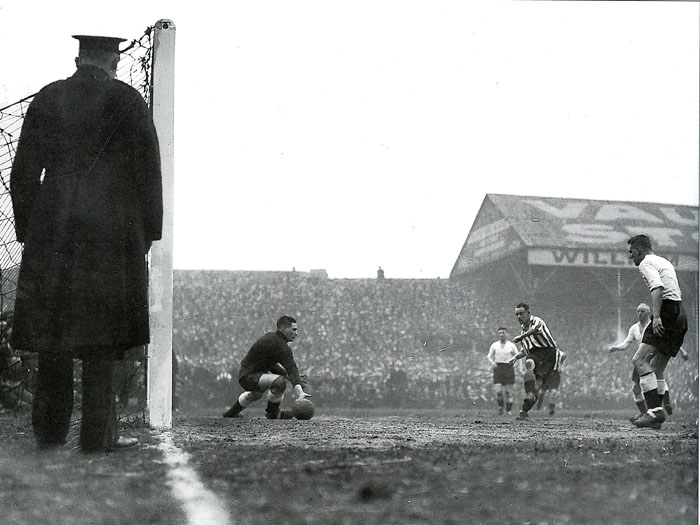
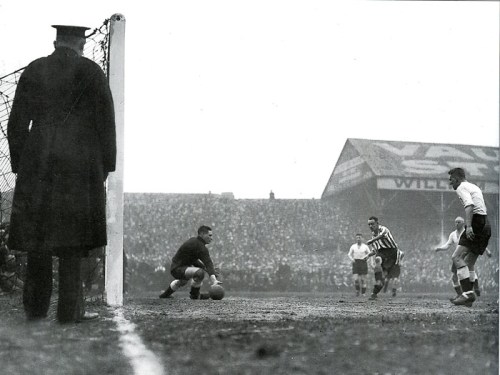
There was more to Jack, though, than just banter about the speed of his cycling. Jack really was the good man who refused to stand by and do nothing, so that evil might prosper. For now though, here is Jack in action against Newcastle United:jfk0072211209 - Copy
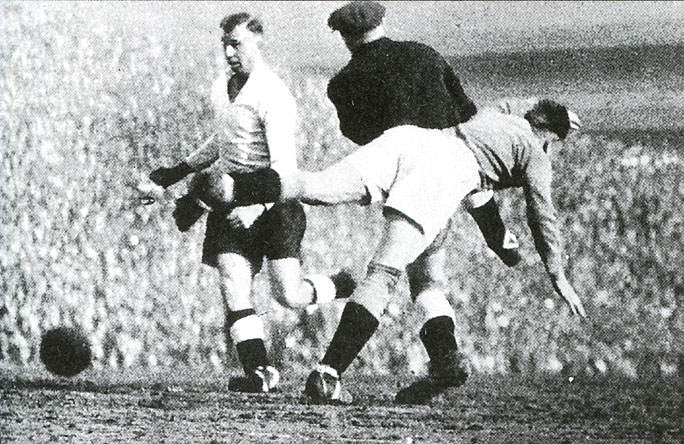
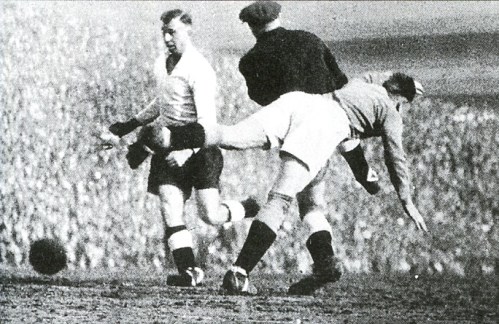
The English First Division could be a really rough place in 1934:
jfk0072210208

Jack was a handsome devil, and like all proper goalkeepers, his doting old mum always knitted him a nice warm pullover:
jfk0072210208 - Copy

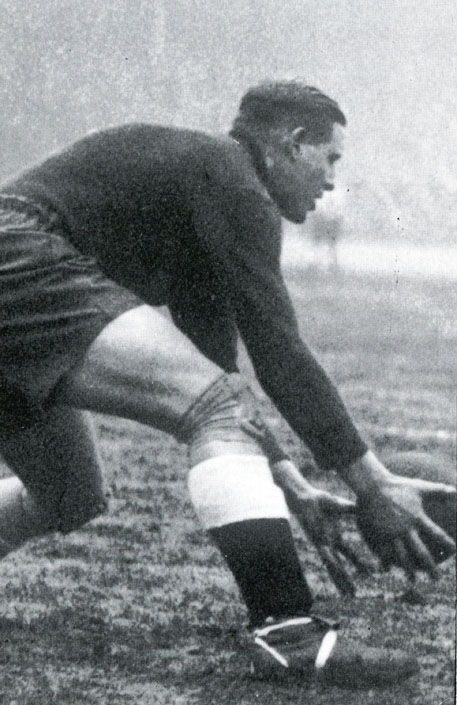
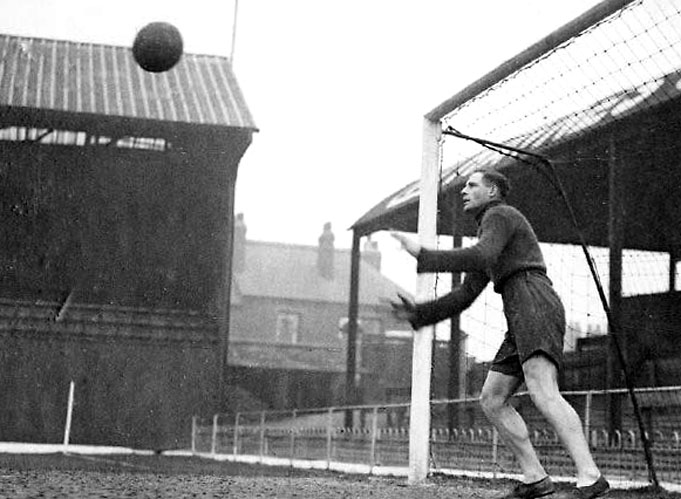
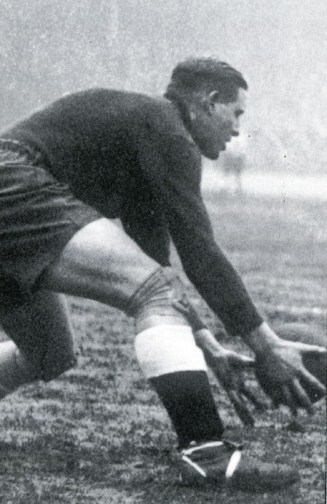
He was very good at latching on to the heavy, invariably wet football of the era, with hands as big as buckets:
jfk0072209207

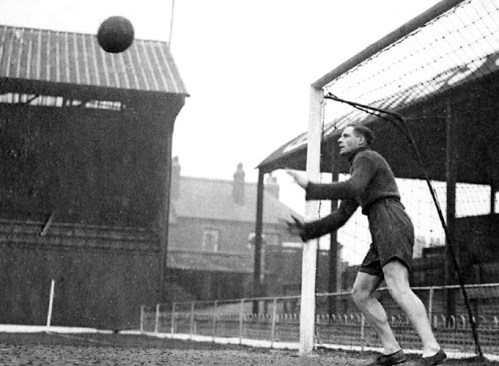
The secret was practice, practice, practice. Even if people in the house next to the ground keep spying on you as you train:
jack again

Soon, we will all hear the story of how Jack proved to the whole world that he really was the good man who refused to stand by and do nothing.  Jack was not prepared to let evil prosper.


17 Comments

Filed under Criminology, Derby County, Football, History, Politics

Young men behaving badly and a Touch of Class (2)

Last time I mentioned that there had been a quarrel which set Roy Henderson and his friend Arthur Barton, both from the richest areas of the city, against Harold Connop, the poor kid from the wrong side of the tracks. Two fairly clever kids against one who was blindingly clever, despite his impoverished background. The disagreement took place when Connop was in his second term as Captain of the School, in the Summer Term of 1917.  Roy Henderson was never selected to be Captain of the School and Arthur Barton only did the job very briefly at the end of an extremely short Easter Term, when Francis Bird was called up in March 1918.

bulletin_24_1403256831_2052%20Nottingham%20017

As I said in Part 1, I do not know why Harold Connop was so unpopular although at least three, possibly four, reasons spring easily to mind.

Anyway, here is the tale of the quarrel:

“Arthur Barton and Roy Henderson had given lines to one of Mr Strangeways’ favourites, whom they had found misbehaving. The two prefects were then told off for daring to punish this favoured boy. In revenge, however, fellow prefect Towle climbed through a trapdoor in the ceiling of the 5B room, into the loft above Mr Strangeways’ room, and disrupted his lesson by making a tremendous row on the ventilators.

This is Mr Strangeways:

wmp__1282738059_Headmaster_-_Strangeways0001

Both Barton and Henderson knew that Towle was going to do this, but they did nothing to stop him. Later, they argued that it was not for the Prefects to “attempt in any way to prevent such misbehaviour during School hours: that was the duty of the Masters.”

The other Prefects urged them to “help preserve a proper standard of behaviour”, and there was an enormous row about this outrage, as the perpetrator, Towle, could not be found. Harold Connop tried to remedy the situation at a meeting of the prefects and asked Barton and Henderson directly “Who did it?”.

Barton and Henderson again said that they knew the event was going to happen, but hadn’t tried to stop it.  Connop tried very hard to get them to name names, but they totally refused.

Connop then went straight to the Headmaster. His judgment was that anybody involved should be stripped of their prefectship:

“Such Prefects ought immediately to resign and I should be very pleased if they would do so. Please tell them so.”

Barton and Henderson resigned, and for four days, they were not included on the list of prefects. The Headmaster, however, had not seen either Barton and Henderson personally, or heard their version of the story. Henderson’s father, the clergyman, wrote a letter to Dr.Turpin, and told him that he ought to hear a full explanation.

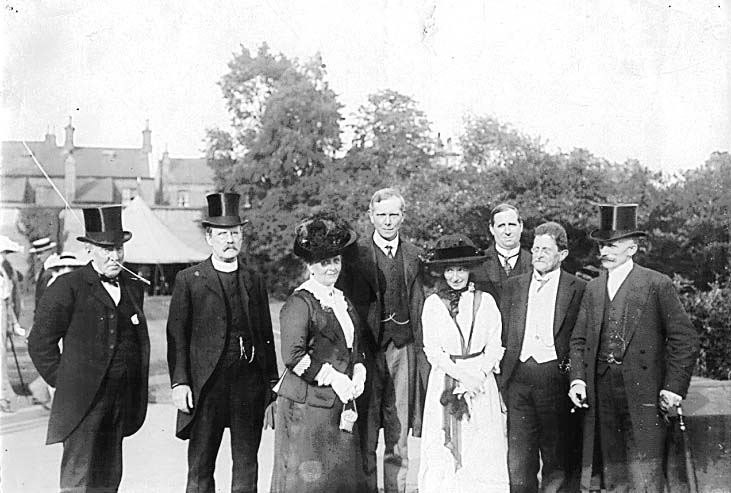
In this picture of the 400th anniversary celebrations, Dr Turpin is behind Mrs Gow and the lady in white:

400 mth heads

Barton and Henderson  duly went to see Dr.Turpin, and told him only they knew who the guilty party was, but were unwilling to furnish a name. They were told to apologise to Mr Strangeways, and were then reinstated as Prefects. They agreed “to do their best to stop such incidents in the future”.

And this was the somewhat surprising, even unsatisfactory, end of the matter. Nothing works like a letter from Daddy!

Shortly afterwards, Connop was caught smoking. He had recently given lines to a boy who had been giving a younger boy a ride on his handlebars as he cycled down Waverley Street. Waverley Street is very steep and this was a very dangerous thing to have done. The boy produced his lines, but also made a statement that he had seen Connop smoking in King Street in the middle of town.

Henderson called a meeting of the prefects about this serious misdemeanour, and Francis Bird accused Connop of breaking his previous promise not to smoke until he left the school, and of undermining the position of the Prefects.

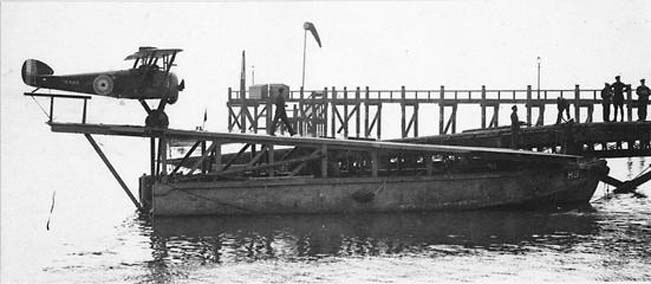
Connop explained that he was not in King Street, but in a street more than a mile from the middle of the town, which was not usually frequented by the boys. They were told that he had just received the news that he had been accepted for the Royal Naval Air Service, and he expected to leave very soon:

aircraft

Connop had bought some cigarettes for a wounded soldier on leave from the Front, and it was only after “being repeatedly pressed” that he had been prevailed upon to smoke. He argued that as School Captain he had been “freer from censure than the majority of his predecessors.” At least one of his accusers had been seen committing a far worse offence than his, and had escaped punishment completely.

Connop admitted his guilt, however, but claimed “extenuating circumstances”. He signed a declaration that he would not repeat the offence.

The entire body of the Prefects, including Henderson and Barton, then considered that the matter had been brought to a final conclusion.

Two months later, the Prefects organised another meeting, and declared that the punishment which they had all previously agreed upon, was now thought to be by no means severe enough.

A meeting of the entire Sixth Form was then called, and the whole affair was presented to them. They then voted as to whether Connop should continue as School Captain for the remainder of the term.

The vote was almost entirely unanimous, and Harold Connop was told to carry on.”

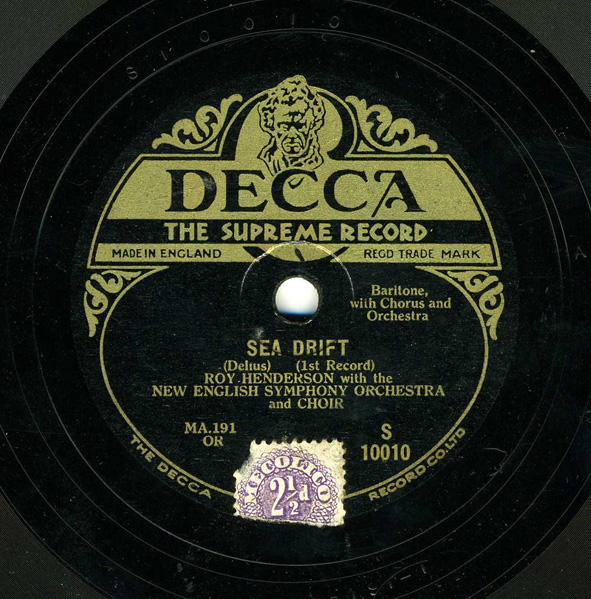
When he left the High School, Henderson joined “B” Battalion of the Artists’ Rifles, before moving to the Regimental Concert Party, based at Lichfield in Staffordshire. It is very difficult to imagine that he saw much combat at all. He later pursued a career in music as a baritone singer, becoming one of the foremost artists in the country.

Decca_1929_Sea_Drift

He died at the advanced age of just over a hundred.
Arthur Barton left the High School in 1918, and joined the Royal Engineers Signal Service. He was demobilised in December 1918. Given the timing of these events, and the time needed for training, it is difficult to imagine that he saw much combat, any more than Roy Henderson did.

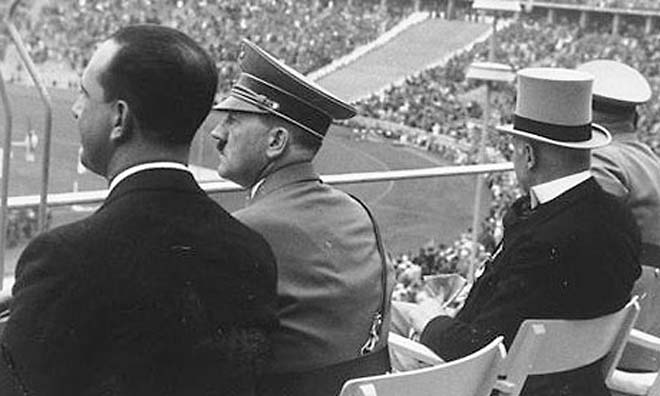
After Cambridge, Barton initially worked at Repton School as Head of Physics and gained a degree of Doctor of Philosophy of London University. He became Headmaster of King Edward VII School, Sheffield, and then Headmaster of the City of London School. In addition, he became a top class football referee who was in charge of an Amateur Cup Final, a large number of international matches in Europe and two games at the Berlin Olympics including the semi-final. Here is Adolf Hitler and two of his friends actually watching the match which saw Germany lose 0-2 to tiny Norway:

hitler-takes-in-the-actio-006

Arthur Barton died at the age of seventy-six.

I cannot trace what happened to young Mr Towle, the ventilator vandal, but we know that on November 16th 1918 at the School Debating Society, he proposed that a letter of congratulation should be sent to Marshall “Fotch” for winning the war for us.

Such crass insensitivity came after his school had lost well over two hundred Old Boys in the carnage of the Great War and, according to another reminiscence, the school flag had been more or less permanently at half-mast for a number of years.

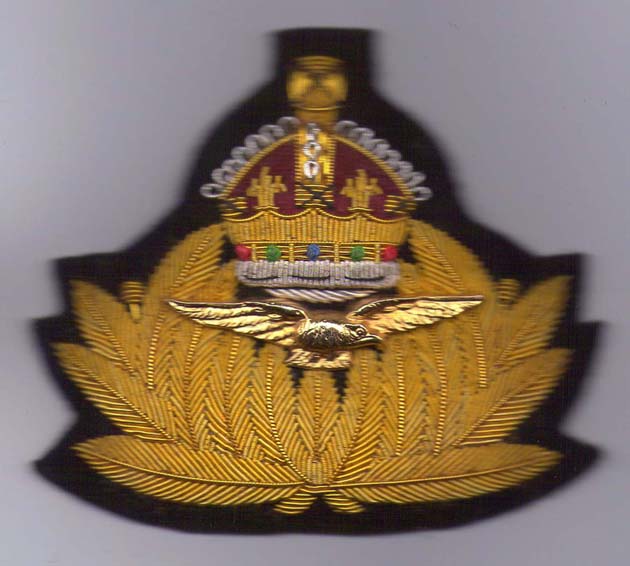
Harold Connop, of course, was one of that list of two hundred war casualties. He had joined the Royal Naval Air Service in 1917 and was posted to the airbase at Dunkerque on March 14th 1918 as a Temporary Flight Sub Lieutenant.

rnas cap

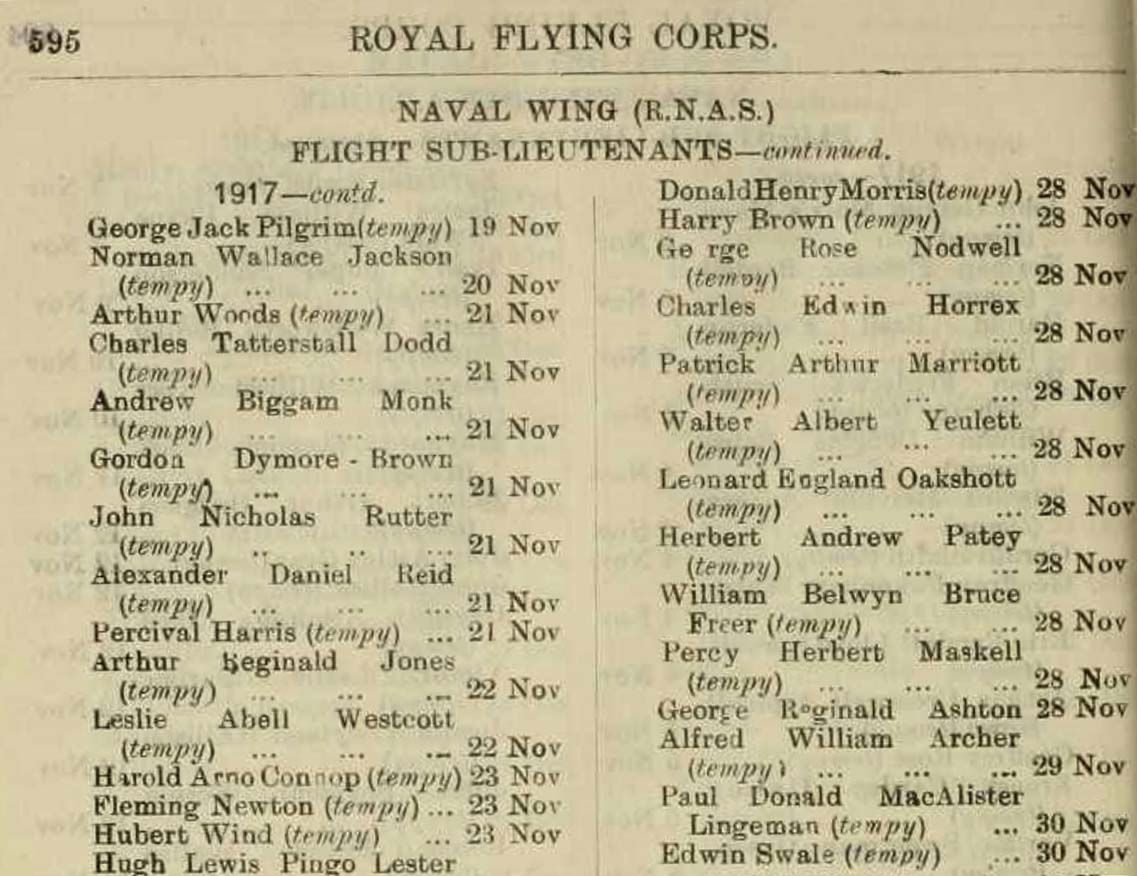
Within a very short time he was seriously wounded in aerial combat. He died from his injuries on March 31st 1918. Here is the RNAS casualty list for this period:

connop

Harold wasn’t a hundred or even seventy-six. He was just eighteen years of age:

grave

19 Comments

Filed under Criminology, History, Nottingham, Politics, The High School

The Most Dangerous English Animal (4)

So, which animals are the killers in England?
Well, in England, there is no animal carnage whatsoever. All the animals are unbelievably  friendly and welcoming. Nobody in history has ever been killed by a fox:

fox

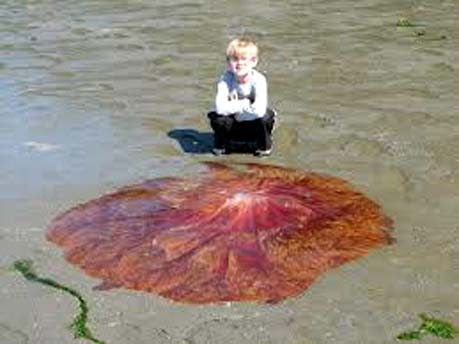
And nobody has ever been done to death by a Lion’s Mane jellyfish either:

jelly

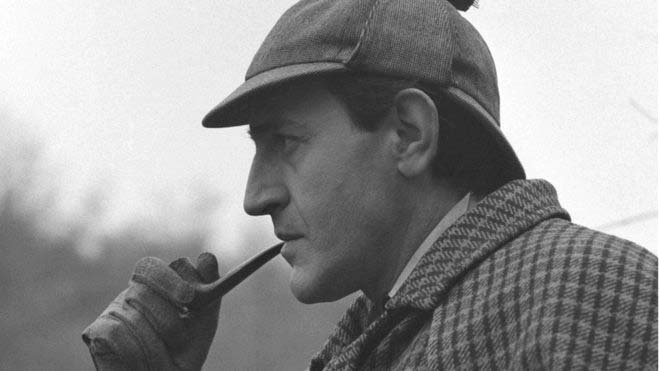
Hard luck Sherlock:

sherl

One lady was hospitalised after a gull attack. The killer birds pecked her little dog to death, which made some of the neighbours sad. A similar incident led to the death of a pensioner who had a heart attack.
On average, only one person a year in England is killed by cows (which really surprised me, I must say).
Five people a year are killed by wasps and bees every year in Britain, the same figure as the average number of deaths by terrorism, apparently.

psaw xxx
Only fourteen people have died in total from snakebite since 1876, with the last one more than forty years ago.
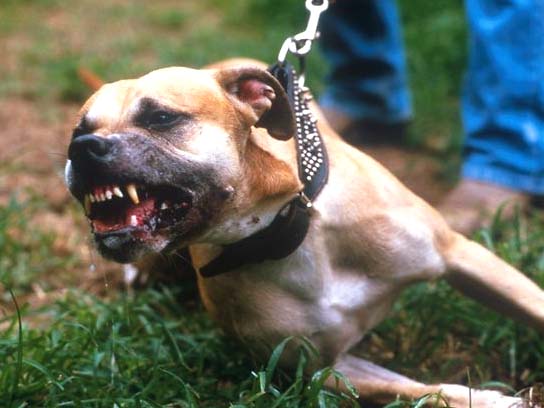
Since 2005 there have been 17 deaths caused by dog attack, which is just under two per year. There are almost a quarter of a million non-fatal attacks per year. These may sometimes be just a scratch but quite often they result in permanent disfigurement. And these statistics are rising rapidly with an increase of a third in the last five years. Animal shelters are apparently nowadays full with all the thousands of Staffordshire Bull Terriers which have been found to be too fierce to be kept as pets:

dog

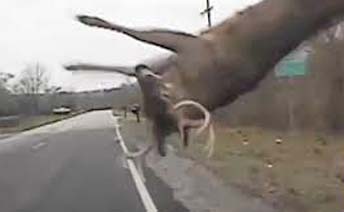
Most dangerous perhaps, though, are the Artiodactyla, the deer and the antelope. In fact, we have no antelopes in England but the deer make up for it.
Around 75,000 deer are hit by cars every year in the UK.  This results in 450 injuries but only a few fatalities. Latest figures say that there are up to a dozen, either drivers or passengers.

deer

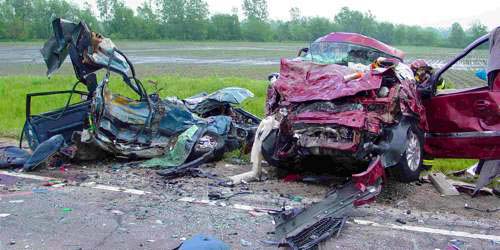
Getting it all into context, in 2010, 1,970 people were killed in transport accidents with almost four hundred of these being pedestrians. Two pedestrians were killed by a bicycle on the pavement and a further five were killed by motorbikes. Cars and vans claimed 133 victims in the total, and 55 pedestrians were in either a bus or a lorry with 39 hit by a train. Just over a hundred cyclists were killed in total (123) and 429 motorcyclists perished. Travelling in cars, 1,115 deaths occurred, a rather good advert, perhaps, for the virtues of the seat belt. On water, 14 deaths occurred and 22 people were killed in aeroplanes.
Stairs were killers on almost 700 occasions:

steps

A further 53 people fell to their death off a ladder. It can be accidental:

ladeeeer Or simply, a great mind at work:

ladder-double

More bizarrely, 36 people were killed by a “thrown, projected or falling” object.
Accidental drowning claimed 217 with 29 in the bath and 3 in the local swimming pool. The majority of people who drown, of course, are swimmers rather than non-swimmers.
The real killer animals were doctors and surgeons who claimed 433 people in medical accidents. The forces of nature claimed 129, the same figure as for “excessive natural cold”.
And what about those killer lifts? Four fatalities between 2002-2010.
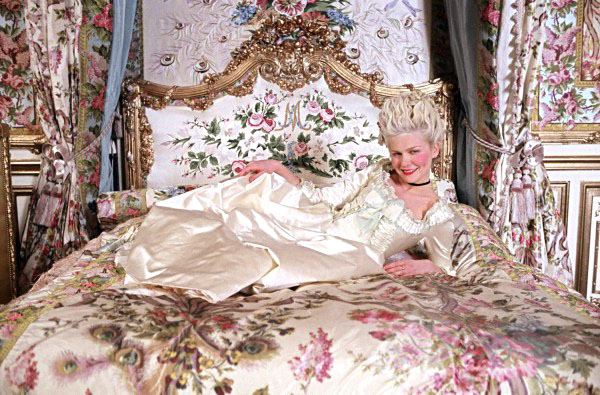
And I’m still trying to work out how they did it. Five people managed to suffocate in bed:

marie-antoinette

There were lots of different sources for these statistics, so I picked one that seemed to be from a reasonable source.

26 Comments

Filed under Criminology, History, Science, Wildlife and Nature

The Most Dangerous American Animal (3)

So what is the most dangerous animal for our American friends??

Well, we already know that wolves have never killed anyone in the lower 48 states of the USA with just one death in Alaska and one in Canada since the year 2000:

621166__the-wolf-pack_p

The most difficult problem I had with the USA was in finding accurate figures. Some lists refer to a single year and others to a number of years. On the other hand, the animals mentioned were all roughly the same in terms of the number of deaths, however the number was expressed.

Soooo…..don’t worry about sharks, with one fatality per year on average between 2001-2013. It was the same figure for alligators, crocodiles (you have both?) mountain lions, moose and, surprising to me, bears. All three species together, Grizzly, Black and Polar kill around two people per year between them. Venomous snakes and lizards (you have both?) kill six, and scorpions one victim fewer.

I didn’t know what a non-venomous insect was, or rather, I just couldn’t see how it would kill you, but anyway, they managed to kill nine people. Much more dangerous, though, were cows with an average kill total of around twenty. According to one expert:

“Large livestock are powerful, quick, protective of their territory and offspring, and especially unpredictable during breeding and birthing periods.”

Most people killed by cows are farm workers although they will attack walkers, birdwatchers and artists on occasion. In particular, in my experience, they especially seem to hate easels and tripods, thinking you are some kind of four or five legged supercow. Meat producing cattle are more docile in their behaviour and milk producing breeds are the worst of all, especially Friesians:

Big_beasts_trigger_2663528kxxxxxxxxxxxxxxxxx

Mammals such as horses, pigs, deer and others killed 52 people annually between them, although strangely, this figure does not count road collisions.

More dangerous still are bees, wasps and hornets with just under sixty deaths, mostly through anaphylactic shock. Other venomous insects killed a further sixty victims, who included a large proportion of old folk in the southern states killed by fire ants.

image_fireants

One website alleges that domestic dogs kill 250 people per year and states that $1 billion is lost every year through injuries and deaths caused by dogs. Sadly 34% of the victims are children under four years of age. Elsewhere totals were much lower with the National Canine Research Council reporting 41 fatal dog attacks in 2014 and 32 fatalities in 2013.

Keep it in context though. The USA has a population of 318.9 million people and 2.6 million people die every year. All animal deaths combined constitute a measly 0.008 percent of all fatalities.

Annually, 33,000 people are killed in cars. There must be towns smaller than that.

AAA-Causes-of-Car-Crashes-Study

30,000 people fall to their deaths.

Nearly 39,000 manage to poison themselves.

11,000 people are shot and killed.

3,868 people drown.

41,000 commit suicide every year.

Around two and a half thousand Americans choke to death every year, with roughly the same total for deaths in fires. Six hundred people shoot themselves accidentally, with 45% of them children. Forty five of the adults will be hunters walking alone in the woods.

In the less serious category, 33 people are killed every year by lightning. A massive 413 deaths occur every year as a result of accidents with ATVs. Even elevators have their dangers…yes, you read correctly…..they kill 26 unfortunate people every year. These don’t look dangerous…but they are:

doors

And what about England? Well, we’ll see in the near future.

32 Comments

Filed under Criminology, History, Humour, Science, Wildlife and Nature

Heil Hitler Episode 6

Do you remember August Landmesser?

ONE

Do you remember what happened to the mild mannered card carrying Nazi? Well, Romeo, or rather August, found his Juliette, or rather Irma:

irma-ECKLER

Irma was Jewish, but handsome Aryan August proposed to her without hesitation. She accepted without hesitation.

In the summer of that year of 1935, though, disaster befell them. They found out, that Irma, according to the “Nürnberger Gesetze, the Nüremberg Race Laws”, was formally and legally classified as a Jew. August was not a Jew and for this reason, he would not be allowed to marry her.
When his engagement to a Jew was formally discovered, August was immediately expelled from the Nazi Party:

NSDAP_Member_Card_1
Despite this rather unpromising beginning, August and Irma put in an application to marry in their home town of Hamburg. Their application was denied under the Nüremberg Race Laws, which had come into law only a very short time previously.
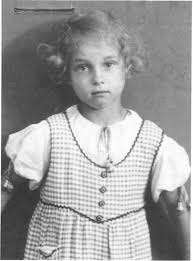
To cement the couple’s love, however, August and Irma’s first daughter, Ingrid, was born in October of 1935:

little girl

On June 13th 1936, August attended the launching of a new ship at Hamburg in the Blohm und Voss shipyards. He decided not to “Seig Heil!” or “Heil Hitler!” with all the rest, but to keep his arms firmly folded. It could not have been worse timed:

the one one

The ship was a training ship, the Horst Wessel, and was named after the Nazi Party’s greatest ever martyr. Men went into battle everywhere singing his happy song:

https://youtu.be/3UWTRnzKXG8

Furthermore, it was a naval vessel for the Kriegsmarine, the German Navy:

Kriegsmarine_

The Führer himself was the man smashing the champagne on the bow of the ship just before it slid off down the slipway into the water. Adolf, positioned directly opposite August Landmesser, may actually have seen his defiance. And even if he did not see August, such a high quality photograph could not have hidden August’s defiance in the middle of such a storm of “Seig Heil!” and “Heil Hitler!” salutes.
By 1937, though, August Landmesser had had enough. He attempted to flee northwards to Denmark with his family and leave Germany for ever. At the border, he was quickly arrested and eventually charged with “dishonoring his race,” or “racial infamy”, under the “Nürnberger Gesetze, the Nüremberg Race Laws”, mentioned above:

Landmesser family

Just one year later, in July of 1938, because of an apparent lack of evidence, August was cleared of all crimes, but a suspicious Third Reich ordered him to have no further contact with Irma. In addition, August was given a severe warning that punishment would surely follow if he ever dared repeat any of the offenses.
For August, of course, this was completely impossible. How could he just abandon the love of his life? How could he give up his wife? The mother of his darling little daughter, Ingrid?
August ignored completely the demands of the Nazis.

august-landmesser-uniform
Only a month later, in August of 1938, August was arrested again and put on trial. Not surprisingly, he was found guilty of all charges and received a sentence of hard labour for thirty months in a concentration camp.  August was destined never to see the love of his life ever again. He had seen his darling wife and child for the last time.
It was easy now for the Gestapo to arrest Irma as a new law had been quietly added to the Nazi Statute Book. It required the arrest of all Jewish wives in the case of a man “dishonouring the race,”

Irma was duly imprisoned by the Gestapo who was by now heavily pregnant with a second child. In prison, Irma gave birth to a second daughter, Irene. Irma was then transferred to an all-women’s concentration camp almost straight after the birth. In later months, she was sent to various other prisons and concentration camps,
In 1942, Irma was taken to a euthanasia centre at Bernburg.

bernvburg

During the course of the war, a total of 9,384 sick and handicapped German people were to be murdered there.  Around 5,000 prisoners from concentration camps were also murdered there. The doctors’ method of choice was carbon monoxide poisoning in a gas chamber.
In charge of this sickening establishment was Irmfried Eberl, who masqueraded as “Dr. Schneider” outside the walls. He was so promising as a genocidal monster that he became the first Kommandant at the Treblinka Extermination Camp, and made sure the place was in good working order with no problems. He must have been a little disappointed, though, that Treblinka missed the Million Total, with a mere 900,000 Jews killed there. “Dr. Schneider” was arrested in January 1948, but then hanged himself to avoid coming to trial. It must be said, though, he was a rather unimaginative man:

eberlllllllllllllllllll

When Eberl’s  colleague, Heinrich Bunke, was put on trial, he was initially given four years imprisonment for killing 11,000 people, but this was reduced on appeal to three years as his guilt could only be proved in 9,200 murders.  Both Eberl and Bunke were firm supporters of Joseph Goebbels and his clearly stated attitude towards the treatment of the mentally ill .As he wrote so memorably in his diary:

“Discussed with Bouhler the question of the silent liquidation of the mentally ill. 40,000 are gone, 60,000 must still go.”

In actual fact Dr Goebbels aimed at the round figure of 100,000 killed by 1945, but he only managed a rather poor 70,000. Most of them were Germans. Most of them were children.

One of these victims, sadly, was Irma Eckler. And by the time that she died, August too was dead. He had been due to be released from the concentration camp system in the spring of 1941, but alas, he did not live to see that day.

August and Irma had two daughters, Ingrid and Irene. Both of them survived the Second World War, and outlived the Third Reich, even if, their parents did not.

The younger of the two daughters, Irene, has, in actual fact, documented the story of her family. She published her book in both German and English language versions, and it is now in its second edition. It is called “A Family Torn Apart by “Rassenschande”, and the full author name is Irene Eckler. The ISBN number is ISBN 3-9804993-2-4.

This slideshow requires JavaScript.

It is a moral tale worth reading in more detail. And it just goes to prove. Love DOES conquer all.


26 Comments

Filed under Criminology, History, Politics