Category Archives: History

Pictures from my past (2)

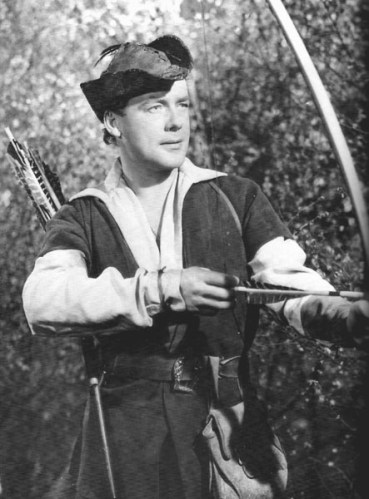
Last time we looked at bubble gum cards. There are still a few I haven’t talked about. In the late fifties, there was a TV series called “The Adventures of Robin Hood”. Richard Greene played Robin Hood :

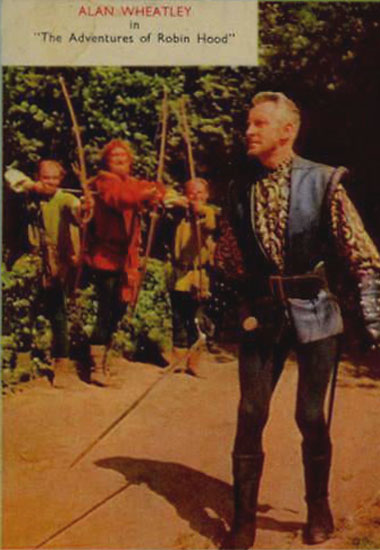
The person who impressed me most, though, was the villainous Sheriff of Nottingham who was played by Alan Wheatley. I was unable to find the relevant card from the  “WHO-Z-AT-STAR?” series. The one I admired as a little boy had the Sheriff wearing his leather jacket covered in metal studs. Here’s the jacket in a still from the TV series:

I couldn’t find the card I remembered, though. So here’s a near miss:

One of my favourite ever images came from a comic called “Beezer” which wasn’t really the most academic of publications, but every year, at Christmas, it produced a book containing not just everybody’s favourite cartoon characters but also one or two special features. These were invariably linked with warfare and famous battles. It was a book for boys, after all!

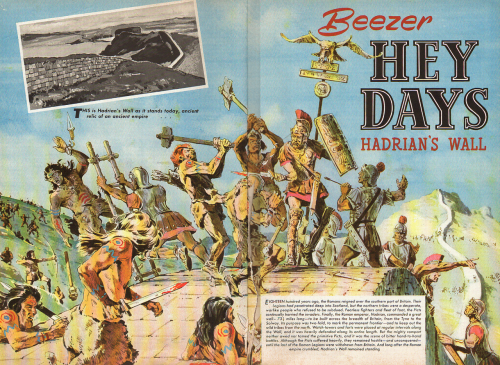
In 1962, they produced a double page picture of the Scots, aka the Picts, attacking the Roman garrison on Hadrian’s Wall. For me, this was one of the very best images that I took from my childhood years. It’s not Rembrandt, but I loved it:


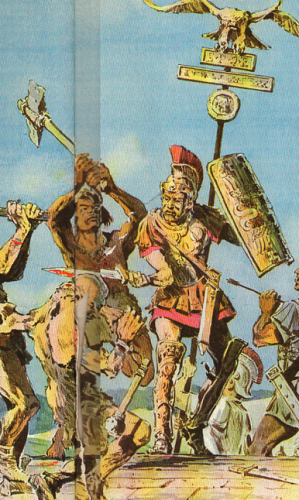
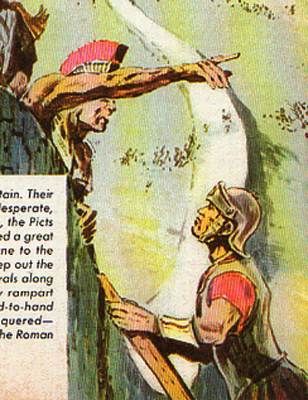
It even had an insert explaining that Hadrian’s Wall was built by the Emperor Hadrian in 128 AD to keep the Scots out of England. It is 73 miles long and took 15,000 men six years to build. And I just loved this picture. It has everything a picture should have. Just look at that  centurion, up to his knees in angry Scotsmen:

“Picti” means “painted” and these Scottish warriors must have spent considerable amounts of time at the local tattoo shop. But look at that Roman soldier below. Haven’t you always wanted to do that if you ever came home, went upstairs and found a burglar trying to break in?

And what about their weapons of choice? Never go to a Peace Rally without at least one of them, but if you have a choice, then steal a Roman sword:

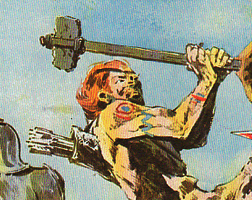
Here’s a beautifully made lump of stone on a stick:

And here’s how the Romans invented the boiled egg:

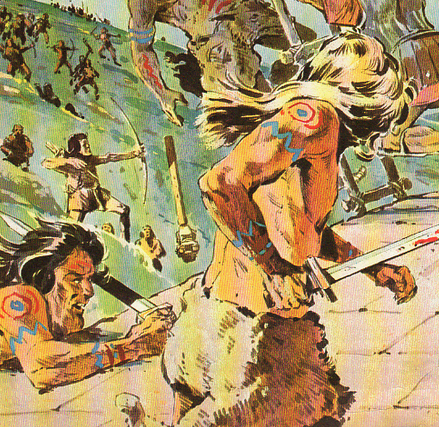
And just look at the determination on the face of this long haired reveller (bottom left), as the barman announces that the bar will close in five minutes’ time. He’ll get in if it kills him. And don’t miss the massive club that some clown has dropped (centre). That’s really dangerous and it might hurt somebody:

“Oh no! It’s all going pear shaped! Quick soldier!! Ring CMIC (or CMII in the Iunctae Res Publicae )

What on earth is all that about ??? A clue…….”Numeri Romani sunt.

“Next time, “Where’s Wally?” has the chance to go to a famous battlefield.


31 Comments

Filed under Film & TV, History, Humour, military, Nottingham, Personal

Len Dorricott (1)

My wife’s hobby is photography and she specialises in a particular photographic printmaking process called “Bromoil”.

In the club she goes to, a few years ago, she met a gentleman who had stepped right out of the pages of history:

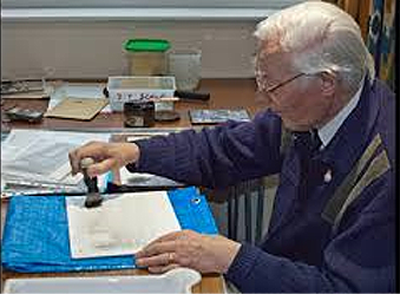
Here he is, busy Bromoiling:

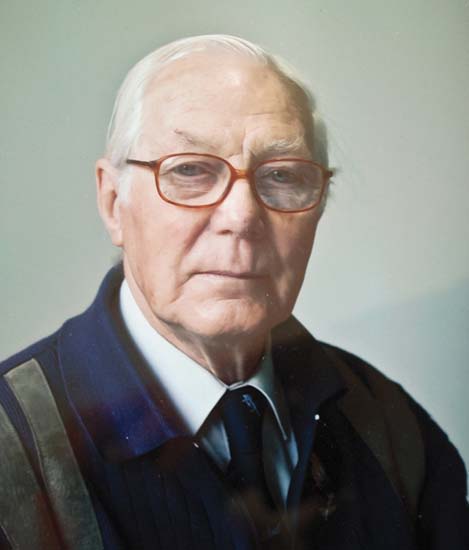
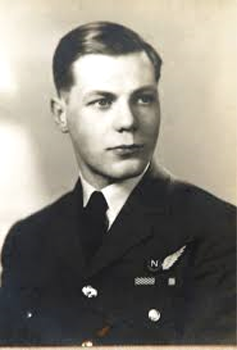
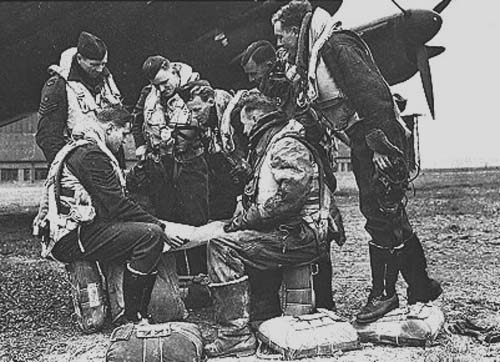
This pleasant old gentleman was called Len Dorricott and he had been a navigator in Bomber Command during World War II:

He had flown with 576 Squadron, 61 Squadron, 81 Squadron and 460 Squadron who were members of the RAAF. The latter squadron’s losses were almost unbelievable. 1018 aircrew (589 of whom were Australian) were killed and 181 aircraft were destroyed. Here’s their badge:

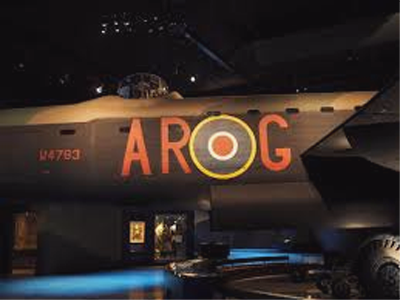
With them, Len flew 29 missions, a substantial number of them in the famous G for George, the Lancaster which in 1945 was flown to Australia by an all-RAAF crew of Bomber Command veterans and is now preserved at the Australian War Memorial (AWM) in Canberra:

Here are the three squadron letters, just in case you think that in the photograph above, it’s AB-C :

G-George flew 90 missions over hostile territory, but this famous aircraft did not ever lose a single member of its crew, even though thirty of them were eventually killed in other aircraft:

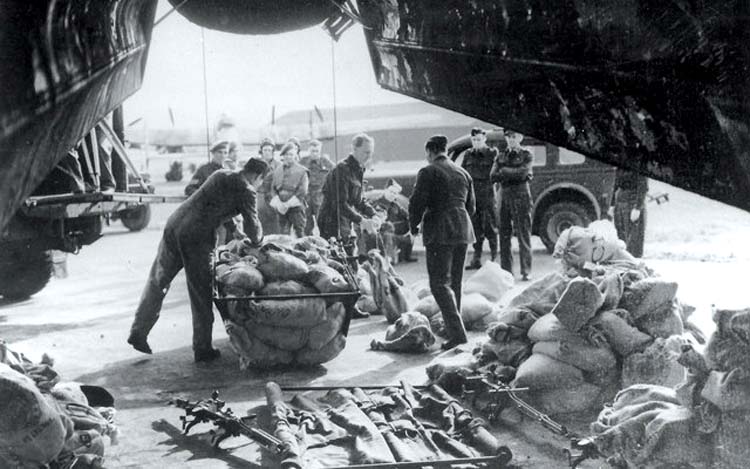
When he was with 576 Squadron, Len Dorricott also flew in Operation Manna in May 1945, He went from RAF Fiskerton to the Netherlands where he dropped bread and other food to the starving Dutch population:

Len said later:

“It began as just another mission but it turned into something very special. The fact that it was daylight and we were flying so low meant we literally had a bird’s-eye view. I saw a German soldier, walking in the street with his rifle over his shoulder, looking up at us. The best thing of all was seeing the people on rooftops waving at us with anything they could. It was a marvellous feeling, the best thing I did in the war. I will always feel proud of that.”

Len lived to be 91 years old.

22 Comments

Filed under Aviation, Bomber Command, History

Kamikaze (2)

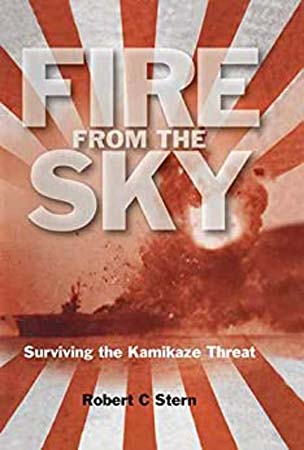
Last time I was telling you how I had read a splendid book called “Fire from the Sky” by Robert C Stern. The book traces the history of the Japanese kamikaze attacks which began in the Philippines in 1944. It is an excellent and informative book which, clearly, has been extensively researched.

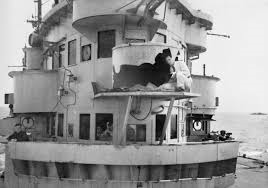
Experience quickly taught the Japanese that attaching two bombs of around 250-500 pounds, depending on the aircraft, could cause a lot more damage than the aircraft itself, particularly if it was only a small plane such as a Zero. The bombs were never released but they were always live. The best places to aim were directly down the funnel or at the base of the funnel. This ship off Okinawa has had damage done to the boilers, presumably via the vulnerable funnel:

Alternatively, the bridge was a good target because it was full of officers. The absolute best target, though, was to seek out an aircraft carrier and to aim the aircraft and bombs at the elevator because this gave access to the inside of the ship. And below decks there might well be an explosive mixture of “aviation fuel” and air. Certainly fire was the main weapon needed to cause large scale damage inside an aircraft carrier. And those two bombs, as well as blowing out partition walls, might also start the very fire needed to damage such a big ship.

The very, very best time to strike was when the US Navy fighters had just returned from combat and were being “safed” which I presume means pumping out the unused avgas and removing any hung-up bombs. Even better, perhaps, was that moment seconds before takeoff, when everybody was ready, propellers spinning, bombs armed, full fuel with perhaps drop tanks too, and all the aircraft, by necessity, extremely close to each other.

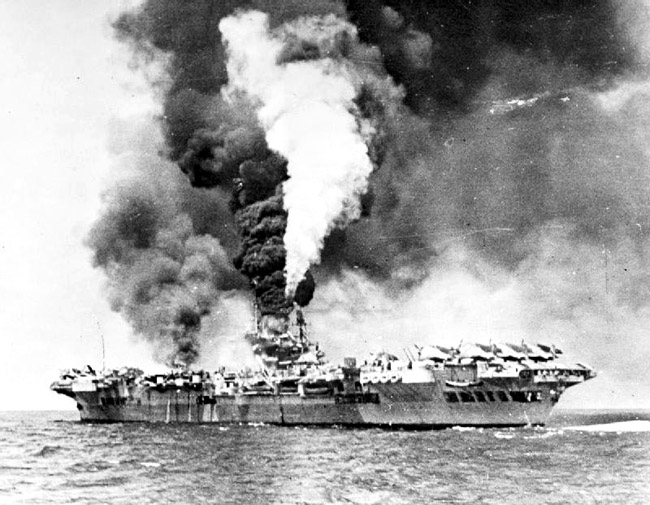
This attack was clearly aimed at both the flight deck and the elevator. The ship is the USS Bunker Hill:

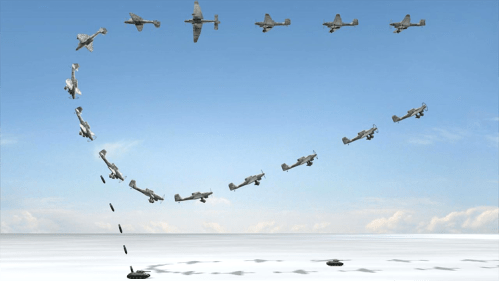
Diving an aircraft down to hit a target on the sea is apparently not the most simple of manoeuvres, and the best kamikaze pilots were capable of flipping their aircraft over upside down so that they could see the target clearly as they dived down to hit it. You can see this manoeuvre on the old films of Stuka dive bombers. Here is the version produced for the Luftwaffe Ballroom Dancing Team:

Defenders soon realised what a kamikaze pilot was trying to do, and they soon realised too that machine gun fire and cannon fire was comforting for the people on the ship but of virtually no value whatsoever. Most effective were five inch guns or bigger because the plane would need to be disintegrated to stop it carrying out its mission. On occasion, aircraft still caused large amounts of damage after their wings had been shot off.

It was extremely rare for kamikazes to sink big ships or even to damage them greatly. Much more likely prey were landing craft or the radar pickets protecting the fleet. Smaller ships could not absorb the combination of speed and explosive power. They were either sunk completely or suffered huge casualties. On one occasion a kamikaze blew fifty men off the deck of a warship and none of them were ever seen again.

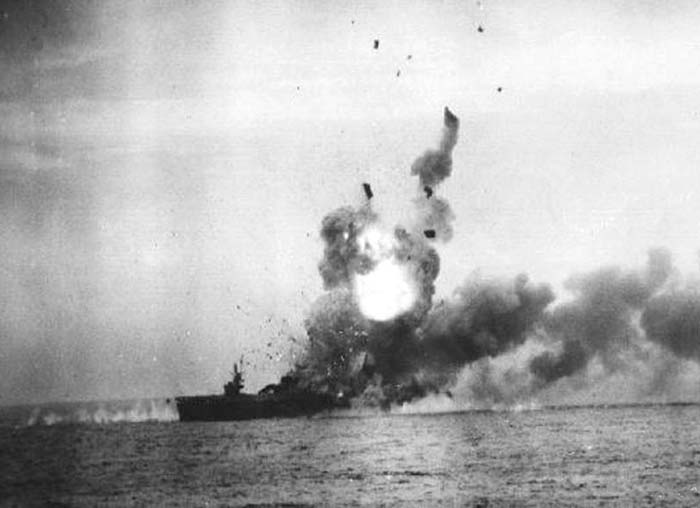
In one chapter, author Robert Stern lists the casualties for all of the ships attacked between November 27th-December 28th 1944. The first figure represents the men killed and the second figure the men wounded. Thus we have the St Lo with 16 killed and 21 wounded. Here it is:

The Colorado had 19 killed and 72 wounded, the Maryland 31 killed and 30 wounded, the Aulick 31 killed and 64 wounded, the Drayton 6 killed and 12 wounded, the Mugford 8 killed and 14 wounded, the Lamson 25 killed and 54 wounded, the Liddle 38 killed and 20 wounded.  The Hughes had none killed but 73 were wounded, the Caldwell had 33 killed and 40 wounded, the Nashville had 133 killed and 190 wounded, the Haraden had 14 killed and 24 wounded, the Orestes had 59 killed and 110 wounded, the Pringle had 11 killed and 20 wounded, LST 472 had 6 killed and 50 wounded and the two LSTs, Nos 460 and 749, had 107 killed.

And from the Japanese point of view, that is an excellent return for the lives of a relatively small number of men.


21 Comments

Filed under Aviation, History, Pacific Theatre, the Japanese

Pictures from my past (1)

I don’t know how my memory works other than to say that, nowadays, for the most part, “It doesn’t”. That’s just a question of age, though, and the fault of some of my prescription medicines.

Some of my earliest memories are pictures. Pictures that somehow have remained in my mind for year after year, decade after decade. They come from many sources. Books and comics. Films and TV programmes and sport as well. And rather disconcertingly, as I have done the necessary research for these blog posts, many of my longstanding memories have actually proved to be rather false.

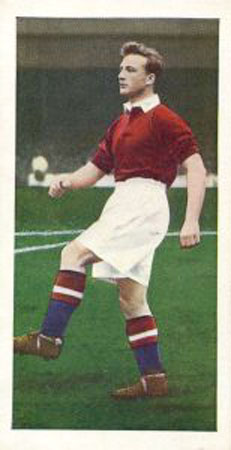
My earliest recollections come from the very few bubble gum cards that I had. In the late 1950s, a company called Chix did a very nice set of footballers, and I was captivated by the card depicting Jeff Whitefoot, whose name absolutely fascinated me. With all the cowboy  programmes we used to watch on TV at that time, I suspect that I came very close to believing that Jeff was a member of some obscure tribe of English Red Indians who lived in the Black Hills of Manchester:

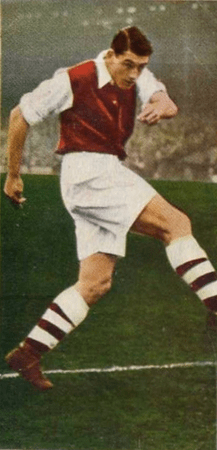
The best example of what might be termed false or mistaken memory is the card showing a player called Cliff Holton. My recollection as an adult is that as a child I was fascinated by the strange colour of Holton’s shirt. He played for Northampton Town whose shirts were an unusual purple-very dark violet-maroony colour. But now, with the help of ebay, I have discovered that Chix only ever portrayed Holton as an Arsenal player, with an ordinary red Arsenal shirt. So, for what it’s worth, here’s Cliff Holton, that well known Arsenal centre forward. Let’s be generous to an eight year old, though. Perhaps some of the cards had a more purple tinge than others, especially when it came to those hooped socks:

Other distant images that have stayed with me include a few from a series of bubble gum cards which were rather snappily entitled “WHO-Z-AT STAR ?” . One card was of a young actor called Edmund Purdom, the star of “an adventure show” I used to watch entitled “Sword of Freedom”. It was not particularly popular in the industrial East Midlands of England. I suspect that it may have been too heavy handed an allegory of the Cold War and the Dirty Repressive Commies. The tights clad hero was “a maverick freedom fighter, prepared to die for his belief in a free society.” He was busy fighting “the tyrant who exercises control over 16th century Florence, the tyrannical Duke de Medici “.

Where I lived, within easy walking distance of at least half a dozen coal and clay mines it was pretty difficult to identify with “a city of poets and painters, wealth and marvels”. What I did like, though, was our hero’s rapier which looked as if the baddies were being stabbed by a yard long toothpick.

Here he is!

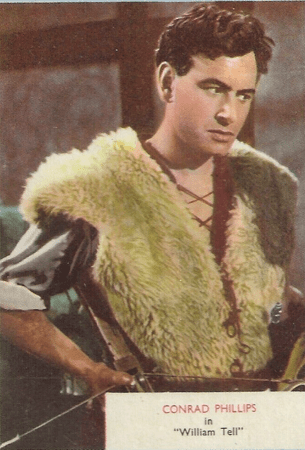
The same series provided a card depicting Conrad Phillips in the lead role of “William Tell”, complete with his rather strange sheepskin coat and crossbow. As a small child, I always felt rather unsettled because he never seemed to have proper sleeves in his coat, and I used to worry that he would catch cold, up there in those Swiss mountains:

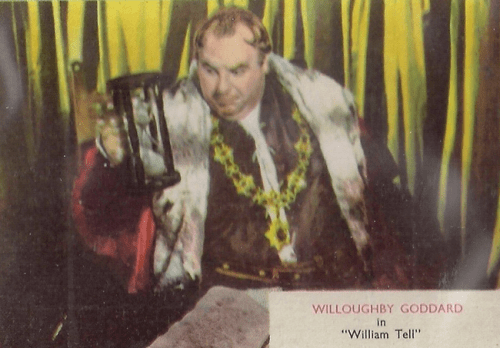
Another card in the same series depicted Willoughby Goddard, who portrayed the gigantic Gessler, the villainous Austrian ruler of Switzerland. I was fascinated by the piece of information on the back of the card that when he went by airliner, he always had to buy three tickets for three seats to avoid crushing other passengers. At that time there was an incident in one episode that I didn’t understand at the time. William Tell had Gessler at his mercy, but let him go free. Tell’s little son asked his sheepskin clad Dad why he hadn’t got rid of the evil Gessler once and for all. Tell replied that there was a risk that if they ever killed Gessler, the Austrians might send somebody who was competent and then the Swiss would be in trouble:

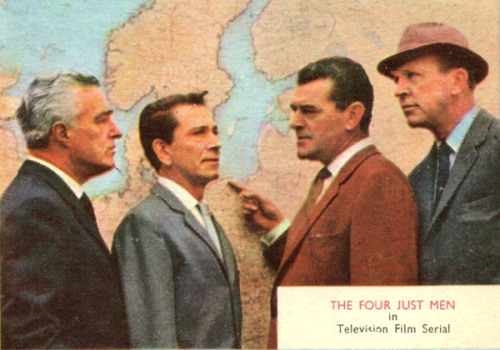
Two puzzles to finish with. Which member of our family persuaded us all to watch “The Four Just Men”? an English TV series which was allocated its own card in the WHO-Z-AT STAR ?” collection.

How can the plot have been any more complicated ? The Four Just Men were Richard Conte, Dan Dailey, Jack Hawkins and Vittorio De Sica. Except for Jack Hawkins, I have no idea which one was which :

There were five assistants for the Four Just Men, played by Honor Blackman (Pussy Galore in Goldfinger), Lisa Gastoni, Andrew Keir (Professor Quatermass), Robert Rietti and June Thorburn :

This slideshow requires JavaScript.

The list of guest stars in the series, though,  was simply amazing :

Judi Dench, Alan Bates, Leonard Sachs (Manuel), Patrick Troughton (Dr Who), Donald Pleasence (Blofeld), Richard Johnson, Ronald Howard (son of Leslie), Basil Dignam, Roger Delgado (The Master in Dr Who), Charles Gray (another Blofeld) and Frank Thornton (Captain Peacock) :

This slideshow requires JavaScript.

Next time, the pictures I remember from my comics.

Meanwhile, fill the lonely hours with………..


38 Comments

Filed under Film & TV, Football, History, Humour, Personal

Kamikaze (1)

Ever since I was a little boy, I have always wondered about kamikaze pilots. The whole idea just seemed so unnatural to me, even crazy. When I saw a copy of “Fire from the Sky” by Robert C Stern, therefore, I bought it straightaway. Lots of pages, lots of text and lots of pictures. What was there not to like? And besides, I really wanted to know what the explanation was for this strange phenomenon:

Apparently, what it all boils down to is that:

“Japan has a particular, and some might call peculiar, predilection for the tragic or failed hero. They are admired for their sincerity and loyalty even when their causes were met with failure and their goals could be considered traitorous. Above all else, those heroes adhered to their ideals, especially in the face of their own destruction.”

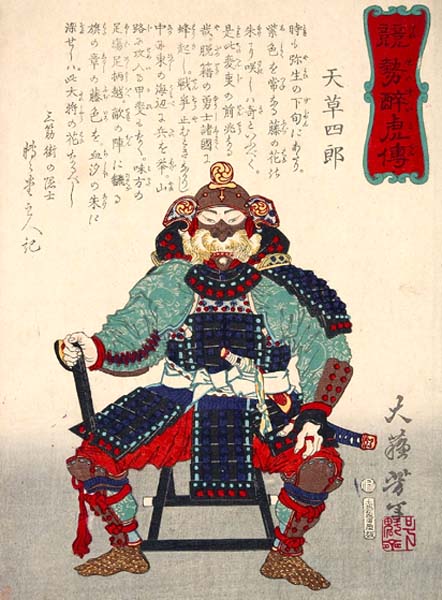
Japan’s tradition of the tragic hero goes right back to the fourth century and Prince Yamato Takeru. But after him come a whole series of legendary and historic failed heroes, stretching down the centuries. They included Yorozu, Arima no Miko, Sugawara no Michizane, Minamoto no Yoshitsune, Kusunoki Masashige, Amakusa Shiro, Oshio Heihachiro, and Saigo Takamori. Here’s Amakusa Shiro:

“The traditions of these men led in the modern age to the World War II kamikaze fighters—an unprecedented development in modern warfare which for most countries would have been unimaginable.”

As a boy, of course, I was tickled pink as we used to say then, that there were actually “ex-kamikaze pilots” who could be interviewed on our grainy black and white TV sets. Author Robert Stern, though, explains it all beautifully for us. So…….. how  could you be on TV as an “ex-kamikaze pilot” ? For two reasons. No 1, you couldn’t find a suitable target and came back. No 2, mechanical failure of some kind.

The Japanese had in many ways already road tested the idea of kamikaze with their “banzai” charge. When soldiers were cornered and faced certain defeat, out they would come, heedless of their own safety and shouting “Tennoheika banzai!!” (Long live the Emperor”). The first banzai charge was on Attu on May 29 1943, with others on Saipan and Okinawa. In this way, their honourable death in battle was guaranteed.

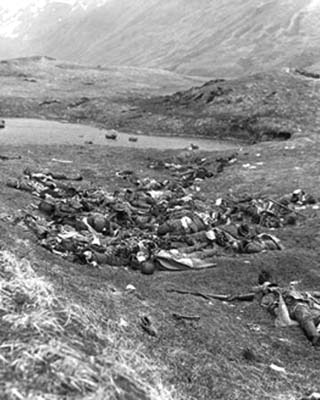
Here’s a banzai charge before:

And after:

In 1944, the Americans were advancing into the Philippines, an act which would cut Japan off from the sources of its raw materials. What could be done? After “The Great Marianas Turkey Shoot”, only 35 aircraft had returned to Japan.

By confronting the Americans in the ordinary way, the Japanese were losing the war by some margin.  Something radical needed to be done. Perhaps the banzai charge could be developed into the kamikaze attack. At a meeting of his officers, Vice Admiral Onishi Takijiro floated the idea of pilots flying their aircraft directly into enemy vessels at the cost of their own lives. Every single one of his 23 officers immediately agreed with the idea and volunteered for duty. It didn’t take long to organise:

Author Robert Stern, states that two possible kamikazes on October 24 1944 were not the first, but just a case of an already doomed aircraft being plunged into a ship, an act called “jibaku” by the Japanese. In this case, the ships were the Sonoma and the LCI(L) 1065. This abbreviation means “Landing Craft Infantry (Large)”. They were both struck by bombers, a Betty and a Sally respectively.

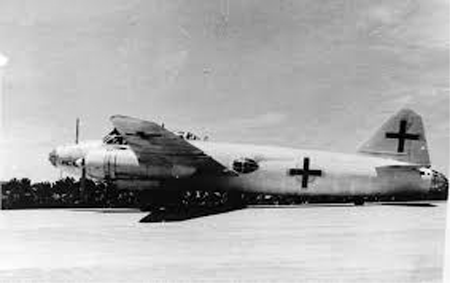
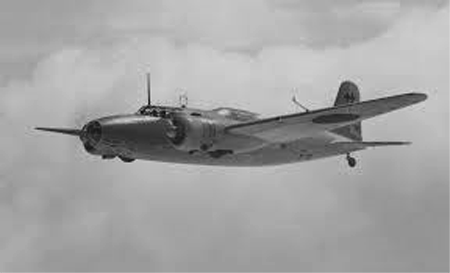
Japanese aircraft were given code names by the Allies. Here’s a Betty. This particular aircraft has the surrender markings of a green cross on a white background on it:

And here’s a Sally:

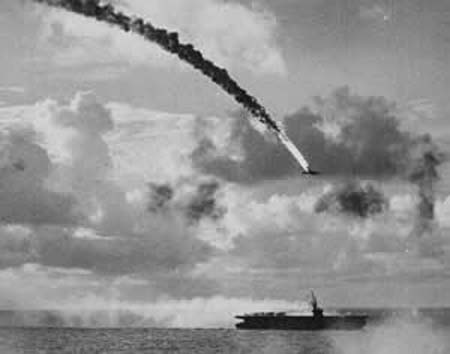
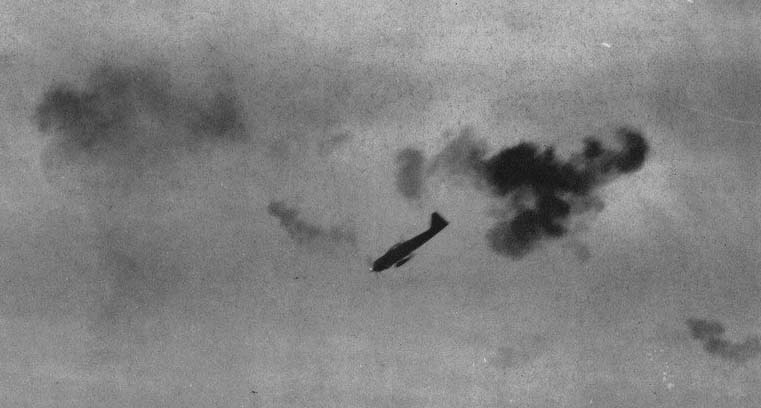
The following day, October 25th 1944 provided the first genuine kamikaze hit, which came on the USS Santee, CVE 29. CVE stands for “escort carrier or escort aircraft carrier”. It was hit by a “Zeke” or Mitsubishi Zero, probably piloted by PO1C Kato. Here’s a Zeke kamikaze-ing:

Kamikaze, incidentally, means “divine wind”. I’ve been troubled by that on occasion, too.  Next time, “Getting the best out of your two 250lb bombs”.

24 Comments

Filed under Aviation, History, Pacific Theatre, the Japanese

What would you do ? (8) The Puzzle

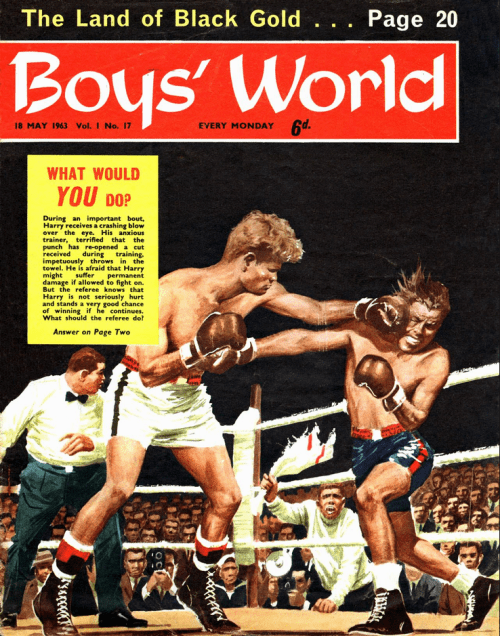
“What would you do ?” used to figure on the cover of a boys’ comic called “Boys’ World”. This was a publication, obviously, aimed at boys and first appeared on January 26th 1963. There were 89 issues before the comic was merged with Eagle in 1964. The last issue of “Boys’ World” came out on October 3rd 1964.

I used to buy “Boys’ World”, and this was mainly for the front cover which always featured a kind of puzzle. It was called “What would you do ?” and was based on somebody being in what Ned Flanders would call “A dilly of a pickle”. Here’s the situation:

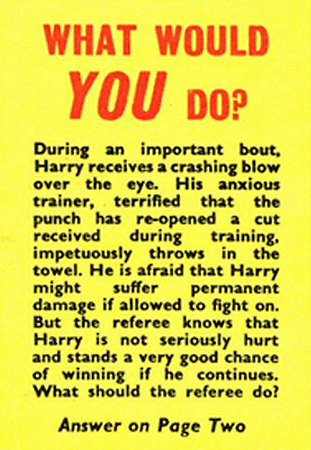
The yellow box sets the scene, and the task is for you to solve the situation. Perhaps you might like to write your idea in the “Comments” section.

Here’s the yellow box enlarged:

So…… a question about the protocols of boxing.

I just hope that the answer, published inside the comic in 1963, is the same as it would be today, in a much more safety conscious era. That’s not a hint, by the way. I haven’t looked yet!

24 Comments

Filed under History, Personal, Writing

The Best of CHS (2)

Last time, I shared with you some of the photographs which I considered to have been the best ones that the Reverend Charles Stephens (CHS) took during his many years at the High School. You saw a number of pictures of various groups of boys. This time, I’m going to be looking at his photographs of individuals. The first one is of a Master called Adam Thomas who was a history teacher. He has one thing in common with me, in that we have both chosen to write a history of the High School.

CHS produced a very nice second photograph of the same person. It seems to capture a moment during Sports Day at the Valley Road playing fields as Adam Thomas appears to be thinking about something really sad, something probably not related to the day’s events:

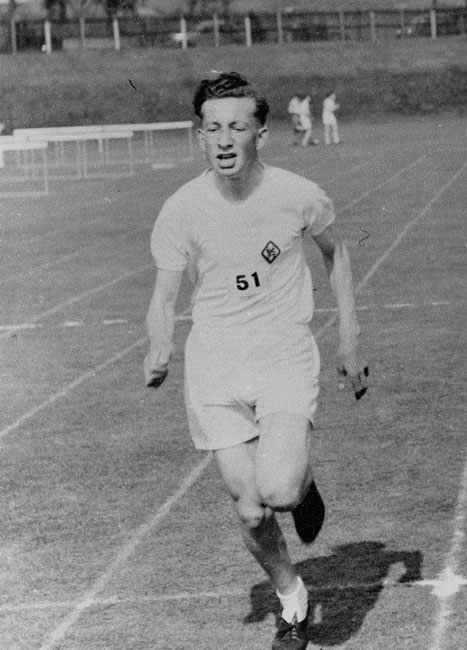
My favourite sporting photograph is “Burney wins the mile”. I know that you’ve seen this photograph before, but the young man just looks so muscled and so tough, so active and so young. He looks as if he could run for ever:

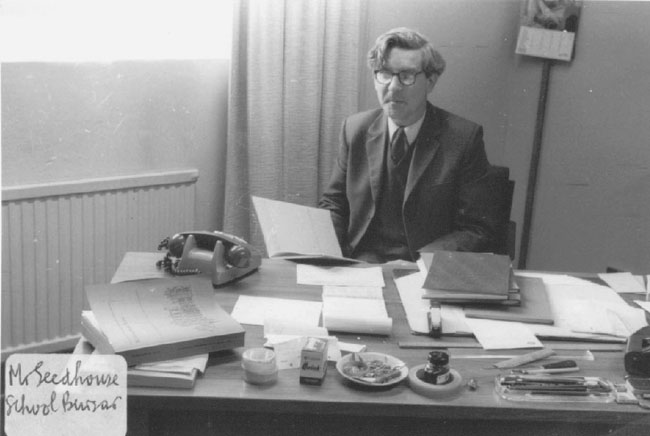
The other portraits I have enjoyed are of the people I have respected, mostly for their dedication to their duty and their desire to work for the common good. This is the Bursar, Mr Gerry Seedhouse, sitting at his desk. An ex-Royal Navy man, it should come as no surprise that he always kept the School afloat financially, and managed to remain a thorough gentleman at the same time. He was a delightful man :

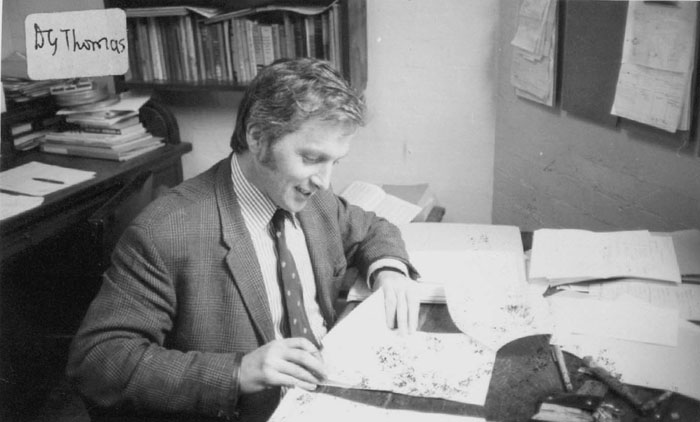
The second person is Geri Thomas who himself took more photographs of the High School than any other person. Here he is, in 1969:

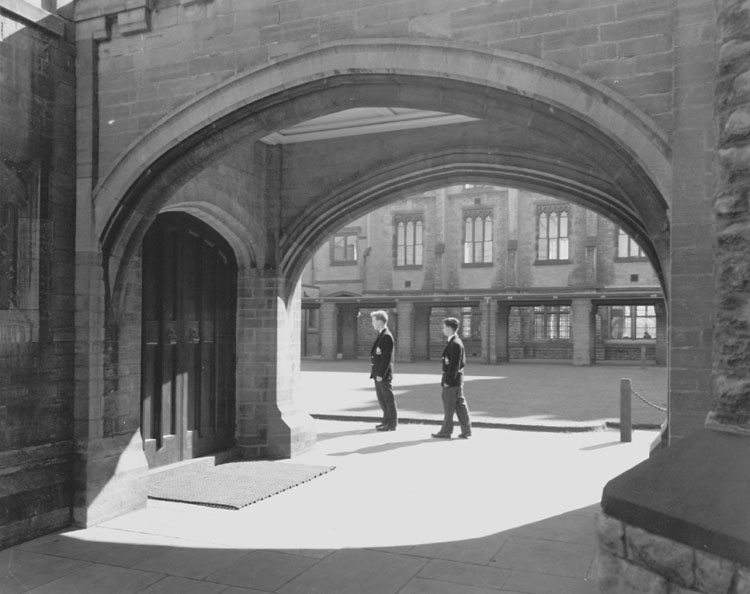
I have also appreciated an unnamed photograph which I have always called “two boys near the Assembly Hall” because it shows two boys who are actually quite near the Assembly Hall:

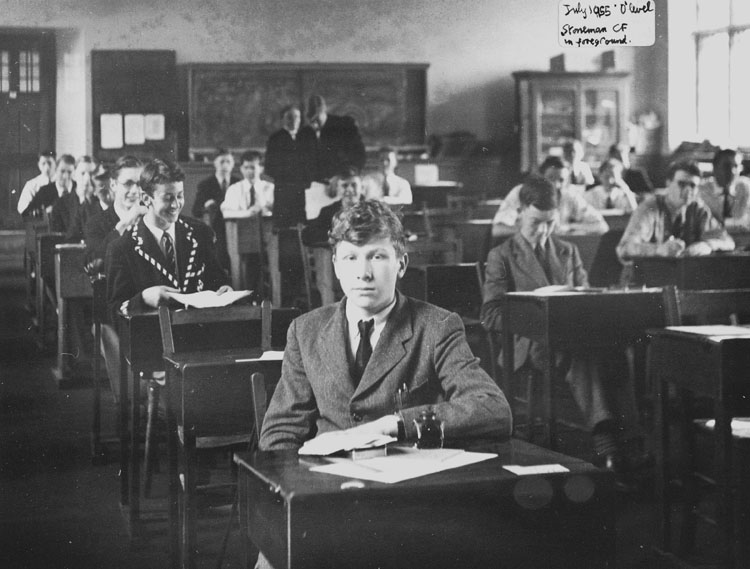
The very best photograph in my opinion, though, is called “July 1955 O-level Stoneman CF in foreground”. It captures all the differing moods of candidates for a really important examination. CF Stoneman does look though, really rather scared, but in a very determined kind of way:

I liked it enough to crop it and change it into a portrait format rather than landscape :

These are both photographs to be extremely proud of.


23 Comments

Filed under History, Nottingham, The High School

Books for Christmas (3)

I thought it might be nice if I gave you an idea of some of the best books that I have read over the past few years so that you could consider them as a Christmas present for one of your friends or family. All of the books featured are, in my opinion, well worth reading. They are all available on the Internet. In some cases, what appear to be very expensive volumes can be acquired for a fraction of the cost, if you go to abebooks or bookfinder, or if you consider the option of buying them second hand. It ‘s something I have never understood, but with some very expensive volumes, it is even possible to buy them brand new at a very much reduced price, again, if you shop around.

First of all, the book that explains all the hidden meanings in two of the great masterpieces of children’s literature. Why do hatters go mad? Which one of their pets did Victorian children often keep in a teapot? where did the Cheshire Cat get its grin?

It’s “The Annotated Alice: Alice’s Adventures in Wonderland and Through the Looking Glass” by Lewis Carroll and Martin Gardner. An indispensable guide to two of the world’s most influential books:

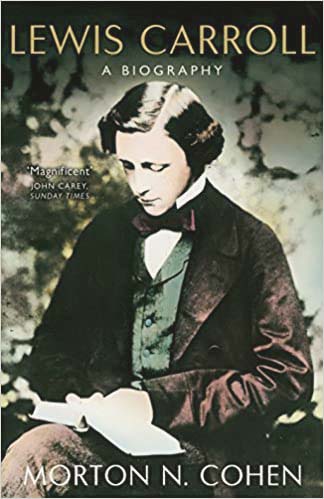
And here, a great follow-up to “Annotated Alice”, the book that is, in my opinion, the best biography of Charles Lutwidge Dodgson aka Lewis Carroll. It’s by Morton N Cohen, and you can pick up this very large book for quite a low price if you buy second hand and choose carefully.
I previously mentioned a book about the cricketers killed in World War Two and here is the much larger book about the cricketers killed in the previous conflict. It was amazing to see just how many upper class men had only ever played two or three games of first class cricket, but, equally, how many of them had a brother, or even two brothers who were also killed in the war. What a slaughter of decent men that dreadful war was:

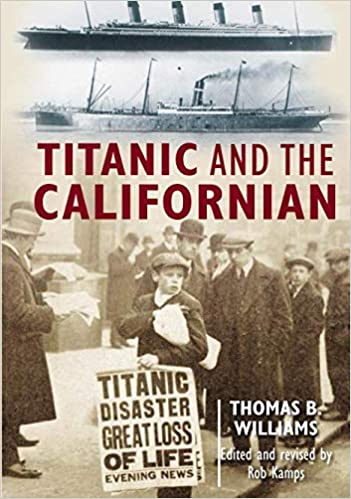
As the Titanic was sinking, the lights of another ship were seen, right on the horizon. This ship, though, did not sail over to help. The press decided the ship was the Californian and then made the life of its captain a living hell. And that was completely without justification according to “The Titanic and the Californian” by Thomas B. Williams and Rob Kamps. A gripping read:
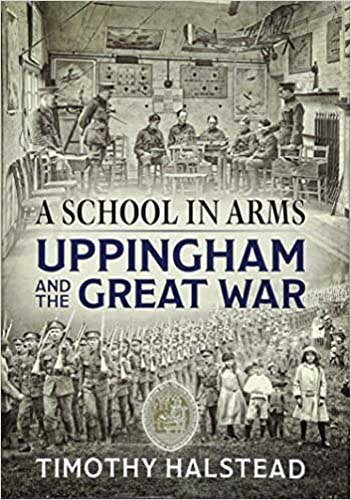
It’s not that long since the centenary of the Great War, when a great many books were published about that appallingly wasteful conflict. Being a teacher of nearly forty years’ standing, I was attracted by the books written about its effects on a number of English public schools. Apparently at Nottingham High School where I worked, the school flag was almost permanently at half mast. And that was far from unique. Such exclusive private schools provided the majority of the junior officers, Second Lieutenants, Lieutenants and Captains. The first two of those three finished with a casualty rate as bad as Bomber Command in WW2. Here are the four I enjoyed most. The first one is from Uppingham School whose website is here
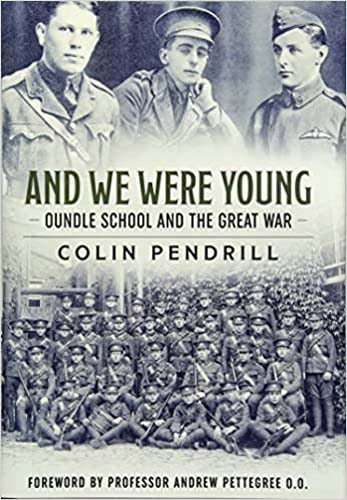
The second one is Oundle. Again, you can see for yourself the school’s website which is here
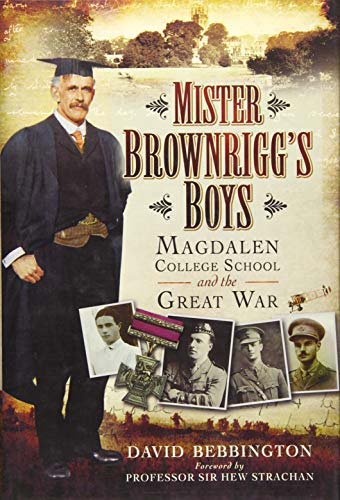
The third book was of Magdalen College School in Oxford with its Headmaster, Mr Brownrigg. Here is its website.
The last one was of a Yorkshire school called Wakefield Grammar. Here is its website.
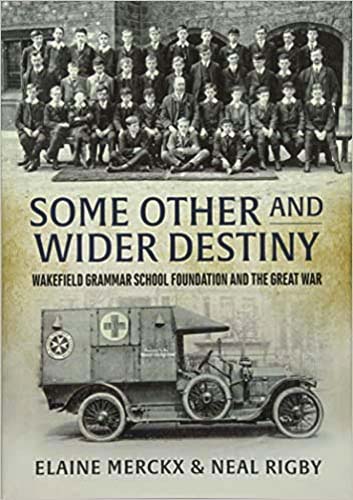
Personally, I thought that Wakefield was the best of the four books, because it contained a lot of interesting details of life at the school at the time. Magdalen was possibly the most poignant, although Uppingham, of course, was the school of the three friends of Vera Brittain, and feature in her book, “Testament of Youth”.

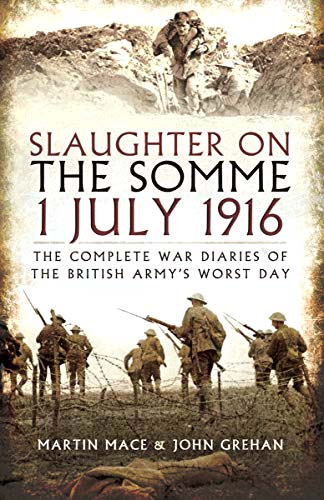
The next book is “Slaughter on the Somme 1 July 1916: The Complete War Diaries of the British Army’s Worst Day” by Martin Mace and John Grehan. This is definitely a book that can be picked up a lot cheaper than its full list price. The book consists largely of the reports of the worst day ever for the British army, written for the most part  by junior officers, who tended to tell the true version of events in plain language. What they recorded is quite simply astonishing. And the best sentence ? “It was apparent that matters were not progressing quite as favourably as had been anticipated.” Understatement or what?  57,470 casualties on the day, of which 19,240 men were killed. And in the entire three and a half month battle, around 420,000 British and Empire men perished.
I have always been fascinated by DH Lawrence, who seems to have been “a most peculiar man”. Of the next four books, I have not read a single one, but I can’t wait to get started. The first is “A MEMOIR OF D. H. LAWRENCE: \’THE BETRAYAL” by GH Neville. Neville used to travel by train to Nottingham High School with the fourteen year old Lawrence.

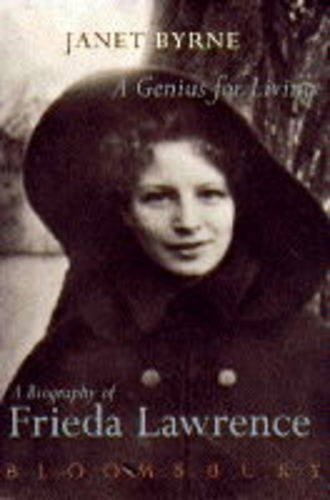
Later in life, Lawrence was to steal away the wife of a university professor at Nottingham, Dr Ernest Weekley. Her maiden name was Frieda von Richthofen, but she then became, eventually, Frieda Lawrence. So far, I have bought “Genius for Living:  a Biography of Frieda Lawrence” by Janet Byrne which may help me understand the behaviour of this very strange woman.
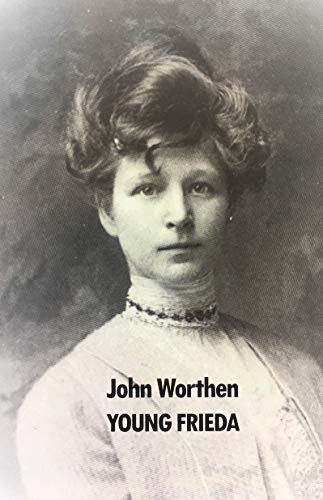
A modern day professor at Nottingham University, John Worthen, has gone as far as to write a novel about that shocking love triangle back in Nottingham in 1912. I am looking forward to seeing how he portrays some extraordinary events.
An outstanding aviation book is “Darwin Spitfires”, a book by a local teacher, Anthony Cooper, about the use of RAF and RAAF fighters against the attacks on Darwin by the Japanese. This one I have already read, and it is a marvellous eye-opener of a book, not to be missed:

“Fire from the Sky: Surviving the Kamikaze Threat” is a study by the American author, Robert C. Stern, of the phenomenon of the Kamikaze attacks on American and Australian ships. It is a superbly detailed book with a very interesting comparison of the kamikaze and the islamist suicide bomber.

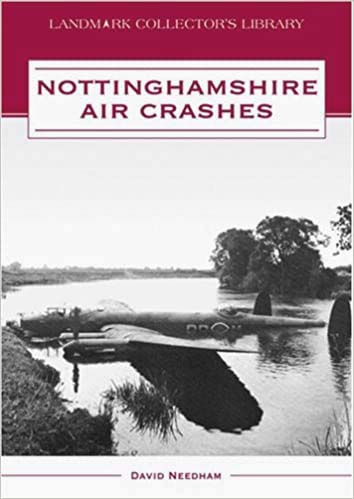
I was surprised to find that the next book was still possible to get hold of as it seems to be so local in its concerns. That point of view is somewhat incorrect though, because the book is really about any one of twenty or thirty counties where there were airbases during WW2. It is a very honest book, and if the behaviour of the locals is disgraceful, then the author is not slow to tell us about it. A little gem.
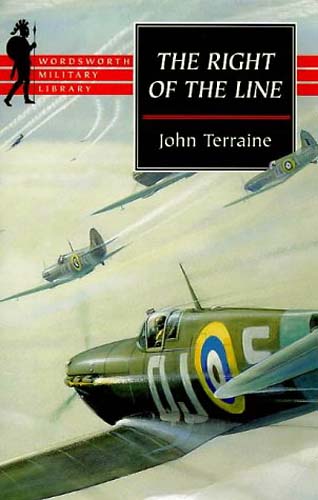
This book, with almost 900 pages and so many heavily reduced second hand copies around, has been described as a bargain door stop but that is a tad cruel.  Indeed, “The Right of the Line: The Role of the RAF in World War Two” by John Terraine is a wonderful reference book about the RAF with every facet of their war explained and examined. Definitely a book to be dipped into, it is a valuable encyclopedia about the events and intentions of the RAF in the Second World War.
So there we are. The best part of forty or fifty suggestions about what to buy the boring old fart in your family for Christmas. And all of them recommended by a fully paid up boring old fart of a blog post writer.

I can even offer you an insurance policy. If all else fails, then buy him a box set. How about this tumultuous tale of a chemistry teacher gone wrong ? Very, very, wrong…..


25 Comments

Filed under Aviation, cricket, History, Literature, military, Nottingham, Pacific Theatre, The High School, the Japanese, Writing

Books for Christmas (2)

I thought it might be nice if I gave you an idea of some of the best books that I have read over the past few years so that you could consider them as a Christmas present for one of your friends or family. All of the books featured are, in my opinion, well worth reading. They are all available on the Internet. In some cases, what appear to be very expensive volumes can be acquired for a fraction of the cost, if you go to abebooks or bookfinder, or if you consider the option of buying them second hand. It ‘s something I have never understood, but with some very expensive volumes, it is even possible to buy them brand new at a very much reduced price, again, if you shop around.

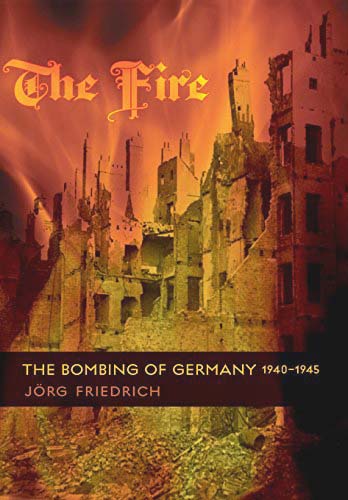
The first book is quite unusual since it is an attack by a German writer on the dastardly deeds of Bomber Command, and presumably, by extension , on the American Eighth Air Force. Jörg Friedrich obviously remembers very well Dresden, Hamburg, Darmstadt, Wurzburg, Pforzheim and so on. He seems to have forgotten the people who invented the indiscriminate bombing of innocent civilians at places such as London and even York Minster in WW1, and then Guernica, Rotterdam, Warsaw and so on. And there are some factual errors.

Overall the book reminds me of the verdict of a German friend of mine about the generation before his own:
“They start a war and then moan about losing it.”

Even so, “The Fire: The Bombing of Germany, 1940-1945” by Jörg Friedrich and Allison Brown is quite an intriguing book. Some of the things he says made me quite angry but perhaps because many of them are things that I have worried about myself, but loyally continued to defend.

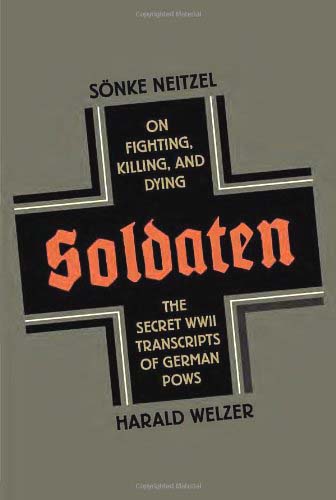
A nice contrast is the book by two German academics, Sonke Neitzel and Harald Welzer, entitled “Soldaten”.  They examine the dreadful, appalling things done by ordinary Germans in World War Two, and then look at whether the Americans in Vietnam or Iraq could have done the same. A really good book, which does not leave you feeling too good about your own morality.

In my previous selection, the best book was either “Subsmash” or “Bombing Germany : the Final Phase”. In this second selection, the book we should all read and take in is “Soldaten”:

It’s quite a contrast with our next book, “Lady Chatterley’s Lover” by DH Lawrence. There are a lot of different editions of this masterpiece, and I would recommend the one which has a preface or introduction by Doris Lessing. Do NOT be tempted by an edition “with extra new added pornography”. In any case, the book is also about WW1 and about the disappearing English landscape.

As you can see, the cover of the best edition has the gamekeeper putting his trousers back on, or, more likely, taking them off yet again.

Perhaps even better to read are Lawrence’s “Selected Stories”. You get 400 pages of his best short stories, including my own particular favourite “The Horse Dealer’s Daughter”.

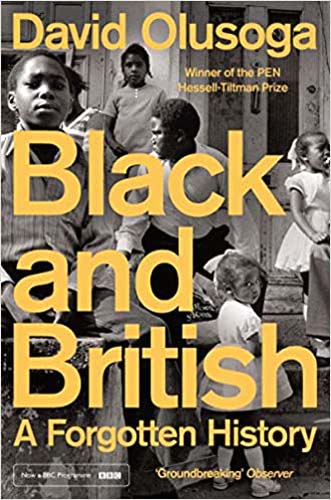
Next on the list is “Black and British: A Forgotten History” by David Olusoga. This book should be a compulsory read in every secondary school in England. How much really interesting history has been hidden away because of prejudice? Black Africans on Hadrian’s Wall, a black man killed by a white mob in Liverpool and the fight to abolish slavery, among many other long avoided stories.

Four books I haven’t read yet, although I’m certainly looking forward to them. Firstly, “Lend-Lease And Soviet Aviation in the Second World War” by Vladimir Kotelnikov. I have looked at the pictures of the P-39s and P-40s with red stars on them, and the Short Stirling, but I haven’t read the text yet. If it’s as good as the illustrations, it will be brilliant.

I haven’t read this book either, although I have read the companion volume about cricketers killed in World War One. It’s “The Coming Storm: Test and First Class Cricketers Killed in World War II” by Nigel McCrery. I have no reason to believe that this book will be anything other than extremely well researched and an interesting read.

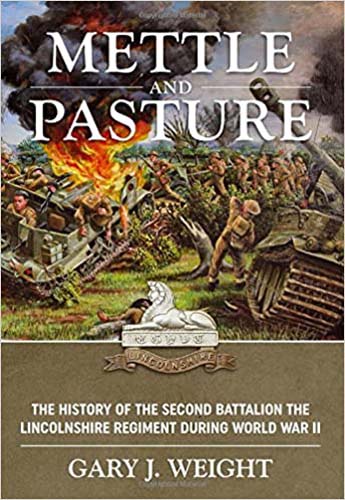
Next book in the “In Tray” is  “Mettle and Pasture”, the story of the Second Battalion of the Lincolnshire Regiment during WW2, written by Gary J Weight. I am hoping it will be a great read. It has certainly got some excellent reviews on amazon.co.uk.
The last book in the “In Tray” is called “Luftwaffe over America” by Manfred Griehl. The author examines the Germans’ very real plans to bomb the eastern seaboard of the United States during the Second World War,  using their Me 264s, Ju 290s and 390s and the Ta 400 from Focke Wulf. As a little boy, I was always intrigued by the fact that, on a trial flight, a Ju 290 supposedly got within ten miles of New York.

That’s all for now. Third and final part next time.


14 Comments

Filed under Africa, Aviation, Bomber Command, cricket, Criminology, History, Literature, military, Politics, Russia, war crimes, Writing

A nice German in Woodville

I have been friends with Chris since we went to Woodville Junior School when we were seven years old, almost sixty years of friendship:

He recently told me the following story. It fits in so well with my previous two posts on this subject of Germans and/or Nazis in Woodville that I would like to include it here. I have kept to Chris’ original words:

“A few years ago my mother told me the story of an event during the Second World War.

One day she came home from work to find a German Prisoner of War in the living-room drinking tea.

My grandfather introduced him as “Gerard”. I imagine his name was actually Gerhardt. My grandfather had met Gerhardt walking up the railway line from Ensor’s brickyard where apparently he was working. (I was not aware that POWs could be required to work for what was to them the enemy but your blog entry confirms that they did.)

“Gerhardt was on his way to Woodville Tollgate to wait for the transport back to the camp, which I think was near Etwall, and given that he had almost two hours to wait, my grandfather invited him in for tea. My mother was horrified since she thought that it was probably illegal to have an enemy POW in the house  – fraternising with the enemy and all that.”

“It transpired that Gerhardt’s ‘plane had been shot down; he and most of the crew bailed out before it crashed. From what I gather, Gerhardt was a reluctant combatant and was quite relieved to be hors de combat. He obviously spoke English, since none of my family spoke German, so he must have been relatively well-educated.”

In any event, Gerhardt finished his tea and went on his way. They never saw him again.

I wish my mother had told me this story years ago because I would have tried to find Gerhardt and see what happened to him subsequently.”

It is by no means beyond the realms of possibility that Chris might have found Gerhardt. If he was born between 1910-1920, he may have lasted beyond the Year 2000. My own Dad was in the RAF in 1941, around twenty years old, and he lasted until 2003 when he died aged 80.

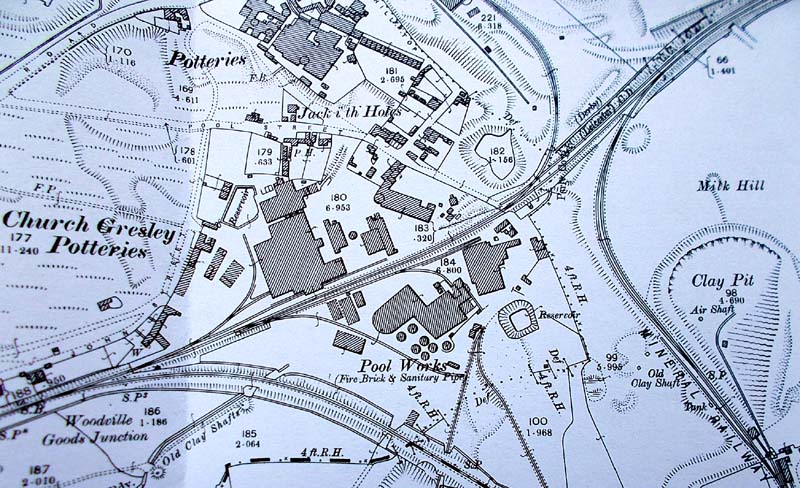
Ensor’s brickworks is long gone, but here is the Victorian nineteenth century map of the area :

The railway whose course Gerhardt was following runs from bottom left to top right and Ensor’s Pool Works is just to the south of the middle of the railway. Gerhardt would have been walking to the north east along the railway.

My friends and I all played in that extremely dangerous industrial area from, say 1962-1968, although by then the Pool Works had been demolished. We did play on the majestic slopes of “Milk Hill” though, which was an enormous pile of clay, made from, I presume, several million tons of the sticky stuff. You can see “Milk Hill” in the middle of the right hand side of the map. And we went down into the clay pit as well, which was even more dangerous, because of the lakes of wet clay with a deceptive thin dry crust on top. And if there was one “air shaft”, there would have been more. Still, just like many boys, and indeed fully grown men, (if there is such a thing) “Danger is my middle name”.

At the middle of the top of the map is “Jack i’ th’ Holes” which is a very strange name and, to me, has supernatural connotations, Jack very often referring to Satan himself.

On the map the seven  little  circles in the Pool Works are circular kilns. Here is a picture taken in the Pool Works showing some of them. When he left school, my Dad, Fred, aged then only thirteen or fourteen, worked as a junior in the offices at Ensor’s Pool Works. He is standing to the right of the man with the shovel. Notice how two men have climbed one of the kilns to be in the photograph :

In later years, Fred was not the only person to be disgusted that Freckleton, the son of the business’ owner, was to remain at home throughout the Second World War, hiding his cowardice behind the spurious claim that his job was a reserved occupation. It wasn’t.

Some time before the outbreak of the war, Fred was to witness an incident when a workman, for some unknown reason, had hit Freckleton hard in the face, and knocked him backwards into a puddle. Freckleton was drenched with muddy water and his magnificent suit was ruined.

Needless to say, the workman was dismissed on the spot, and, given the connections which existed between factory owners at this time and were renewed every time there was a Freemasons’ meeting, he was unable to find work anywhere in South Derbyshire ever again.

Incidentally, I did a little research about the location of the Prisoner of War camp, and found that there were a number in the area, along the side of the River Trent, where digging tunnels was more likely to result in death by drowning than freedom. Sites included the Weston Camp in Weston-on-Trent (top right), but the likeliest site for Gerhardt, in my opinion, was the section of Weston Camp in King’s Newton. Here’s the Orange Arrow, Herr Orange Pfeil, released early for good behaviour. Woodville is bottom left:

It’s funny looking at that map, which is perhaps ten miles square. I spent all of my life until I was eighteen in Woodville, yet I’ve never ever been to Twyford or Ingleby or King’s Newton or Newbold or Coleorton or Heath End. I was once on a bus going through Peggs Green, and it was so countrified that when an old lady that the driver expected to be at the bus stop wasn’t there to catch the bus, he went and knocked on her door to tell her to hurry up, or he’d have to leave her.

33 Comments

Filed under Bomber Command, History, Personal, Politics