Category Archives: Nottingham

The Carvings in the Tower (8)

John Michael Taverner Saunders was born on March 14th 1922. His father, Mr W Saunders was a commercial traveller, and the family lived at Park View in Redhill, a suburb of Arnold to the east of the Mansfield Road:
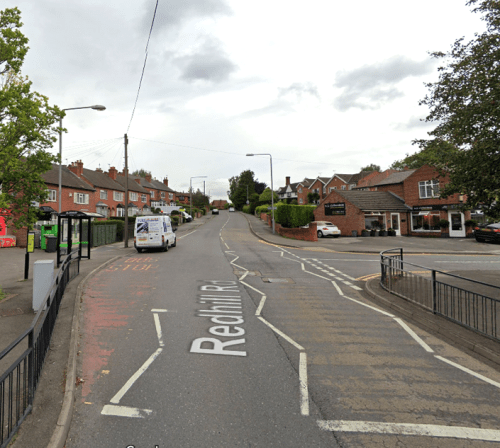
John was one of the young men who carved their name and message on the window sill in the High School’s Tower:

John entered the High School on September 18th 1930 as Boy No 5459.

He was only eight years of age.

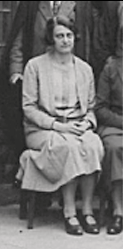
He passed through a succession of teachers and forms. First Form D with Miss Webb. Here is the best photograph of her I could find:
Then it was First Form B with Miss Baker. And First Form A with Mr Day and the School Nature Study Prize. Then the Second Form A with Mr “Tubby” Hardwick, badly gassed in WW1. Third Form A with Mr Gregg and Upper Fourth Form A with Mr “Beaky” Bridge, a very strange man. Here he is on the left:

Then came the Lower Fifth Form A with Mr “Fishy” Roche and then the Upper Fifth Form Classical with Mr “Uncle Albert” Duddell. Here he is:
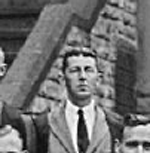
Teachers and forms pass by with the years. Firstly the History Sixth Form with Mr Gregg, and then, in his second year, Mr Beeby. And very soon, May 20th-21st 1940, John was looking for German parachutists and carving his name.

John received four different scholarships because his parents sometimes struggled with the fees. He was a Dr.Gow Memorial (Special) Exhibitioner and an Agnes Mellers Scholar and a Foundation Scholar and the taxpayer also awarded him a Nottinghamshire Senior Scholarship.

His prize record included the SE Cairns Memorial Prize, Mr Durose’s Prize for History, the Cusin’s Memorial Prize for History, the Bowman-Hart Prize for Music and a Bronze Medal for Reading. He was a Prefect and in the Junior Training Corps he became the Company Quarter-Master Sergeant and then Company Sergeant Major. In sport, he won his First XV Colours at rugby as:

“an improved player and solid scrimmager. A front row forward who gets through a great deal of hard and useful work in the course of a game.”

Here’s his final record from the School List:

John left the High School in July 1941 and eventually finished up with the Royal Artillery. They, of course, had a very large selection of guns, including these giants, designed to bombard the enemy from long range :

This smaller weapon is an anti-tank gun:
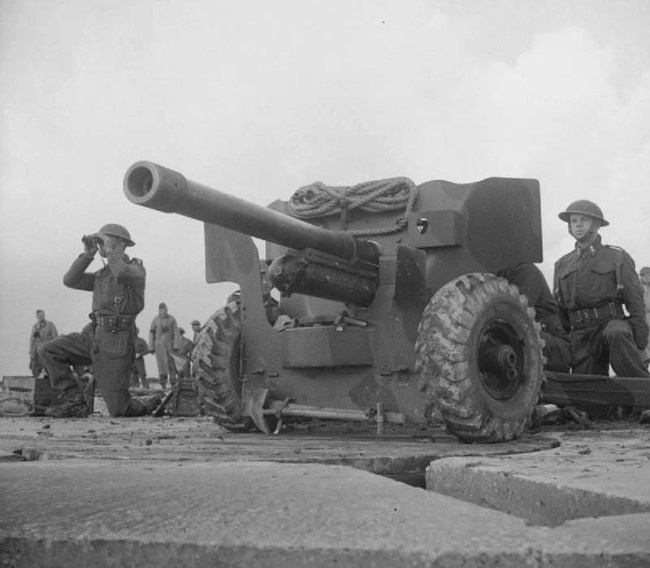
And this is an anti-aircraft gun :
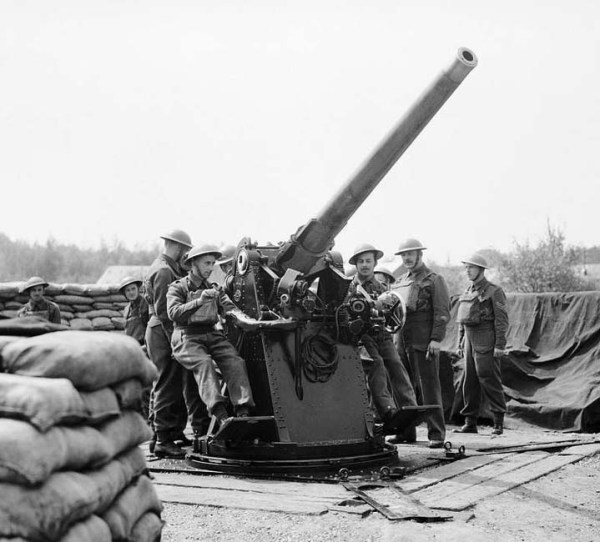
John was involved in fighting through the Netherlands, as the British Army tried to rescue the paratroops who had captured the Arnhem bridge but were now surrounded and cut off . Did he realise that fellow Old Nottinghamian, Tony Lloyd, lay in Kate ter Horst’s house in the town, one of 57 paratroopers given a temporary burial in a mass grave in the house’s garden?

And then John played his part in Operation Plunder, the crossing of the River Rhine at a small town called Wesel, all of it organised behind an impenetrable week long smoke screen. Did John Saunders ever realise that two of his schoolmates would die within just a few miles from him? Arthur Mellows (1931-35) and John Hickman (1934-37)? Here’s what was left  of Wesel at the end of World War Two:

John survived the war, but despite my best efforts, I could find no more mention of him until February 12th 2013 when he passed away peacefully in his sleep. On March 1st 2013, he was cremated at Macclesfield Crematorium with all donations in lieu of flowers to be made to SPANA (the Society for the Protection of Animals Abroad). He left behind him three daughters, six grandchildren and one great granddaughter.
20 Comments

Filed under History, military, Nottingham, The High School

The Carvings in the Tower (7)

Richard Furley Mellor was one of the young men who, in May 1940, climbed up into the Tower of Nottingham High School, and left their names and message carved into the stone of one of the windowsills:

Richard lived at 26 Ramsdale Crescent in Sherwood.

He was the son of a lace manufacturer called Edwin Mellor who had been a high-flying factory owner in Nottingham around 1900. In 1908 Edwin became the Sheriff of Nottingham and in 1912, the Mayor. Richard, born on April 7th 1922, entered the High School on September 18th 1930. He left in March 1937 but returned in September 1938, leaving for good on July 29th 1941, more or less a year after he carved his name and message on the stone window sill in the High School Tower.

While he was at the High School, he had three different scholarships.  He also won a State Bursary in Science. Richard was a School Prefect and a corporal in the Junior Training Corps. He eventually finished by winning an Open Exhibition and the Kitchener Scholarship to read Science at Jesus College, Oxford:

During the war he was a Lieutenant in the Royal Navy, having entered the service via the Royal Naval Volunteer Reserve. He married Dorothy Mary Mellor in 1946, and stayed on in the Navy after the war, rising to the rank of Commander. From 1978 onwards, he was an aide-de-camp to the present Queen.

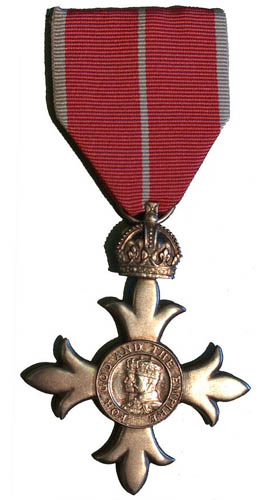
On an unknown date he was awarded the VRD, which is the Volunteer Officers’ Decoration and is awarded to Officers of the Royal Naval Volunteer Reserve. From 1908-1947, the medal compelled you to have the initials “VD” after your name, but after many complaints this was eventually changed to “VRD”. The decoration was usually given to part-time commissioned officers in the United Kingdom’s Royal Naval Volunteer Reserve after twenty years of service as efficient and thoroughly capable officers. In the Queen’s Birthday Honours List for June 17th 1995, Richard was admitted “To be an Ordinary Member of the Civil Division of the Most Excellent Order of the British Empire:


At the time he was Vice Chairman of the Avon Family Health Services Authority and he was rewarded “for his services to Health Care”.

Richard died peacefully in 2010 at the age of 87.


13 Comments

Filed under History, military, Nottingham, The High School

The Sandiacre Screw Company (3)

Last time we were following Keith Doncaster’s progress through the High School, with two unmarried women teachers in the Preparatory School (which was as the rules demanded. As soon as women teachers got married, they were forced to resign.) After a spell with Messrs Day and Hardwick, Keith remained in an “A” Form in 1936-1937. This was the Third Form A with Mr Beeby. This Form of 28 boys had seven ex-Scholarship holders but only one of the previous year’s seven had retained his award. Here’s a very poor picture of Mr Beeby. He is right in the middle of the group:

Mr Beeby soon left the High School to join the RAF. He was absent from at least September 1941-1946. Flying Officer Beeby served in the Signals Unit of the Technical Branch who carried out all kinds of electronic warfare and radio counter-measures including the blocking of the famous German Very High Frequency bombing system called “Knickebein”. This was all “Top Secret”, of course. Mr Beeby certainly would not have been able to discuss what he had been up to with his pupils in the Air Training Corps. He might even have been associated with code breaking. Lots of codebreakers were recruited among the top Classics and Mathematics graduates at Cambridge. Here’s the equipment the Germans used for “Knickebein”:

Keith didn’t win a prize or a scholarship this year and he came 23rd in the Form. This was  sufficient reason to relegate him into a “B” Form the following year, the Upper Fourth Form B with Mr Kennard. This Form had 27 boys and sixteen of them opted to join the OTC, the Officers’ Training Corps, including Keith, who finished the year seventh in the Form. In 1938-1939, Keith was in the Lower Fifth Form with Mr Parsons. Here’s Mr WA Parsons, one of the two Masters in charge of cricket. He was universally known as “Wappy”. Right next to him is Bruce Richardson who lived in the big house diagonally opposite Oxclose Lane Police Station at the junction with Edwards Lane. Four years after this photograph was taken, “Farmer” Richardson would die on the perimeter of Dunkirk, trying to buy time for the British Expeditionary Force to get back across the Channel. It wasn’t called “Operation Certain Death” but it might just as well have been:

There were 21 boys in the Lower Fifth Form, 15 of whom were in the OTC, including Keith. Indeed, we still have a photograph of the OTC taken during the calendar year of 1939 and Keith is on the left hand end of the front row, as we look at it. Despite his physical age of either 15 or 16, he looks almost boyish, rather thin and rather delicate. There are a couple of boys who look less adult than him, but of the 26 individuals in the photograph, there are more than twenty who seem so much more physically prepared to leave the High School than he appears to be. In the end-of-year examinations, by the way, Keith finished a respectable sixth:

Here is Keith in close up:

The next year, 1939-1940 was Keith’s last in the High School. He spent it with Mr Thomas in Fifth Form B. There were 26 boys in the Form. Here’s Mr Adan Thomas in later years, in a superb photograph taken by the Reverend Stephens:

Keith does not seem to have taken his end-of-year examinations and he is not recorded in the School List for the Form, even as an “X, not placed”. The situation is rather strange because the School Register says that his departure occurred on July 30th 1940, which was presumably the last day of the working term. So why did he not take the School examinations?

There is some indication, though, that Keith took, and passed, his School Certificate this year and that may have had some connection with it.

Keith did achieve three very important things during this year, though. He became a OTC A/cadet (an air cadet), and he was promoted to Lance Corporal. He also passed the all-important OTC Certificate “A”. With that, he took one more step towards his premature death:


20 Comments

Filed under Aviation, cricket, History, military, Nottingham, Science

The Sandiacre Screw Company (2)

Ivan Keith Doncaster, usually known as Keith, began his education at Wellington Street Infants’ School in Long Eaton, built as recently as 1911 for 320 girls and 320 infants.

Keith left his local school and moved to the High School on May 2nd 1933. Just nine years of age, he was Boy No 5701 and he went straight into Hardy’s House and First Form C with Miss Richmond. There were 28 boys in the Form and Keith, very much a latecomer to the school year, finished an extremely creditable tenth. Here is a  fairly poor picture of Miss Richmond:

The following year it was First Form B with Miss Baker. Of the 21 boys, Keith came 11th. Here is Miss Baker, in between Mr Kennard and Mr Bridge, a pedagogical rock and a hard place.

Here’s a picture of Miss Baker a few years later:

The next year Keith was in First Form A with Mr Day, who, tragically, was to die of pneumonia on March 25th 1935, just before the end of the Easter Term. Mr Page took over his form. During that same year of 1934-1935, Miss Richmond had already passed away from pneumonia on January 7th. Keith finished fifth of the sixteen in the Form and also won the Preparatory School Drawing Prize.

Outside the classroom, Keith was in the Preparatory XI team for the “Preparatory Schools Spelling League Competition No 23”, although I couldn’t find out how he fared.

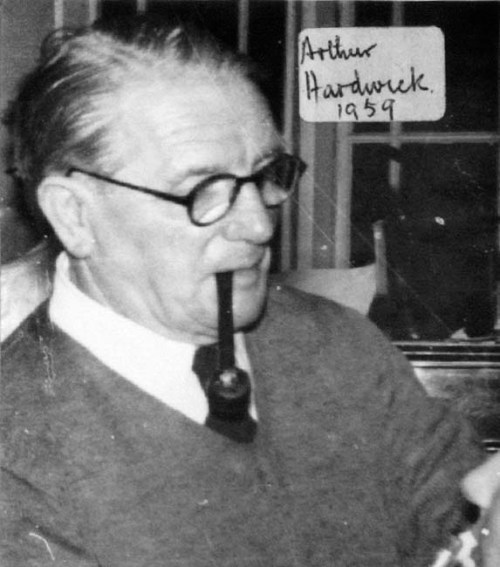
In 1935-1936, Keith was with Mr Hardwick in Second Form A. Here is Mr Hardwick in 1959, a picture taken by the Reverend Stephens:

Keith was now in a Main School house, Maples’, rather than Hardy’s House. There were 28 in the Form and Keith came 21st, not a disastrous result in a form which contained seven Entrance Scholars and Foundation Scholars and the winner of the Second Forms French Prize, Peter Robert Scott. This year, Keith found true fame by having a short poem featured in the School Magazine. It was entitled “Poetry” and this is how it went:

Poetry

“I’m not a Poet

And I know it.

The next line will take some time.

Now I’ve started,

All thoughts have parted

From my head,

So now I think I’ll go to bed.”

Next time, another poem published in the Nottinghamian. You will not be able to read it without putting on your salty sea dog accent. Or even, perhaps, pirate.


6 Comments

Filed under History, Humour, Nottingham, The High School

The Sandiacre Screw Company (1)

This is the first of  twelve posts which will tell the story of Keith Doncaster. They will appear over the course of, probably, a year, and I would encourage you to read them all. Keith was just one of the 119 young men from Nottingham High School who perished in the fight to save England and freedom during World War 2. I have found out more about Keith than any other casualty. What I did find is a wonderful advertisement for the evils of war, as what may well have been just one cannon shell from a night fighter, ultimately, deprived thousands of people of their livelihoods, in one of the very few large factories in a small town in Derbyshire called Sandiacre.

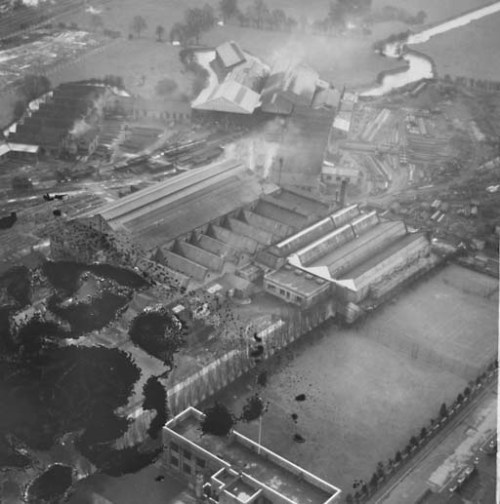
Ivan Keith Doncaster was born on October 17th 1923. His father was Raymond Doncaster who was an engineer. Ray’s father was Sir Robert Doncaster, the founder of the Sandiacre Screw Company, one of the biggest firms in the Nottingham area, with enormous and extensive premises on Sandiacre’s Bradley Street:
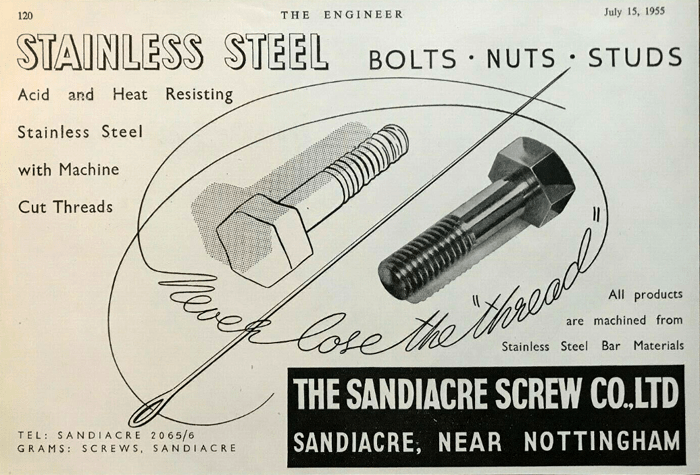
Here’s one of their adverts:

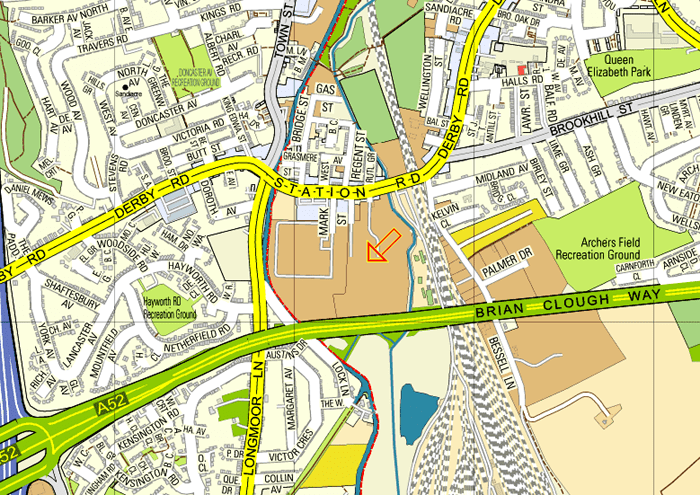
And a map shows how big the factory was and how many people it must have provided with employment. The orange arrow points to only some of the pale brownish area occupied by the factory. Nottingham is to the east:

The Doncaster family lived in a very large house in Longmoor Lane in Sandiacre, a small town of some nine thousand inhabitants, almost equidistant from Derby and Nottingham and to the east of Junction 25 of the M1.

Keith’s mother was Evelyn Mary Fell. Keith’s father Ray Doncaster served in the army during the First World War, eventually becoming a Lieutenant in the Army of Occupation of the Rhine. His elder brother, Robert Ivan Doncaster, had been killed in action on the First Day of the Battle of the Somme on July 1st 1916, only 50 days after he arrived in France. He is buried in Authuille, three miles north of the town of Albert.

When he returned in 1919, Ray became Assistant Works Manager of his father’s company. He then became Works Manager, eventually replacing his father as Managing Director. He retired during the 1960s. It does not take a fortune teller to work out that, had he lived, Ray’s only son, Ivan Keith Doncaster, would himself one day have acceded to that position and the factory would have gone on, providing money, food and accommodation for countless numbers of people not just in the town, but from the densely populated area around. Instead, Keith did not come back from his war in Bomber Command and, during the 1960s, the company just disappeared, taking perhaps thousands of jobs with it. And just one cannon shell would have been enough to bring Keith Doncaster’s Lancaster down.
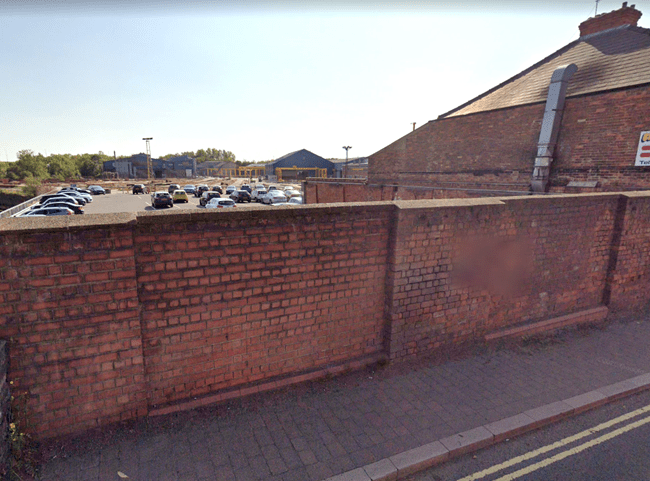
Here and there a few red brick buildings remain. And a few walls. They are all that is left of the Sandiacre Screw Company nowadays:

26 Comments

Filed under Aviation, Bomber Command, History, military, Nottingham, The High School

They win. Zu Lus (2)

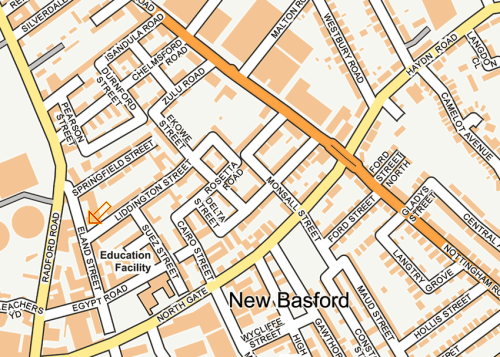
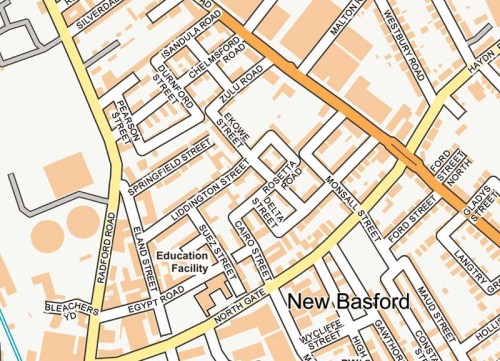
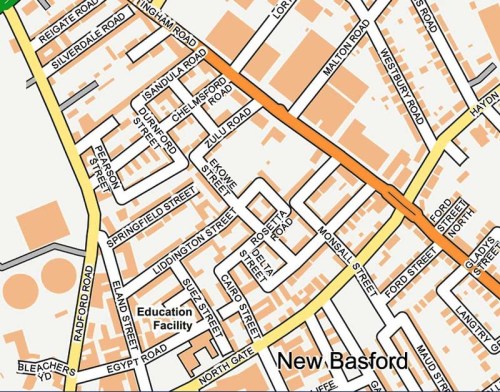
As well as the Egyptian quarter, a number of streets in New Basford in Nottingham are named after the Zulu War of 1879.  As far as I can tell, in this area, there are seven of them, namely Chard Street, Chelmsford Road, Durnford Street, Ekowe Street, Isandula Road, Zulu Road and perhaps Eland Street.

What is most amazing about these streets is that they represent, as far as I can tell, a kind of salute to the Zulus, who were, as I mentioned previously, one of the finest and most valiant of all the opponents of the British Army. The Battle of Isandlwana, or Isandula, for example, was the greatest defeat ever suffered by British soldiers against a native force armed with their traditional weapons.

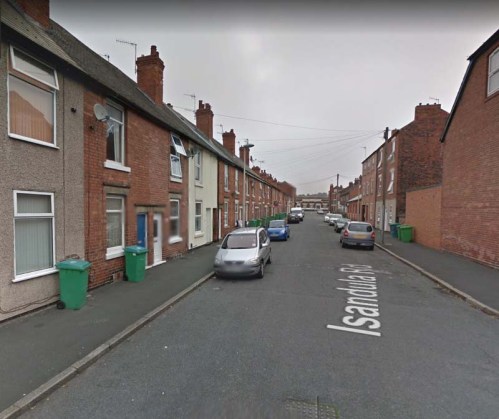
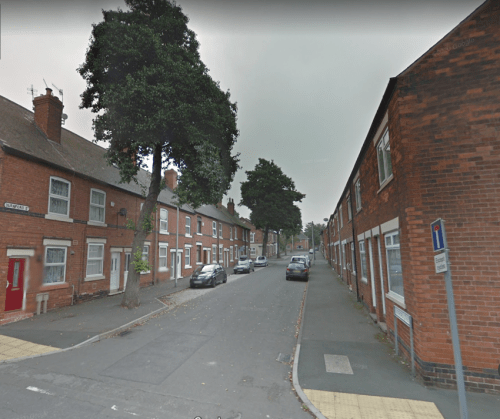
And the Zulus were trustworthy, too. King Cetshwayo tried as best he could to avoid war and told his men not to kill anybody who was not dressed in a red coat and therefore could not be identified with any certainty as a British soldier. He told them not to cross the border into Natal in pursuit of Chelmsford’s defeated forces. The Zulus stuck to both of these promises they had made to their king. Men in dark blue or green uniforms, such as in the Hale rocket battery, were allowed to walk away in peace, and not a single Zulu pursued the remnants of the defeated British army into Natal. If they had done, as Prince Ndanbuko urged them to, there would have been every chance of another stunning victory over the British Empire. Here’s Isandula Road:

So when we walk down Isandula Road, we can all remember that this Victorian street is a memorial to the Empire’s greatest ever native opponents.  Had Isandlwana been an easier word to pronounce, of course, the street would have been called Isandlwana Road.

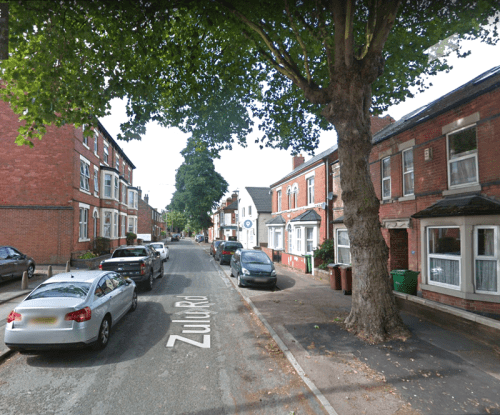
And I really do stick by the idea that this road was a monument to the Zulu warriors. There is only one Isandula Road in the whole of England so it must have been very important name to whoever made the decision to have a road dedicated to the British Empire’s gallant opponents. The same can be said of Zulu Road. There is only one of those in the whole country too :

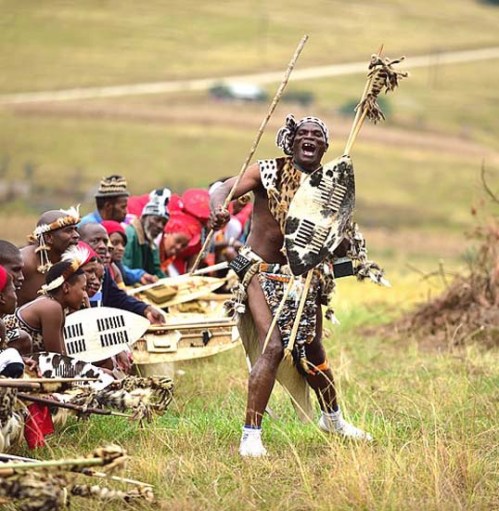
I kept my eyes open for a Zulu or Tu, but I saw nothing. Here’s a modern Zulu, dressed up for the tourists, with all his friends:

He’s parked his car on the road in the background, which is quite a long way away. No wonder he’s had to keep his best trainers on.

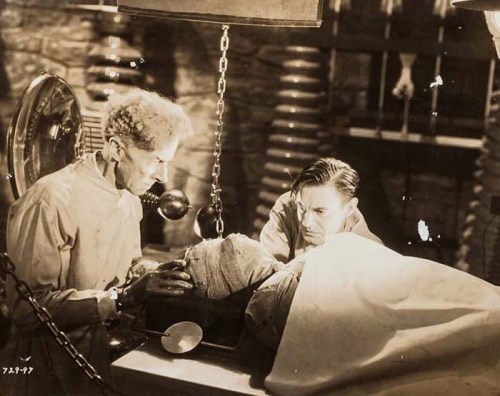
By 1880, people in England were well aware of whose fault the calamitous defeat at Isandlwana was. It was Lord Chelmsford’s, so a road named after him must have served as much as a reminder of his failures and his shortcomings as a monument to his military genius. I would think that nowadays Chelmsford would be more famous as the uncle of Ernest Thesiger, the actor (left) who worked with James Whale in the latter’s Frankenstein films :

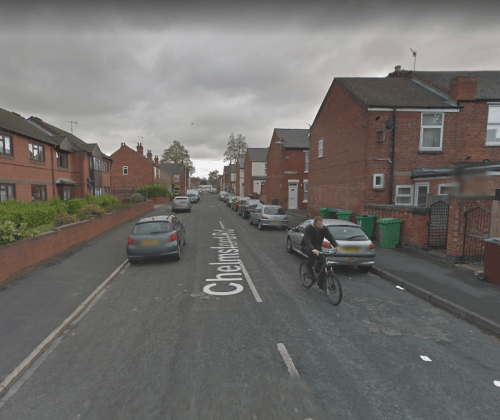
Here is Chelmsford Road, with Lord Chelmsford making good his escape from Isandlwana on his trusty bicycle:

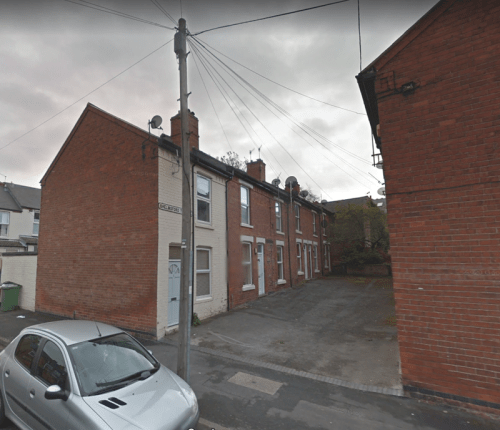
Chelmsford Road may not look as if it is 140 years old, but it does have one feature that is straight from the 1880s. That is the arrangement of four, or perhaps six, houses, in a short row, all of them typical small working class “two up, two down” terraced houses. These four/six houses are opposite  an identical set of houses, with, in this case, a concrete courtyard between the two rows. The more usual pattern was to have the outside lavatories situated in the middle of that courtyard, equidistant from each set of houses. In the golden days of the earth closet, this must have given life a very distinctive flavour, particularly in the summer.

This particular set of houses is called “Chelmsford Terrace” in honour of the great man.  This particular section of Chelmsford Road has other sets of houses like these, one called “Rene Terrace”, and another, “Iris Terrace”:

Here is Durnford Street, all of it:

Anthony Durnford was one of the two subordinate commanders killed at Isandlwana (the other was Henry Pulleine). Chelmsford was quick to blame Durnford for disobeying his superior’s orders to set up a proper defensible camp, although there is actually no hard evidence whatsoever that Chelmsford ever issued such an order. Nevertheless, Durnford can be regarded as a rather unsuccessful soldier, just like Chelmsford. He was also Irish, so, by the racist attitudes of the time, he was an easy man to blame. He was also dead, so he couldn’t argue with any of Chelmsford’s lies.

Chard Street is not always marked on street maps for some reason. It runs at right angles to Isandula Road, Chelmsford Road and Zulu Road. It is marked by the Orange Arrow’s “New Friend”, the Red Hot Air Balloon:

Here is Chard Street. It certainly has a Zululand feel about it:

John Chard is really the only heroic figure in this war to have a street named after him. He was the commander at Rorke’s Drift. He was played by Stanley Baker :

Chard’s second-in-command was Gonville Bromhead, now better known as Sir Michael Caine. Sadly, there was no street named after him. Bromhead was, in actual fact, an Old Boy of Magnus Grammar School in Newark-on-Trent:

There is also an Eland Street fairly close by.  This street probably fits in with all of these other South African links. An Eland is a large antelope which would surely have provided food for members of both armies.

Here is the map for Eland Street, which has an Orange Assegai at its northern end.

Ekowe Street is named after another incident in the Zulu War of 1879…….

On the very same day as the defeat at Isandlwana,  6,570 British soldiers armed with rifles, rockets and field guns managed to defeat a Zulu army of around 10,000 men armed with assegais and cowhide shields. They occupied Ekowe, where they were then besieged by the Zulus for ten weeks before a British army of 5,670 men came to the rescue with their two 9-pounder guns, four 24-pounder Congreve rocket tubes and two Gatling guns. You can see a rocket being fired in this picture:

Incidentally, I cannot find any connection for Liddington Street, Monsall Street or Pearson Street.

Just look though, what rich roots many English street names have.

Just look at the map above. “Ford Street North” where one of Henry Ford’s brothers was probably born. “Camelot Avenue” where Queen Guinevere and Sir Lancelot first fell in love. “Langtry Grove”, probably the  birthplace of Lily Langtry, the mistress of the future King Edward VII and the woman who had a saloon named after her by Judge Roy Bean, “The Only Law West of the Pecos”. Here’s the judge, and the saloon. You can just see the bottom of the letters of “JERSEY LILLY” at the very top of the picture:

And last, but certainly not least, Springfield Street, where Homer Simpson used to live before he left for his new life in television.

18 Comments

Filed under Film & TV, History, Humour, Nottingham, Wildlife and Nature

They win. Zu Lus (1)

Recently we looked at how names have been given to the streets and roads of England. I told you too about the Egyptian quarter of Nottingham, where the streets are paved with compacted sand and camel droppings. All of this was in one particular working class area of Nottingham called New Basford, if you remember, and it had Cairo Street, Delta Street, Egypt Road, Rosetta Road and Suez Street.

I voted to have a “Hutt-hutt-hutt” Street, because “Hutt-hutt-hutt” is what you always say if you are riding a camel and you want it to go a lot, lot faster, rather like fighter pilots always say to themselves “light those afterburners NOW”. My suggestion of “Hutt-hutt-hutt” Street was turned down by the Nottingham City Planning Department (Street Names) because they said that it would cause total chaos if there was ever a person riding a camel at the T-junction with Nottingham Road and a pedestrian who was slightly deaf went up and asked the rider loudly :

“Excuse me, mate, but do you know where HUTT-HUTT-HUTT Street is please?”

Arguably though, the streets further to the north are even more interesting, not least because they are almost completely free of references to any of the Camelidae or indeed, the Giraffidae . Instead, the street names there commemorate the stunning victory by the Zulus over the British Army at Isandula or Isandlwana, during the Zulu War of 1879. It was the greatest victory by a native army over a Western European army since the Germans beat Quinctilius Varus in the Battle of the Teutoburg Forest in 9 AD. This map has Egypt Road and Suez Street at the very bottom left, along with the other Egyptian streets,  but then, there are five references to the Zulus a little further to the north:

These six streets in New Basford, then, are again connected with Africa, but this time with the south of the continent rather than the north. The names are perhaps a little more difficult to understand, and they require a fairly detailed knowledge of the war that the British fought against the Zulus under King Cetshwayo in 1879. Common place knowledge in some households, of course, but let me just refresh everyone’s memory. Here is the king, full name “Cetshwayo kaMpande”.

So, how did the war break out?

Well, basically, the British wanted to add Zululand to their Imperial Portfolio, so, on December 11th 1878, they gave the Zulu King Cetshwayo a set of demands which they knew he would never agree to. These included that the Zulu army be disbanded and the men allowed to go home and that the Zulu military system be discontinued. That was like asking the Irish to give up Guinness.

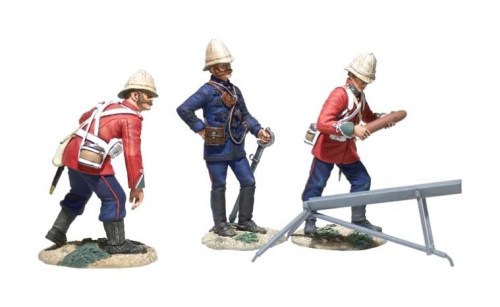
Meanwhile Lord Chelmsford had assembled an army of 18,000 men which marched into Zululand on January 11th 1879. On January 22nd 1879, part of that force, around 2,000 men, were attacked by 20,000 Zulus in what came to be called the Battle of Isandlwana, although it is also called the Battle of Isandula. The Zulus had their traditional, iron, assegai  spears and cow-hide shields, and the British had the outstanding Martini–Henry rifle and two seven pounder field guns, as well as a Hale rocket battery. The Zulu wars are beloved of wargamers, and this is the plastic model version of a rocket battery:

Normally, in a contest between rifles and spears and arrows, the European army would be expected to cope quite comfortably with odds of up to 200-300 to one, depending on the circumstances. Not here though. And people have been arguing ever since,

“Why?”, “Why did the British lose?”

The Zulus triumphed though, and Lieutenant-Colonel Anthony William Durnford is the man who is frequently blamed for the fact that this was the greatest defeat ever suffered by British soldiers against a native force armed with their traditional weapons.

After the battle, some 4,000 men of the Zulu “impi” (or regiment) called the “Undi impi” crossed the river and went off to attack Rorke’s Drift. The 150 or so men at this fortified mission station were commanded by Lieutenants John Chard of the Royal Engineers and Gonville Bromhead, the latter an Old Boy of Newark Magnus School in Nottinghsmshire.

The events there were subsequently portrayed in the film “Zulu”. Stanley Baker played John Chard:

And Sir Michael Caine played Gonville Bromhead. Not many people know that.

After Isandlwana, the British army was heavily reinforced and invaded Zululand for a second time. Sir Garnet Wolseley was sent to be in charge, but Chelmsford deliberately avoided handing over command to him. This time, Chelmsford managed to defeat the Zulus in a number of engagements, the last of which was the Battle of Ulundi on January 4th 1879. Soon afterwards, Chelmsford’s British army captured King Cetshwayo. At last, the British were victorious, although everybody was well aware who the real warriors were.

Next time: “The Mean Streets of New Basford in Nottingham” aka “The British salute the gallant losers”.

Incidentally, my Australian friend, John Corden, recently wrote a blog post about street names in Australia. It is a really good read and you can find him here. And, if you like his post, try writing something in his Comments section.


20 Comments

Filed under Film & TV, History, Humour, Nottingham, Politics

The Carvings in the Tower (5)

Robert Michael Gunther (line 5 of the picture below) was one of the young men who, in May 1940, had climbed up into the Tower of the High School and carved their names and their message on a window sill. When the group did this, they could have had no idea how the war would turn out, whether the Germans would cross the Channel and occupy the country, or whether the British forces would manage to fight them off :

Robert lived at a house called “The Haven” in Burton Joyce, a village which is to the north of Nottingham, on the River Trent. He entered the High School on April 24th 1924. Robert won Mr Player’s Prize for Arithmetic (Intermediate) in 1938 and passed his School Certificate in 1939, just a year before he carved his name and message on the stone window sill in the School Tower.

In the OTC, he became a Lance Corporal and then a Corporal in 1938. He won the Certificate ‘A’ prize in 1939 and soon became Company Quarter-Master Sergeant and then Company Sergeant Major. In 1940, he was the most efficient senior NCO and the Commander of the Most Efficient House Platoon. A School Prefect, Robert won his First XV Colours and Cap, and captained the school rugby XV in 1940-1941:

“An exceptionally good leader, he also has shown himself outstanding in all departures (sic) of forward play.”

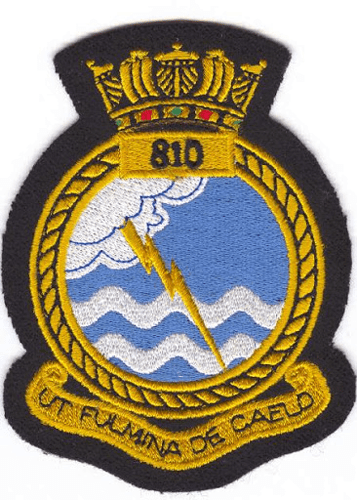
Robert left the High School on Christmas Eve, 1940. He joined the RNVR (Royal Naval Volunteer Reserve) and by 1942 he was a member of the Fleet Air Arm. He was trained at HMS Kipanga in Kenya and then at HMS Ukussa in Ceylon (Sri Lanka). He then joined 810 Squadron. The motto means “Like lightning from the sky”:

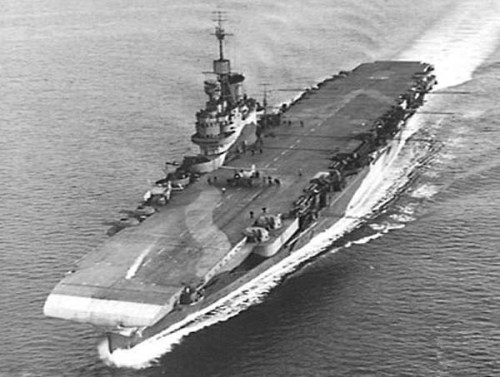
810 Squadron, Robert included, flew off the aircraft carrier, HMS Illustrious:

At the end of the academic year, in July 1944, the Nottinghamian carried the following message:

“We regret to announce that the following Old Boys have recently been reported “Missing”, and we hope that good news of their safety will soon be received: RM Gunther (1934-40) and FL Corner (1932-39)”.

The Nottinghamian said that Bob Gunther had disappeared during a routine flight over the Indian Ocean in June 1944. In actual fact, he had been shot down while acting as observer in a Fairey Barracuda during a bombing raid on Port Blair in the Andaman Islands.

The Andaman Islands are here:

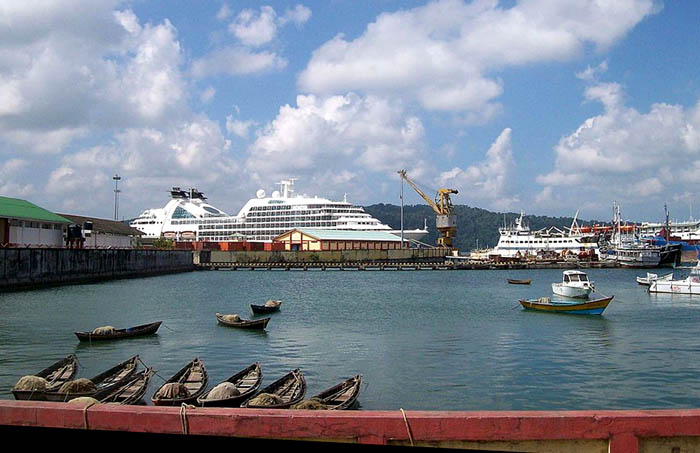
Here is Port Blair:

And here is a Fairey Barracuda, which could carry combinations of a torpedo, bombs or rockets :

Bob and his pilot, Basil Willington Aldwell, were missing for 15 months. But Bob was not dead. The brutal Japanese had him, and his pilot, in their tender care. From July 13th 1944-August 27th 1945, he was imprisoned at Ofuna near Tokyo before spending two days at Shenagawa. When released he spent a long, long, time in hospital, before he was able to return home. Here are two typical victims of what was, ultimately, Japanese racism:

At Christmas 1945, another notification was published in the Nottinghamian:

“Sub-lieutenant RM Gunther RNVR (1934-1940) who disappeared on an operational flight over the Indian Ocean, in June 1944, is reported safe and on his way home. No news had been heard of him for some 15 months, and we are delighted to know of his safety.”

The extraordinary story also appeared in the Nottingham Evening News:

“One of the first Nottingham people to get a cablegram announcing the release of prisoners of war in Japan is Mrs KL Gunther of 37 Staunton Drive, Sherwood, who today was one of the first in Nottingham to receive news that her only son was returning home. His telegram read “Safe in Allied hands. Hope to be home soon. Writing. Address letters and telegrams to Liberated POW, c/o Australian Army Base Post Office, Melbourne.”

Sub Lieutenant RN Gunther of the Fleet Air Arm had been liberated. He had survived the Pacific war, a theatre where it was only too easy to lose your life.

Frank Leonard Corner, the other name in the Nottinghamian magazine of Summer 1944, was not so lucky.

At 00:25 on June 7th 1944, operating as a flight engineer, he had taken off from RAF Metheringham in an Avro Lancaster Mark III of 106 Squadron. It carried the squadron letters “Z-NH” and had a serial number of NE150. “Z-Zebra” was tasked with attacking bridges near Caen in the immediate aftermath of D-Day. It carried 18 x 500 lb bombs in its capacious bomb bay. Bombing from 3,000 feet and lower, at around 03:00 hours, the Lancasters were hit very severely by anti-aircraft fire over Lison, where a worker at the railway yard remembers vividly how the German gunners celebrated the fact that they had shot down a bomber, which must surely have been “Z-Zebra”. Frank was just twenty years old when he died. His service number was 222039 and his parents had by now moved to Whiston near Rotherham in South Yorkshire.

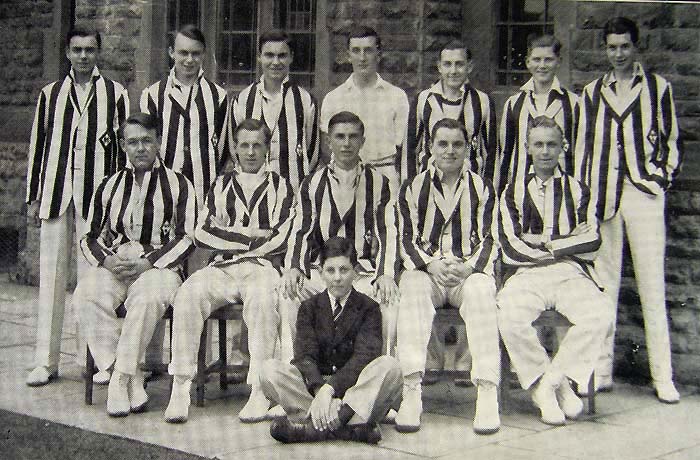
Frank was the scorer for the school’s First XI cricket team in 1938. In the photograph below he sits cross legged in front of the team:

Three of that season’s cricketers were killed in the war, as well as the team scorer.

Boy No 4 on the front row, George Colin Brown, of the Second Battalion of the Lincolnshire Regiment, was killed in Normandy on July 8th 1944, as 7 Platoon helped to clear the village of Hérouville-Saint-Clair of Germans.

“We slowly crept forward across open fields. As we broke into a trot, the Germans came out of holes in the ground like rats and unleashed hell. Mortars rained down on us and machine gun bullets were flying everywhere. Ahead of me, my platoon commander, Lieutenant Brown and his batman were killed.”

George Colin Brown was just 24 years old when he died. He was a young man whose….

“fast in-swinging ‘yorker’ on the leg stump was so devastating on its day.”

Boy No 5 on the back row, Ian Leslie Wilkinson, was killed on January 31st 1944, after taking off on a routine training flight from RAF Tilstock in an Armstrong Whitworth Whitley Mark V of 81 OTU, serial number LA 765. They crashed about 30 miles away near Dilhorne, a tiny village in Staffordshire. Ian was 24 years old and he was training to be a bomber pilot.

Boy No 6 on the back row, John Richard Mason, was killed on Friday, April 16th 1943, near RCAF Station Assiniboia in southern Saskatchewan in Canada. Sergeant Mason, a Pilot Instructor, was instructing Trainee Pilot, Leading Aircraftman John Hugh Evans, when their Fairchild Cornell Mark I, serial number FJ654, crashed into the ground.


10 Comments

Filed under Africa, Aviation, cricket, History, military, Nottingham, The High School, war crimes

A little taste of Egypt in Nottingham

How do they give names to the streets and roads of England? Well, there are lots of methods. Let’s take a quick look at Nottingham.

They are named after famous people (Shakespeare Street). They are named after the people who used to live there (Friargate) and the activities that used to happen there (Fletchergate….fletchers make arrows, or it’s from the word “flesh” which is what butchers sell you). Where the road goes to. (Hucknall Road). Who owned the land (Thackeray’s Lane). What the church is called (St Peter’s Gate). What building is there (Castle Gate). After events that happened in history. (Standard Hill…..where King Charles I first raised his banner and began forming an army at the outset of the English Civil War on August 22nd 1642.)

“Gata” incidentally is an old Viking word for street and will date back to 867AD when Nottingham was captured by the dreaded Northmen.

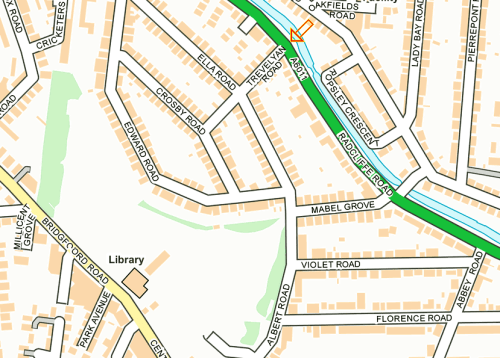
During the house building boom in the suburbs of Nottingham during the late 19th century and the early 20th century, the builder would often name streets after his own family. Here is an example in West Bridgford. Look for the Orange Arrow, wearing his anti-Covid mask:

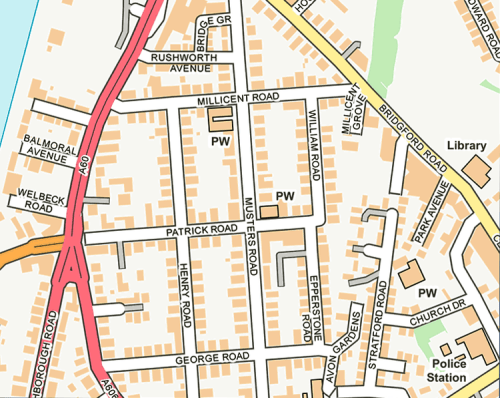
The only problem is that we can recognise the first names such as Florence, Mabel and Violet,  but what was their surname? Was it Crosby or Trevelyan? So often they seem to miss this detail out, or  not to make it too obvious which name it is.

Has this builder tried his best to make it obvious by putting all of the first names around the surname “Musters” ?

Exactly the same thing was still going on in the mid-1970s when we moved into suburbia ourselves. The same problem remained, though. What was the surname? Our house was at the end of the Orange Arrow. The fourth one down the hill from the little gap which had an old oak tree in it.

Strangest of all, though, in Nottingham, are the streets which are all, clearly, named after a particular event, or even after another country. Between 1880-1900, the theme in a particular suburb of Nottingham, namely New Basford, was Egypt. This was a working class area with a huge number of terraced houses, and somebody, somewhere, decided to name the streets there in such a way as to commemorate the British involvement in Egypt, although I have been unable to ascertain any definite answer to that simple question….”Why now? ”   Was it to commemorate Nelson’s victory in the Battle of the Nile in 1798 ? Or the opening of the Suez Canal in 1869 ? I just don’t know.  Perhaps it was because of events in 1882. Wikipedia says that :

“After increasing tensions and nationalist revolts, the United Kingdom invaded Egypt in 1882, crushing the Egyptian army at the Battle of Tell El Kebir and militarily occupying the country. Following this, the Khedivate became a de facto British protectorate under nominal Ottoman sovereignty”.

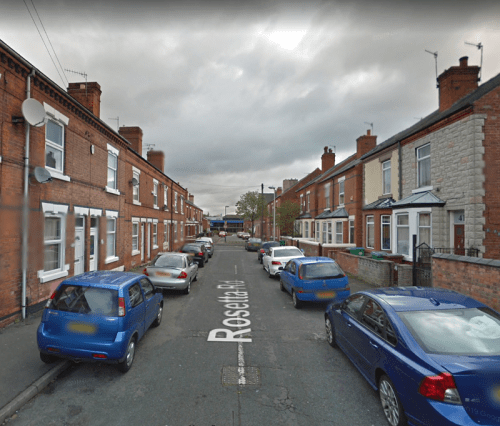
Whatever the answer, we now have, in New Basford, an Egypt Road, a Cairo Street, a Delta Street, a Suez Street and a Rosetta Road :

Do we all understand these references ?

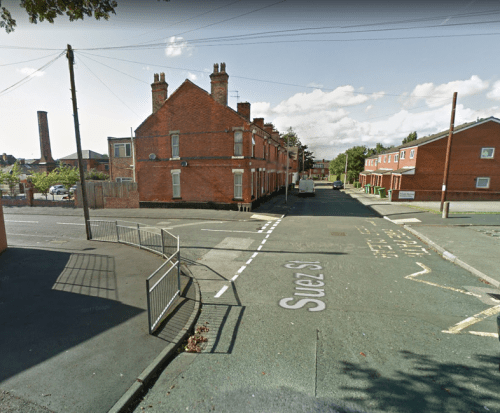
Well, first of all, in the photograph below, there’s Egypt Street on the left, the home of Ramesses the Great and the Arab world’s greatest rock group, Mo Salah and the Pyramids. As a bonus, there’s also an excellent view of the junction with Suez Street :

Suez also has a canal. Here it is during the rush hour. It looks like the US Navy has brought its aircraft out to sunbathe:

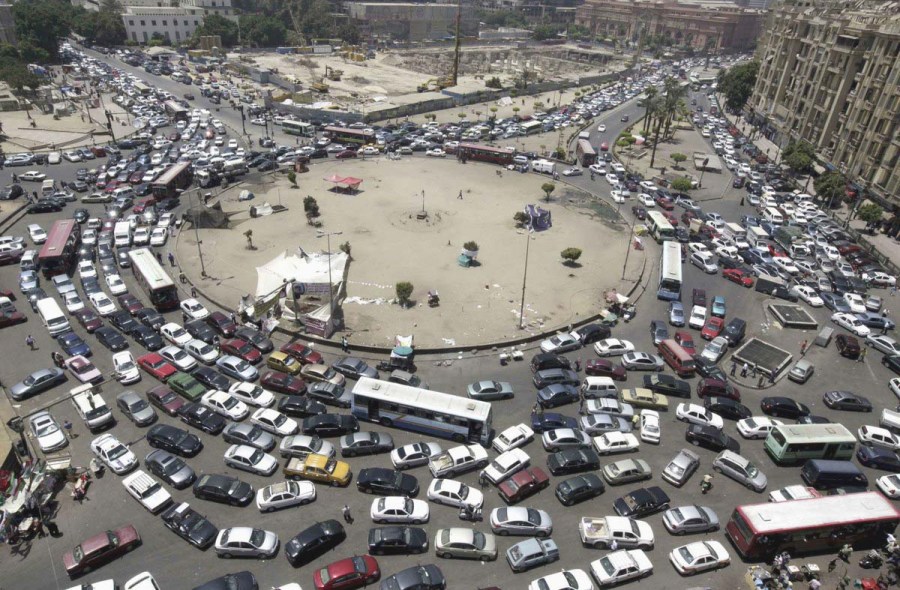
Cairo is famous for its rush hour although I was really disappointed that it was cars not camels. Camels are far too clever to get into this kind of mess :

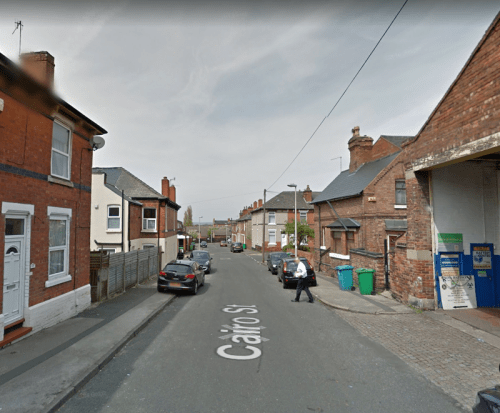
And here’s Cairo Street, once the traffic has thinned out a little. Watch out for that camel behind you!

Here’s the Nile Delta, which has its very own rush hour, but with dhows rather than supertankers :

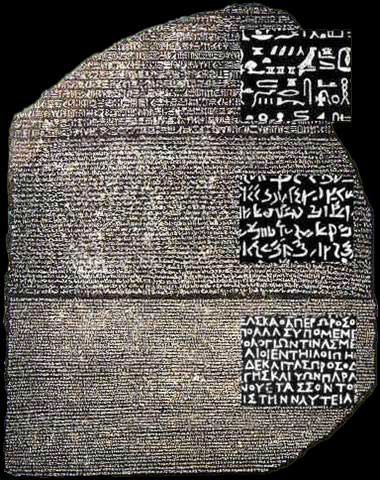
Last and most famous is the Rosetta Stone, commissioned by Pharaoh Ptolemy V and found in the city of Rosetta two thousand years later, decorated with the same thing written in three different languages.

Firstly, there are hieroglyphics for the priests, then Demotic, the native Egyptian script used for everyday business, and Ancient Greek, the language of the civil service. At this time Egypt was ruled over by Greek speakers after Alexander the Great conquered the country :

Notice how somebody has put a magnifying glass over each bit, so that you can see the differences. Rosetta Road has no such problems over communication, because 99% of the time, it is deserted, except for cars:
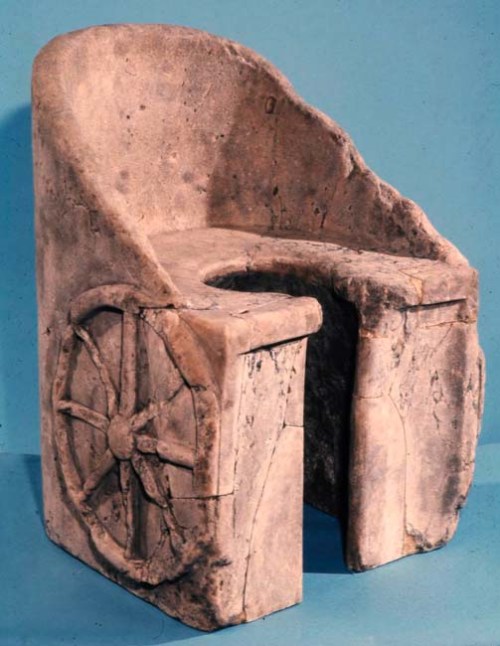
Originally the French had the Rosetta Stone, but after Admiral Nelson beat them in the Battle of the Nile, the English took it to the British Museum where, even now, it is the most visited thing in the whole museum. I thought that title might have belonged to the toilets:

33 Comments

Filed under Africa, Aviation, History, Humour, Nottingham

Why no statue ? (6) John Player

Last time, I was talking about how the High School’s most philanthropic Old Boy, John Dane Player, had set up wonderful leisure facilities for his tobacco company’s employees. All kind of sports were catered for and there was even a company newspaper called “Navy Cuttings”. John Player’s generosity didn’t stop there, though. Mr and Mrs Player did not have any children of their own and they donated extremely generous sums of money to the Nottingham Children’s Hospital, as well as to the Nottingham General Hospital. In 1933, for example, he donated £25,000 to the General Hospital (£1.8 million today). In 1927, he had already given a total of £50,000 to extend Nottingham Children’s Hospital (£3.2 million today). Here’s the original Children’s Hospital, on Chestnut Grove, just off the Mansfield Road :

At the Children’s Hospital, John Player served on the management committee, attending weekly meetings and visiting the children almost daily for the rest of his life. When he died in 1950, he had donated £180,000 to the Children’s Hospital (worth an absolute minimum of £6.2 million in today’s money, and considerably more in real terms as the buying power of the pound was much greater in years gone by.)

Here Princess Mary is accompanied by Mr John Player at the opening of the Player Wing on April 30th 1927. You can probably guess who paid for it all:

Away from the hospital donations, Nottingham University received large amounts of money from John Player, who also paid for a great many convalescent homes, churches and church halls, including St. Margaret’s church on Aspley Lane and the village hall at Whatton. Here’s St Margaret’s:

In November 1903, Old Boy, John Dane Player became a Governor of Nottingham High School. His acceptance was typically modest…

“Nothing would give me greater pleasure than to be a Governor of my old School; please convey to the Governing Body my thanks. I much appreciate the honour they have done me.”

His first gift was a cheque for £300 (£36,717 in today’s terms). He soon became one of the founders and main supporters of the Dame Agnes Mellers Lads’ Club.

By 1933, he had paid for several new High School buildings including the Gymnasium and the newly converted Library. He had already paid for the East Block. Then it was a new cycle shed, a Sixth Form darkroom, a junior science laboratory, a second science lecture room and a new cloakroom. He had also bought the Valley Road playing fields for the school and then provided them with a school Assembly Hall. After that he financed the plan whereby the Middle Block was demolished to build new science laboratories as well as a new three storey West Block. Even five years after his death, the North Block was constructed largely due to his generosity. In actual fact, very little of the major building in the school between 1868-1960 was not directly due to the generosity of John Player.

Here’s an aerial view of the High School in the 1950s. If you find the main entrance steps (bottom left, one o’clock from the circular walkway around the war memorial), they lead to the old building from the 1860s, which is roughly a dozen windows wide. The rest is all down to John Player, and the gap in what is, very roughly, the rather angular figure eight of the school, will be filled by the North Block, five years after John Player’s death. Even readers who have never seen the High School might be able to pick out the West Block, the East Block, the Middle Block,  the Assembly Hall and, by a process of elimination, the Gymnasium.

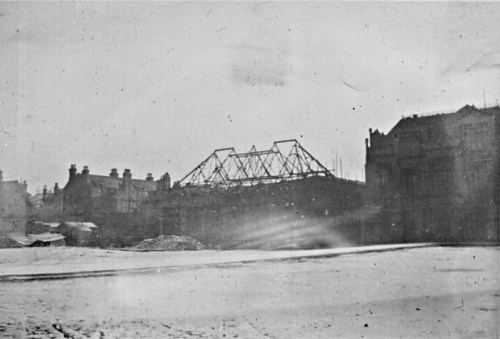
We still have some photographs of the building process. This is the Assembly Hall in the mid-thirties:

The Assembly Hall, incidentally, was never consecrated as a Christian site of worship, and this wise decision allowed it to be used for plays, debates, concerts and functions. It was the Headmaster, Mr Reynolds, who devised the system whereby, if the School Bible was resting on its lectern, then the hall was a Place of Worship, but if it was not there, then the building was being used for secular purposes. Mr Reynolds wanted to call it the Player Hall, but this was resisted by John Player himself, who said that it should not be a “Player’s Hall, but a Workers’ Hall.”

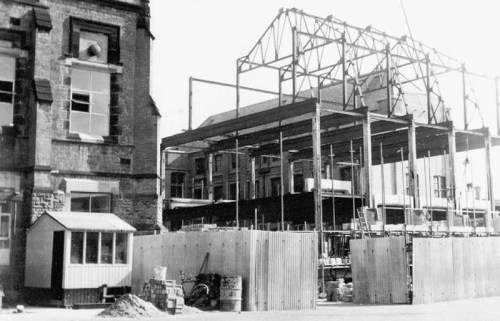
This is the North Block being erected in the late fifties, early sixties:

John Dane Player paid for some of the shiniest floors in the world. Player’s Parquet with a current street value of £8 million:

This slideshow requires JavaScript.

Despite his immense wealth, John Dane Player was a very modest man. His own admiration was reserved for the brilliant scholars the High School turned out at that time. On one occasion, he is known to have said to a fellow Old Boy:

“I was no good at school. Were you? ”

Those brilliant scholars are largely gone and forgotten, of course, and it was they who benefited from the High School, rather than vice versa. Indeed, one is tempted to wonder where the High School would be now, were it not for John Dane Player.

Incidentally, I have been unable to trace the first two photographs. If anybody has a genuine problem with them, then please contact me.


17 Comments

Filed under History, Nottingham, The High School