Those of you who follow my blog will be familiar with the many stories I have told about Nottingham High School; its Founders, its coat of arms, its war heroes, its caretakers and its one or two villains. I have recently finished compiling these stories, and many more, into a new book called Nottingham High School: The Anecdotal History of a British Public School, published with Lulu.com.
My history is an entertaining one about the people behind the institution – what they thought, said, and did from the reign of Henry VIII up to the modern era. I want to tell the stories of the ordinary people whose actions changed the history of Nottingham forever, and those whose lives had much wider influence on the history of our country and on the lives of people across the world. I tell the tales of all people connected with the High School – teachers, support staff, boys, alumni… from caretakers to kings!
The book is written in diary form and runs from Thursday, June 30th 1289 to Thursday, July 12th 2012. It’s an easy read that you can dip in and out of as you wish. Find out about the antics of the boys, the excesses of the staff, the sacrifices of the alumni, and the castle-like school building in all its majesty.
My book contains new and previously unpublished research into the lives of some of the most famous ex-pupils of the school. Read about the childhood of scurrilous author D.H.Lawrence, whose controversial books were still banned 50 years after he wrote them. Read about the disruptive antics of Albert Ball V.C., the daring air ace who always fought alone. Read about American Old Boy, Major General Mahin of the U.S. Army, a man whose power and authority in the Second World War rivalled that of General Patton, until he was killed (or was it murder?).
The tone of my work is interesting and light, but at the same time, as you know from my blogposts, I can show my more serious side when occasion demands. A very large number of former pupils from the High School died in the two World Wars and their sacrifices are reflected in my book.
I have really enjoyed writing this new history book, and I hope that you will find it an entertaining and intriguing read. If you would like to give it a go, then it is now available from my page on Lulu.com.
In the early 1970s, I used to watch Derby County who, at that time, were a highly successful team in what was then still called “The First Division”. I saw Derby win the Championship of that First Division on two occasions, in 1972 and 1975. In later years, I took my camera with me a couple of times, to take a few photographs, even though, at the time, this was actually illegal and club stewards kept a careful watch in case anybody did it. Derby, of course, did not play in their current modern stadium, but in the old Baseball Ground, built in the middle of square miles of terraced houses in one of the poorest areas of Derby. It has now, alas, been demolished, although I do have a box of mud from the pitch, and a fair quantity of bricks from the stands.
I keep them in the cellar, but the very best one I had concreted underneath my Dad’s gravestone. He was a Derby fan from 1931, when Newcastle United came to Derby and won by 5-1, until the last game at the Baseball Ground, a 1-3 defeat against Arsenal. Fred was to watch Derby County for almost seventy years, until his very, very last game, at the new Pride Park Stadium, a defeat by 0-2 to Charlton Athletic. Nobody said supporting a football team was going to be easy.
This slideshow requires JavaScript.
My camera was a Voigtländer Vito B (I think) equipped with a rather handy Zeiss lens:
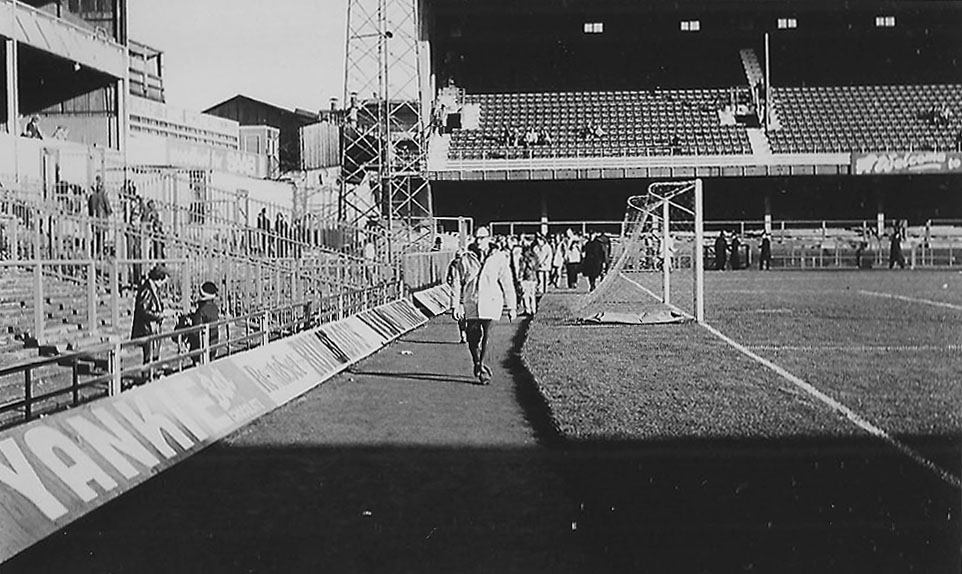
Here are the match stewards just before the match begins:
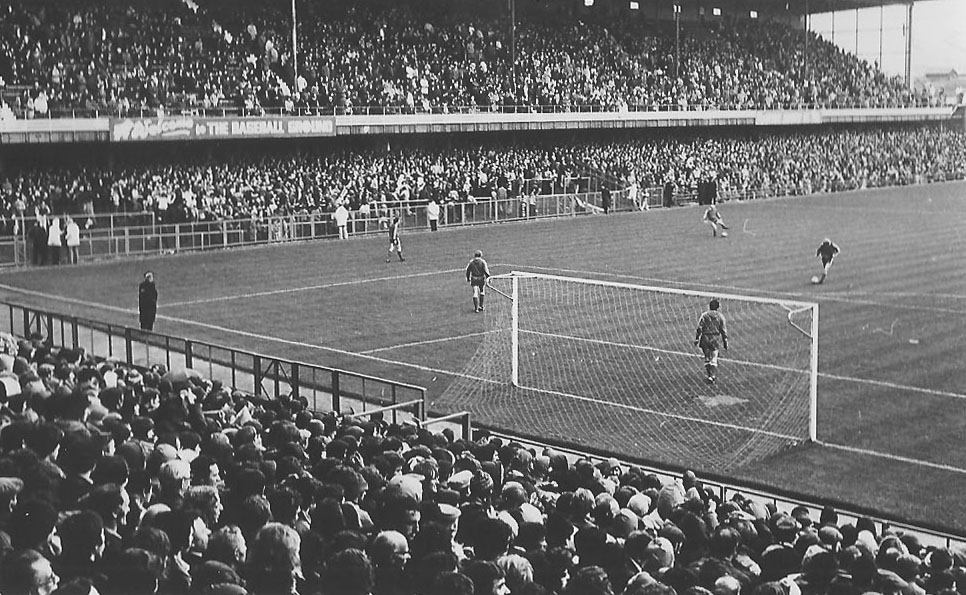
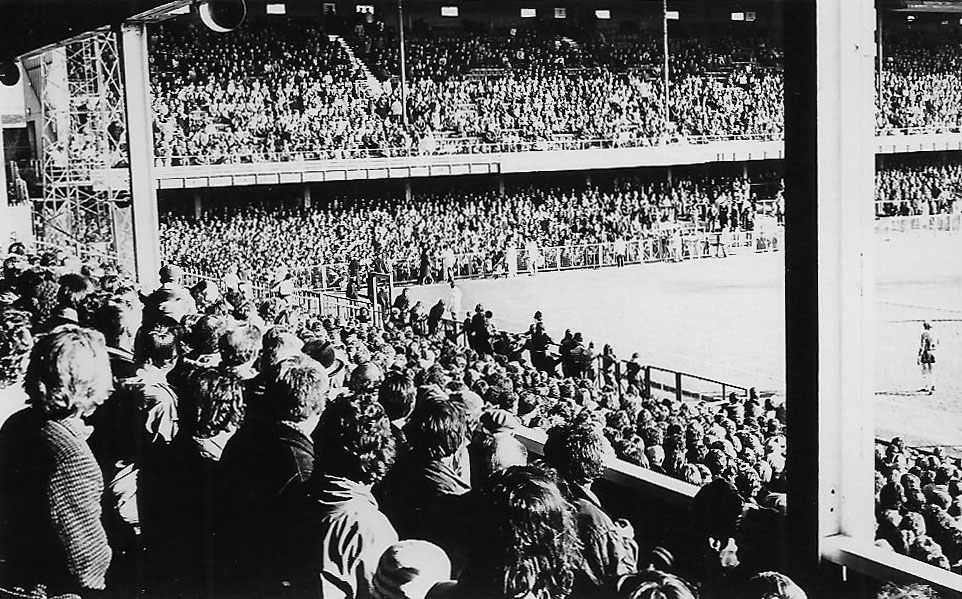
Today, the opponents are Middlesbrough, recently promoted to the First Division, and relying on tenacious defence to stay there. Here they are warming up before the match begins. The spectators at the back are in the Ley Stand, sitting upstairs, as it were, but standing in their thousands underneath. The “standees”, what a wonderful new word, are the away supporters from Middlesbrough:
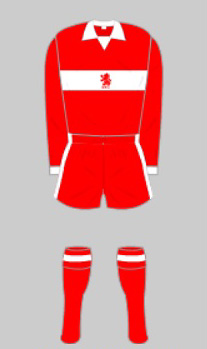
Middlesbrough played in all red with a white chest band:
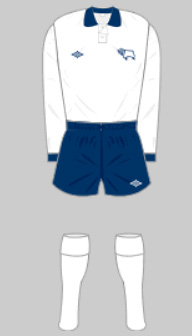
Derby played in white and dark blue:
Middlesbrough have already come out for the game, but here come Derby, resplendent in their white shirts with a darker collar and cuffs,
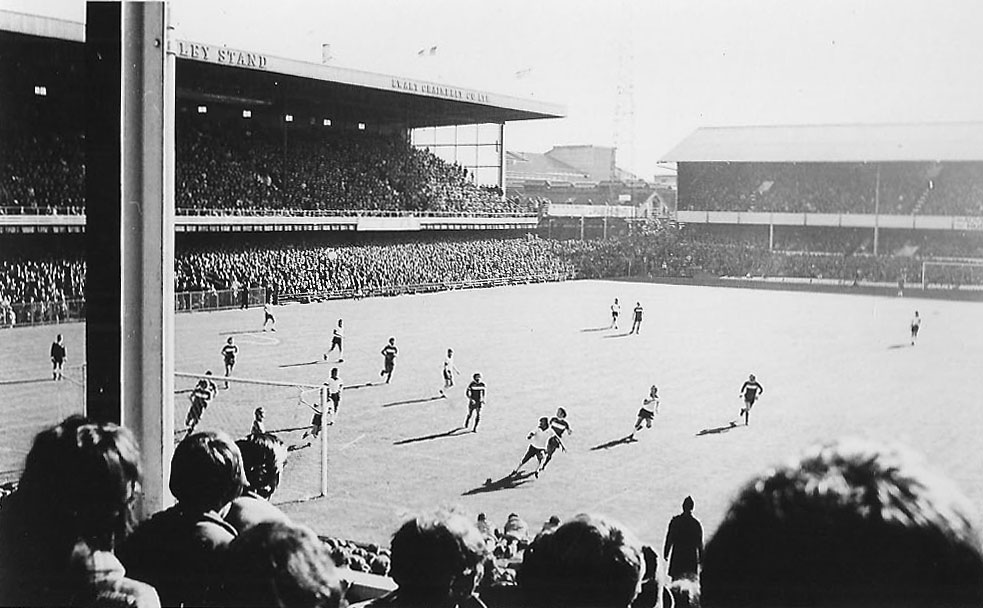
Here is the moment just before Derby kick off to start the game. At the far end is the packed Normanton Stand:
Hooliganism was rife in the 1970s, and here the supporters next to me in the Osmaston Stand, Lower Tier, are obviously bored by the game, so they concentrate on a threatened pitch invasion by the Middlesbrough fans:
Here Derby attack, and their best player, Kevin Hector, has a shot at goal:
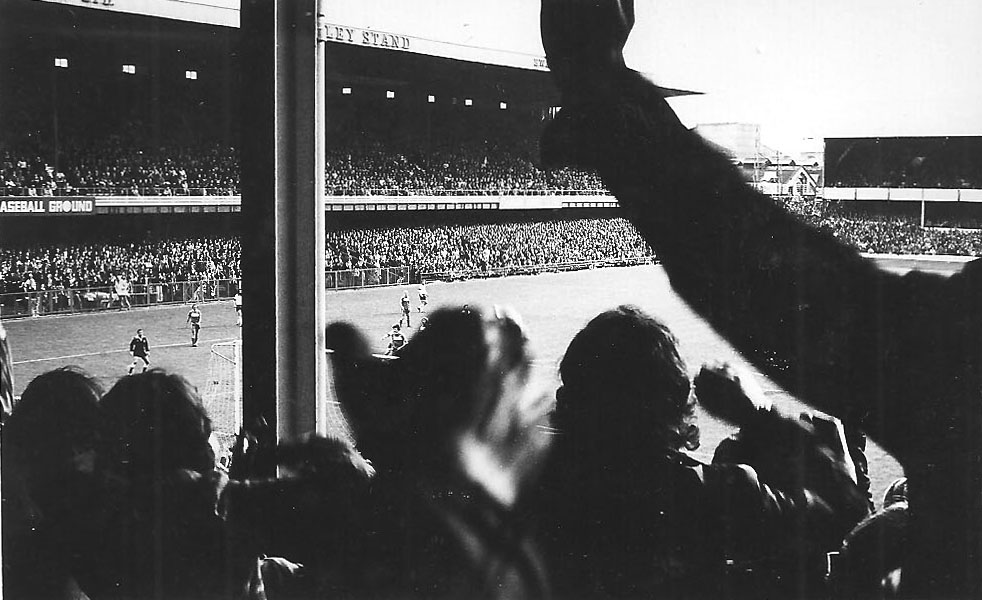
He shoots, he scores!
I thought the result of this game was Derby County 3 Middlesbrough 2 but apparently, when I checked my reference books, it actually finished Derby County 2 Middlesbrough 3. They are useless books and I may throw them away.
“The only thing necessary for the triumph of evil is for good men to do nothing.” is a famous quotation attributed to Edmund Burke, the statesman, author, orator, political theorist, and philosopher.
A good example would be this photograph showing the England football team just before a friendly game at the Olympic Stadium in Berlin on May 14th 1938:
The fixture was played before a crowd of 110,000 people, but clearly, the Englishmen are not waving to their German admirers. This is the Hitler-Grüss. The English players are all saluting Adolf Hitler, arguably the most evil man ever born. Why did the footballers do this? Surely they were good men? Why did they do nothing? Or was Stanley Matthews, a hero to millions of young boys, an evil man?
Well, the truth of the matter is that the British Foreign Office had actually ordered them to salute the Führer, Adolf Hitler.
Six months before, Naughty Hitler had marched his armies into Austria, the home of the waltz and the cream cake, and annexed this defenceless little country, the so-called “Anschluss”.
The Foreign Office wanted to assure Hitler that, even though he kept invading places, Germany was not a “pariah” state. Hopefully, if Adolf was kept sweet by an England team which saluted him, he would look favourably on Neville Chamberlain’s government and their policy of appeasement:
“You’re very naughty, Adolf, but as long as you promise it’s the last time, we’ll overlook it.”
The “Peace in our Time” deal must go through.
Germany’s football team was very weak at this time, but Austria’s was not. In 1934, they had finished fourth in the FIFA World Cup, and in the Berlin Olympics of 1936, they had finished second, losing to fascist Italy in the final. Austria qualified for the 1938 World Cup, but on March 28th 1938, they were forced to withdraw as the country no longer existed. The theory was that after Anschluss, the Austrian players would all play in the German team.
First though, the two countries would play a last match for Austria, a “reunification derby” which would unite the two countries and their respective football teams for ever. Not surprisingly perhaps, the game was planned to finish as a draw. The Austrians, though, all of them good men, would not stand idly by and do nothing, but instead they scored two goals in the last few minutes in a successful effort to win the game and put the Nazi noses out of joint.
To humiliate the Germans even further, the Austrians’ absolute star player, the thoughtful Matthias Sindelar, scored one of those two Austrian goals, and then celebrated extravagantly in front of the senior Nazi dignitaries watching the game. The latter already knew about the kit controversy. Both Germany and Austria usually played in white shirts and black shorts, but Sindelar, for what he thought would be the country’s last ever game, had insisted on Austria playing in the same colours as the national flag, red shirts, white shorts and red socks. Red, of course, was not a particularly favourite colour of the Nazis.
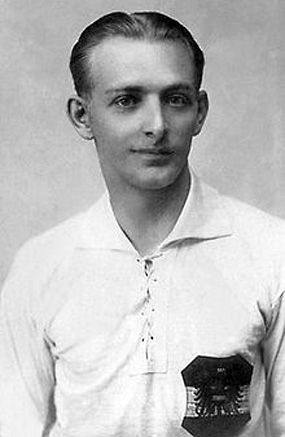
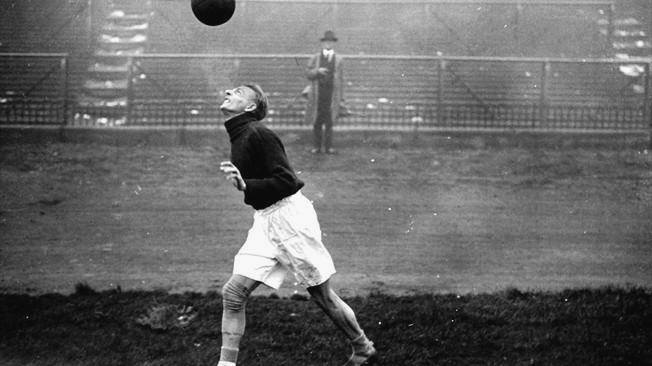
Here he is. Matthias Sindelar. He was so thin, so pale and fragile, that his footballing nickname was “The Man of Paper”. He was, though, a good man who refused to stand idly by. A real “Man of Steel”:
At the very end of the game, Sindelar deliberately and obviously missed an easy chance which would have made the victory an even wider one. Afterwards Sindelar refused to play for the German Reich, giving either his extreme age of 35 or injury as an excuse.
Not totally surprisingly, perhaps, Sindelar was dead within the year. He died on January 23rd 1939. By now he was a symbol of Austrian patriotism, and his Gestapo file listed him as being pro-Jewish and a Social Democrat. The Gestapo also watched his café twenty four hours a day.
No wonder, therefore, that the heating system in his flat should fail, the problems allegedly being caused by a defective chimney. As he lay in the arms of his girlfriend, Camilla Castagnola, therefore, they both died of carbon monoxide poisoning.
That Sindelar’s death was a suicide as a protest against the German Anschluss of Austria was suggested by, presumably, pro-Gestapo elements, but that was just not true. Decades after the event, we now know, thanks to the confession of Egon Ulbrich, a lifelong friend of Sindelar, that a petty local bureaucrat was bribed by the Nazis to record his death by Gestapo as a mere accident. Here is Sindelar’s grave, still visited regularly by many people today:
Matthias Sindelar is one of my favourite players.
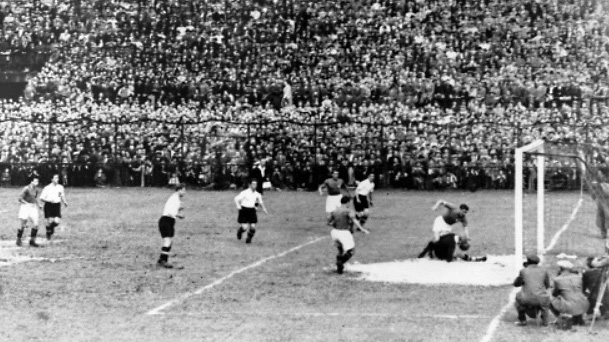
He had played centre-forward many, many times for the Austria team of the 1930s. They were known as the “Wunderteam”, and Sindelar was their captain at the 1934 World Cup, where they were cheated out of it in the semi final by match referee Eklind. Austria’s phenomenal goalscorer, Josef Bican, (at least 1468 goals in 918 games) maintained all his life, until he died in 2001, that Eklind had taken cash inducements from the Italians. And Bican was perhaps justified in his belief. On one occasion during the match, he passed the ball out to the Austrian right winger only to see it intercepted and headed down to an Italian….by the referee!
Here is one of the few pictures of the game. Some nice cotton wool seems to have been provided for the Italian goalkeeper to stop him getting bruised:
Sindelar was one of the greatest footballers of the decade, famous for his fantastic dribbling skills and the creativity of his passing. He had two brilliant nicknames. We know already what “Der Papierene” means. The “Man of Paper”:
But Sindelar’s precocious skills would also lead to his being called “The Mozart of Football”.
In 1999, Sindelar was voted the best Austrian footballer of all time. He had already been named Austria’s sportsman of the century a year before. Sindelar even now, is still ranked as the world’s 22nd best ever footballer. Overall, he scored 26 goals in his 43 matches for Austria, and won one Austrian championship with SV Amateure in 1926, two Austrian Cups with Amateur-SV in 1925 and 1926, and three with FK Austria Wien in 1933, 1935 and 1936.
There was no European Cup then, but Sindelar won one of its predecessors, the Mitropa Cup or Central European Cup in 1933 and 1936 with FK Austria Wien.
In 1932, he won the Central European International Cup, a predecessor of the UEFA European Championship.
Participants were Austria, Czechoslovakia, Hungary, Italy, Poland, Romania and Switzerland.
Matthias Sindelar was certainly one who did something to prevent, or at least, slow down, the triumph of evil. And ultimately, he paid with his life.
Liverpool and the leafy parks and graveyards in its suburbs was not the only place to be involved in the Great English Fairy Flap of 1964.
In June 1964, strange things started happening in Gateshead, a very ordinary, humdrum town in the north east of England. It is a suburb of Newcastle-on-Tyne, where polar bears and walruses (or should that be “walri” ?) roam regularly in colder winters. Look for the orange arrows:
This slideshow requires JavaScript.
At ten past four in the afternoon of June 2nd 1964, four boys were playing together in Leam Lane Estate, Gateshead. This looks a fairly desolate site, right on the shores of the freezing, windswept North Sea:
Looking at the map, though, as it does have one or two of the features that would link it with Celtic fairy sites, and indeed, with the old idea of dimensional portals out of which ghosts, goblins, UFOs and lots of other exciting beings may emerge:
First of all, it is (or was then) heath covered waste land with gorse and bracken, the very landscape beloved of fairies in Cornwall. It also has a very ancient Roman road, which would have been built directly over a Celtic track. Indeed, the reason that Roman roads across Western Europe are so unbelievably straight, is that Celtic tracks were. Quite a link, therefore, with times long, long ago.
Another indicator of pathways into other dimensions is the presence of any natural water, such as streams, and, for me, what clinches the deal, a natural spring. (that is what the blue “spr” stands for, at the centre bottom of the map). You can’t tell from this map. but I have looked at some larger scale ones, and the area also has a couple of cemeteries, absolutely classic places for crossing over into other realities.
Back to those four boys who were playing together at ten past four on that early June afternoon. They reported having sighted:
“a silver domed object about the size of a table, with portholes around the top and three legs. It was seen falling like a leaf through the sky making a low buzzing noise descending approximately 120 yards away from where they were standing.”
Here is the closest the Internet has to offer. It is in actual fact, the new Smart Car:
At half past five in the evening, another, fifth boy, Mark Smith, aged 14, decided to walk down to the farm to collect some straw for his rabbits. When he arrived, he saw a group of around ten children, standing about twenty yards away from a haystack. This was followed by the startling sight of:
“around six or eight tiny human beings on top of the stack: they were about two and a half feet tall and dressed in bright green suits. They appeared to be digging into the haystack, as if searching for something. Their hands seemed like lighted electric light bulbs.”
Mark went home and told his parents what he had seen and decided to make his way back to the scene, but he was stopped by the farmer. Mark says that he was told by another child that:
“she had seen a circular silvery object take off from the ground with a spinning motion giving off an orange glow.”
On June 6th, 1964 several members of the local UFO Organisation visited the locality concerned and spent some considerable time speaking to many of the residents and children about the matter.
One child who admitted having seen “the little green men” told them:
“the leader of the little men was dressed in black and carried a baton with pink stripes.”
Another girl claimed:
“He was sitting on the roof of the barn watching us.”
Another girl told them that she had seen ‘him’ riding on the back of a cow whilst others claimed the whole thing was a hoax. The farmer who owns the land said
“All the claims are a load of nonsense. If anything has landed I would’ve known about it. I have a dog kept in the yard, he would warned me if anybody had been prowling around the farm.”
And that was not the end of it. Three months or so later…
It was claimed that a “Leprechaun” had been sighted in Tamar Street East in Belfast on or about September 10th 1964.
In fact, this particular Little Green Man was later identified as six-year-old Billy Knowles.
He was playing at Robin Hood, dressed in his nice new costume:
He was playing in a derelict house, something Belfast was not short of at the time:
Poor little Billy was soon chased away by police who were frightened for his safety.
Too late!!!
The hint of a real life Leprechaun, and a real life pot of gold, triggered off the local people’s imaginations. Vast numbers of them descended into the streets causing massive disorder. Ironically the crowds that gathered there included not just children, but many adults. The incident, which involved the police and the fire service in some numbers, also attracted the presence of David Bleakley, the Labour MP for Victoria, who handed over a hastily written petition to Belfast Corporation, demanding action to keep the crowds and children away from the embankment and the many derelict houses there. One senior police officer was quoted as saying:
“A grown man, cold stone sober, insisted to me that he had seen a leprechaun.“
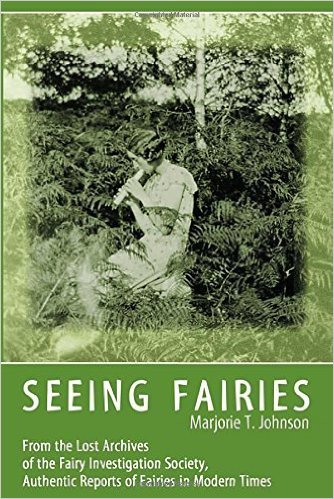
After reading all about gnomes, elves, pixies, fairies and such like, it should come as no surprise to hear that Wollaton is not the only place around Nottingham to have played host to fairies in recent times. Marjorie Johnson, the lady who saw fairies in her garden in Carlton was to become very famous in fairy circles. She wrote this best selling book:
Belief in fairies persists still, even in our own time. When we went once to an isolated farm at Constantine in Cornwall, the farmer clearly believed that the huge ruined megalith in his bottom field was the home to fairy folk. He had seen their fairy lights on more than one occasion.
This report by Journeyman starts off in almost comic fashion, but does make some quite serious points:
This film by Torsten Scholl, aka “hatcast” has even more serious points to make:
This account by Richard Williams aka “rockuvages” is of the moment when the huldufólk seem to pop out of their own dimension:
Nowadays, we tend to see fairies and their like as something lovely and wonderful. This attitude has only come about since Peter Pan and Tinkerbell. Before that, fairies were considered by those who had regular contact with them to be malevolent beings who, if they were in any way annoyed, would readily kidnap adults, willingly do harm to them and, most of all, steal their babies, replacing them with changelings. This is why nowadays a lot of modern folklorists tend to equate ancient beliefs in fairies, with our current fondness for space aliens and little green men, who have continued in modern times to carry out all of these evil deeds:
Tales of fairies invariably involve abduction and poor innocent people forced to remain in Fairy Land, sometimes for ever. What difference is there between malevolent fairies holding people hostage in their realm and our modern tales of extra-terrestrial kidnap?
Other parallels are there. Some types of fairies, such as leprechauns and goblins, have green as their favourite colour, just as some aliens are literally “little green men”. Only medical experiments seem to be absent from the connections between the two groups, perhaps because in sixteenth and seventeenth century Ireland or Cornwall, there was no health care available and advanced medicine was not a subject on anybody’s mind. Only ointments and magic potions were on offer back then, and these simple remedies do figure from time to time in the more ancient tales of fairies.
Here is something more modern, a tractor beam, although some would argue that those fairy lights, leading innocent people out onto the marsh to drown or be abducted, did pretty much the same job:
This modern cartoon by “grackle” sums up best our ancient knowledge of fairies, who were by no means the magnanimous and well intentioned Peter Pan heroes of Walt Disney’s world.
In Australia, the enormously large person is called the “Yowie” and he is very fierce indeed.
The huge Yowie, though, has a tiny equivalent. To the white man he is “Brown Jack” but to the blackfella he is the “Junjudee”. He is tiny and here is a purported film of one:
Any film by TheRusty222 is well worth watching. He tries to film Yowies but most of all, he ventures deep into the realm of the thickest parts of the Australian bush, an environment of staggering beauty if you ever watch one of his films.
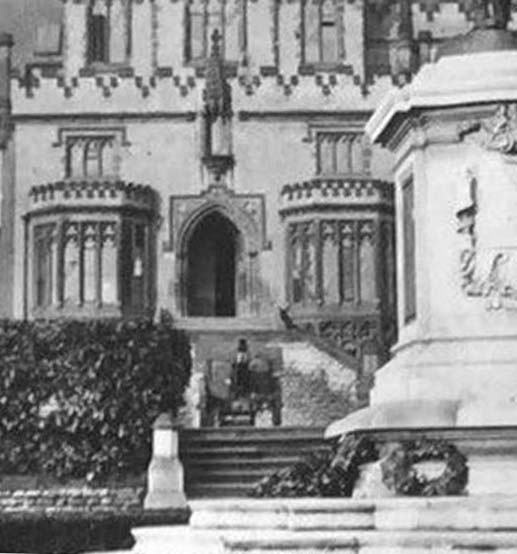
Talking of “Little People”, a few weeks ago, I bought a postcard of the High School taken in 1927. I was intrigued to see what is obviously the “School Leprechaun” busy guarding the front of the school:
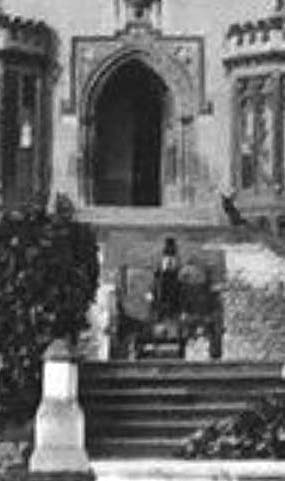
You can see his right hand, his jacket of Irish Green, his little fawn breeches and his lovely top hat. Here he is, slightly enlarged:
Do you see his mutton chop whiskers? And what about little Pumpkin Head, next to him, with his tiny hat and his little legs and boots?
Both photographs, courtesy of the Pareidolia Brothers.
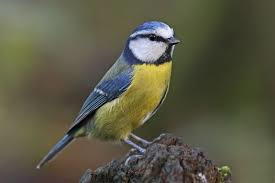
As I mentioned in a previous article, there is a difference between a birdwatcher and a twitcher. A birdwatcher will sit, as I am doing now, and watch whatever birds come to the feeders on the patio. He may go for a walk in his local wood and just see what he can find:
Or take a stroll along the beach, taking care to have his binoculars, and probably his telescope and tripod, to hand. He will have a rough idea of what he is going to see, but nothing is pre-planned:
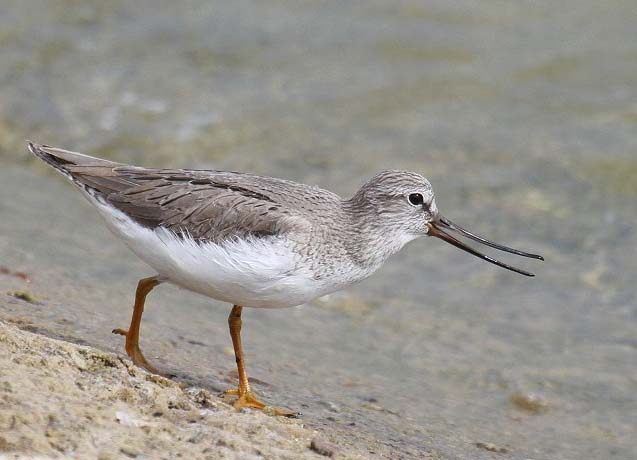
A twitcher is somebody who finds out where a rare bird has been seen and then sets off in an effort to see it. In previous articles, I have revealed how I used to be a twitcher. As I mentioned in a previous blogpost, I used to be a “twitcher”, the sort of birdwatcher who might travel hundreds of miles to see a species which is rare in whichever country he lives.I have already published articles about a trip to Dorset for a Terek Sandpiper:
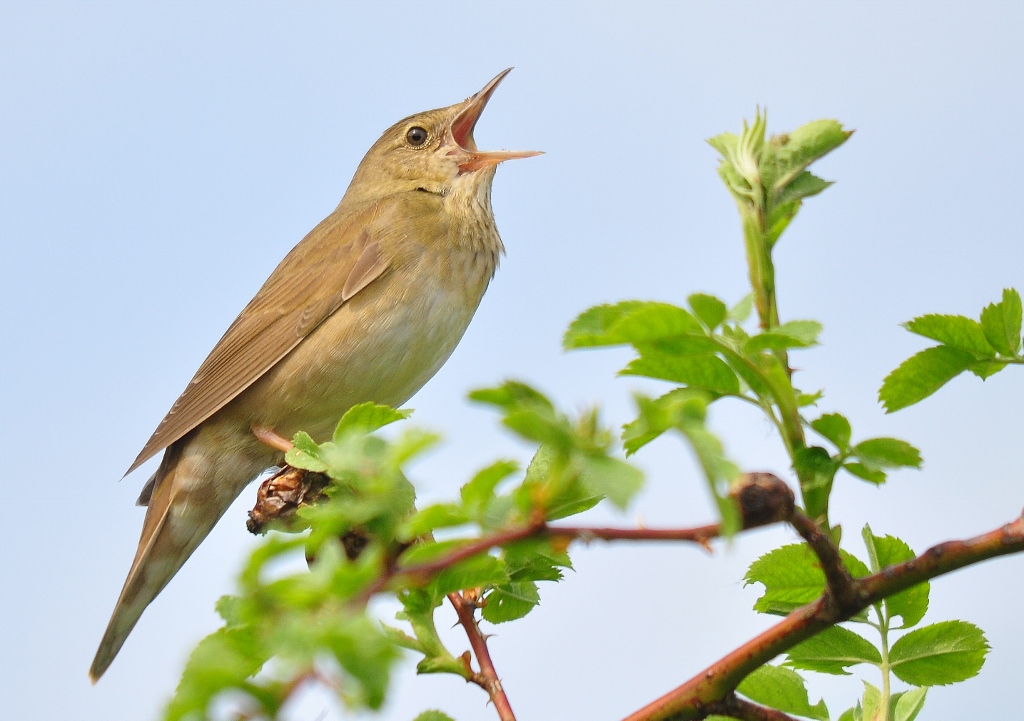
I told you about going to Norfolk for a River Warbler:
Twitching was a very popular pursuit when I used to do it, back in the 1980s and 1990s. Here is a Golden-winged Warbler:
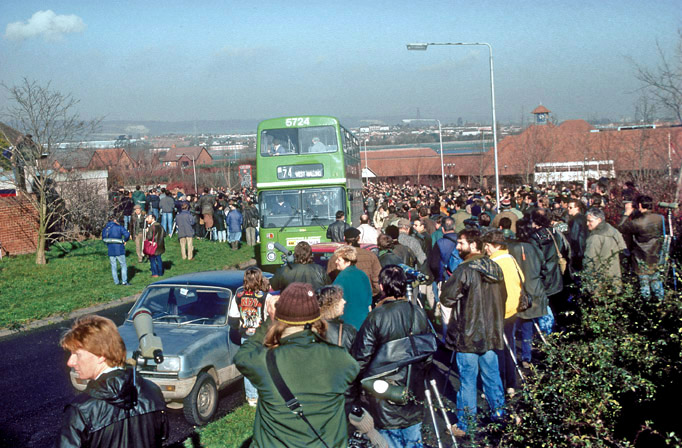
And here are the crowds that went to see it in Kent, myself included:
Even now, a very rare vagrant may attract several thousand twitchers over the course of the bird’s stay.
Twitching first began, on a very limited scale, in the 1960s, when news of a long staying bird, such as the Dusky Thrush in Hartlepool during the winter of 1959-1960, were circulated by letter and postcard:
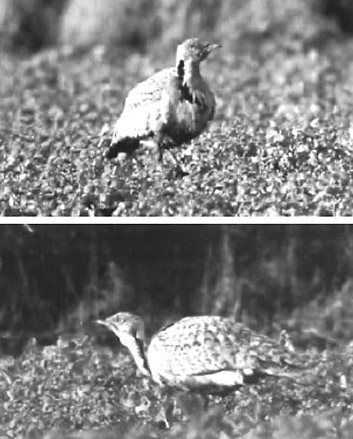
How long has twitching been going on? What bird was the subject of the first twitch? I thought about this for a long while and my eventual conclusion was that it was possibly the Houbara Bustard present in Suffolk from November 21st to December 29th 1962.
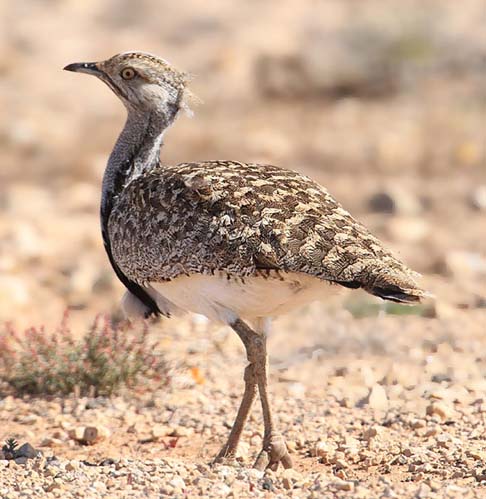
Here is a Houbara Bustard. They are very rare birds:
And they will get even rarer if the Pakistani hunters in Baluchistan continue to think that this is sustainable hunting:
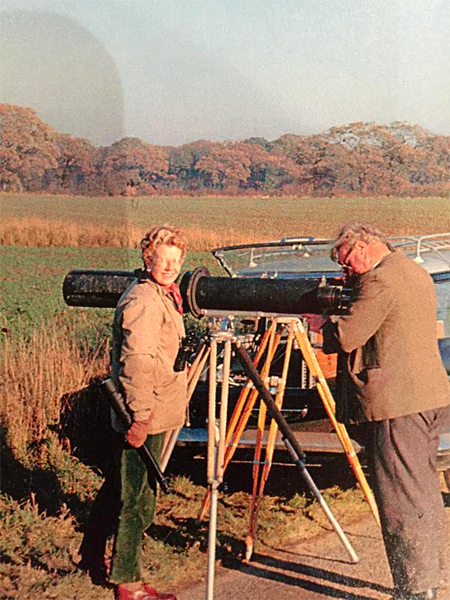
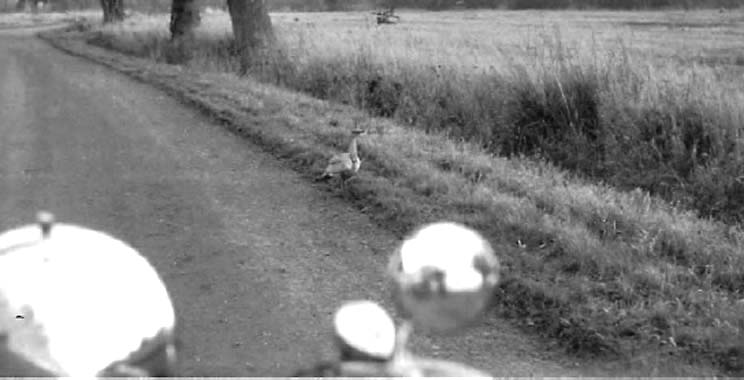
Even if the Houbara Bustard wasn’t the first ever twitch, the photographs reveal that this was very much an event in the distant past:
Just look at the clothes.
Just look at the car.
Just look at the telescope!
The bird was about the size of a turkey. It fed in a mustard field and could also be found in a stubble field:
Here is another view:
The Suffolk Houbara of 1962 was a rather eccentric creature and it often seemed to prefer to walk rather than fly. It could frequently be observed very easily by parking the old Morris Oxford at the side of the lane between its two favourite fields, and waiting for it to saunter past:
I am sure that it would surprise a great many people to be told that there have been fairies, gnomes and elves seen in Nottingham in quite recent times. The most famous incident was in the late September of 1979. This took place in Wollaton Park, which is the extensive grassland, studded with trees, which surrounds stately Wollaton Hall, home of the Hollywood blockbuster, The Dark Knight Rises :
Wollaton Park is in the centre of Nottingham. Look for the orange arrow:
I do not know the exact place where the fairies and gnomes were seen, but I suspect that it was probably here. Again, look for the orange arrow:
This location fits in quite well with details I have found, namely, “near the lake”, “swampy”, “near an exit from the park” and “near a fenced off nature reserve”. The most frequently quoted directions are “in a rather wet area down by the lake”. Here is the Lake. The orange arrow points to the place where doting parents take their children to feed the ducks and fight off the Canada Geese:
The little elvish creatures were seen by a small group of children between eight and ten years of age who were playing in a swampy section of the park. The children were Angie and her brother Glen and her sister Julie. There was also Andrew and Rosie who were brother and sister, and Patrick. Here are just some of the sixty gnomes:
The children were playing just as dusk was falling, around half past eight. The light was deteriorating but it was still bright enough to see. The children’s attention was attracted by something that sounded like a bell. They saw a throng of around sixty little gnome like men coming out of an area of woodland and bushes which had been fenced off to prevent the general public from entering. The little men were riding in small bubble-like vehicles. These cars were completely silent but they were very quick and could jump and skip over anything in their way such as fallen trees or branches.
Down near the lake they seemed to be enjoying riding over the marshy swampy area, and a few of them chased the children towards the exit gate from the park, just in play, though, not aggressively.
The little men were just half the size of the children, around two feet tall. They all had wrinkled faces, perhaps with a greenish tinge and long white beards, tipped with red. Sometimes they laughed in a strange way. On their little heads, they were wearing what the children described as caps like old-fashioned nightcaps. They were just like what Noddy used to wear, with a little bobble on the very end:
They had blue tops and yellow or green tights or pants. Despite the encroaching darkness, the children were able to see them all plainly. Patrick explained to the Headmaster: “I could see them in the dark. They all showed up.”:
The children watched them for about a quarter of an hour, as the men drove round in their little cars. Each of the fifteen cars carried two little men. They did not have steering wheels but some kind of circular device with a tiny handle to turn it. The little men also were climbing up into the surrounding trees, going into and emerging from, holes in the trunk or branches. All of the children felt that they had somehow surprised the little men, who usually would only have come out after night fell. Eventually, the children all ran away, because it was getting late. The little men had not been threatening or aggressive.
The adults who subsequently heard their stories thought that the little group of children were all telling lies, but the children were completely unwavering in their belief that they had seen what they said they had seen. Furthermore, they had seen the little men previously, during the six weeks of the long summer holiday from school. Some were at the lake, but others were at the Gnomes Anonymous, anti-Alcoholism Group:
The day after they returned to school, their Headmaster questioned them all separately and recorded their answers on a cassette tape recorder. The children all told, more or less, the same story. Their drawings too, were all very similar:
The Headmaster’s opinion was that the children were all telling the truth, although, as might be expected, there were minor differences of detail and emphasis between their different accounts. His overall final judgement was that “The children do sound truthful”. Here is the Headmaster on the School Photo taken that year. You can see why he believed the children:
In actual fact, the Headmaster actually corresponded about the events with Marjorie T Johnson, the author of “Seeing Fairies”:
He sent her the cassette tapes of the children he had recorded. His letter said:
“I think the tape reveals the wide measure of corroboration between the children, as well as the fluency with which they were able to describe the events. I remain sceptical as to the explanation of what they saw, but I am also convinced that the children were describing a real occurrence.”
When the children’s story about the Wollaton little people became public, a number of claims were made that they had been seen before in the boggy area around the lake. Marjorie Johnson, formerly Secretary of the Nottingham-based “Fairy Investigation Society”, confirmed that she had “received a number of previous reports of Little People frequenting this locality”. They included Mrs C George of Stapleford near Nottingham, who, in 1900, had seen both gnomes and fairies by the Wollaton Park Gates as she walked past on the pavement. Here is one of their little cars, abandoned temporarily by the roadside, and taken into the police pound:
Just before the children’s experience, Mrs Brown reported that she had been led telepathically around the Park, from one beauty spot to another, by a group of gnomes. At each stopping place they had magically provided her with a feather to find.
The famous writer on mysteries, and expert on fairy sightings, Janet Bord, added an interesting extra detail to the story:
“Over six years before the Wollaton fairies were reported in the media, I had corresponded with Marina Fry of Cornwall, who wrote to me giving details of her own fairy sighting when she was nearly four years old, around 1940. One night she and her older sisters, all sleeping in one bedroom, awoke to hear a buzzing noise (one sister said ‘music and bells’). Looking out of the window they saw a little man in a tiny blue and yellow car driving around in circles’. He was about 18 inches tall and had a white beard and a ‘blue pointed hat’…he just disappeared after a while.”
A few years ago, I drove down with the family to the RAF Museum at Hendon, just to the north of London. I made an immediate bee-line to the Bomber Command section to see their Avro Lancaster. Most of the aircraft here have their original coat of paint from World War II, so, to prevent it fading away completely under the onslaught of bright, harmful sunshine, the lighting is very subdued. That made it rather difficult for me to take photographs of a decent standard. Indeed, for the general view of the aircraft, I have had to use a photograph from the Internet. Here it is, with its capacity to carry up to 14,000 lbs of bombs into Nazi Germany:
Here is the front of this mighty bomber. Its huge black tyres are not far short of the height of a man. The yellow tips of the propellers are a safety feature and the yellow letter “S” is the aircraft’s squadron letter as “S-Sugar”:
This is the rear of the bomber. It has twin tails to give the mid-upper gunner a greater field of fire. You can see the door for the crew, which kept them well away from the four propellers, but it meant a very long and difficult crawl to the front of the aircraft. Its squadron letters are PO-S and its serial number is R5868:
This particular plane is the oldest surviving Lancaster and the first RAF heavy bomber to complete 100 operations. It eventually went on to fly 137 sorties. R5868 was originally “Q-Queenie” with No. 83 Squadron at RAF Scampton and then became “S-Sugar” with No. 463 and No. 467 Squadrons of the Royal Australian Air Force at RAF Waddington. Its very last job came in May 1945, when it was used to transport liberated Allied prisoners of war back home to England.
The four Merlin engines have on them the names of the crew who received decorations. This is the starboard inner engine:
Here is another name, this time on the port inner engine. You can also see what looks to me to be an 8,000lb bomb underneath the enormous bomb-bay. Such a large bomb was made by merely bolting together two ordinary 4,000lb “Cookies” or Blockbuster bombs:
I couldn’t resist showing you for a second time, in this second blogpost, the front of “S-Sugar”, which is adorned with the vain boast of Hermann Göring, “No enemy plane will fly over the Reich Territory”.
It is deliberately painted next to the symbols which represent the huge number of raids carried out over Germany by this one particular aircraft. All of the Avro Lancasters added together flew 156,000 missions over Europe as a whole and they dropped 608,612 tons of bombs on the Third Reich. So much for Hermann Müller and his pathetic promises, detailed in that previous post:
This is a “Grand Slam” bomb. It was designed by Barnes Wallis and weighed 22,000lb, ten tons, more or less, and the specially adapted Lancasters of 617 Squadron who carried it were at their physical limits:
My Dad said their wings were shaped like giant crescents as they took off. When they were dropped, the bombs broke the sound barrier. At that time they must have been among the fastest objects made by Man. They penetrated deep underground and, when they exploded, they easily proved their nickname of the “Earthquake Bomb”. Unlike the majority of bombs dropped by the Allied Air Forces, they were always used on military sites such as U-Boat pens, gun-batteries or railway bridges.
Here is one being dropped by YZ-C of 617 Squadron:
This slideshow requires JavaScript.
I found two films about dropping a “Grand Slam” bomb. In both cases they are being used to destroy railway viaducts, in order to prevent the Nazis from moving troop reinforcements around their fast diminishing country. In this way, these spectacular bombs must have saved the lives of a lot of good men:
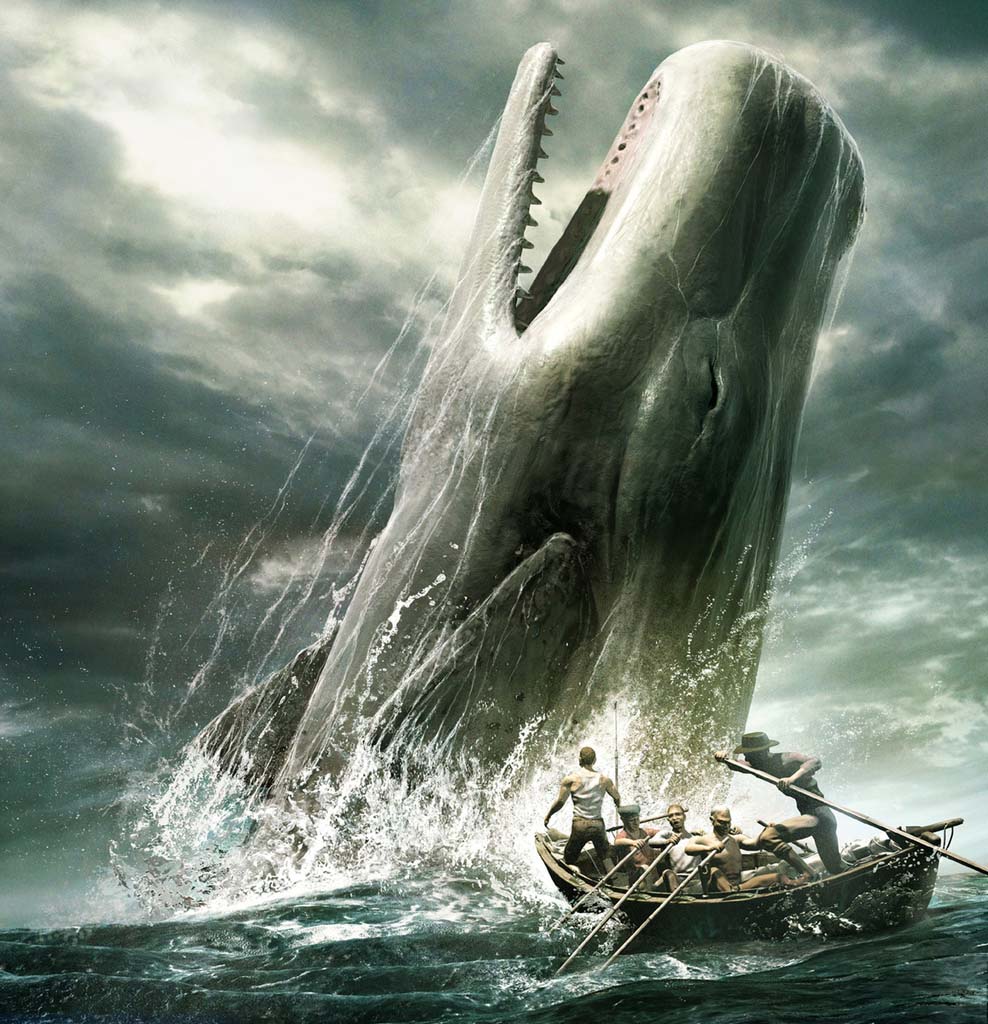
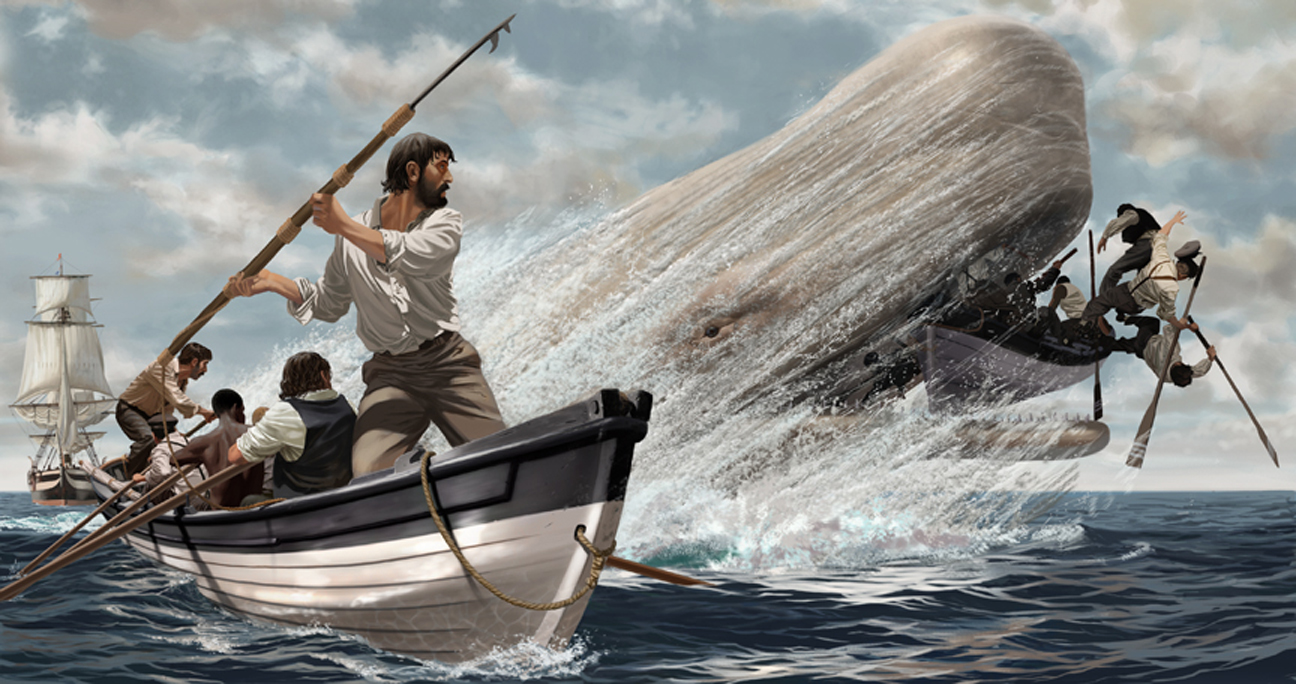
A few years ago, I asked a group of young people if they had ever read the finest novel ever written in English. They thought that they had probably read it, but asked me if I could be a little bit more precise about its title. I said it was called “Moby Dick”.
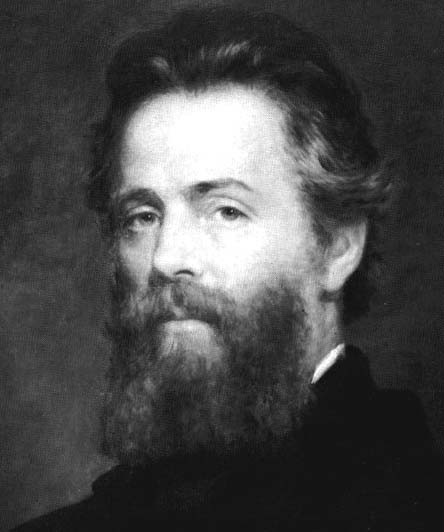
And they were wrong. None of them had ever read it. One person even said that the book could not be considered because it was written by an American. The author’s name, of course, is Herman Melville:
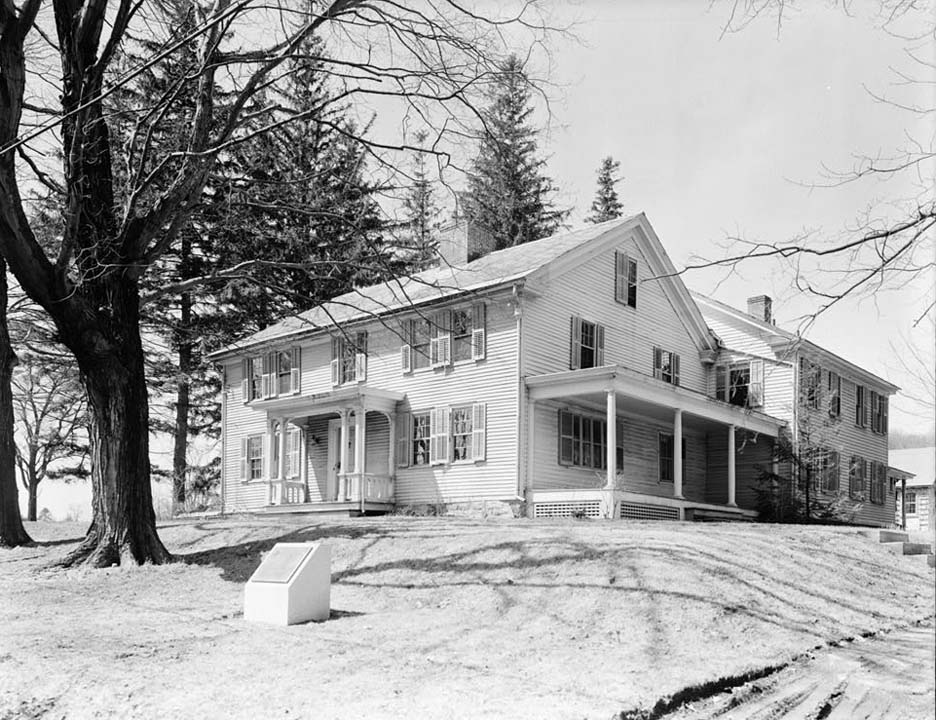
Once he had finished with whaling and the sea, Melville came to live safely on land. Here is his house in Pittsfield, Massachusetts:
A lot of people, of course, are put off by the sheer size of the book. In the three volume British first edition, there were 927 pages. In the American first edition there were 635. (Bigger pages, presumably?).
Help, though, is at hand. I have prepared a handy guide as to which of the CXXXIV chapters can be missed out without causing any real damage to the story, or to your understanding of the plot. The problem was that, at the time the book was written, around 1850-1851, there were no television documentaries. Almost nobody had ever seen a whale. Many people had never even seen the sea. More or less nobody knew anything of whaling:
The reader, therefore, had to be informed about the Natural History issues involved, and that, dear reader, is the reason for the great number of the, as it were, “non-fiction” chapters.
In my humble opinion, therefore, do not trouble yourself too much with:
Wow!! If that doesn’t attract you, nothing will. In addition, these chapters could be missed out, but they may add a smidgin to your understanding of the book. These are:
Chapters 39, 40, 41, 83, 93 and 100.
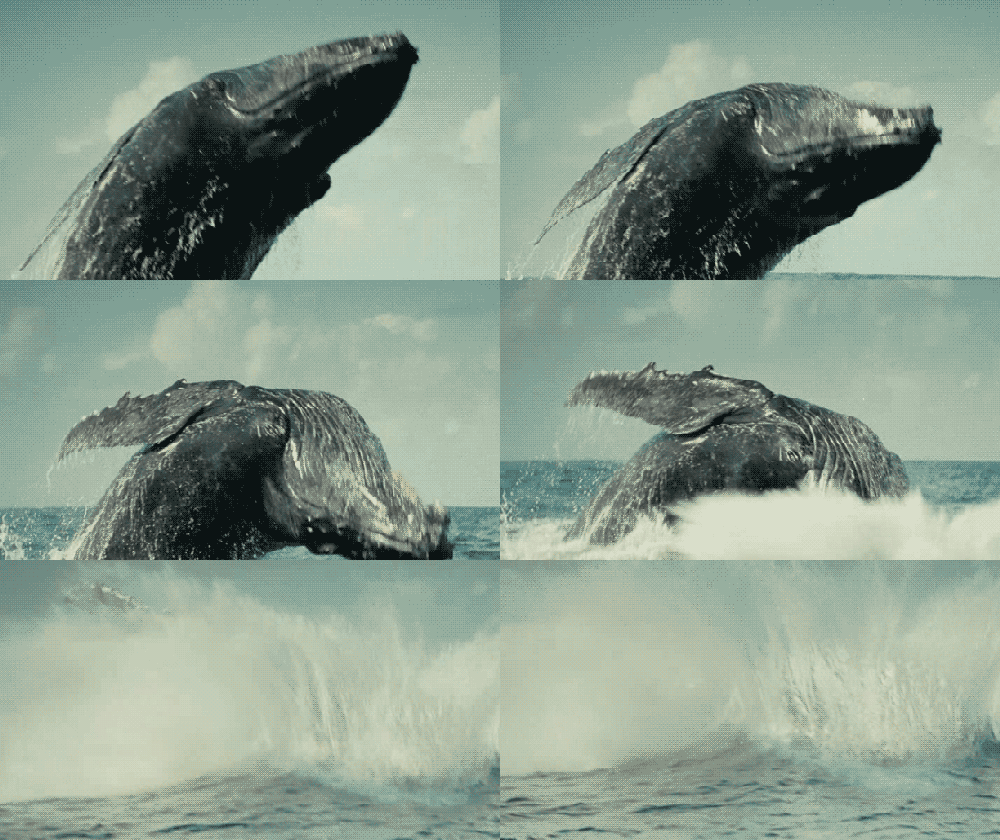
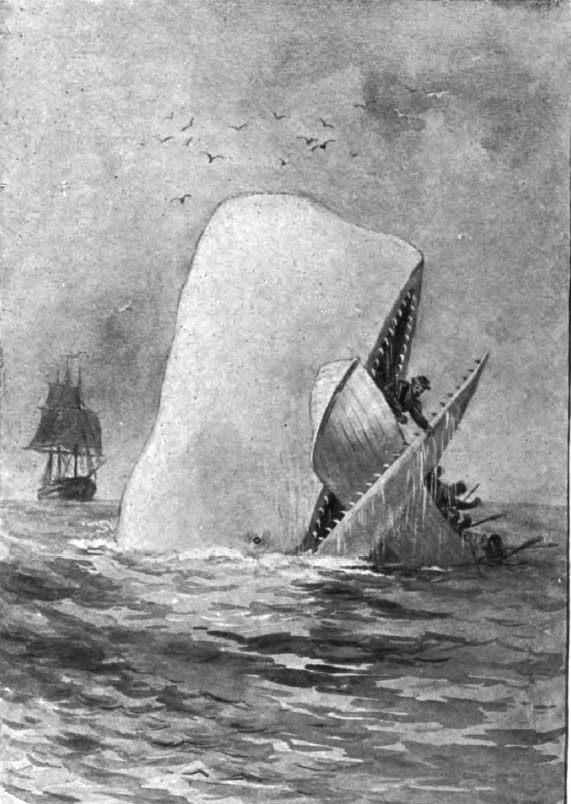
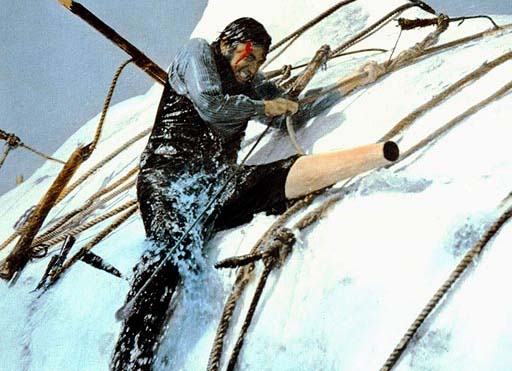
You must read absolutely all of the last thirty chapters, which tell the story of what happens when Captain Ahab and the crew of the Pequod finally set their eyes on a rather angry Moby Dick. (It doesn’t go well.) If you have ever read the book of the film “Jaws”, you will find this last section very reminiscent indeed of that modern classic.
Even if you have doubts, it is not difficult to give it a go. You can download Moby Dick to virtually any type of machine from Amazon, including some of the more modern lawnmowers.
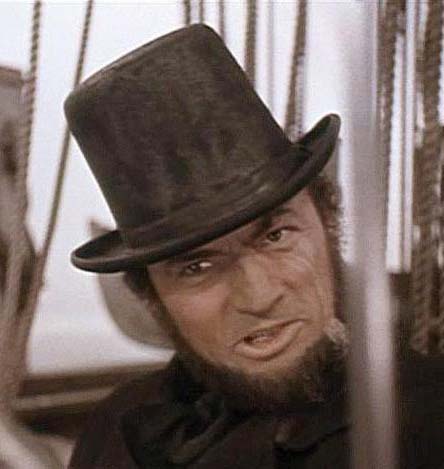
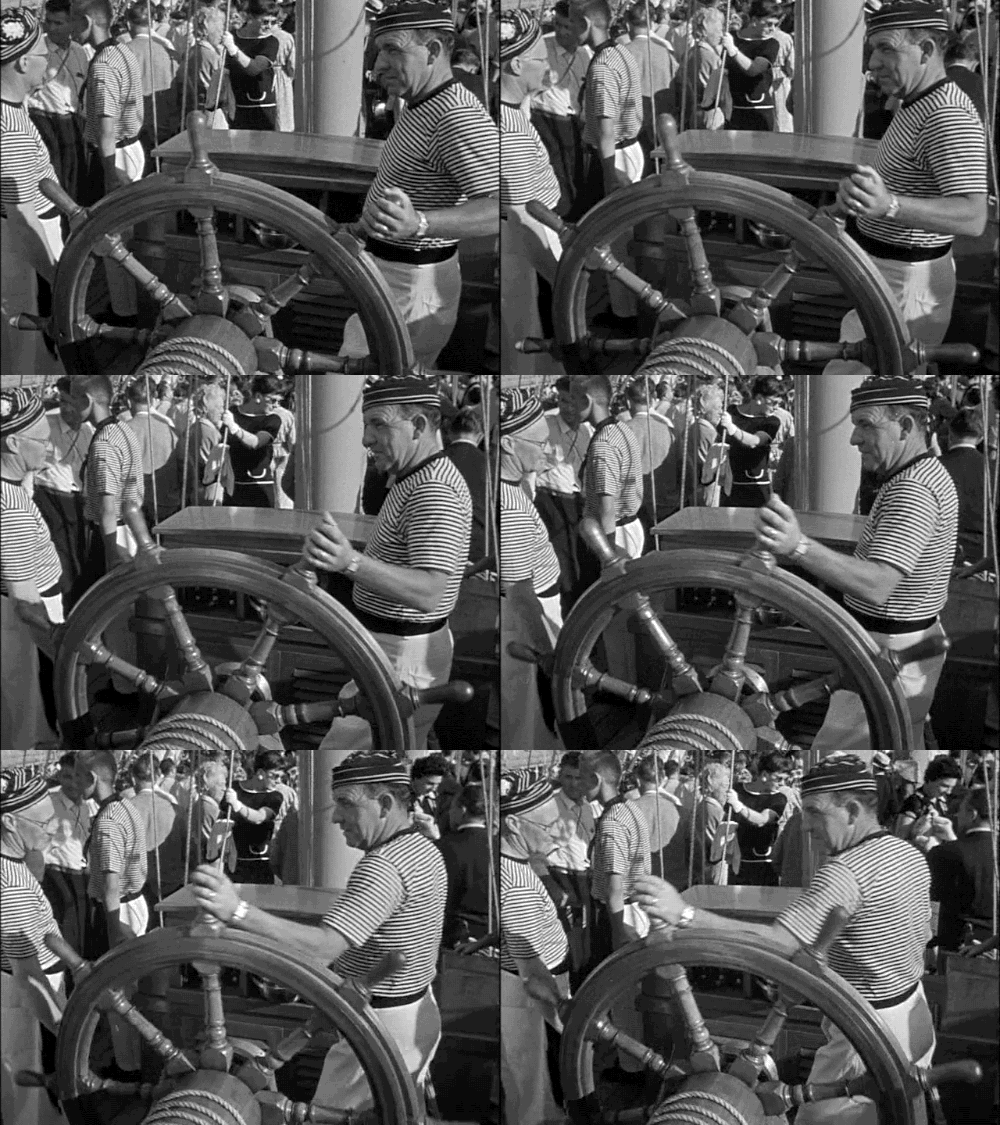
The book is stunning. Pay careful attention to what the characters say and the events which befall them. You will often find that the author has skilfully linked them together. Perhaps he has provided echoes of words and events as the plot unfolds chapter by chapter. This foreshadowing throughout the book creates great tension, because the reader is given broad hints of what catastrophes are in store for the protagonists (who themselves often refuse adamantly to heed these warnings and carry on regardless to their eventual destruction). Here is Captain Ahab:
Originally, it was going to be called Pequod’s after the ship:
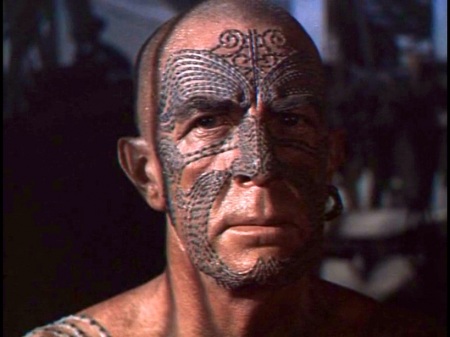
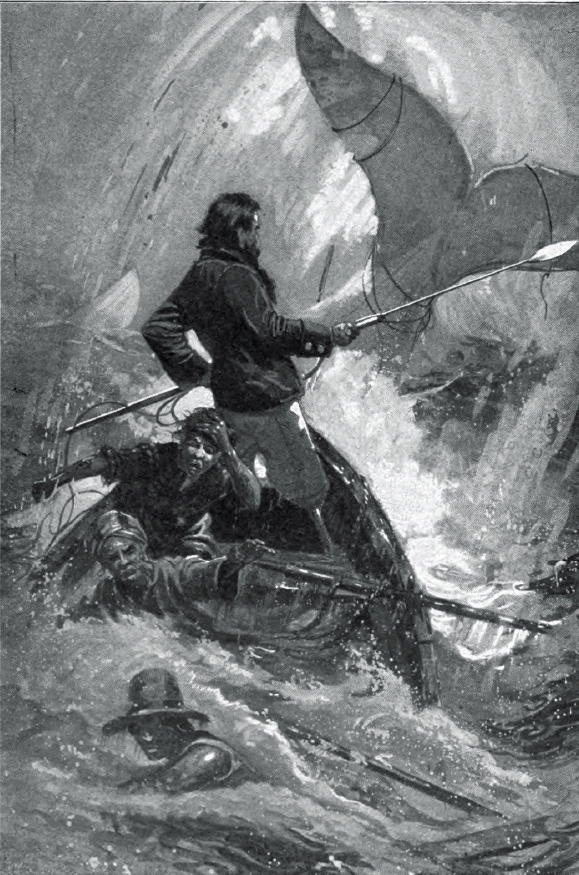
They’re probably lucky it wasn’t named after the whale. Here is Queequeg, one of the three harpooners:
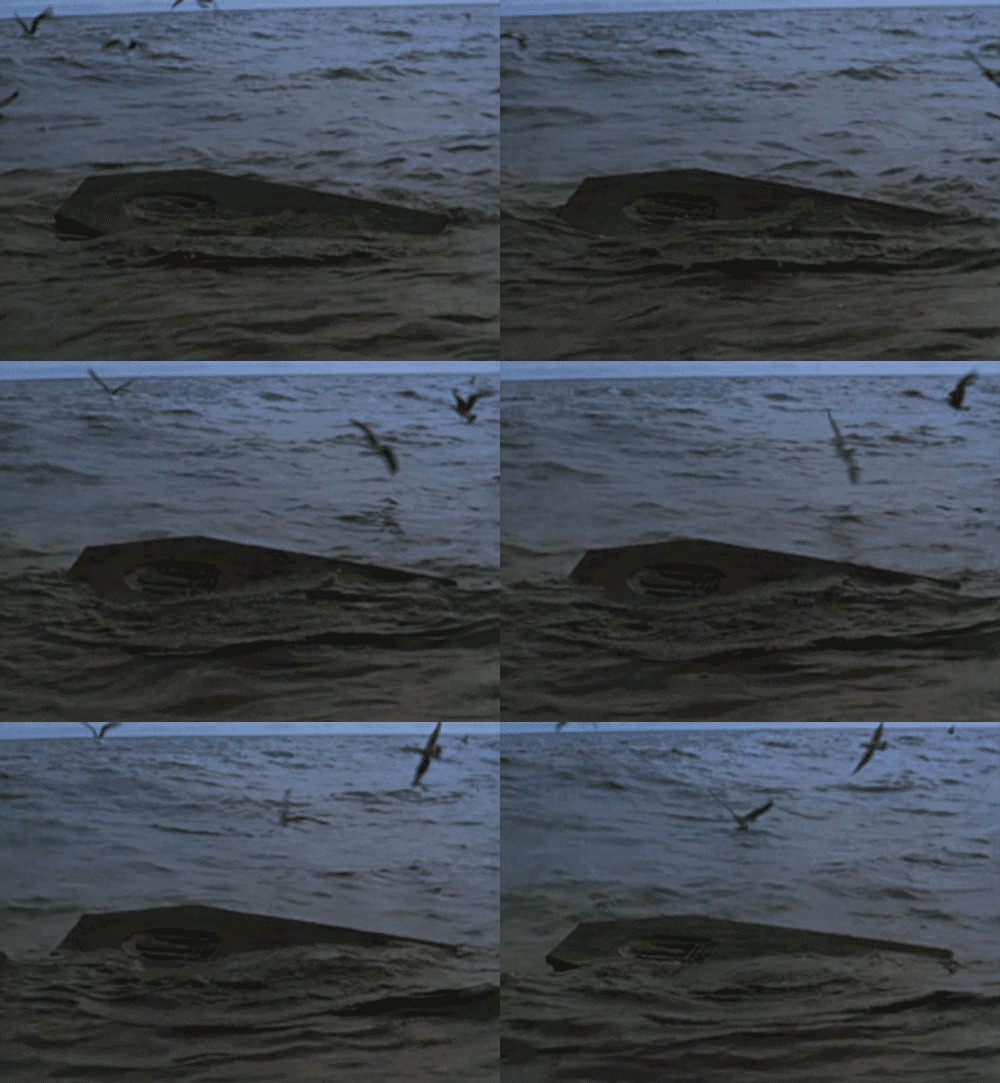
And here is his coffin, floating in the sea:
D. H. Lawrence, the greatest English novelist, called Moby Dick:
“one of the strangest and most wonderful books in the world”
“the greatest book of the sea ever written”
Here are half a dozen quotations to whet your appetite:
“Whenever I find myself growing grim about the mouth; whenever it is a damp, drizzly November in my soul; whenever I find myself involuntarily pausing before coffin warehouses, and bringing up the rear of every funeral I meet; and especially whenever my hypos get such an upper hand of me, that it requires a strong moral principle to prevent me from deliberately stepping into the street, and methodically knocking people’s hats off—then, I account it high time to get to sea as soon as I can.”
“That inscrutable thing is chiefly what I hate; and be the white whale agent, or be the white whale principal, I will wreak that hate upon him. Talk not to me of blasphemy, man; I’d strike the sun if it insulted me.”
“…mastering his emotion, Starbuck calmly rose, and as he quitted the cabin, paused for an instant and said to Ahab: “Let Ahab beware of Ahab; beware of thyself, old man.”
“Tied up and twisted; gnarled and knotted with wrinkles; haggardly firm and unyielding; his eyes glowing like coals, that still glow in the ashes of ruin; Ahab stood forth in the clearness of the morn; lifting his splintered helmet of a brow to the fair girl’s forehead of heaven.”
“Ahab is for ever Ahab, man. This whole act’s immutably decreed. It was rehearsed by thee and me a billion years before this ocean rolled. Fool! I am the Fates’ lieutenant; I act under orders.”
“There is no folly of the beasts of the earth which is not infinitely outdone by the madness of men.”
“Towards thee I roll, thou all-destroying but unconquering whale; to the last I grapple with thee; from hell’s heart I stab at thee; for hate’s sake I spit my last breath at thee.”
And don’t forget, of course, Moby Dick has the most famous beginning of any novel:
“Call me Ishmael.”
The quotations from the end are good, too, but I won’t spoil it for you!
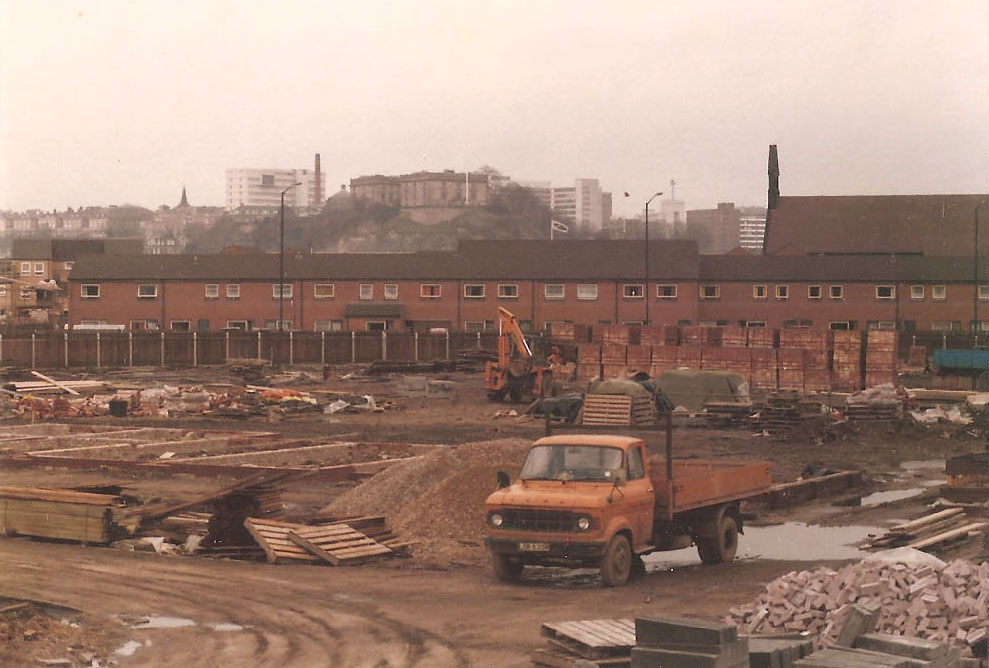
When we were first married, my wife and I bought a house in the Meadows area of Nottingham. This was traditionally a place of slums, crime and general unpleasantness, but at the time, the early 1980s, huge numbers of unhealthy hovels were being demolished to be replaced by newly built, better quality, council houses, as they were then called. Mixed in with all the rented accommodation though, was a small estate of private houses, and we bought one of those. When we first moved in, we were surrounded by a vast building site:
And now, it must be nine minutes past four and the teaching day is ended and I have driven home at top speed:
“Home is the sailor, home from the sea,
And the hunter home from the hill.”
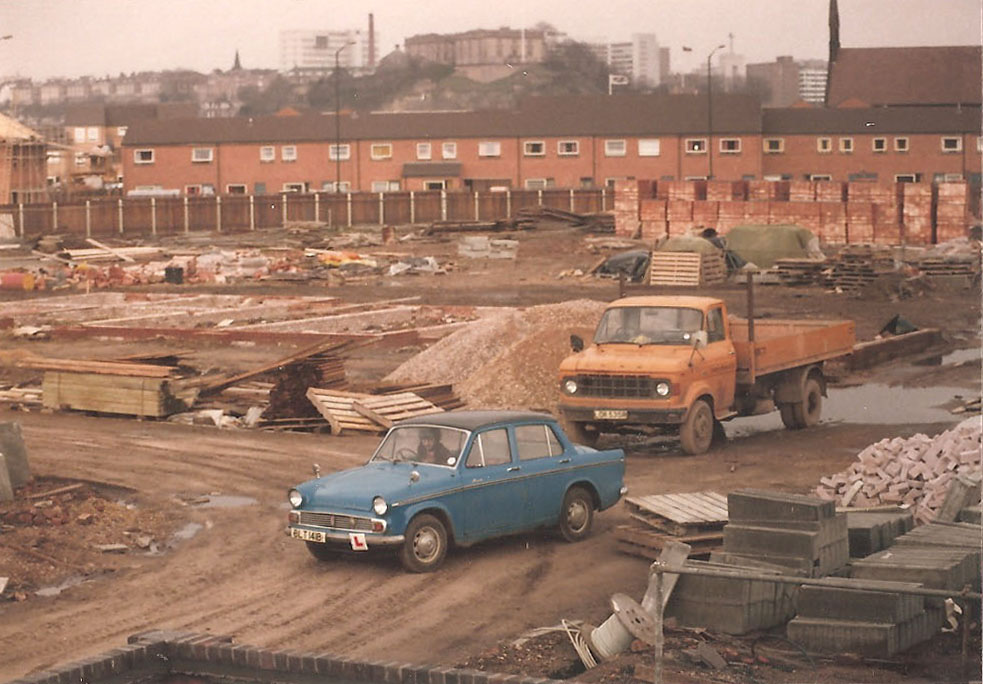
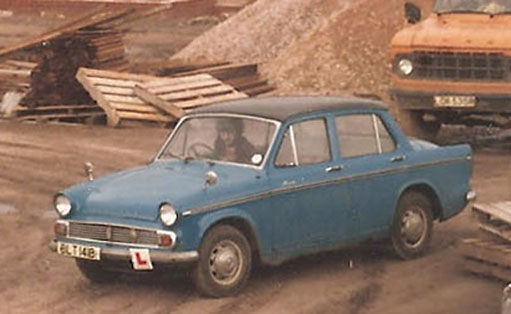
I used to have an old 1964 Hillman Minx De Luxe, with the registration plate BLT 141B. It was my first car, and I loved it dearly. I wish I could have it back again. It had previously belonged to my Dad, Fred, who loved it even more than I did. When the seventeen-year-old car failed its last roadworthiness test, he was so glad that I took the trouble to drive it, fairly illegally, the 35 miles to his house, just so that he could then drive it himself on its last ever journey down to the scrapyard.
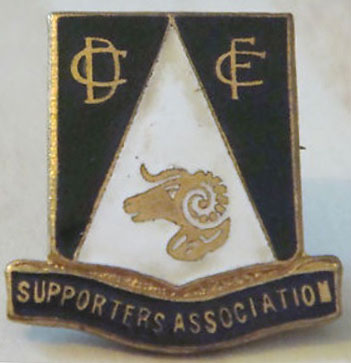
This beautiful blue car was “the one” as far as Fred’s motoring career was concerned. One day in 1966, he took me with him to nearby Derby and we visited Peveril Garage, on Friar Gate, up near the headquarters of the Derby County Supporters’ Club:
Fred told me not to mention anything whatsoever about the day to my mother, not under any circumstances. Without any consultation with her at all, therefore, he bought this marvellous car, which was priced at £510. In those days, that was a princely sum indeed. If truth be told, it was actually a total sufficiently royal, that when my mother did eventually find out what he had done, she would have had Fred beheaded if she could have organised it.
The car was a rich blue, half way between sky blue and navy blue, with a black side stripe picked out in metallic chrome. In later years, when he had problems with rust on one of the wings, Fred was to opt for a total re-spray, which allowed him to retain the same colour blue for the body, but to incorporate a black roof which added that extra, unique, little detail to his beloved car:
At this time, I had only recently passed my driving test, so, while I waited for the green “Provisional” plates to be invented, I retained my Learner plates, with the Big Red Ell on them. That was enough to be pulled over by a young policeman, apparently tired of arresting burglars, drug dealers, terrorists, murderers and bank robbers. Still, no hard feelings.
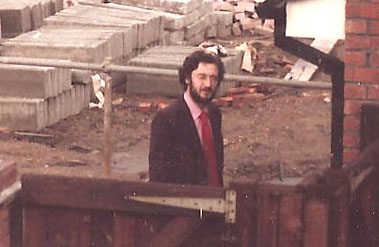
And here I am, looking like the man who designs the stage costumes for a 1970s pop group:
I am wearing my favourite wide lapel purple jacket which had a wonderful Polyester feel to it. My shirt was short sleeved and chequered in pink and white. My extra wide tie was scarlet, and again, made of Polyester for easy cleaning. My glasses were gold-rimmed and my hair was a deep delicious dark brown without the slightest trace of grey:
I had probably been wearing a pair of trousers throughout my day as a teacher, but they are not visible in this photograph. They may well have been my favourite pair ever, which were generously flared and mid-grey with an emphatic large black check design all over them. This created a whole series of huge squares perhaps four or five inches in size. I eventually gave these show stealers to a charity for the homeless in Africa. I often wonder who got them and what he made of them. Conceivably, some kind of shelter.

 Those of you who follow my blog will be familiar with the many stories I have told about Nottingham High School; its Founders, its coat of arms, its war heroes, its caretakers and its one or two villains. I have recently finished compiling these stories, and many more, into a new book called Nottingham High School: The Anecdotal History of a British Public School, published with Lulu.com.
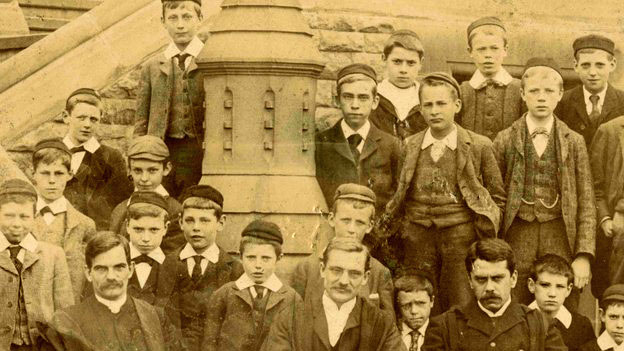 The book is written in diary form and runs from Thursday, June 30th 1289 to Thursday, July 12th 2012. It’s an easy read that you can dip in and out of as you wish. Find out about the antics of the boys, the excesses of the staff, the sacrifices of the alumni, and the castle-like school building in all its majesty.























 John Knifton