The Headless Horror of Grafton County, West Virginia

I’ve just finished watching another episode of “Mountain Monsters”.  This time our hillbilly hunters pursue the Headless Monster of Grafton County, West Virginia, and discover his revolting culinary habits.

Here is the team……..

big cast
In charge is Trapper, with Jeff as researcher, Willy as trap builder, Buck is the rookie, Huckleberry is the security expert, and the absolute star of the show is Wild Bill. Anything is possible for an ex-Marine.


It didn’t take very much googling to find some original reports from way back in the day. The webpage is entitled “The Grafton Monster sightings of 1965

I have copied and pasted the best contributions to save you the trouble of looking for them, and because they are just so interesting.

Kurt McCoy, from Morgantown, West Virginia, wrote…

“I recently ran across reports of “monster sightings” in the Grafton area, back in June of 1965. Robert Cockrell apparently wrote two articles for the Sentinel about the sightings, one of which was his own.
The “monster” was described as being between seven and nine feet tall with white or light gray skin, “slick like a seal’s”. There were several sightings, but not much publicity and the events have been all but completely forgotten.
Now, since it’s roughly 50 years since those sightings, and given the popularity, and tourist/commercial value that has been given to other better known West Virginia “monsters” (like the Flatwoods “Green Monster” and Pt. Pleasant’s “Mothman”, it seems like a not altogether awful thing to try to preserve and record whatever information can still be gleened about Grafton’s weirdest visitor.
So, anybody remember hearing about the Grafton Monster? Any relative, friends, or neighbors who saw it? Any actual witnesses out there?
If so, let’s hear about it!”

A second contribution from Kurt was…

“The original Grafton Monster sighting was on June 16th, 1964. A newspaper reporter rounded the bend coming on to Riverside Drive and saw a huge white, living Thing on the grass by the river. The Monster was described as having slick skin like a seal’s and no apparent head. The witness sped away, but returned later with two friends and found nothing but grass matted down by the river bank. As they investigated the scene, however, a strange whistling sound seemed to follow them about. The original witness had no intention of reporting the incident for fear of ridicule, but word leaked out from the two friends and, grudgingly, a brief report of the sighting was published in the local newspaper (The Statesman? have to check the notes on that).
Almost immediately there was a wild “monster craze” with bumper to bumper traffic along Riverside drive and dozens of people roaming about the town armed with shotguns, crowbars, baseball bats and other potentially harmful toys. The local authorities, understandably unhappy with this potential disaster, did everything possible to dampen the monster mania. The newspaper printed a follow up story maintaining that the whole thing was just a misidentification of someone pushing a pile of white boxes on a hand cart. The hysteria died down and the whole thing was soon forgotten.
The original witness continued to investigate, however, and found about twenty other witnesses whole described seeing something almost identical to what he saw. A week earlier a man in Morgantown had seen an identical beast in the Mon (sic). The reporter exchanged letters with Gray Barker about the incident (those letters are in the Gray Barker Collection in Clarksburg). Eventually the ridicule and official resistance proved too much and the reporter dropped his investigation–and refuses to talk about it to this very day.
The newspaper reports are real–you can find them on microfilm. The incident was real, whether or not the Monster was.”

Woodsman, of Saint Joseph, Missouri, wrote…

“I have seen the creature called “The Grafton Monster” several times when I was a young man and it is very real. My first encounter I was with my Father cutting wood. We had finished and we’re loading the truck, when our two dogs started barking. We stood there and listened, something was walking, getting closer. My Dad told me to get the gun from the cab (He carried a double barrel 10 gauge with 00 buckshot).Whatever it was had picked up it’s pace and continued toward us. All we knew for sure was, it was big and wasn’t scared of us, the dogs or the chainsaws .It stopped about 50-55 yards from us in the tree’s and went quiet. My Dad pulled both hammers back and stood in front of me, told me to be ready. The next thing that happened I’ll never forget. It stepped out, looked at us, took 3 strides in our direction, turned and walked back into the tree line. That was my first sighting of the beast and I’ll never forget it. My 2nd encounter was about 2 months later at night, fishing alone.”

The Headless Horror is not always quite as headless as he is portrayed. It’s more a question of poor posture, apparently…

wpid-wp-1397870811302


Our heroes prepare for the hunt…

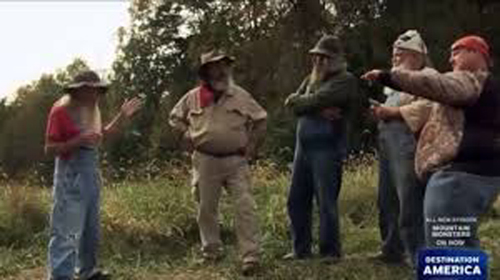
They talk to a rather scared eye witness…
prepareing

Both Trapper and Buck get the chance to try out some of the local goo…

Afterwards, there follows a reasonable post-match examination of events, although I would have liked more attention to have been paid to what appeared to be excellent thermal images from the special camera.

Unfortunately, at the end of the day, our heroes are left with no physical evidence of their huge adversary. Personally, I wish that they had captured the Headless Horror’s Hat…

black_top_hat

“Mountain Monsters” is on Animal Planet Channel every Thursday at 10.00 p.m. (Sky 523).
3 Comments

Filed under Cryptozoology, Film & TV

One good tern deserves another… Cemlyn 1988

(An extract from my old birdwatching diary “Crippling Views”)

As I mentioned in a previous blogpost, I used to be a twitcher and ranged far and wide across Great Britain in search of rare birds. The furthest I ever went in a day from my home in Nottingham was to Glasgow and back, a distance of 633 miles, in a successful attempt to see an American Black Duck, which was, at the time, an extremely rare bird. My greatest ever failure was when I went to an island off the south west tip of Wales and failed to see the little American bird which was then called a Yellow-Rumped Warbler (270 miles). At the other end of the spectrum, I once saw an extremely rare bird from the USA, a Cedar Waxwing, as I drove the mile and a half to work in Nottingham. I hastily parked on the empty pavement, walked across to view a flock of birds, and became the fourth person to see this particular individual, the second ever for Great Britain.
I put together many of my twitching tales into a book called “Crippling Views”. I was unsuccessful with every single publisher, and back in the day, there was no Kindle to help the budding author. So……I published it myself as a ring-bound book, and sold it at £5 for a hundred or so pages. It didn’t make my fortune, but the reserve goalkeeper at Liverpool Football Club, Mike Hooper, bought a copy, so that was good enough for me.
One day, “Crippling Views” may see the light of day on Amazon’s print-on-demand, but for now, here is an extract…

“Saturday, July 14th 1988
…over the weeks, I have become increasingly dissatisfied with the in-flight views of Roseate tern that I had at Rhosneigr, Anglesey, in north Wales, that when a Bridled Tern is found at Cemlyn Bay, only a few miles along the coast, I decide to go for it…”

upperparts

Oman
Bridled Tern may be rare in Great Britain, but it’s not particularly uncommon in New Zealand…

new zealand

“Bridled Tern and Roseate Tern. I’ll be killing two birds with one stone, as it were. Indeed, I may not even have to go to Rhosneigr since the ternery at Cemlyn Bay is a secret site for breeding Roseates anyway. I feel fairly confident that we’ll get both birds. After all, one good tern deserves another….”

“It’s a very long trip to Cemlyn from Nottingham, well over two hundred miles, and the furthest I’ve been for a bird so far. The roads get gradually narrower and narrower, once we leave the A55, which is like a motorway compared to the increasingly countrified A5 as it approaches Holyhead. One of my friends is delighted that we go through Llanfairpwyllextremelysillylongwelshname and he bores all of us rigid with his ceaseless repetition of it. We finally know that we are nearing our destination, as we find ourselves hurtling down that true Welsh speciality, the Single Track Road Without Any Passing Places Whatsoever. I still can’t really understand why you seem never to meet anything, but you never do. Does Wales have a gigantic nationwide one way system for tourists?
At last, we reach Cemlyn Bay. As we squeal to a halt in the car park, another birdwatcher shouts to us that the bird has just flown in.”

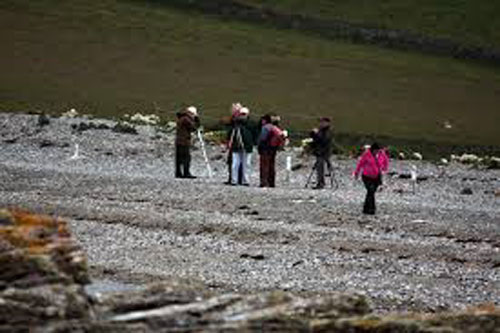
birders
“This is good, since the bird is apparently in the rather dubious habit of disappearing far out to sea for hours and hours on end. We are therefore, rather lucky in our timing, since, theoretically, if the bird has been out fishing, it shouldn’t be too hungry and should stay loafing around for a good while. There then follows a long trek across the relentless shingle to the ternery.”
shingle
“The whole place is rather peculiar, and perhaps unique from a morphological point of view.”
cemlynbay aerial
“There’s a beautiful, wide sweeping bay, with a shingle bar at one end, and between this and the land, there is a pool of probably salty, or possibly fresh, water. In the middle of this little lake, there is a flat island, covered in dry, scrubby vegetation, with plants all about a foot high. This is where the terns nest. They are mostly Arctic Terns, but with just a few Common Terns, and a whole host of noisy Sandwich Terns with their shaggy caps and black bills, replete with bright yellow tips. There are also a good few Roseates, up to perhaps twelve, sitting on a row of stones, preening.”
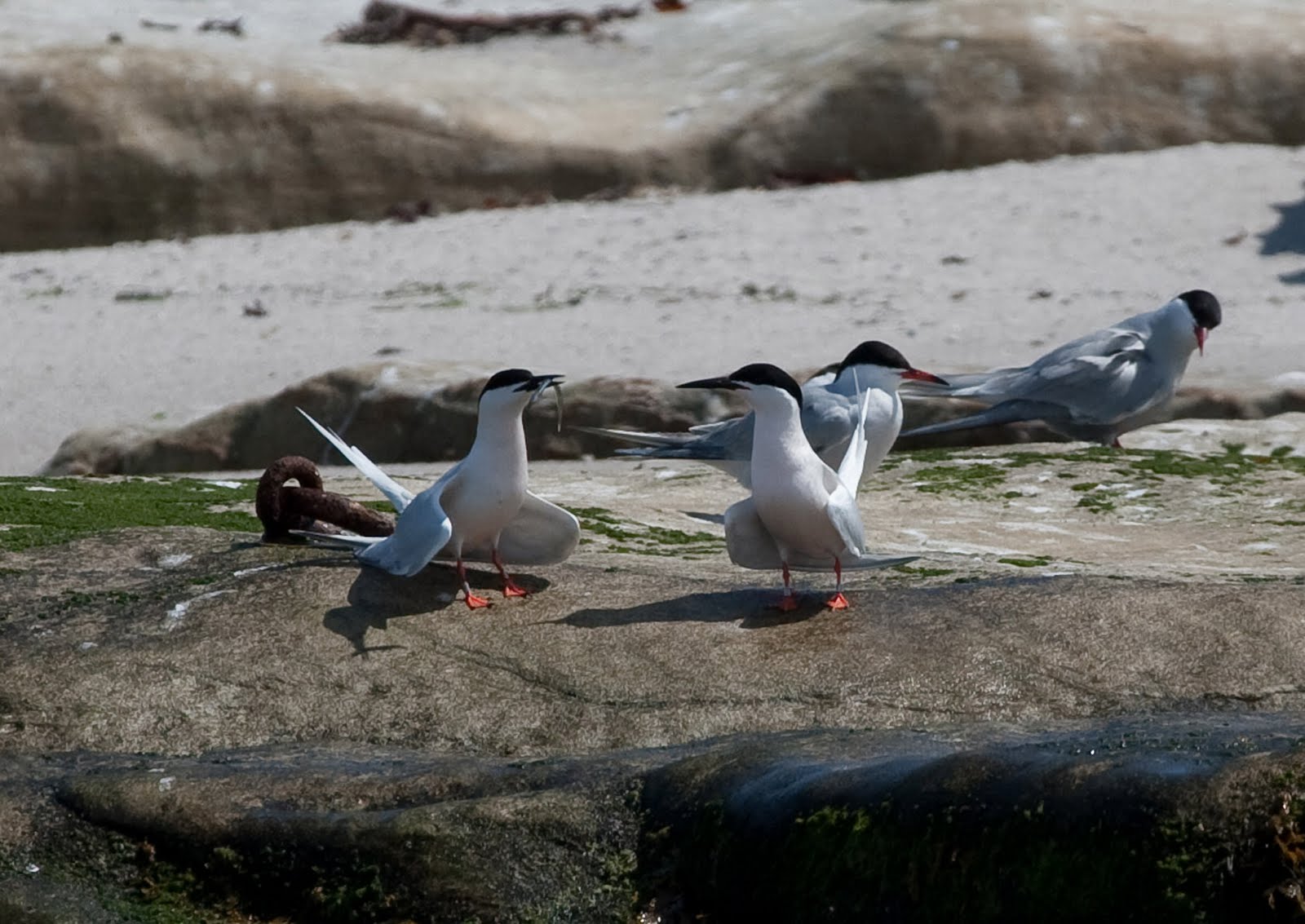
Roseate Tern-1b-06-11
“They have lovely all black beaks, and short little red legs. They don’t, however, have the great long tail streamers that they are supposed to have…I presume that they must have broken these off during the busy period of feeding the young. And unfortunately it is also too late in the season for their white breasts to have the pinkish tinge that they are famous for. Nevertheless, they are fairly distinctive birds, particularly in flight, when their broad wings are very noticeable. Overall, they are very pale birds, and we realise that the birds we saw two months ago at Rhosneigr, far out over the sea, were in actual fact Roseates.
The star of the show, the Bridled Tern, stands quietly at the back of the ternery, half masked by vegetation, and other birds.”
imagesA0DNWR5R
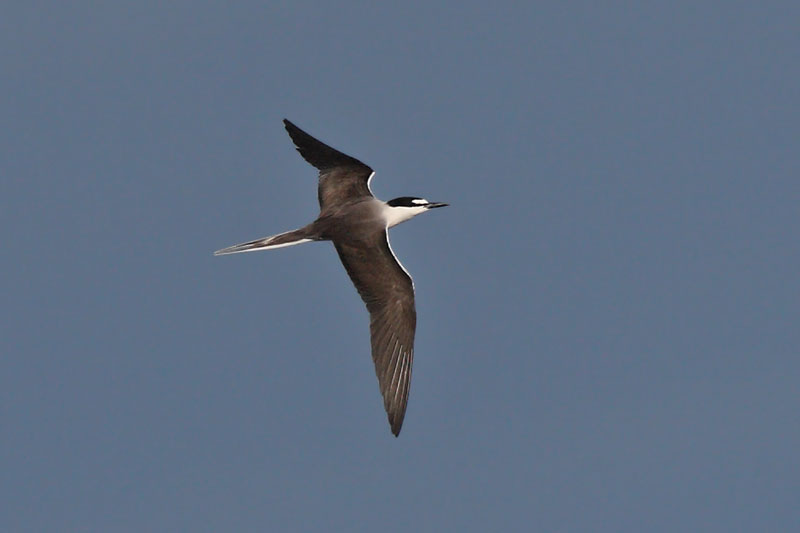
“This oceanic bird truly is a magnificent creature, a really tropical looking individual. Its colour is most enigmatic, a kind of brownish black that one of my friends says they use in the fabrics at the factory where he works. As a shade of dress material, it’s called “taupe”. I just don’t know, but it is a rather striking colour. I cannot get over just how exotic the bird looks. After ten minutes or so, it does a series of little flypasts, showing off its darkly coloured upperparts, and its sparklingly white undersides, the whole set off by a kind of negative bandit’s mask, white instead of black.”


“It is straight into my Twitching Charts at Number One.
Probably more significant in terms of bird behaviour though, are the Herring Gulls that perch on top of a distant building, and every now and then swoop down into the ternery , pick up a single unattended tern chick, and then fly off to eat it. They are like Mother Nature’s version of Russian Roulette. If you’re number’s up, it’s curtains. Evolution in action, as the more heedless birds don’t get to pass on their genes.”

That account doesn’t seem almost thirty years ago. It isn’t just Bridled Terns that fly!
They are still, though, a rare bird in this country. Just a month or so ago this year, one was found in the Farne Islands off the coast of Northumbria. In my opinion, these three are the very best of many videos….


Bridled Tern Farne Islands 21 Jun 14

Bridled Tern, Inner Farne


2 Comments

Filed under Nottingham, Twitching, Wildlife and Nature

“The Lancaster: Britain’s Flying Past”

Last night, I watched the superb BBC documentary “The Lancaster: Britain’s Flying Past”

The ranks of those who flew Lancasters with Bomber Command in the Second World War have, with the inevitable passage of time, thinned out somewhat, but the BBC has managed to put together the requisite crew of seven combat veterans. There were, therefore, a pilot, a flight engineer, a navigator, a bomb aimer, a wireless operator, a mid-upper gunner and a rear gunner…”tail-end Charlie”.
john sergesant
Every single man in Bomber Command was a proud volunteer. During the course of the war, they were to suffer 55,573 casualties from a total of 125,000 aircrew (a 44.4% death rate). The average bomber usually lasted for fewer than ten sorties. Life expectancy for crew members could be as low as two weeks, the same as a soldier in the Battle of the Somme in the First World War. Of every hundred airmen who joined Bomber Command, forty five were to be killed outright, six would be badly wounded, eight were captured by the enemy, and only forty survived physically unscathed. From the men who were serving in Bomber Command on September 3rd 1939, only 10% made it through to the end of the war some six years later.
There was no knighthood for Bomber Command’s leader  though, and no campaign medal for his “old lags”. In 1945, Roosevelt and Churchill had been asked by Stalin to destroy Dresden for him, and the two Western leaders were only too eager to demonstrate their ability to slaughter the enemy, be it German, or perhaps, even, one day, Russian. But when Bomber Command, as the best area bombers in the world, carried out this ghastly task, as they had been ordered to do , they then found themselves ostracised by those very same politicians, who now wanted to be popular as humanitarians, and to win elections after the end of the war.
It was eventually public subscription that finally paid for Bomber Command’s well-deserved memorial, fifty years or so too late, perhaps…
memorial
The “Lanc” was the greatest bomber ever made. It could fly at 300 m.p.h. and carry an enormous weight of bombs, with the more usual 4,000 pound “cookies” often bolted together to form either 8,000 or 12,000 pound “blockbuster”bombs. A Lancaster might carry hundreds of incendiaries, and some specially adapted aircraft could carry the 22,000 pound, ten ton “Grand Slam” bomb designed by Barnes Wallis.

P1300996 bomb

What an enormous bomb bay….
P1300780zzz
The aircraft’s immense power came from four magicians, well, four Merlin engines to be more precise…
P1300766
The Lancaster is a very large bomber; museums often struggle to fit them in, as here at Duxford

This slideshow requires JavaScript.


Best of all is the Lancaster in the RAF Museum at Hendon in north London (very easy to reach off the motorway)

P13203hend
Don’t miss the vain boast of Hermann Göring, painted on the nose of the bomber(with his name misspelt!).

This slideshow requires JavaScript.

The Reichsmarschall was also foolish enough to say that if any enemy plane did fly over the Reich, then , as the man in charge of the Luftwaffe, people could call him “Herr Müller”, a common Jewish name. Well, guess who had the last laugh?
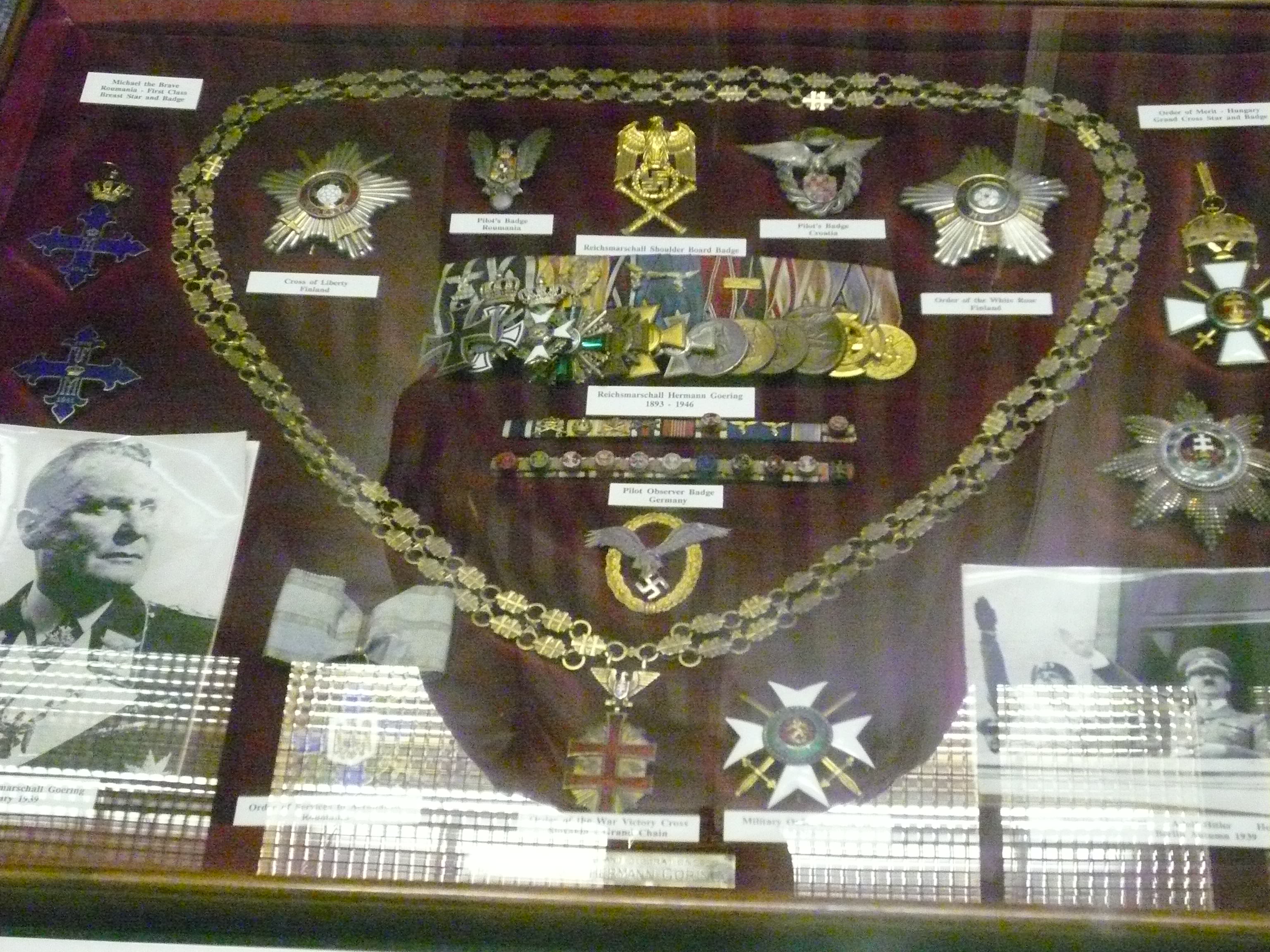
Göring‘s medals too, are in the museum…
P132medals
A couple of years ago, I really enjoyed visiting East Kirkby in Lincolnshire to see their Lancaster.  The aircraft does not fly but is taxied around the airfield every day.
P1300617 EK
What a beautiful machine, painted here as “Just Jane”, a fictional character in the wartime newspaper, the Daily Mirror.

This slideshow requires JavaScript.

The force of the engines being warmed up is amazing…

Then it sets off around the very large field…

Before returning, eventually, back to its rightful place…

It’s just such a pity that there are so few Avro Lancasters left for us all to enjoy!

7 Comments

Filed under Aviation, Bomber Command, Film & TV, History

A bird table is a joy every single day!

There were some lovely visitors to our bird table this morning…….
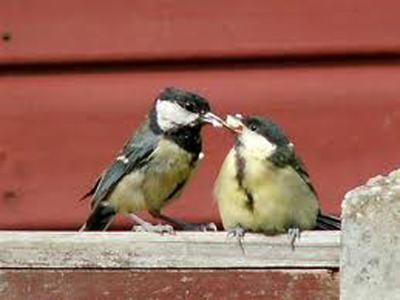
Great tits…
A1  great tit
Only a very few are still feeding their babies…
A2 g tit feeding baby
Thank goodness!
a3a BABY GREAT TITS
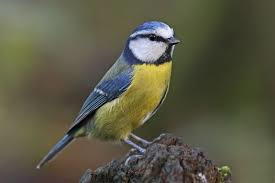
There were Blue tits….
A5  blue tit
With plenty of less gaudily coloured youngsters in attendance….
© Marshall Faintich London, UK July 12-19, 2011
For some unknown reason, it can be spelt either Coal or Cole tit, but they were there anyway…

Coal_tit_UK09 wiki
With what I felt were possibly the more dully plumaged youngsters…
Coal_Tit_juvenile_2
There was plenty to look at, with lots of recently fledged youngsters in evidence, taking the easy way to find food.

Soon I will be taking a more in depth look at bird tables, and also at what I am seeing as an increasingly worrying lack of insects in our organic garden.


1 Comment

Filed under My Garden, Nottingham, Wildlife and Nature

If I could fly, that’s what I’d be

There is not too much time left this summer, but you should still be able to see a few lingering Swifts flying high in the sky, before they make their migratory journey back to tropical Africa. Of all birds they are the most stunning fliers, and can make mere earthbound humans very jealous indeed…
swift 1
They are like a muscle powered flying torpedo…
SWIFT_tcm9-160960
They climb and bank with practiced ease…
swift_gc_tcm9-161003
Swifts feed on flying insects…
AMB_swift-catching-fly
They are so committed to continuous flight that they even mate on the wing…
Swifts-mating-(2)
Swifts spend the first two years of their lives continuously aloft, before building a rather rudimentary nest in a crevice in a cliff. In a modern city, they might nest on high-rise buildings, perhaps even in a man-made nest box.
nestbox
The bird’s Latin name “apus apus”  means “without feet”, and indeed, if a swift should ever fall to the ground, it will have the greatest difficulty in getting back into the sky, and may require assistance from a kindly passing human.
With their scythe shaped wings, swifts are a fairly large bird, and can be seen easily from quite a distance, even with the naked eye…


They often fly with House Martins, whose buzzing call is distinctive…

Here are a few swifts in slow motion

In Italy, you can even have dinner and still bird watch!

Swifts often fly round in family circles, screaming to each other, as here in Denmark…

Don’t you wish you could fly like that?


Leave a comment

Filed under My Garden, Nottingham, Personal, Wildlife and Nature

Mountain Monsters: a hillbilly hunting a hillbilly!

My favourite TV programme at the moment is called “Mountain Monsters”. The cast are, in their own words, hillbilly hunters, who pursue unknown animals in the Appalachian Mountains, and attempt to capture them. The film footage which they have managed to take constitutes some of the most dramatic and  convincing evidence of Bigfoot in recent years.
Episodes are aired at 10.00 p.m. every Thursday on Animal Planet Channel (Sky 523 in the UK). Here is the team….
big cast
In charge is Trapper, the team leader…
trapper
Sometimes he wears a trapper’s hat…
trapper_hat
There is Jeff, the researcher…
jeff-headlee-mountain-monsters
Willy, the trap builder…
_willy
Buck, the rookie, who is given all the jobs which involve getting wet or covered in mud…
buck the rookie
Huckleberry is responsible for security…
huckleberry_da
The irrepressible Wild Bill is, as they say, a real character. He is the expert tracker, a superb tree climber, and a man who believes anything is possible if you are an ex-Marine.
wild_bill
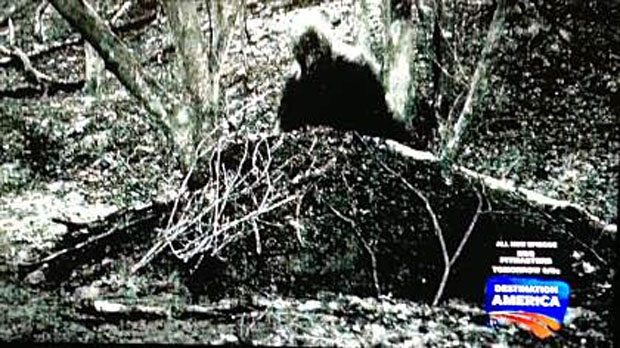
In a previous episode they managed to take a trail-cam photo of the Ohio Grassman. He is the Bigfoot type of creature in that particular state, and the size of the pile of earth in the photograph makes him at least eight or nine feet tall.
big grassman1+1
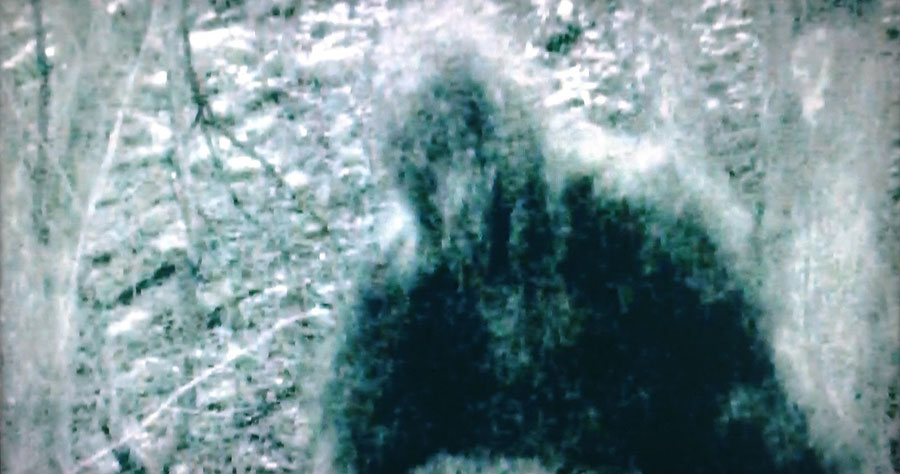
Close up, he really is quite strange…
enormous grassman2
This week our intrepid heroes set out to hunt down the Yahoo, who lives in Nicholson County, West Virginia.
yahoo drawing

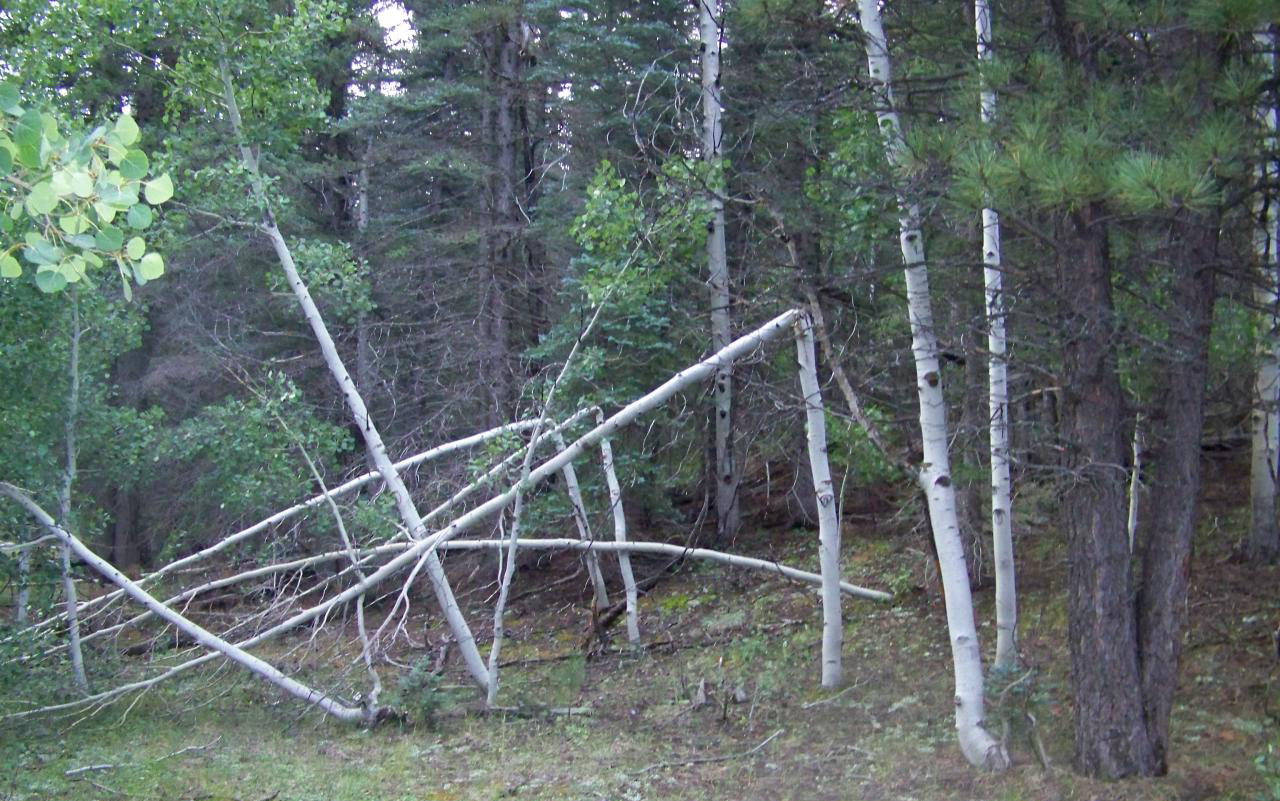
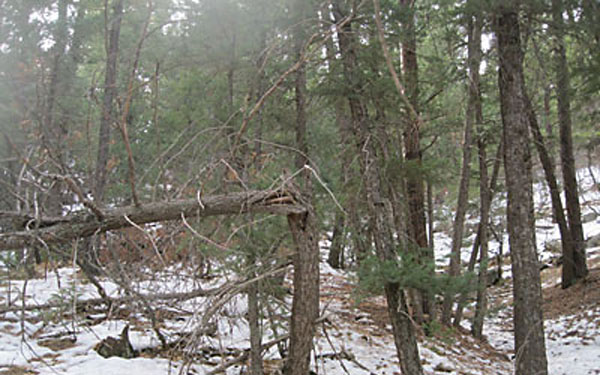
During the pursuit, they see every possible indication of the presence of a Bigfoot-type animal. These creatures regularly break down trees to mark their territory, and warn away trespassers…
tre break 2a
They find three sets of enormous footprints, presumably Daddy Yahoo, Mummy Yahoo and Baby Yahoo…

This slideshow requires JavaScript.


They stumble upon a carefully constructed Yahoo nest…
nest
They hear tree knockings and see a farmer’s video of the creature:


Wild Bill and Willy build a trap…
making traps
It is quite an  undertaking to work on the enormous trap needed for a creature of this size and strength:


In the subsequent thrilling night hunt, everyone sees the creature clearly on a thermal camera, they hear its thundering roar and it breaks down a number of fully grown trees down as a threat display.
bigfoot-cr-colorado-010
This is a scary episode, a group of men alone with a creature of unbelievable strength:

And it’s nice to have a relaxing chat about it afterwards!:

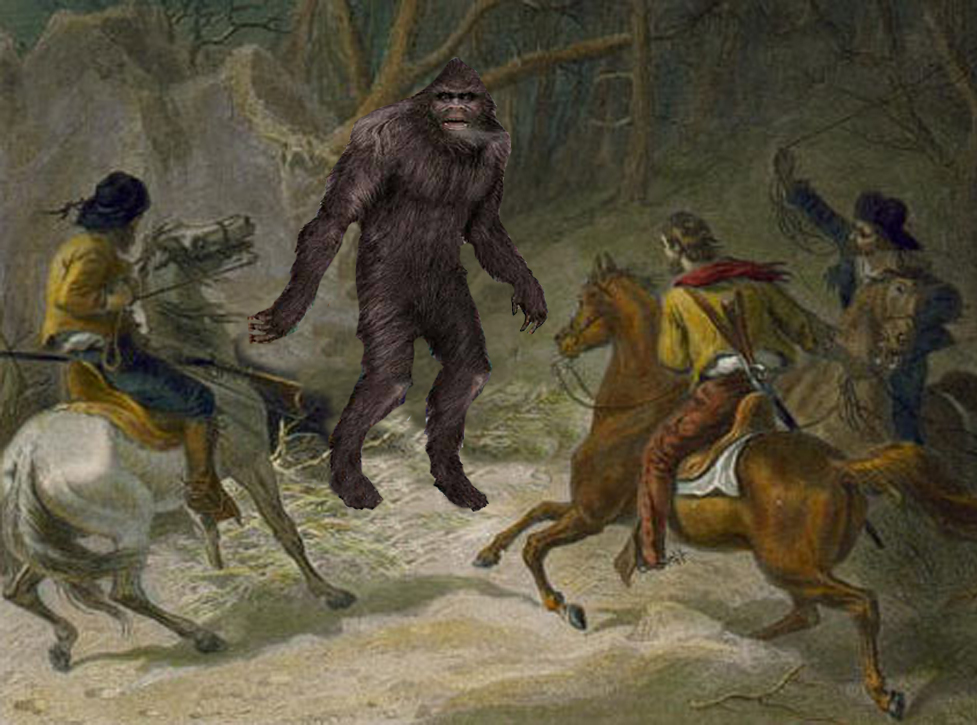
You might well argue, of course, that Bigfoot is merely a man in a suit, but as a genuine bona fide monster, he has certainly been around for quite a while. Supposedly, he harassed Lewis and Clark nearly two hundred years ago.
Lewis-and-Clark harassed

Perhaps the best attitude is that of the B.F.R.O ….

“For more than 400 years people have reported seeing large, hair-covered, man-like animals in the wilderness areas of North America. Sightings of these animals continue today,  often by people of unimpeachable character. For over seventy years, people have been finding, photographing, and casting sets of very large human-shaped tracks. Most are discovered by chance in remote areas. These tracks continue to be found to this day. The cultural histories of many Native American and First Nation peoples include stories about non-human “peoples” of the wild. Many bear a striking resemblance to the hairy man-like creatures reported today. There is, however, much disagreement as to what these facts mean. To many, these facts, taken together, suggest the presence of an animal, probably a primate, which exists today in very low population densities. If true, this species, having likely evolved alongside humans, became astonishingly adept at avoiding human contact through a process of natural selection. To others, these same facts point to a cultural phenomenon kept alive today through a combination of the misidentification of known animals, wishful thinking, and the deliberate fabrication of evidence. The BFRO, and its members, take the former view.”

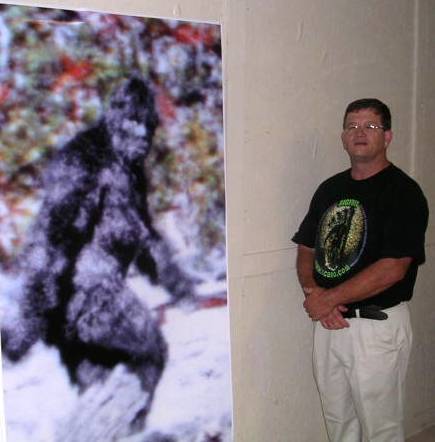
If you find Sasquatch an interesting topic, you will soon become fascinated, as I have, by mild mannered M.K.Davis, the so-called “hippy from Mississippi”.

mk2c

In his working life he was a photographic analyst in the astronomical world, but in his spare time, he has turned his interpretative skills to the many different trail cam videos of Bigfoot, and in particular, to the Patterson-Gimlin film:

I thank you for your time.


17 Comments

Filed under Cryptozoology, Film & TV

My Grandad in the First World War

My grandfather had a very eventful journey through the First World War. He joined the Canadian Army on June 12th 1916, and fought at Vimy Ridge, Passchaendale and the Somme. The highlight, though, was when he married his childhood sweetheart, on July 15th 1917,  I am writing this account on his 97th wedding anniversary.

Will has left an enormous amount of material behind him, including a piece of German shrapnel, his leather dog tags, and a piece of camouflaged fabric he cut off the wing of a German aircraft which had crashed in front of him in no-man’s-land.

He was, as can be judged from the surviving photographs, a hard man. He was one of what must have been the thousands of impoverished Englishmen who all set off to make their fortune in the distant reaches of the British Empire

A1 hard man

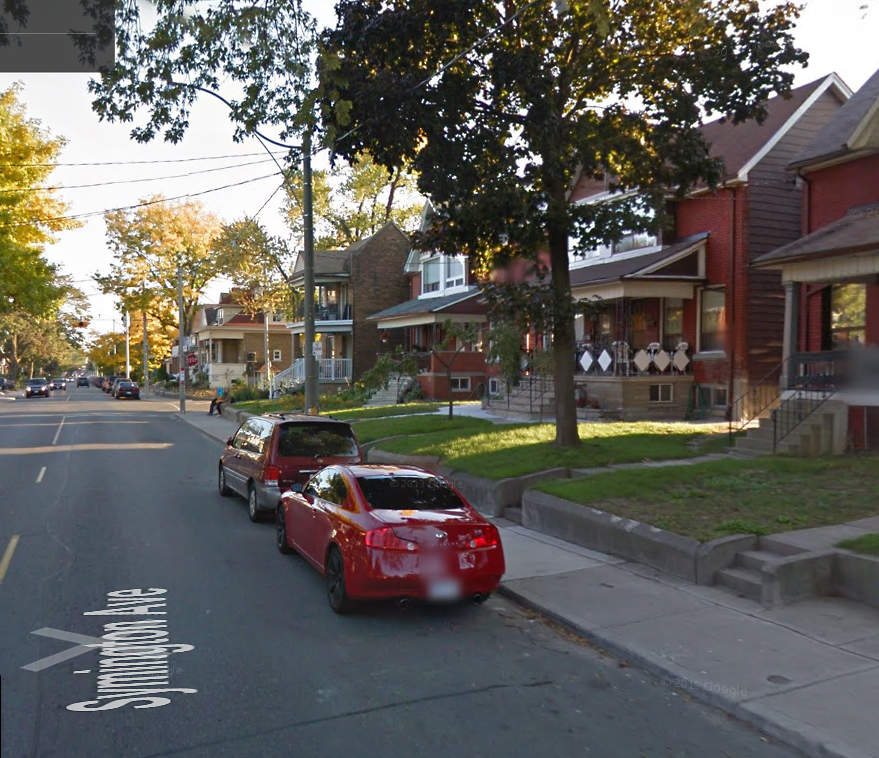
He lived at 266, Symington Avenue, Toronto.

symington avenue

He was employed as a locomotive fireman on an enormous Canadian Pacific Railways train, number 2528, which ran between Chapleau, Ontario, right across the Great Plains to Winnipeg. In this picture, Will is actually in the cab of the giant locomotive…

cab paint

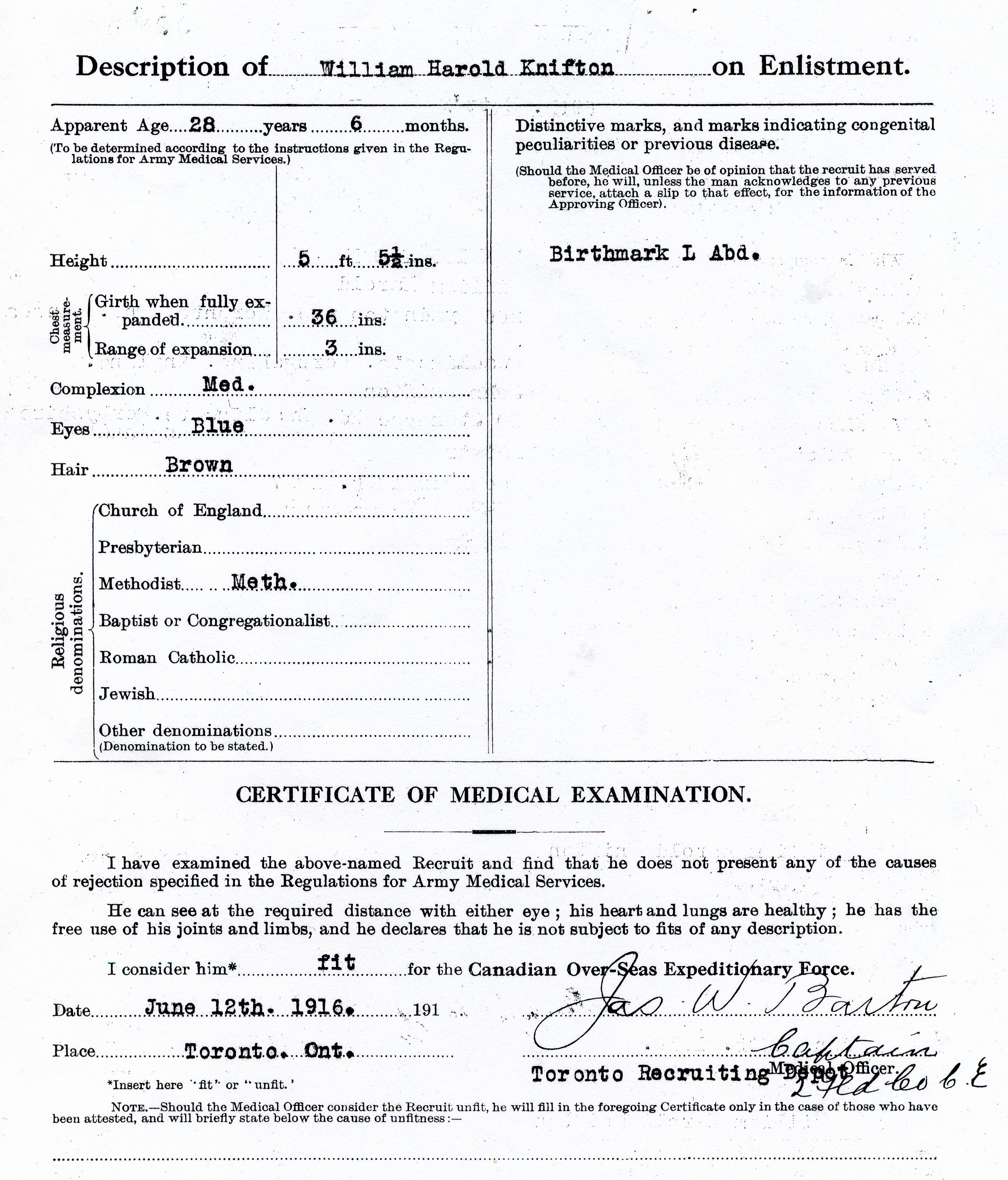
Will was to join the Canadian Army at the Toronto Recruiting Depot on June 12th 1916. He weighed 123½ pounds, and was considered by Captain J.W.Barton to be fit enough to join the Canadian Over-Seas Expeditionary Force.

physical

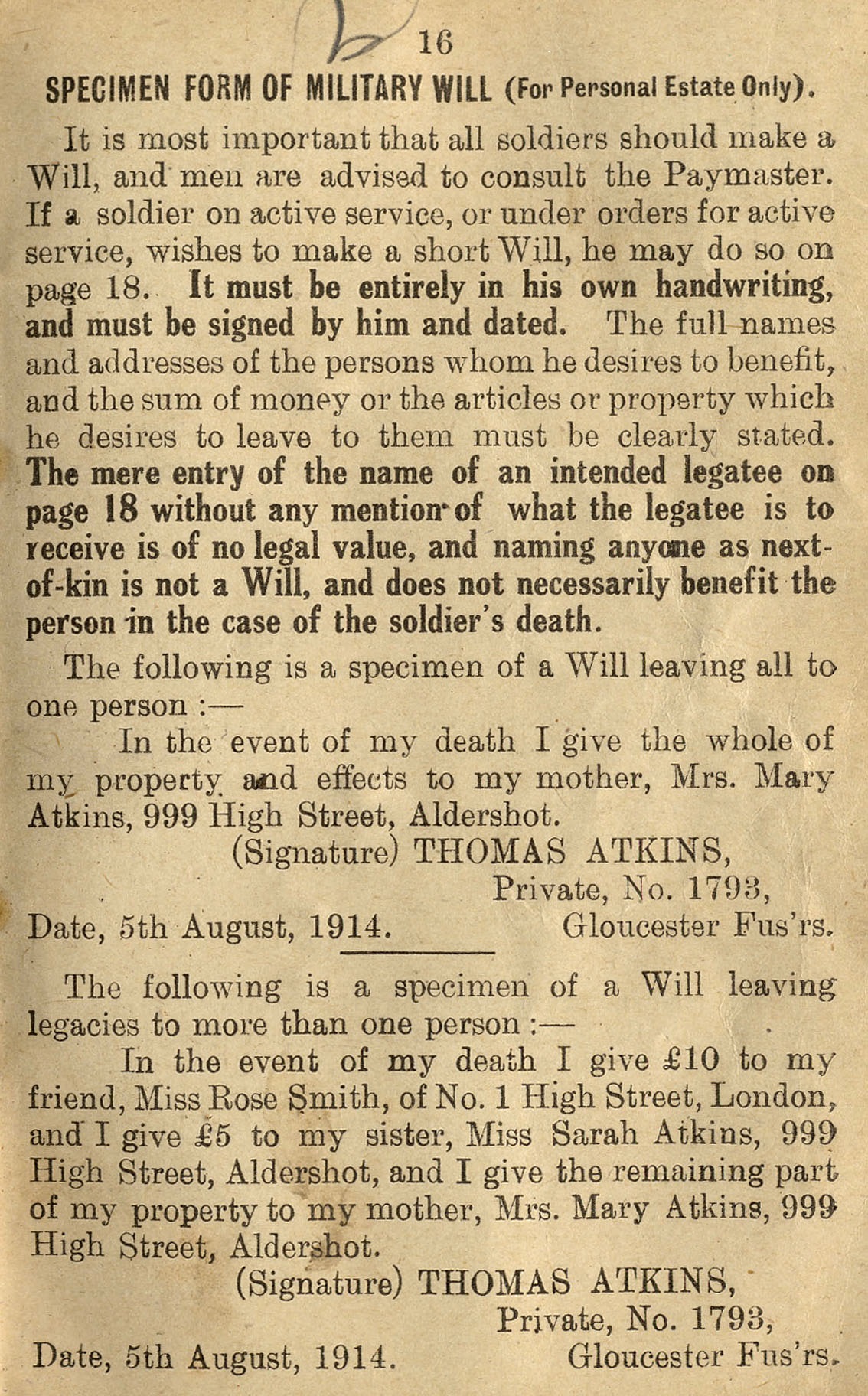
On July 6th 1916, he made a will, witnessed by the Orderly Room clerks, Messrs Irving and Smith. Judging by the small print, this document was eventually to make Mrs Mary Atkins of 999, High Street, Aldershot, a very rich woman indeed, particularly after the Battle of the Somme.

will

Will sailed from Canada to the Western Front on July 16th 1916 on the “S.S.Empress of Britain”.

ss_empress_of_britain

On July 25th, he arrived in England, and was taken on strength at Shorecliffe in Kent. On November 23rd 1916, he arrived in France and went straight into the 69th Overseas Battery of the Canadian Field Artillery, where he was eventually to become a Gunner.

WWI-C-GBS034

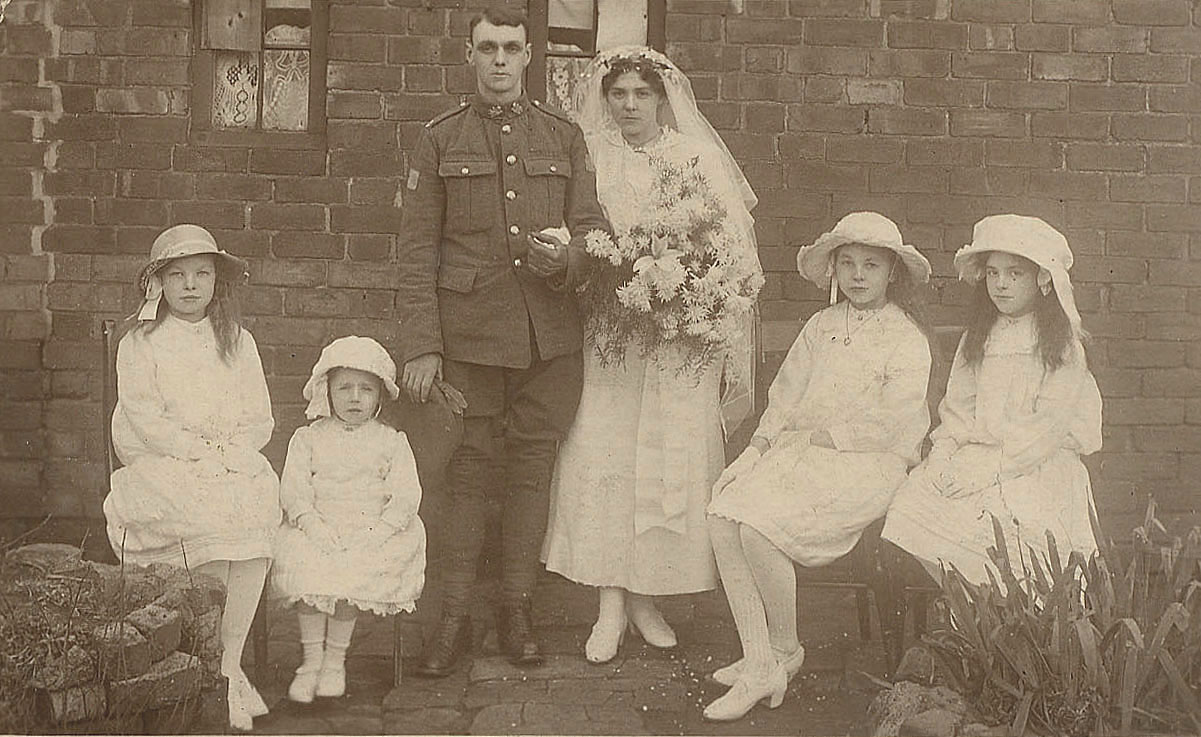
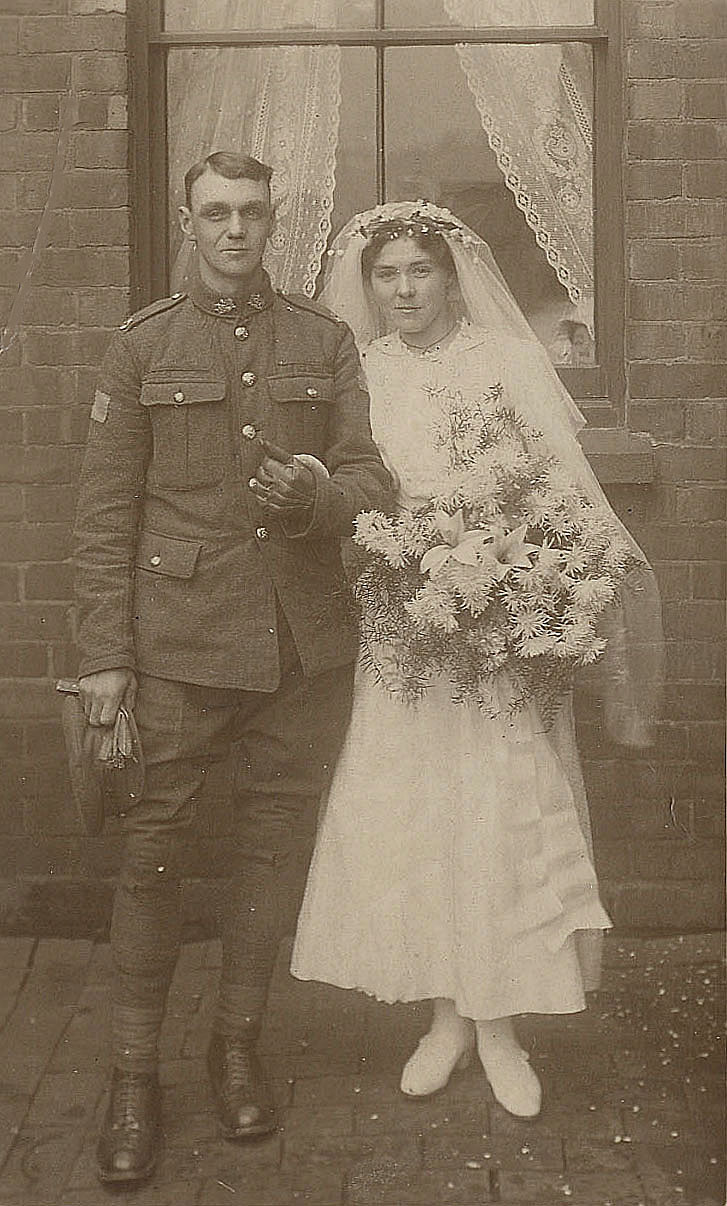
In the early part of his military career, Will seems to have earned some fifteen Canadian dollars per month, which then appears to have risen eventually to thirty dollars in 1917 and 1918. Perhaps the most significant event in Will’s war service was being given permission to marry, back in the sunny and rather more safe, South Derbyshire. The happy day was July 15th 1917…

marriage 2


marriage 1

When I was a boy, my grandfather spoke to me not of wedding dresses, though, but of events in the war. He talked of having fought at Bapaume, at either Pozières Wood or Polygon Wood, and above all, at Vimy Ridge.

WWI-B-V023-600x467

Canadian author Pierre Burton writes wonderfully of

“…soldiers, trapped in the horrors of a silly and senseless war and enduring almost indescribable conditions”.

But at the same time, it was the day when a fledgling nation came of age, when a colony became an independent nation……

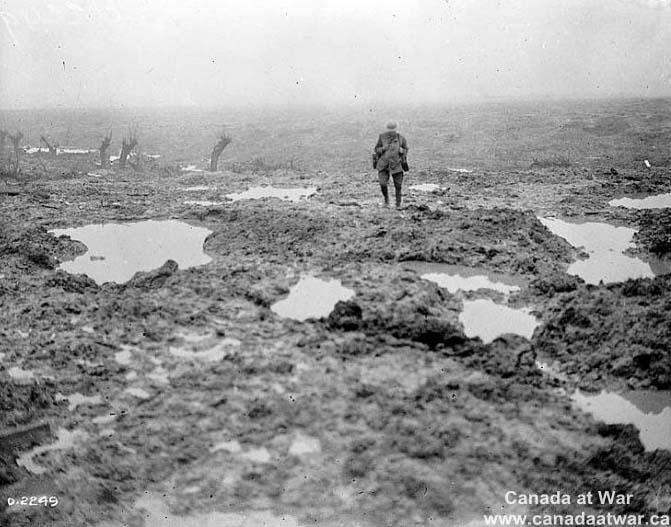
“On a chill Easter Monday in 1917, with a blizzard blowing in their faces, the four divisions of the Canadian Corps in France did what neither the British, nor the French armies had been able to do in more than two years of fighting.

They seized and held the best-defended German bastion on the Western Front – a muddy scarp known as the Vimy Ridge. The French, who had lost 150,000 men trying to take the ridge, didn’t believe it could be done. Nor did the Germans; even the British were sceptical. But the Canadians triumphed!

They went over the top at dawn. By lunchtime, most of the ridge was in their hands – at a cost of ten thousand casualties. ”                                                                 (Pierre Burton)

canadian_graves b w

This is the Canadian Memorial, at the top of the ridge…

imagesV23ORIUB

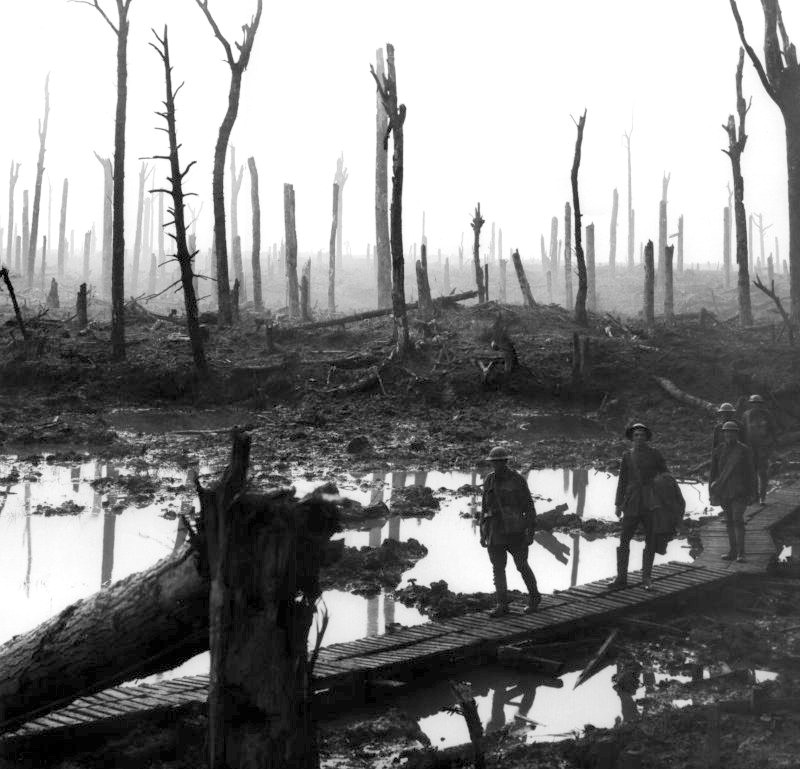
Will was certainly a veteran of Passchendaele in 1917, and in 1918, I believe, fought in the Somme area where blood soaked battles had taken place some two years earlier….

Chateau_Wood_Ypres_1917pdale_mud

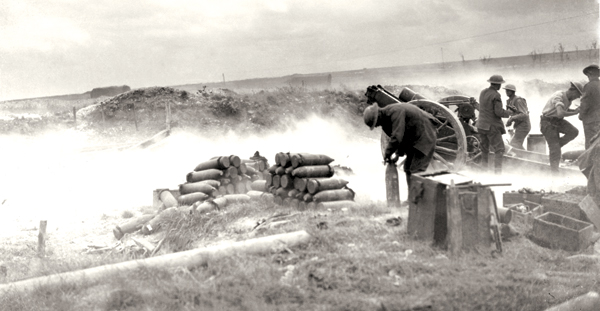
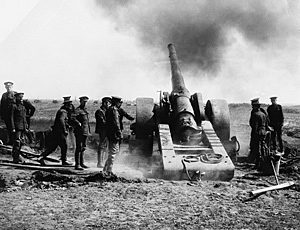
In later life, of course, Will was to become profoundly deaf. It is tempting to think that the very first steps in this unfortunate process began with the enormous volume of noise he must have experienced in the Canadian artillery during the First World War.

ii-gun-300-cp-861262

Will finally left France for the last time, and proceeded to England, via the French port of Le Havre. He was finally discharged from the army on May 23rd 1919.

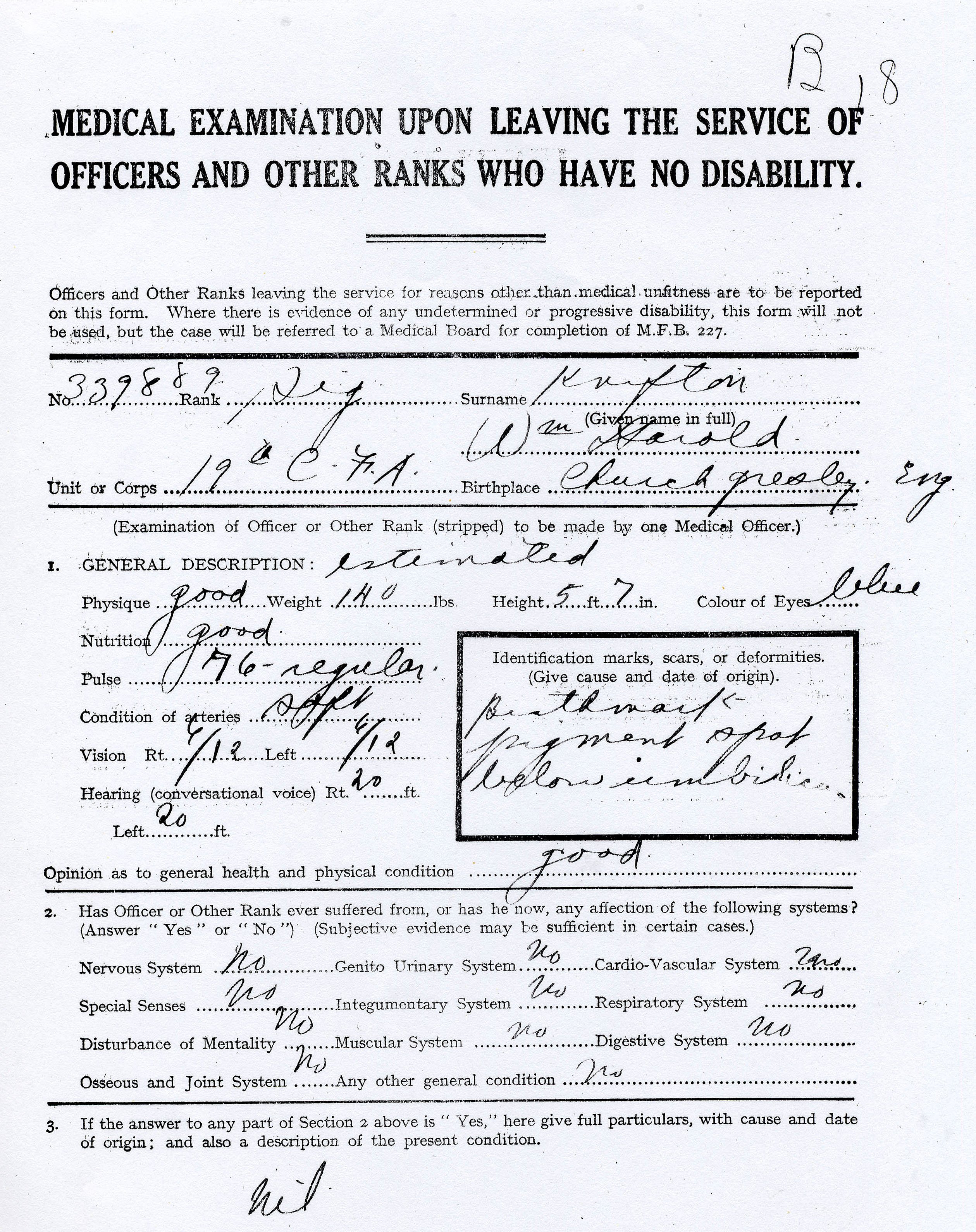
From his medical examination, he had put on some sixteen pounds during his time in the army, and now weighed a hundred and forty pounds, a glowing testimony to the quality of the food in the Canadian Over-Seas Expeditionary Force. He had also apparently grown half an inch taller.

medical after war

Still, at least Will did actually come back home safe and sound. It was not a speedy process, however. It was six months before he was no longer a soldier.

On March 4th and 5th 1919, at Kinmel Park in Denbighshire, north Wales, Canadian troops had rioted against their dreadful living conditions, sick of the constant, apparently pointless delays, and longing to be allowed to go home at last back to their families in Canada. The rioters were fired upon by British troops.

Five brave Canadians were killed and 23 were wounded. It was one of 13 mutinous riots by Canadian troops, all for exactly that same reason.

_45533022_kinmelgraves_466

Records of Canadian soldiers in the First World War can be accessed online at the Library and Archives Canada website.

For my grandfather, two pages are viewable. I know from my own experience, though, that if you pay your money, you will have access to page after page of  extremely interesting material.

15 Comments

Filed under Canada, France, History, Personal

A Monarch in the garden?

By far and away the best garden plant for attracting butterflies and bees is the buddleia, named by Linnaeus himself, after the Reverend Adam Buddle (1662–1715), a botanist and rector from Essex, England.
buddleia-flowers_2317869b
This nectar rich plant originally came from Asia, Africa and the Americas, and reached England only as late as 1730. Nowadays, it is ubiquitous, and can easily be seen on almost every piece of derelict land.
Buddleia must surely be the easiest plant in the world to grow cuttings from.
Once your buddleia bush is reasonably large, after a couple of years, you will need to prune it annually, right down to about a foot or so above the ground,  before it starts to grow too tall. This is best done around May 1st, to avoid late frosts. Virtually every bit that you cut off could be planted for new plants, and your neighbours will probably enjoy your free gift. If you prune your bush back vigorously, you will always get a lot more flowers than foliage.
With a little bit of luck, you should get a peacock…
peacock
or a small tortoiseshell
10_Buddleia
With luck, a Red Admiral…
Red-Admiral-Photos
or even, for punctuation fans, a Comma…
P1280277

You might get something really weird. I don’t know what this is, but it ought to be called the Jaws Butterfly…
c
This year, we had our first ever Hummingbird Hawk-moth, hovering like its namesake…

In your wildest dreams, a Monarch butterfly may cross the Atlantic from the USA and replenish its energy in your garden….
Monarch-Butterfly-earth-lovers-8585417-800-600
Good luck!


Leave a comment

Filed under My Garden, Wildlife and Nature

Locustella fluviatilis

(An extract from my old birdwatching diary “Crippling Views”)

Have you ever noticed how, in crime films, the detectives always say to the criminal suspects, “Do you remember where you were on July 14th 1989?”
And the criminal suspect will always reply, “Why, yes, I was sitting at home watching Hawaii Five-O” or perhaps, “Why, yes, I was sitting at home, having a cup of tea and some Garibaldi biscuits, because I had just finished the somewhat tricky and tiring erection of an MFI office desk.”
The rest of us though, are usually not quite so lucky. We may not manage to remember even a single thing we did in 1989. We may not remember even who we were, twenty five years ago.
But not so, if you were……a twitcher.
At lunchtime on July 14th 1989, I rang Birdline, the recently introduced method of discovering which rare birds were where, and discovered that a River Warbler had been found at Boughton Fen in western Norfolk. This was only the fourth occasion ever that this bird had occurred in this country, having, presumably, experienced some major snafu with its migratory instincts. Normally, it lives here…
images

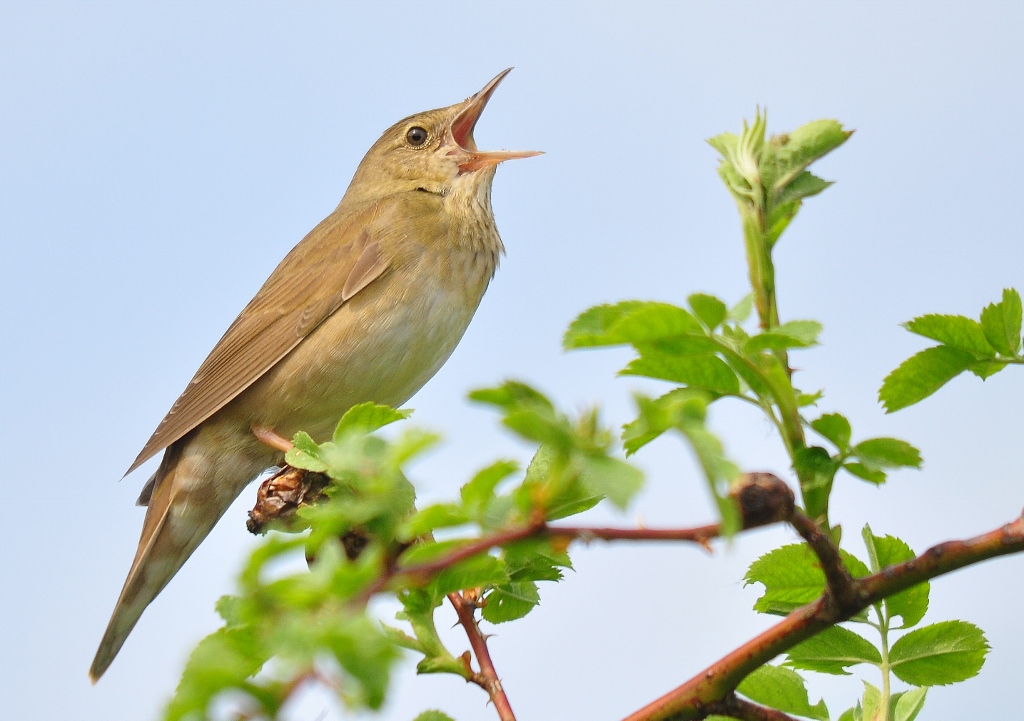
And soooo….I left school slightly early because I had a free period, and drove off a hundred miles to see if I could locate a specific small bird on a particular twig on a particular bush on the other side of the country. The bird should look something like this…
River best shot (1024x721)
I remember only one thing from the journey there, namely, passing a road sign which I thought probably directed fans to the house of a rich oilman in “Dynasty” or “Dallas”. It read “Boughton Barton Bendish”, and was just one of that whole series of countrywide road signs which indicate people rather than places. Foremost among these, of course, is the Lincolnshire hamlet of “Norton Disney”
boughton
I reached Boughton Fen pretty rapidly because this was well before the days of speed cameras, and when things were urgent, this could easily be reflected in your driving. The bird was not difficult to see either, because it was almost constantly on view as it sang, perched on the same twig at the top of a single isolated bush.
river 2
I am terrible at birdsong, but it did sound rather like a slowly approaching steam train….
http://www.xeno-canto.org/species/Locustella-fluviatilis?view=3
I can remember very little more of this twitch. The crowd was not exceptionally large…
twitchers-new
or fierce…
SONY DSC

and neither was Lord Nelson there, testing out his six-footer…
very-british-twitchers
One very famous birdwatcher that I do have vague memories of seeing may well have been present at Boughton. He is Lee Evans, who is the self-appointed policeman who vets all the birdwatchers’ lists to make sure that they are not claiming to have seen very rare species when this is not the case. Lee styles himself, therefore, the “judge, jury and executioner” for British and Irish twitchers. He regards himself too as the George Michael of birdwatching.
LGREatBirdFair
I may have forgotten the people somewhat, but the date…never.
So, when that detective comes back a second time, a few months later, and says to me, “Do you remember where you were on July 12th 1990?”, I can always look in my notebook, and without any hesitation whatsoever, I can reply, “Why, yes, I was sitting at the top of a cliff at the western tip of the Isle of Wight, watching an adult Alpine Accentor pick insects from between the rocks.”
alpacc90

The photographs of both the River Warbler and the Alpine Accentor have been taken from the website http://www.aabirdpix.com/megas.htm which provides an absolutely wonderful glimpse of the rare birds seen in Great Britain and Ireland over the last twenty or thirty years.

Leave a comment

Filed under Twitching, Wildlife and Nature

End-of-Year Hootenanny

Recently, I was invited by members of staff to attend the end-of-year buffet. After serving thirty eight years hard labour at the school, I could hardly refuse.  Given my disabilities, though, I thought it best to treat it as a pop concert. There should be a continuous medical presence, preferably with pessimistic posters…
A1
These are the people who really run the place. Today they will judge the acts…
A6
You will need a fabulous sound system and an expert to run it…
A3
And will you need reliable security…
A7
The first two acts were real blasts from the past…

A critical audience prepared their ammunition…

B1Expectations were high, after that wonderful food and the odd snifter, all on offer at prices to suit the teachers’ pocket….
B2
First, a familiar warm-up act…
B4
…introduced the most cultured man I have ever met…
B6
He spoke wise words for those with power over education at a national level…

By now, a slight shuffling feet of the audience betrayed their desire for something a little lighter, perhaps. A country-and-western singer?
F3
Or perhaps a stand-up comedian?
F4
Reactions were varied. Some seemed not to really like that kind of thing…
F4a

Others were even more disapproving…
F4c
Simon’s disappearing microphone trick was completely lost without trace…
F10
But thank goodness, though, not before he remembered to introduce, in the most moving terms, Jim, one of nature’s true gentlemen, and a man who lives up to his faith every single second of the day…
F11
Finally found the microphone though…
H1
Just in time to bring on the star turn, Old Whispering Jim…
H2
The inventor of the paper aeroplane…
H4
“Order!! Order!! Order!! Quieten down please!! You’ve all seen a paper aeroplane before!!
H8
And then the familiar music echoed forth, as we awaited some death defying stunt…
J2
Next it was Paul, with the prototype of his recently invented self-camouflaging tie…
M3
An Everton supporter then suddenly rushed on stage, trying to re-enact the events of the 1966 F.A.Cup Final, attempting vainly to gate-crash the whole event…..
P2
The jury were by now ready for the “Best Dressed” contest. Their empty flying bottles of Budweiser, however, would not be allowed to affect the result…
P22
Would it be the same winner for the previous six years?? A lucky seventh triumph?? And would she want a croquet set as first prize??
P28
But no, controversy then ensued! Professor Major’s hat took all the votes, but should he have been wearing it inside in the first place??

Still, at least Everton Mcgibbon can give us a song…

It hasn’t been easy to turn all these different photographs into a coherent story. I hope nobody has been offended. Let’s finish with a slide show of the others that didn’t quite make the cut. There were quite a few suggestions to explain away the occasional blurring. A room that was surprisingly dark for photography? A lens which had to be open for as long as one eighth of a second? Or just a camera with beer goggles?

This slideshow requires JavaScript.


Happy retirement, everybody. You have more than earned it.


4 Comments

Filed under Nottingham, Personal, The High School