Tag Archives: Short Sunderland

The Murder of Leslie Howard (1)

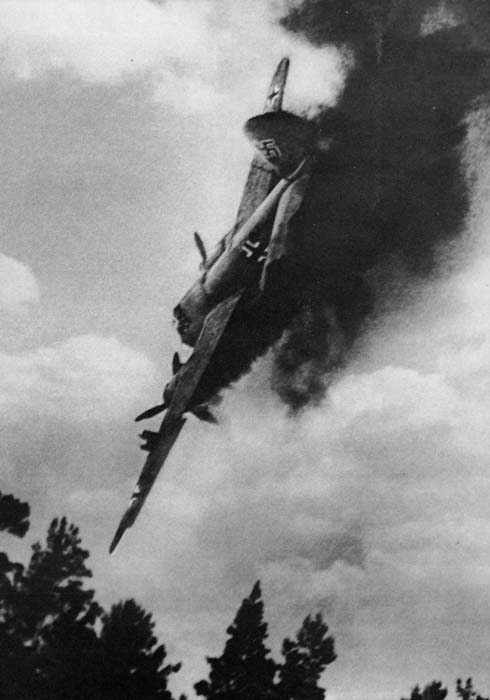
A couple of years ago, I wrote a series of blogposts about the Short Sunderland flying boat. In at least one of them, I talked about how a civilian airliner, with the film star Leslie Howard on board, was shot down over the Bay of Biscay on June 1st 1943. Howard, and the crew and all of the other passengers were killed.  I mentioned those events because, the following day, a Short Sunderland was sent out to look for the missing airliner. They didn’t find it, but they did find the eight German fighters which had shot down the BOAC Douglas Dakota DC-3. There then ensued one of the legendary battles of the Second World War as the Sunderland fought off a pack of Junkers Ju88s. That particular series of blog posts, though, concentrated on the Short Sunderland flying boat and the Junkers Ju88 long distance heavy fighter.

This series of blogposts which begins today, however, concentrates not on the aircraft involved, but instead the still unanswered question of……….

“Why did the Germans have to destroy that airliner ?”

And first of all, let’s take a look at the man who is usually put forward as the prime suspect for the reason that the Dakota had to be destroyed……..

Leslie Howard was a film star who starred in “Pimpernel Smith”, “The First of the Few”, “Of Human Bondage” and most famous of all, “Gone with the Wind”, a huge smash hit in 1939. Here he is in “Journey’s End”:
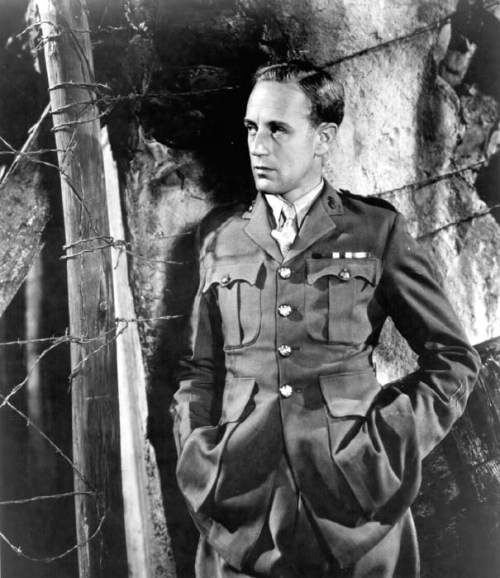
Howard’s father was Ferdinand Steiner, a Hungarian Jew, and his mother was Lilian Blumberg, from an English Jewish family of German origin. Howard had originally styled himself Leslie Stainer in an effort to anglicise his real name of Leslie Howard Steiner, but eventually he decided on the name by which he is known nowadays.

On June 1st 1943, Leslie Howard was in Lisbon, the capital of Portugal, with his business manager, Alfred Chenhalls. They intended to take the civilian passenger aircraft of KLM Royal Dutch Airlines which, even in wartime, made a regular morning run between Portela Airport to the north of neutral Lisbon and Whitchurch Airport near Bristol in England. Neither Howard nor Chenhalls had tickets, so two passengers were turned off the aeroplane to make room for them. The lucky two were a little boy called Derek Partridge and his nanny called Dora Rove. Or, in another story, one of the two passengers was a Catholic priest, Father Holmes. Or perhps the lucky two were George and William Cecil, recalled from their boarding school in Switzerland.

There is a story that the take-off was delayed while Howard went to collect a small parcel full of silk and nylon stockings, a present, perhaps, for his wife and daughter. While filming, Howard was pretty much a serial adulterer, who said….

“I never chased women but I couldn’t always be bothered to run away”

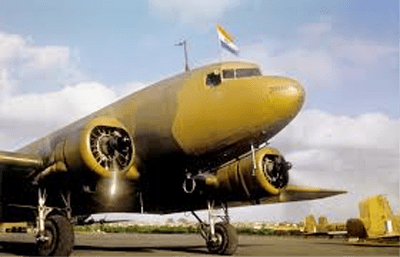
The aircraft was a Douglas DC-3-194 called “Ibis” with the civilian letters G-AGBB. Here it is, complete with its Dutch flag:The aircraft had hardly ever been impeded by the Luftwaffe on its 1,000 mile, seven hour, flight:
In actual fact, though, the Germans had already attacked the aircraft on two occasions in the previous six months. On November 15th 1942, it had been challenged by a single Messerschmitt Bf110 Zerstörer heavy fighter and on April 19th 1943, it had been ambushed by a patrol of six Bf110s. Here’s the nightfighting version of the Bf-110. The Zerstörer heavy fighters would have lacked the radar antennae….

On both occasions, the camouflaged airliner escaped a watery grave. The first attack involved a party of very high ranking American Eighth Air Force officers which included Ira Eaker. They were saved when the Bf110’s engine caught fire as it attacked. Everybody in the airliner, both passengers and crew, was terrified. In the second attack, the pilot, Captain Koene Dirk Parmentier, dropped down to the waves and then climbed steeply into the thick low clouds.

On the other hand, though, the trip had been made more than 500 times between 1939-1943 without the slightest problem.

On this occasion, though, just after midday, they were shadowed  initially by two Junkers Ju 88s over the countryside of northern Portugal and then of north-western Spain. They broadcast a message “we are being followed by enemy aircraft” and then “we are being shadowed”.

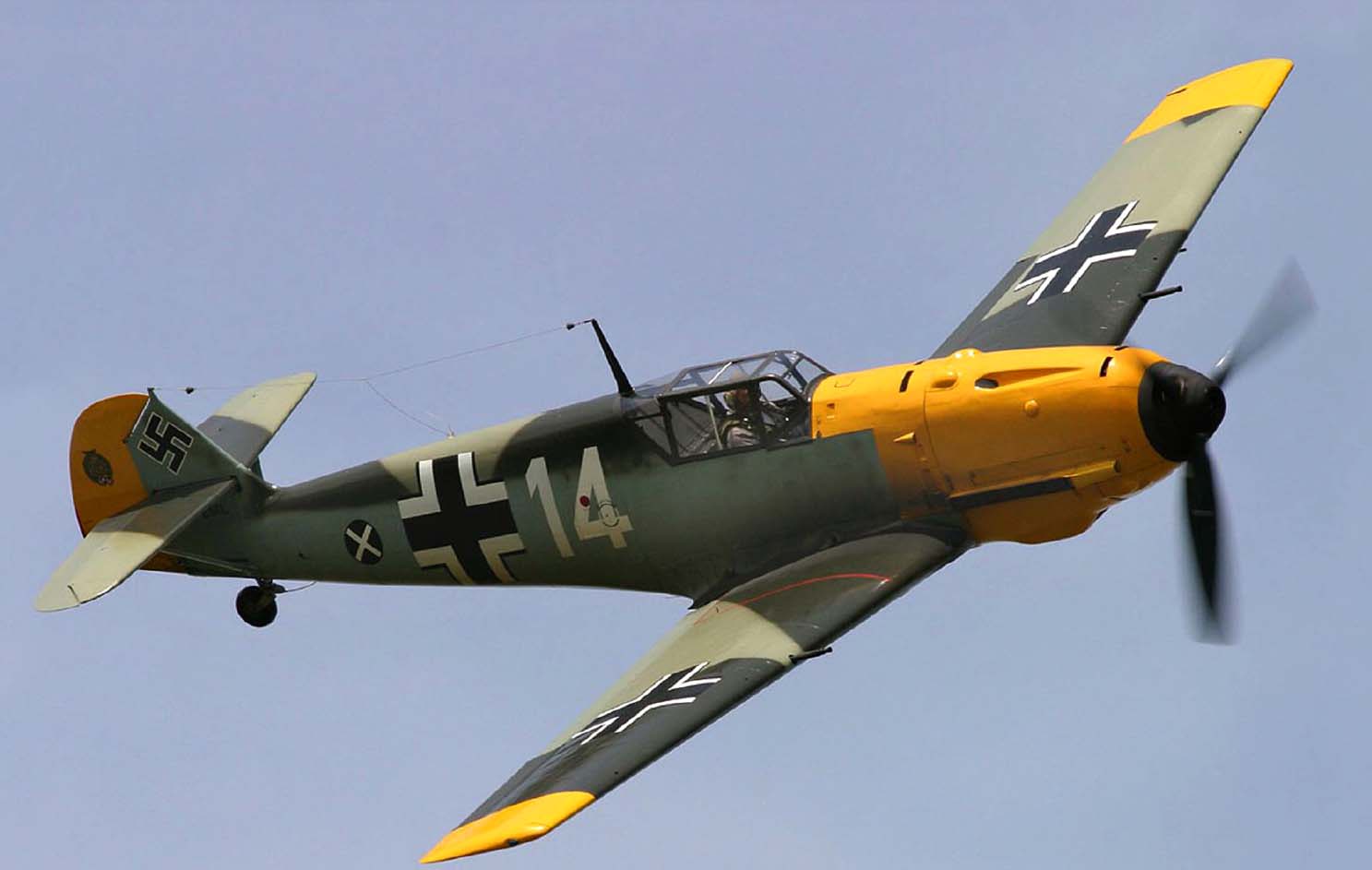
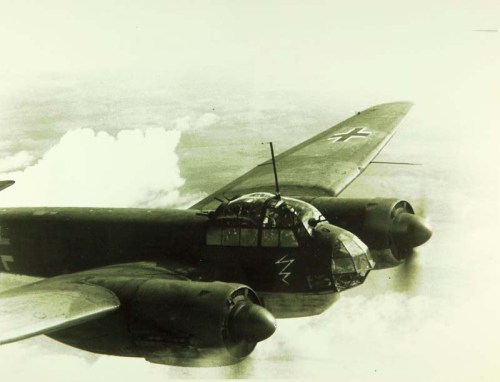
At around 12.45 pm eight different Junkers Ju88C-6 fighters of Gruppe V / Kampfgeschwader 40 spotted the “grey silhouette” of the DC-3. The Ju88s were flying with six aircraft abreast, fifty yards or so apart, with another two flying above them and acting as “spotters”. They had apparently been told to look for a twin engined grey aircraft. Their commander, Oberleutnant Heintze, had been told to carry out rigorous patrols during June and to shoot down the aircraft they found. This is a Junlers Ju-88 heavy fighter:
The Ju88s attacked the airliner at between 6,000-10,000 feet over the Bay of Biscay some two hundred miles north of the Spanish coast. One of the pilots, Oberleutnant Albrecht Bellstedt, radioed to his companions: “Indians at 11 o’clock, AA”. This meant enemy aircraft ahead, slightly to the left, attack, attack. One fighter came in from above and one from below. With their heavy calibre cannons, they set the Dakota’s port engine on fire and this then spread to the wing. A radio message was picked up from the wireless operator, van Brugge: “I am being followed by a strange aircraft….Putting on best speed….we are being attacked by enemy aircraft….cannon shells and tracers are going through the fuselage…. Am wave hopping and doing my best.” Oberleutnant Heintze, however, drew level with the stricken aircraft and quickly realised that it was a civilian airliner. He immediately stopped the attacks. Three, presumably, crew members, jumped out of the DC-3, deploying their parachutes but they did not open as they were already on fire and all three fell to their deaths. The aircraft plummeted into the sea where the wreckage floated on the surface for a very short period and then sank. By one o’clock, all four crew members and all thirteen passengers, including Leslie Howard, had been killed.

The four members of the crew were the pilot, Quirinus Tepas MBE, the second pilot, Captain Dirk de Koning, Cornelis van Brugge, the radio operator, and Engbertus Rosevink, the flight engineer.

Whoever was their intended target, the Germans were certainly serious about killing him or her. They had sent eight twin engined heavy fighters from Gruppe V / Kampfgeschwader 40 in a deliberate attempt to intercept that lone Dutch aircraft. If they had come across it purely by chance then surely there would have been just a single fighter involved, at best two, surely not a group of eight. And after they had shot down the DC-3, the German fighters circled the floating wreckage and took photographs of the burning plane before it finally sank. You don’t do that with just any old aerial kill. It has to be done for a very special reason. But that reason has never been found.

Here’s Alfred Chenhalls, Old Nopttinghamian, and Leslie Howard’s business manager. And with a cigar in one hand, and a whisky in the other, he’s a Winston Churchill look-alike. Apparently…………..

Don’t forget, though. In this day snd age, it was by no means simple to identify a famous person. They might have seen them in the cinema, but apart from this, there were only newspapers, magazines and, most of all, the radio. The latter, of course, was useful only for voice identification!

28 Comments

Filed under Aviation, Film & TV, History, military, Politics, war crimes

Roy Cross, the world’s greatest artist

As a small boy of nine or ten, I was very keen on Airfix plastic kits. They came originally in see-through plastic bags with a folded piece of paper stapled over the open end of the bag. The instructions for making the kit were inside the folded paper.

The smallest Series 1 kits were one shilling and threepence, or perhaps one shilling and sixpence. Series Two were three shillings and Series Three were four shillings and sixpence. Series Four cost six shillings and Series Five seven shillings and sixpence. Series Six, of which for many years there was only one, the Short Sunderland, was twelve shillings and sixpence. At this time I used to get around two or three shillings pocket money per week. As life grew more sophisticated, Airfix decided to put most of their kits into boxes and to decorate them with illustrations of that particular aircraft in action. The absolute toppermost of the poppermost of the Airfix artists was a man called Roy Cross (born 1924). Let’s take a look at his talents as an artist.

After initially helping illustrate Eagle comic  Roy moved to Airfix in 1964 and started his career with the Dornier Do 217. Here is the box art:

Notice how he makes the Dornier’s opponents the Polish Air Force, something out of the ordinary. Below is the original drawing. Both illustrations featured on an auction website, where Roy’s first ever aircraft sketch was on sale for £790.

Let’s take a look at some more of Roy’s best work. Here’s a Series 1 Spitfire, with the plastic bag still in place and the model unmade.

Series 2 included the de Havilland Mosquito, the Fairey Battle and the Bristol Blenheim. This one is flown by the Free French Air Force. Roy’s work never seems to drop in standard:

This slideshow requires JavaScript.

A Series 3 kit might have been the Junkers Ju-88 and Heinkel III. A bigger box allowed him to make his pictures more and more complex. Notice again how he makes the Heinkel’s opponents somebody out of the ordinary, in this case the Soviet Red Air Force:

This slideshow requires JavaScript.

In Series 4 was the Vickers Wellington:

The mighty Avro Lancaster was in Series 5, as was the B-17 Flying Fortress. Notice how the very large box has enabled him to portray accurately the huge wingspan of both aircraft:

This slideshow requires JavaScript.

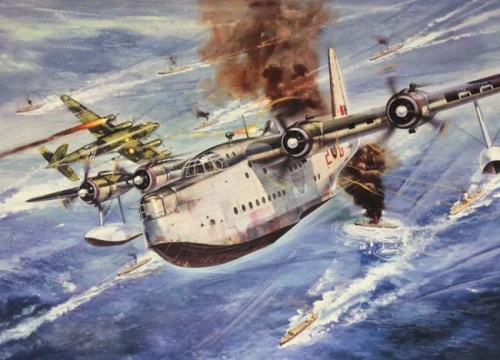
Here’s the Short Sunderland:

The Boeing B-29 Superfortress was of such a size that it probably was in Series 29. This box is big enough to portray a defensive “box” of B-29s, and a Japanese fighter:

I was not very good at making the kits, as I would be the first to confess. With biplanes such as the Roland Walfisch of World War I or the Handley Page HP 42, the 1930s airliner, I was hopeless at gluing the top wing to the bottom one and soon there were gluey fingerprints all over the place:

This slideshow requires JavaScript.

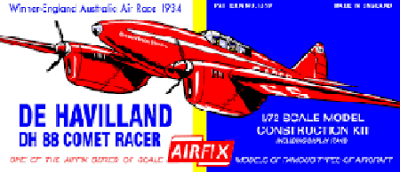
Quite a rare kit in my experience was the de Havilland DH.88 which won the race from England to Australia in 1934 with an official time of 70 hours 54 minutes 18 seconds. The raw plastic for it was bright red. I am not wholly sure if Roy Cross did this artwork. The kit may have appeared pre-1964:

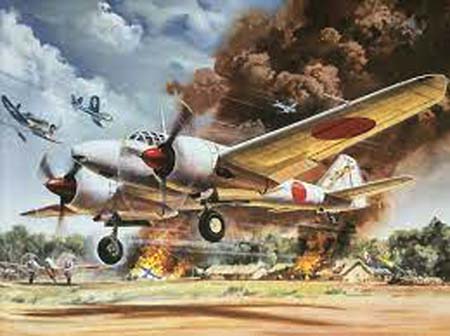
There are some kits that I would like to have made but never did.  There was the Mitsubishi “Dinah” which was reckoned to be the most aerodynamically perfect aircraft of World War II. This is one of Roy’s very best pieces of work in my opinion:

The Spitfires defending Darwin in the Northern Territory of Australia certainly couldn’t catch the Dinahs that flew high above them day after day.

The second kit I yearned for was the Angel Interceptor used in the TV series “Captain Scarlet”. That too, was a fairly rare kit during my modelling years:

I can’t bring this post to an end without showing you the last few masterpieces by Roy Cross. They are the B-25 Mitchell, with a choice of either a glazed or a solid nose:

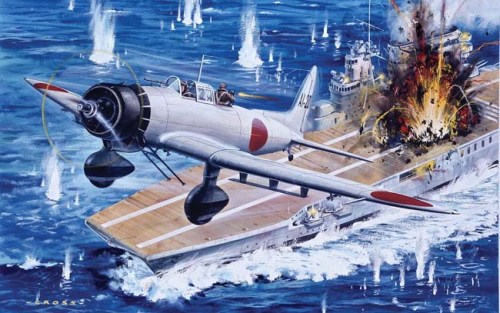
Here’s the Aichi “Val”, looking for all the world like a Stuka that’s put on a lot of weight:

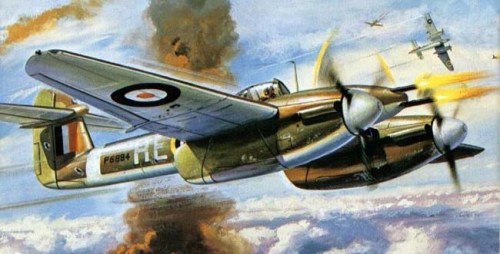
The Westland Whirlwind was a very advanced concept for 1938. It was one of the fastest combat aircraft in the world and with four Hispano-Suiza HS.404 20 mm autocannon in its nose, the most heavily armed. Prolonged problems with the Peregrine engines delayed everything and few Whirlwinds were built……only 116 in actual fact:

And let’s not forget the Blohm und Voss Bv 141 reconnaissance aircraft, one of the few aeroplanes ever to have had an asymmetrical structure. And yes, it flew very well, but was never produced in numbers because of the shortage of the engines of choice.

One last detail I found out about Roy Cross. He was apparently highly amused by the modern practice of taking his artwork, but photoshopping out any explosions and burning aircraft in case they upset anybody and reminded them what most of these aircraft were designed to do.

If you want to see more of Roy Cross’ art, then, please, use google images to sort out some pictures of other aircraft whose boxes he decorated. Roy may not be a famous artist, but his images of planes are irrevocably etched for ever in the memories of so many men of my age.

28 Comments

Filed under Aviation, Bomber Command, History, Humour, military, Pacific Theatre, Personal, the Japanese

Three war crimes, two Sunderlands and one Ashley Wilkes (7)

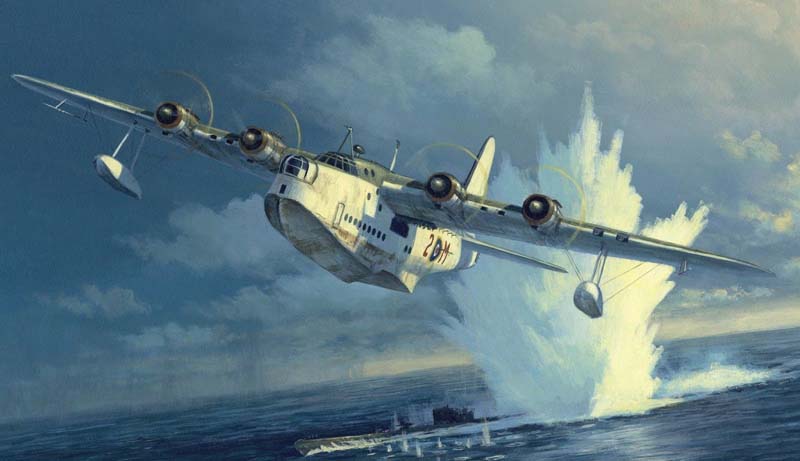
Last time I related how the crews of two Sunderland flying boats, having spent the entire war without seeing a single U-boat, found two German submarines on their way to surrender and sank both of them. I used two pictures borrowed from the Internet. One was a beautiful painting:

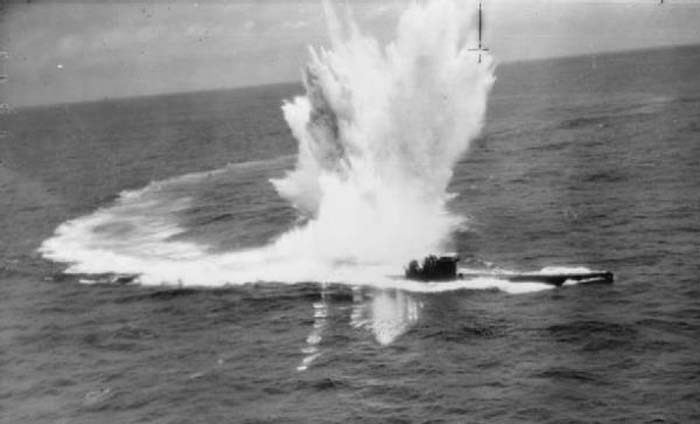
And the second was a genuine black and white photograph:

The Coastal Command airmen that Fred had met in the pub, probably in north Scotland, explained to him that they sank the two U-boats because they had spent so many hundreds, if not thousands, of hours of their young lives out on dreary patrols over the cold grey waters of the Atlantic. They had risked their lives in the pursuit of an enemy that they had never ever seen, as he hid in the cold grey metal waters of the Atlantic and emerged only at night. In similar fashion, Fred himself had never ever seen a German aircraft in combat during any of his nineteen missions. And even if they never saw a submarine, flying for ten hours over the cold grey featureless ocean is not without its dangers:


Most of all, these young men knew that they had wasted their youth, the best years of their lives, pursuing not pretty young girls at the village dance, but elusive submarines in the featureless cold grey seascape of the Atlantic Ocean. And it was revenge for this irreparable loss of their youth that they sought. If the RAF lads had a six or seven year gap in their young lives, then the Germans, who had now started their second major global war in twenty years, would not be allowed to have the rest of their own lives, certainly if the RAF had anything to do with it:

Sinking a U-boat which was on its way to surrender, after the end of hostilities,  was, of course, a war crime.

“Thou shalt not kill” the Good Book says, although the original words of the Torah, “לֹא תִּרְצָח”, should really be translated as “Thou shalt not murder” rather than our rather wishy washy “Thou shalt not kill”. And this was indubitably murder, so it was a war crime, although in many ways it was an understandable one.

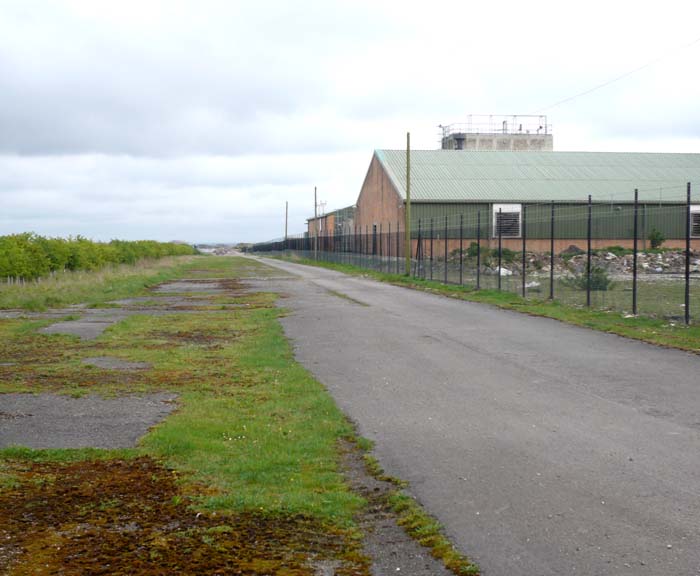
It was the waste of so many years of their short lives that had finally got to them. Fred himself very much resented the years that he had spent “stuck in a Nissen hut in the middle of nowhere.” He was stationed at one stage at Elsham Wolds which was not a particularly beautiful or interesting place. It must have provoked great boredom and frustration among the hundreds, if not thousands of young men who were all forced to be there. Here’s the old runway, with its present-day green half and its grey half:

severn trent

Yet despite their boredom and their frustration, these young men would all have felt raw naked fear for much of the time. They knew that they were laying their own young lives on the line pretty much every single day.

My Dad told me that the only things that got him into that Lancaster were the fear of being thought a coward, and the fact that the crew all depended on each other and were all in it together:

Because of his never ending fear, like thousands of other combattants, Fred also despised the comfortable lives of many of the older people in the area where he was born and where he spent the majority of his leaves. They lived out their humdrum existences without any risk whatsoever, while young men in their early twenties were killed in large numbers every time there was a raid. The contempt Fred felt was, of course, just a measure of his own fear, at the possibility of having to fly over burning Berlin, or some other heavily defended Bomber Command target:

Having joined the RAF as a volunteer on September 29th 1941 at the age of nineteen, Fred expected to return home in May 1945. Alas, he wasted yet more time after the end of the war.

Fred was eventually discharged from the RAF well after the date when his favourite team, Derby County, whom he followed for more than seventy years, won the FA Cup for the only time in their history. Fred missed the game as he was “busy, doing nothing” with the RAF:

Fred eventually left the Second World War on November 19th 1946, after just over five years. Not much in a lifetime of over eighty years, but as he himself was never slow to explain in later life, these were potentially “the best years of my life”.

15 Comments

Filed under Aviation, Bomber Command, Criminology, History, Personal, Politics

Three war crimes, two Sunderlands and one Ashley Wilkes (6)

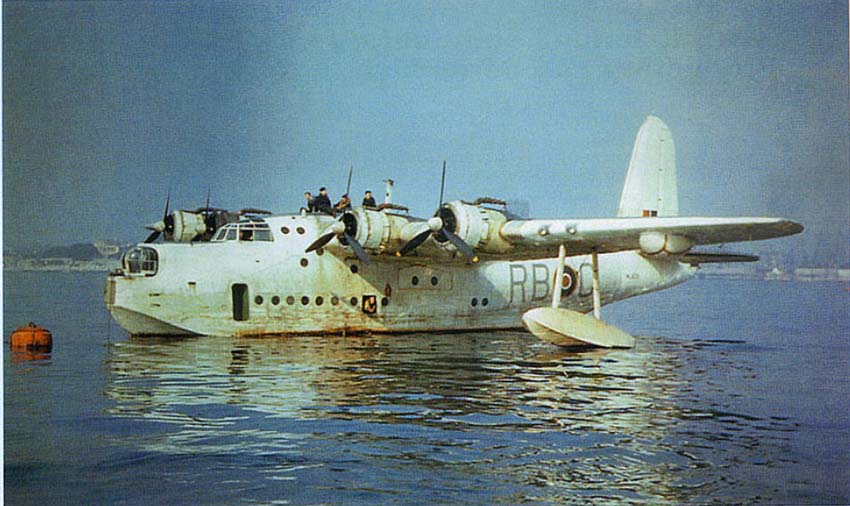
My father Fred, during his spell in the RAF from 1941-1946 had relatively little direct contact with the pilots and crews of the huge Short Sunderland flying boats of Coastal Command:

He was certainly well aware though, that, because their patrols were of such long duration, these planes were extremely well appointed. They actually had galleys on board, where members of the crew could make cups of tea, or other hot beverages, or cook themselves proper meals. No luxuries like those of the Sunderland were ever afforded to the crews of the much more Spartan four engined heavy bombers such as the Lancaster or the Halifax.

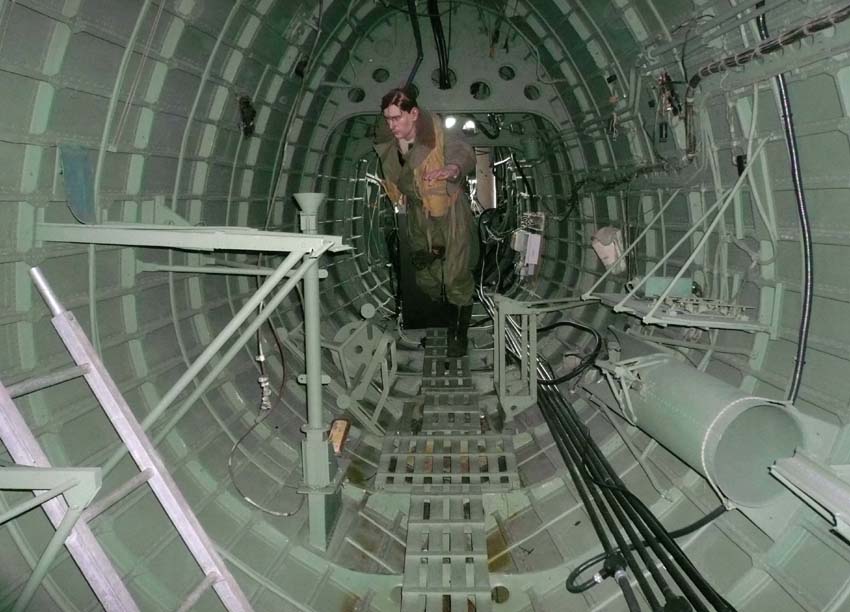
The huge flying boat even had a number of bunks, where the crew could have a sleep if they were feeling particularly weary. And the Sunderland was so incredibly spacious. Here is the pilot on his way to the Library and the Sun Deck:

Enough room to swing a Catalina round ! Well almost.

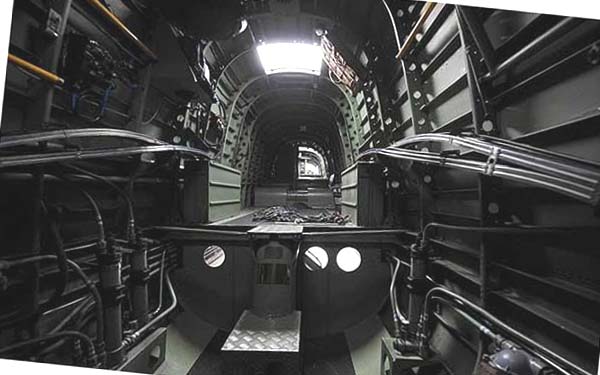
My Dad was used to the Lancaster which was very much a tight fit for everyone:

The biggest problem was the main spar:

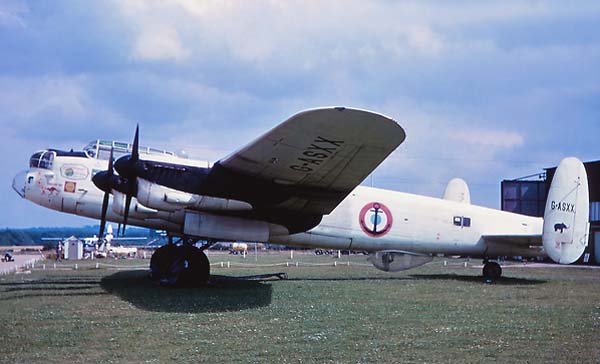
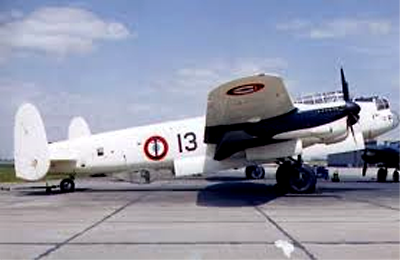
From 1952 onwards the French Aéronavale had eighty ex-RAAF Lancasters. How on earth did they get on, carrying out searches of the Atlantic Ocean which lasted ten hours or longer ?

It’s difficult to imagine waitress service in a Lancaster. In a Sunderland, the difficulty would merely have been finding the waitress as she wandered through the built in wardrobes:


One thing that Fred did discover, however, was what happened at the end of the war, when the U-boats came in to British ports to surrender. The cessation of hostilities was not quite as clear cut, black and white, as it should have been, and neither was it always carried out in as civilised a fashion as might have been hoped. The members of two Sunderland crews told him, for example, how they had found U-boats sailing along on the surface, on their way to surrender in the nearest British port, possibly in the River Foyle bound for Derry-Londonderry or in the Firth of Firth-Forth making their way to the naval base at Rosyth.

They immediately attacked and sank both of the submarines with all hands. Here goes the first one:

And here goes the second one:

Was this a war crime? We’ll look at that next time.

15 Comments

Filed under Aviation, Bomber Command, Criminology, History, Personal, Politics

Three war crimes, two Sunderlands and one Ashley Wilkes (4)

Last time I was explaining the connection between the Short Sunderland flying boat and “Das Fliegende Schtachelschwein”, “The Flying Porcupine”:

I promised that I would show you the connection between this spiny porcine killer and Leslie Howard, a suave, sophisticated English actor, who used to boast that he “didn’t ever chase women but couldn’t always be bothered to run away from them”. Here he is in “Journey’s End”:

I recently watched an excellent documentary film about Howard. It was called “The Man who gave a Damn”:

The film was about the life, and particularly the death, of the famous film star, the actor who had played Ashley Wilkes in “Gone with the Wind” only two years before his death. Cue film extract:

Leslie Howard was English and he did not hesitate to stand up for the values of our country and those of our friends and allies. He did not hesitate to name and shame.

In one of his films made after “Gone with the Wind”, he speaks of the Germans’ aims:

“Every day reveals the utter and desperate determination to smash us to bits, root and branch, to wipe out every trace of democracy.”

But we English and Americans are better than the Germans, as he says in “From the Four Corners” (1941) as he addresses troops from the USA who have just arrived in England:

“And so our fathers’ minds crept along and their ideas of justice and tolerance and the rights of man took shape in the sunlight and the smoke, sometimes standing still, sometimes even slipping back, but slowly broadening with the centuries. Some of those ideas are written down in the constitutions of our commonwealth and some are unwritten. We just try and carry them in our hearts and in our minds. Perhaps the men who came nearest to putting them into words were those Americans, many of them the sons of British pioneers, who, founding an independent nation, proclaimed:

“We hold these truths to be self-evident, that all men are created equal, that they are endowed by their Creator with certain unalienable Rights, that among these are Life, Liberty and the pursuit of Happiness.”

Those words and that spirit were born and nourished here, and your fathers carried them to the ends of the earth. They are our inheritance from the past, our legacy to the future. That’s why you came here – to defend them.”

The documentary film was made by Derek Partridge, now an old man, whose young life was inadvertently saved by Leslie Howard. Here’s Derek:

On June 1st 1943 Derek and his brother were asked to give up their seats on an airliner travelling on the Lisbon-Bristol route, to allow Leslie Howard to get to a London film premiere on time. The two boys survived because they were not on the aircraft, a Dutch owned BOAC Douglas DC-3 Dakota, when it was shot down into the Atlantic Ocean. This war crime was carried out by eight Junkers Ju88C-6 fighters of Gruppe V / Kampfgeschwader 40. V/KG 40 was a heavy fighter unit which dated from 1942, when it was set up to intercept the bombers of RAF Coastal Command. It was the only long range maritime fighter unit the Luftwaffe ever had. The RAF answered them with firstly the Bristol Beaufighter and then the Mosquito. Here is a lovely shot of the aircraft of V/KG 40 in flight:

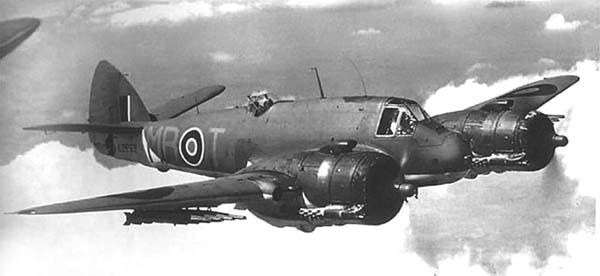
And here is a Bristol Beaufighter, a very powerful and well armed fighter:

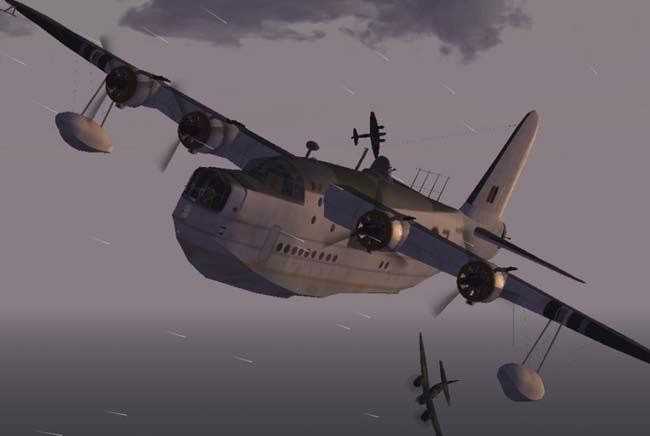
In the immediate aftermath of these events, the British responded to the DC-3’s failure to arrive in Bristol by sending out a Short Sunderland GR3 flying boat to look for it on the following day. Here we go. Ein fliegende Schtachelschwein:

Don’t worry. He’ll sort ’em out.


29 Comments

Filed under Aviation, Cornwall, Film & TV, History, Personal, Politics

Three war crimes, two Sunderlands and one Ashley Wilkes (3)

Last time I was explaining the connection between the Short Sunderland flying boat and “Das Fliegende Schtachelschwein” aka “The Flying Porcupine”.

This thorny porcine epithet comes from an aircraft which was based at Invergordon in north east Scotland in 1940. My story will be based primarily on the work of John Robertson in 2010. I had never heard any explanation of the nickname and it is a tale of heroism well worth telling and re-telling, believe me.

The particular Sunderland was N9046. It belonged to 204 Squadron and its squadron letters were KG-F. Here it is, although it seems to lack the KG-F:

The crew left their northern Scottish base on April 3rd 1940, tasked with carrying out a ten hours protection patrol, looking after a convoy bound for Norway. There was absolutely no sign of the enemy, until two Junkers Ju88s, probably from II./Kampfgeschwader 30, appeared at low altitude over the water, seemingly having arrived from a base in southern Norway, or perhaps in Denmark. Here is a nice Junkers Ju88 in full-ish colour:

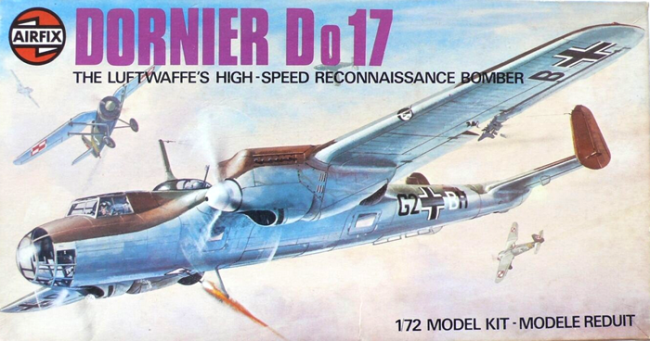
And here’s the Airfix kit box:

Seeing the Sunderland, one of the two Ju 88s made a head on attack but the Sunderland’s front turret opened up and the two Junkers aircraft seemed to take flight into the leaden clouds. Here’s that front turret again, with its rather light .303 guns.:

Four more Junkers then attempted to attack the ships but they were driven off by the convoy’s various defences. Less than a quarter of an hour later, six Junker Ju88s came in, four of them almost certainly Ju88A-4s. Two of them came for the Sunderland which went right down to the water to make itself a more difficult target. That didn’t stop the Germans who both attacked fiercely, but the flying boat’s gunners drove them off and they eventually fled.

The situation had now become dramatic enough for it to form the basis of a modern computer game:

The other four Ju88s, having already released their bombs, then made a line astern attack on the Sunderland but the rear gunner, Corporal William Gray Lillie, with his slightly heavier 0.5 machine guns sent the first one spiralling in flames into the cold, cold waters of the North Sea. Ignore the trees. It’s actually seaweed:

Corporal Lillie blasted the second German in his port engine which was soon pothering black oily smoke and flames. The German pilot left for his land base in Norway, uncertain if he would reach it with only one engine performing properly. In actual fact, he was forced to crash land in the as yet unoccupied northern section of Norway where the crew were forced to set their aircraft on fire before being arrested and interned.

Rather imaginatively, the final two Ju88s then attempted to drop their bombs onto the Sunderland. They missed and finally cleared off home.

N9046 reached Scotland safely and had no problems until Wednesday,  December 11th 1940 when, riding at anchor in Sullom Voe in the Shetlands, it suddenly caught fire and was completely destroyed.

Here is brave Corporal Lillie:

Did he survive the war? Well, sadly, no. He was killed in combat on July 21st 1940, shot down by a Messerschmitt Bf109 of 8./JG77:

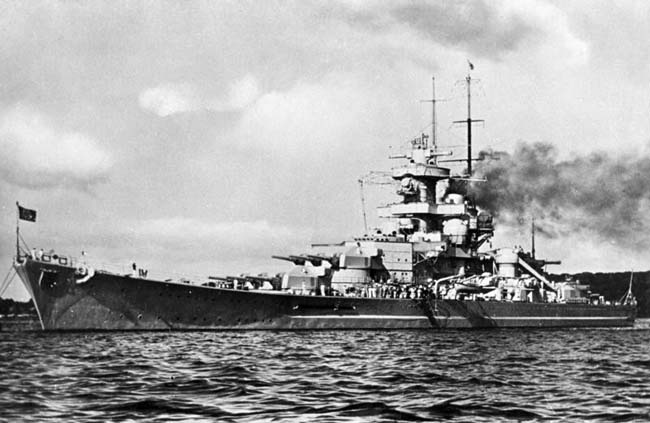
Corporal Lillie was the rear gunner in Sunderland N9028. They had been sent to Trondheim in Norway on a clandestine reconnaissance mission to check the submarine base and to see if the Gneisenau had left the port. Here it is:

Next time, I will show you how a suave English actor is connected to the Short Sunderland and, indeed, the Junkers Ju88.


24 Comments

Filed under Aviation, Cornwall, Criminology, Film & TV, History, Personal, Politics

Three war crimes, two Sunderlands and one Ashley Wilkes (2)

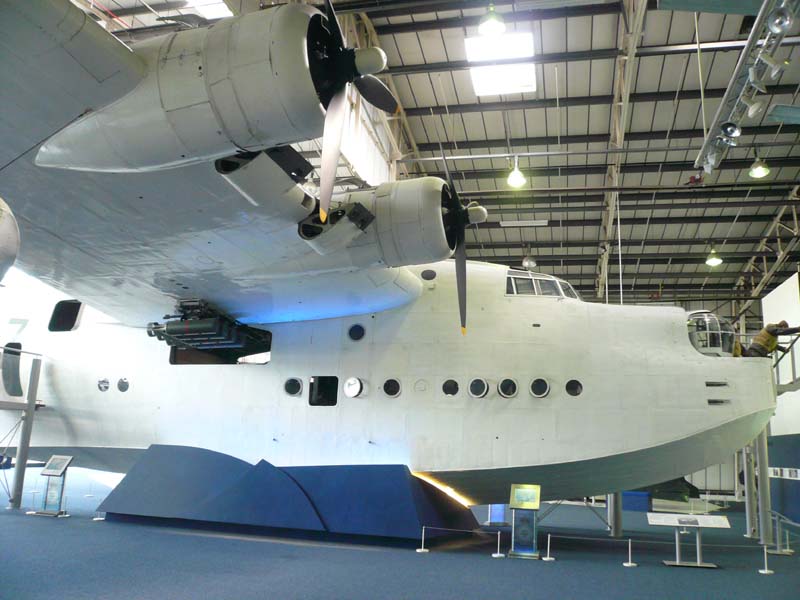
Last time, I was showing you round what is probably the same aircraft in two different locations, that is, the Short Sunderland flying boat at Hendon and then at Duxford.  Just to remind ourselves, the Sunderland was a mighty war machine:

This slideshow requires JavaScript.

The Sunderland had a panoply of weapons. Something for every occasion:

This slideshow requires JavaScript.

There was also an astrodome for taking bearings from the stars, and ASV radar, visible above the cockpit area:

I saw just part of my first ever Sunderland on ‎February 14‎th 2008, ‏‎ at 11:24:44. And, as you might expect for that date, it was love at first sight. The aircraft was behind a Handley Page Hastings and below a Hawker Harrier, and it was terribly squashed in:

I had to wait until 2010 when I went to Hendon to see a Sunderland displayed a little more favourably, and in a much bigger and more open area:

This particular Sunderland you could go inside. Just look at the room. You could fly a model plane around inside it:

The walls have lots of useful instructions:

This slideshow requires JavaScript.

Overall, the Germans were very wary, if not simply afraid, of the Sunderland flying boat. It was an extremely heavily armed aircraft and a formidable opponent. No wonder they called it the “Flying Porcupine”. Porcupines look old, they look rather fat and are rightly known as being grumpy, solitary and always just wanting to be left alone. OMG. How many of those boxes can I tick? And don’t say “All of them”. Here’s a real porcupine at Newquay Zoo in Cornwall. They eventually sold him to Bristol Zoo for “excessive grumpiness”  :

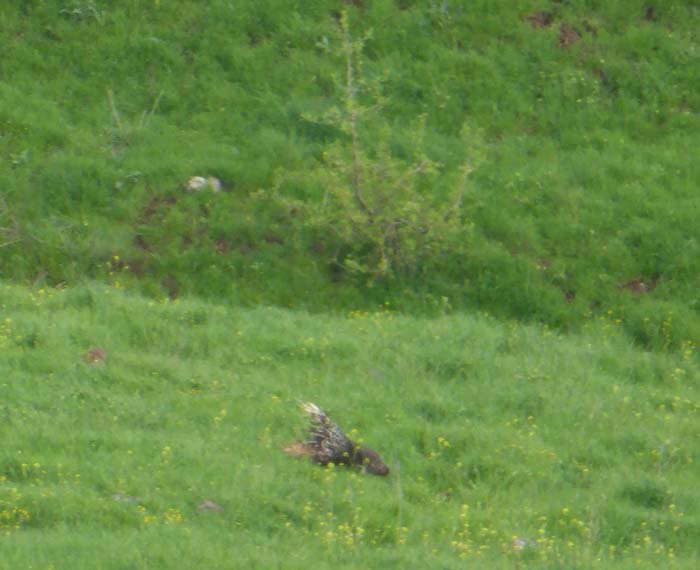
And here’s a wild one in the Golan Heights of Israel. A really rare sight:

Final thought. What is the German for “Flying Porcupine” ?

Why it’s “Das Fliegende Schtachelschwein”, a phrase which has proved particularly useful in my trips to the Fatherland, especially to Berlin Zoo which is conveniently close to the airport.


16 Comments

Filed under Aviation, Cornwall, Film & TV, History, Personal